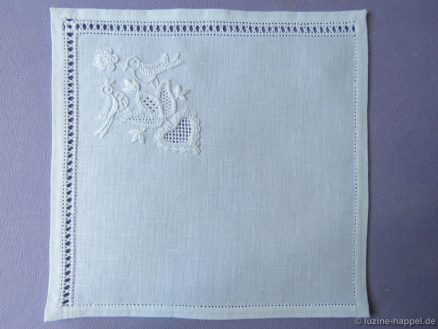
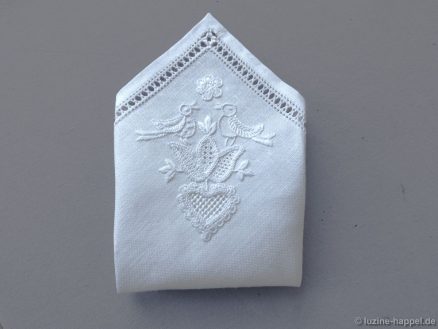
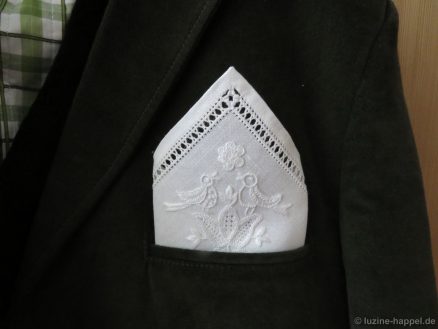
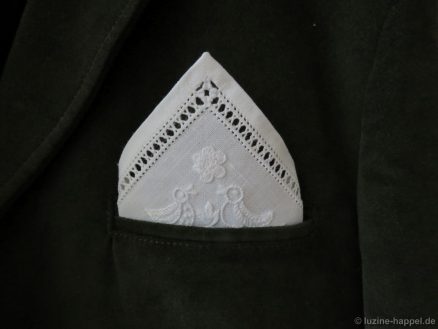
Tea Cloth MJ2 (1)

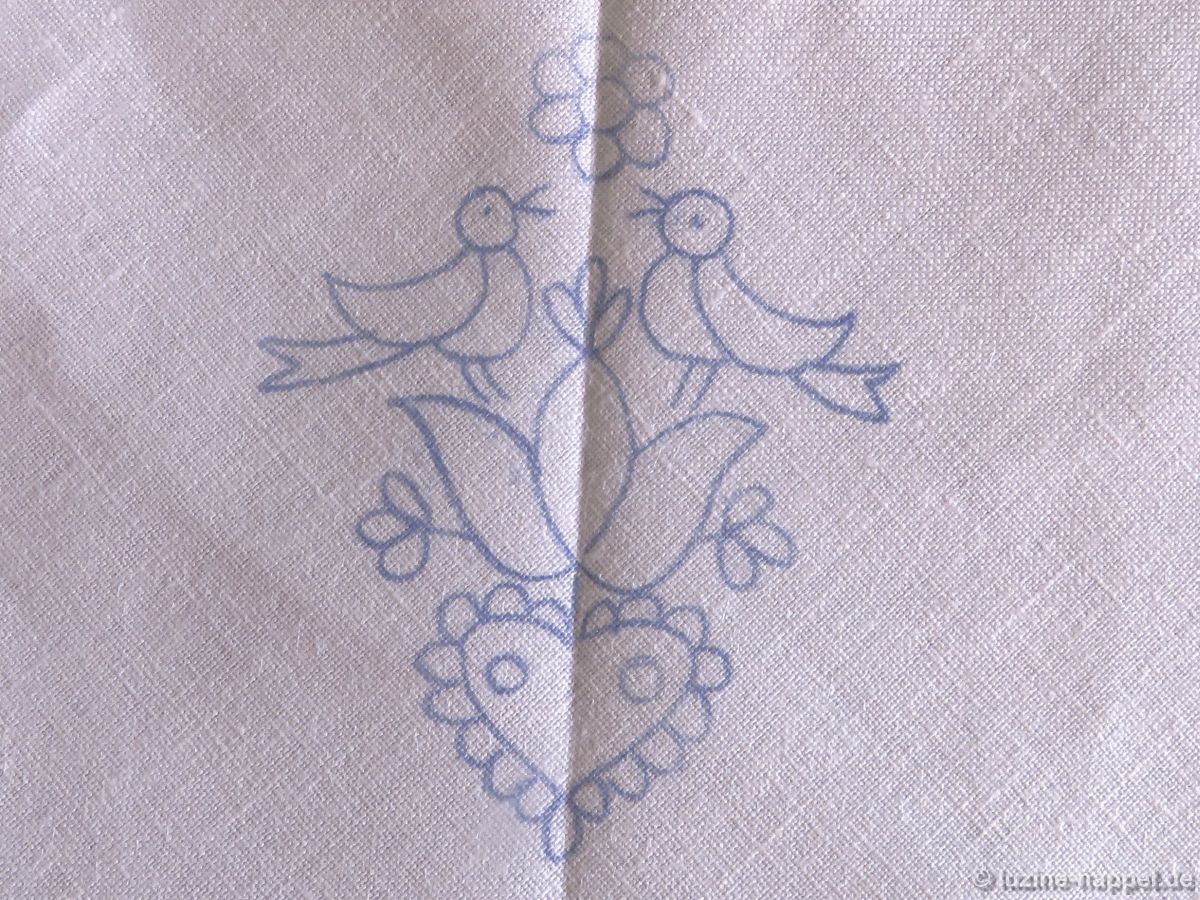
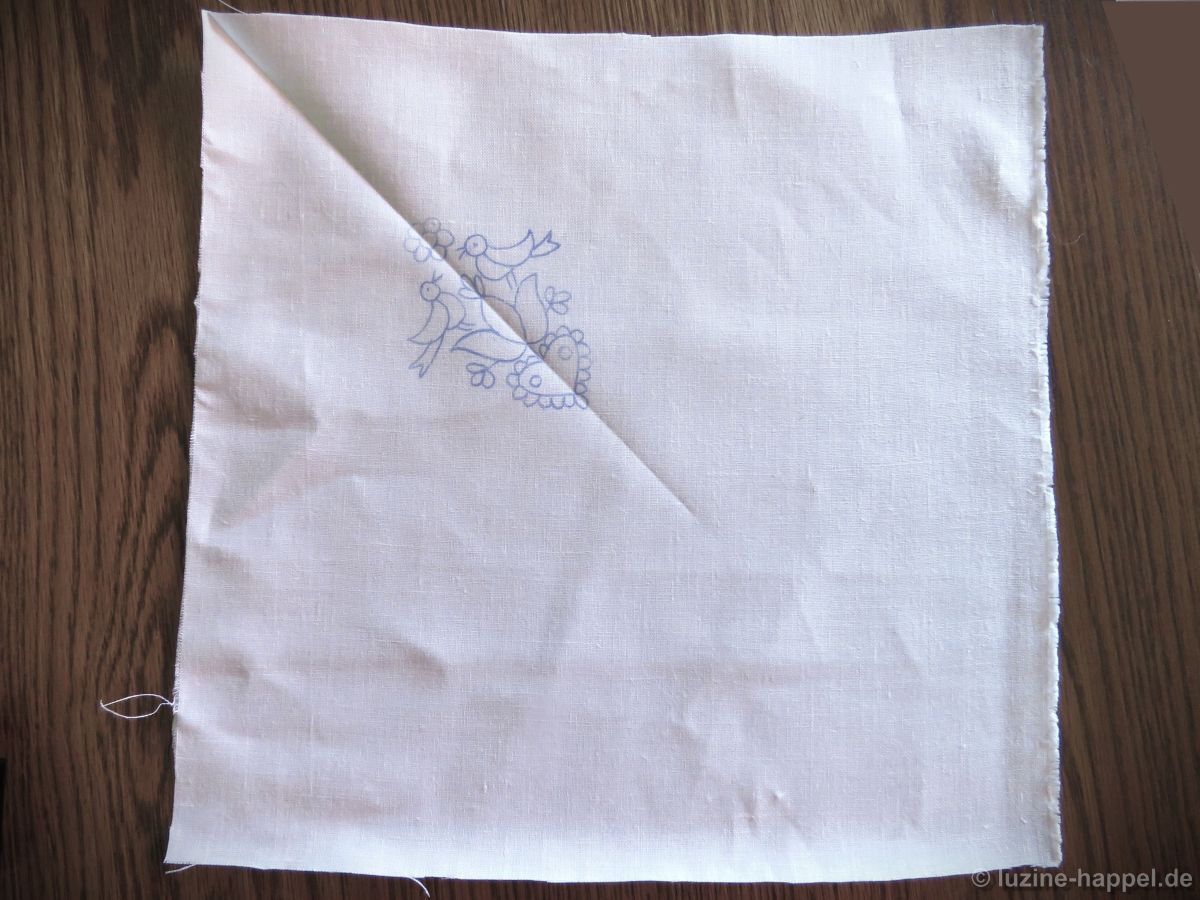
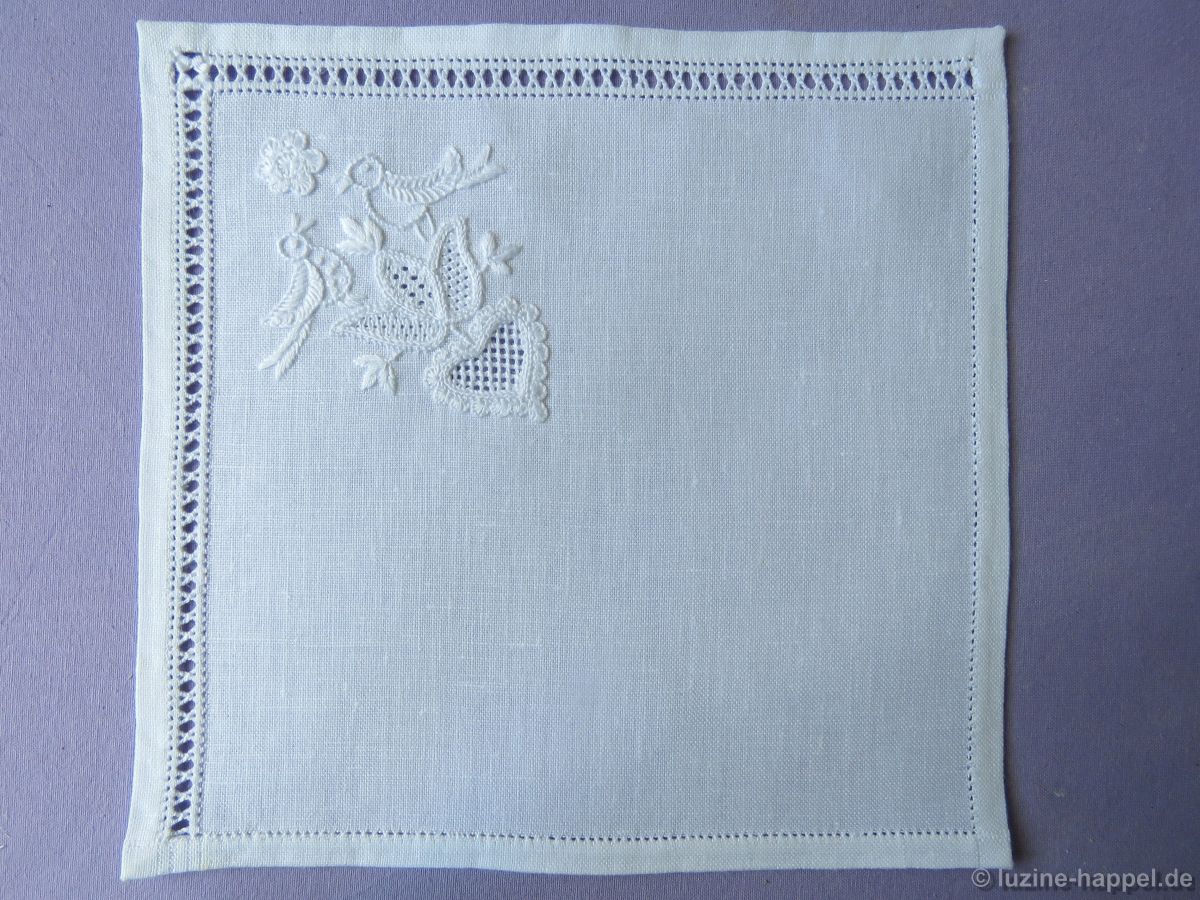
Decades ago, Irmgard Mengel, based on an idea by Maria Jung, cut a stencil for printing onto a tea cloth.

The motifs are arranged in a square pattern, leaving a rather circular area free in the center.
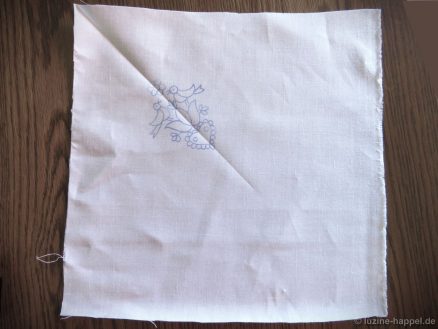
The pattern square measures approximately 50.5 cm x 50.5 cm, with an inner diameter of approximately 29.5 cm. It was transferred to a 90 cm x 90 cm piece of linen.

As I have since taken over Irmgard Mengel’s stencils, I can print such a pattern for you upon request.

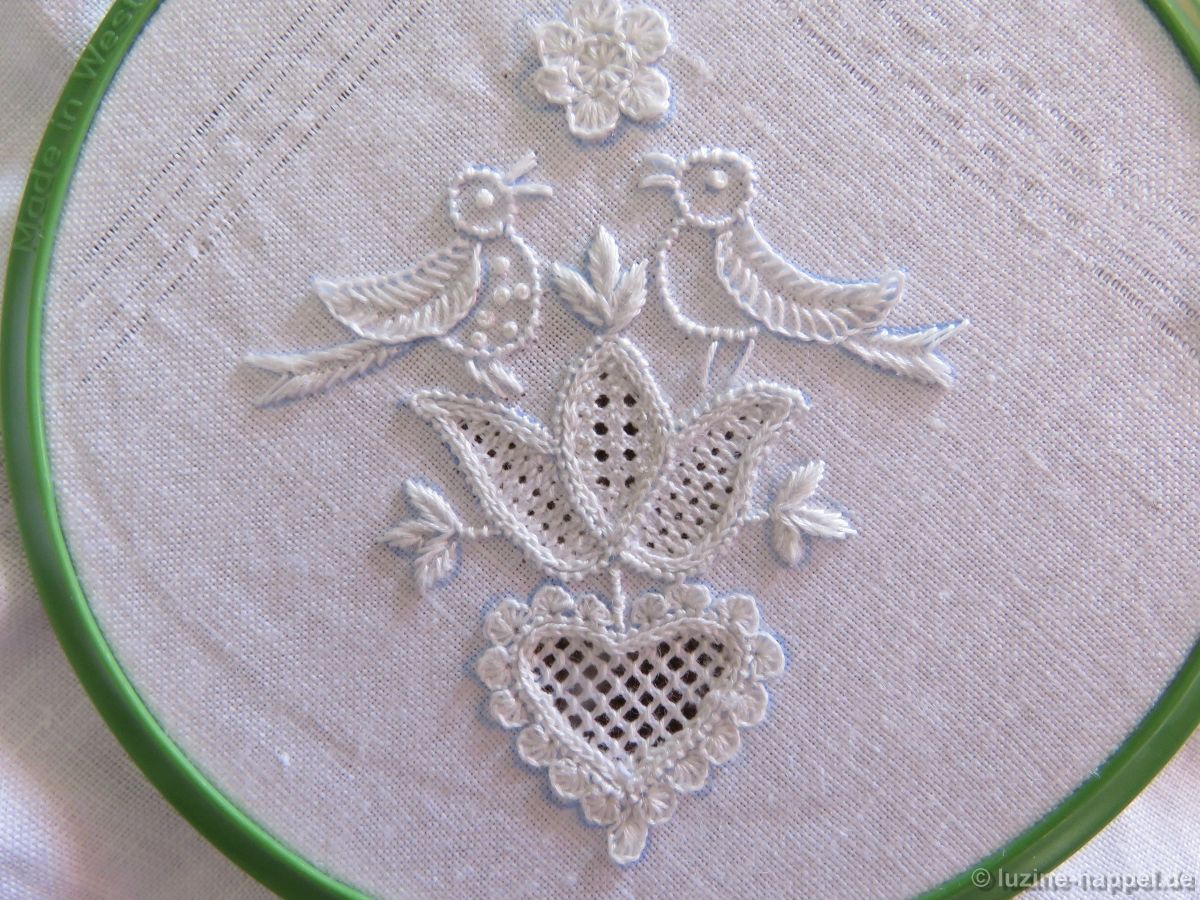
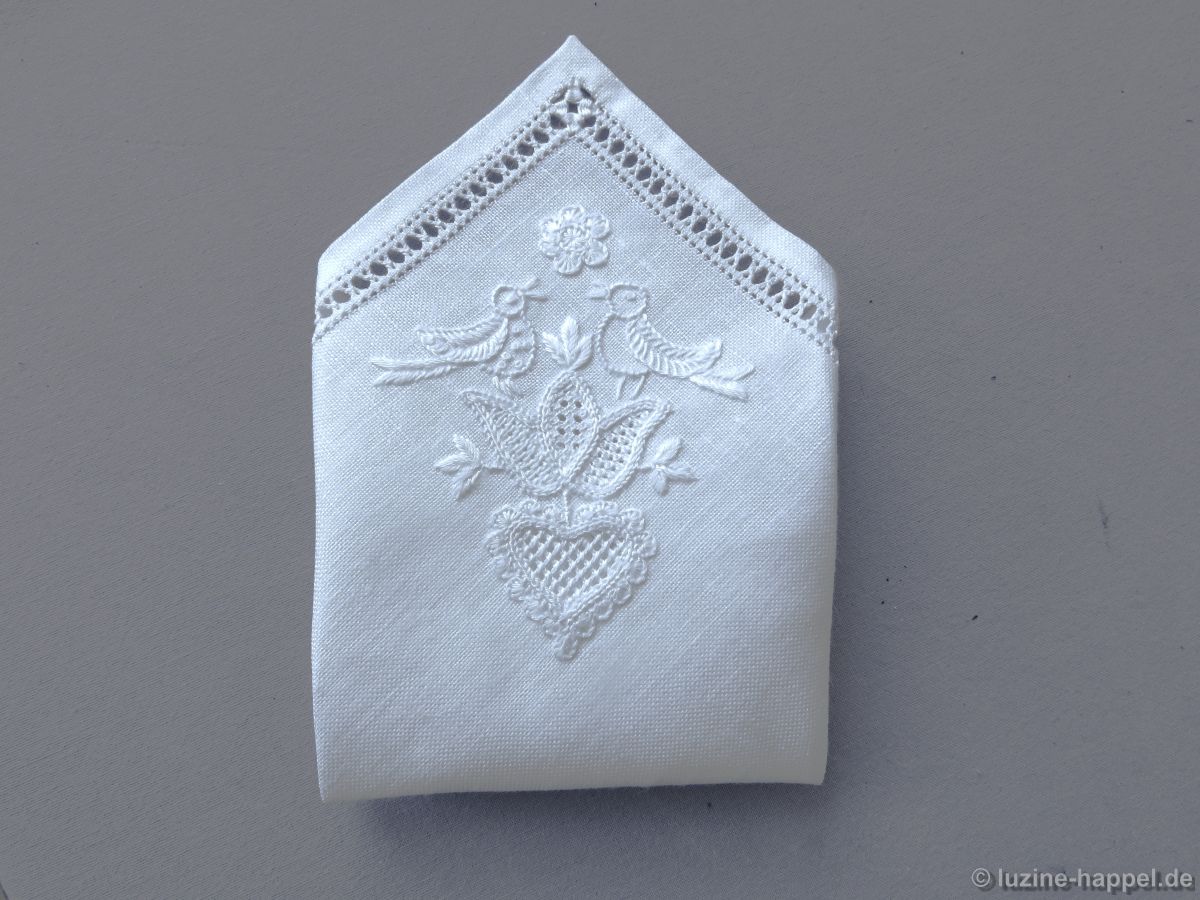
Maria Jung’s designs typically feature intricate patterns. What I particularly like about them is the contrast between rounded and pointed shapes. For this reason, I had this specific pattern printed onto hand-woven 19/20-count linen, embroidered it, and have now completed the piece. The cloth is currently drying on the line in the garden.

I will show details of the embroidery in upcoming blog posts.

How is a Pattern Printed Using a Stencil?

Schwalm Whitework near 35435 Wettenberg

An enthusiastic embroiderer reached out to me for assistance. She attended several courses to learn Schwalm whitework, acquired solid skills there, and spent several years stitching diligently. That was a few decades ago. Now she wishes to take up Schwalm whitework again, but has unfortunately lost much of that knowledge in the intervening years.

She is now looking for someone who can show her a few stitches from time to time—someone who can lend her a helpful hand. She resides in 35435 Wettenberg (near Gießen) and is willing to accept assistance from anyone within a radius of approximately 25 kilometers.
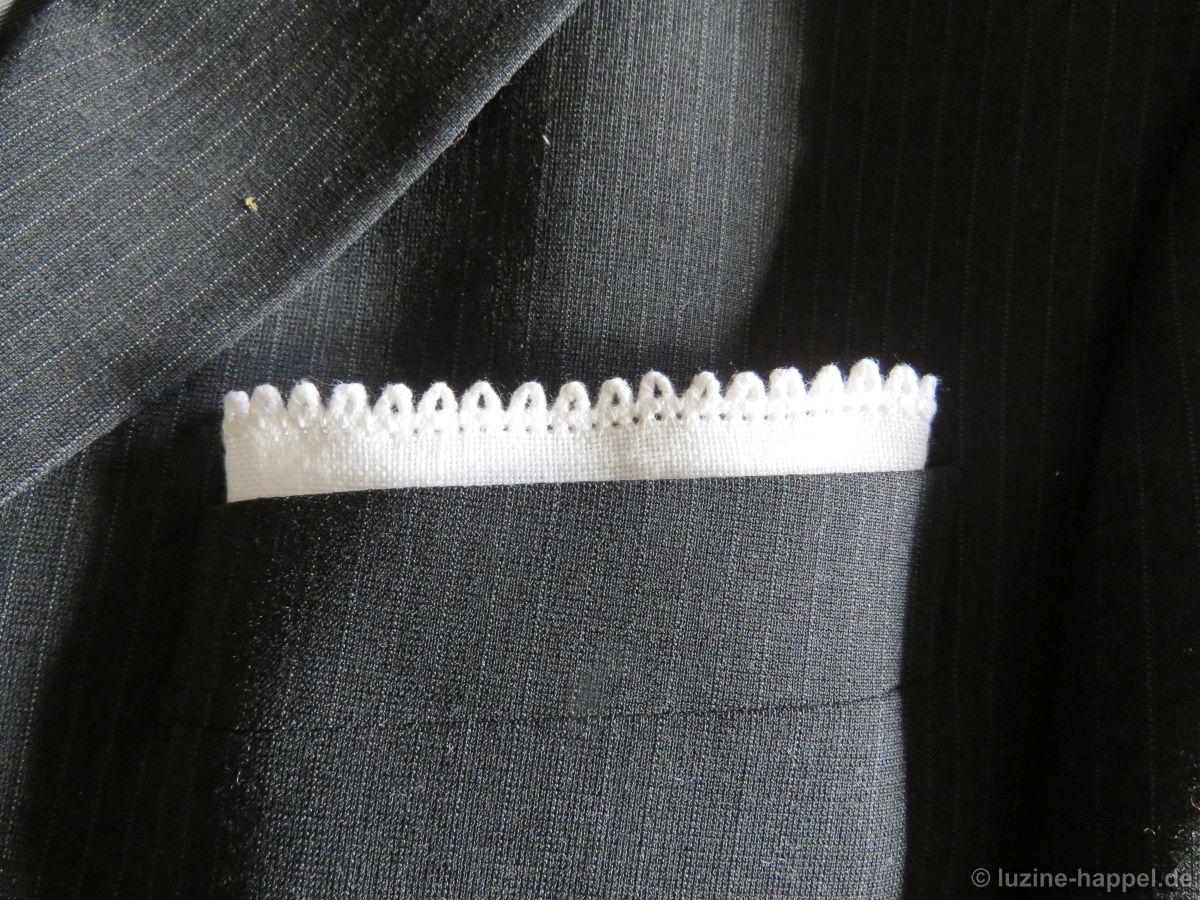
She would also not be averse to joining an existing embroidery circle—or even founding one herself with like-minded individuals—in order to enjoy her hobby together with others from time to time.
I would be delighted to assist in facilitating this connection and look forward to receiving inquiries from interested parties at my email address: info@luzine-happel.de.

Double Outlines (9) – Lazy Daisy Stitches

Lazy daisy stitches can be used flexibly and in a wide variety of groupings to embroider double outlines around motifs. Here, pairs of lazy daisy stitches have been arranged to form a zigzag line.

You can come up with many more variations. Why not simply give it a try?

See also:
Double Outlines (1) – Remaining Free Areas
Double Outlines (2) – Interlaced Straight Stitches
Double Outlines (3) – Interlaced Herringbone Stitches
Double Outlines (4) – French Knots
Double Outlines (5) – Bullion Knots Knots
Double Outlines (6) – Blanket Stitches
Double Outlines (7) – Honeycomb Darning Stitches
Double Outlines (8) – Chain Stitch Variations
Double Outlines (9) – Coral Knot Stiches

Handwoven Linen (F II) in the Test

After testing linen F I, I have now tested the next bale of linen. Here are the results.

The linen is in the original condition of the bale it was sewn into after production. It has smooth selvedges.

Approximately 100 cm needs to be cut off at both the beginning and end of the roll, as the linen is too distorted there.
The linen is 80 cm wide – a very versatile width for handwoven linen.
It feels relatively soft; I would describe the feel as soft.

The linen shows little soiling at the fold and mostly lighter stains across the entire surface.

A quick wash test removed all these stains.
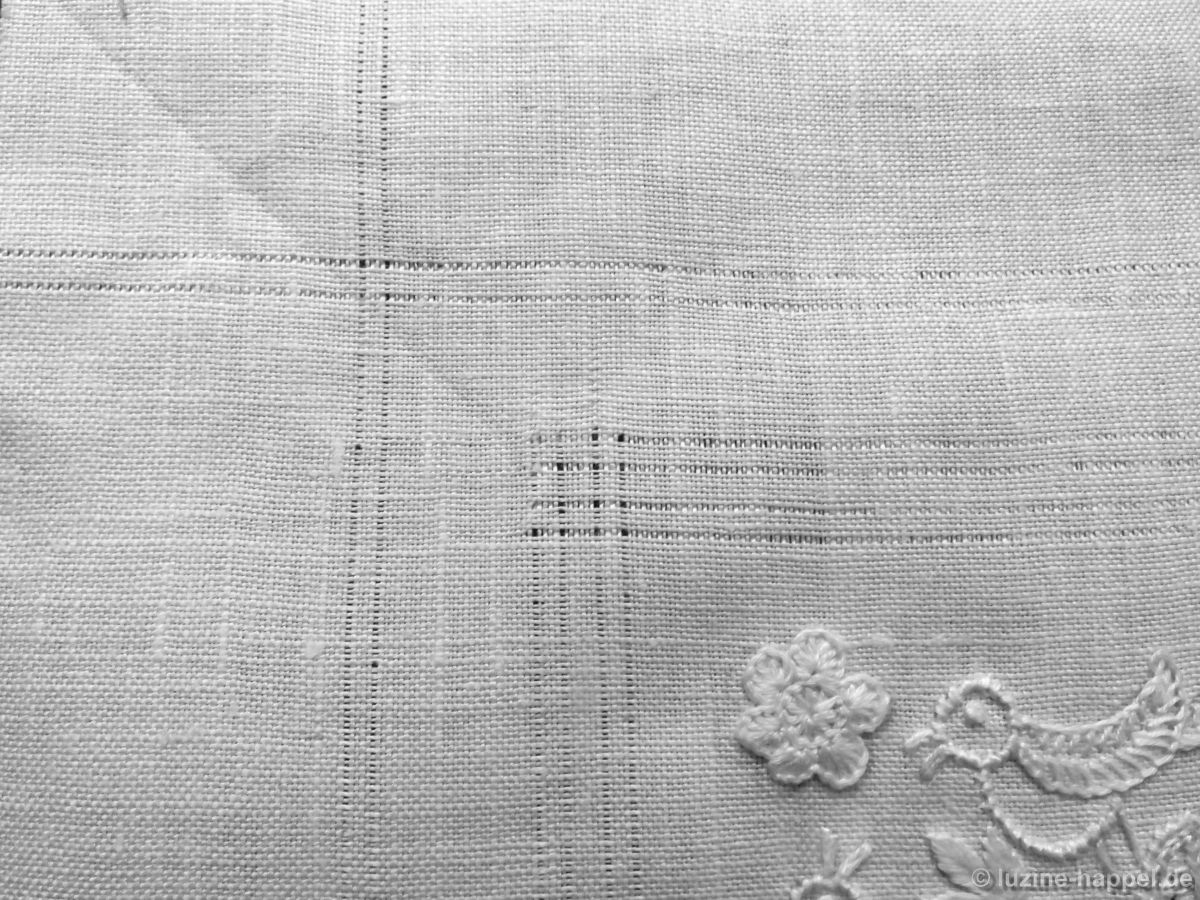
The fabric is dense, the threads used vary in thickness. I count 16 to 18 warp threads and 14 to 16 weft threads per centimeter.

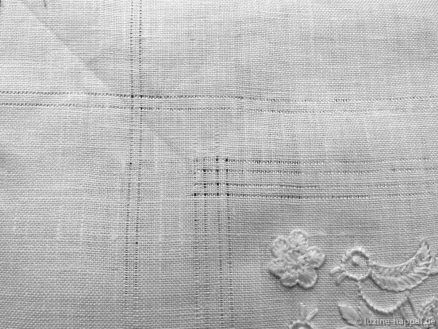
In comparison to linen F I – shown here in the left half in the large square in the lower image – the spaces between the threads are larger.

The threads are usually clearly separated from each other – a sign that they can be easily pulled out.

However, there are also areas with matting, although it is relatively minor.

Occasionally, one finds thread thickenings and also small weaving defects.

Both the warp and weft threads could be pulled out easily and without tearing.

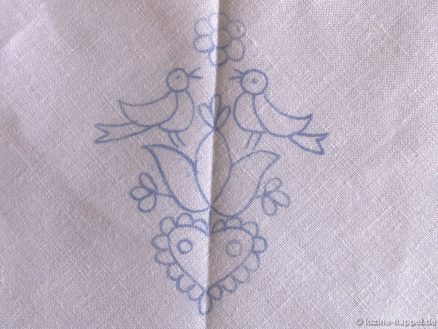
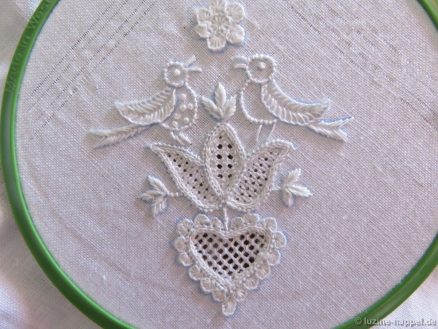
To test the linen for embroidery, a small motif (10 cm x 9 cm) is ironed on and embroidered.

The embroidery process is very pleasant – the linen feels good in the hand and the needle glides easily through the fabric.

Although the linen is not quite as densely woven as linen F I 25394, the stitches can be placed relatively precisely.

The thread pull-out in the motif areas was successful.

Despite the varying thickness of the fabric threads, the Limet thread grid appears relatively uniform.

However, many beautiful filling patterns can be embroidered in the relatively small heart-shaped area of ​​4 cm width.

The small embroidery stands out well on the linen.

All stains have completely disappeared. The thickened threads do not detract from the overall appearance. A slightly irregular structure is typical of handwoven linen and contributes to the fabric’s charm.

However, the linen shrank by approximately 3.5% in the warp direction, while it retained the same width in the weft direction.

This linen—tested and approved—I am selling for €20.00 per meter. If you are interested, please send me an email.

See also:
Selling Handwoven Linen (1)
Testing Fabric Suitability for Schwalm Whitework
Linen: Embroidery Fabric from Flax Fibers
Fault in the Linen – what to do? (1)

Double Outlines (9) – Coral Knot Stitches

Another way to emphasize motif edges with double outlines is to embroider adjacent rows of coral knot stitches.

This variant can be found in many traditional models from the end of the 18th century onwards.

Many motifs were designed using this alternative on a densely embroidered bodice sleeve border.

The detailed photos show,

that a row of chain stitches with thick thread was often worked within the coral knot stitches.

These not only ensure a clean finish to the filling patterns, but also accentuate the edge.

However, there are also examples where the coral knot stitch double row forms the only border decoration.

Sometimes only part of the motif’s border is decorated in this way. The remaining edges are given a different design, as seen here with blanket stitches and – partially visible to the right – Interlaced Straight Stitches

See also:
Double Outlines (1) – Remaining Free Areas
Double Outlines (2) – Interlaced Straight Stitches
Double Outlines (3) – Interlaced Herringbone Stitches
Double Outlines (4) – French Knots
Double Outlines (5) – Bullion Knots Knots
Double Outlines (6) – Blanket Stitches
Double Outlines (7) – Honeycomb Darning Stitches
Double Outlines (8) – Chain Stitch Variations