Small Schwalm Cloth

After I recently showcased a small old, decorative Schwalm cloth, an embroiderer shared two other noteworthy examples for me to post on the blog.

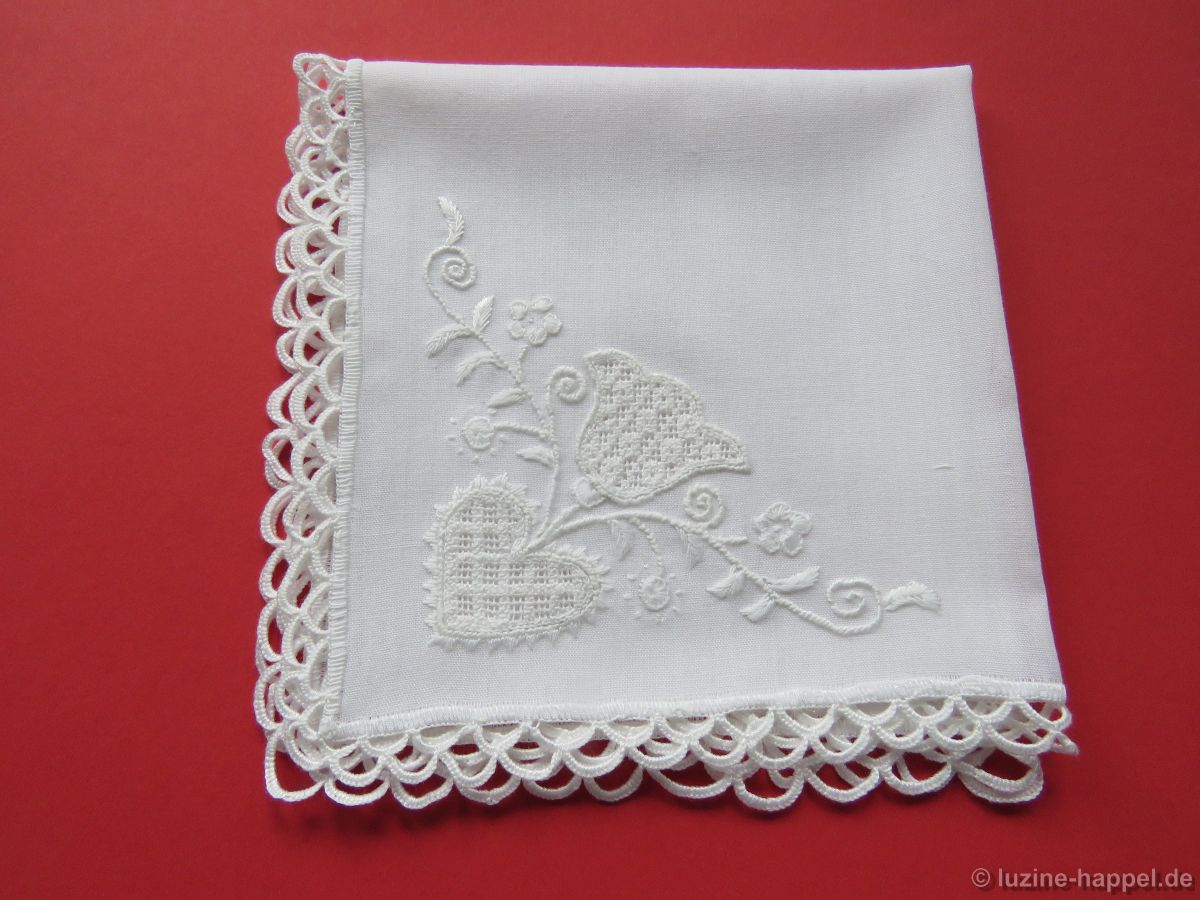
The first small cloth measures 26 cm x 26 cm. It is made of the finest fabric—with a centimeter thread count of 35.

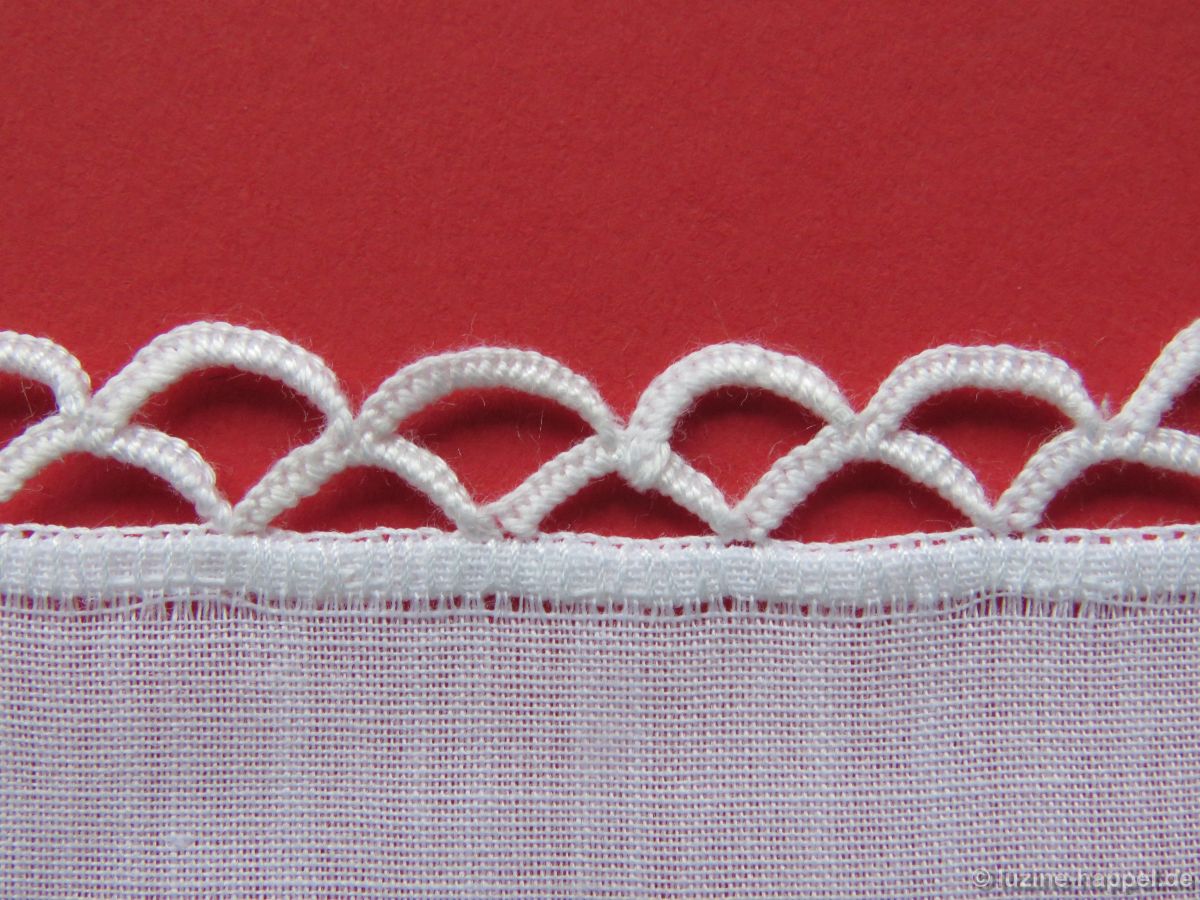
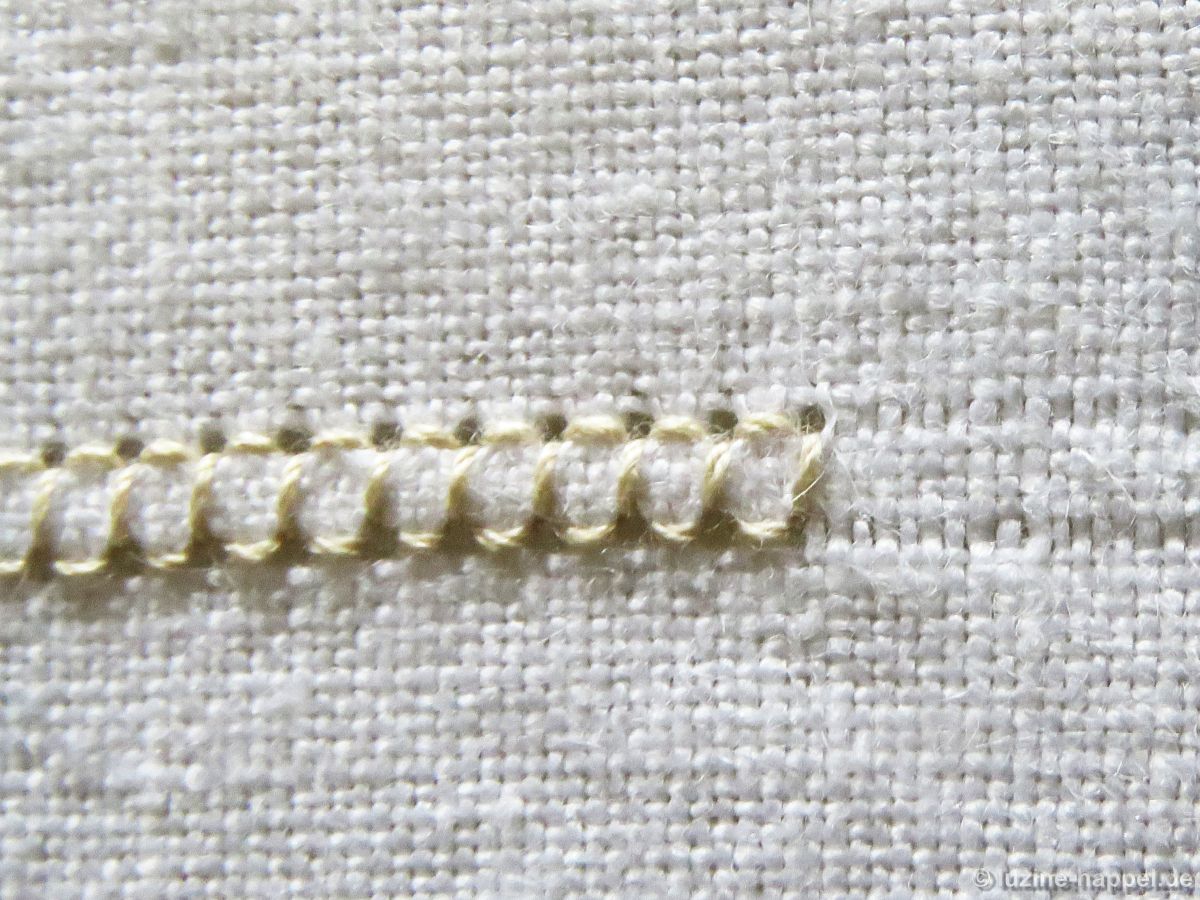
The edges are turned under and secured with Blanket stitches. Attached to these are two rows of needlelace scallops.

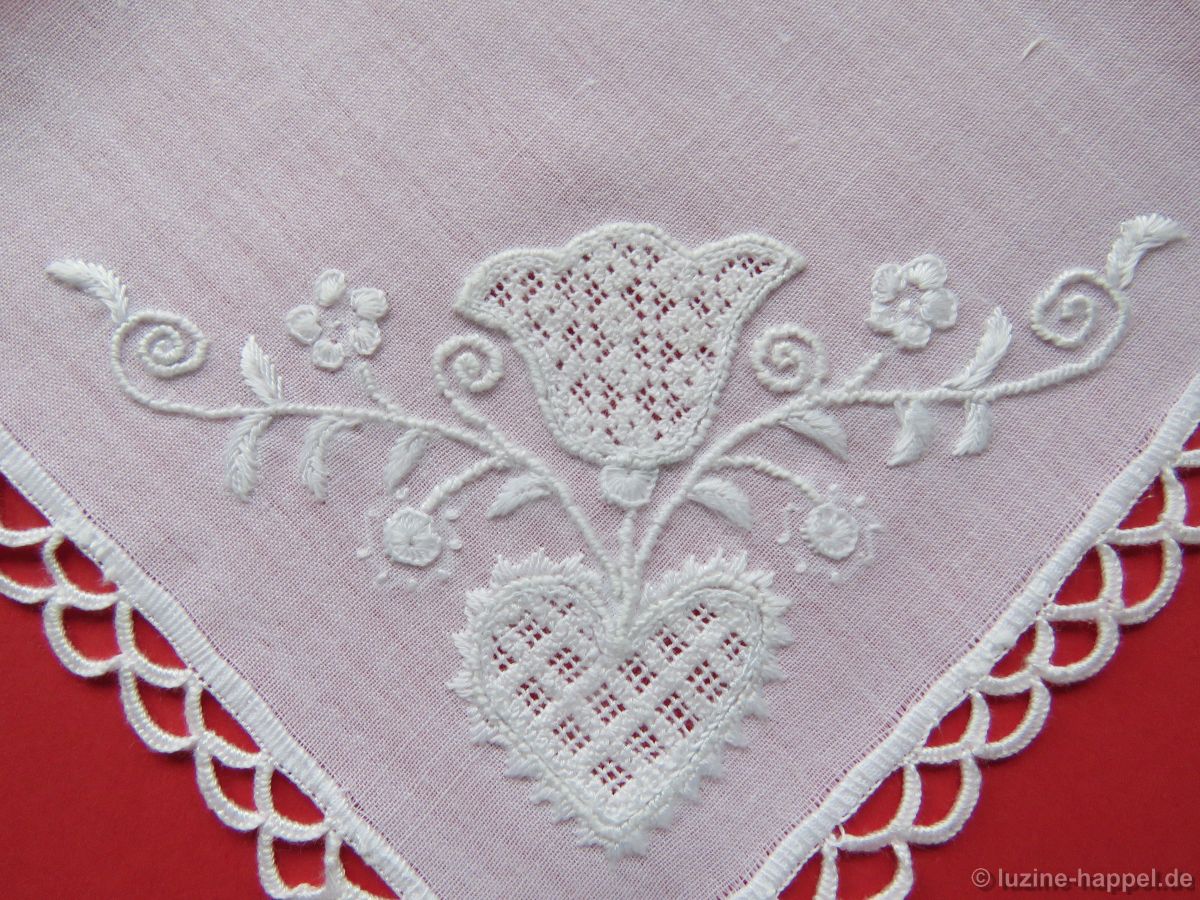
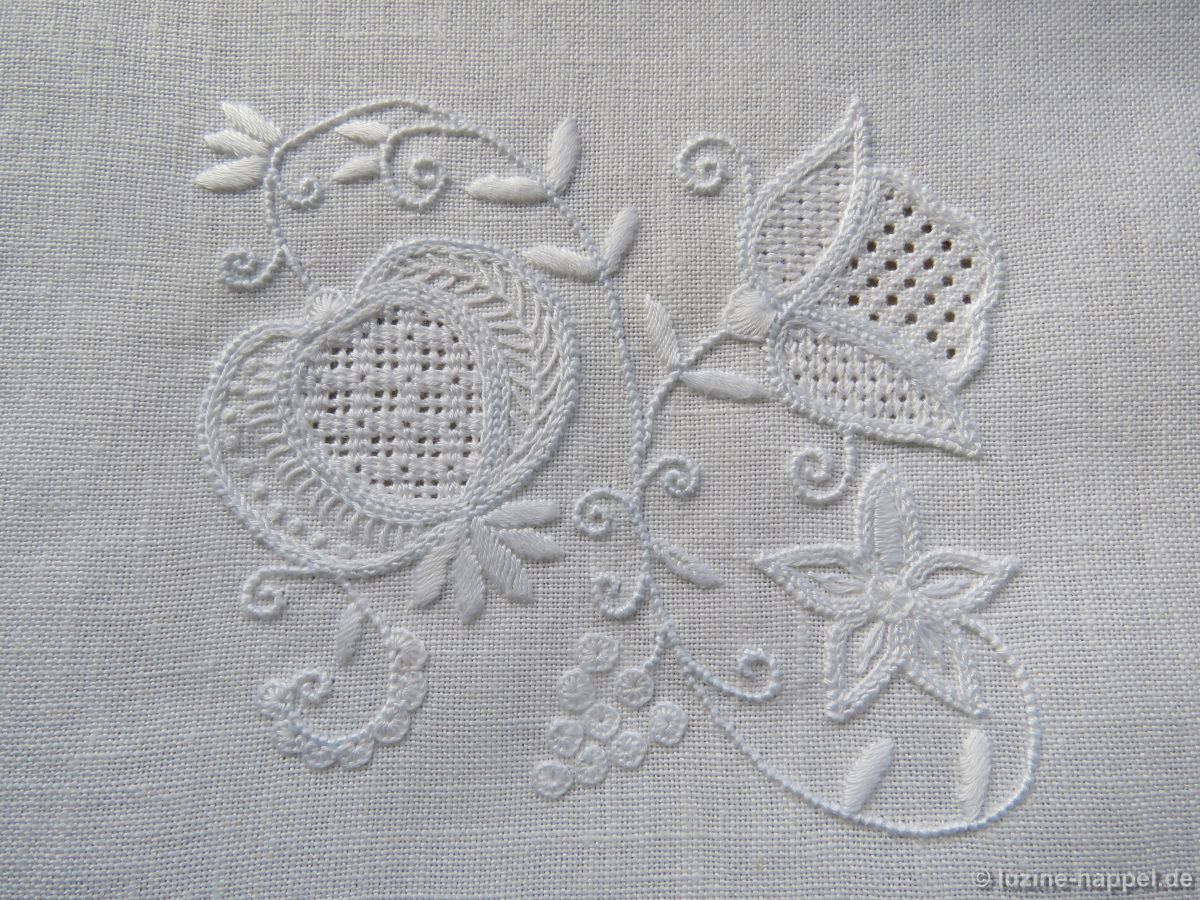
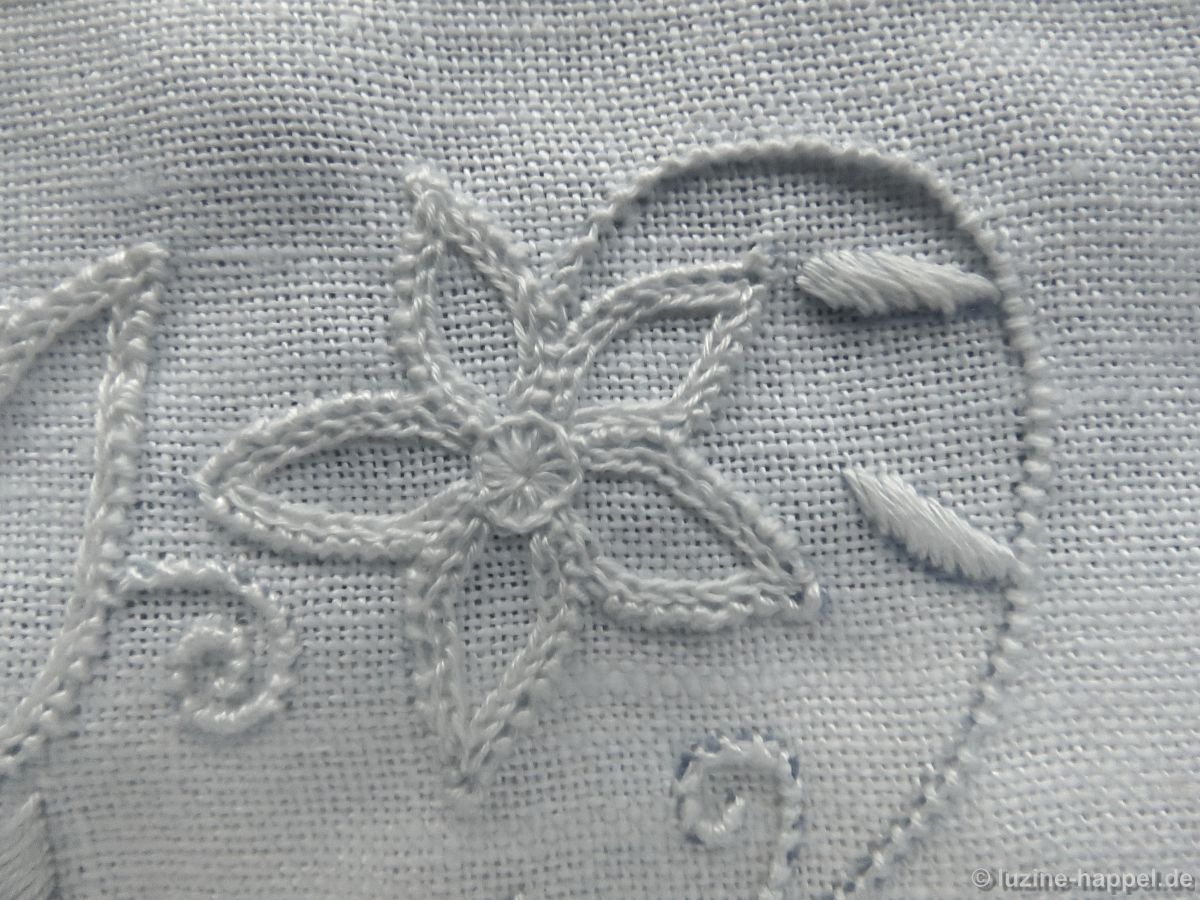
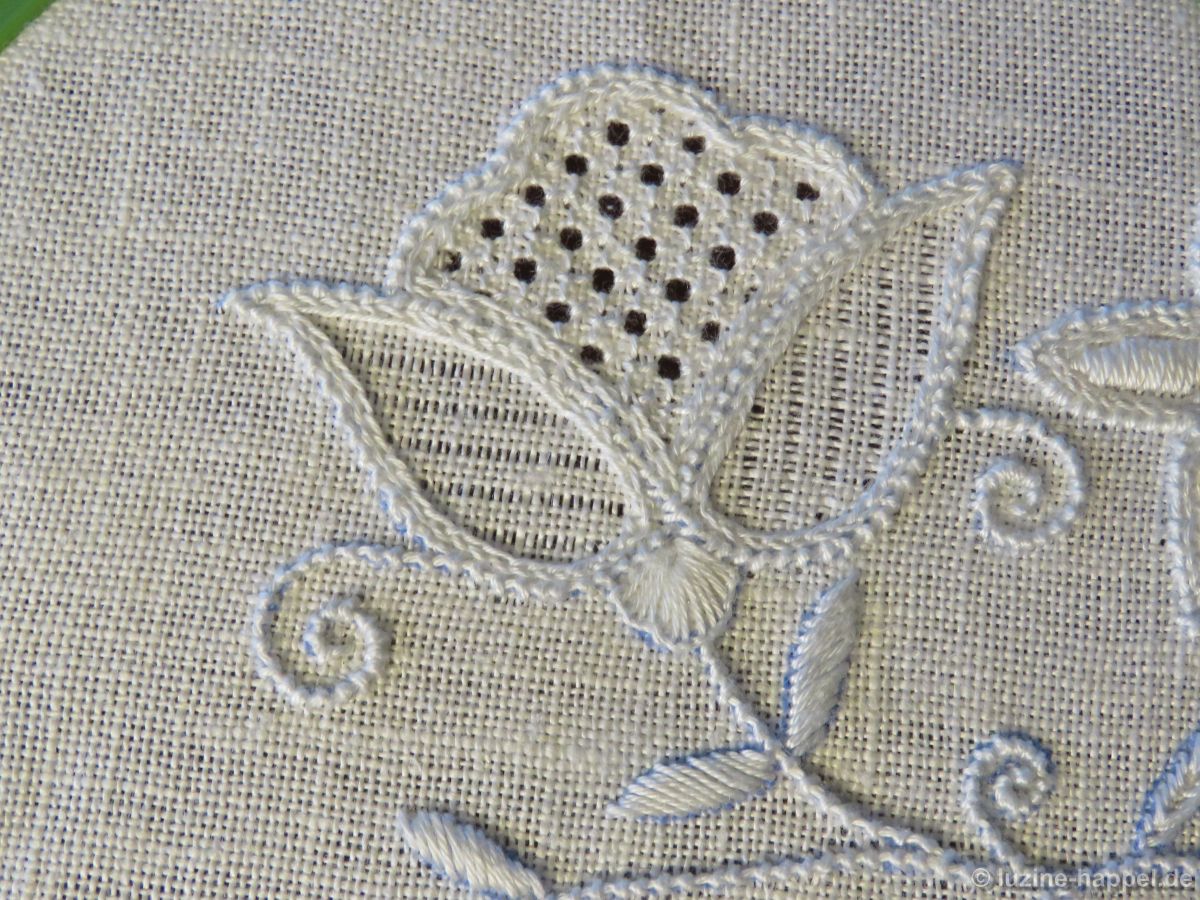
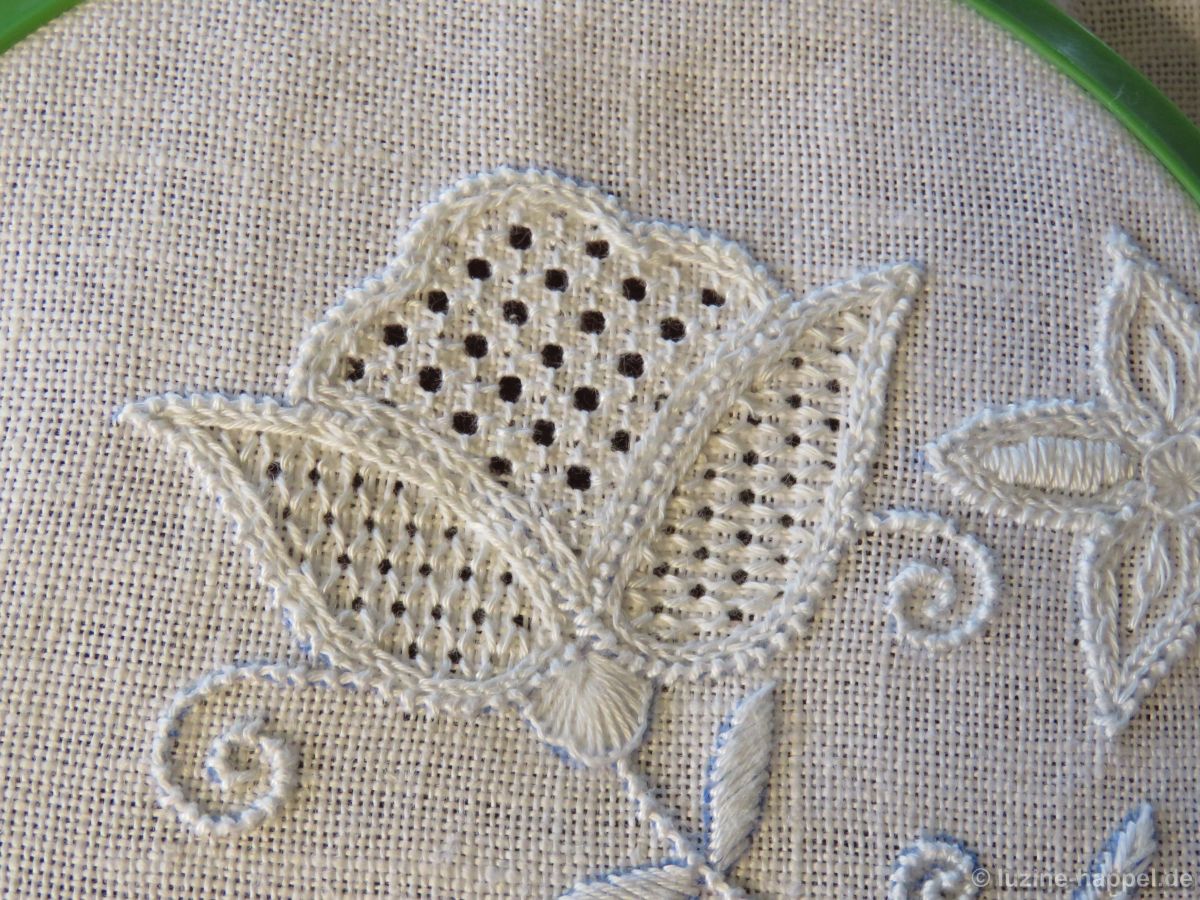
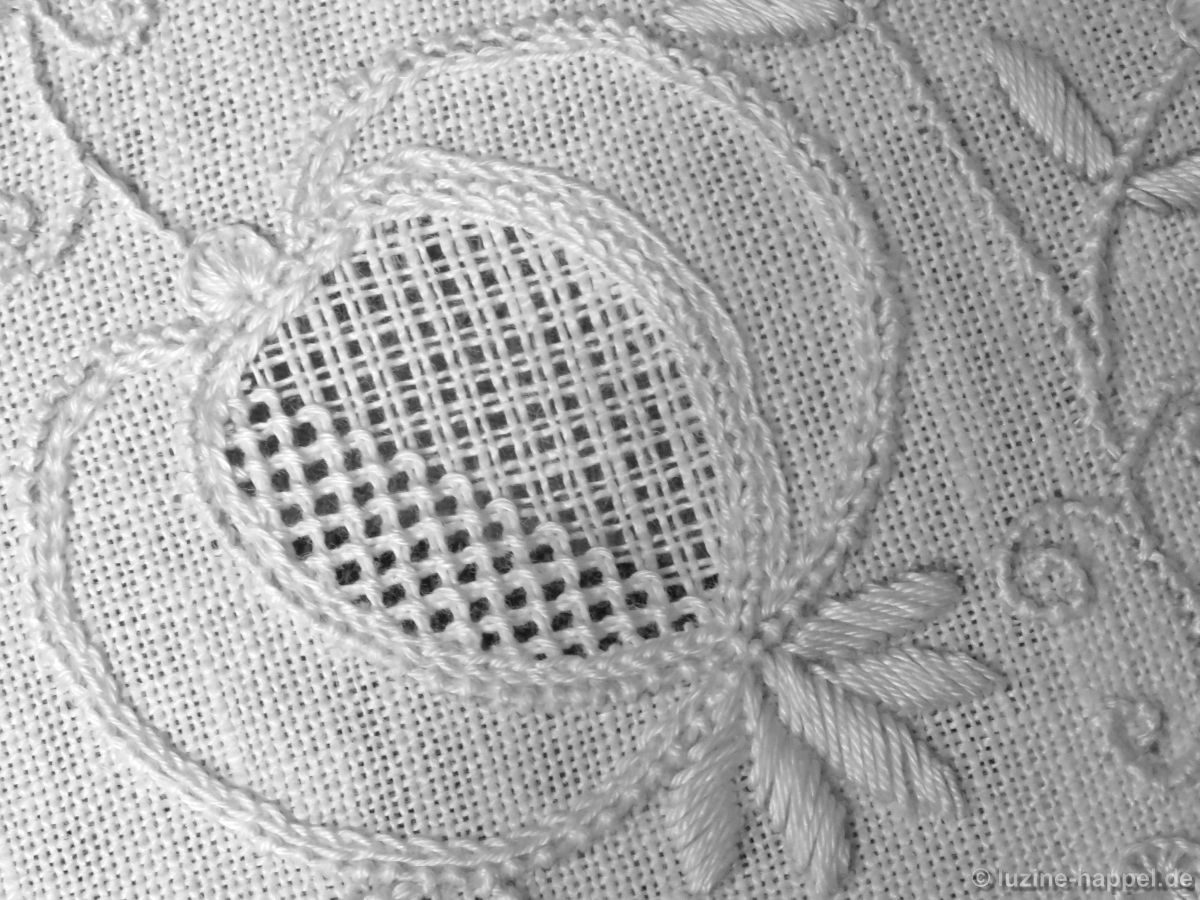
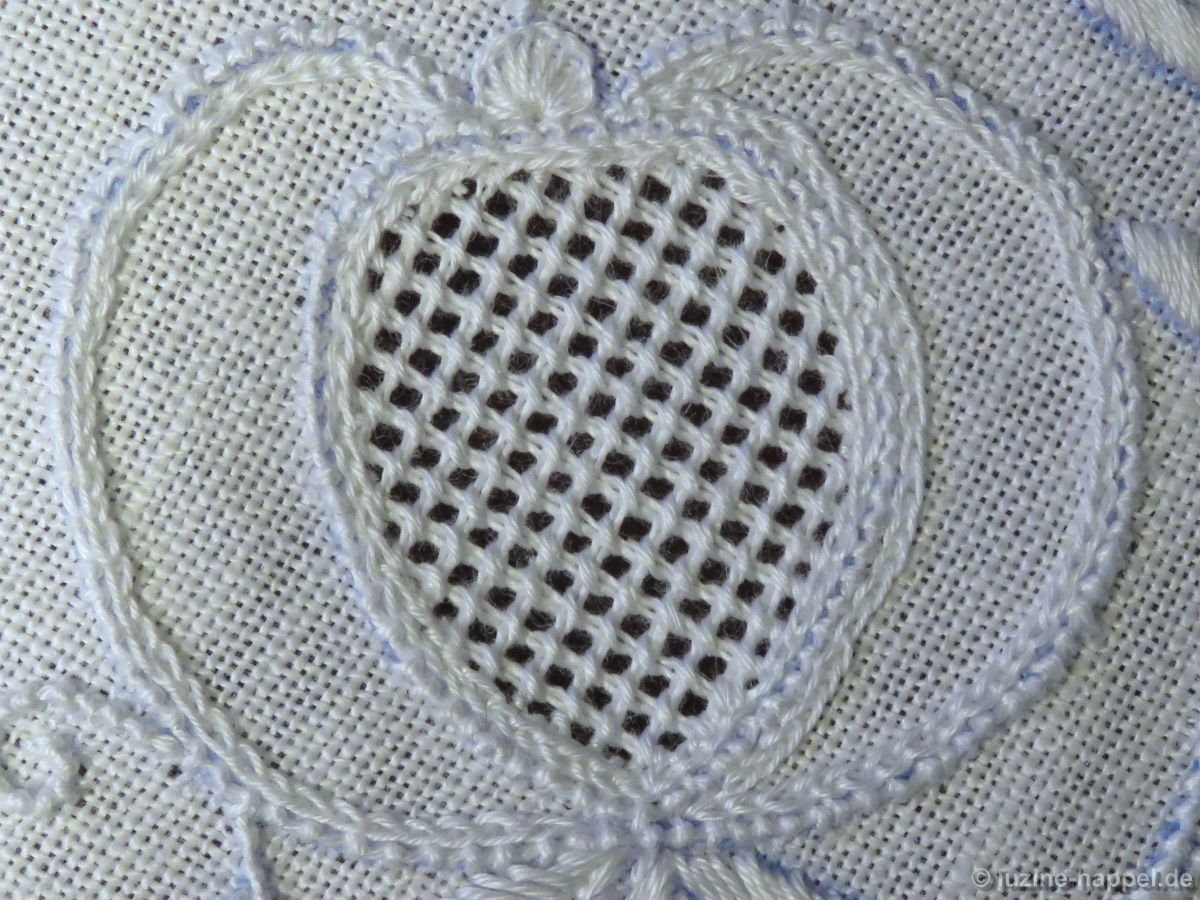
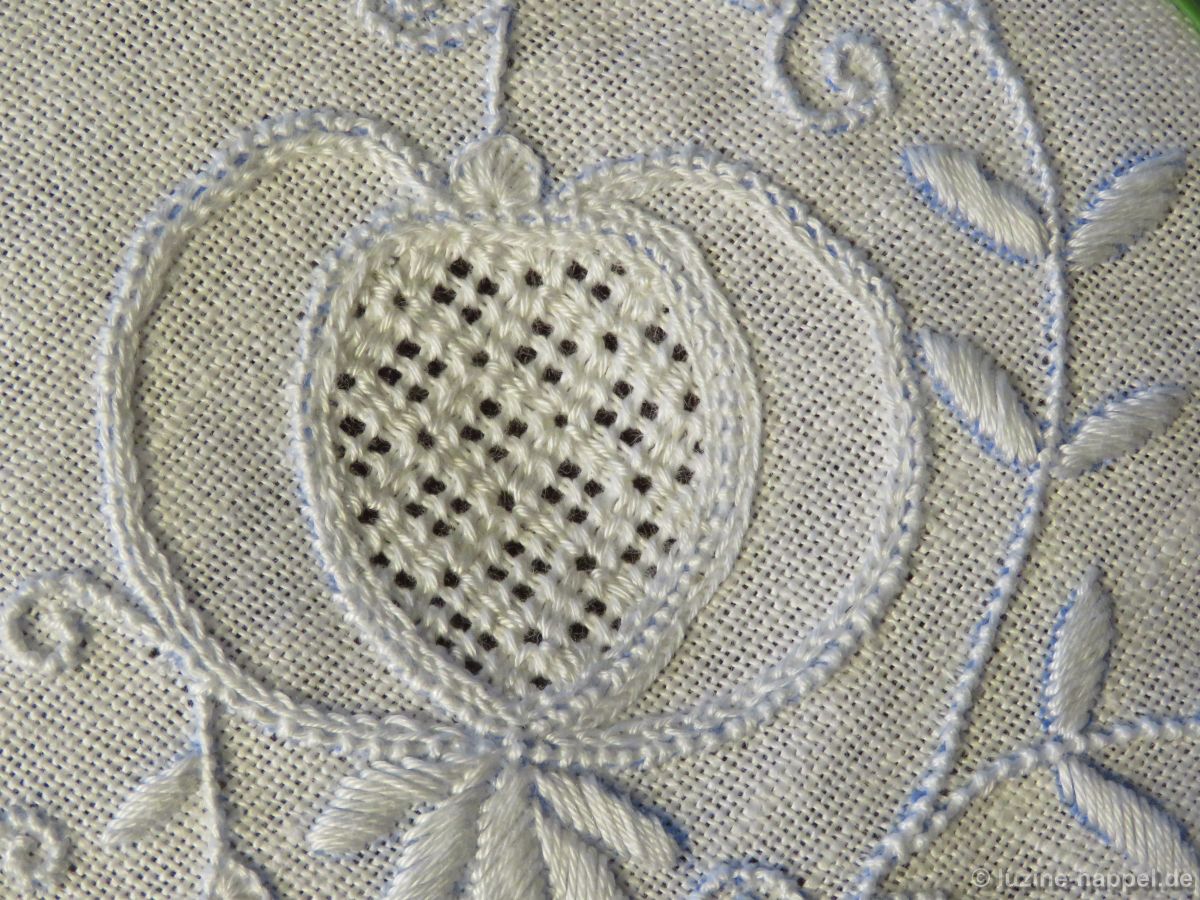
One corner of the small cloth is embroidered with a typical Schwalm motif. A heart and a tulip adorn delicate openwork Rose stitch patterns.

The owner can be very proud of this little gem with its intricate workmanship.

Embroider Softened Linen

Embroidery is my passion. I love it when the needle glides through the fabric almost as if by itself, allowing the work to progress quickly. However, linen comes in various finishes, and not all of it allows for smooth, effortless stitching.

Once again, I found myself working with some very stiff linen, which required a fair amount of effort to pull the needle through the fabric with every single stitch. Even using a brand-new, sharp-pointed needle didn’t help. The embroidery process was simply not enjoyable.

In the Schwalm region, I had often been advised to soak such stiff linen in fabric softener. Rather than leave the project unfinished, I decided to give this method a try. I mixed some fabric softener into cold water, submerged the linen, kneaded it thoroughly in the solution, and then laid it out to dry.

Afterwards, the fabric felt much softer. But how would it be to work with?

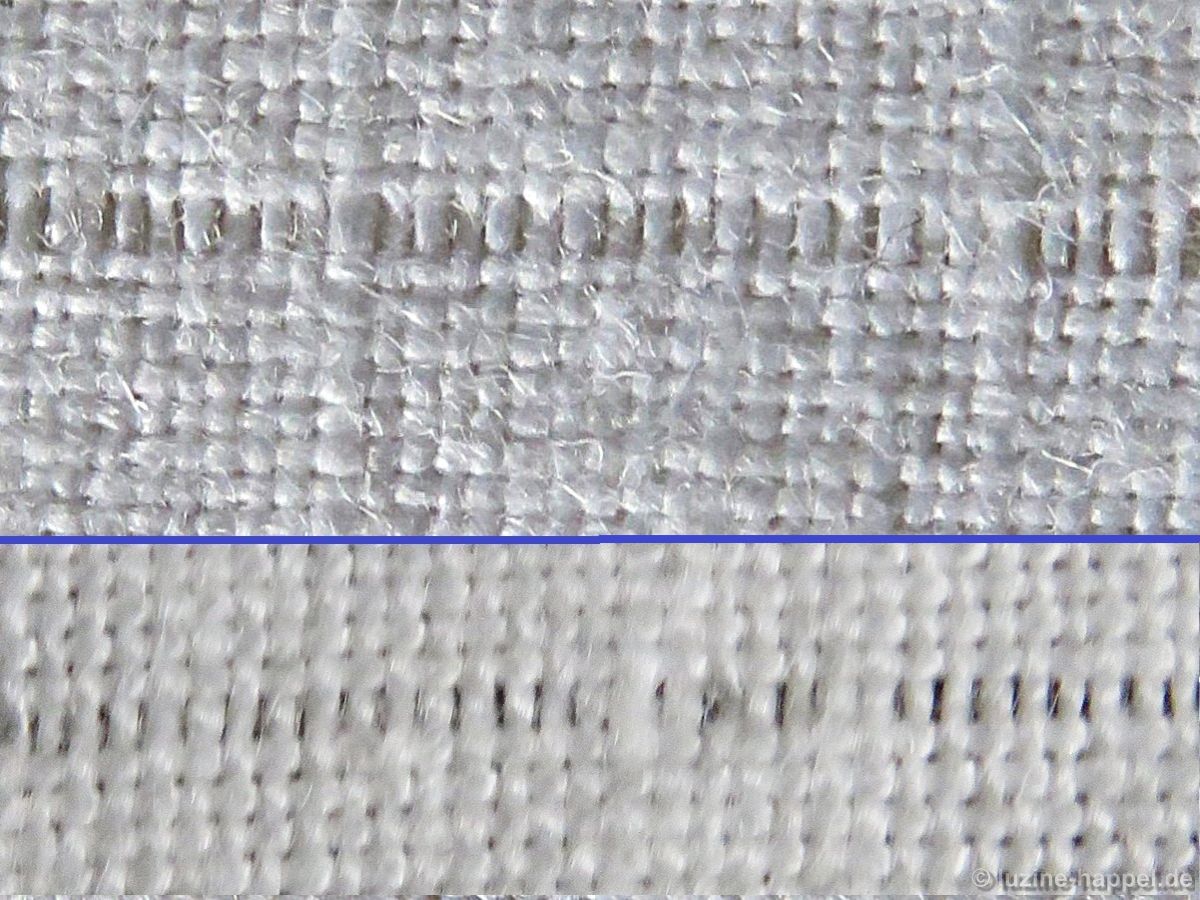
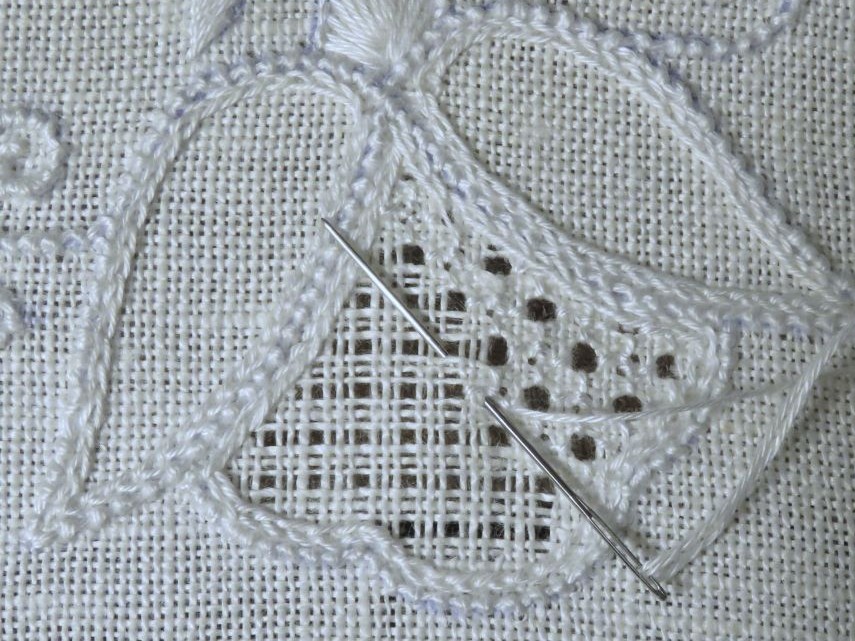
I could detect no difference in thread withdrawing. The upper withdrawn thread line was made before the fabric softener treatment, the lower one afterwards.


The threads could also be counted just as easily.

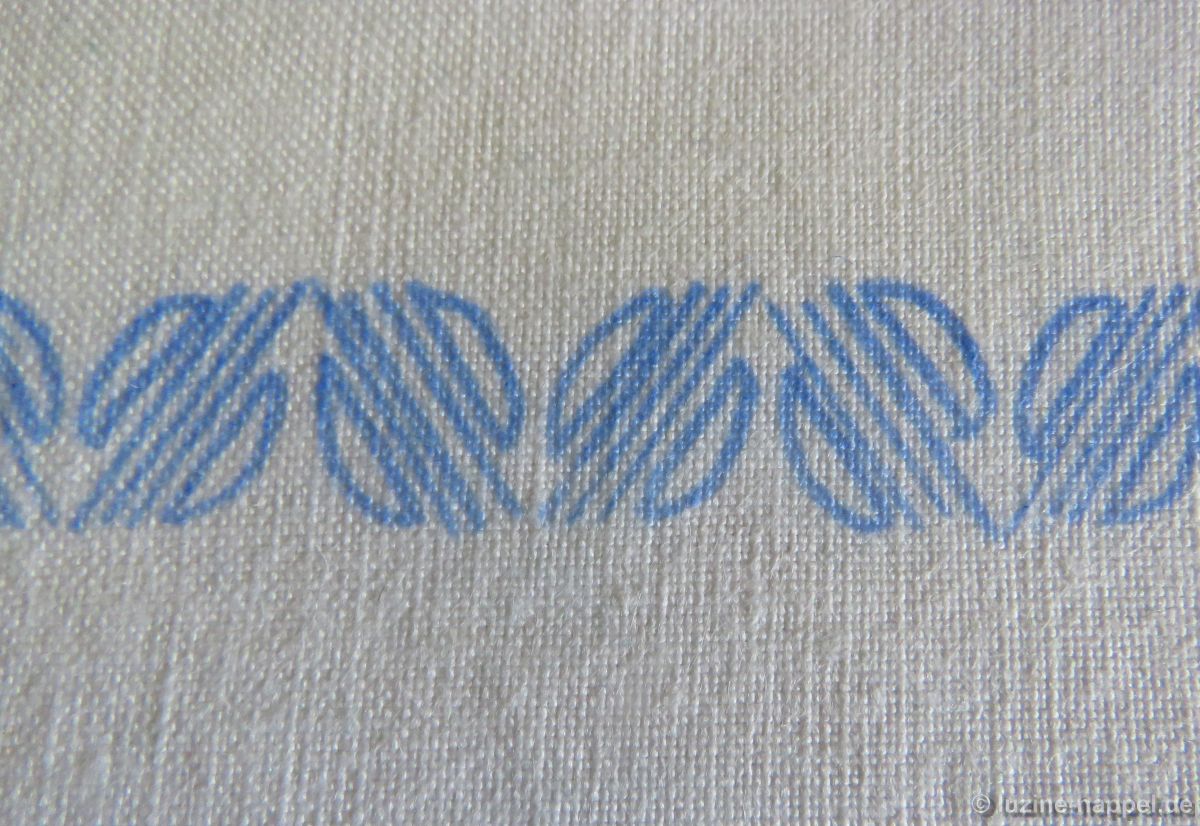
The ironed-on outlines adhered well and did not rub off.

Embroidery proved to be much more pleasant—partly because the fabric one held in one’s hands was softer, and, more importantly, because the needle glided through the fabric with far greater ease.

Why not try it out for yourself?

Selling cut-to-size Linen with Print (2)

I recently began parting with some of the patterned linen cuts I had in my stash.

Today I am offering Christmas-themed patterns.

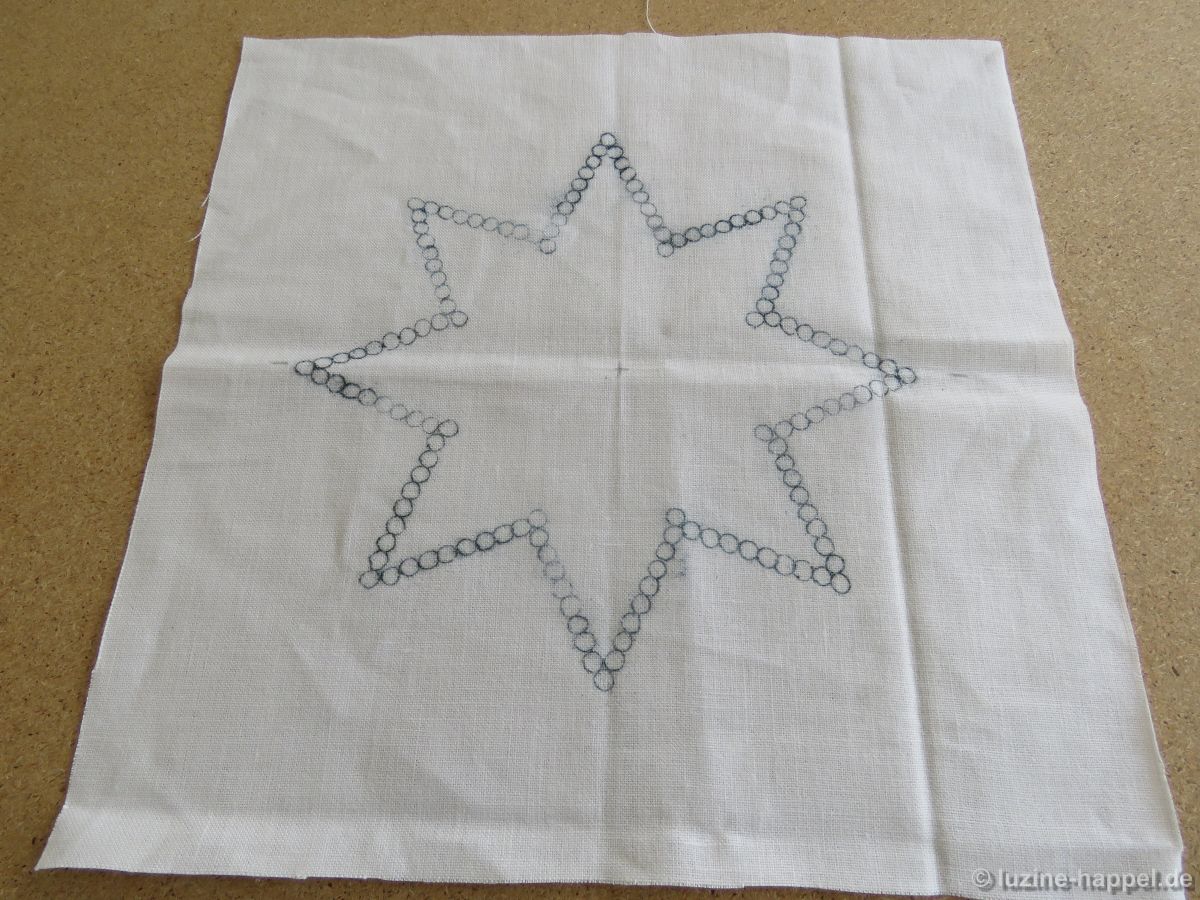
Everything is printed on high-quality, bright white linen from the company Weddigen (item #925 HW – 16/cm-thread count). The precise outlines make the work significantly easier, allowing you to begin stitching without any extensive preparation.

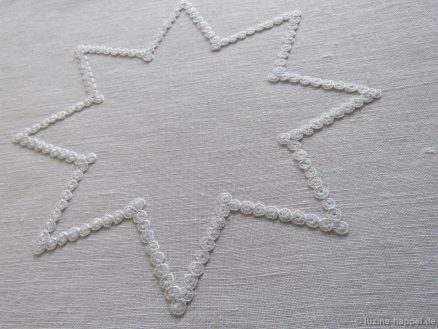
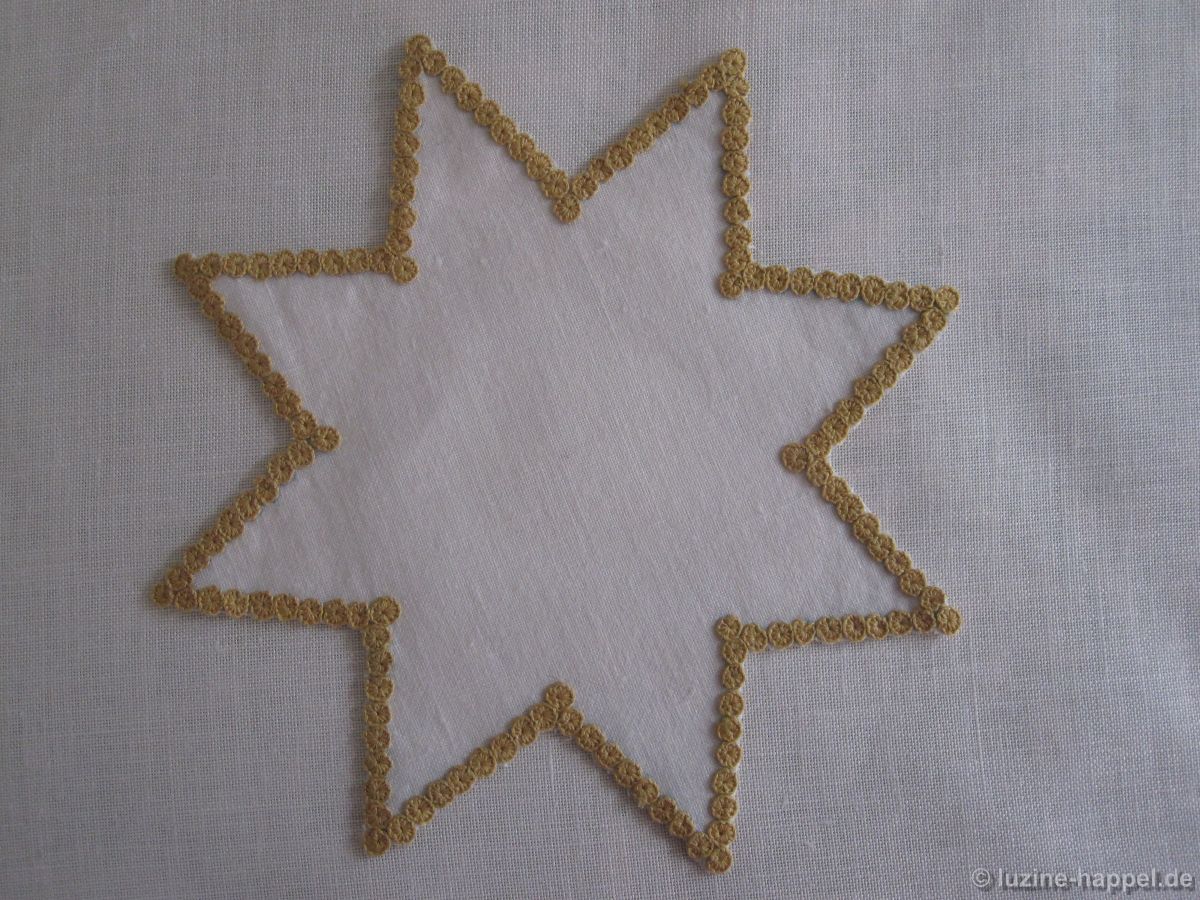
I have embroidered the “Blanket Stitch Eyelets Star” in two sizes many times,

both in white

and in color.

The simple beauty of the pattern has delighted many. Such a star has always been a very welcome small gift. My own needs—as well as those of my family and acquaintances—have now been met. I still have several printed pieces left, which I would now like to sell.

Already sold !

#33a
“Blanket Stitch Eyelets Star” small

size of linen cut: approx 32 cm X 32 cm
design size: approx 22 cm in diameter
price: €7

#33b
“Blanket Stitch Eyelets Star” somewhat larger

size of linen cut:approx 45 cm X 45 cm
design size: approx 35 cm in diameter
price: €14


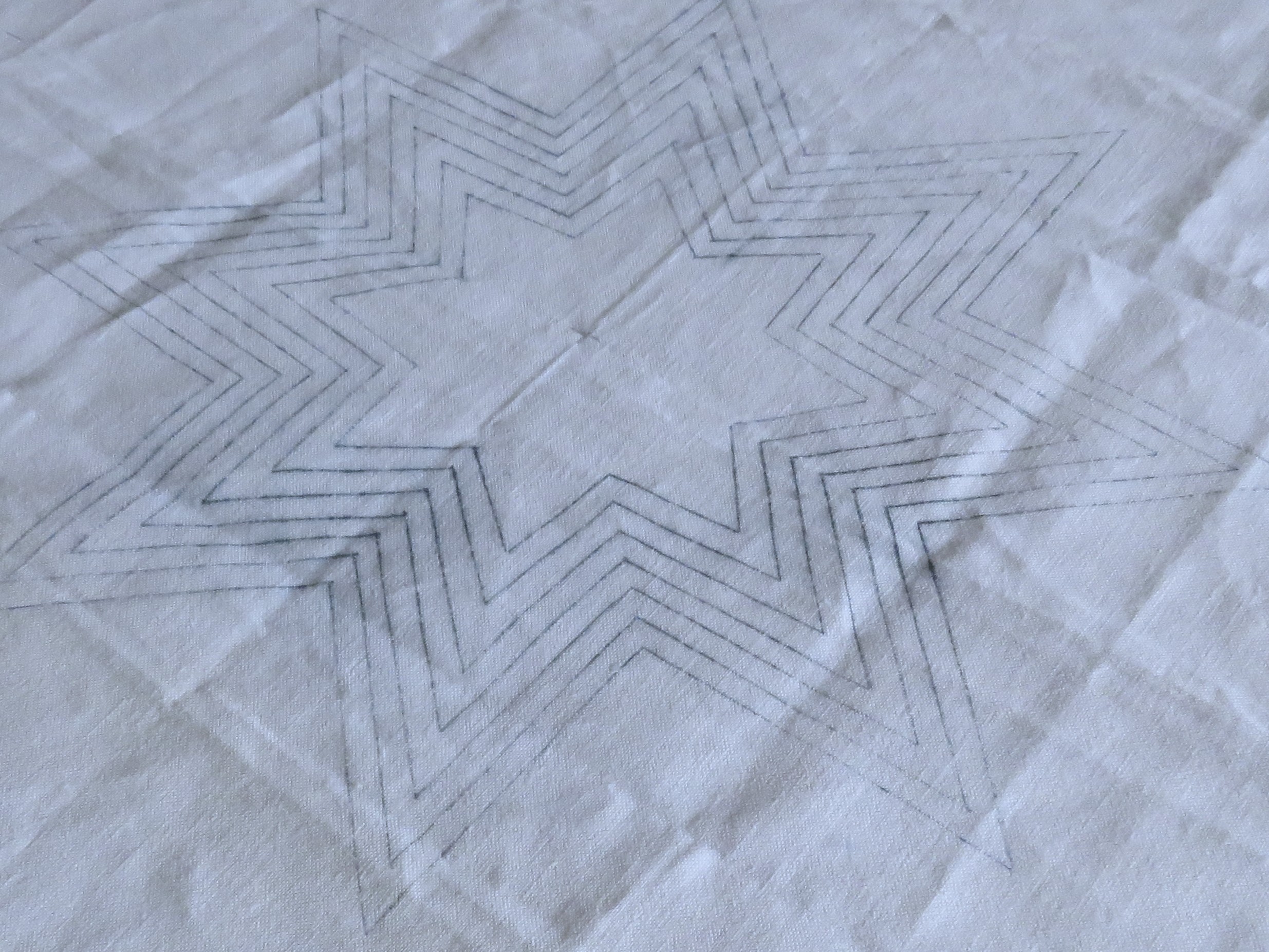
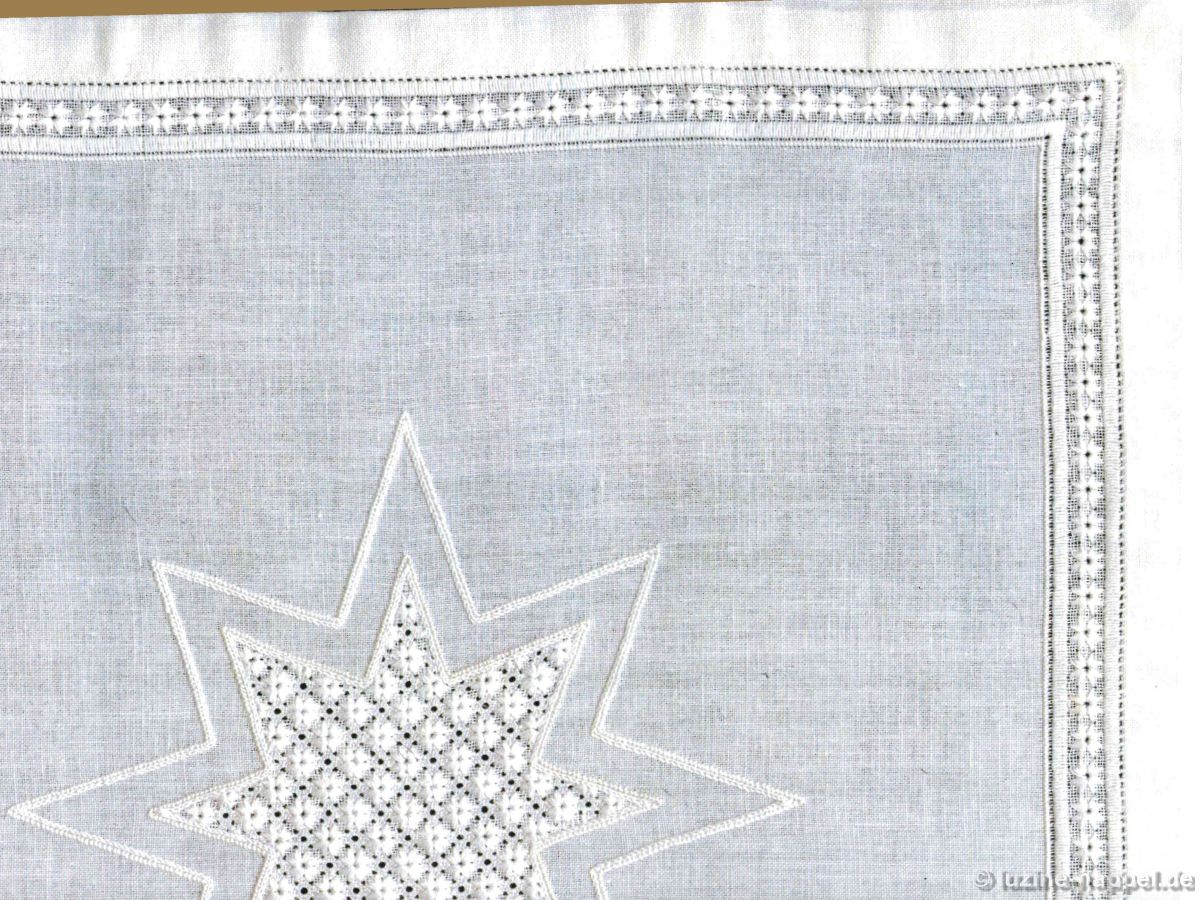
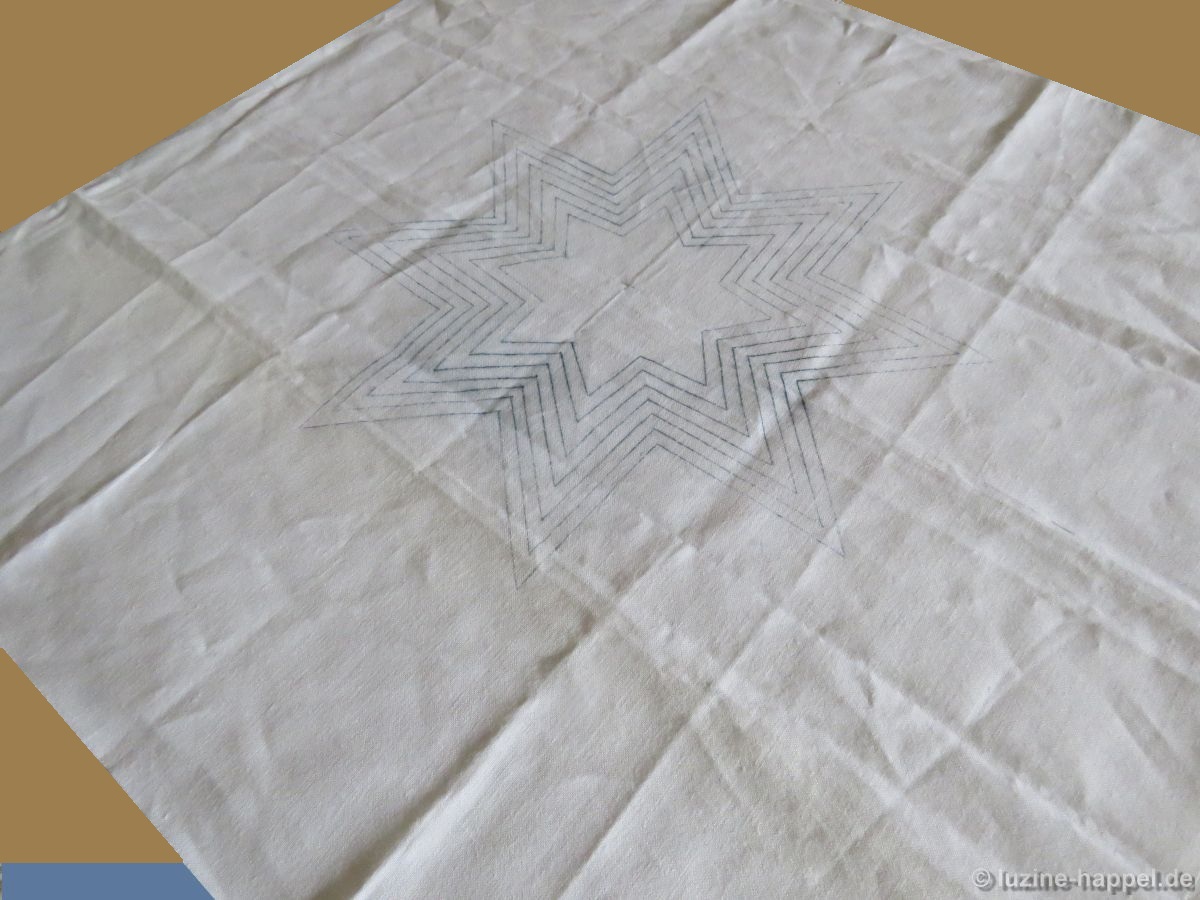
I have also embroidered the versatile “sevenfold star” pattern twice—once as a larger central star with one border.

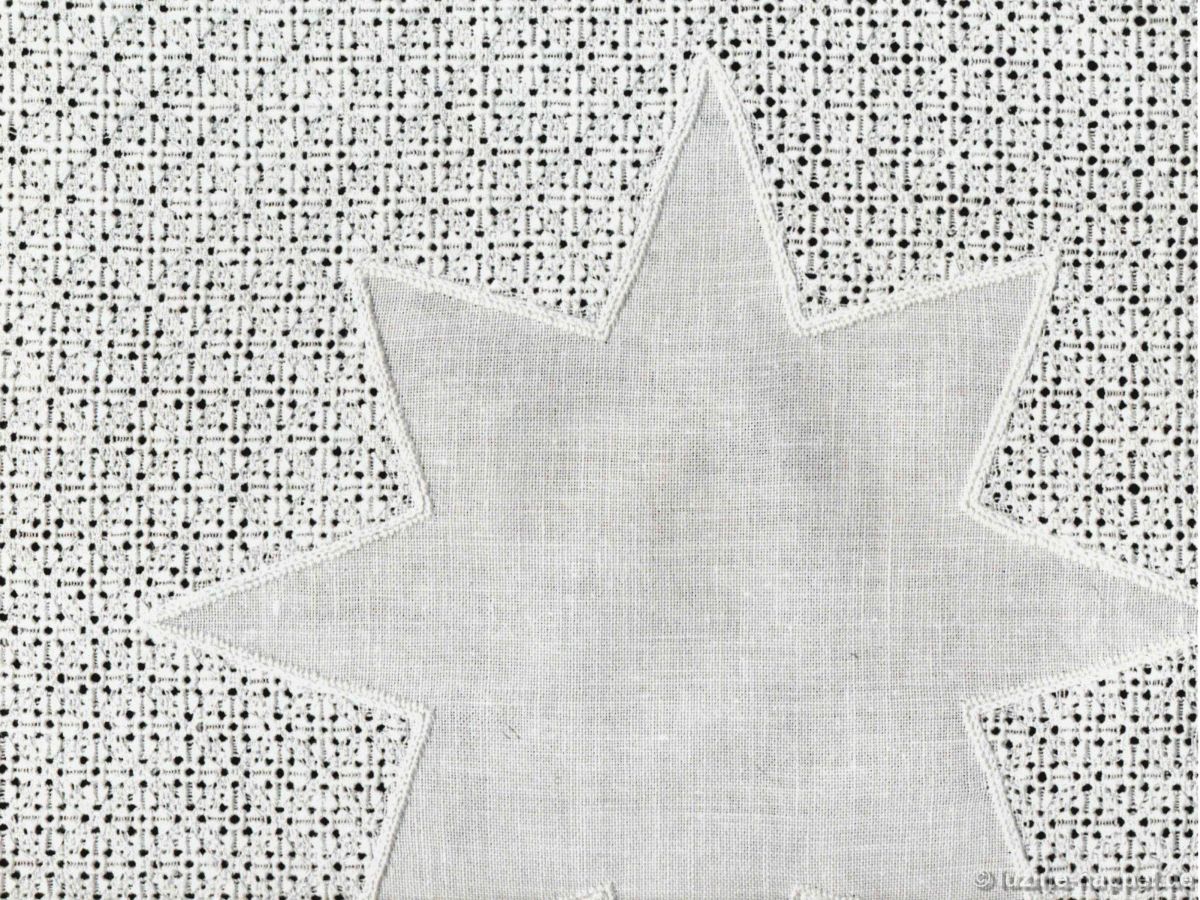
and once as a large, remaining unembroidered star with a surrounding pattern.

I have decided not to go ahead with the last project, for which I had intended to accentuate the star’s multiple edges through embroidery.

The seven different star sizes offer plenty of scope for creative design.

#34
Teacloth „Sevenfold Star“
size: approx 70 cm X 70 cm
design size: approx. 40 cm outside diameter, approx. 15.5 cm inside diameter
price: €27,30


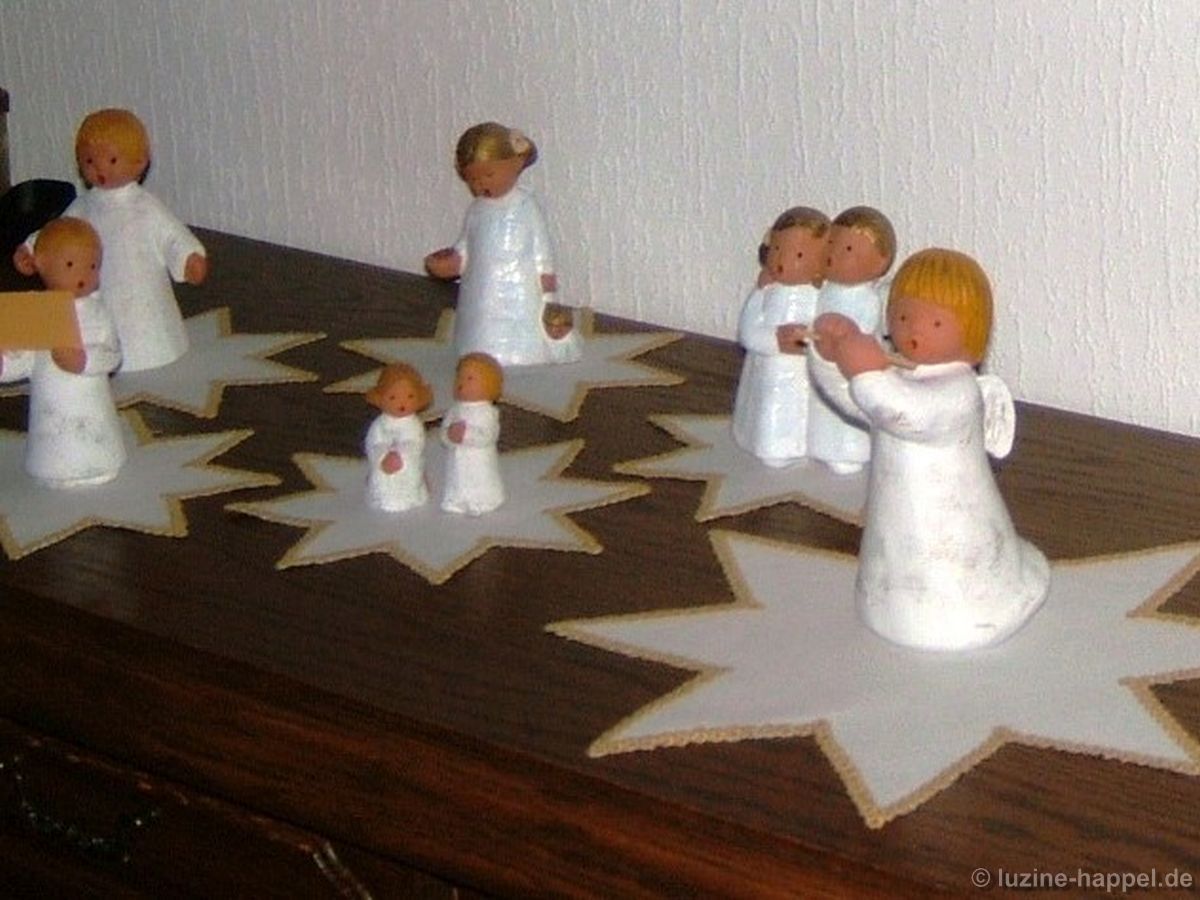
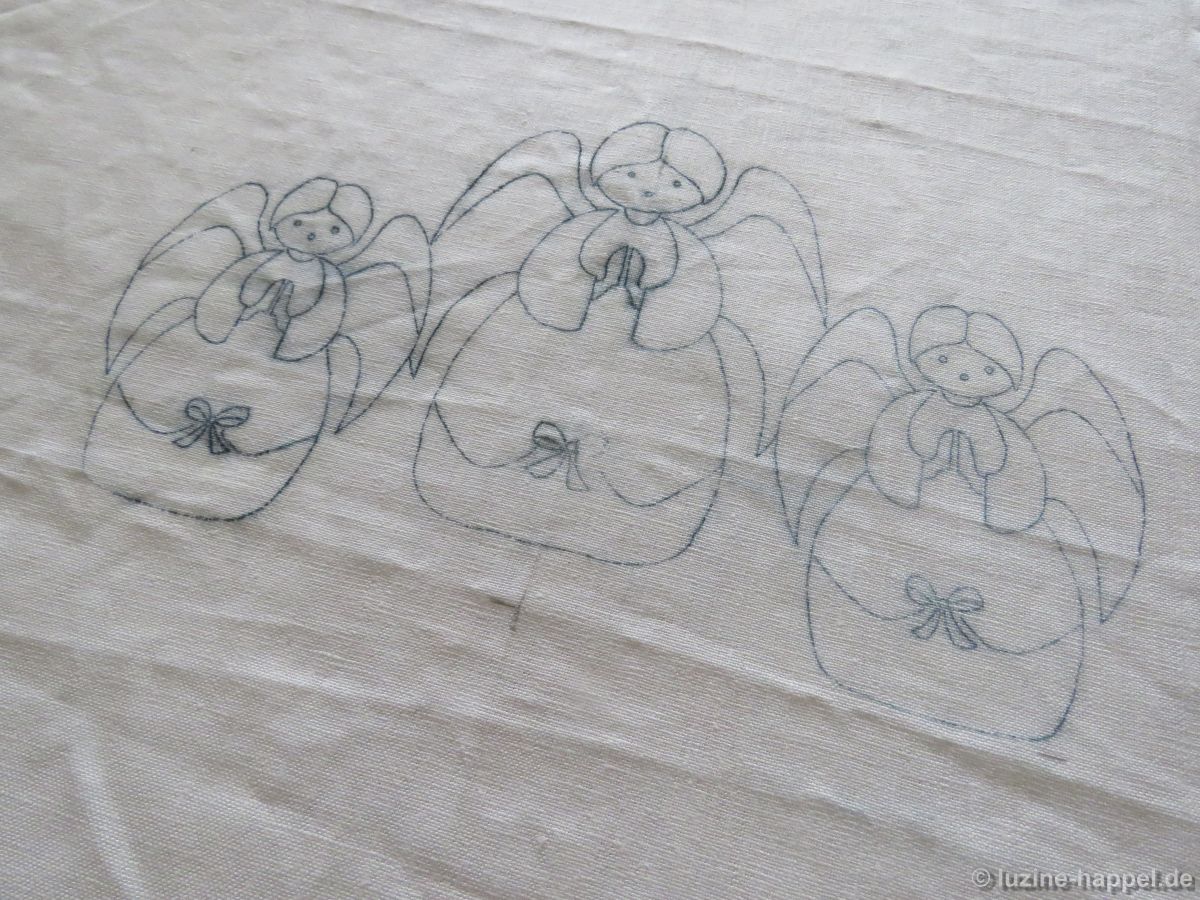
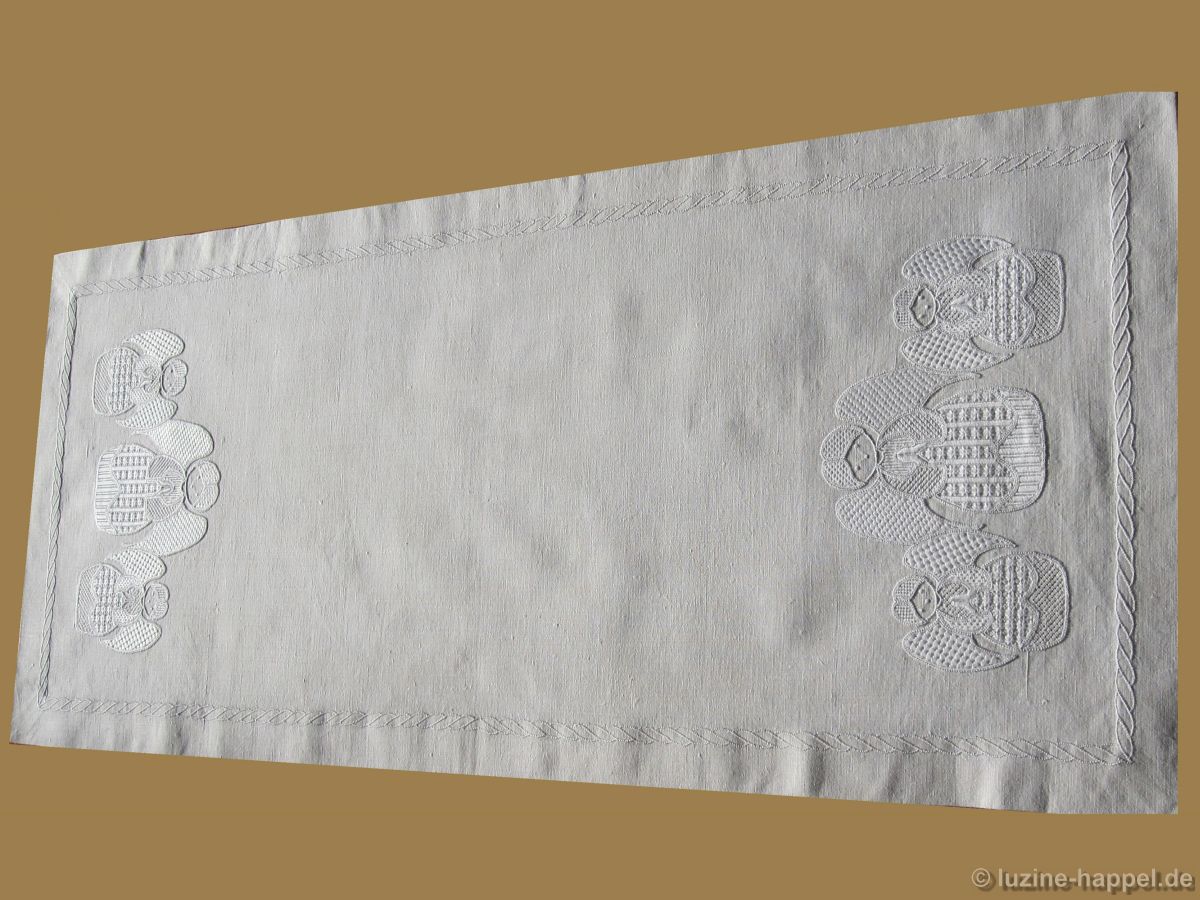
I have also already embroidered the table runner featuring the cute “babushka angels” onto hand-woven linen.

The group of three is 30 cm wide and 17 cm high. Two such groups are printed on the linen, each positioned 15 cm from the narrow edge.

#35
table runner „Babushka-Angels “
size: approx 55 cm x 120 cm
design size: approx 30 cm x 17 cm x 2
price: €31,00

If you are interested, please send me an email at: : info@luzine-happel.de


Determine Thread Requirements

Calculation of the estimated thread rate of consumption for a pattern with a frequent repeat.

Sometimes it makes sense to determine the likely thread consumption before starting an embroidery project. There are various reasons for this: leftover threads you want to use up, colored threads that are no longer available for purchase, or—as in this example—very high shipping costs just to get hold of one or two additional skeins.

Embroiderers work in different ways. Some pull the thread tight, while others work a bit more loosely. Some place their stitches very close together, others leave a bit more space. Some secure even the tiniest remaining thread end, while others are more generous with their thread usage. Sometimes the thread gets so tangled that it is impossible to continue stitching.

There are, therefore, many variables involved. Consequently, it is impossible to say exactly—down to the last centimeter—how much thread will be required. However, it is at least possible to make a rough estimate.

I recently offered a cut piece of linen for a tablecloth with a pre-printed design. The buyer wanted to know how much thread she would need.

The printed pattern in this example consists of short repeats that occur a total of 34 times. Therefore, one only needs to stitch a single such section to make a rough estimate of the total thread consumption.

One pattern repeat was ironed onto a matching piece of linen,. (If you finish stitching the project yourself, you can of course stitch the original right away.) The thread was cut into 100 cm lengths (or 50 cm for the Coral Knot stitches)—a comfortable length for working. The number of threads for each thread weight was determined and recorded both before and after the embroidery was completed.

A few areas were designed so that, if enough threads remains, they can be embroidered with additional embellishments

The small sample piece is finished.
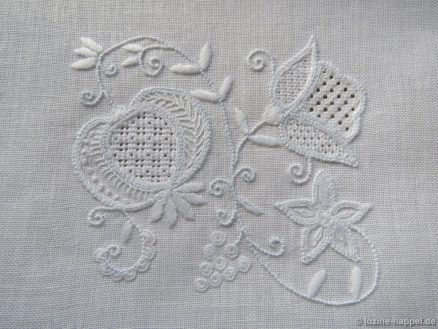
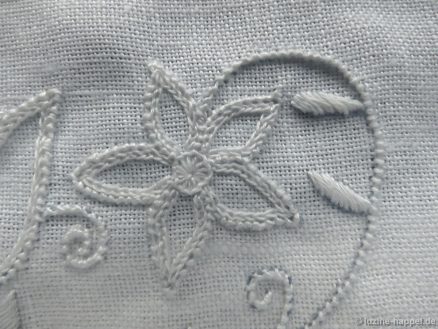
One could initially leave the star-shaped flower unfilled and later embroider it using Satin stitches or Lazy Daisy stitches.
The center of the tulip was worked in a Limet pattern using Rose stitches. This could be modified using variations of the Rose stitch or by creating an openwork pattern with for example French stitch; the thread consumption would be similar.
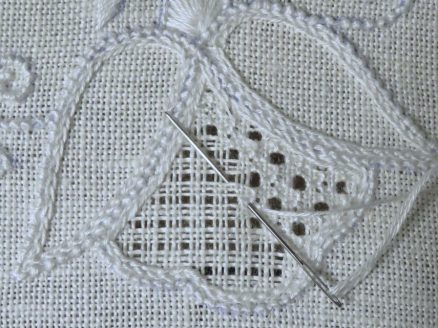
The side petals of the tulip were given a simple 3:1 thread withdrawing
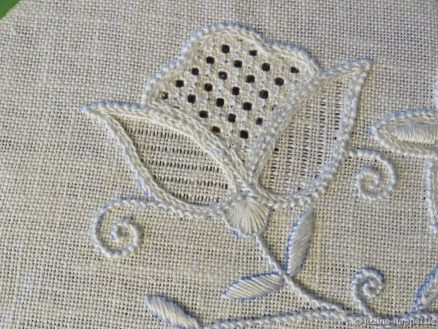
and Wave stitches as filling pattern.
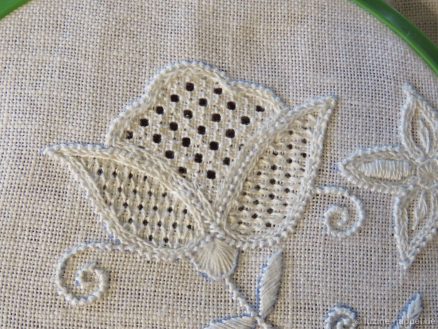
The pomegranate was given a 2:1 thread withdrawing to establish an openwork pattern.
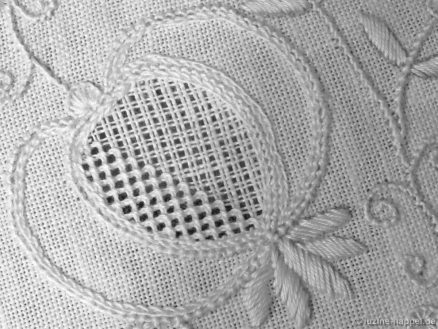
The area can only be stabilized using Cable stitches and be left as is.
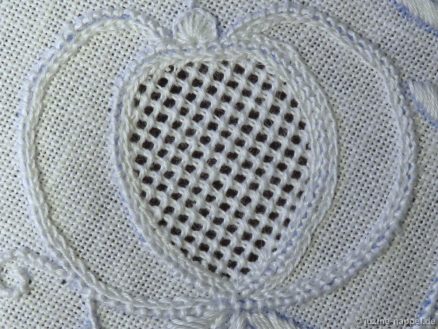
However, the reduced-size version of the grid also allows for stitching various small patterns.
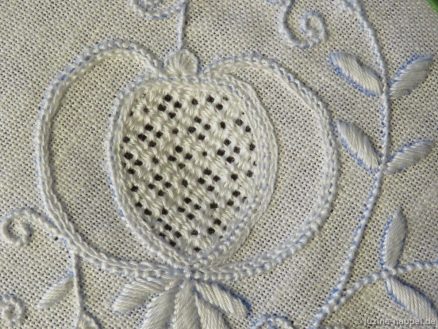
The sides of the pomegranate were designed differently – the thread consumption is similar.
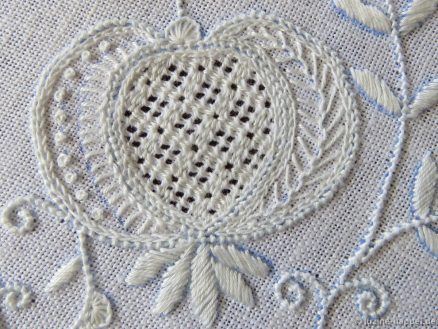
Instead of the five small satin-stitch leaves, perhaps Lazy Daisy stitches should have been worked at the tip of the pomegranate—that might have looked nicer. However, that would have required just as much thread as the Satin stitches.

In total, the following were required:

Stitches

Thread weight No.

Rate of thread consumption in meters

Total

x 34

: 30

Coral Knot stitches

16

7,00

Eyelash stitches

16

0,20

Franch Knots with 2 wraps

16

0,25

7,45

253,30

8,44

leaves

20

3,50

Needle-Weaving stitches

20

0,70

Feather stitches

20

0,35

Satin stitches star blossom

20

1,00

Lazy Daisy stitches star blossom

20

0,20

Wave stitches

20

0,70

6,45

219,30

7,31

Balnket stitch eyelets and half eyelets

25

2,00

Rose stitches

25

0,75

2,75

93,50

3,12

Chain stitches

30

4,00

Cable stitches

30

1,10

5,10 173,40 5,78

Since the pattern repeat appears 34 times on the table cloth, the consumption per unit had to be multiplied by 34.

Since a skein of MEZ Anchor coton à broder thread contains 30 meters, it was necessary to divide by 30 and round up.

This determined the amount of thread needed for the large tablecloth:

9 skeins No. 16

8 skeins No. 20

4 skeins No. 25

6 skeins No, 30

27 skeins in total

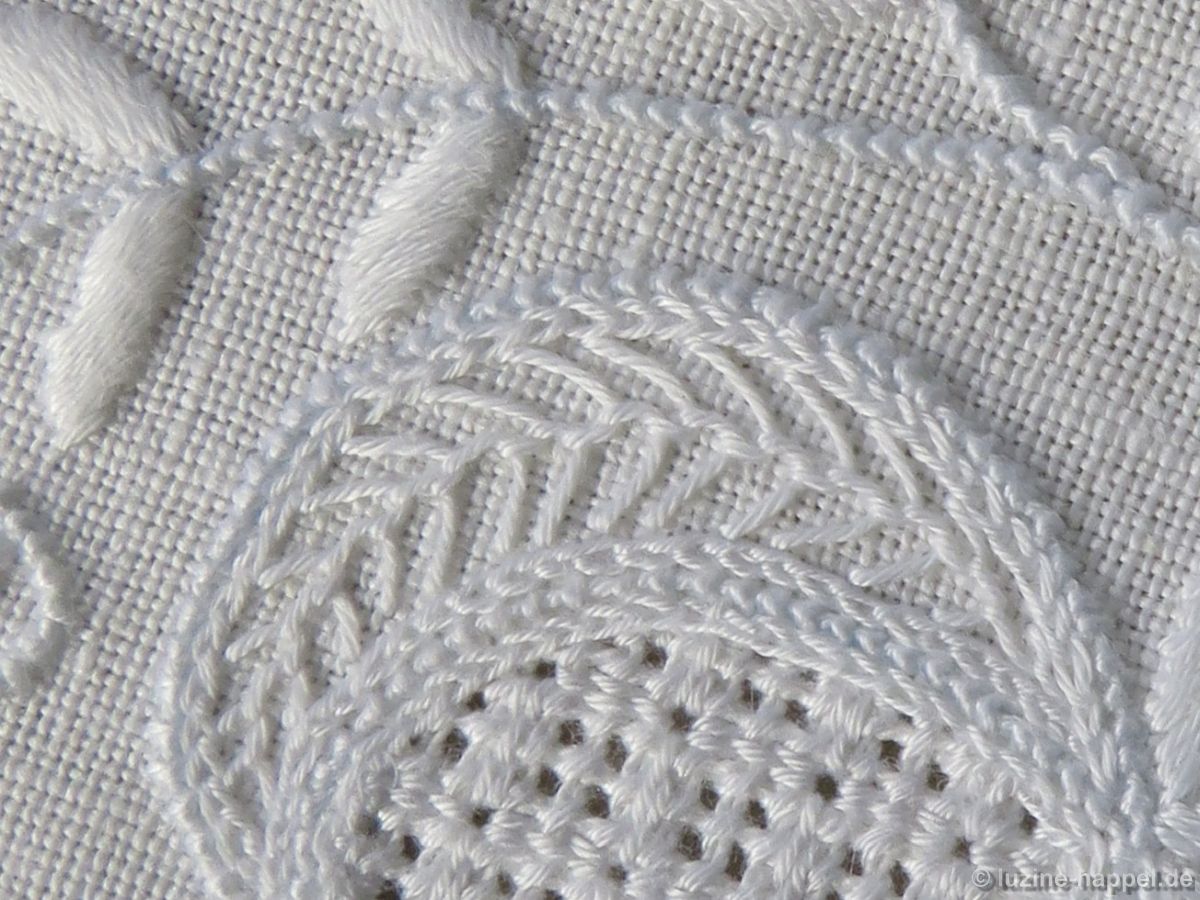
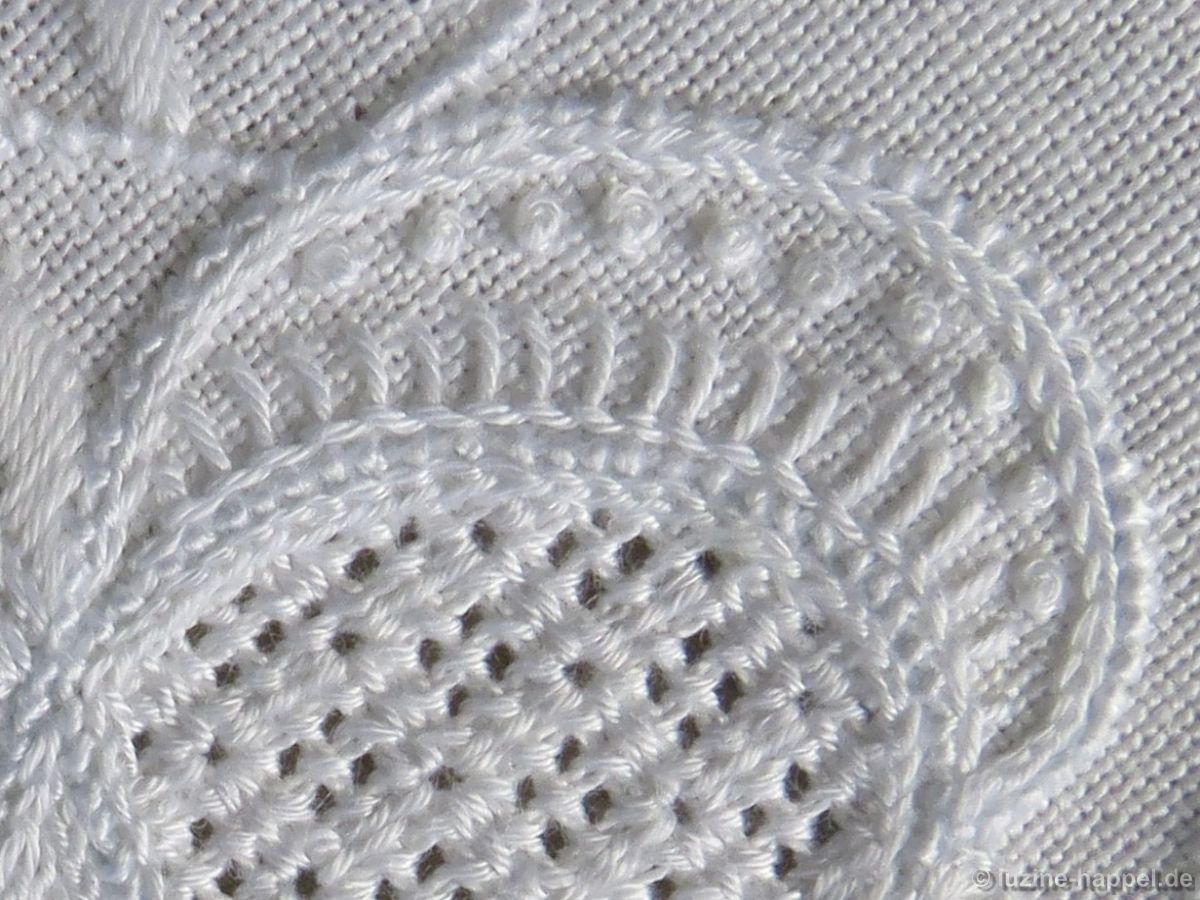
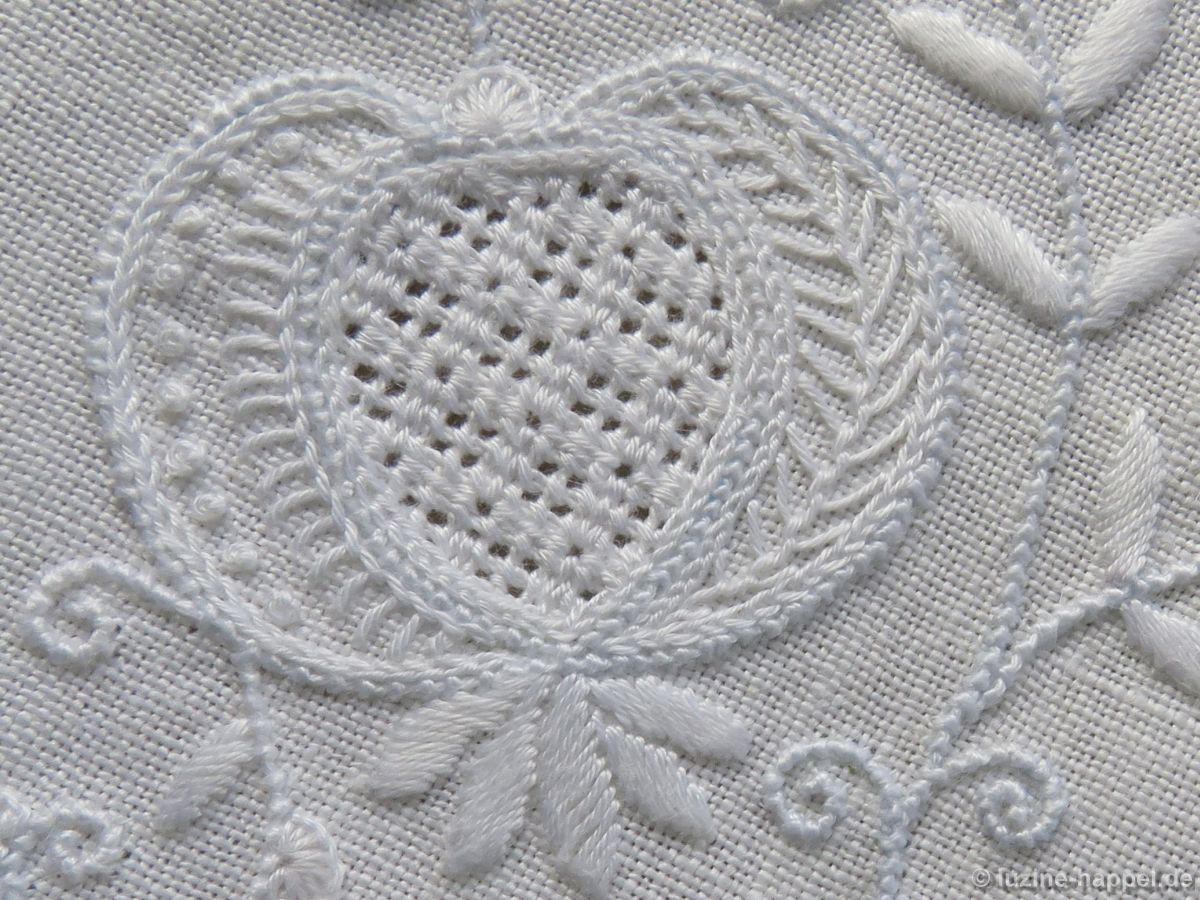
The Pomegranate Motif (3)

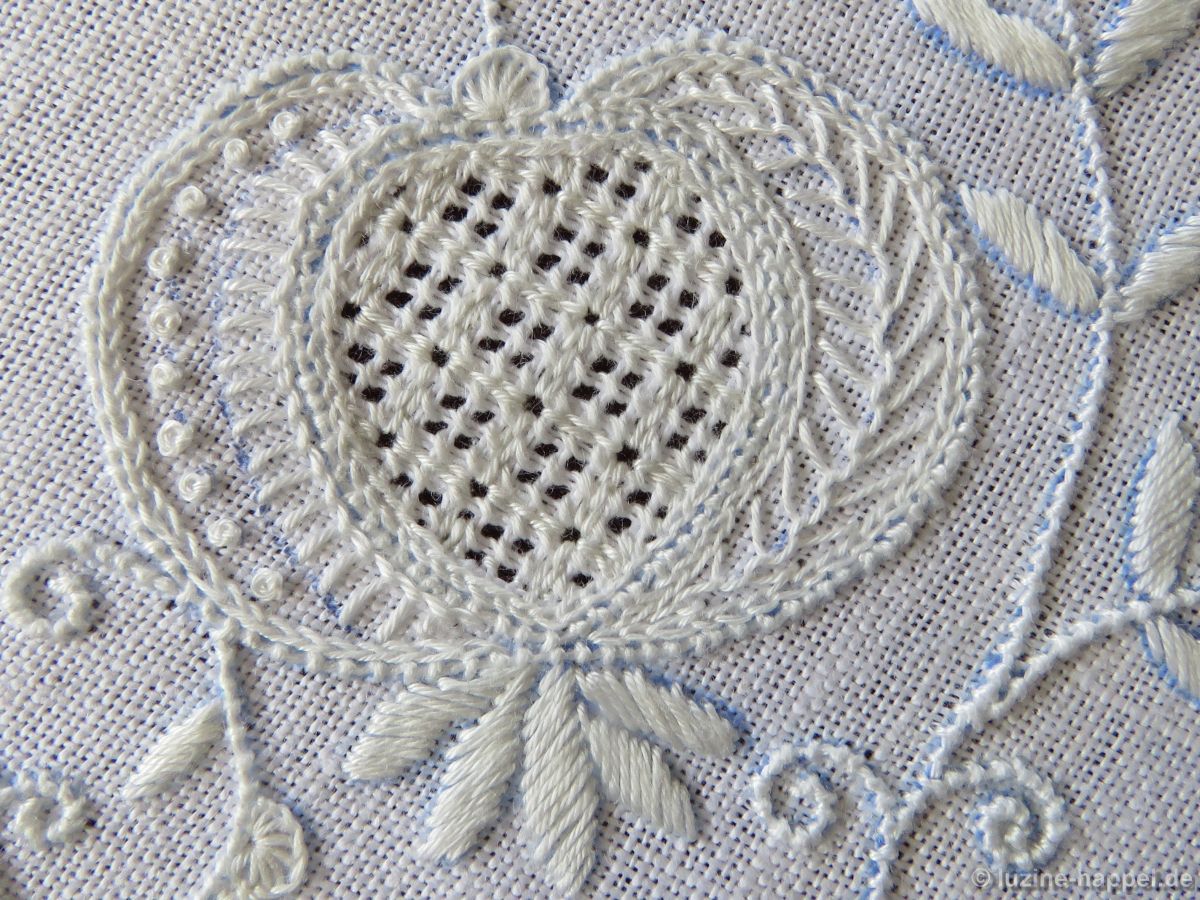
Recently, a blog reader sent me a photo of a sort of accordion-fold booklet featuring pomegranates embroidered in various styles.

The traditional motif is also popular in Schwalm whitework, as it looks magnificent, is relatively easy to stitch, and offers many possibilities for variation.
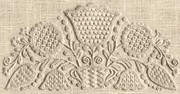
I have already shown many examples of embroidery on this blog, which you can easily view via the links provided on bottom.

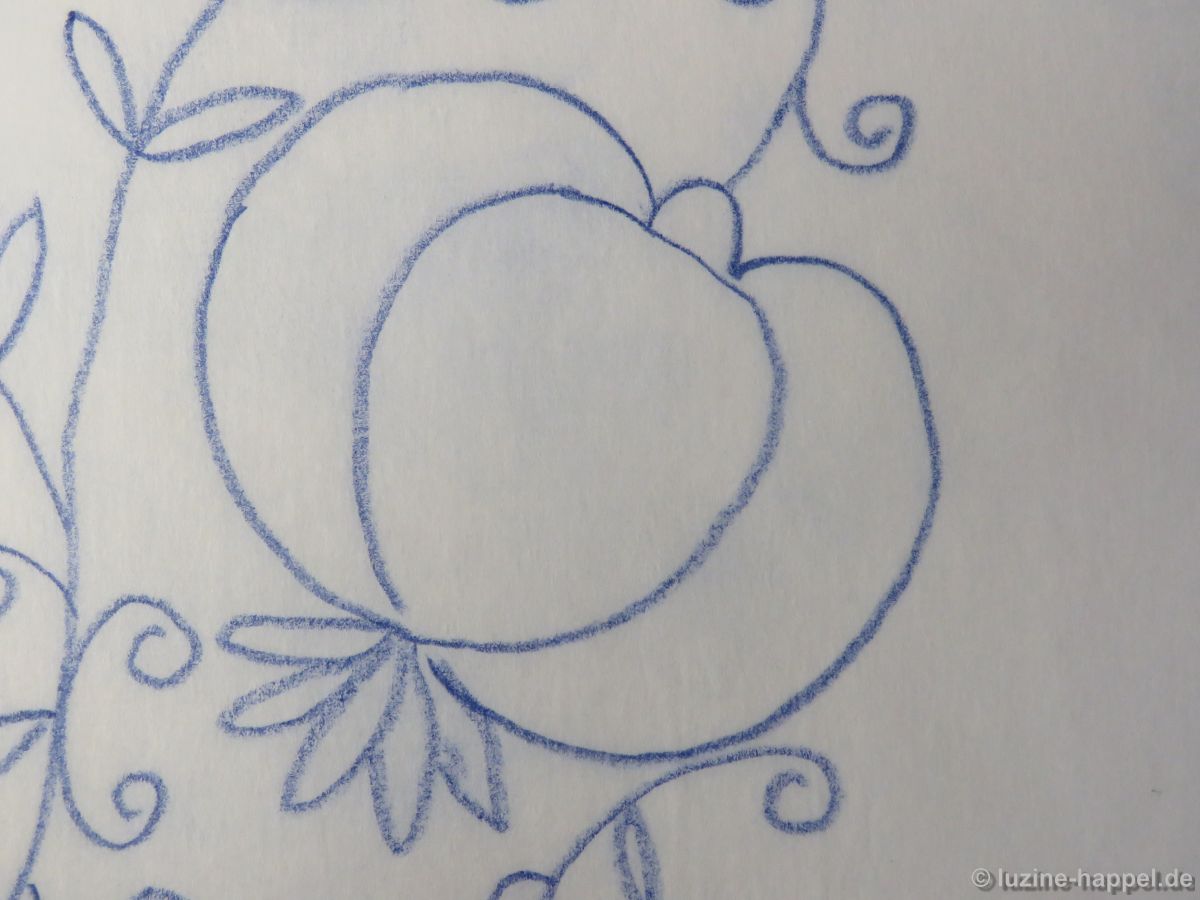
Here is another modification—this one in three parts.

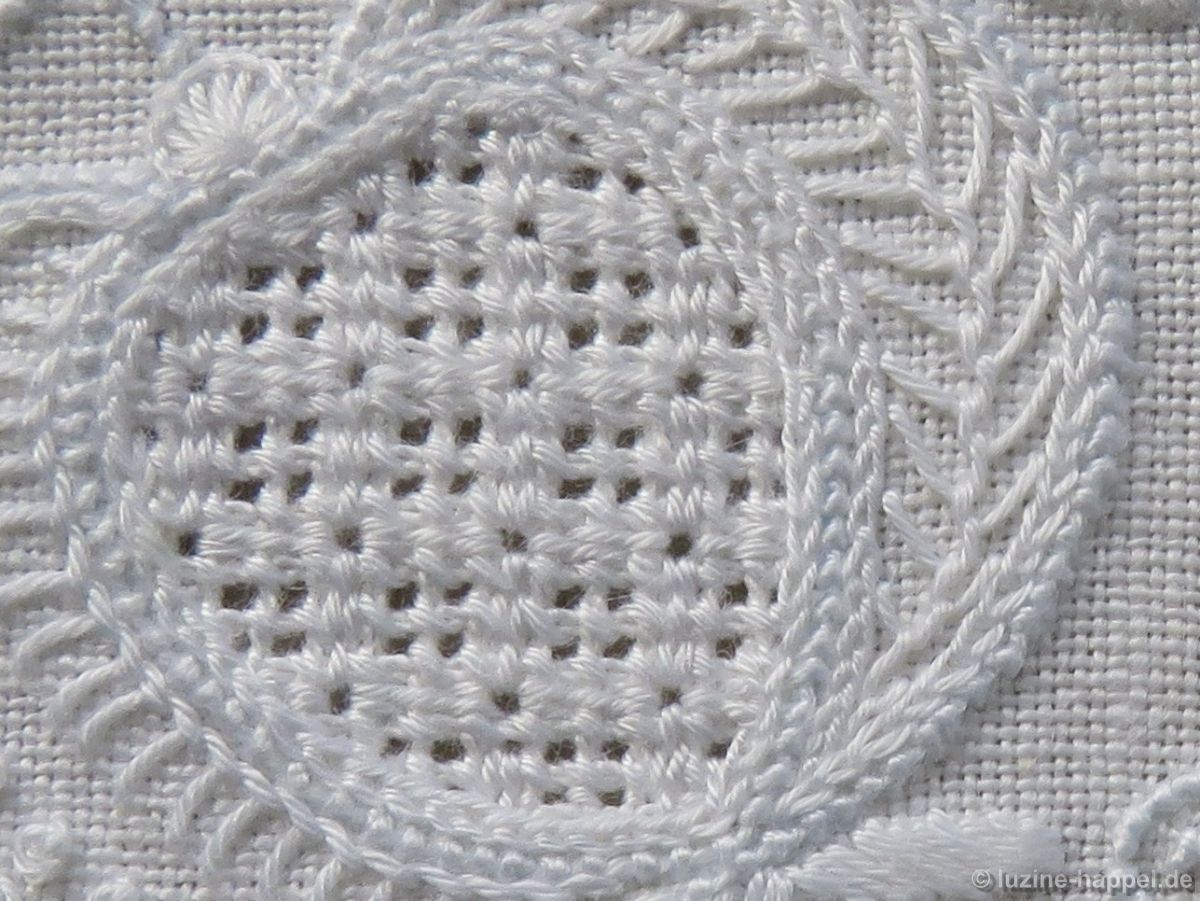
The central section is worked in an openwork pattern.

The two sides are designed differently; one is embroidered with Feather stitches,

the other with Eyelash stitches and French knots.

This variation of a pomegranate motif can enrich any design.

The Pomegranate Motif (1)

The Pomegranate Motif (2)

Schwalm Band (11)

Schwalm Band (13)

Global Schwalm Sampler – Update (7) 

Sofa Cushion Cover 2

Sofa Cushion Cover 1 (B)

The Filling Patterns of the Parade Cushion Border (B)

Embroideries by Rosemarie Landsiedel-Eicken (4)