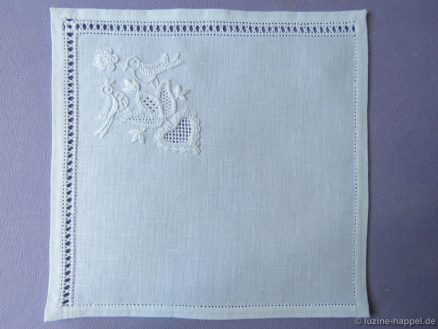
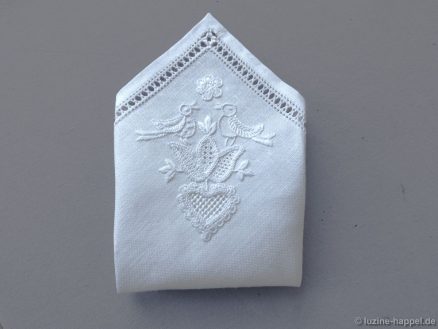
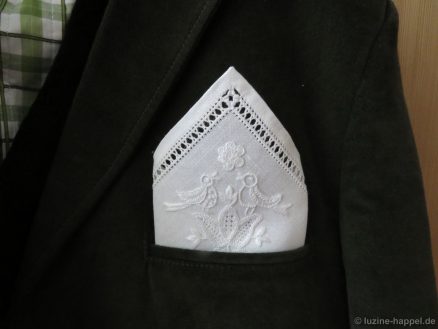
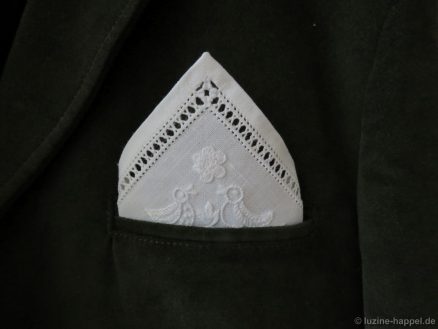
Tea Cloth MJ2 (4)

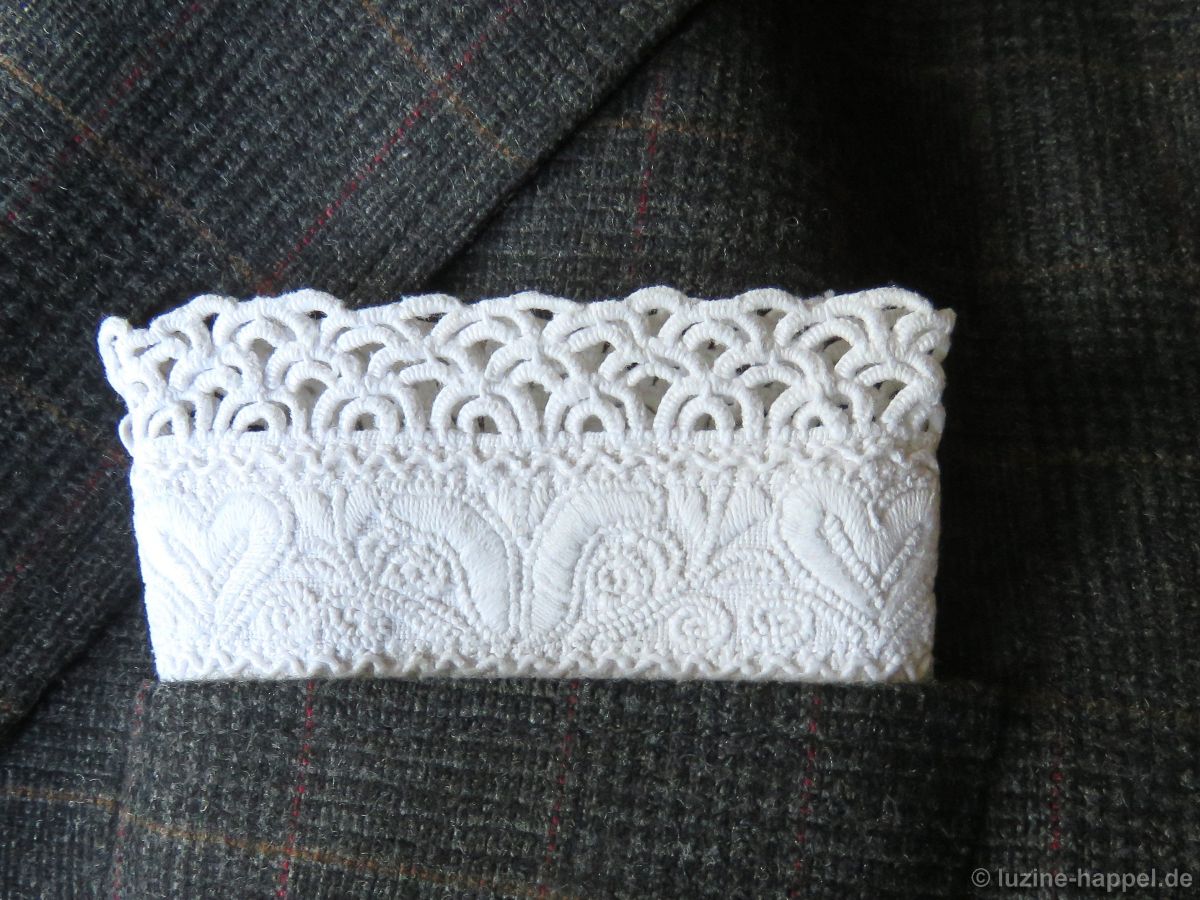
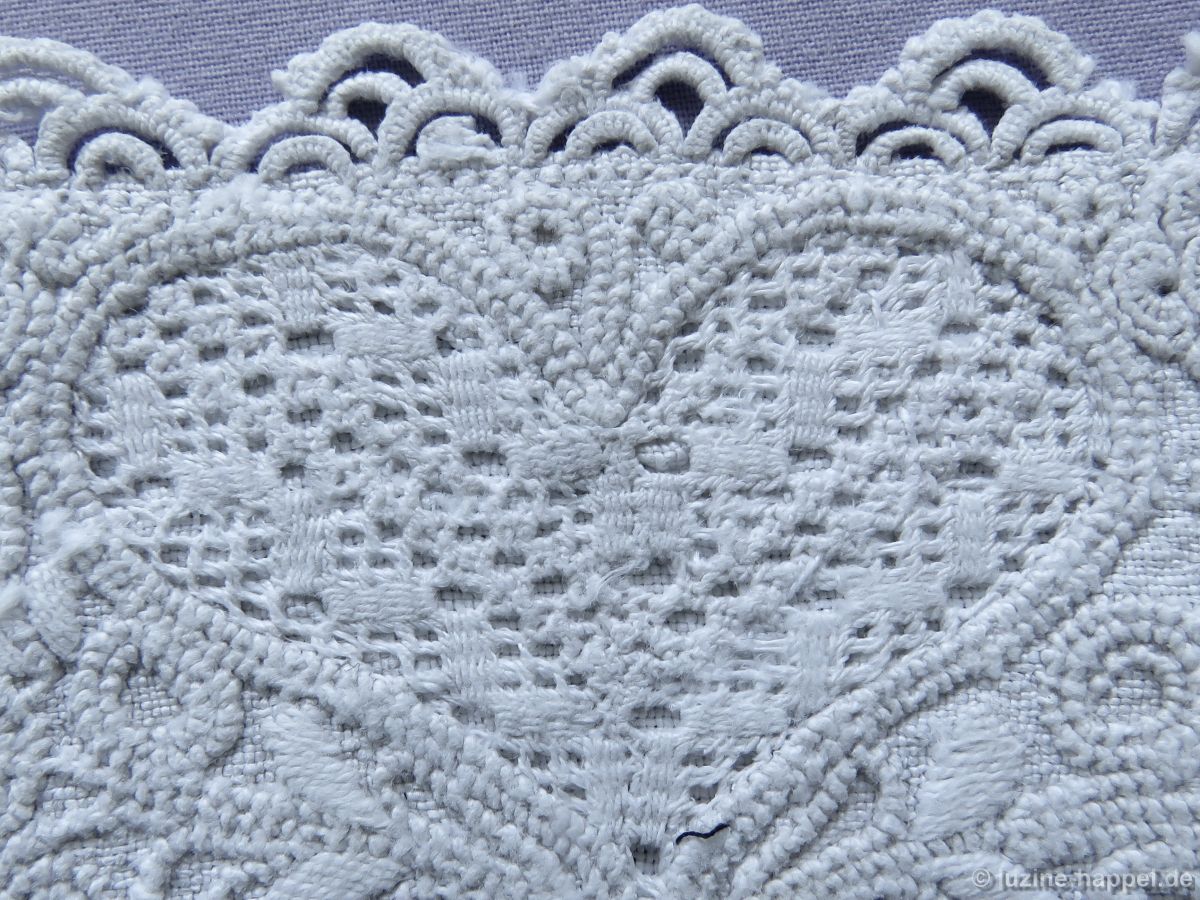
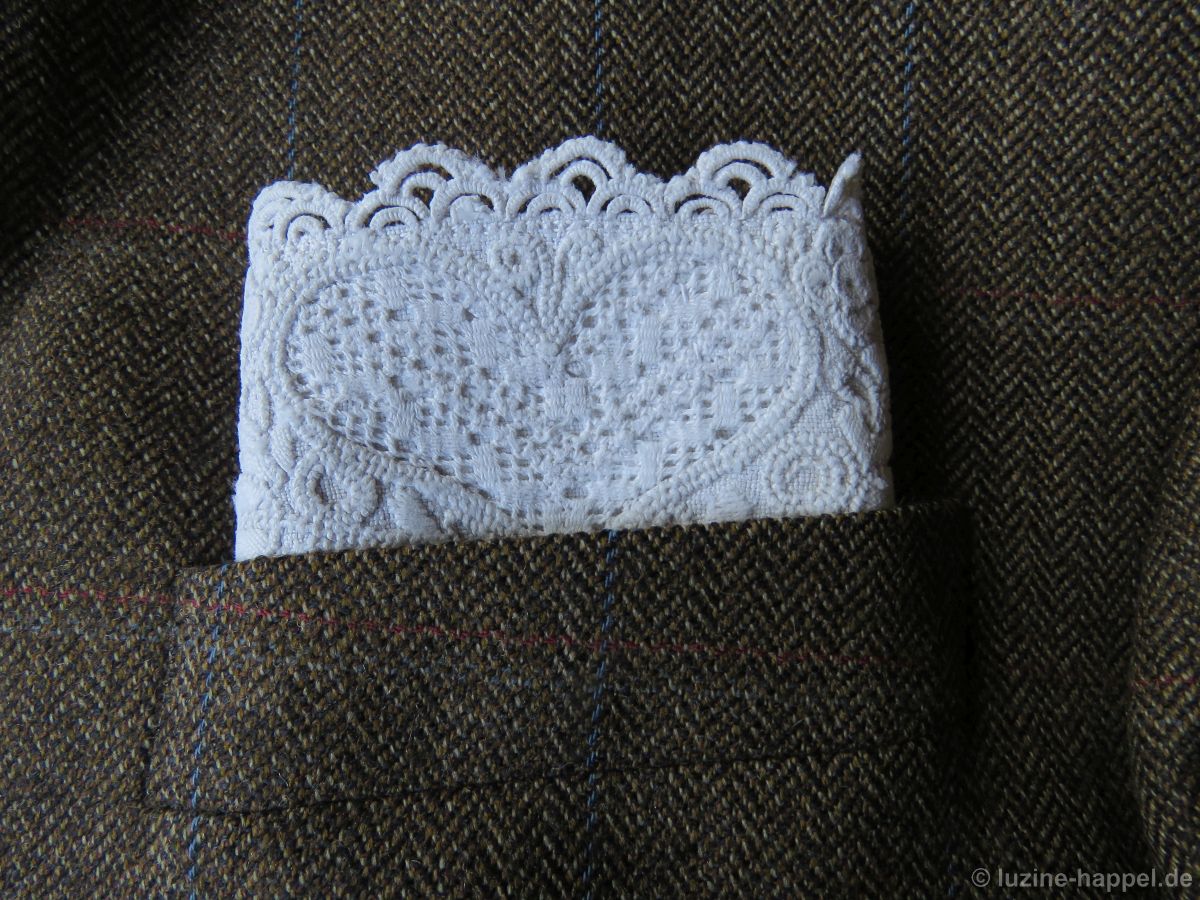
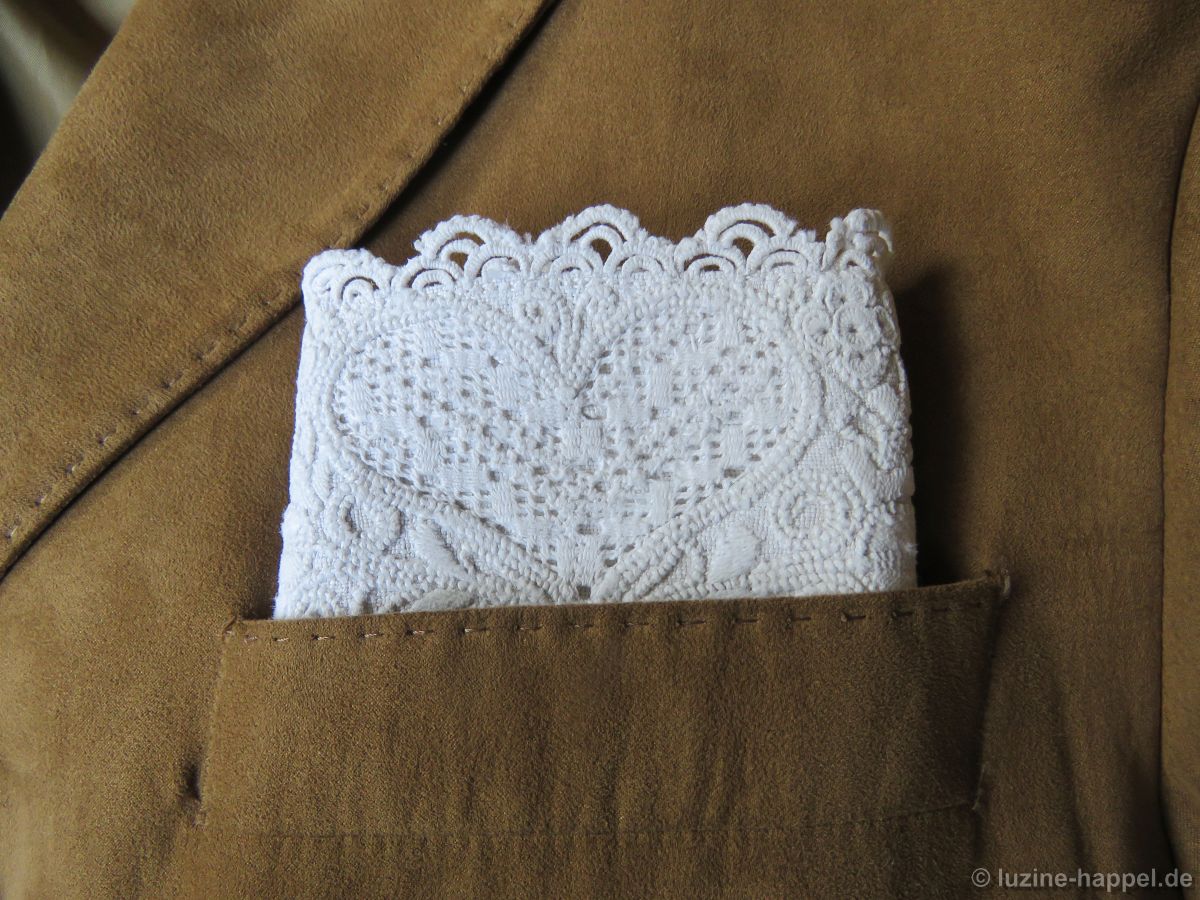
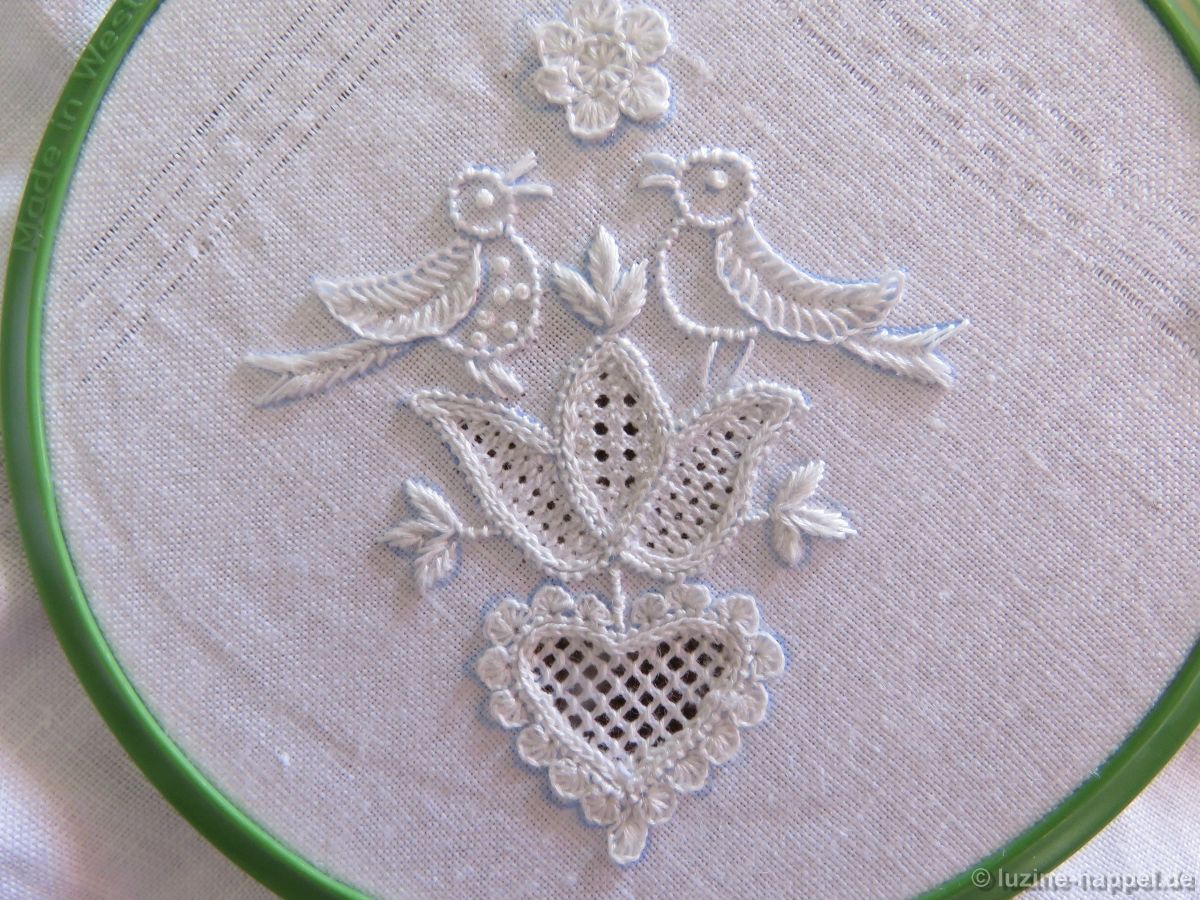
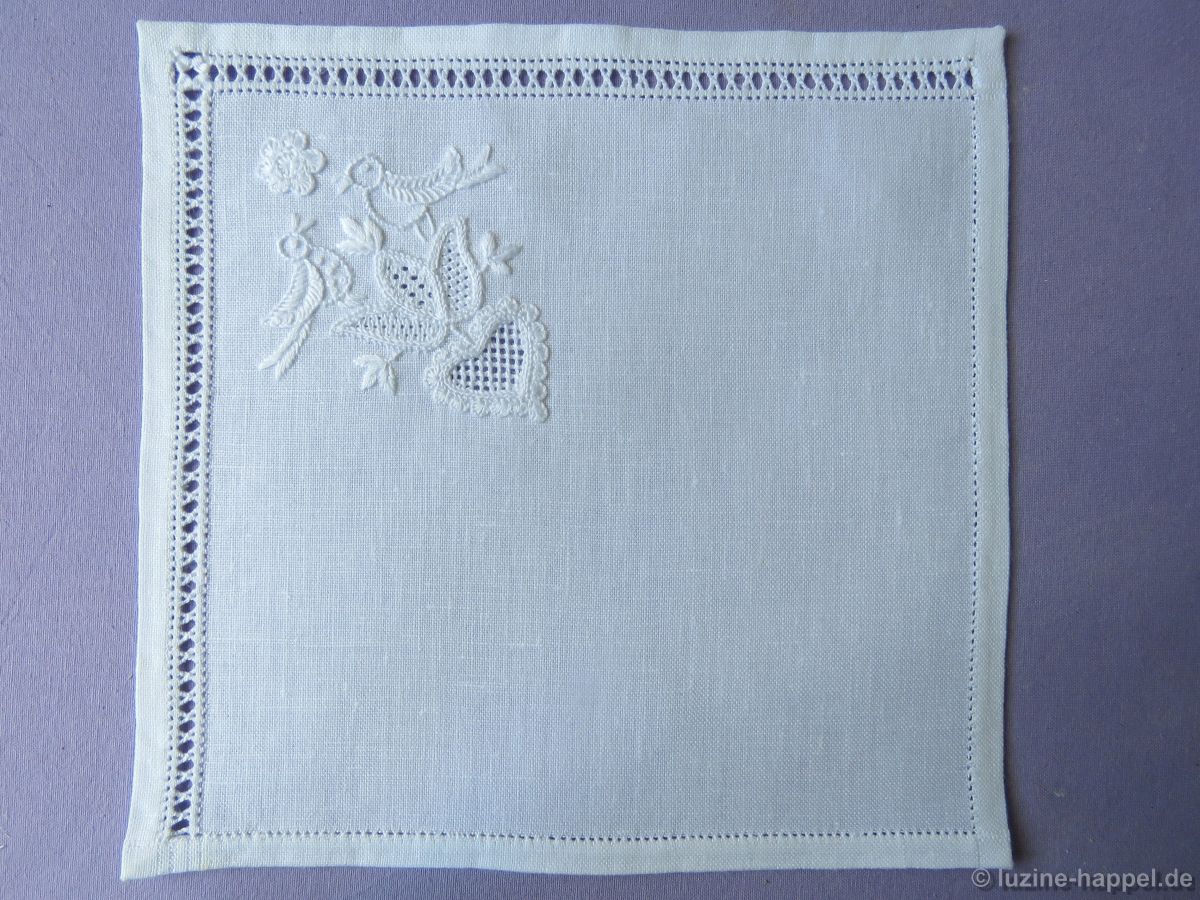
The design of the tea cloth contains a heart motif that appears a total of 8 times, four times along the straight of grain and four times diagonally to the grain. Both versions have double outlines,

surrounded by blanket stitch half eyelets.

The areas of all the heart motifs were decorated with openwork patterns.

The edge of heart 1 was embroidered with wave stitches/zigzag stitches.

Pattern 147 (Openwork Needleweaving Patterns, page 77) was used as filling pattern.

The edge of heart 2 was filled with thick chain stitches.

Pattern 54 (Openwork Needleweaving Patterns, page 30) was worked as filling pattern. The small heart above was given a 2:1 thread-withdrawal pattern and the openwork cable stitch pattern.

The edge of heart 3 was filled with wide chain stitches.
Pattern 129 (Openwork Needleweaving Patterns, page 68) was worked as filling pattern.

The edge of heart 4 was filled with interlaced straight stitches.
Pattern 56 (Openwork Needleweaving Patterns, page 31) was used as filling pattern.
The small heart above did not involve any thread withdrawal; it was decorated with chain stitches.

The edge of heart 5 was filled with small blanket stitch half eyelets.
Pattern 146 (Openwork Needleweaving Patterns, page 76) was worked as filling pattern.

The edge of heart 6 was filled with blanket stitches.
Pattern 87 (Openwork Needleweaving Patterns, page 47) was used as filling pattern. The small heart above did not have any threads withdrawn; instead, it received only a row of blanket stitches along the coral knot stitches.

The edge of heart 7 was filled with feather stitches.
Pattern 124 (Openwork Needleweaving Patterns, page 65) was used as filling pattern.

The edge of heart 8 was filled with lazy daisy stitches.
Pattern 88 (Openwork Needleweaving Patterns, page 47) was used as filling pattern. The small heart above did not feature any thread withdrawal; instead, it was worked with just a row of chain stitches running alongside the coral knot stitches

The next blog post focuses on the design of the tulips.

See also:
Table Cloth for all Seasons – February: Hearts

Tea Cloth MJ2 (3)

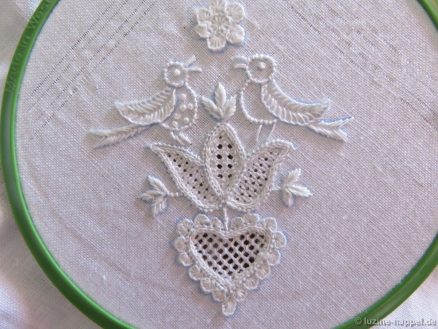
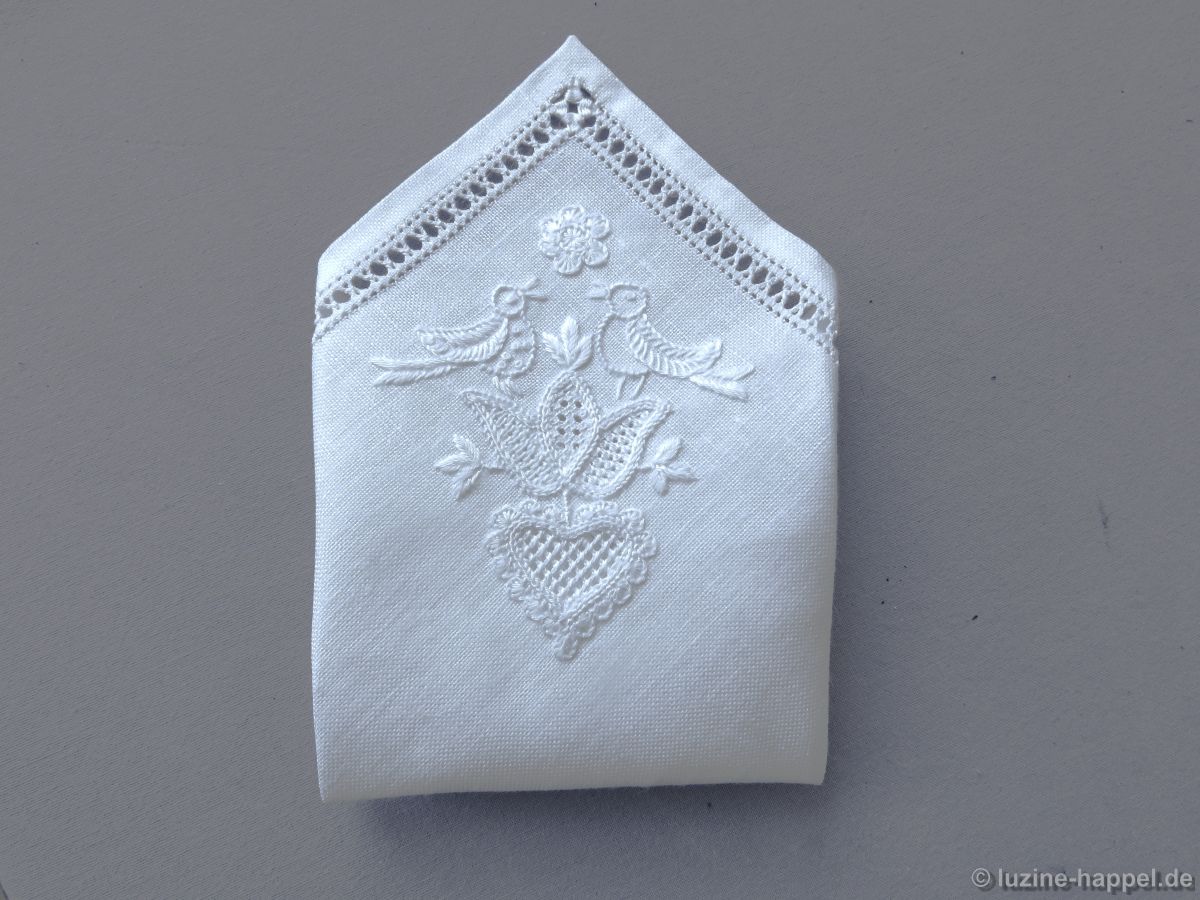
The design of the tea cloth features a bird motif that appears a total of eight times.

These birds could all be decorated in the same way, but they also lend themselves to experimenting with different stitches.

The shape of the wings lends itself well to stitching diagonal filling patterns.
In doing so, I came up with yet another new pattern using diagonally arranged blanket stitches.

In this process, two rows are placed facing each other.

If the stitches passing underneath are worked beneath the same square, the loops lie closer together than if the stitches are passed beneath two adjacent squares.

In my first course on learning Schwalm whitework, which I took more than 40 years ago, I learned to decorate “bird bellies” with the *Schlängchen*—interlaced herringbone stitches. These are easy to stitch and can be readily adapted to the curve, even by beginners.
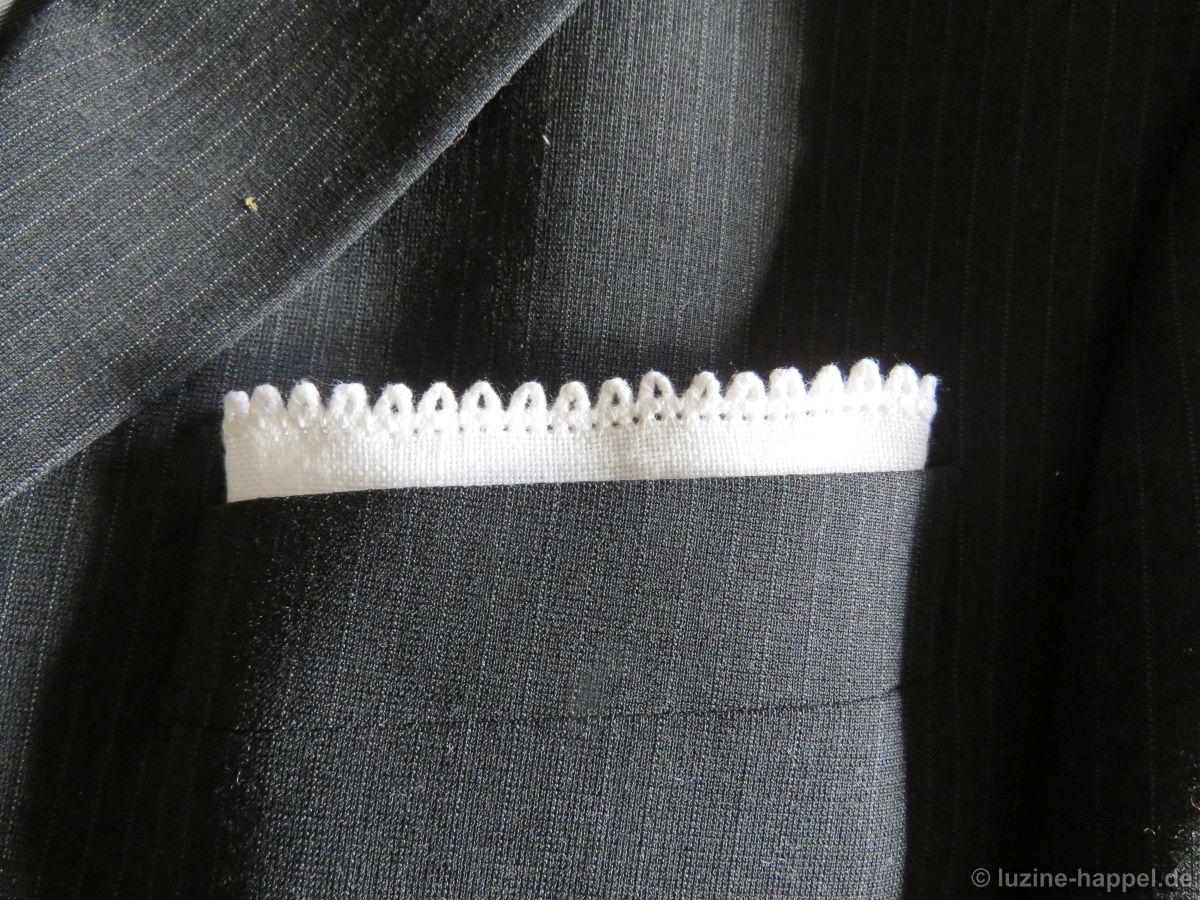
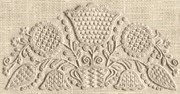
The wing was embroidered with a Limet pattern consisting of alternating rows of rose stitches and stepped satin stitches, each over a single grid square.

A similar effect to that of the herringbone “curved lines” can also be achieved using interlaced straight stitches known as “Kerrercher.” These can be found on pages 6–14 of my publication Schwalm Curved Lines, Narrow Borders, and Ornamental Stitches. (Wings/“Plumage” – Limetrosen I, page 15.)

Depending on how closely spaced or how slanted the straight stitches are, the serpentine lines appear quite different. (Wings: double rows of cable stitches, worked alternately from the front and back:)

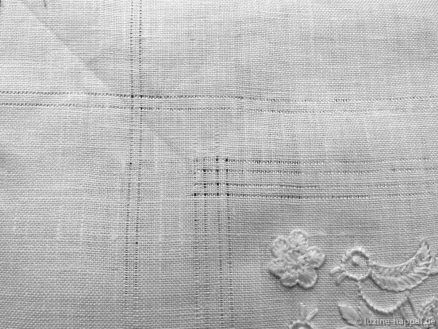
The bird’s belly can also be decorated with filling patterns, though the patterns must be very small. Here, a simple openwork pattern was stitched using a horizontal 2:1 thread-withdrawal technique. Honeycomb Darniung stitches were worked from the back.

Instead of filling patterns or curved lines, you can also stitch decorative stitches along the wing on the bird’s belly.

Blanket stitch eyelets are an alternative,

Knife-points are another variation. (Wings: French stitch—half-stitch with a gap; Openwork Pattern Samplers, pp. 35–37.)

2short-2long is also suitable for this type of design (wings: alternating rows of diagonal cross stitches and cable stitches).

as well as eyelash stitches. (Wings: a variation of filling pattern 550, but alternating between just one row of rose stitches and one row of base stitches.)

The next blog post focuses on the design of the hearts arranged diagonally to and in the straight of grain of the fabric.

Please see also:
Bird motifs (1)
Bird motifs (2)

Tea Cloth MJ2 (2)

The design of the tea cloth features many forks, numerous tendrils, and small circles.

At first, I had thought about creating the branches and tendrils using wrapped chain stitches.

However, due to the many forks, this proved to be very difficult.

So, in the end, I did use coral knots for the branches, tendrils, and a large part of the motif outlines.

Wrapped chain stitches (No. 16 coton à broder) were worked around only a few motifs.

I spent a long time considering how to design the circle-within-a-circle motifs.
At first, I experimented with blanket stitches of varying lengths and a thick French knot or an blanket stitch eyelet.

After washing, these versions also look quite presentable.

But ultimately, I decided on large circles made of wrapped chain stitches with eyelets in the inside.

The next blog post focuses on the design of the bird motifs.

Siehe auch:
Forks – Practice Exercises (2)
Forks – Practice Exercises (3)

Tea Cloth MJ2 (1)

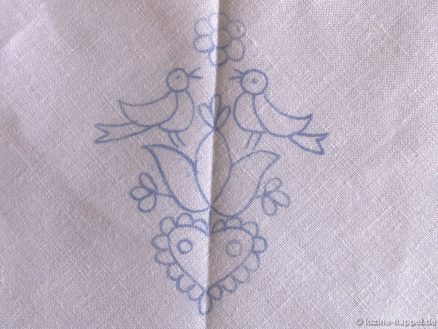
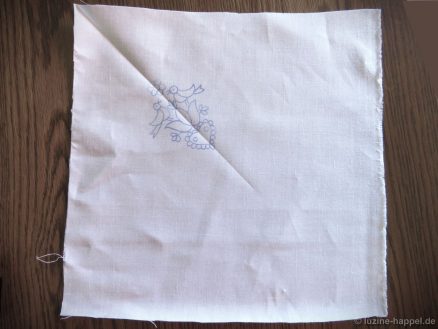
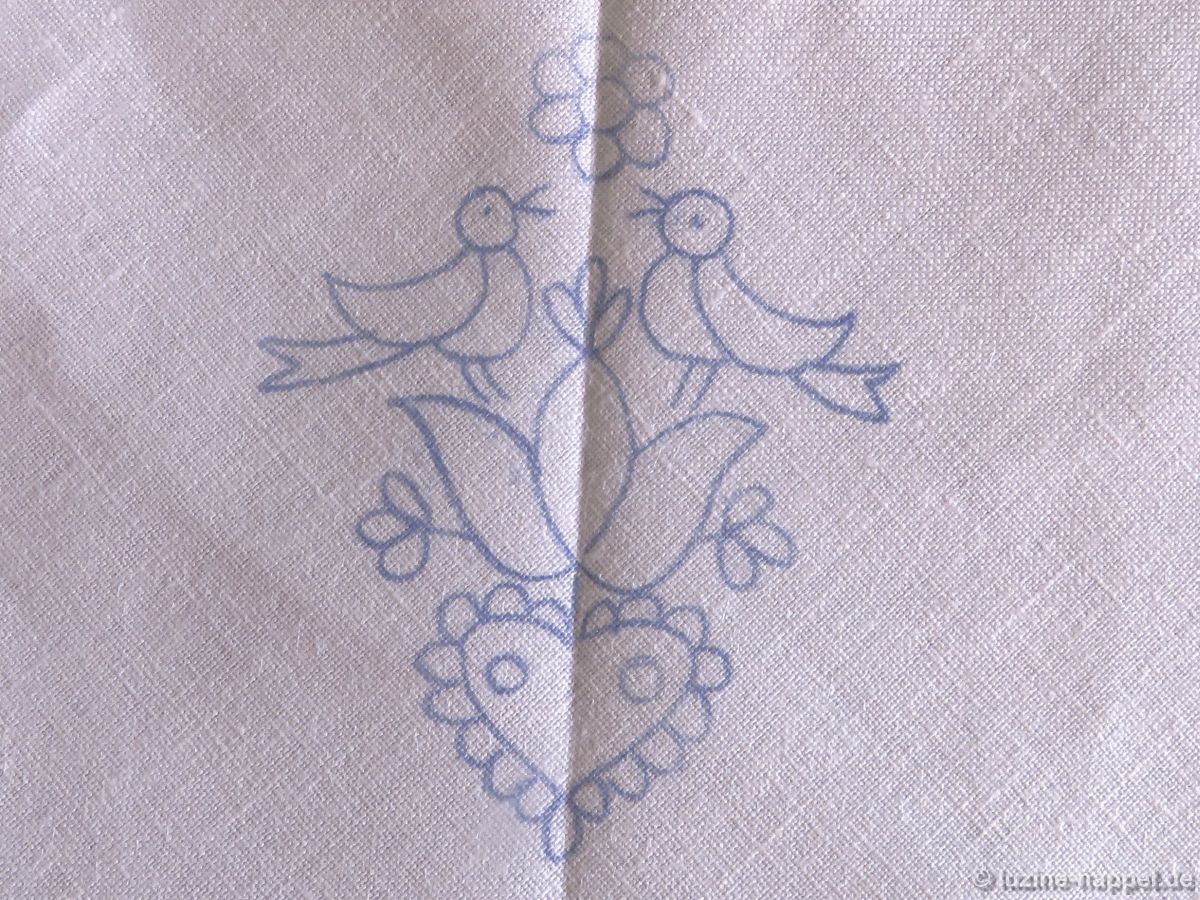
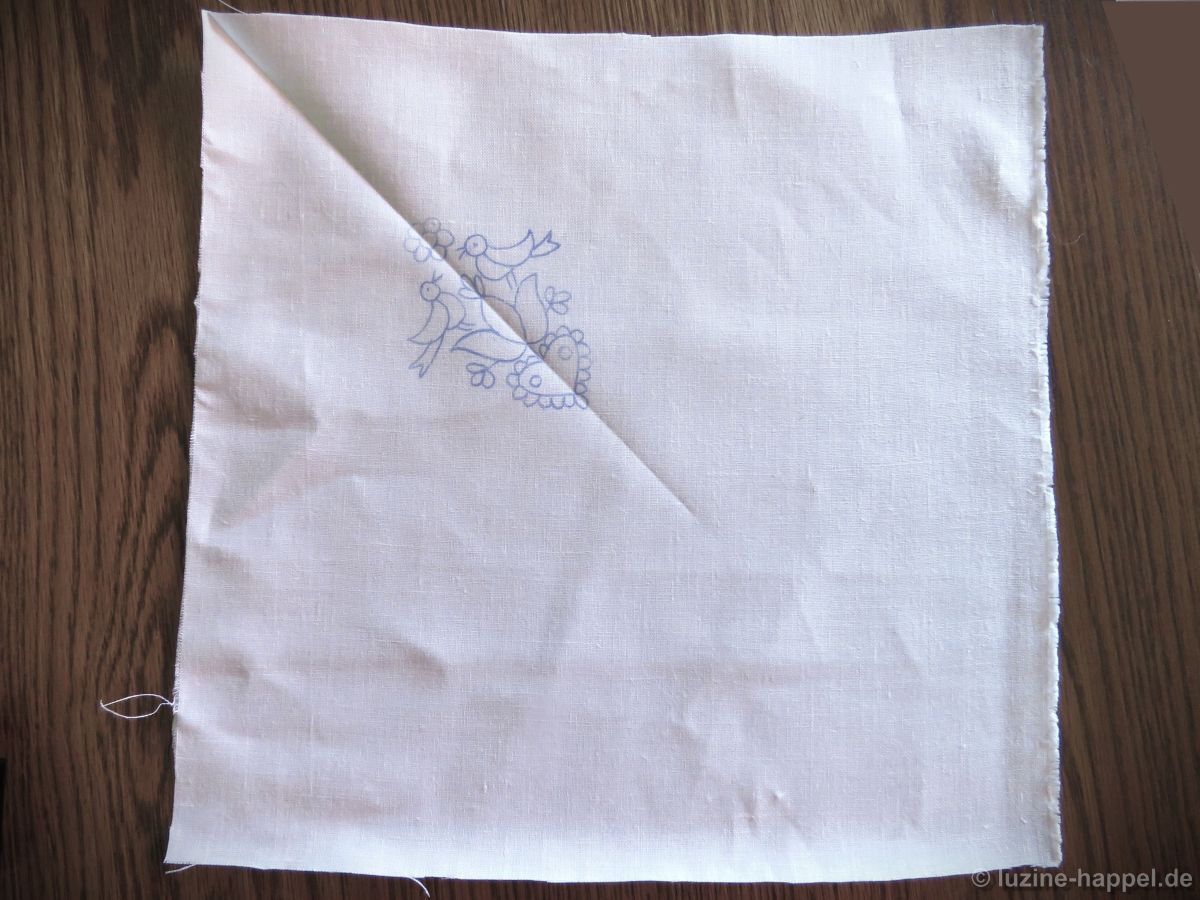
Decades ago, Irmgard Mengel, based on an idea by Maria Jung, cut a stencil for printing onto a tea cloth.

The motifs are arranged in a square pattern, leaving a rather circular area free in the center.
The pattern square measures approximately 50.5 cm x 50.5 cm, with an inner diameter of approximately 29.5 cm. It was transferred to a 90 cm x 90 cm piece of linen.

As I have since taken over Irmgard Mengel’s stencils, I can print such a pattern for you upon request.

Maria Jung’s designs typically feature intricate patterns. What I particularly like about them is the contrast between rounded and pointed shapes. For this reason, I had this specific pattern printed onto hand-woven 19/20-count linen, embroidered it, and have now completed the piece. The cloth is currently drying on the line in the garden.

I will show details of the embroidery in upcoming blog posts.

How is a Pattern Printed Using a Stencil?

Schwalm Whitework near 35435 Wettenberg

An enthusiastic embroiderer reached out to me for assistance. She attended several courses to learn Schwalm whitework, acquired solid skills there, and spent several years stitching diligently. That was a few decades ago. Now she wishes to take up Schwalm whitework again, but has unfortunately lost much of that knowledge in the intervening years.

She is now looking for someone who can show her a few stitches from time to time—someone who can lend her a helpful hand. She resides in 35435 Wettenberg (near Gießen) and is willing to accept assistance from anyone within a radius of approximately 25 kilometers.

She would also not be averse to joining an existing embroidery circle—or even founding one herself with like-minded individuals—in order to enjoy her hobby together with others from time to time.

I would be delighted to assist in facilitating this connection and look forward to receiving inquiries from interested parties at my email address: info@luzine-happel.de.