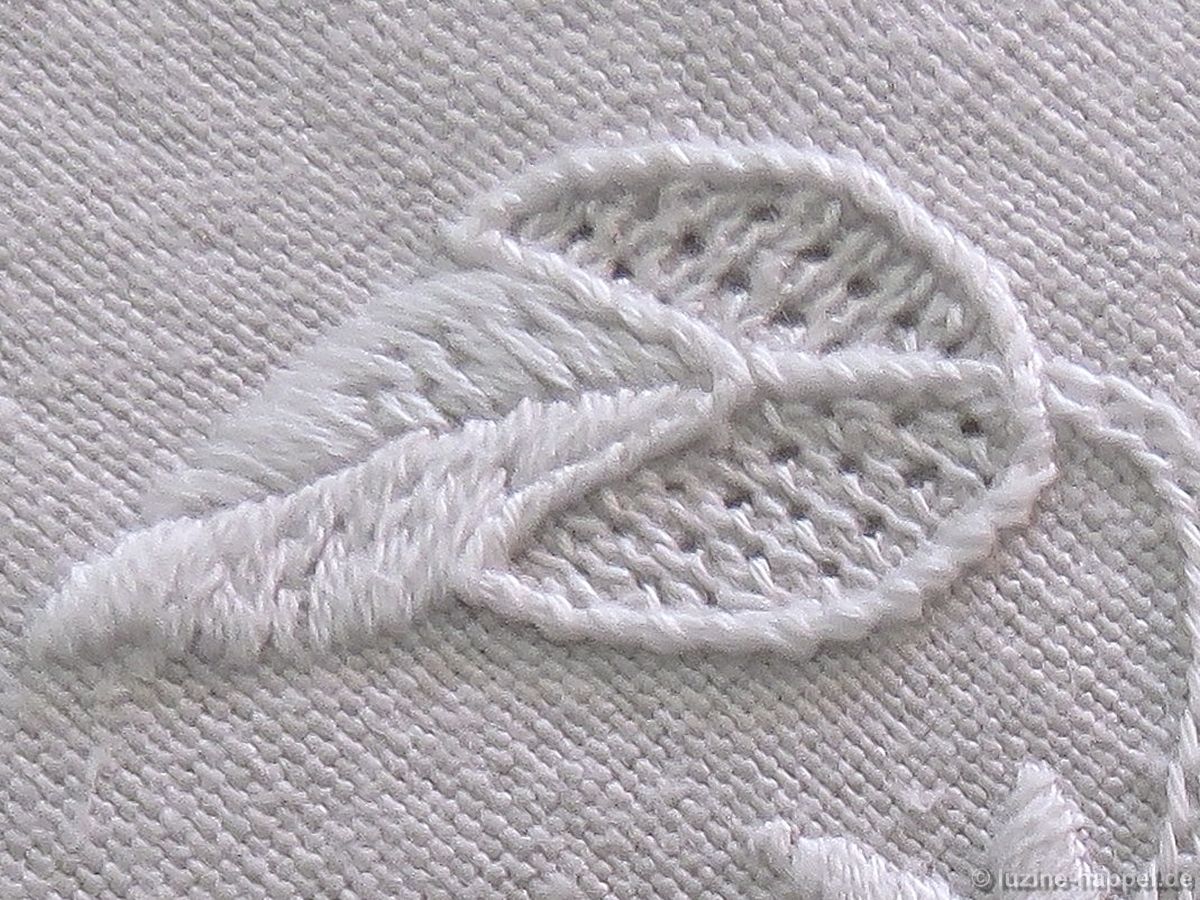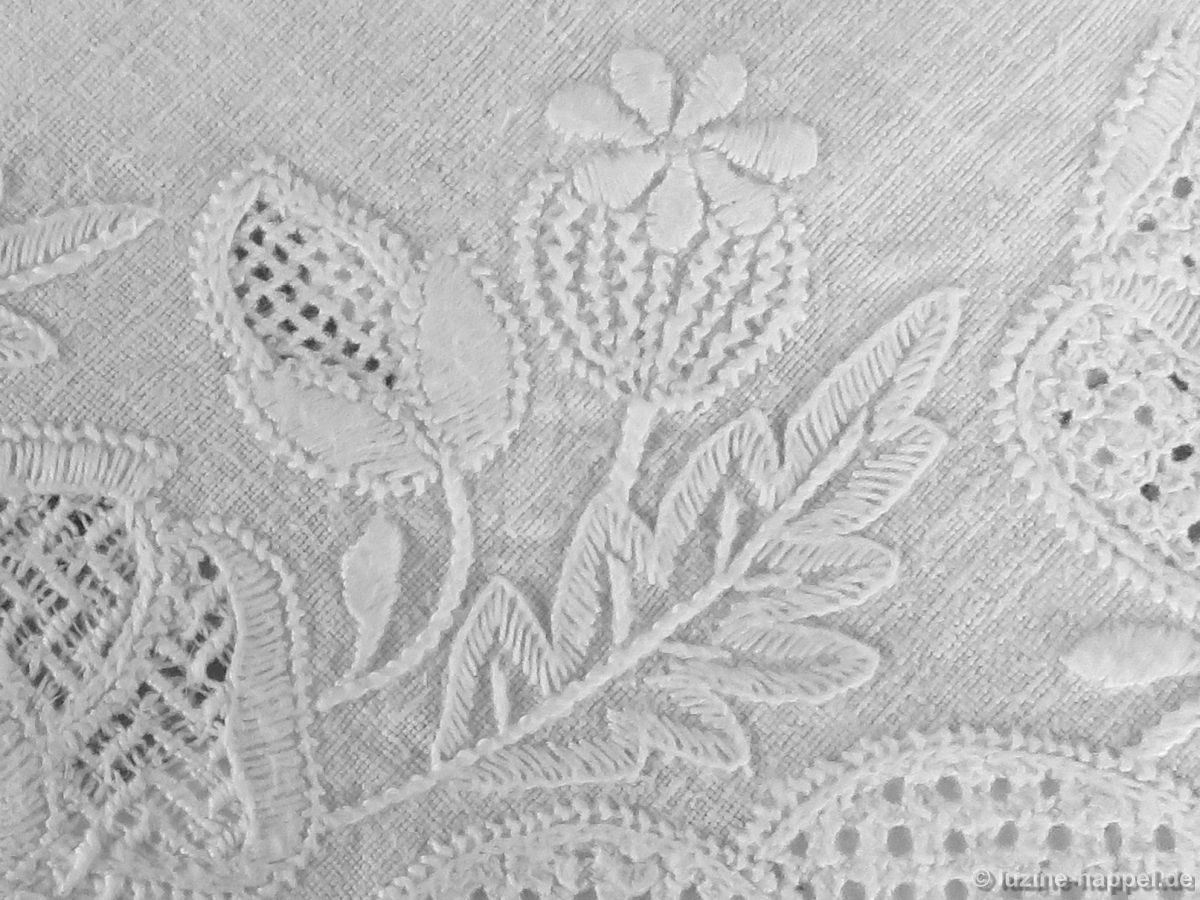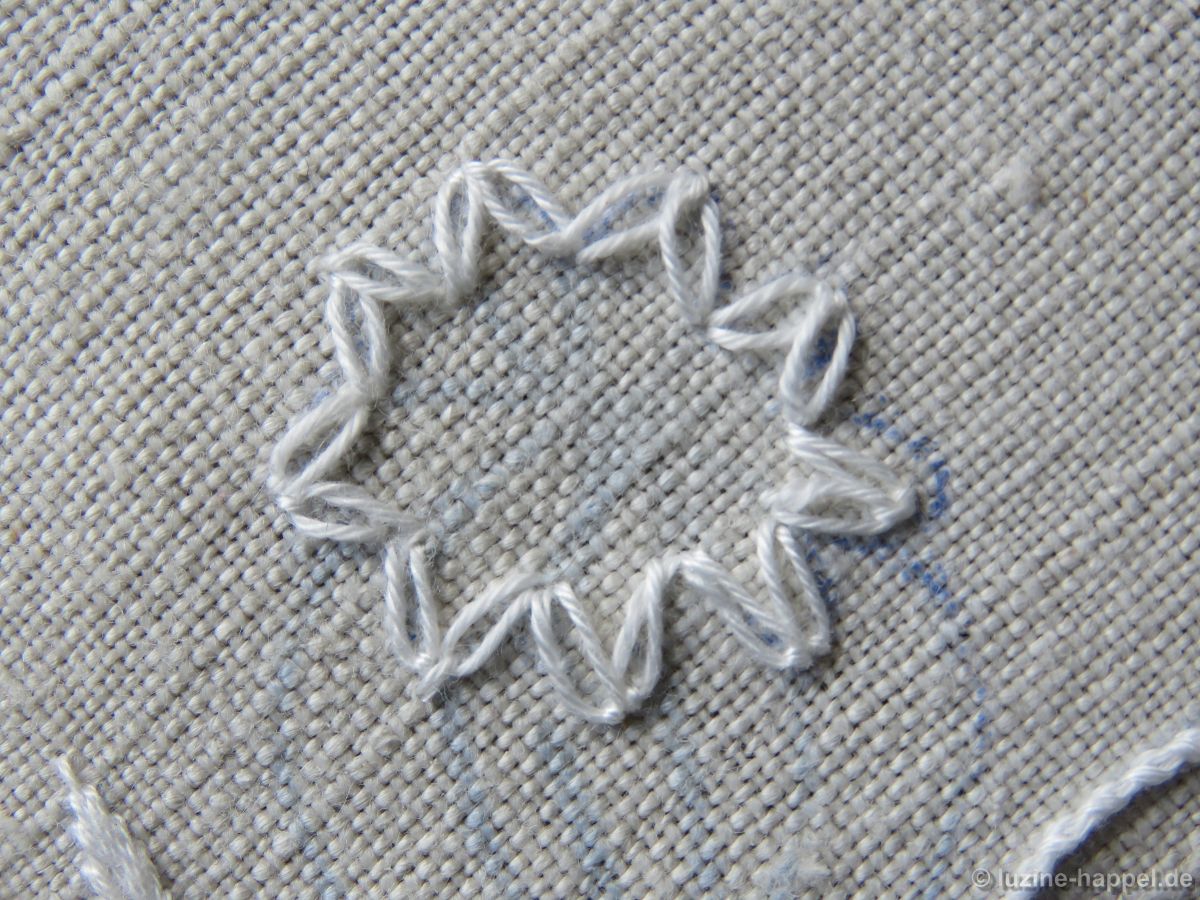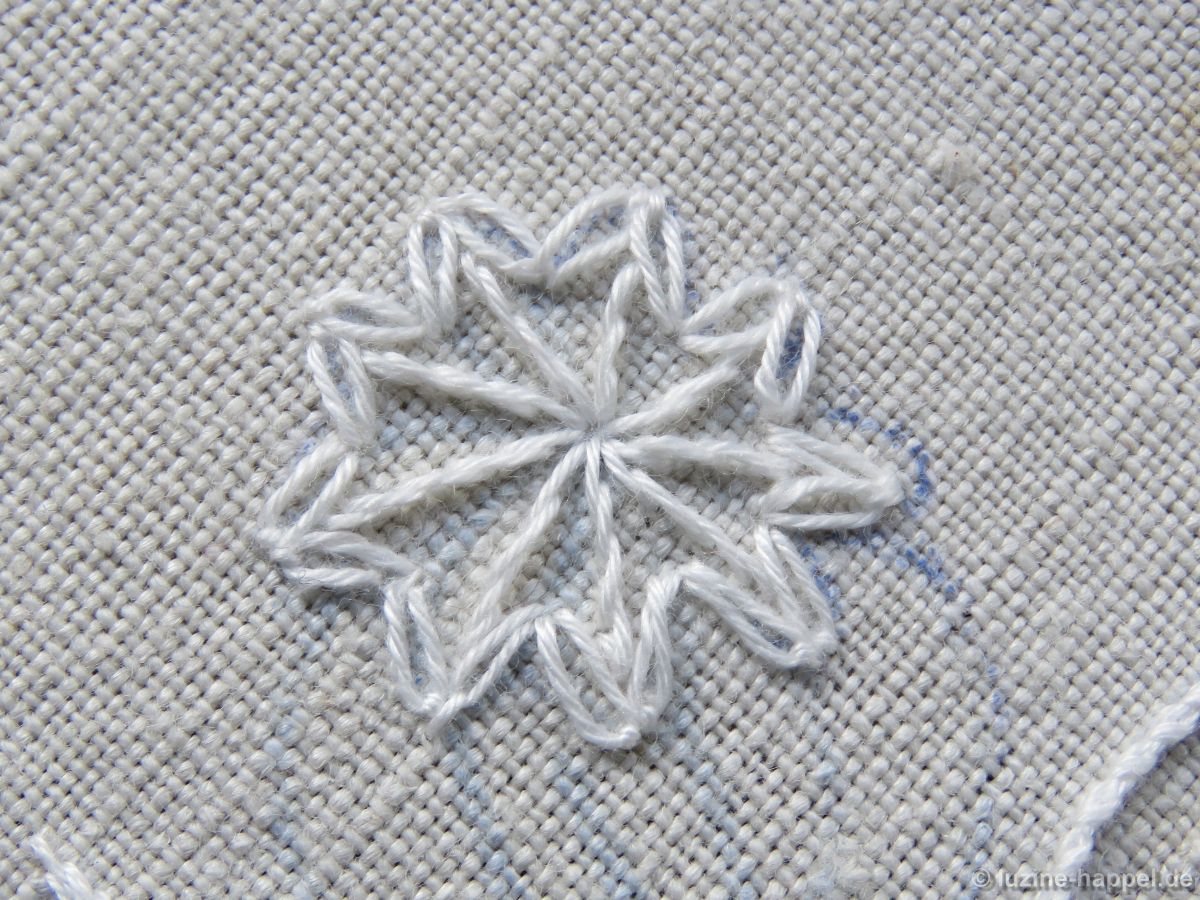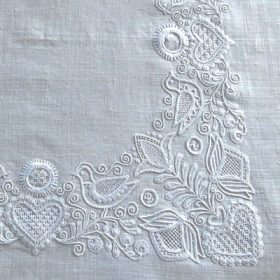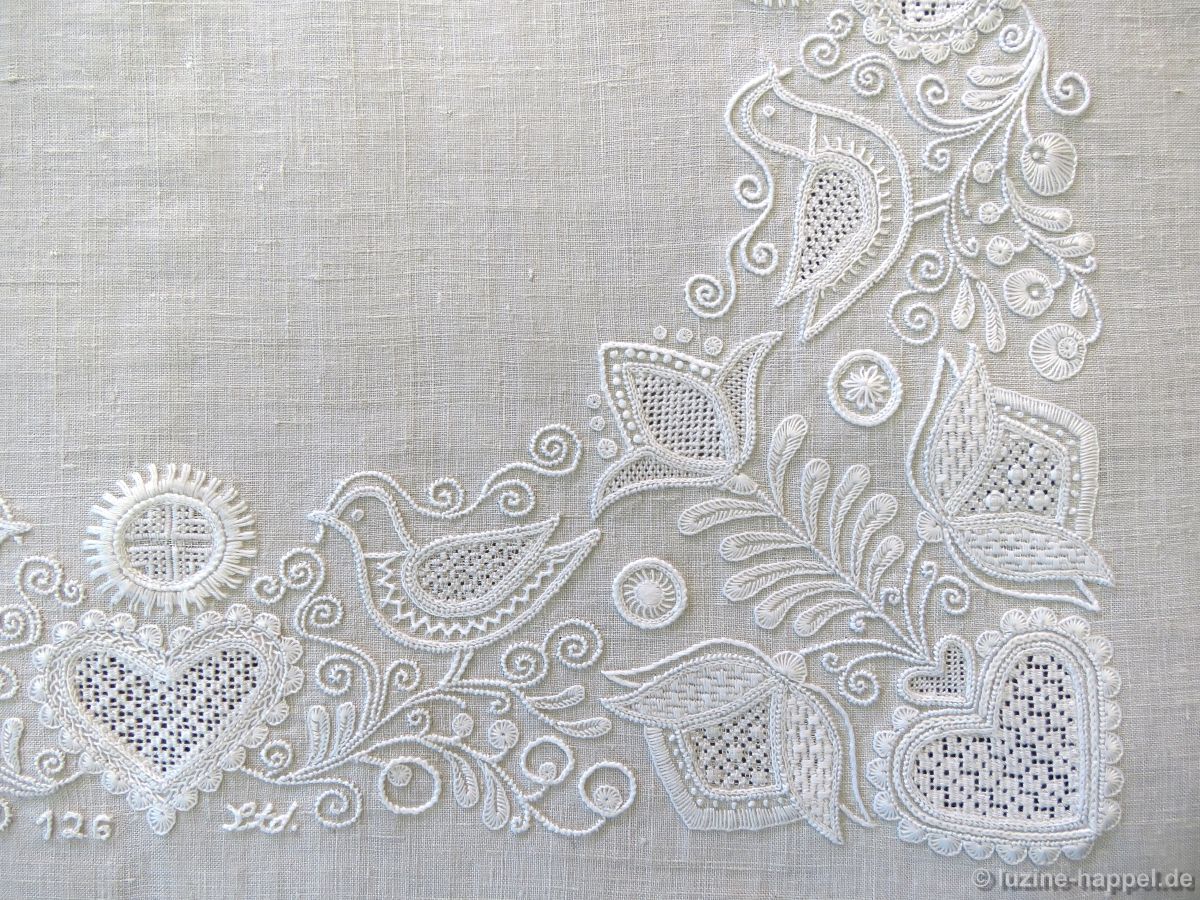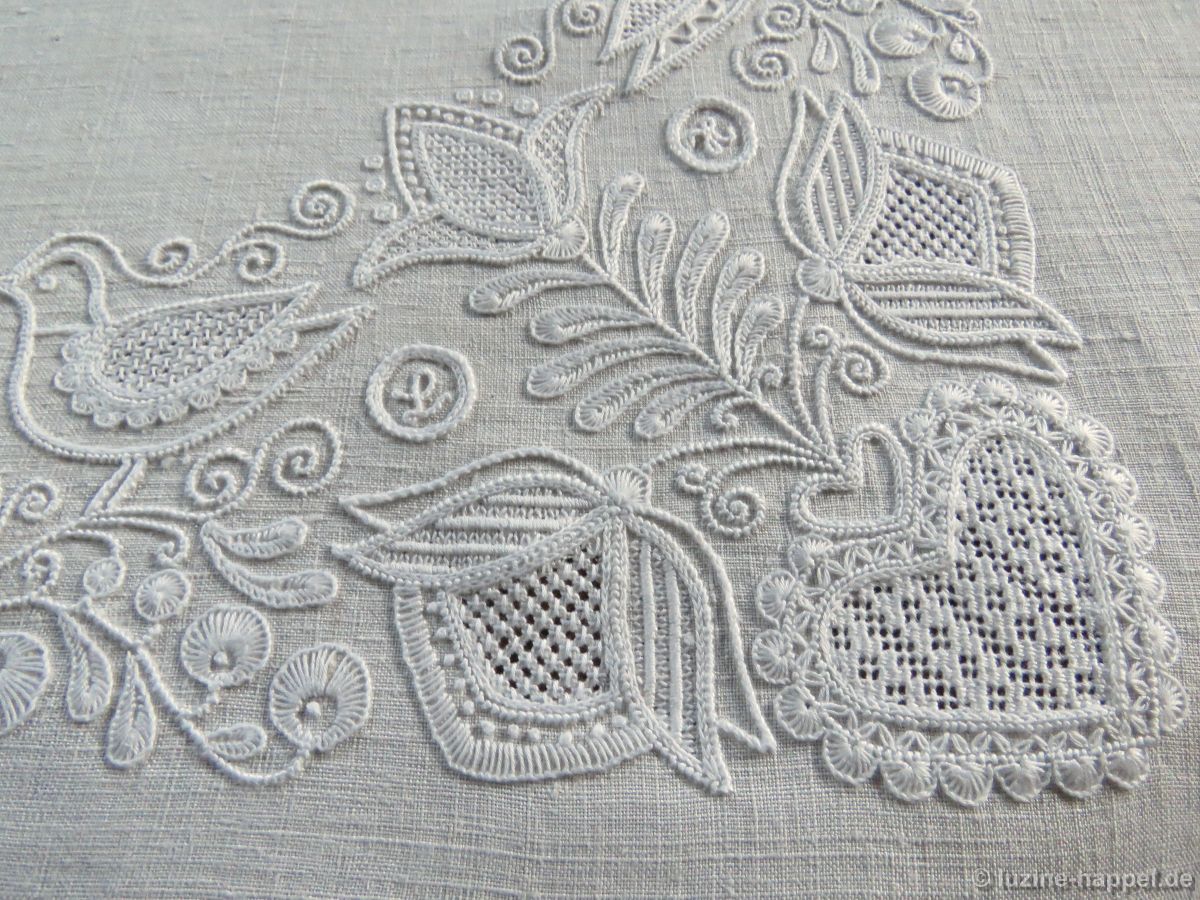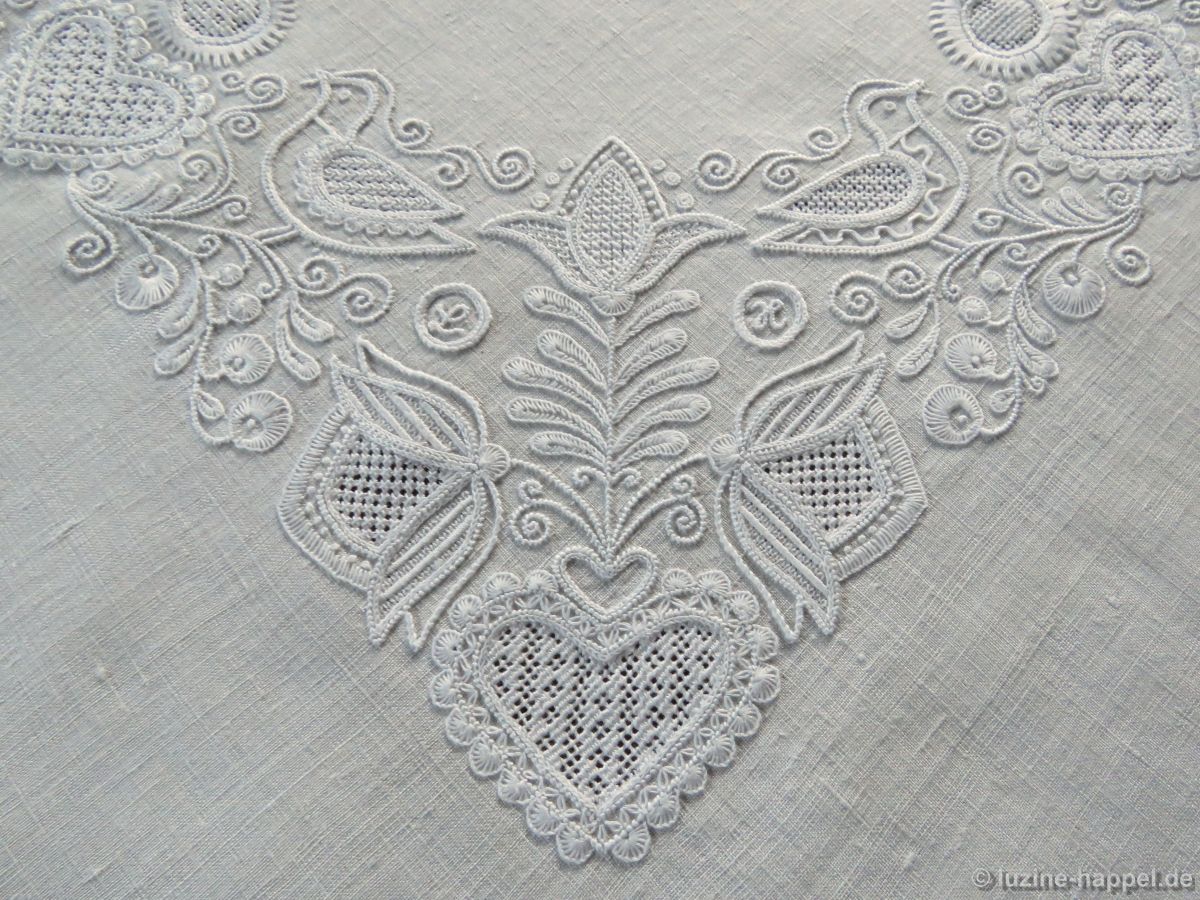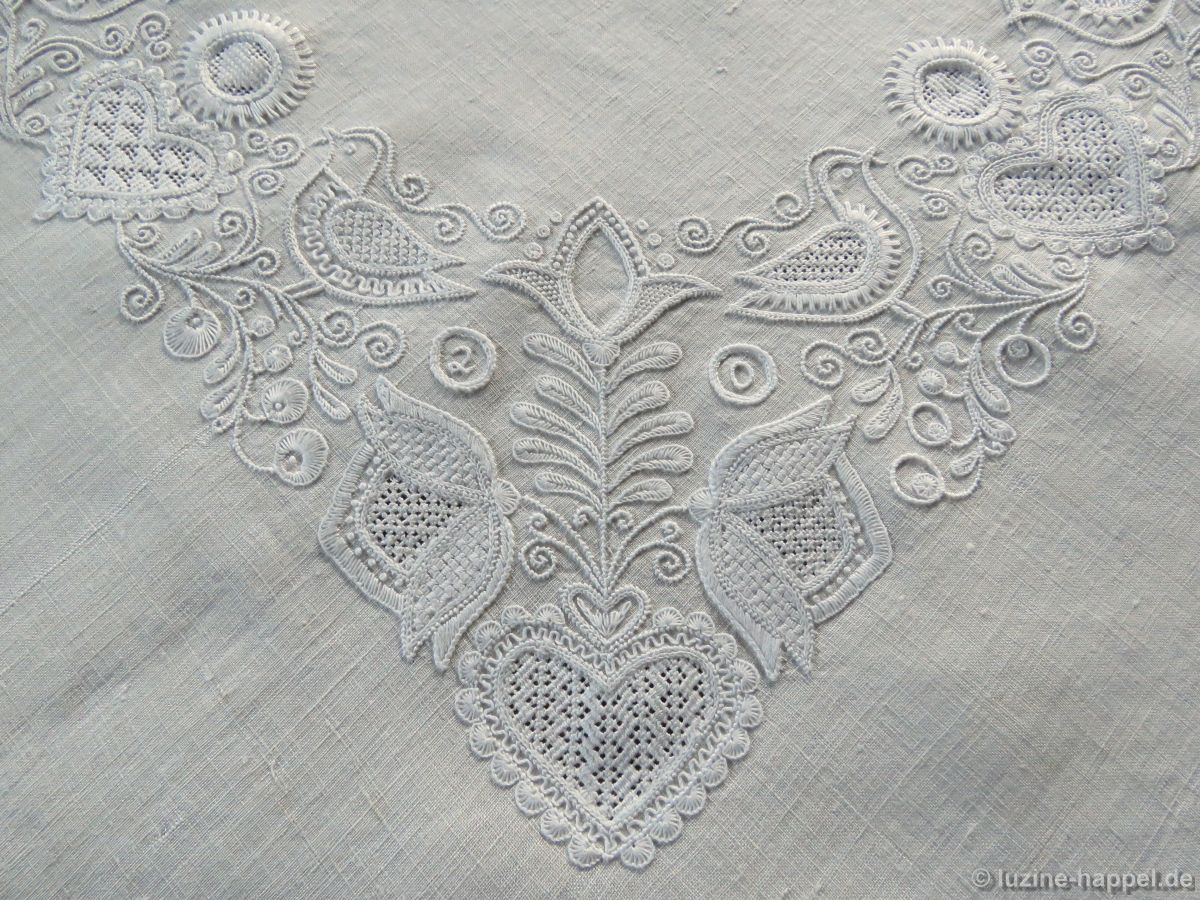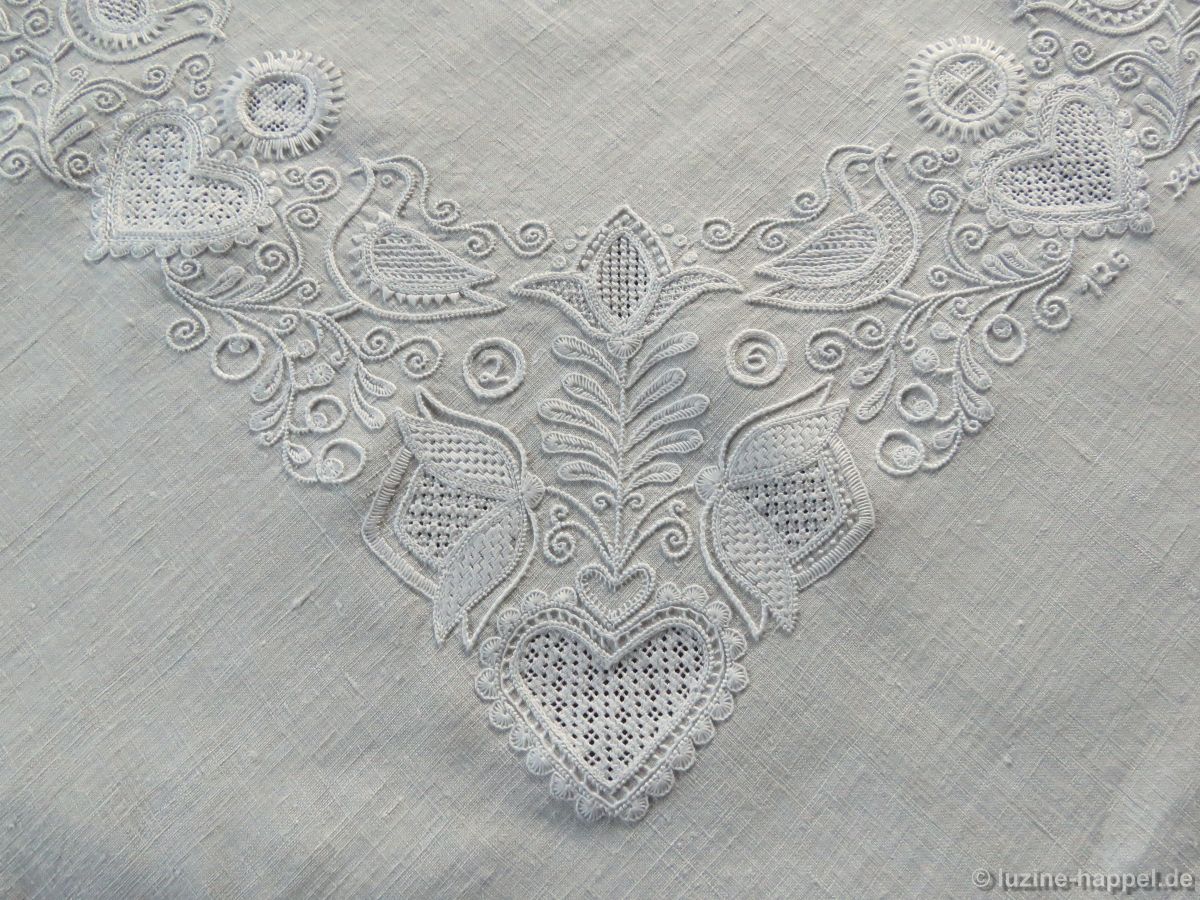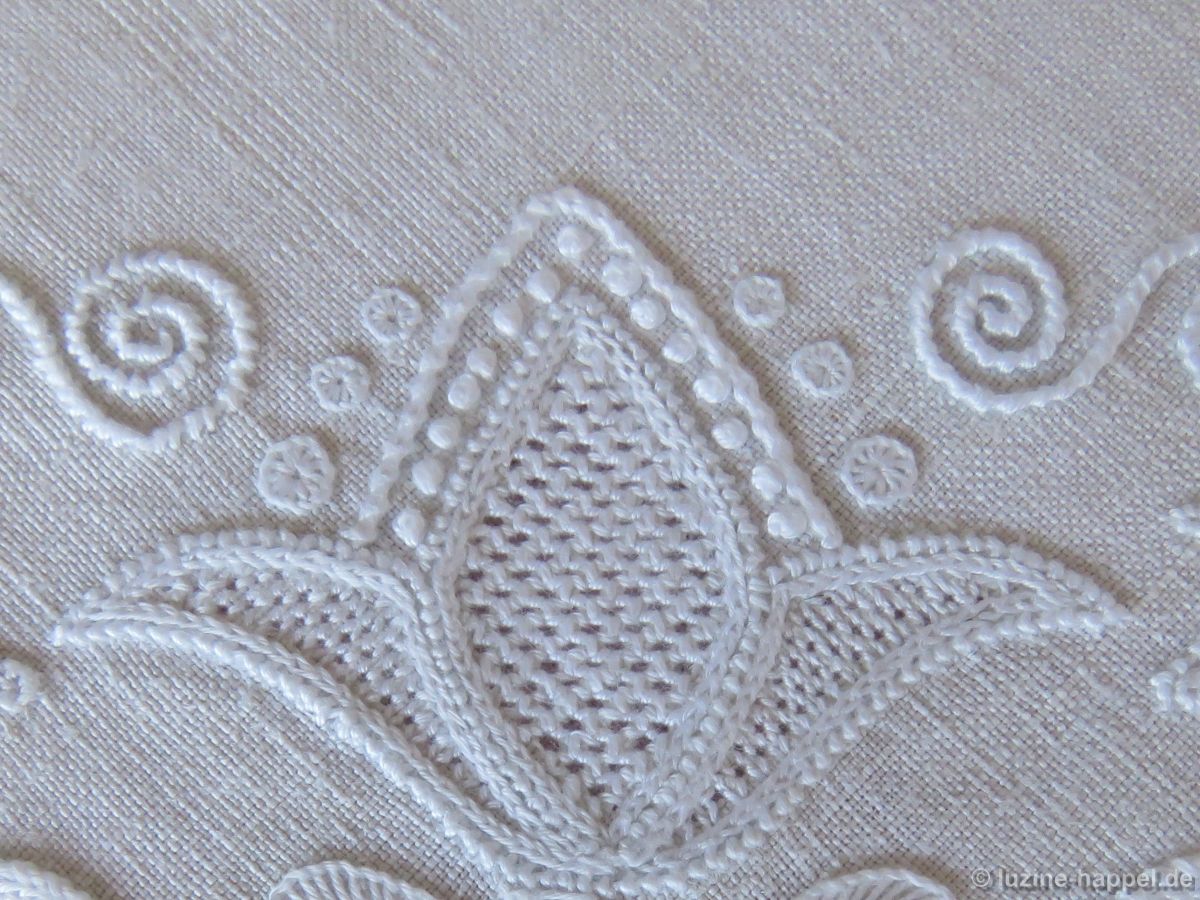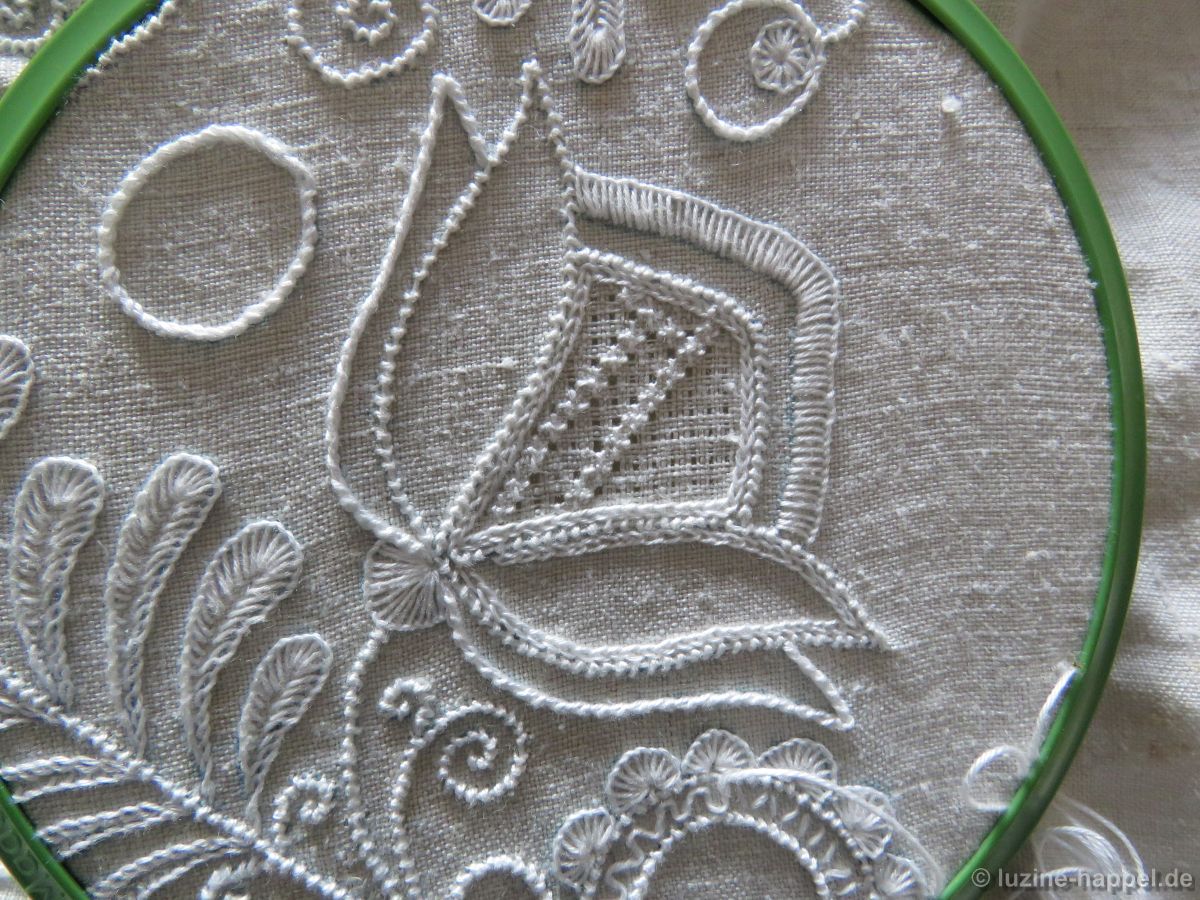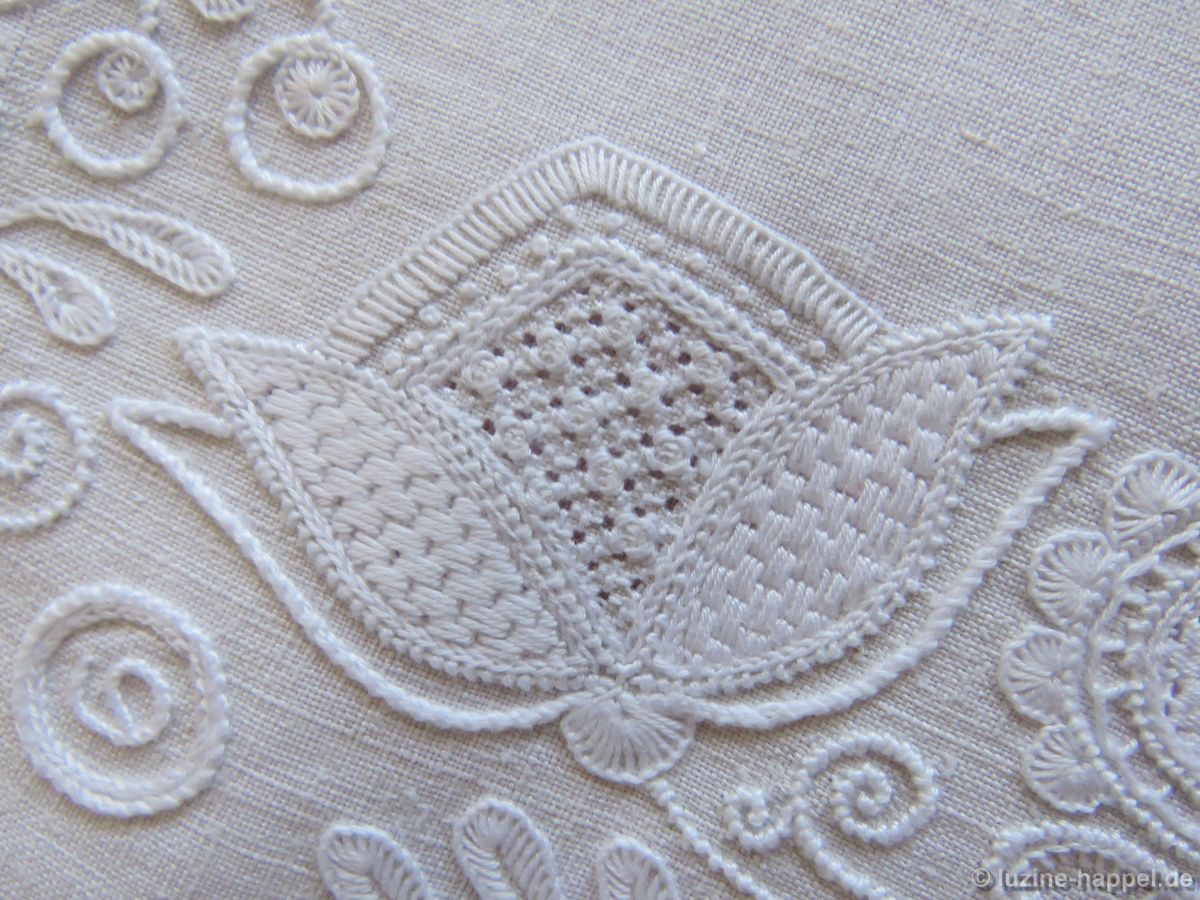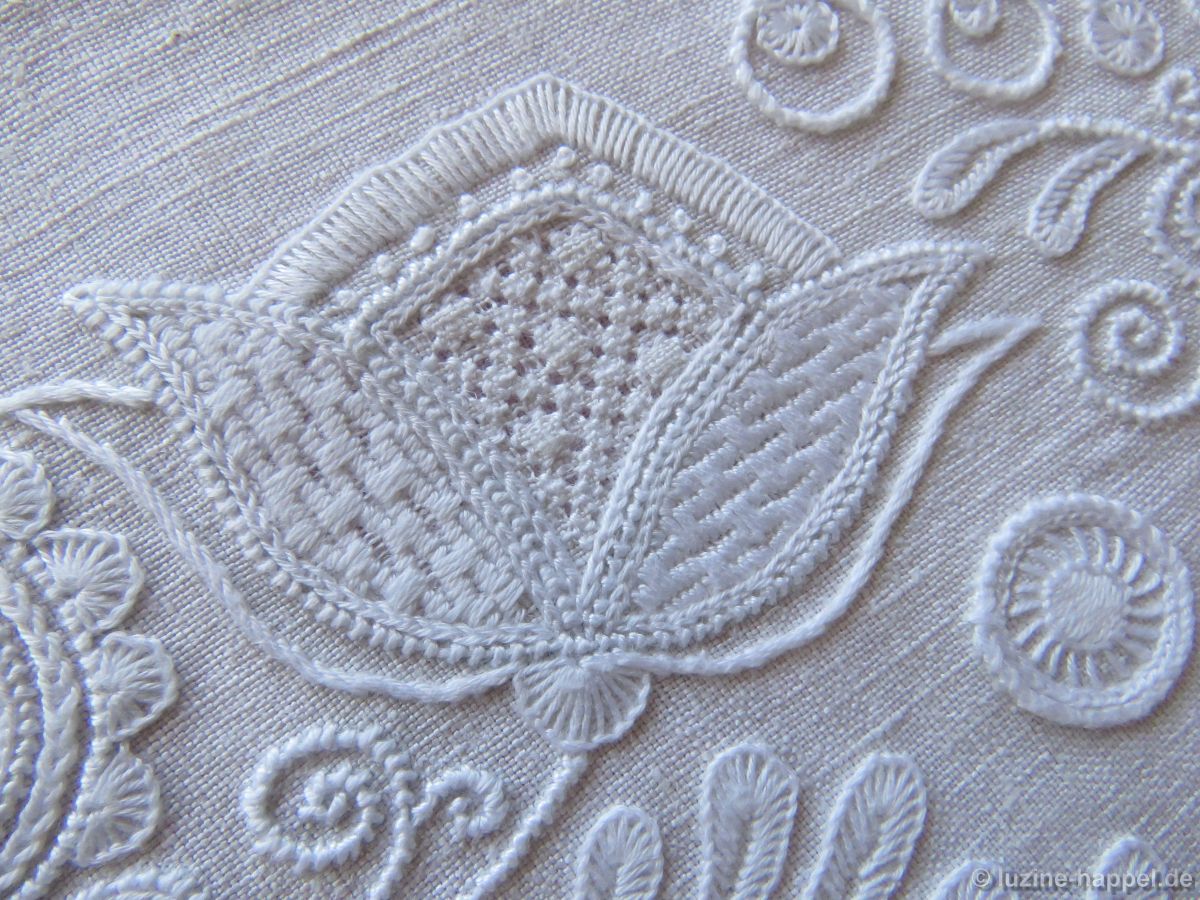
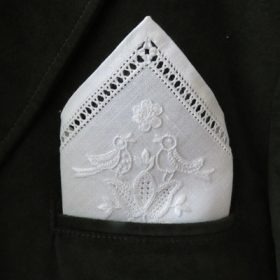
To embroider a pocket square with Schwalm whitework, you need fine linen and a small pattern.
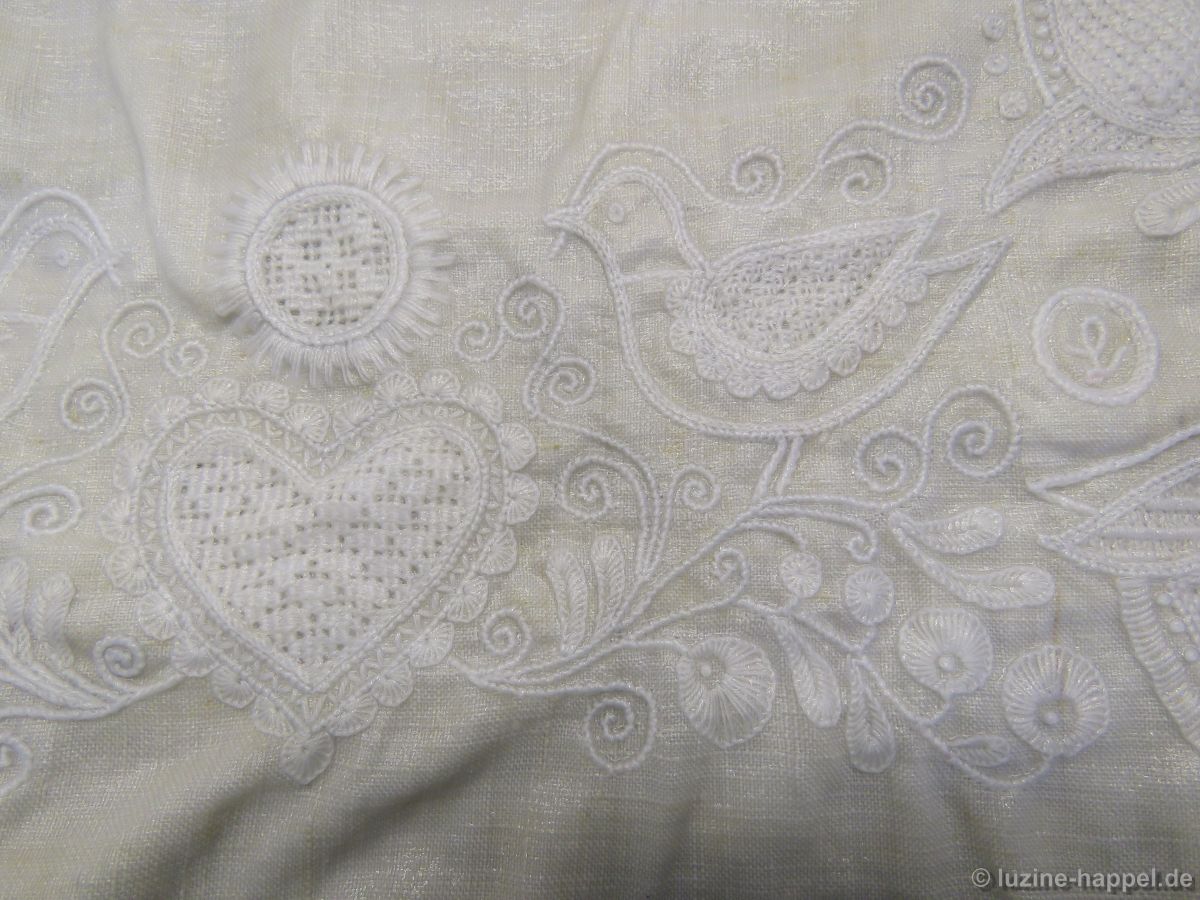
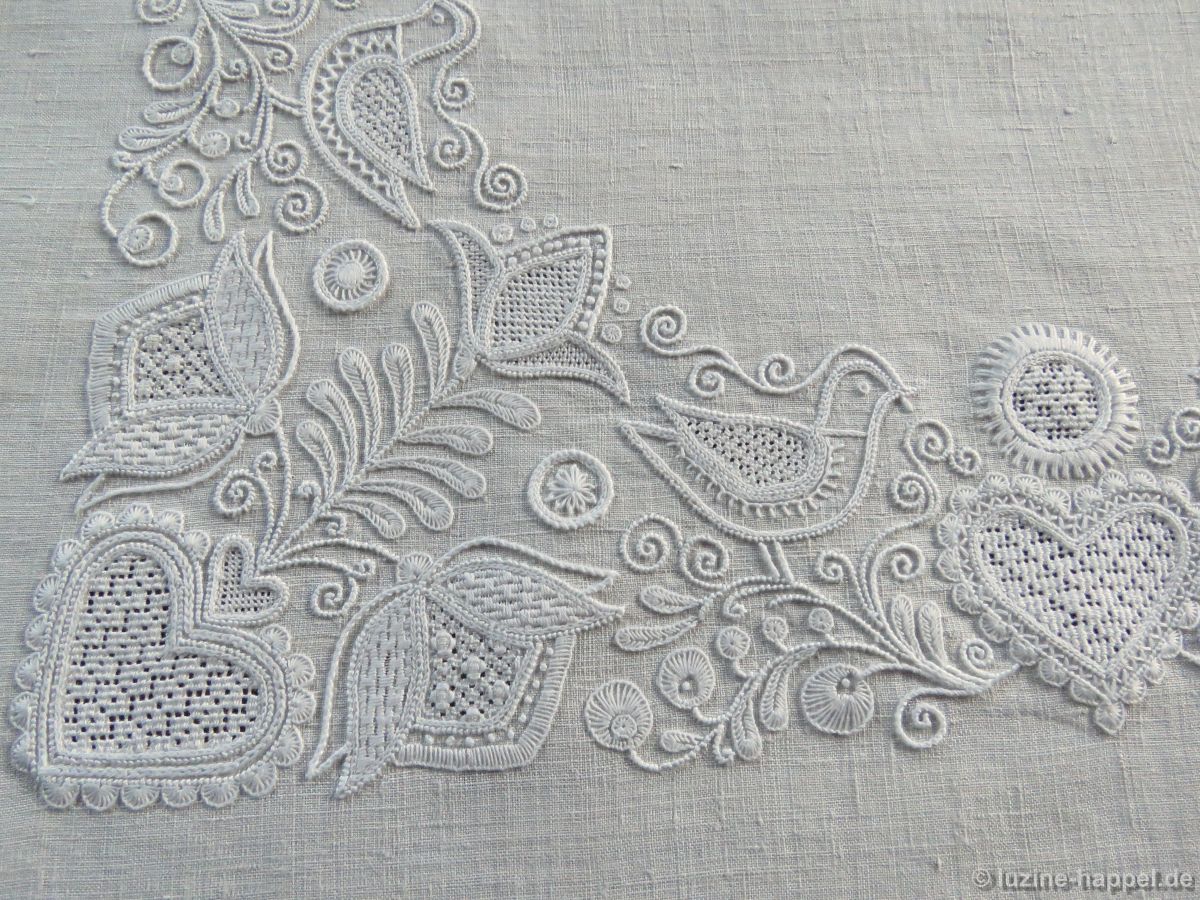
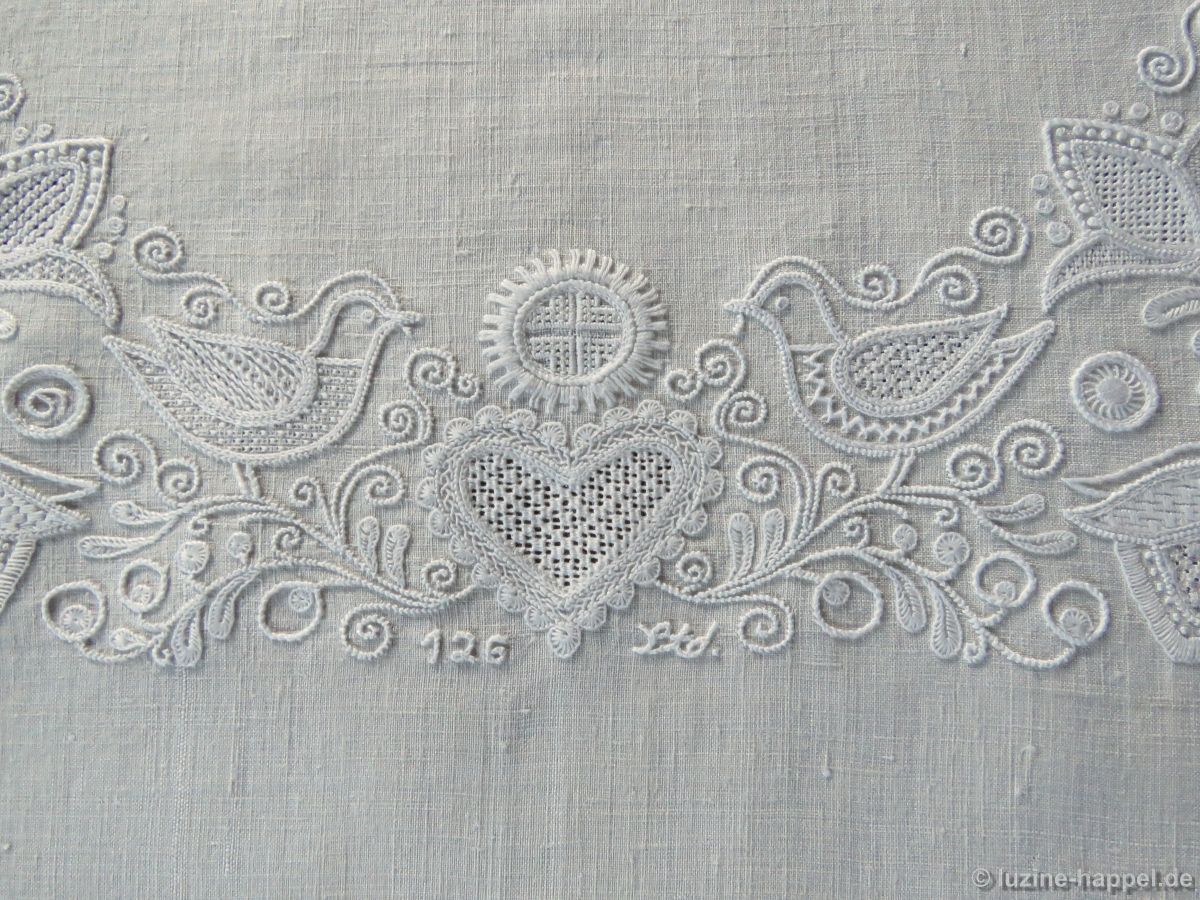
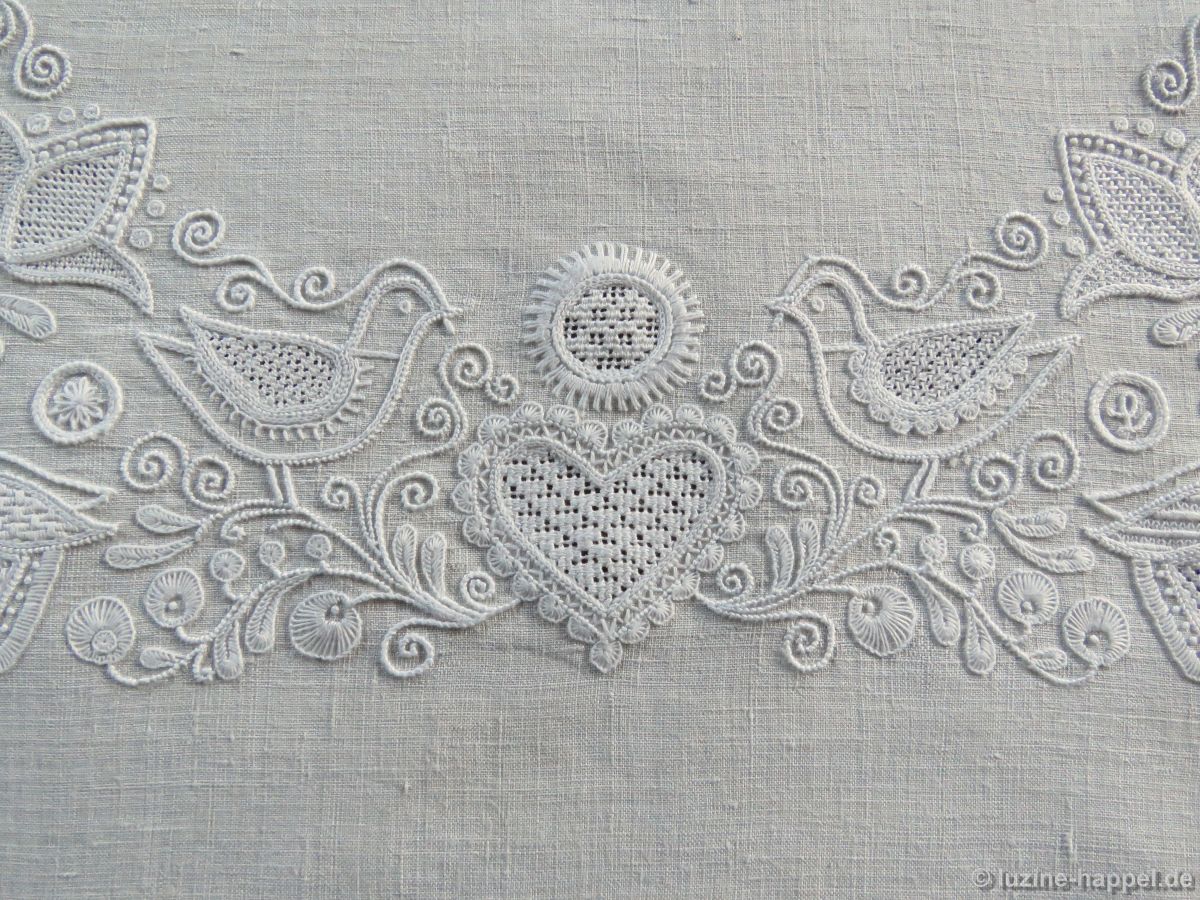
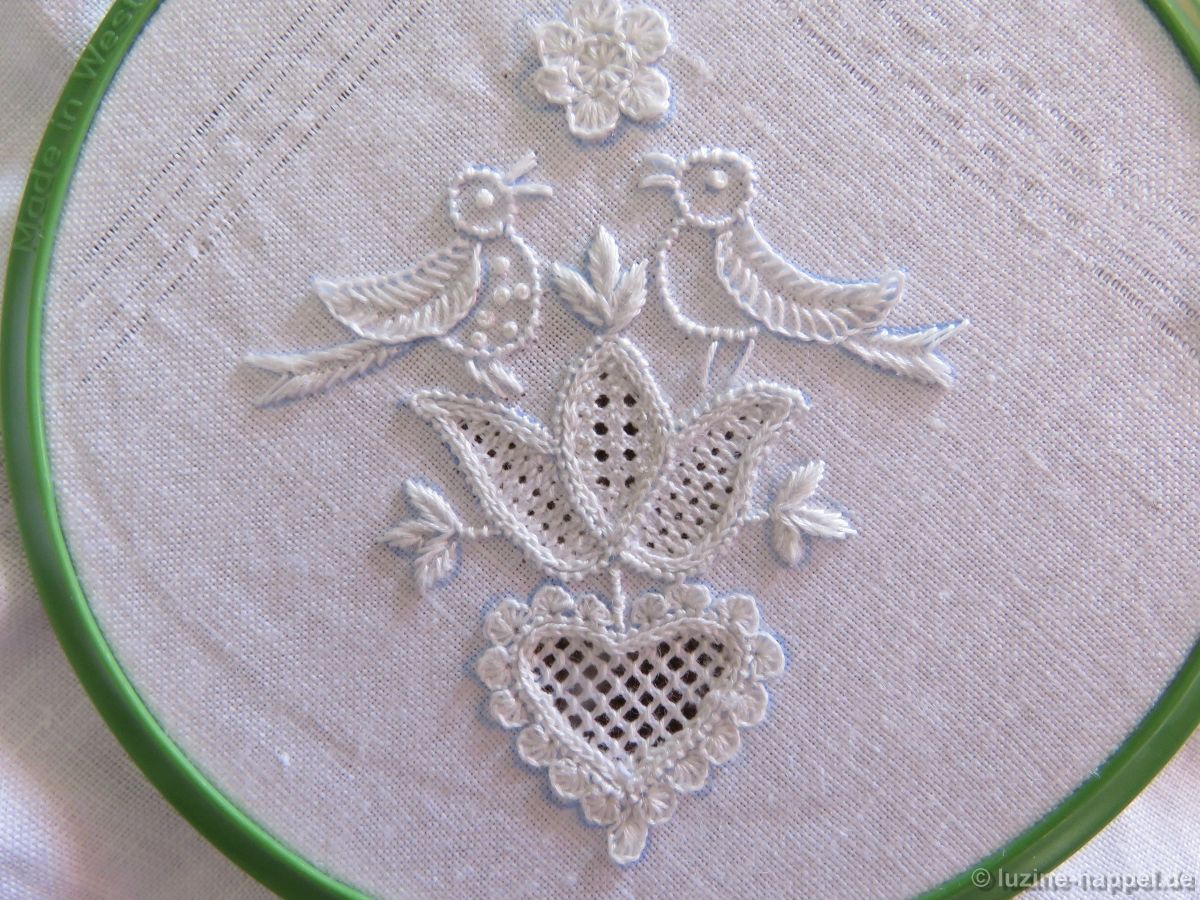
The design should include a heart, a tulip, and a small bird. The motifs are arranged here so that the handkerchief is worn with a corner showing.
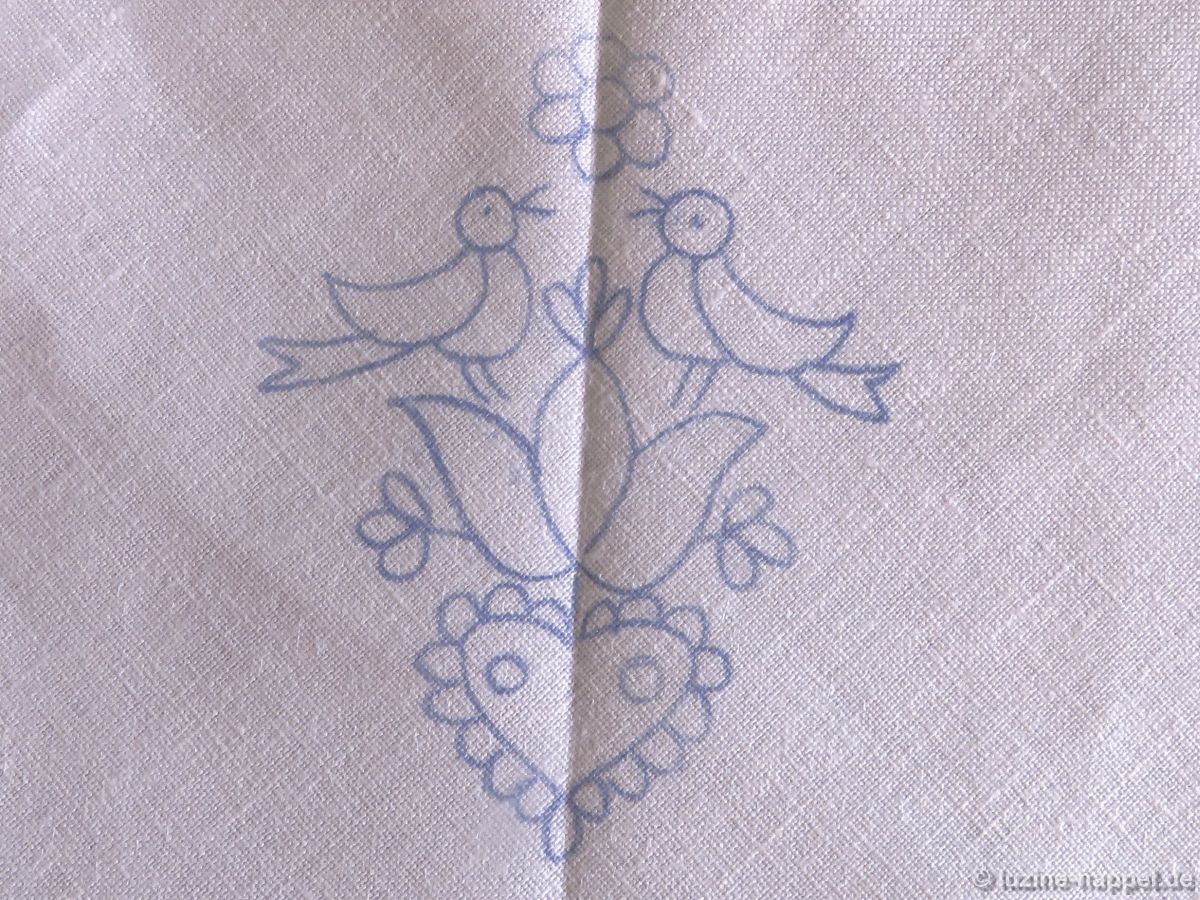
20/cm-count linen provides space for small filling patterns within the rather tiny shapes.
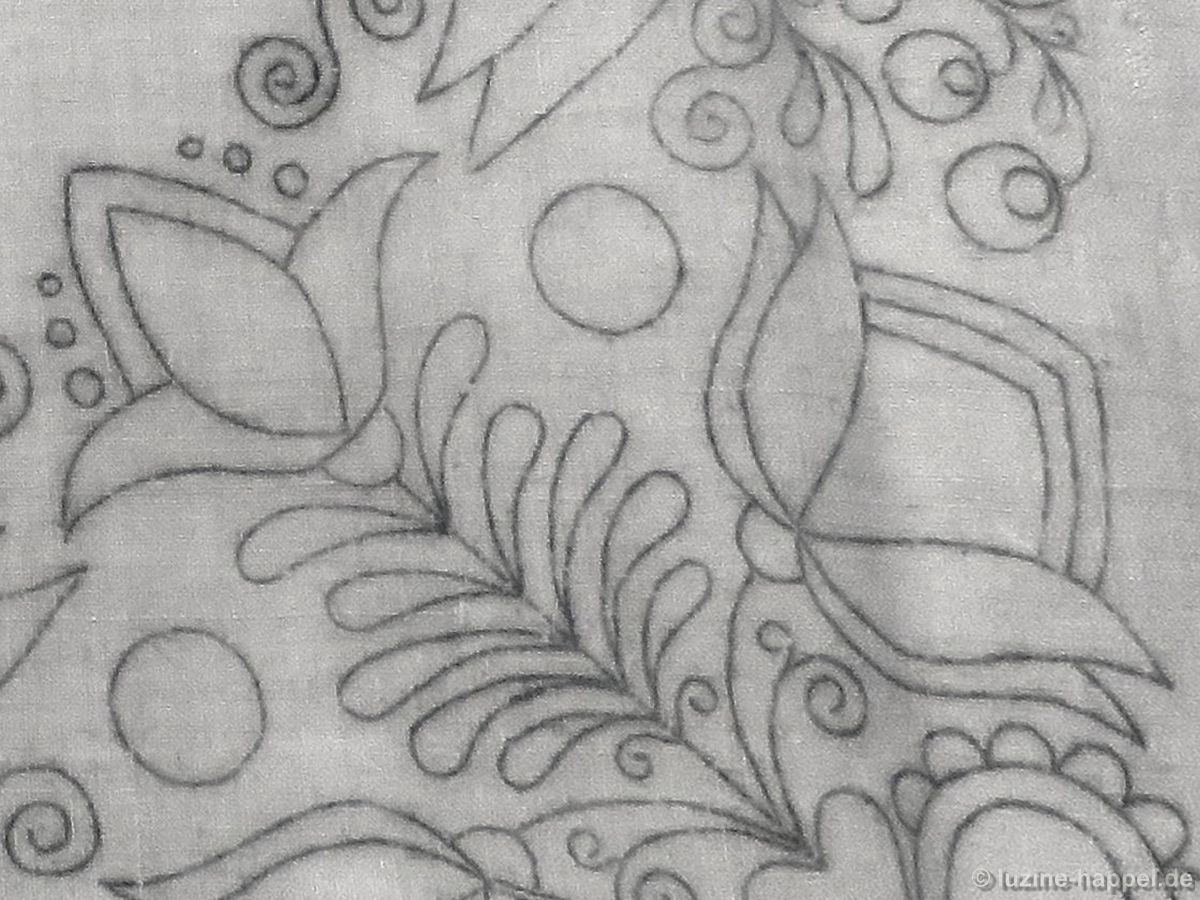
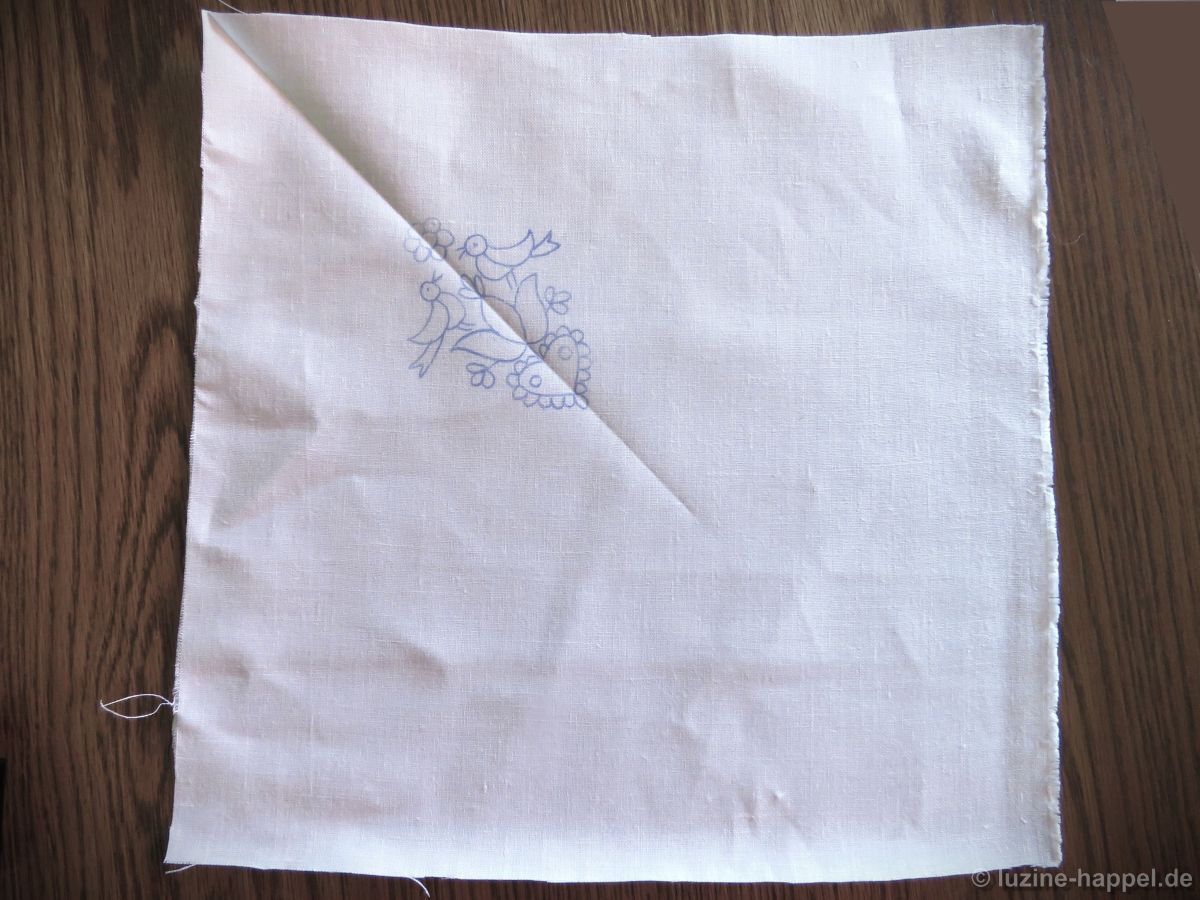
Cut to a preliminary size of 30 cm x 30 cm—to allow the embroidery to be mounted in the hoop—the design is ironed onto the linen diagonally to the grain, positioned so that approximately 7 cm of empty space remains towards the edges.
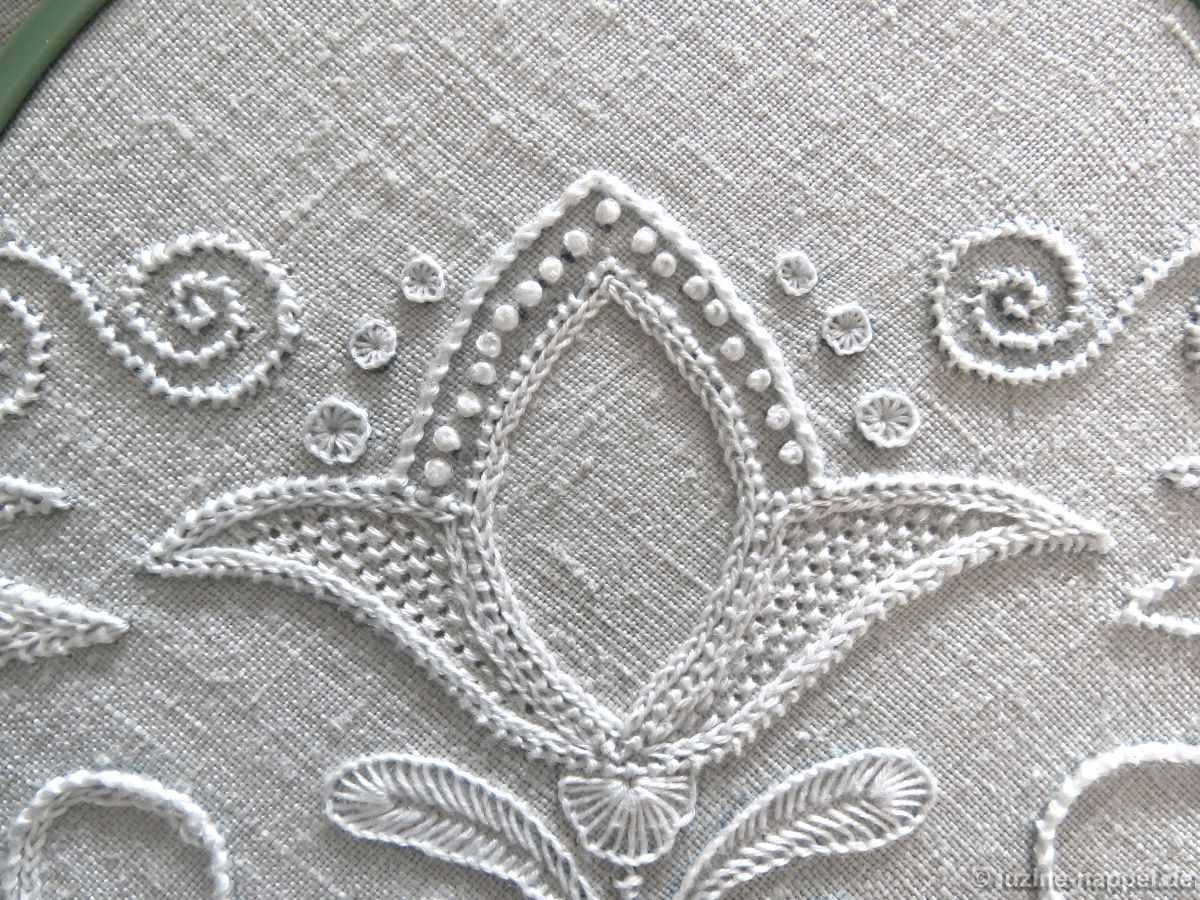
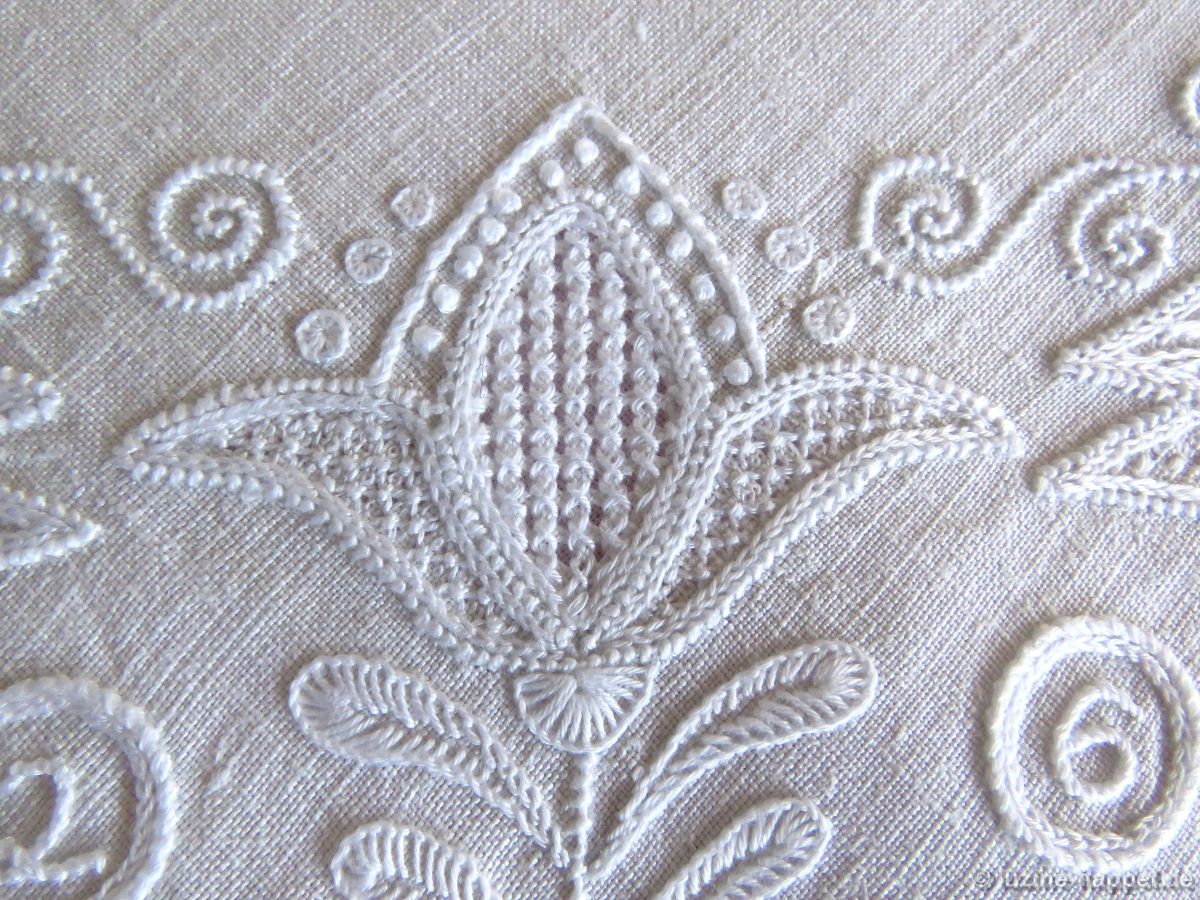
The design (9.5 cm high and 7 cm wide) is embroidered.
Next, the threads are withdrawn.
The peahole hemstitch begins 1 cm away from the motif, followed by a 1.5 cm wide open space for the hem and a 0.3 cm wide strip for the hem allowance. The fabric will later be cut along the outer withdrawn thread line.
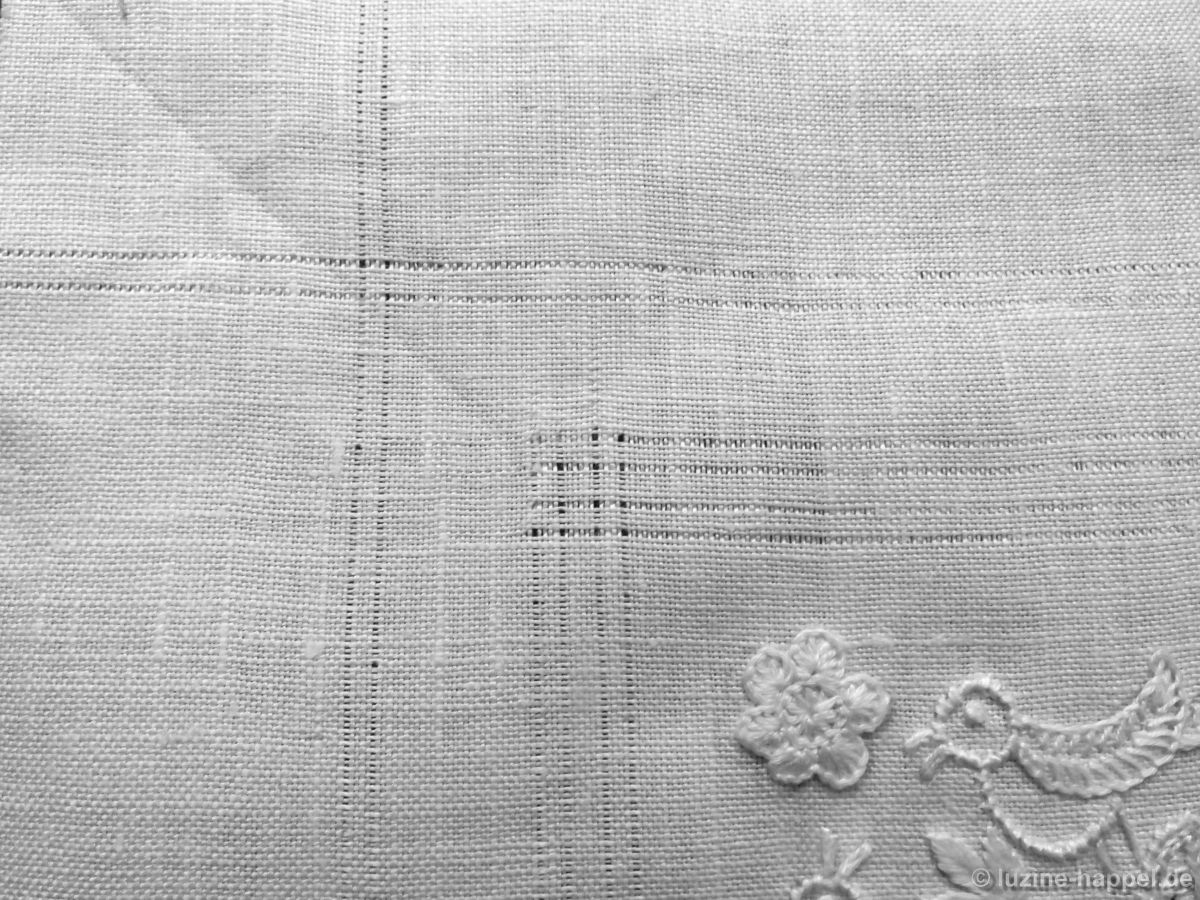
The peahole hem should be worked only on the two sides adjacent to the motif. The remaining two sides are secured with simple hemstitches.
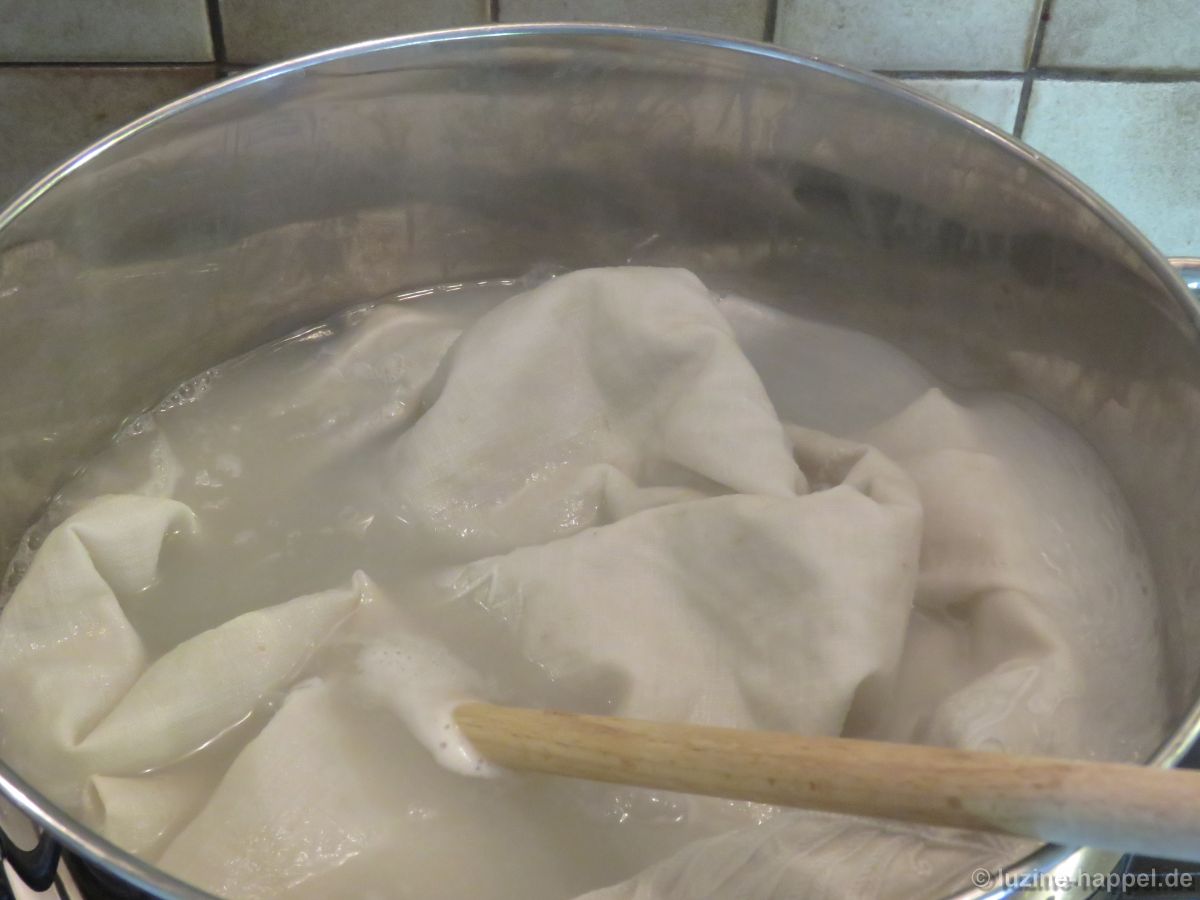
Admittedly, hemming is a bit tricky, but manageable with some patience. The cloth now measures 19.5 cm x 19.5 cm and shrank to 19 cm x 19 cm after boiling.
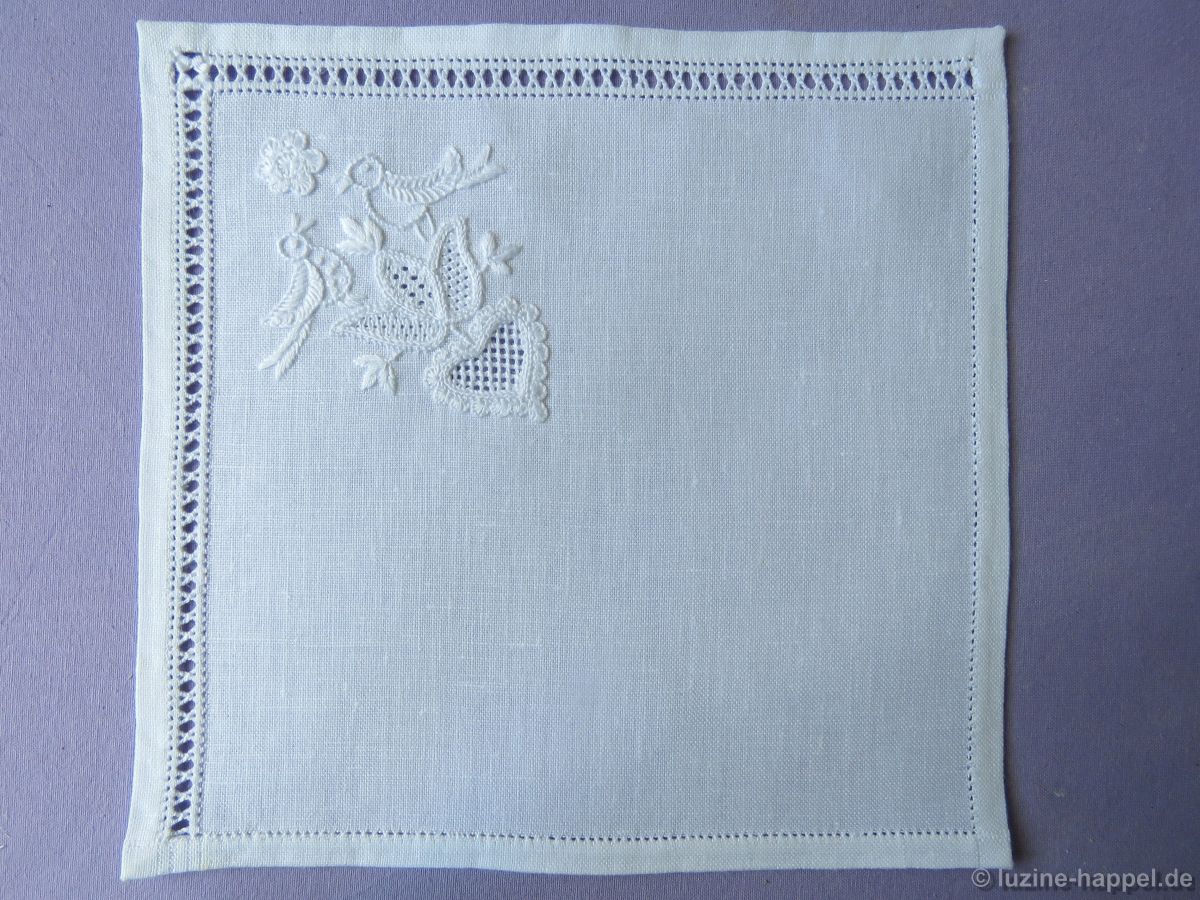
This results in an attractive, distinctive pocket square that reflects the local style.
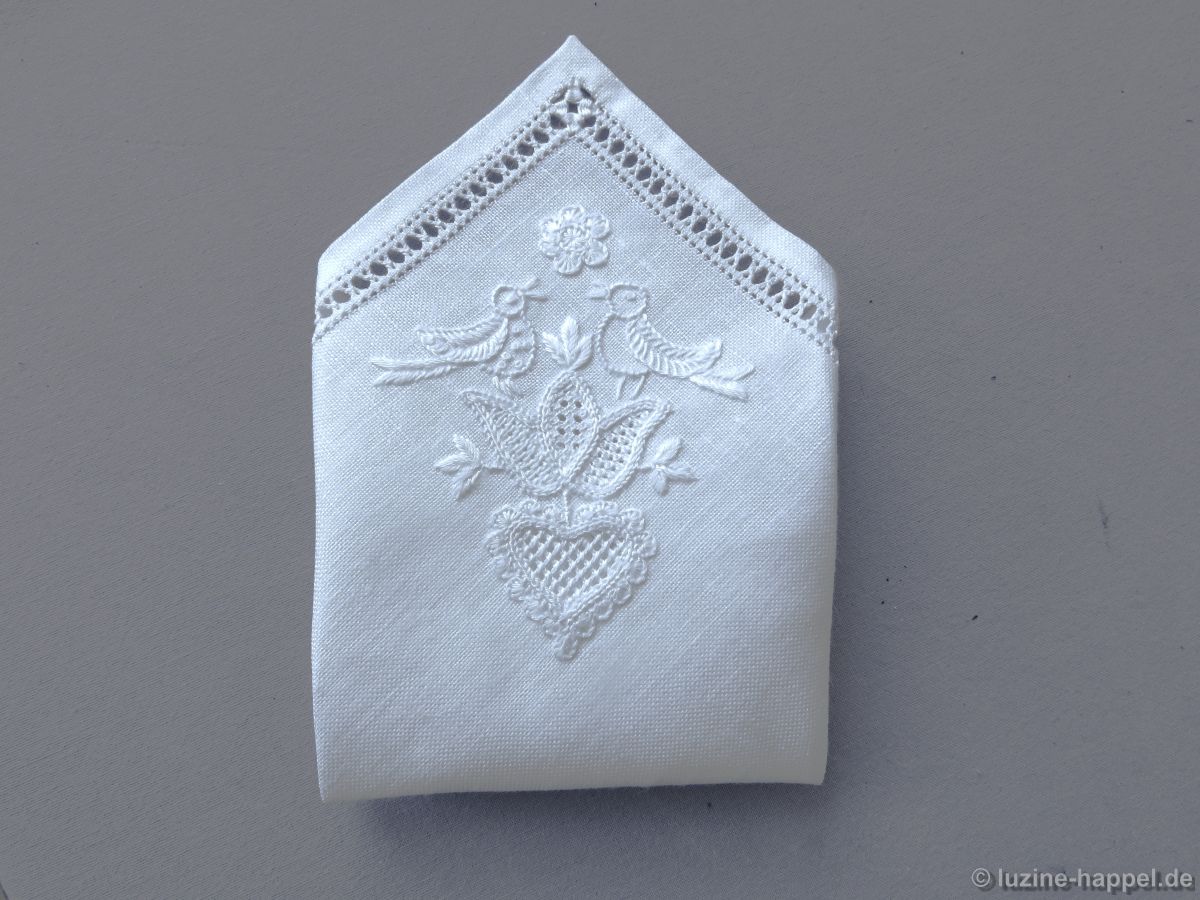
With the right suit, it can be worn sticking out prominently
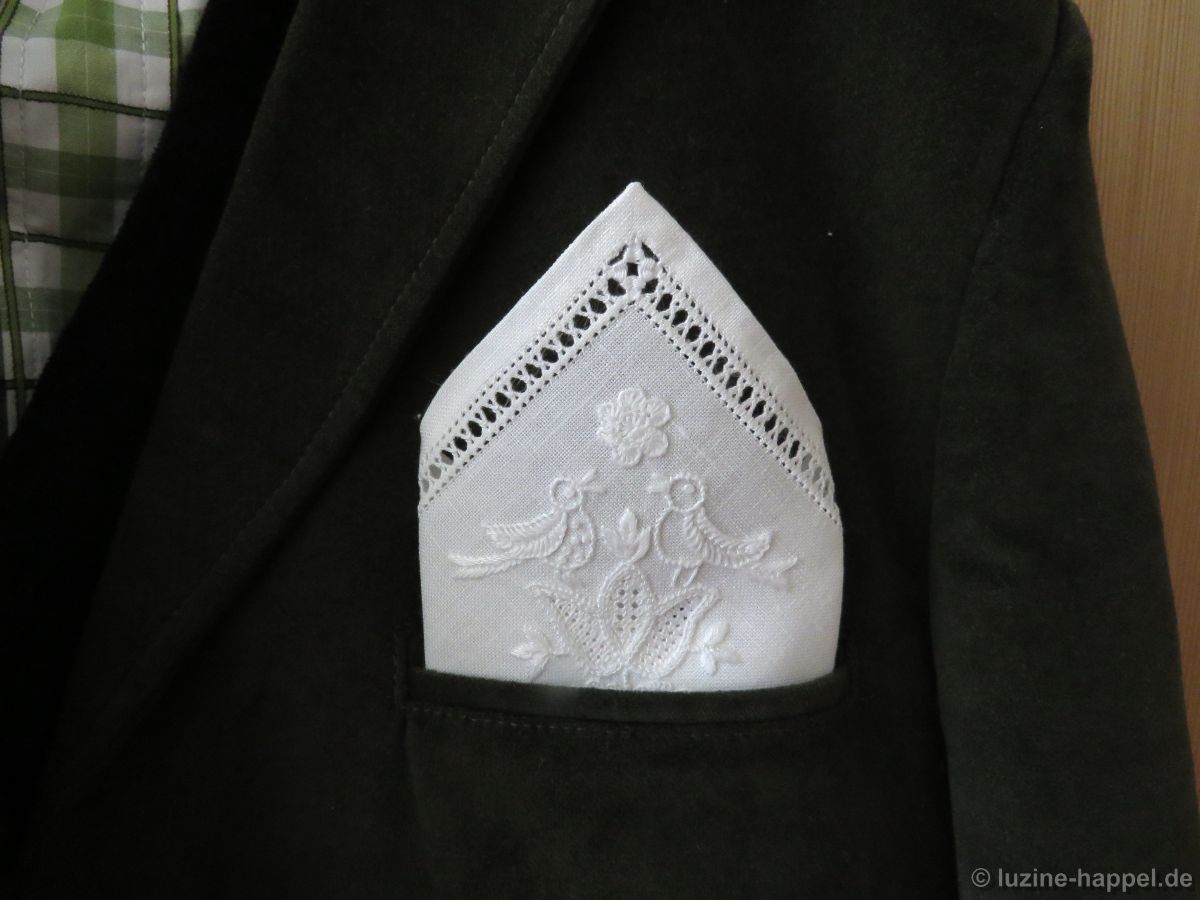
or tucked in a little lower.
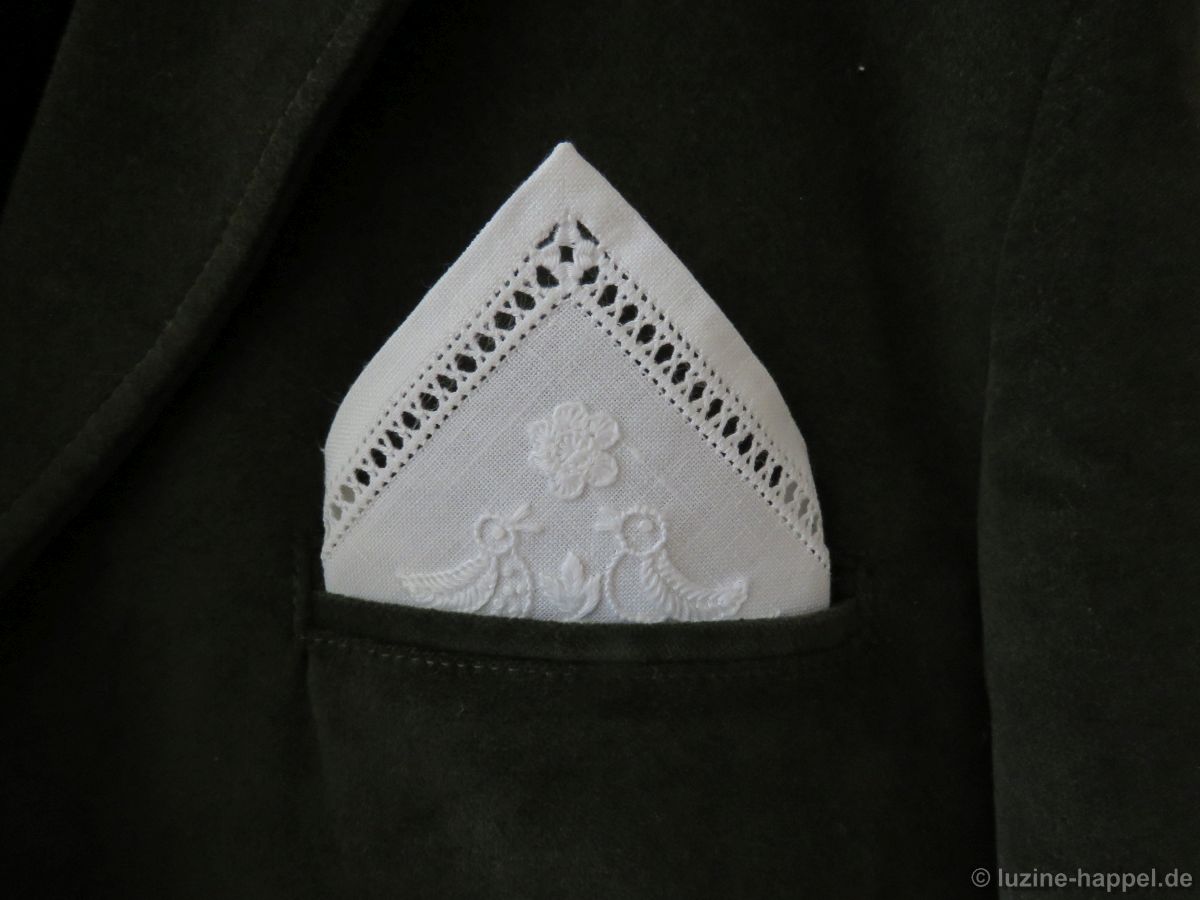
Even without starch, the linen holds its shape firmly, making the pocket square a real eye-catcher!
Pocket squares featuring Schwalm whitework, designed to be worn flat, will be shown in the next blog post.