Eyelash Stitches in Schwalm Whitework

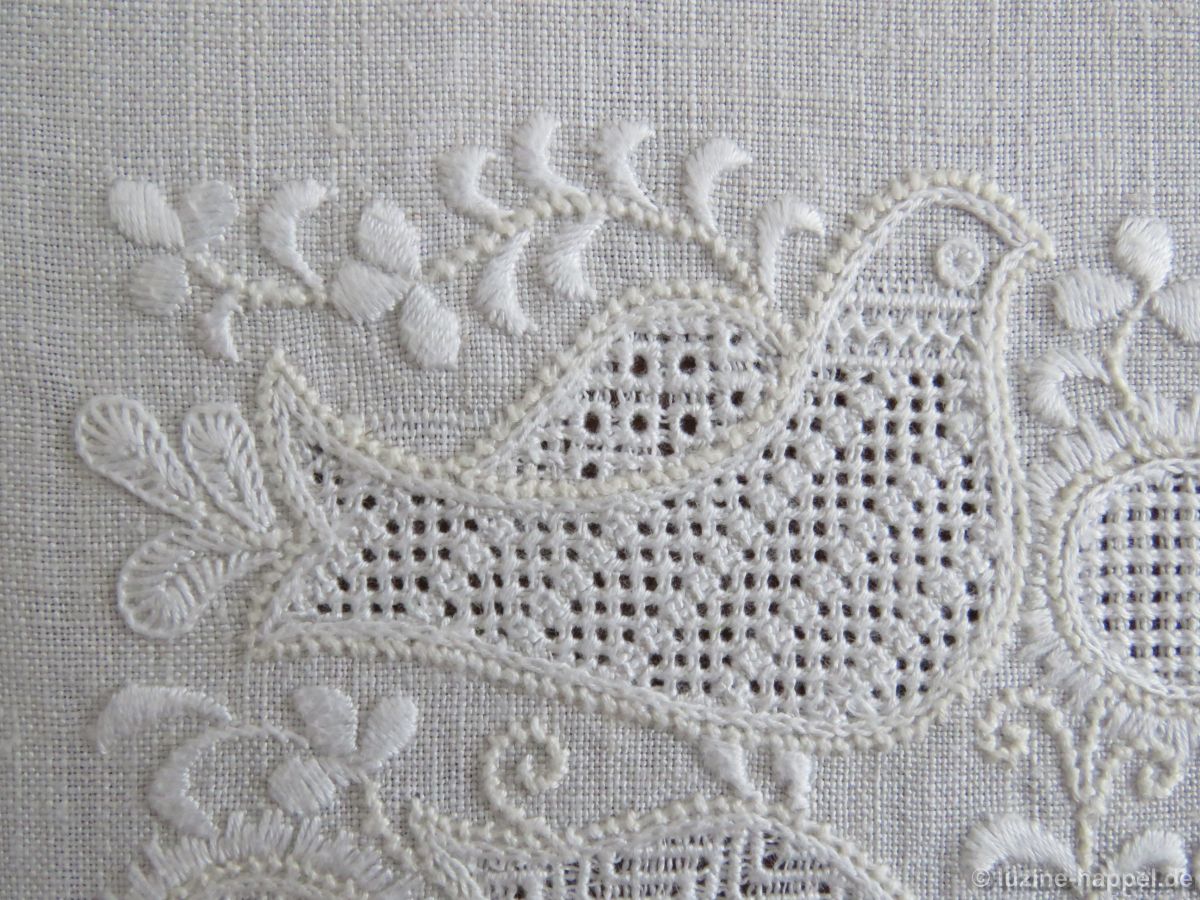
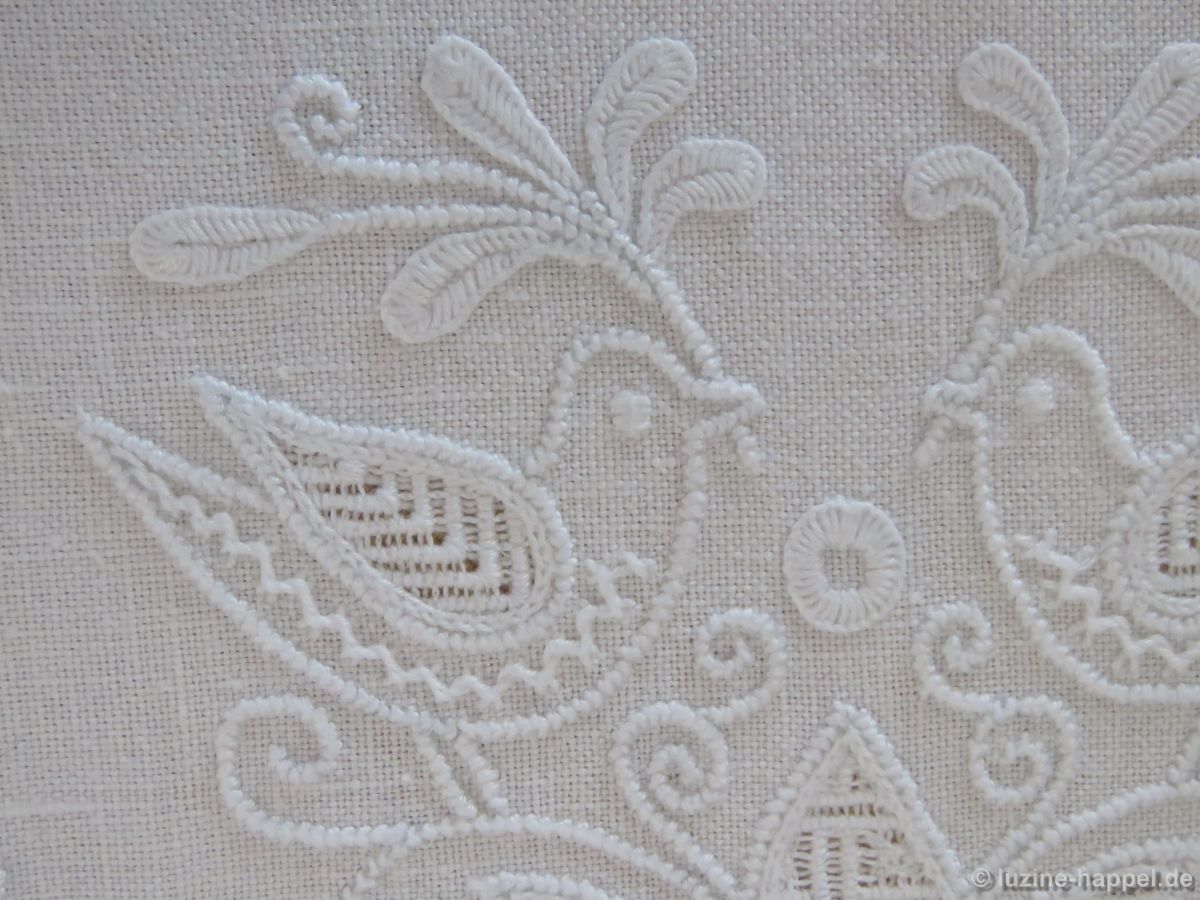
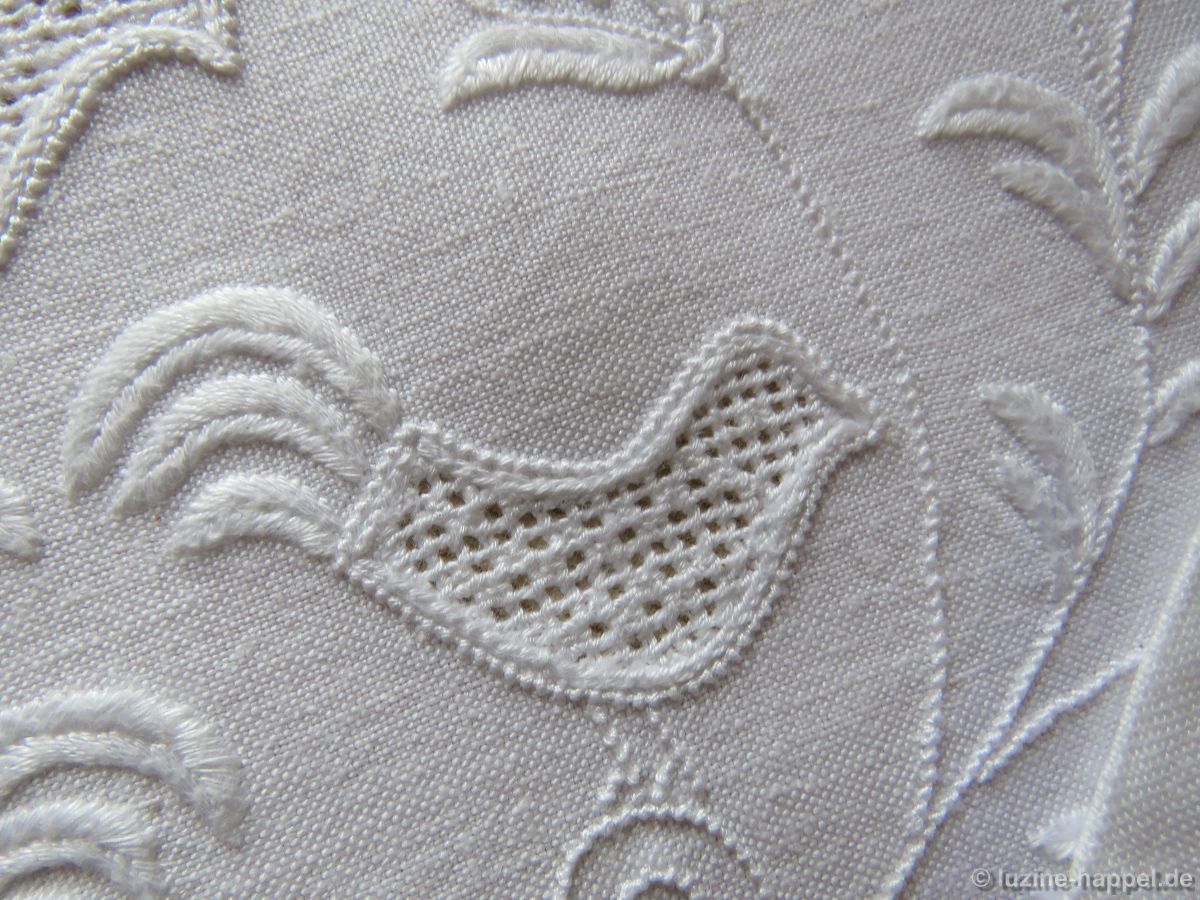
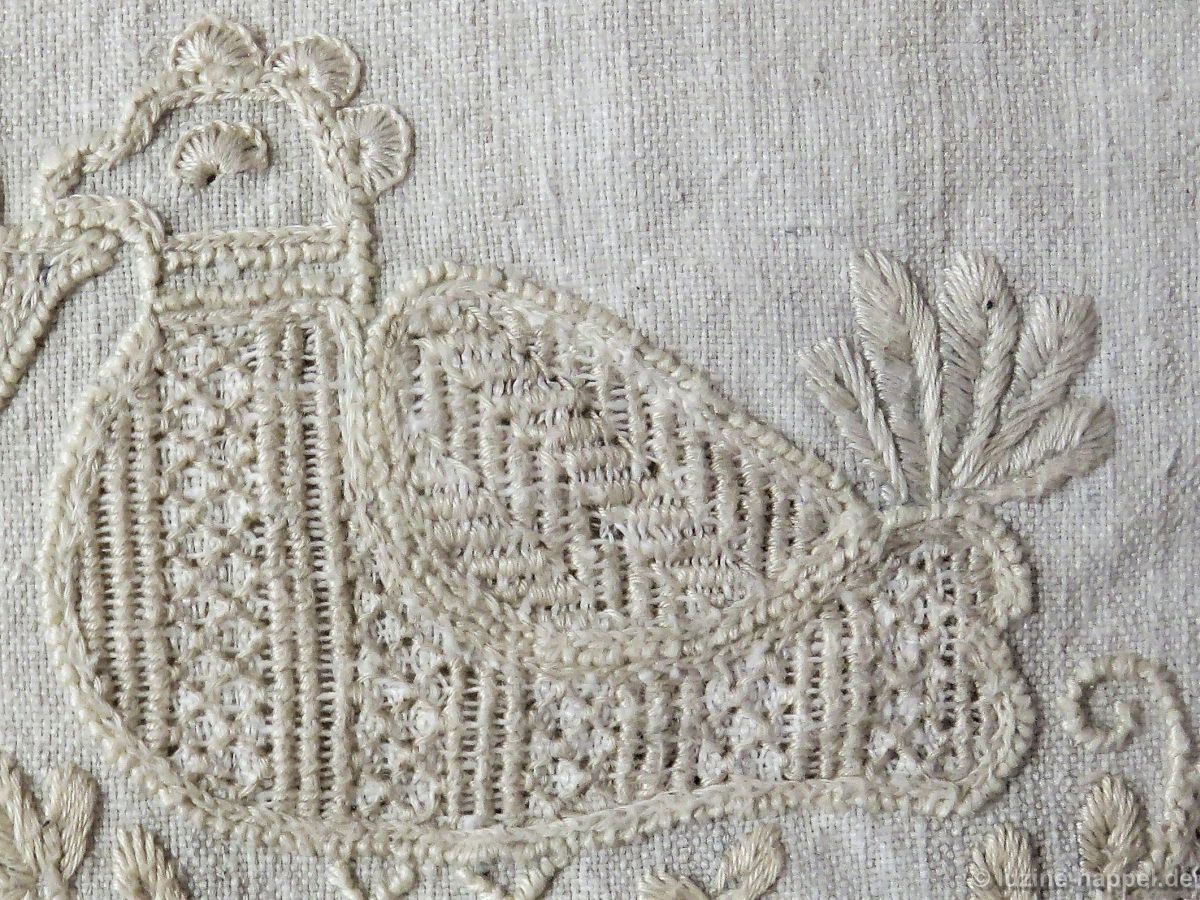
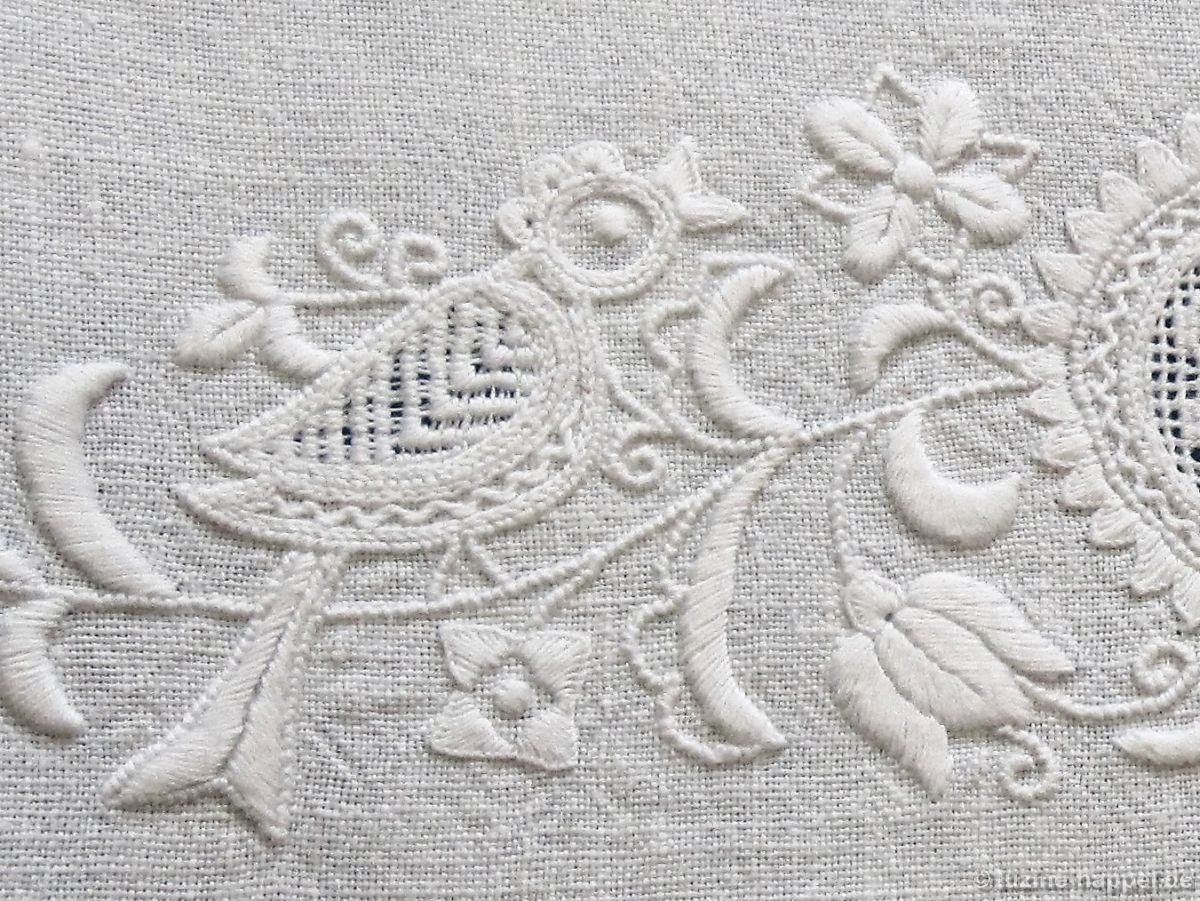
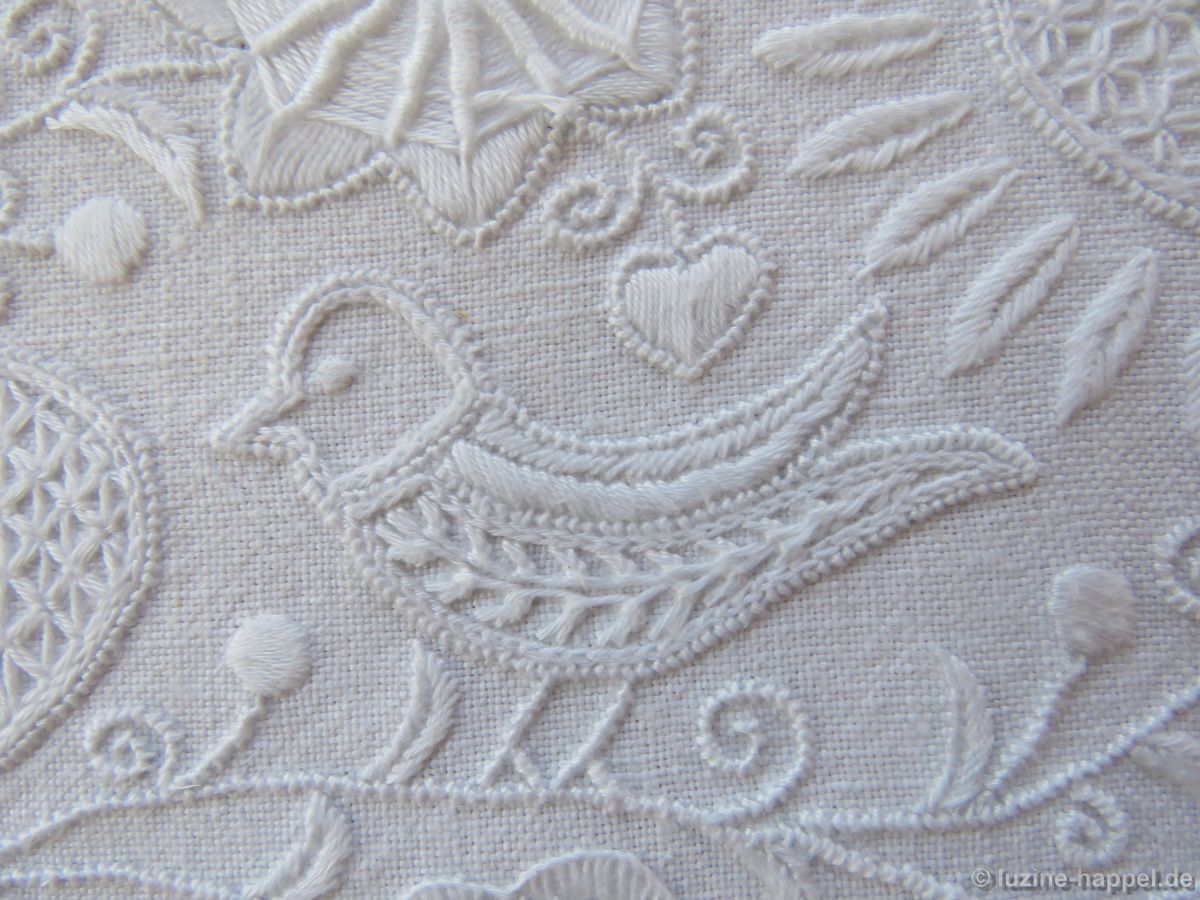
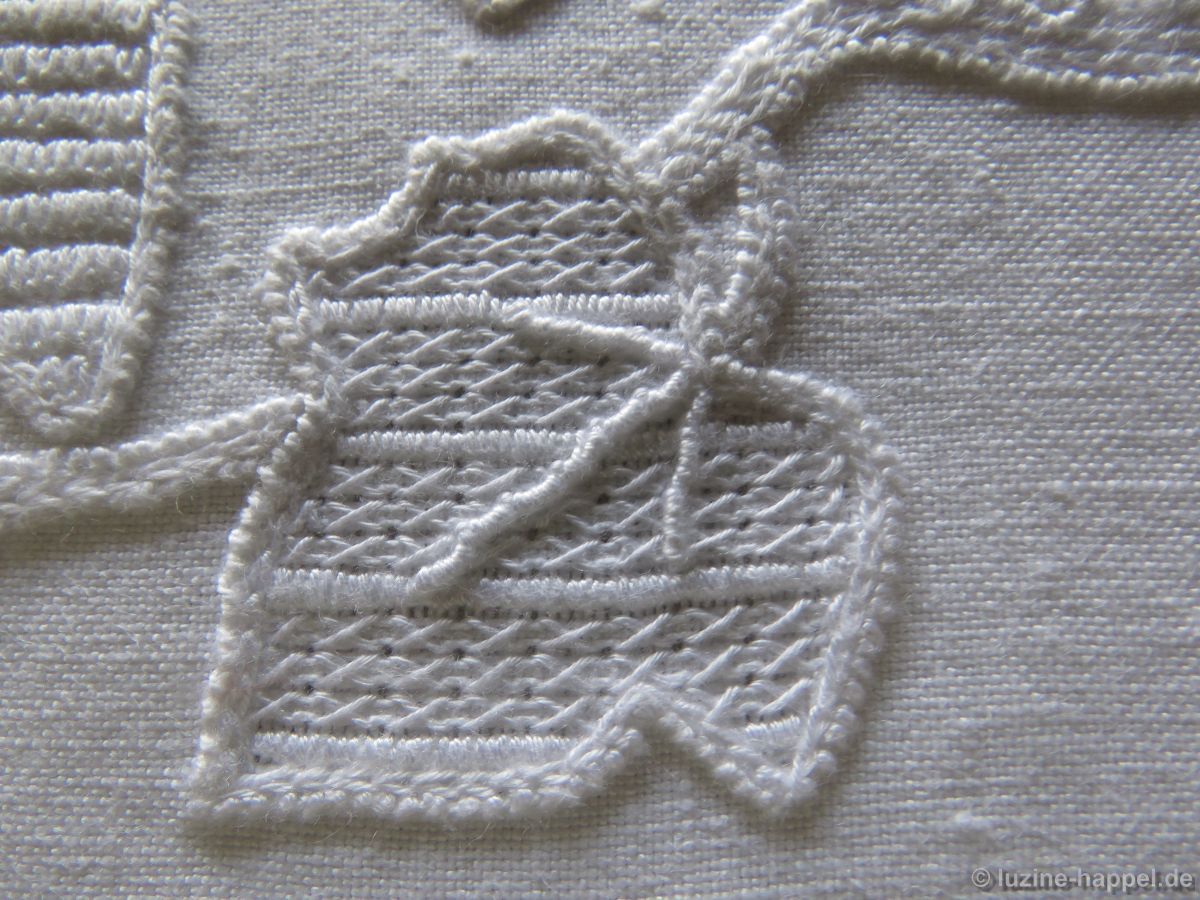
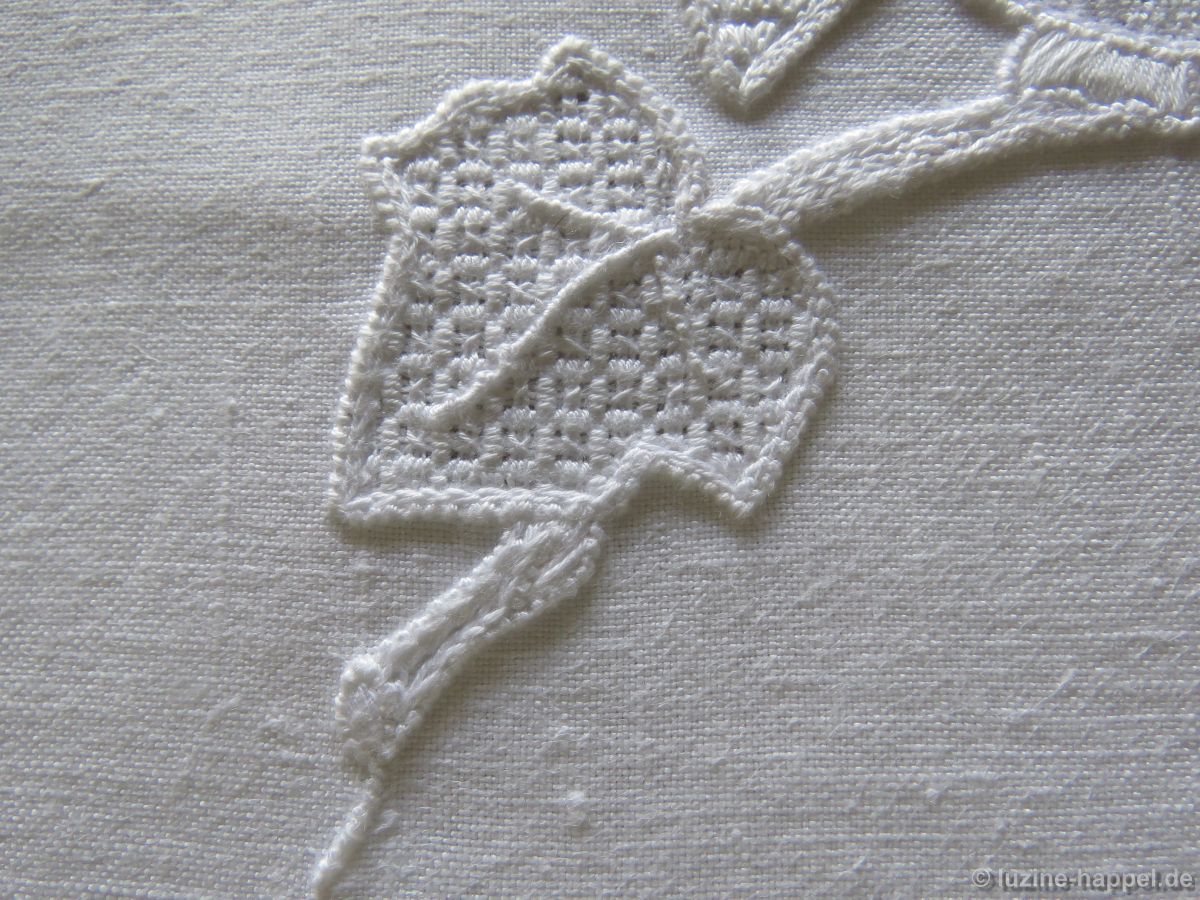
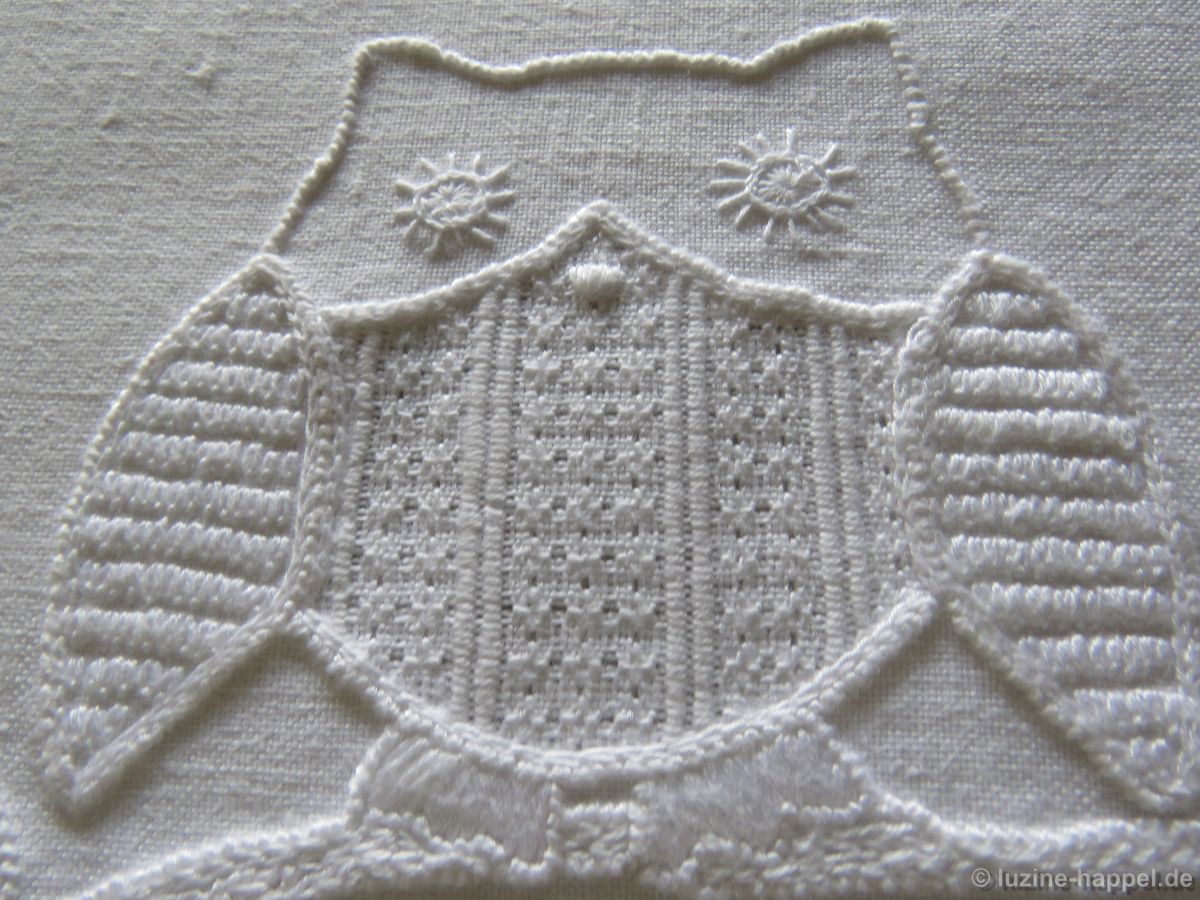
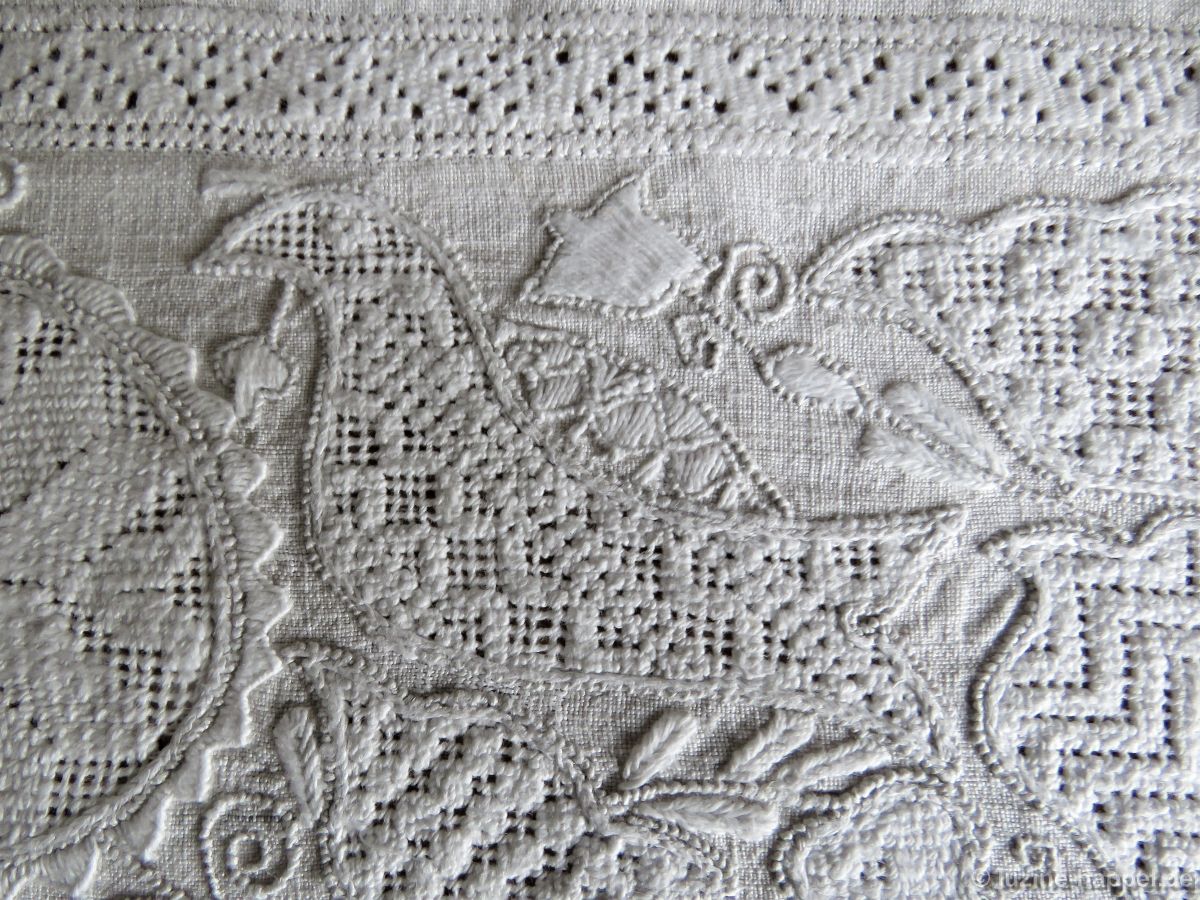
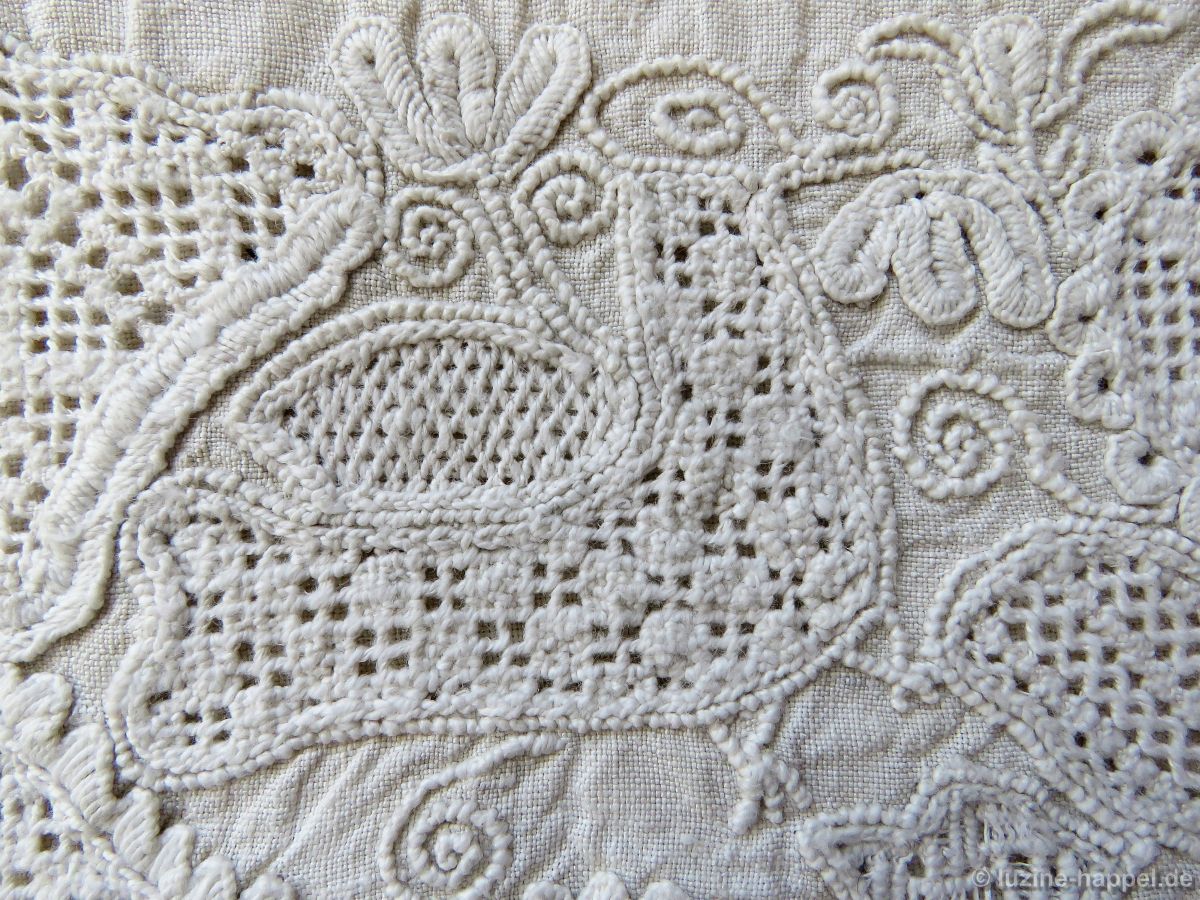
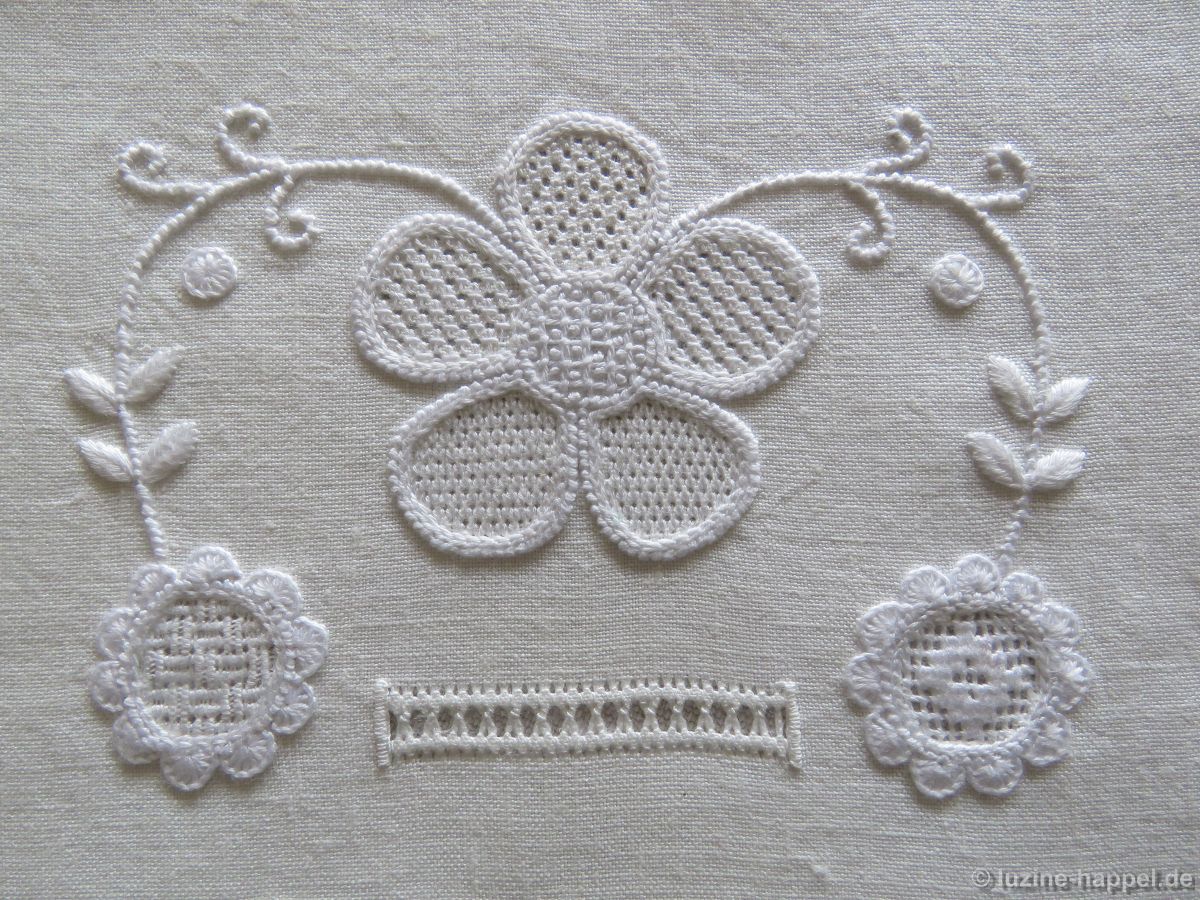
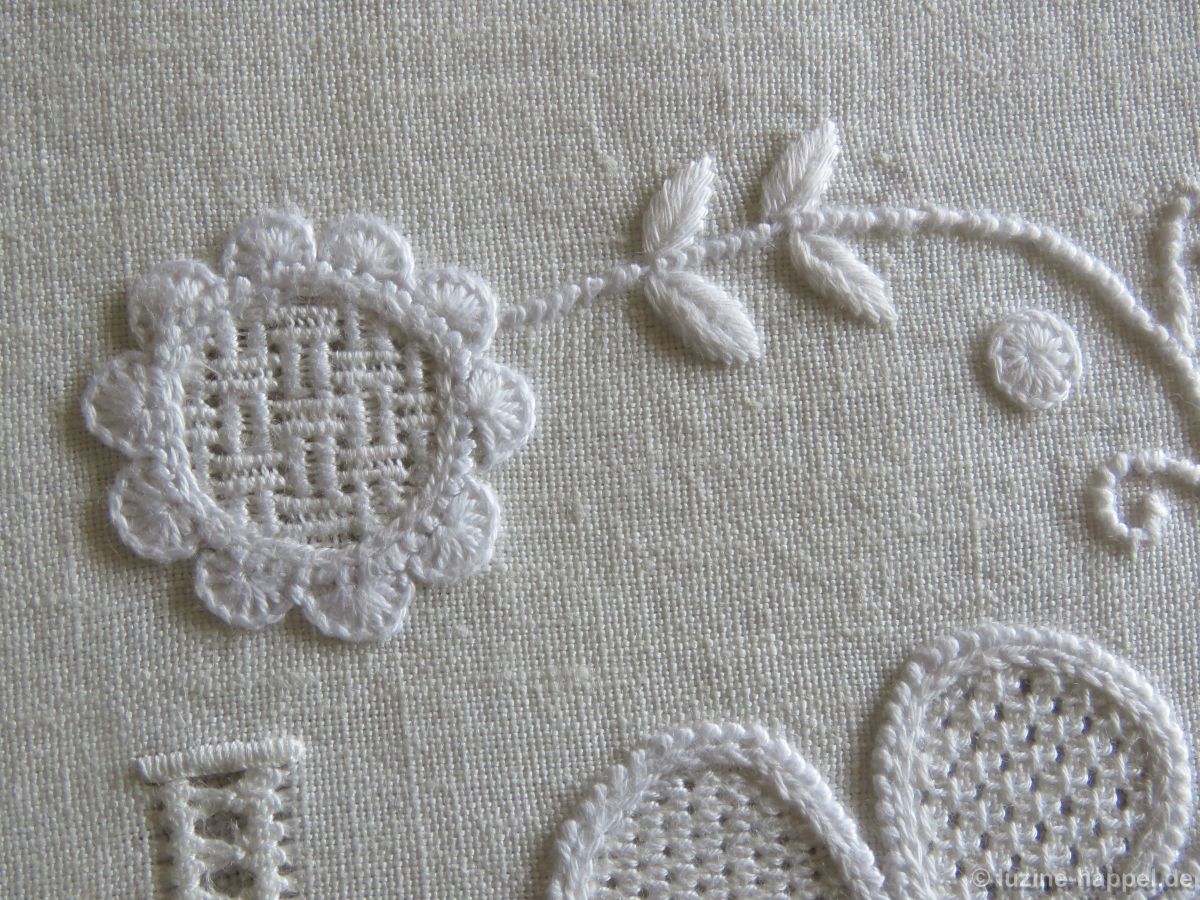
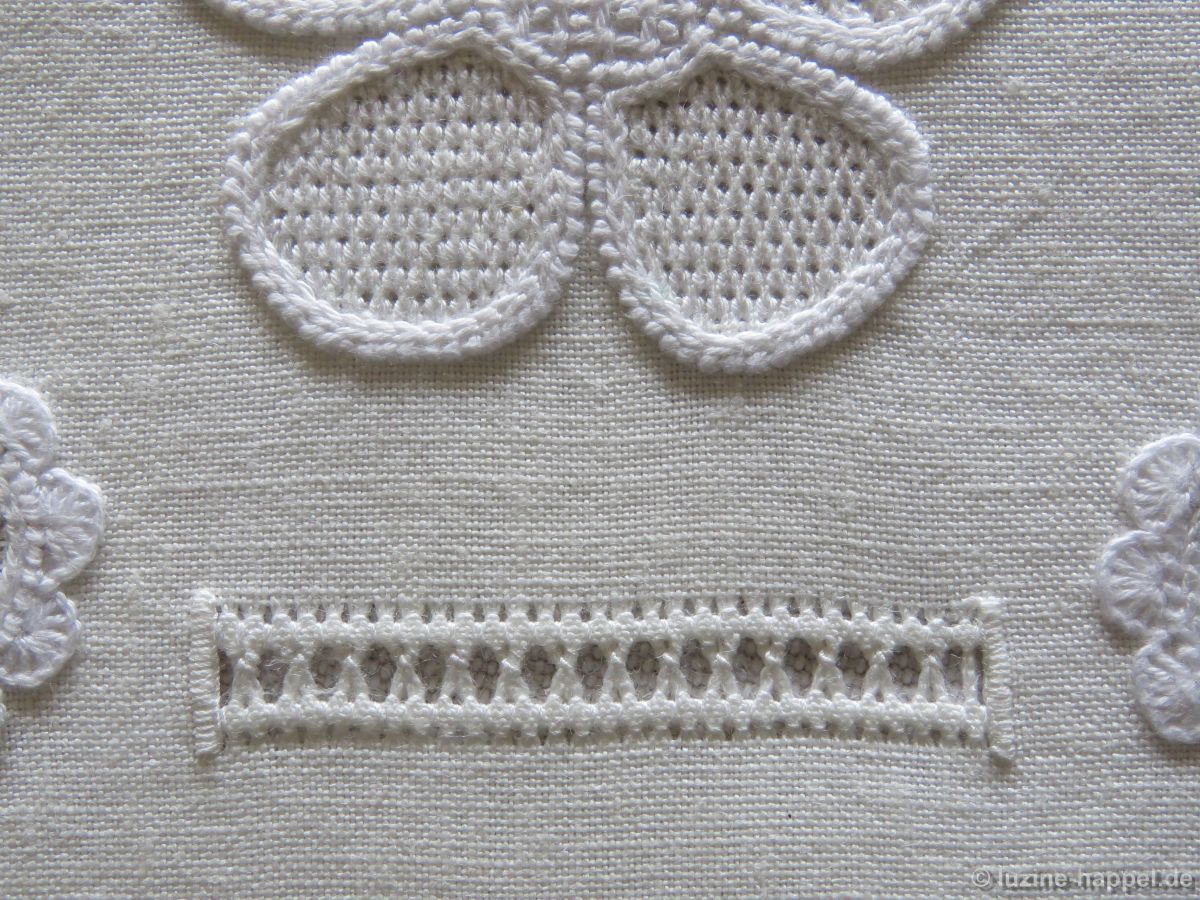
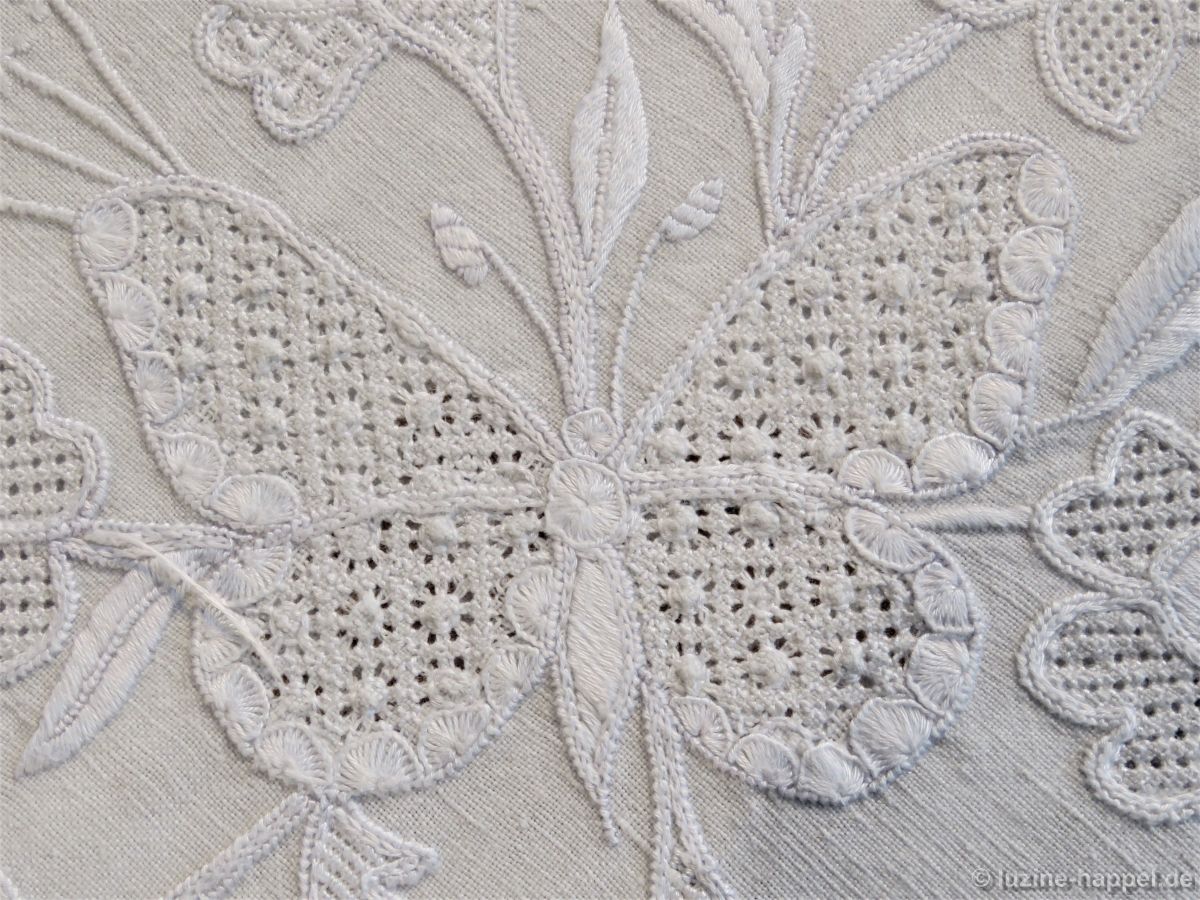
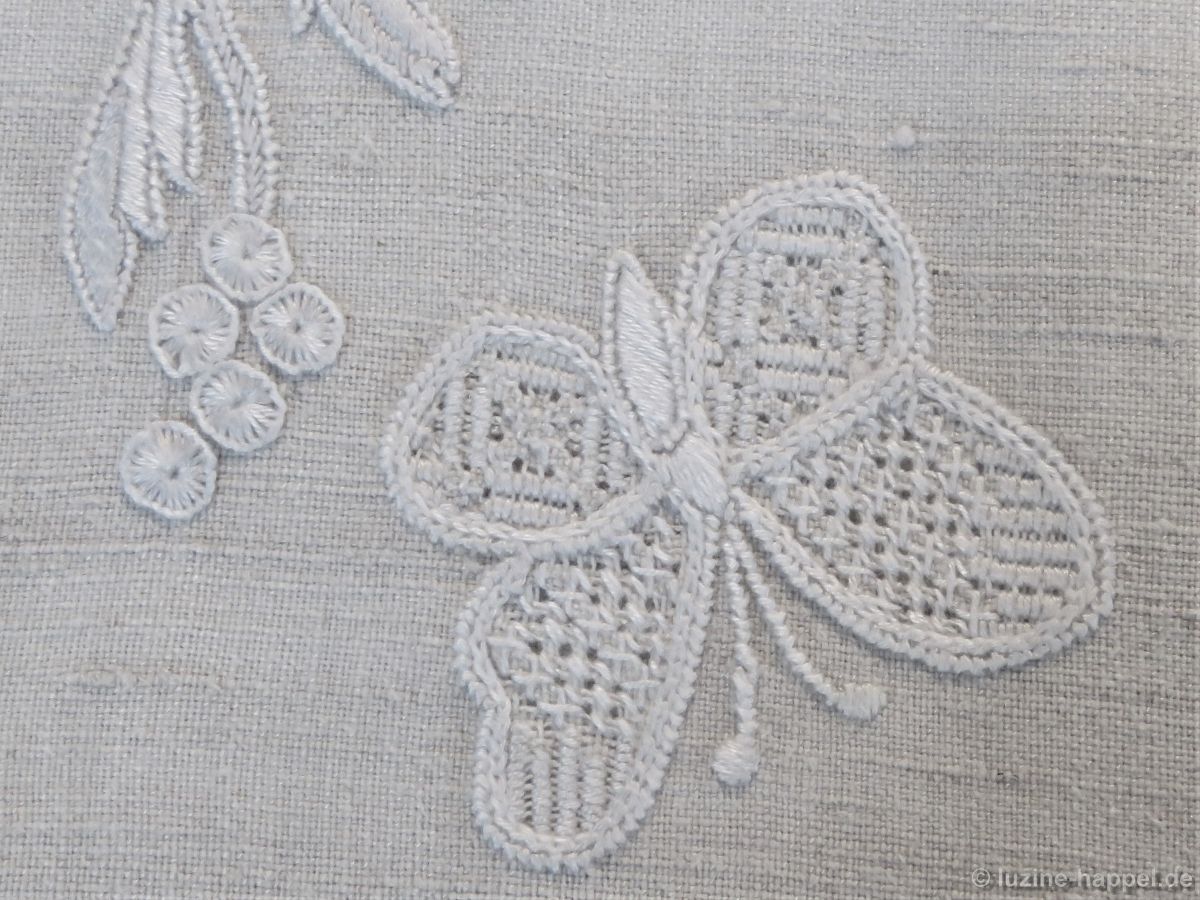
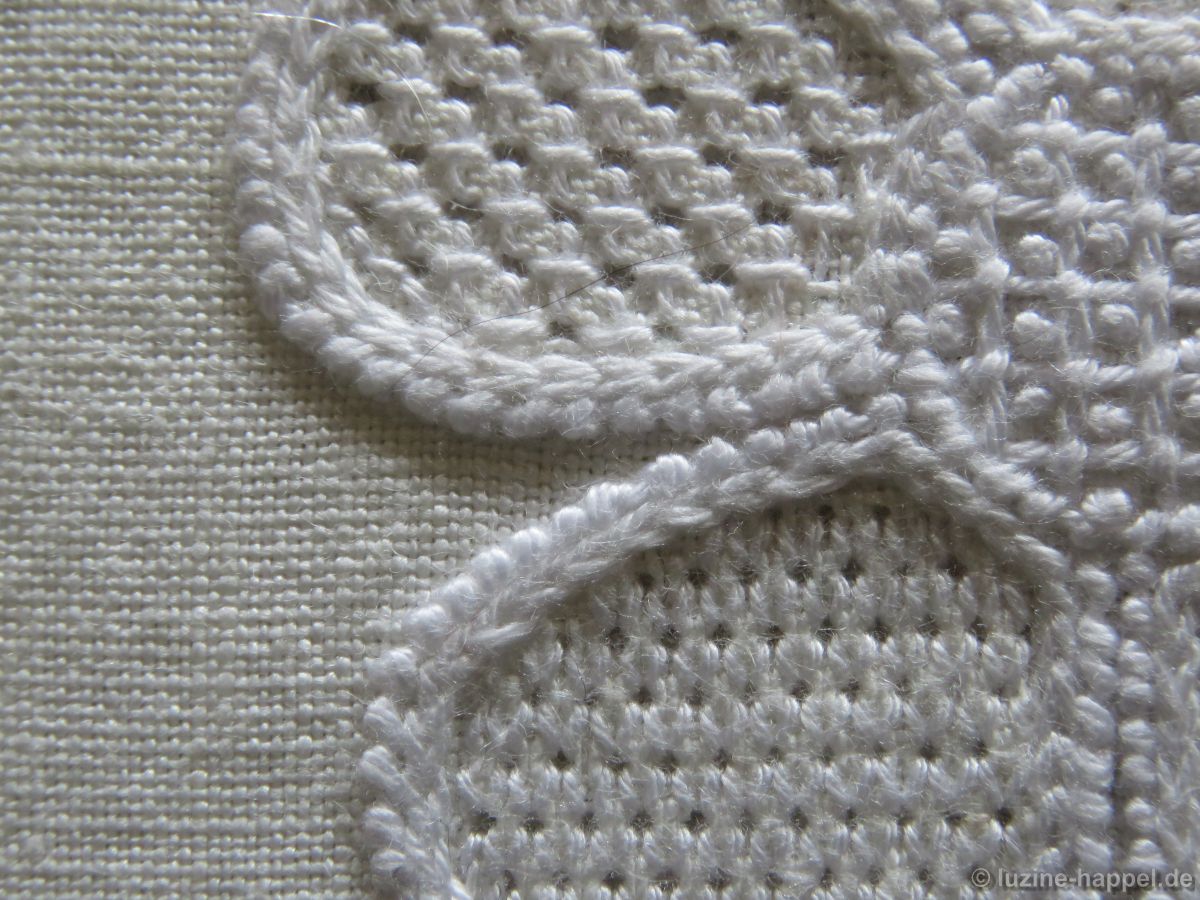
Eyelash stitches are Blanket stitches spaced further apart – the loops lie a little bit closer than the “legs.”


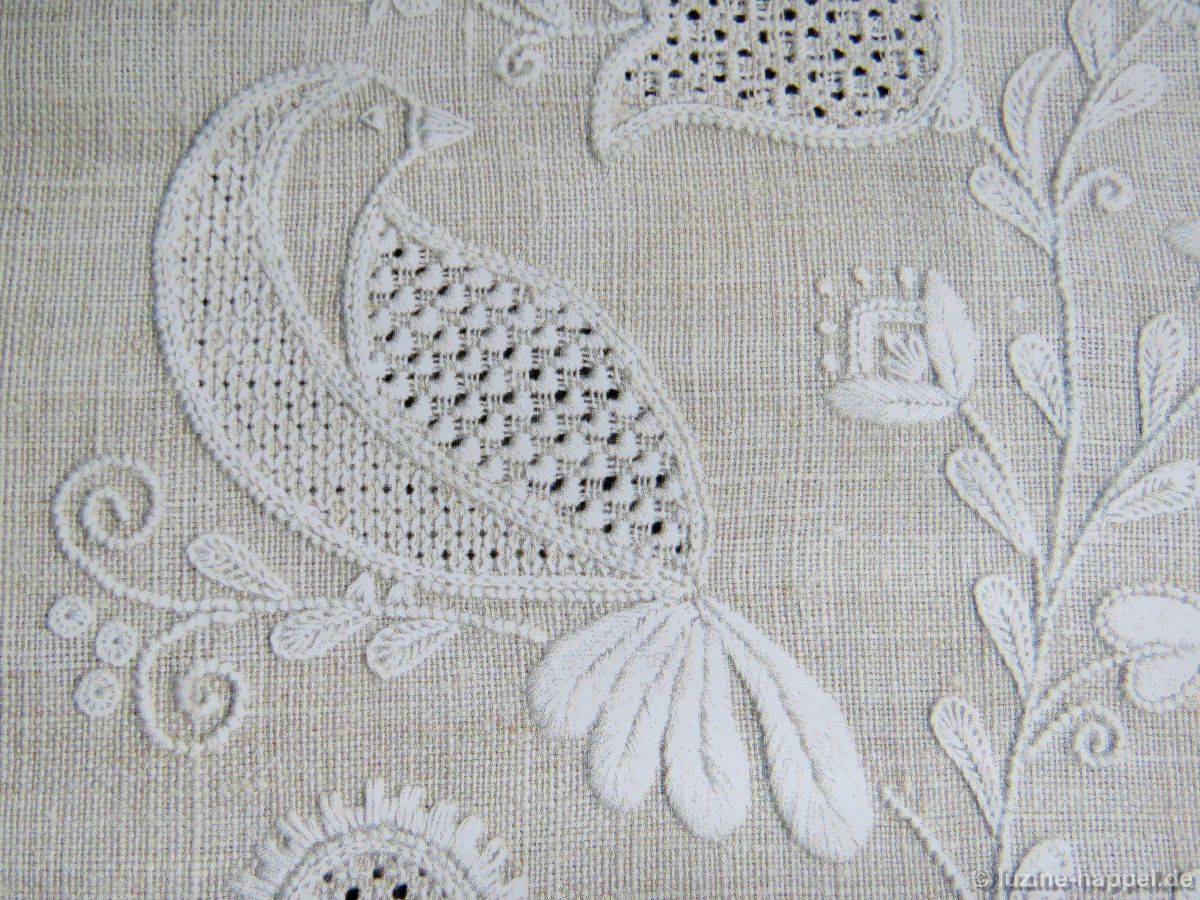
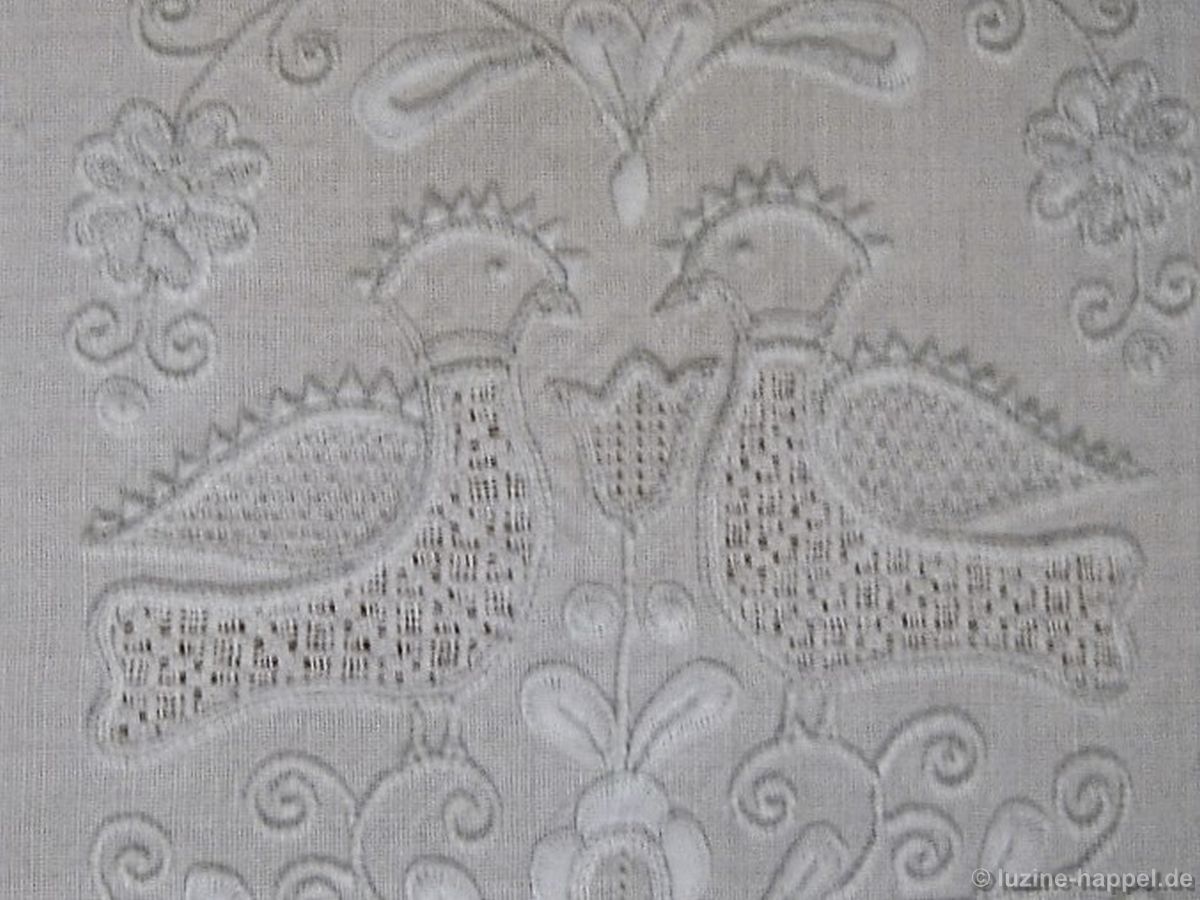
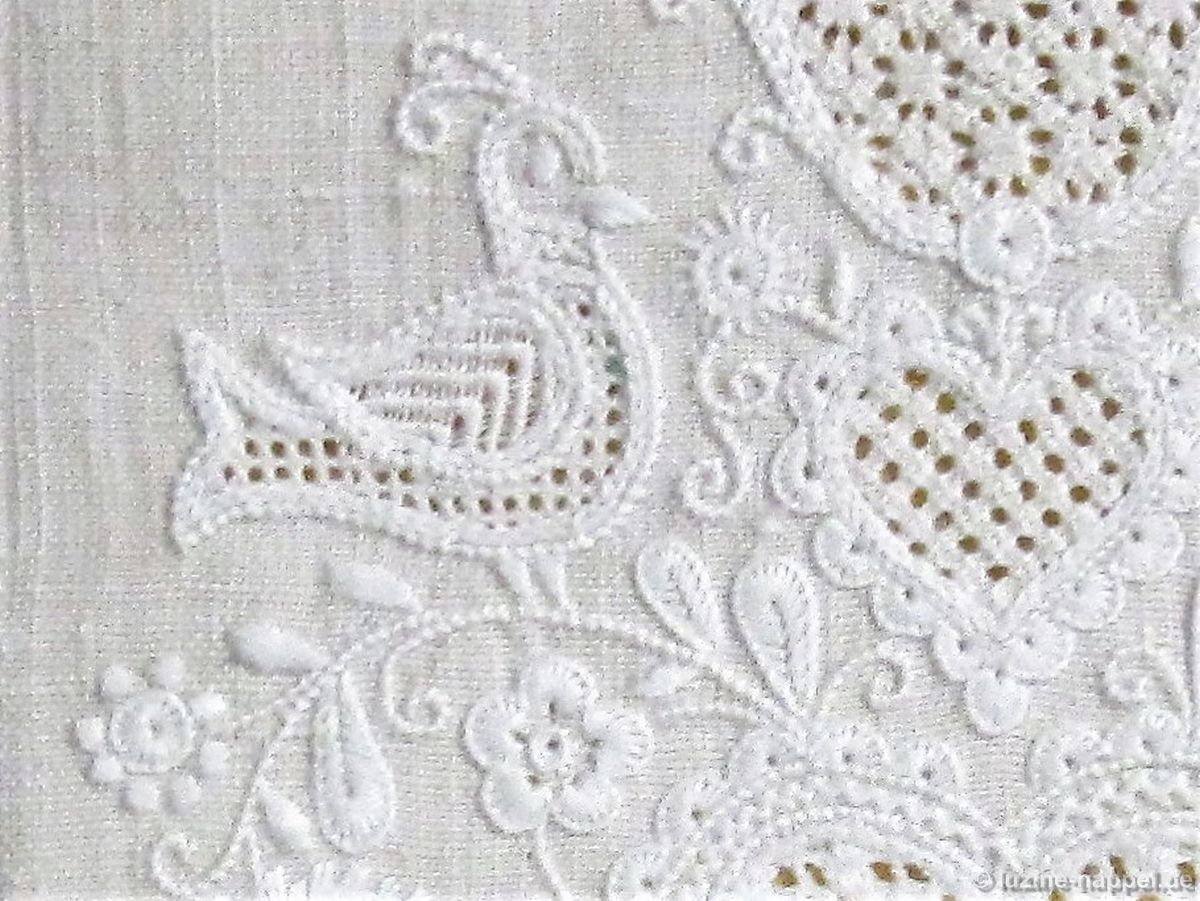
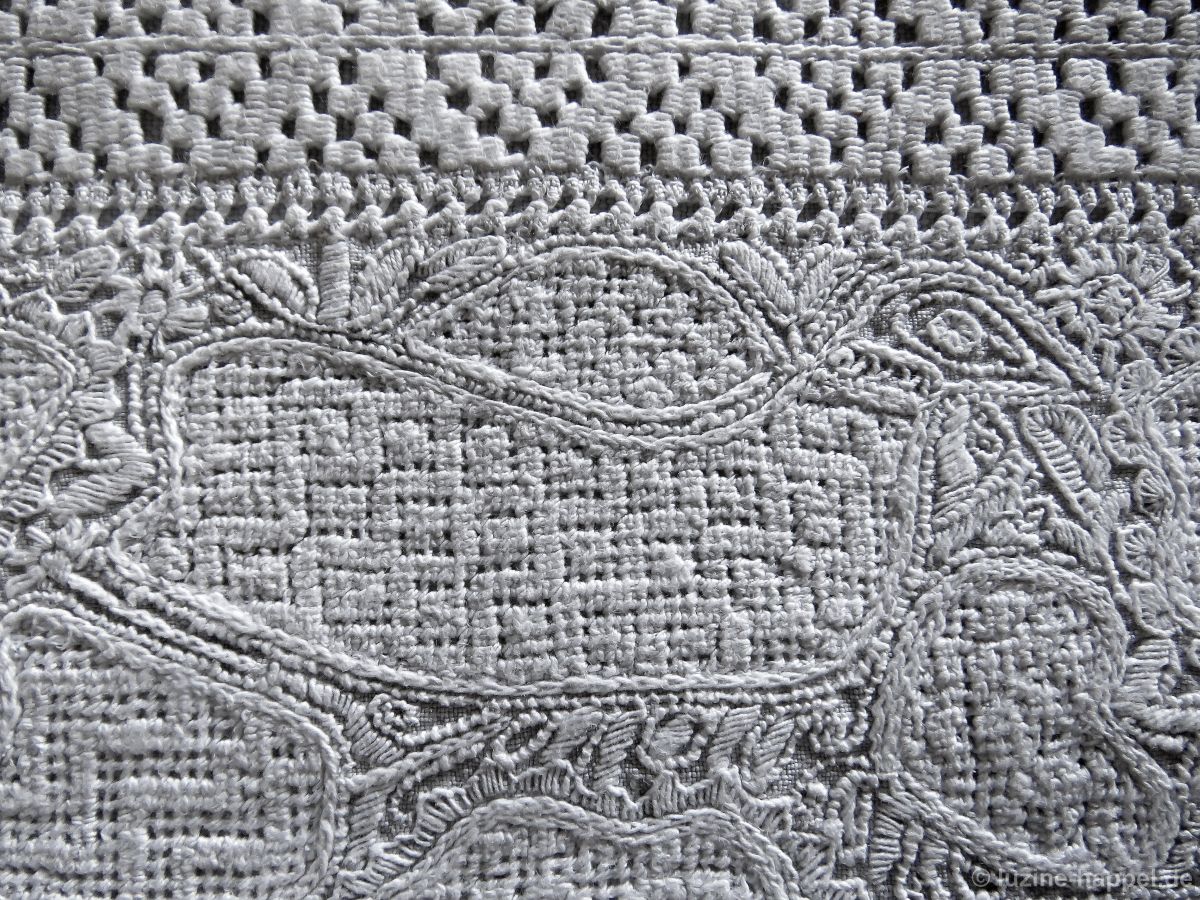
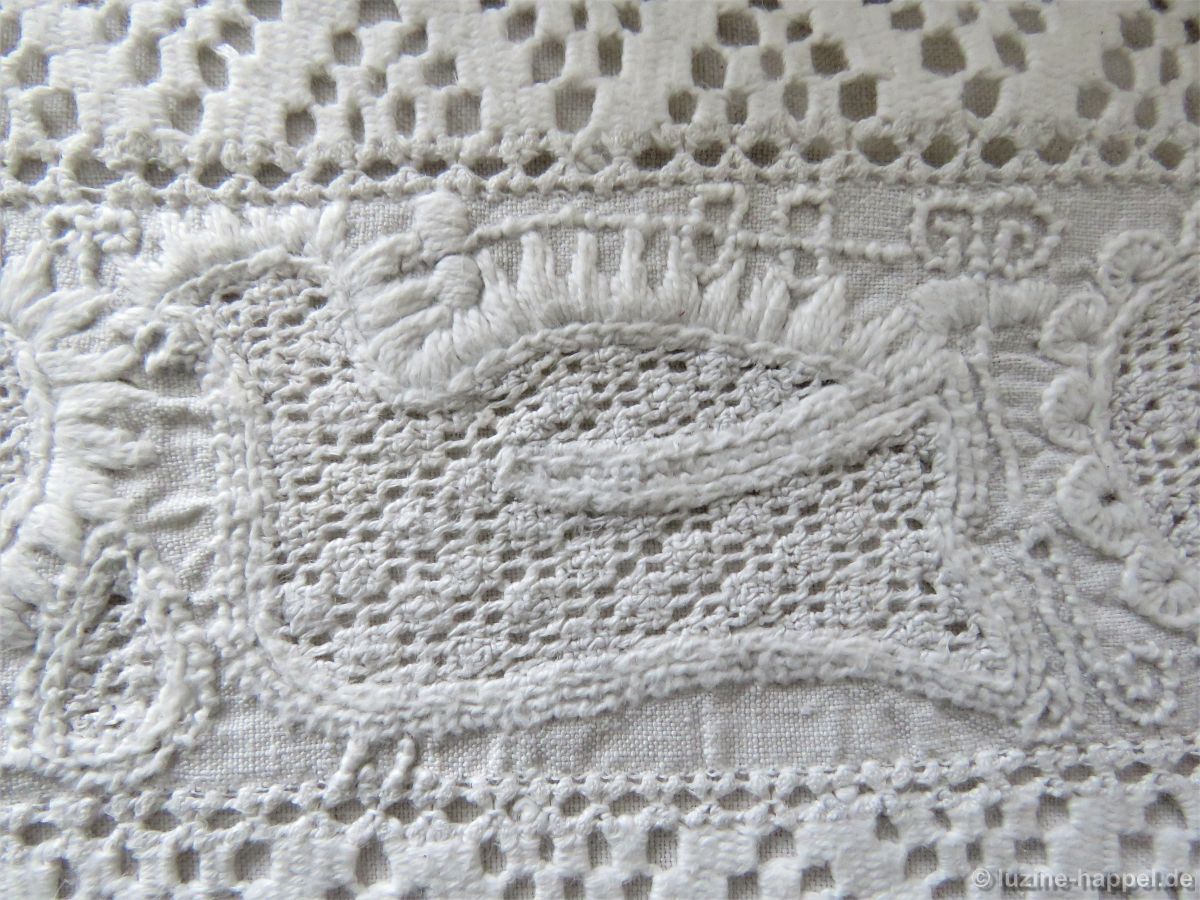
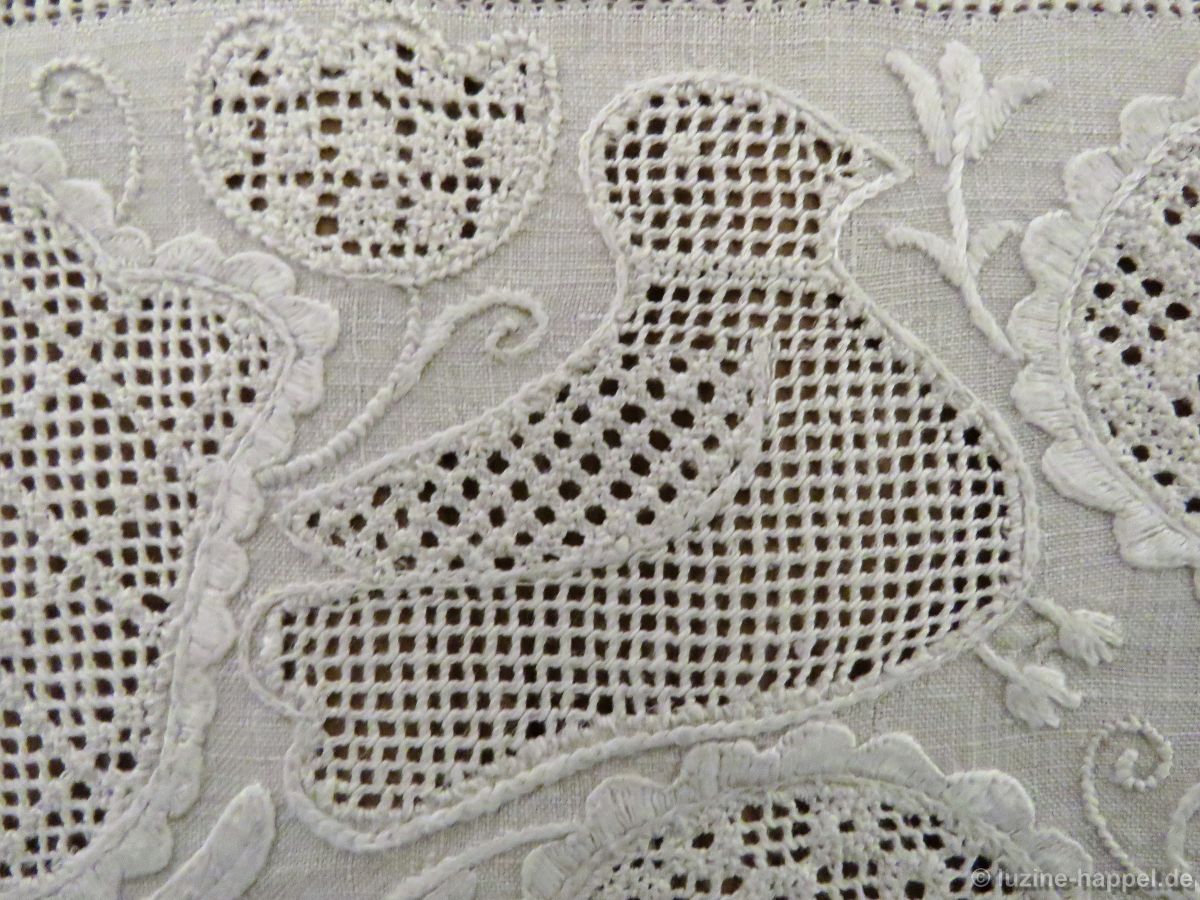
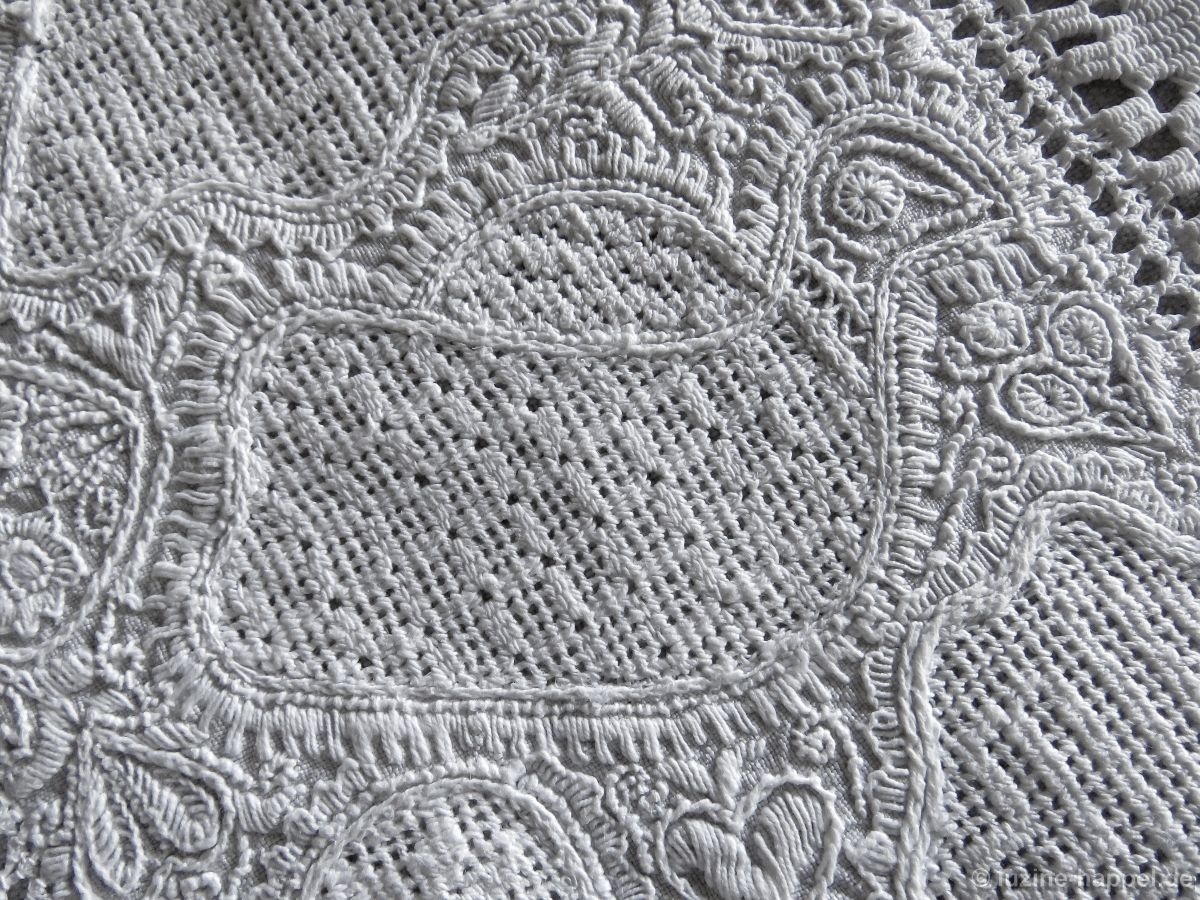
In the past, it was quite common for Schwalm whitework embroiderers to outline shapes with Eyelash stitches or to work Eyelash stitches as a decorative element. Also many examples of early Schwalm whitework document the use of these stitches. As time passed, Eyelash stitches were worked less often. In embroideries of the last decades they are scarcely seen – that´s a pity because Eyelash stitches are decorative and effective.

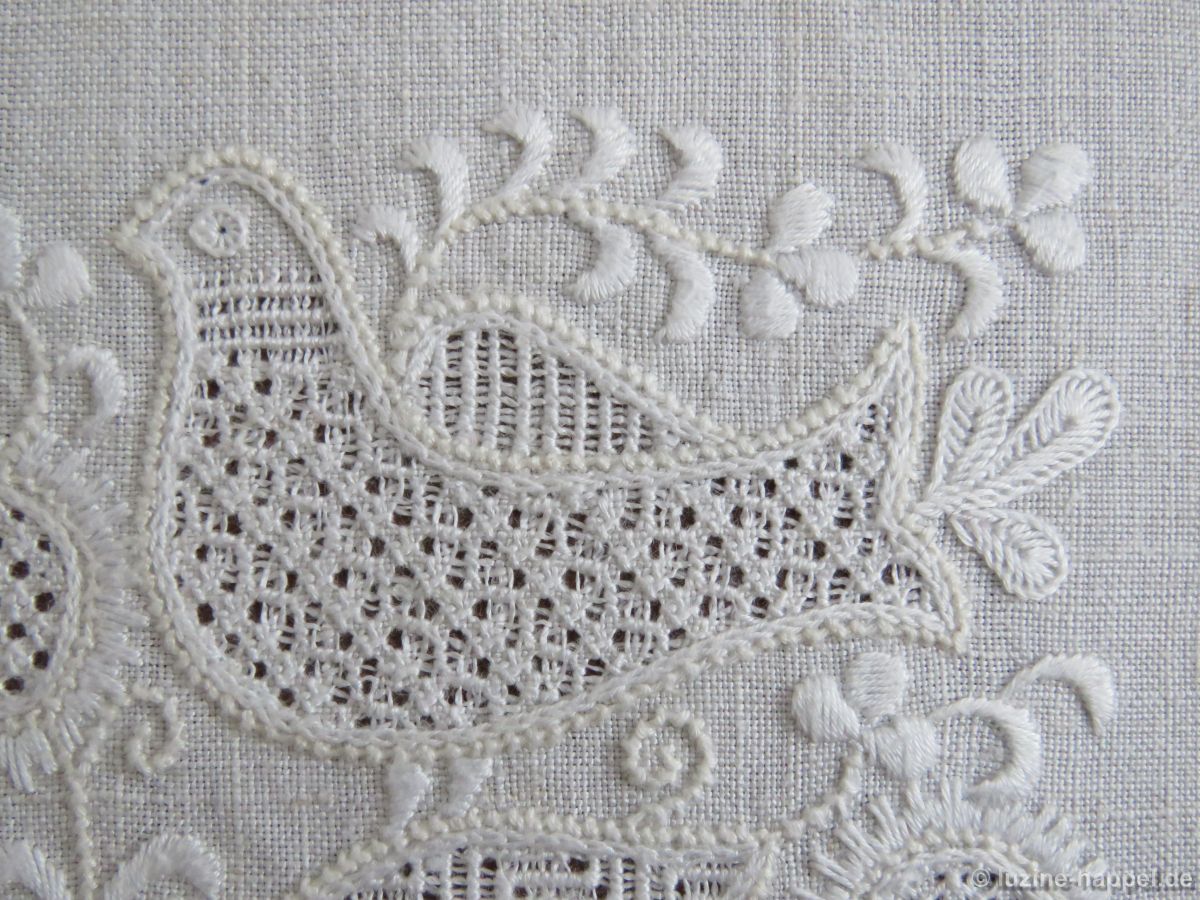
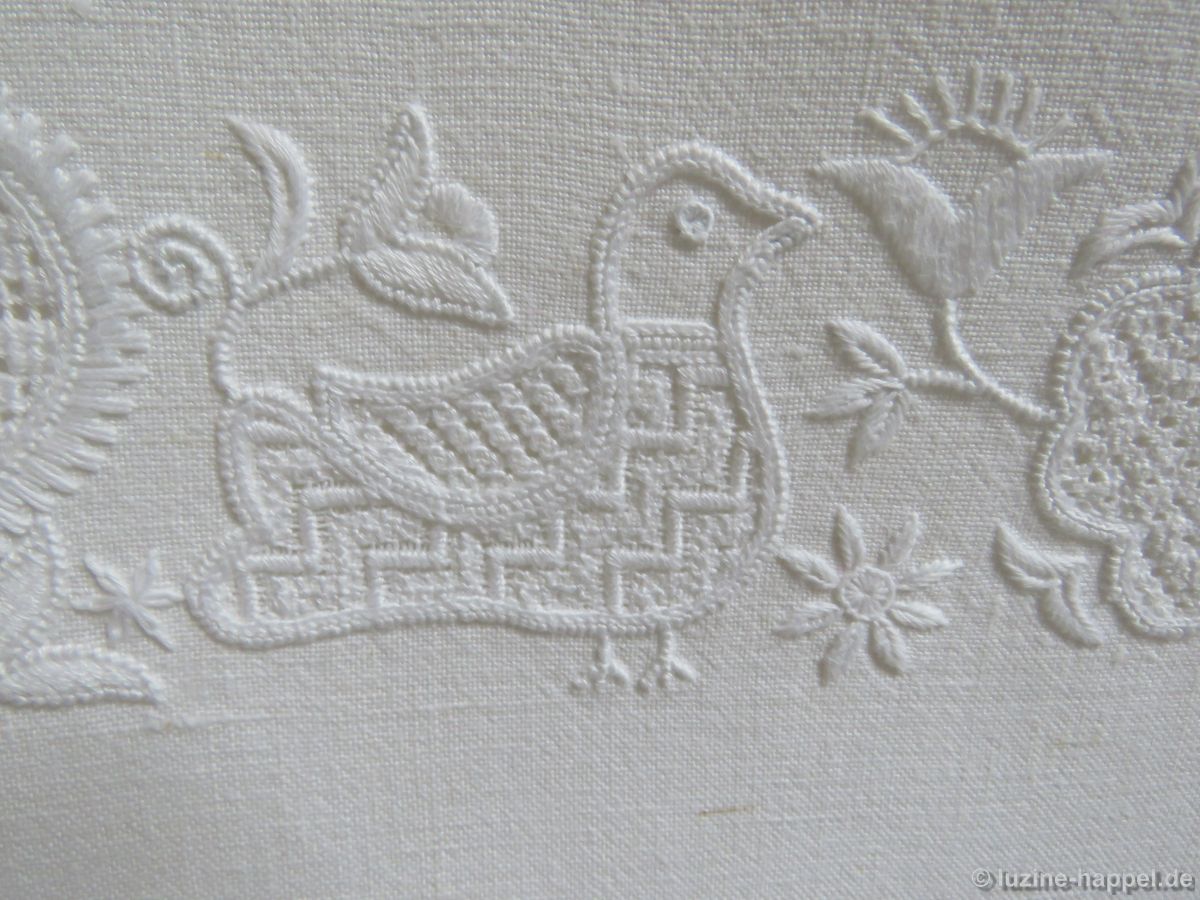
I have shown on my blog the use of Eyelash stitches on embroideries. The border from 1804 has some shapes that were outlined with Eyelash stitches.


And one shape of the traditional Schwalm bodice A is partly outlined with Eyelash stitches.


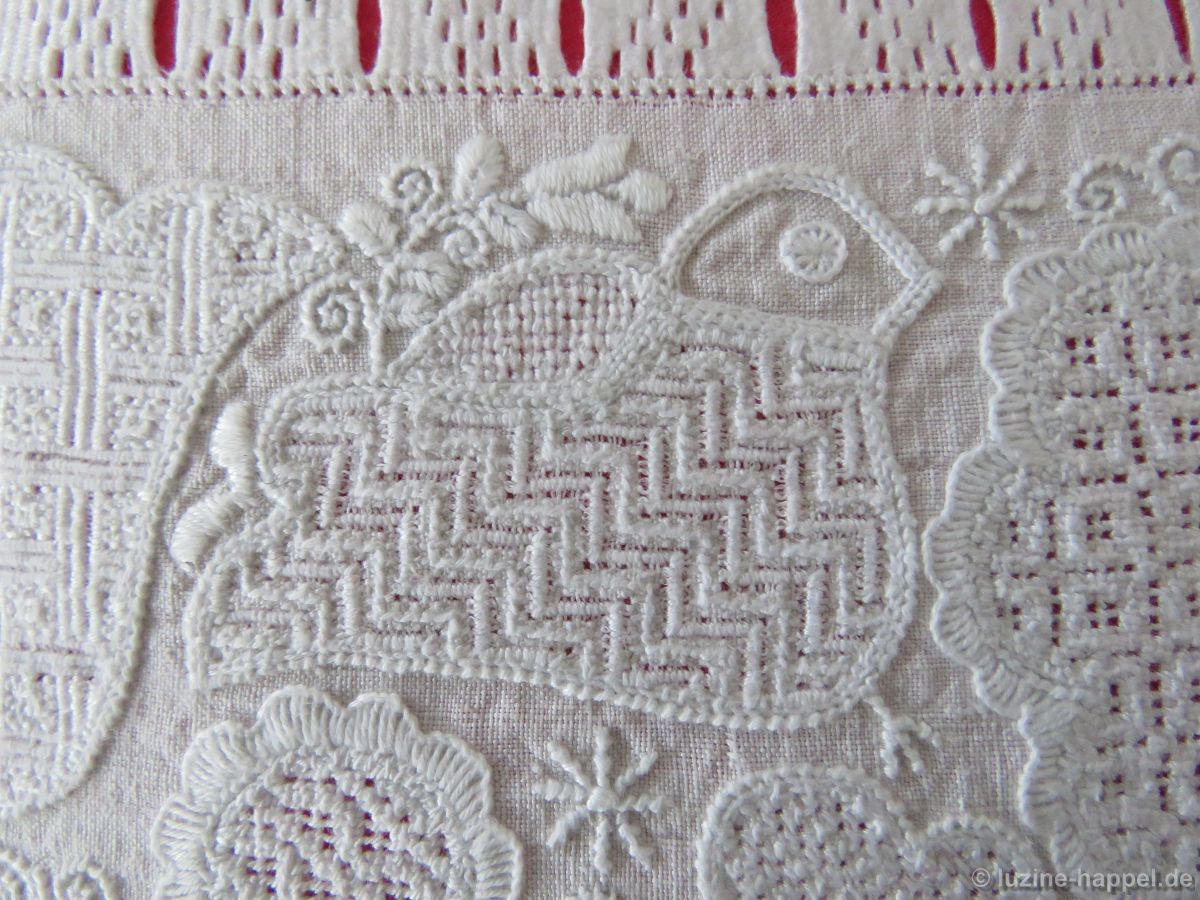
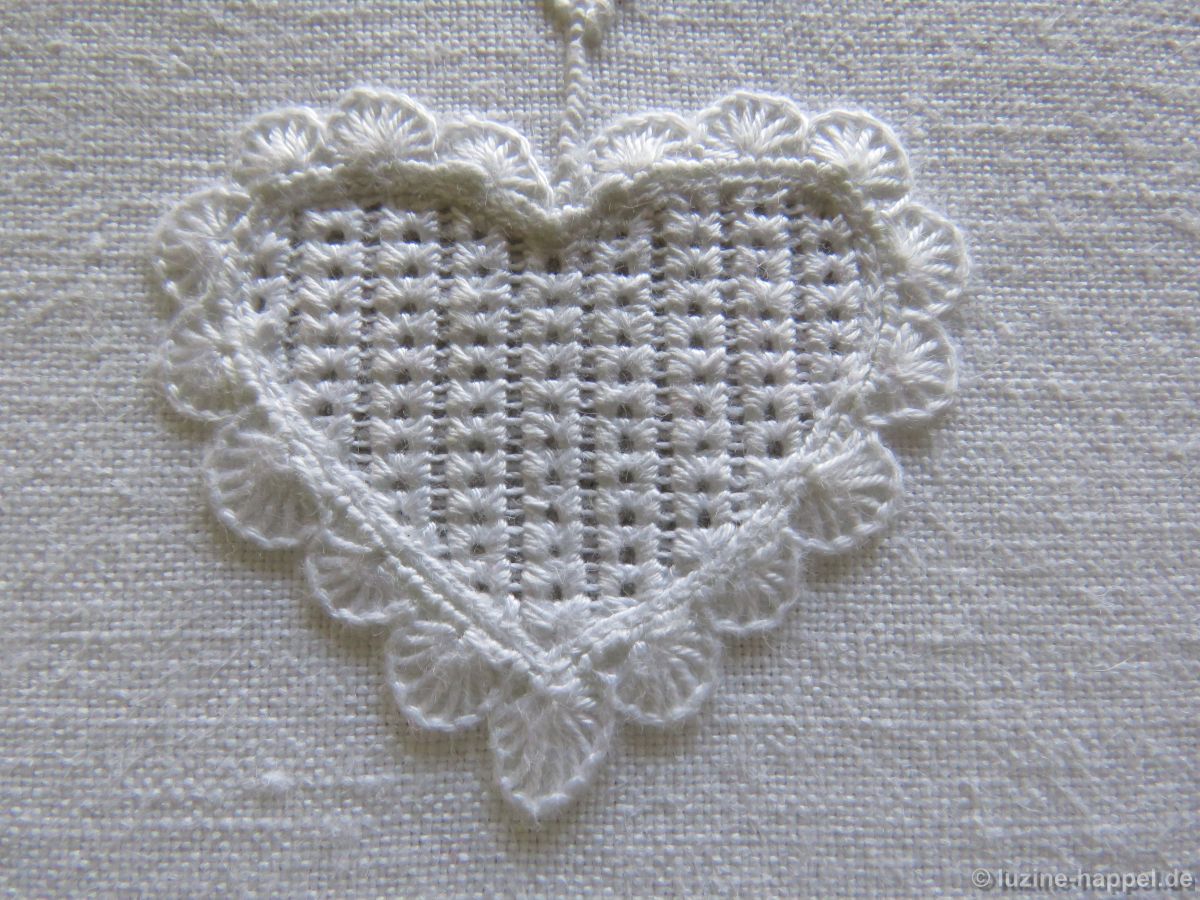
Eyelash stitches – embroidered with heavier thread and worked more densely – outline the heart shape of a sleeve cuff border.


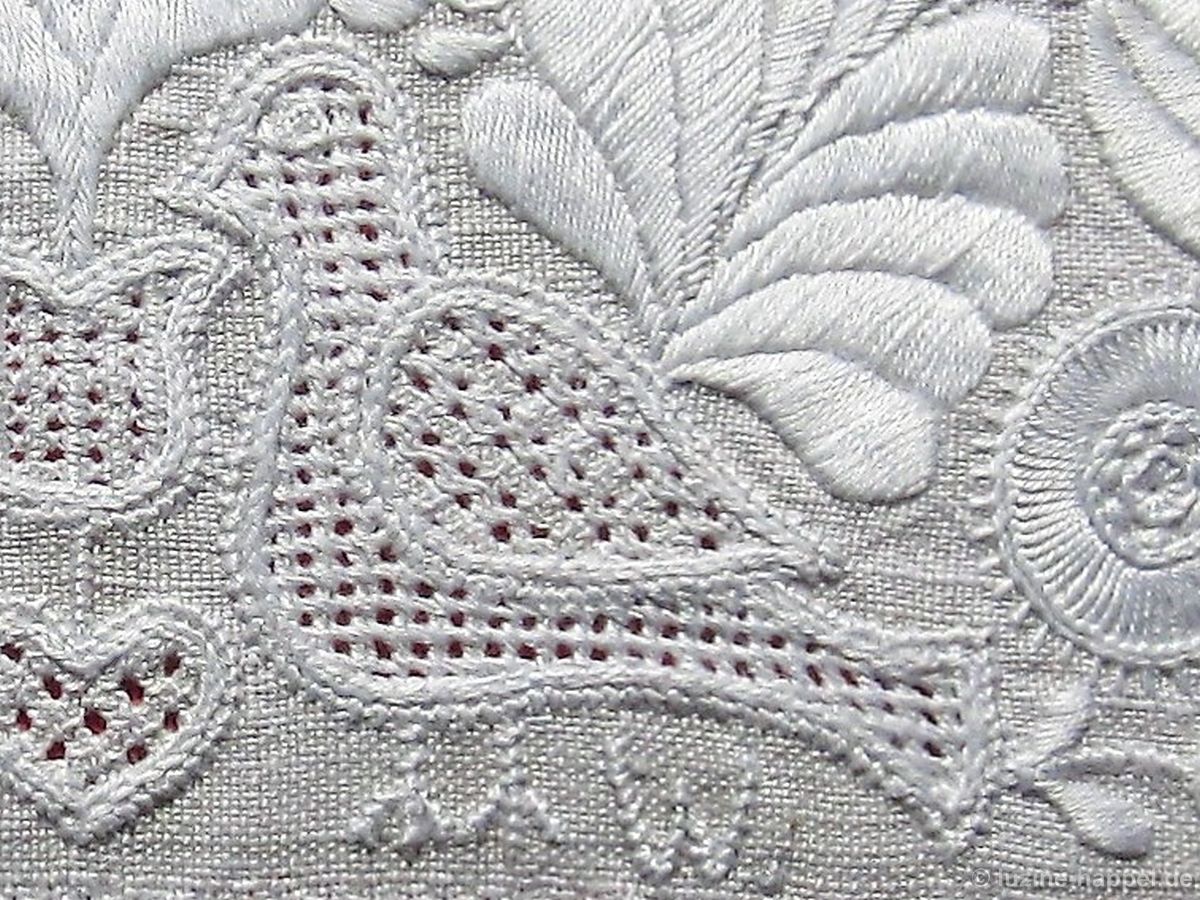
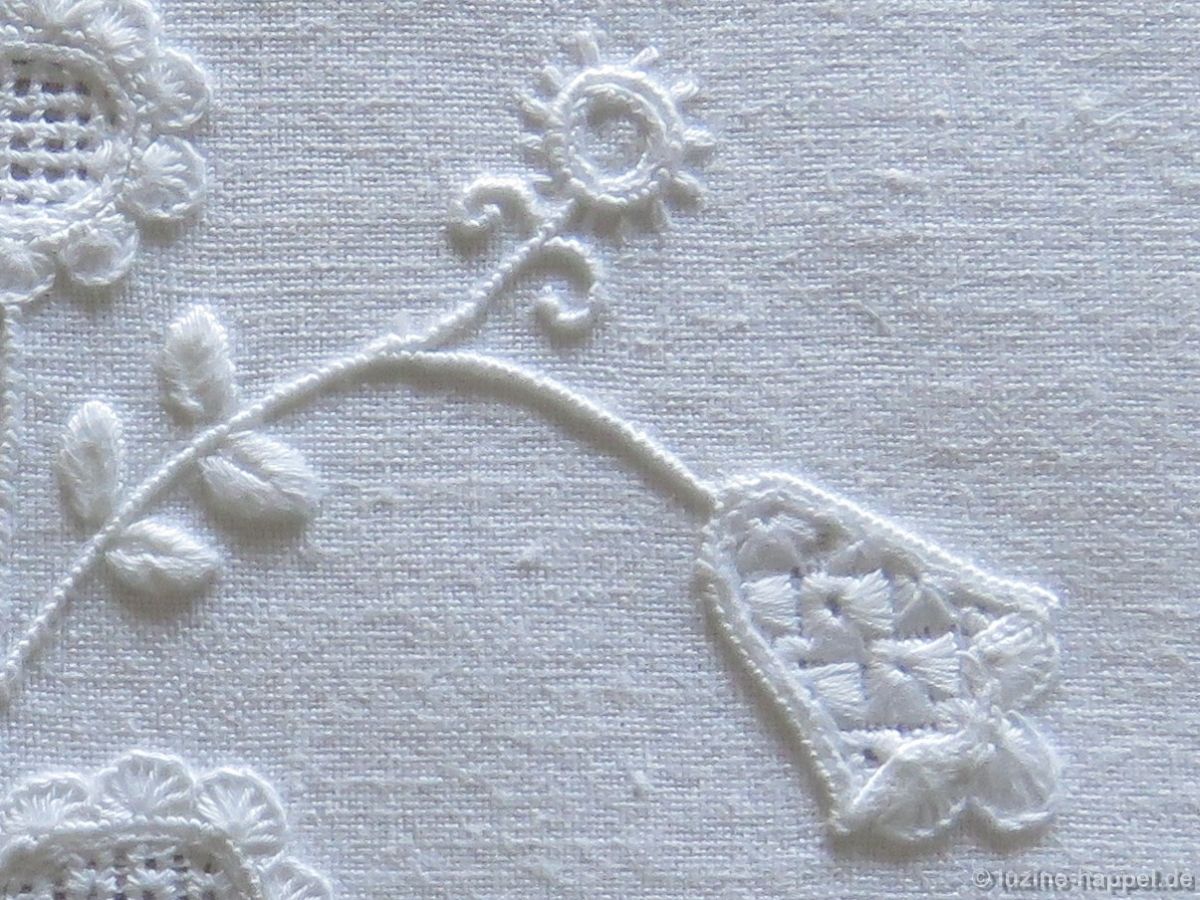
Very short Eyelash stitches are found on a delicate example of early Schwalm whitework from about 1780.


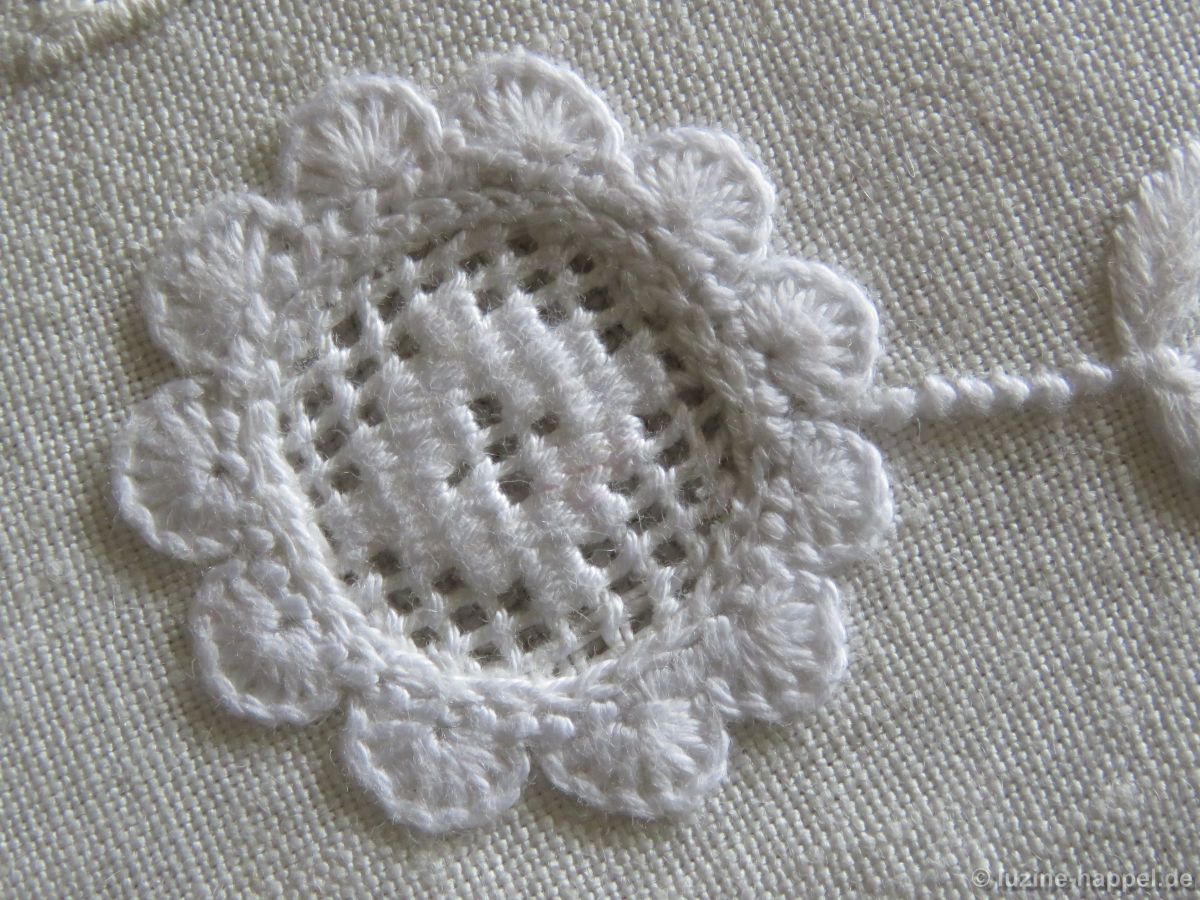
Here they outline petals and are also used to make tendrils.


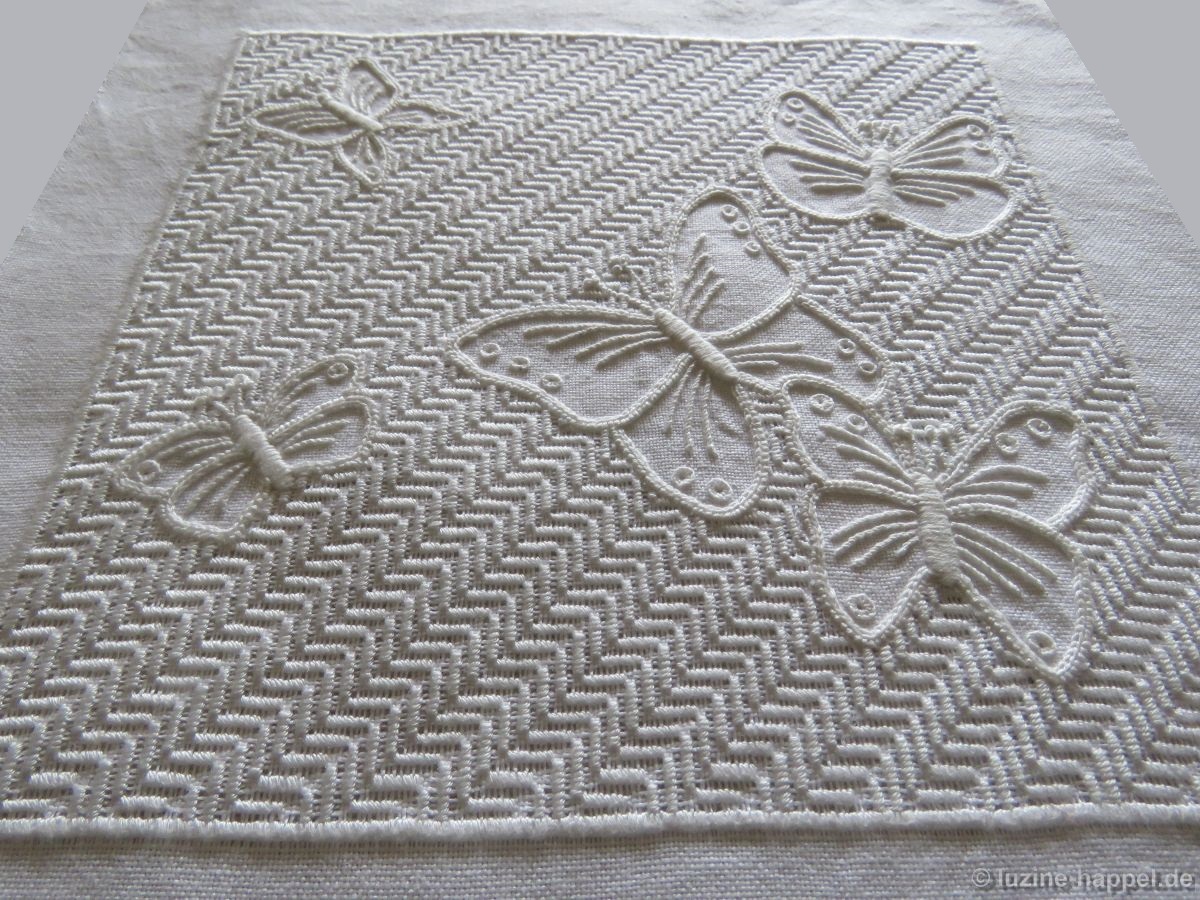
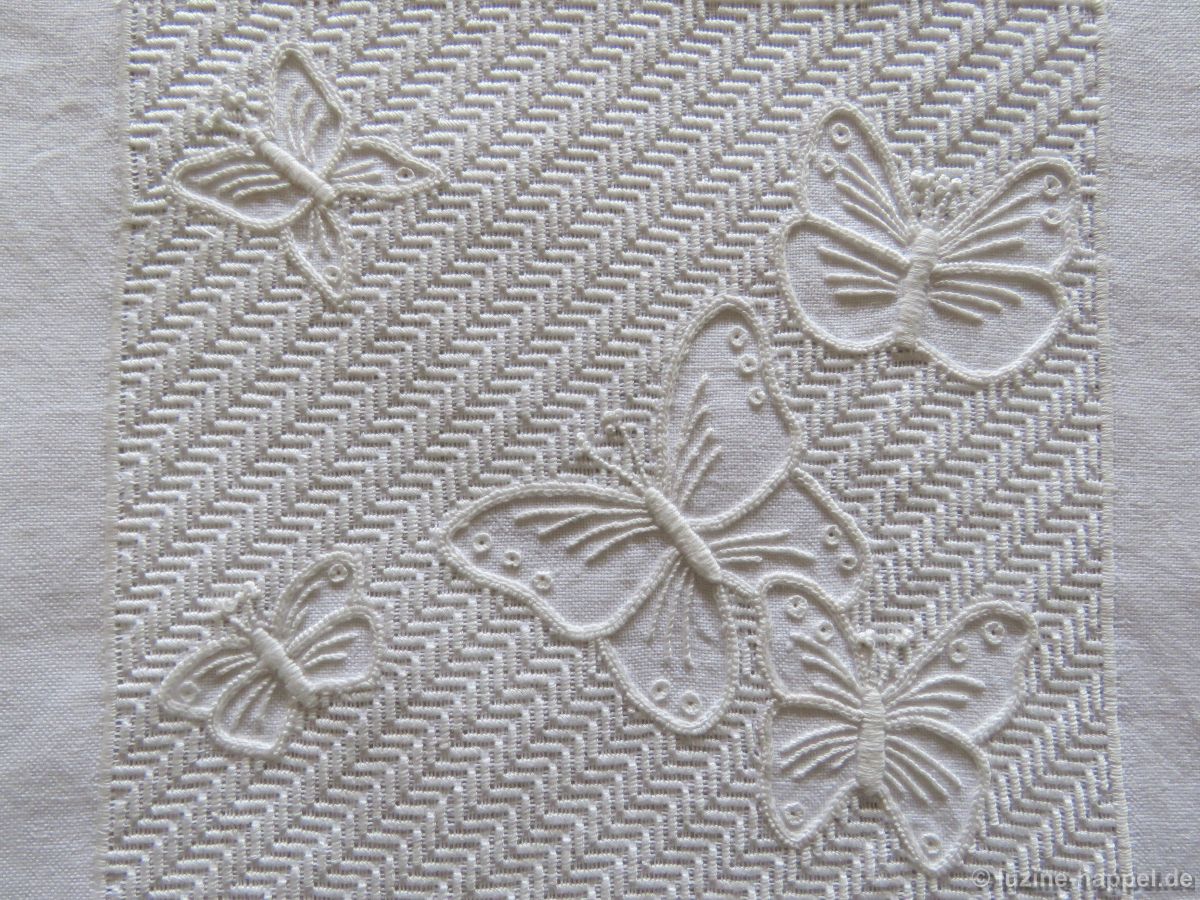
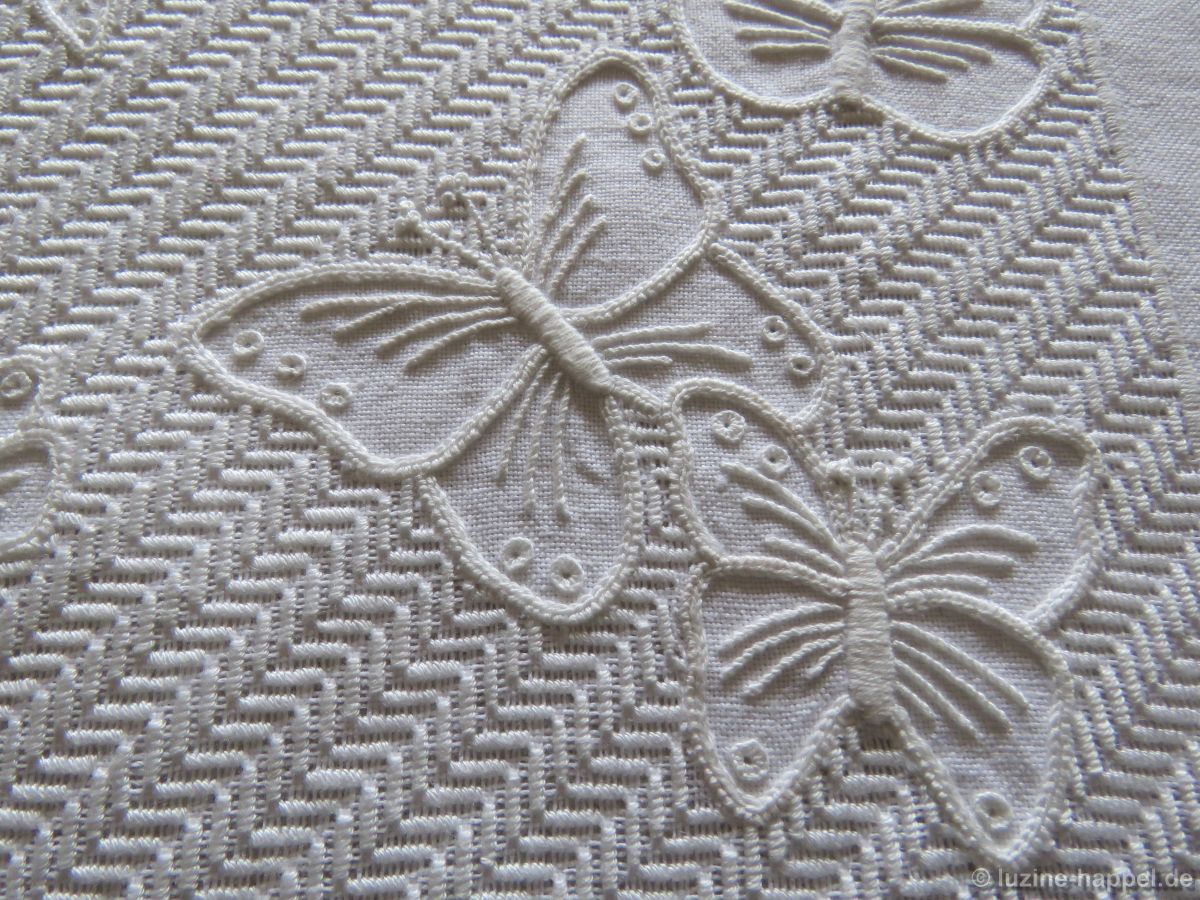
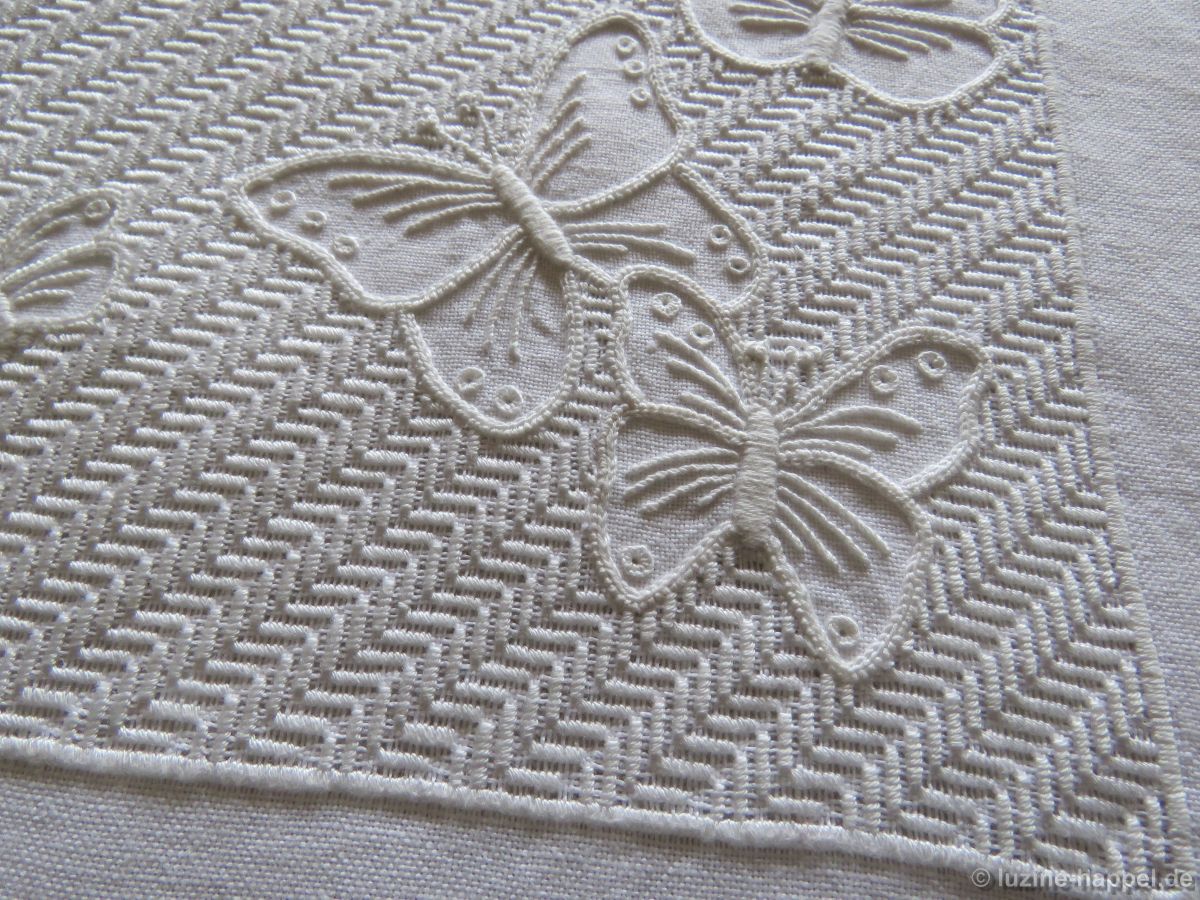
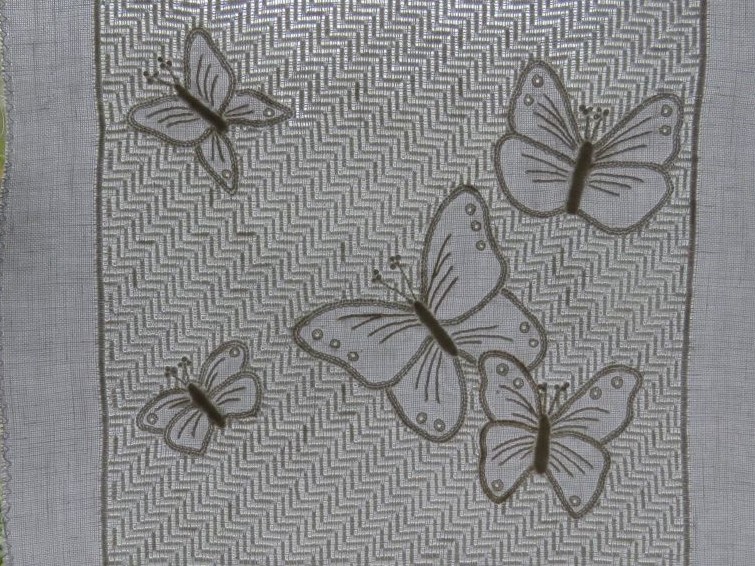
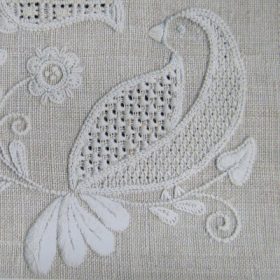
Short Eyelash stitches also outline the Satin stitch petals of a gorgeous contemporary table runner, which was embroidered using traditional patterns in the style of the early Schwalm whitework.


Some longer Eyelash stitches decorate a line of design No. 1 of my 2017 Advent calendar


They can be seen on other parts of the Advent Calendar. as well – here Eyelash stitches outline Blanket stitch eyelets.


If, like here, Blanket stitches meet with the loops of the Eyelash stitch, a raised double line is established


making the pattern especially effective.

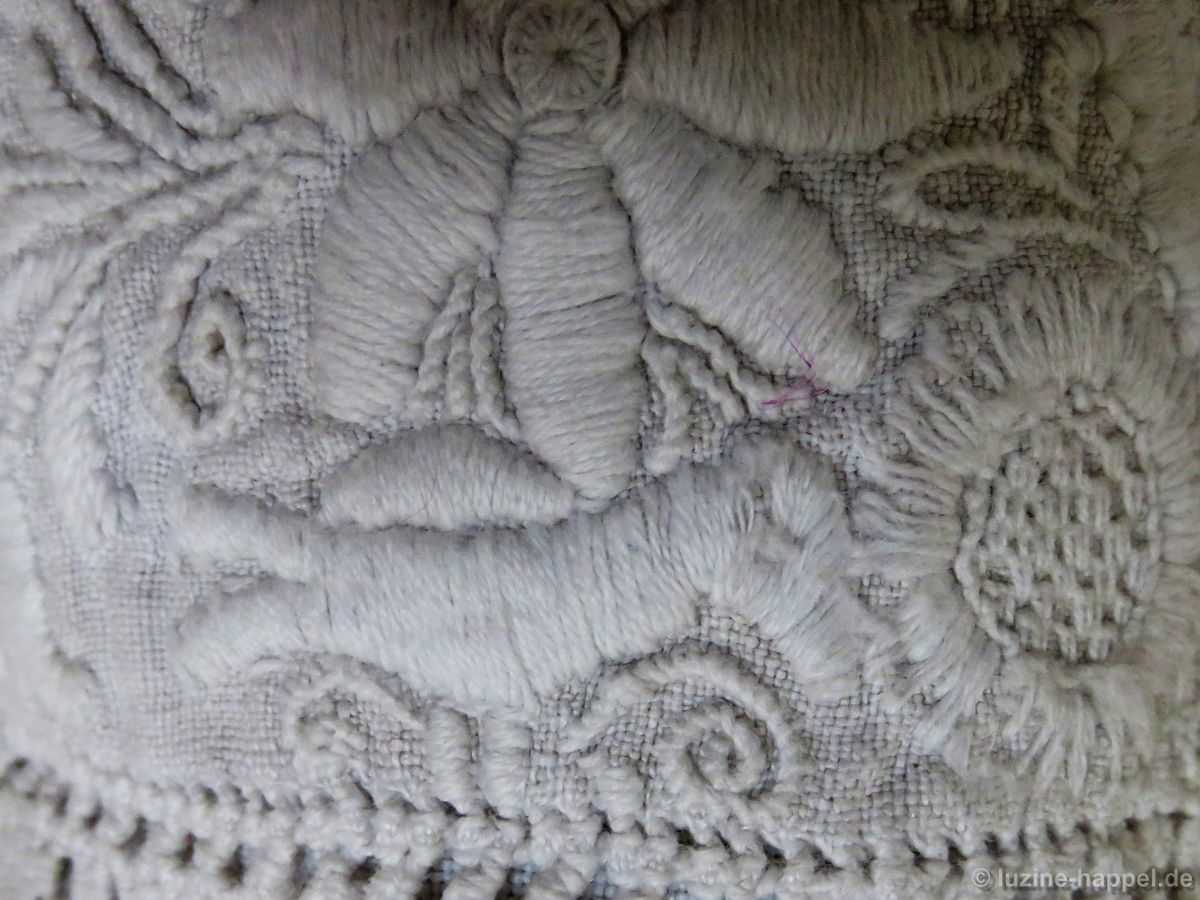
I found a very singular variation of Eyelash stitches on a very old embroidery. On this piece all shapes were outlined with long, closely worked and slanting Eyelash stitches.


Eyelash stitches are suitable for many uses, and they establish a decorative effect.

Transition from Early to Later Schwalm Whitework (3)

The third of my treasures from the transitional period between early and later Schwalm whitework is in its original condition. It is a bodice jacket that was, after the embroidery had been completed, dyed black and then waxed to create a chintz-like finish.


The piece is worked on old handwoven linen with a 14/18/cm thread count – a relatively coarse linen for this purpose. It is embroidered on the front edges and on the sleeve cuffs.


The front edges show a three-centimeter-wide border with ornamental embroidery and interlaced Straight stitches on both sides, a three-unit needle-weaving band, and needlelace.


The sleeve cuffs show wider sections of embroidery. Four different small borders, each 3 cm high, were combined to create the design. Such an arrangement with separated small borders is rarely seen.
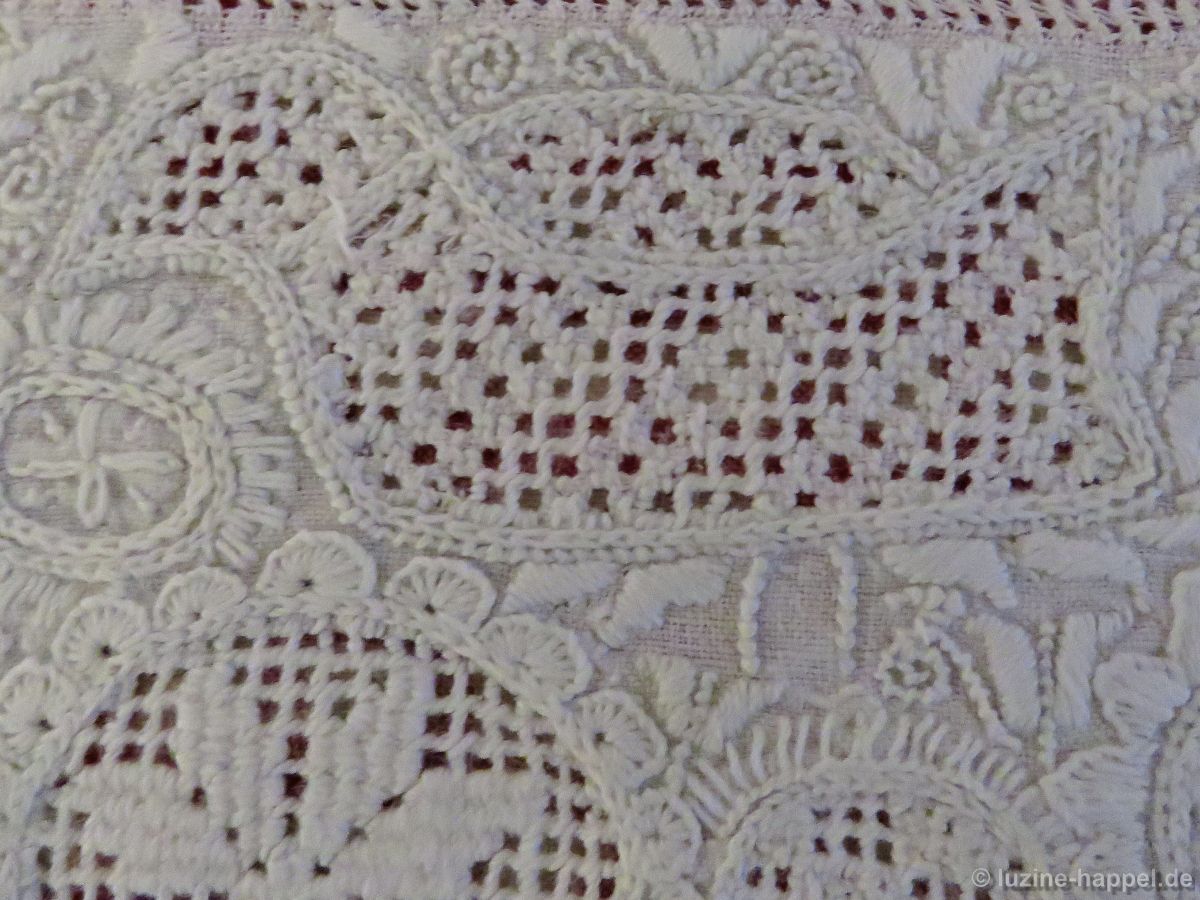
Only circle motifs were used. Chain or wide Stem stitches and additionally 2 short-2 long, Blanket stitch points, or Blanket stitch scallops outline the shapes. Leaves are made with Satin stitches.


The bottom edge is decorated with a 1.5 cm high needlelace


followed by a border showing stems, tendrils, and small circles inside some circle motifs stitched with Coral Knot stitches. These are the only Coral Knot stitches on the sleeve cuffs.


All five motifs of this border were embroidered without thread withdrawing. Two circles were filled with a Blanket stitch eyelet.


Three circles were filled with small circles stitched with Coral Knots surrounded by interlaced Straight stitches in the shape of a star.

The second border shows no Coral Knot stitches, but shapes with thread withdrawing. All withdrawn thread patterns of this piece, except one, are Limet filling patterns – this means cutting 1, leaving 3.
Two of the five circles have Four-Sided stitch patterns,


two have a combination of alternating rows of Four-Sided stitches and Cable stitches. This combination is rarely seen as Limet filling pattern.


Also notable – well visible on top of the above shape – is the way of working 2 short-2 long. One round with densely worked Satin stitches of the same length is followed by a second round with pairs of Satin stitches worked between the stitches of the first round.

The fifth pattern is made with Rose stitches.


The third border shows shapes without thread withdrawing. All five circles have the same patterns – triple Blanket stitches stitched through the fabric, not lying on top.


This border is bordered on top and on bottom with one row of wide stem stitches.


The fourth border includes six motifs. One shape (on the right in the above picture) is filled with a simple drawn thread filling pattern – Wave stitches. Two circles have Four-Sided stitch patterns, and three have Rose stitch patterns.


The initials CDNASI, divided by small Cross stitch ornaments, have been added but, unfortunately, no year.


In this example, we see some elements that are typical of early Schwalm whitework: wide Stem stitches for stems and outlining some shapes, filling patterns made with decorative stitches, and filling patterns made with triple Blanket stitches.

Transition from Early to Later Schwalm Whitework (2)

Transition from Early to Later Schwalm Whitework (2)

The second of my treasures from the transitional period between early and later Schwalm whitework is also no longer in its original condition. It was a parade cushion border but has been changed into a table runner.

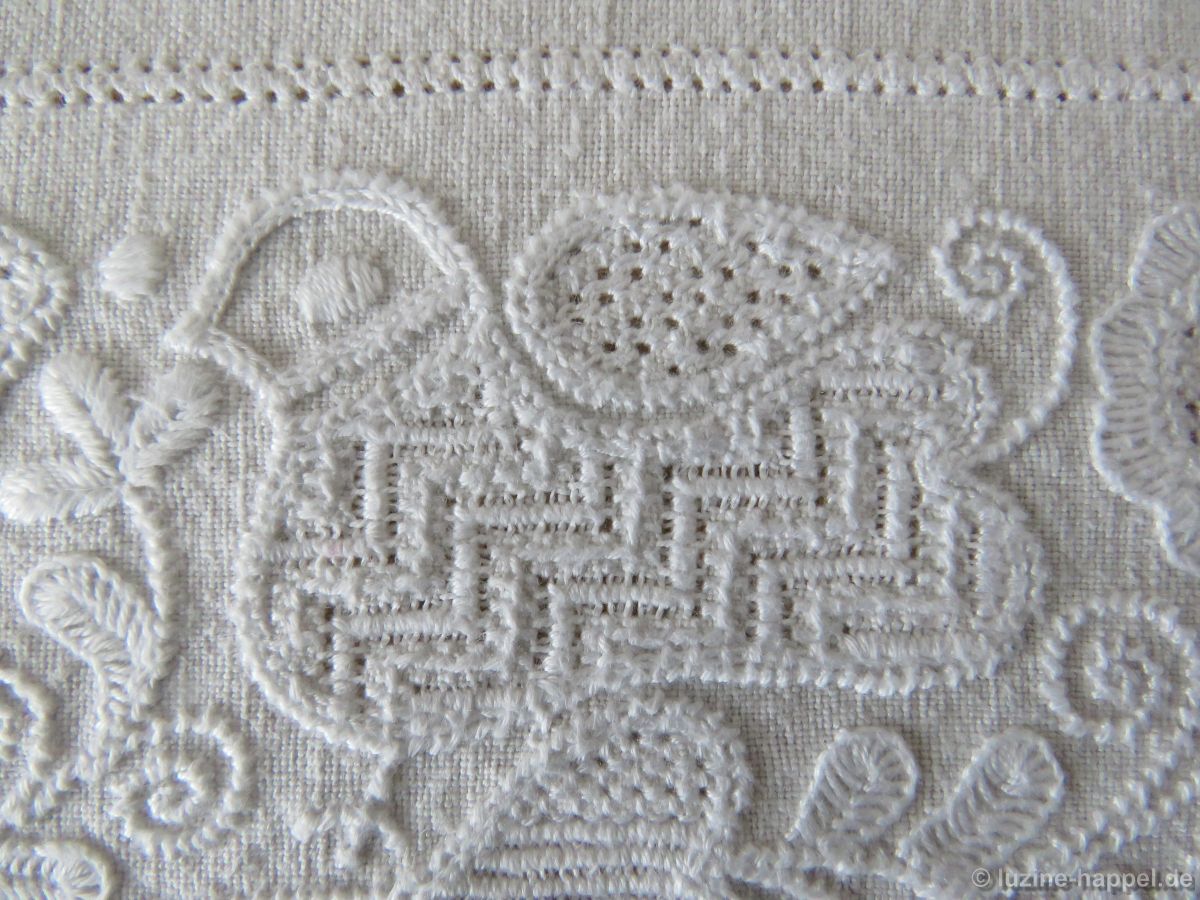
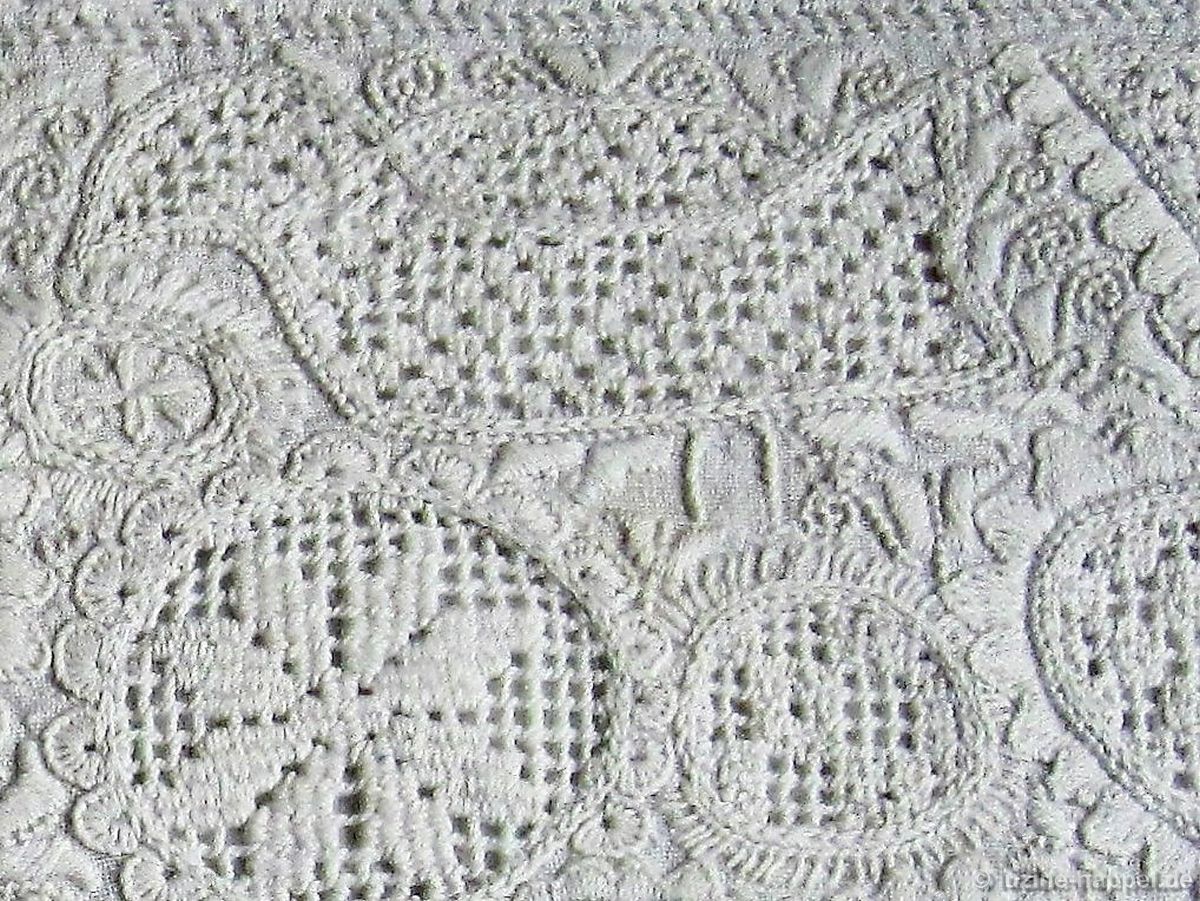
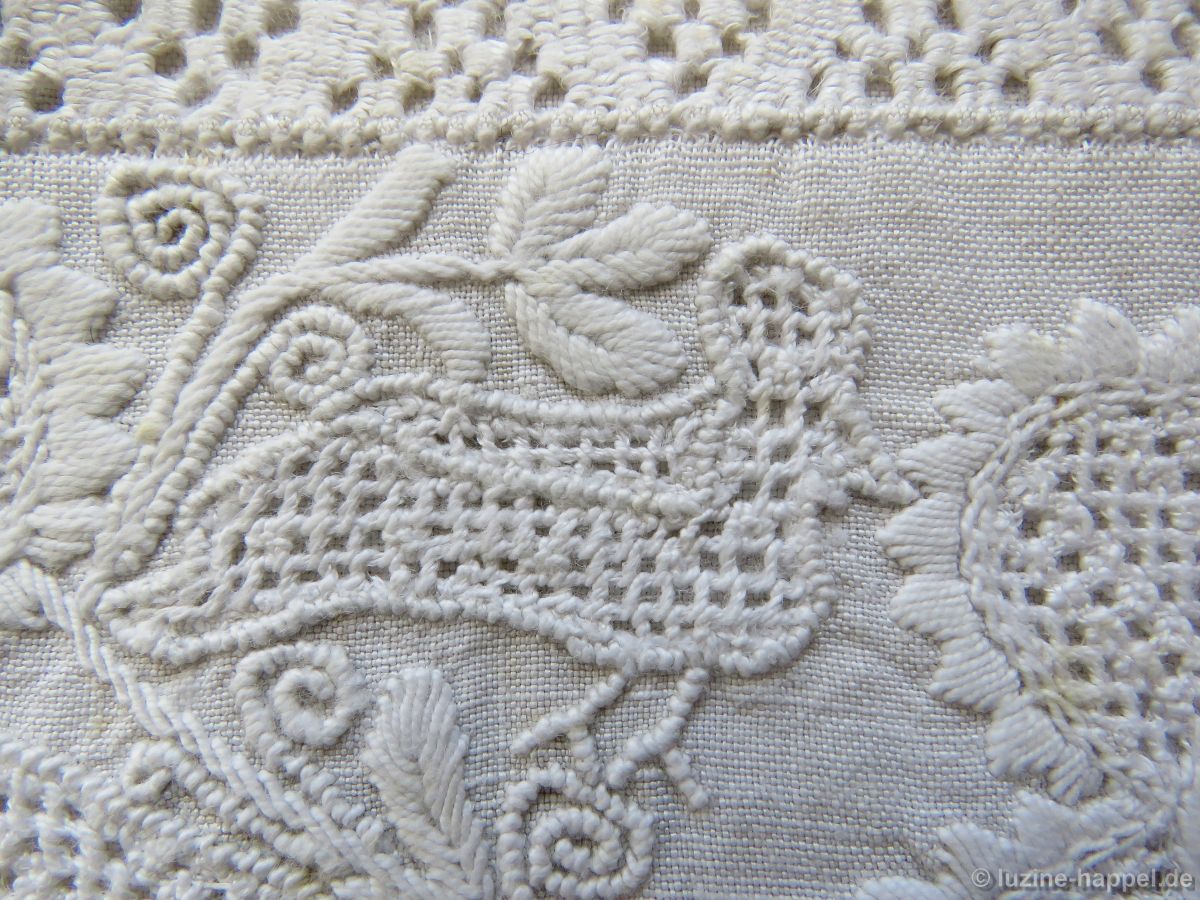
The piece is worked on old handwoven linen with a 19/cm thread count. The motif border measures 14 cm X 80 cm. It is bordered on top and on bottom by a 5.5 cm high nine-unit needle-weaving band with a Peahole hem on both sides.


This piece also shows only a slight combination of both styles of Schwalm whitework. In contrast to the border from 1804 this border is very densely embroidered. Every small space is filled with stitches.

All large motifs were filled with openwork patterns, but many of the smaller motifs were filled with patterns without withdrawing threads. (Smaller shapes were common in early Schwalm whitework, whereas larger shapes were preferred in the later style. The larger the shapes, the more difficult it is to fill them with early patterns.)


The center shows a design of a heart with three big tulips, two circles, and two shapes adapted in their form to the remaining space. Theses two shapes have Rose stitch patterns; all other shapes have needle-weaving patterns, whereas the two center shapes have figured needle-weaving patterns.


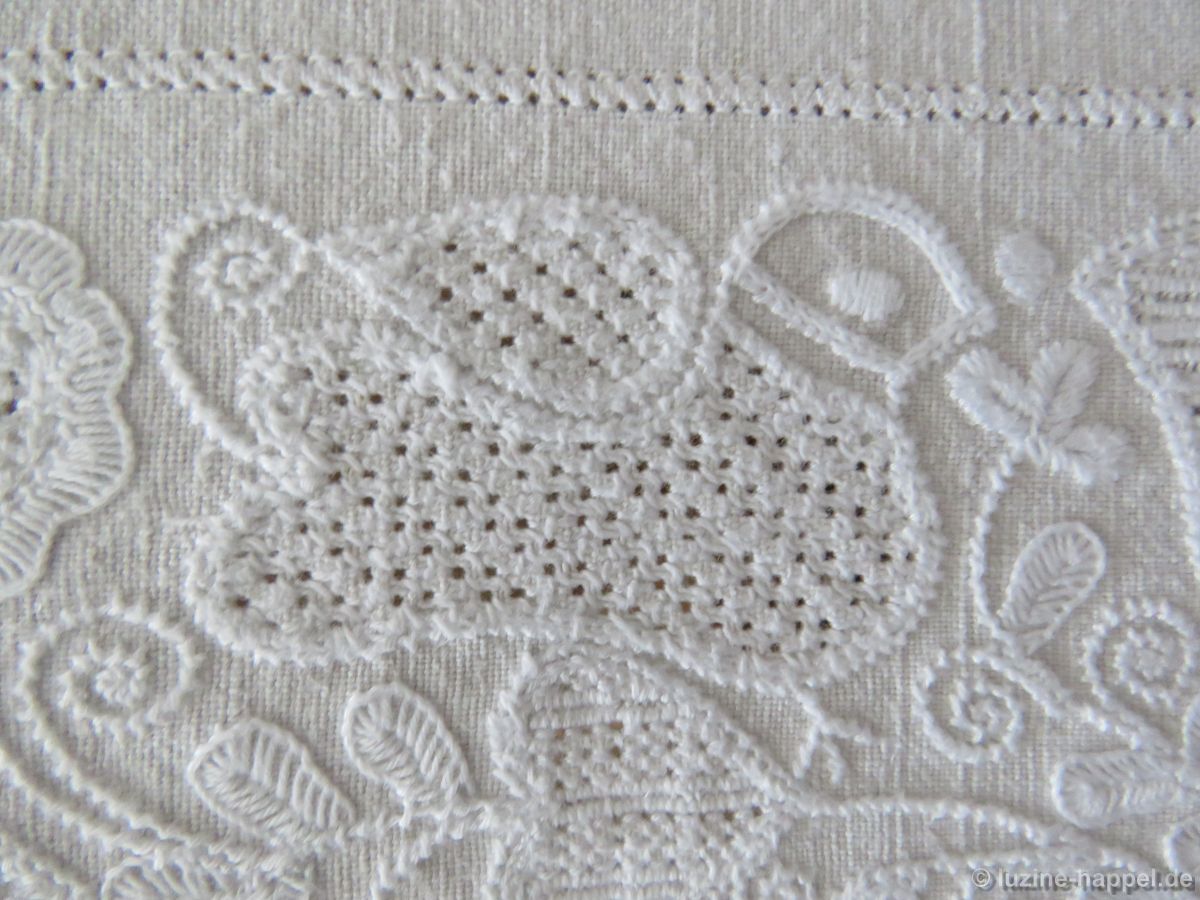
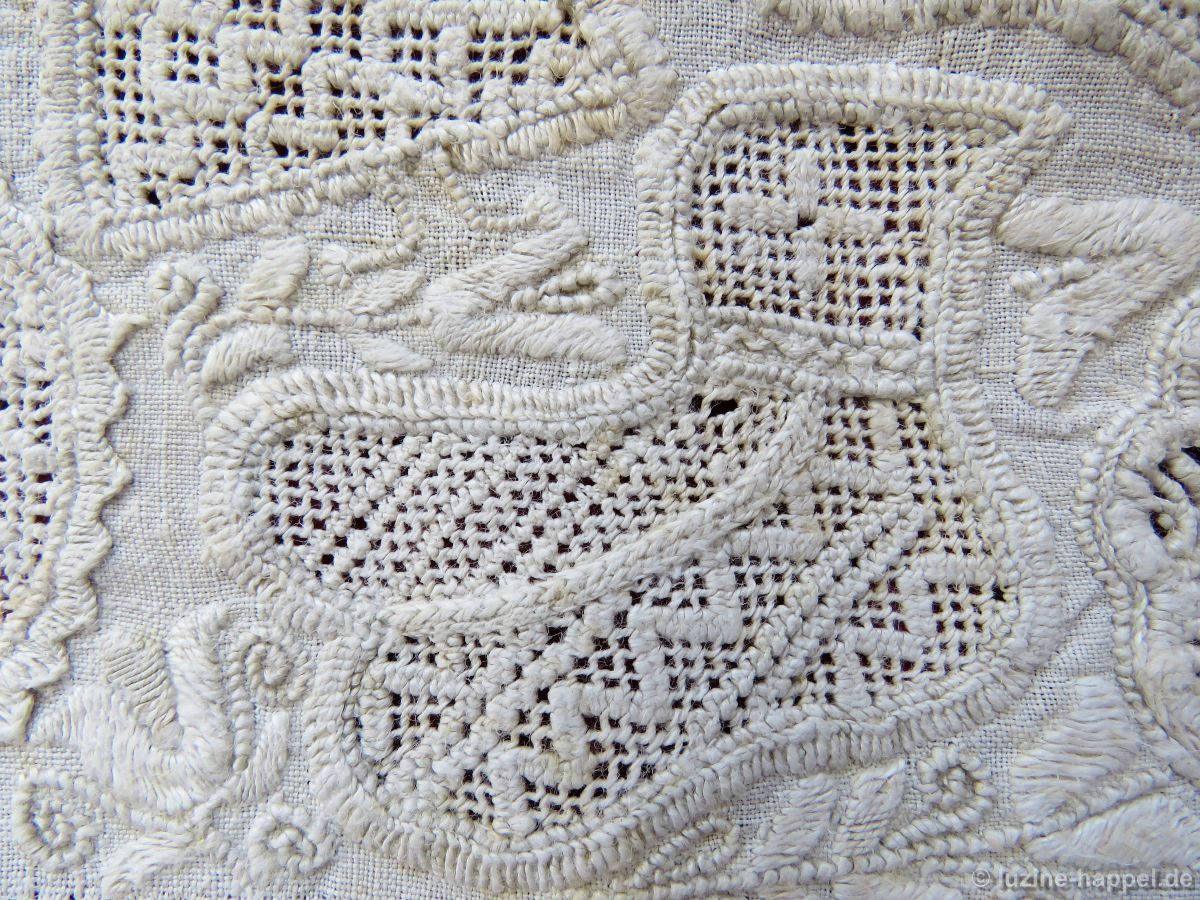
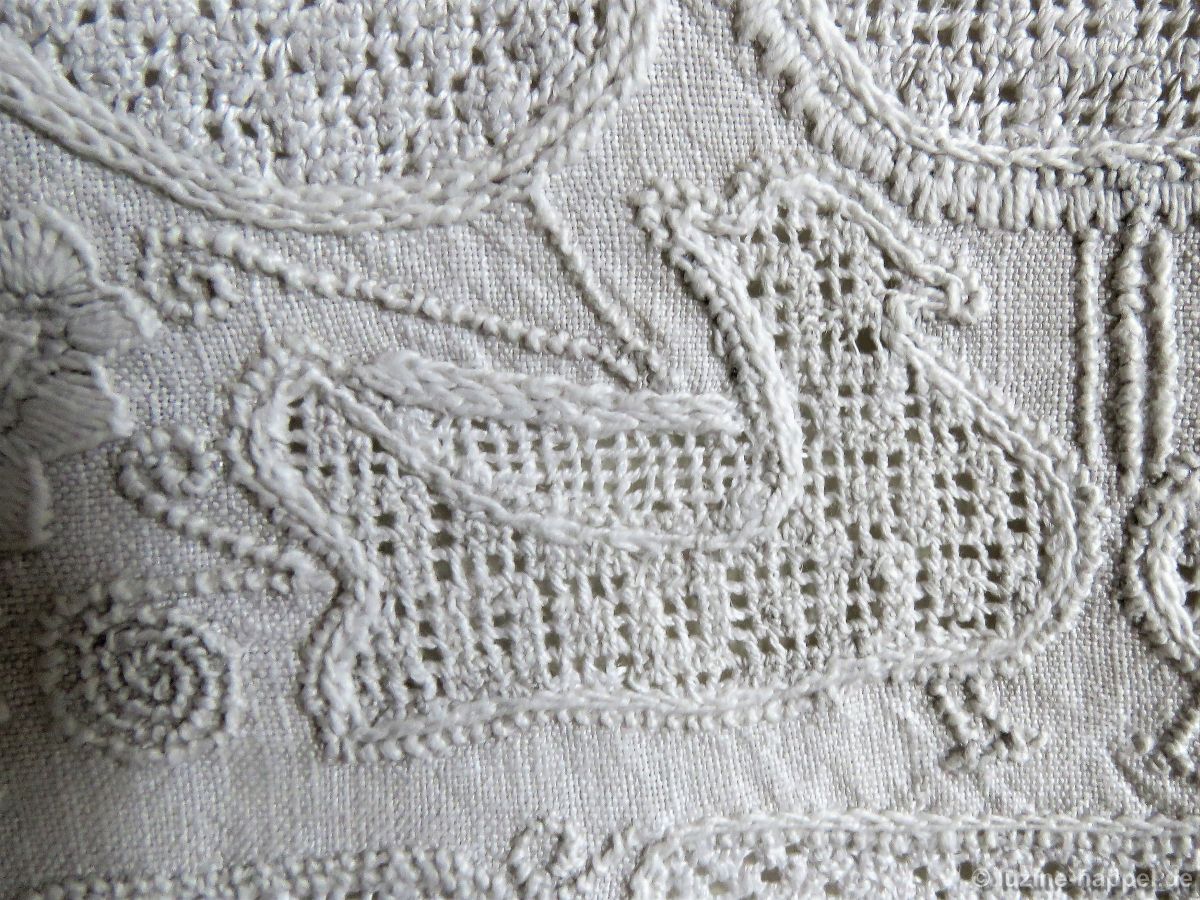
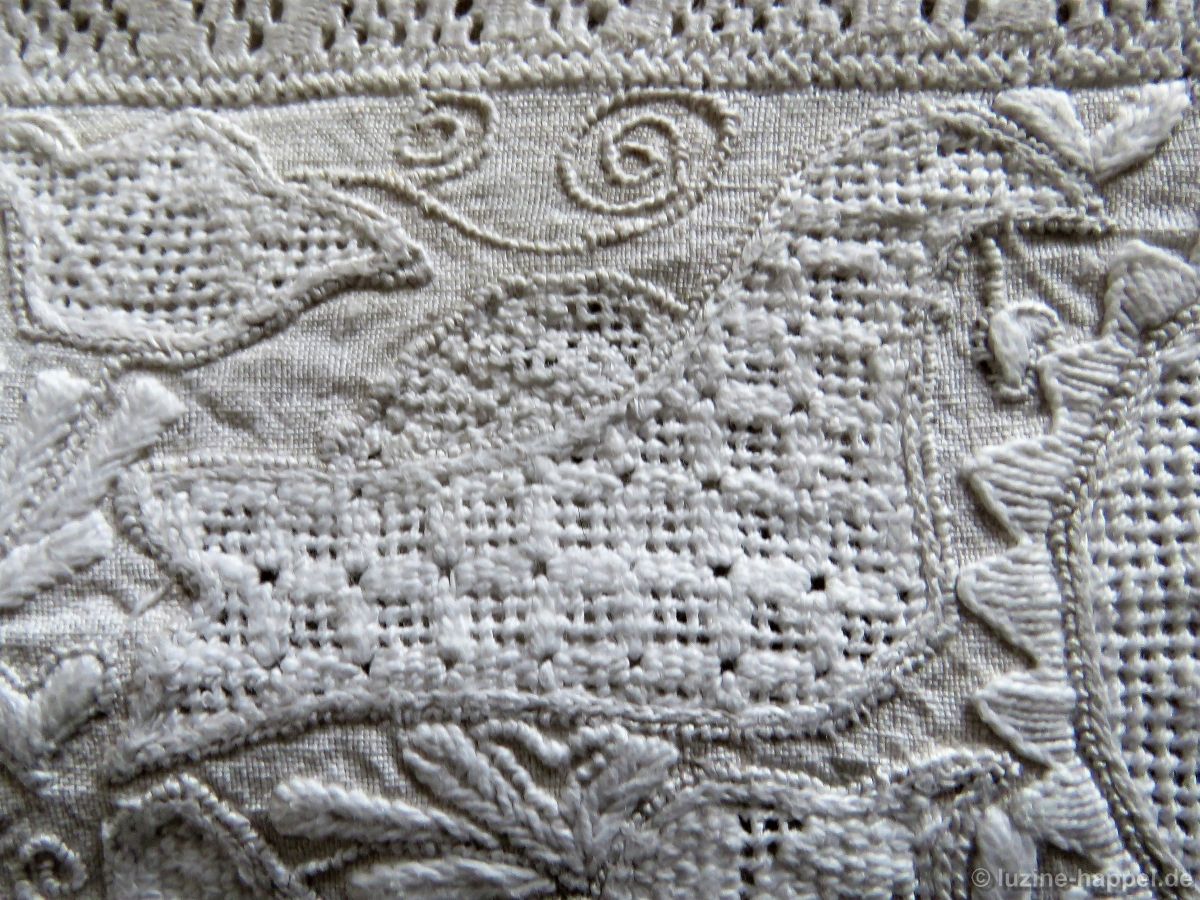
A flower and a flowerpot bordered by big birds can be seen to the left and to the right of the center design. Smaller shapes without thread withdrawing and filled with early patterns are seen interspersed between the larger motifs.


There are hearts filled with leaves,


or flowers,


or Satin stitches only.


And there is a small tulip filled with a pattern made with pairs of Blanket stitches.


The same pattern made with pairs of Blanket stitches is found in hearts on the bottom left


and the bottom right of the border. Whereas there is only one large heart on the left, there are two smaller hearts on the right (unfortunately, a section of the embroidery is hidden by the seam made during repurposing).
As you can see, the design is not really symmetric. Three of the birds have a relatively vertical position while the fourth’s position is nearly horizontal.


In this example Coral Knot stitches and Chain stitches were worked, but no Stem stitches. Many small tendrils are found. The outlines were embroidered using one or two rows of Chain stitches, and with one row of Coral Knot stitches and an additional row of Chain stitches. Additional outlining was made with 2 short-2 long, Blanket stitch points, half-eyelet scallops, Satin stitch points and interlaced Straight stitches (see Schwalm Curved Lines, Narrow Borders, and Ornamental Stitches).


Interlaced Straight stitches are found not only as outlining, like here around the circle,


but also as decorative stitches, like these on the neck of the bird,


or on top of the tulip.


The needle-weaving figures of the different shapes did not turn out well.

A rarely seen openwork Rose stitch pattern was embroidered in the middle part of the flower pot.


In this example, we see some elements that are typical of early Schwalm whitework: in all there are seventeen small motifs without thread withdrawing. Five of these are filled with patterns made with pairs of Blanket stitches, four with Satin stitches, four with Blanket stitch leaves, two with Blanket stitch eyelets and interlaced Straight stitches, and two with small flowers (and tendrils).

Transition from Early to Later Schwalm Whitework (1)

About two hundred years ago, early Schwalm Whitework gradually transitioned to the later style of Schwalm whitework. The transition took place over a relatively short amount of time. Unsurprisingly, since the Schwalm region is narrow and the transitional period was short, it is difficult to find traditional examples with a combination of both.

A customer who loves both early and later patterns asked for historical examples from the transitional period containing both. I was able to find three pieces in my collection that have a slight combination. I will show these treasures on my blog over time; here is the first. Unfortunately, it is no longer in its original condition. Because of the width, I think it was once used as a door hanging.

The piece is worked on linen with a 19/cm thread count. The border in all measures 20 cm X 36 cm; the embroidery only has a height of 16 cm. The embroidery is bordered with two different needle-weaving hems – one with spiders and the other without.


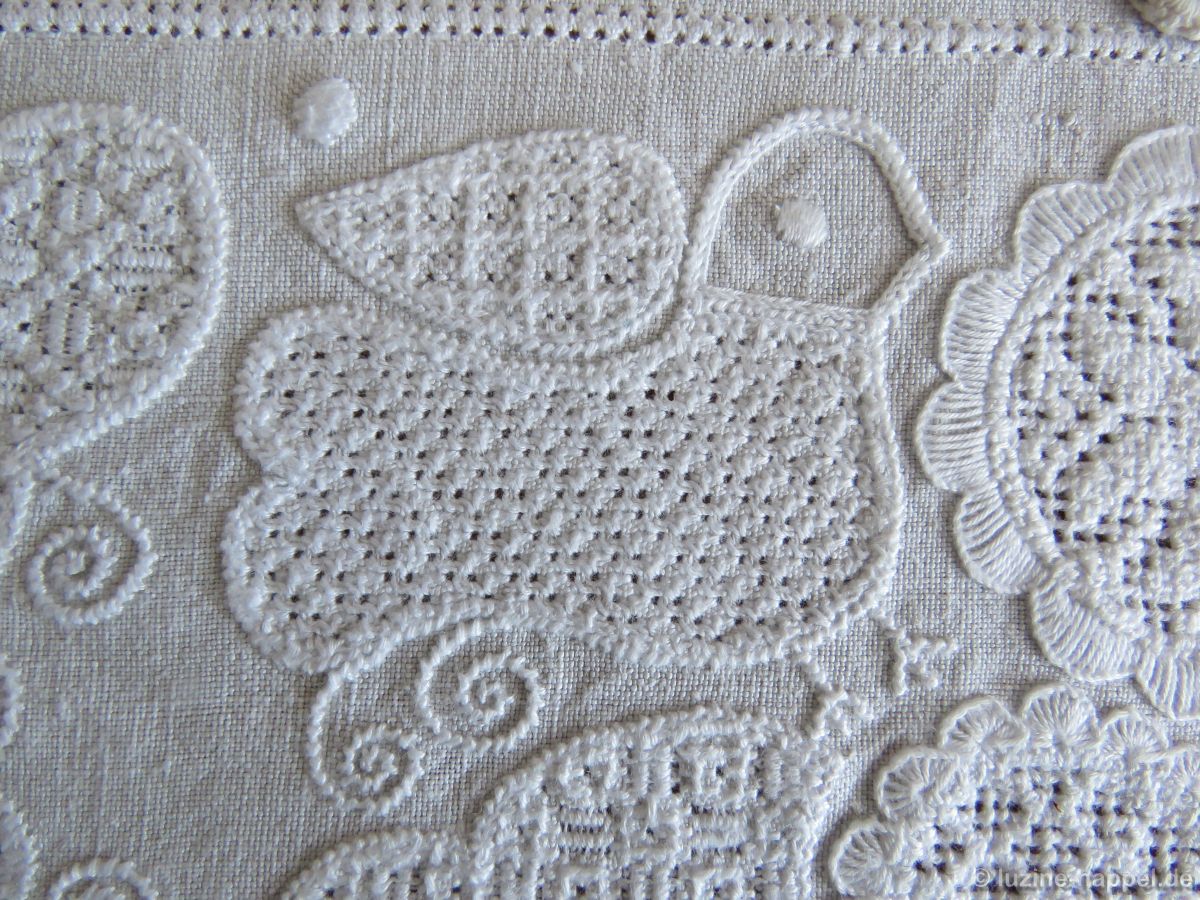
The year 1804, Cross stitch initials, and small Cross stitch ornaments are all additions. Unfortunately, threads dyed yellow or gold fade sooner than threads dyed other colours. In the enlargement I can see the initials AKRHSI separated by ornaments, two birds,


and ANO 1804.


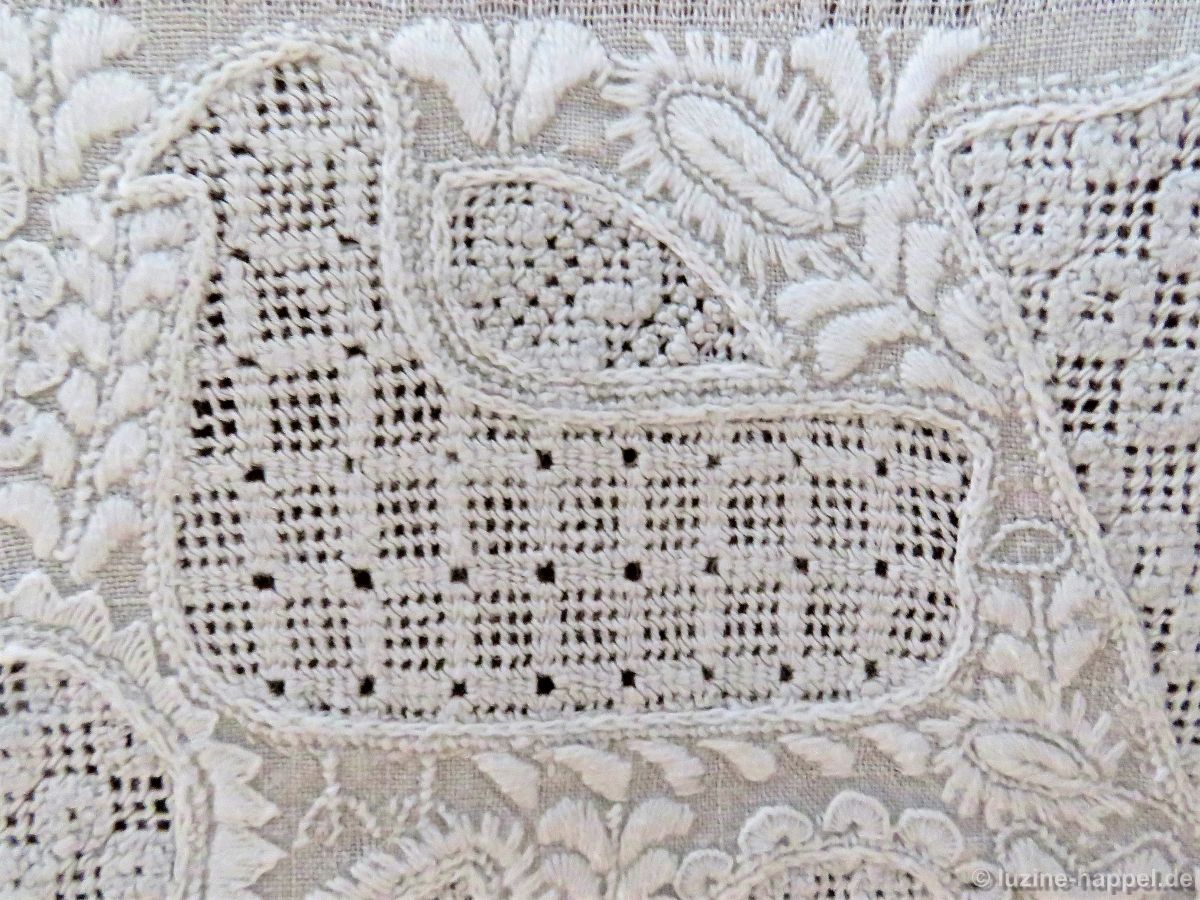
It is notable that no Coral Knot stitches and no Chain stitches were worked. The outlines were embroidered using wide Stem stitches, Eyelash stitches, and Satin and Blanket stitch scallops.

Stems were also embroidered with wide Stem stitches. Some stems were made with a double line filled with Herringbone stitches, as was common in early Schwalm whitework. Leaves were worked with Blanket stitches. No tendrils were stitched.


The only filling pattern without thread withdrawing is found in the two areas on the left and on the right of the center motif.


It is made with pairs of Blanket stitches. The Blanket stitches are not lying on top of the fabric; rather, they are stitched through the linen.


The six circles were filled with two different patterns of needlelace.


All other motifs were filled with openwork patterns.


The above motif shows a Rose stitch pattern in an openwork Cable stitch grid.


The center motif also has an openwork pattern, but without a Cable stitch grid. Rose stitches and Four-Sided stitches create the pattern.


I have never before seen an openwork pattern made with a combination of Rose and Four-Sided stitches.


The small heart was filled with the same pattern, but thread withdrawing was made by cutting 3 – leaving 3.


The large heart in the center was filled with a Rose stitch pattern in openwork without a Cable stitch grid.


Also without a Cable stitch grid, rows of Rose stitches alternate with rows of Cable stitches.


The last motif shows a Rose stitch pattern worked in an openwork Cable stitch grid.

In this example, we see a couple of elements that are typical of early Schwalm whitework: wide stem stitches instead of Coral Knot stitches for the outlining and the stems, double-line stems filled with Herringbone stitches. In addition, there is an absence of tendrils and one filling pattern without thread withdrawing.

See what my readers have embroidered in 2017!

At the beginning of 2017, I received a picture from Yoko Miyamoto from Japan. Since 2017 is the year of the cock, she embroidered a nice picture of a weathercock. Isn´t it beautiful?
Cocks, hens, and birds were popular designs with my readers this year.
Bettina Limburger from Germany sent me a picture of her Easter “tree.” It is lovely with a couple of embroidered eggs made in natural colours from my 24 small designs.
Marina Pastushenko from Turkey and her friend Kate Vasilieva amaze me with their perfectly embroidered variations of French Hens.
Both speak Russian and now teach Schwalm whitewotk in Russia! They also attend a craft fair in Moscow and show Schwalm embroidery there.
Their Russian-speaking students know very little about Schwalm embroidery, but they already love it! Also, the projects of their students are worth seeing.
I am particularly impressed with the work of Cindy Russell from the United States. First, she sent me a beautiful two-sided ornament of a Happel Heart.
She wrote, “In preparation (practice, practice!) before doing a large Schwalm piece, I´ve been working on a series of heart ornaments. They are admired by everyone who sees them, and they are very fun to do.”
I have never seen such a finishing technique before, so I asked her how she did it. She told me, and at once I ordered a circle cutter – I am ashamed to admit that so far it is unpacked!
Cindy not only gave me directions, but she also promised to make a clean and clear description.
She d i d!
Some weeks later I received the document, and what a document it is – the steps are explained exactly and with great detail accompanied with clear pictures.
She gave me permission to publish the pdf document on my blog so that all of you can easily download it for free. Hasn’t Cindy given us a very special present for the start of the New Year?
She wrote, “If anyone has questions they are welcome to ask.”
Her email-address is included on the downloadable document.

A hearty “Thank You” to Cindy and all the others for sending pictures of their progress. And thanks a million to those who gave me permission to feature their projects in this blog post.
To all I wish limber fingers, keen eyesight, and plenty of time for the most beautiful stitching moments.

Happy New Year!