

The 13 basic stitches of Schwalm whitework
A. The decorative stitches
1. The Blanket Stitch
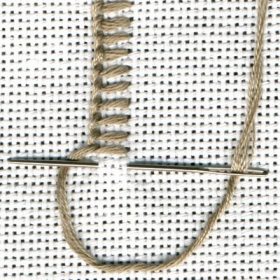
Blanket stitches extend between two lines/dots, with the lines usually not running parallel. Blanket stitches are used in many formations in Schwalm whitework. They are used to embroider rounded leaves, semicircular, pointed, or radial outlines of motifs, small flowers, and small circles.
thread weight: depending on the fineness of the linen, coton à broder thread No. 20 or No. 25
building the rows: mostly from top to bottom (sometimes also from left to right)
direction of needle movement: from right to left (sometimes also from top to bottom)
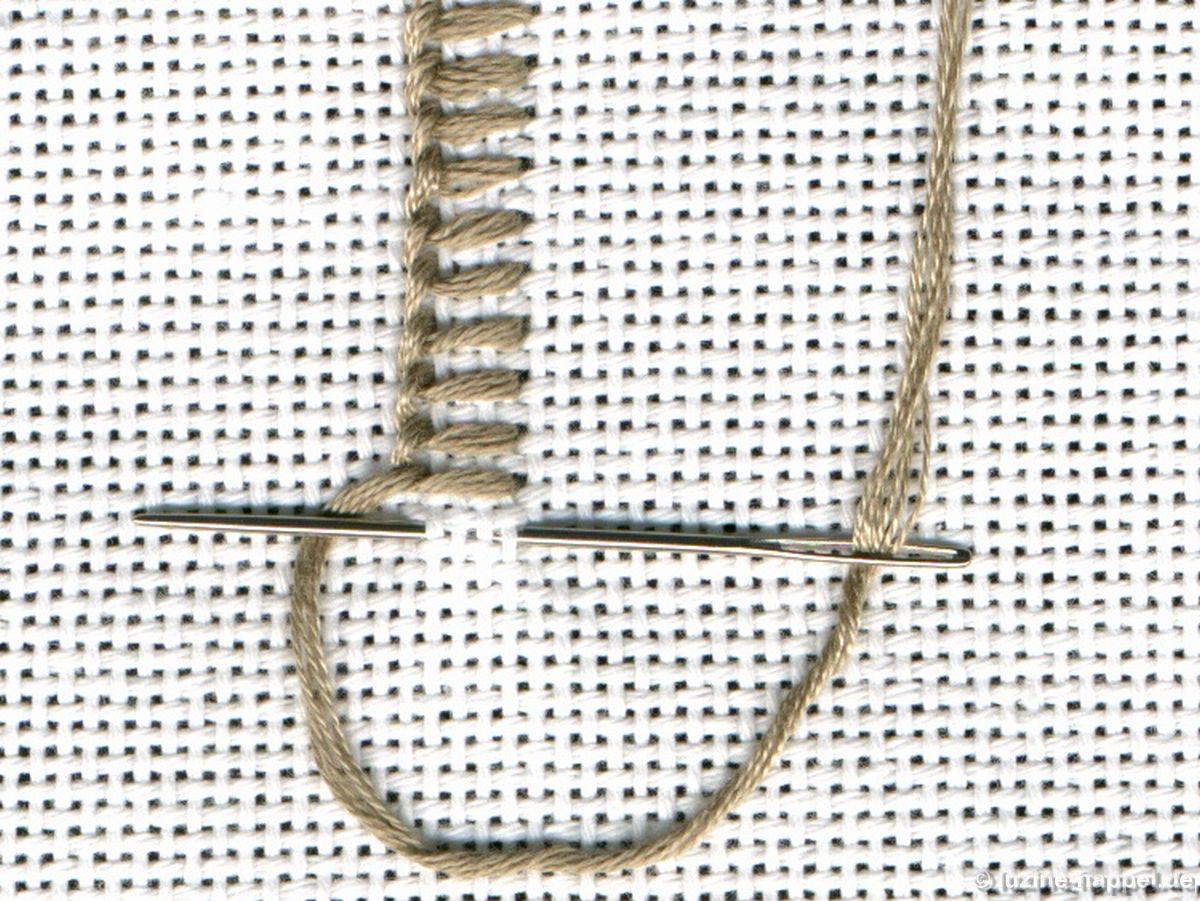
way of working: Bring needle up on the left/outer line and lay the thread in a loop to bottom and right. Insert the needle on the right side, cross under the fabric between the both lines and bring needle up again in the left close to the previous emerging point. The looped thread is below the needle tip.
Pull the needle through and the thread to the left.
In this way, blanket stitch scallops are created,
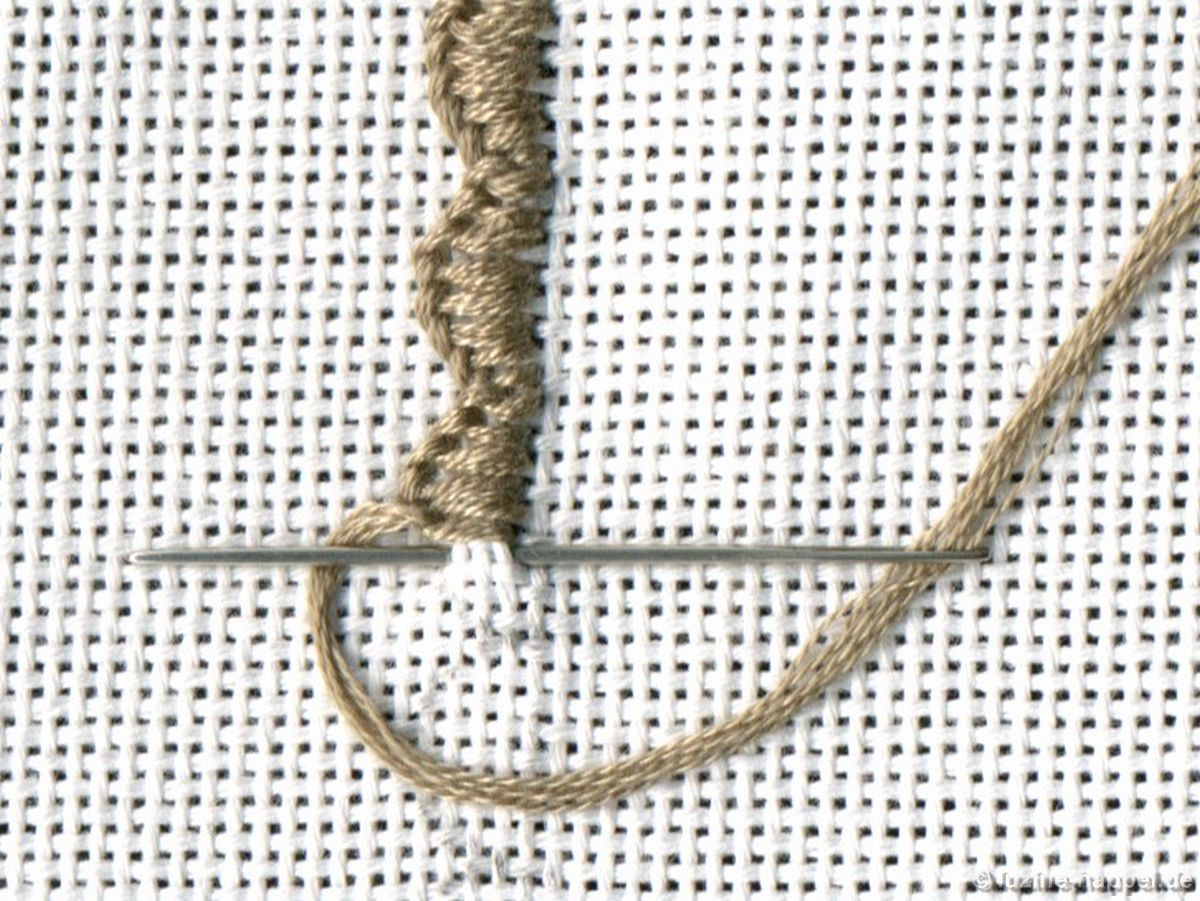
or blanket stitch scallops worked around a center point – so called “half-eyelet scallops”,
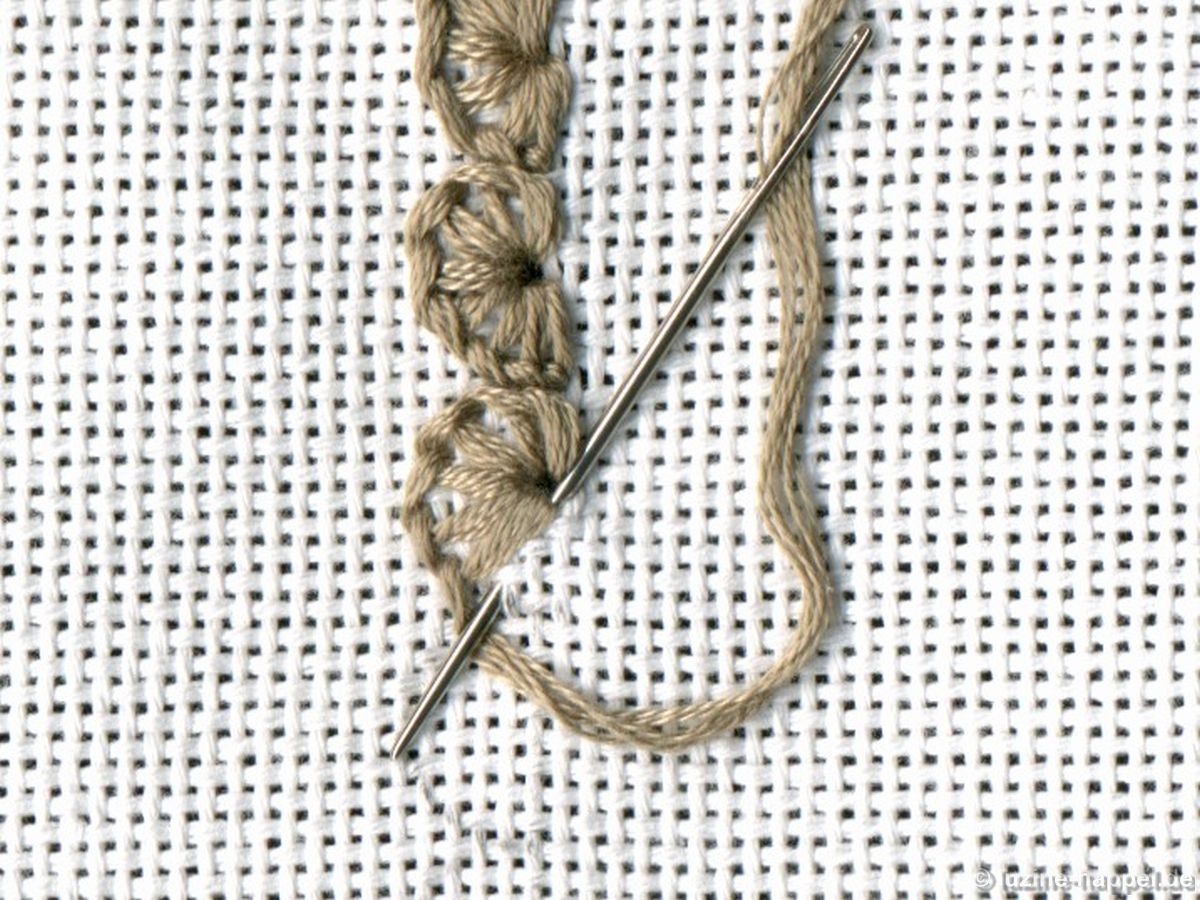
blanket stitch tips (so called “knife points”) and

worked around a center point blanket stitch tips – so called “pointed half-eyelet scallops”,

Also eyelash stitches are created using blanket stitches,
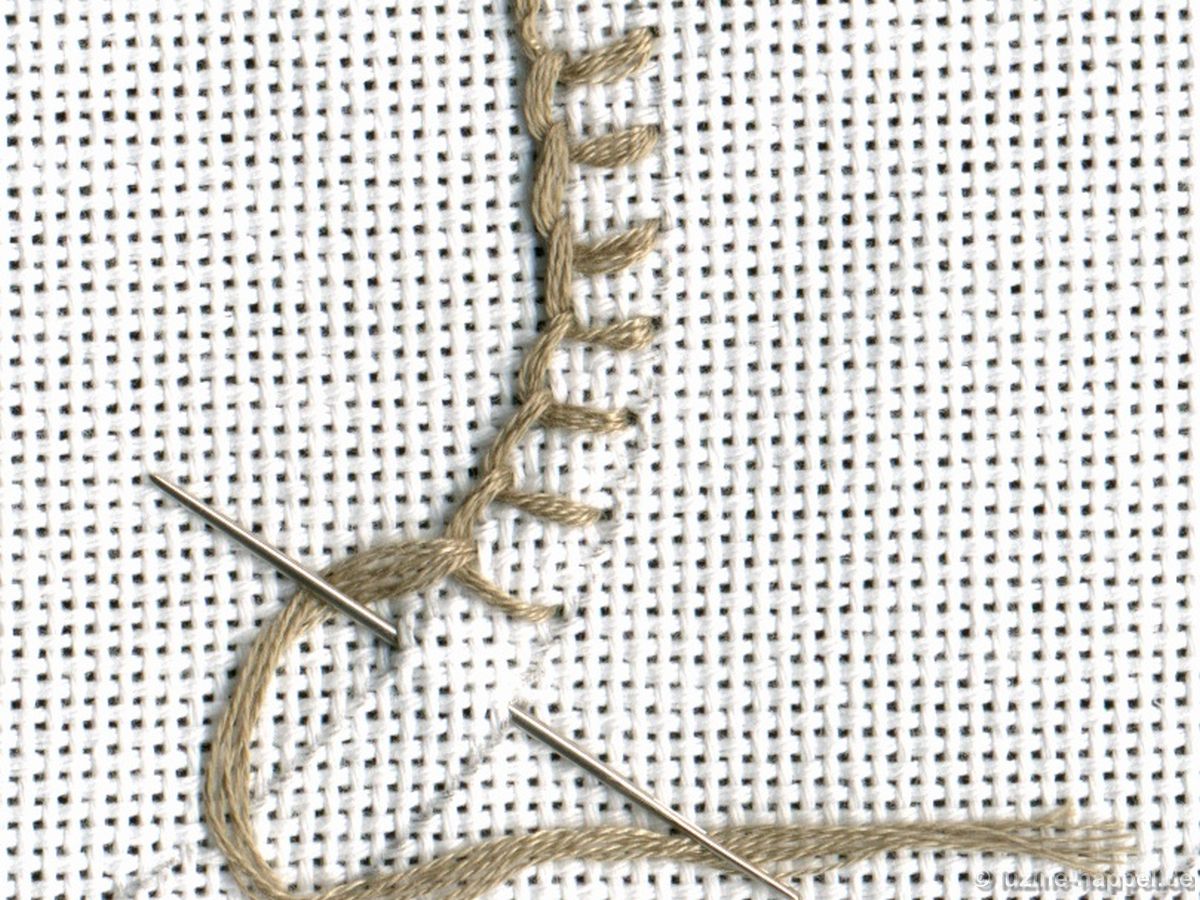
likewise the the blanket stitch wheel (so called blanket stitch eyelet).
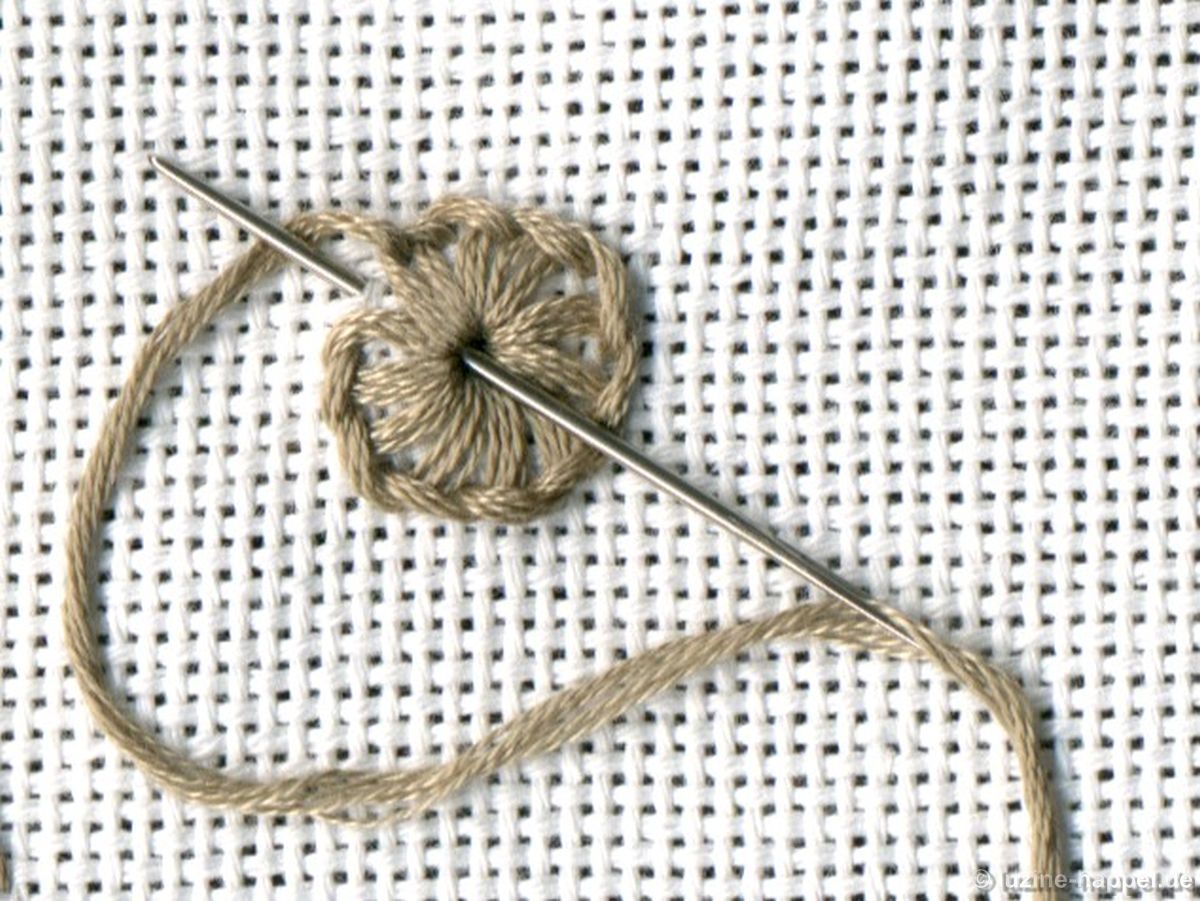
(The rose stitch is also a blanket stitch, but it is not used as a decorative stitch, but as a filling pattern and is therefore described in detail under this category.
See also:
How to Work a Blanket Stitch Eyelet
Design for Practice Exercises.
Tablecloth for all Seasons – October: Creepers and Grape
Advent Calendar 2016 – No. 7

Leave a Reply