

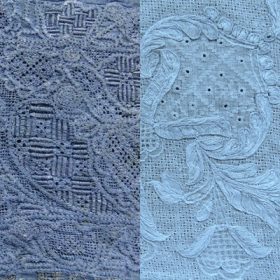
As already mentioned in the blog post Schwalm Bodice Sleeve (1), Dresden lace was incorporated into folk art at the end of the 18th century and further developed there.
The development process can be documented using a few examples.
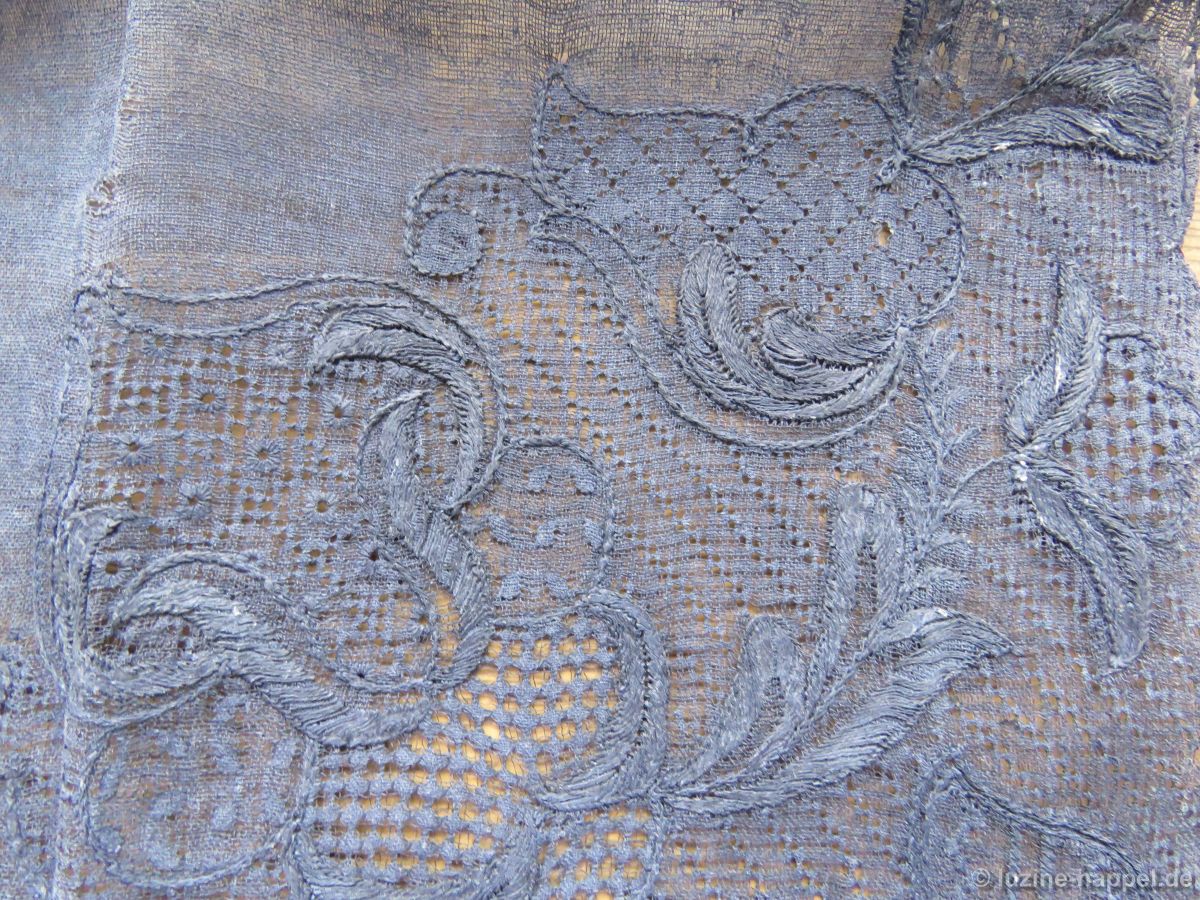
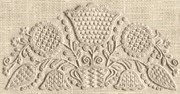
Dresden lace includes – besides all the differences that existed in this style – many different playful shapes – mostly flowers.
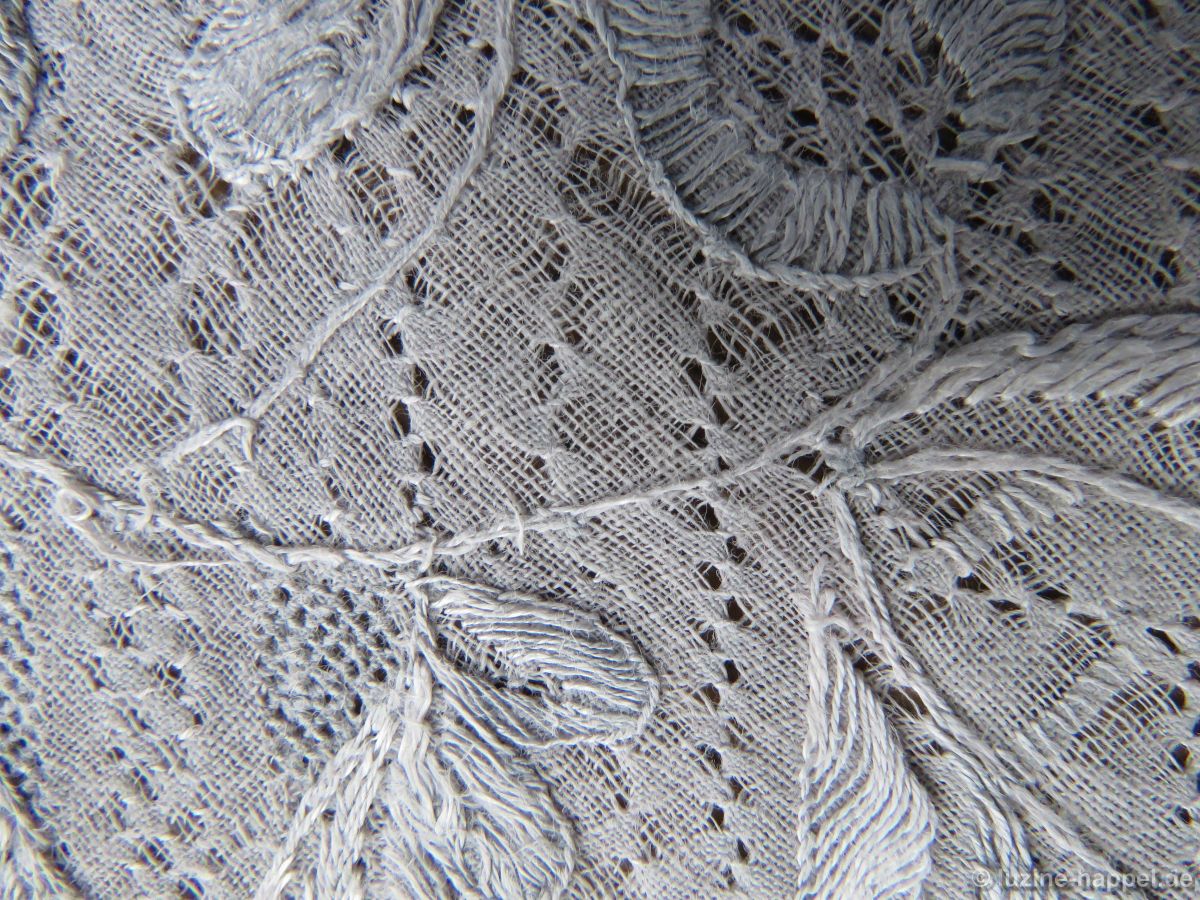
Stems and motif outlines were created using monastery or chain stitches.
Satin- or blanket stitch elements were contrasted with the patterned areas as points of rest.
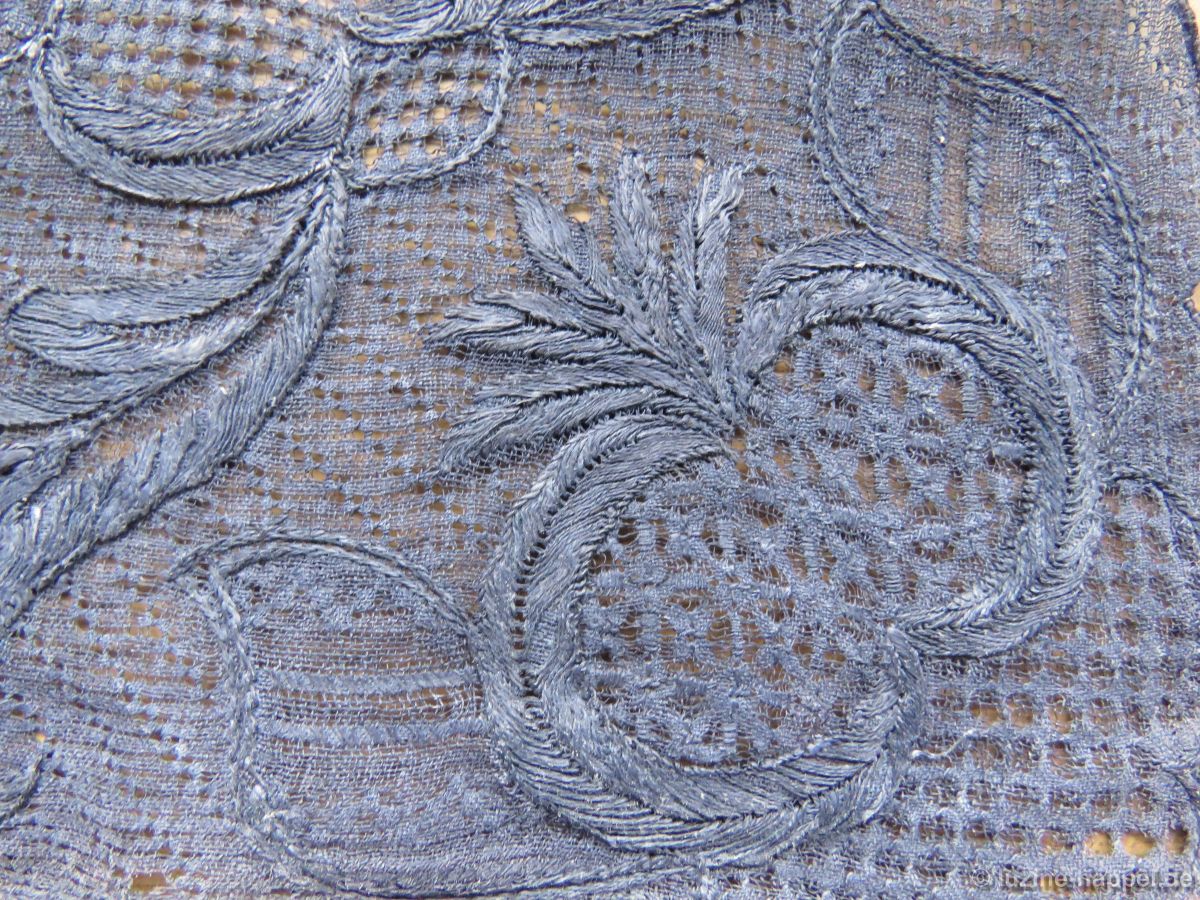
Shadow embroidery underlaid the fine, loose fabric and brought additional design possibilities.
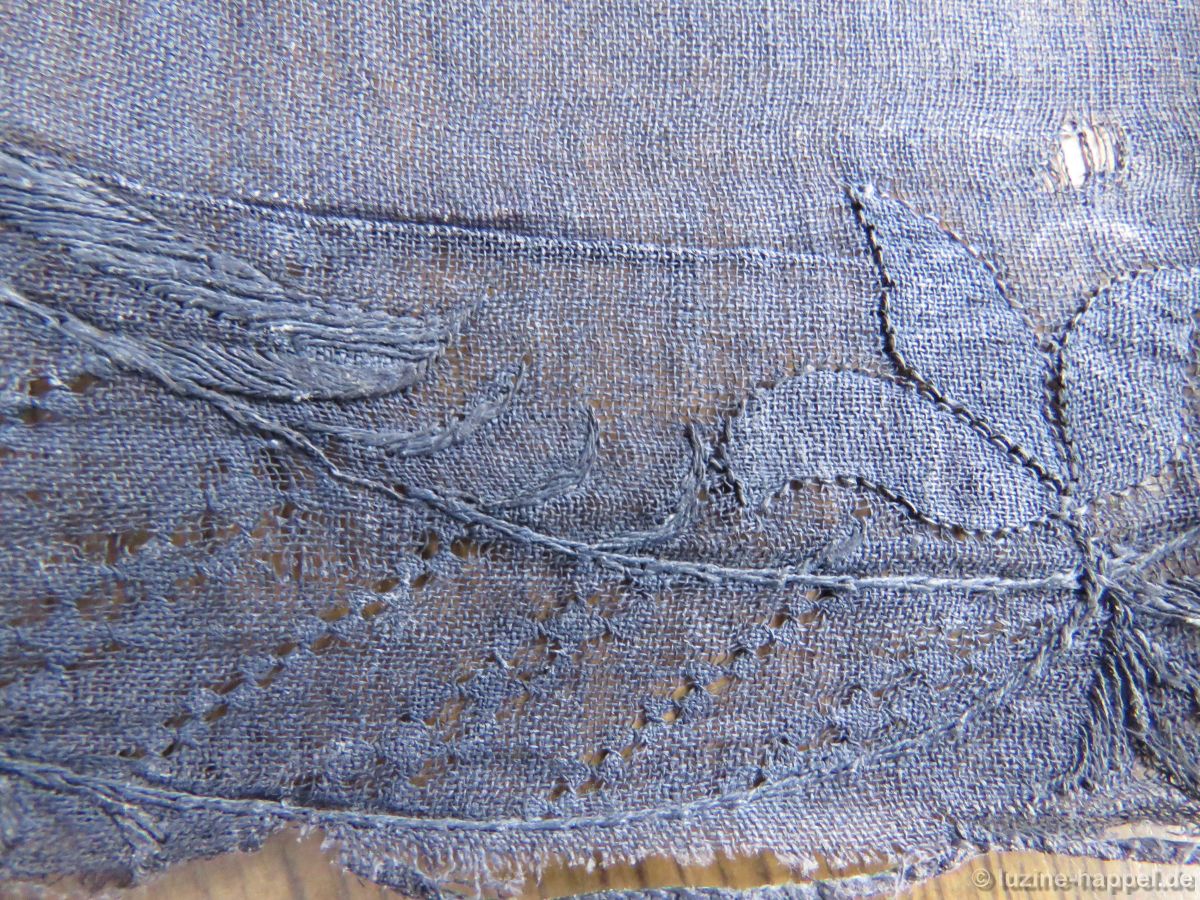
Tendrils, if present at all, are only hinted at.
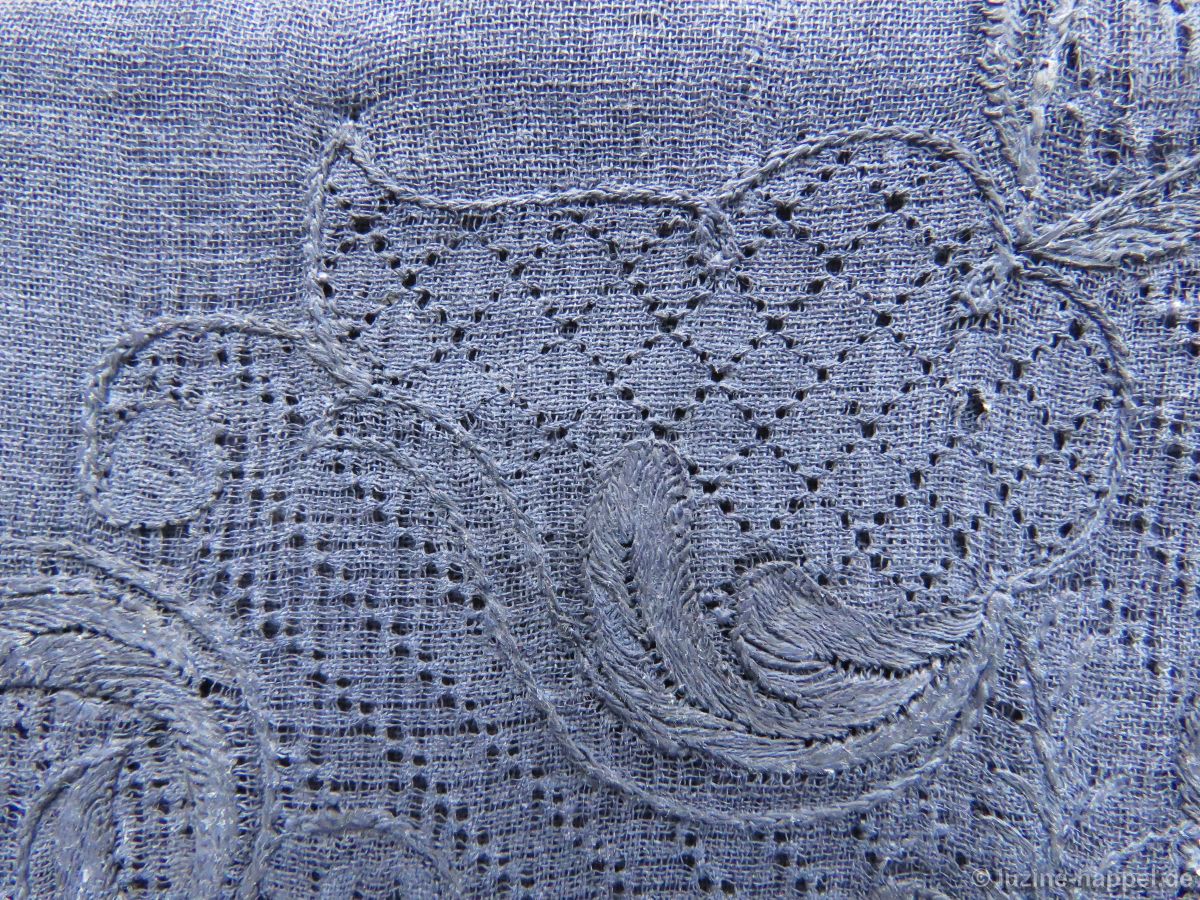
The fabric of the border surfaces was completely embroidered with patterns,
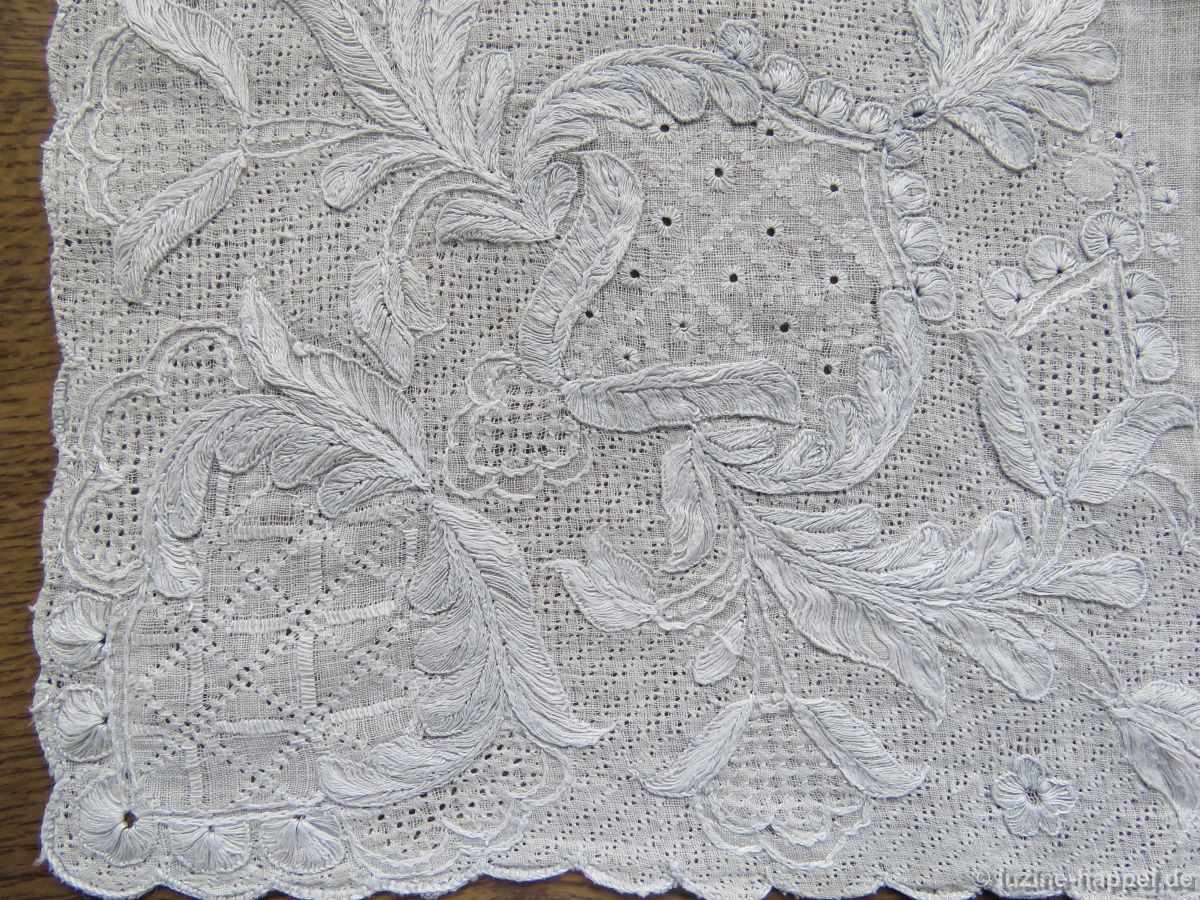
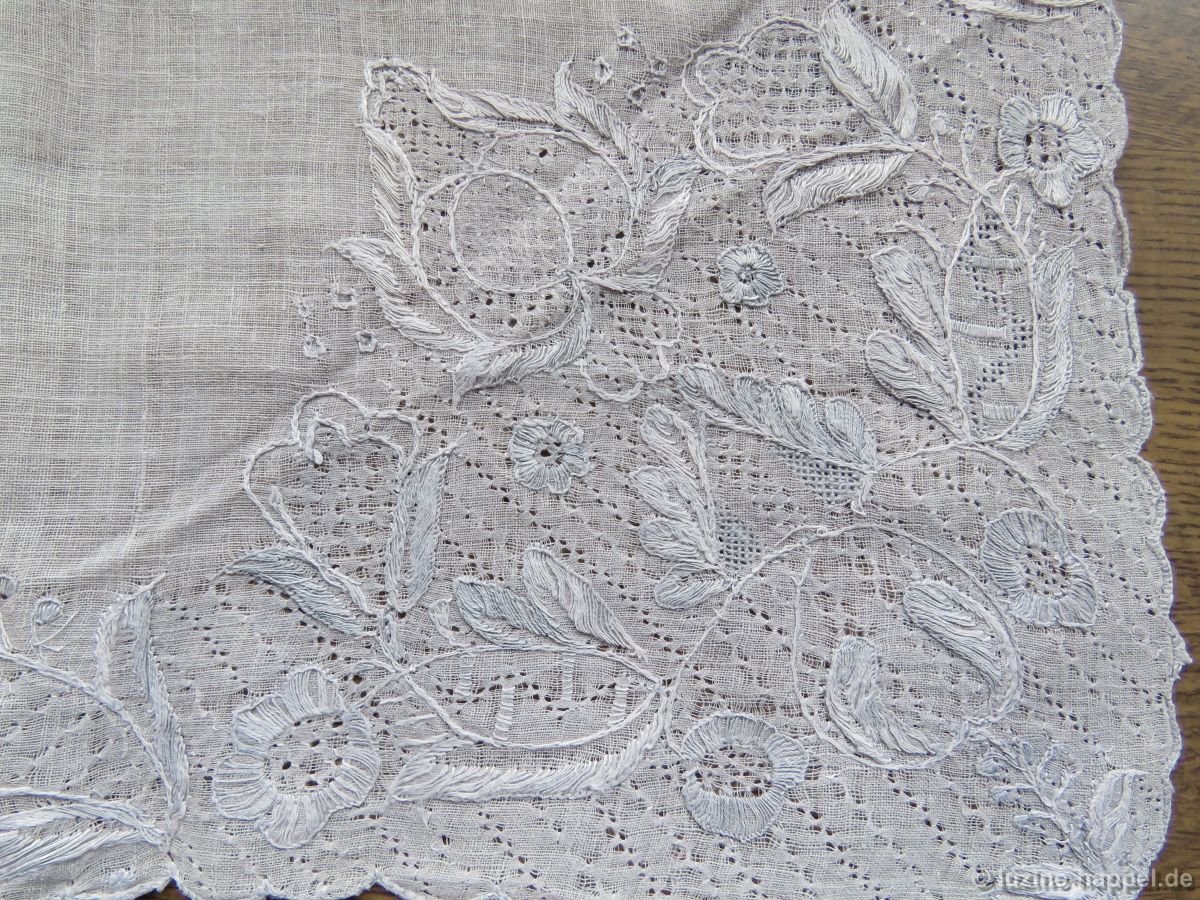
where the pattern stitches were often worked with free space between them.
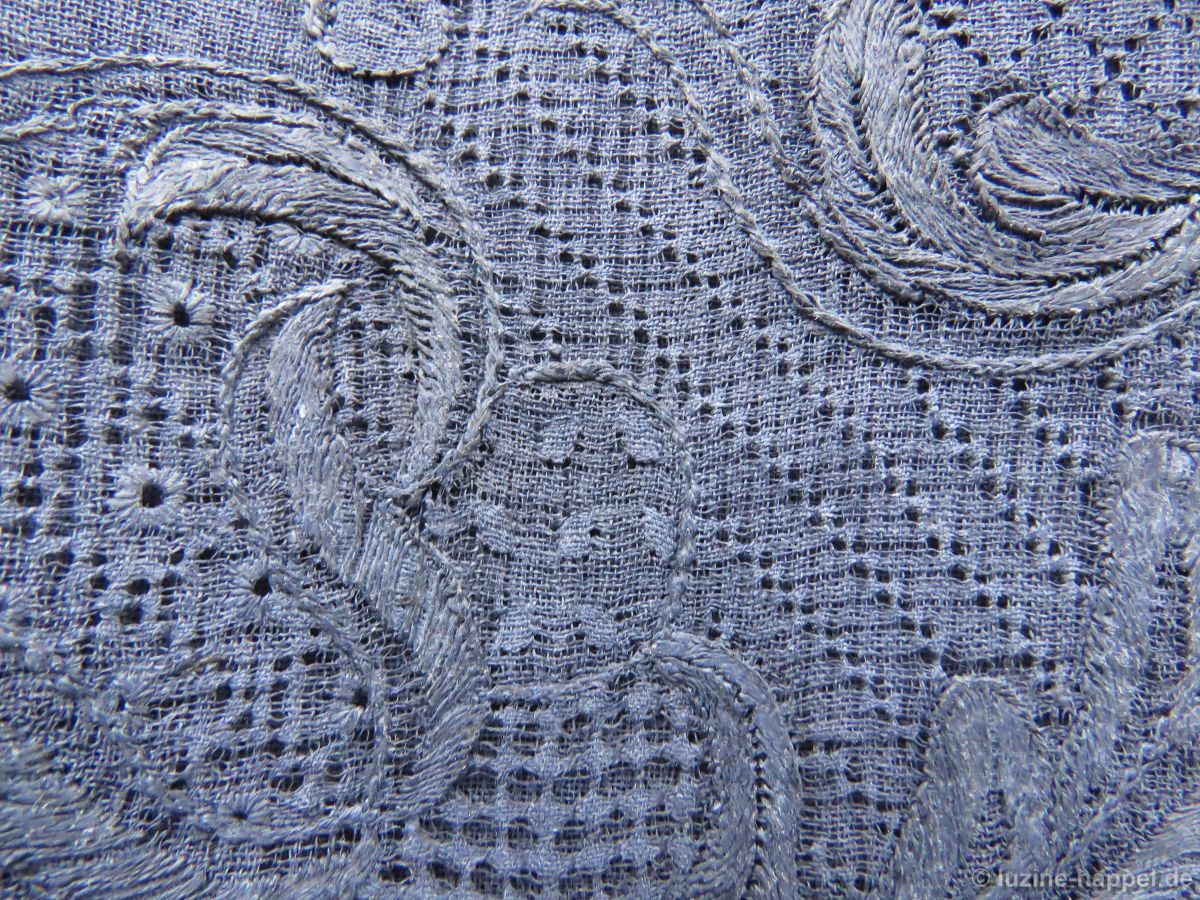
In the Schwalm, the motif areas initially became clearer.
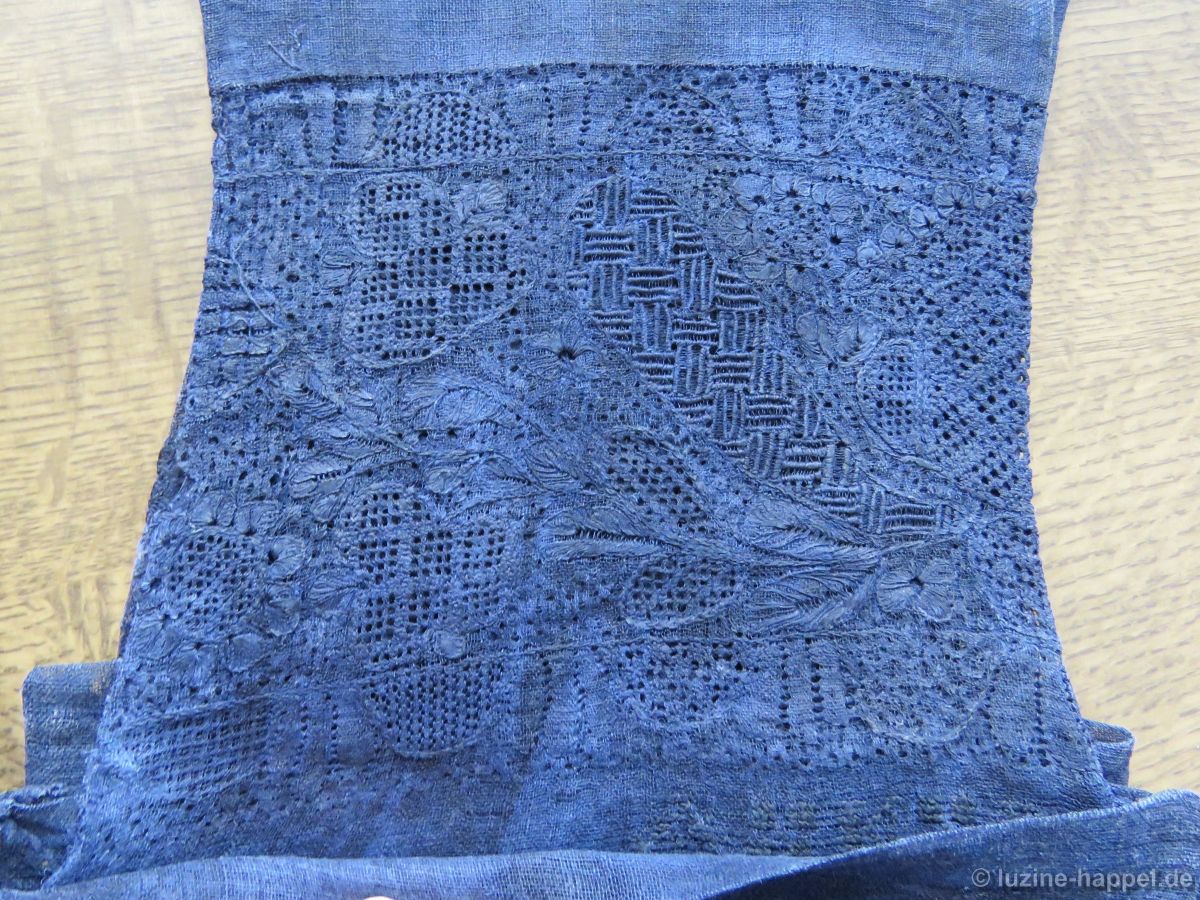
and its outlines gradually changed.
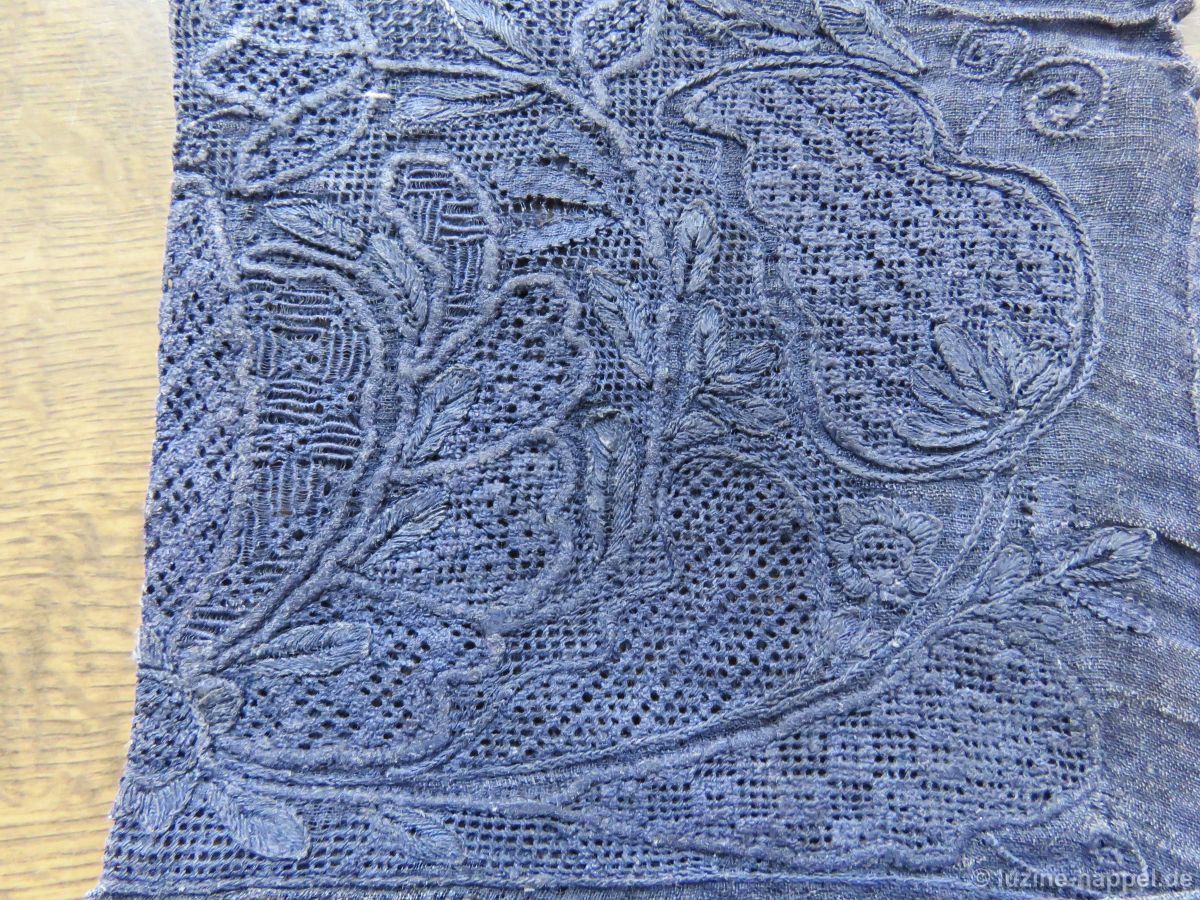
Satin stitch and blanket stitch disappeared – as could already be seen in the Schwalm bodice sleeve (1).
The pattern stitches were embroidered without spaces and resembled the area-filling patterns used in Schwalm whitework.
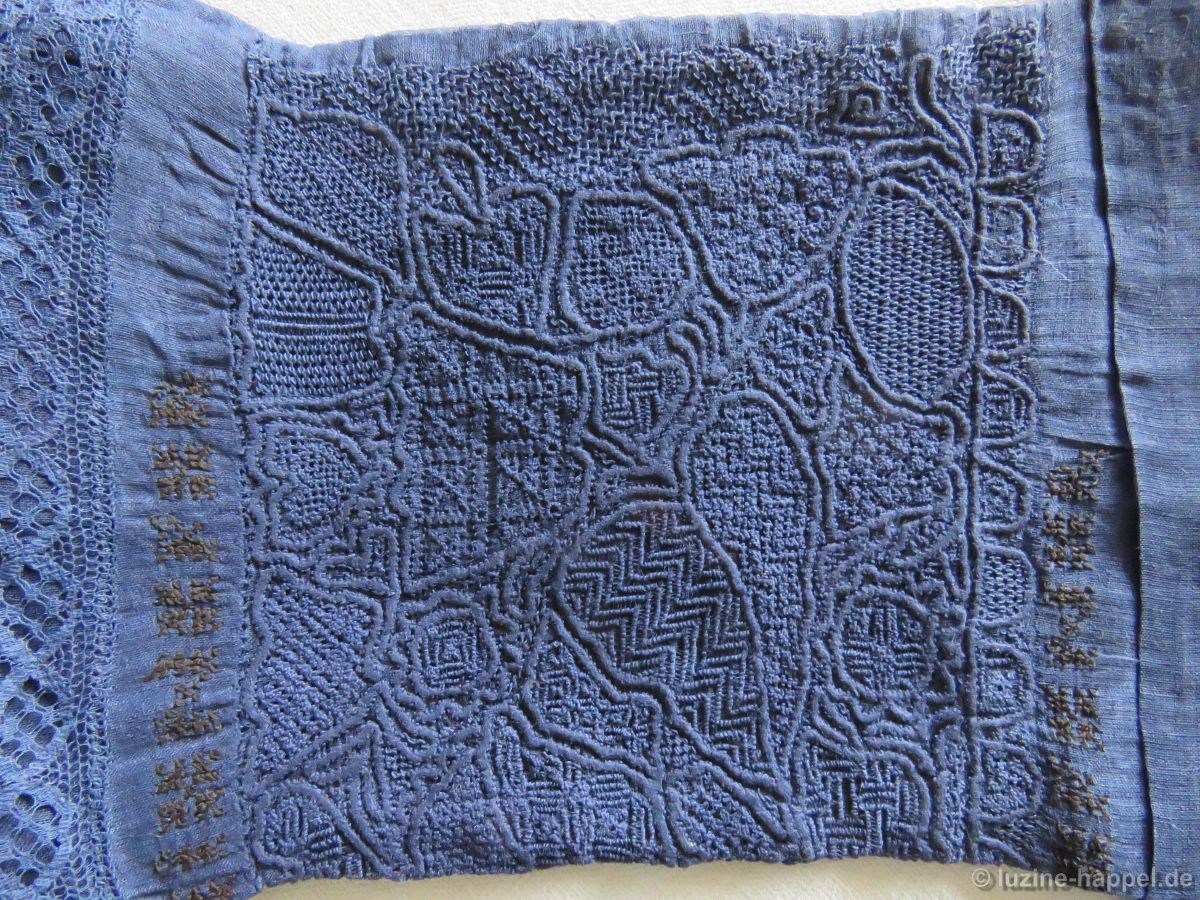
Tendrils were used.
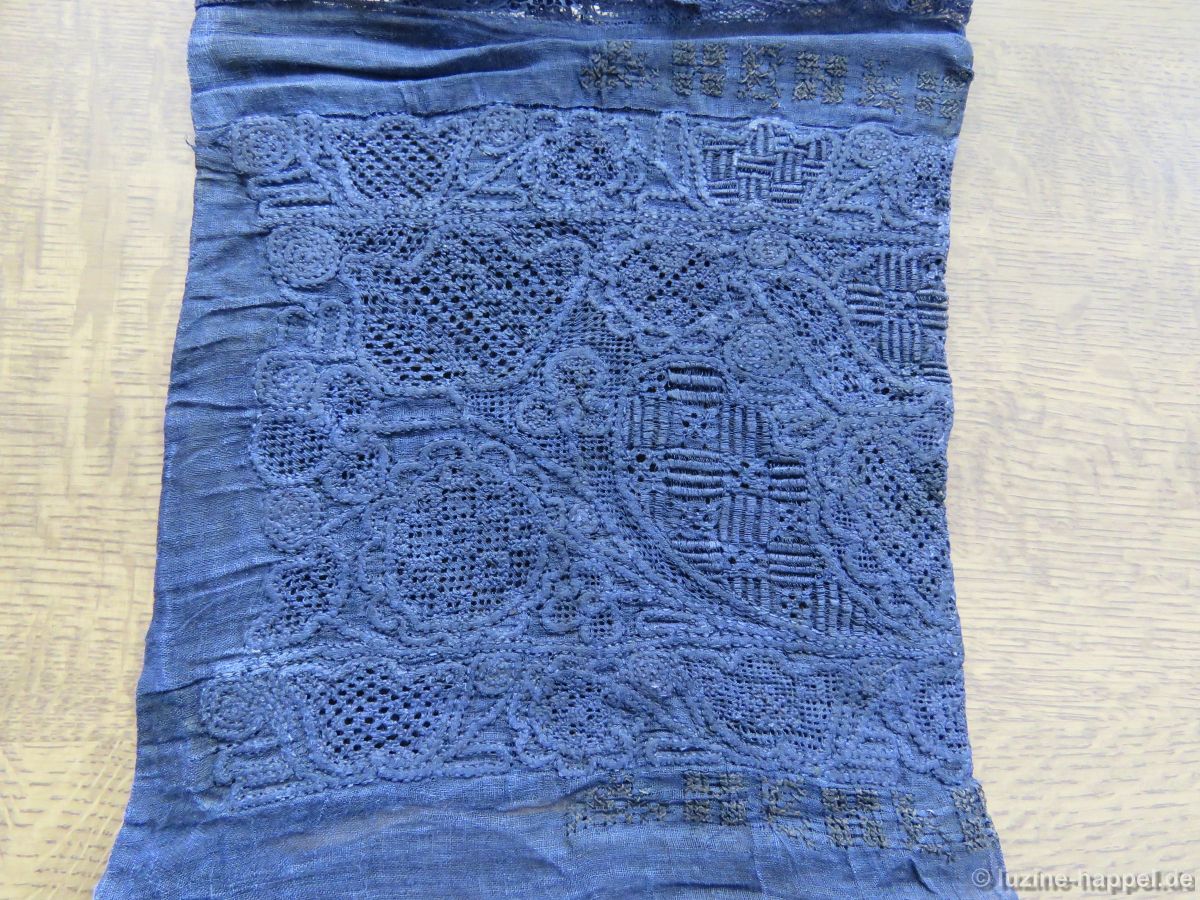
The motifs became even simpler and more understated,
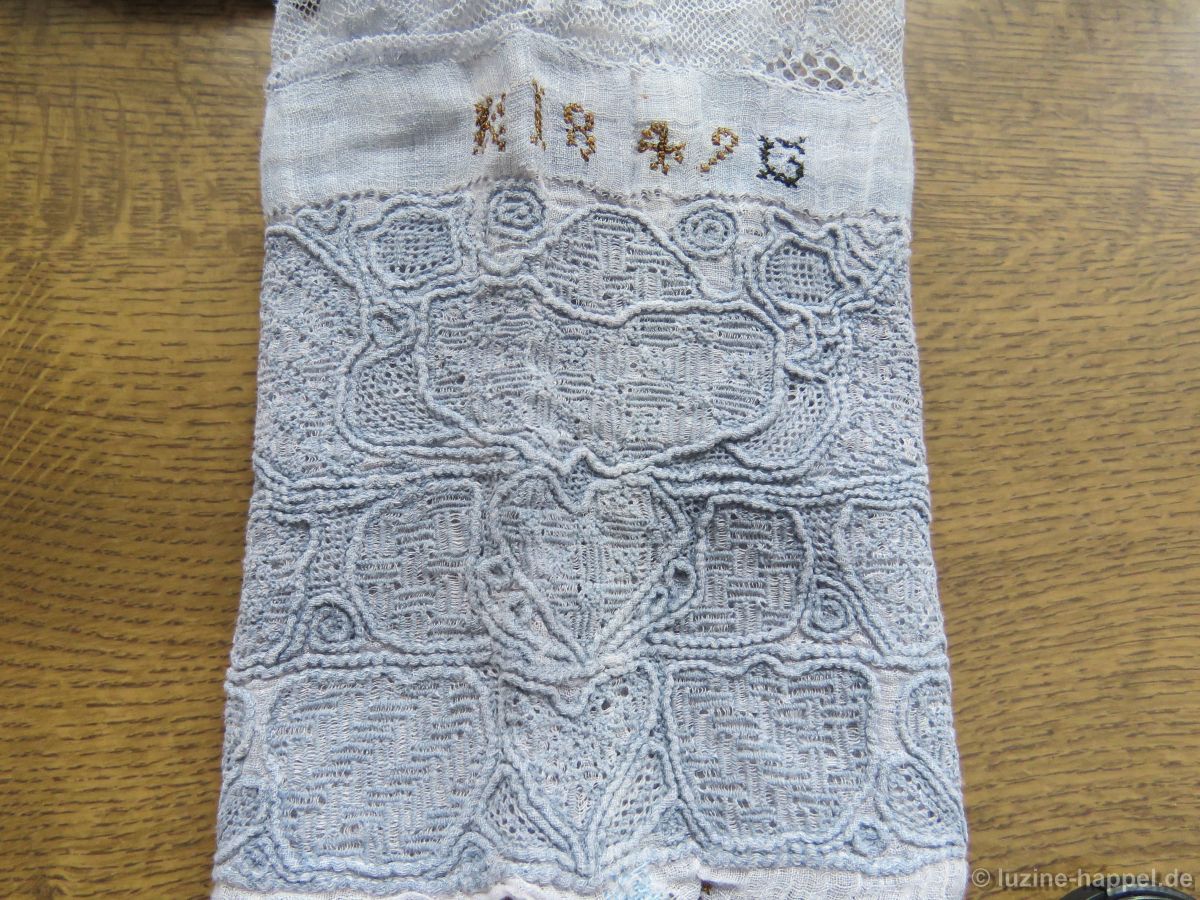
the designs are more loosened.
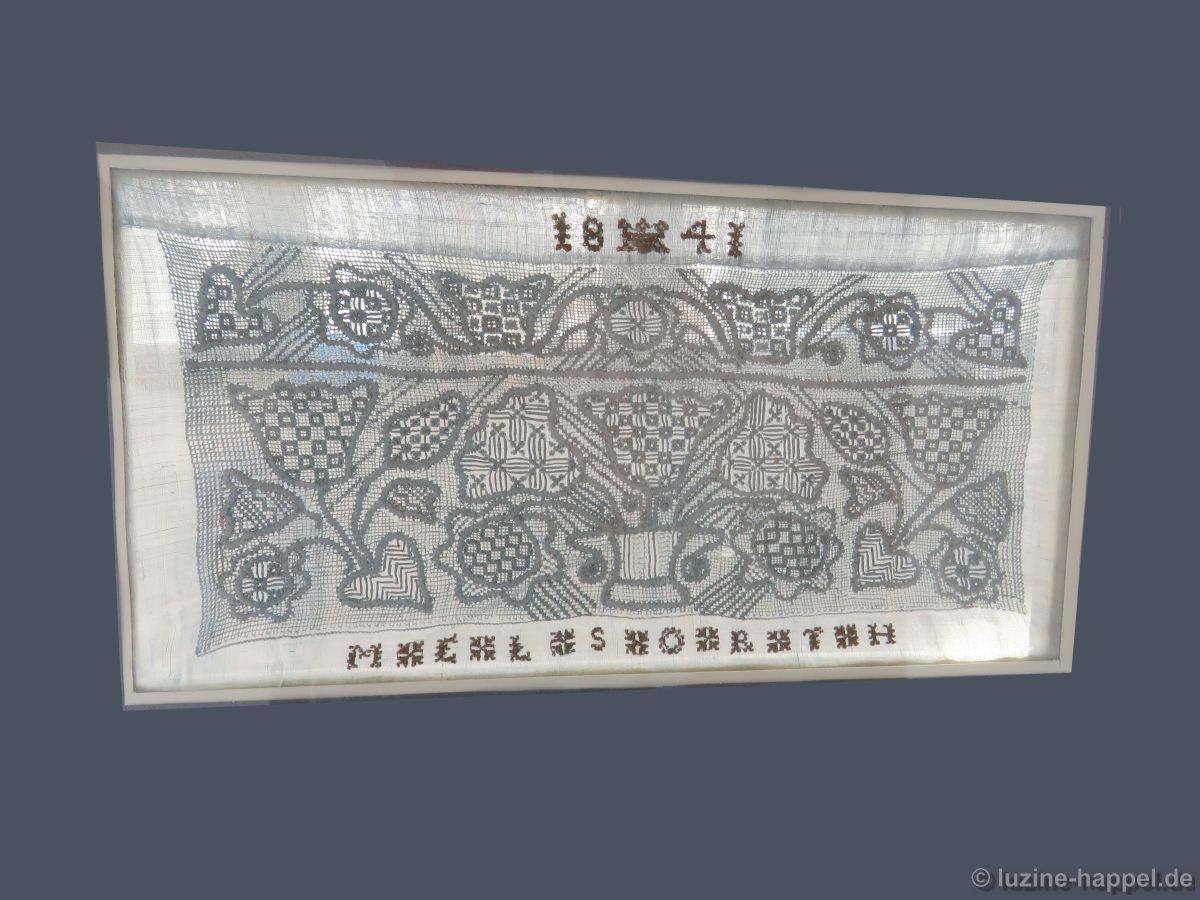
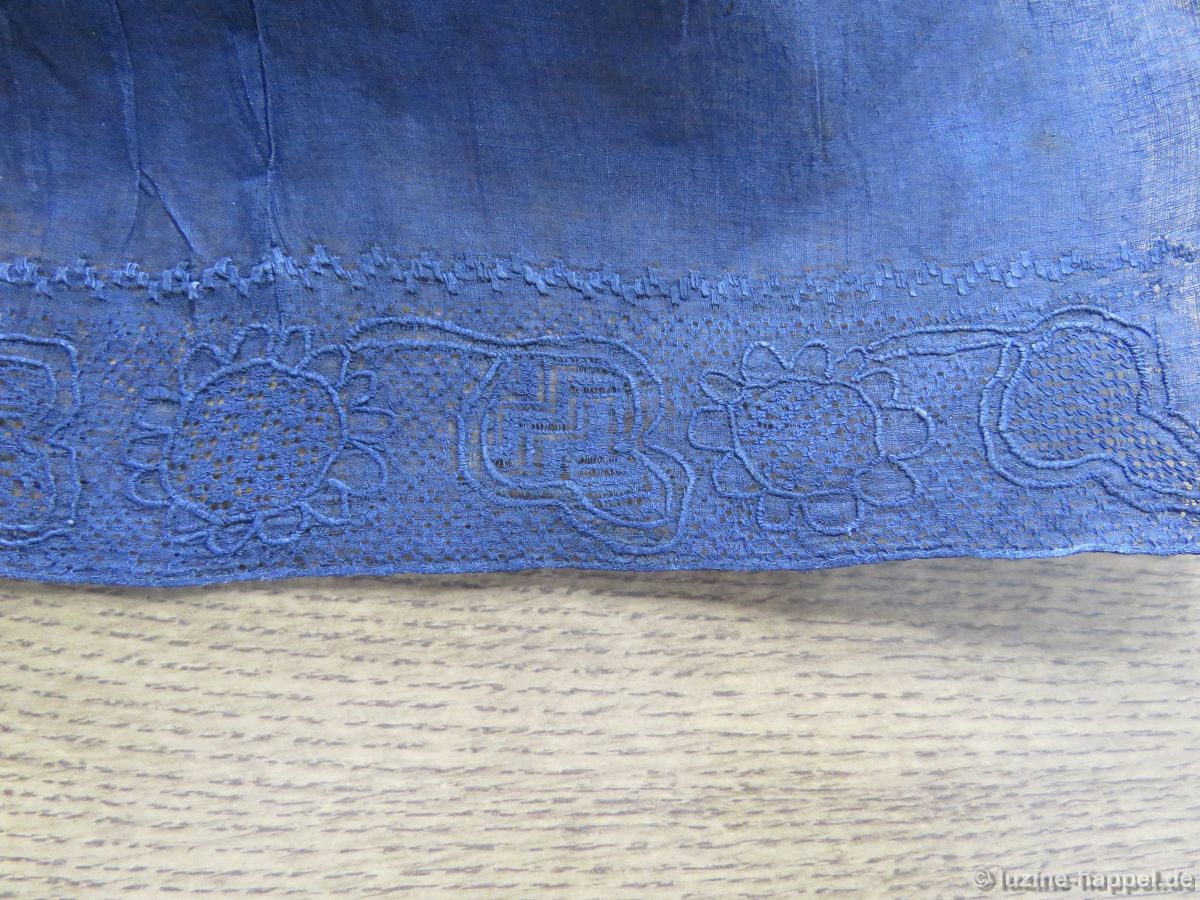
Then the background stitches between the motifs also disappear.
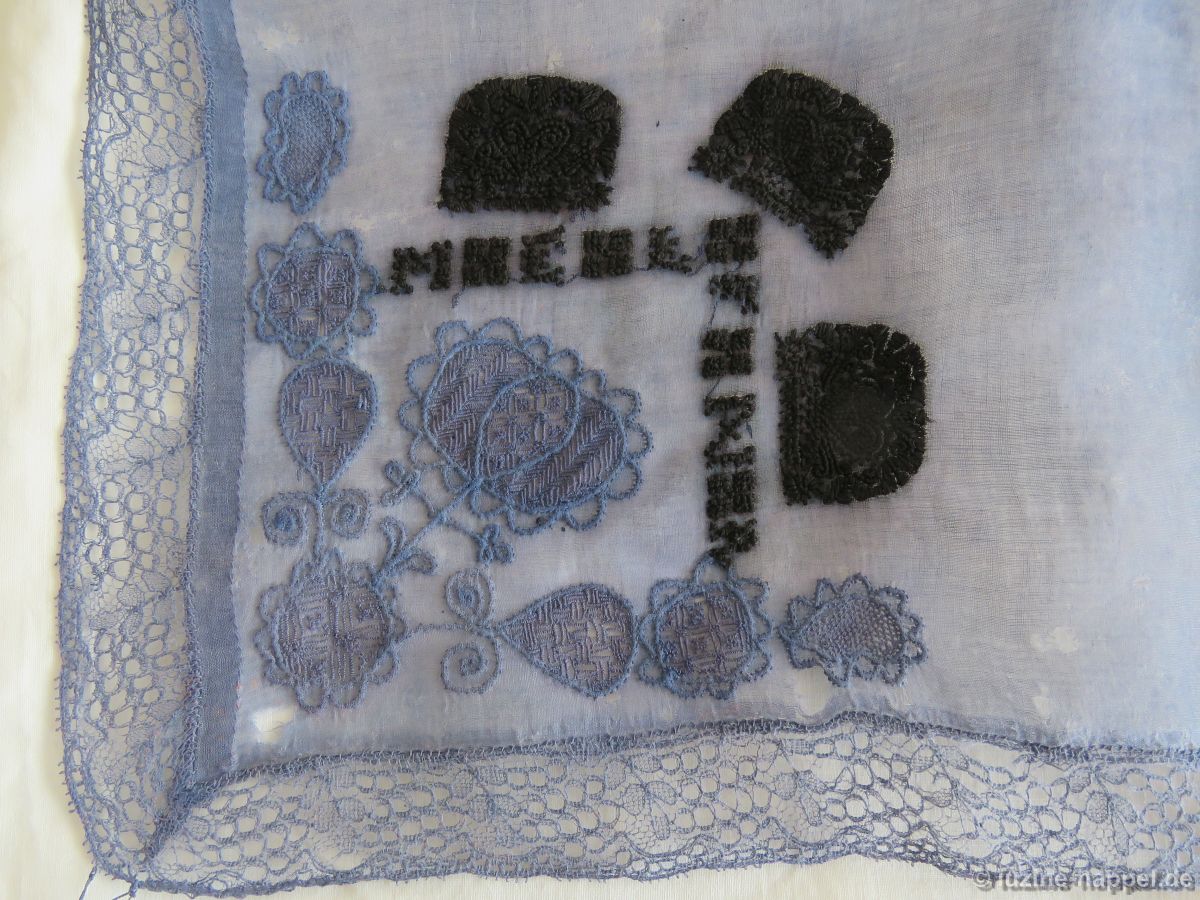
Later, the use of this delicate lace batiste was discontinued for the blue bodices, and thus also the use of Schwalm lace (pulled thread embroidery).
Instead, hand-woven and mostly home-woven linen was used, which was decorated with Schwalm white work (withdrawn thread embroidery) and dyed blue. This was because the densely woven linen was significantly more robust and durable.
Schwalm lace was embroidered only on the blue-dyed parts of the traditional costume – bodice sleeves, bodices, parade handkerchiefs, and bonnets.
In addition, from the end of the 18th century onward, Schwalm white work was used on bed coverings, parade cushions, and door hangings.
See also:
Traditional Schwalm Door Hangings r
Transition from Early to Later Schwalm Whitework (1)
Transition from Early to Later Schwalm Whitework (2)
Schwalm Parade Cushion Border (A)
Traditional Schwalm Bodice (D) Embroidery
If you would like to try making Schwalm or Dresden lace yourself, you can use Weddigen linen #121. It has 20 threads per cm, but its open structure makes it easy to count.
If needed, you can purchase this quality of linen from me.
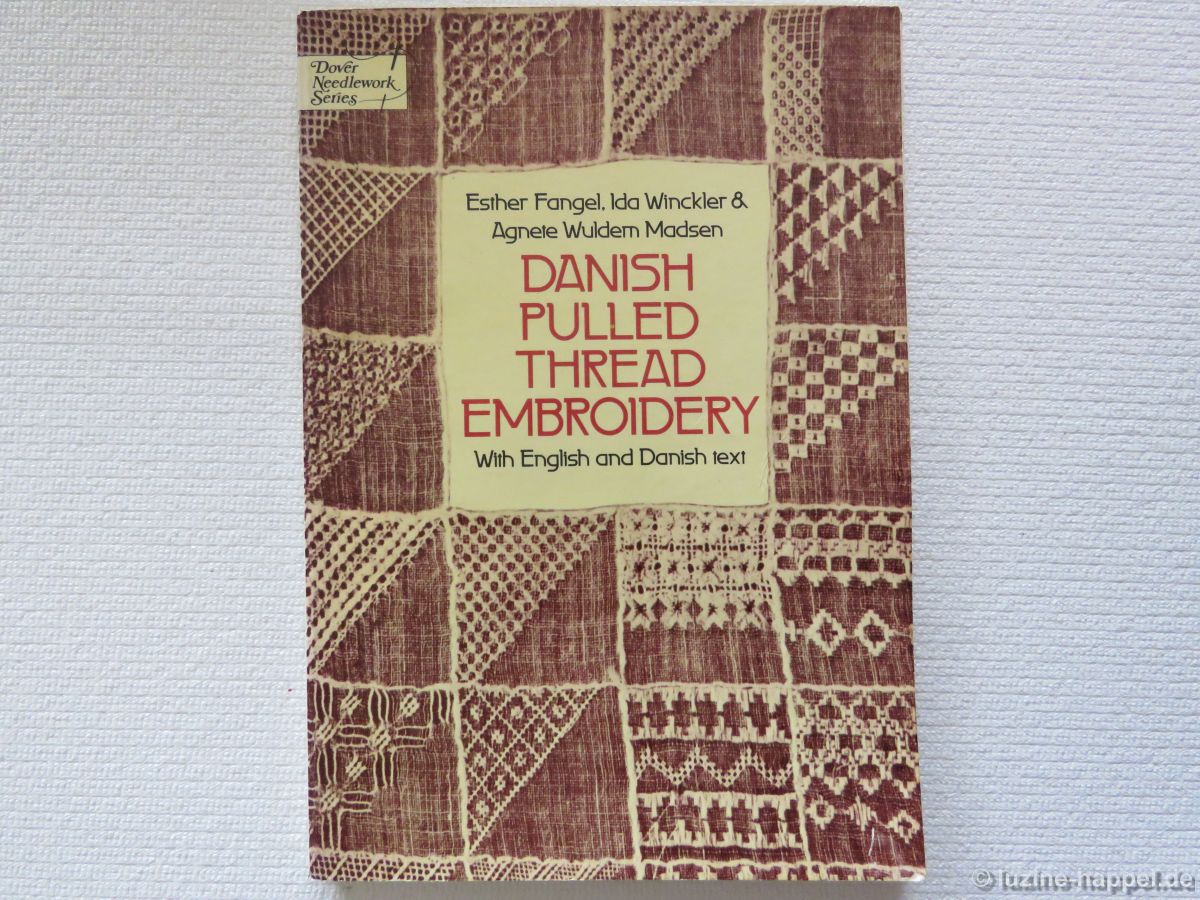
45 pulled thread patterns can be found in “Danish Pulled Thread Embroidery” by Esther Fangel, Ida Winckler and Agnete Wulderm Madsen.
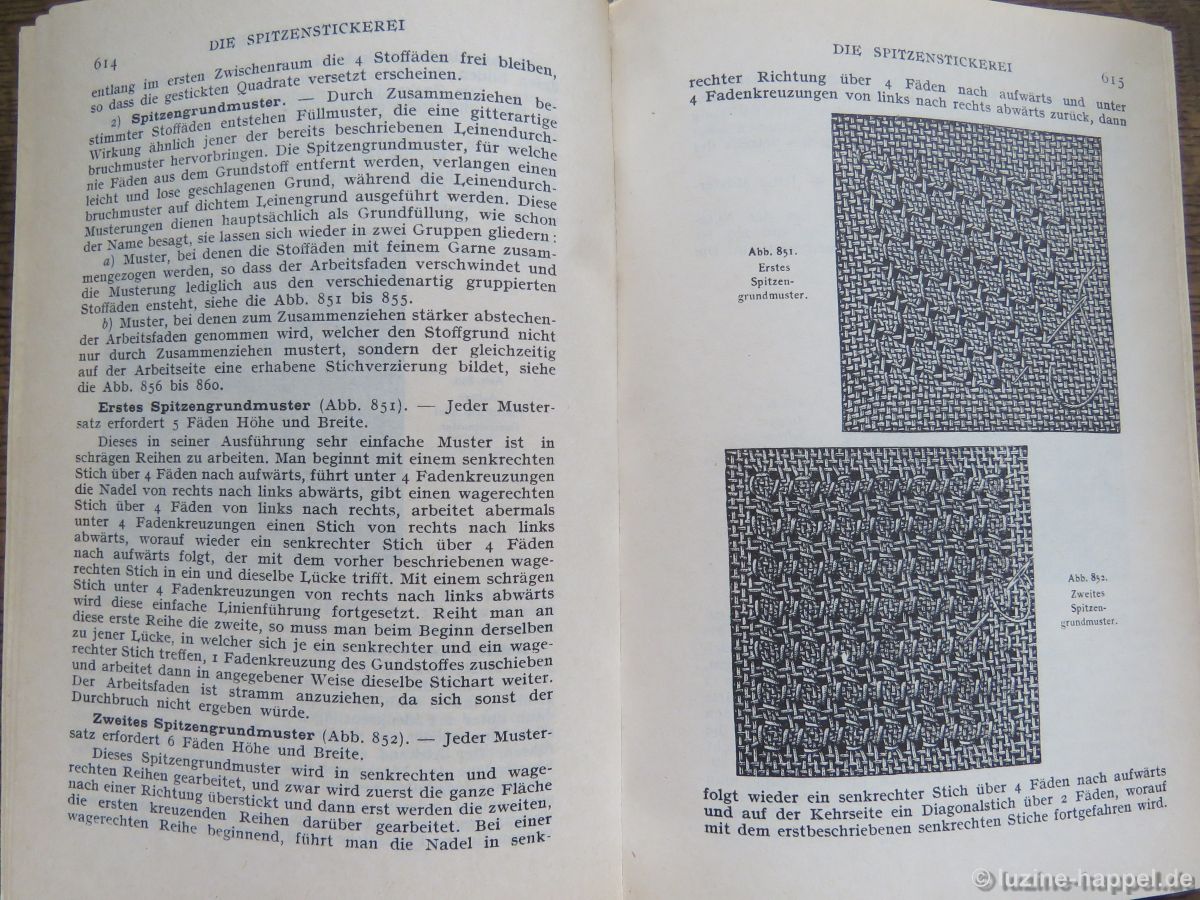
Thérèse de Dillmont shows 17 basic lace patterns in her encyclopedia of needlework.
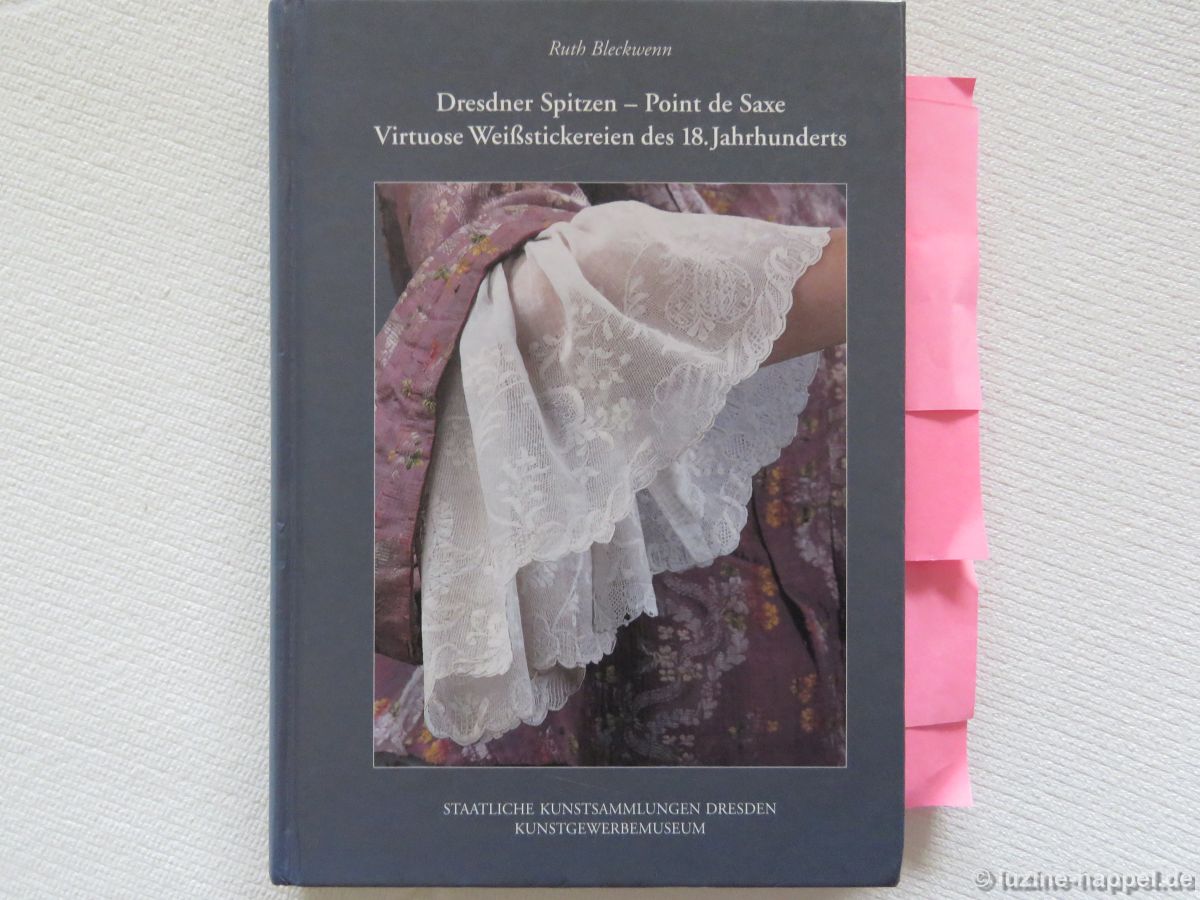
17 pulled thread patterns in work samples and embroidery schemes can also be found in Ruth Bleckwenn’s “Dresdner Spitze – Point de Saxe”.
In pulled thread or lace embroidery, stitches can be offset according to each thread of the fabric. However in withdrawn thread embroidery, one must orient oneself to the grid pattern created by the thread withdrawing. This allows lace embroidery to offer a much wider variety of patterns, which often appear less severely.

bellissimi ricami