

The 13 basic stitches of Schwalm whitework
A. The filling stitches
While the decorative stitches did not have to align with the position of the fabric threads, the filling stitches are thread-bound, i.e., they are oriented to the position and number of fabric threads.
To improve the results, threads are removed from the densly woven fabric to be embroidered. For simple withdrawn thread patterns, this is every fourth thread in one direction – either horizontally or vertically. For Limet withdrawn thread patterns, every fourth thread is usually removed both horizontally and vertically. For openwork patterns, threads are withdrawn in pairs between each pair of remaining threads – both horizontally and vertically.
5. The Satin Stitch
The satin stitch is the easiest filling stitch to work. It is similar to the decorative satin stitch, but unlike this satin stitch, it follows the position of the fabric threads.
It is used both as a simple withdrawn thread pattern
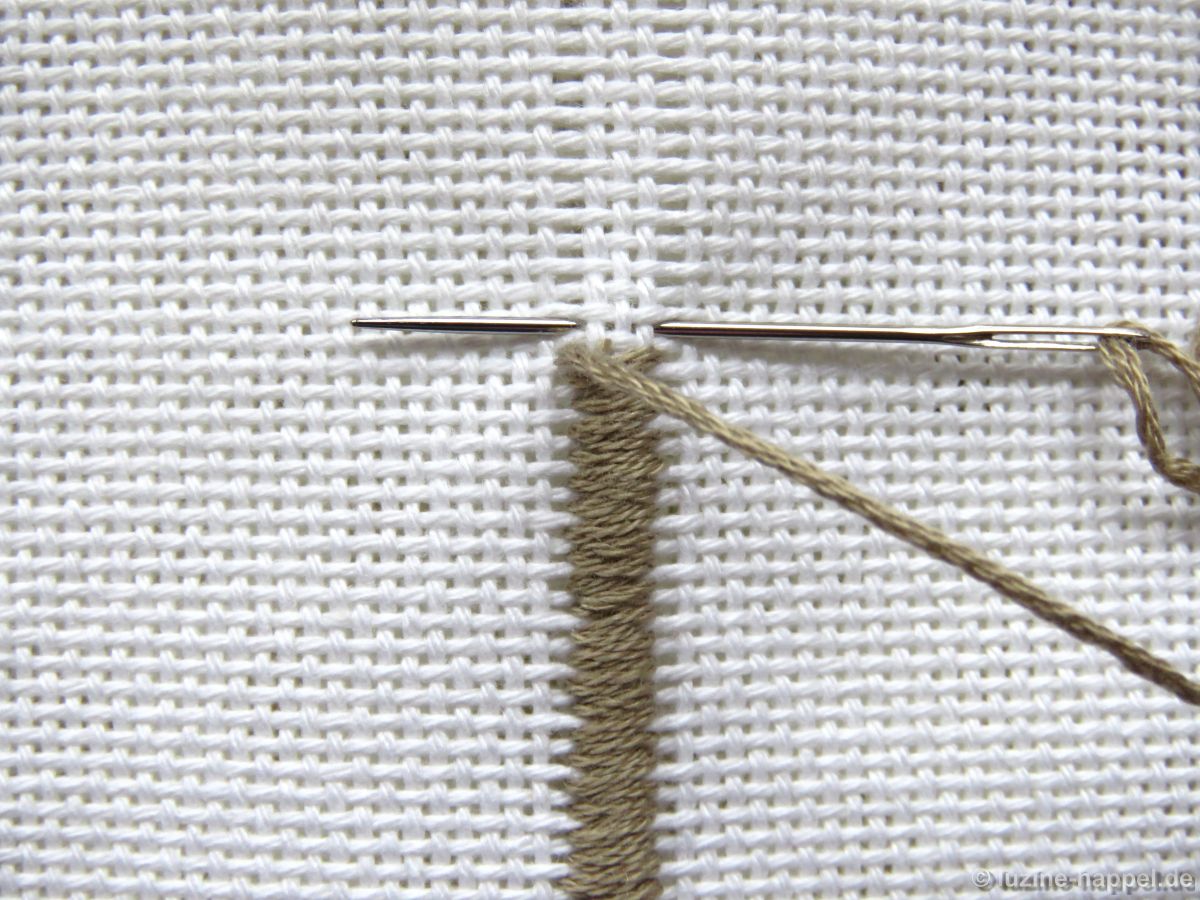
as well as a Limet withdrawn thread pattern.
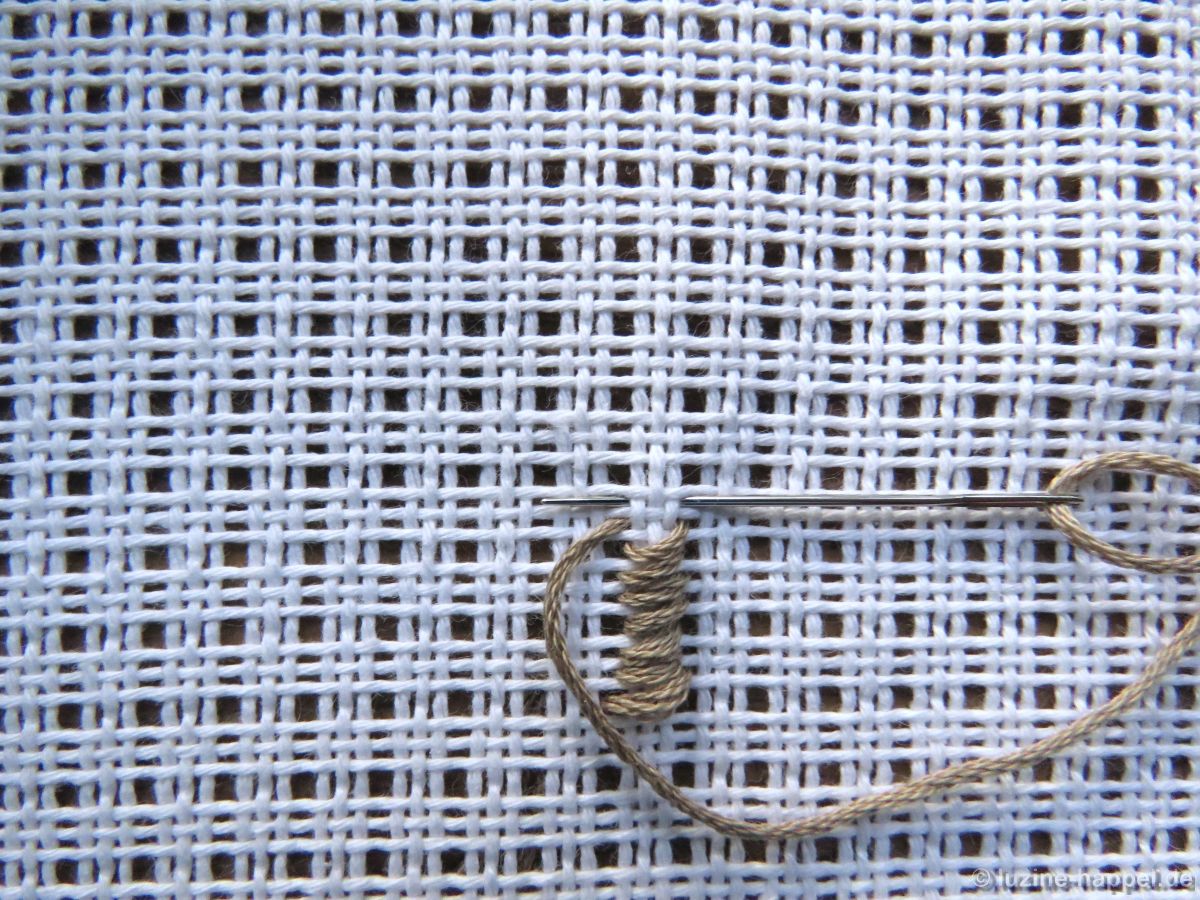
thread weight: depending on the fineness of the linen, coton à broder thread No. 20 or No. 25. To make the satin stitch stand out, one should use the thicker thread.
building the rows: from bottom to top
direction of needle movement: from right to left
way of working: Bring needle up on the left line and and lay the thread in a loop to bottom and right. Cross over one fabric thread to top and three fabric threads to the right and insert needle. Cross under the three fabric threads to the left and bring needle up one fabric thread to top of the previous emerging point.
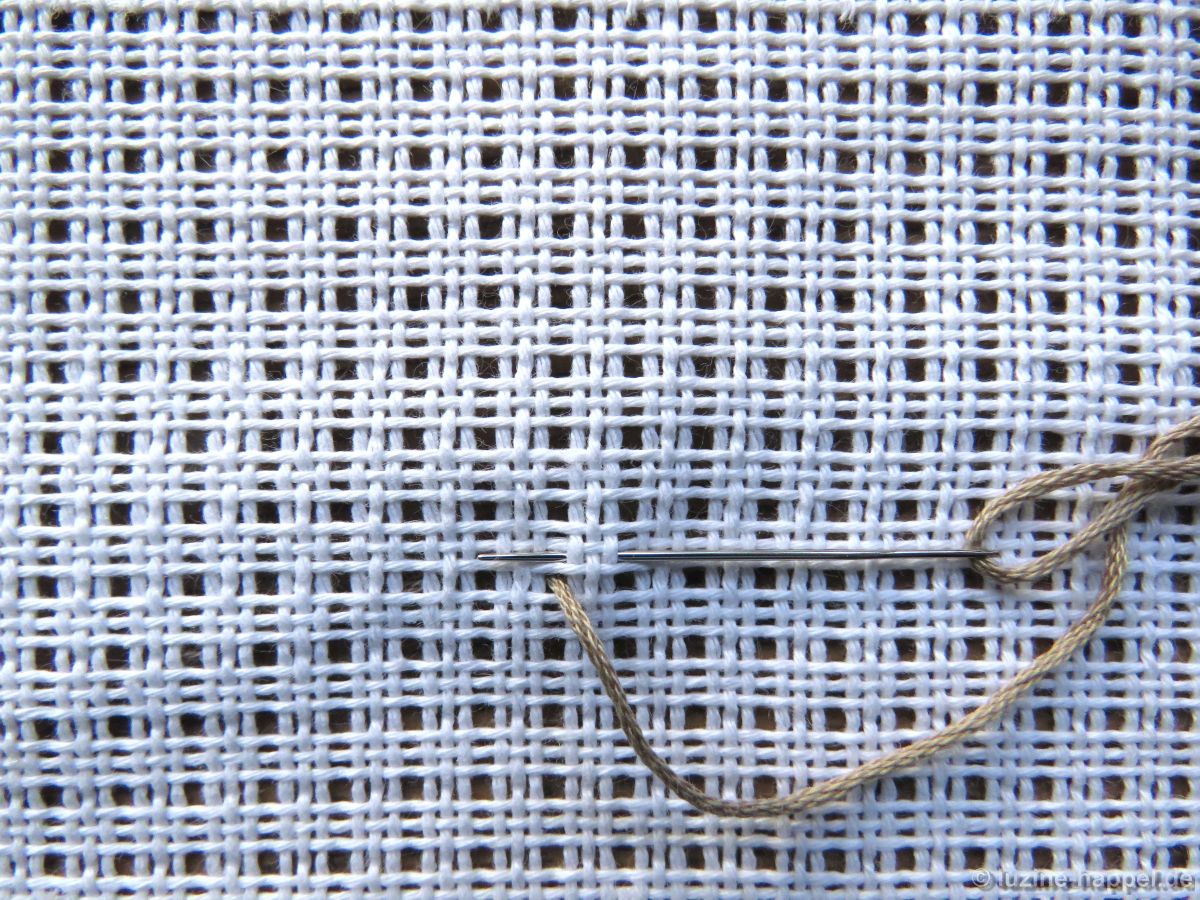
Pull the needle through and the thread to the left. The working thread should be taut, but the fabric threads should not be pulled together.
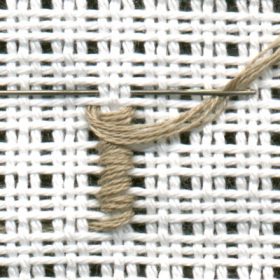
In simple withdrawn thread patterns, continuous rows, the so-called “bars”, are embroidered using this method (see image at the very top).
In Limet withdrawn thread patterns, such bar sections can be assembled into blocks,
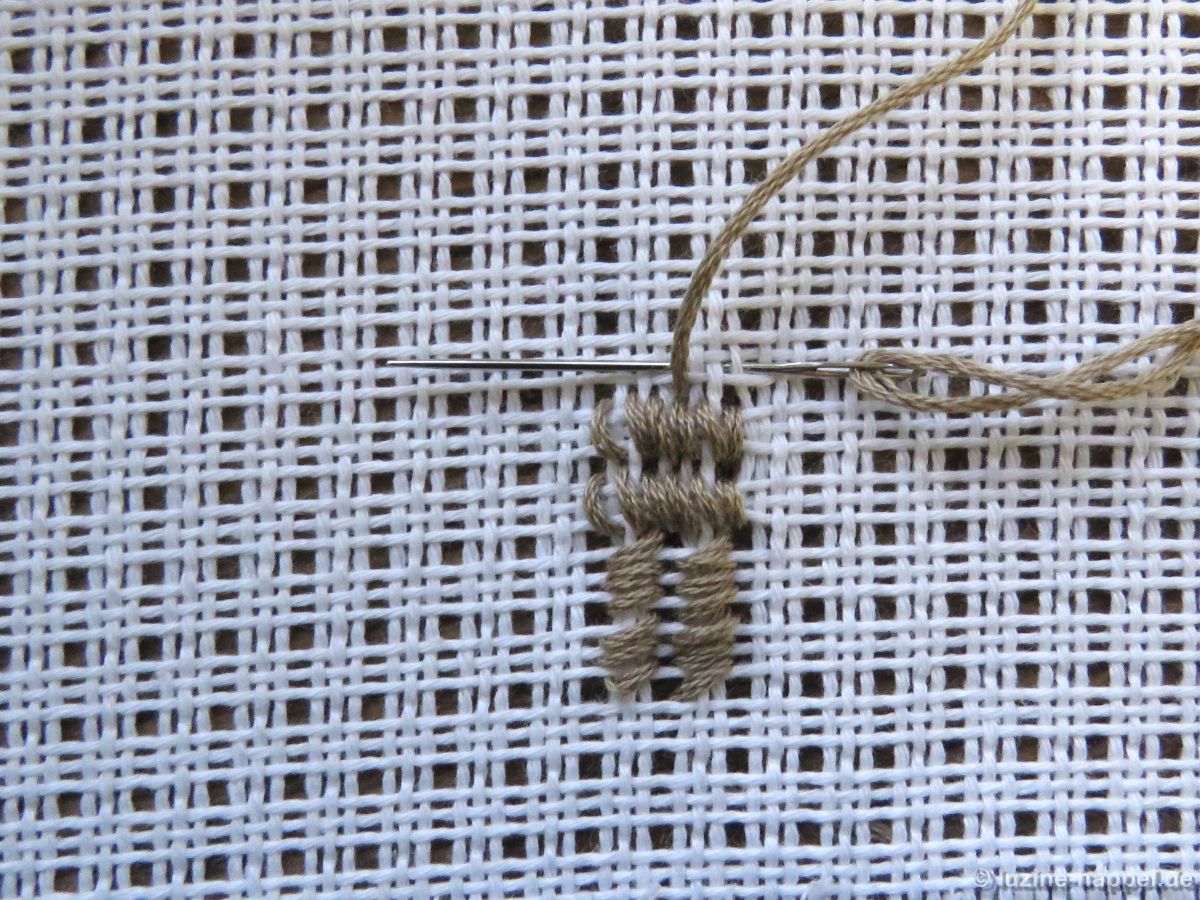
stair-like
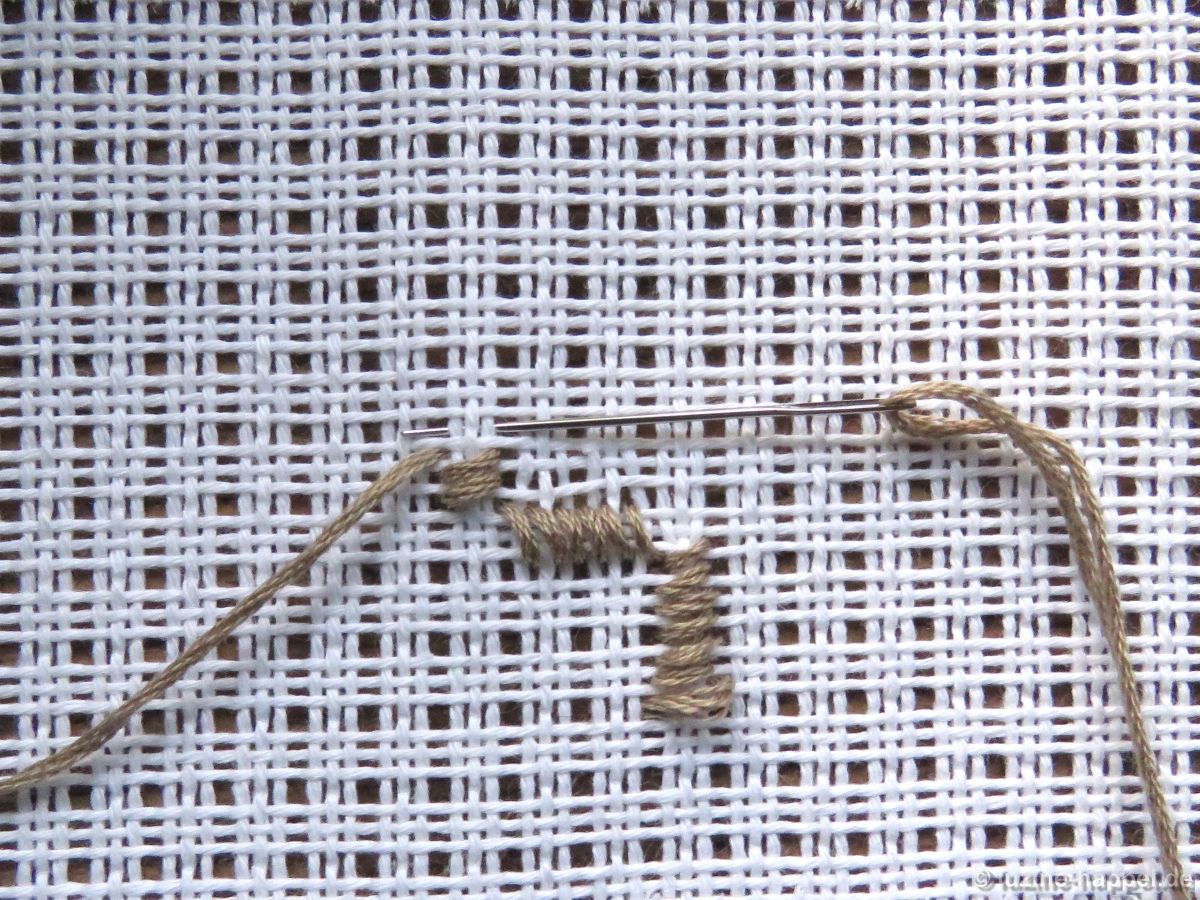
or they can be worked in a stair-like manner and offset from each other, so that squares are formed – the so-called “fields”.
Satin stitches can also be stitched across two squares (6 fabric threads) in width to create further patterns.
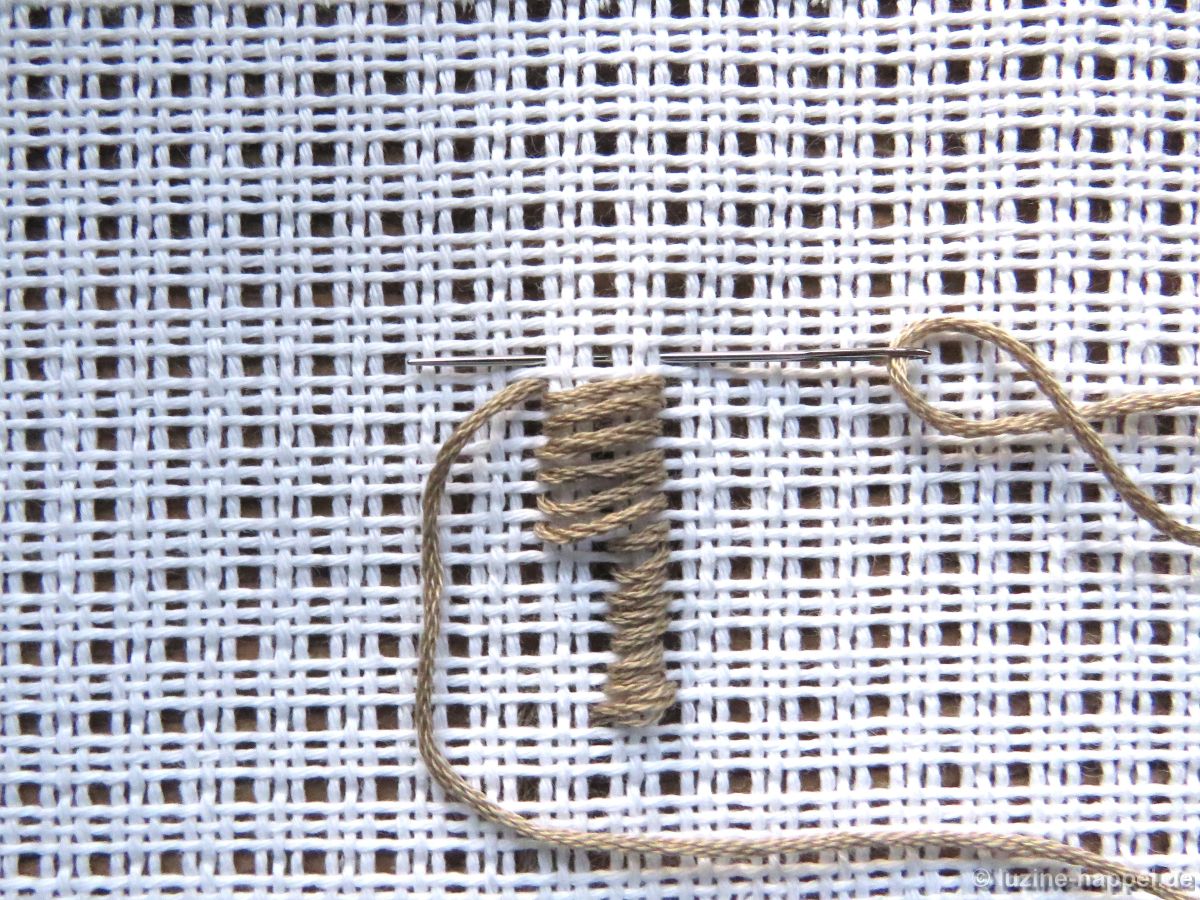
Thanks to all these design possibilities, the satin stitch is an extremely versatile stitch that can be used to achieve a wide variety of effects. My book, Wickelstiche, shows 84 different area filling patterns consisting solely of satin stitches.
Die Kombination von Wickelstichen mit anderen Stichen schafft eine riesige Mustervielfalt. Einige davon kann man in meinem Blog finden:
Filling Pattern No. 444
Filling Pattern No. 446
Filling Pattern No. 447
Filling Pattern No. 448
Filling Pattern No. 450
Filling Pattern No. 451
Filling Pattern No. 469
Filling Pattern No. 472
Filling Pattern No. 473
Filling Pattern No. 480
Filling Pattern No. 548
Filling Pattern No. 552
Filling Pattern No. 573
Filling Pattern No. 577
Filling Pattern No. 580
Eine Wickelstichbesonderheit bietet
Filling Pattern No. 570
For further explanation:
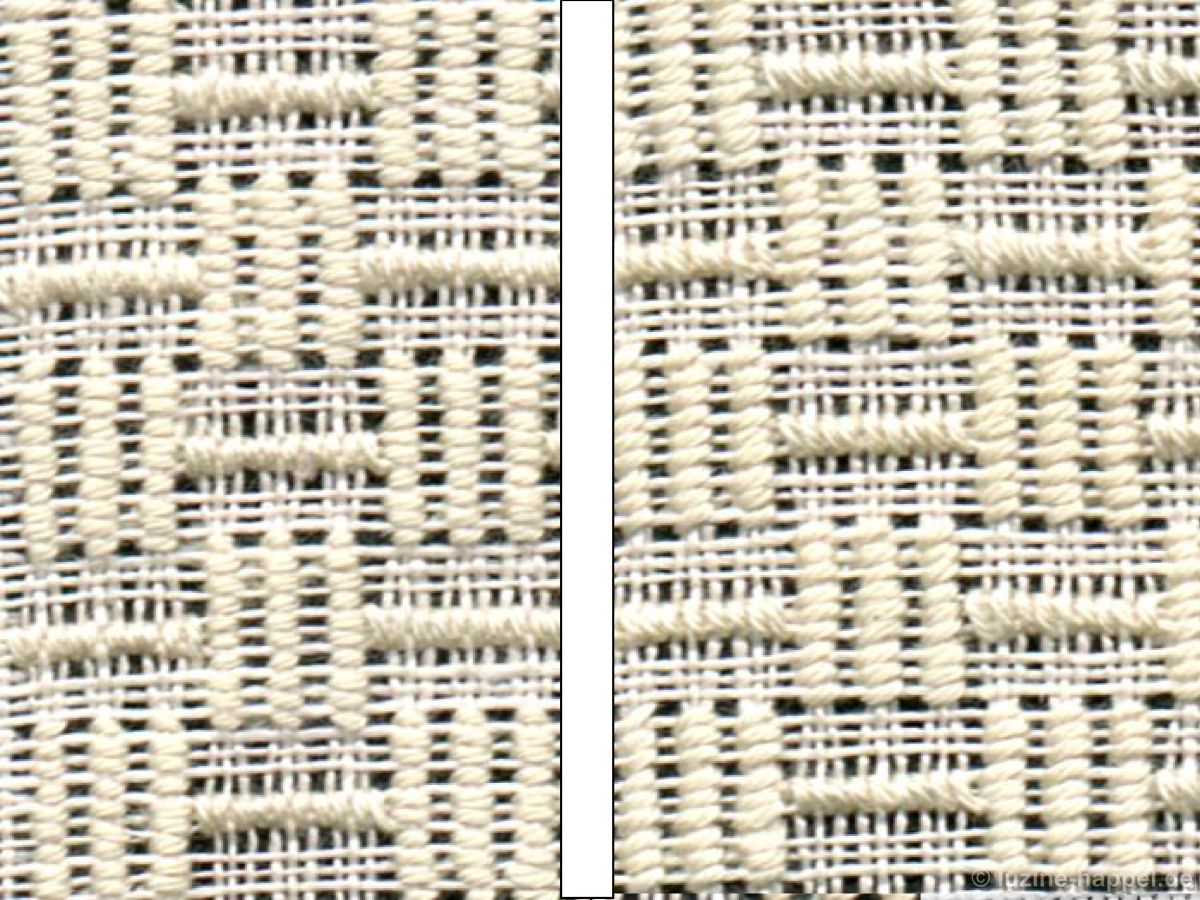
Unlike the use of satin stitches in pulled thread embroidery (left in the image below), in withdrawn thread patterns (right in the image below), the working thread is moved diagonally over each fabric thread, as described above. This is because in pulled thread embroidery, the effect is created by pulling together the fabric threads, while in withdrawn thread patterns, the working thread is the focal point of the pattern. Due to its diagonal position, it does not sink into the groove between the fabric threads but stands out in three dimensions.

Leave a Reply
You must be logged in to post a comment.