
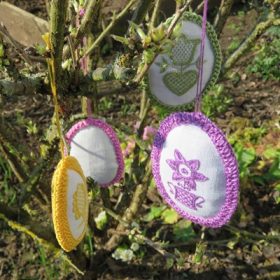
After completing my tests, I calmly and very carefully allowed another egg to develop.
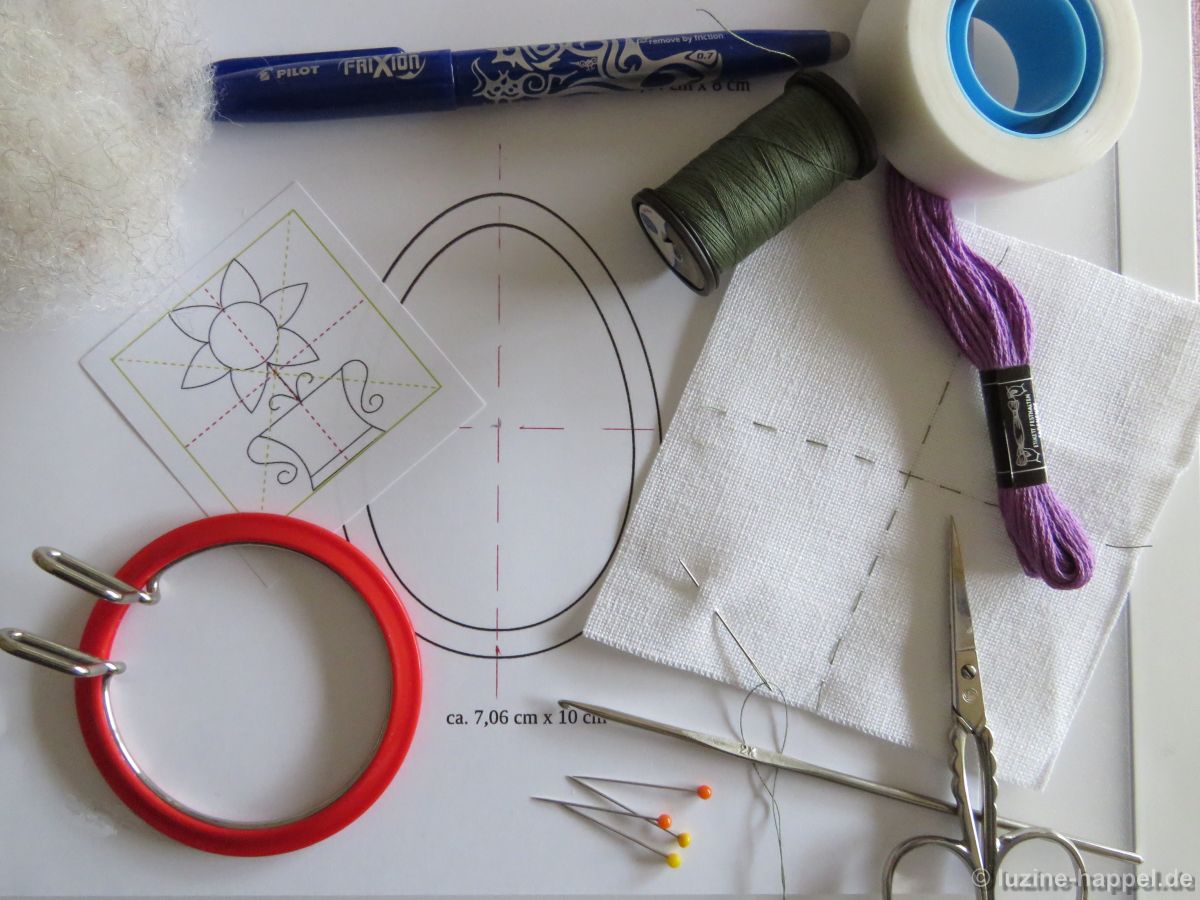
The necessary materials have been gathered.
The central axes were added to the drawing of the egg outline. The egg outline was first attached to a light panel, followed by the drawing of the chosen motif, aligning with the marked central axes and using removable adhesive tape.
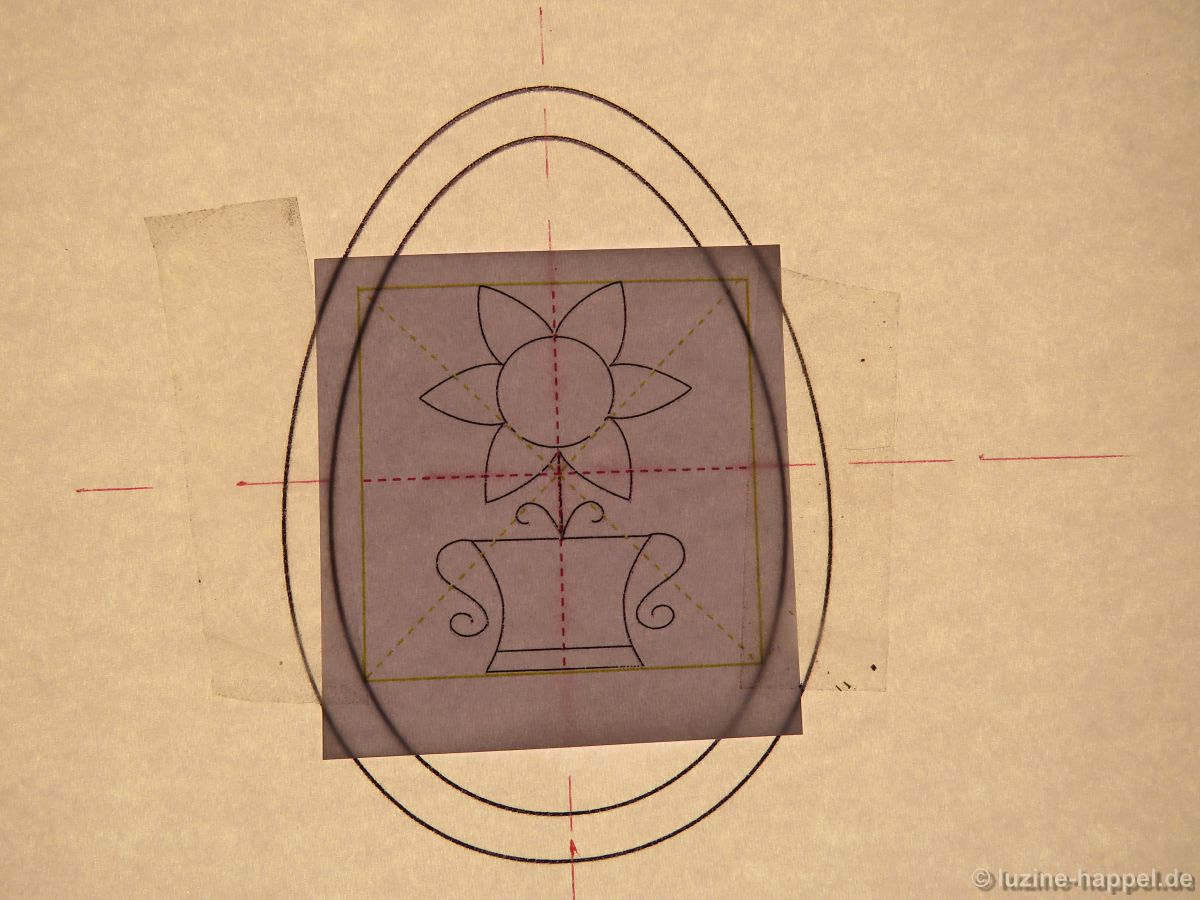
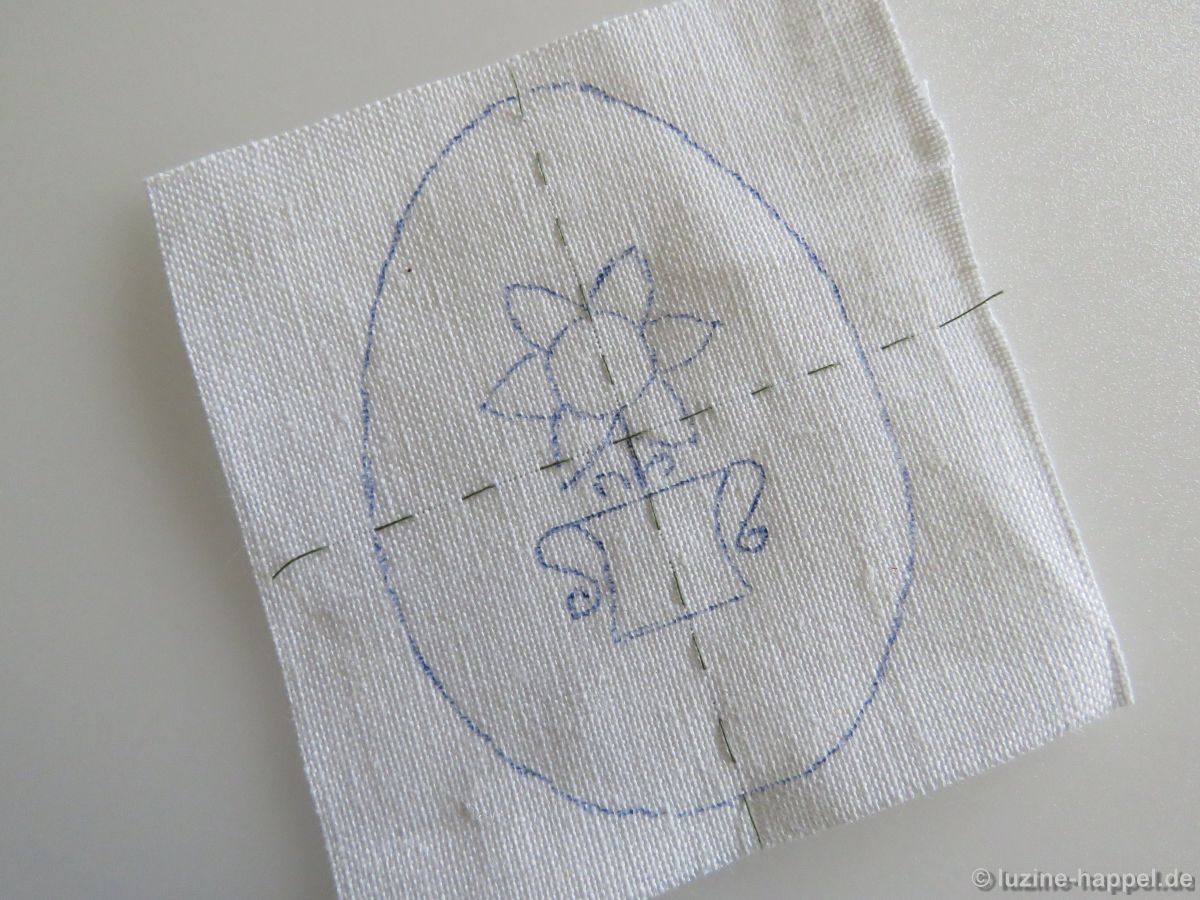
The piece of linen, also marked with center axes, was then attached. (My piece of linen was only about 11 cm x 11 cm. With a slightly larger piece – about 15 cm x 15 cm – the embroidery would have been much easier.)
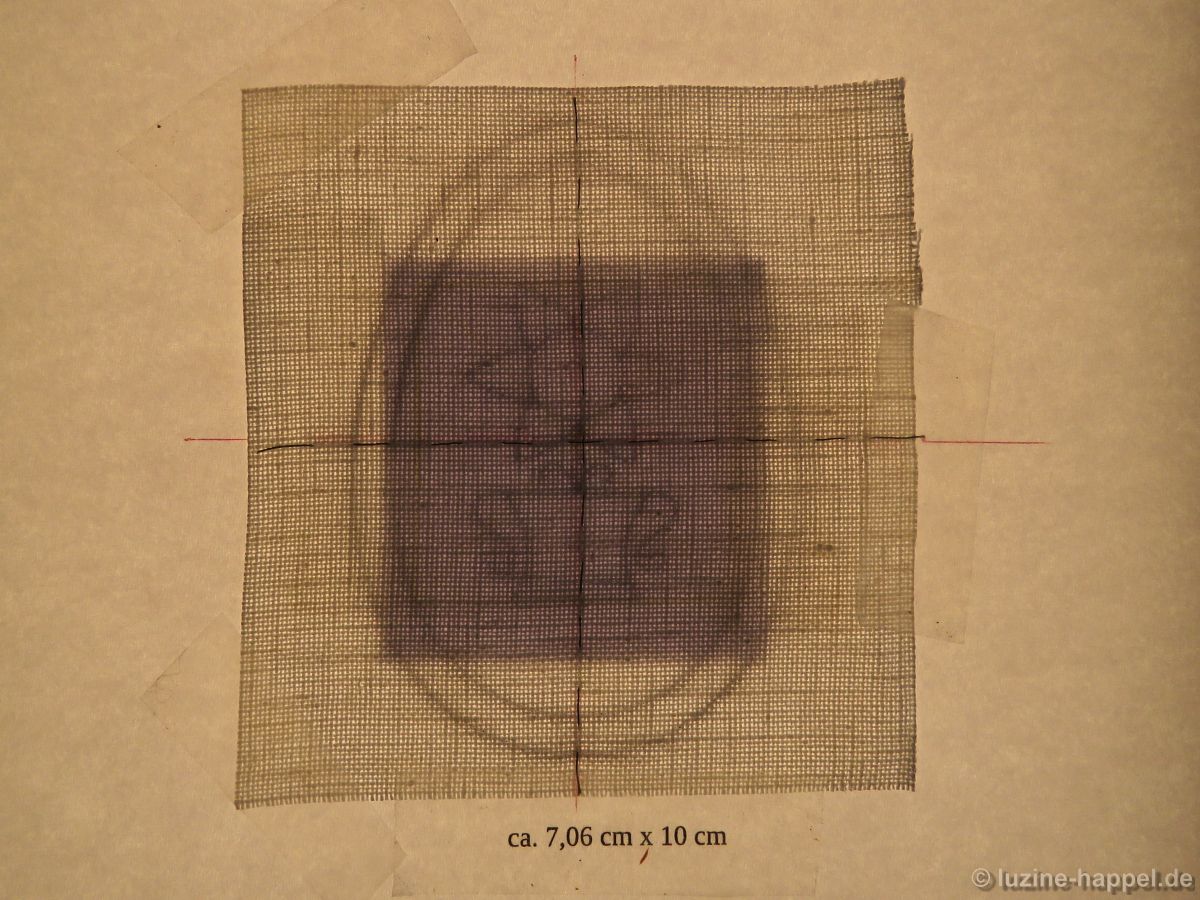
The motif and the outer egg outline were transferred to the linen using a heat-soluble pen.
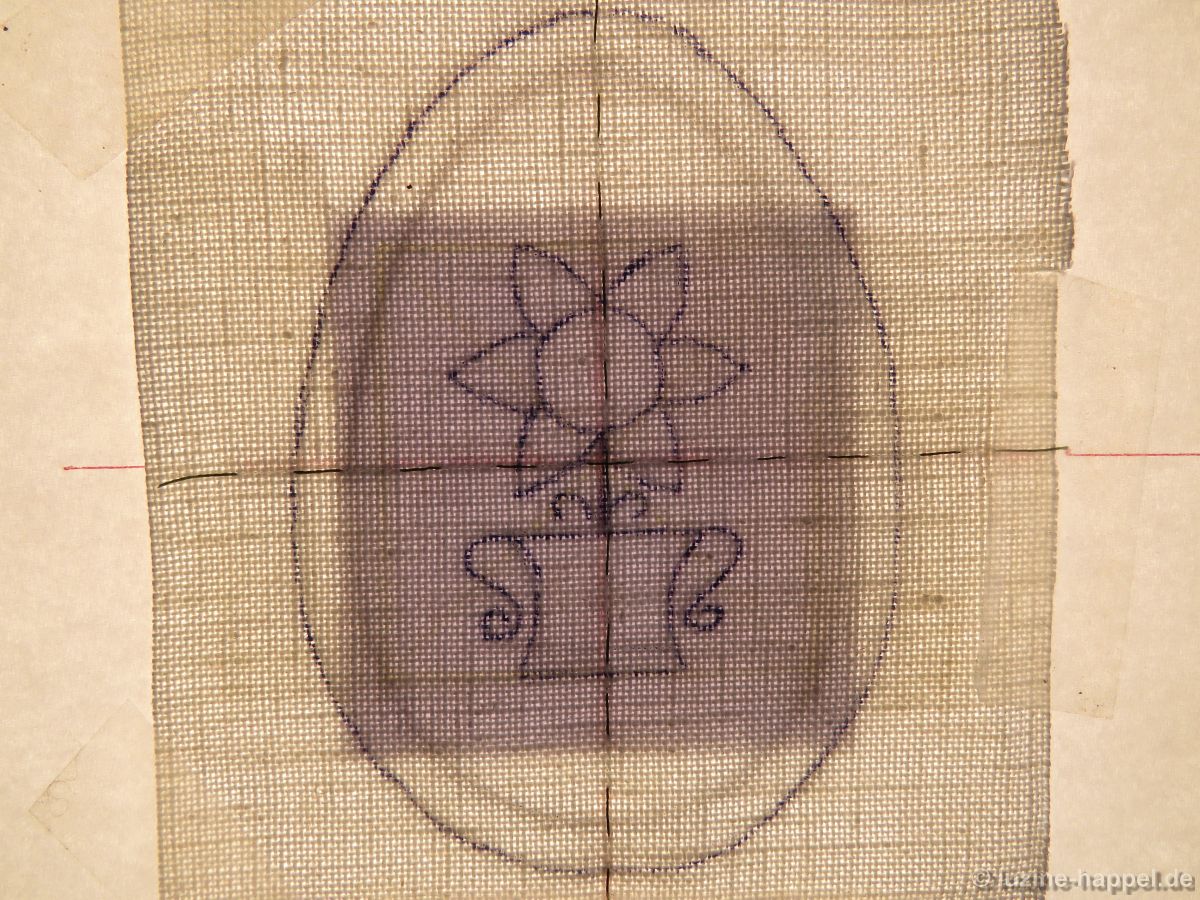
You have to press down hard to get enough ink on the fabric for a clear line. The fine tip of the pen tends to get caught in the grooves between the fabric threads.
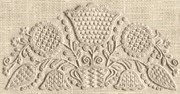
The design was embroidered. For coral knots and blanket stitches, I used two strands of 6-ply stranded cotton; for chain stitches and
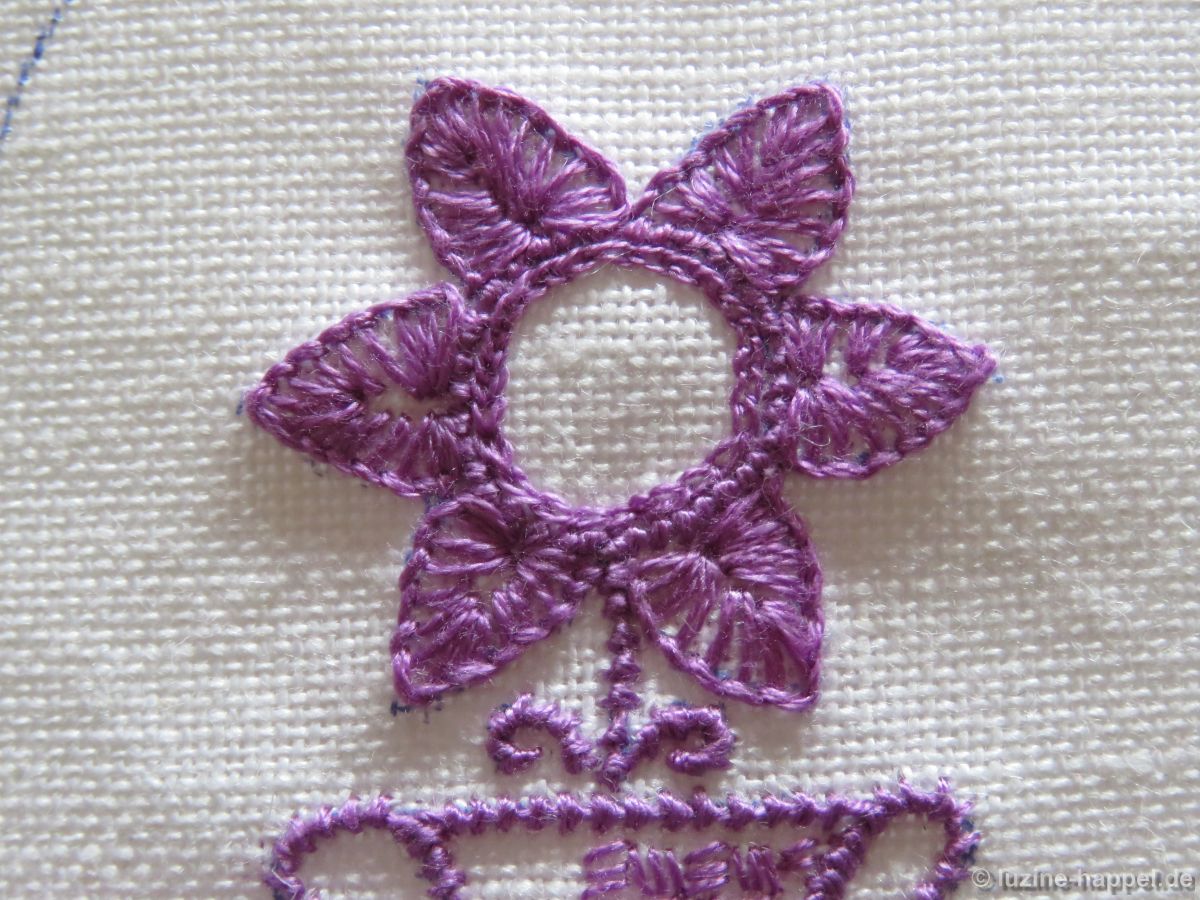
the filling pattern, I used only one strand.
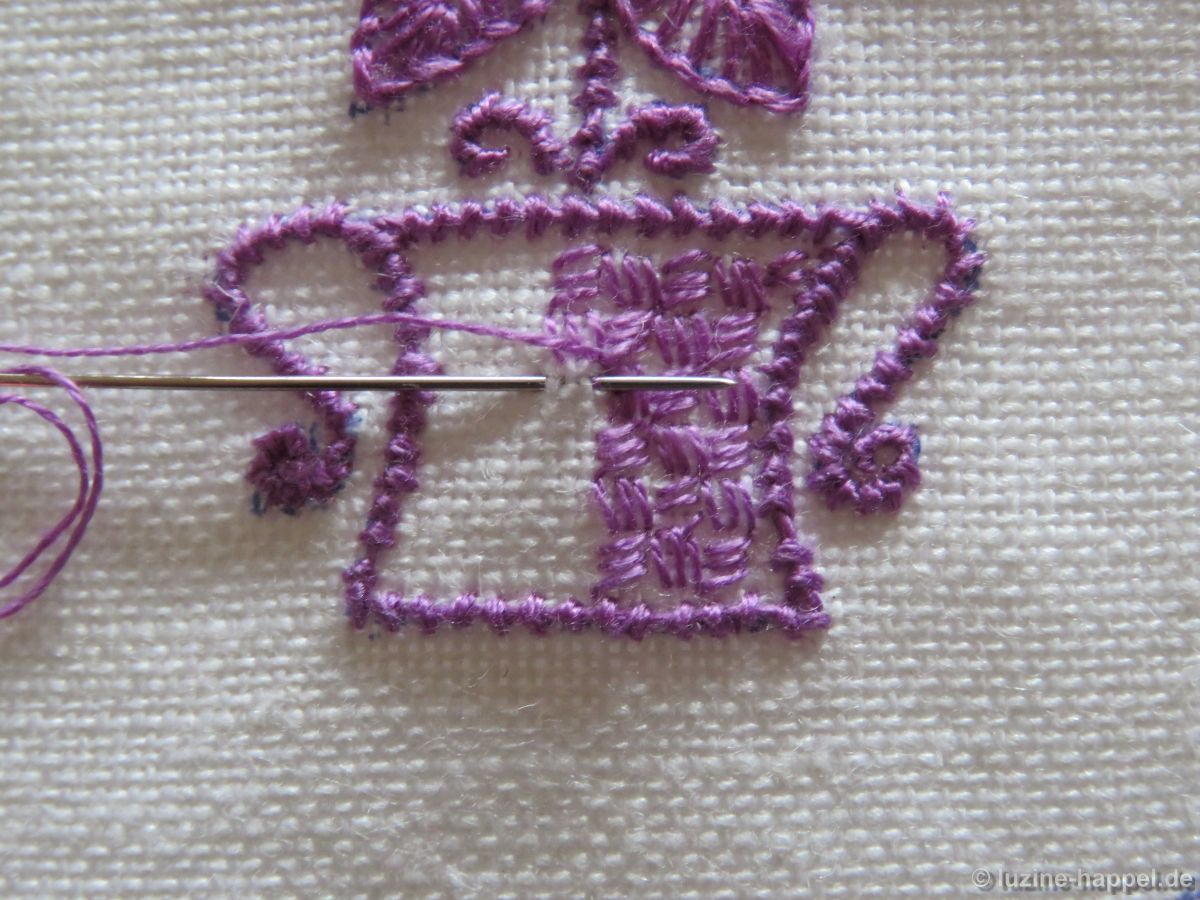
The basket received the “One Pattern”. Since the area to be embroidered is very small, I initially refrained from stitching chain stitches next to the coral knot stitches.
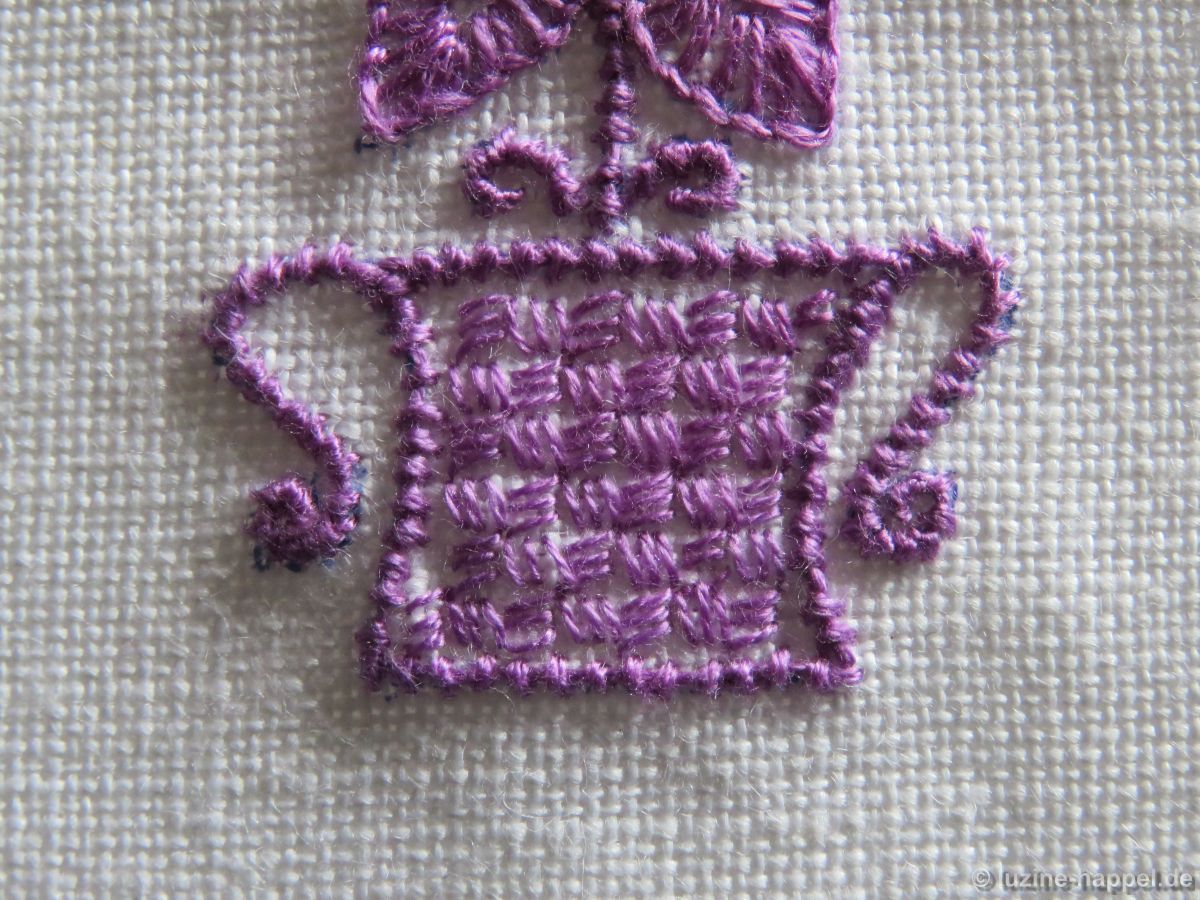
Since the edges looked too messy to me, I added chain stitches afterwards and added a small blanket stitch eyelet to the center of the flower.
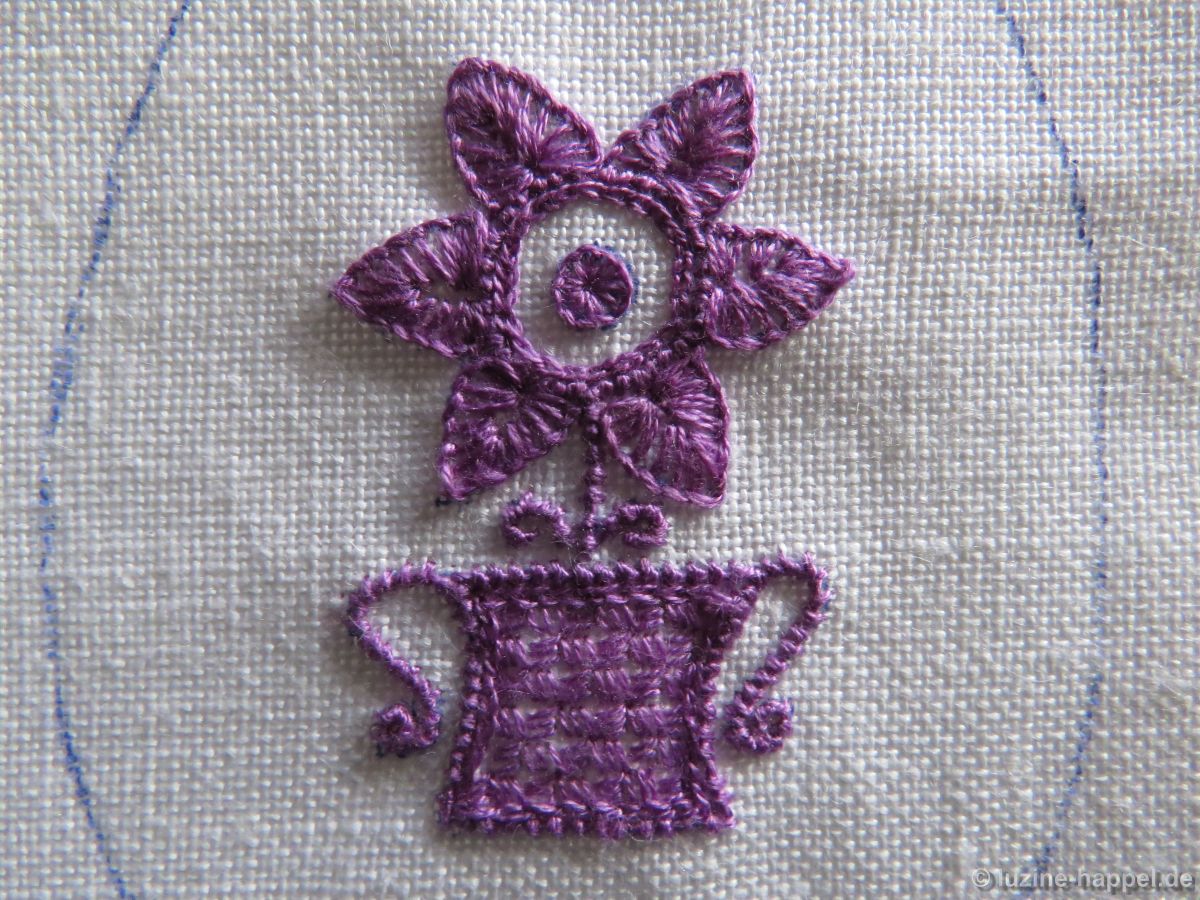
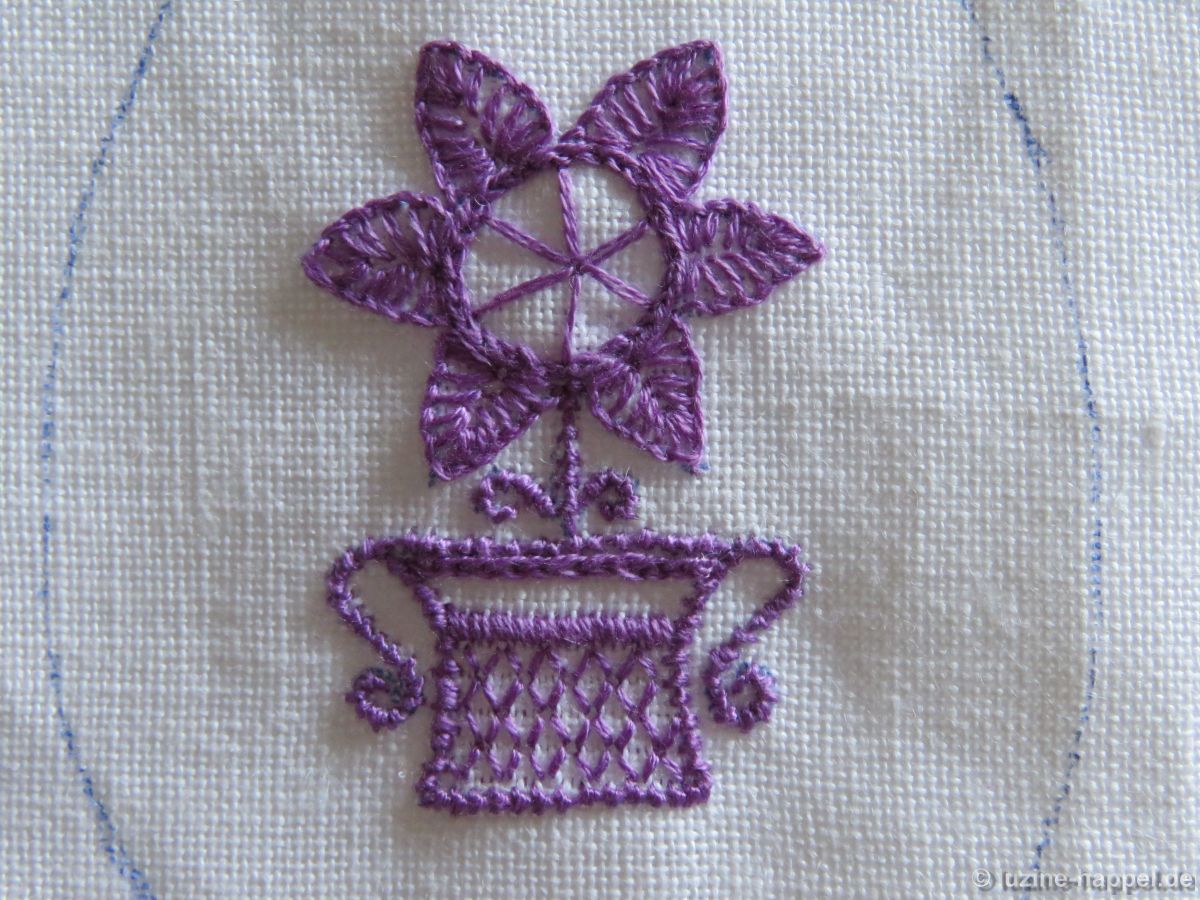
The second side was embroidered with the same motif, but the fillings were designed slightly differently.
To keep the crocheted border from being too bulky, I crocheted a loose chain of stitches using a size 2 crochet hook and 3 strands of 6-ply stranded cotton. This required about 7 meters of half a skein of floss. Admittedly, it’s not easy to divide such a long strand, but it’s doable if you occasionally pin the end coming from the skein, hold the yarn up, and let it unwind.
You have to measure to see when the chain is long enough to completely cover the outline.
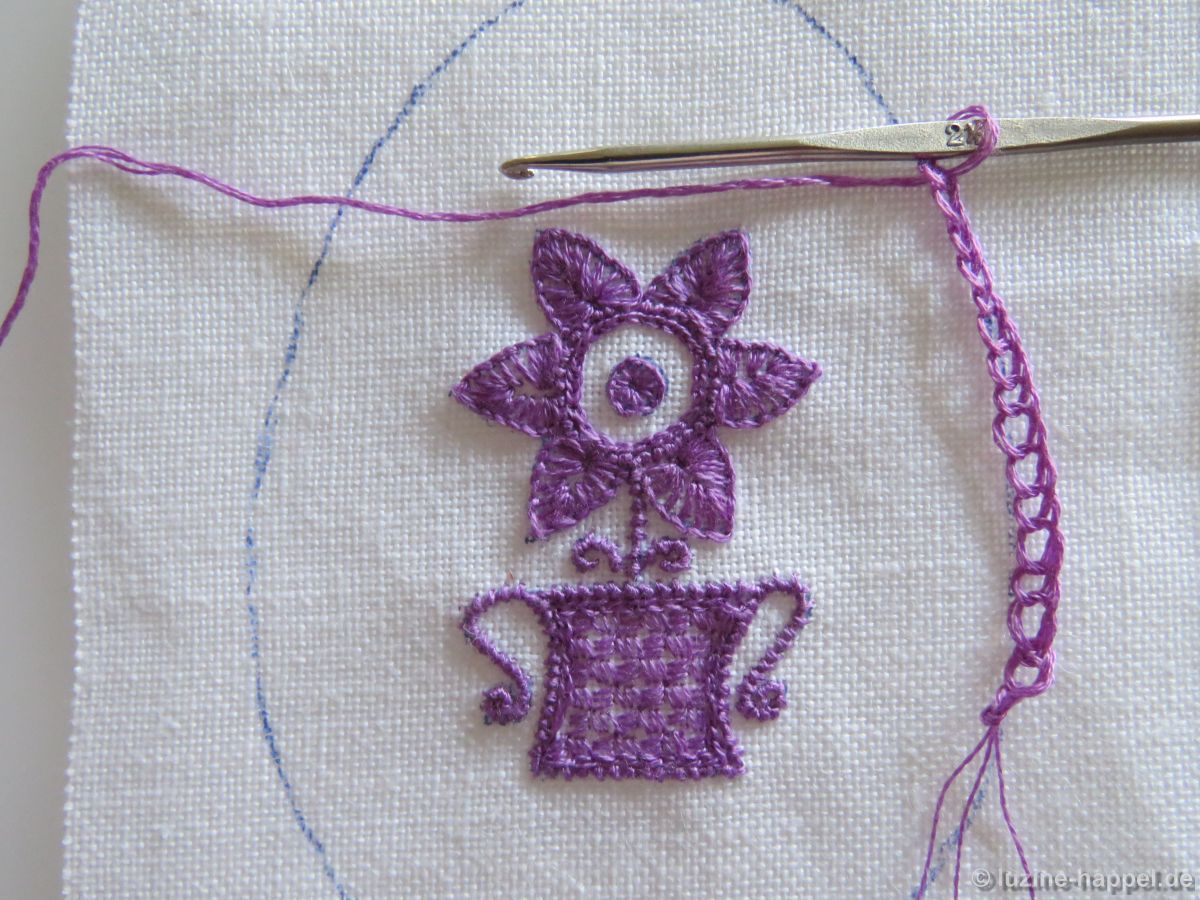
A row of double crochet stitches was crocheted over the chain stitches.
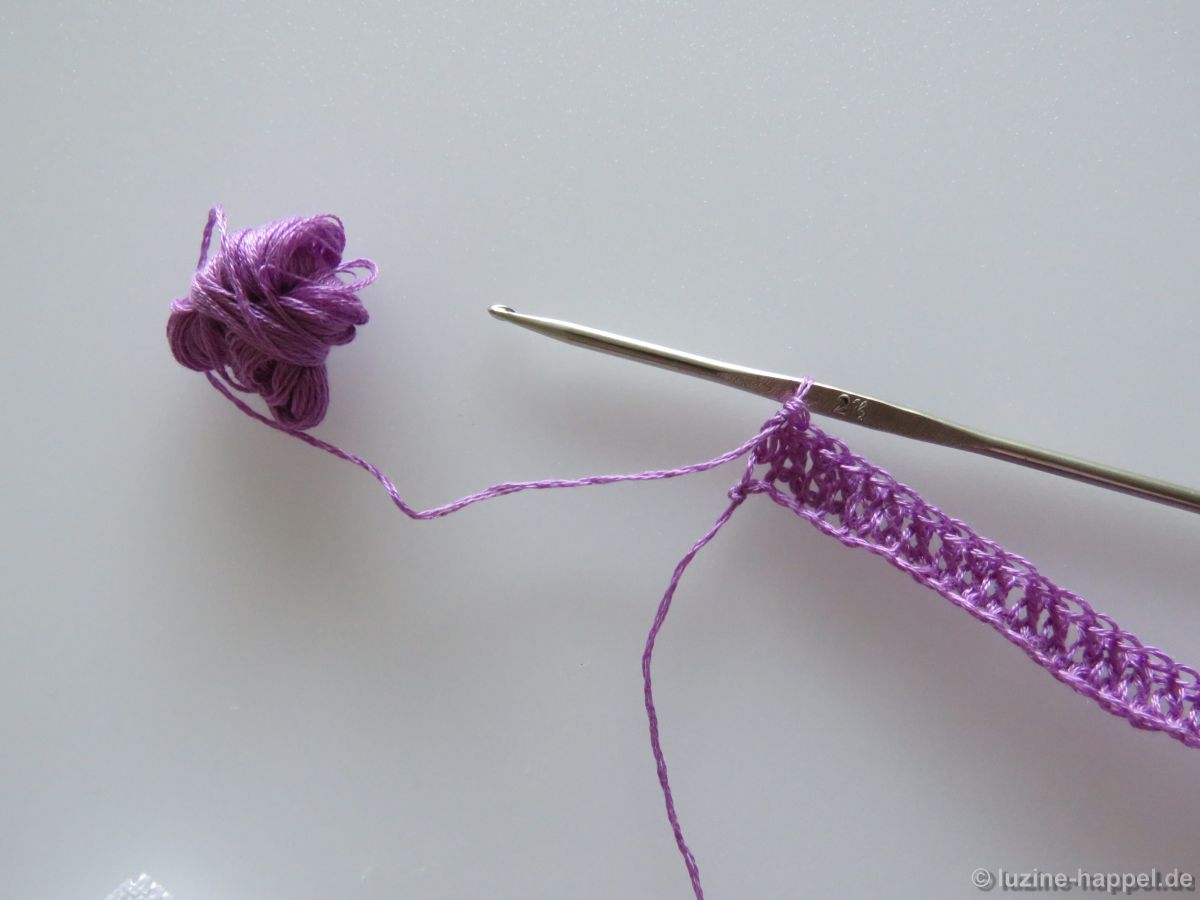
Once the end of the chain of stitches has been reached, the thread is brought back to the chain with two chain stitches, secured there and brought with two more chain stitches to the level of the second row of double crochet stitches, which is crocheted again along the chain.
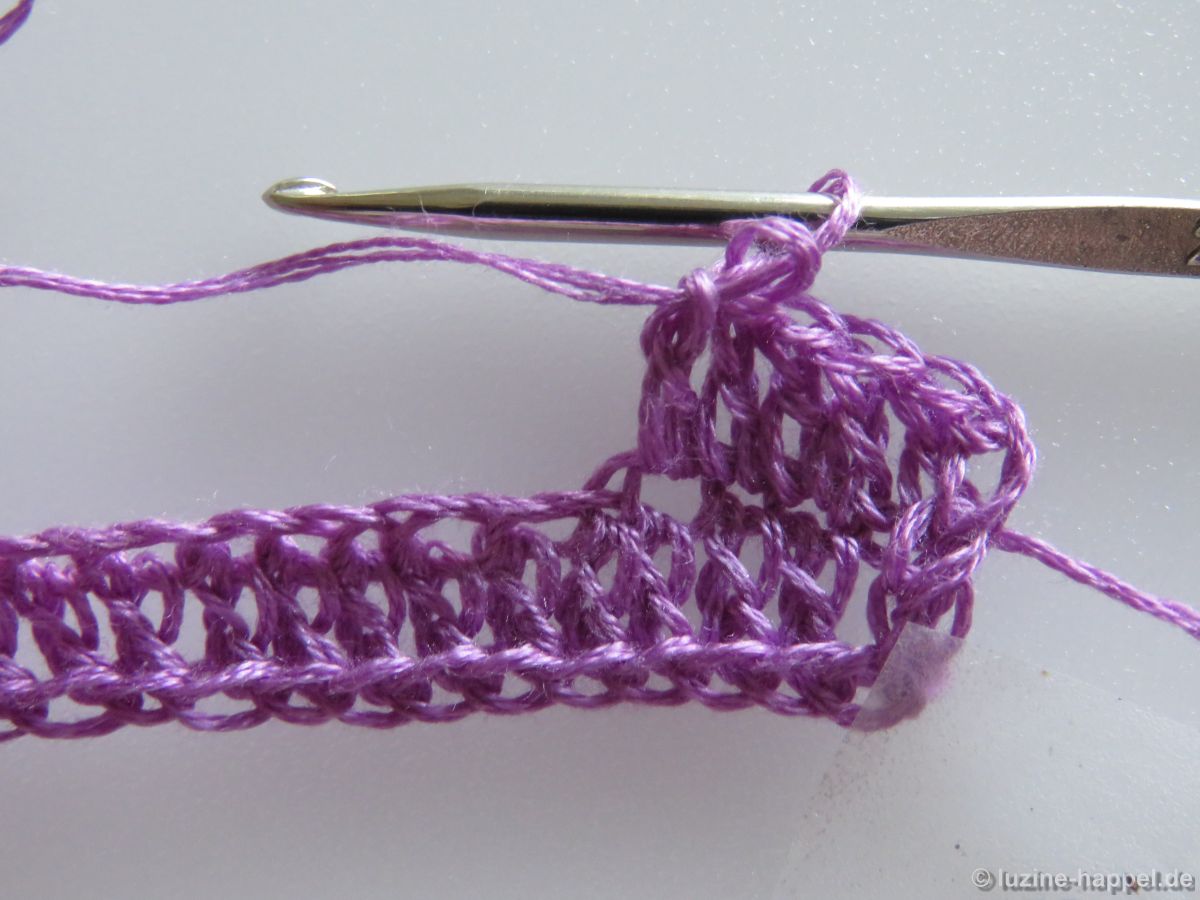
This creates a kind of fold in the middle, which makes attaching it to the edge easy. Finally, the thread is brought to the center, pulled through the last loop, and cut approximately 10 cm from the crocheted border.

The embroidered linen pieces are placed on top of each other with the right sides facing outwards, ensuring a precise fit, and pinned in place.
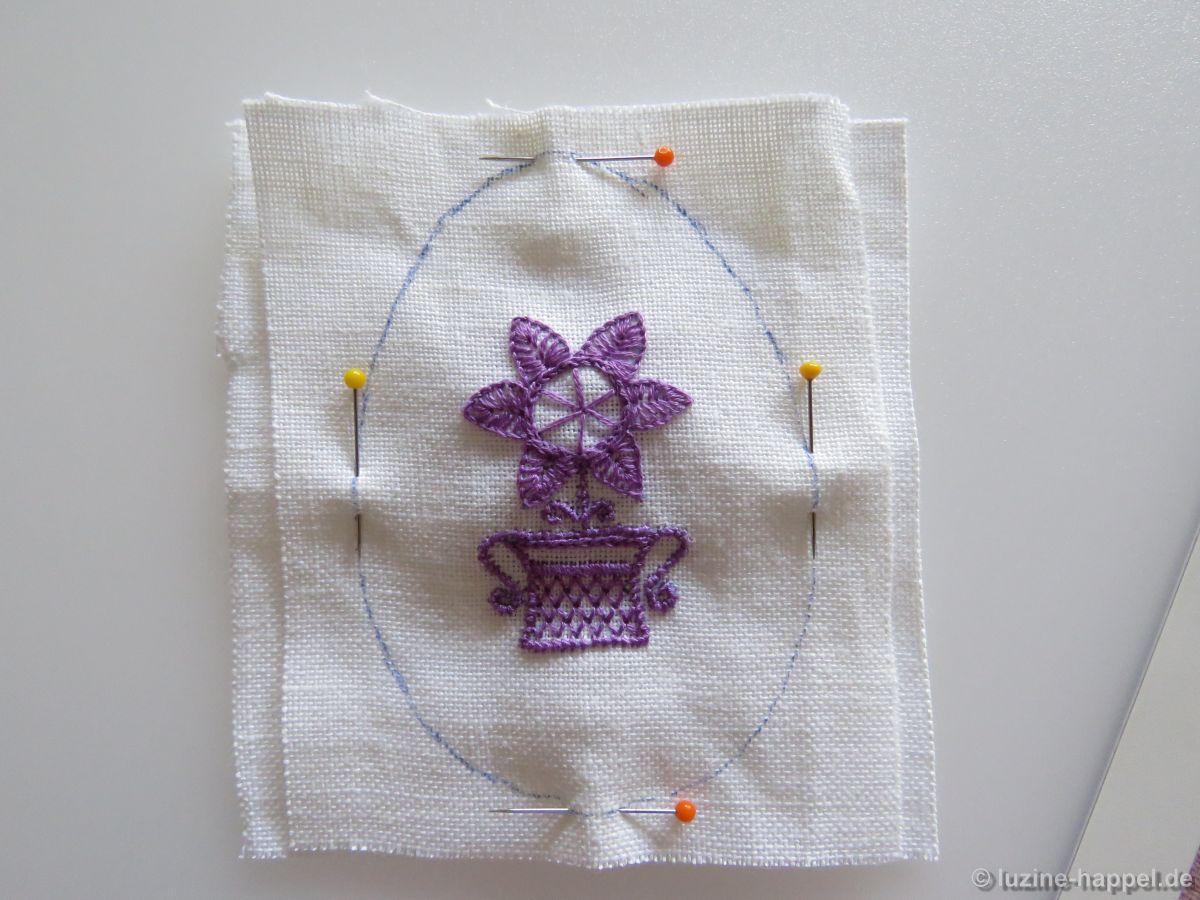
On the back, you can check if the lines have been correctly drawn. If not, you need to make corrections.
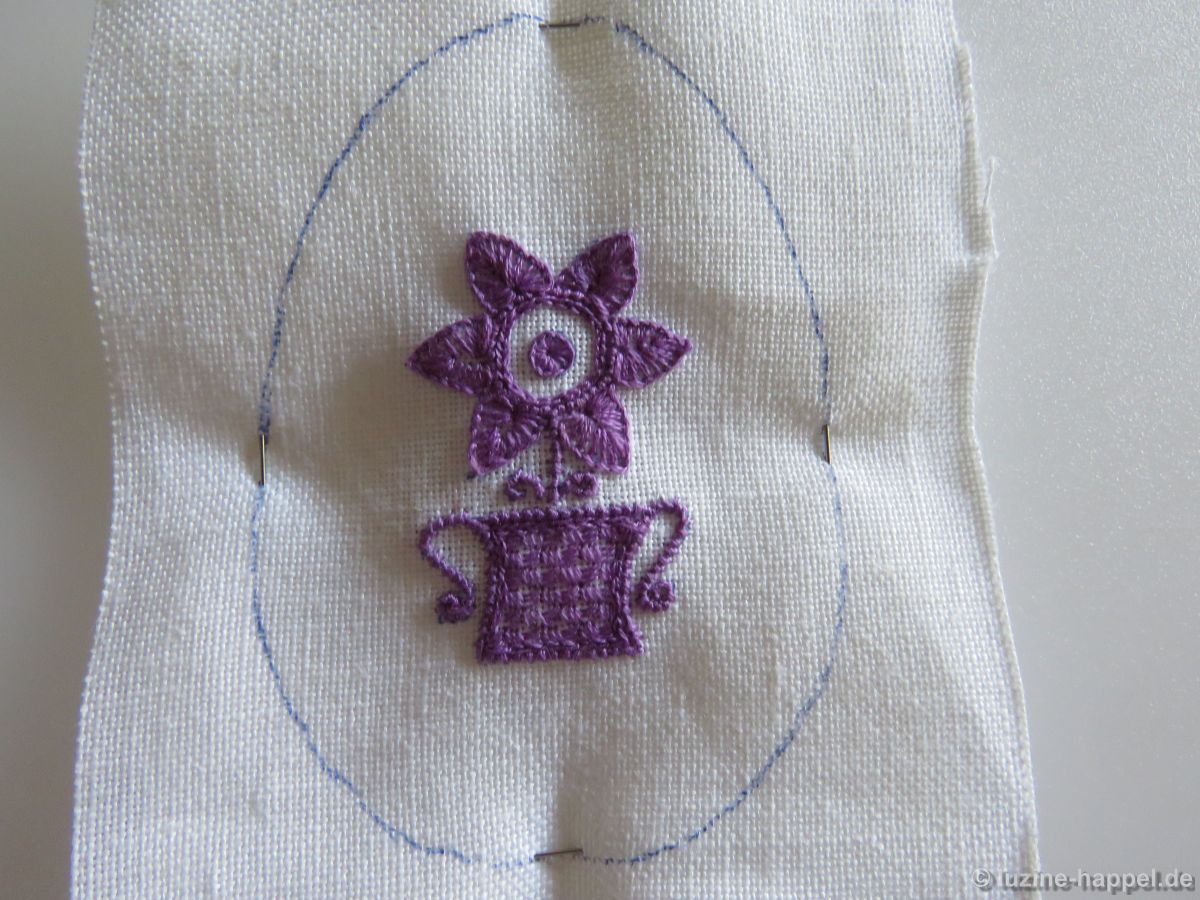
The parts are baste together with a small distance from the edge.
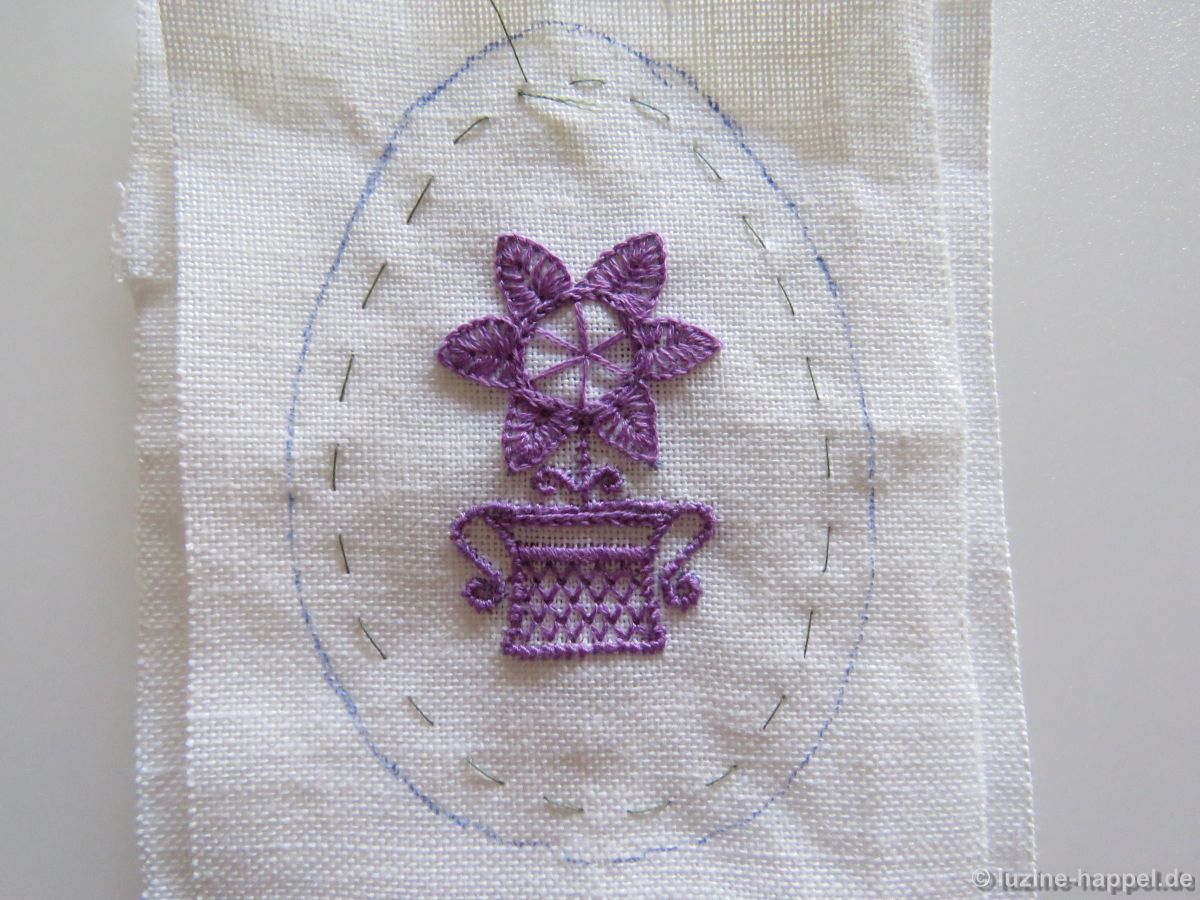
and sewn together with small zigzag stitches along the outline, except for an opening on the long side.
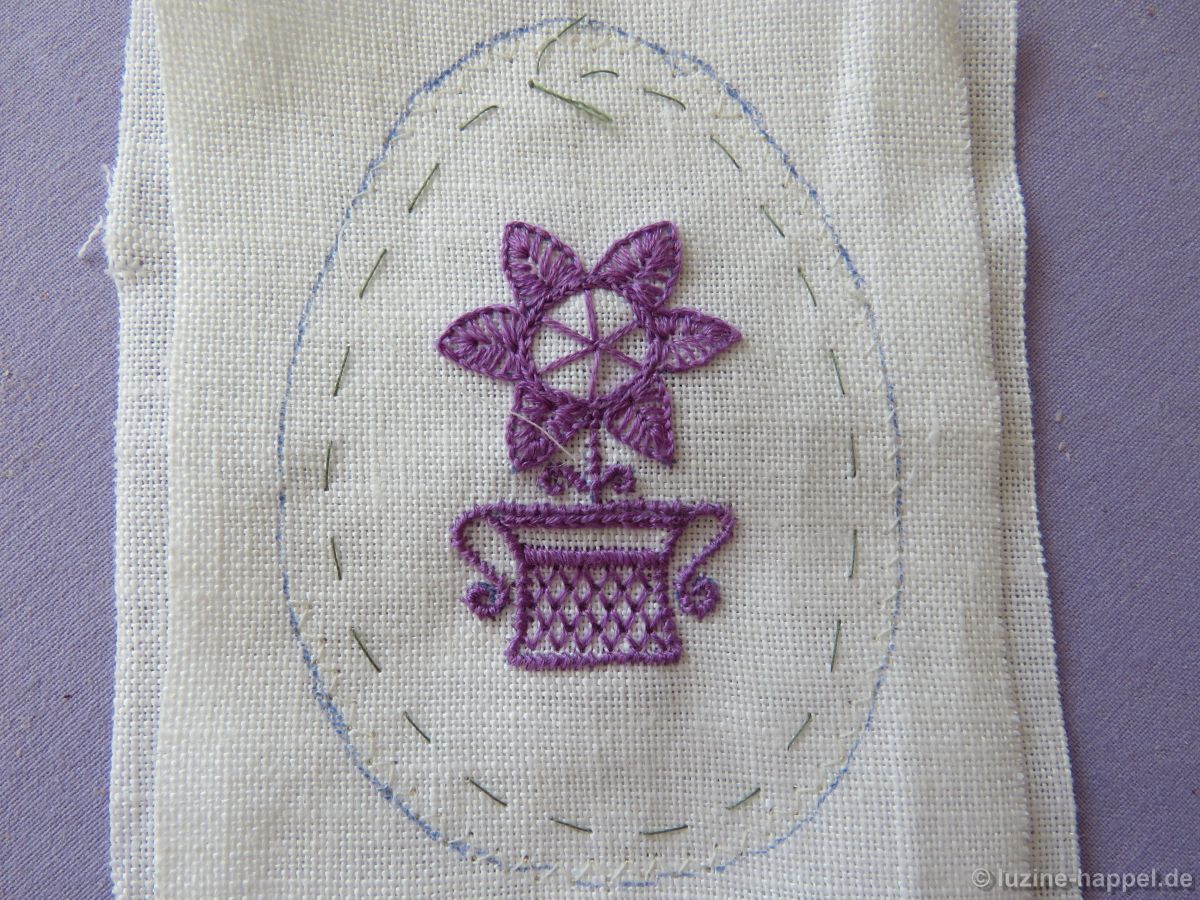
The egg is cut out, as described in detail in the previous blog post.
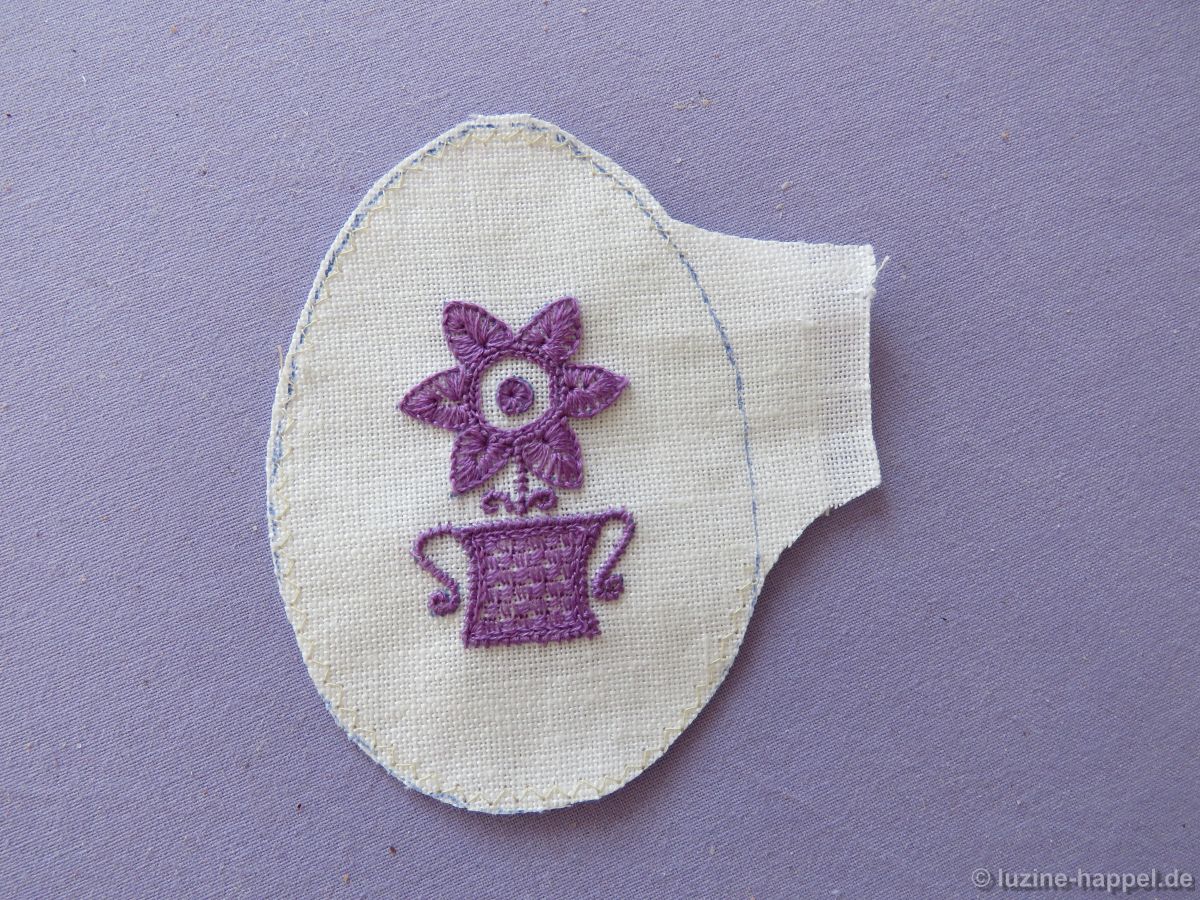
ironed, lightly filled, and closed.
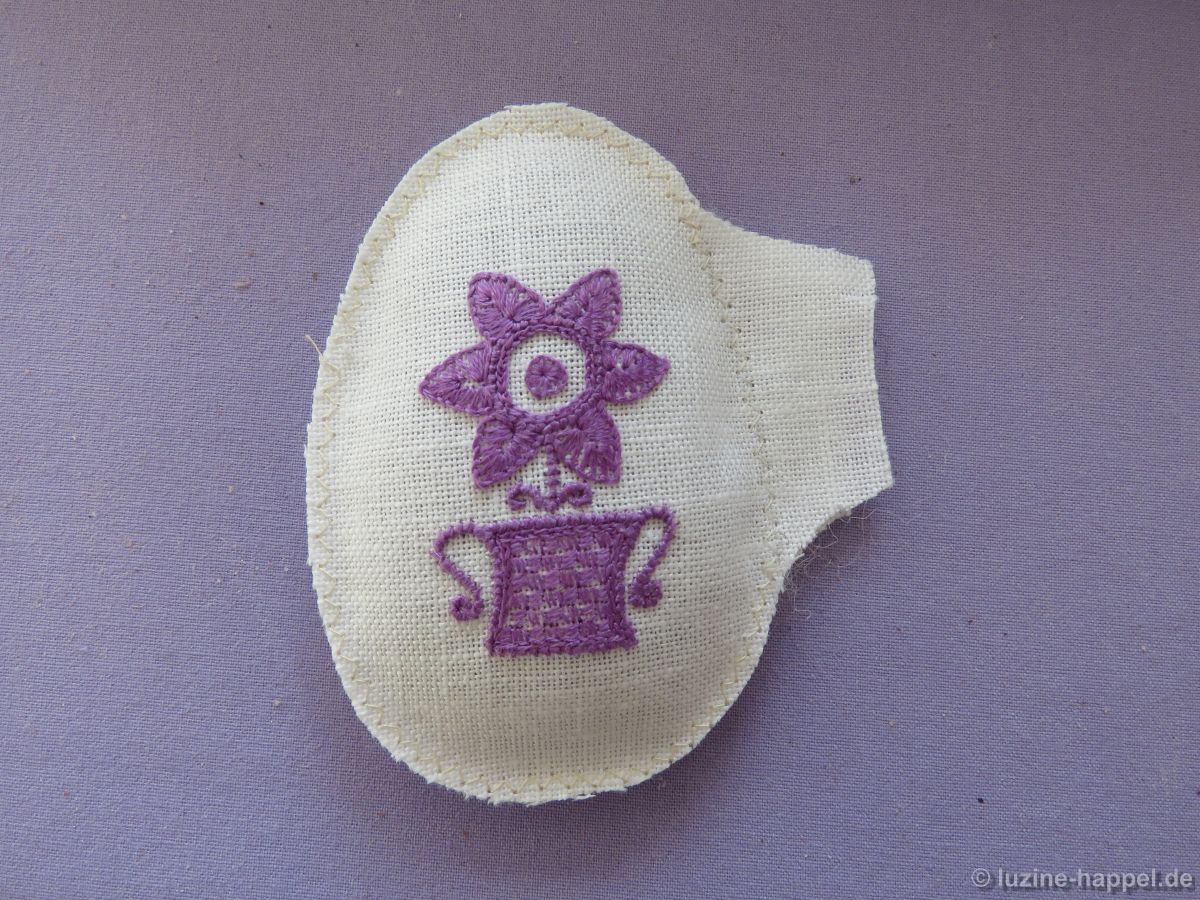
The remaining excess fabric is cut off.
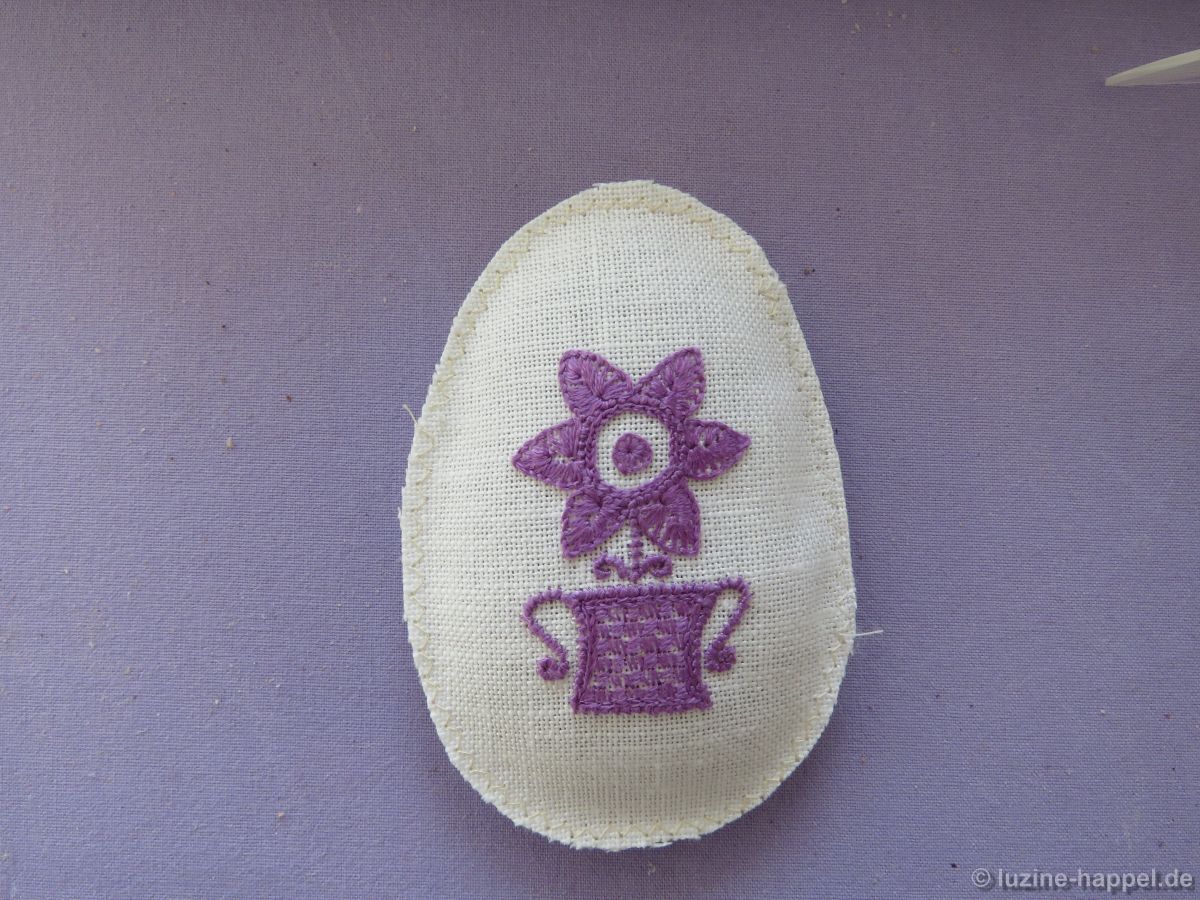
Starting at the top, the crocheted border is first attached with pins,
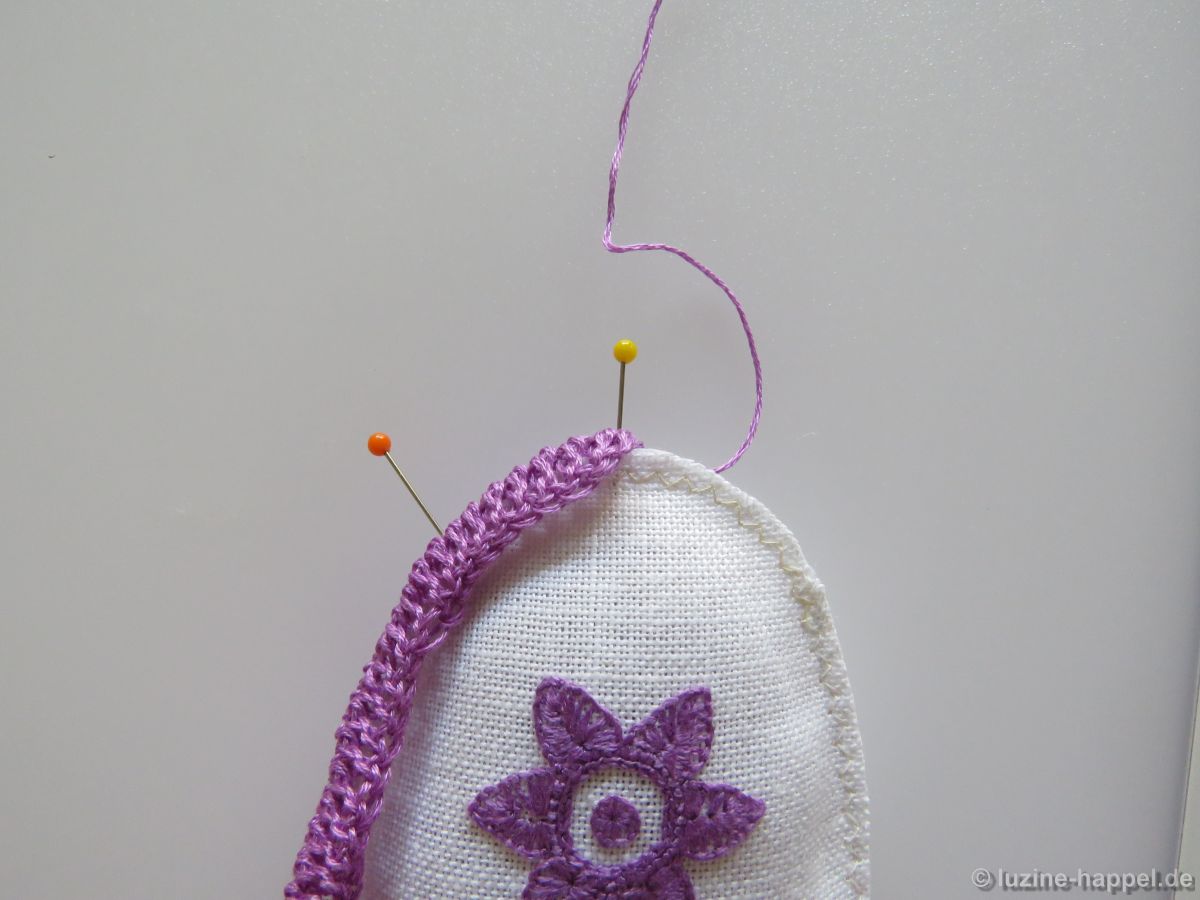
to ensure that the border is evenly distributed around the edge.
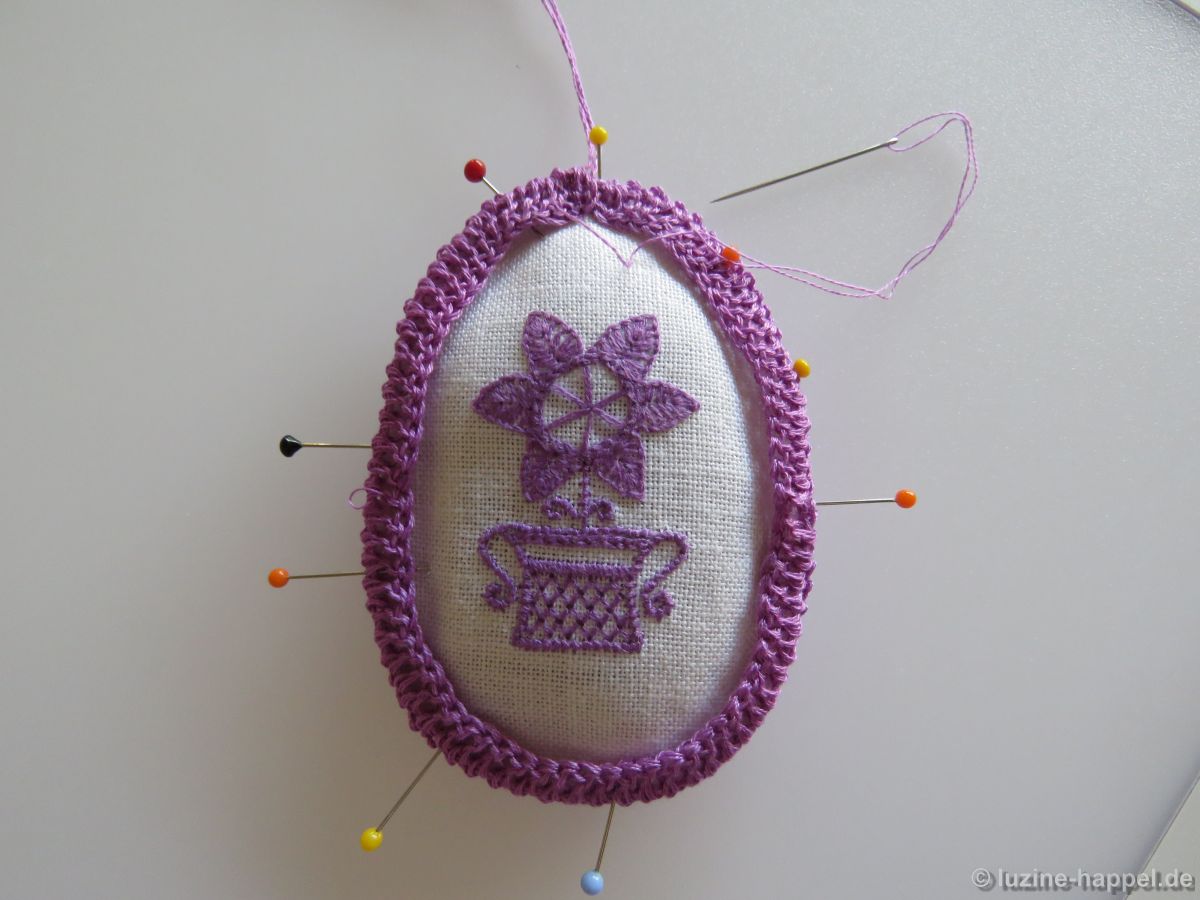
The border crocheted with only 3 strands of the stranded cotton isn’t as sturdy as the one crocheted with all 6 strands of the stranded cotton (the yellow one shown in the previous blog post). Therefore, I thought it would be better to sew it on. This time, I did it with stitches from the back to the front and back again.
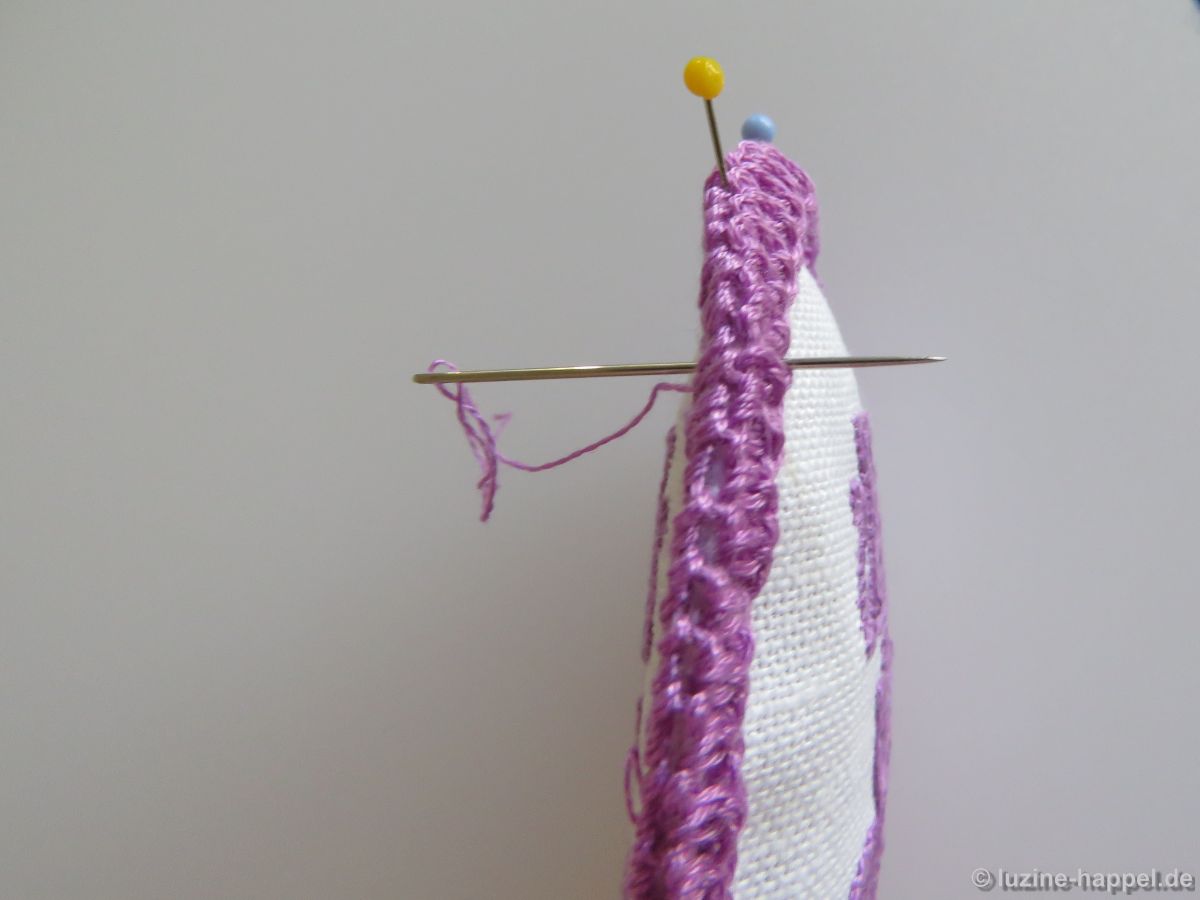
This has the advantage that the trim can be attached to both sides with an even width.
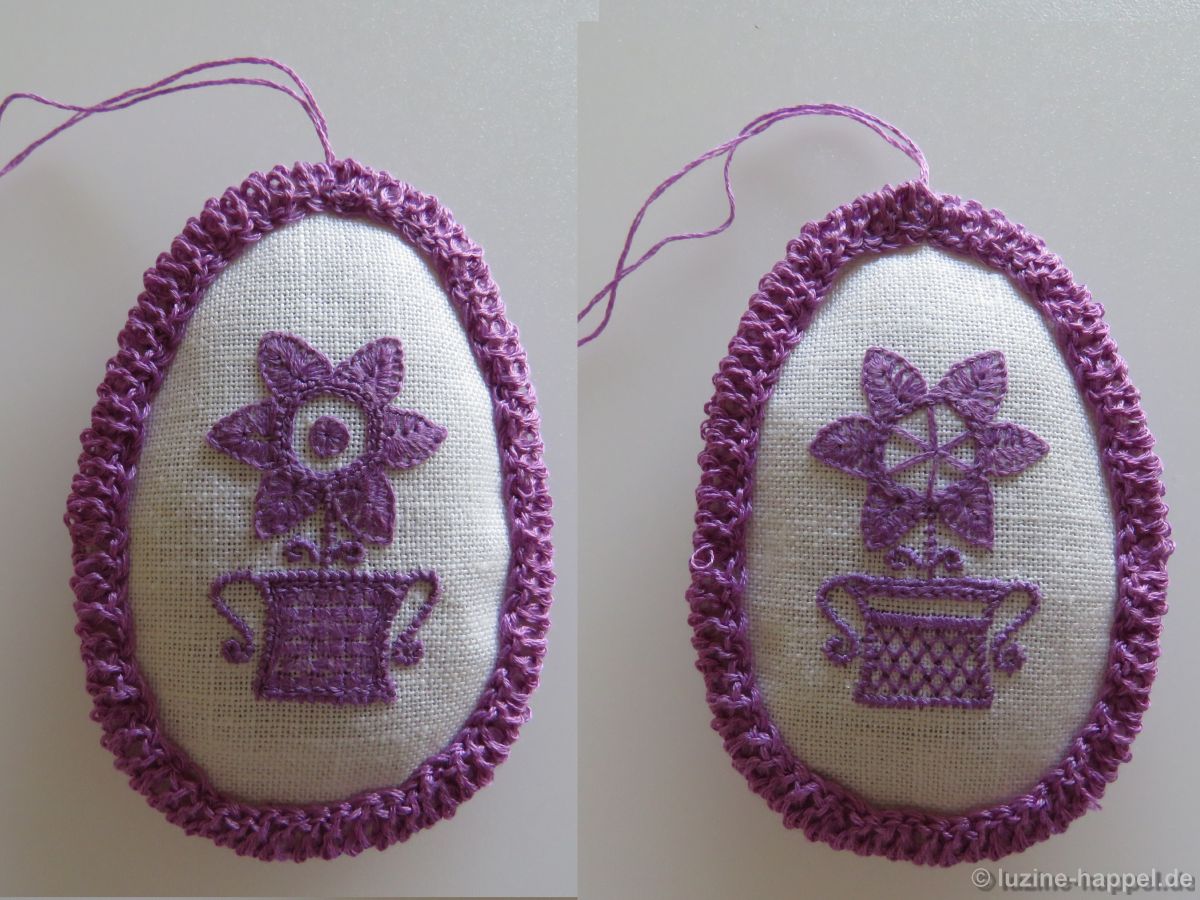
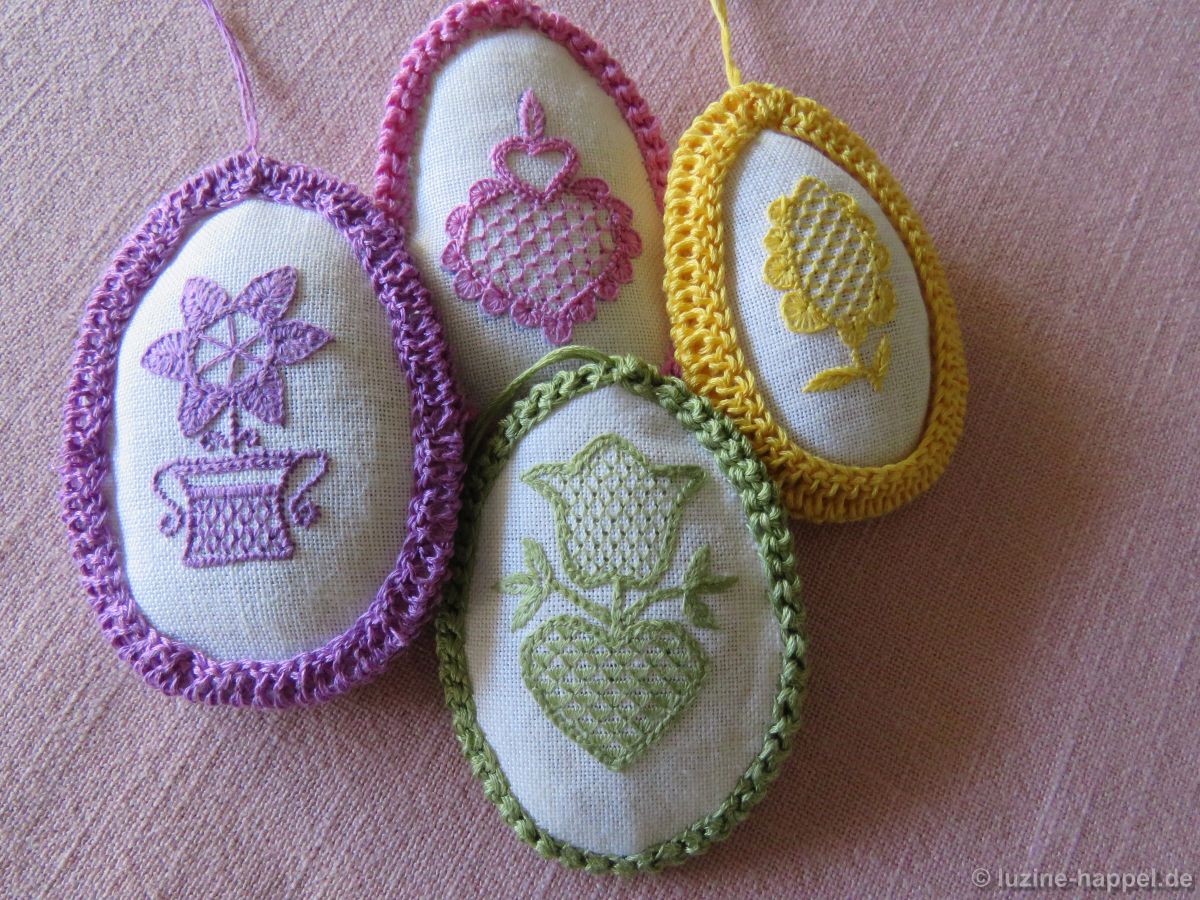
Perhaps I chose stitches that were too large, or perhaps I pulled the thread too tight. This makes the edge look less defined than the green and pink borders, which were attached stitch by stitch with overcast stitches.
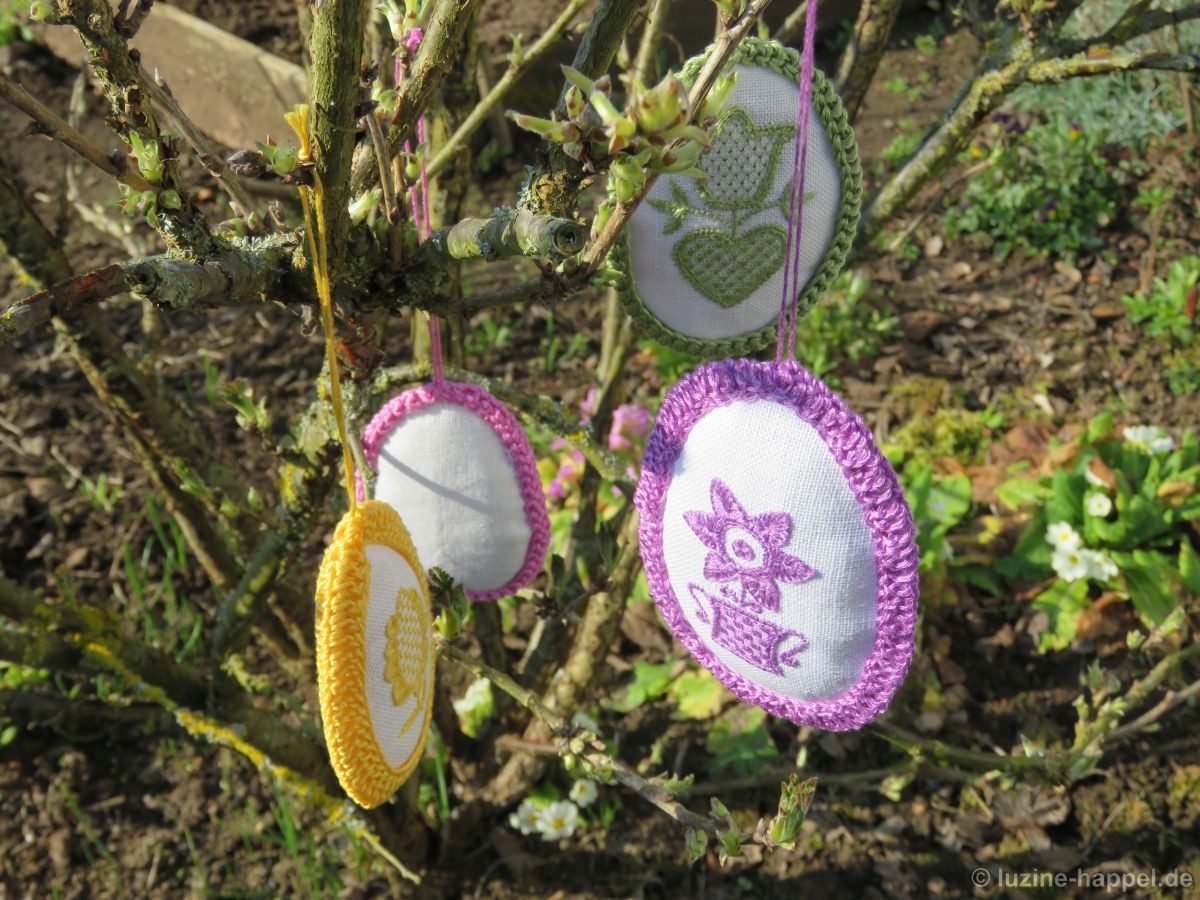
Hanging on the bush

and when gently swinging in a breeze, it no longer matters.
Leave a Reply