

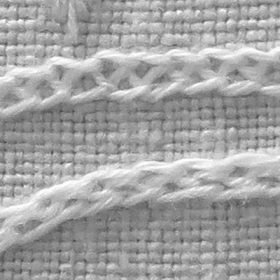
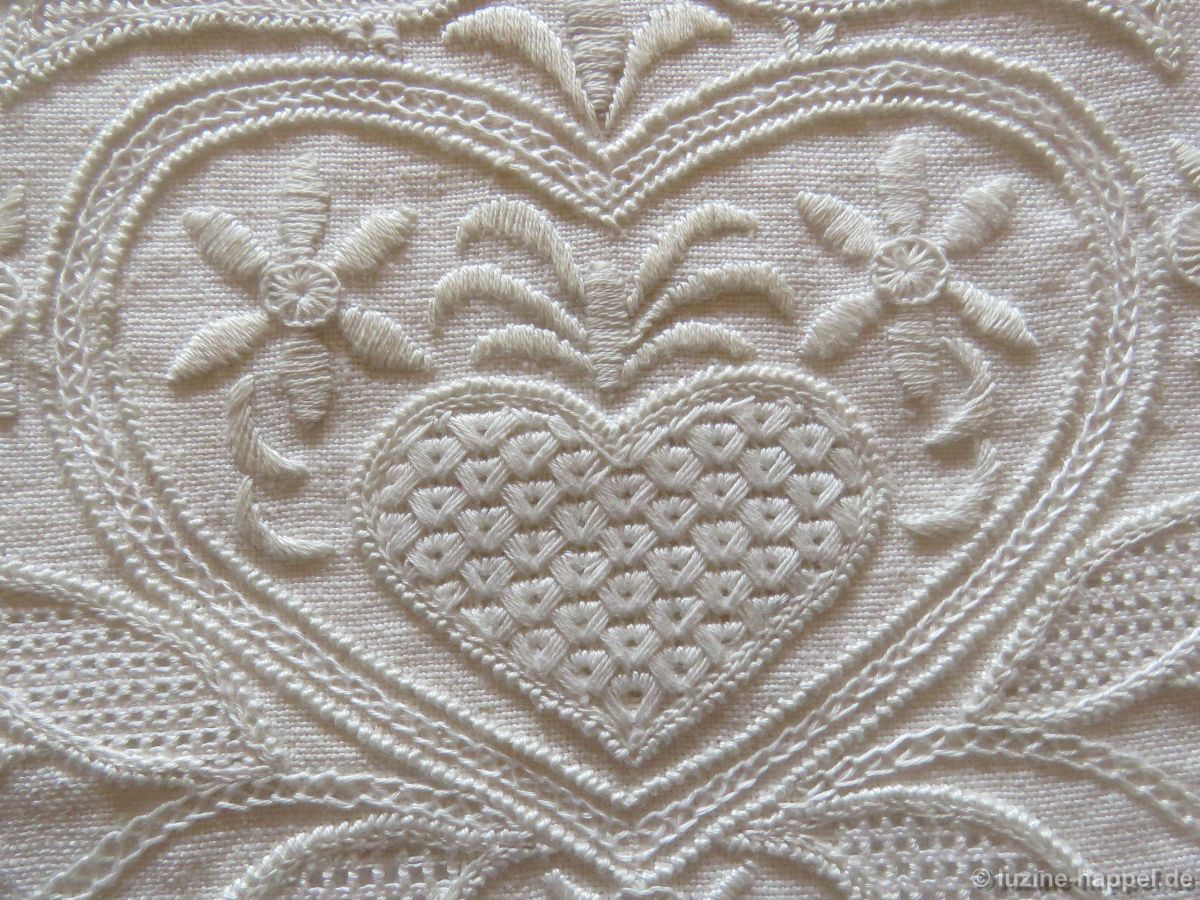
For large designs, the border is often finished with double lines spaced more or less widely.
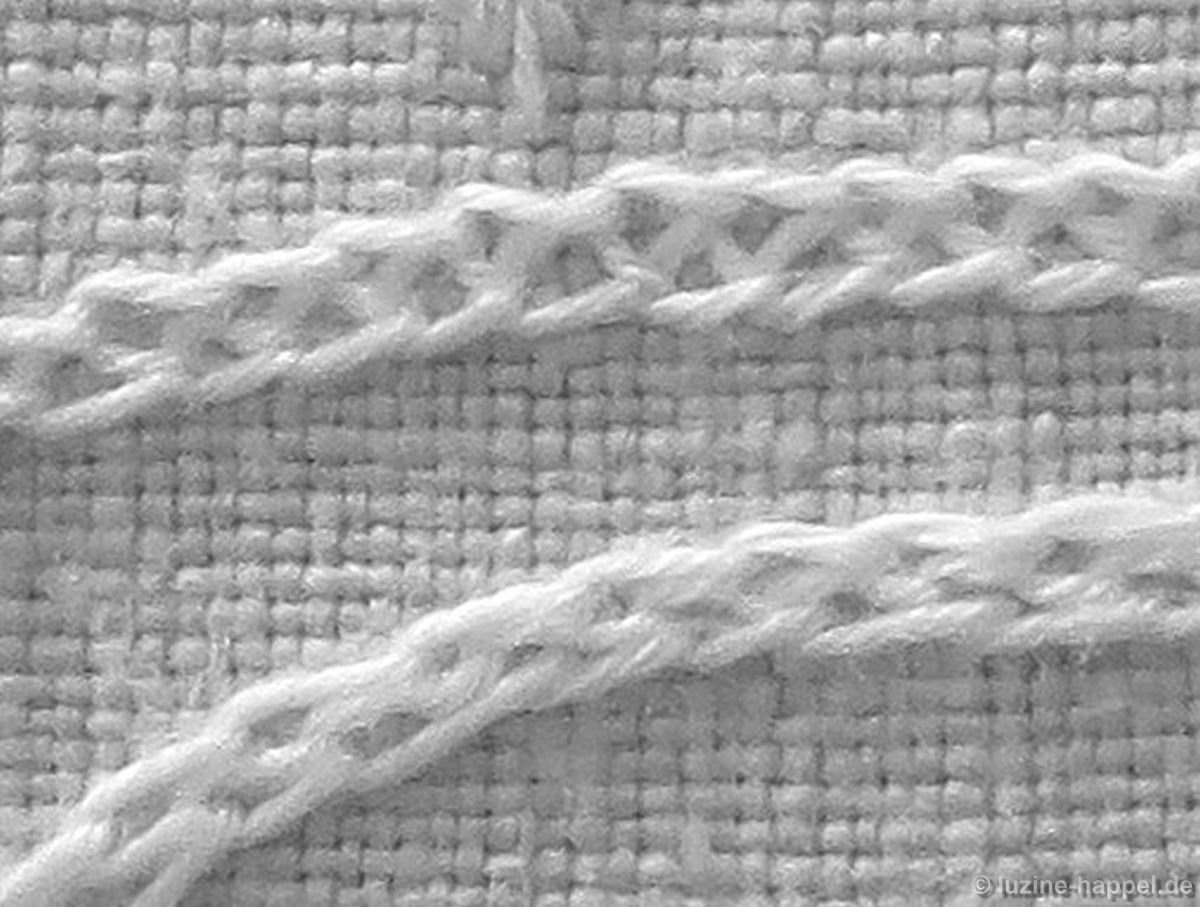
Chain stitches are very well suited for filling the narrow space between two such lines. They are easy to stitch, very flexible, and offer a wide range of variations. Many variations can be achieved by using different thread weights and choosing the stitch length. Pay particular attention to these two characteristics in the following images.
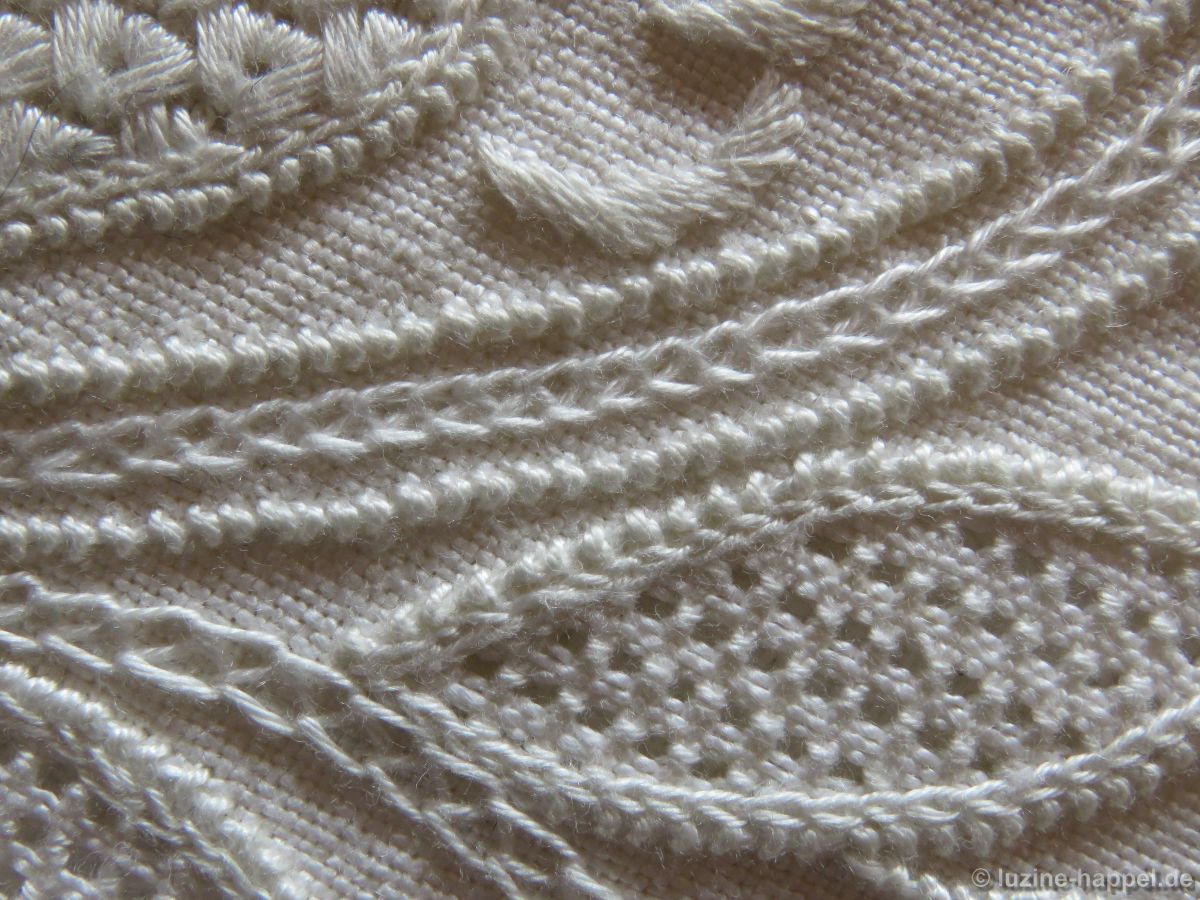
In a parade cushion border from 1814, there are simply two adjacent rows of chain stitches around the edge of the motif.
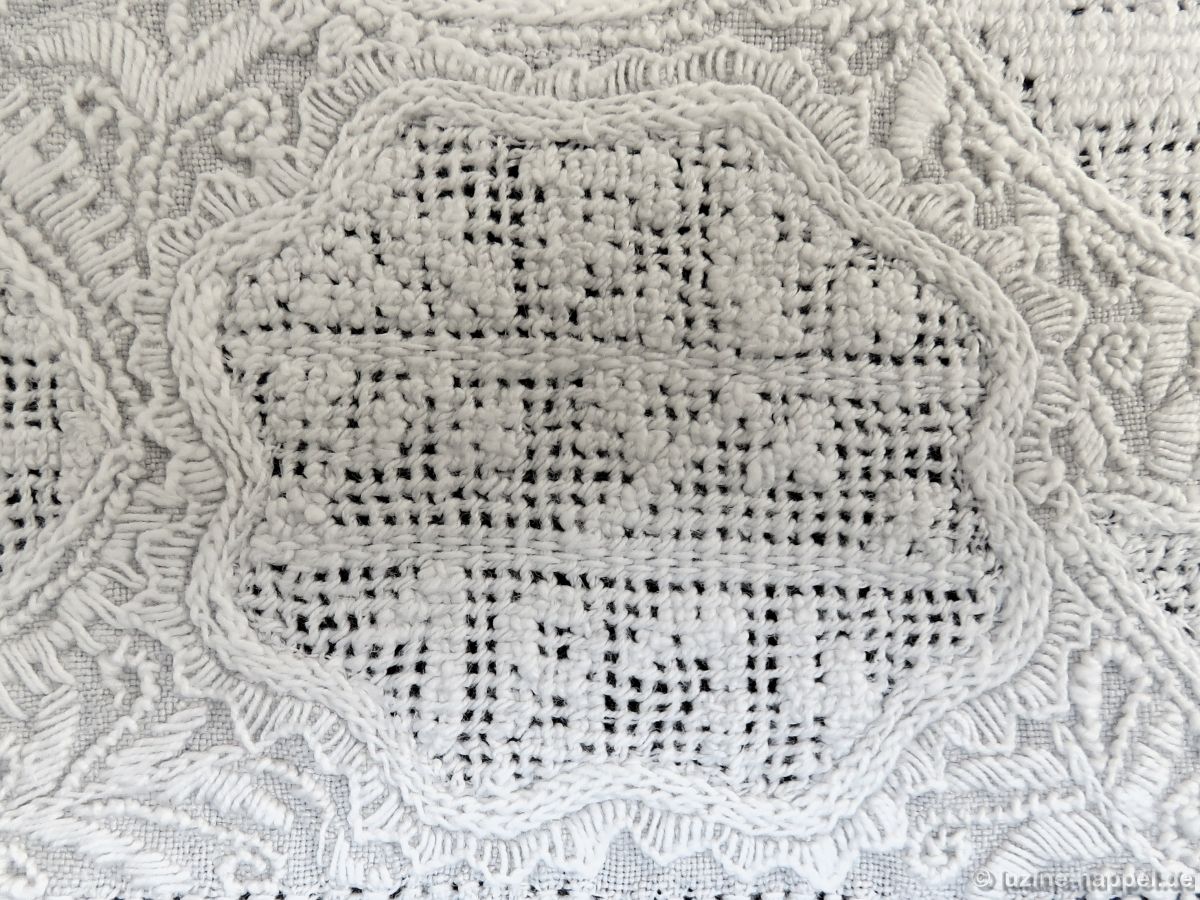
Chain stitches, each stitched tightly within the coral knot stitches and with unworked space in between,
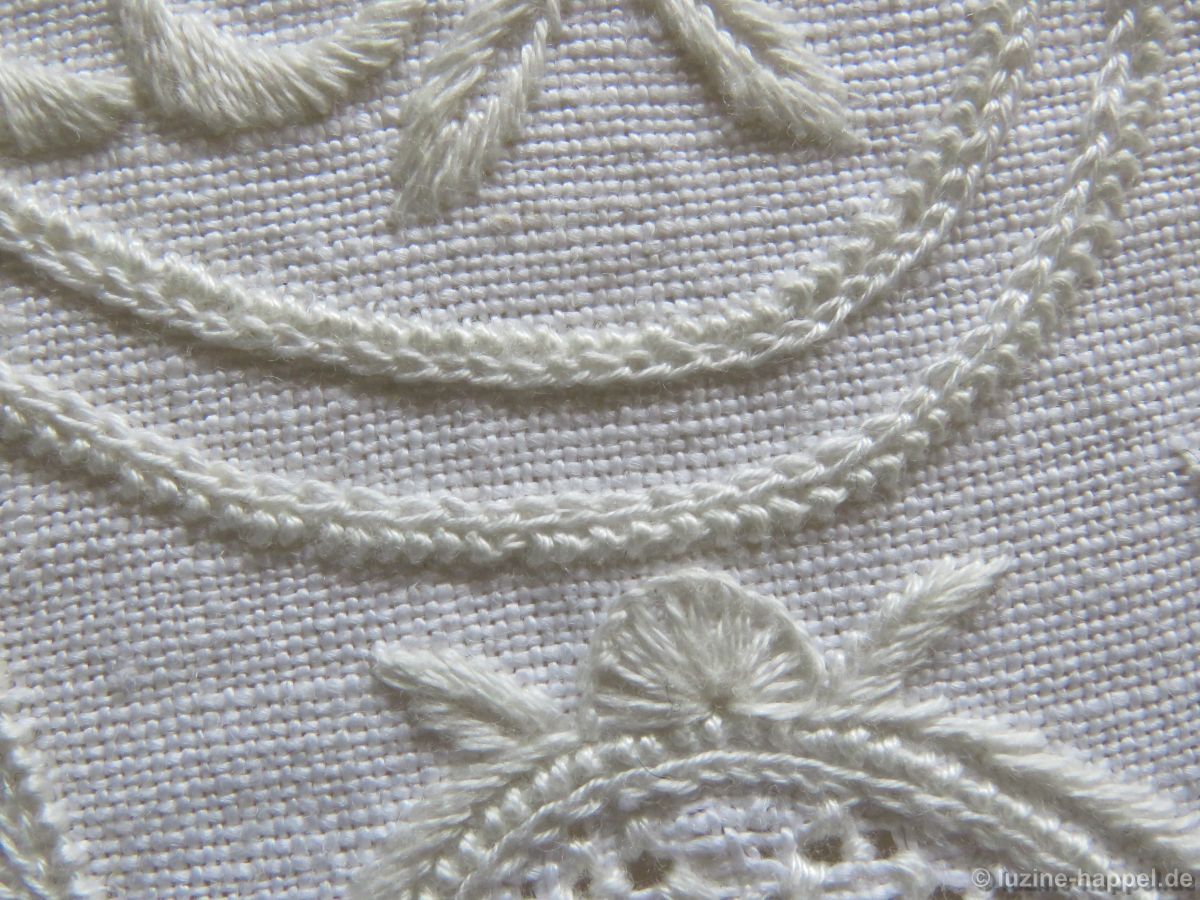
create a simple border decoration.
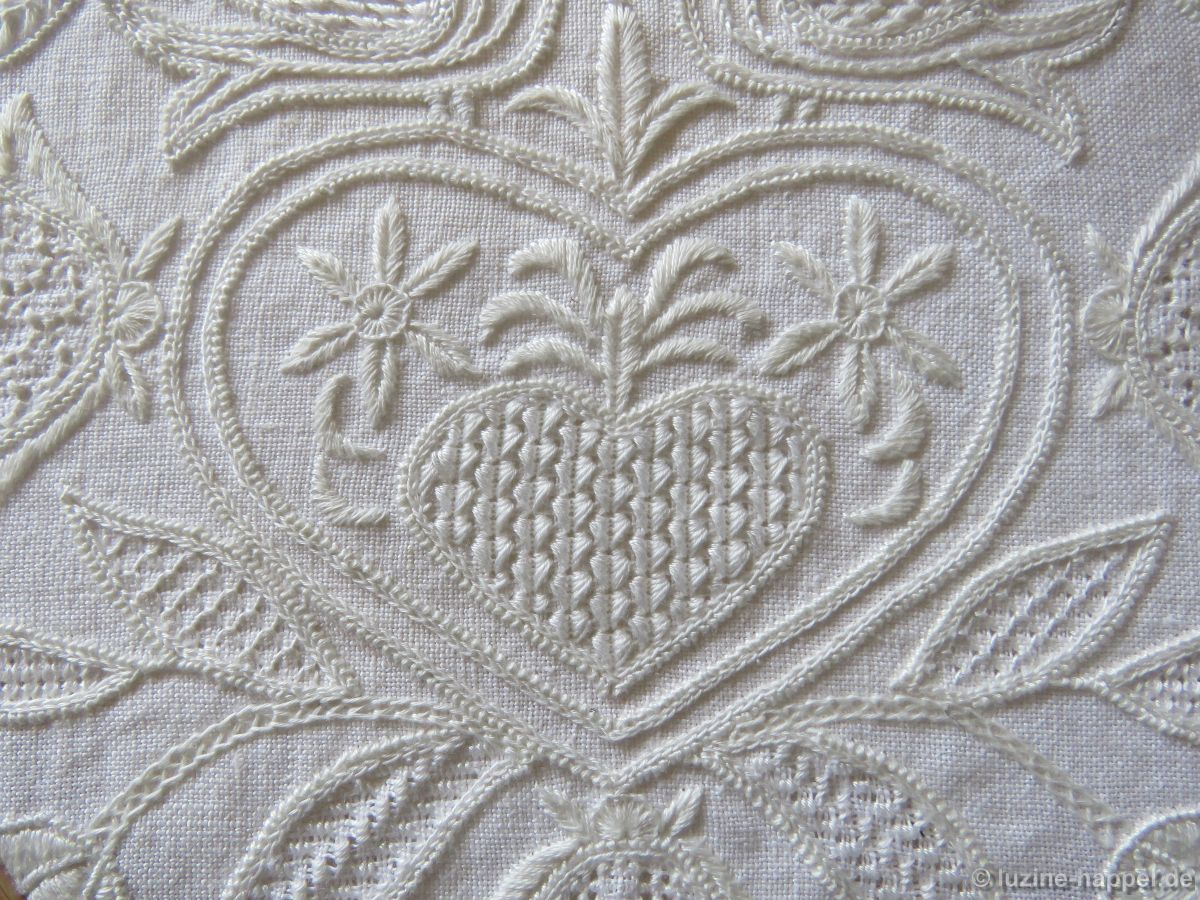
A single row of chain stitches in the middle between the coral knot stitches
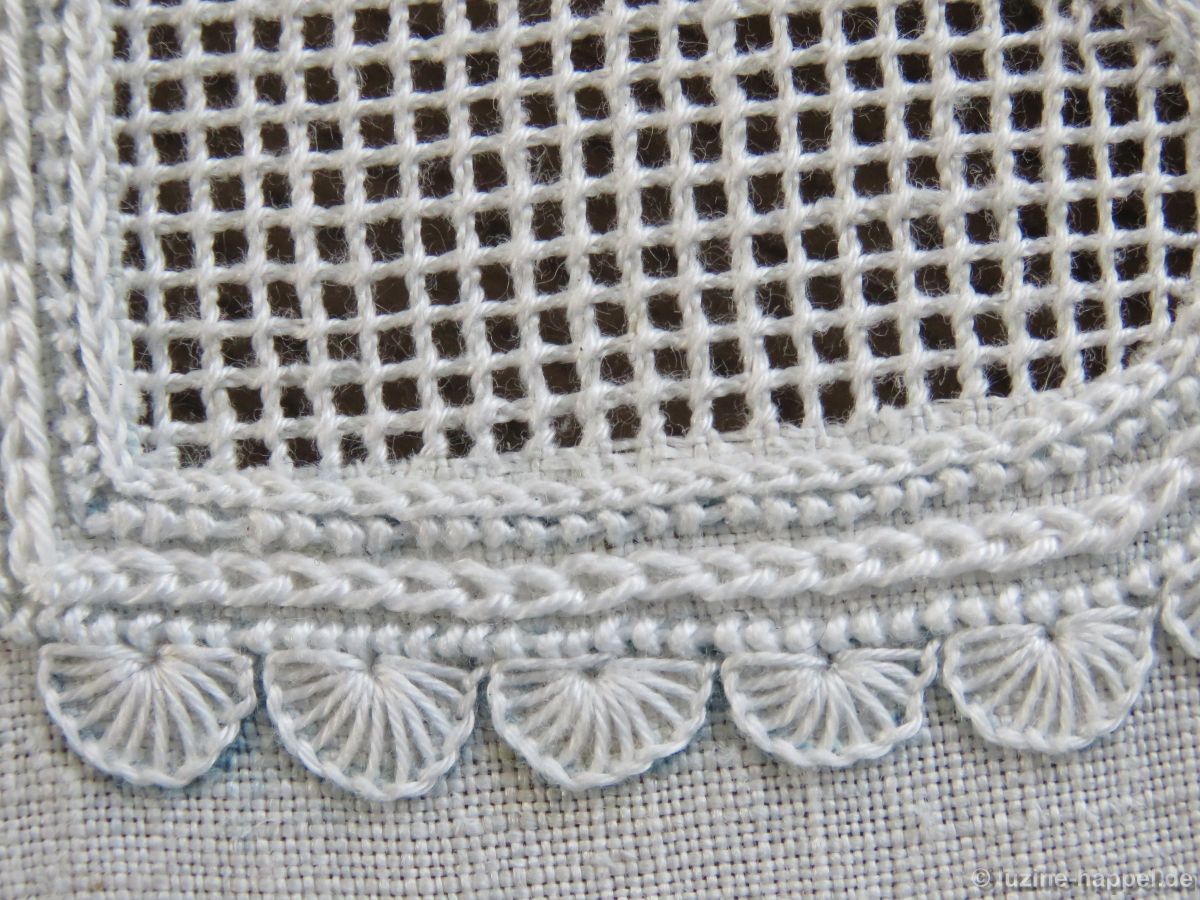
fills the empty space.
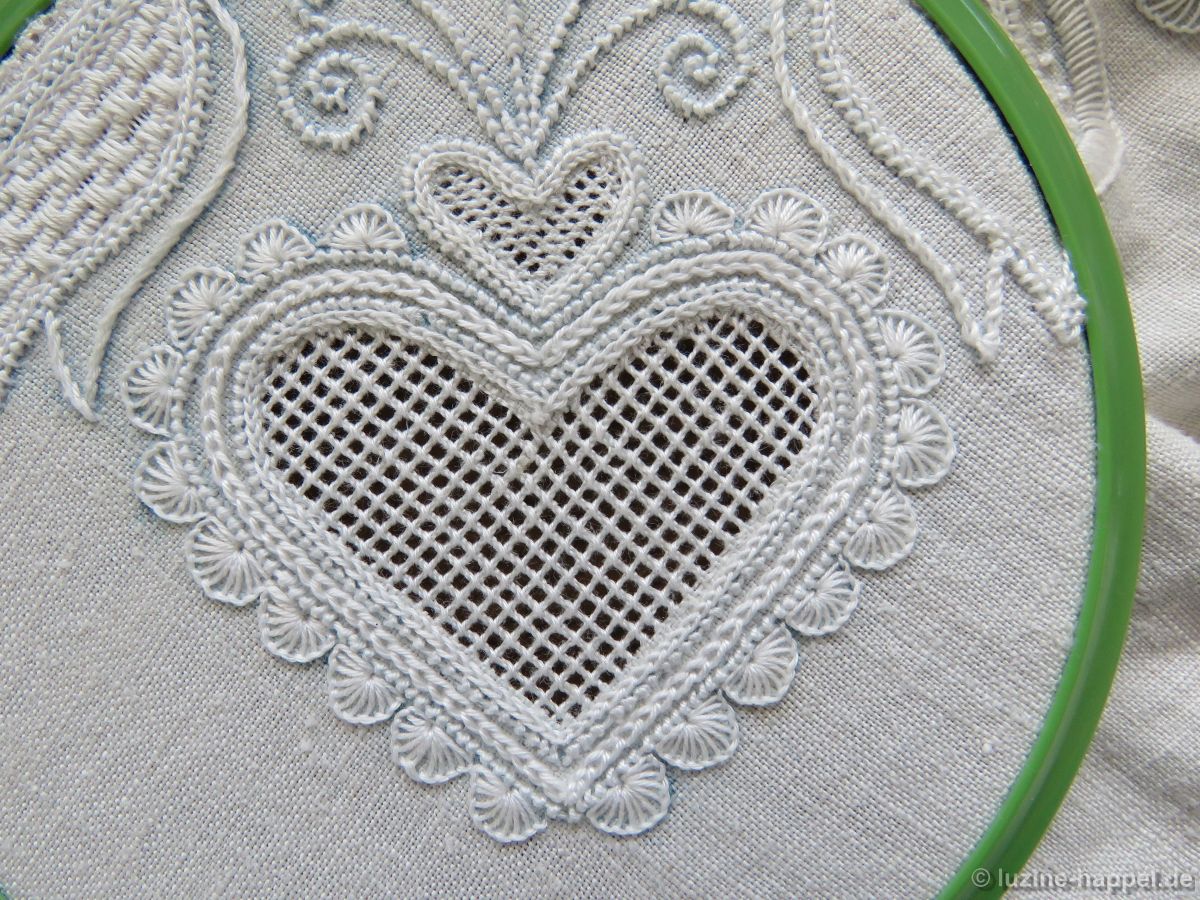
Wide chain stitches, where the inserting and emerging points are not at the same point but slightly apart,
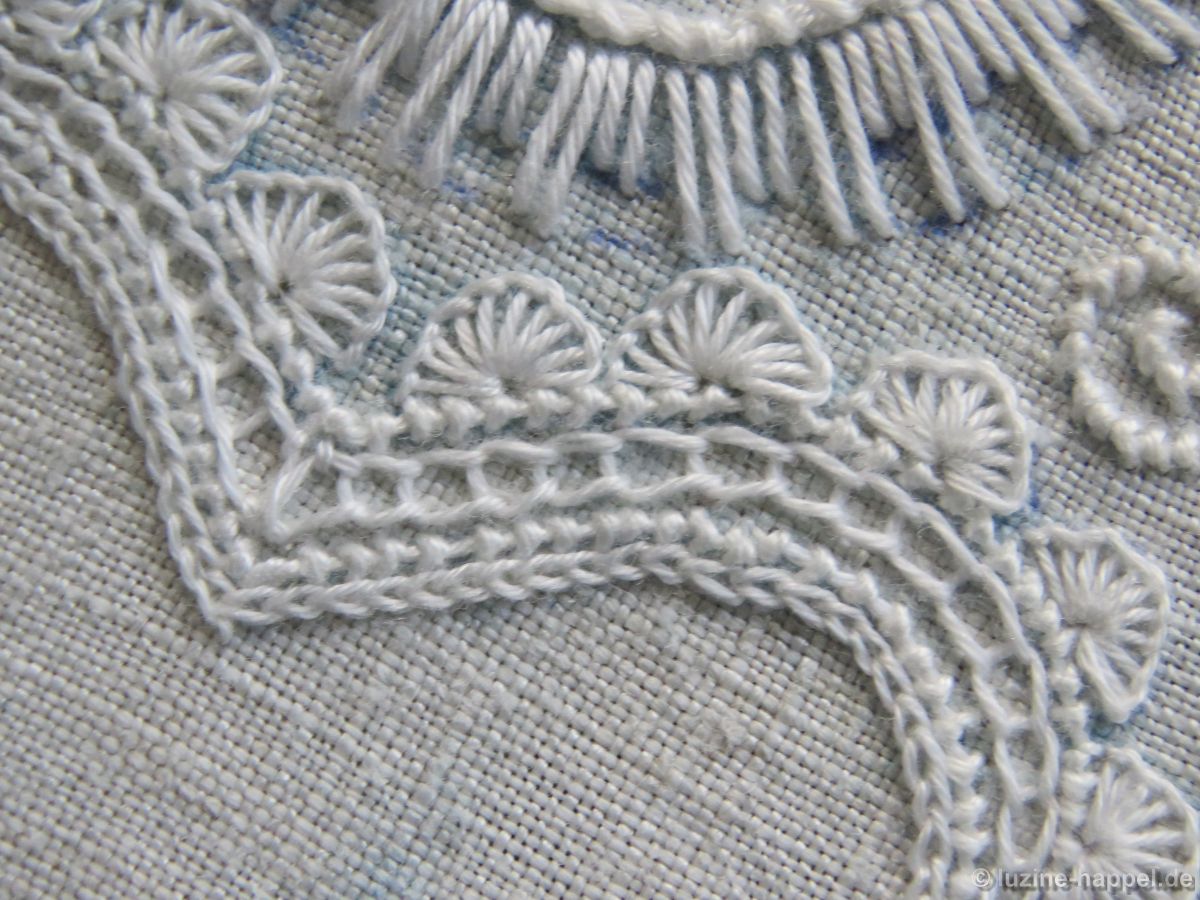
result in a different appearance.
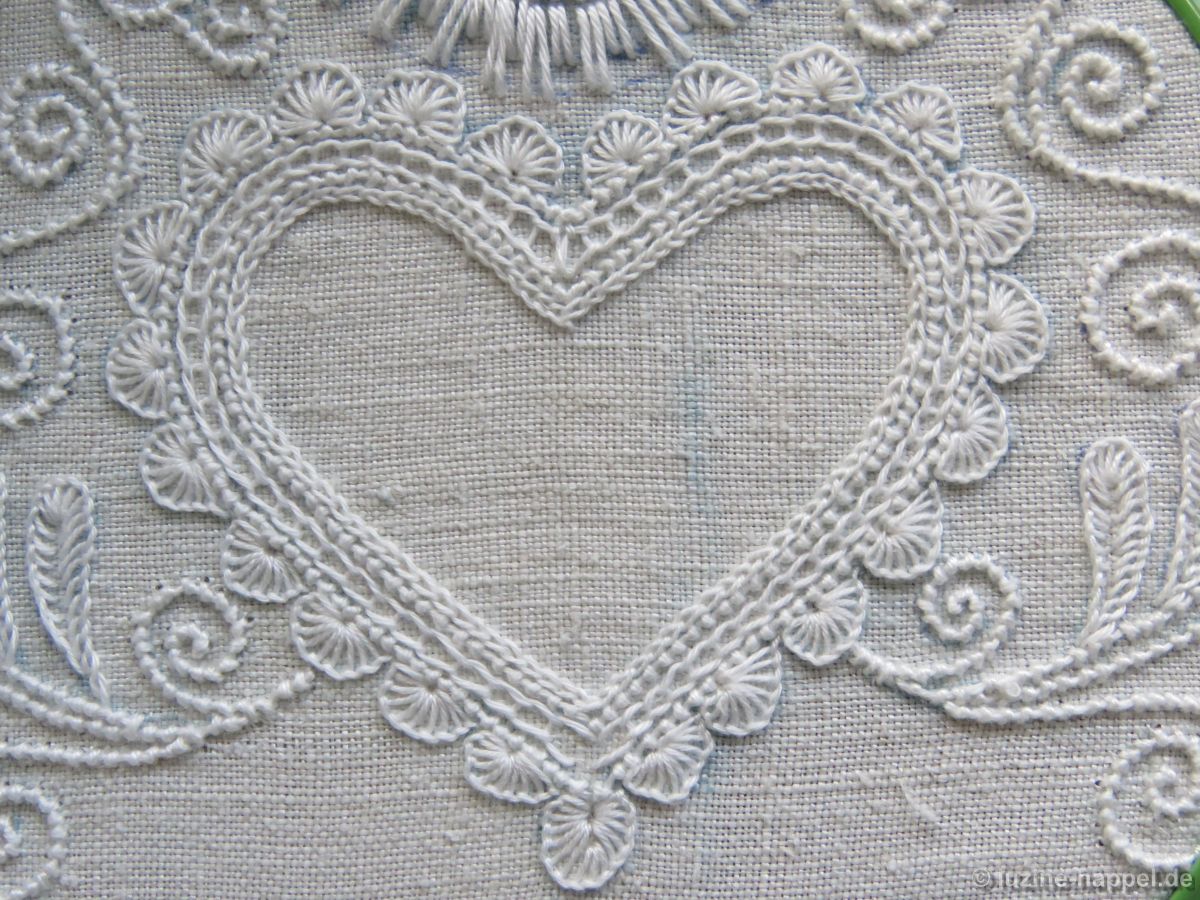
A similar effect can be achieved with crossed chain stitcesh.
The emerging point of one chain link coincides with the inserting point of the following loop.
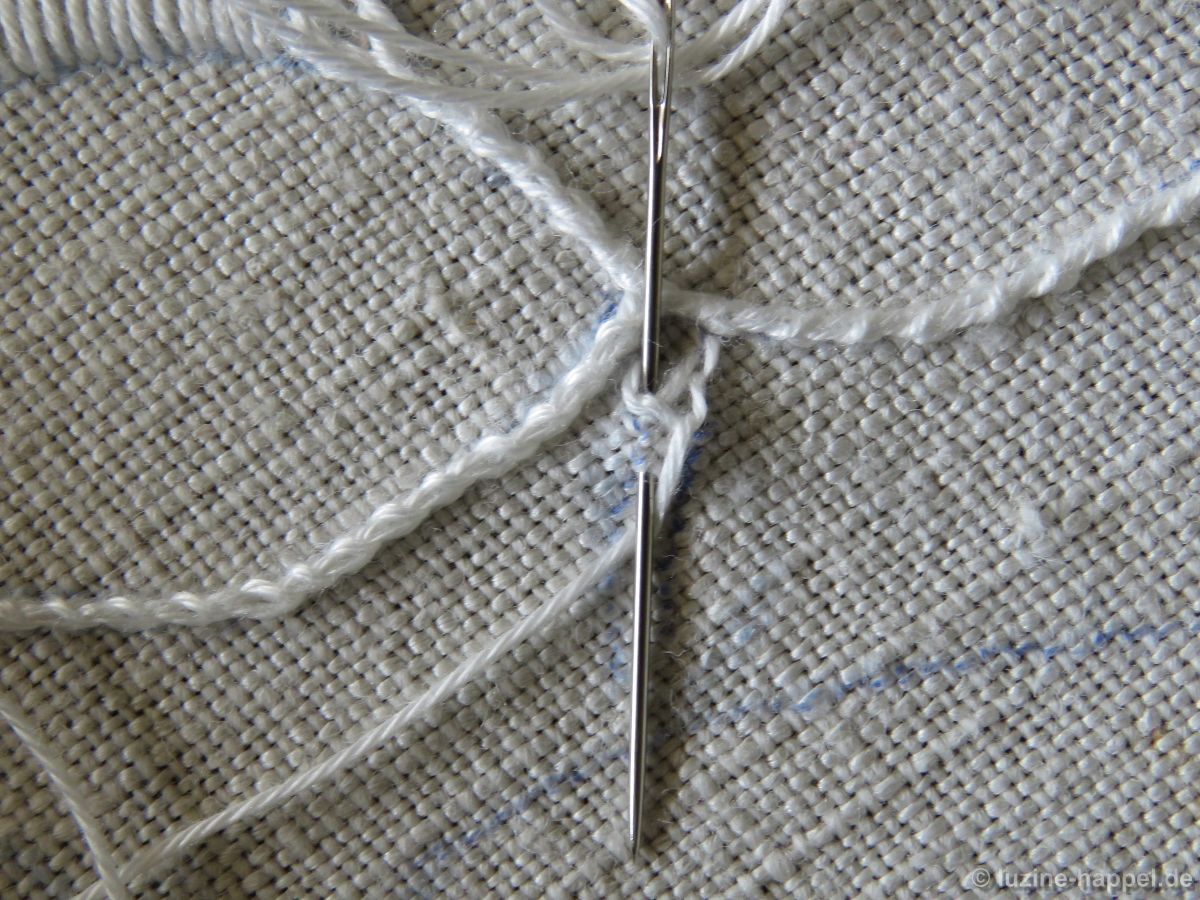
The working threads are alternately laid into loops to the left and to the right.
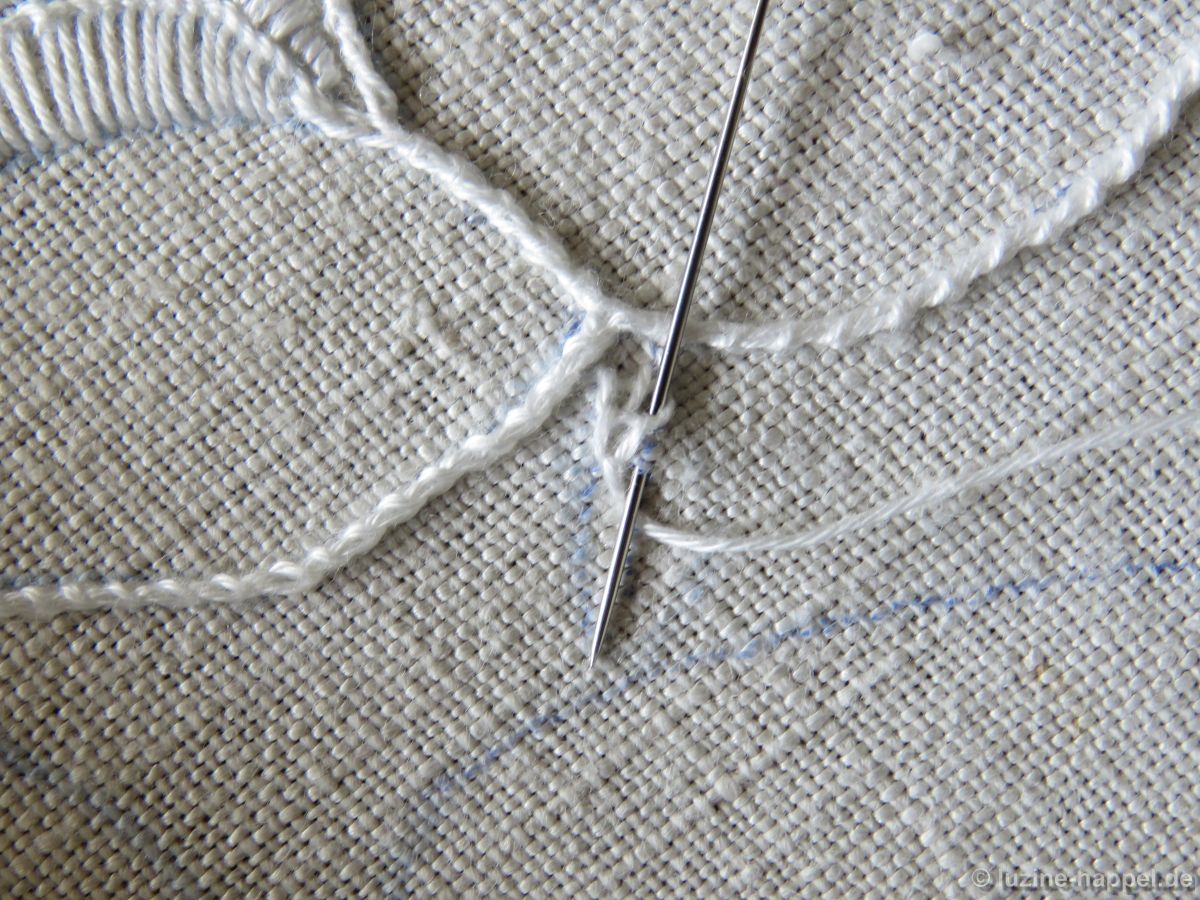
The crossed is more ample than the wide chain stitch.
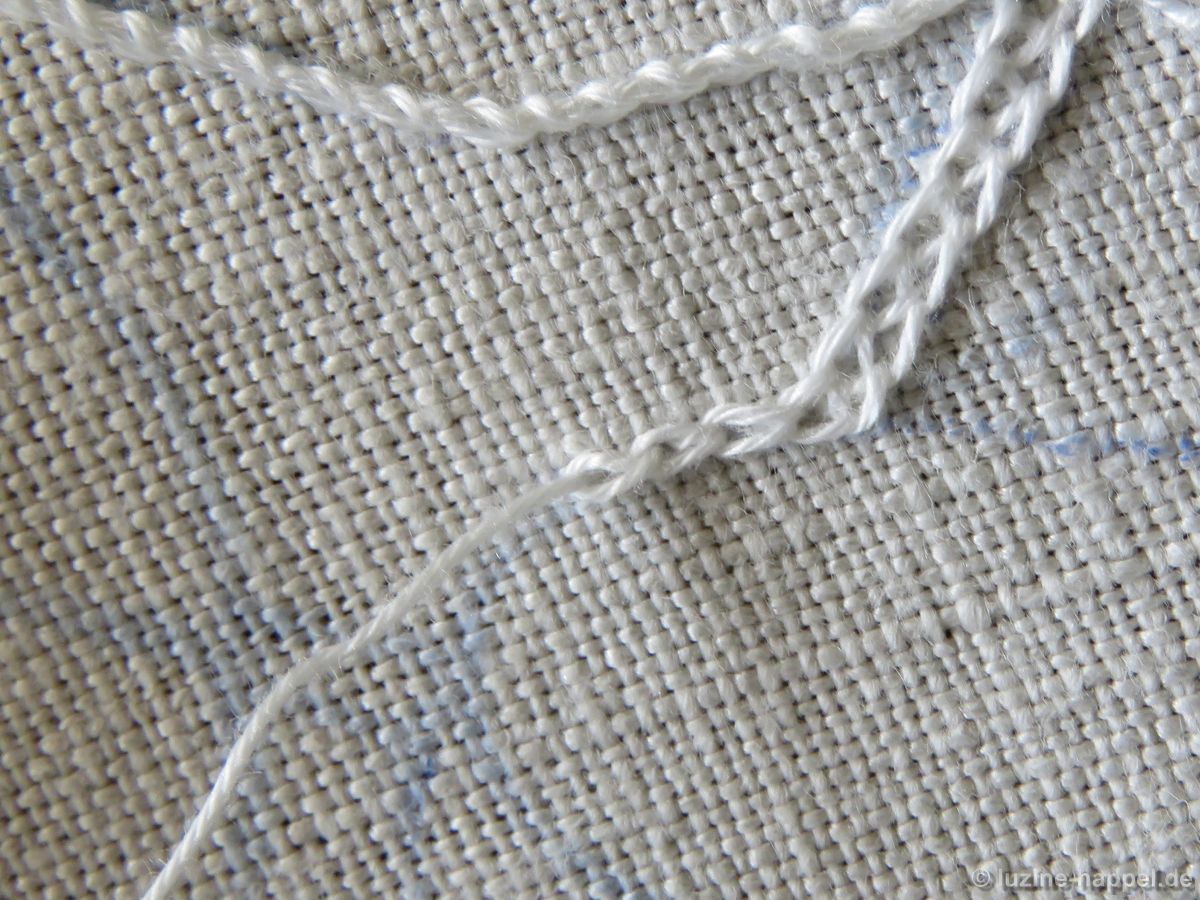
It can also be used effectively to work with wide stems. One can vary the thread thickness, stitch width, and stitch length particularly well.
See also:
Double Outlines (1) – Remaining Free Areas
Double Outlines (2) – Interlaced Straight Stitches
Double Outlines (3) – Interlaced Herringbone Stitches
Double Outlines (4) – French Knots
Double Outlines (5) – Bullion Knots Knots
Double Outlines (6) – Blanket Stitches
Double Outlines (7) – Honeycomb Darning Stitches

Leave a Reply