

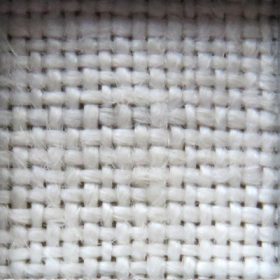
After testing linen F I, I have now tested the next bale of linen. Here are the results.
The linen is in the original condition of the bale it was sewn into after production. It has smooth selvedges.
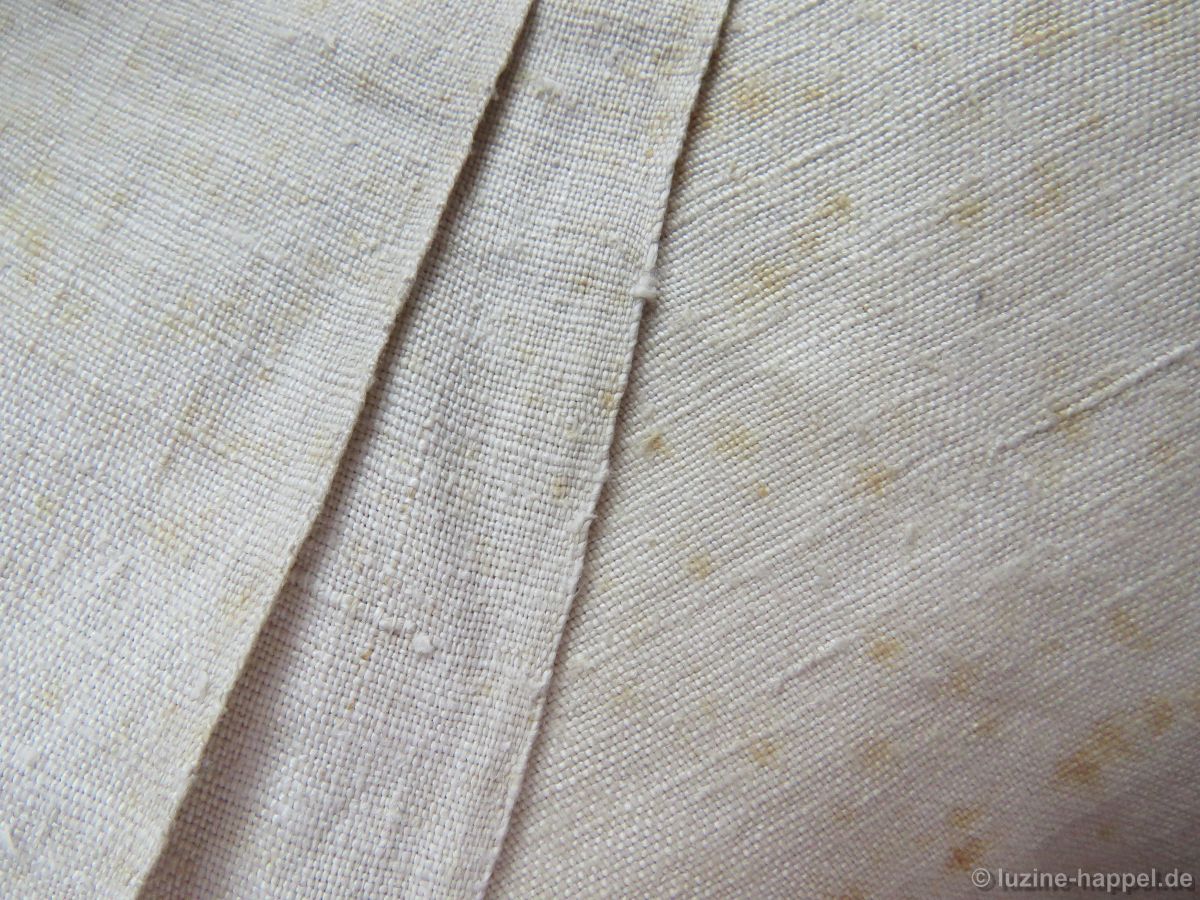
Approximately 100 cm needs to be cut off at both the beginning and end of the roll, as the linen is too distorted there.
The linen is 80 cm wide – a very versatile width for handwoven linen.
It feels relatively soft; I would describe the feel as soft.
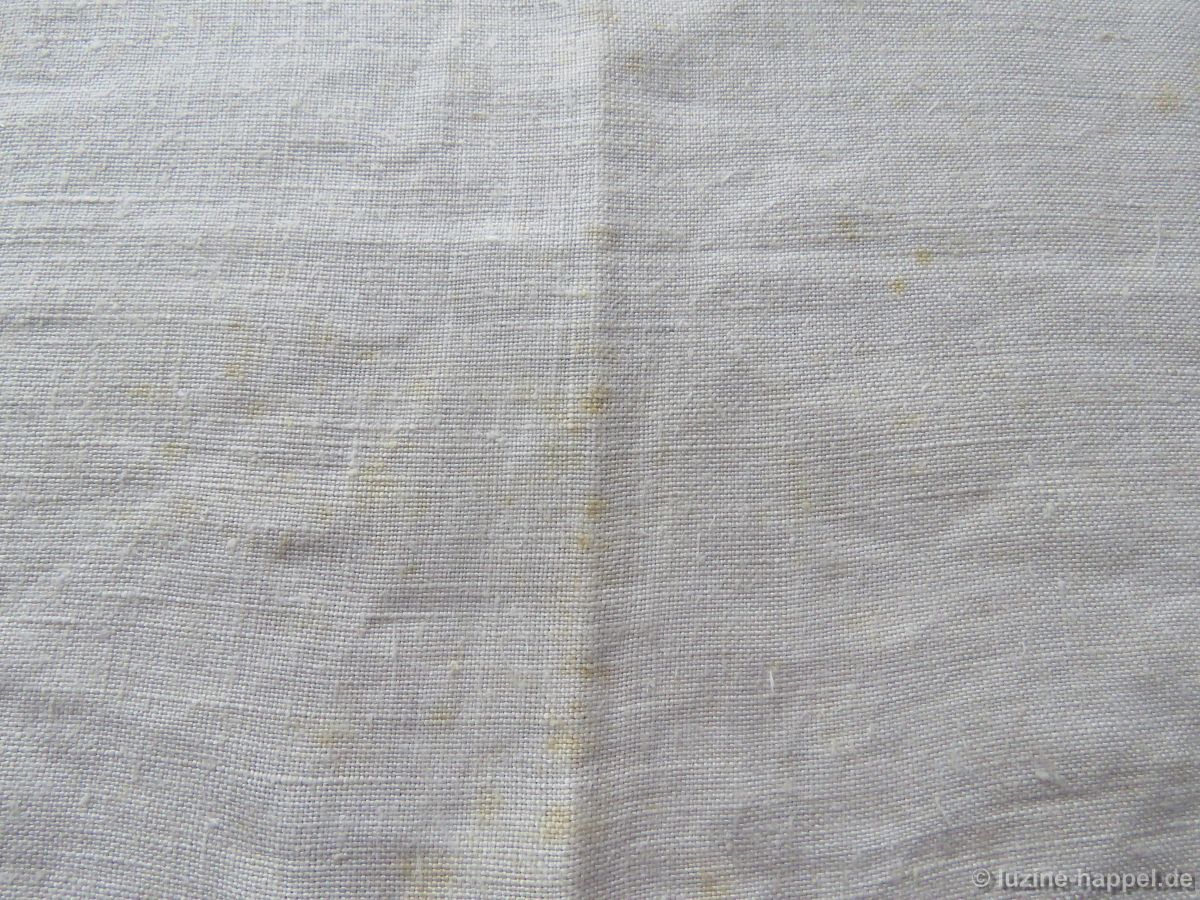
The linen shows little soiling at the fold and mostly lighter stains across the entire surface.
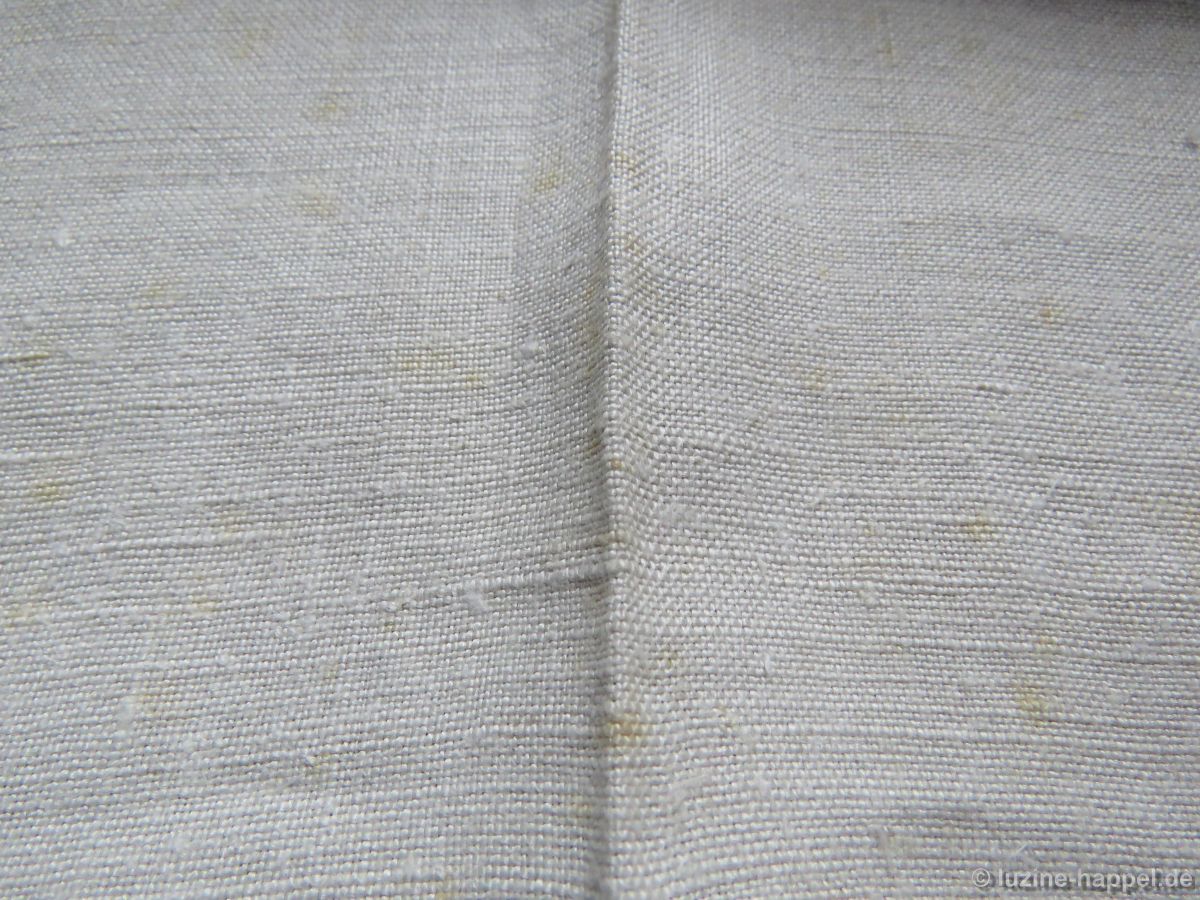
A quick wash test removed all these stains.
The fabric is dense, the threads used vary in thickness. I count 16 to 18 warp threads and 14 to 16 weft threads per centimeter.
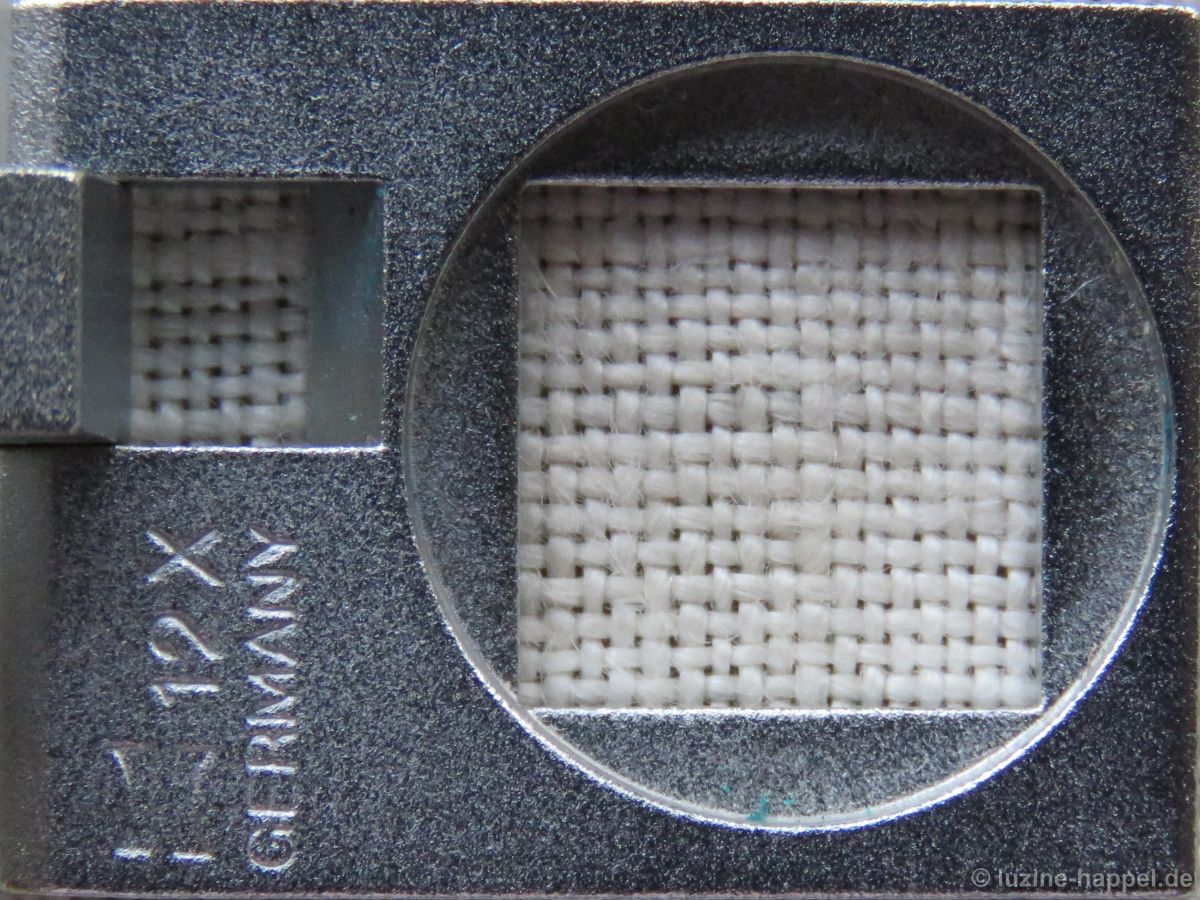
In comparison to linen F I – shown here in the left half in the large square in the lower image – the spaces between the threads are larger.
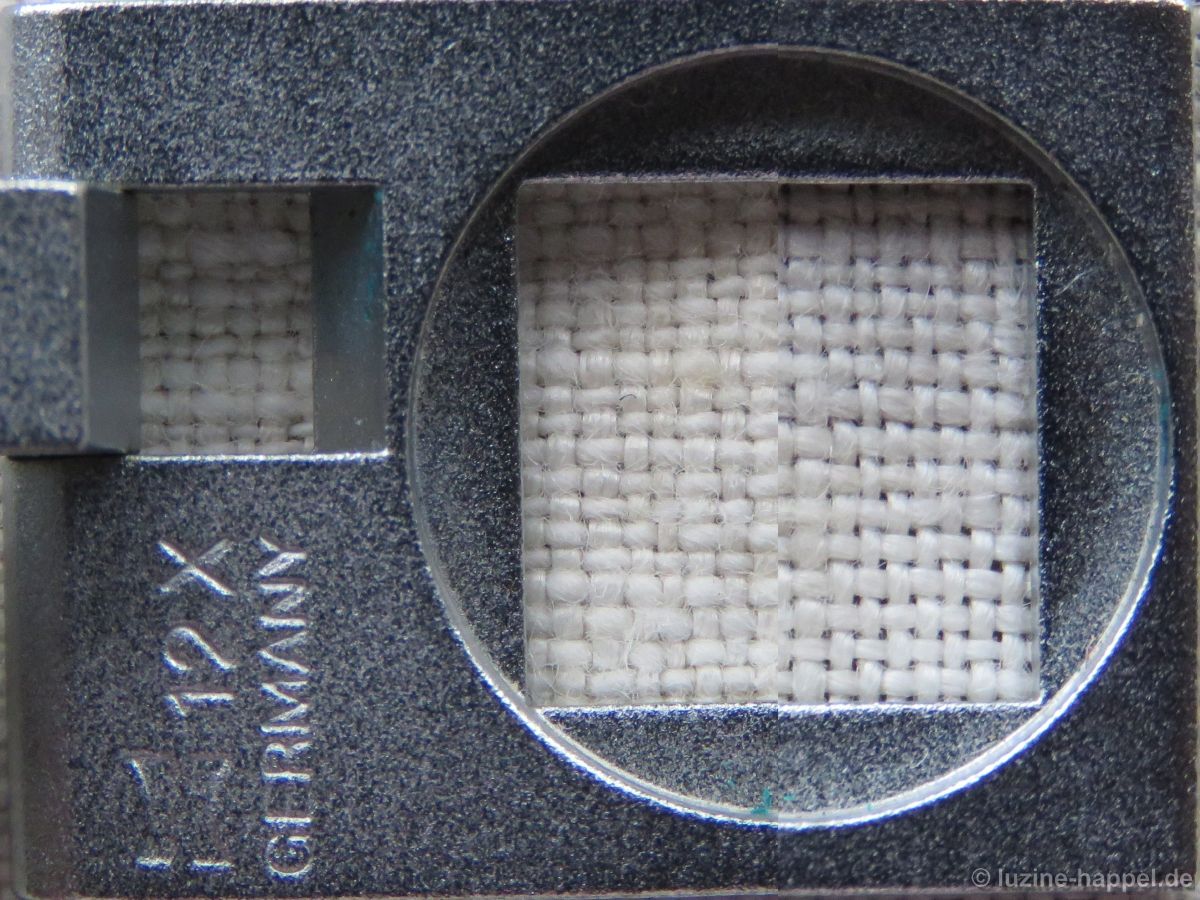
The threads are usually clearly separated from each other – a sign that they can be easily pulled out.
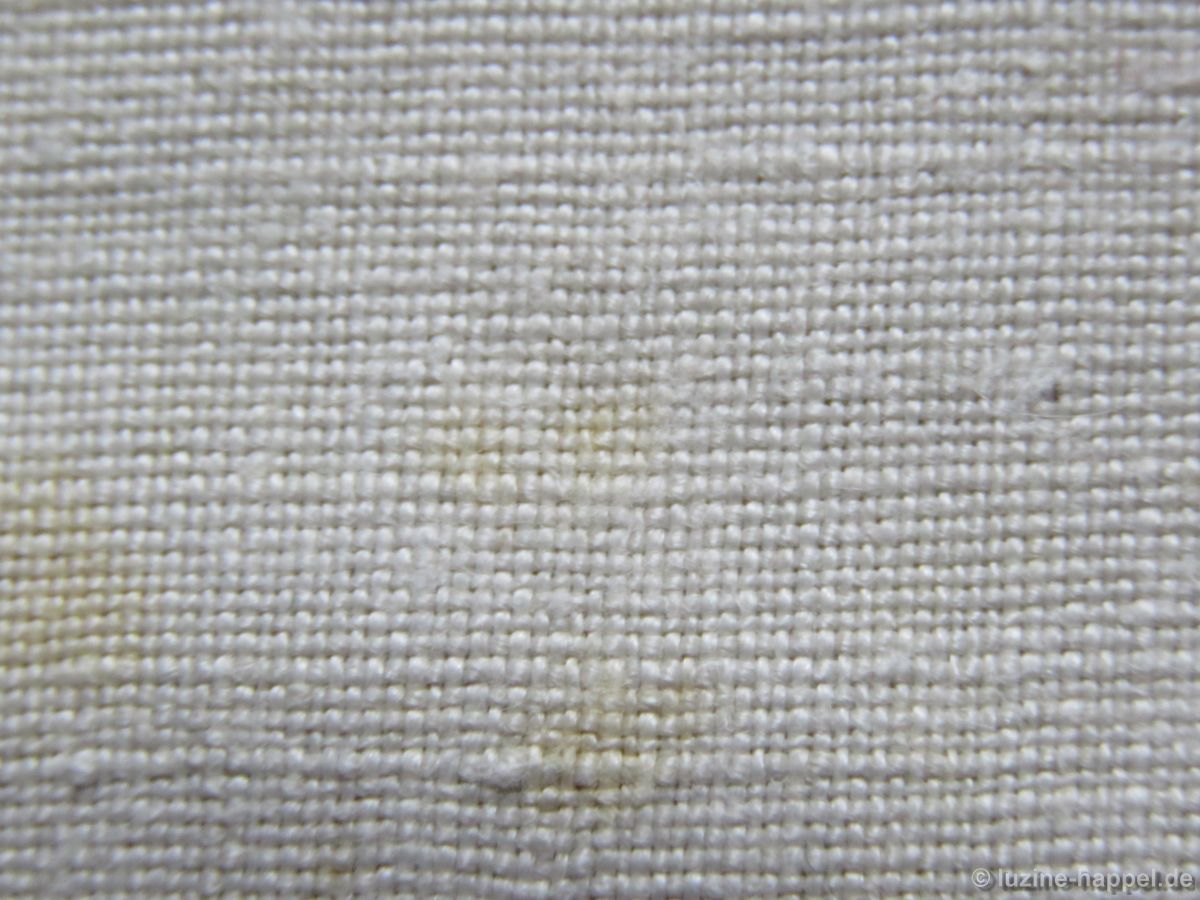
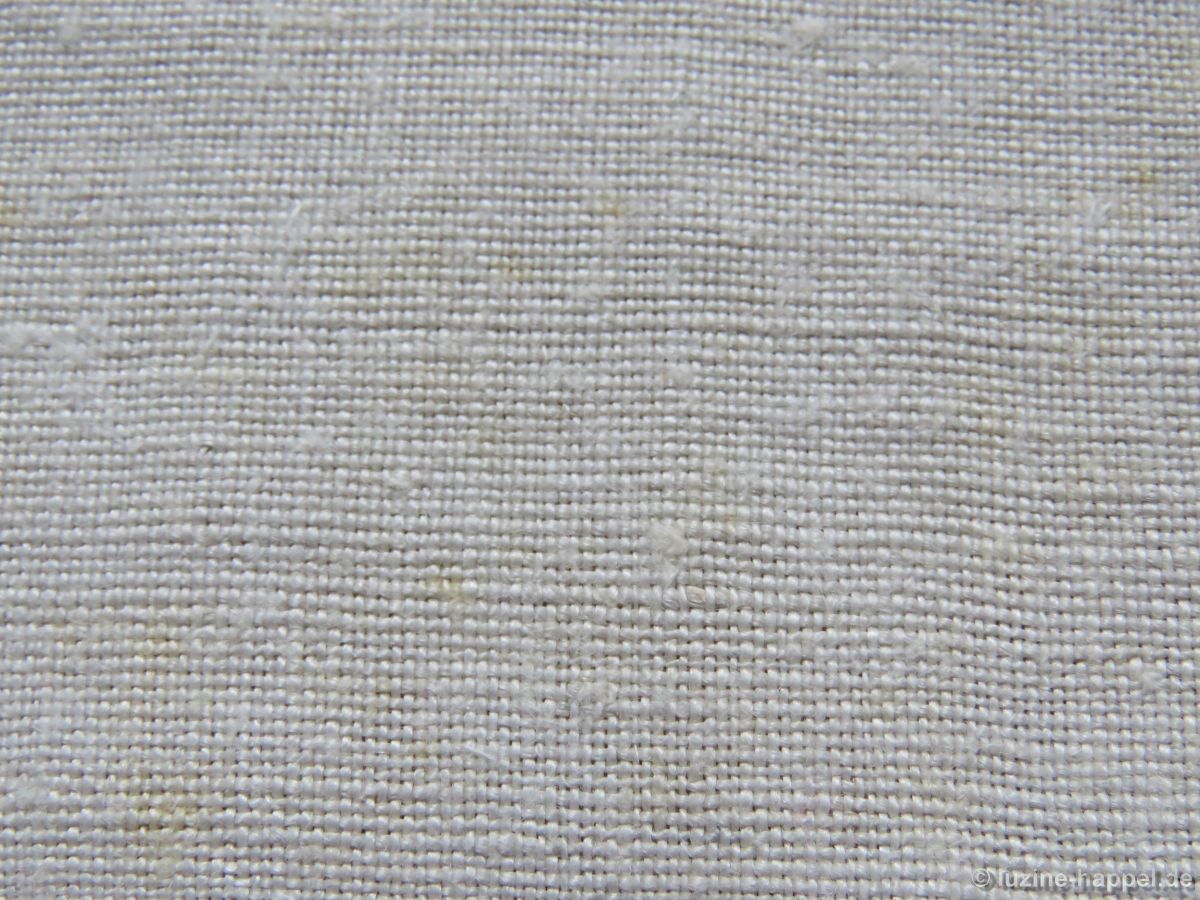
However, there are also areas with matting, although it is relatively minor.
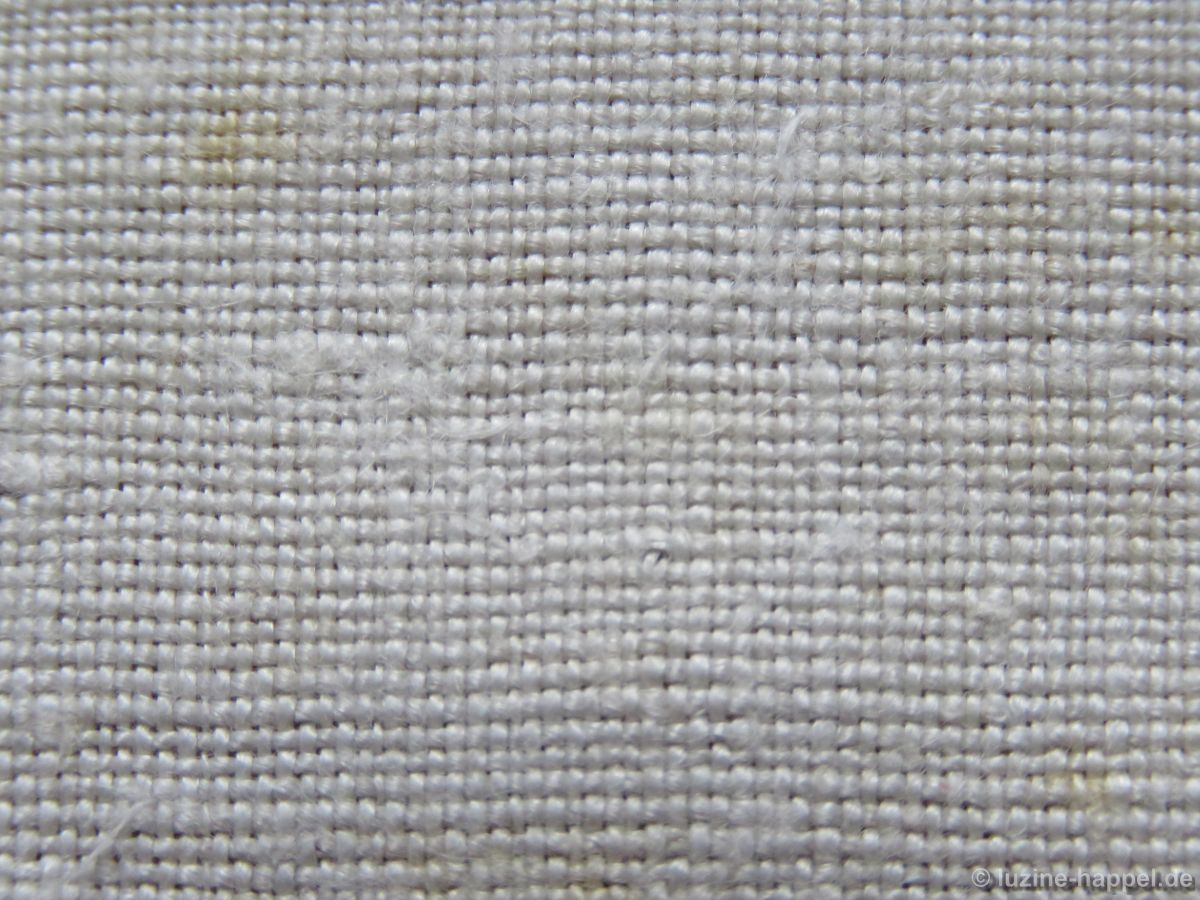
Occasionally, one finds thread thickenings and also small weaving defects.
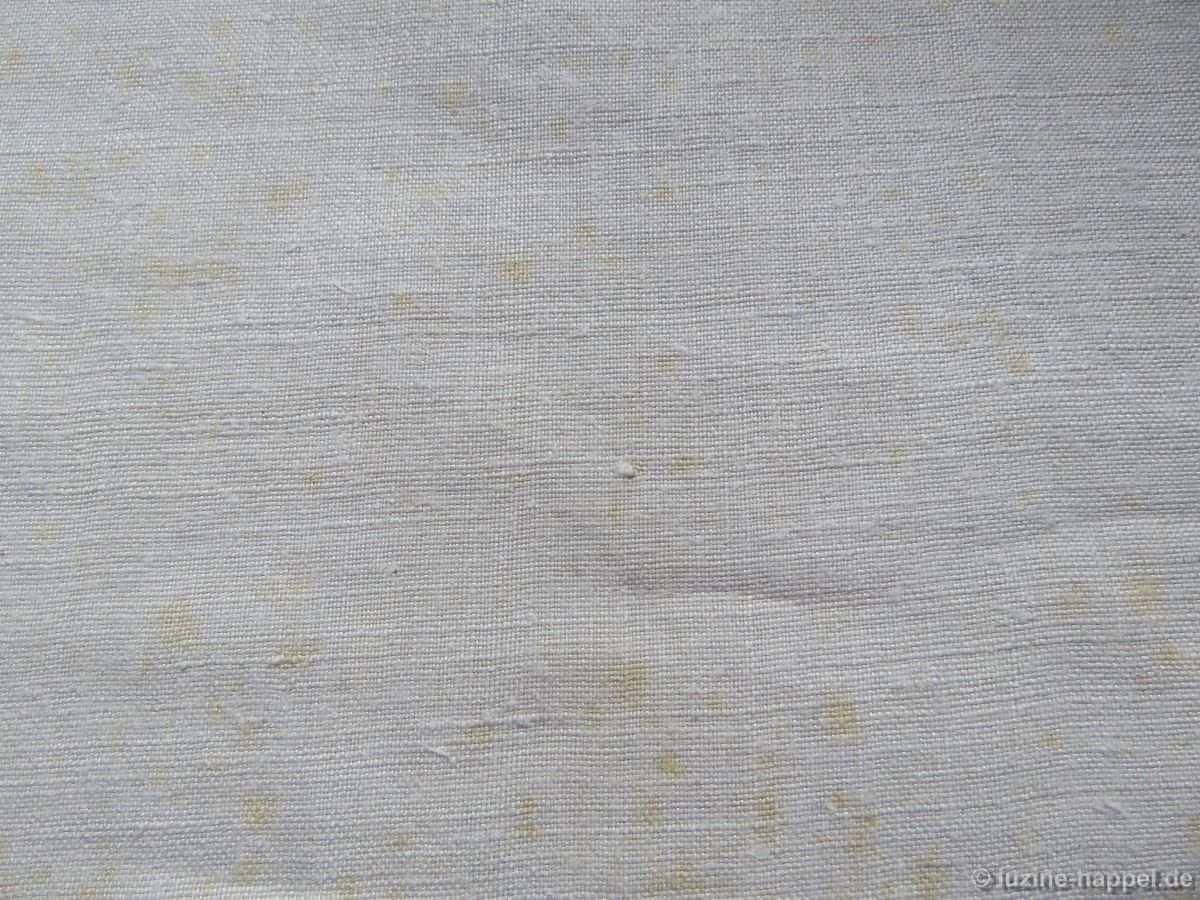
Both the warp and weft threads could be pulled out easily and without tearing.
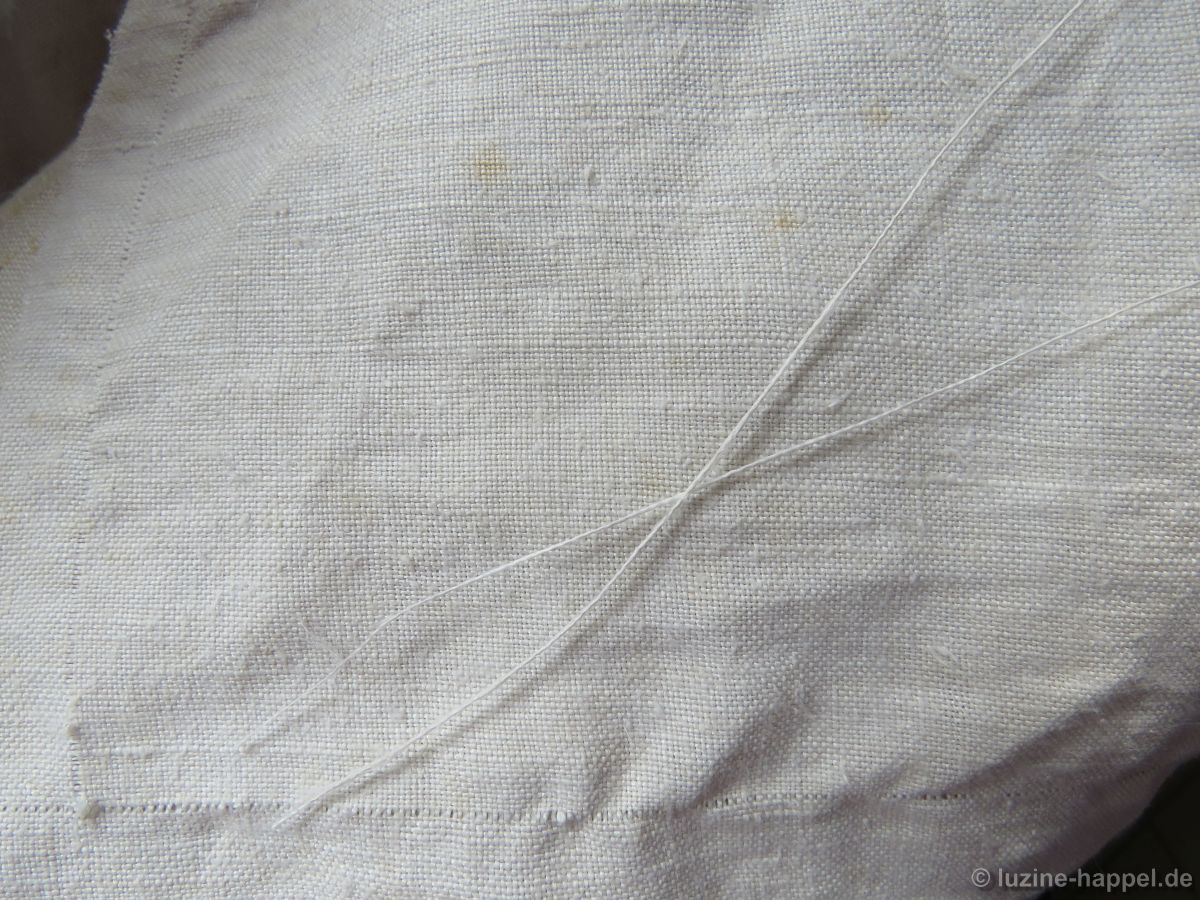
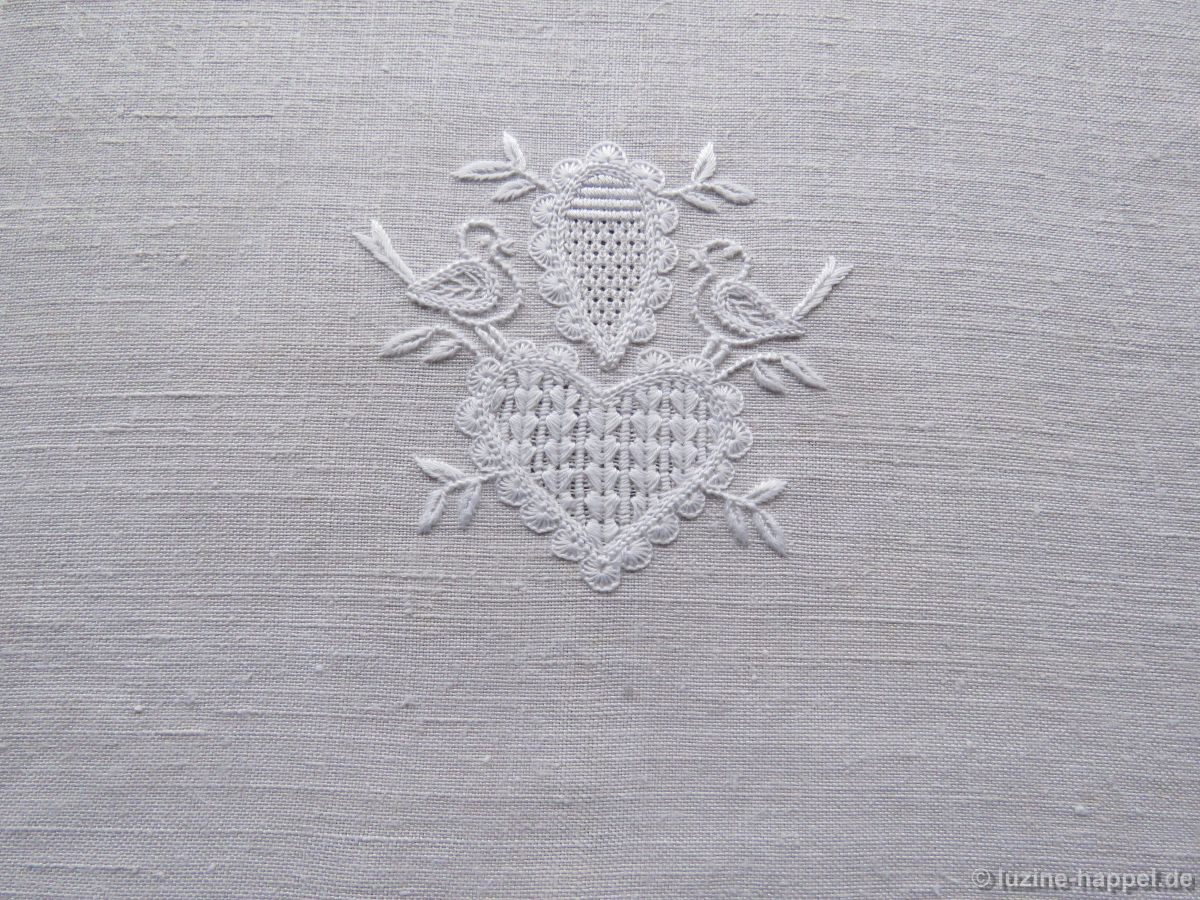
To test the linen for embroidery, a small motif (10 cm x 9 cm) is ironed on and embroidered.
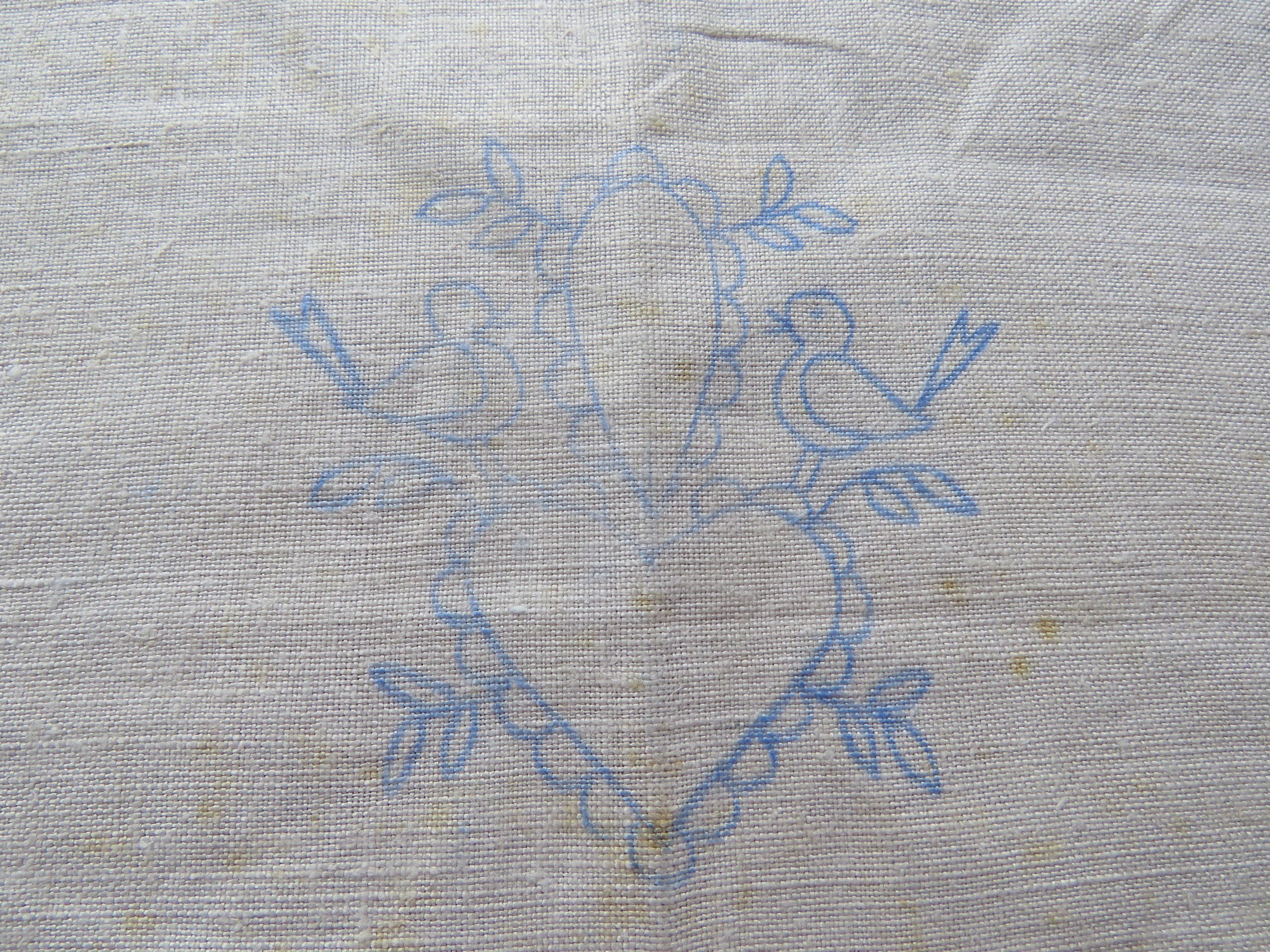
The embroidery process is very pleasant – the linen feels good in the hand and the needle glides easily through the fabric.
Although the linen is not quite as densely woven as linen F I 25394, the stitches can be placed relatively precisely.
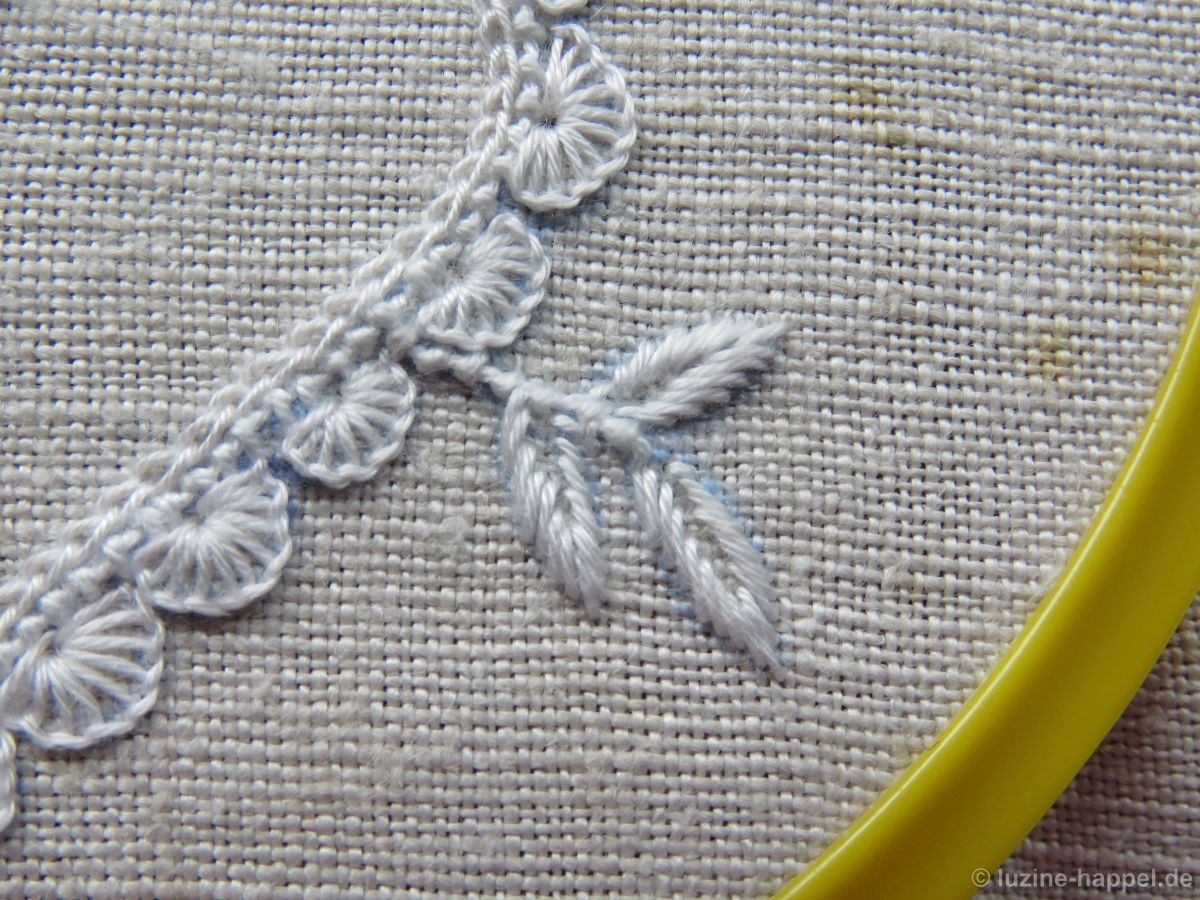
The thread pull-out in the motif areas was successful.
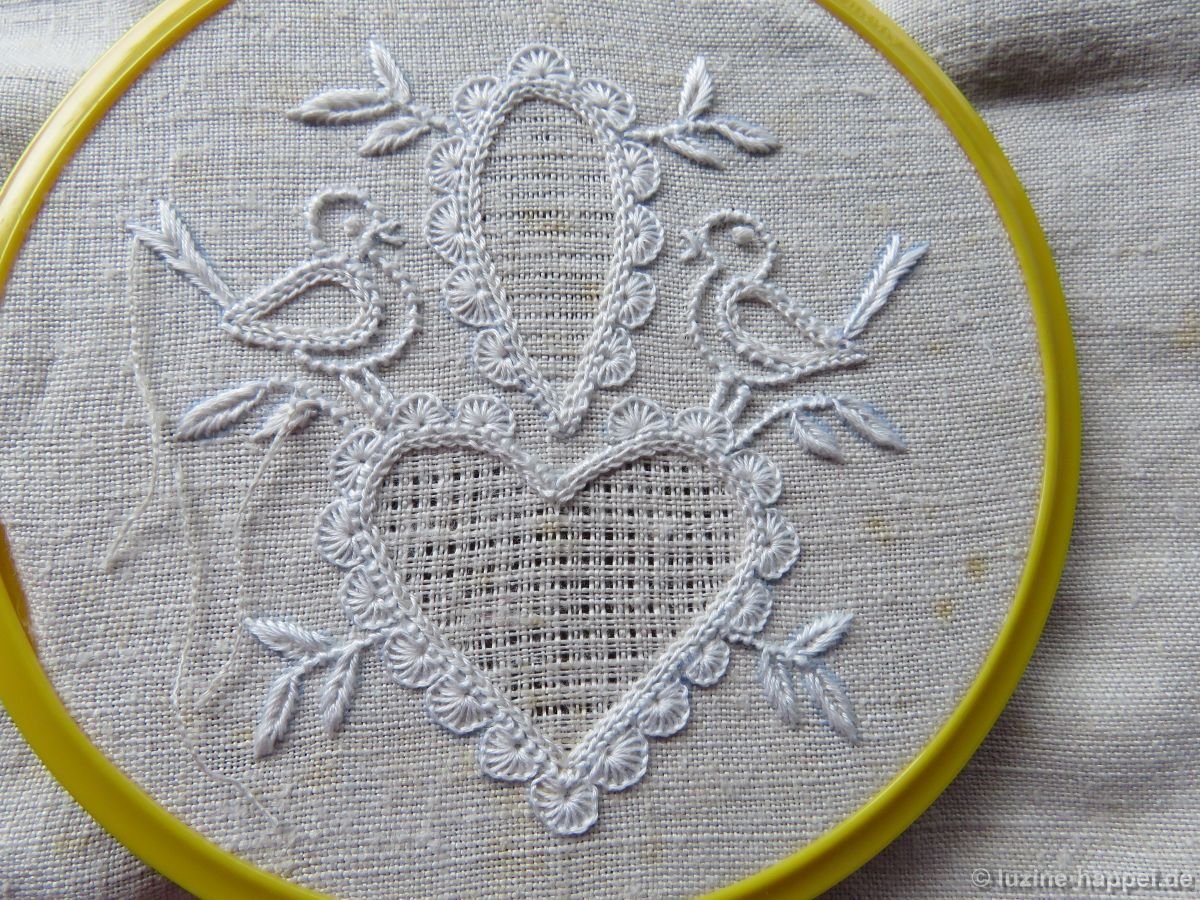
Despite the varying thickness of the fabric threads, the Limet thread grid appears relatively uniform.
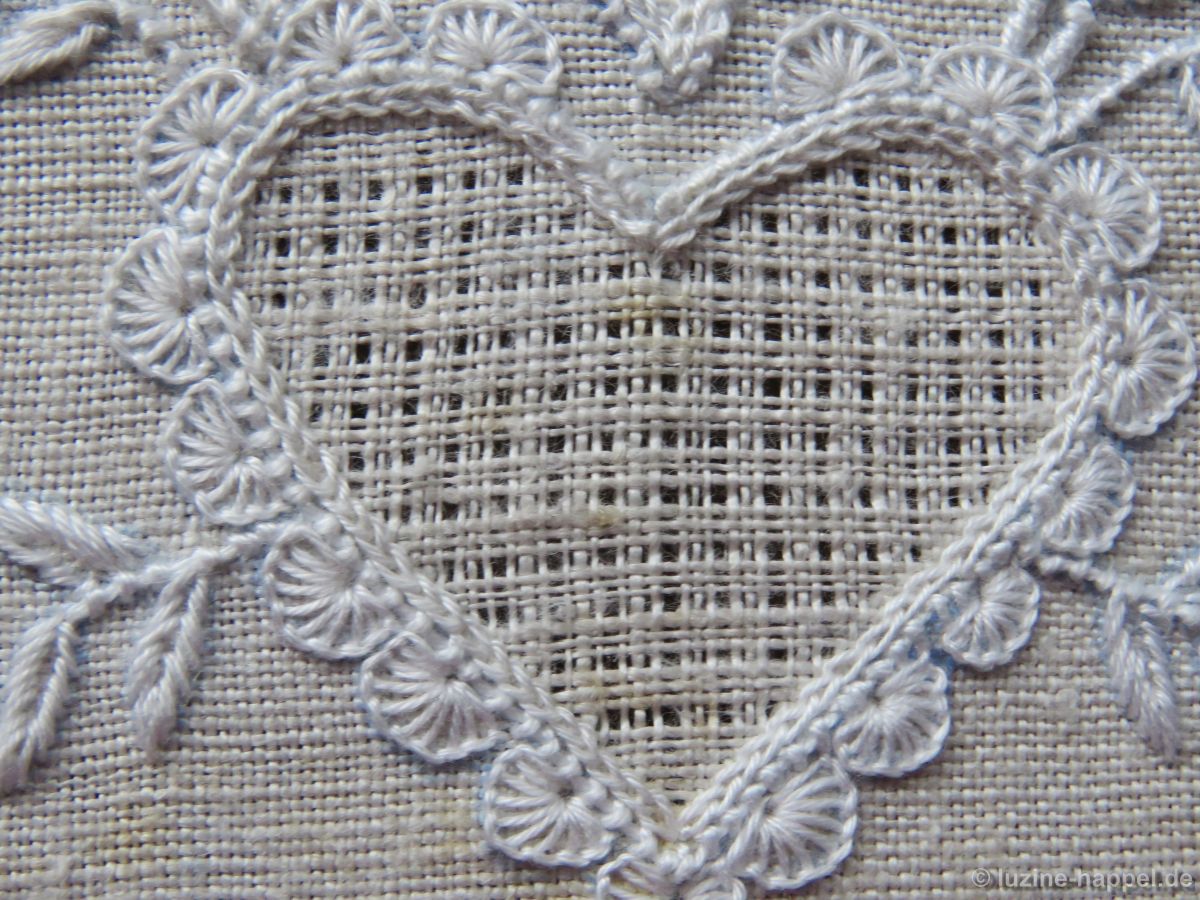
However, many beautiful filling patterns can be embroidered in the relatively small heart-shaped area of 4 cm width.
The small embroidery stands out well on the linen.
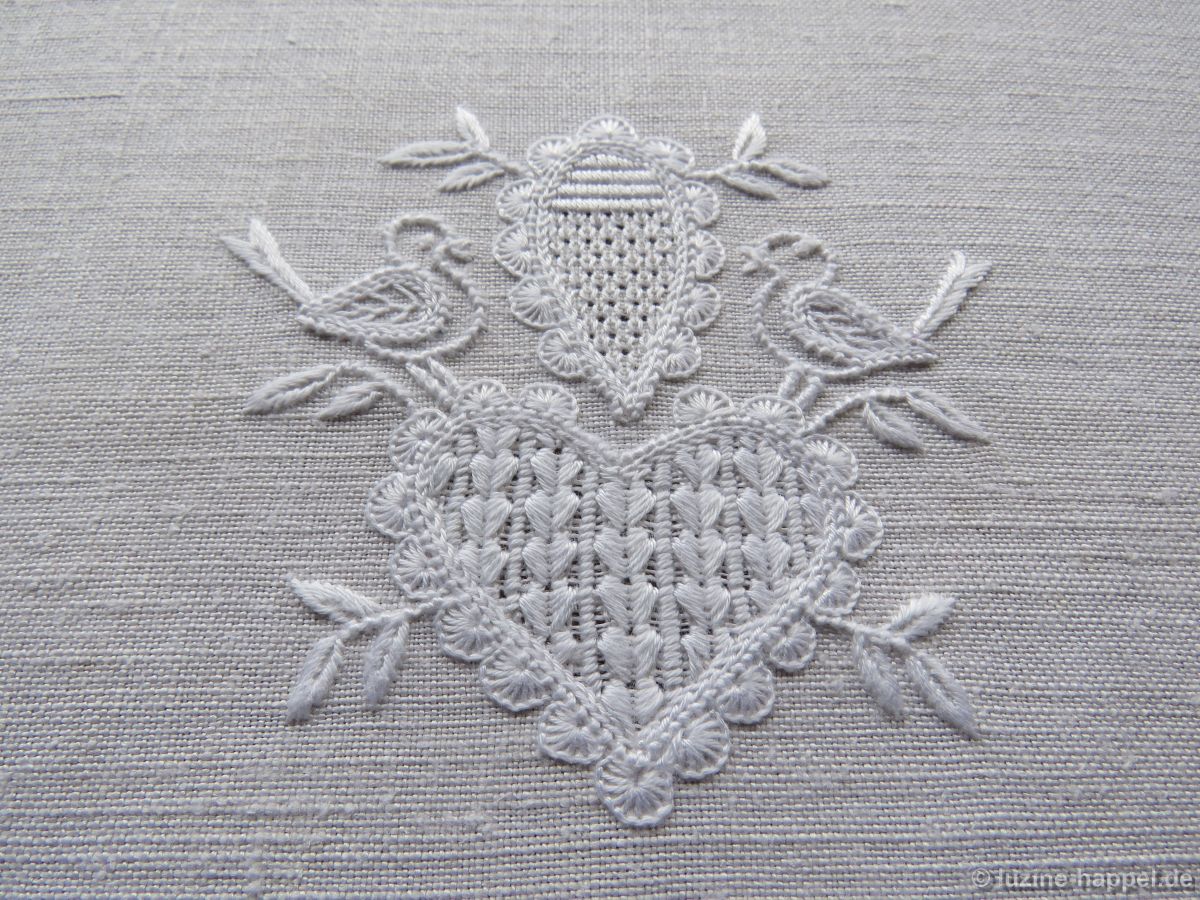
All stains have completely disappeared. The thickened threads do not detract from the overall appearance. A slightly irregular structure is typical of handwoven linen and contributes to the fabric’s charm.
However, the linen shrank by approximately 3.5% in the warp direction, while it retained the same width in the weft direction.
This linen—tested and approved—I am selling for €20.00 per meter. If you are interested, please send me an email.
See also:
Selling Handwoven Linen (1)
Testing Fabric Suitability for Schwalm Whitework
Linen: Embroidery Fabric from Flax Fibers
Fault in the Linen – what to do? (1)

Leave a Reply