
The 13 basic stitches of Schwalm whitework
B. The filling stitches
6. The Wave stitch
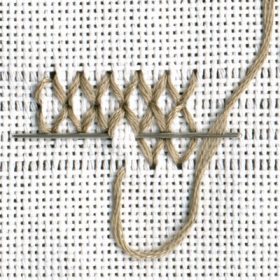
Wave stitches are decorative elements used as simple withdrawn thread patterns. In simple withdrawn thread patterns, (usually) every fourth thread of the fabric is pulled out in one direction—either horizontally or vertically.
thread weight: depending on the fineness of the linen, coton à broder thread No. 20 or No. 25
building the rows: from right to left
direction of needle movement: from right to left
way of working: Bring needle up in a bottom withdrawn thread line, cross over two fabric threads to the right and three fabric threads to top und insert the needle. Cross under four fabric threads to the left and bring needle up. Pull the needle through and the thread to the left. Cross over two fabric threads to the right and three fabric threads to bottom and insert the needle (emerging point of the previous stitch).
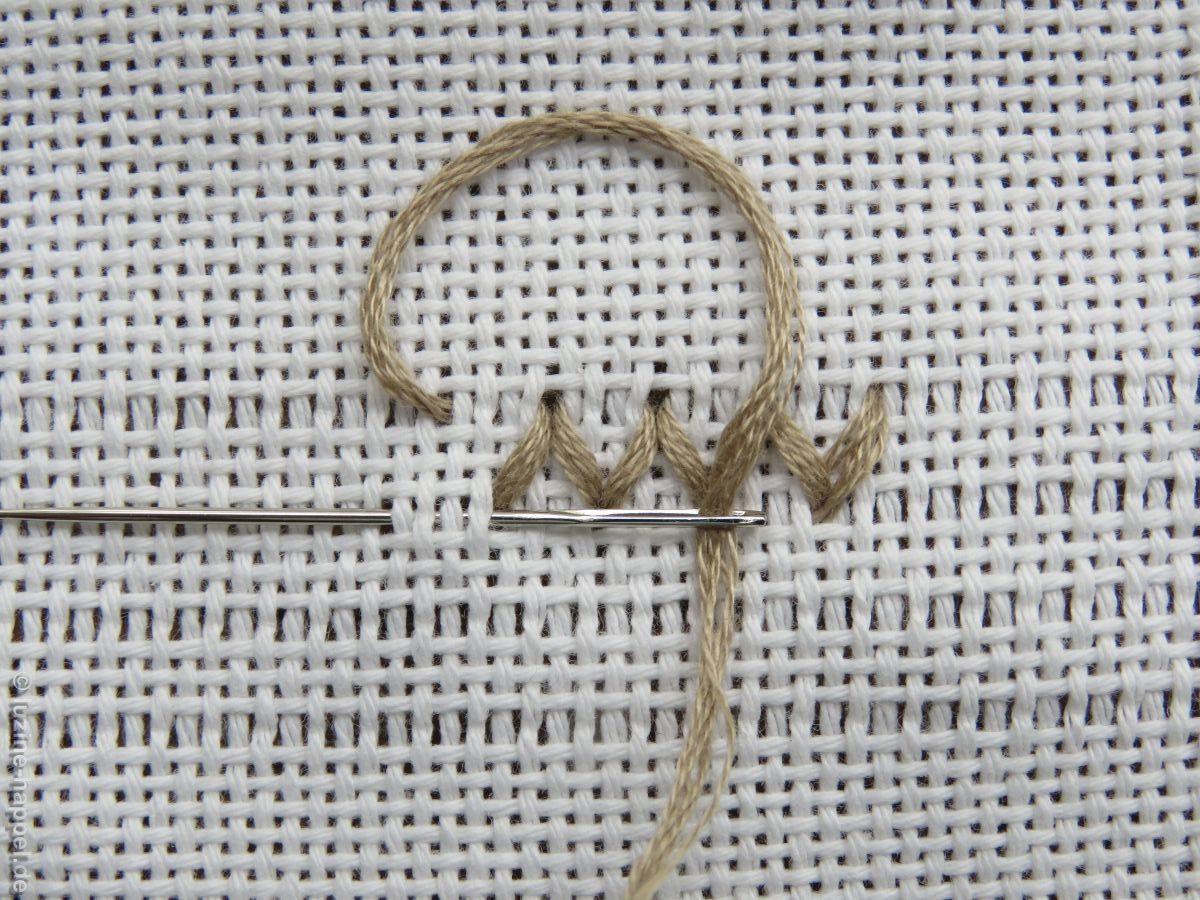
At the end of the row, pass the needle vertically downwards under six fabric threads and rotate the work 180°
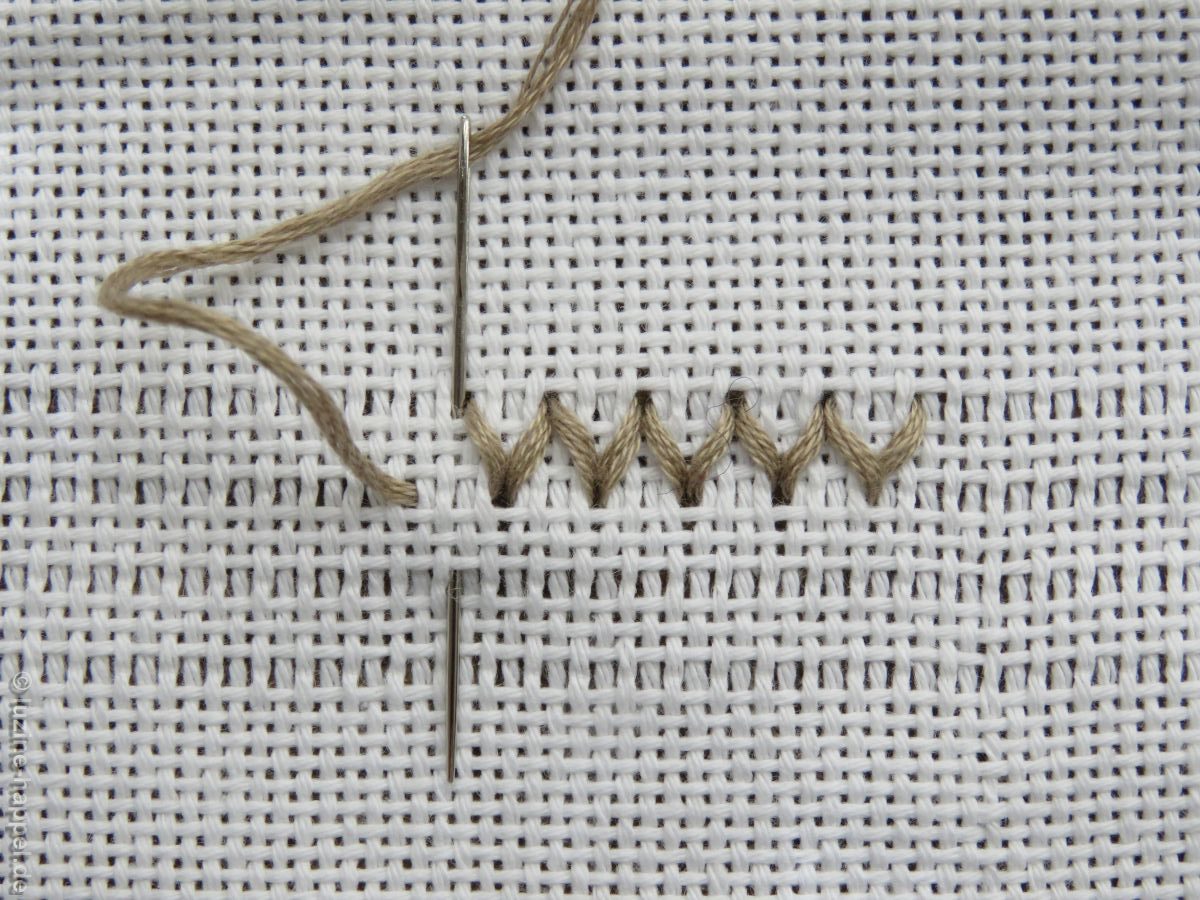
and work the next row as a mirror image.

In this way, you join row after row.
If a row does not end with the upward stitch, the working thread must be pulled under the edge fastening on the back
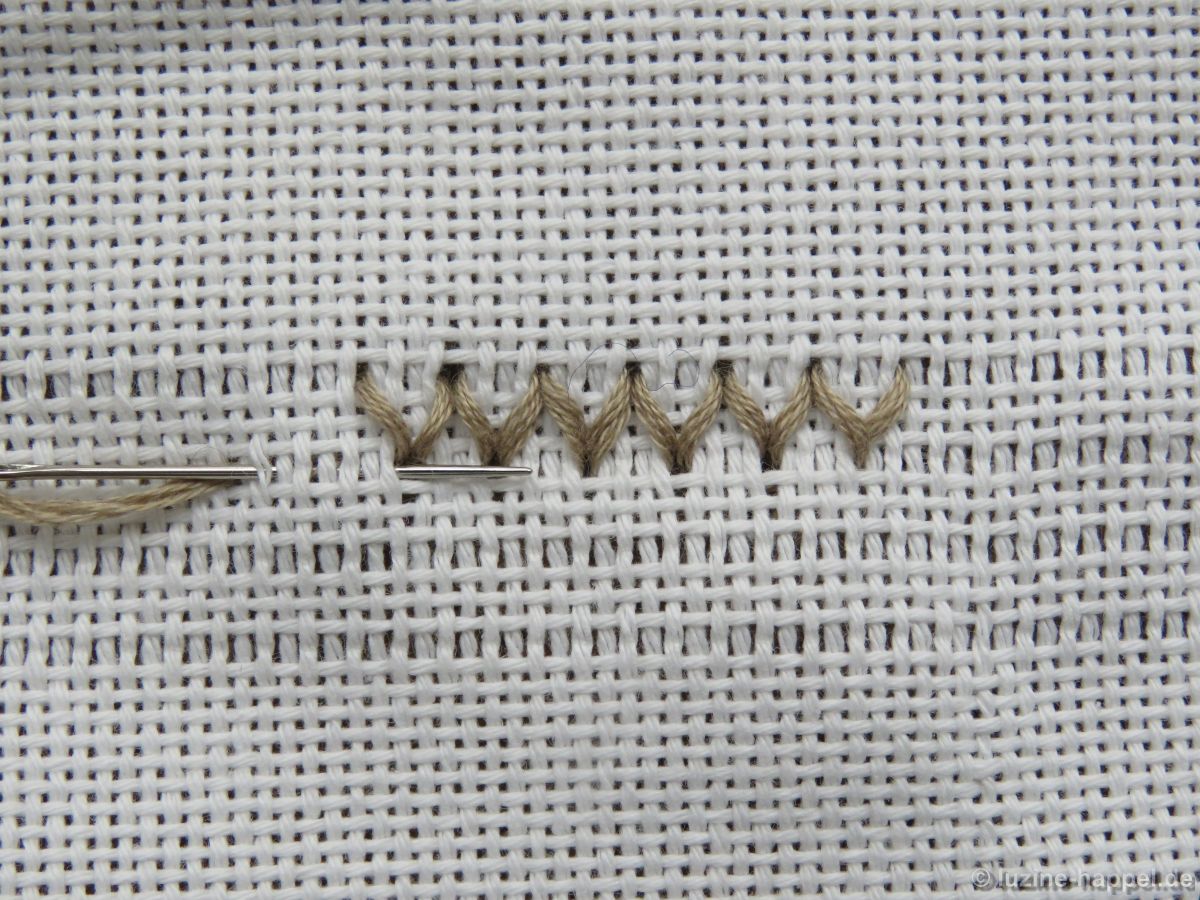
so that you can bring the needle out again at the last insertion point.
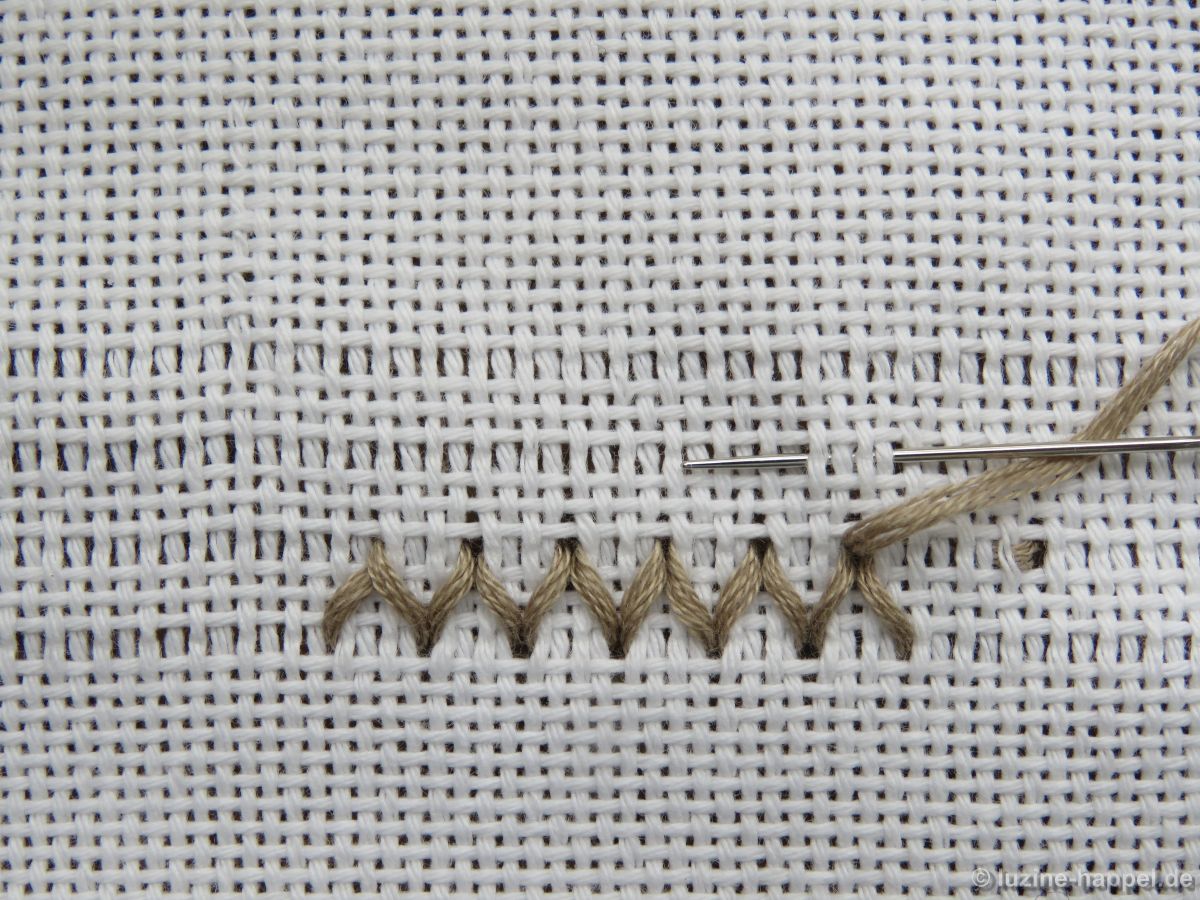
Wave stitches are popular patterns for filling small areas.
Combined with other stitches, they create beautiful striped patterns. Wave stitches can be varied in height and width, as was done with area-filling pattern No. 583.
Leave a Reply
You must be logged in to post a comment.