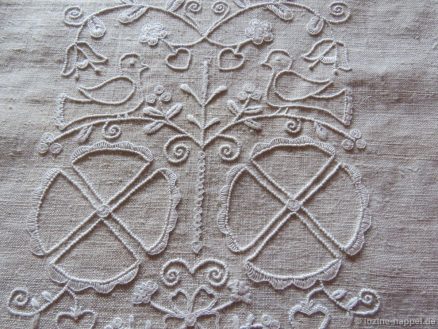
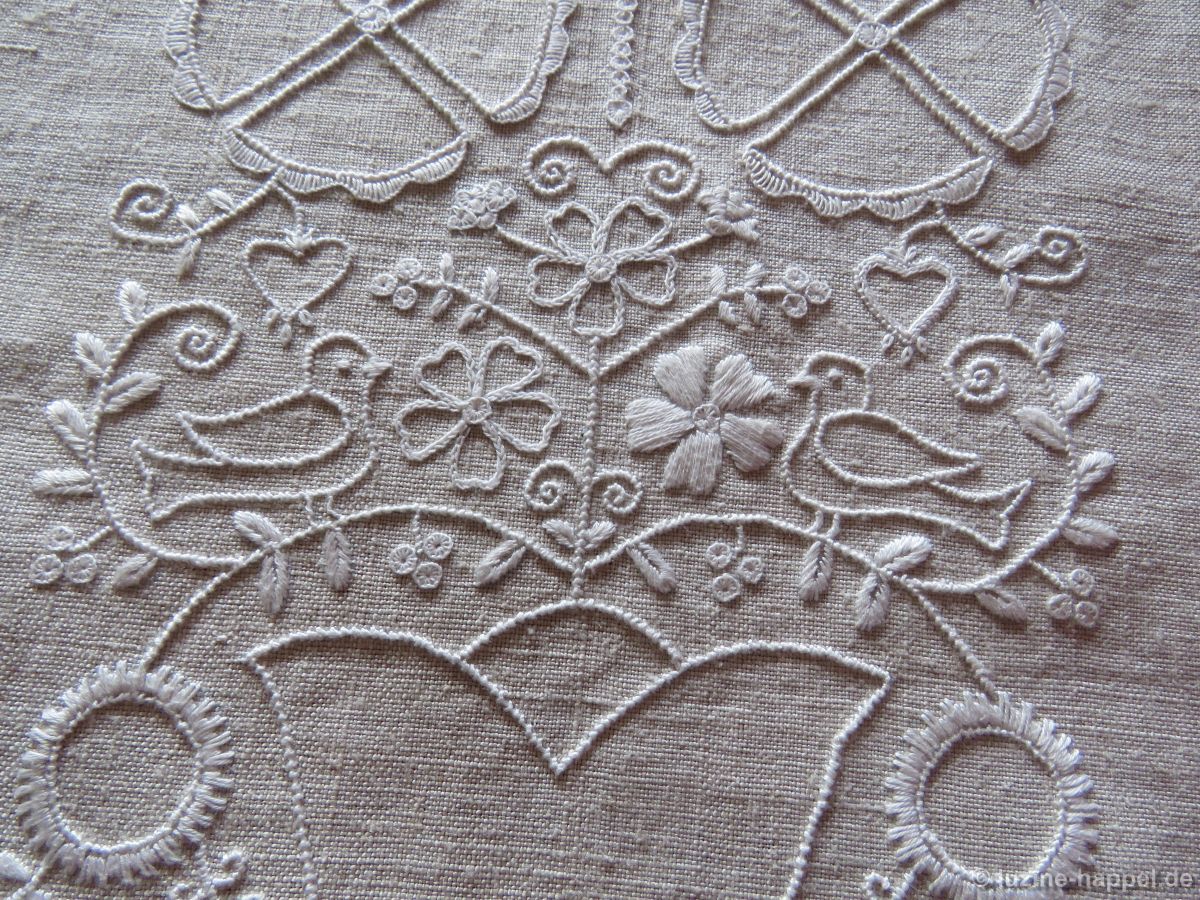
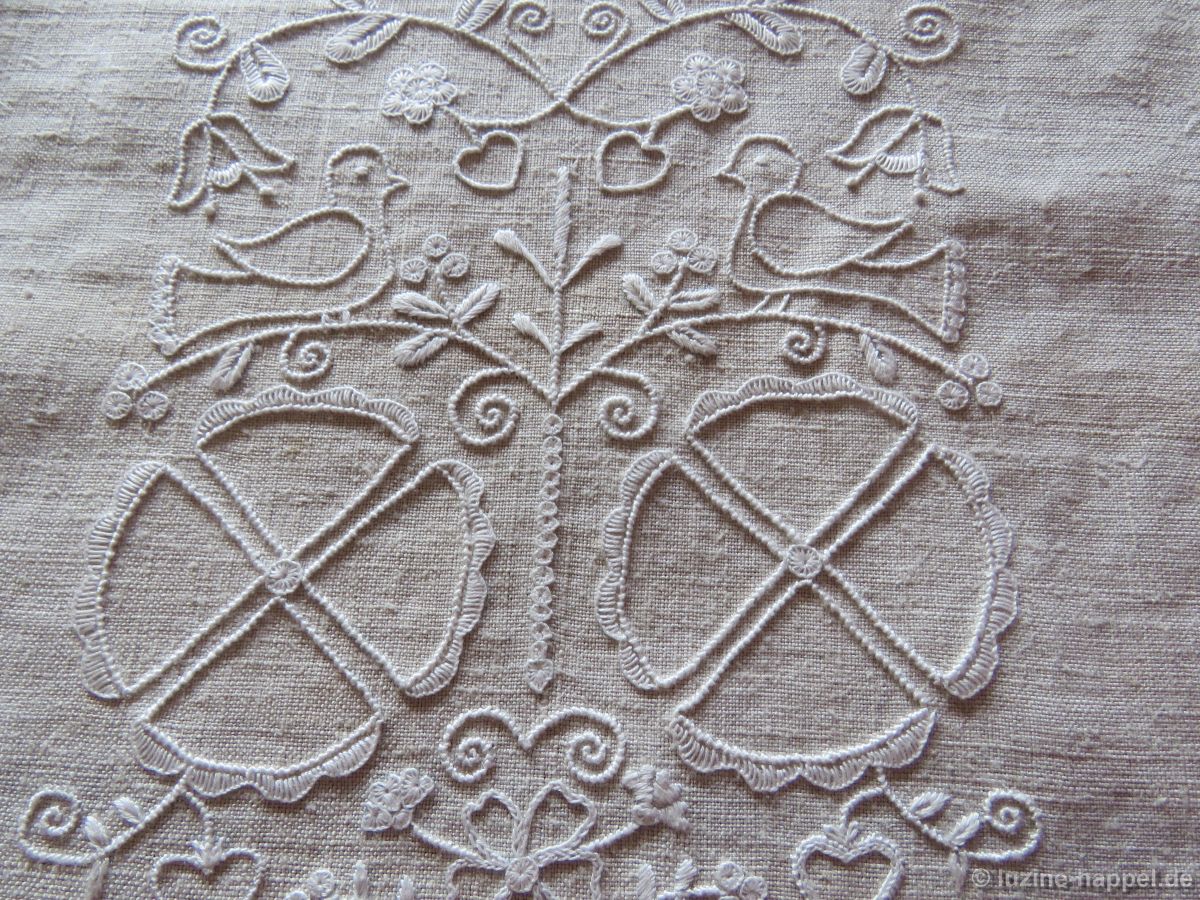
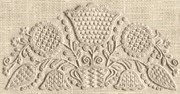
Preparatory work of section 4 of the outline design.
There are actually only three considerations to make for the next short sub-section.
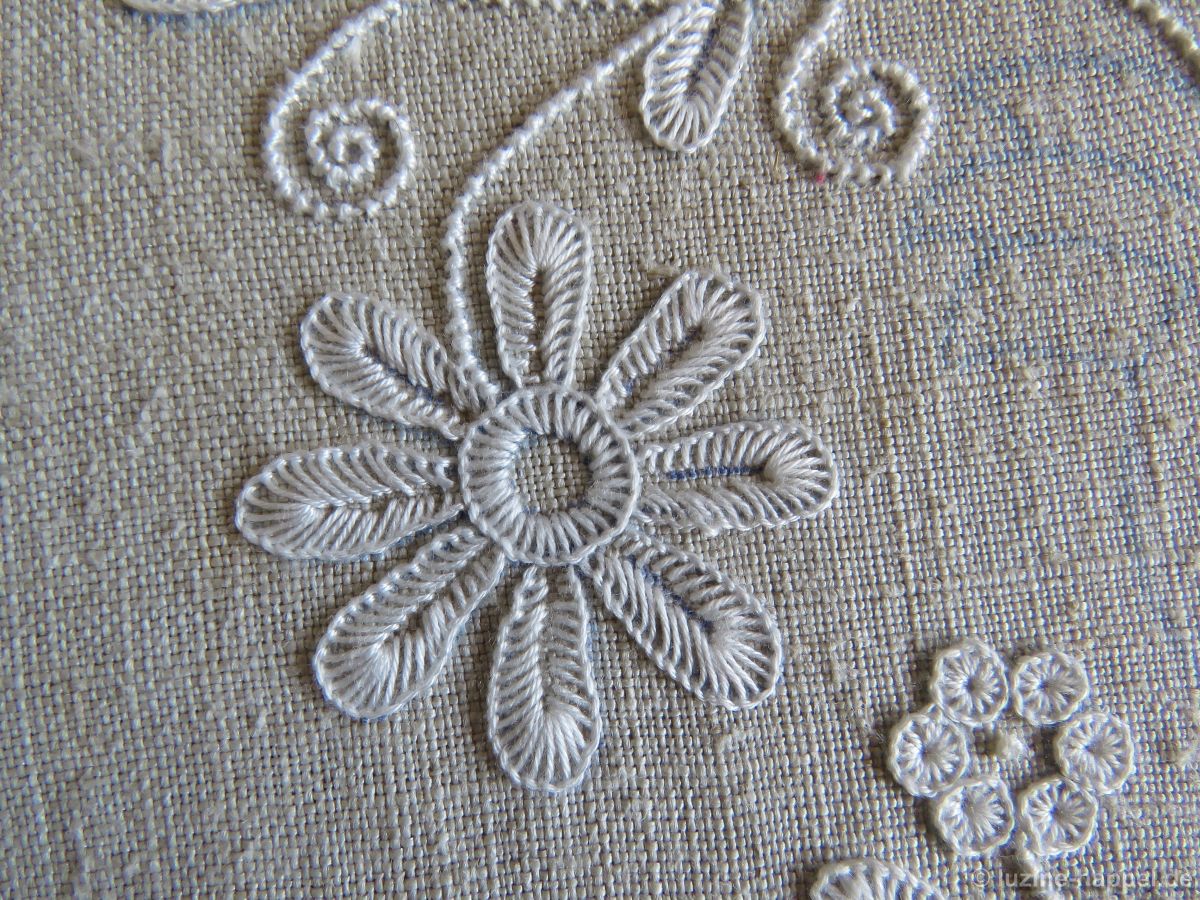
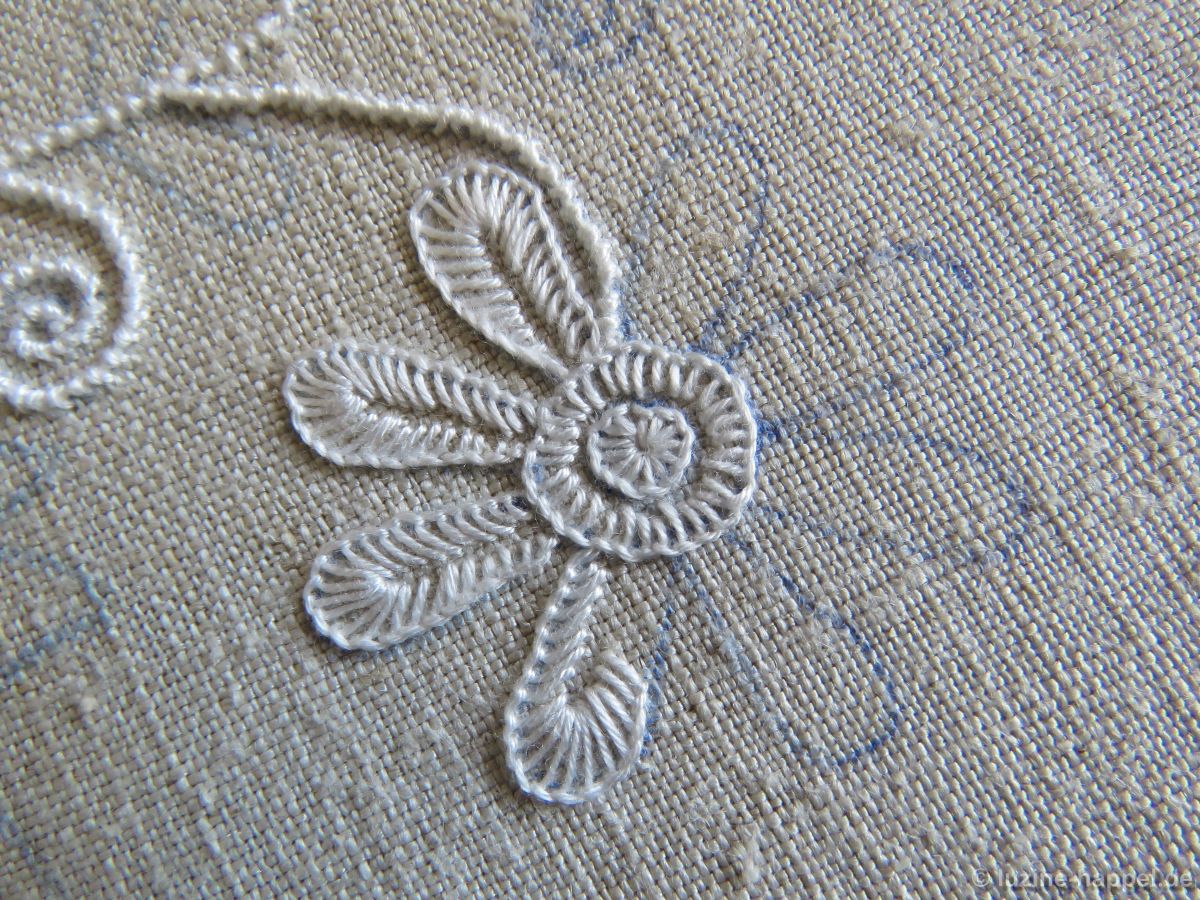
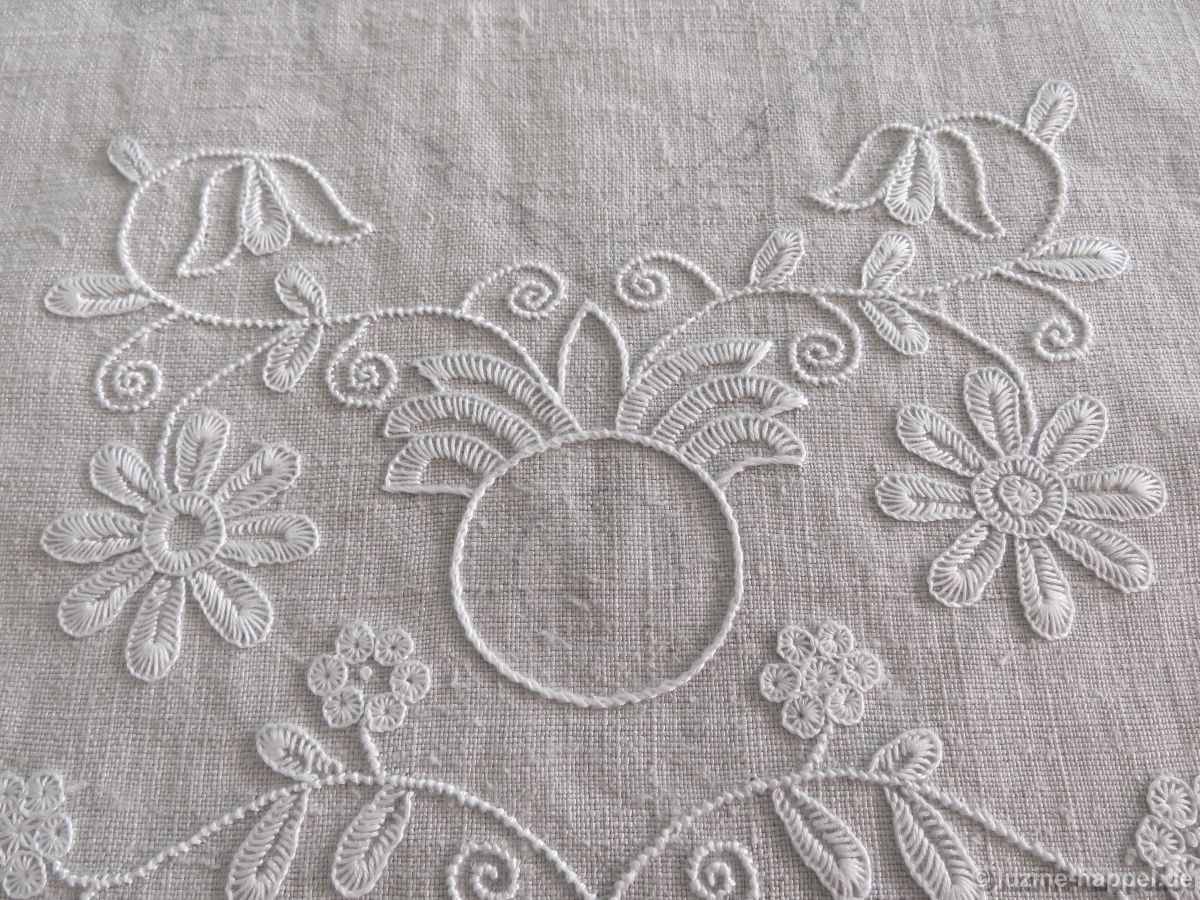
1. How to embroider the oxeye daisy?
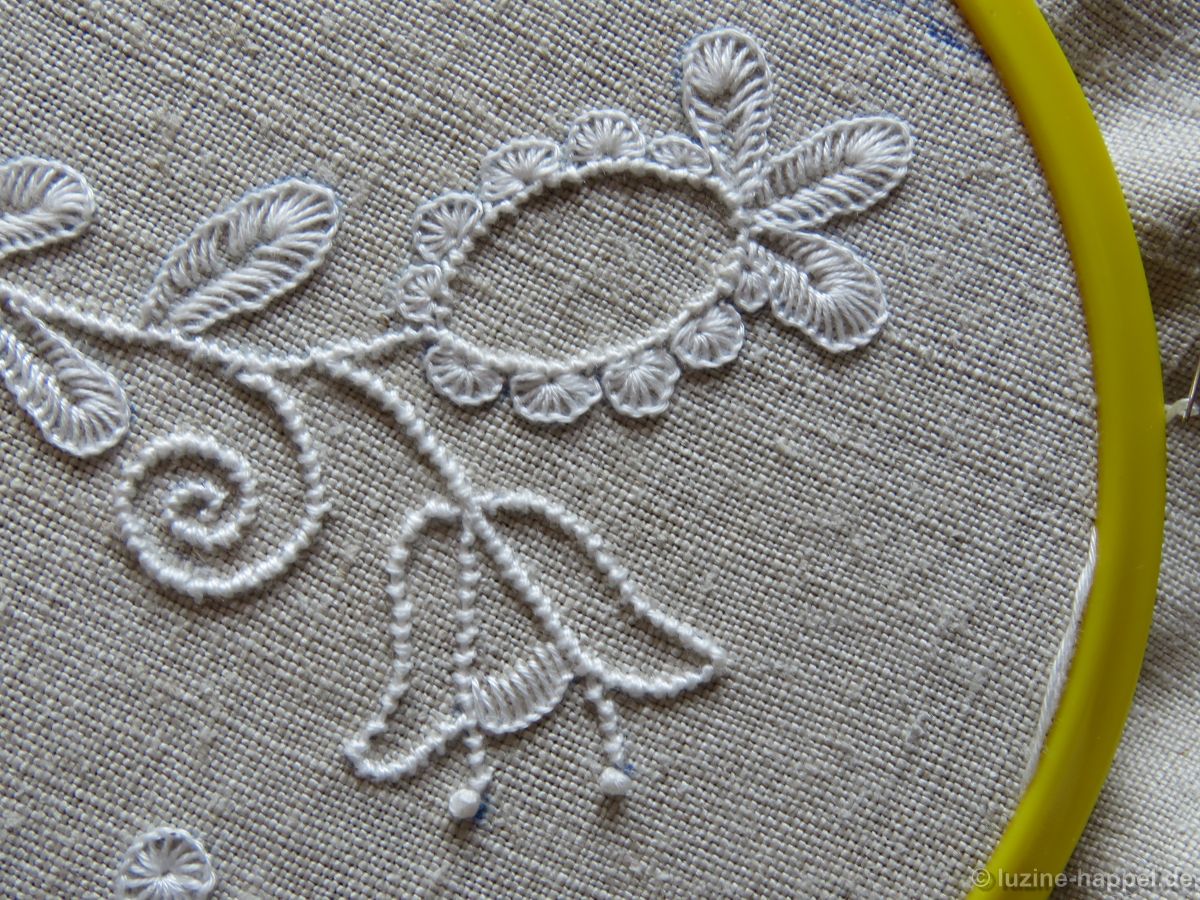
I opt for divided Blanket stitch leafs and a ring of Blanket stitches around the center circle (coton à broder No. 20)
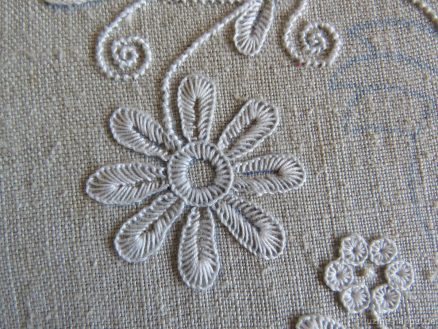
and test the same with an extra Blanket stitch eyelet in the center.
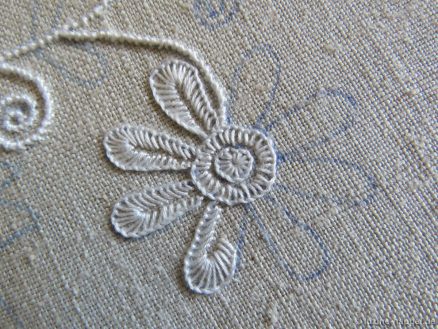
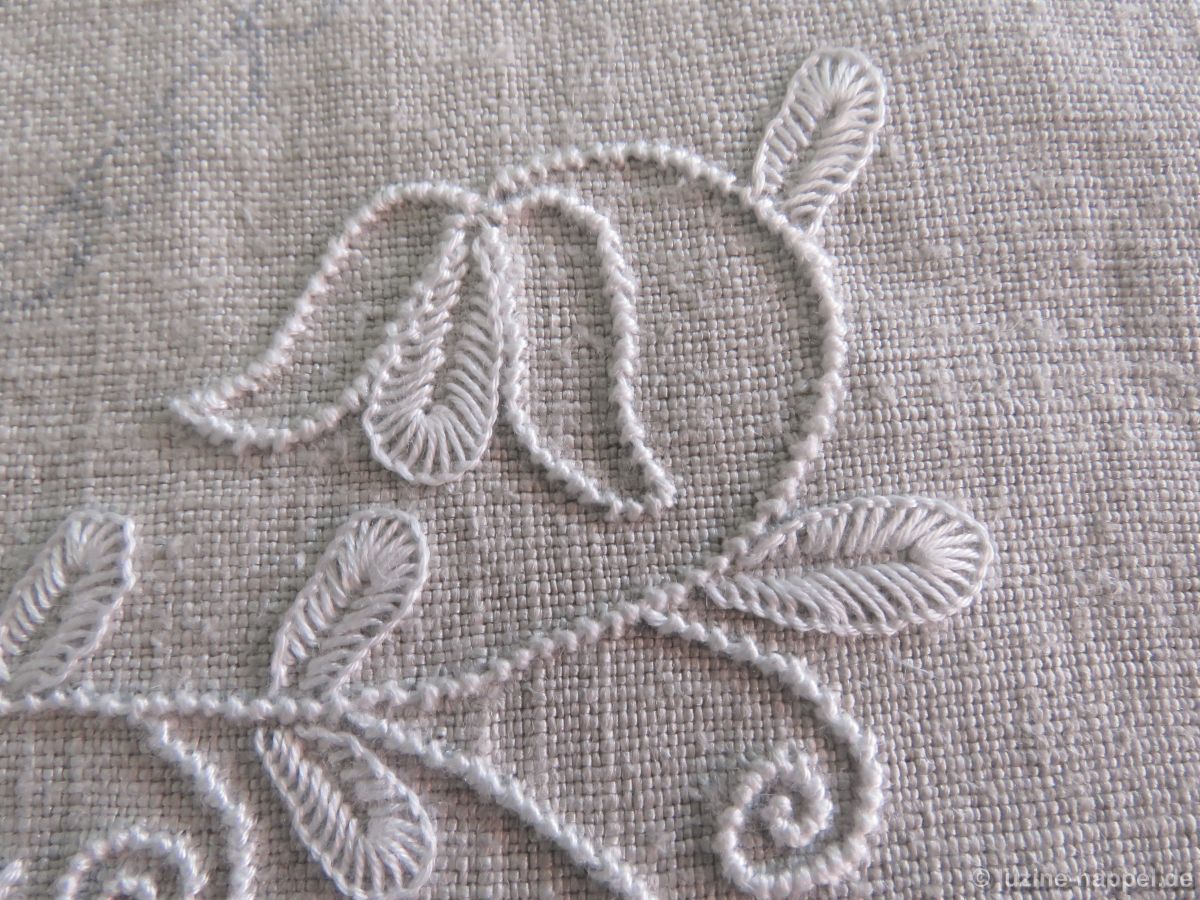
2. How to embroider the little bellflower ?
It receives outlines of Coral Knot stitches and a middle section of Blanket stitches.
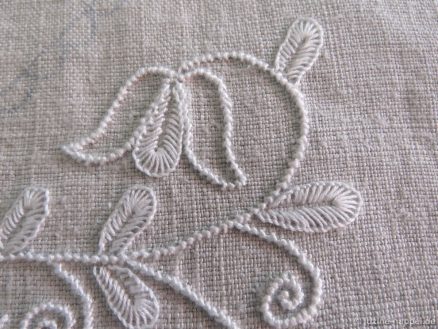
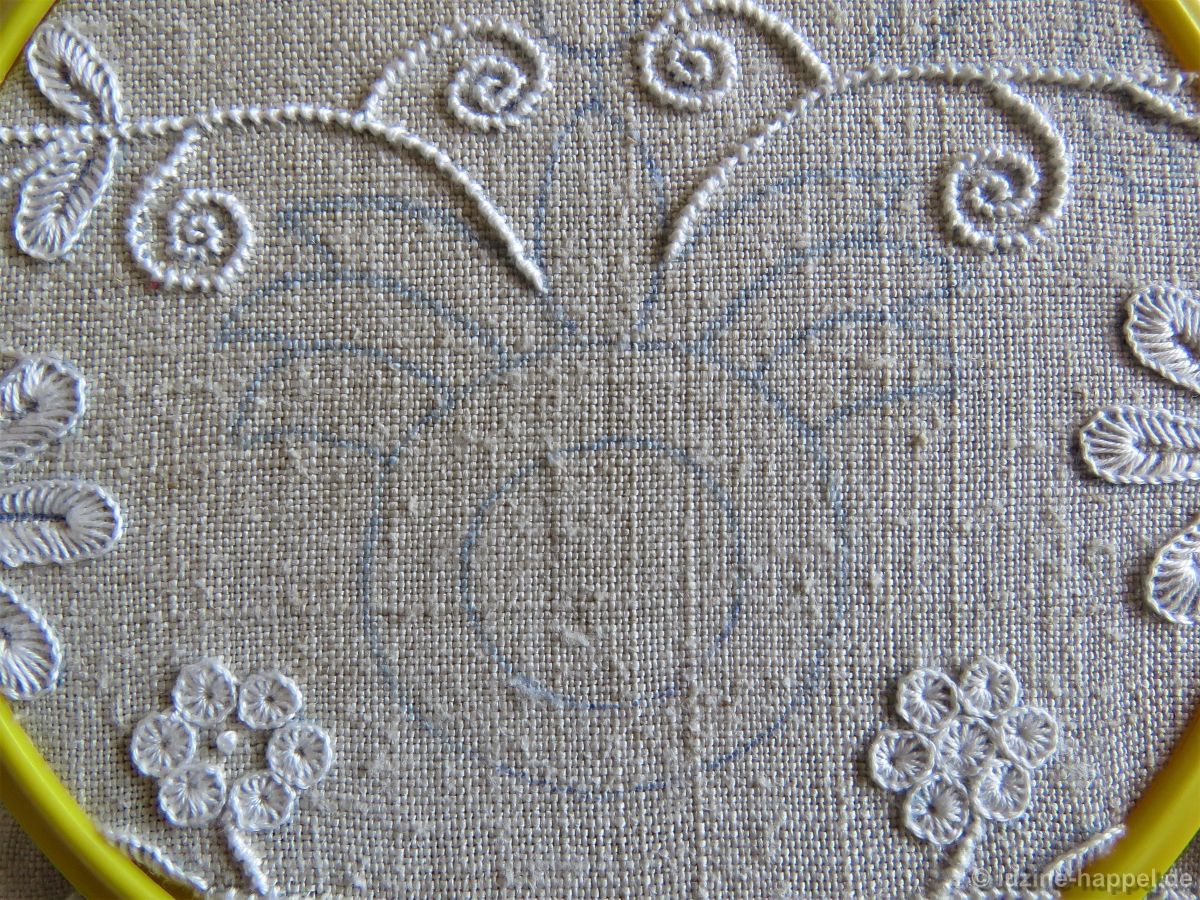
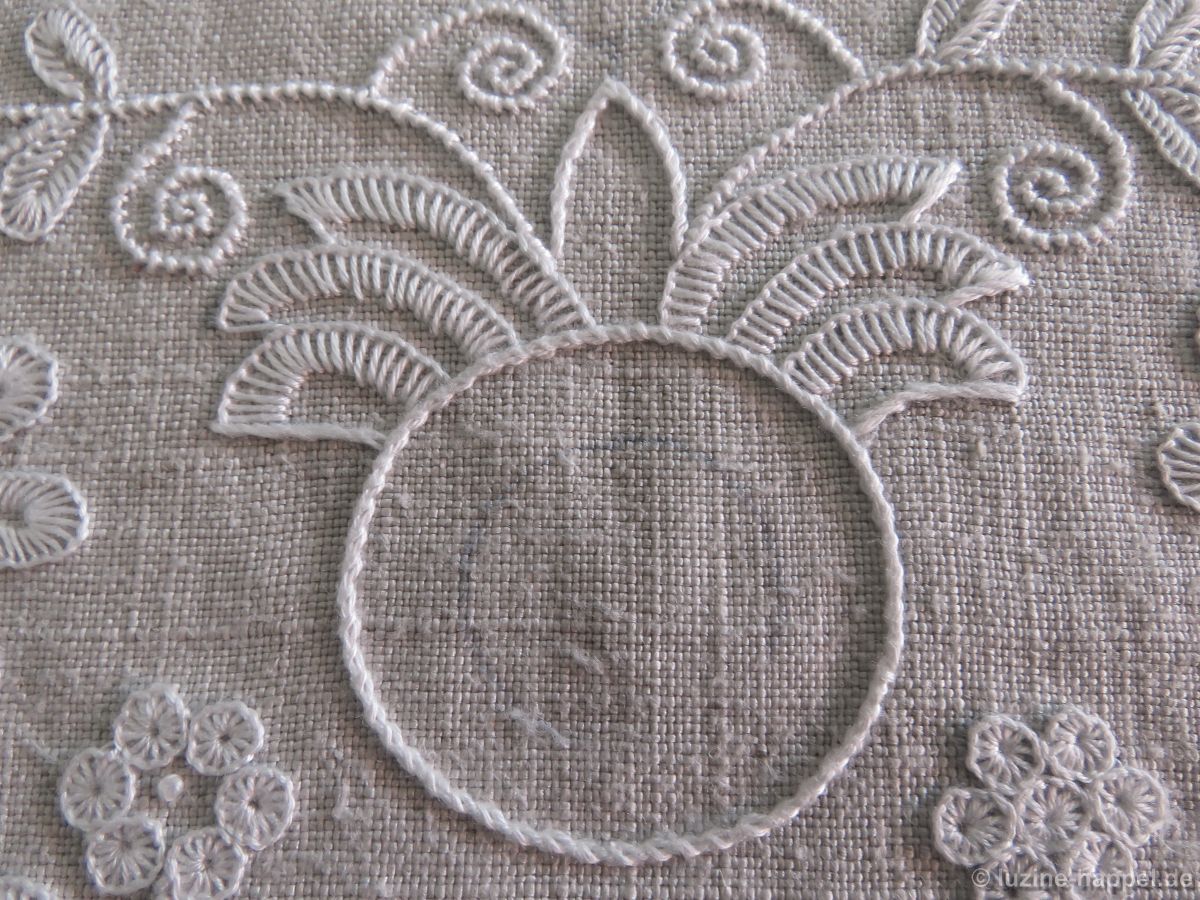
3. Most of the thoughts go into the design of the middle element, the circle with the “fool’s cap”.
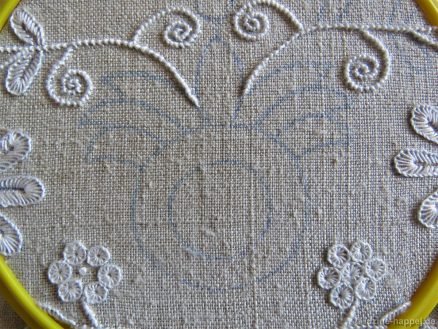
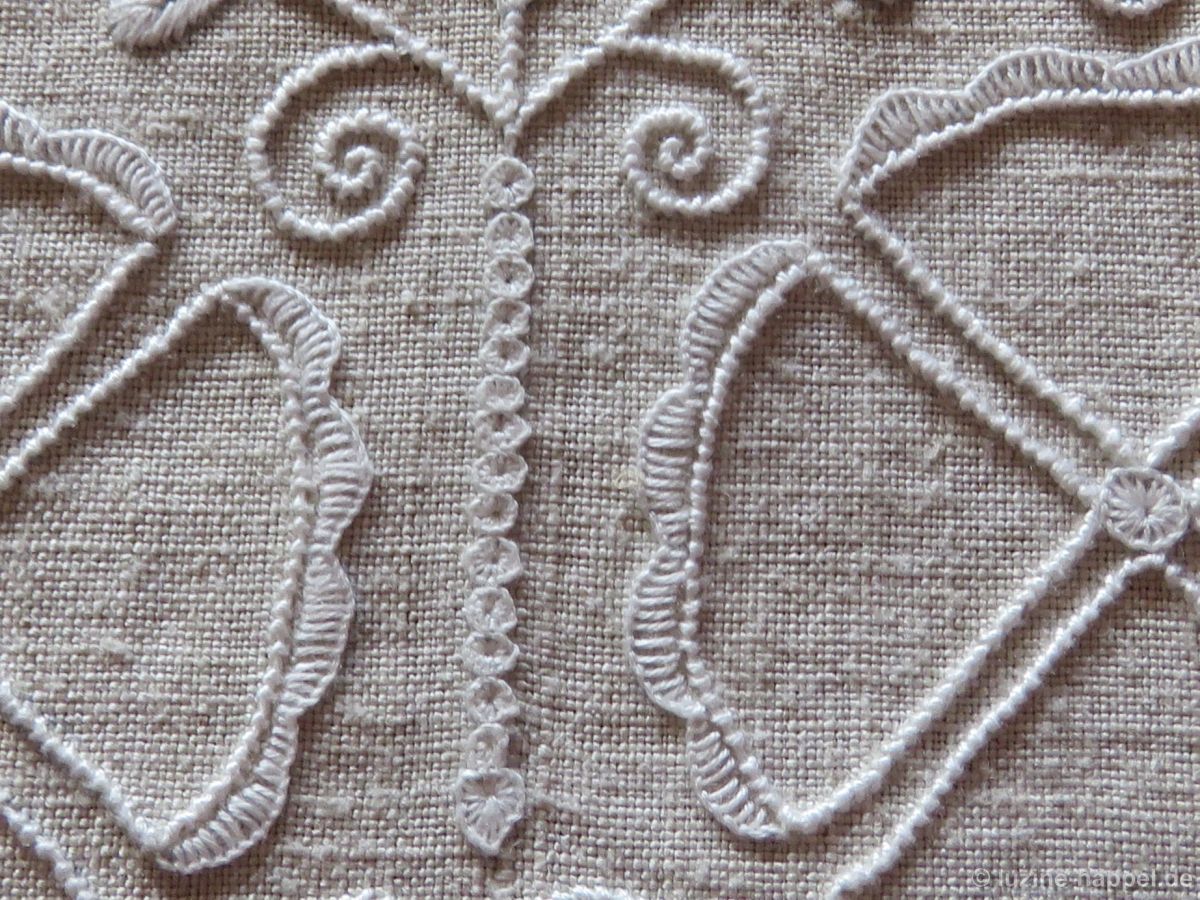
To get more room for a filling pattern, I decide not to hold account on the center circle. The outer circle is worked with wrapped Chain stitches (coton à broder No. 20), as well as the middle tip. The side tips are embroidered with Stem stitches on the lower edges and Blanket stitches (coton à broder No. 20) on the upper edges.
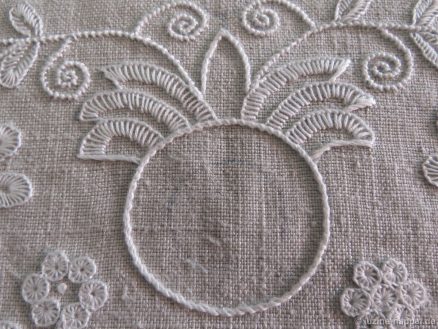
This means that the preparatory work of the next short section has already been completed.
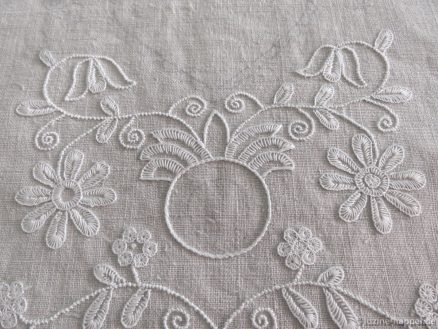
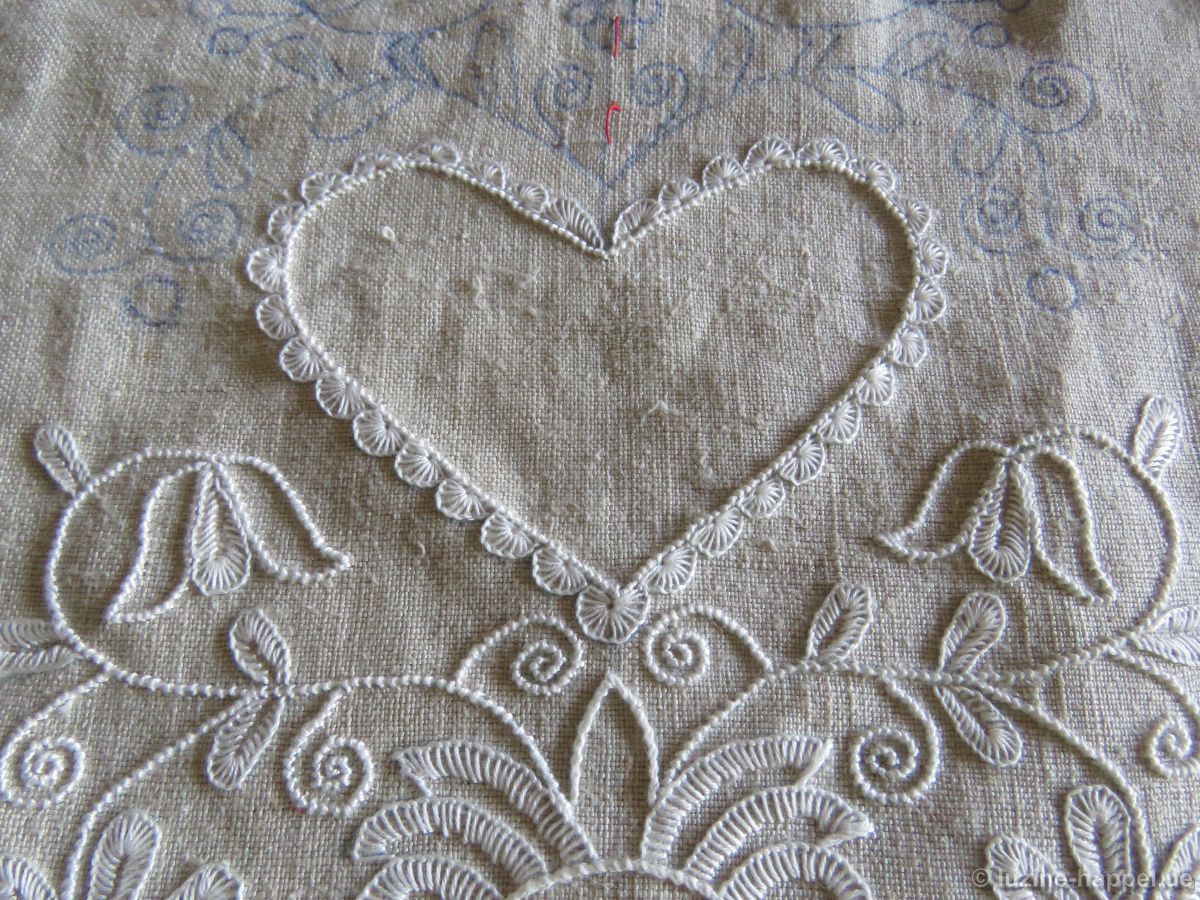
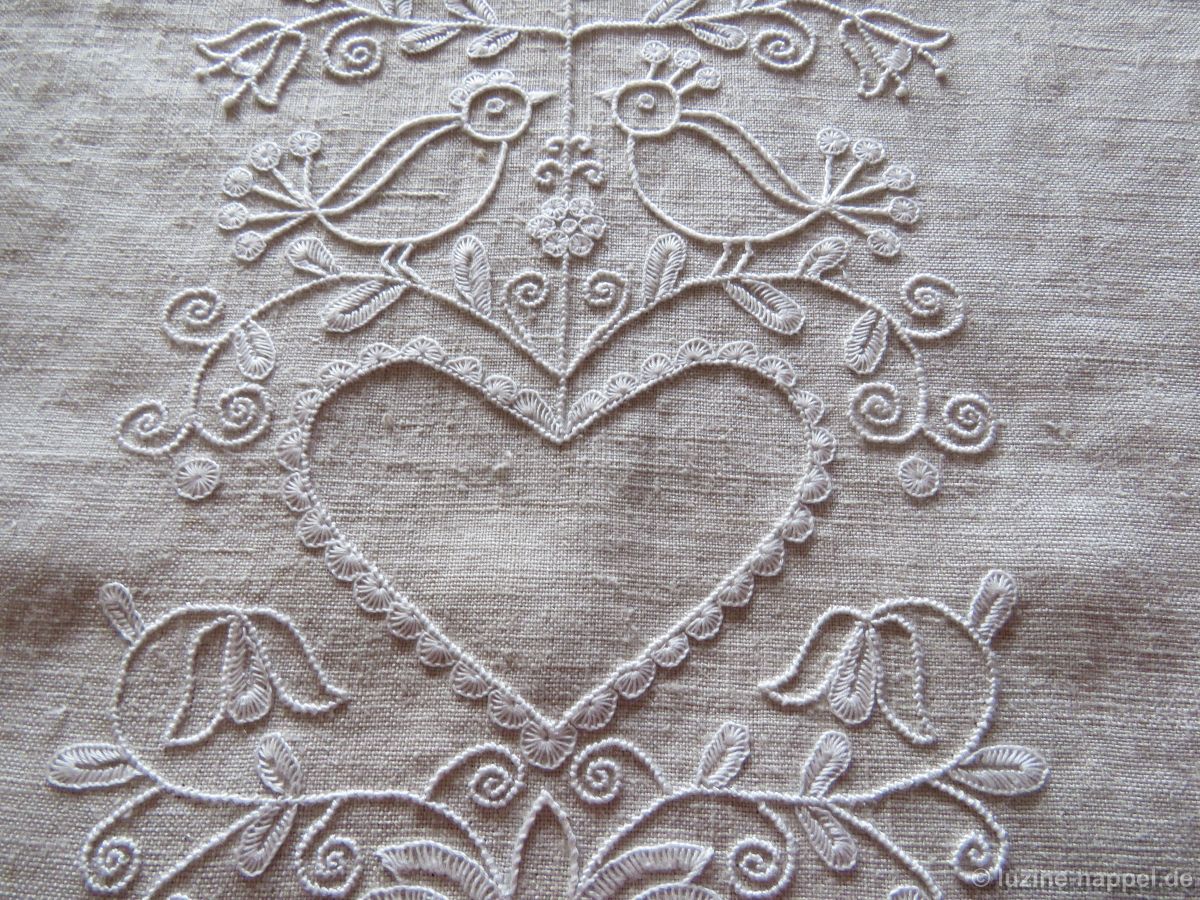
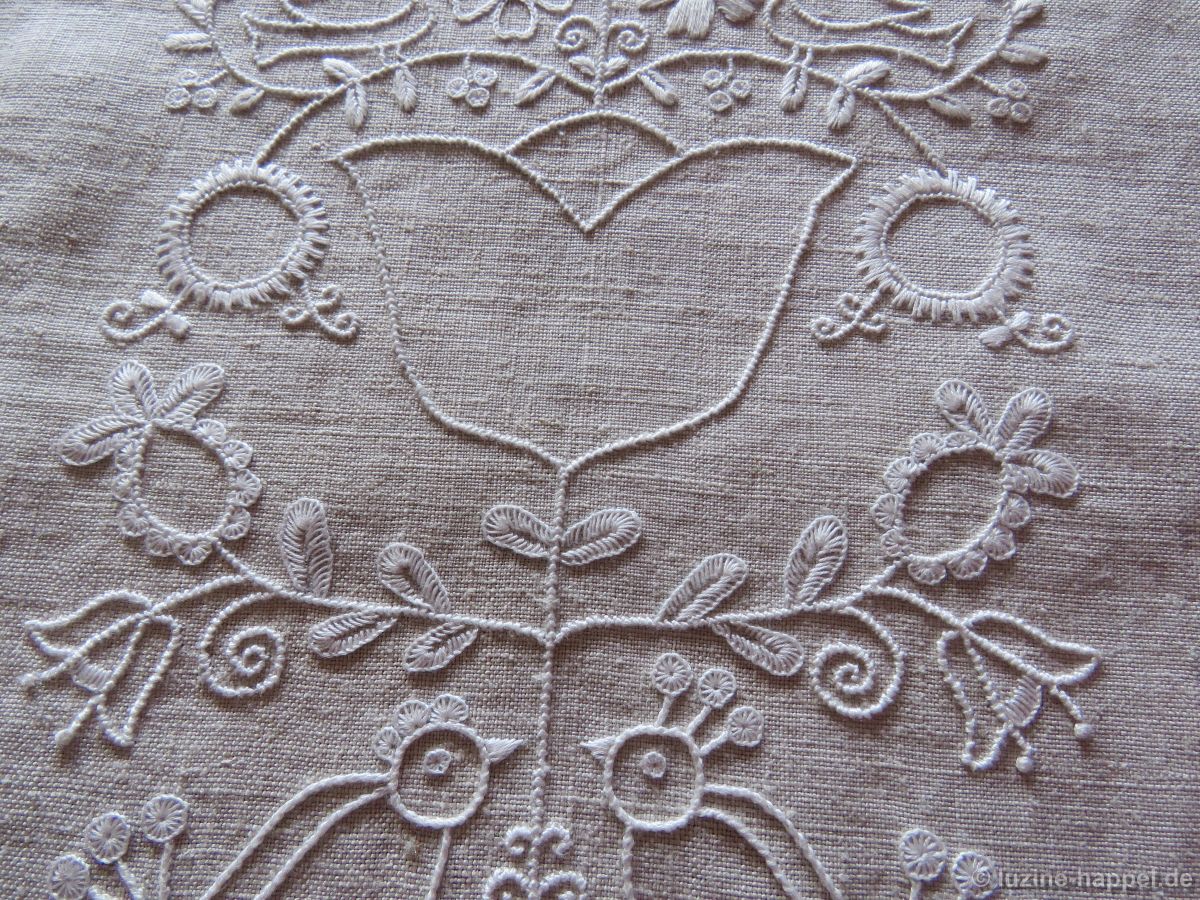
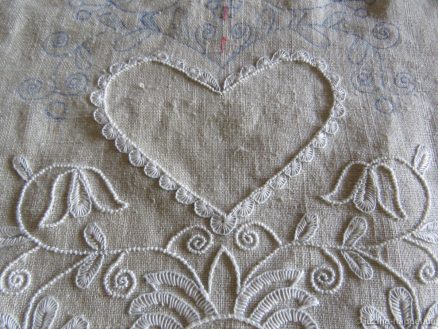
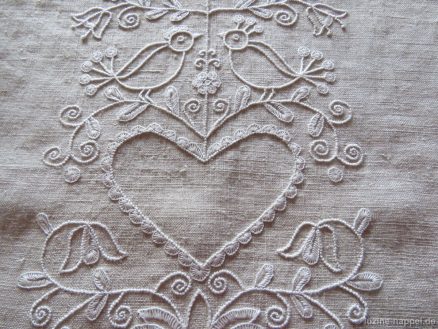
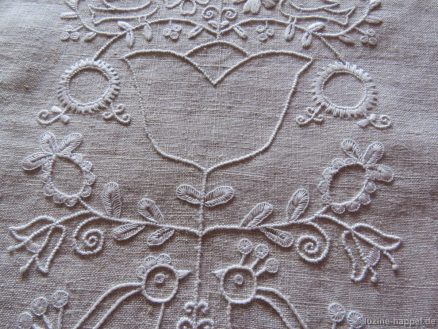
The heart of section 4 is surrounded by Coral Knot stitches (coton à broder No. 16) and Blanket stitch half eyelet scallops (coton à broder No. 25).
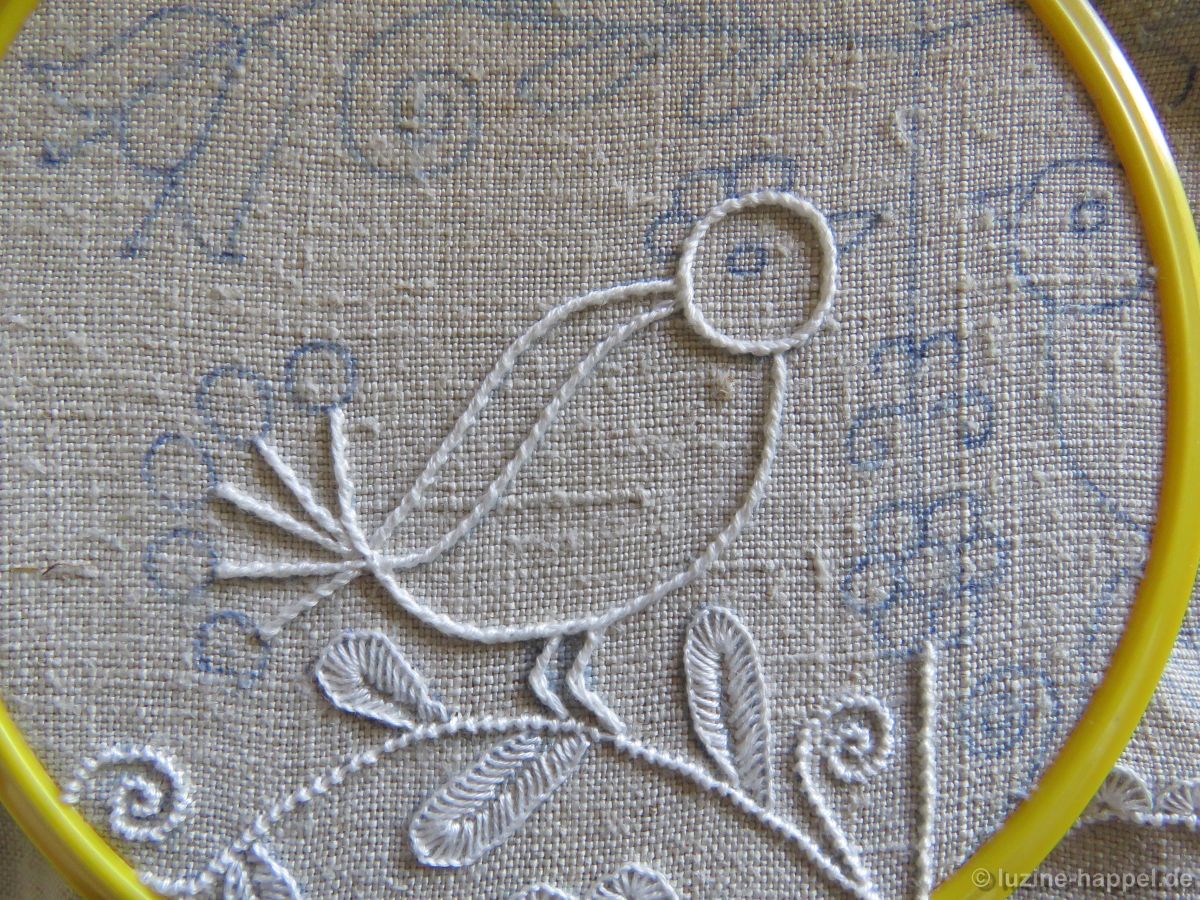
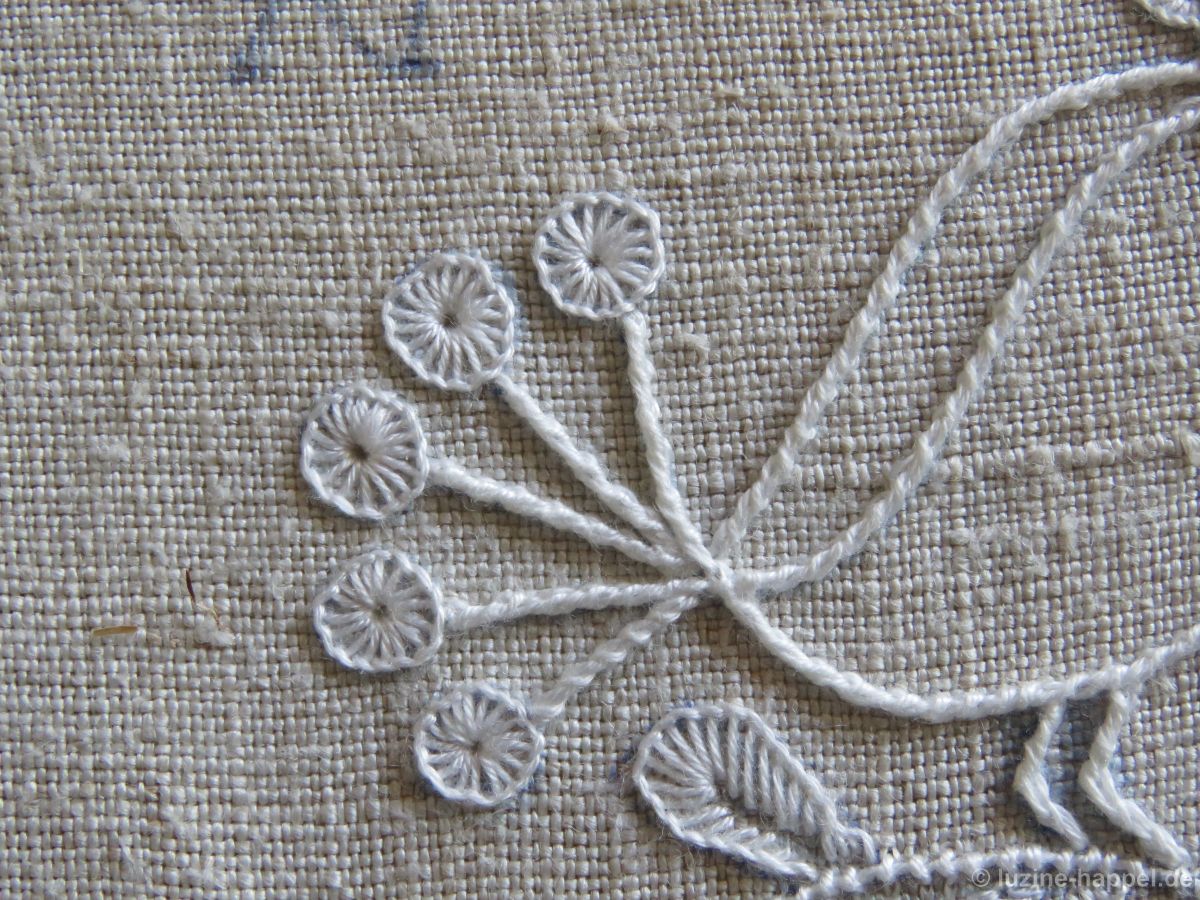
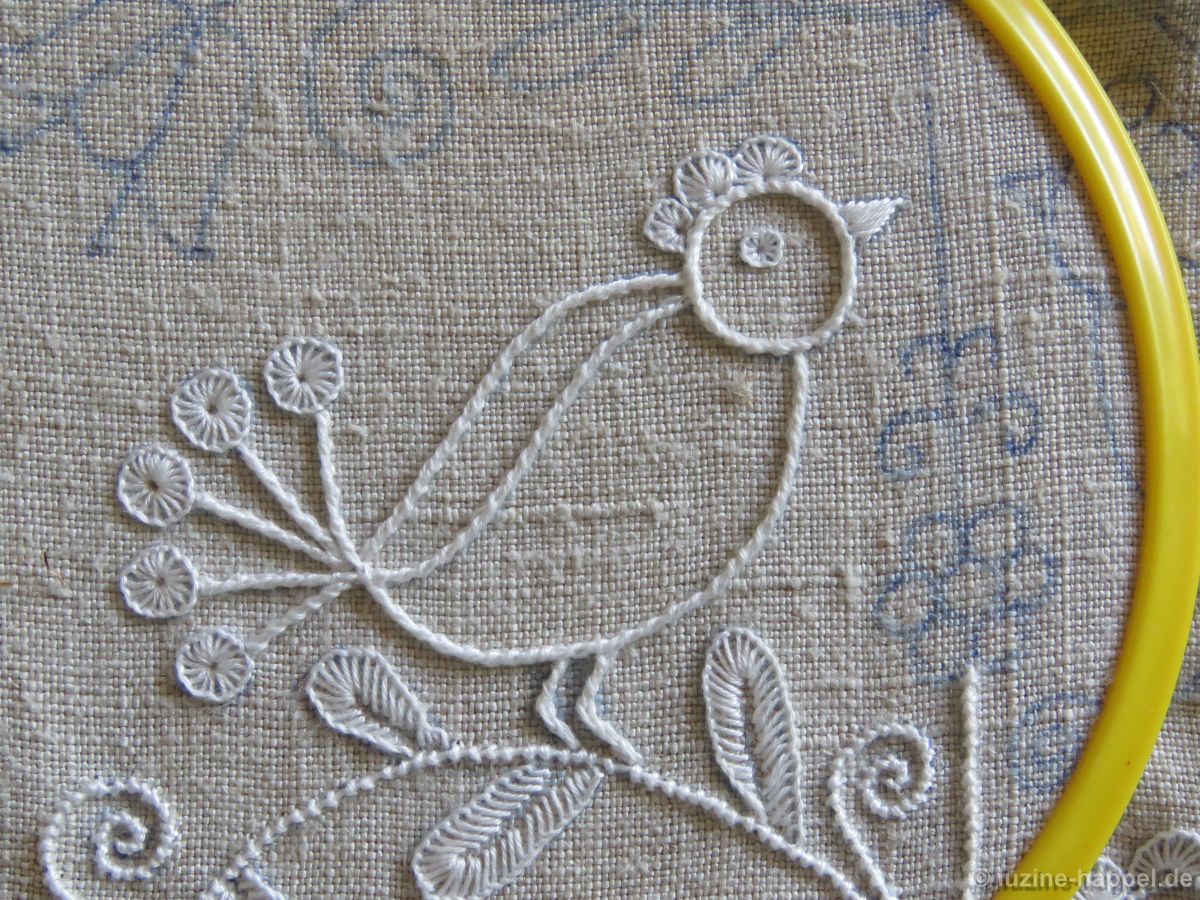
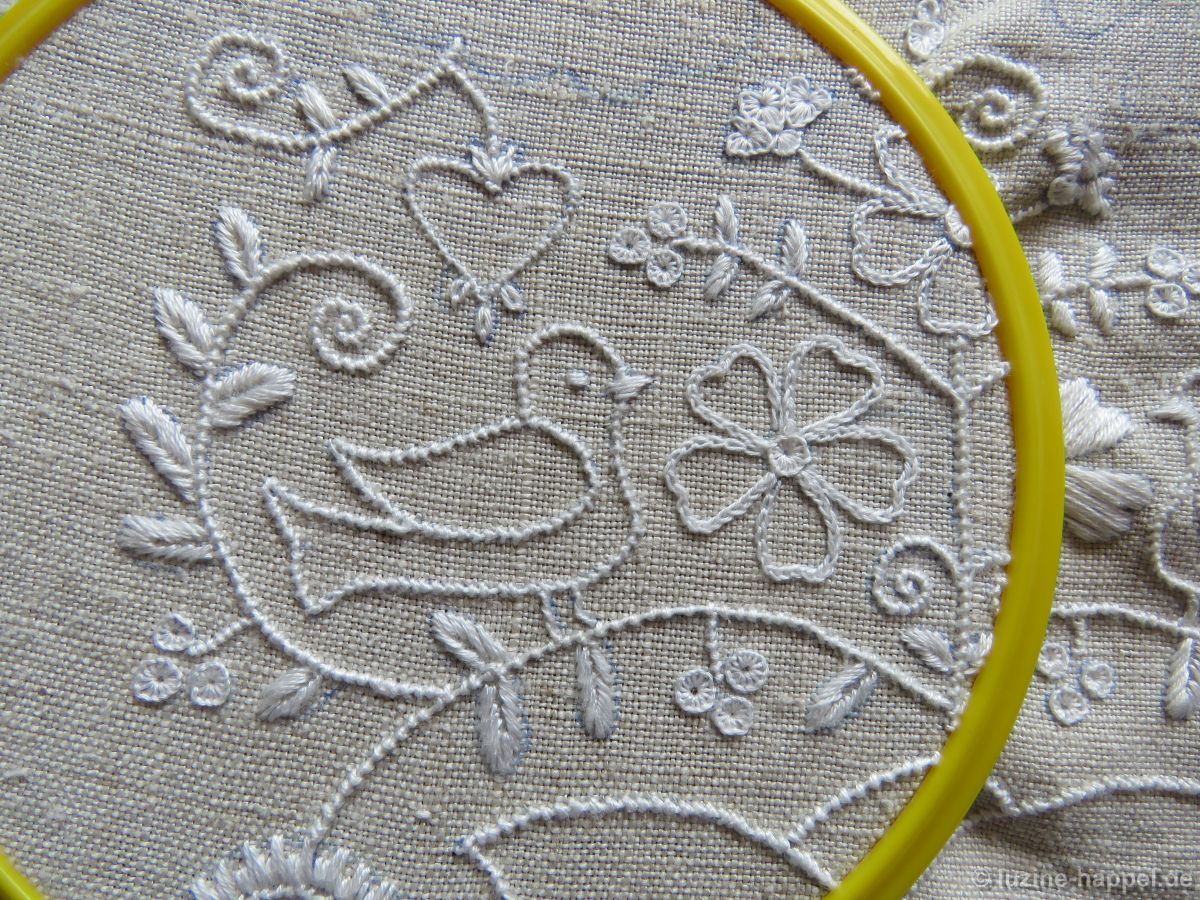
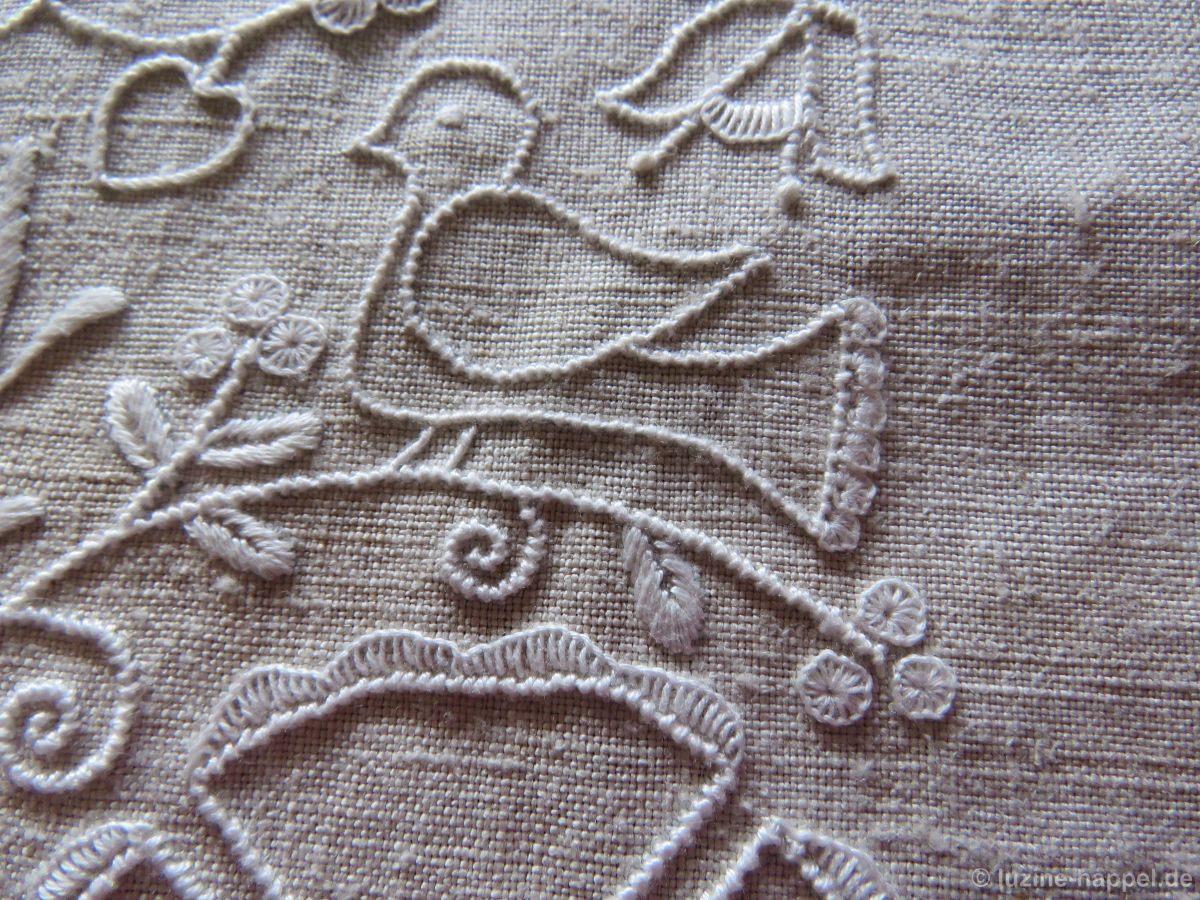
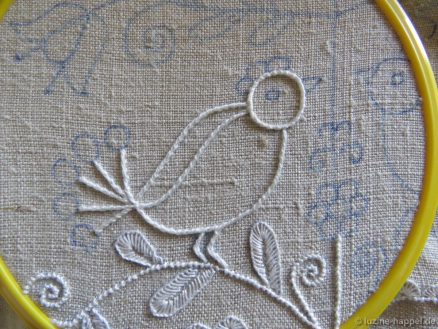
The birds are given an outline of wrapped Chain stitches (coton à broder No.20).
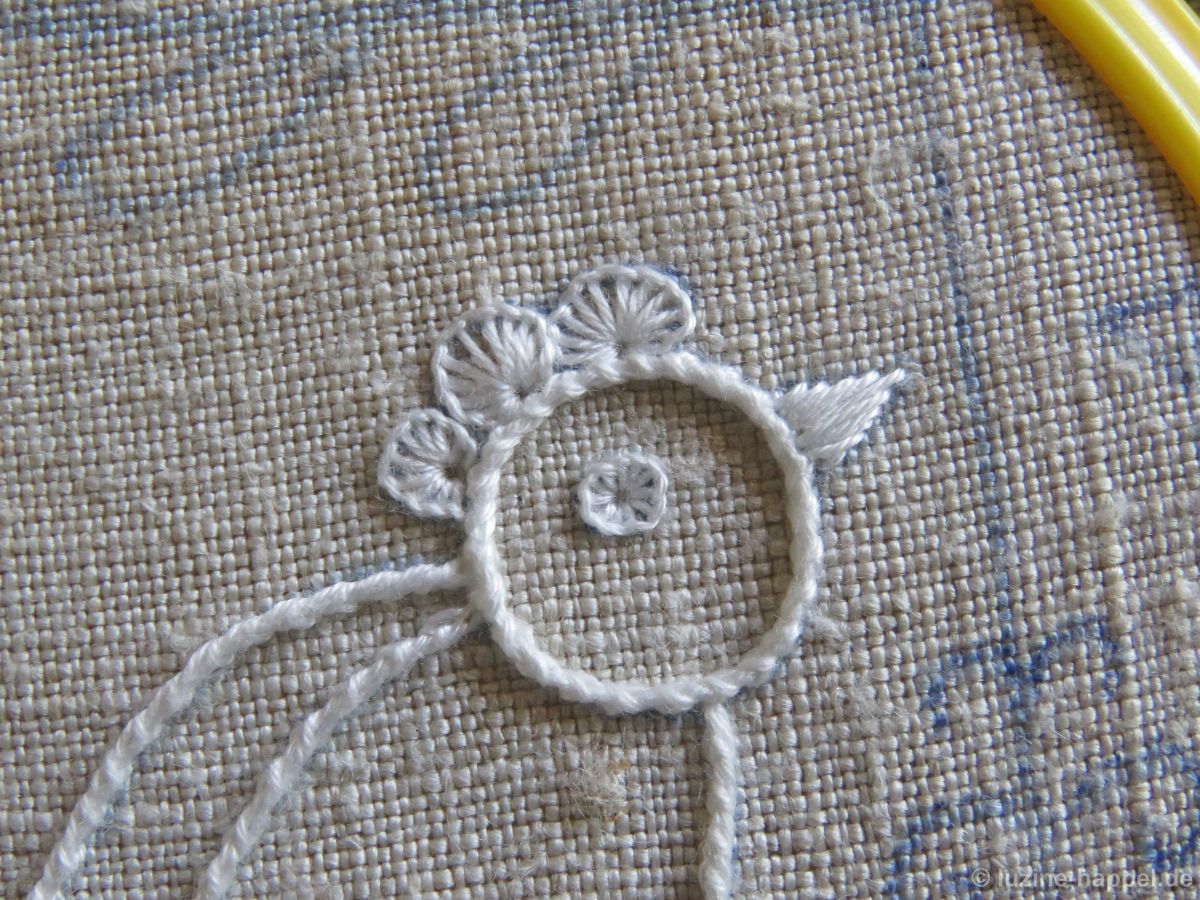
The beak is worked as a Satin stitch knife point, eye, comb and
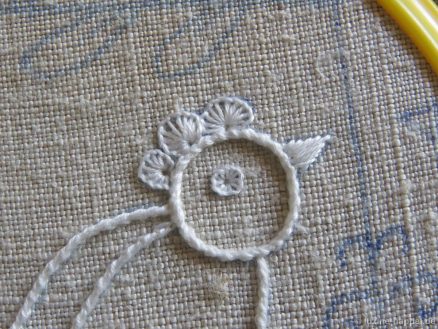
tail feathers are embroidered as Blanket stitch eyelets respective Blanket stitch half eyelet scallops (all coton à broder No. 30).
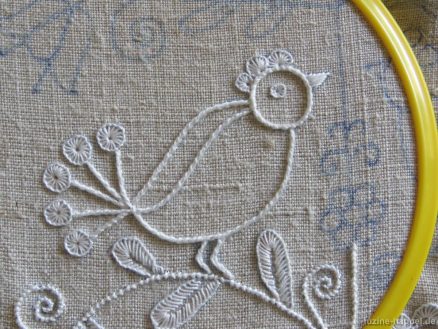
The bird sitting opposite is worked in a similar way.
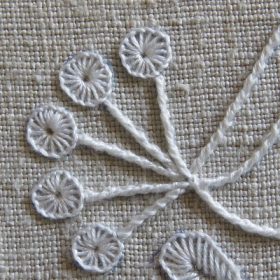
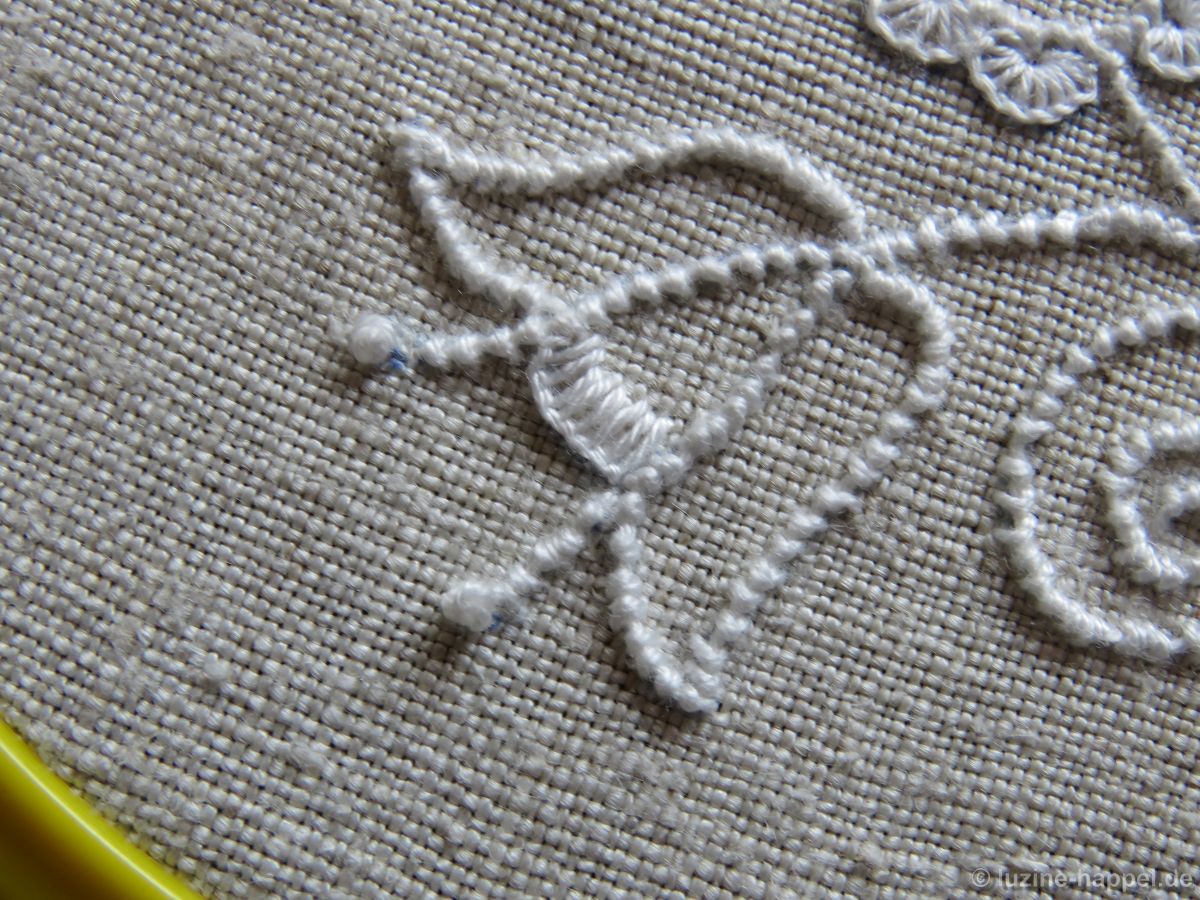
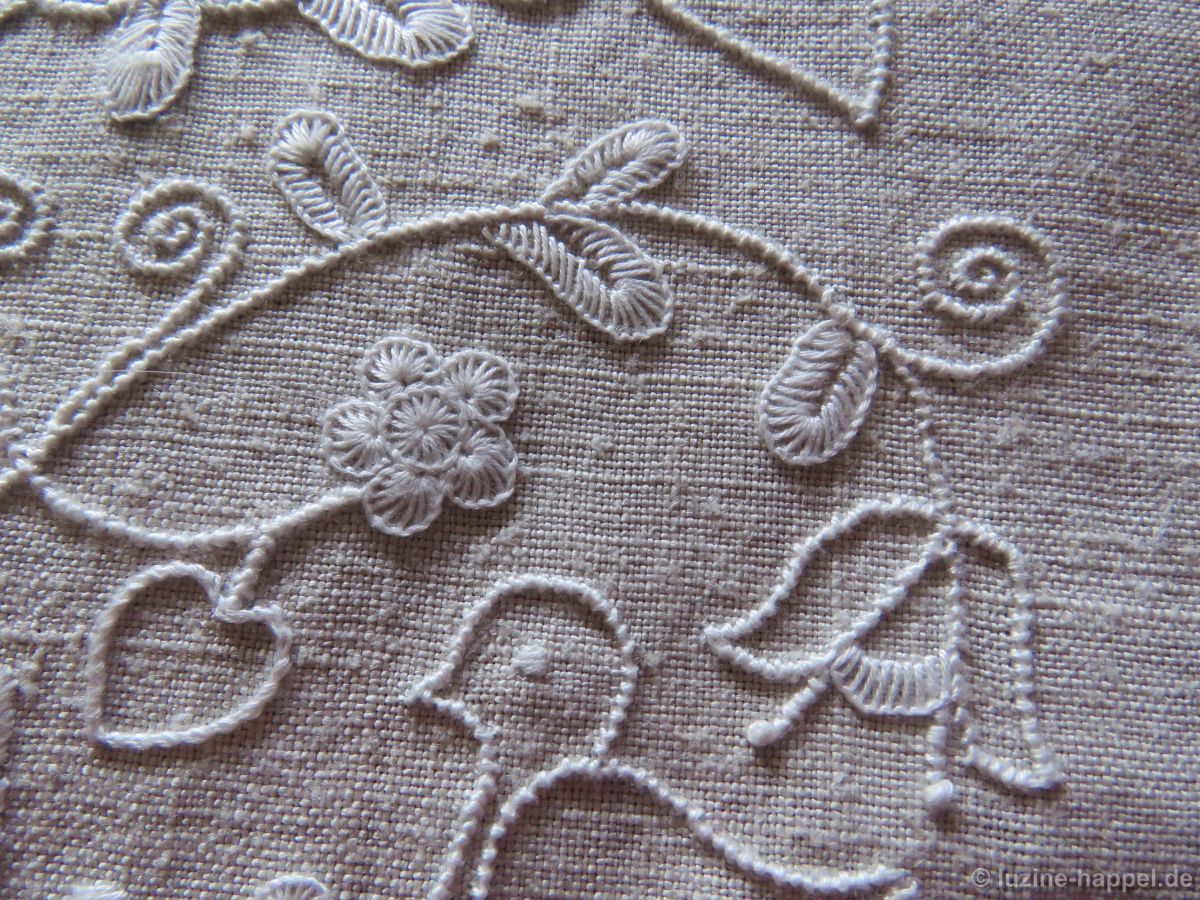
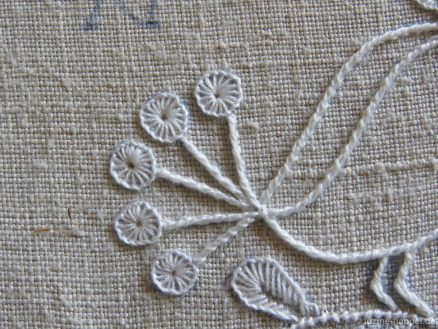
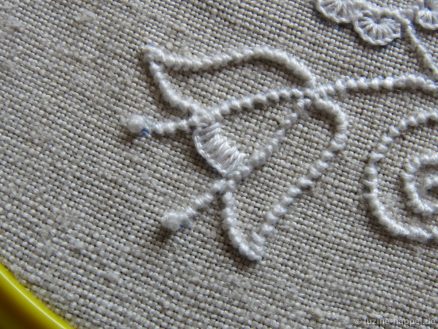
The bellflower (Coral Knotstitches, coton à broder No. 16) has stamens made of bullion knots and in the middle part a lower edge of Blanket stitches (coton à broder No. 25),
the oval flower divided Blanket stitch leaves and Blanket stitch eyelets (also coton à broder No. 25).
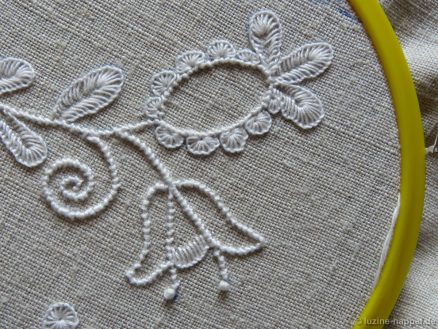
The large tulip is outlined only with Coral Knot stitches.
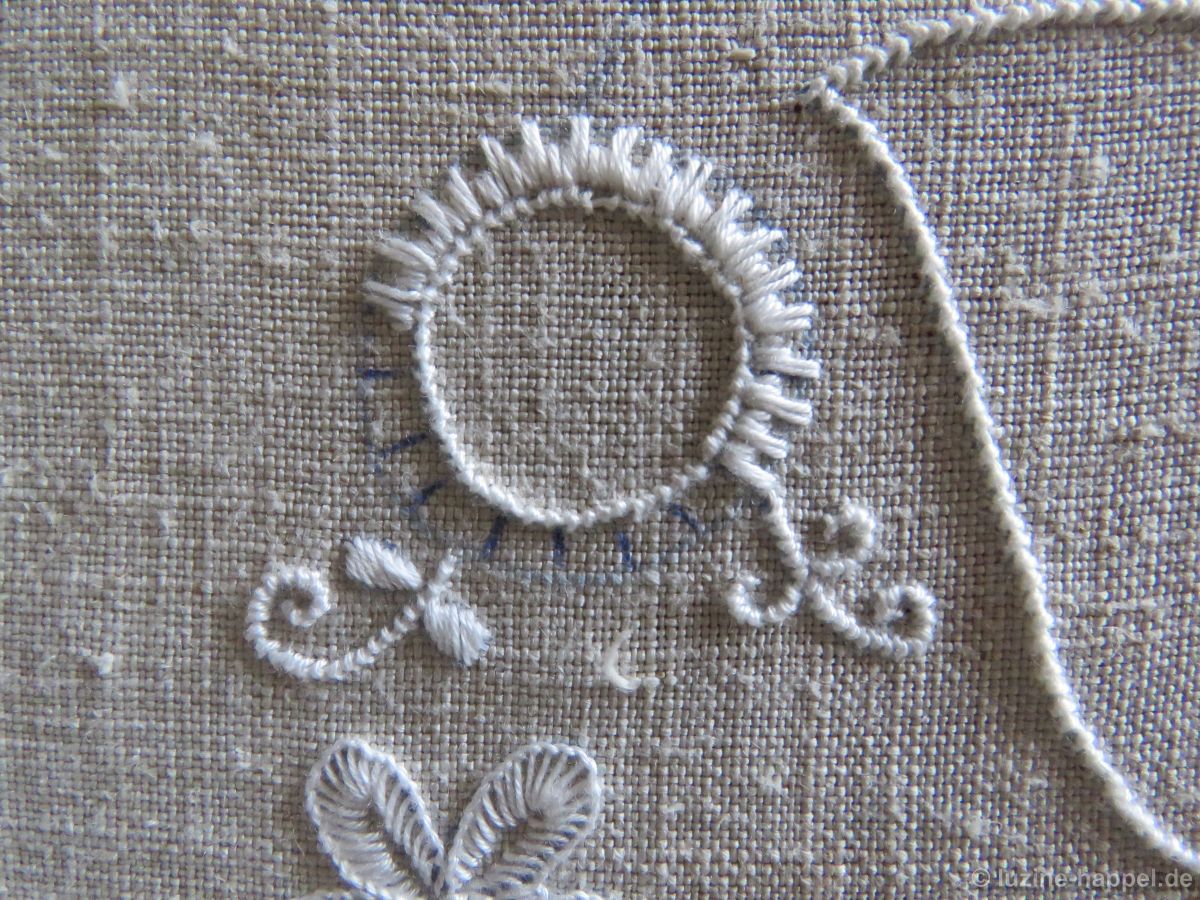
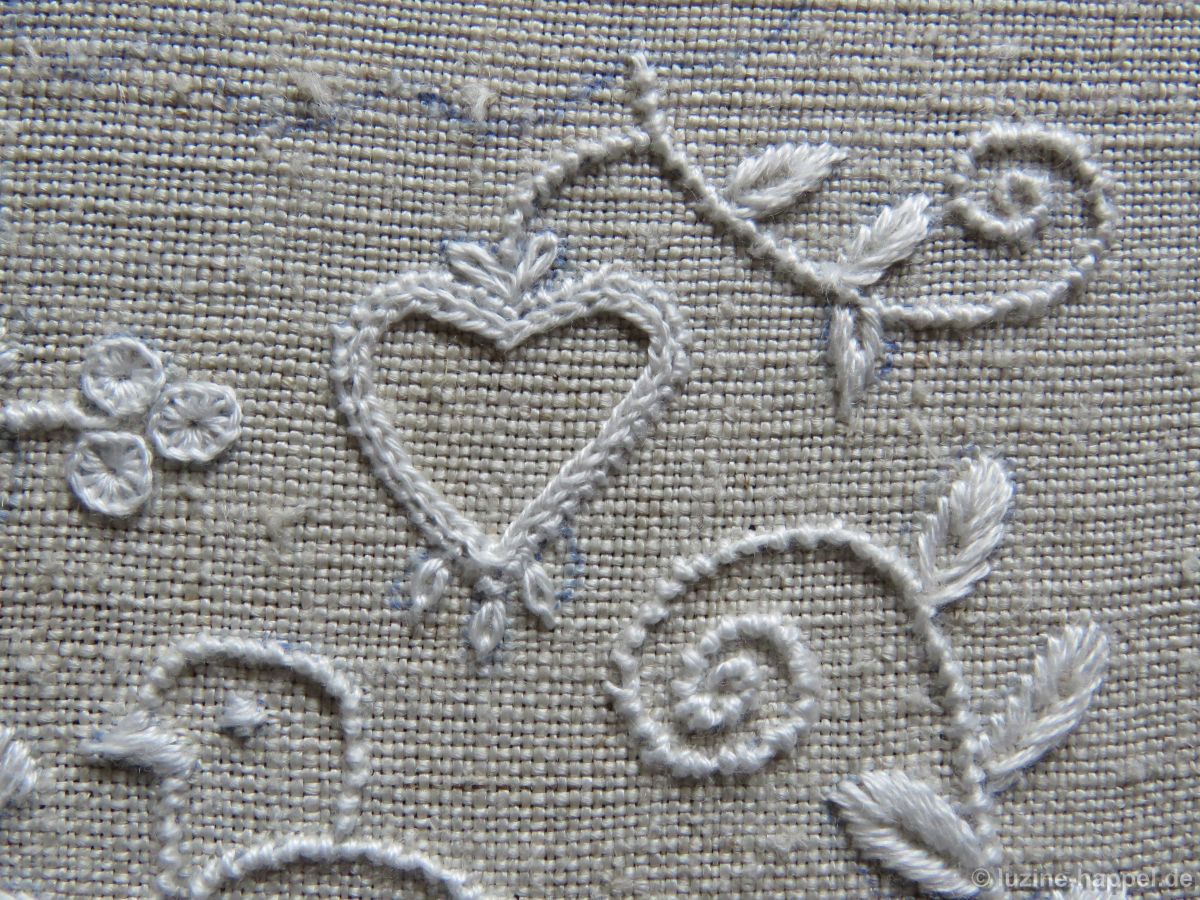
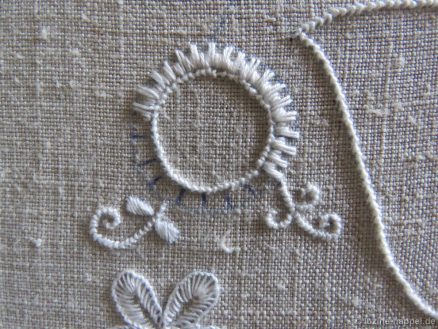
The next sub-section contains many very small pattern elements. That’s why I embroider some Coral Knot stitches with coton à broder No. 20, like the small tendrils on the circle. The circle is given a border of 2short-2long (coton à broder No. 20). It is good to mark the direction of the stitches before stitching.
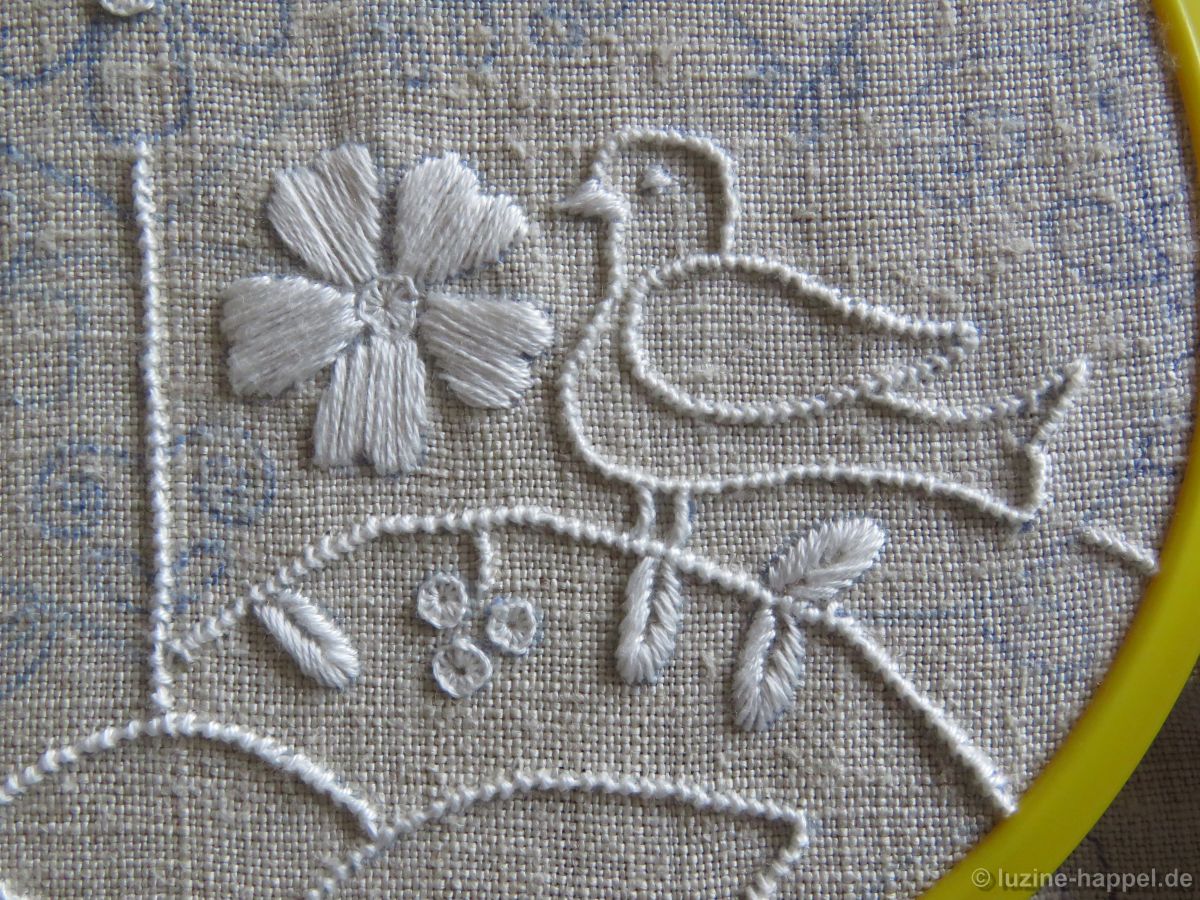
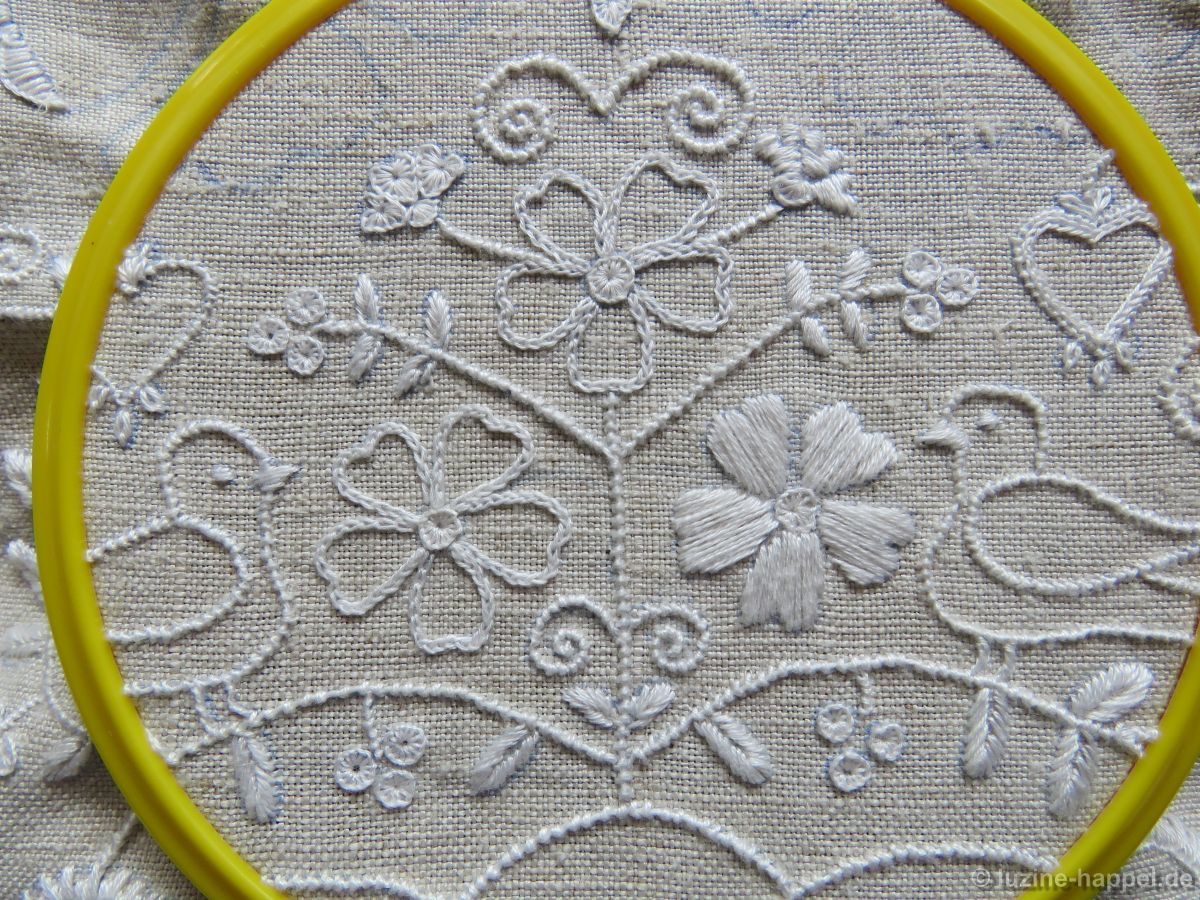
The bird outline is worked with coton à broder No. 20, eye, beak and the small Blanket stitch eyelets with coton à broder No. 30. The small rounded leaves and the heart-shaped petals are worked with Satin stitches (2 threads of the 6-thread stranded cotton). However, the flower seems too massive to me in this form,
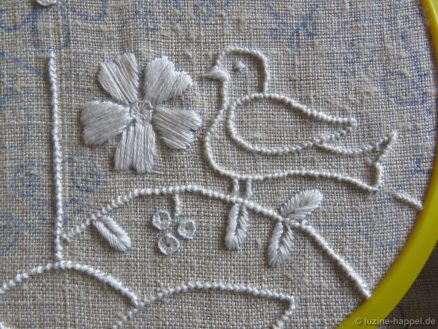
that’s why I actually wanted to make it with wrapped Chain stitches (coton à broder No. 30). But then I realized that the Chain stitch border looks good too and leave out the wrapping. The mini carnations are embroidered once with Blanket stitches (coton à broder No. 30) and the other time with Satin stitches (2 threads of the 6-thread stranded cotton). Both variants are not optimal.
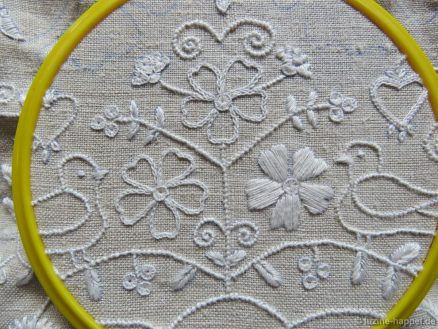
The small bleeding-heart is bordered with Coral Knot stitches and Chain stitches (coton à broder No. 30). The daisy stitches are worked with coton à broder No. 20.
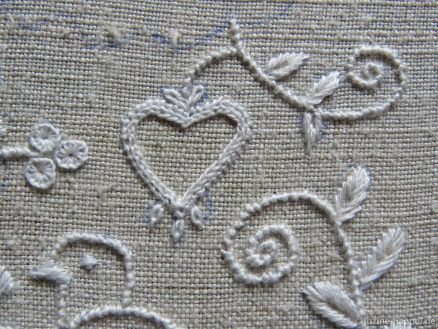
The mini leaves are also worked as divided leaves (2 threads of the 6-thread stranded cotton). They usually turn out better than one-piece leaves (see right edge of the picture).
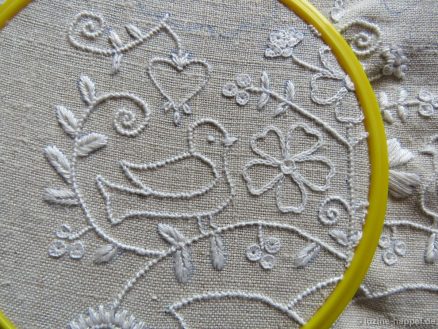
So the preparatory work of the next sub-section has already been completed.
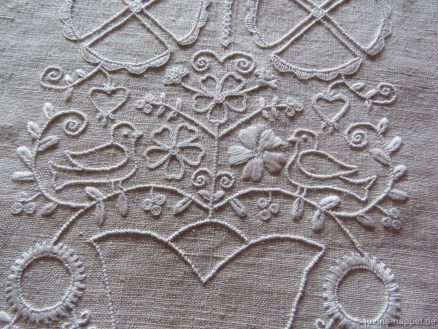
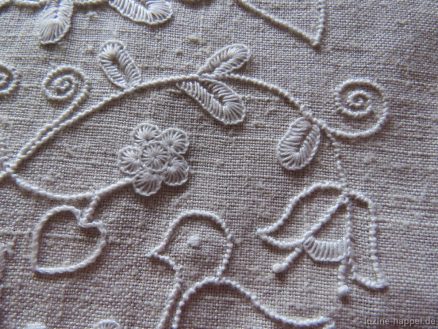
The scallops of the large clover leaves are embroidered with coton à broder No. 20 and Blanket stitches.
The row of tiny Blanket stitch eyelets is worked with coton à broder No. 30, as well as the final heart.
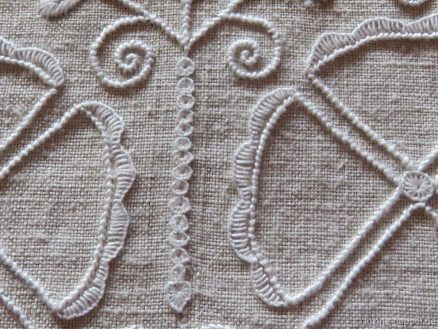
The Blanket stitch half eyelet scallops at the end of the bird’s tail are embroidered with coton à broder No. 30, the remaining Blanket stitch half eyelets with coton à broder No. 25. The divided leaves and the undivided ones on the central axis are designed with Satin stitches using 2 threads of the 6-thread stranded cotton.
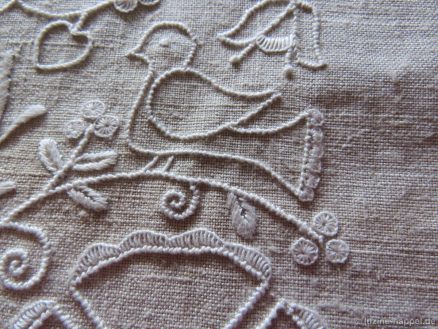
The rounded leaves are embroidered with coton à broder No.20 and Blanket stitches, as well as the middle part of the small tulip. The ends of the stamens receive bullion knots with 3 wrappings (coton à broder No. 16).
The bird’s eye is worked with Satin strtches (coton à broder No. 30). The Blanket stitches of the little flower are made with coton à broder No. 25. The outline of the little heart is embroidered with wrapped Chain stitches using coton à broder No. 25.
This completes the preparation of the last part of section 4.