Schwalm Parade Cushion Border (A)

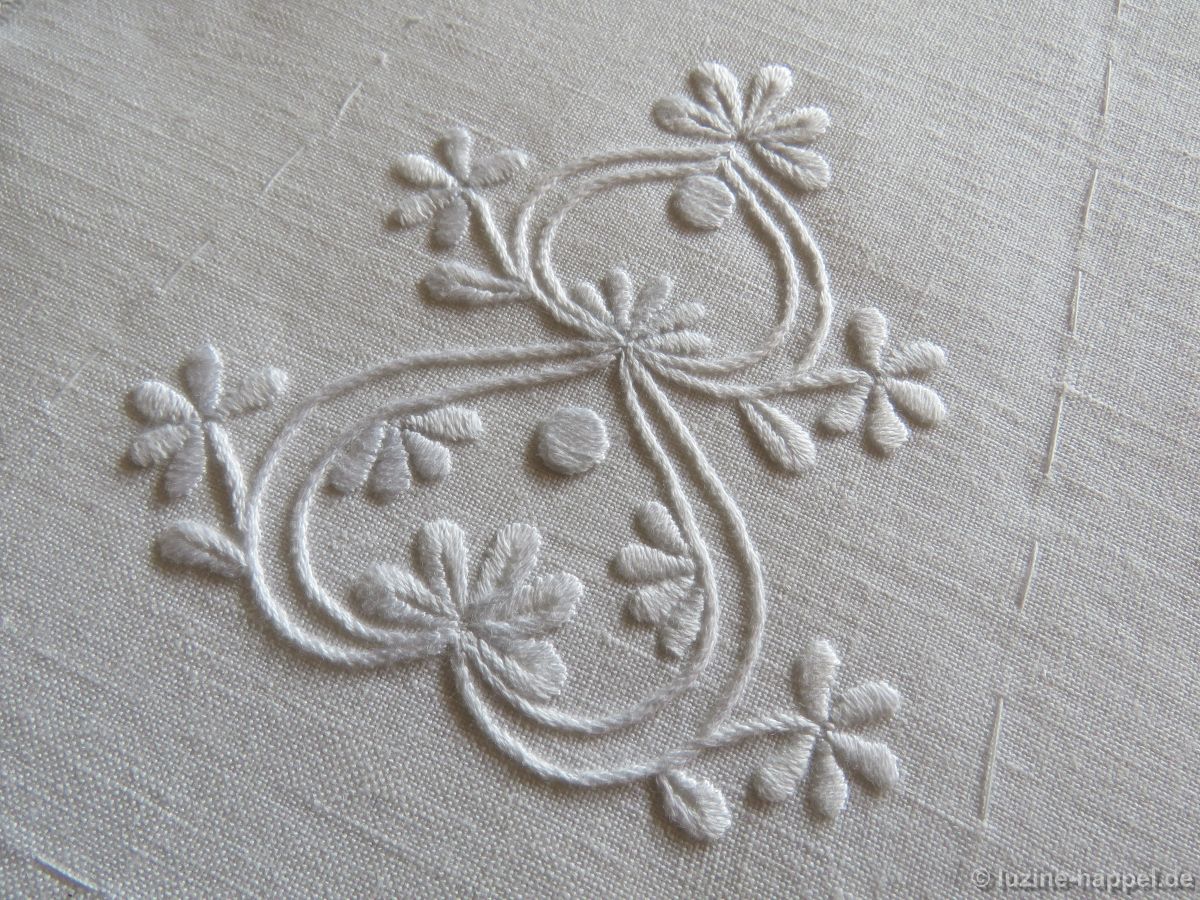
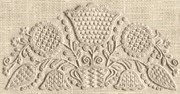
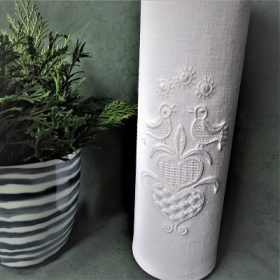
Today I present something very special: the border of a parade cushion from 1826! Unfortunately, the cushion is no longer intact, but the embroidered border – the most important part, at least for people interested in such things – is still in good condition.
The linen has a 21/cm thread count – thus it is relatively fine. The border in all has a height of 21 cm, the embroidery only has a height of only 15 cm. The embroidery is bordered by a six-unit divided needle-weaving hem which is itself bordered with Peahole hems on both sides. The needleweaving pattern is rare.
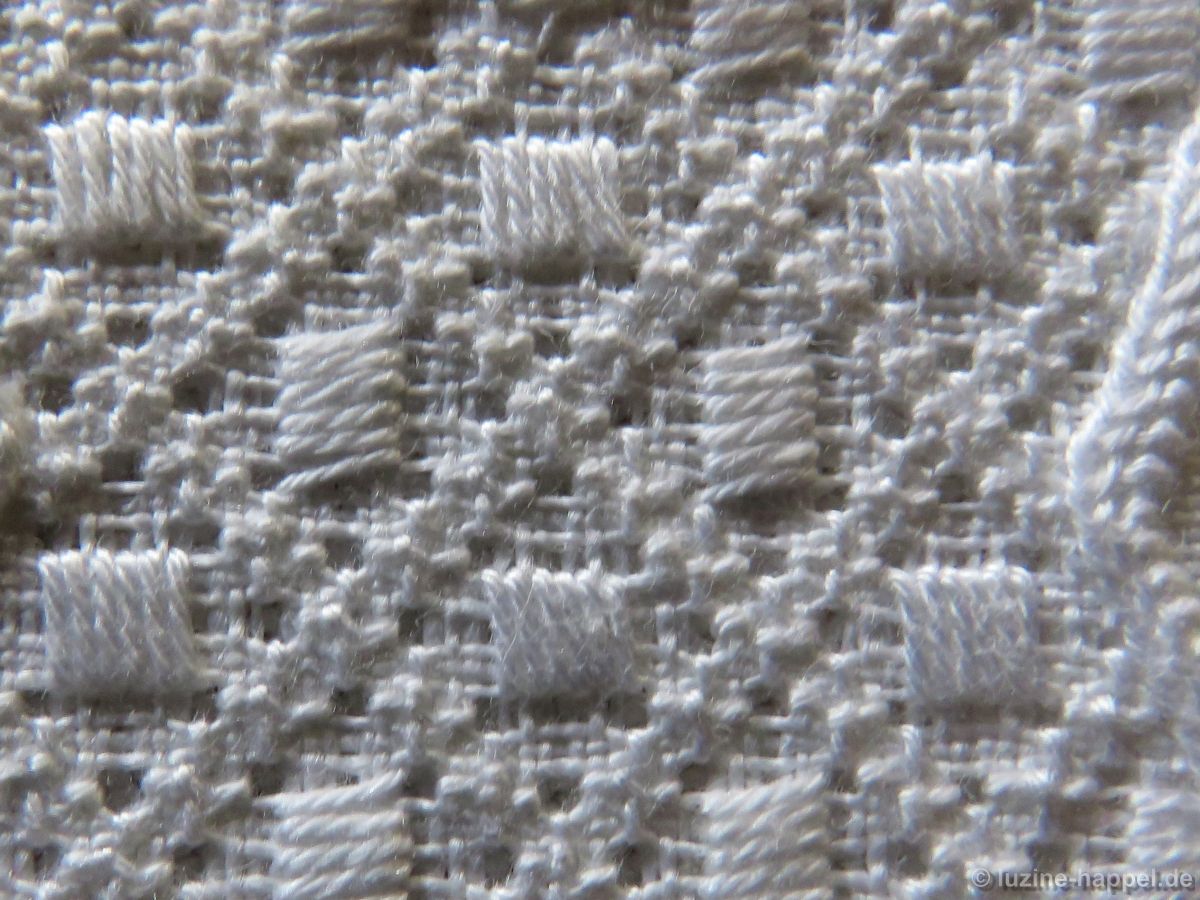
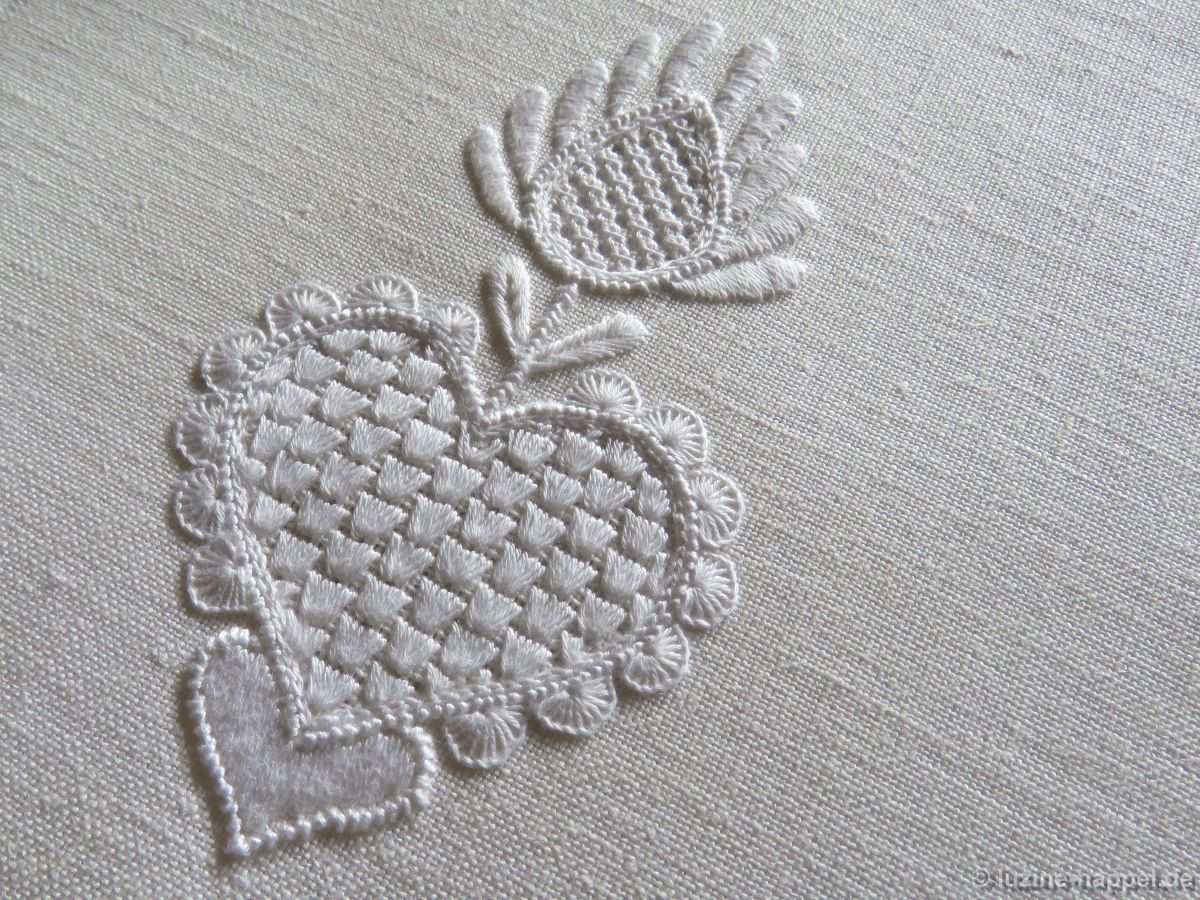
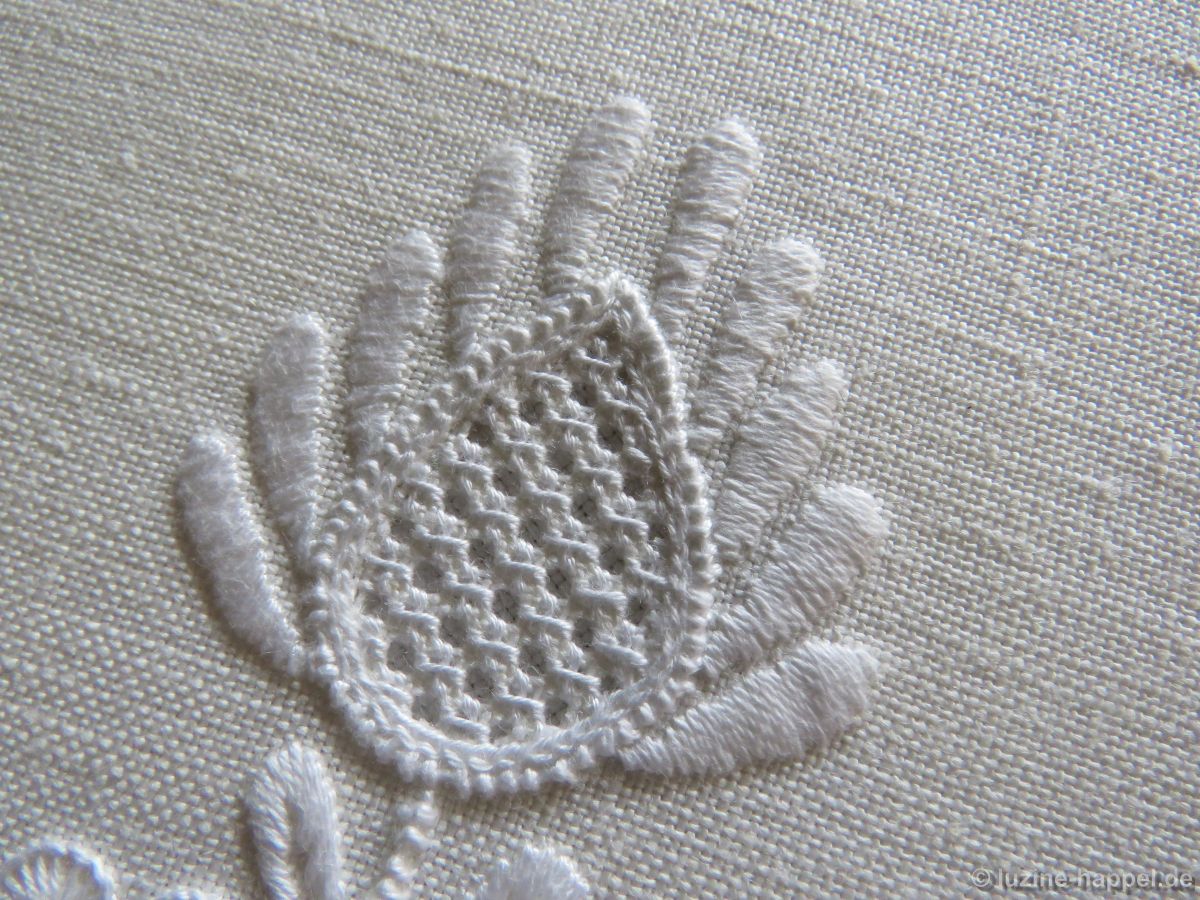
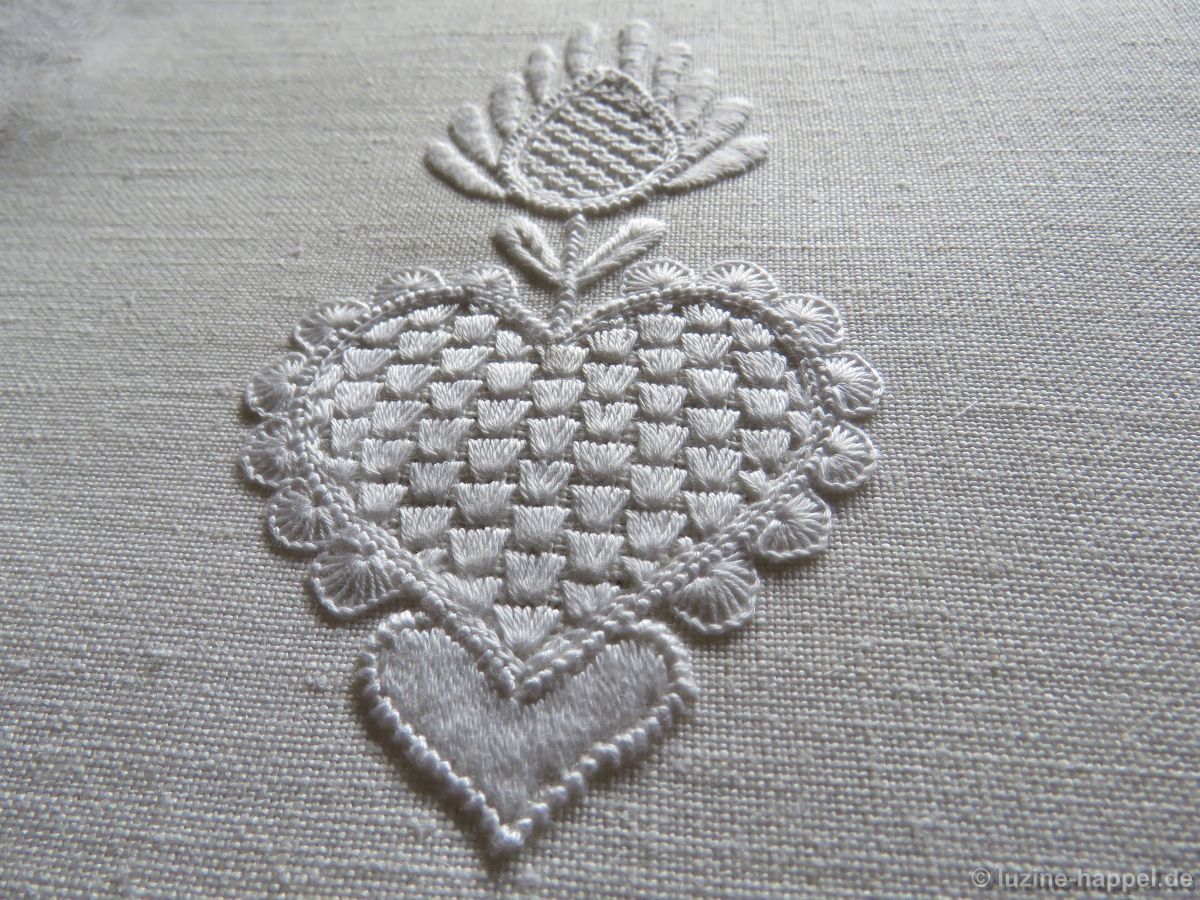
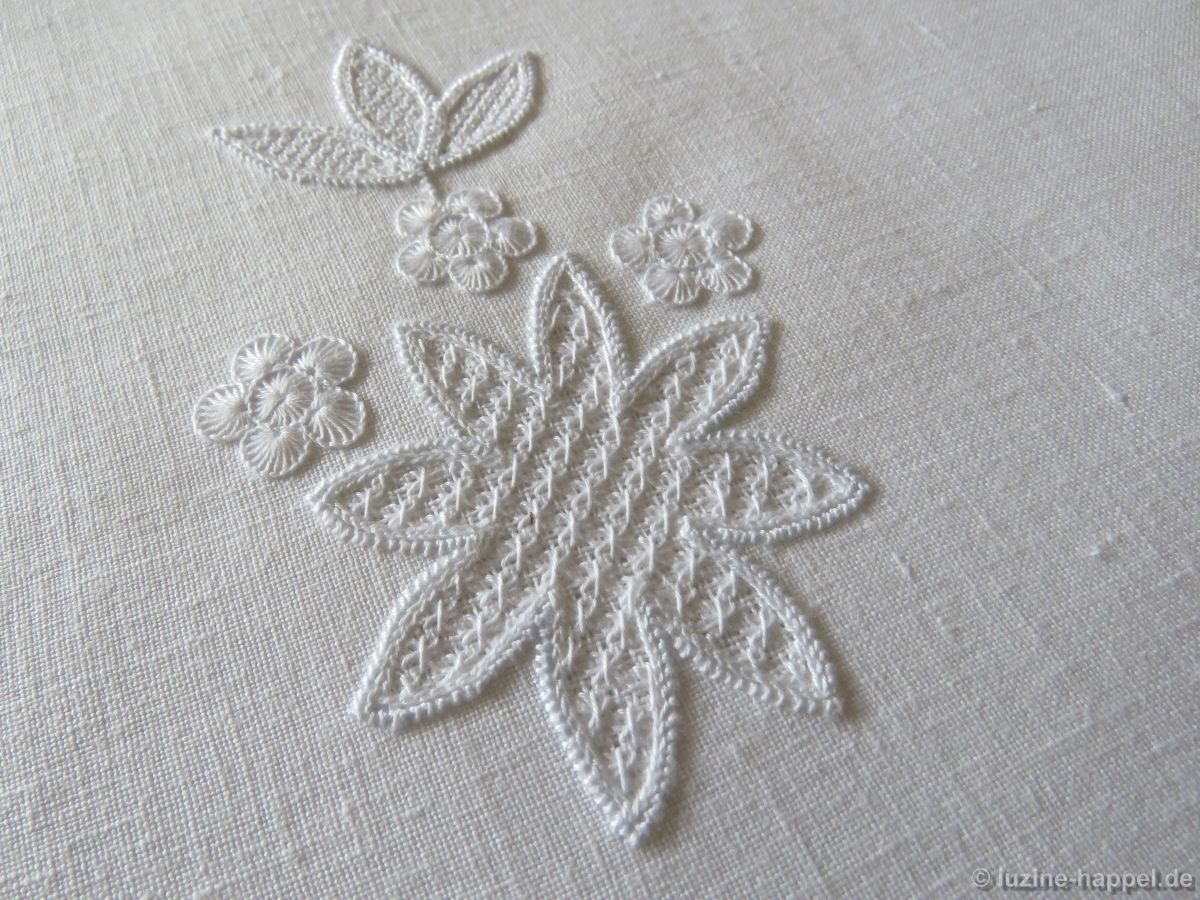
Needlelace and openwork patterns fill the shapes, with some of the openwork patterns partially worked with a Cable stitch grid. In the forty shapes, I count twenty-three different filling patterns.

I have two of these borders. They are identical except for the big tulip in the top center. One tulip is decorated with a white Rose stitch pattern and displays the initials AKR and probably F and the year 1826.
The other has a red Rose stitch pattern. Red is sometimes, but rarely, incorporated into whitework borders. In this tulip, the initials AKRFI are visible.
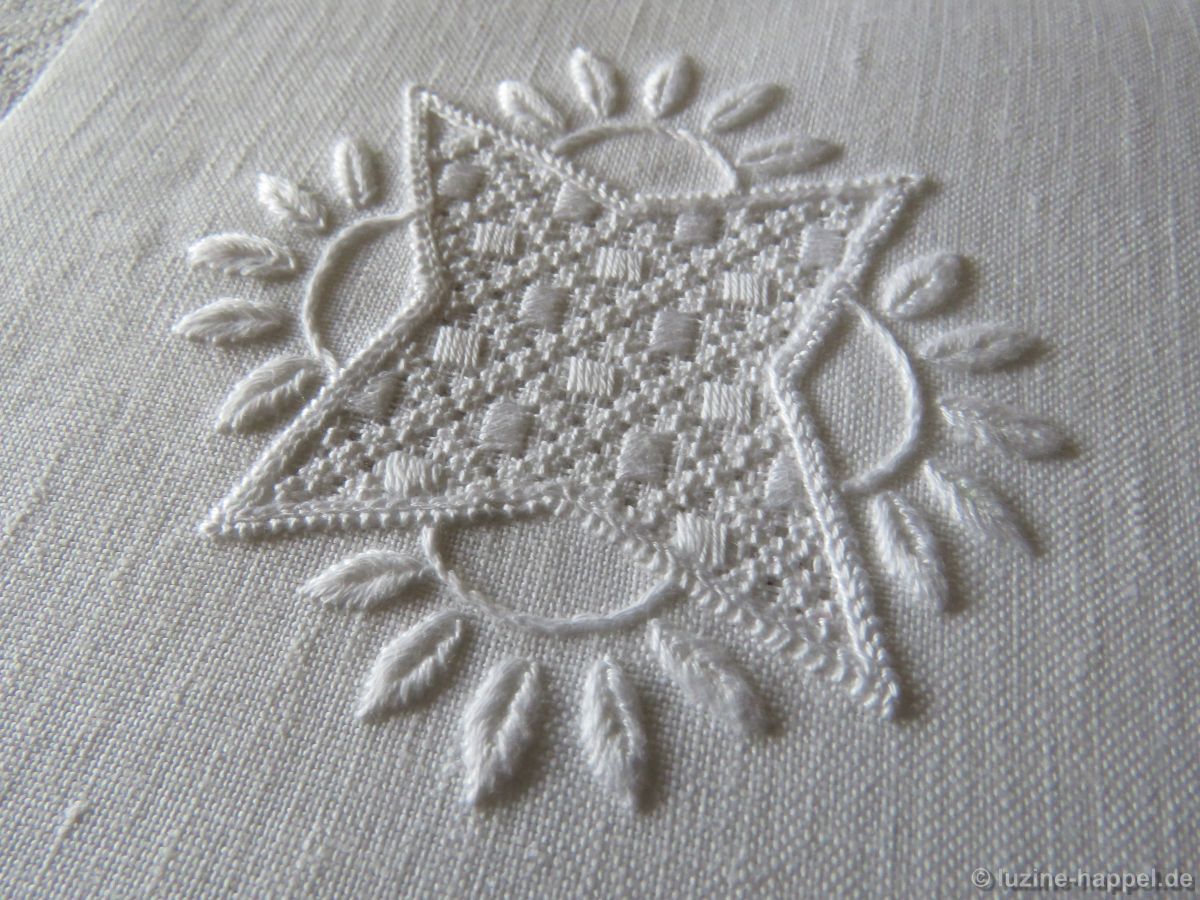
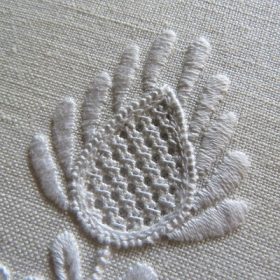
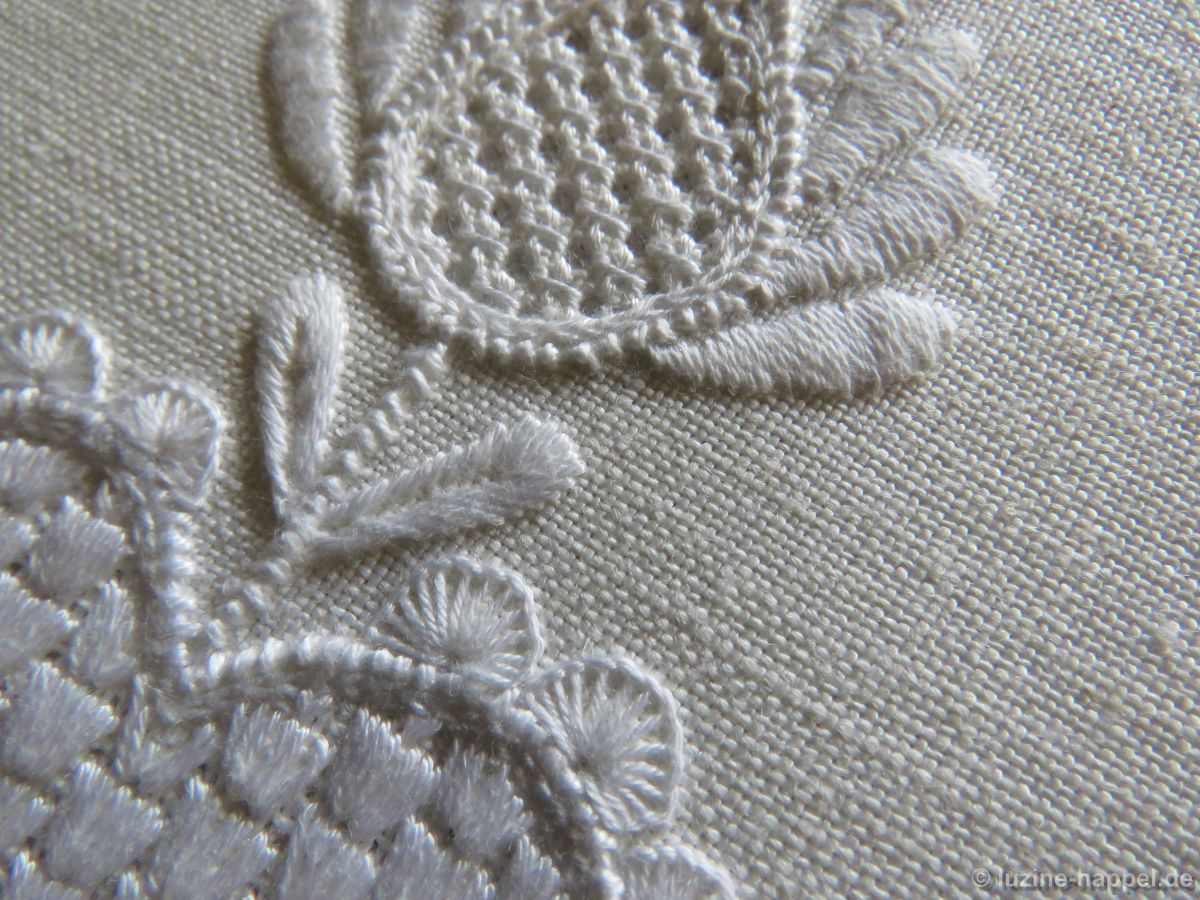
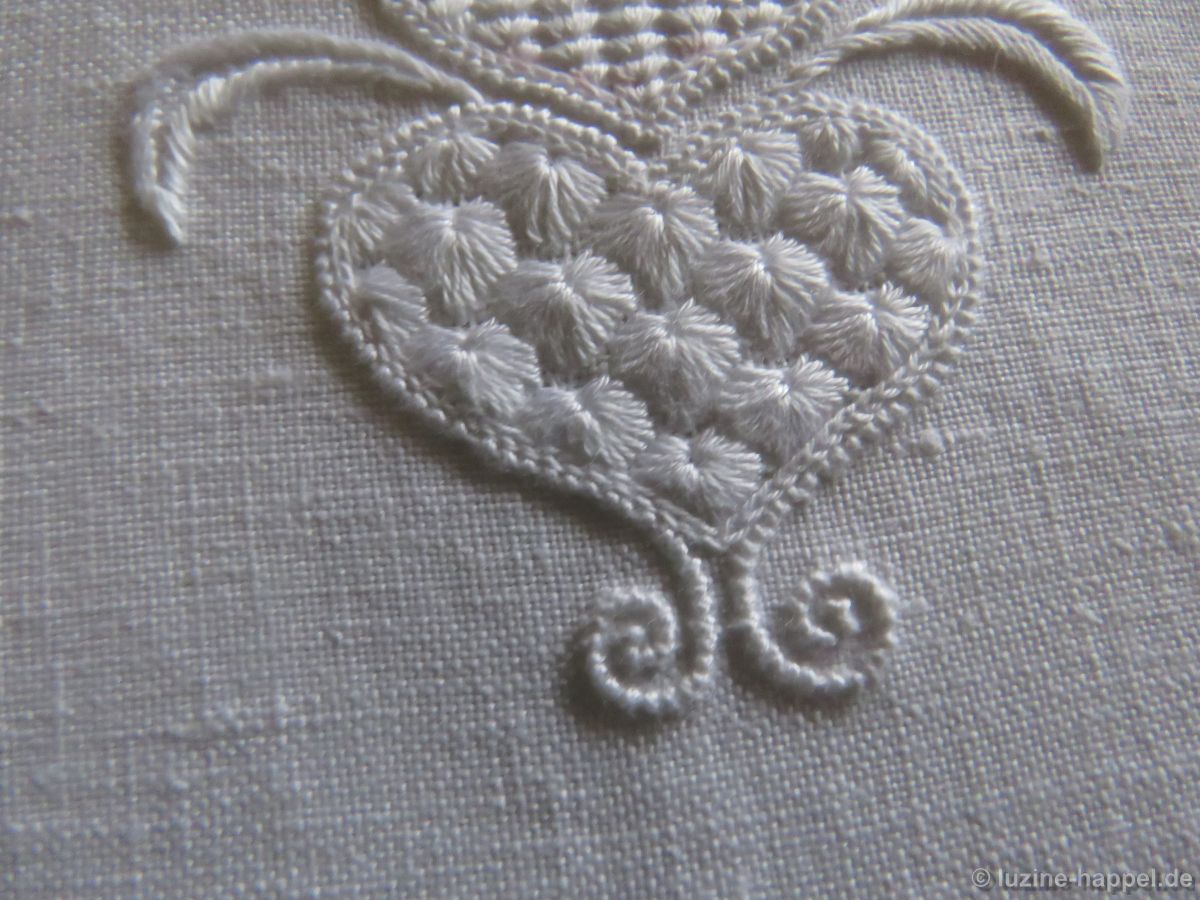
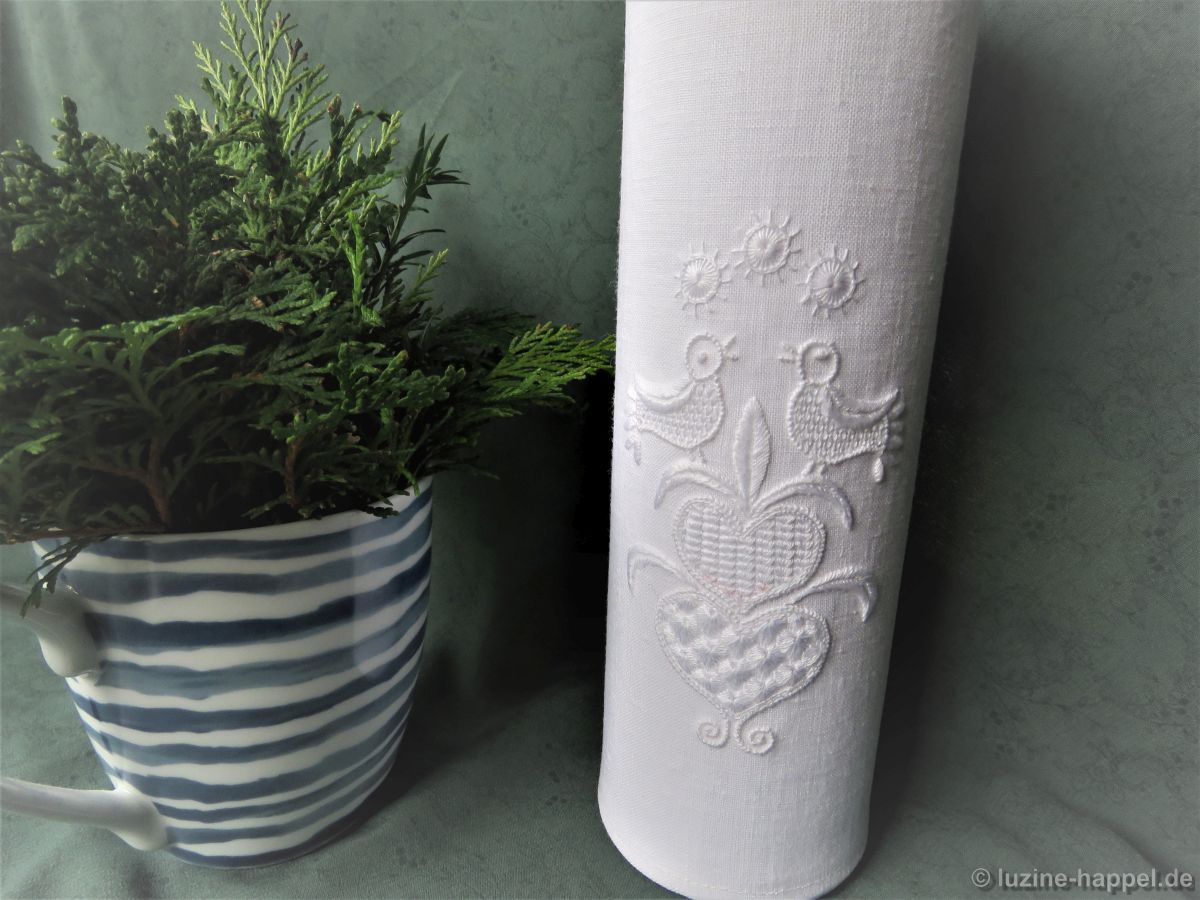
The design is created mirrored at the longitudinal axis. But the filling patterns were not worked symmetrically. In some instances, they differ very much, as the image on top of this article shows clearly.

The embroidery was worked very close to the selvage. So, the embroidery was formerly covered by the seam.
One distinct feature is the bird pattern that was embroidered using Rose stitches into a tulip shape next to a bird shape.

Both birds hold something in their beaks.
Some circles are filled with needlelace; six-pointed and eight-pointed stars are visible.
Also worth mentioning is the arrangement of the stems between the heart and the star circle. Worth viewing is the special treatment of the edges of the shape below the center tulip: Big leaves in the form of a bowl at the bottom, tendrils ending in Chain stitches, and a several half eyelet scallops on both sides make this shape eminently interesting.
The placement of the bird´s legs is also interesting.
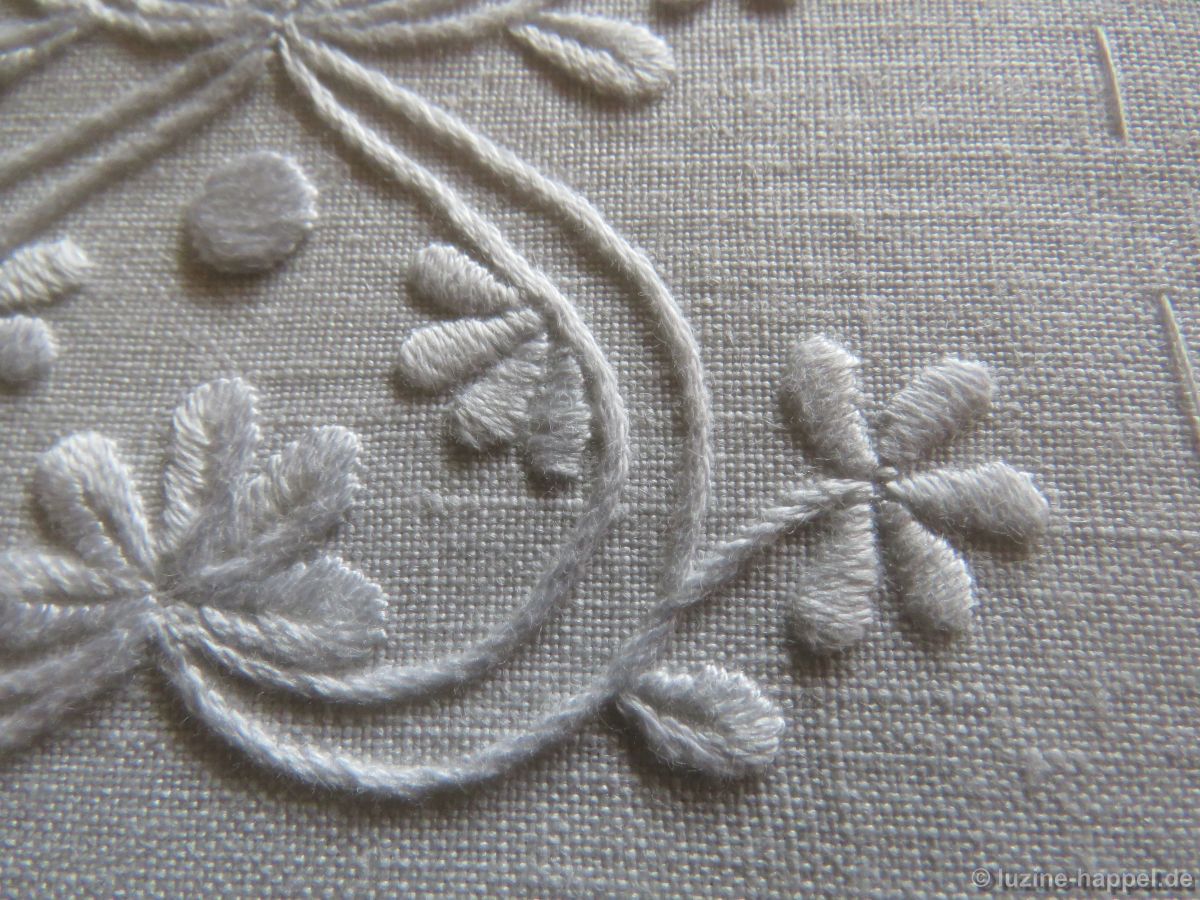
It is apparent that Coral Knot stitches as outlines were worked rarely on this piece. Coral knots can be seen on the bird motif as an outline and as the stem in the bird’s beak. They can also be seen in the tightly curled tendrils.
Thin stems were worked with Chain stitches. For outlining the big shapes densely worked, rounded leaves, Blanket stitch scallops, partially half eyelet scallops and 2 short-2 long were used.

Blanket Stitch Eyelets

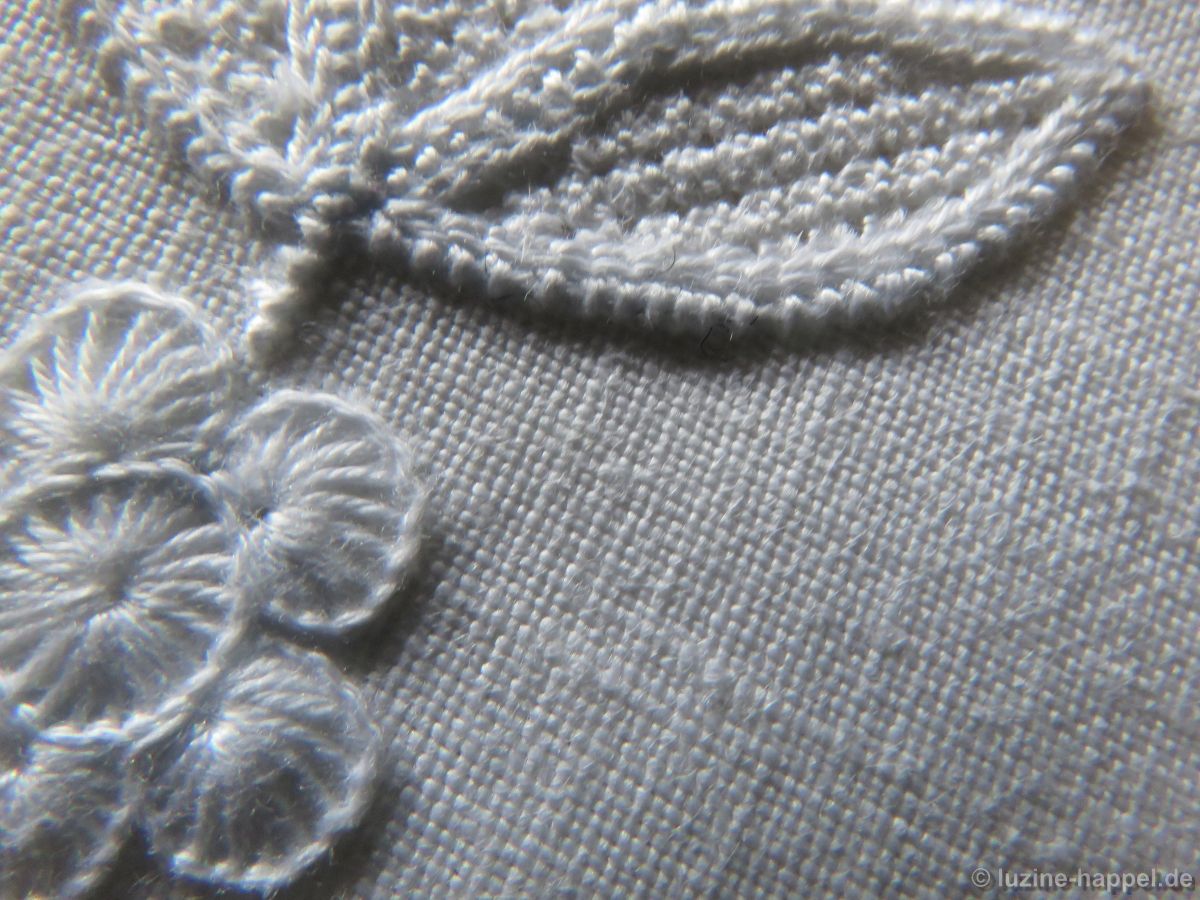
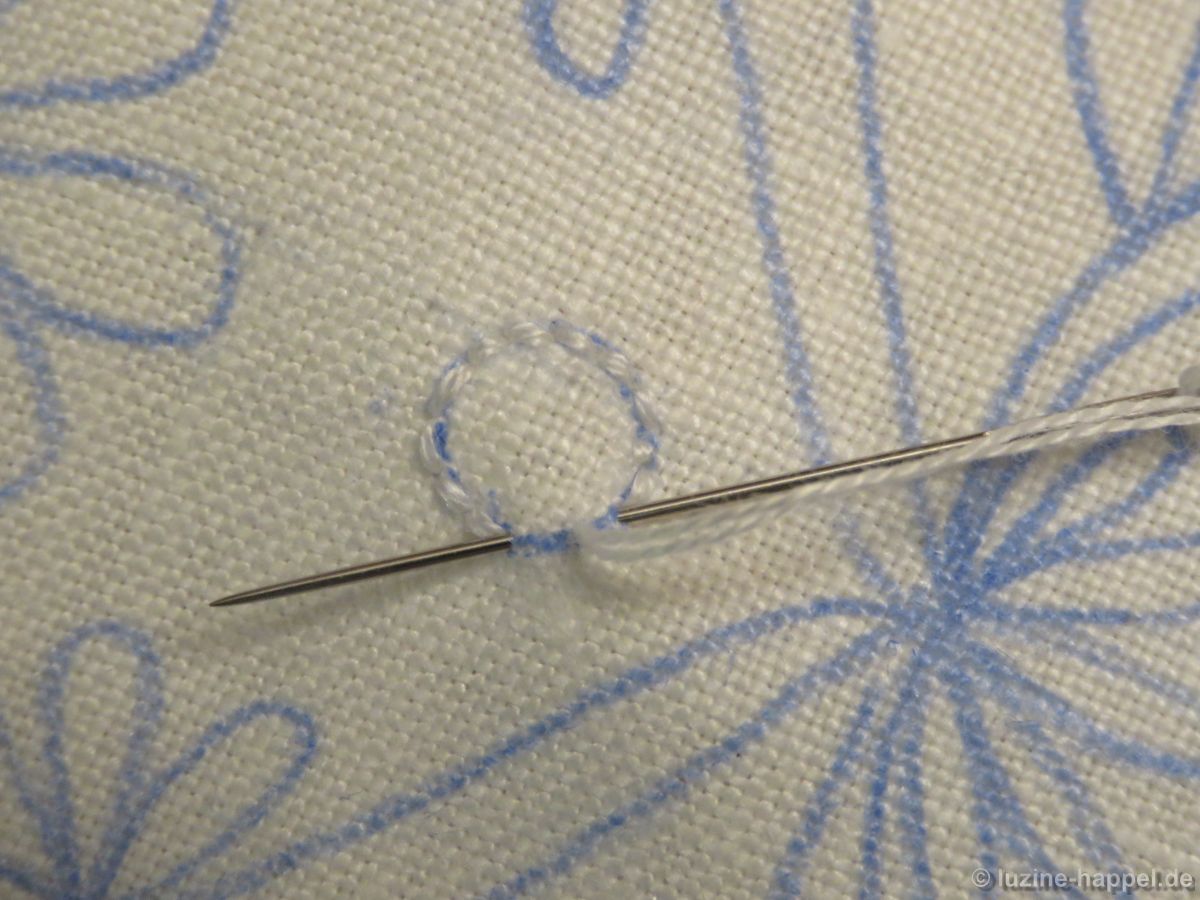
Blanket stitch eyelets are small elements commonly used to fill the areas between the larger shapes in Schwalm whitework,

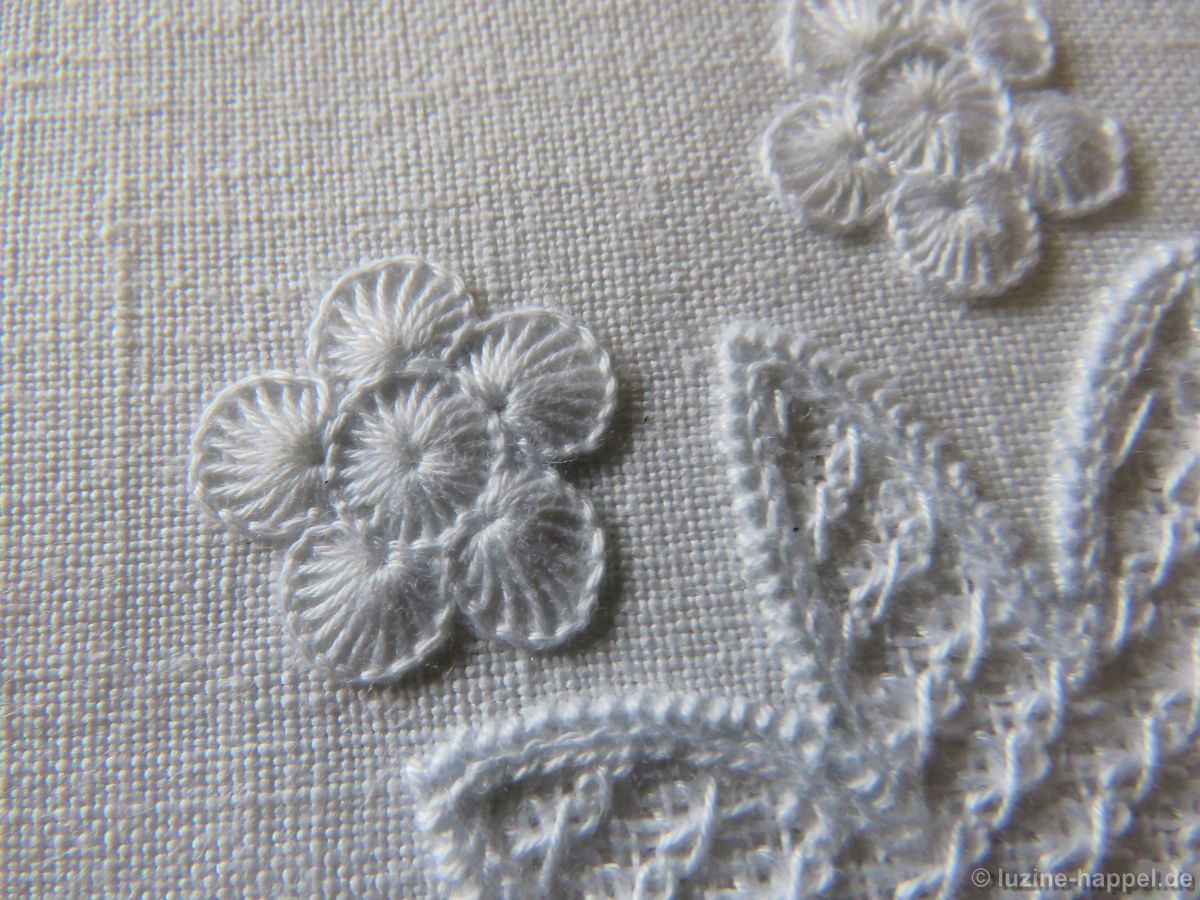
A Blanket stitch eyelet is a small circle covered with closely worked Blanket stitches. All stitches start from the center and are worked counterclockwise. The loops create the outside edge.
1_20-2017They are often embroidered singly as centers of small flowers or for other purposes, but they are also found in groups of three or more and in groups of differing sizes. The following pictures show the different arrangements of Blanket stitch eyelets on traditional and contemporary whitework.
2_20-2017A single Blanket stitch eyelet is used as small accent flower to a larger circle motif.
3_20-2017Single Blanket stitch eyelets, connected with Coral Knot lines, adorn the center of a design.
4_20-2017A single Blanket stitch eyelet is embroidered as an eye of a traditional bird motif.
5_20-2017A grouping of three – close together –
6_20-2017or with a small distance between is often worked.
7_20-2017Five Blanket stitch eyelets are connected with a star stitch to create a small flower.
8_20-2017Six Blanket stitch eyelets are worked closely together establishing a small flower.
9_20-2017Six Blanket stitch eyelets are arranged like a bunch of grapes.
10_20-2017One Blanket stitch eyelet encircled with four half-eyelet scallops is found in the dense embroidery of a parade cushion border from 1826.
11_20-2017A similarly formed small flower is used in a small border.
12_20-2017One Blanket stitch eyelet encircled with five half-eyelet scallops is found in the dense embroidery between large shapes on a parade cushion border from 1826.
13_20-2017One Blanket stitch eyelet encircled with six Blanket stitch scallops is the center of a small flower. In addition, there are many Blanket stitch leaves.
14_20-2017It is common to find single Blanket stitch eyelets surrounded by circles worked in Satin stitches; some of these circles can be smaller
15_20-2017or approximately the same size as the Blanket stitch eyelet.
16_20-2017A Blanket stitch eyelet can be also be surrounded by Bullion Knots,
17_20-2017small undivided or
18_20-2017divided Satin stitch leaves.
19_20-2017A single Blanket stitch eyelet can also be used as the center of individually designed flowers, as seen here in an embroidery by Thekla Gombert.
20_20-2017A Blanket stitch eyelet small flower, Blanket stitch leaves, and Blanket stitch half-eyelet scallops decorate the areas between large shapes.
21_20-2017Blanket stitch eyelets of differing sizes can be arranged in the manner of a tendril.
22_20-2017The simple Blanket stitch eyelet is a very important element of Schwalm whitework. I hope this article shows that this simple element is readily used, and used in many creative ways.

Traditional Schwalm Bodice (D) Embroidery

The embroidery of the dyed-to-blue Schwalm bodice (D) is extravagant. The picture shows the entire border in a photomontage.
1_16-2017The linen used has a 23/cm thread count, thus it is very fine. The border design is 18 cm wide, making it especially large for a bodice embroidery.
2_16-2017Initials and small ornaments were worked both at the bottom and at the top of the border. Only openwork filling patterns were worked in the motifs.
3_16-2017One can note that Coral Knot stitches were used but only rarely. Only tendrils and some stems were worked with Coral Knot stitches. And only three shapes at the top middle have Coral Knot outlines; the center shape was outlined with two rows of Coral Knot stitches. The Chain stitch outline is missing in this motif. Stems worked with Chain stitches are clearly visible. The rounded leaves are worked with Blanket stitches.

Looking closer to the design, it looks a little bit awkward and heavy.
4_16-2017The shape in the top middle was filled with an openwork pattern without a Cable stitch grid being worked first. A zigzag Rose stitch pattern was worked, but the pattern was not centered in the motif.
5_16-2017The circle motifs to the left and right of the top center shape are not true circles. It is remarkable that the thick stem is outlined with two Coral Knot lines and that these lines merge into the outline of the shape. Usually motifs are outlined separately, and the stems are attached. An additional row of Chain stitches inward of the Coral Knot stitches is missing.
The circle motif was outlined with Blanket stitch knife points. The shape was filled with a Rose stitch openwork filling pattern without a Cable stitch grid.
6_16-2017There is an odd shape at the top right and top left of the design; I suspect these should be tulip motifs. These are naive representations. The shape is outlined with one row of Chain stitches and Blanket stitch knife points or Blanket stitch scallops. The motif is filled with an openwork pattern. It is remarkable that parts of a Cable stitch grid alternate with sections of Rose stitches that were worked without a Cable stitch grid. The zigzag line of Rose stitches was worked on the Cable stitch grid – all other Rose stitches were worked without a Cable stitch grid.
7_16-2017At the side of the middle section of the border, there is a motif combination that looks like it was meant to be a cloverleaf. The center circle connects four similar shapes. The center circle is outlined with one row of Chain stitches and Blanket stitch scallops. It is filled with a Rose stitch openwork pattern without a Cable stitch grid. Three of the surrounding “leaves” are outlined with one row of Chain stitches and Blanket stitch half-eyelet scallops, whereas the fourth “leaf” is outlined with two rows of Chain stitches. Opposite shapes are filled the same – the openwork pattern showing the squares is a Rose stitch pattern embroidered on a Cable stitch grid. Whereas the openwork pattern showing the rhombi is a Rose stitch pattern without a Cable stitch grid.

Conspicuous is the arrangement of the tendrils; here they have been haphazardly placed. The tendrils on the same arrangement on the opposite side of the border have been placed with more intention and care.
8_16-2017Between the two “cloverleaves” there is an arrangement of four circles with a small tulip between.
9_16-2017The circles are outlined with one row of Chain stitches and Blanket stitch half-eyelet scallops. The tulip is outlined with two rows of Chain stitches. The bottom circles are embroidered with a Rose stitch openwork pattern without a Cable stitch grid, whereas the two upper circles are worked with Rose stitch openwork patterns with a Cable stitch grid. Although the tulip in the center is very small, it is embroidered with alternating rows of Cable stitches and Rose stitches.
10_16-2017There is a heart motif in the center of the bottom section of the border design; it is flanked by big leaves. Hearts – turned upside down – are situated above each of the leaves. All hearts are outlined with one row of Chain stitches and Blanket stitch half-eyelet scallops, whereas the leaves are outlined with two rows of Chain stitches. The filling patterns in the upside down hearts have been worked without a Cable stitch grid. The center heart shows a combination of rows of Rose stitches and rows of Cable stitches. The smaller hearts were embroidered with Rose stitches only. The openwork pattern in the leaves is made with a Cable stitch grid filled with a Rose stitch pattern. Distinctive tendrils are worked in the remaining areas between the motifs.
11_16_2017The last motifs at the bottom sides of the border design are tulip shapes – outlined with one row of Chain stitches and, where the room was wide enough, Blanket stitch half-eyelet scallops. The shapes were filled with an openwork Rose stitch pattern with a Cable stitch grid.
Looking again at the photomontage, it is striking how inconsistently the border was embroidered. In some areas the left side looks more orderly and balanced, in other areas the embroidery is more consistent on the right side. Unfortunately I did not find a year, but I think it was made about 1850.
Embroidered on such a fine linen fabric (23/cm thread count!) without the possibility of electric lighting, eyeglasses, or magnifier, it is a work of art that radiates the charm of traditional hand embroidery.

Carefully studying the details, we can learn a lot.

Hare Circle Dance

In Germany, the Easter rabbit places the Easter eggs into hidden nests. And so it is not surprising that my Easter projects feature not only Easter egg shapes but also hare motifs. I asked my graphic designer for a design, and she came up with several wreaths. I decided on a circle dance with crouching hares – all running in the same direction.
1_14-2017Crouching hare shapes are easy and fun to embroider. The ears and legs can be worked with Satin stitches, and the head-body section – with no small or pointed areas – can be easily and creatively embellished with various filling patterns.
2_14-2017I decided to alternate openwork filling patterns with Limet filling patterns. When working openwork, I withdrew threads and worked filling patterns in the entire head-body area.
3_14-2017Whereas when working the Limet filling patterns, the head area remained unembroidered.
4_14-2017Each of the sixteen hares got a different filling pattern. Many well-suited small openwork filling patterns can be found in my book “Openwork Pattern Samplers.”
5_14-2017For the Limet filling patterns, I exclusively used small square eyelet patterns that can be found in my Limetrosen I and Limetrosen II books. Alternating the more prominent square eyelet patterns with the more flat and open openwork patterns makes for an interesting contrast.

By the way, the eggs shown in the above pictures (except the first image) are blown out chicken eggs that have been coloured and etched. The outline designs can be found in my booklet Easter Eggs – decorated with motifs of Schwalm Whitework made by a scratch technique. The wreath I embroidered has an internal diameter of 26 cm. The tea cloth measures 52 cm X 52 cm. The linen used has a 16/cm thread count. It is possible to enlarge the design a little bit.

Here is one more nice and easy project that – because of the many possible variations – you’ll really enjoy embroidering.
6_14-2017The design is available as a download for €8. The document includes the entire design reduced (to be enlarged at your local copy shop) and as a quarter design in the original size. Please email leuchtbergverlag@aol.com me with your request.

An Easter Egg Border

Easter eggs are especially suited for trying out different patterns. Because of the rounded shape without small or pointed areas, the arrangement of the pattern at the edges is easy to work. I wanted a border design, but there were so many issues to consider: Which sizes of eggs create a nice balance? Which shapes are best? How tall should they be? How should they be angled? I preferred to ask an artist; Artist Gudrun Hartwig designed this special Easter border.

The border shows Easter eggs lying in the grass. Some Easter eggs lie on the straight of grain and some on the bias. I decided to decorate the edges of a square tea cloth with the border. It measures 75 cm X 75 cm.
1_12-2017To simulate grass, I used “Trachtenstitch” (see Fancy Hems pages 14–16).
2_12-2017Each of the fifty-four eggs got its own special pattern. This was a real pleasure to stitch. I used exclusively square eyelet patterns, most can be found in my Limetrosen I book. The patterns in Limetrosen I are perfect for the egg shapes. And the variety of patterns in the book is vast – there are patterns for small shapes and big shapes, patterns appropriate for working on the straight of grain and on the bias. There are even some patterns for slanting shapes.
3_12-2017The Easter eggs can be decorated with striped patterns
4_12-2017or with dots.
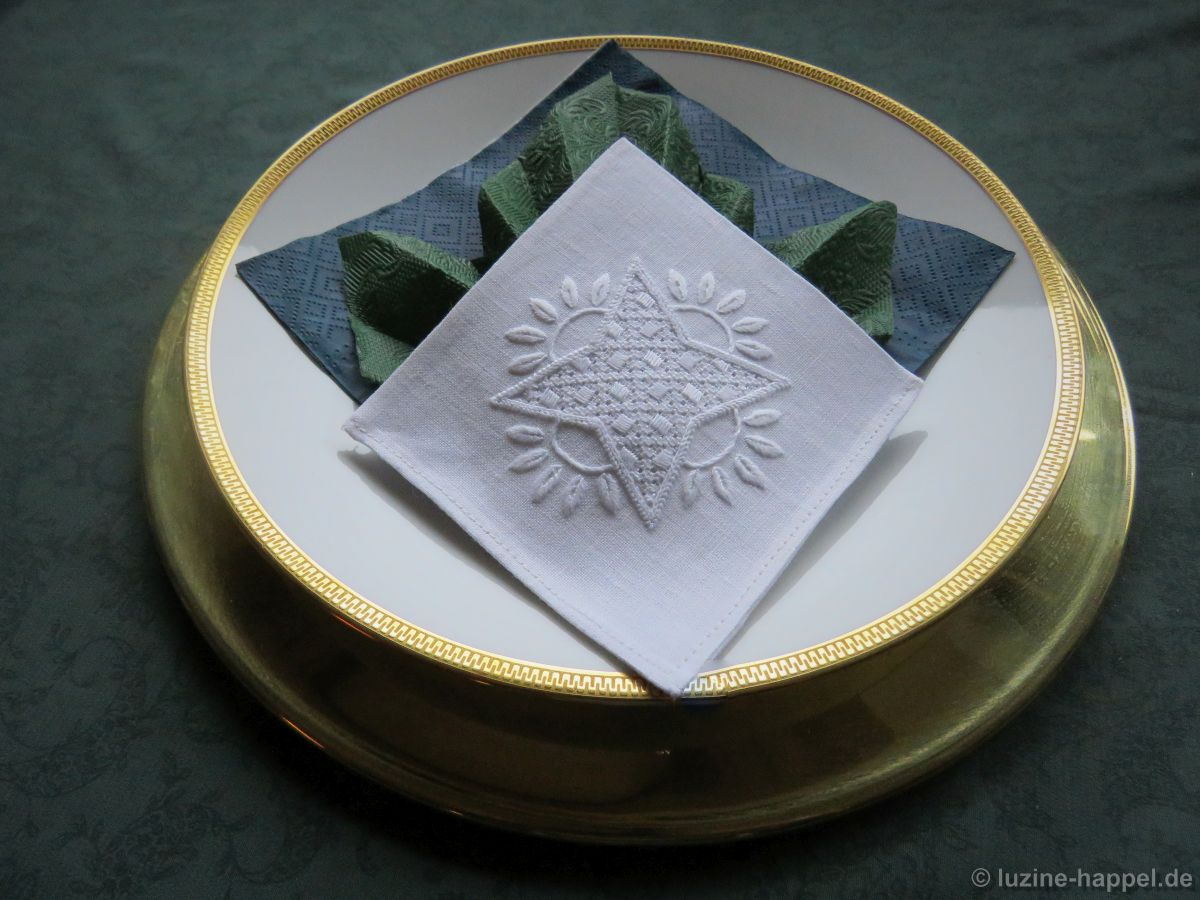
5_12-2017The Limetrosen patterns use more thread than many other stitches. But the effect of the threads, dense and lying in different directions on top of the fabric, is very pleasant indeed. Chiaroscuro – the interplay of light and shadow – makes the border beautiful, although is is unadorned. My tea cloth is eye catching. The whitework is timeless; it complements all kinds of crockery, flowers, and contemporary decorations.
6_12_2017