Schwalm Whitework – Apron Square Designs

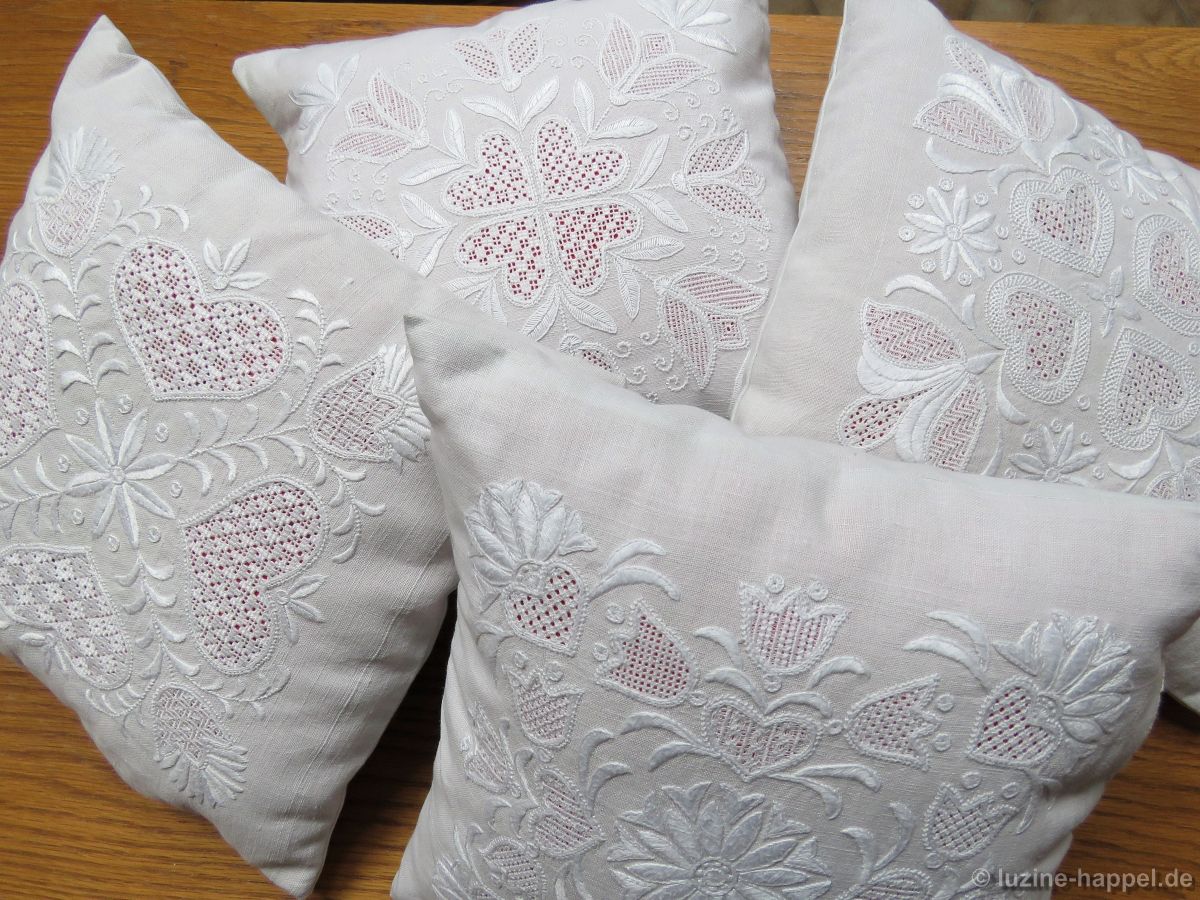
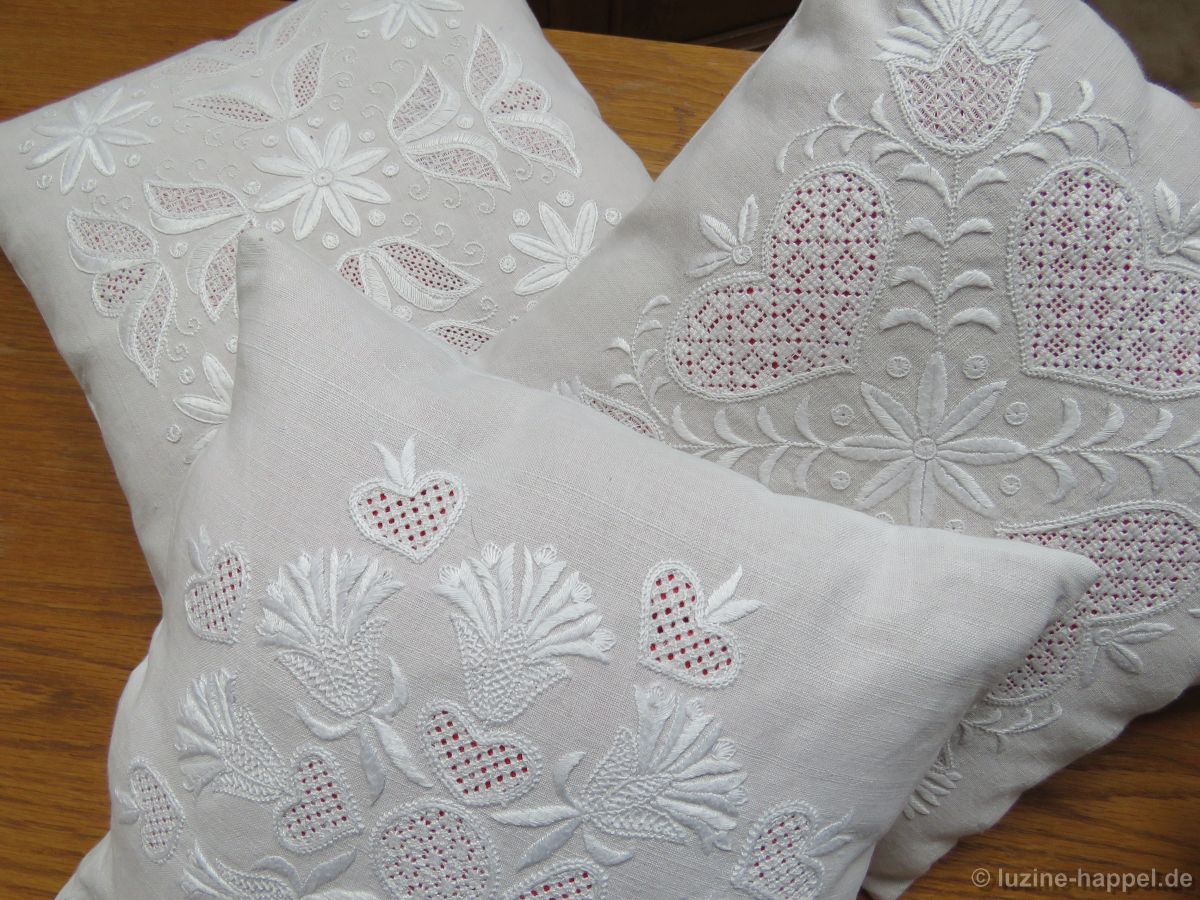
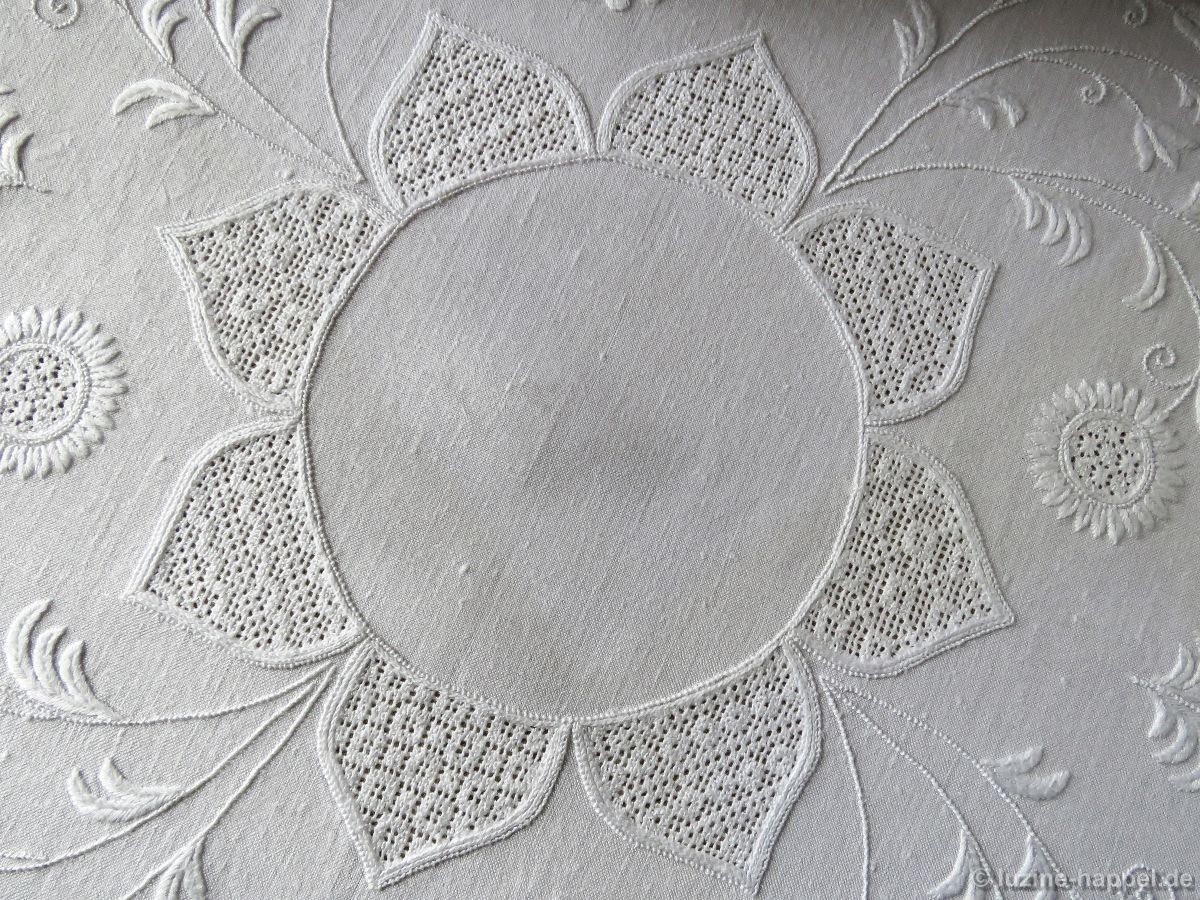
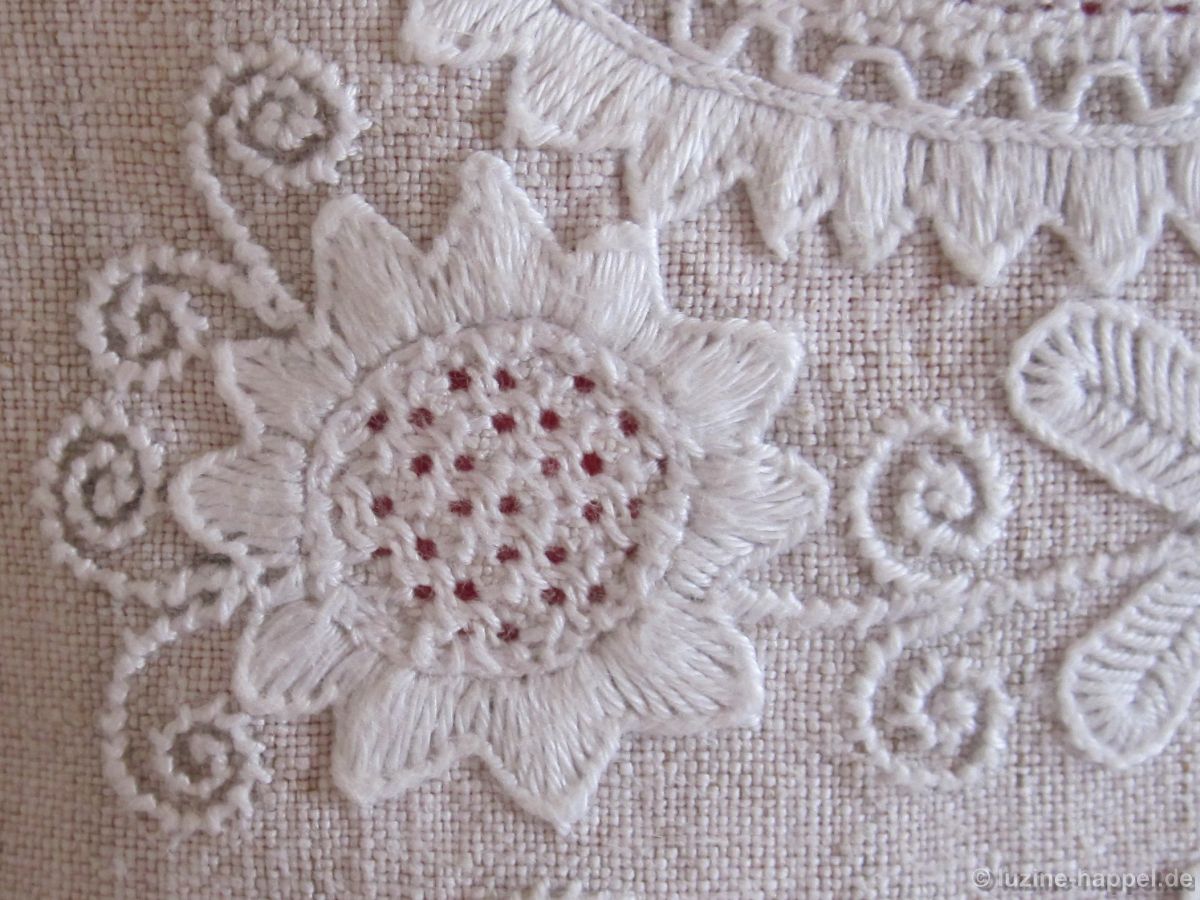
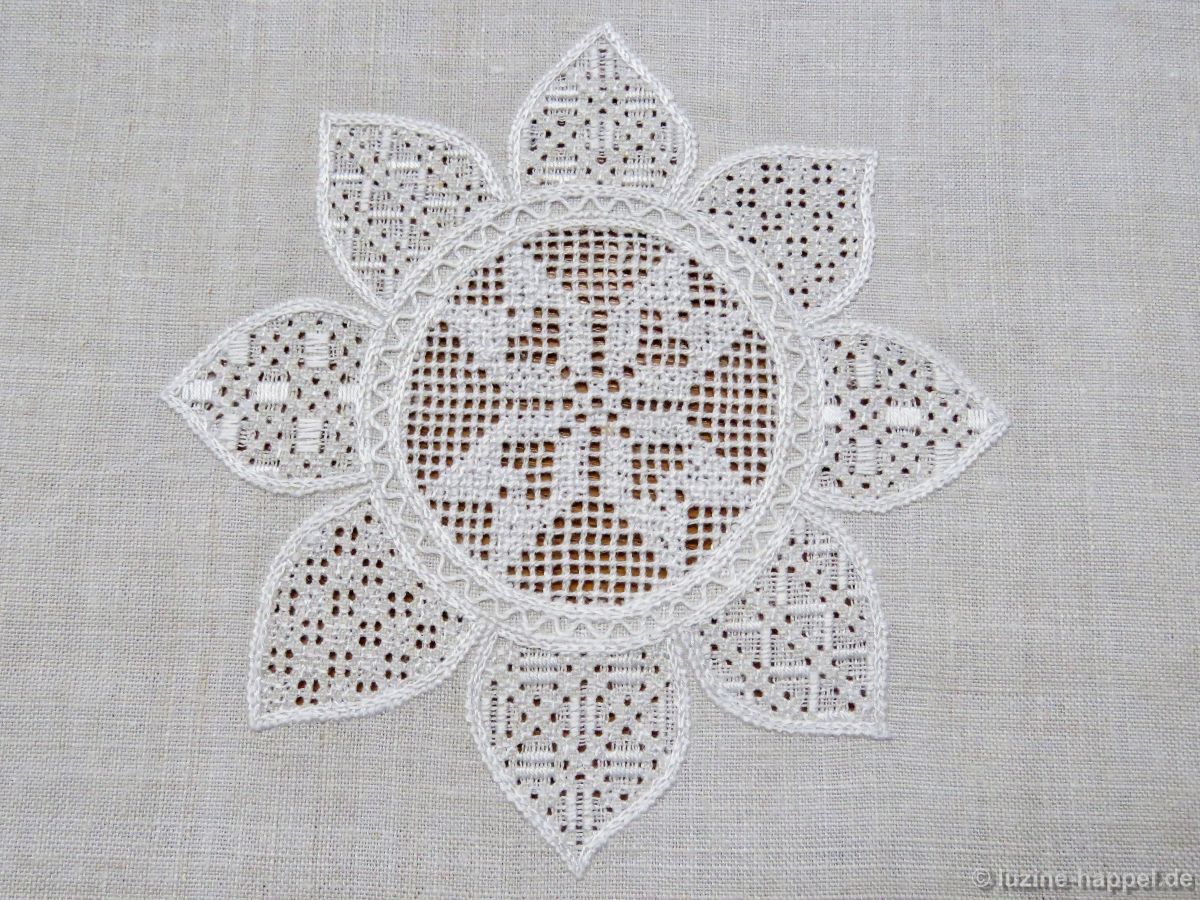
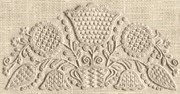
Deeply impressed by the beauty of the apron square designs and the number of wonderful patterns that can be created using the same main motifs over and over again, I looked for a way to modify and then apply these designs to contemporary whitework designs. With the help of my designer, I have produced seven beautiful square designs. I have shown a variation of one in a previous article. It is a design axially symmetric; all others are centrically symmetric.

The designs measure 18 cm X 18 cm each, but it is possible to enlarge them. They are pretty made up as pillowcases, square doilies, and table runners. I am using five of the designs on each side to embroider a large tablecloth. Unfortunately it is not yet finished, so I cannot show a picture.
However, it looks like it will turn out very pretty. In addition to the pillowcase I showed in the previous article, I could finish six more square pillowcases using the centrically symmetric apron square designs.
The designs are beautiful.
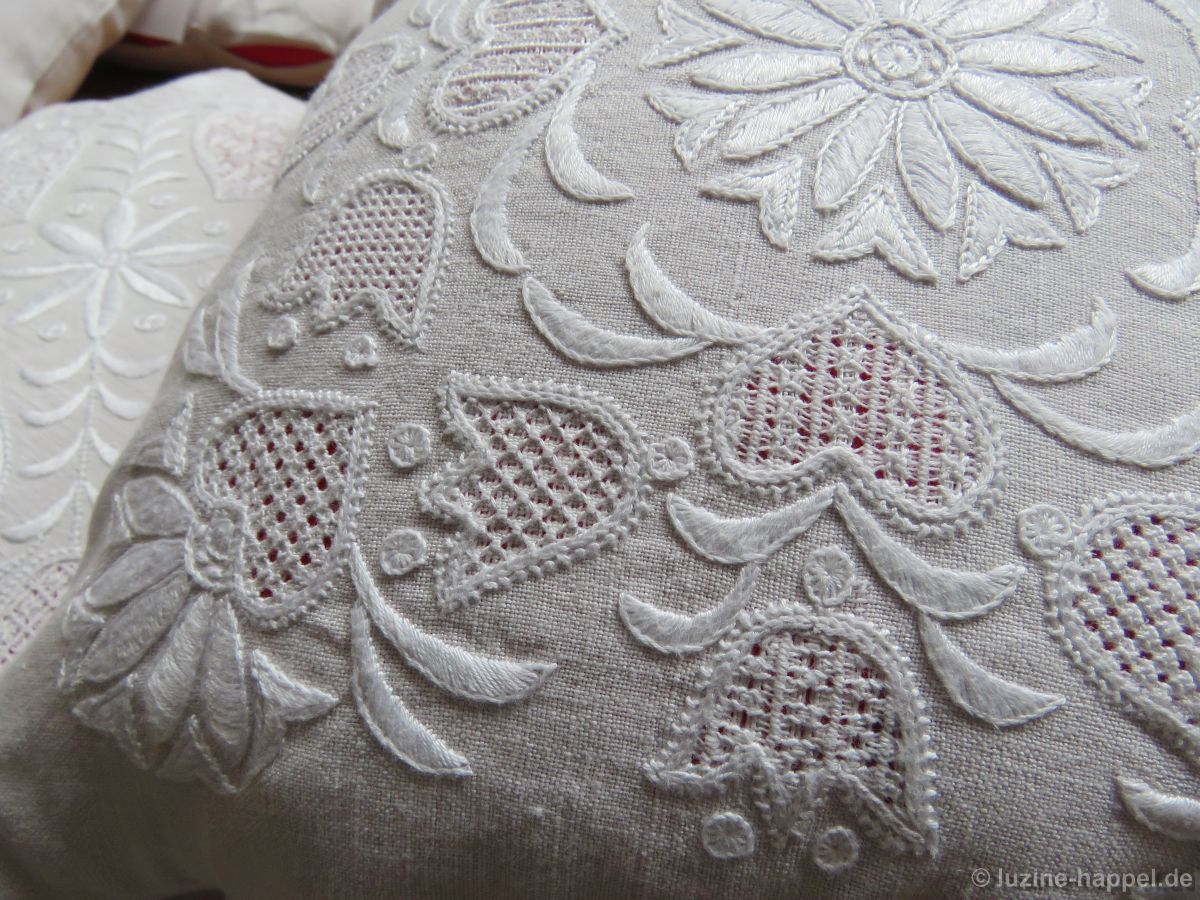
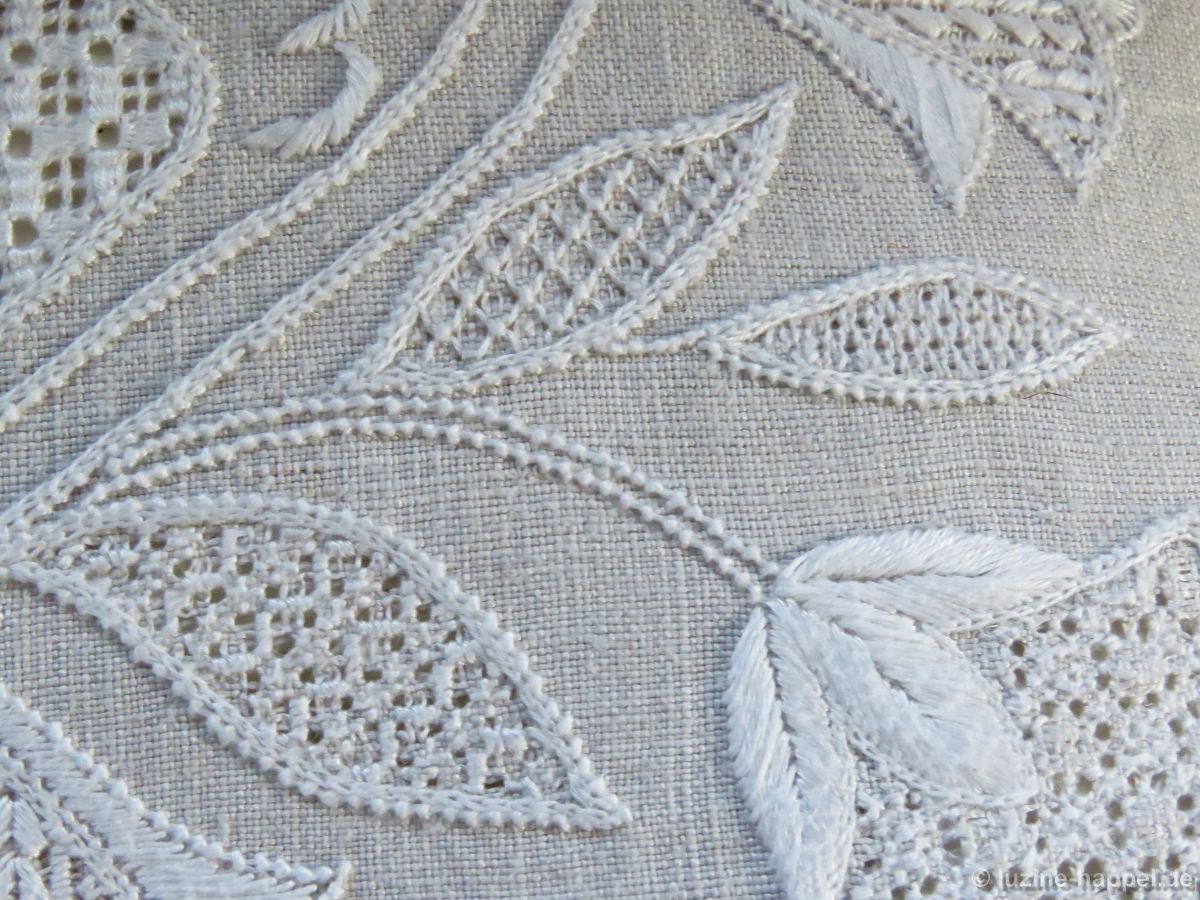
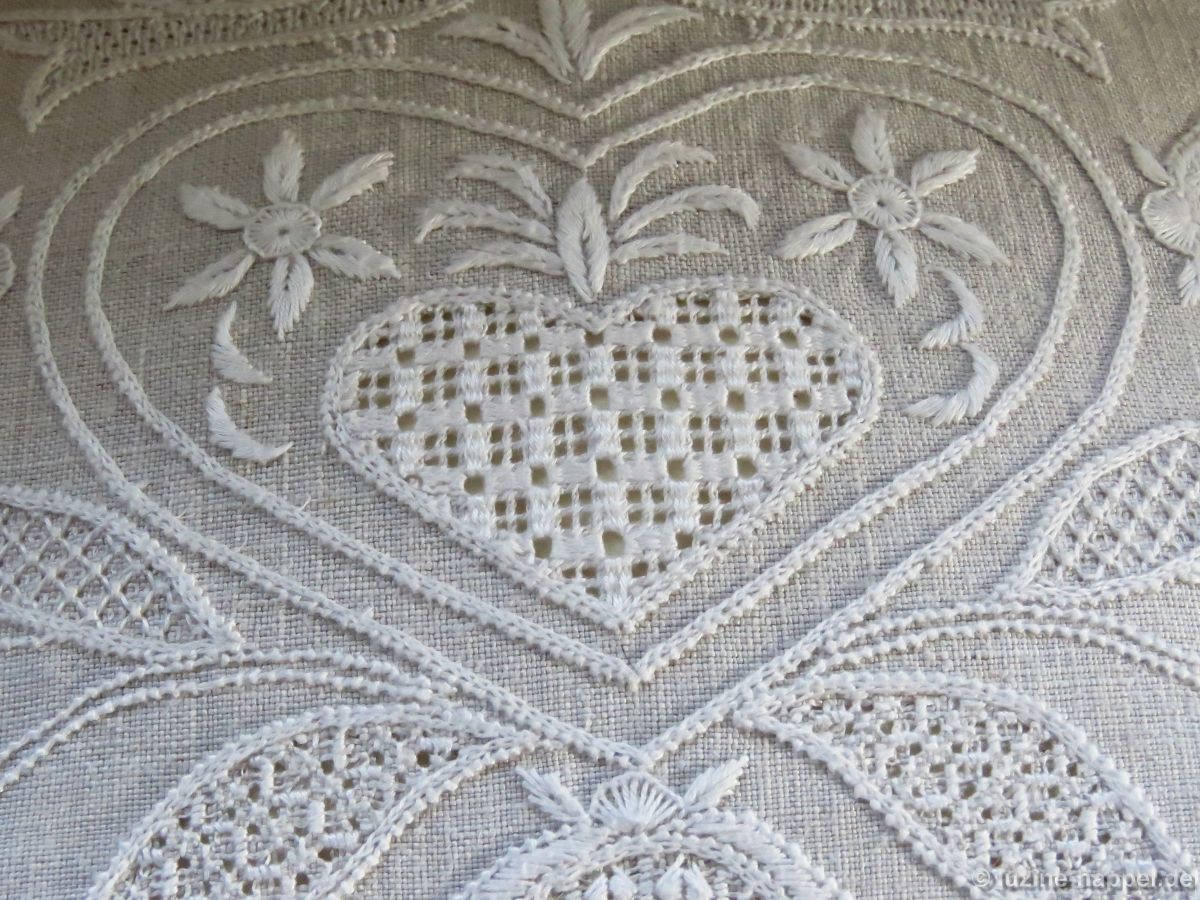
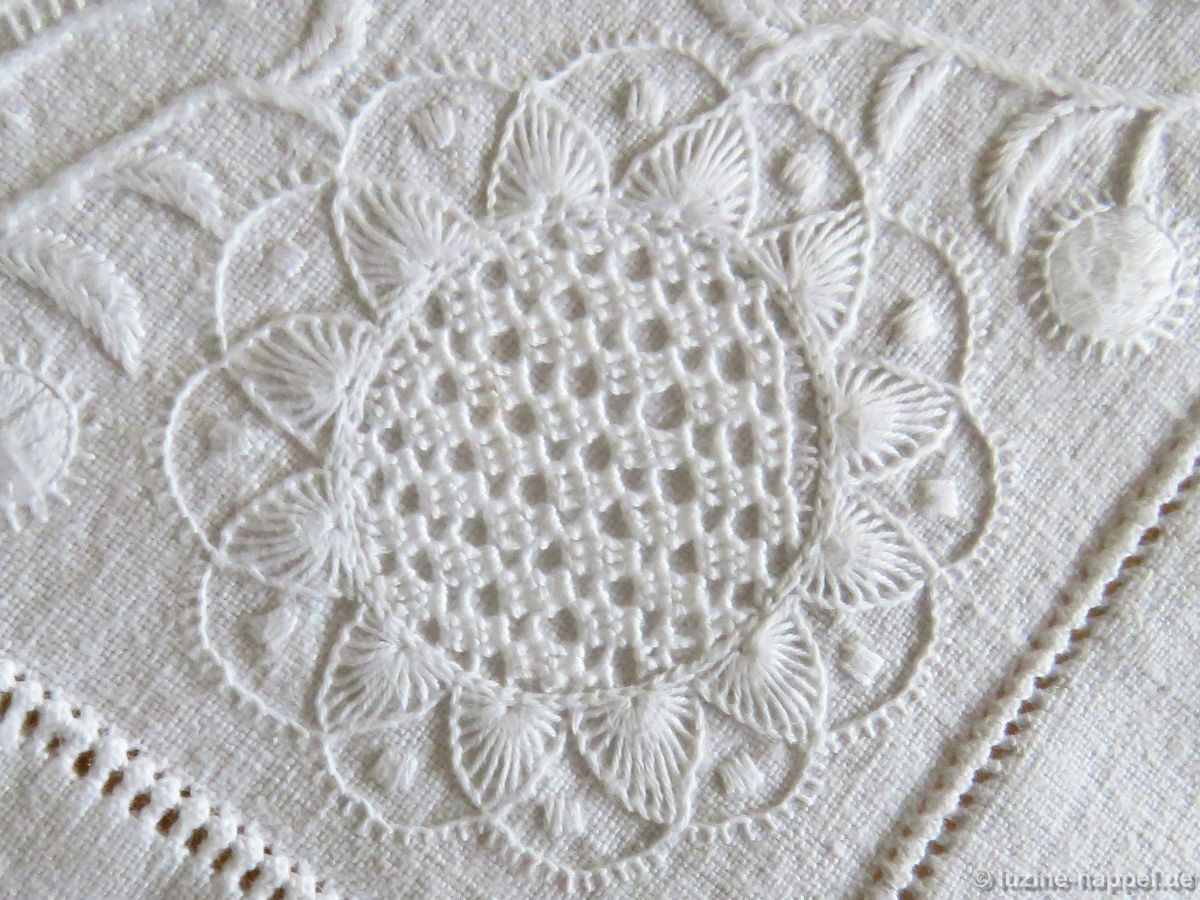
The shapes are large enough to accommodate a variety of filling stitches or patterns. And the added Satin stitch embroidery makes a nice contrast to the drawn thread work areas.
Did I whet your appetite for more beautiful Schwalm-inspired designs?
I now offer the 7 designs + 1 design variation as a document for downloading.


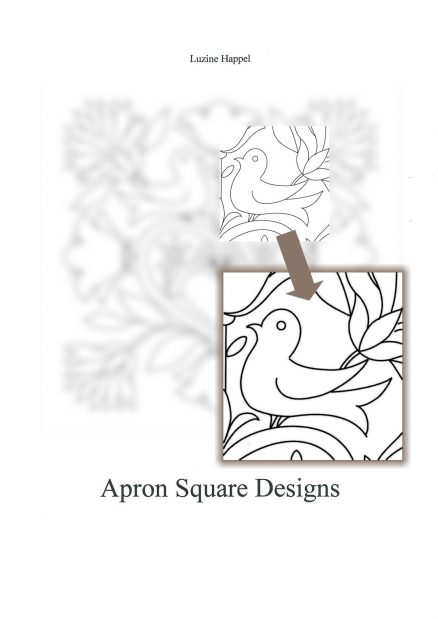
Apron Square Designs
line-drawn designs
8 pages
7 + 1 designs in a size of 18 cm X 18 cm
2,28 MB file size
item price: €25 (including 19 % sales tax), 21.01 € for customer outside the EU
download here

Schwalm Whitework – An Apron Square Design

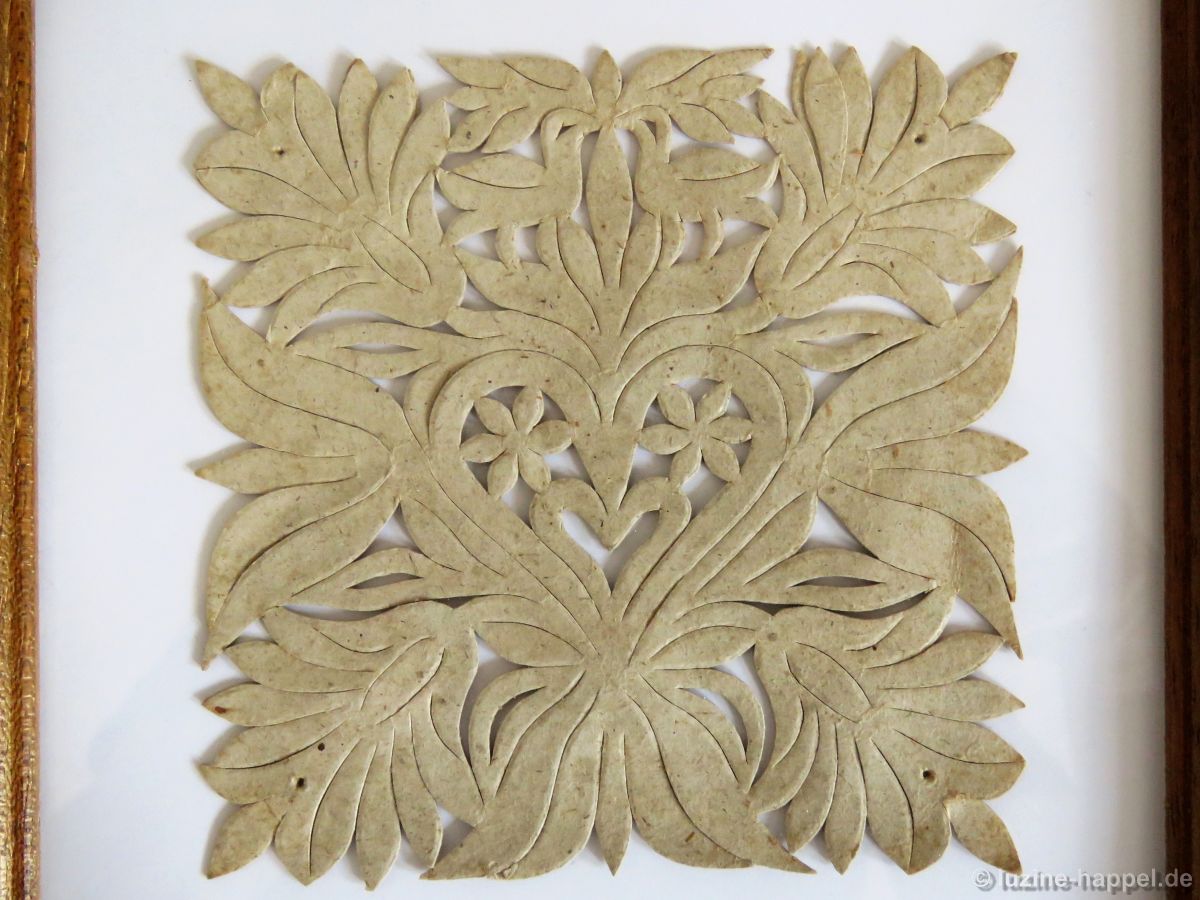
The aesthetic sense and impressive creativity that was able to create the beautiful apron squares inspired me to produce similar designs suitable for whitework. I sent pictures of my entire collection of apron squares and their templates to a designer, and I received in return wonderful square patterns.

One template – for me especially interesting because it included bird motifs – was the inspiration for a design.
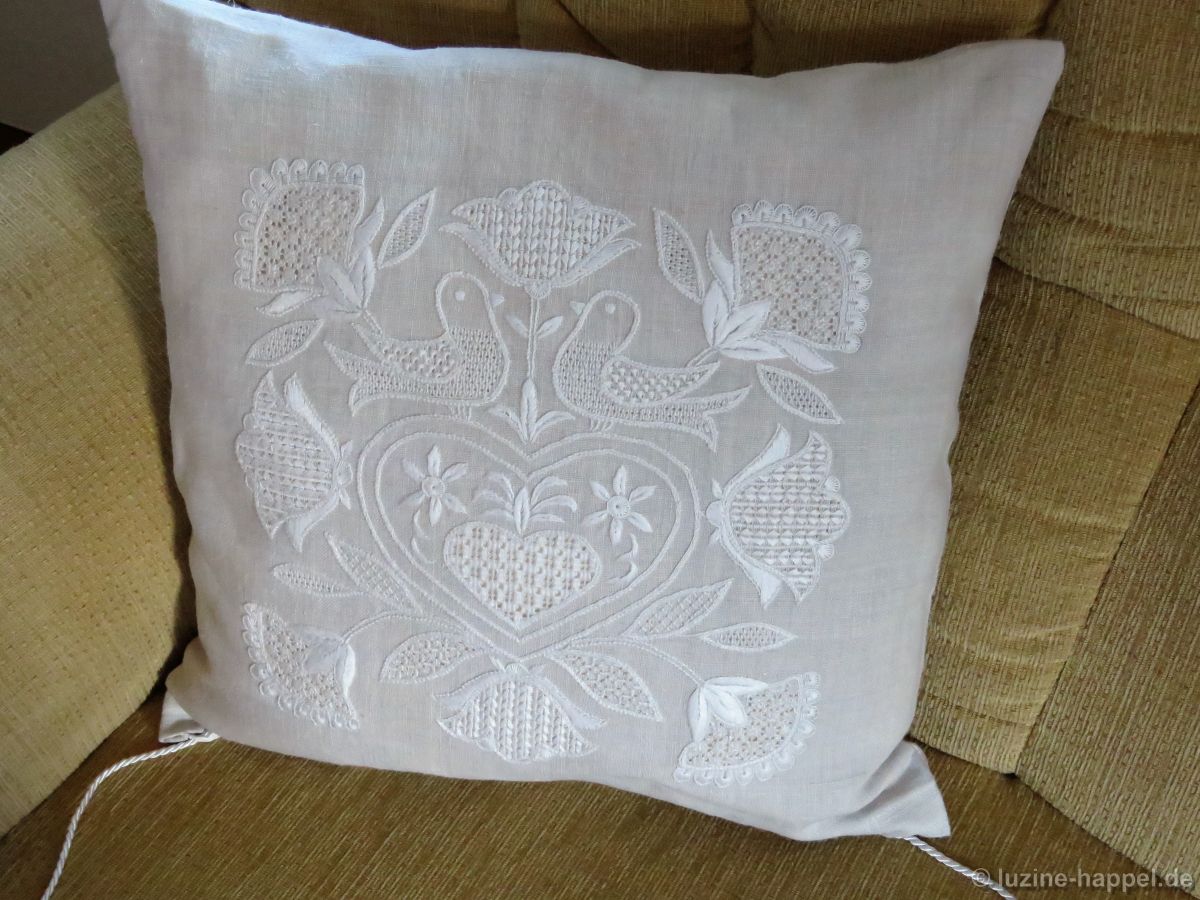
I used the newly created line-drawn design to embroider a square pillowcase measuring 40 cm X 40 cm.
I chose an old handwoven linen because I particularly like white embroidery done on a natural colour linen; I think the combination is very pretty.
The shapes were filled with a combination of traditional and new filling patterns.
The result is a very successful adaptation of traditional Schwalm accessory design to contemporary whitework. I’ll tell you about the other designs inspired by apron squares soon.

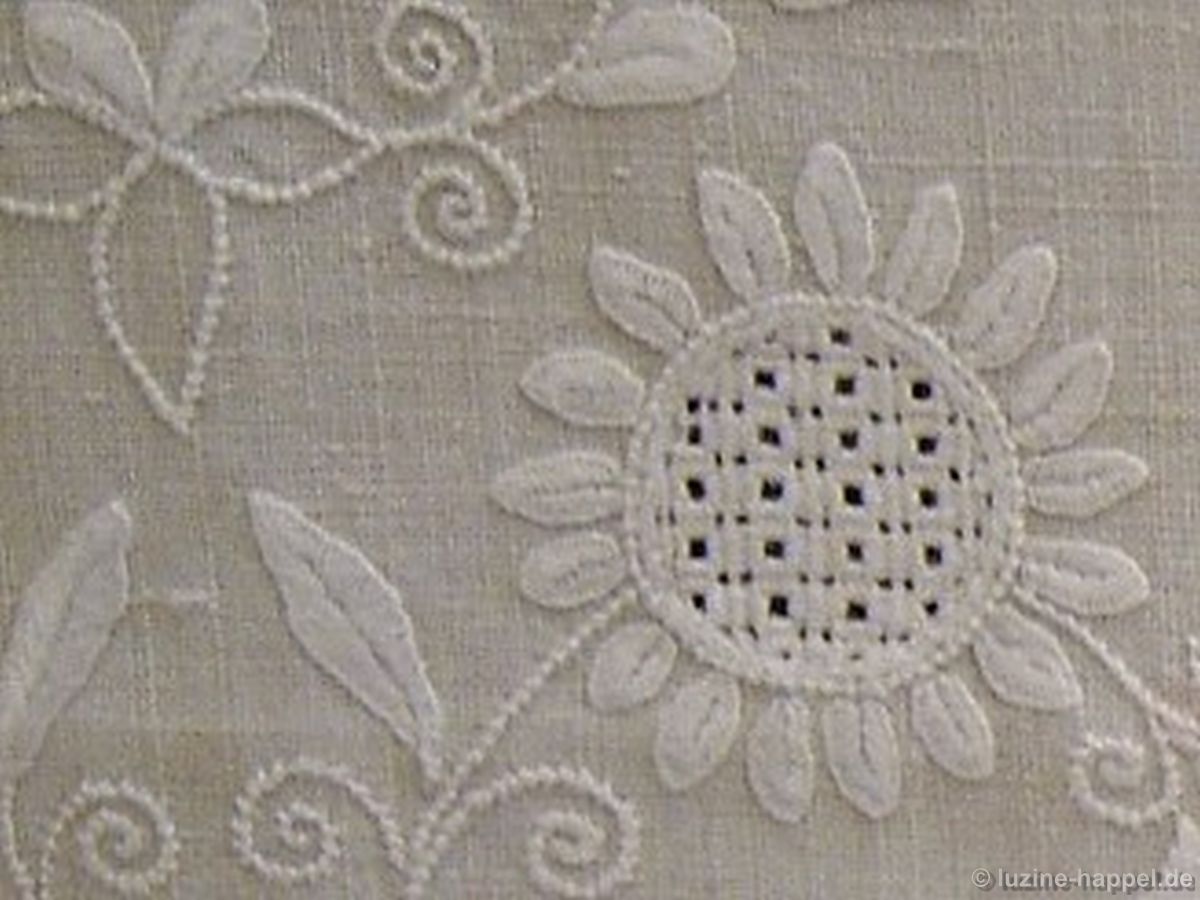
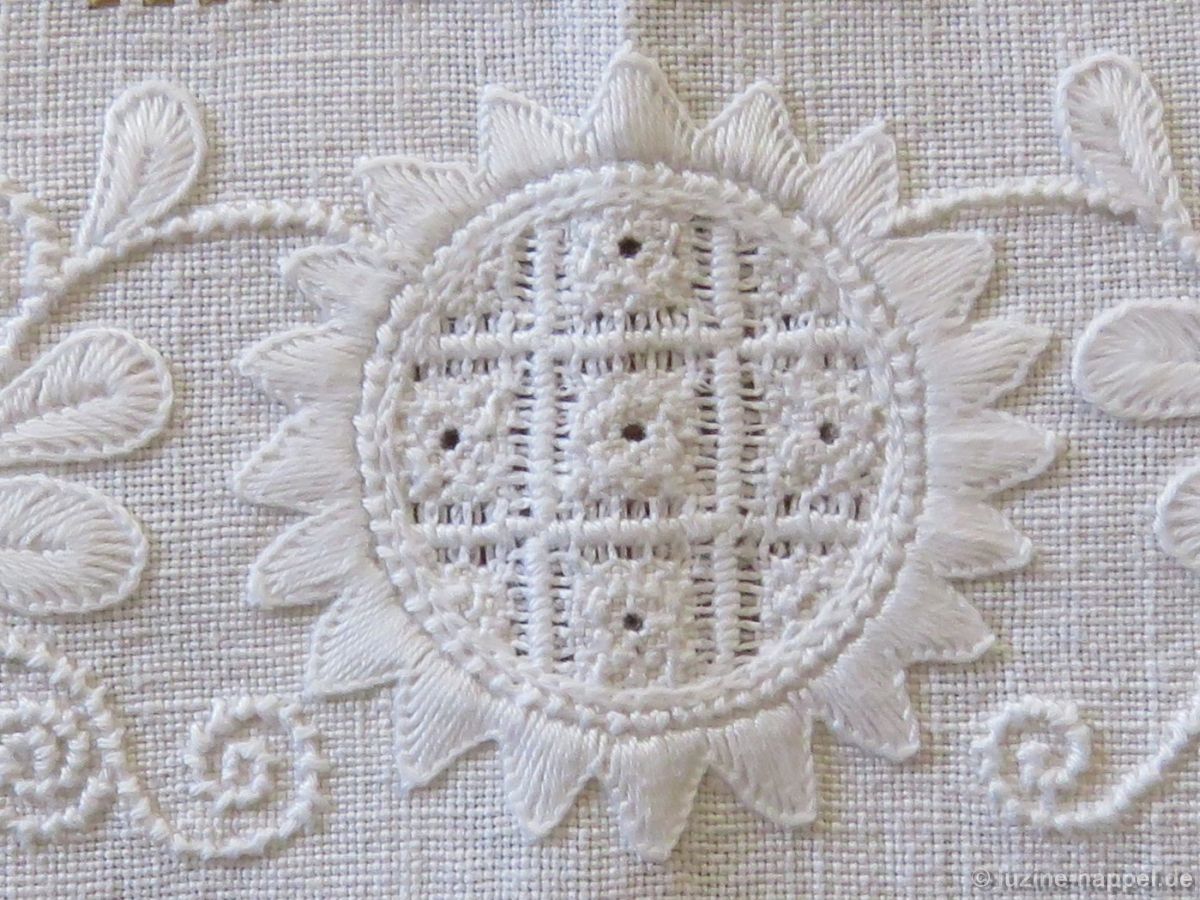
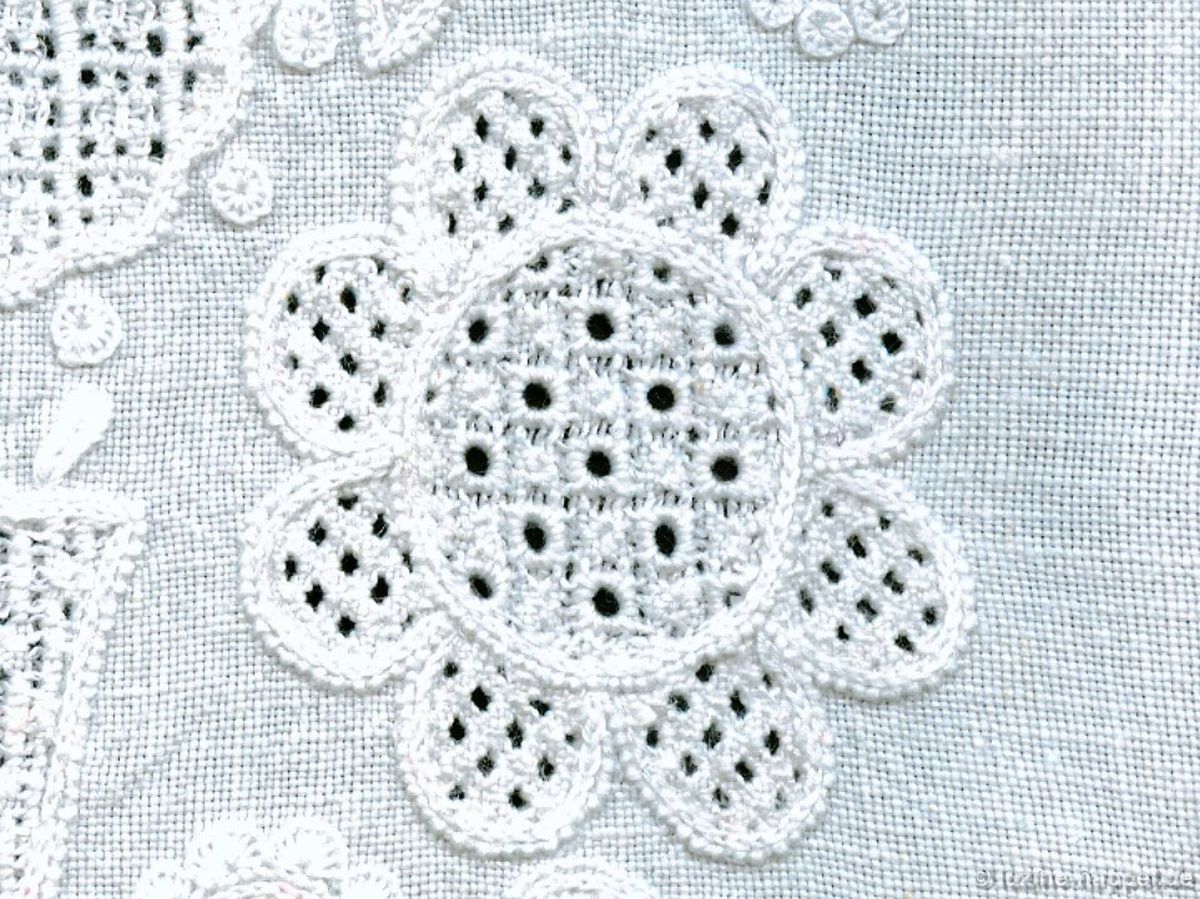
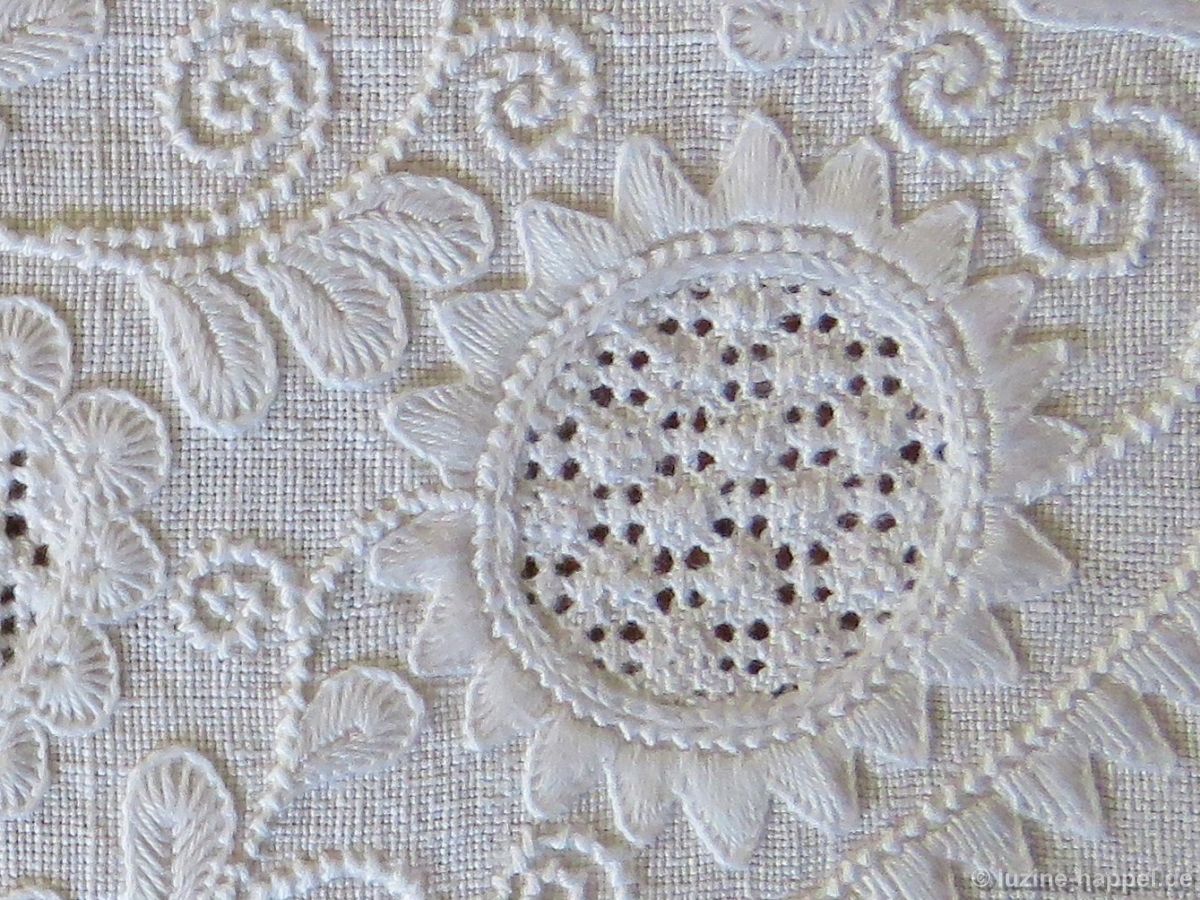
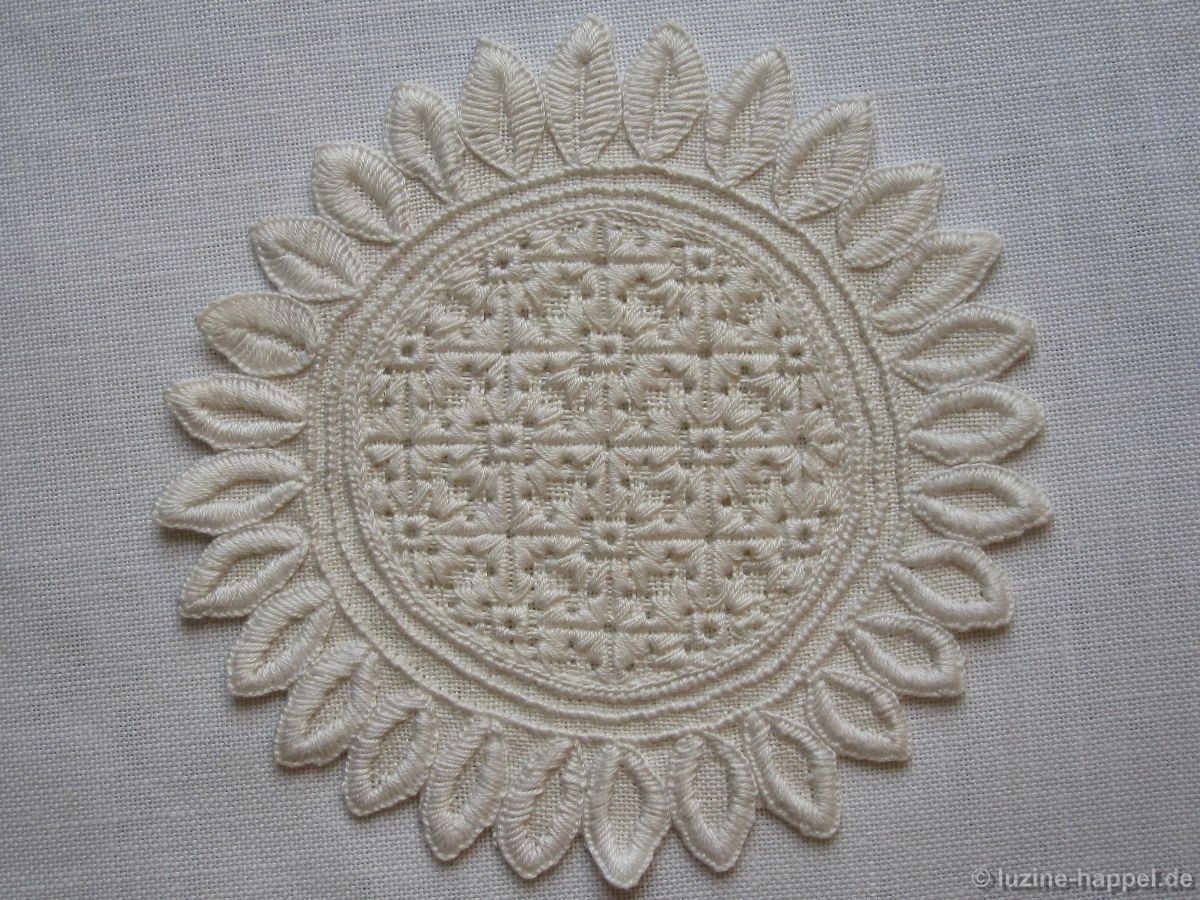
Schwalm Whitework – Sunflowers

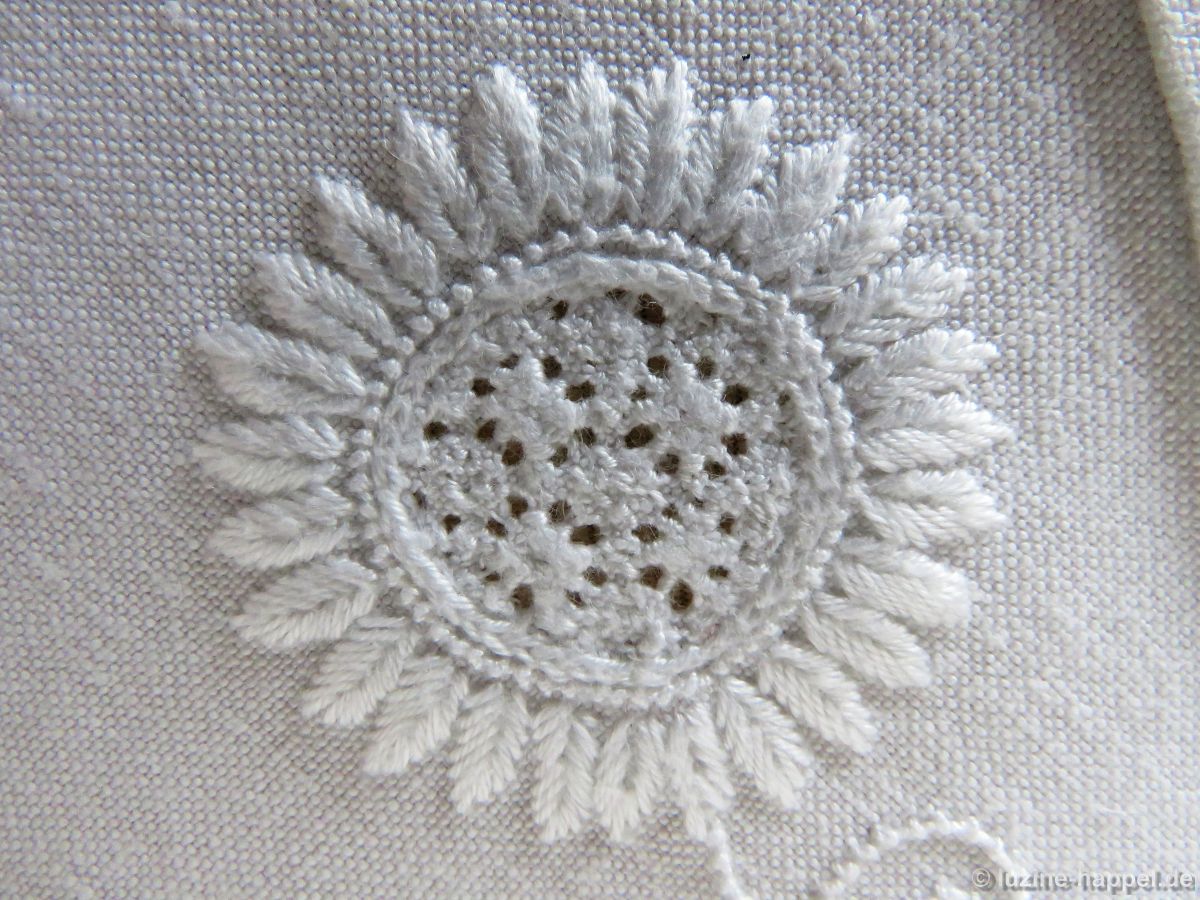
The impressive sunflower is old and prevalent. So it is no wonder that it shows up as a popular motif in Schwalm whitework. (The sunflower motif should not be confused with one of the main Schwalm whitework motifs – the sun. The sun, also a circle motif, is commonly outlined with scallops or 2 short-2 long.)

Sunflower fields are currently in full bloom; these inspired me to take a closer look at sunflowers in Schwalm whitework.

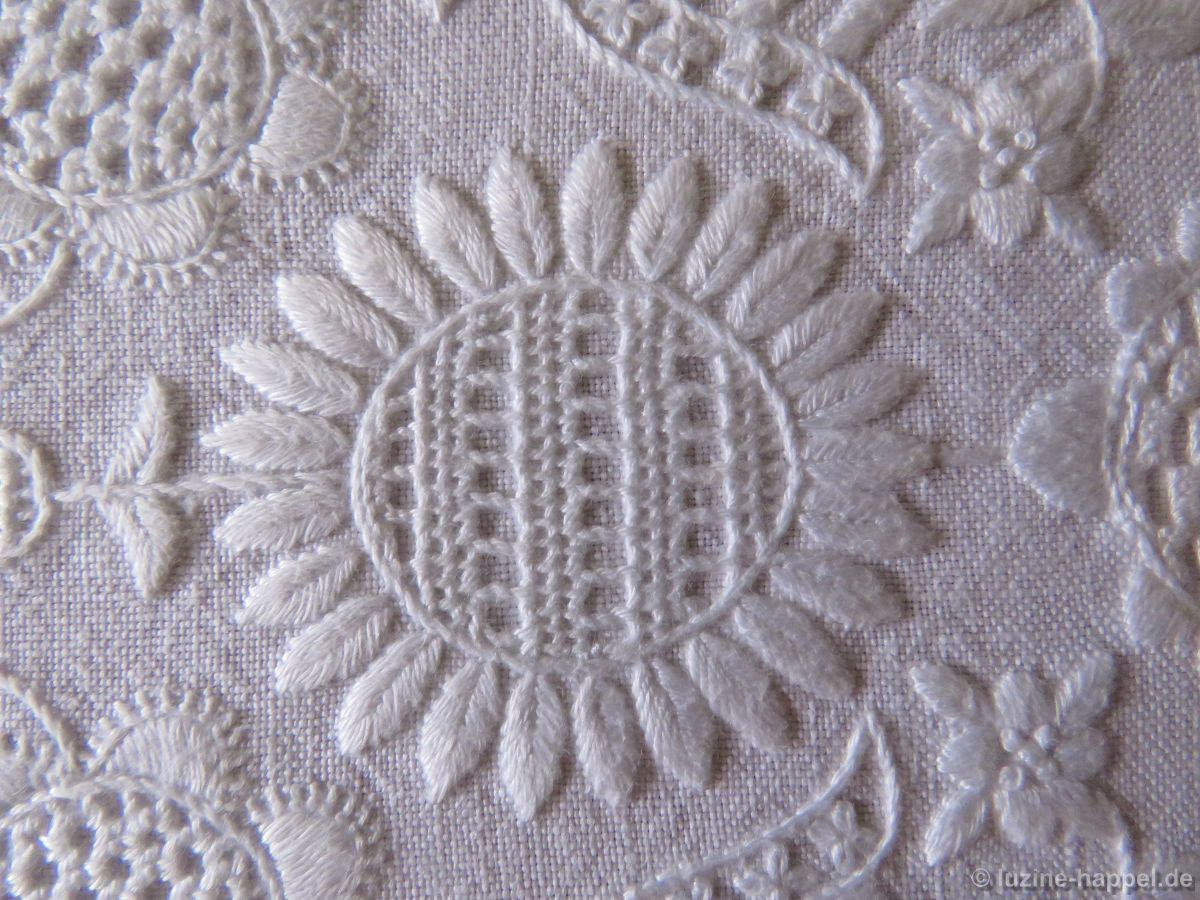
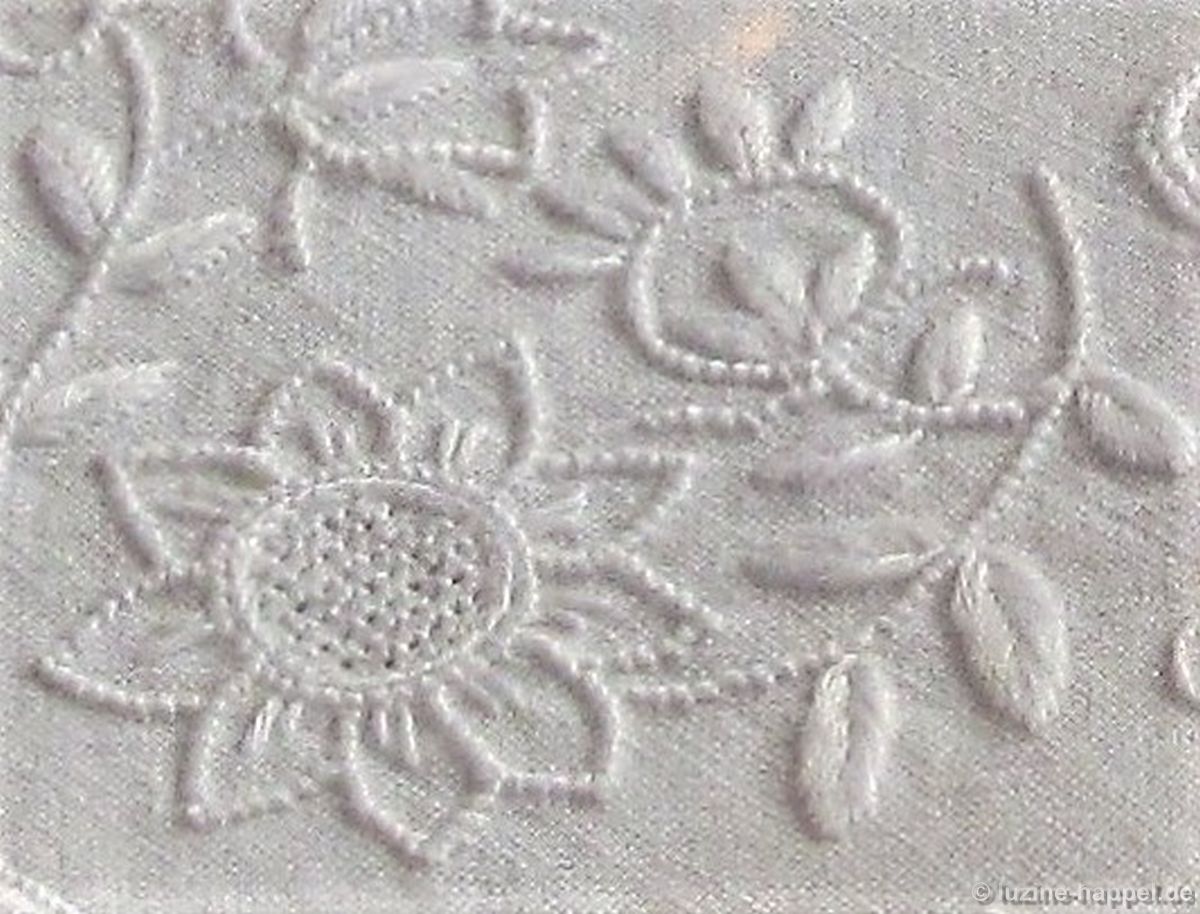
The images I include here are arranged chronologically. The oldest traditional embroidery in my collection that includes a sunflower motif is from about 1770. It is early Schwalm whitework without any withdrawal of threads. Others date from the beginning of the 19th century. Embroideries from the 20th century and contemporary examples follow.

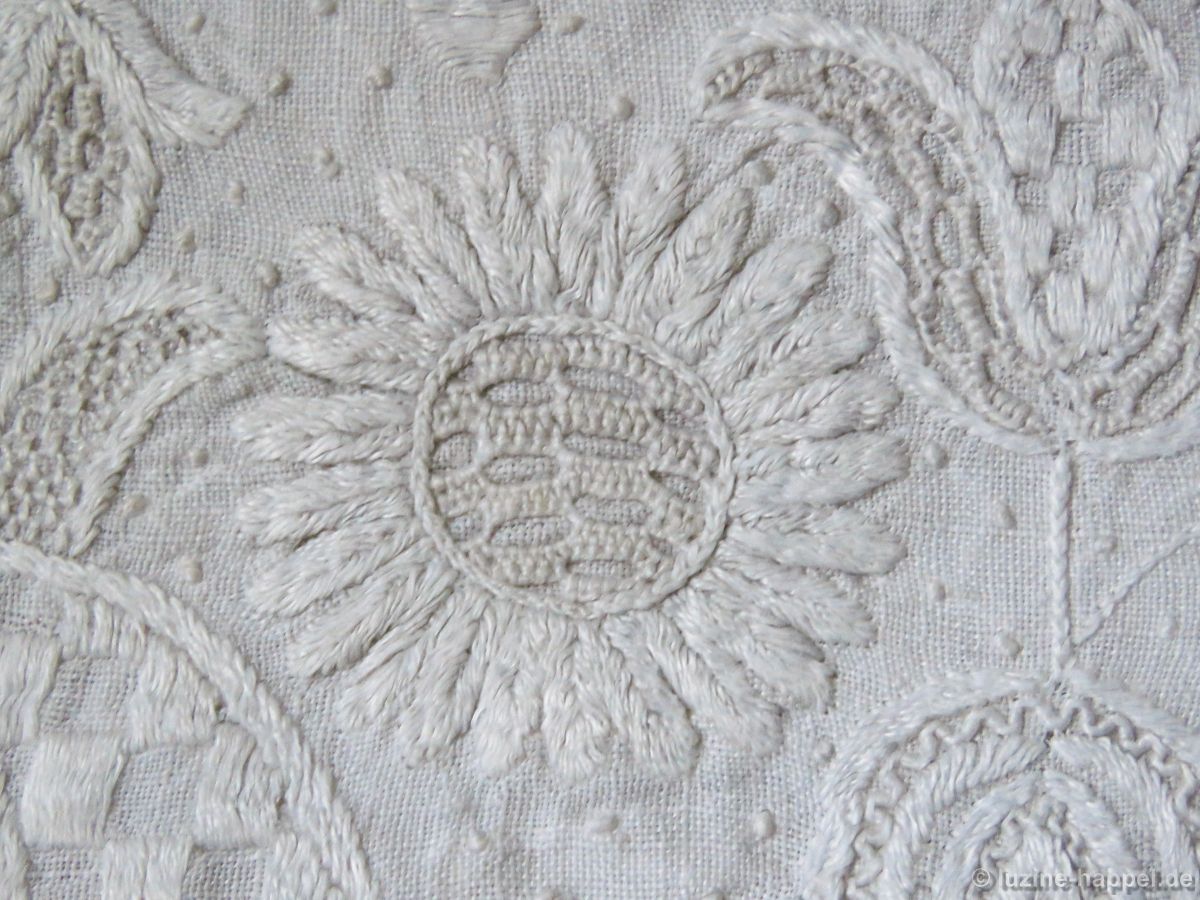
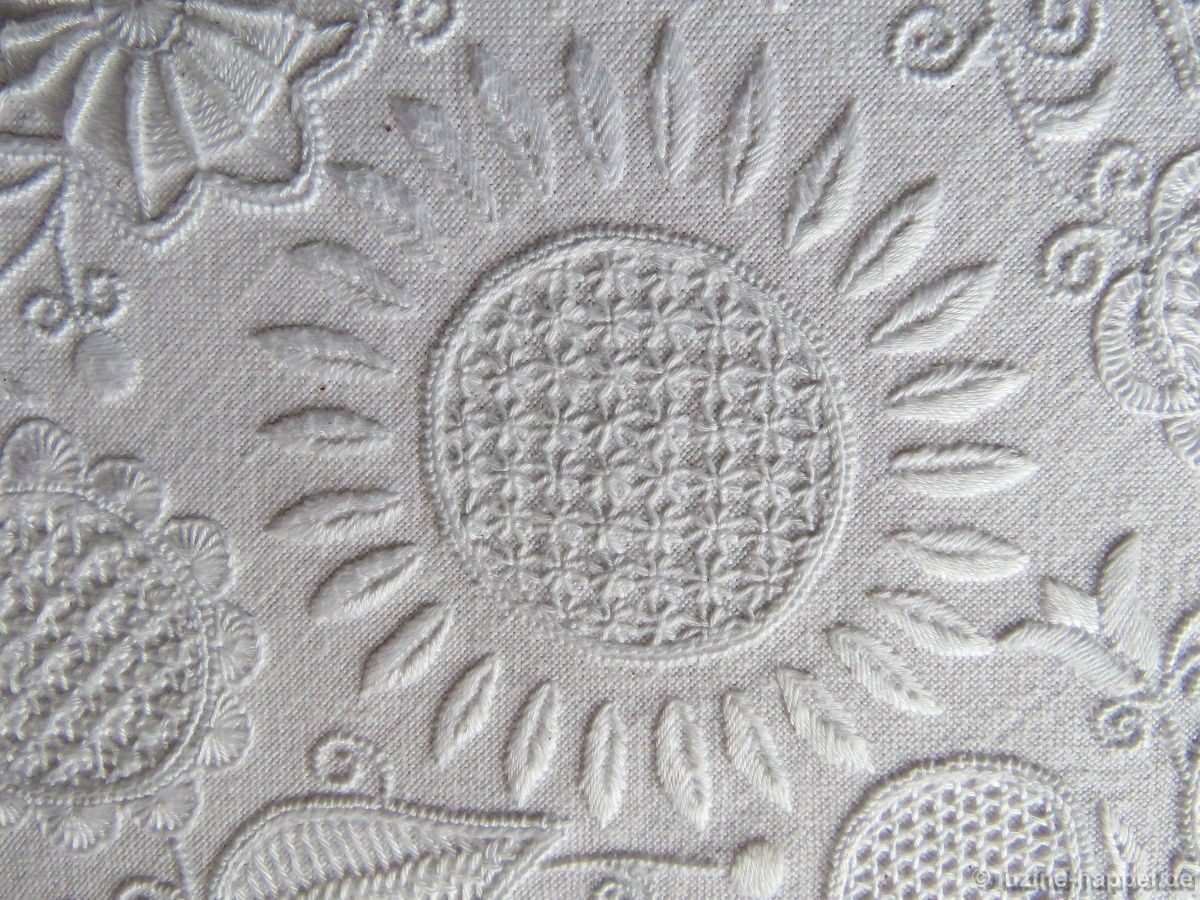
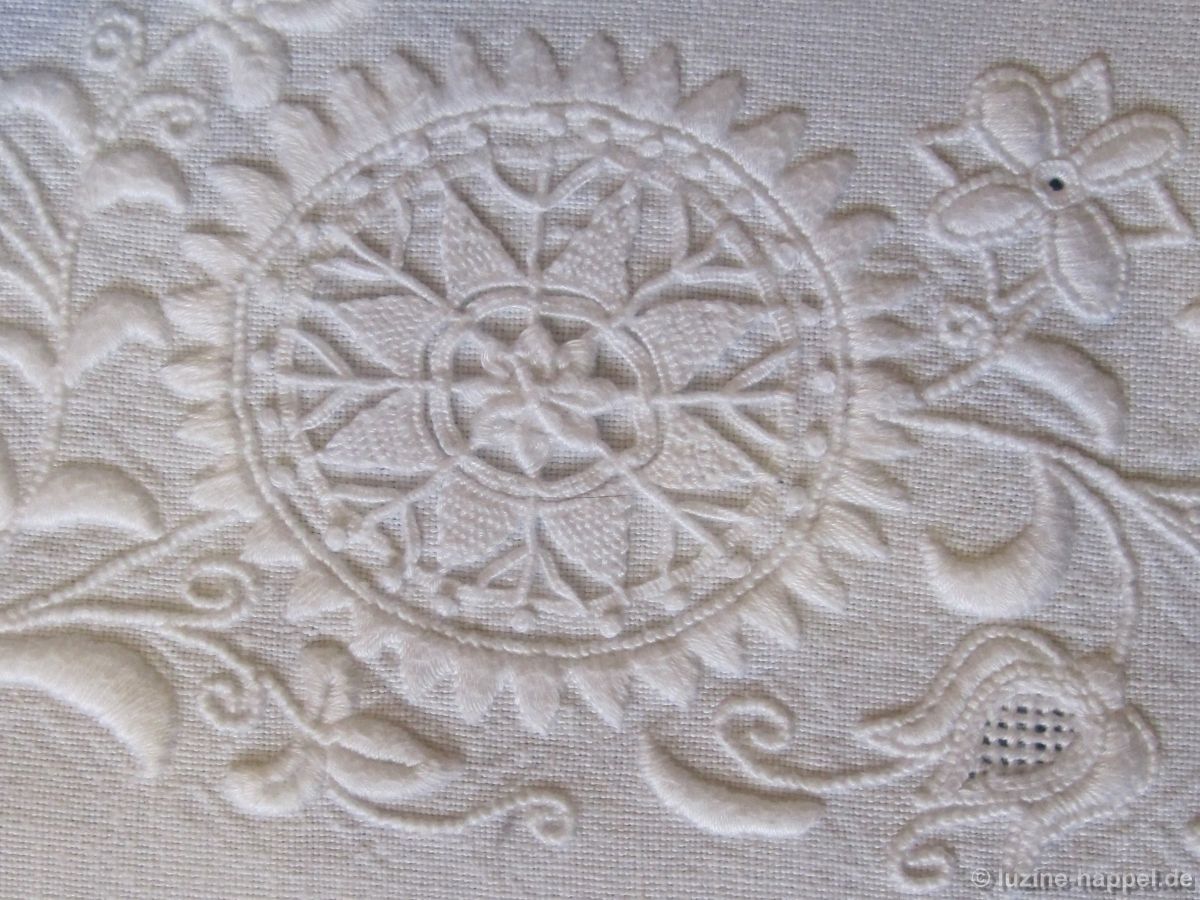
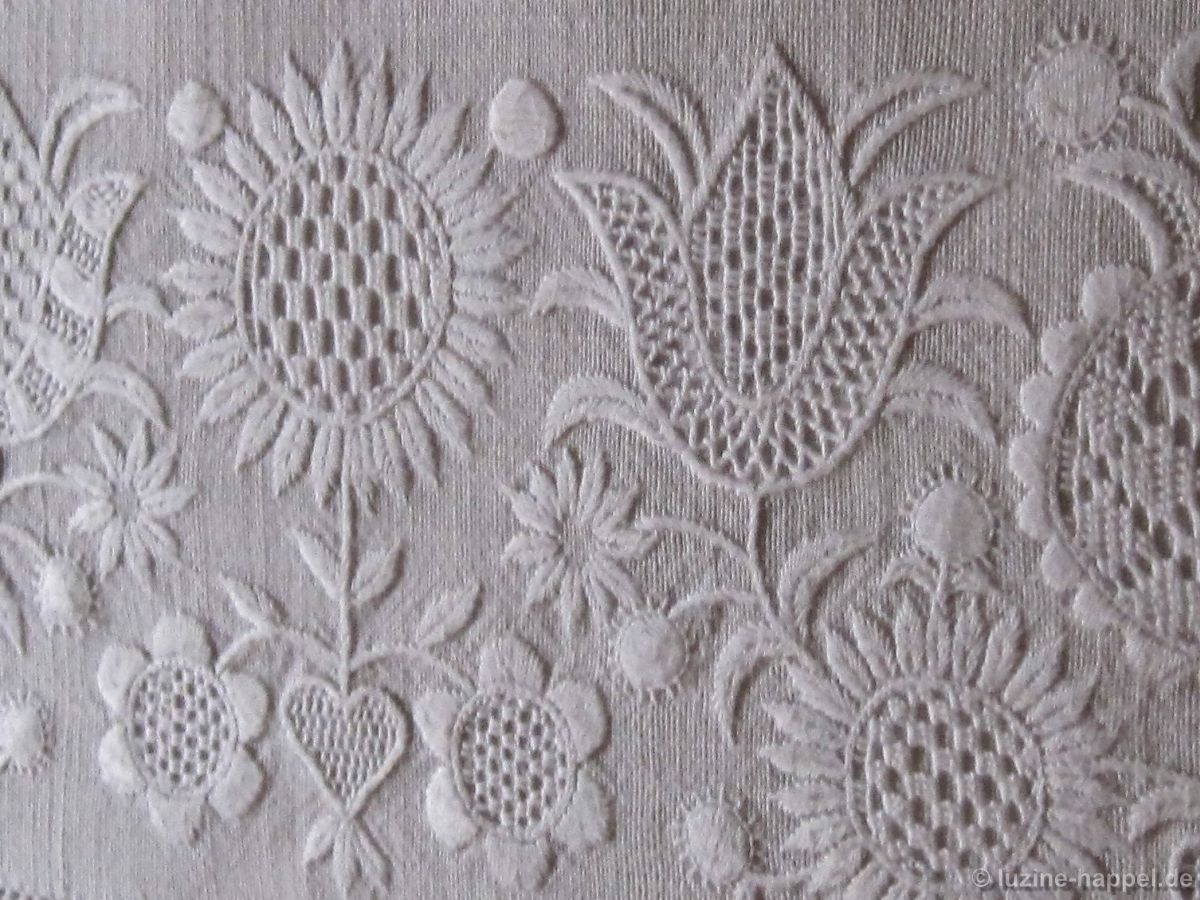
The circle center of the sunflower motif can be filled with a variety of different patterns allowing for an incredible number of creative possibilities.

The focus here is the arrangement of the petals. It is of particular interest because the embroiderers were also eminently creative in this point. From the very abstract design, which is identifiable as sunflower only upon second consideration, up to the nearly realistic rendering, many interpretations and nuances are found. This applies also to the sizes; there are some small, but also some very large examples.

Please take a look for yourself!


Schwalm Border Designs with Birds

In the Schwalm designs often include birds; sparrows and doves are usually depicted. The sparrow represents fertility, and the dove represents freedom. However, the dove is less prominent in Schwalm designs than the sparrow.

Looking to many traditional embroideries, I found a lot of other bird shapes which are neither sparrows nor doves. I came across a stork, hoopoe, swallow, rooster, woodpecker, wren, duck, and peacock; in addition, there are others not so easily identified.

Now and then I show such bird motifs on my website. My readers have seen a bird shape from 1826 in this previous article; other birds were seen here and here, or in the Schwalm Bird Tree.
There are more birds hidden on my blog; simply do a search to find them.

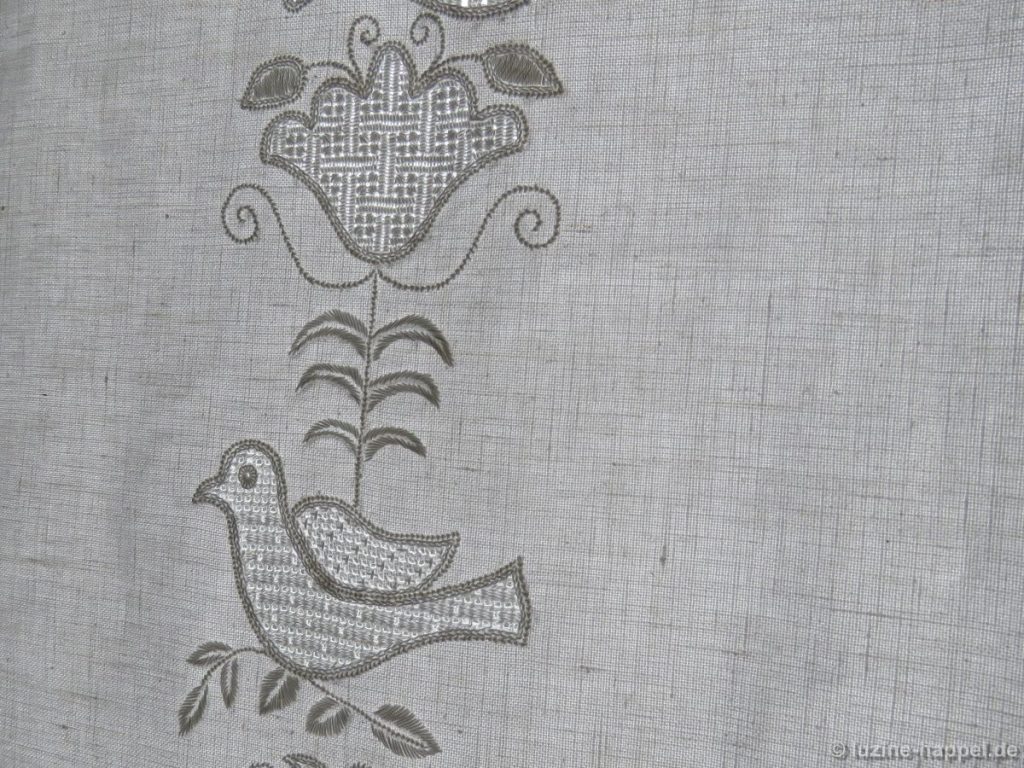
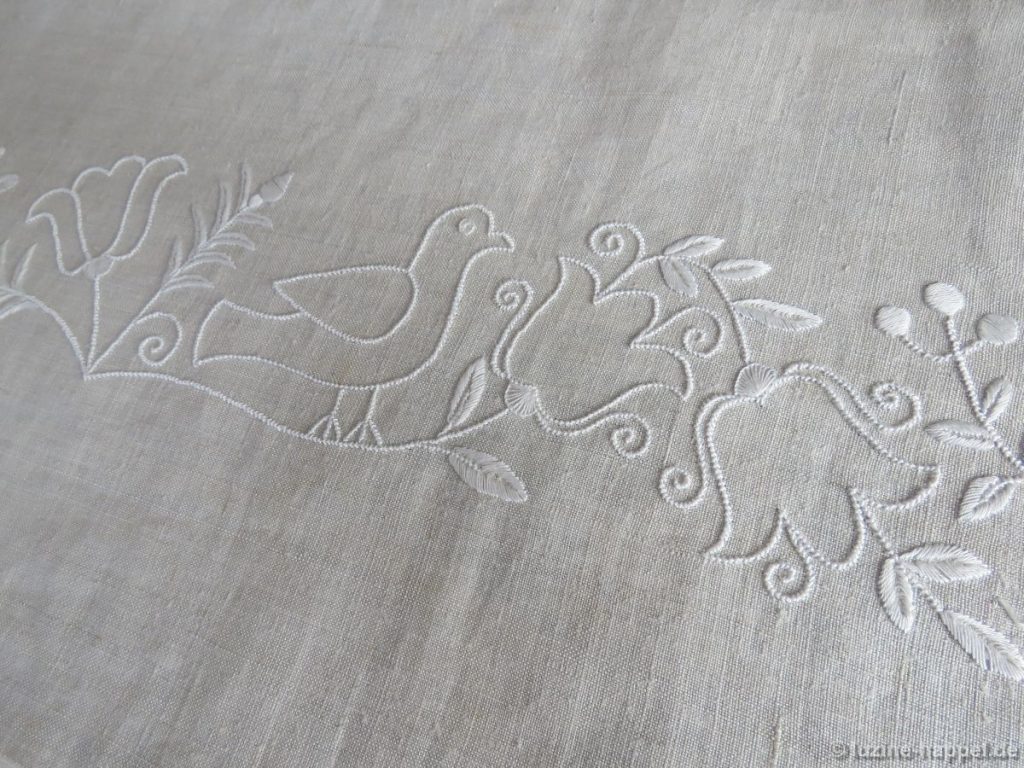
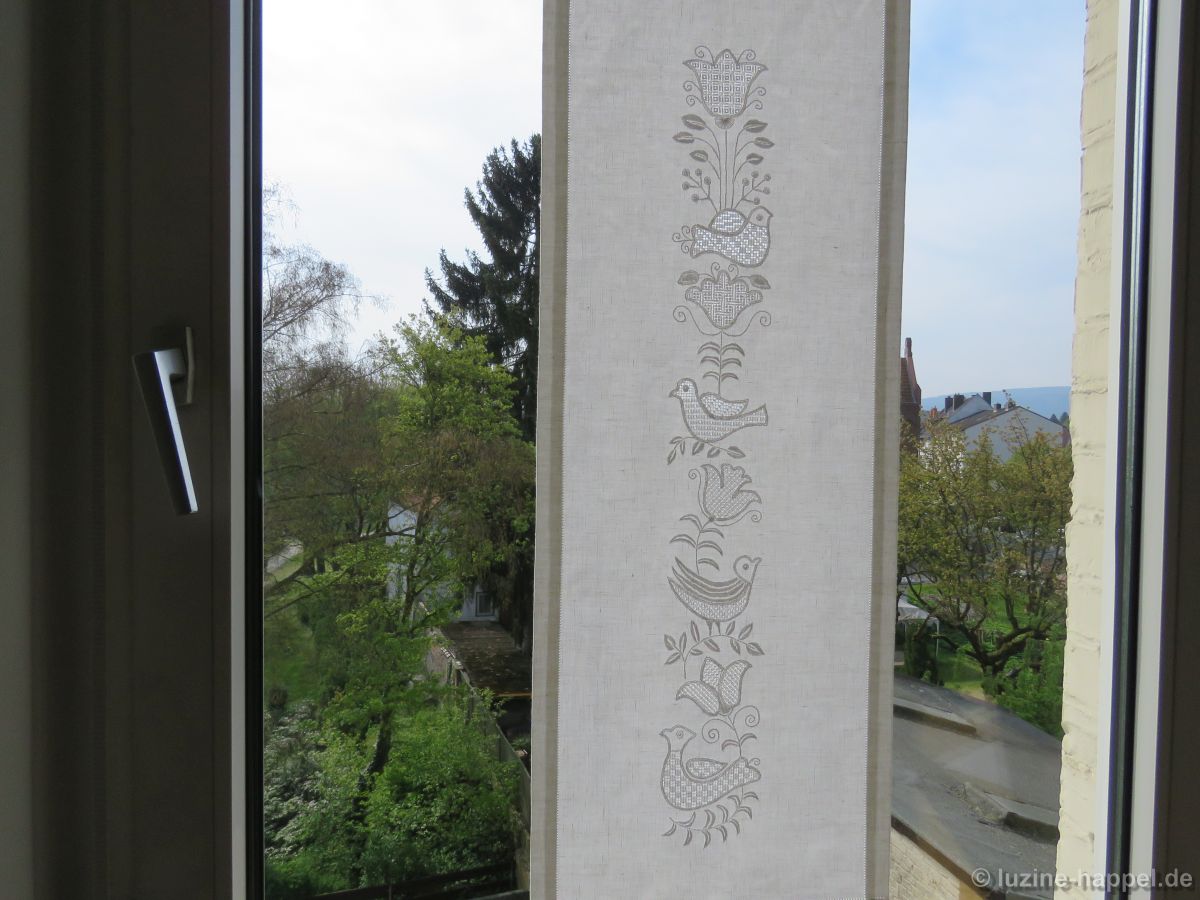
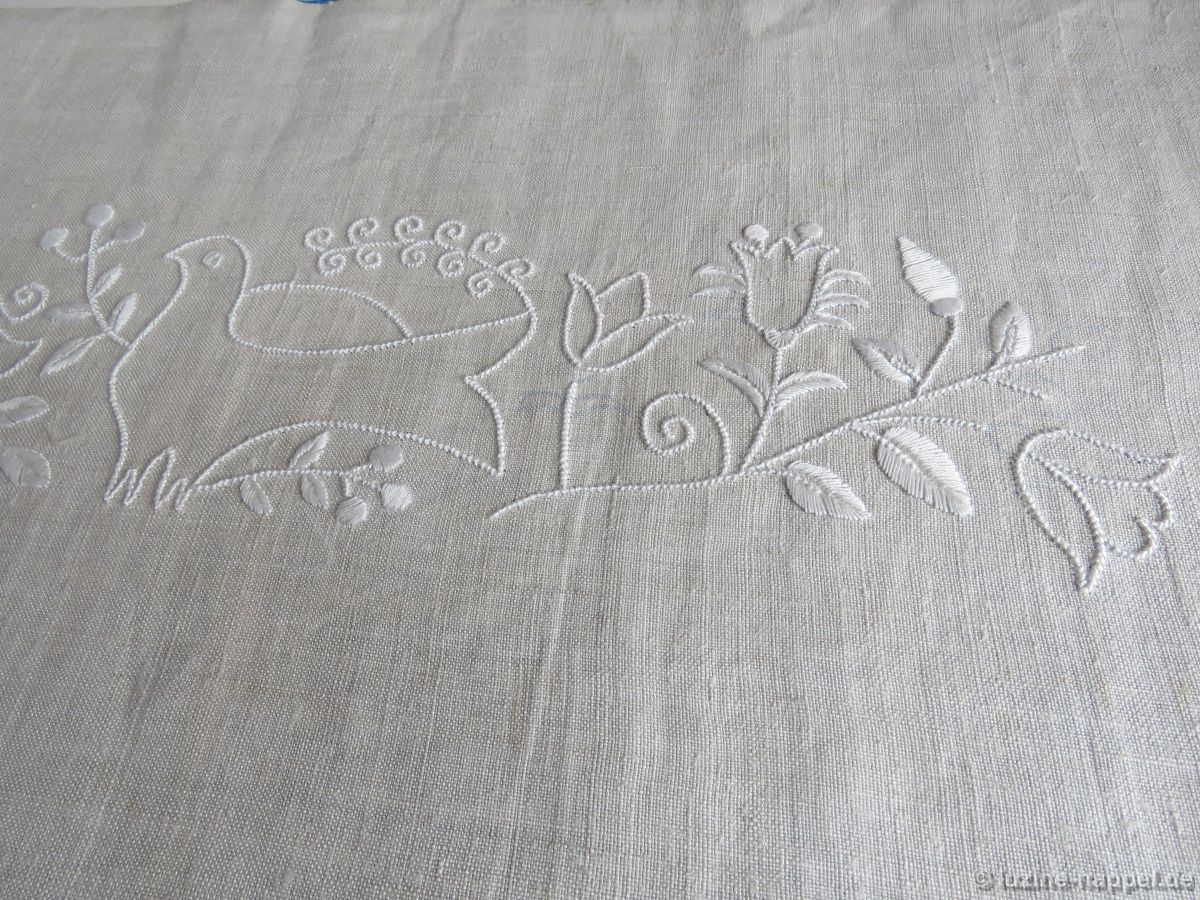
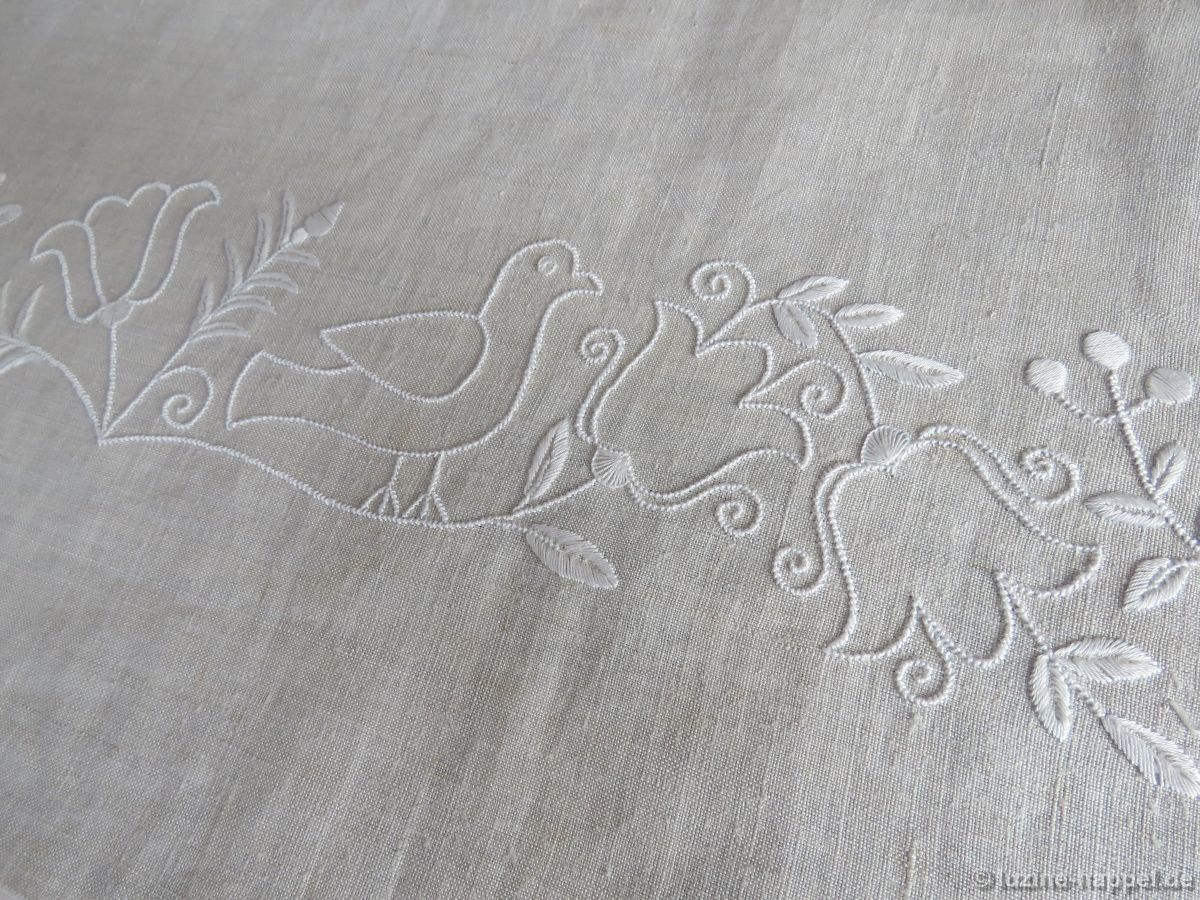
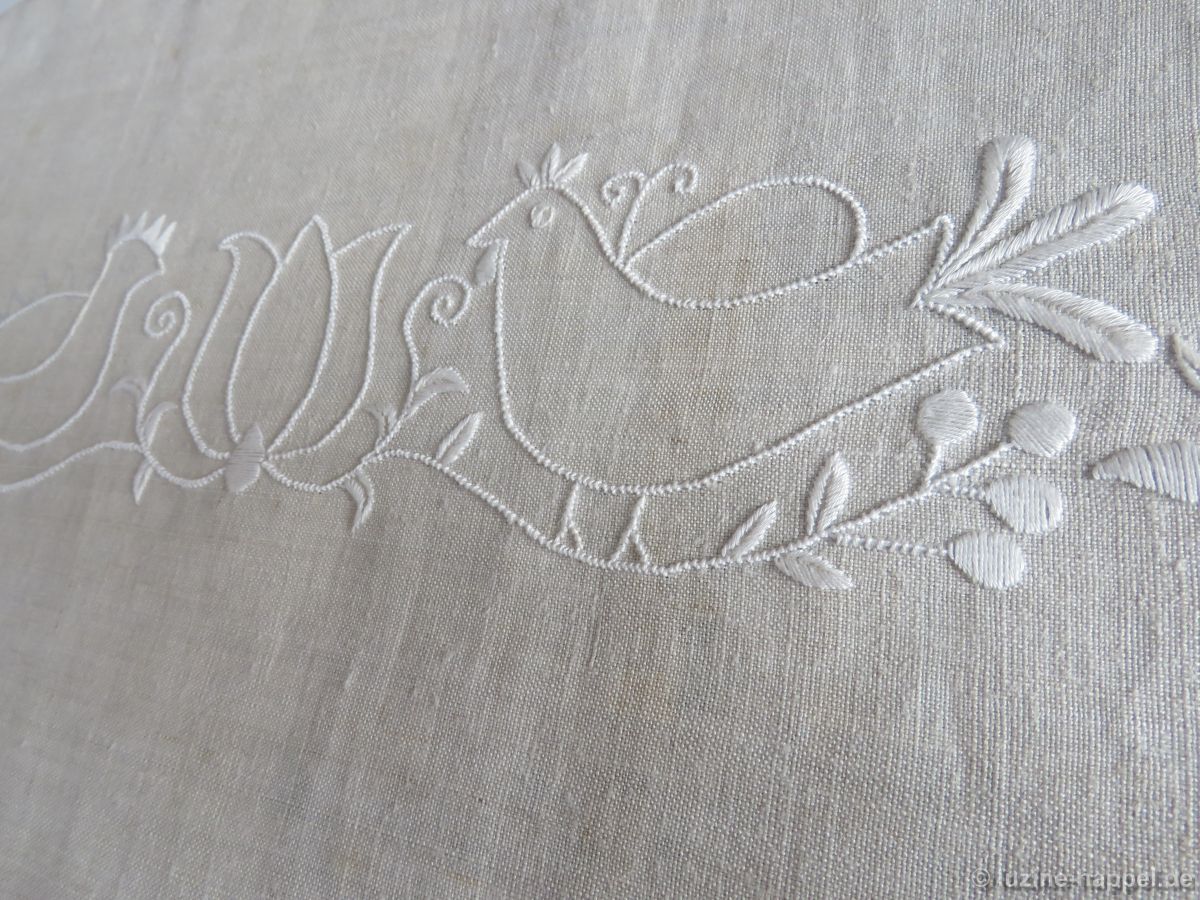
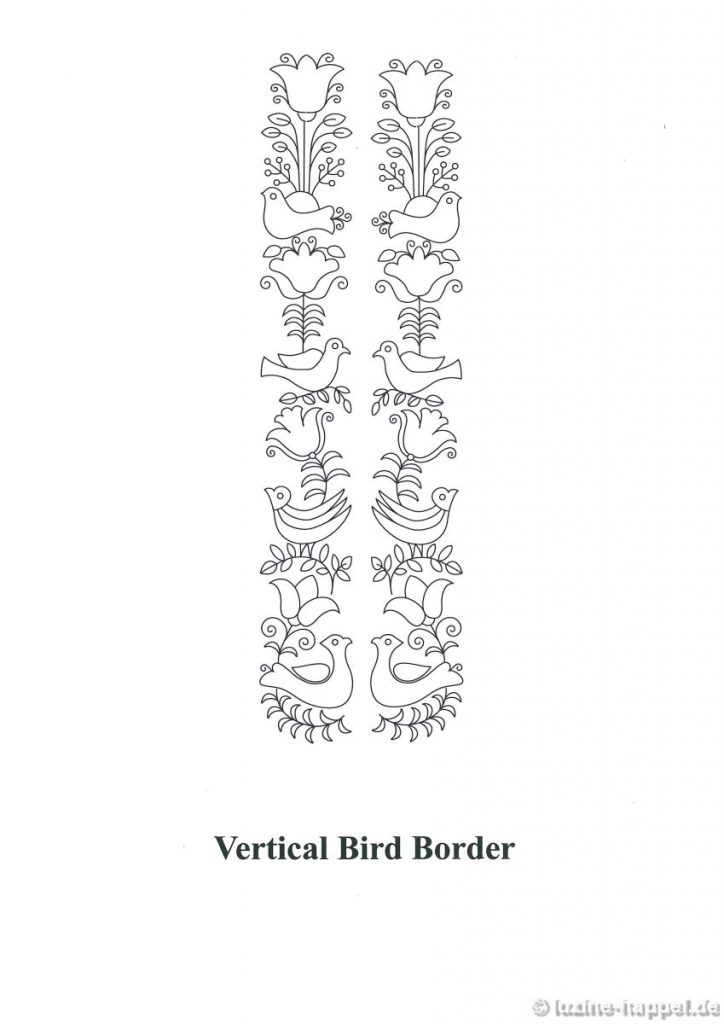
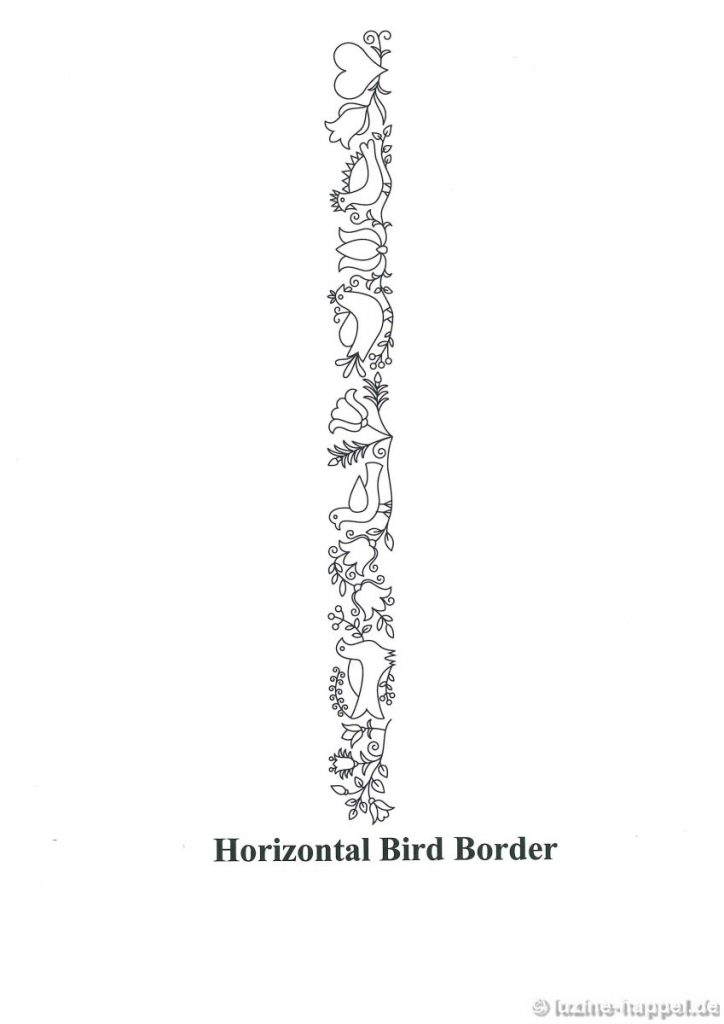
I asked the artist Gudrun Hartwig for border designs with traditional Schwalm bird shapes. She combined the bird motifs with special tulip designs we found in old Schwalm embroideries. In the end, she created two beautiful border designs – one is horizontal, and the other is a vertical. Both are made containing single parts; so it is no problem to shorten or lengthen the borders.

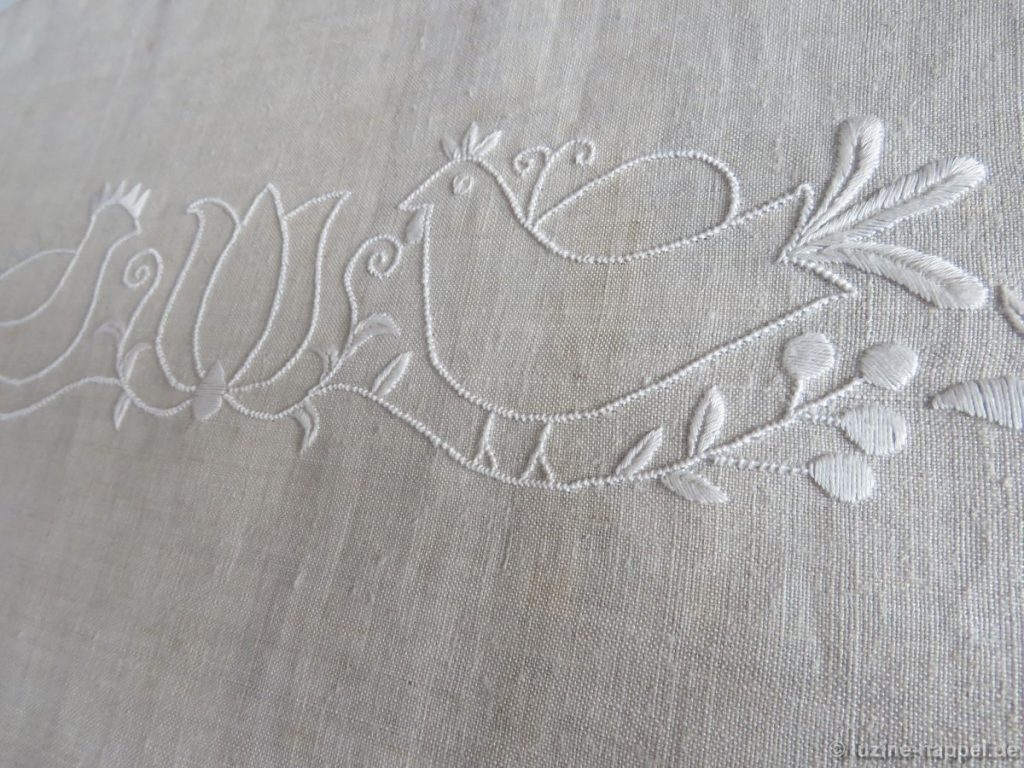
I used the vertical design to work a curtain.
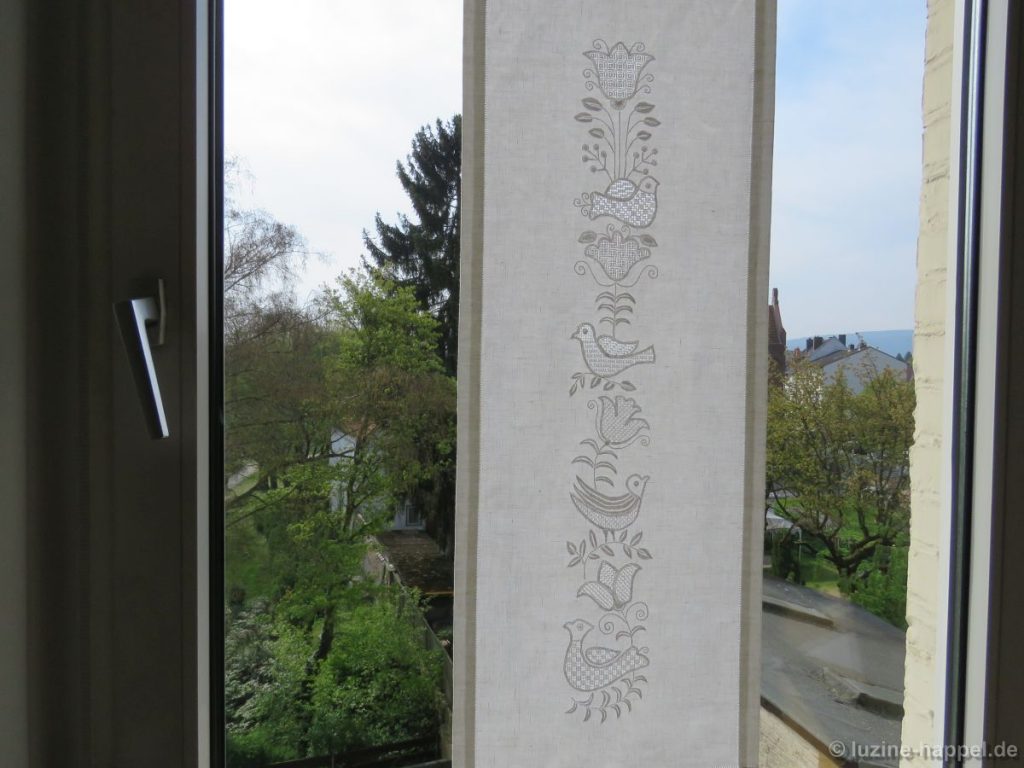
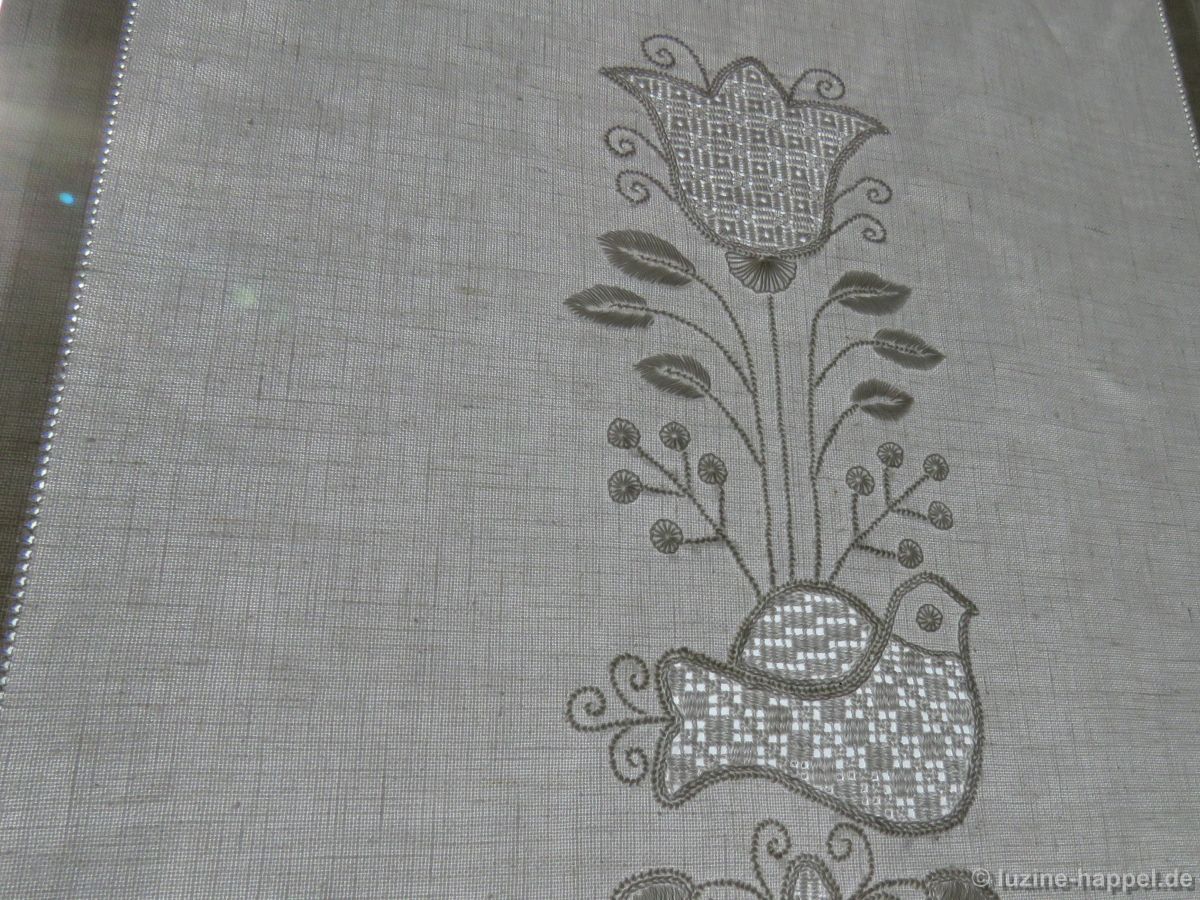
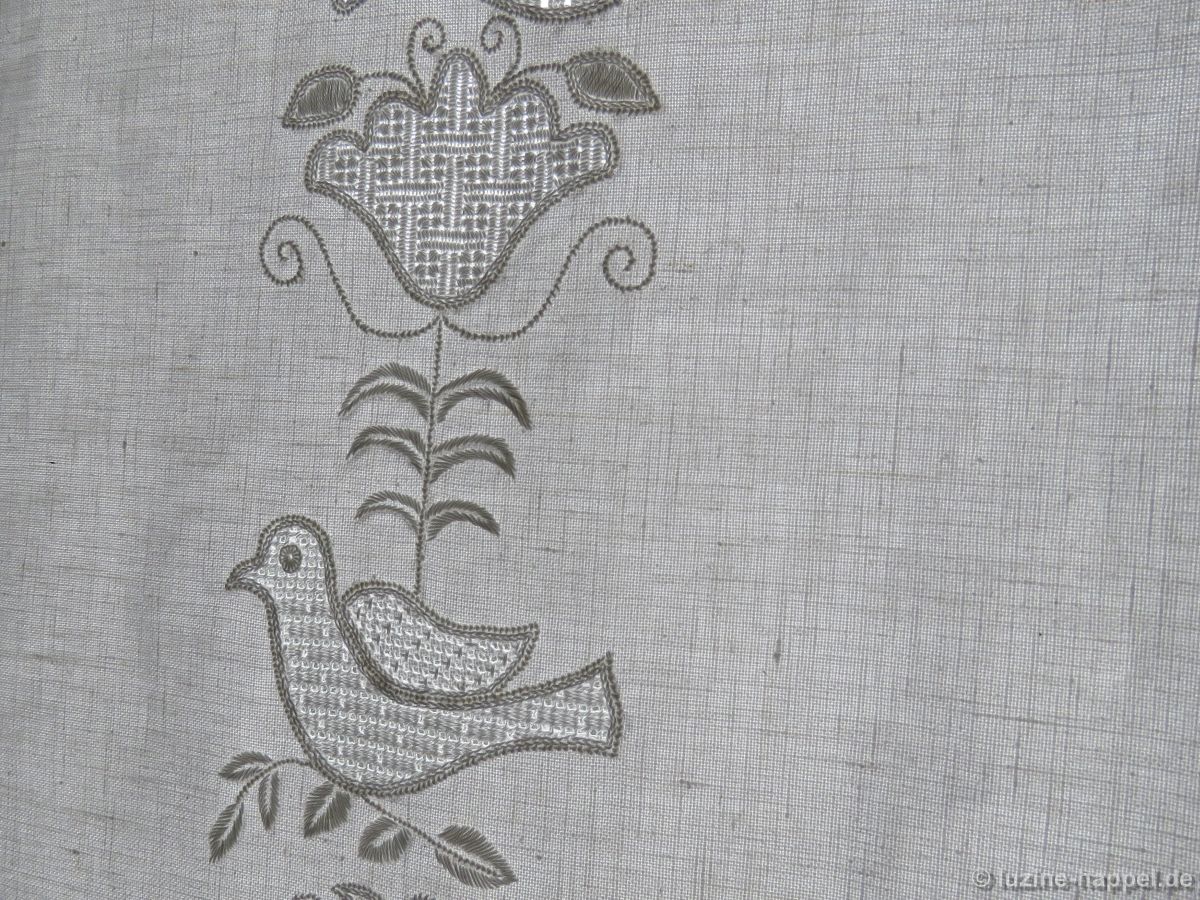
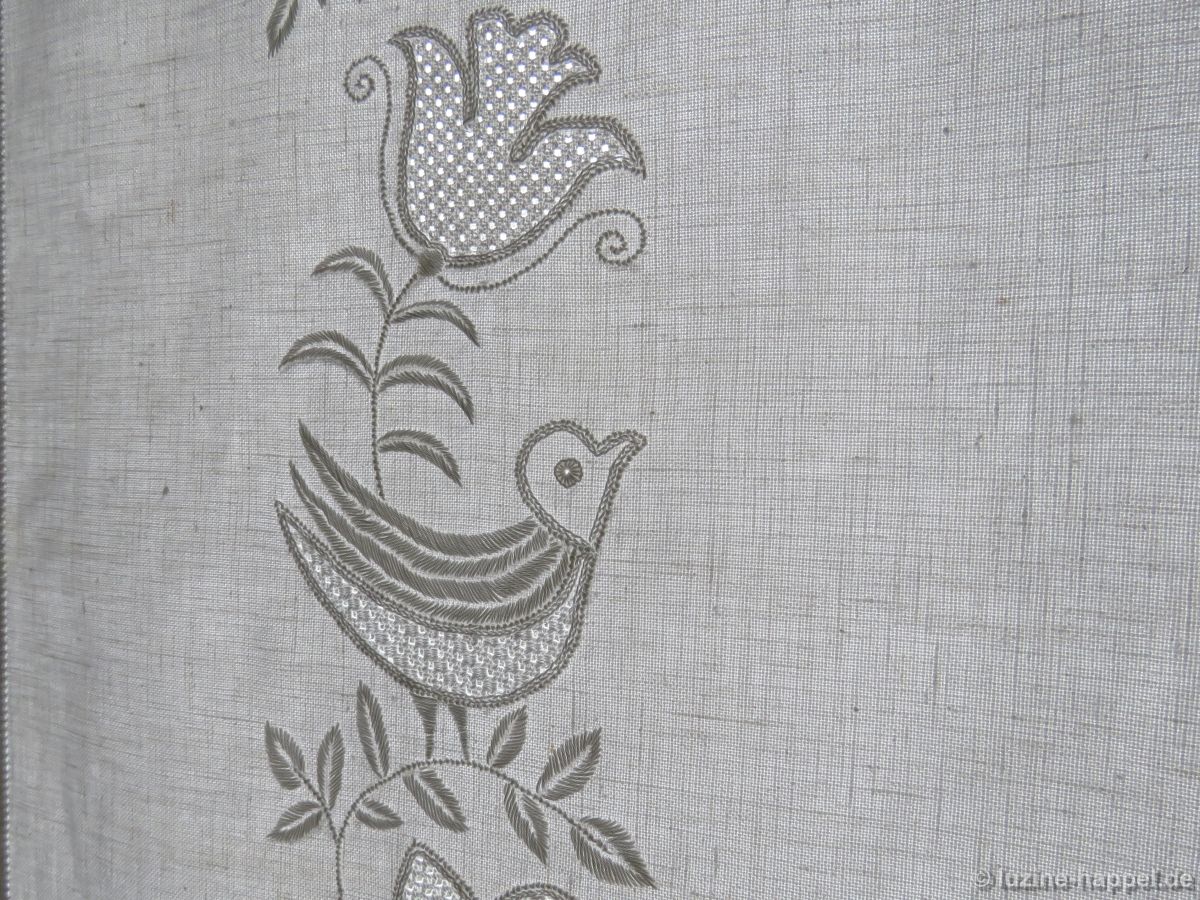
Always a tulip and a bird – combined with leaves and other small elements of Schwalm whitework – constitute one part.
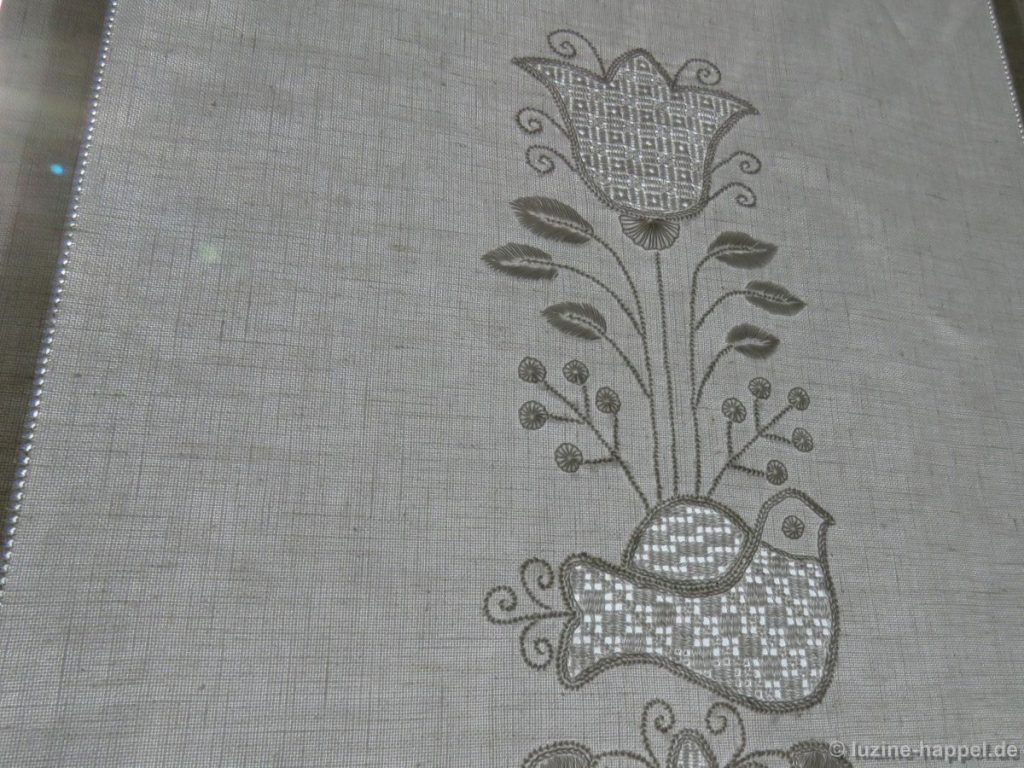
The border has a width of 10 cm.
Using all four design parts, the border has a length of 75 cm in all.
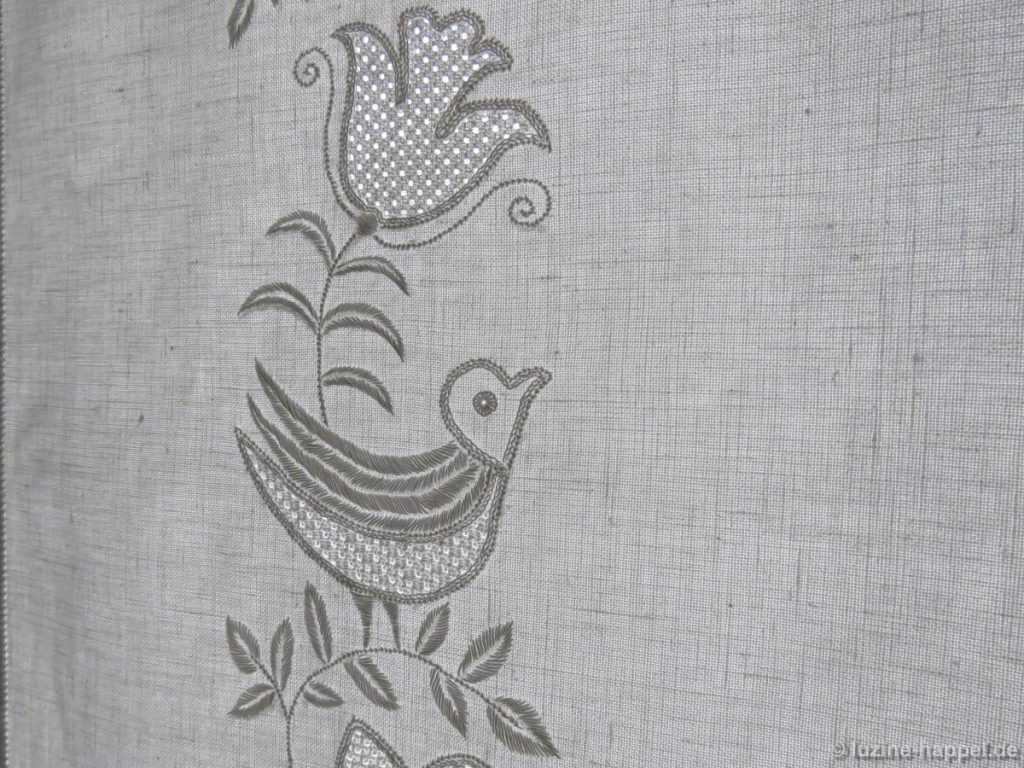
Natürlich kann man das Muster auch etwas vergrößern oder verkleinern. Aber die vorgeschlagene Größe eignet sich gut, um sowohl verschiedene Flächenfüllmuster Of course one can enlarge or narrow the design a small bit, but the provided size is pretty good for using different filling patterns and also for embroidering the leaves very well.
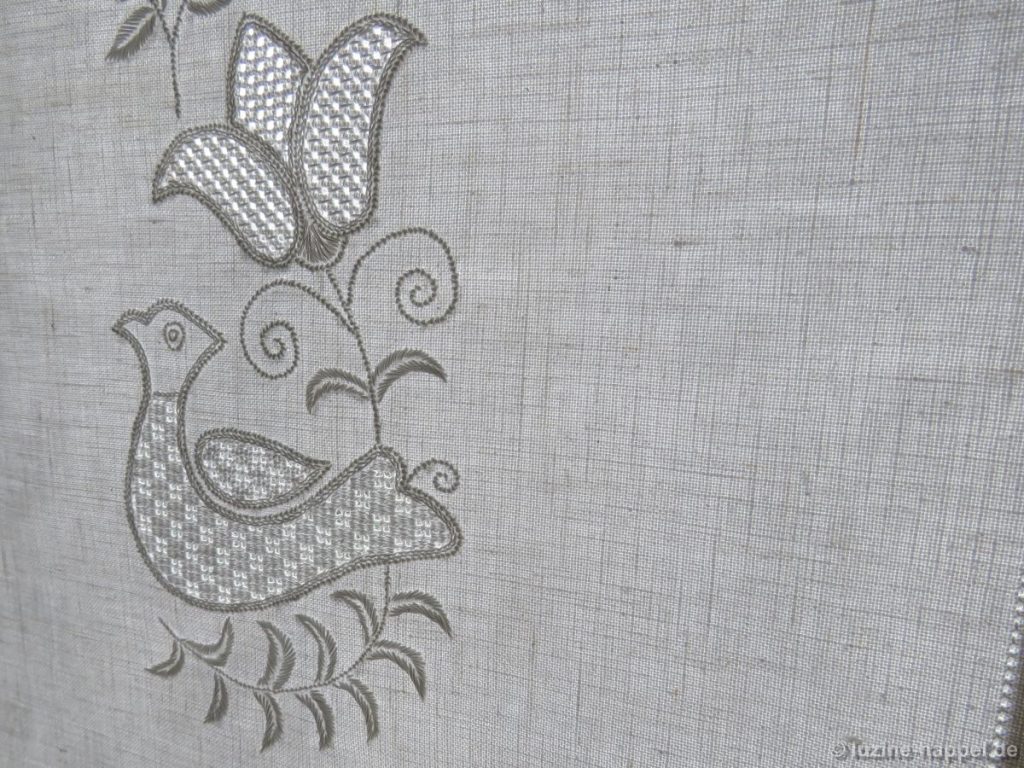
I used the horizontal design to make a wall decoration. Unfortunately, it is not finished, but you can imagine its beauty by viewing the pictures of the unfinished project.
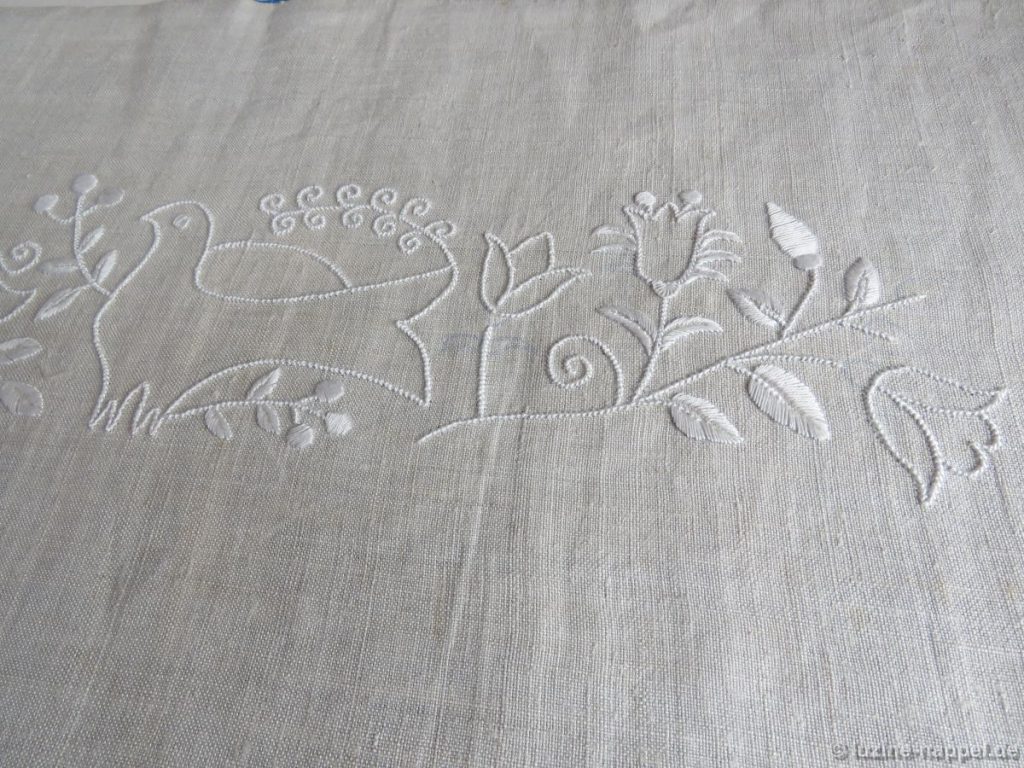
The border has a height of 10 cm.
It is made with five single parts that can be combined in any order. So the length can vary according to personal preference.

If all five parts are used, the border will have a length of 1.12 m. Mine – mirrored in the middle of the fifth design part – has a length of 2.14 m.

One of my customers wanted this design for a long narrow table runner. So, she narrowed the design a little bit, and she was very pleased with the result.

Both are very special Schwalm designs created with old traditional shapes that give the borders their distinctive appearances.

My graphic designer transformed the hand drawings of both designs to computer graphics; these are available now.
Vertical Bird Border
line-drawn designs
6 pages
676 KB file size
item price: €15 (including 7 % sales tax), €14.02 for customers outside the EU
download here

Horizontal Bird Border
line-drawn designs
10 pages
436 KB file size
item price: €15 (including 7 % sales tax), €14.02 for customers outside the EU
download here

Of course it is also possible to get these publications as printed booklets for the same price (15.00 EUR each) plus shipping charges. This option is not shown in my online shop, so please email me with your request.

Schwalm Parade Cushion Border (A)

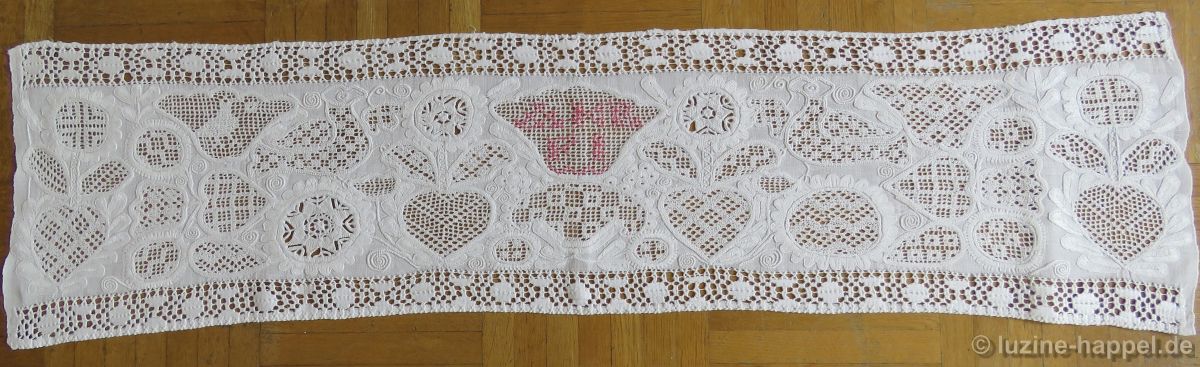
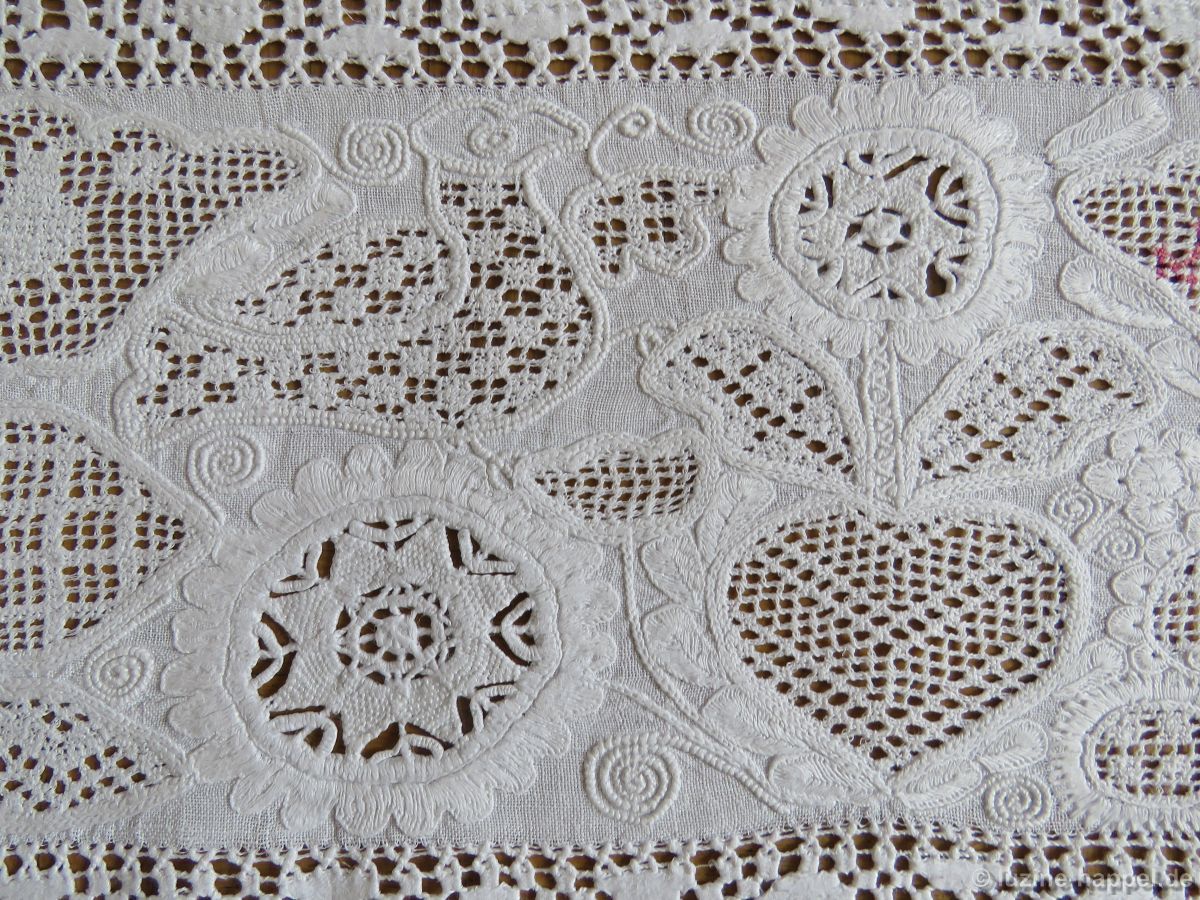
Today I present something very special: the border of a parade cushion from 1826! Unfortunately, the cushion is no longer intact, but the embroidered border – the most important part, at least for people interested in such things – is still in good condition.
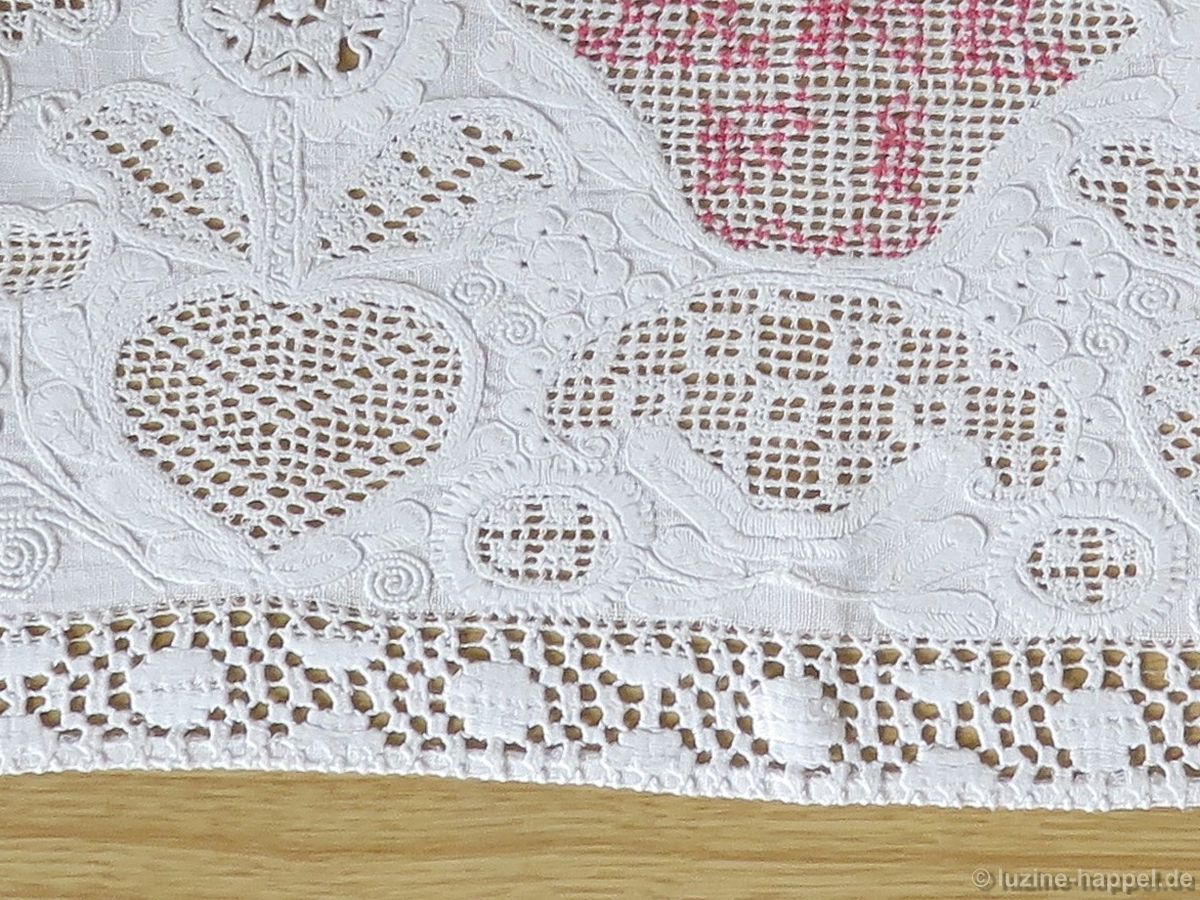
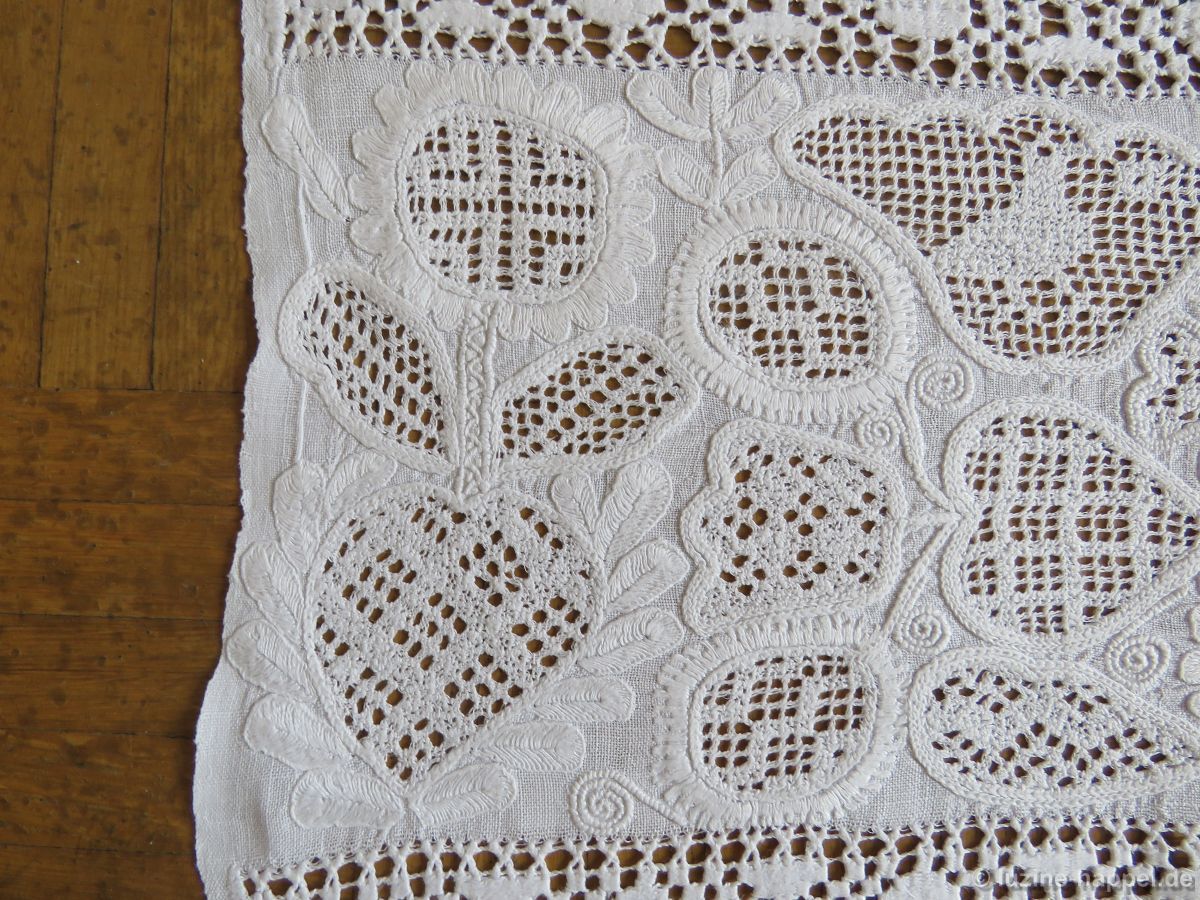
The linen has a 21/cm thread count – thus it is relatively fine. The border in all has a height of 21 cm, the embroidery only has a height of only 15 cm. The embroidery is bordered by a six-unit divided needle-weaving hem which is itself bordered with Peahole hems on both sides. The needleweaving pattern is rare.
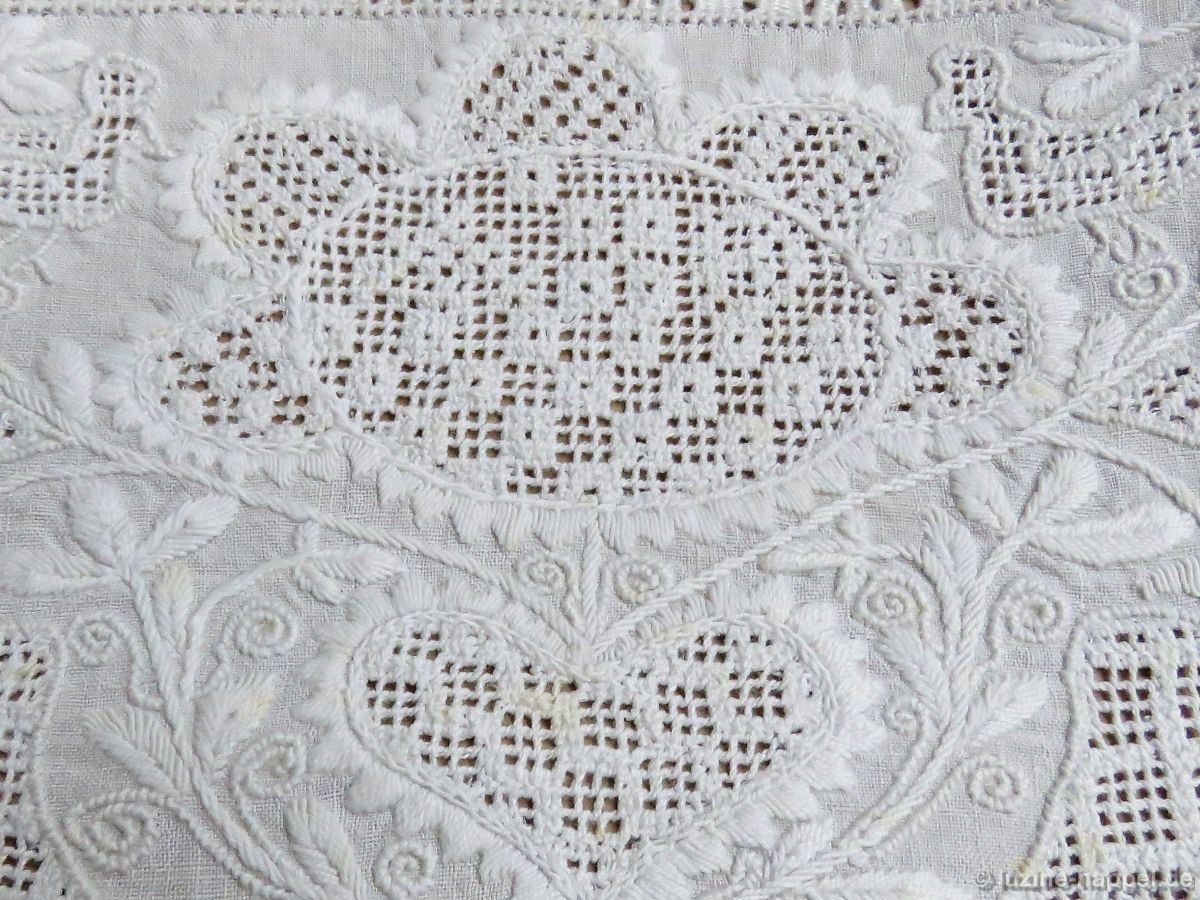
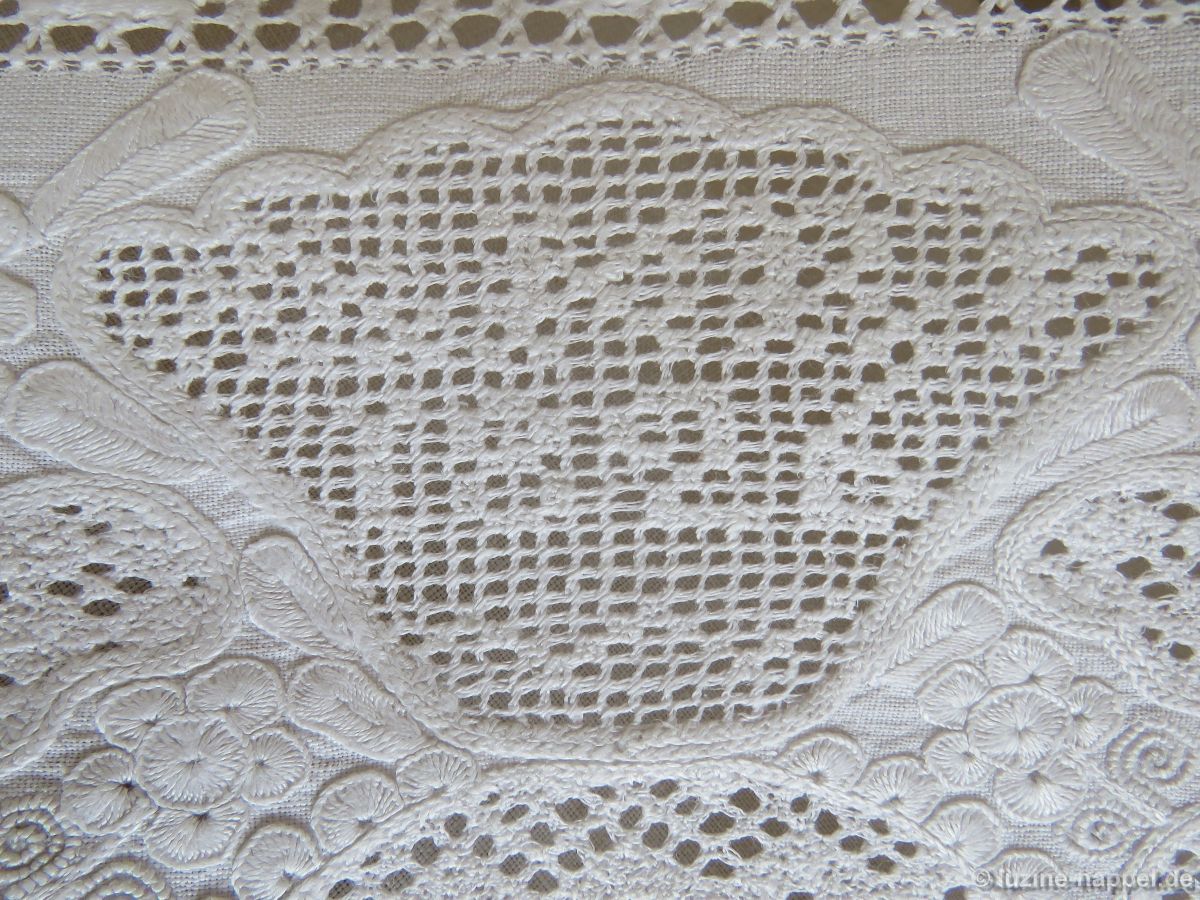
Needlelace and openwork patterns fill the shapes, with some of the openwork patterns partially worked with a Cable stitch grid. In the forty shapes, I count twenty-three different filling patterns.

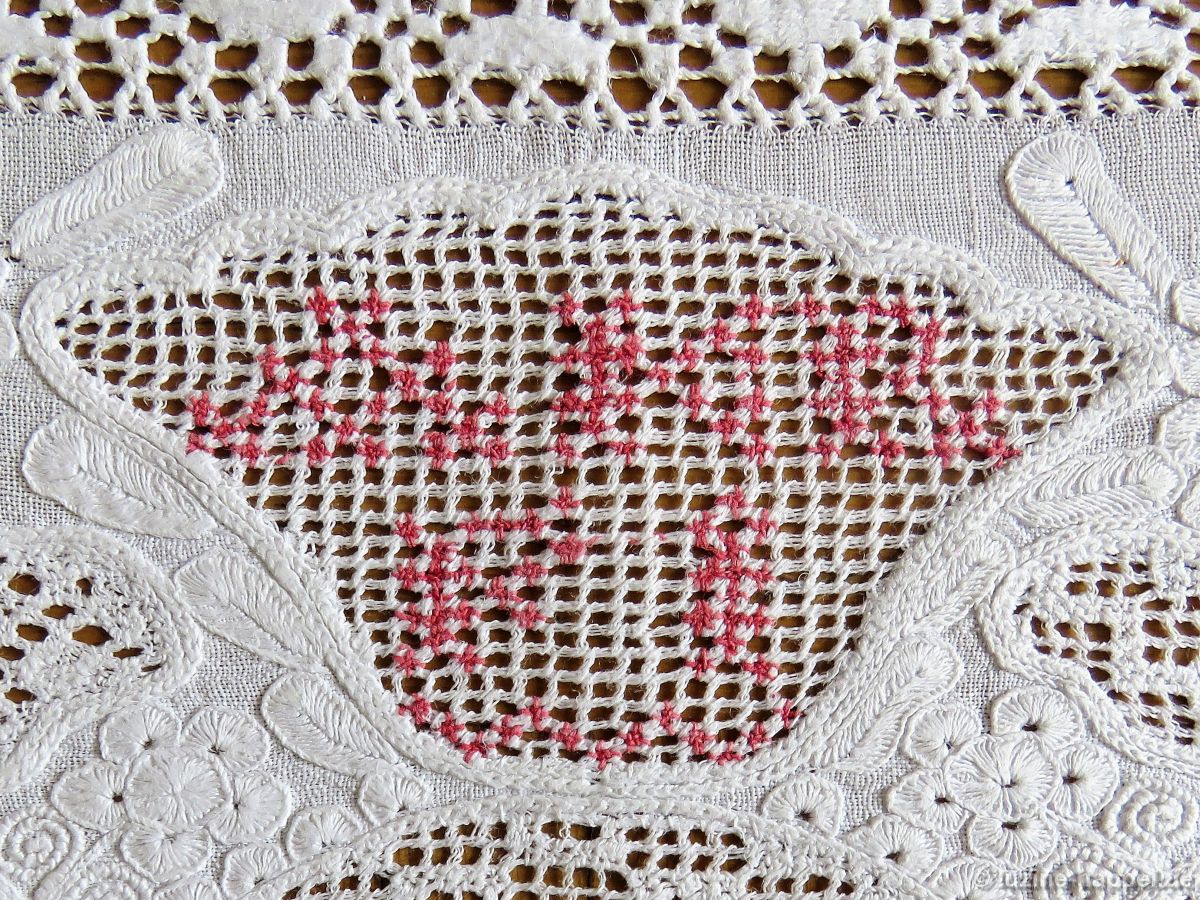
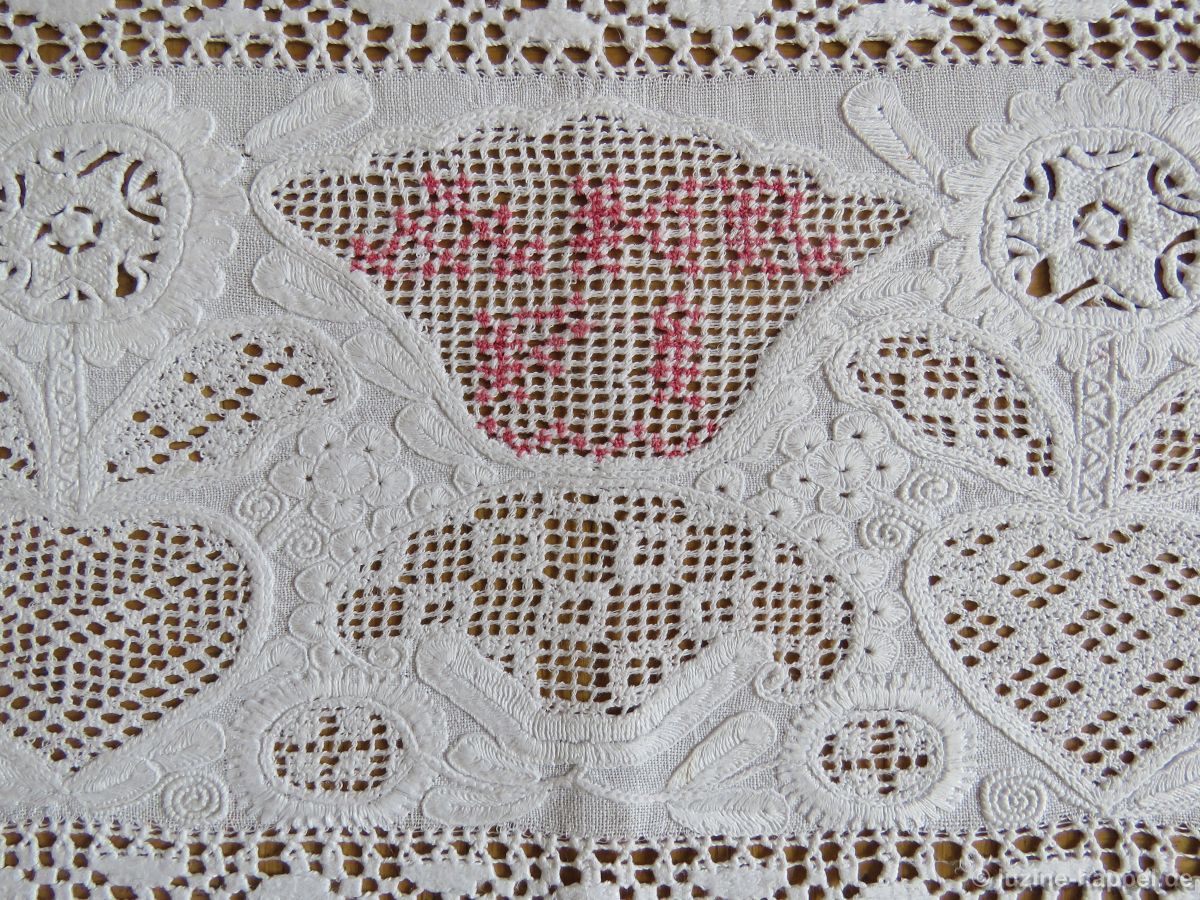
I have two of these borders. They are identical except for the big tulip in the top center. One tulip is decorated with a white Rose stitch pattern and displays the initials AKR and probably F and the year 1826.
The other has a red Rose stitch pattern. Red is sometimes, but rarely, incorporated into whitework borders. In this tulip, the initials AKRFI are visible.
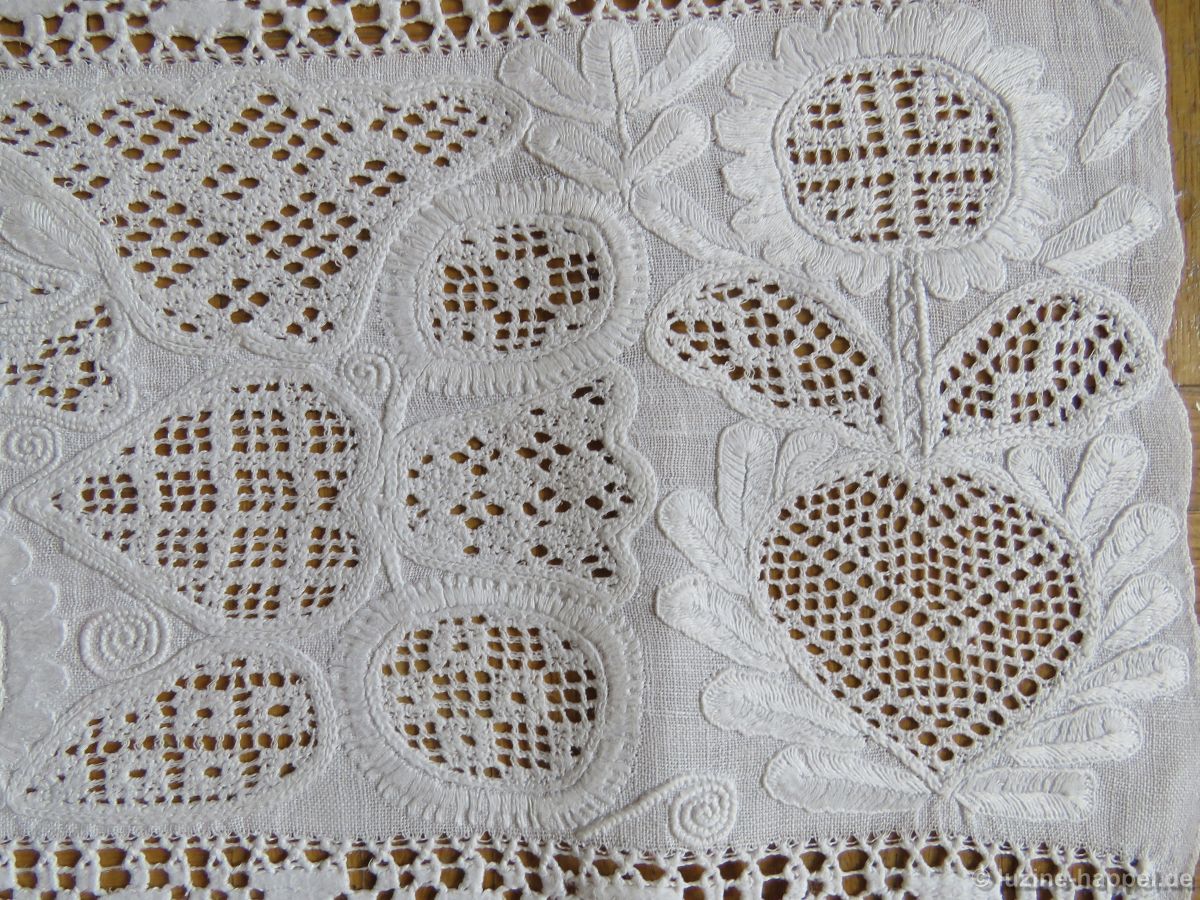
The design is created mirrored at the longitudinal axis. But the filling patterns were not worked symmetrically. In some instances, they differ very much, as the image on top of this article shows clearly.

The embroidery was worked very close to the selvage. So, the embroidery was formerly covered by the seam.
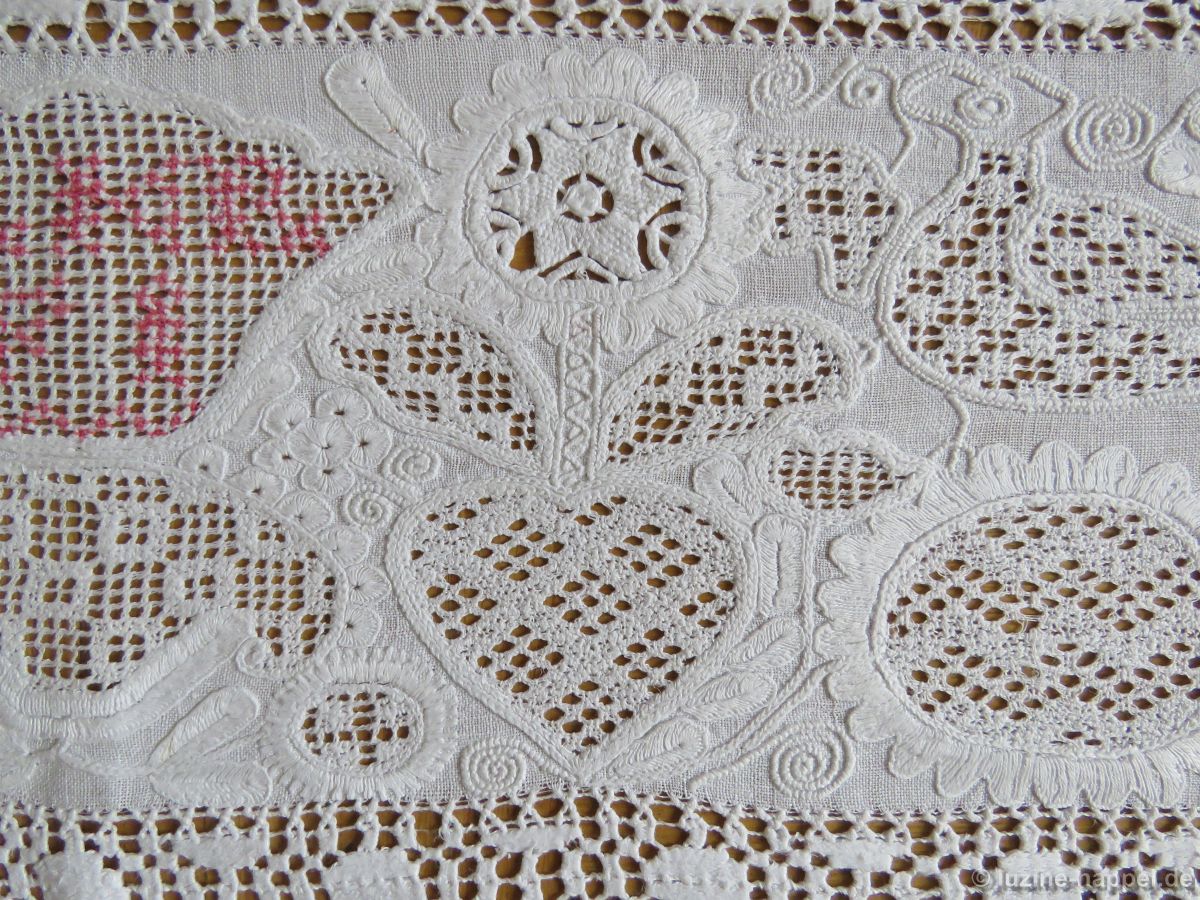
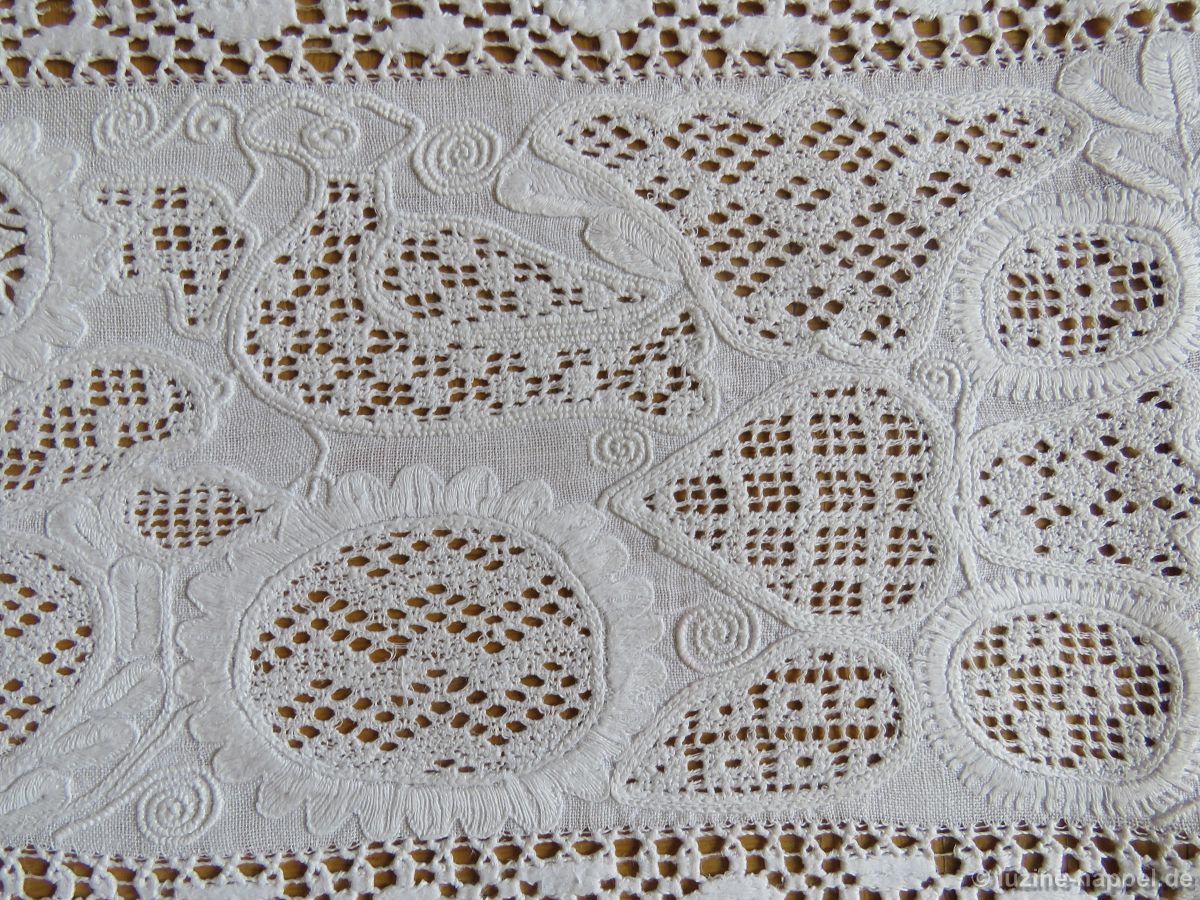
One distinct feature is the bird pattern that was embroidered using Rose stitches into a tulip shape next to a bird shape.

Both birds hold something in their beaks.
Some circles are filled with needlelace; six-pointed and eight-pointed stars are visible.
Also worth mentioning is the arrangement of the stems between the heart and the star circle. Worth viewing is the special treatment of the edges of the shape below the center tulip: Big leaves in the form of a bowl at the bottom, tendrils ending in Chain stitches, and a several half eyelet scallops on both sides make this shape eminently interesting.
The placement of the bird´s legs is also interesting.
It is apparent that Coral Knot stitches as outlines were worked rarely on this piece. Coral knots can be seen on the bird motif as an outline and as the stem in the bird’s beak. They can also be seen in the tightly curled tendrils.
Thin stems were worked with Chain stitches. For outlining the big shapes densely worked, rounded leaves, Blanket stitch scallops, partially half eyelet scallops and 2 short-2 long were used.