Tablecloth for all Seasons – January: Snowballs

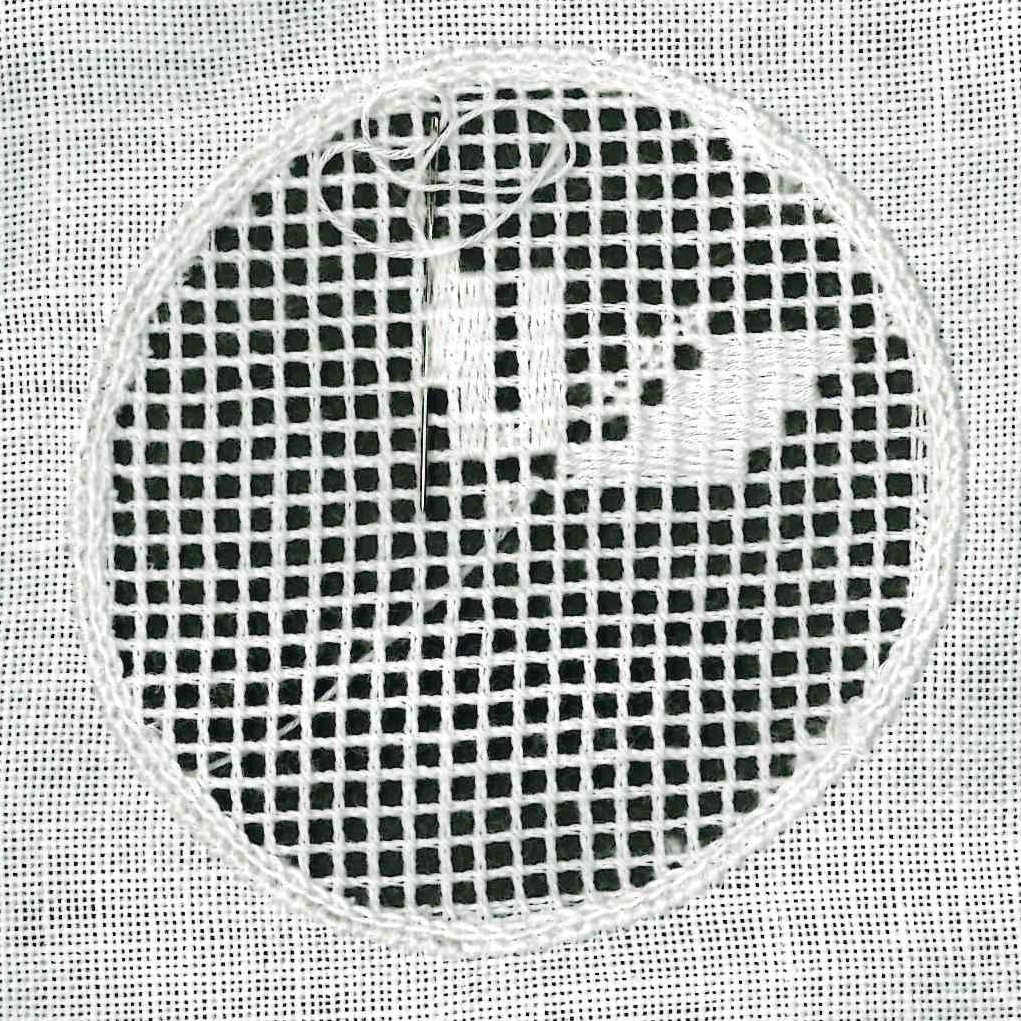
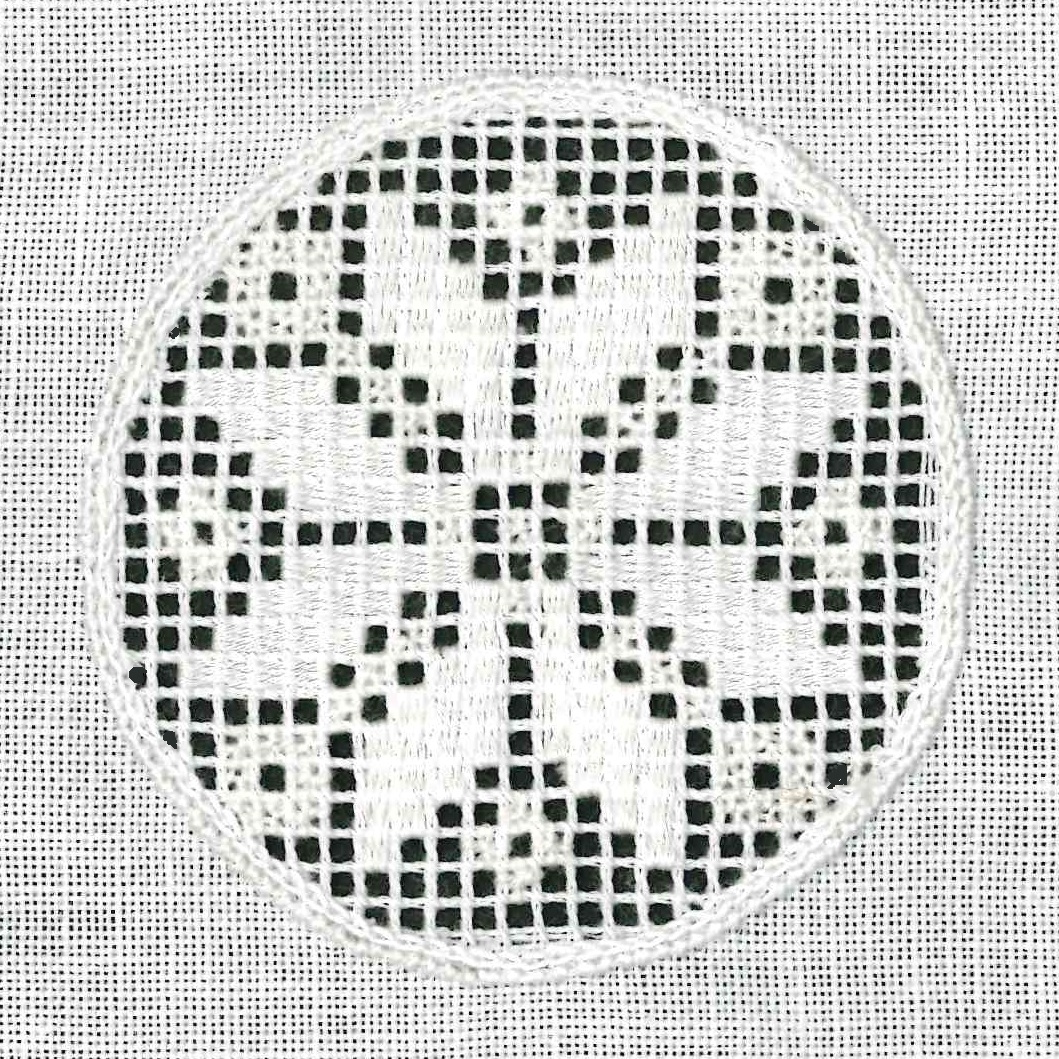
January is the snowiest month of the year here. So, I decided to create snowballs to decorate the monthly tablecloth.

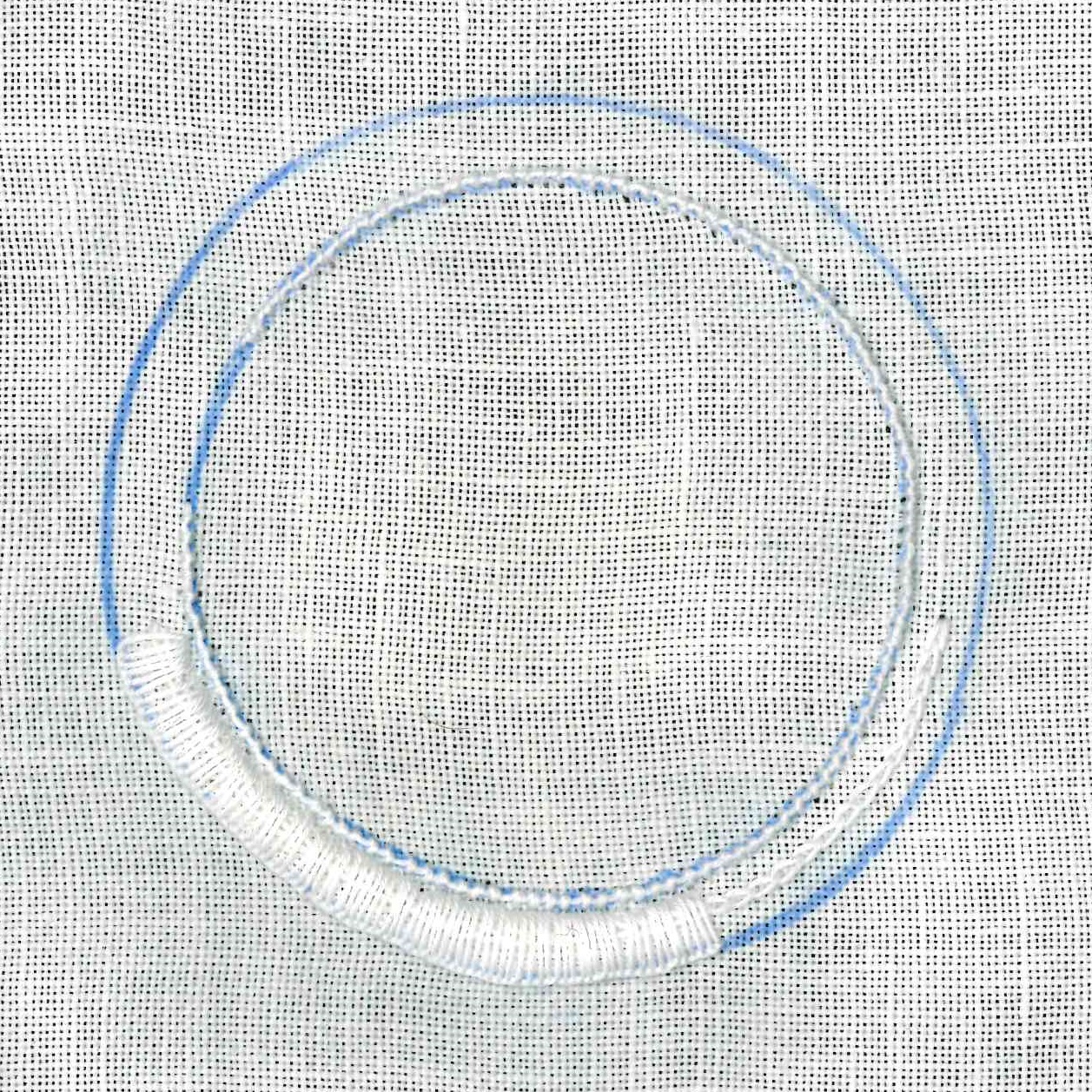
A simple circle design with a double line (Here: internal diameter 7.3 cm; external diameter 8.5 cm) was ironed on Weddigen linen, 13.5/cm thread count. I think ironing is the best way to get a true circle on the linen.

2014-01-18_pdf

Use Coton à broder No. 16 for Coral Knot stitches, No. 20 for Blanket stitches and for Chain stitches. Coral Knot stitches were worked along the inner line. Chain stitches were worked a small distance outside, the Coral Knot stitches. The outside Chain stitches were covered with densely worked Blanket stitches between the outline and the Coral Knot line.

Using Coton à broder No. 30 Chain stitches were worked directly inside the Coral Knot stitches. The shape was filled with pattern “445”.

Randbefestigung | edge securing

After finishing, the embroidered piece was washed (boiled), starched and ironed. Then, the circle was cut.

Ausschneiden | cut the finished pieceIf needed, such closely trimmed embroidery can be washed and ironed – quick and easy – at any time, but never spun in a washing machine!

Platzierung auf der Decke | placement on the cloth

To decorate your tablecloth with snowballs, work several and place them in a pleasing arrangement over the tabletop.linienförmige Anordnung | arrangement in a straight line

Of course, such small doilies also can be used as coasters.

Verwendung als Untersetzer | use as coaster

Filling Pattern No. 445

No. 445 (star No. 1)
category: Openwork pattern with Cable stitch grid
stitches used: Rose stitches and Needleweaving over 1 and 3 squares; changing the direction
center: square
material used: 13.5/cm thread-count Weddigen linen
Coton à broder No. 20 (Coral Knot stitches, Rose stitches and needleweaving) and No. 30 (Chain
stitches and Cable stitch)

In Schwalm whitework it is also common to fill openwork cable stitch grids not only with endless patterns, but also with figures: manikin, birds, tulips, hearts and, of course, stars.

The star patterns are the same as those found in Norwegian knitting patterns, but there is any room for imagination.

Stars are mainly worked within circles. Usually, the stars are stitched with Rose stitches, sometimes with a combination of Rose stitches and Needleweaving, and rarely with needleweaving only. This is because a single square filled with a Rosestitch remains as a square, a single square filled with needleweaving appears oblong. For a star, it is preferable that the squares do not appear oblong.

There are smaller and wider star patterns. You should always use a pattern that matches the number of squares in your grid. It is not attractive when the tip of a star is not fully visible. It is better that there are unworked squares around the star. Also, these remaining squares can be filled with single stitches.

Starting at the centre, always alternate withdrawing and leaving two vertical threads. Do the same with the horizontal threads. So that the star looks pretty and turns out well, it is necessary to place it right in the middle (with the same number of squares to the right as to the left). If your linen is not absolutely evenweave, it is better to ascertain the centre by counting and not by measuring.

Fadenauszug | thread withdrawing

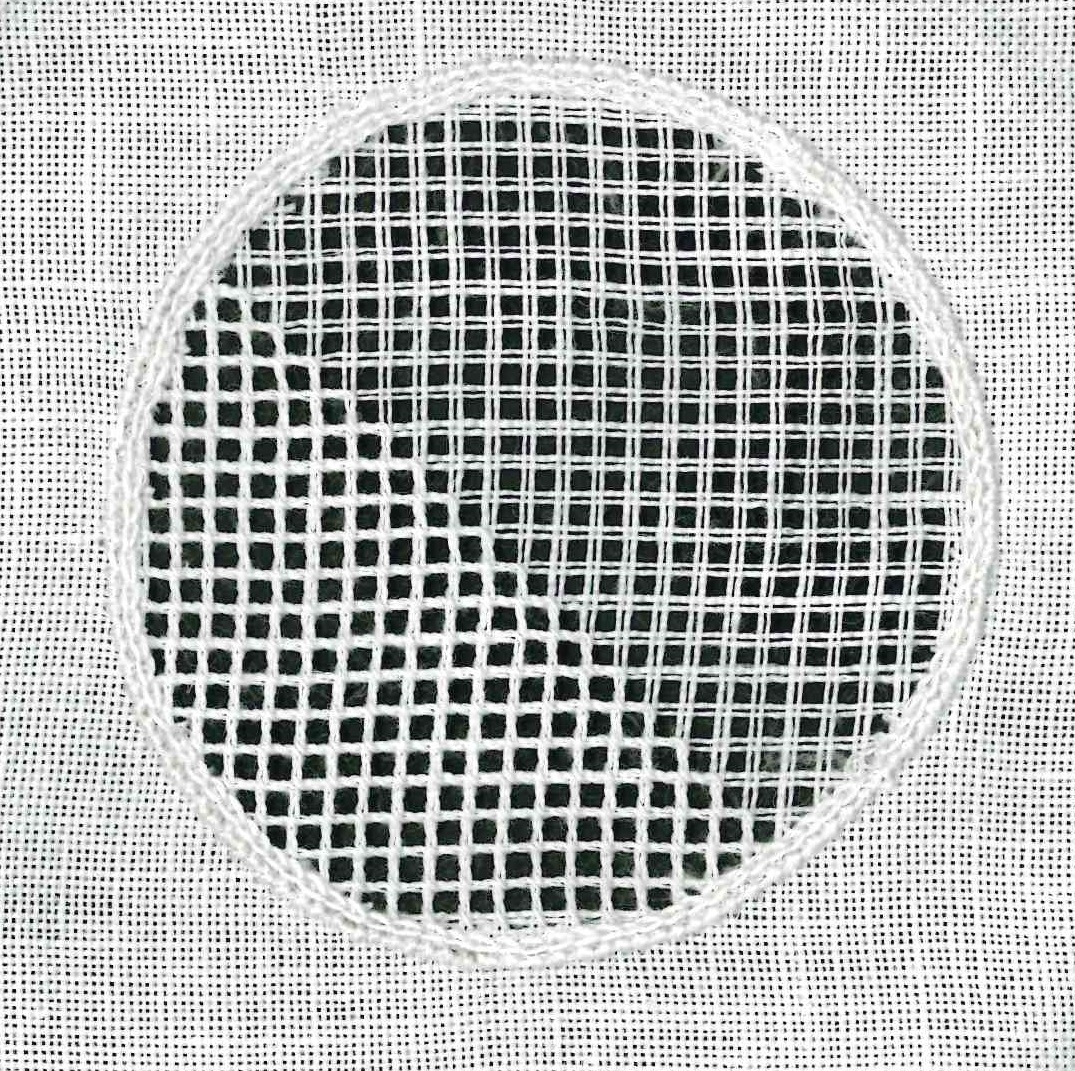
The established grid is stabilized with Single Faggot stitches – which is simply Cable stitch from the front – worked from the back side of the fabric.
Grundstichgitter | Cable stitch grid

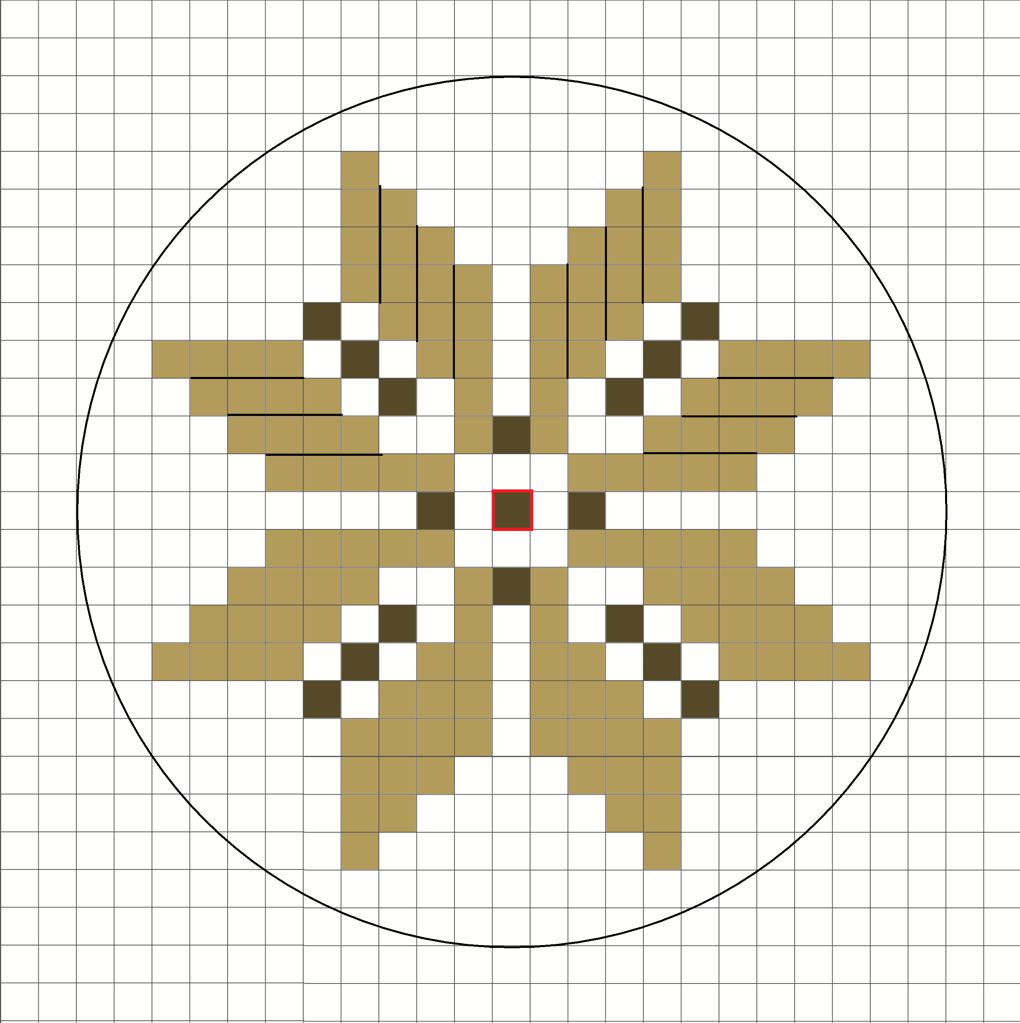
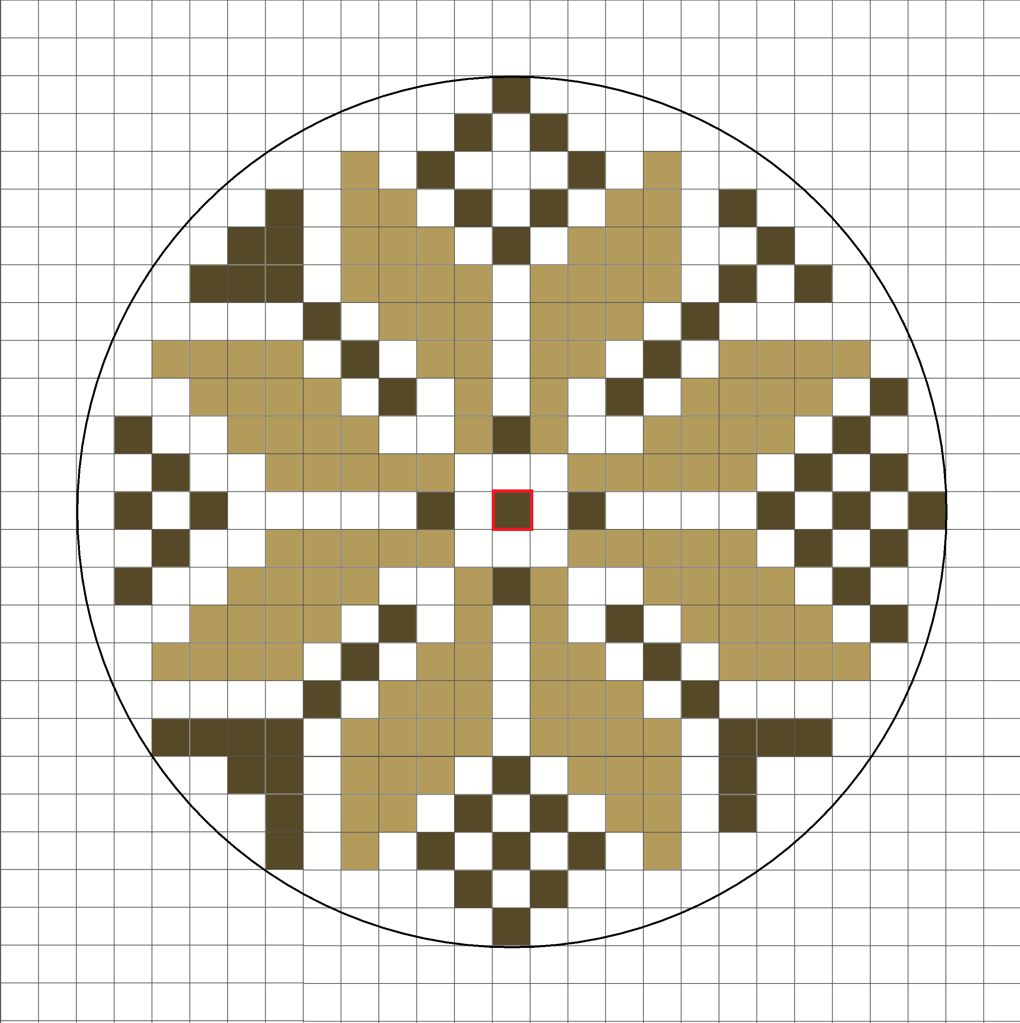
My established grid has 23 squares along the center axes. So I chose the following chart:
442 a Grafik | chart

The darker golden squares are filled with Rose stitches, the lighter golden squares are filled with Needleweaving. (It would be also possible to work all with Rose stitches, but then the patterns will appear somewhat different.) The black lines show the direction of the needleweaving.

Starting at the center – marked red – work outwards, following the chart.
Musterfüllung | filling pattern
Grundstern | basic star

When the star is finished, the remaining squares up to the edge can be decorated with further stitches. There are different possibilities, as the following charts show:
442 b Grafik | chart
There is room for imagination – please try to find your own pattern!

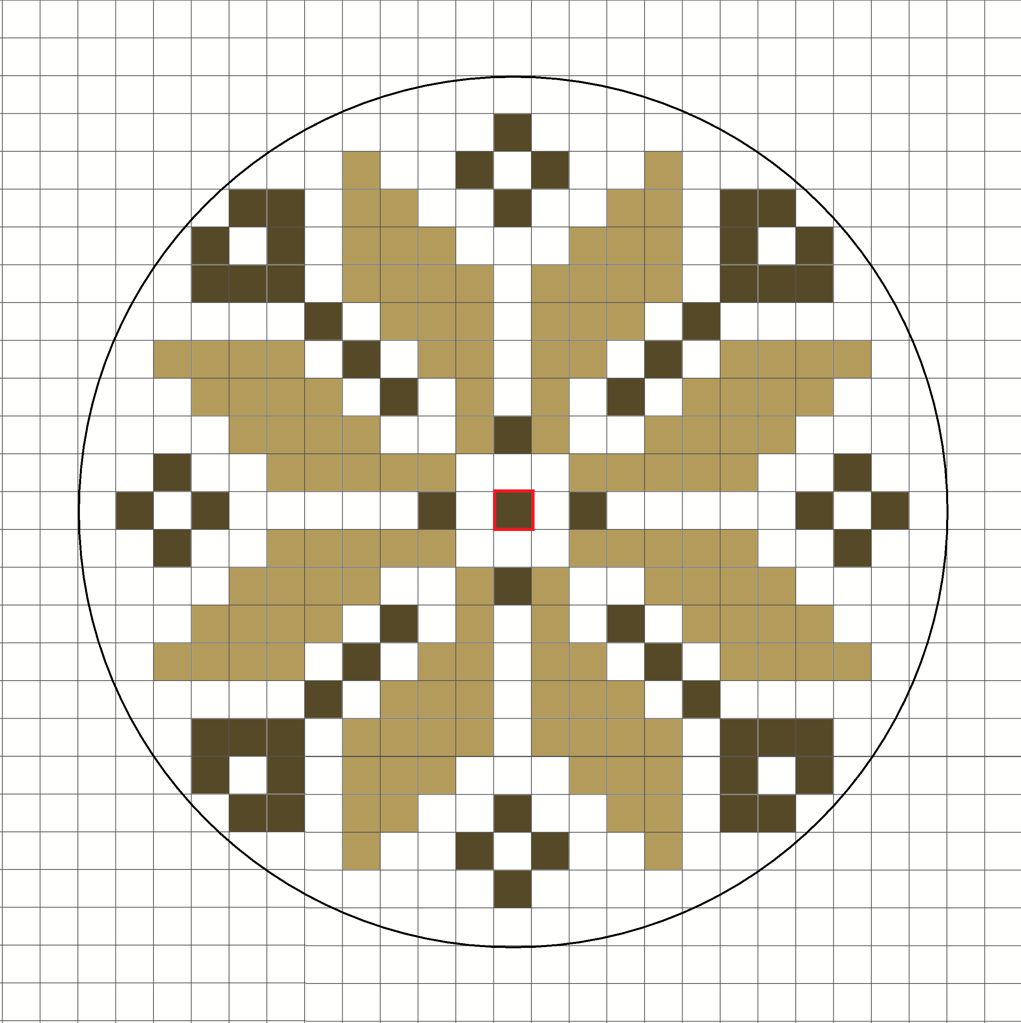
I chose the following pattern:
442 Grafik | chart

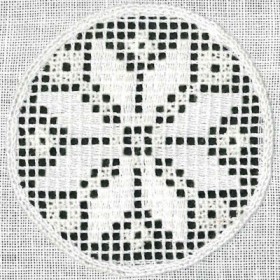
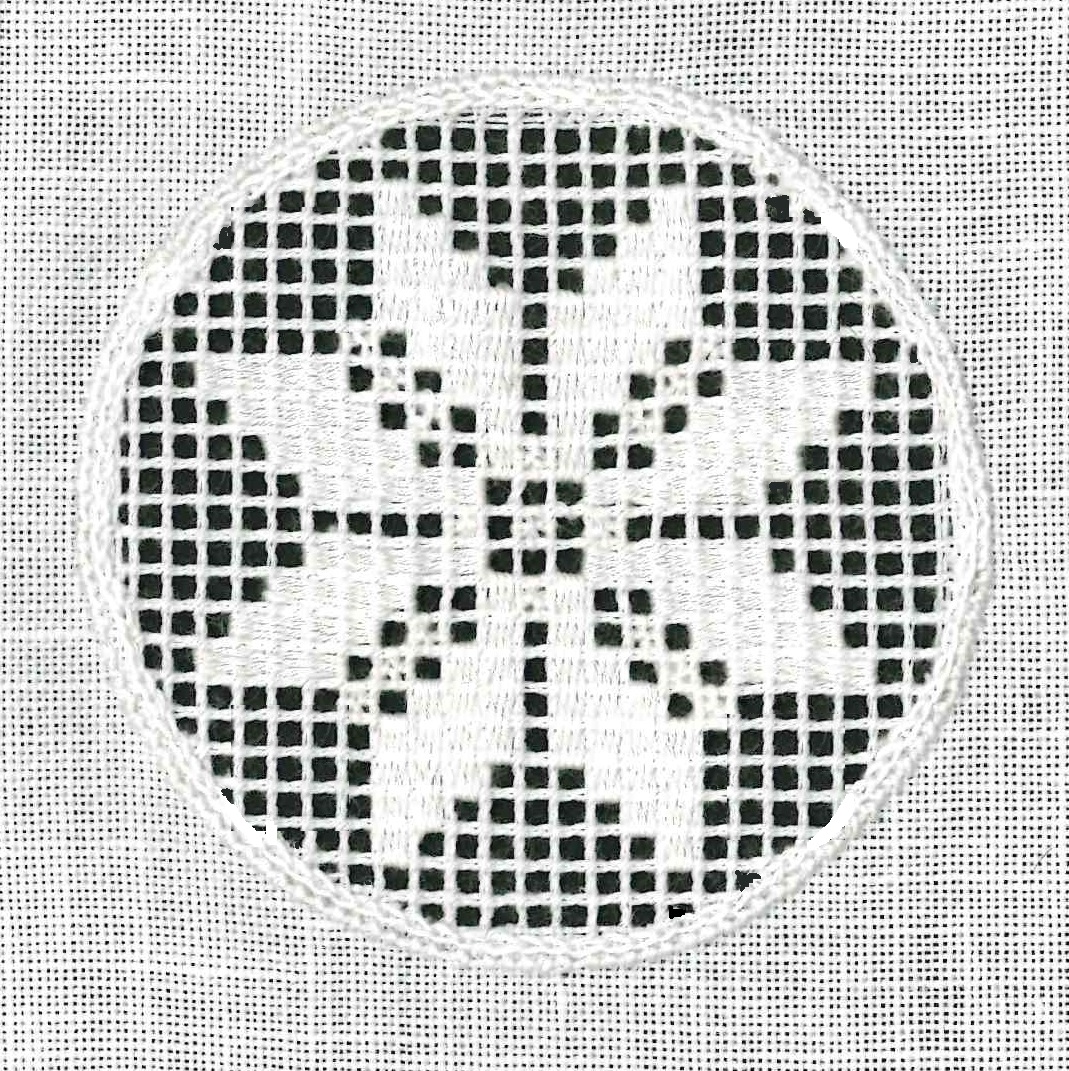
Embroidered it looks like this:
fertiger Stern | finished star

Schwalm Costumes – Literature

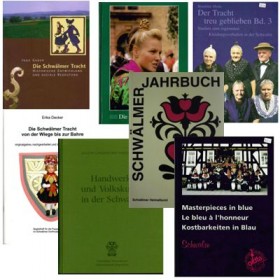
There are a number of books dealing with the Schwalm costumes. The scholarly texts are usually written in German, but there are some picture books and books with English text.
I include all here.
A scholarly approach is found in

  • Ingo Gabor
  • Die Schwälmer Tracht
  • Historische Entwicklung und soziale Bedeutung
  • Schriftenreihe der C.H.Schmitt Stiftung
  • Band 2
  • 2008
  • ISBN 978-3-00-027137-3
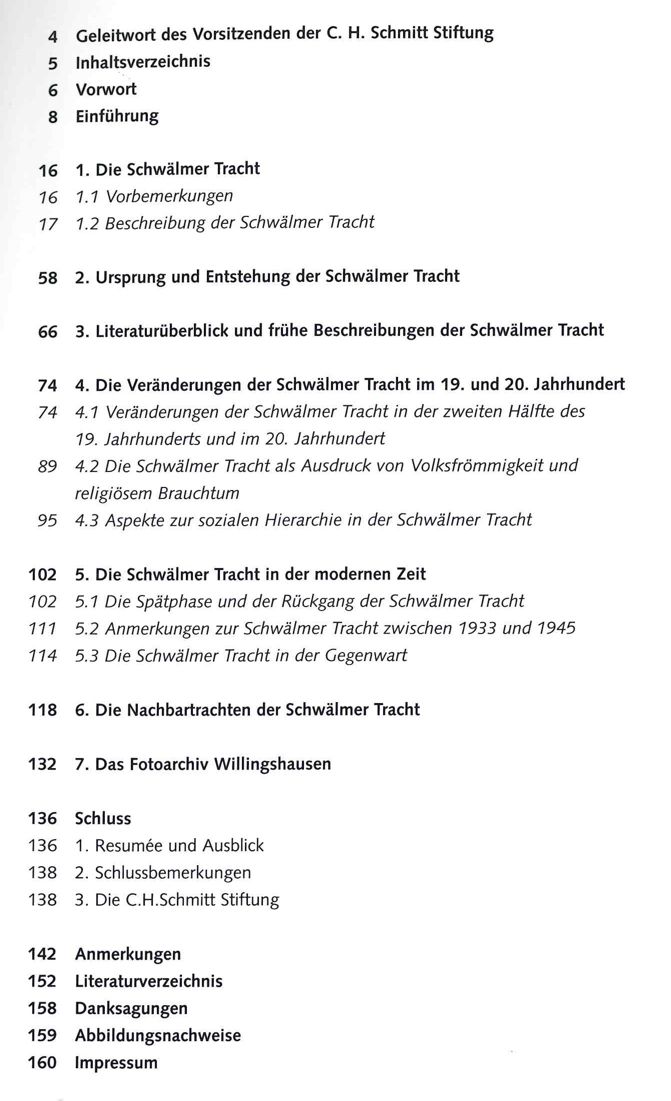
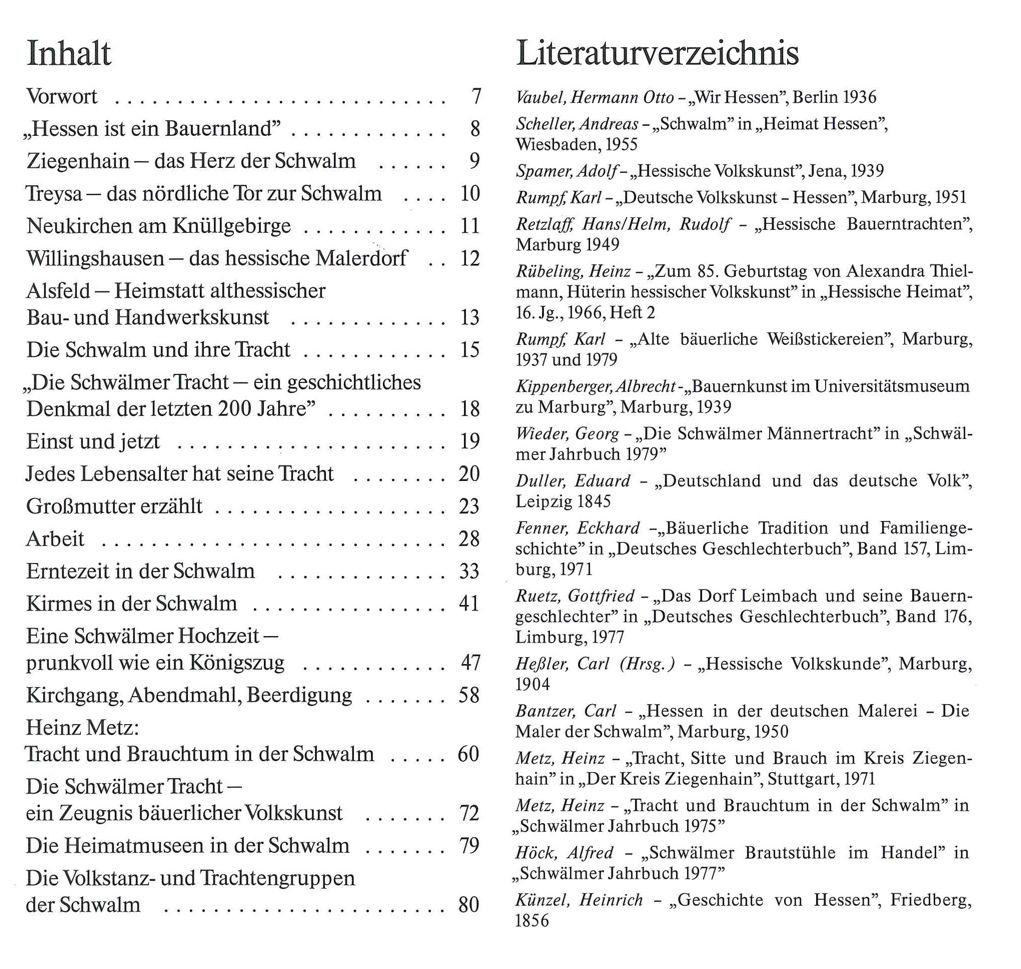
Die Schwälmer Tracht - Ingo Gabor
Die Schwälmer Tracht - Ingo Gabor - contents

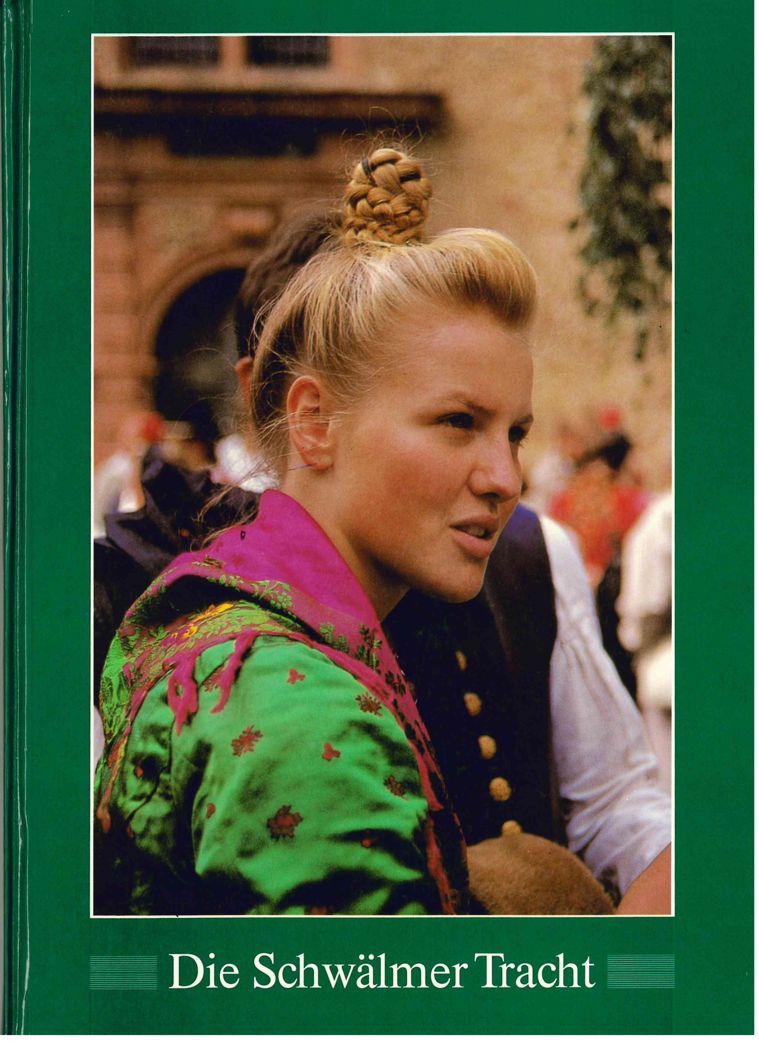
In its many pictures, one can admire the Schwalm costumes in the book of

  • Heinz Rübeling/Heinz Metz/Dirk Ordemann
  • Die Schwälmer Tracht
  • Verlag Dirk Ordemann, Ziegenhain
  • 1988
  • ISBN 3-9802008-0-9
Die Schwälmer Tracht - Heinz Rübeling/Heinz Metz/Dirk Ordemann
Die Schwälmer Tracht - Heinz Rübeling/Heinz Metz/Dirk Ordemann - contents
  • also with text in English as:
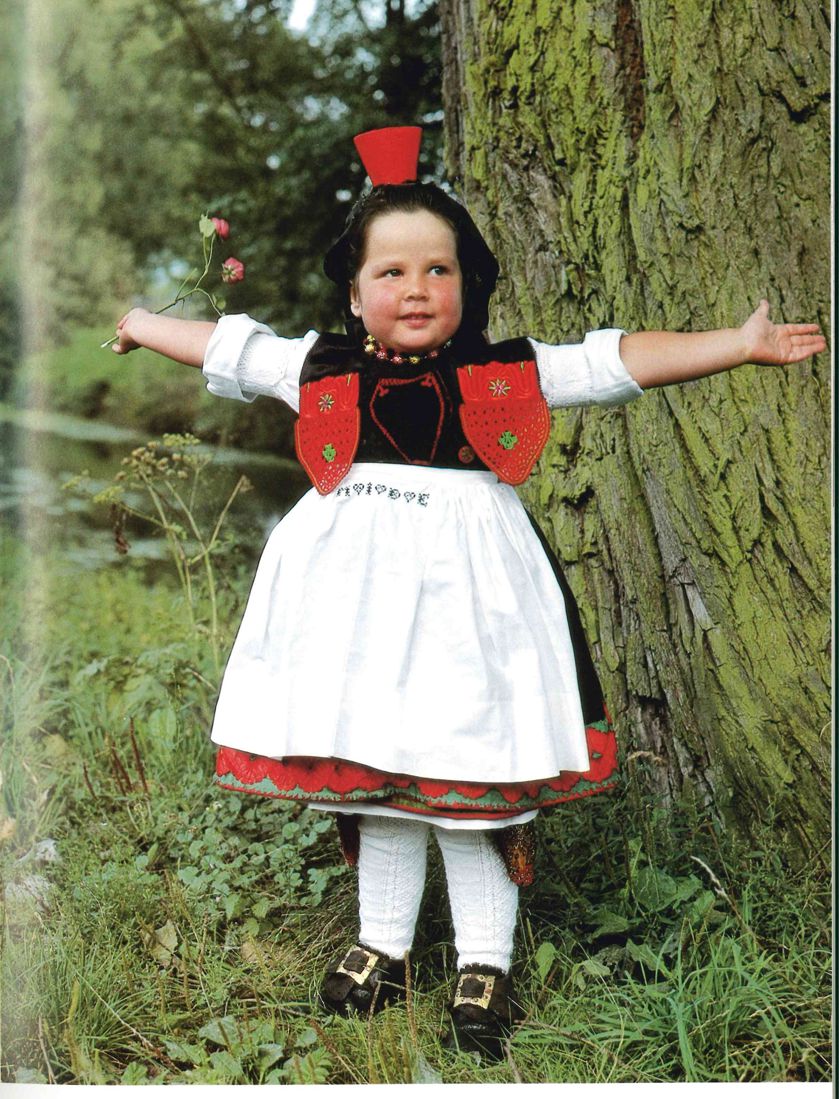
  • Little Red Riding Hood
  • The History of the Traditional Costumes of the Schwalm

Little_Red_Riding_Hood

Studies on the surviving regional clothing of the Schwalm are found in

  • Brunhilde Miehe
  • Der Tracht treu geblieben Bd. 3
  • Studien zum regionalen Kleidungsverhalten in der Schwalm
  • Eigenverlag 2004
  • ISBN 3-9801197-5-0
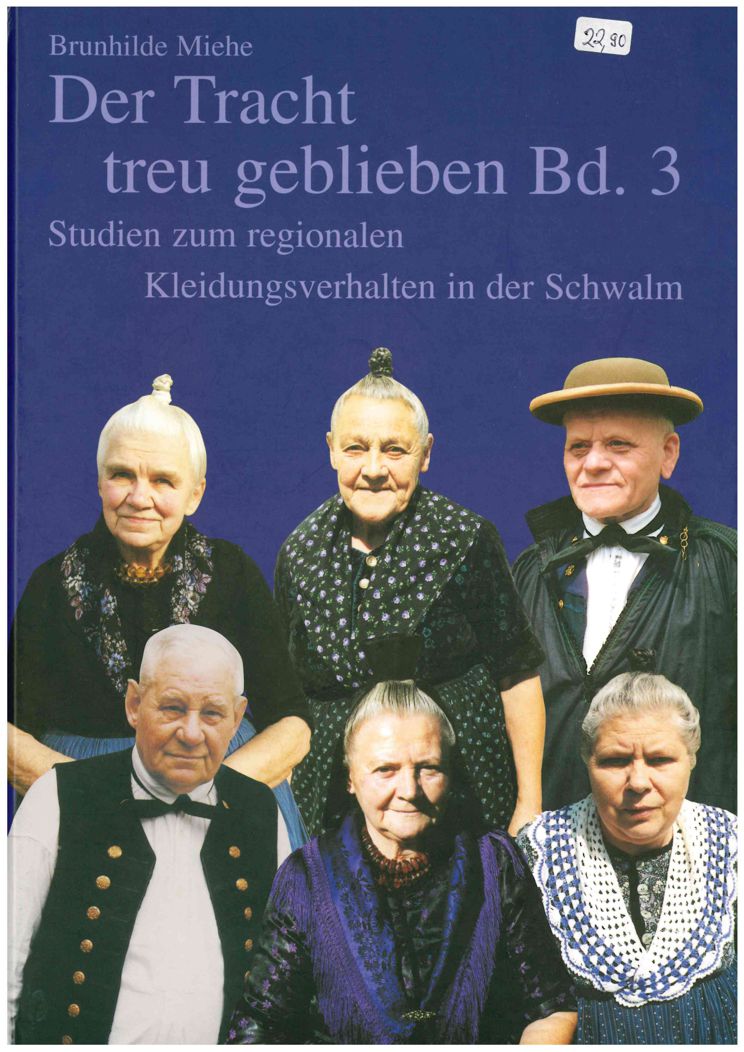
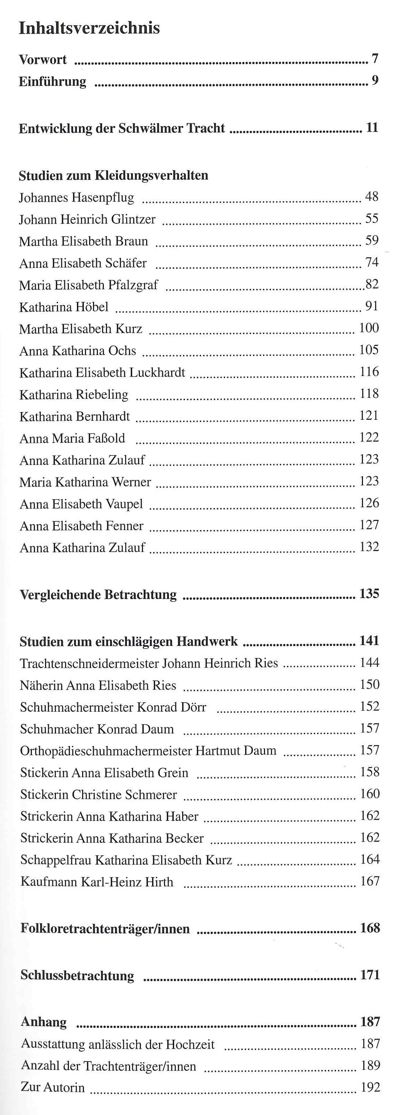
Der Tracht treu geblieben Bd. 3 - Brunhilde Miehe
Der Tracht treu geblieben Bd. 3 - Brunhilde Miehe - contents

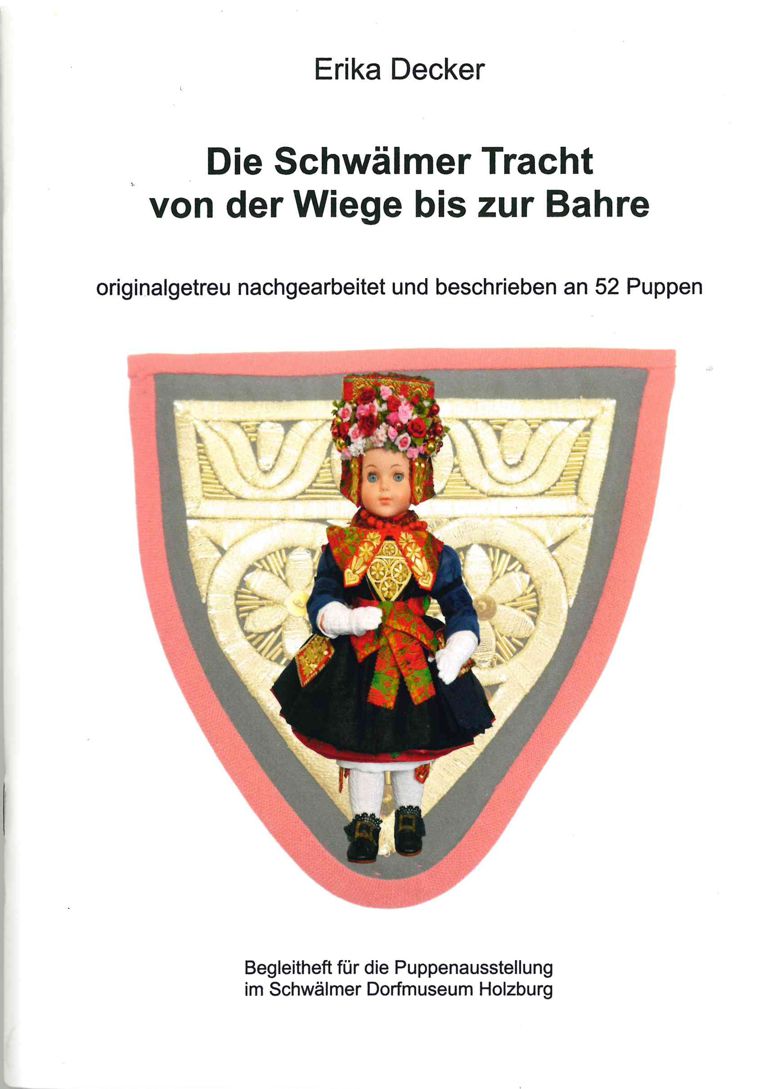
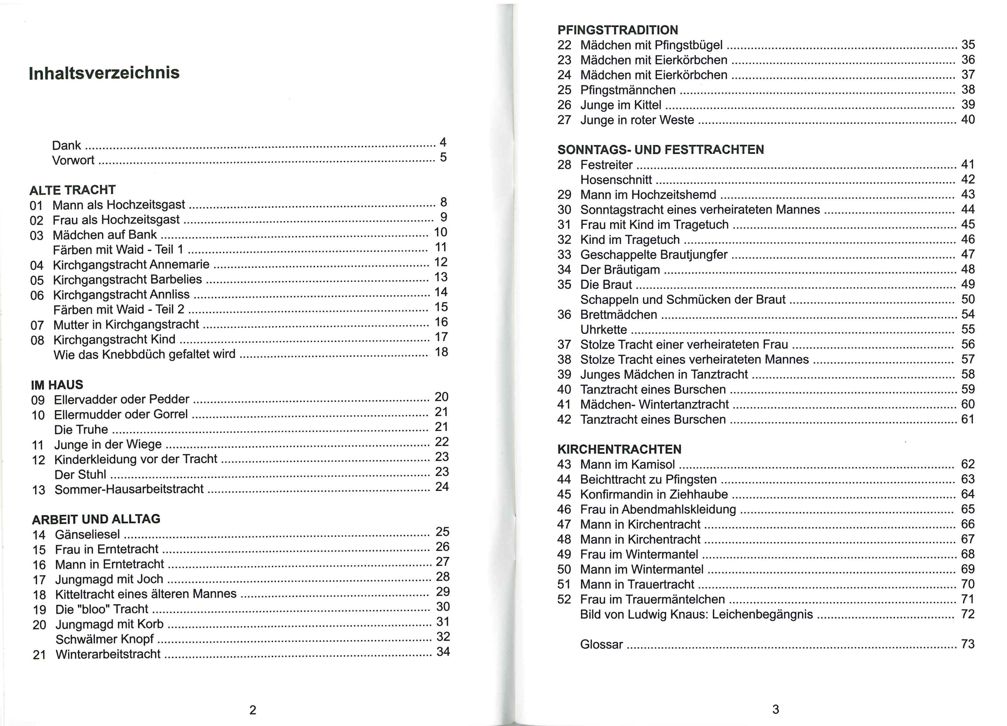
An overview of the many different forms of the Schwalm costumes, including lots of pleasant details worth knowing such as the “Schappel” (hairdressing and application of the headdress of a bride) or the manufacture of buttons, can be found in the booklet of

  • Erika Decker
  • Die Schwälmer Tracht
  • von der Wiege bis zur Bahre
  • originalgetreu nachgearbeitet und beschrieben an 52 Puppen
  • Begleitheft für die Puppenausstellung im Schwälmer Dorfmuseum Holzburg
  • Eigenverlag 2011
Die Schwälmer Tracht von der Wiege bis zur Bahre - Erika Decker
Die Schwälmer Tracht von der Wiege bis zur Bahre - Erika Decker - contents

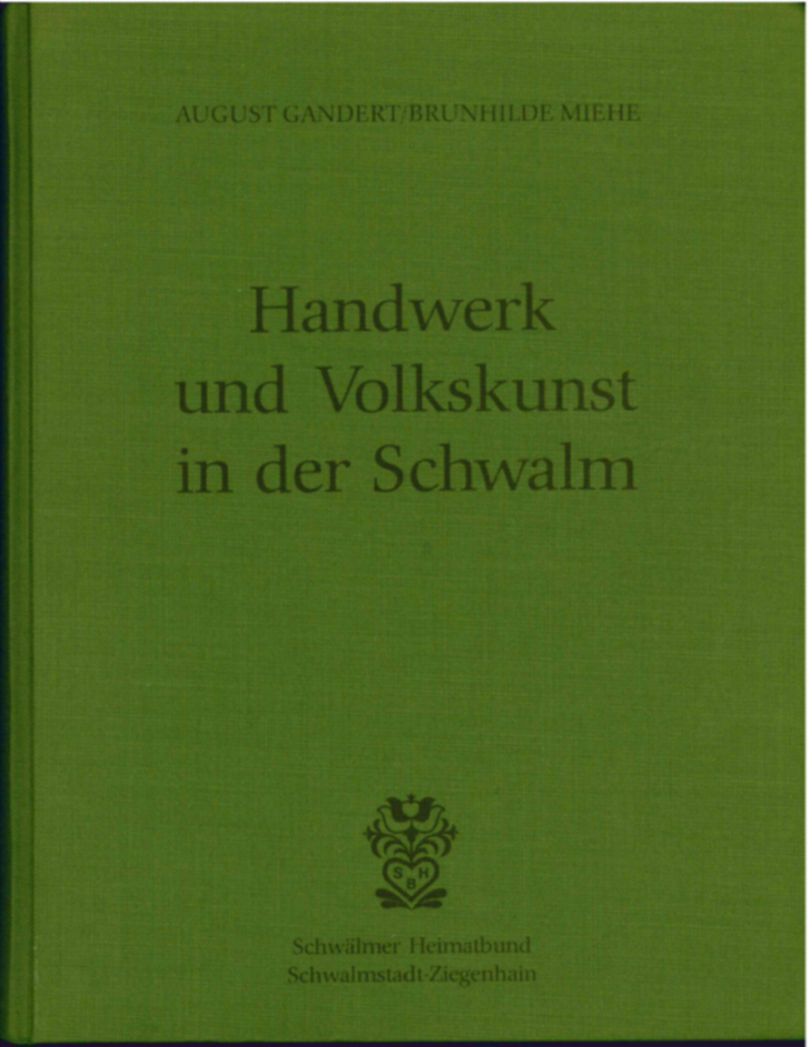
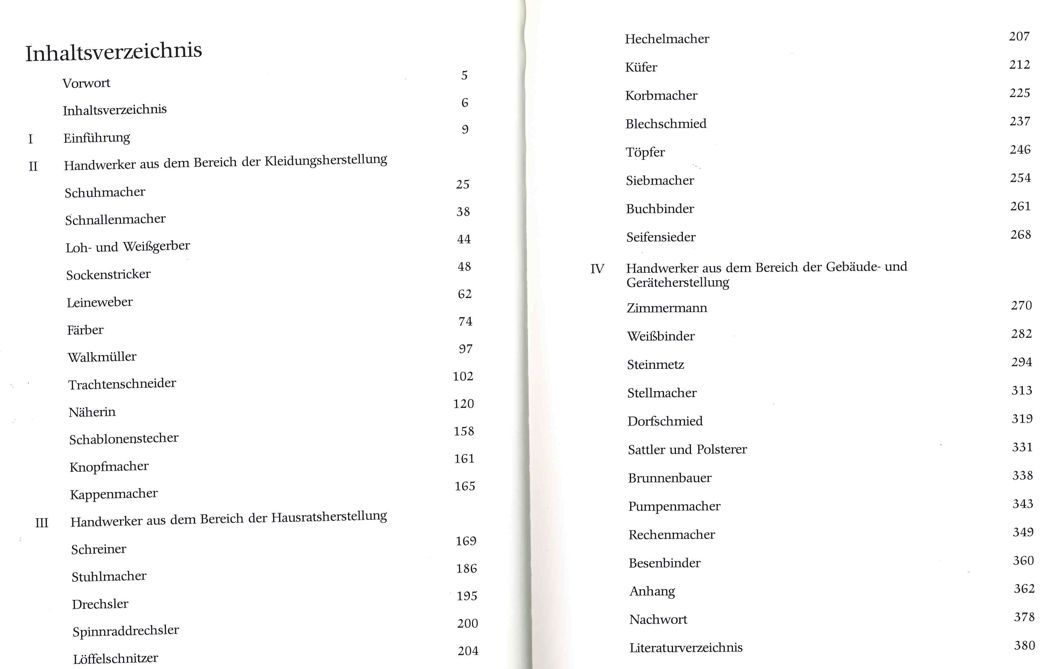
Interesting insights – but in black and white – can be found in the book

  • August Gandert/Brunhilde Miehe
  • Handwerk und Volksskunst in der Schwalm
  • Schwälmer Heimatbund 1983
Handwerk und Volksskunst in der Schwalm - August Gandert/Brunhilde Miehe
Handwerk und Volksskunst in der Schwalm - August Gandert/Brunhilde Miehe - contents

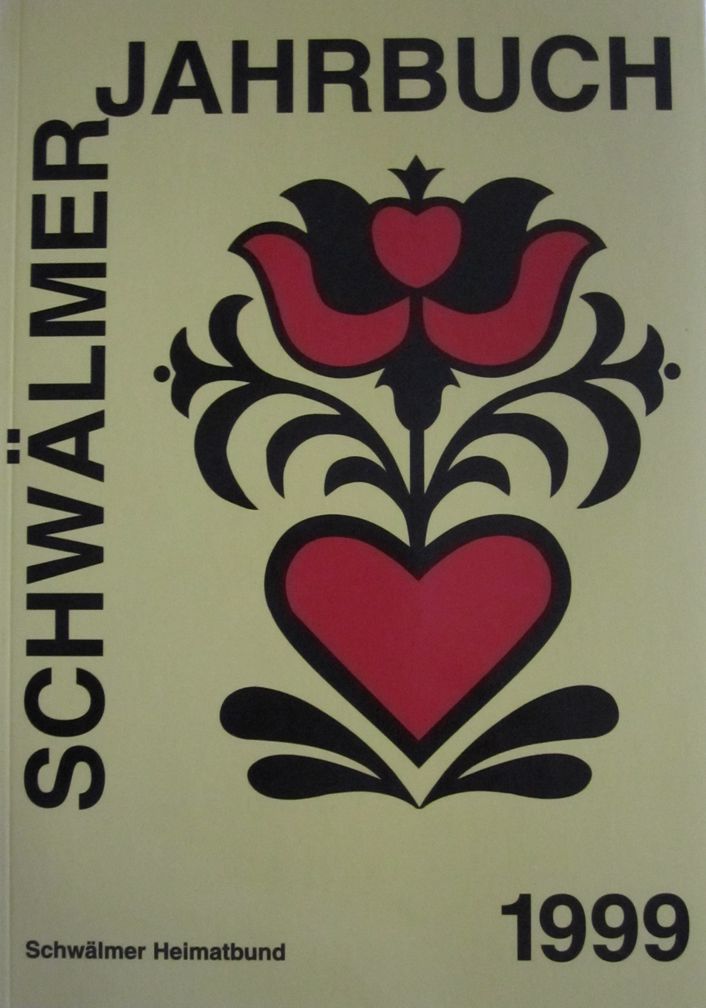
Also, there are many interesting articles in the yearbooks of the “Schwälmer Heimatbund” – from 1971 to today – that deal with the costumes.
Jahrbuch_1999

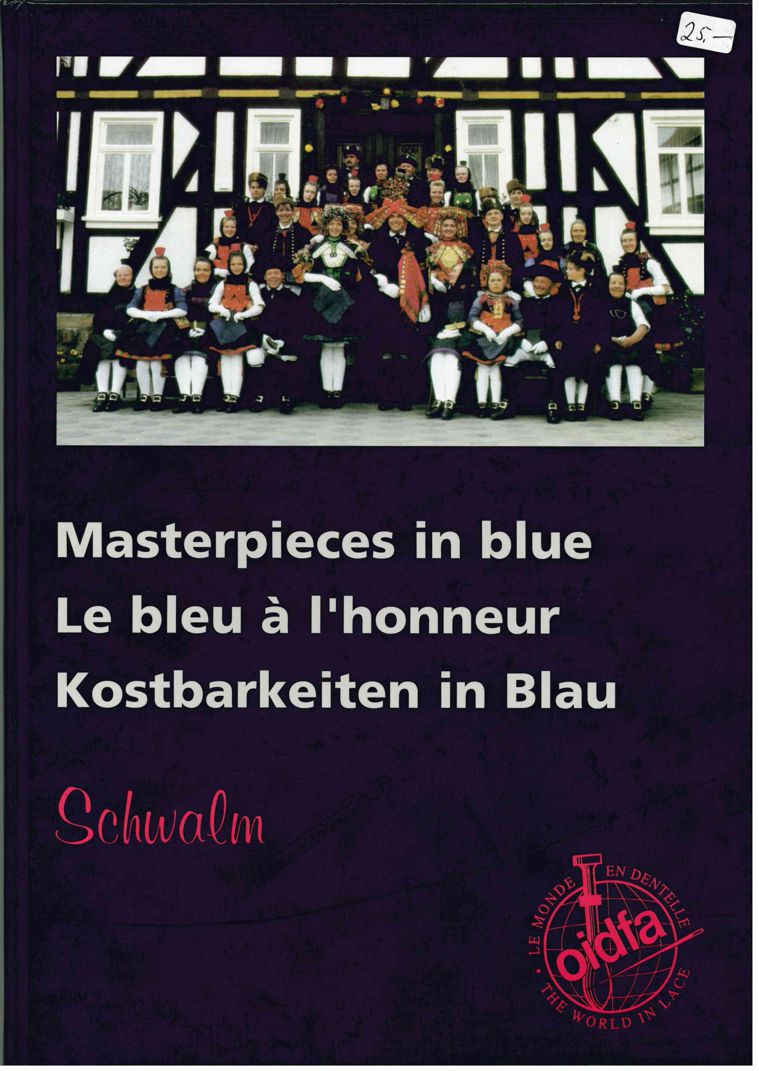
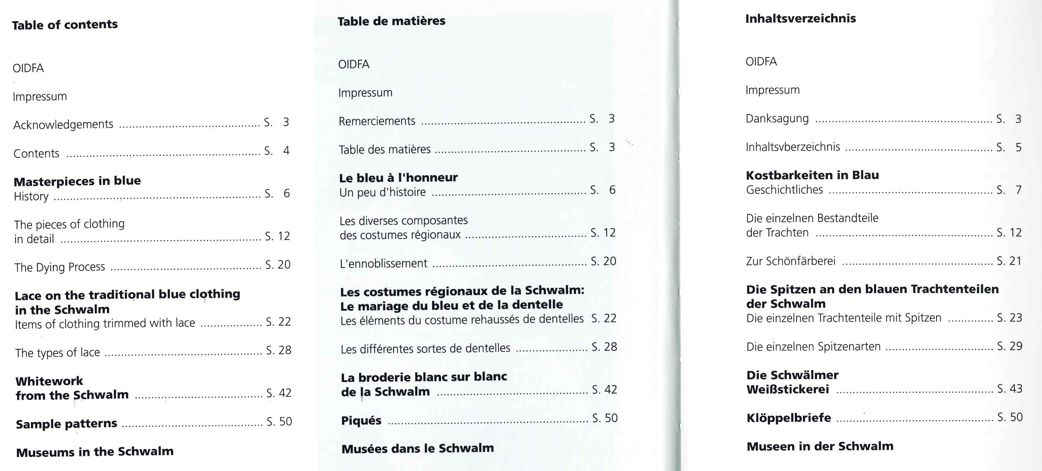
Dealing especially with the dyed to blue costume parts and the bobbin lace commonly used in the Schwalm, is the trilingual book

  • Marianne Stang/Anneliese Wienands/ Elda Gantner/Meike Gehrmann
  • Kostbarkeiten in Blau
  • Masterpieces in blue
  • Le bleu à l´honneur
  • OIDFA
  • ISBN 3-923219-19-9
Masterpieces in blue - Marianne Stang/Anneliese Wienands/ Elda Gantner/Meike Gehrmann

A Retrospective and Looking Forward to 2014

At the end of a year, it is enjoyable to pause and to reflect upon the events of the past 12 months.
Although the holiday season is a busy time, I was able to take some time to relax and think back; I would like to share with you my retrospective. And then, I will give you a little hint of what I have planned for 2014.

The time-consuming work on my website shows a slow, but steady, positive effect – more and more interested people are finding it.

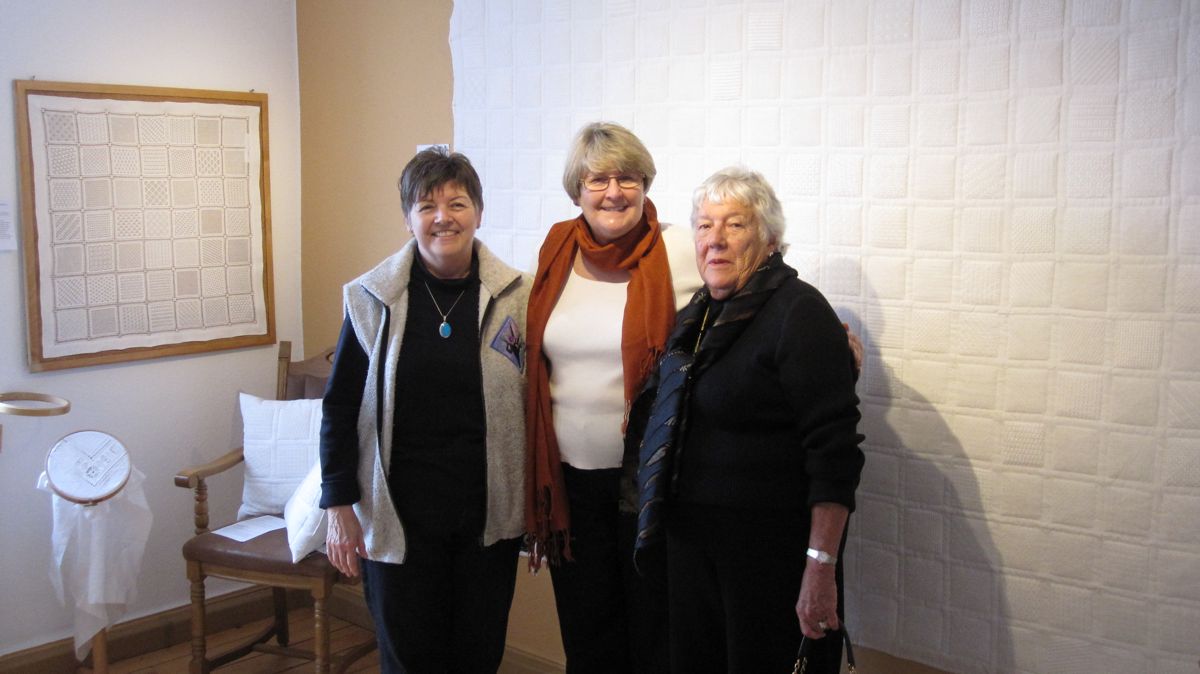
People still visit my exhibition, even though it has no regular opening hours. The ladies of an embroidery circle celebrated their 30-year jubilee with a visit. Other interested people wanted to look again – this time to examine details – after a quick visit some time ago. Also, I was privileged to welcome Kathy Andrews, an American currently living in Germany, who is interested in all kinds of European embroidery. She wrote about her experiences on her nice website, The Unbroken Thread.

Many embroiderers from far away, but staying in the vicinity by chance, took the opportunity to see my exhibition. And some specifically travelled over hundreds of kilometers to view my embroidered collection.

Besuch aus Kanada zu meiner Ausstellung 2011

And I have welcomed some well-known persons of embroidery guilds. Two years ago, Barbara Kershaw, who teaches Schwalm and other whitework techniques through the Embroiderers’ Association of Canada (EAC) and the Embroiderers’ Guild of America (EGA) travelled from Canada to visit. And this year, a member of the Cape Embroiderers’ Guild (CEG) visited from South Africa as well as Deborah Love from Australia. She is the current president of the Embroiderers’ Guild of Queensland, Australia.

Deborah Love am 2013-10-23 in Eschwege

An absolute highlight was the visit of a large group of, mainly, British ladies. Mary Hickmott, the publisher of the magazine “New Stitches”, organized a holiday in Germany for readers of the magazine. I was honored that my exhibition was included, with other significant embroidery collections, in their itinerary. It was so thrilling, so exciting, and amusing that I totally forgot to take a photograph of the ladies. Only the bus carrying all the visitors was documented.

Besuch von New Stitches aus Great Britain am 13.09

I now understand myself to be a junction for embroiderers from the East and West, from the North and South. By chance, I helped two embroiderers to revive a friendship after they lost track of each other years ago. They lived relatively near to one another without knowing it! For others, I could help them find like-minded persons nearby. All this infuses me with pleasure, satisfaction and quietude, and so I enjoy my job!

Over the entire year, I had very nice contacts with people all over the world. Over and over again, I am astonished to experience the simplicity of quick and uncomplicated understanding with people in the remotest places of the world. And I am constantly surprised to realize the number of people, on all continents of this earth, who are interested in Schwalm whitework.

Unfortunately, one of my visions is not realizable because of technical problems. I have had to put on hold my plans to establish an internet museum for whitework. Traveling to faraway countries and staying in strange environments is not only expensive, but also very strenuous. So, I got the idea to establish an internet museum to visit any time, comfortably from a domestic chair. One could visit as often, and dwell as long, as one might want. Such a project is challenging for a small business such as mine, and the plans must be put aside for the time being.

So, I look for a practical solution to enable you to view traditional and brilliant contemporary Schwalm whitework from home.
I already have an idea …

I also have hopes, for Summer 2014, to put together a new and big exhibition with Schwalm whitework pieces. The preparations have already begun – I hope to see the project to fruition.

Rest assured, you will hear from me about all of these!

For now, I wish you all the best for the coming year; take much pleasure in Schwalm whitework and enjoy each and every stitch.


Schwalm Bird Tree

To decorate the home for Christmas with a beautiful tree is, for us, a centuries old and cherished tradition.
For you, I do not present the usual fir tree, but a very special holiday tree …

The Schwalm Bird Tree

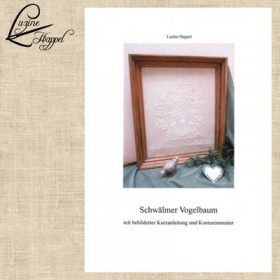
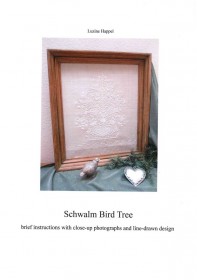
Vogelbaumbild | Framed Schwalm Bird Tree

I have always been fascinated with the stylized birds seen in the examples of traditional Schwalm whitework. They are simple line drawings with abstract details, but there is such variety in both the representation of the bird and its details. So, not only was the dove, as a symbol for freedom, drawn and embroidered, but also the sparrow, representing fertility. Besides these are the swallow, rooster, woodpecker, hoopoe, wren, duck and peacock and, of course, there are others not so easily identified. To be so documented in Schwalm whitework, it seems that all birds were interesting to, or played a roll in the Schwalm wives´ lives.

Viewing my collection of different traditional bird-motifs, I got the idea to place as many as possible of them into a typical Schwalm tree of life design and to also incorporate a typical Schwalm crown in it.

I am not deficient in ideas, but unfortunately I do not have a gift for drawing. So, I hired an artist to create a tree according to my vision. I got a beautiful drawing. Unfortunately, this artist is not also an embroiderer, so her draft would not easily translate to whitework without appropriate adaptations. I then engaged an experienced embroiderer and designer to rework the concept and make it usable for Schwalm whitework. She did it with great success. Finally, I forwarded her hand drawing to a graphic artist for a last fine-tuning.

I now offer the gorgeous result as a downloadable file which contains 1 page with the complete design, 2 pages with the design enlarged 162 %, and 4 pages with the design enlarged 213 % (which I used for my framed project). It is also possible to create more sizes by re-sizing to your specifications.
Schwalm_Bird_Tree_-_Line-Drawn-Design

For those who would, additionally, like to know how I worked my example, I offer a 2nd option.
This option includes both the design download (as described above), and an 11-page document outlining the order of working, which stitches I used (but not detailed stitch instructions since these are available in my books), and many close-up photographs that will further aid you in working the project.
Schwalm_Bird_Tree_-_extended

This design is suitable for many things: for practicing your techniques as a sampler, or it can be transformed into a beautiful wall hanging, curtains, pillows or table runners.

Are you as excited as I about this very special design? I think you deserve to give yourself a little Christmas gift …

I wish you a Merry Christmas!