Lesson #2 – Tulip Wreath

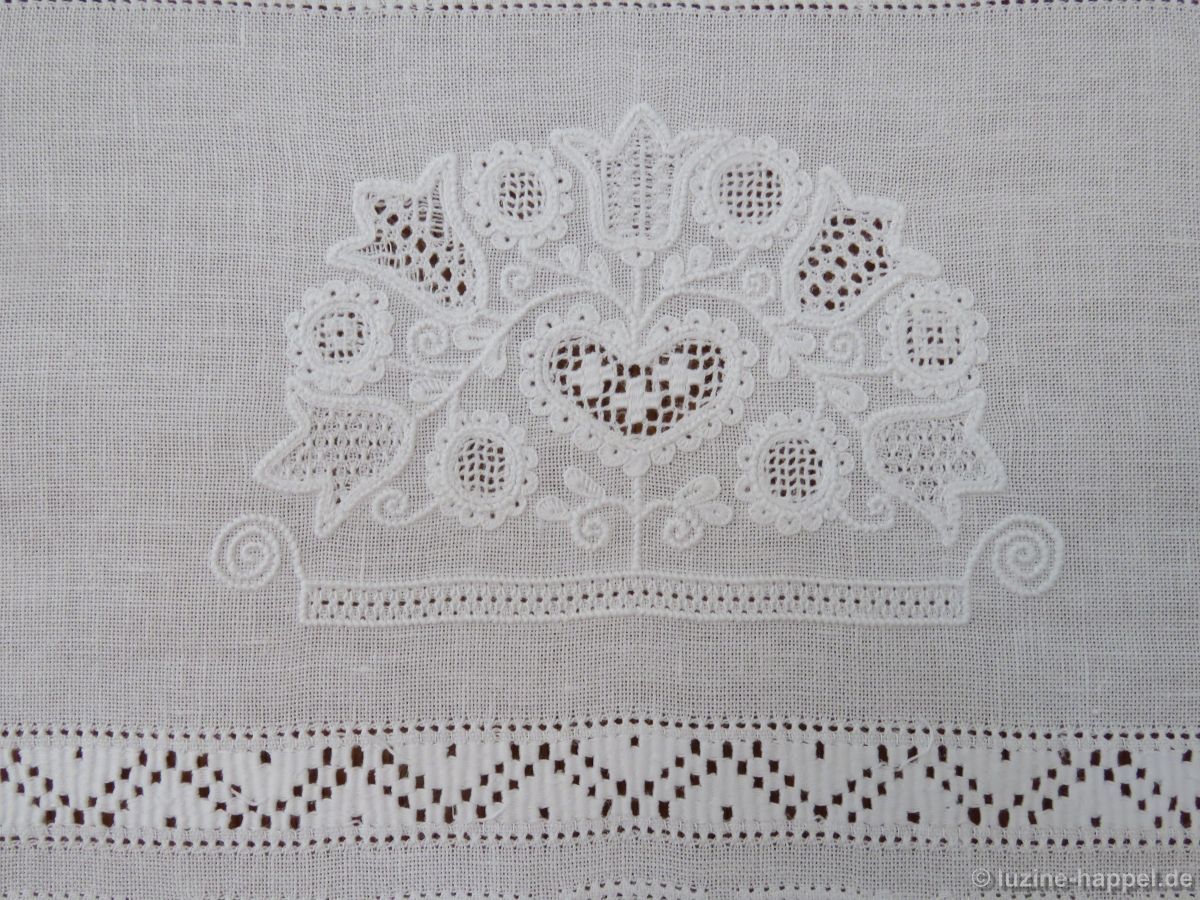
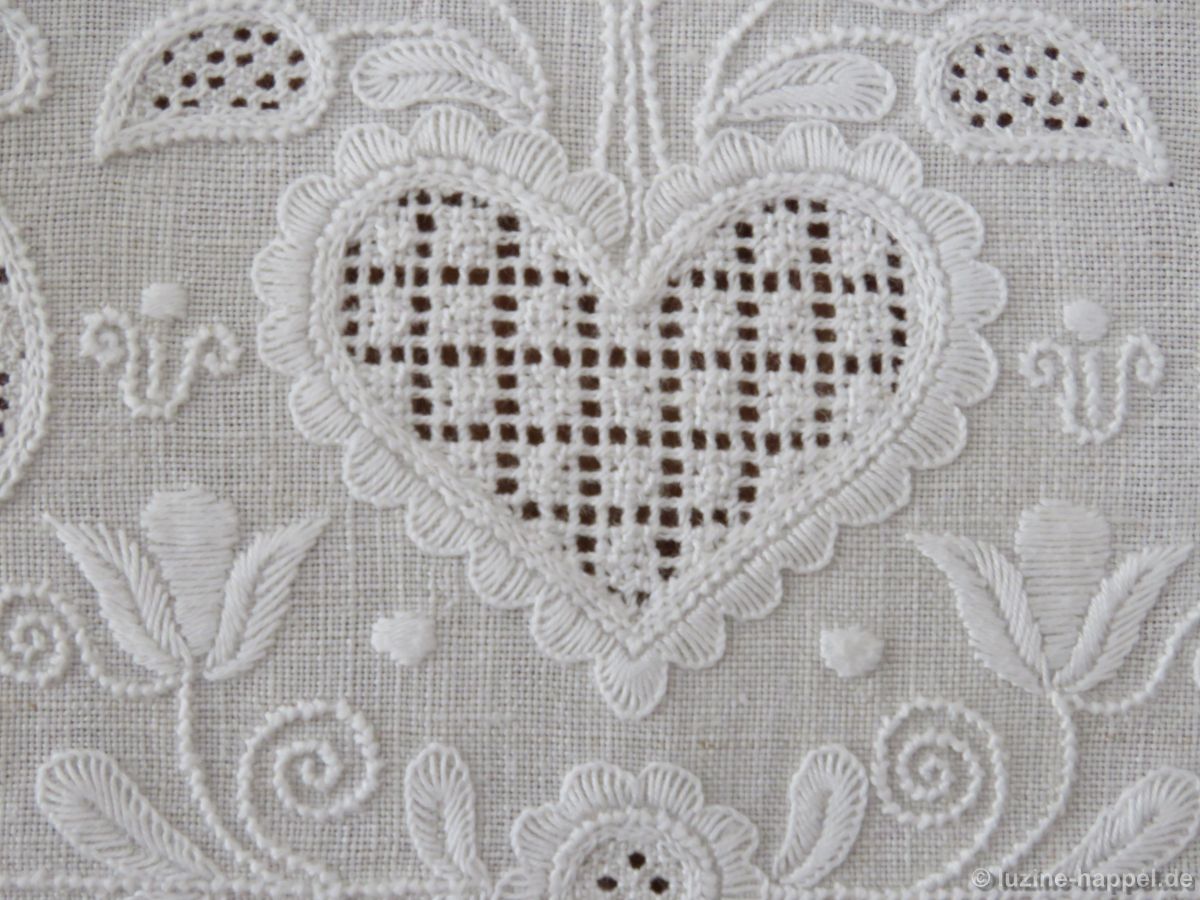
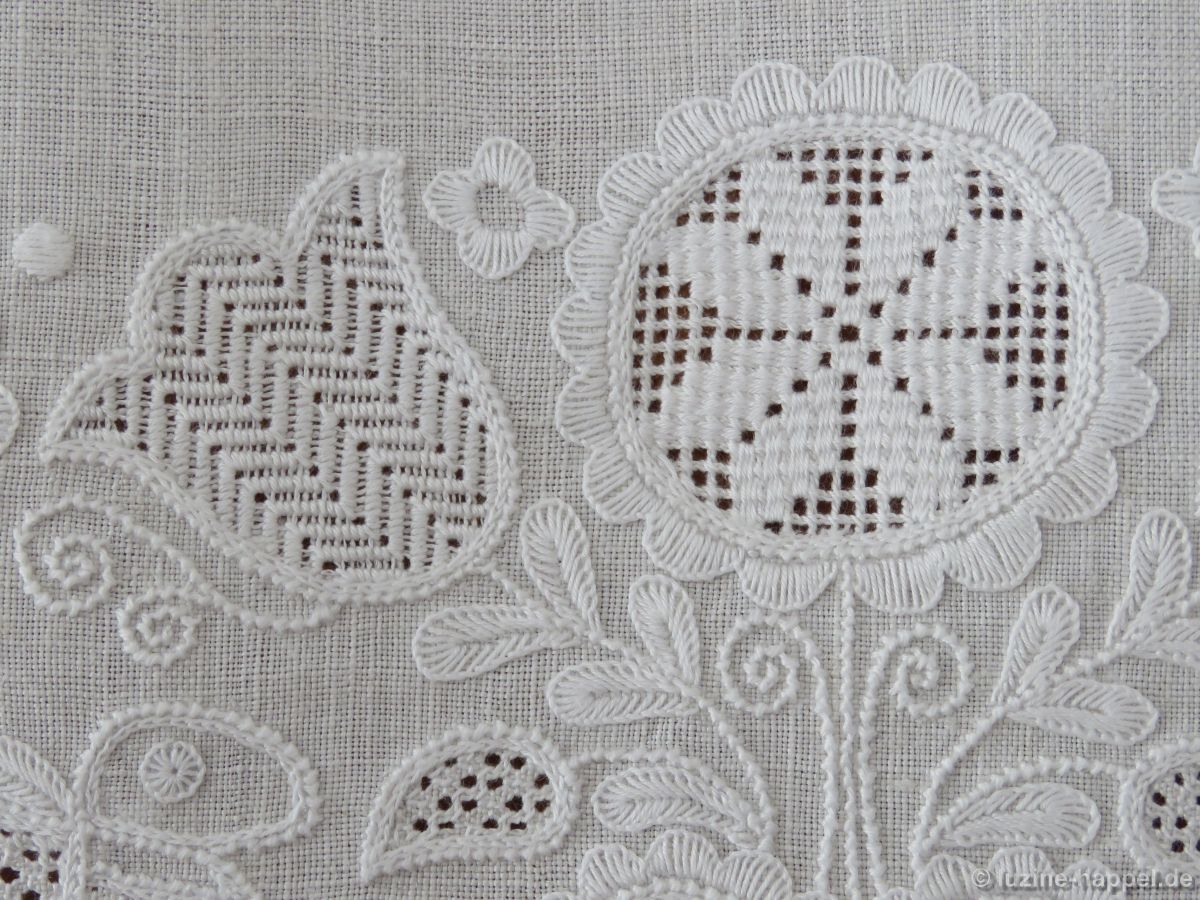
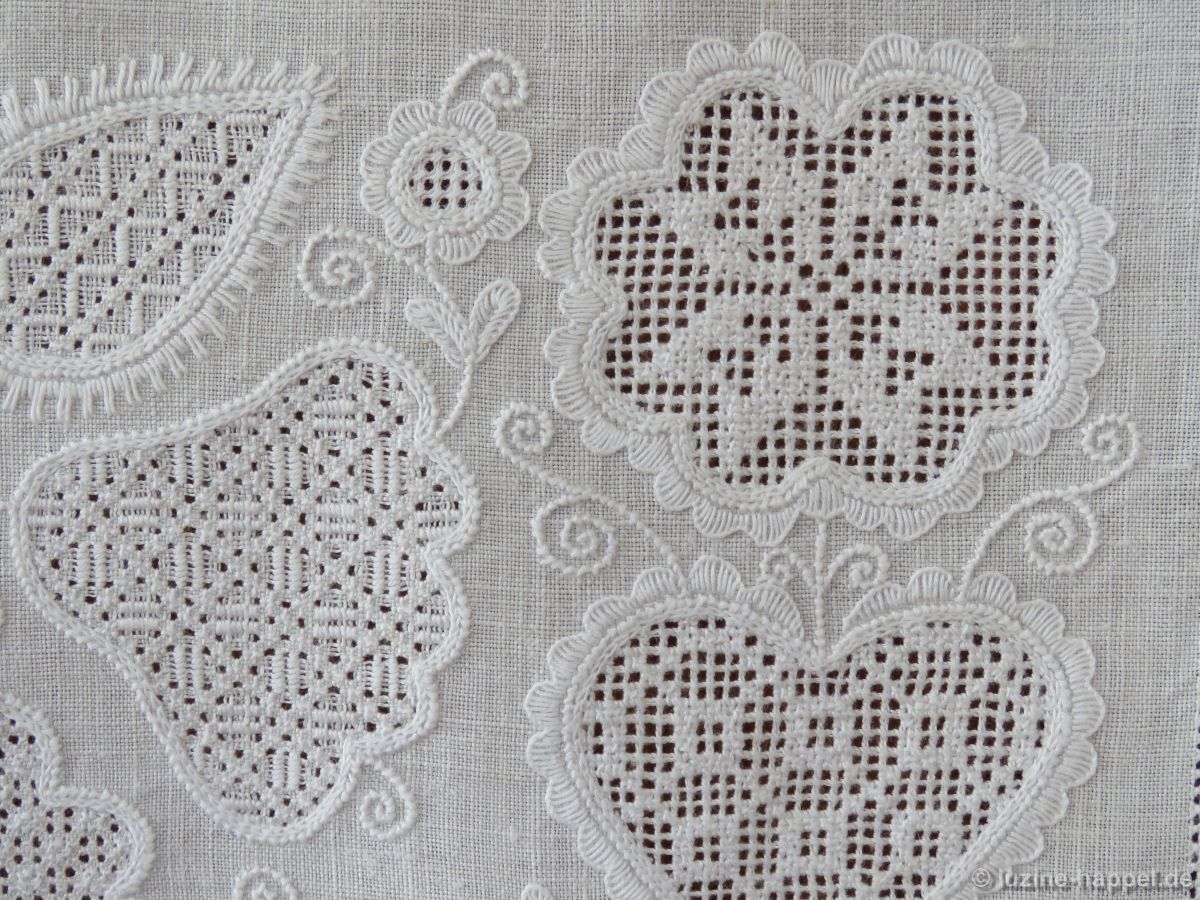
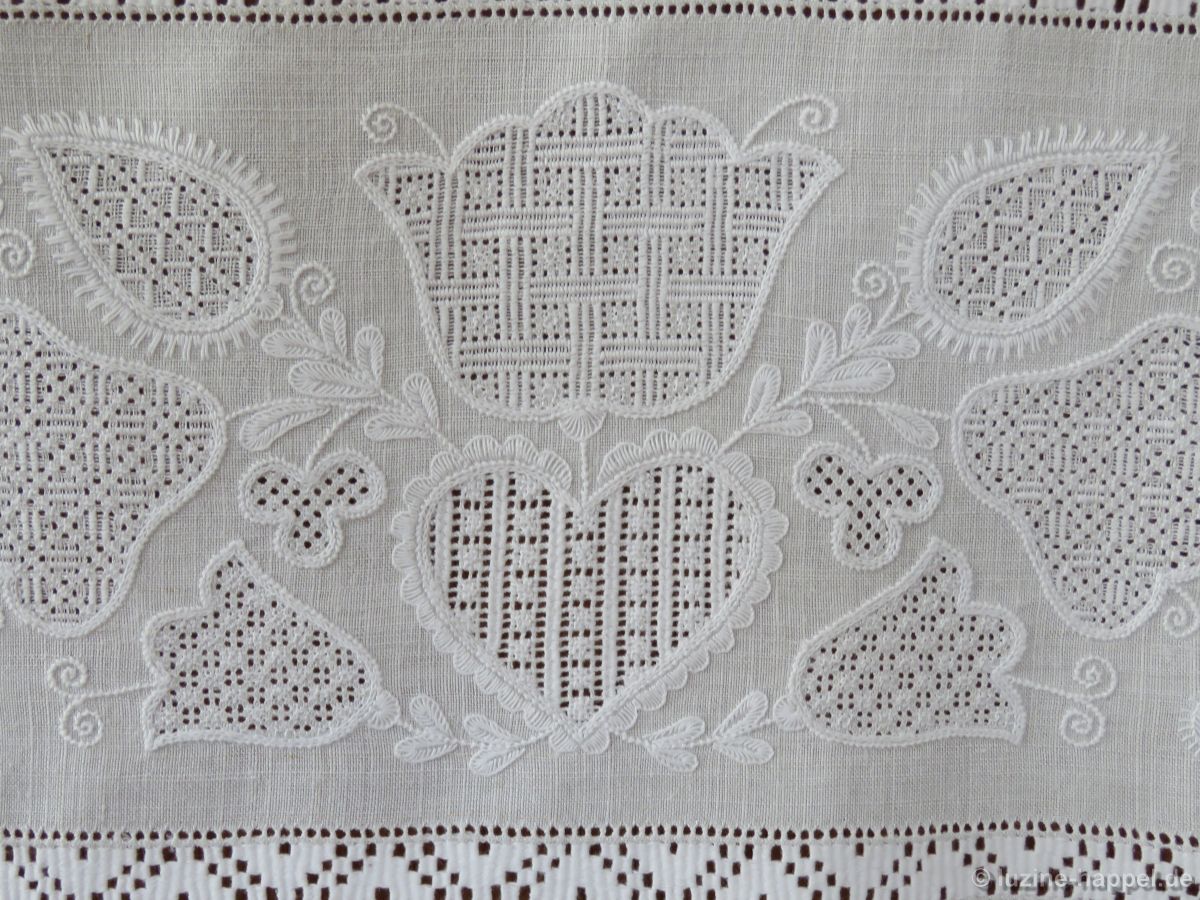
The Tulip Wreath project is a little more ambitious than the lesson #1 projects – the Happel Hearts.

It provides the opportunity to practice Coral Knot and Chain stitches that you learned in lesson #1, and it introduces new techniques and challenges:

1. *Working on a finer linen (16 threads per cm)
2. *Working with a pre-transferred design
3. Tendrils and forks using Coral Knot stitches
4. Small leaves and small flowers using Satin stitches
5. Thread withdrawal for a Limet grid on the straight of grain

6. Thread withdrawal for a Limet grid on the bias
7. Eight different Limet-Filling patterns

8. Hemming with the Peahole hem
9. *Laundering a pre-transferred design

The most widely used linen for Schwalm whitework is linen with 16 threads per cm (Weddigen article 925). In lesson #1 you used the linen I recommend for beginners, linen with a lower thread count – 13.5 threads per cm (Weddigen article 160).

One of the goals of lesson #2 is to learn how to embroider on the finer linen. But in the proofing tests some of the ladies found it difficult to use this linen, so the lesson was redesigned. Now the same design and the same steps can be worked optionally on either the 16 threads per cm or the 13.5 threads per cm linen. As previously mentioned, the kit for lesson #1 also includes a small sample piece of linen with 16 threads per cm; it is included so that one can determine whether or not they are comfortable using this finer linen. The result is the same tulip wreath, but the size of the finer linen cloth is smaller.
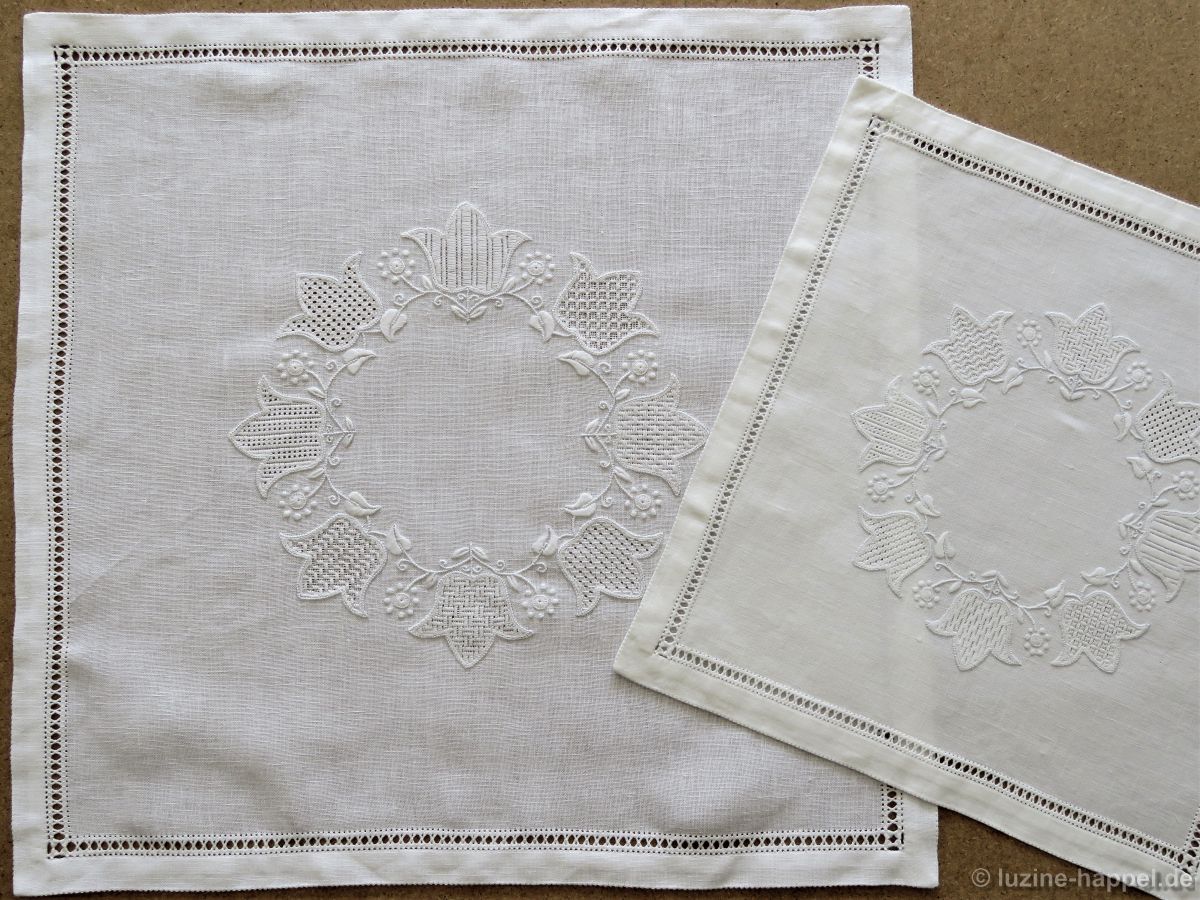
There is also an add-on option for lesson #2: pre-cut linen with the design already transferred. A benefit of pre-transferred designs is that one can start embroidering at once – without doing the laborious task of transferring the design first. Also the colour of pre-transferred designs is very durable. It will not fade while working, which can happen when using iron transfer in larger designs. However, pre-transferred designs will need more work (soaking, boiling, and rubbing several times) to remove the colour after the embroidery is completed. But in the end it does disappear; I can attest to this since I have embroidered many such pre-transferred designs.

For people who do not want linen with the design pre-transferred, the design is included in two different sizes in the booklet. Please note that design transfer is not a subject covered in this lesson.

For the project worked with 16 per cm thread-count linen you will need:
linen (blank or with pre-transferred design) cut to about 45 cm X 45 cm
a small linen sample for practicing
coton à broder No. 20 – 1 skein; No. 25 – 1 skein, and No. 30 – 2 skeins
Chenille needle No. 26
Tapestry needle No. 26

All these items are included in kit #2A.

For the project worked with 13.5 per cm thread-count linen you will need:
linen (blank or with pre-transferred design) cut to at least 55 cm X 55 cm
a small linen sample for practicing
coton à broder No. 16 – 1 skein; No. 20 – 2 skein; and No. 30 – 3 skeins
Chenille needle No. 24
Chenille needle No. 26
Tapestry needle No. 26

All these items are included in kit #2B


Schwalm Whitework
Lesson #2
Tulip Wreath
82 pages
more than 250 images
text: English
plastic comb binding
item price: € 25 (including 7% sales tax), 23.36 € for customers outside the EU
shop

Kit #1

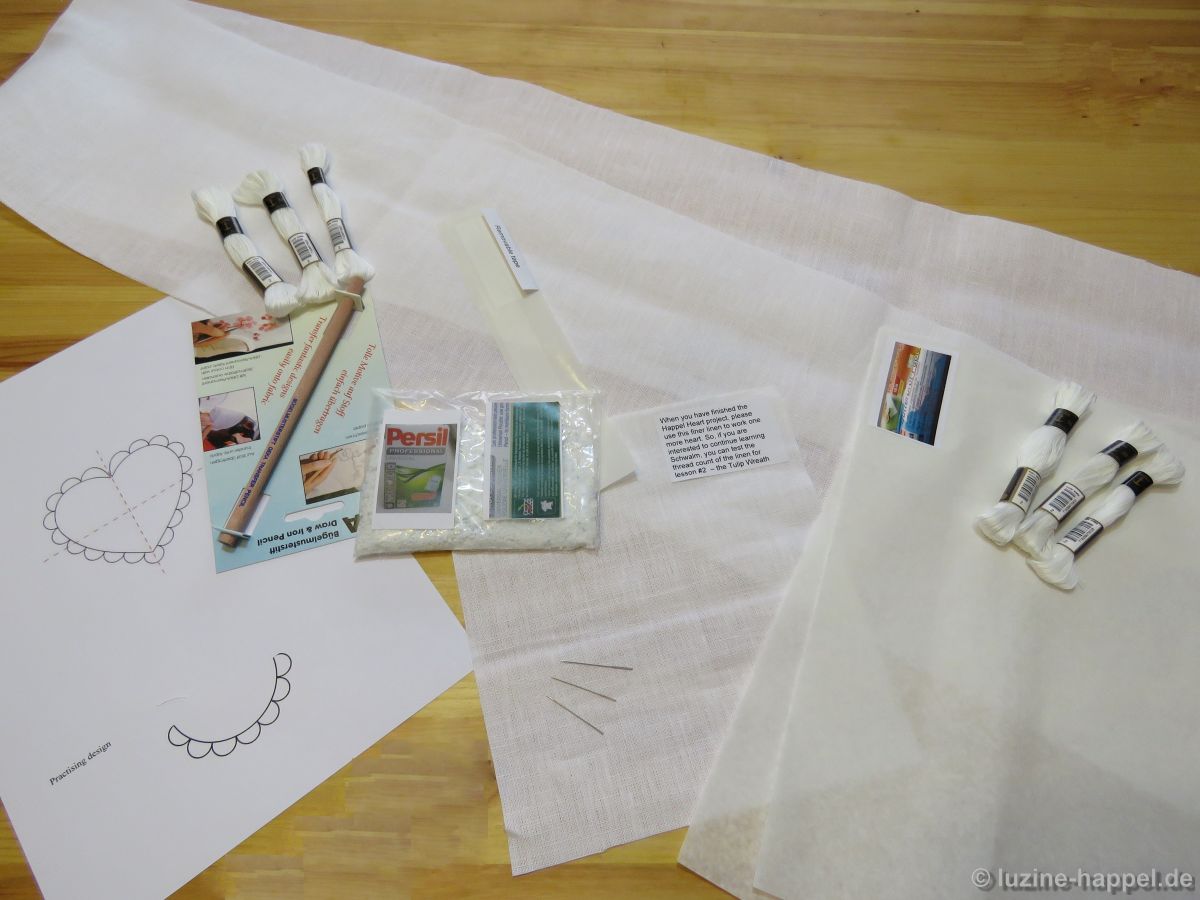
This kit provides all the needed materials for lesson #1 Happel Hearts and lesson #3 Openwork Circle Design Ornaments. A small sample piece of linen with 16 threads per cm is also included so that you can test the fabric before working lesson #2 Tulip Wreath.


for lesson #1
• design
• linen – 13.5/cm thread count Weddigen linen about 20 cm X 90 cm
• DEKA iron transfer pencil
• tracing paper
• removable tape
• Chenille needle No. 24
• Chenille needle No. 26
• Tapestry needle No. 26
• Coton à broder No 16, 20, and 25 – 1 skein each
• washing powder

additional items for lesson #3
• linen – 13.5/cm thread count Weddigen linen about 20 cm X 90 cm
• Coton à broder No 16, 20, and 30 – 1 skein each
• washing powder

additional item preparing for lesson #2
• linen – 16/cm thread count Weddigen linen about 20 cm X 20 cm


Kit #1
linen
needles
threads
and various accessories
item price: € 35 (including 19% sales tax), 29,41 € for customers outside the EU
shop

Lesson #1 – Happel Hearts

Schwalm whitework – Have you been wishing to learn the beautiful and exceedingly interesting embroidery technique, but no opportunity presented itself?
Well, the opportunity is here! With my detailed lesson booklets written for beginners, you can now learn Schwalm whitework easily and comfortably in your own home completely self directed.

Schwalm whitework consists of a variety of specific techniques, and not all techniques can be learned at once. If you like Schwalm whitework, you can learn to love working it! You can thoroughly learn all the basic steps of Schwalm whitework with my lesson #1 booklet.

Schwalm whitework incorporates three different withdrawn-thread patterns:
• simple – every fourth fabric thread is withdrawn in one direction only
• Limet – every fourth fabric thread is withdrawn in both directions
• openwork – pairs of threads are withdrawn between pairs of remaining threads in both directions For each type a wide range of different fillings patterns are available.


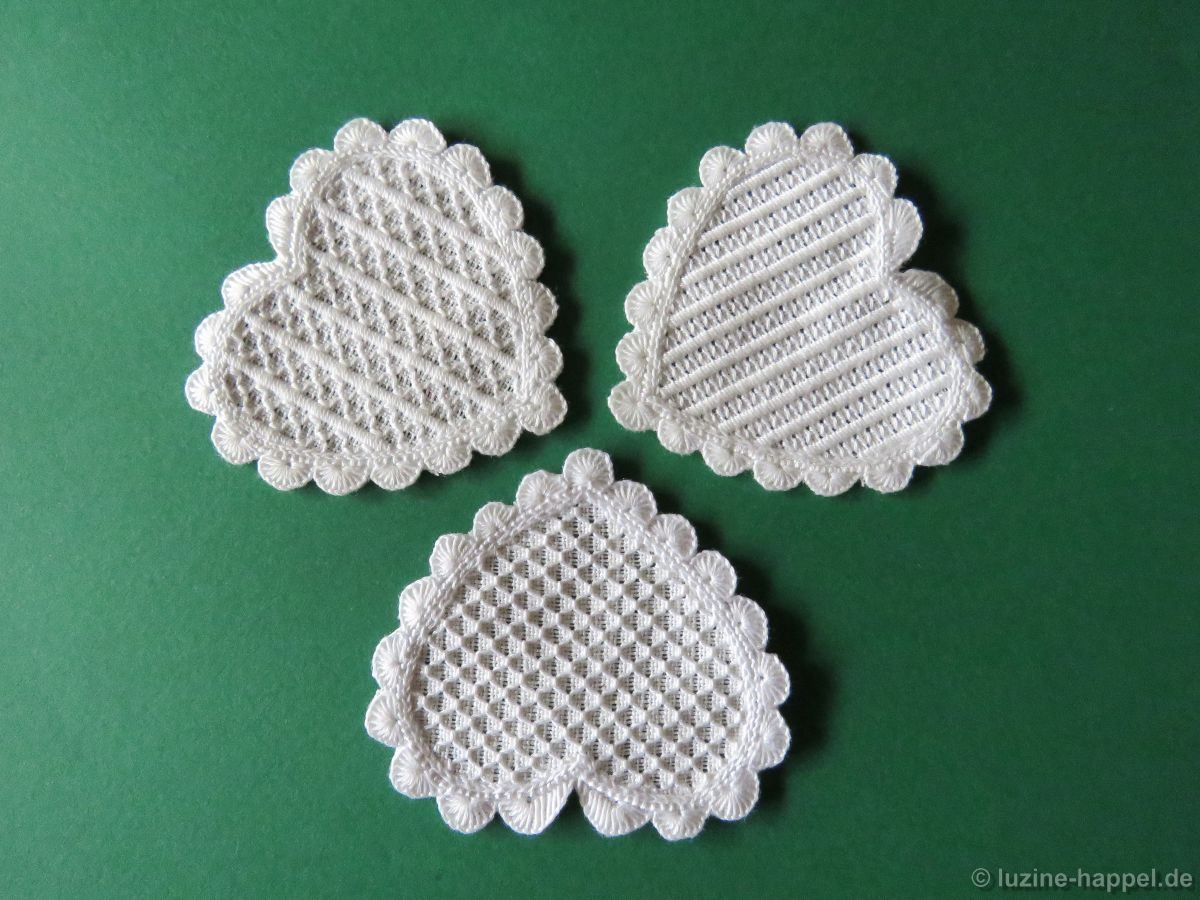
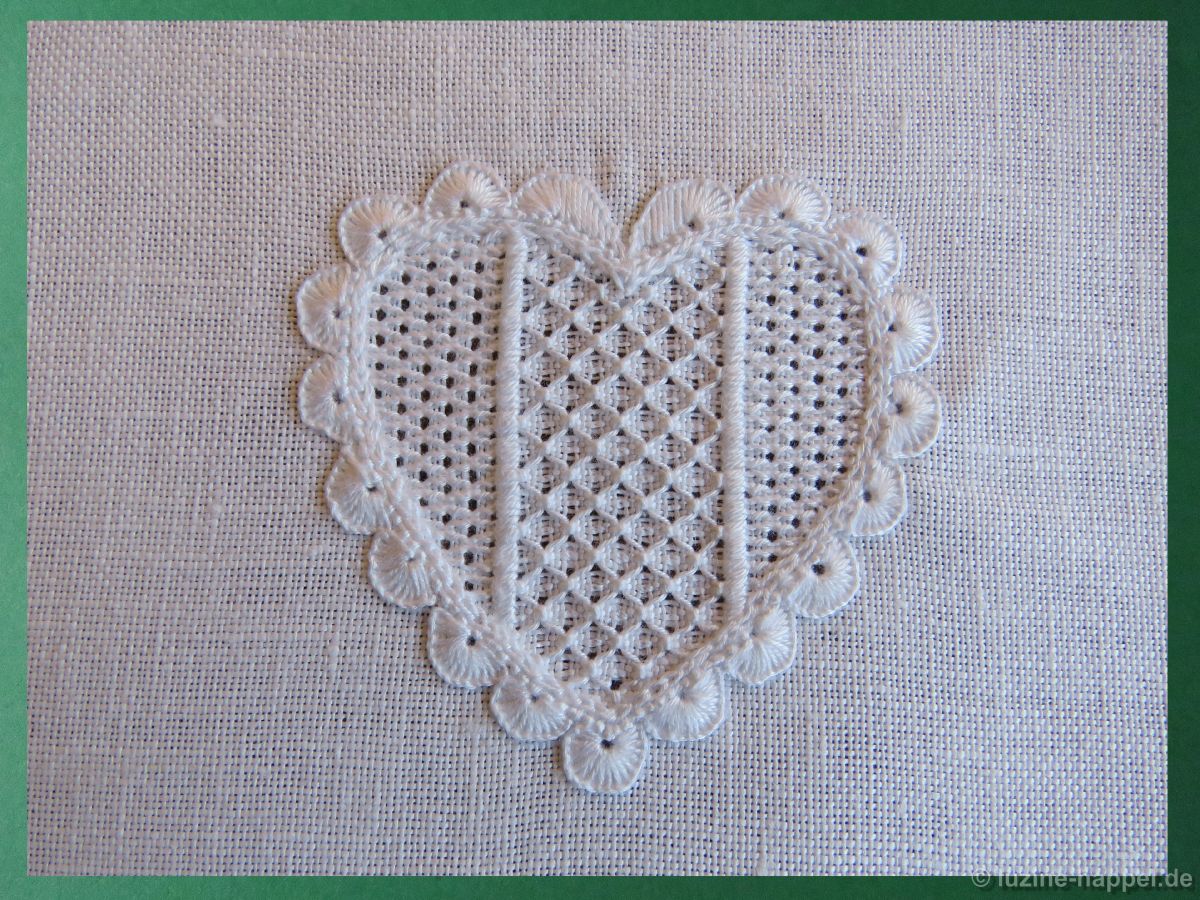
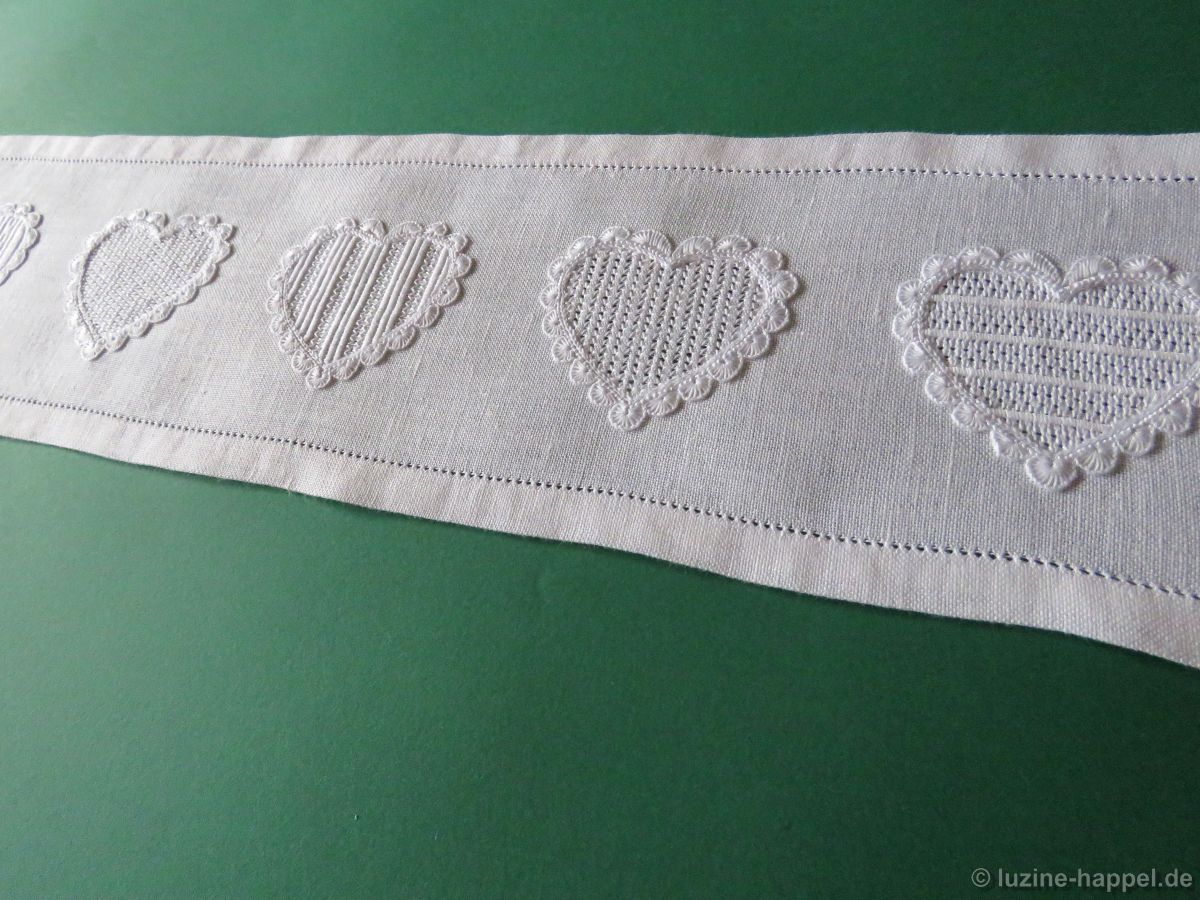
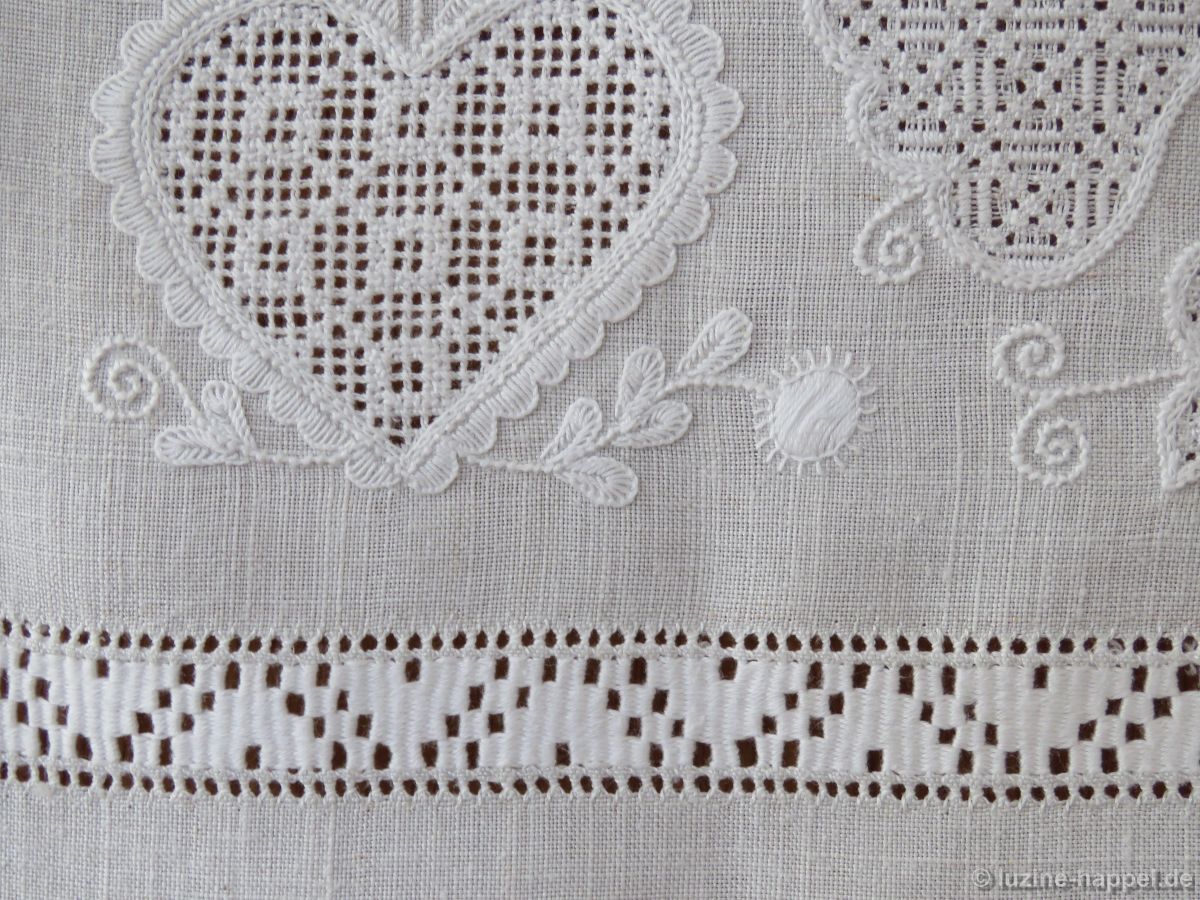
In this lesson you will learn to work the simple withdrawn-thread patterns only. But as you can see in the pictures, you will still have many options. Nine patterns are described in great detail; many suggestions for modifying the patterns are given.

Schwalm whitework provides only nine basic stitches for establishing the infinite variety of filling patterns. Lesson #1 imparts already three of them – Honeycomb Darning, Wave, and Satin stitches.


Lesson #1 imparts the most important basic elements in nine steps:

1. Design transfer
2. Thread preparation
3. Coral Knot stitches
4. Blanket stitch half-eyelet scallops
5. Chain stitches
6. Thread withdrawal for a simple drawn thread filling pattern
7. Filling patterns – please choose one of three different patterns
8. Laundering
9. Finishing.

Should you wish to continue your Schwalm whitework studies, the project booklet includes an additional six filling patterns that are a little more difficult.
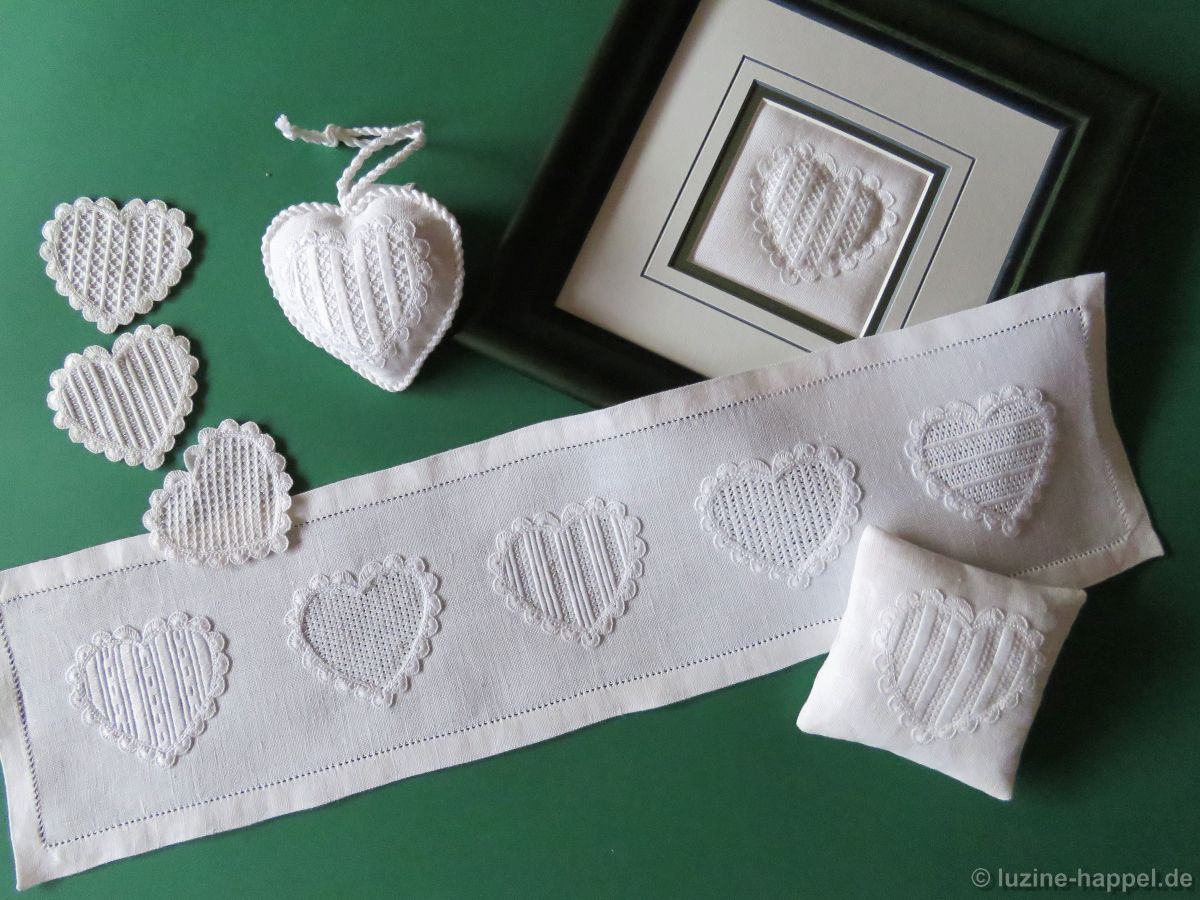
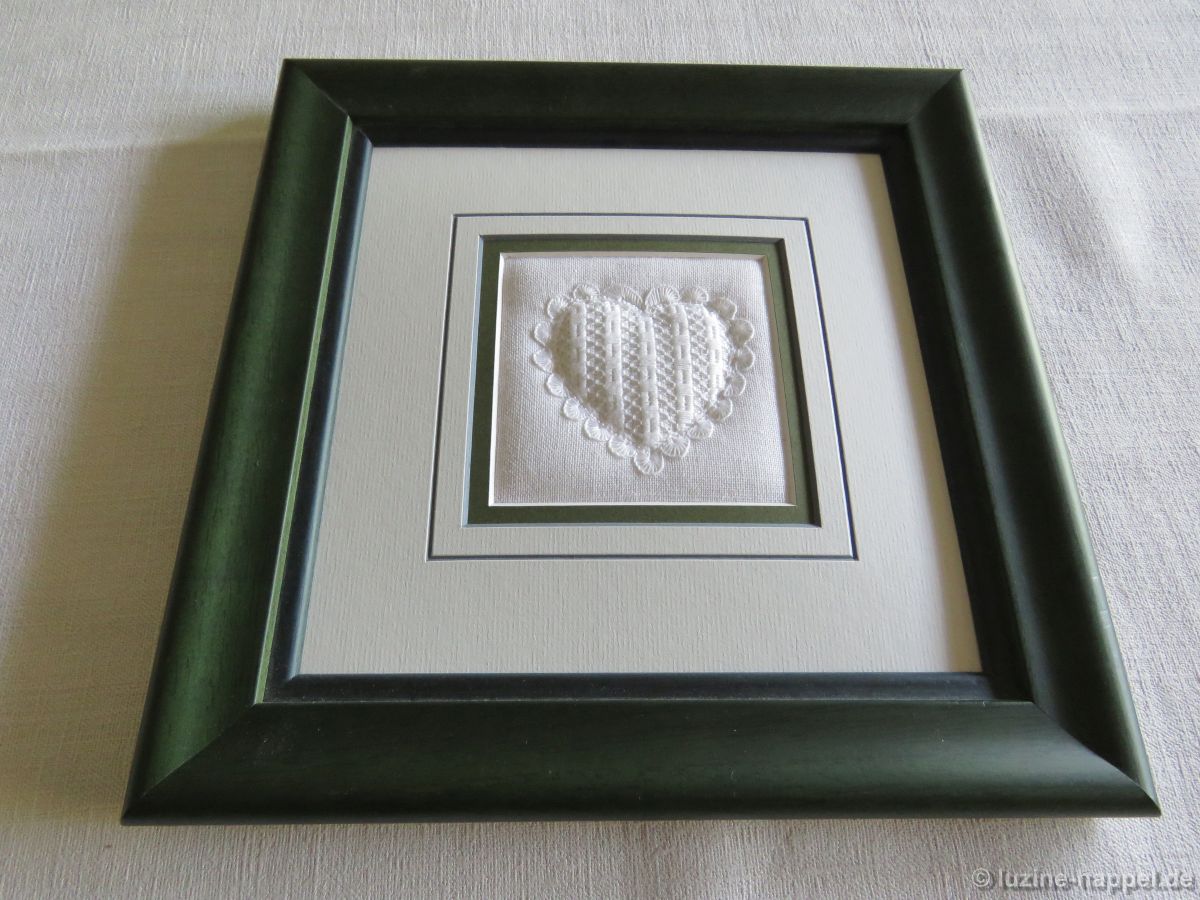
For your first small project you will work a heart, which can be cut out or framed in the end.


Other finishing possibilities are square or heart-shaped pincushions and bands.


If you are left-handed, no problem! This lesson booklet is available in two different formats – written for left-handers or right-handers.

Another added benefit of the lesson booklets is that you will not be left wondering how to proceed further in your studies. If you are satisfied with your results and want to learn more, other lesson booklets – each introducing new Schwalm whitework techniques – are available.

Because your success depends on your using the right materials, I highly recommend that you order kit #1 along with the Lesson #1 booklet.


Schwalm Whitework
Lesson #1
Happel Hearts
53 pages
more than 140 images
text: English
plastic comb binding
item price: € 25 (including 7% sales tax), 23.36 € for customers outside the EU
shop

New Checkout System

My former checkout system was only partially suitable for worldwide use; too many people struggled to complete their purchases.

To make ordering easier for everyone, I have switched to a semiautomatic system. All you do is click on the shopping cart symbol for the item you want—this automatically places it into the shopping cart. When you are finished adding items, click on “check out” to reach the next page.


Insert your complete mailing and email addresses, chose your preferred method of payment, agree to the data protection, and press the “send” button.


When I receive your order, I will confirm the receipt and send an invoice. Once payment is received, I will process and send your order.

I hope you will enjoy my new and improved checkout system.

Contemporary Schwalm Wall Hangings


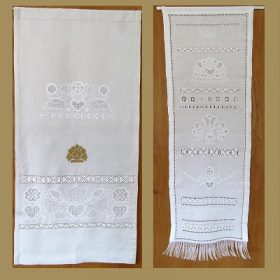
Both samplers show needle-weaving bands, whitework designs, and crowns. Yet the appearance of both is very different.

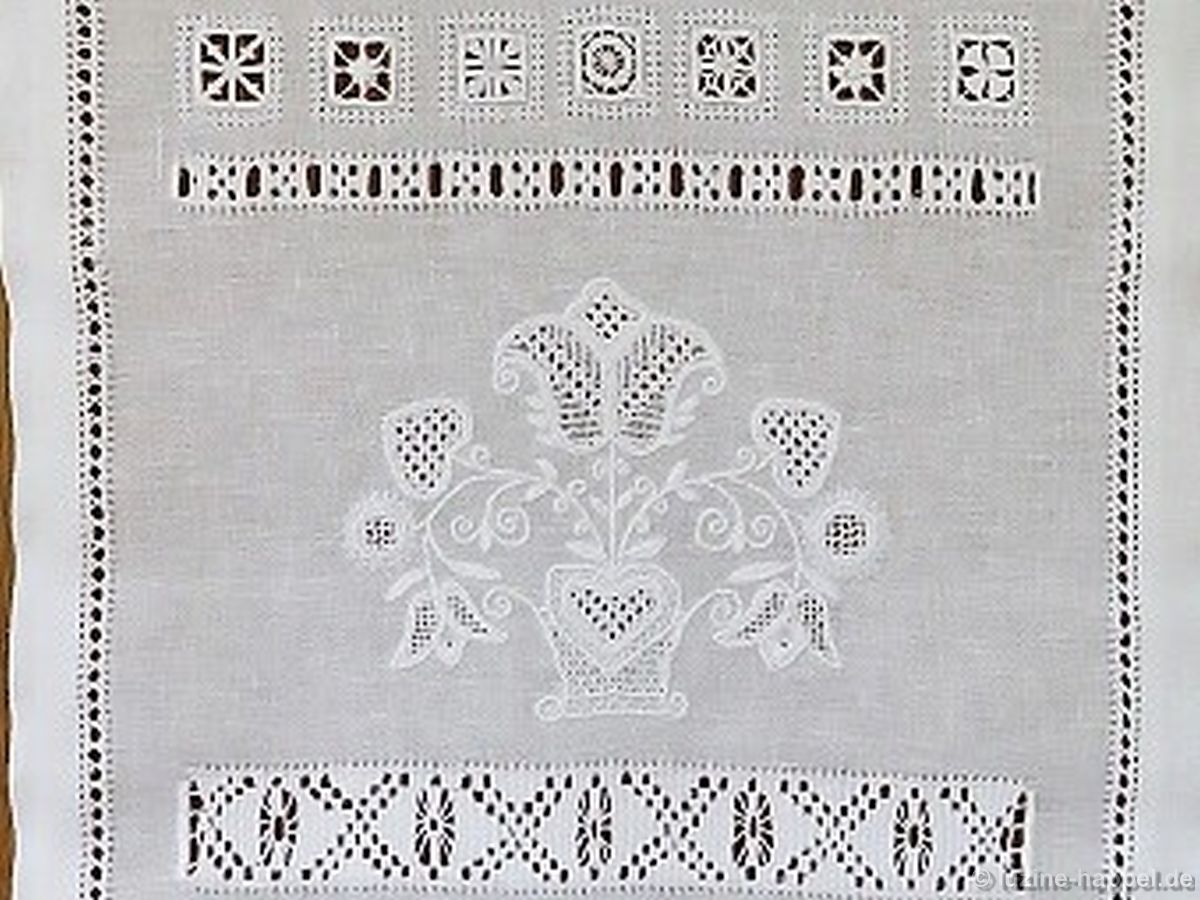
A novice to Schwalm whitework worked the example on the right in 2006. She separated small whitework designs with needle-weaving hems.


She chose one design in the shape of a crown,


one more fancy design, and one design with a flower basket. In relation to the thread count of the linen, her designs had small shapes. It is difficult to find different matching filling patterns for small areas.

She added squares showing different corner solutions.


She created combinations of needle-weaving bands


with Peaholes and Herringbone stitches.


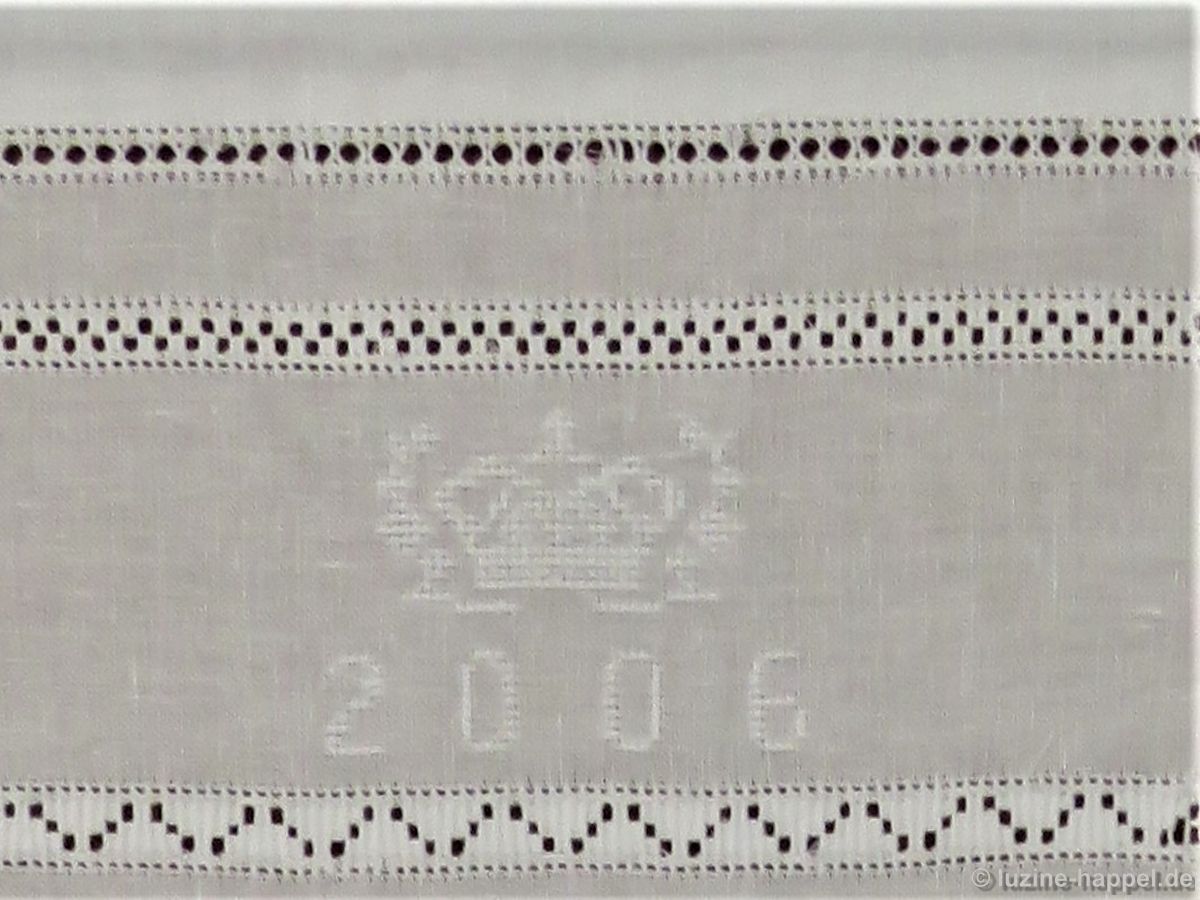
She added her name at the bottom and a crown along with the year in white Cross stitches at the top.


The piece was hemmed with a Peahole hem and frayed at the bottom edge. She learned all the basic stitches common to Schwalm whitework creating her own unique sampler wall hanging. Now – 12 years later – she told me that her skills are undeniably improved. Errors like too loosely bundling together the Peaholes or combining needle-weaving patterns with different non-matching pattern segments no longer happen. But it was her first piece; she learned a lot, and she is proud of it.

* * * *

A more experienced embroiderer worked the example on the left in 2014. It is divided into three parts. The bottom section shows a typical Schwalm whitework design with hearts, tulips, buds, and clover leaf motifs bordered with needle-weaving bands.

As clearly seen, most of the motifs are distinctly larger than the motifs on the hanging to the right. This made embroidering different filling patterns much easier.
On top of the whitework border, a Satin stitch crown was placed.


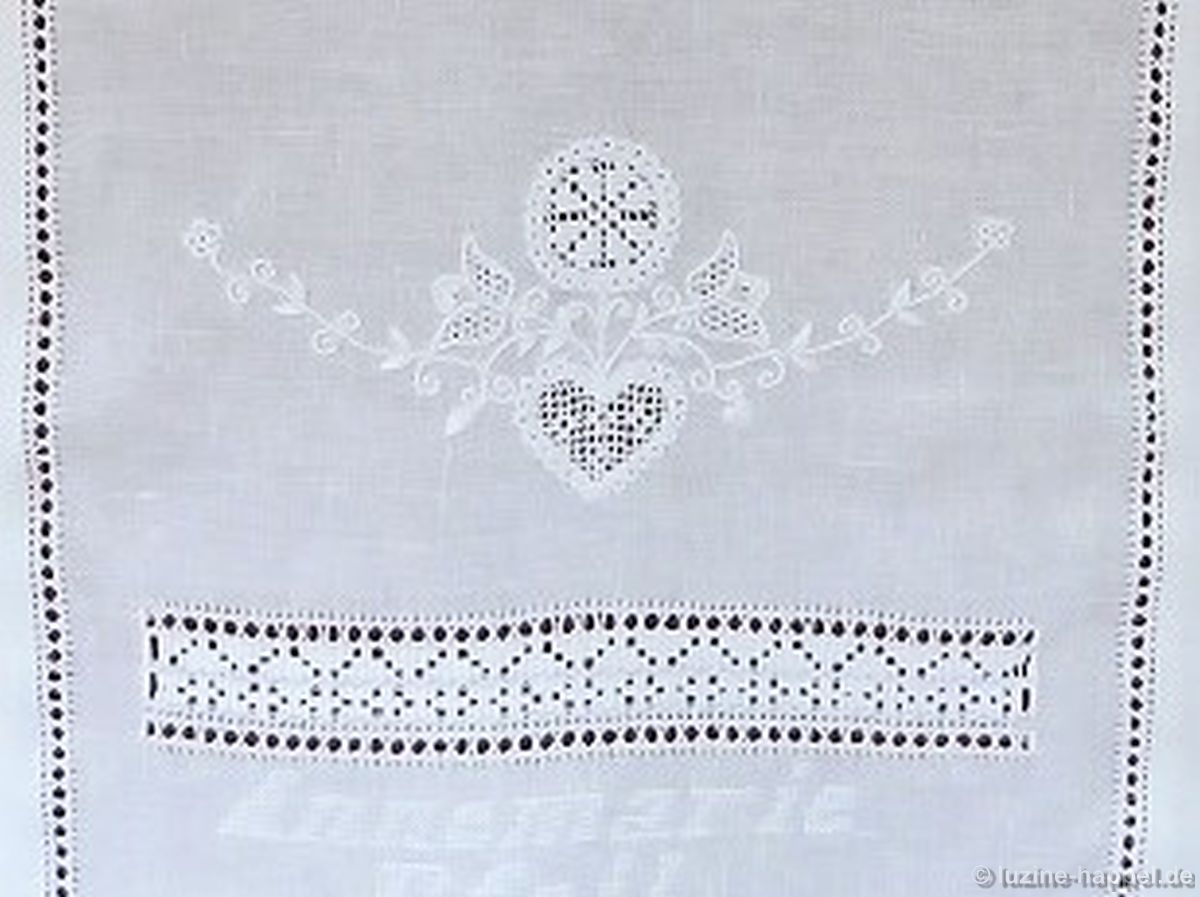
Above the crown a whitework design in the shape of a crown was embroidered.


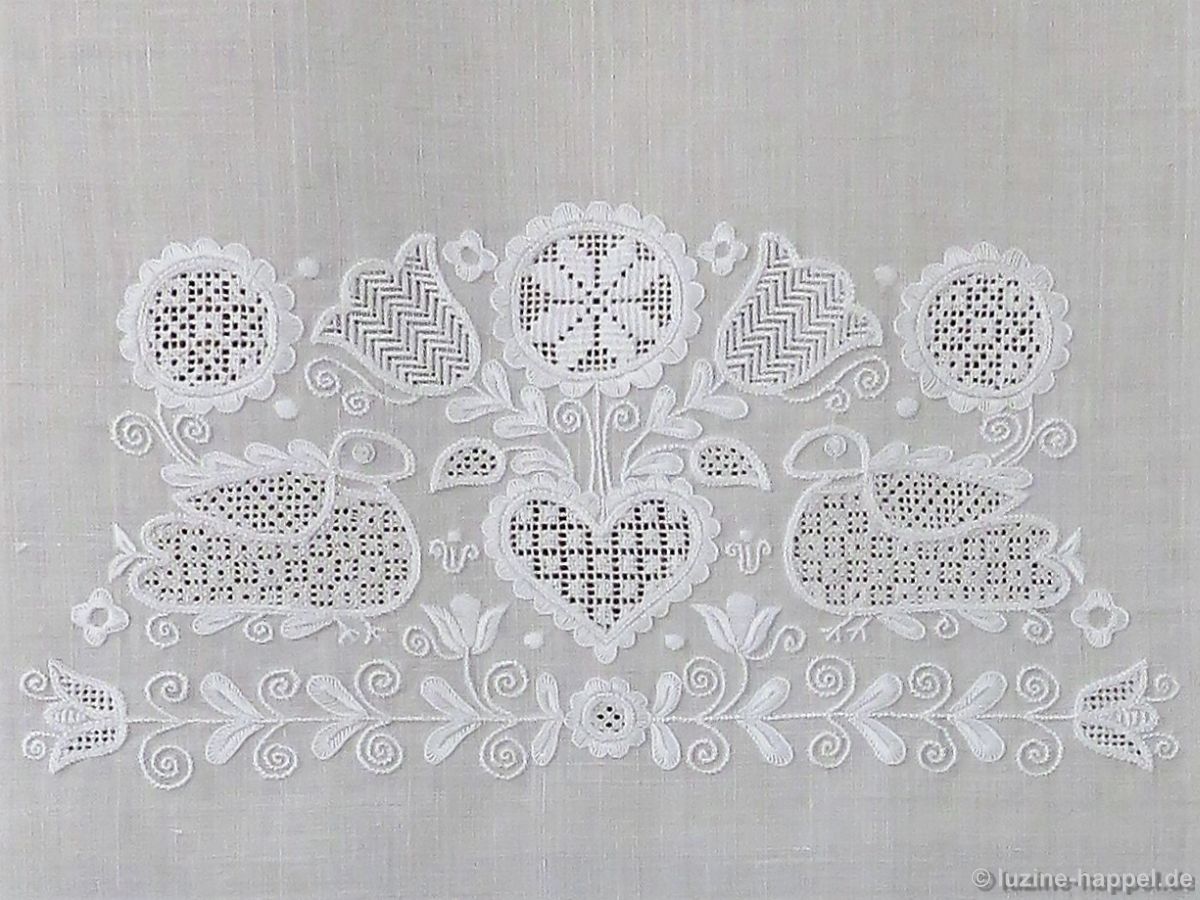
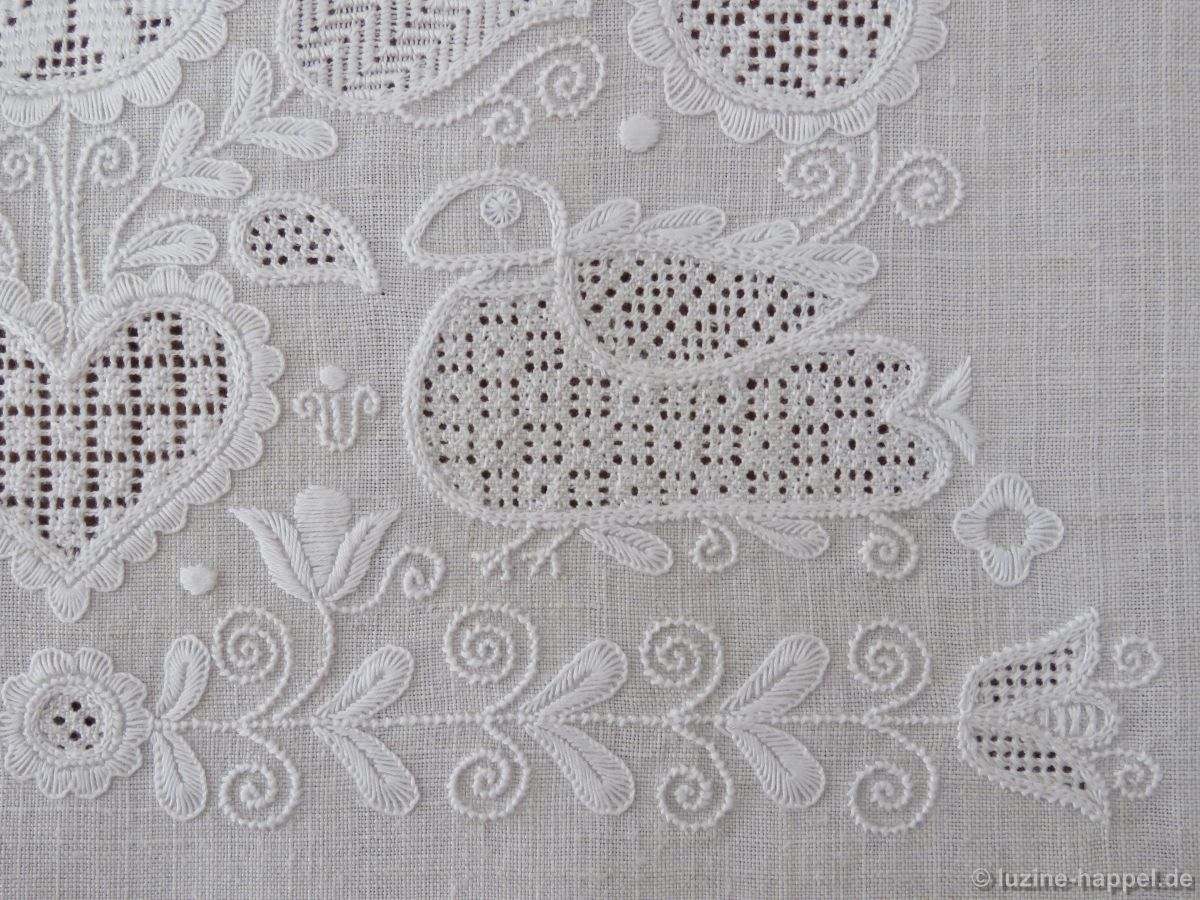
We can see heart, tulip, bud, circle, and bird motifs. Openwork fillings are mainly Limet filling patterns. Blanket stitch scallops, Eyelash stitches, and 2 short-2 long for outlining motifs, rounded leaves, Blanket stitch eyelets, Satin stitch elements, and many distinctive tendrils have been worked.


The embroiderer has achieved a balance between motif shapes and surface embroidery.


The filling patterns are perfectly chosen to match the respective shapes.


Also figured patterns like stars are worked.


A clear and orderly appearance has been established.


Two different common needle-weaving band patterns


are perfectly embroidered.


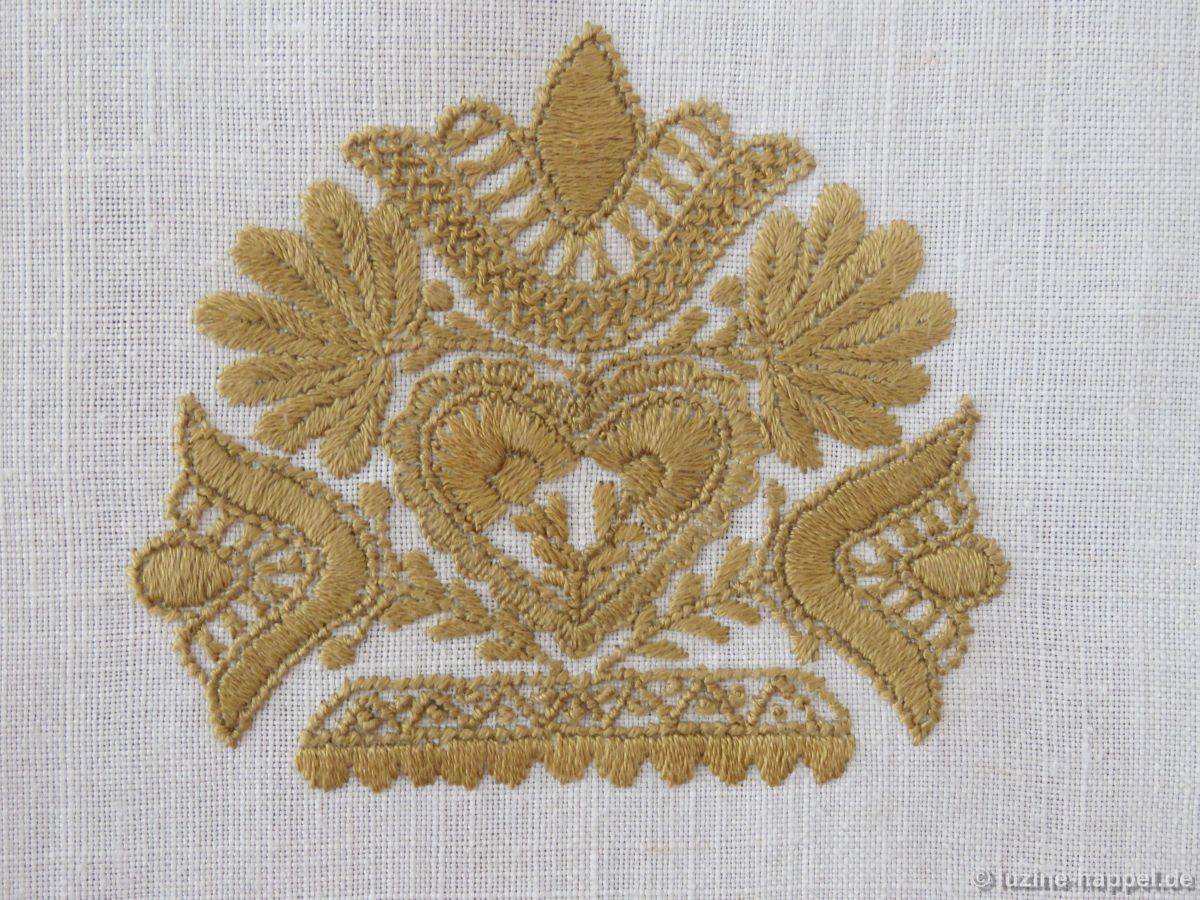
A golden Satin stitch crown tops off this special whitework sampler piece.


Did you notice that in all eighteen different filling patterns were worked in addition to all the various surface embroidery?

I hope you have enjoyed looking at another beautiful example of the richly diverse Schwalm whitework technique.