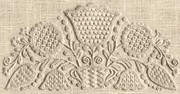
Schwalm Whitework Embroidery Supplies – online resources

More and more local embroidery stores are closing, so people no longer have the opportunity to buy supplies directly. Some people are not familiar with browsing the internet, and even if one is internet savvy, finding embroidery supplies on the internet is not always easy. Lately I have received requests from ladies looking for the required supplies.

Both DMC and Anchor produce coton à broder threads. I cannot see a difference in the quality. In some countries, Anchor is more common, in other countries, such as France, DMC is more common.

Used are different thread weights – No. 30, No. 25, No. 20, and No. 16.


For beginners I recommend Weddigen linen with a thread count of 13.5/cm (34 tpi); it is article No. 160.


However, a linen with a higher thread count is usually used for Schwalm whitework; this is Weddigen linen with a thread count of 16/cm (40 tpi); it is article No. 925 (in the US it is called Legacy linen “Alba Maxima”).


So, to help people trying to find these items, I thought to publish a list of online retailers. While you are shopping online, not only compare prices of supplies, but also consider shipping costs.

This is not a complete list. If you are an online retailer of white coton à broder threads, or if you are an online retailer of Weddigen linen article No. 160 or Weddigen linen article No. 925, and if you want to be included on this list, please email me, and I will add your link to this list.

AUSTRALIA
All Threads Embroidery
DMC 16, 20, 25, 30
Weddigen #925

JAPAN

NORTH AMERICA
Threadneedle Street
DMC 16, 20, 25, 30
Alba Maxima linen (Weddigen #925)
For threads, you will have to go to their homepage, click the Threads link at the top of the page, and find “DMC Broder” under “Other Cotton Threads” in the links on the left of the page.
For the linen, you will follow the “Fabrics” link at the top of the homepage. “Schwalm/Alba Maxima” is listed under “Non-Evenweave Linens” on the left of the page.

Needle in a Haystack
DMC 16, 20, 25, 30
Alba Maxima linen (Weddigen #925)

Traditional Stitches
DMC 20, 25, 30
Alba Maxima linen (Weddigen #925)

Canada, in Gatineau near Ottawa,
Trillium Lace
supplier of threads, books, tools for different embroideries

GERMANY
Handarbeitswaren.de
Anchor 16, 20, 25, 30

Handarbeiten Pusteblume
Weddigen #160
There is a language flag in bottom right of the page (text optionally English or German).
The link does not go directly to the page with the linen. In bottom left you see a “Quick Find” – insert “weddigen 160” and press “search”.

Handarbeitshaus.de
Text: German only
DMC and Anchor 16, 20, 25, 30
Weddigen #160 and #925

Handarbeiten Kortlüke
Text: German only
Weddigen #160 and #925

Angelika Reinhart Handarbeiten
Text: German only
Anchor 16, 20, 25, 30
The link does not go directly to the page with the threads; see column in the left: Online-Shop – Stickgarne – Vierfachstickgarn
Weddigen #160
The link does not go directly to the page with the linen; see column in the left: Online-Shop – Stoffe – Stickstoffe – on bottom of the second page “Stickereileinen 160”
Weddigen #925
The link does not go directly to the page with the linen; see column in the left: Online-Shop – Stoffe – Stickstoffe – Feine Leinenstoffe – Schwälmer Leinen 925

Stickparadies Bauer
Text: German only
Weddigen #160
The link does not go directly to the page with the linen; see column in the left: Handarbeitsstoffe – Leinen – Leinen 13,5 fädig

FRANCE
DMC
DCM 16, 20, 25, 30

universbroderie
DMC 16,20,25,30

ecolaines
DMC 20, 25, 30

Easter Egg Flowers

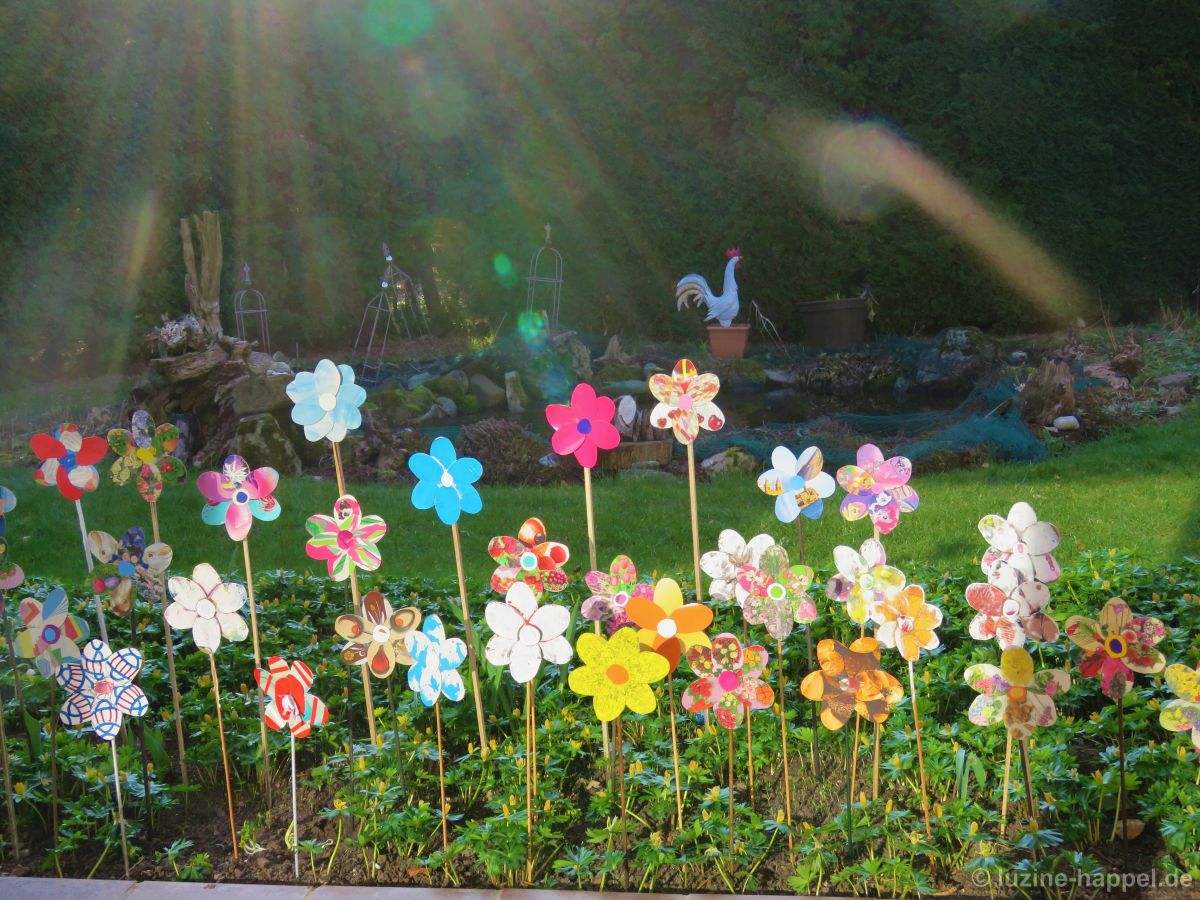
Unfortunately, the colourful show of flowers is not in store for us this spring. The first part of this year was characterized by coldness and gray cloudy skies, allowing us plenty of time to develop indoor activities specially designed to bring colour into our life.

Every day we get a pile of colourful papers in the form of advertising leaflets and catalogues. And lightweight cardboard used for packaging food and non-food items is easily found around the house.


Using an oval or egg-shaped template, suitable sections of the paper can be marked quickly.


The thin paper is cut,


glued to cardboard,


and cut again.


Six matching petals are arranged into a flower and fixed with a center circle.


A coating of glue protects against damp weather. When it has completely dried, it becomes transparent.


A thin wooden stick completes the flower. This “stem” can be pushed into the ground or placed in a vase.


Hundreds of colourful


inexpensively produced flowers


now decorate home


and garden.


Hopefully, the real flowers – their magnificent colours adorning nature like jewelry – will soon bloom.


Happy Easter!

Easter Decoration 2018

Having a look around the shops, I found hangings decorated for Easter – simple to rework with a touch of embroidery.

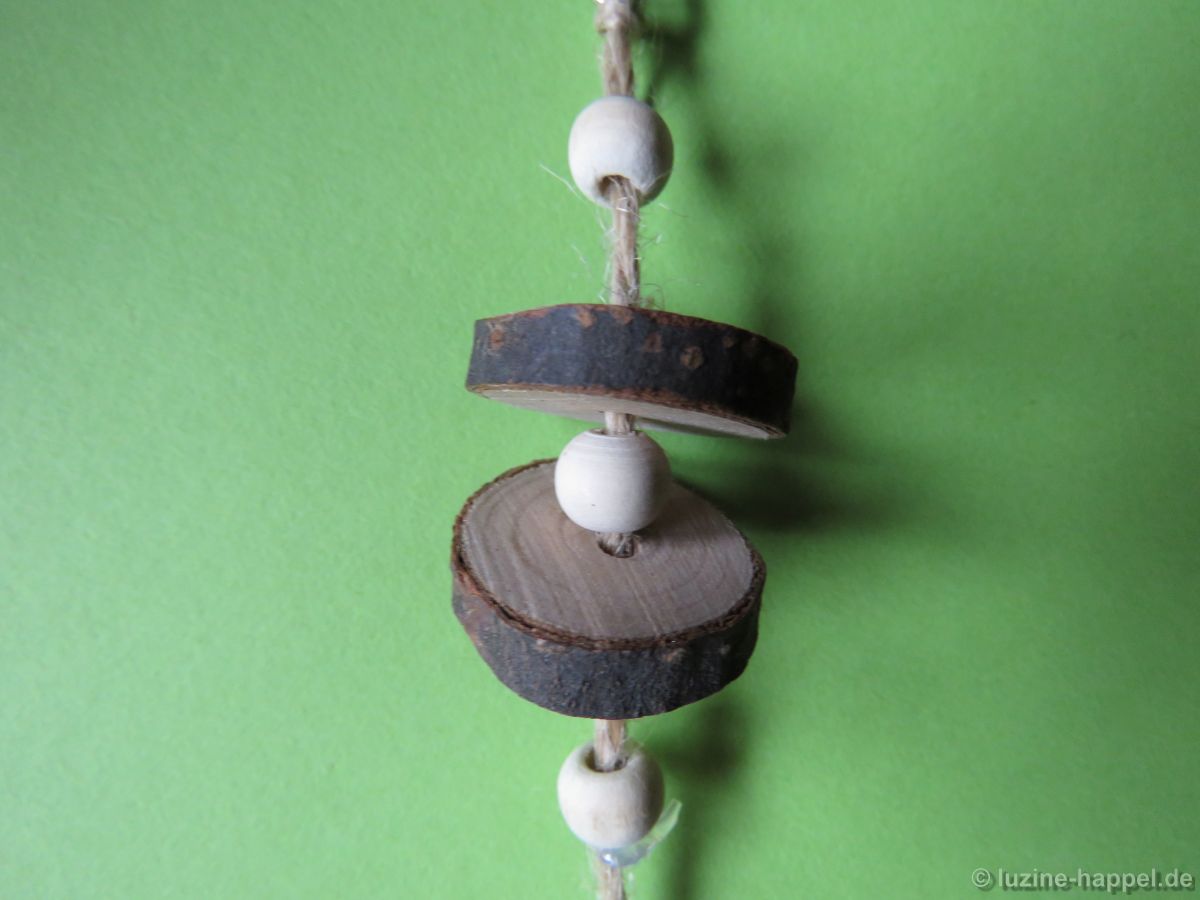
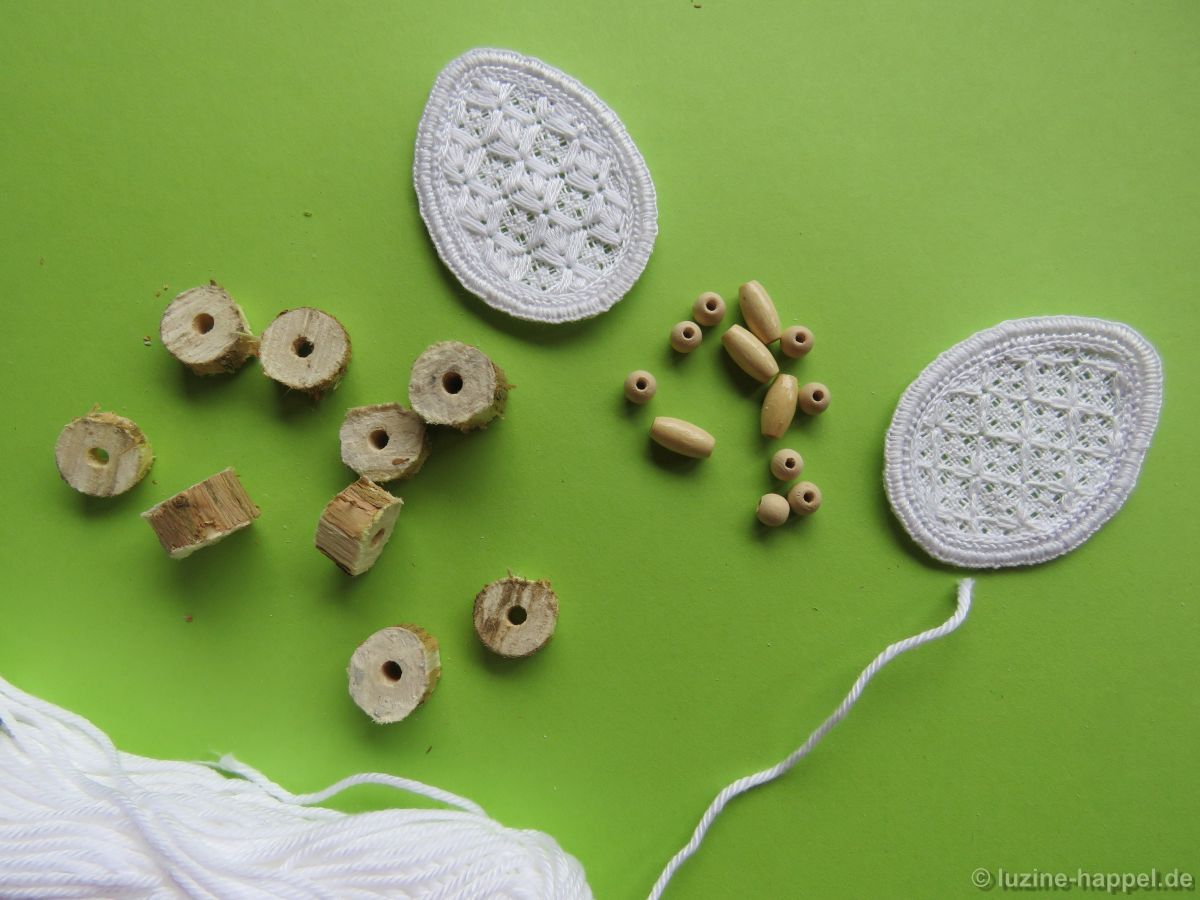
They are made from wooden discs and wooden beads alternately strung on a rustic thread

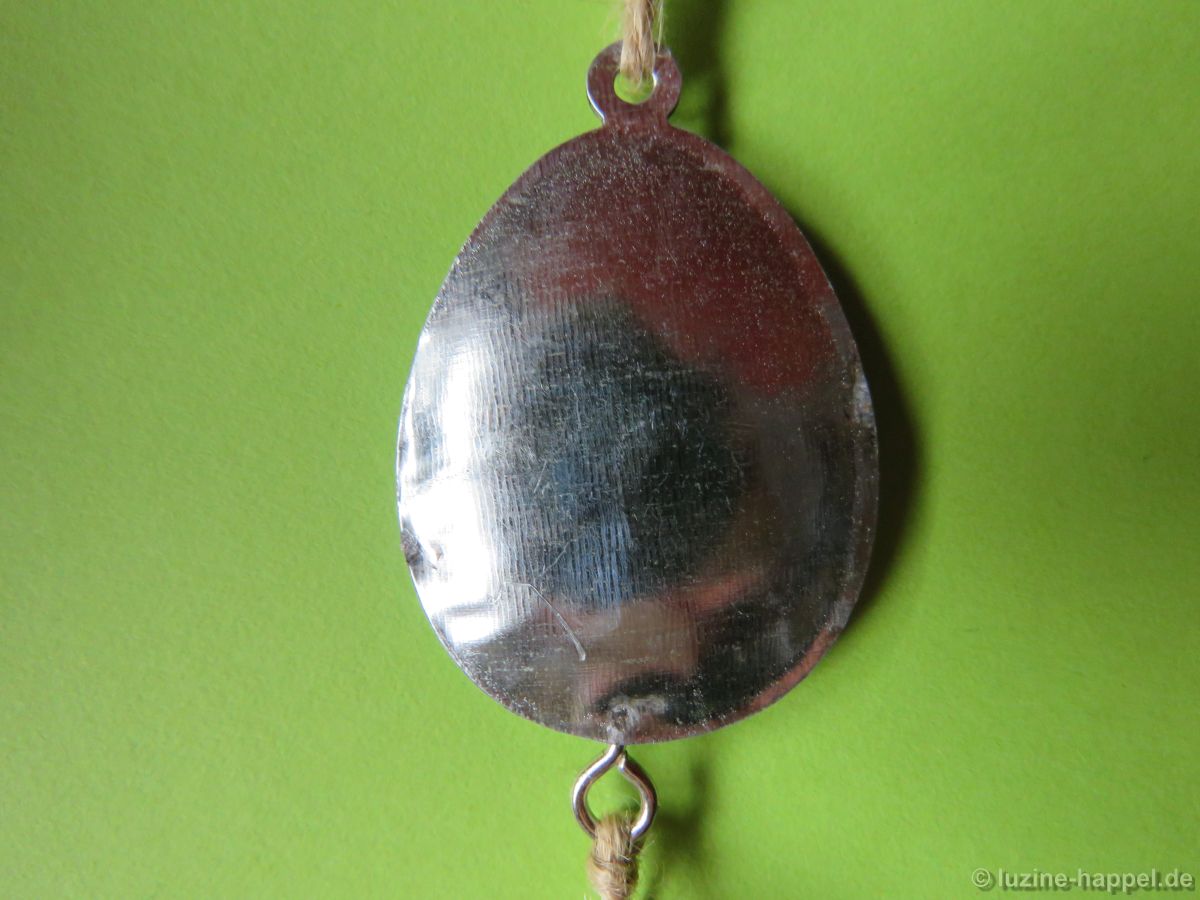
with a metallic Easter egg randomly placed between.


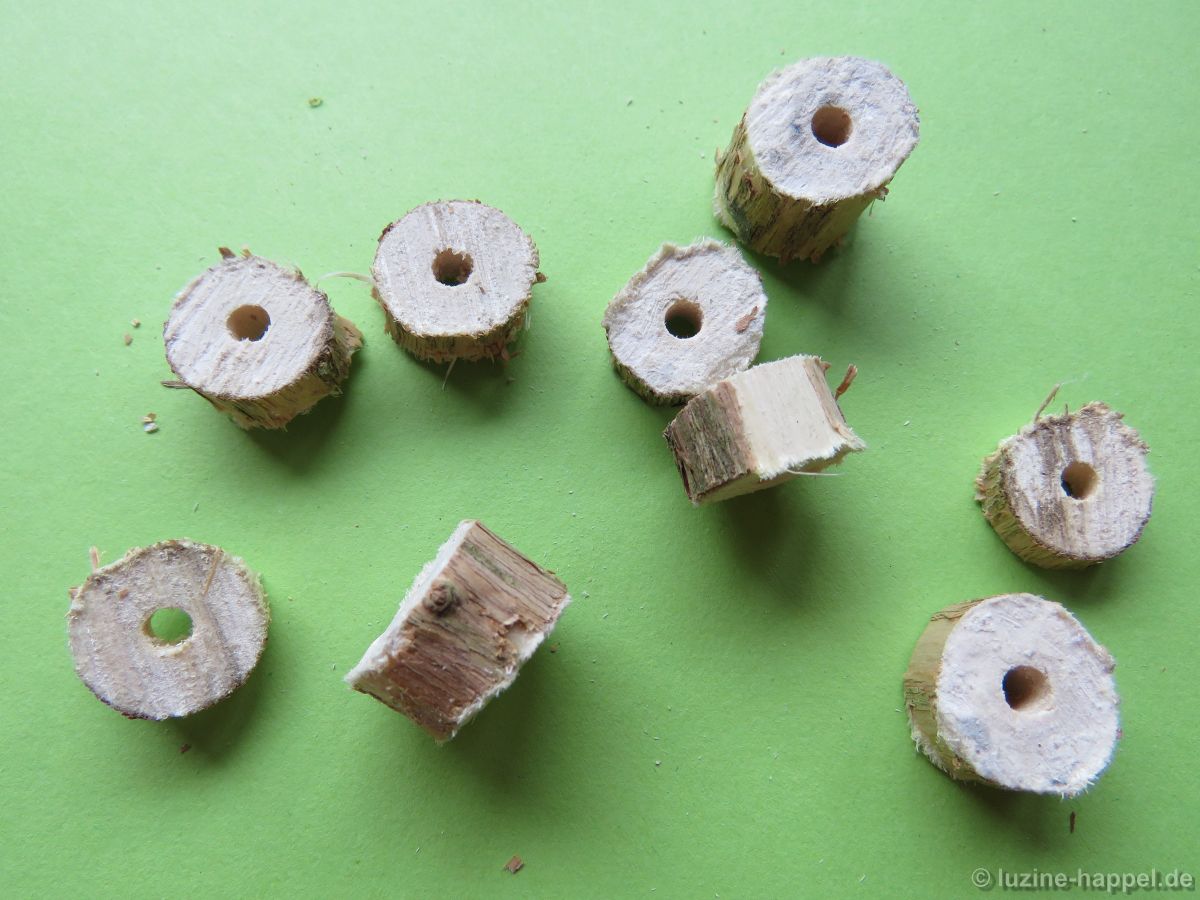
Taking a thick branch from my garden and using a small saw and a thin drill bit, I easily got the required discs. I had some beads on hand.


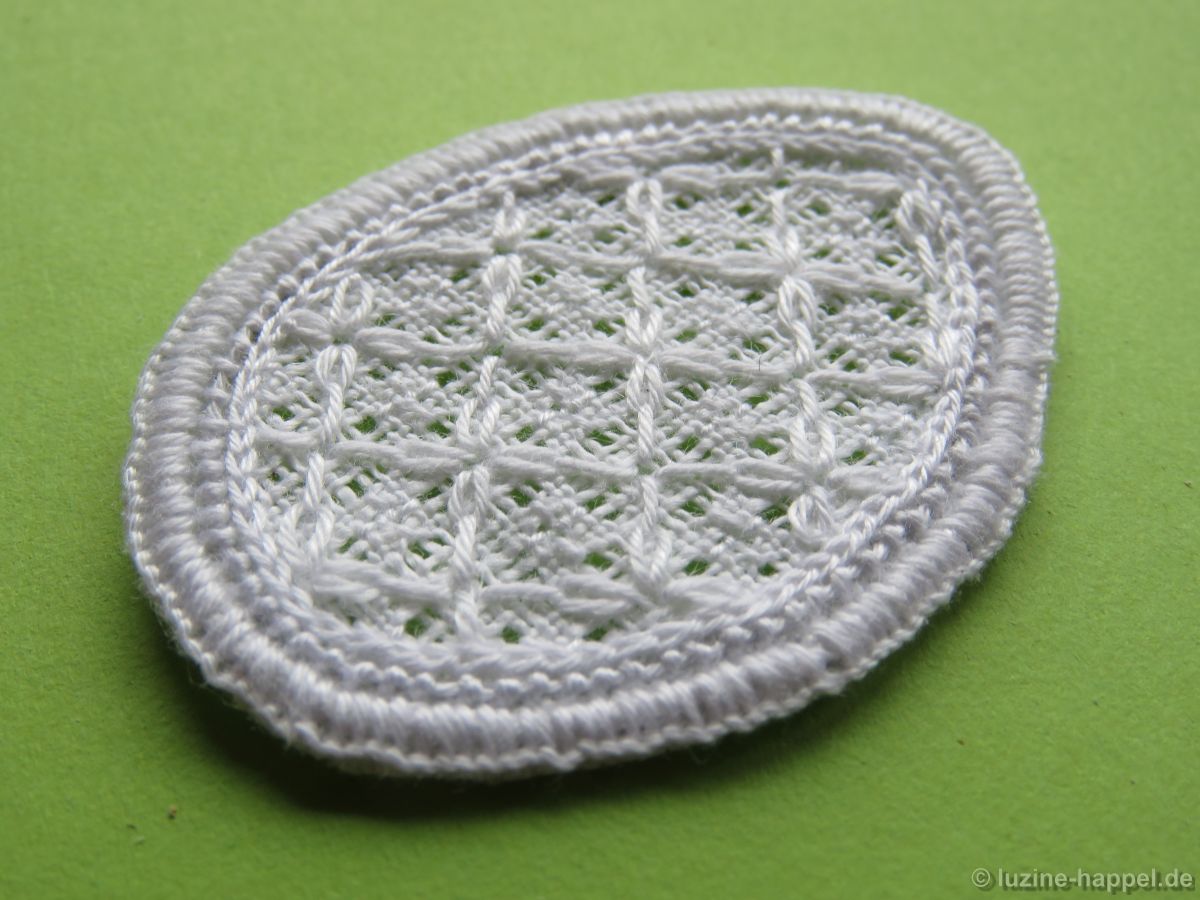
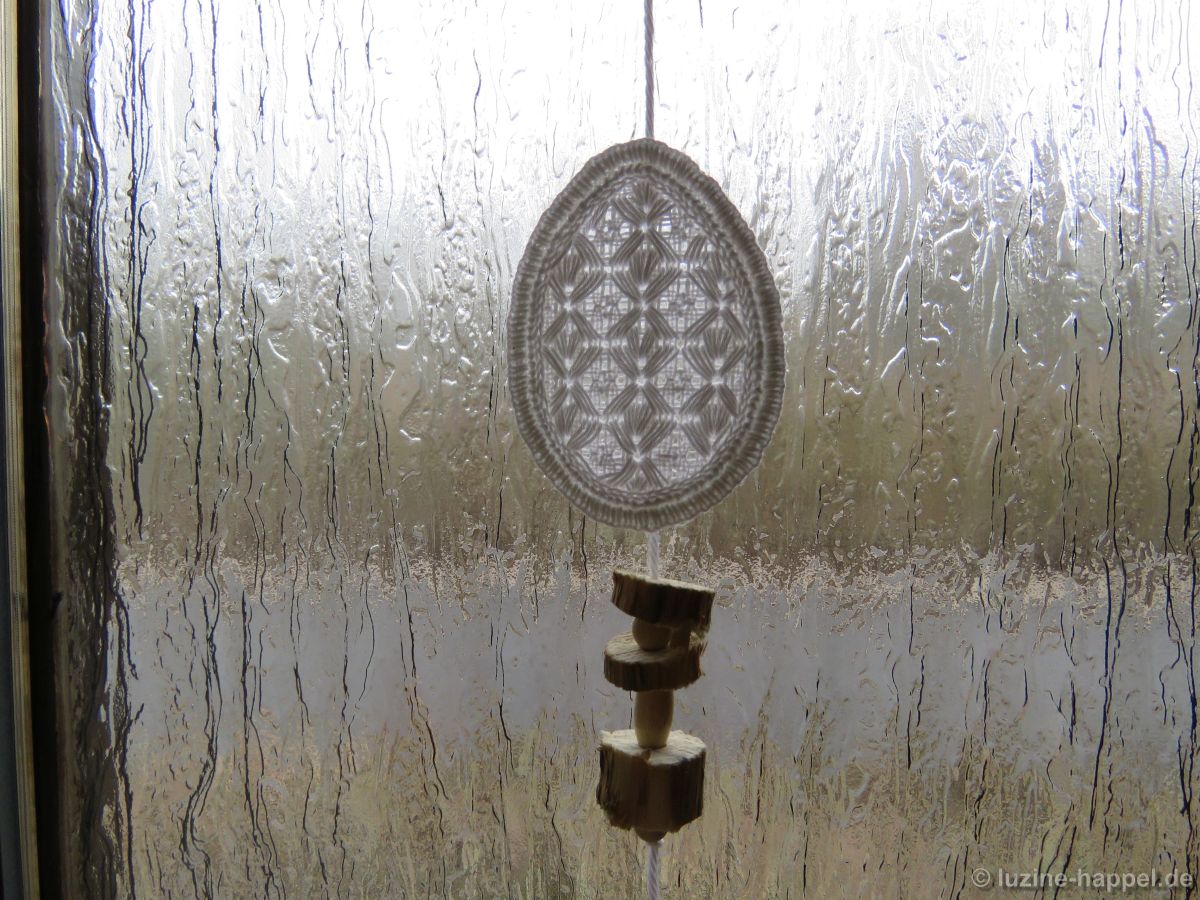
I replaced the metallic eggs with small embroidered Easter eggs. I used the design presented here and embroidered white eggs using filling patterns No. 540

and “Kronjuwel” from the book Limetrosen II.
After boiling, the embroidery was heavily starched so that the cut piece holds its form.


I used a continuous white thread, because I found the big knots distracting,


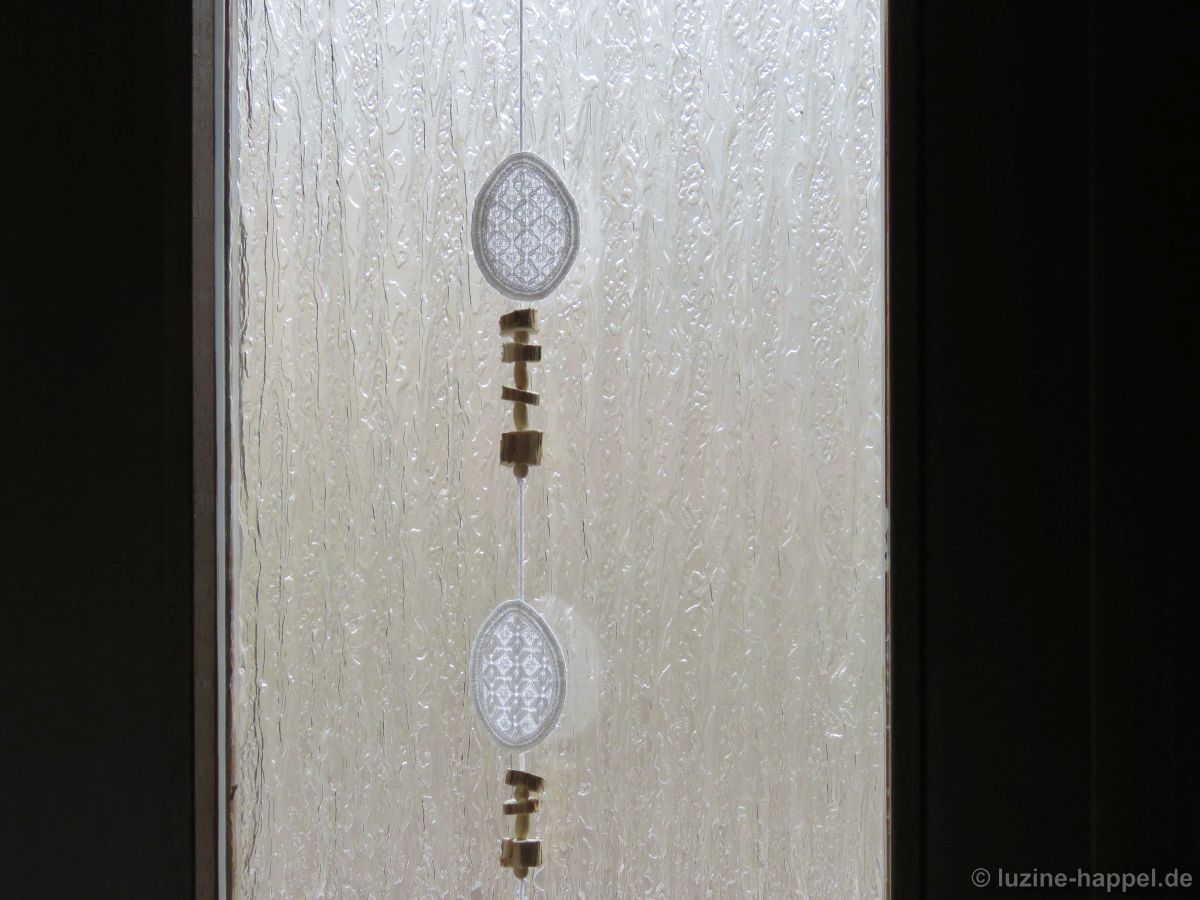
and alternately strung beads, wooden discs, and embroidered Easter eggs on it.


Illuminated from behind, as when placed on a window, the embroidery takes on an especially beautiful effect.


One can create short hangings with only one egg or longer hangings with a couple of eggs.

Help Keep Schwalm Whitework Alive!

Many blog readers thank me for my inspirational and informative work. Because I brought a little bit of pleasure into their life (such as with the anticipated opening of the next “door” of my Advent Calendar) or deepened their knowledge of the Schwalm and Schwalm-specific embroidery, some of them have asked to give a donation so that I can continue my work.

I also have readers who are only interested in the costume and custom articles; they absolutely do not need embroidery instructions. And they, too, have wanted to show their appreciation for my work with a donation. I have always declined such requests. But now I think why not?

The upkeep of such a worthwhile blog is not only very labor intensive but also expensive. I have to pay my graphic designer (to provide beautiful and unique designs), my copyeditor (to clarify my English explanations), and my webmaster, who not only keeps my website up to date but also implements all my ideas such as the blog archive with thumbnails or the thumbnail overview with the free designs. All this makes using my blog information much easier and more enjoyable for you, my readers.

Although my blog has many visitors, only a small percentage of those become customers. The majority of my blog readers use it for inspiration, information, and instructions for free. And it eventually happens that many of my customers have all, or enough, of my products. However, it is through the selling of my books and my other items that I cover all blog-related expenses. I could monetize my blog with advertisements from companies looking for people matching my “reader profile,” but I have refused this option from the beginning – I do not want advertising. So, humbly I would like to make a request. If you find the information on my website interesting, entertaining, or educational; if you appreciate the free designs and projects; if you would like to see this regional needleart stay alive, won’t you please consider supporting my blog through a donation? Here is how it works.

The donation button lets you make a one-time gift through PayPal using your credit card or bank account. If you’ve liked a description, a pattern, or you just want to help keep the work going, using that button to contribute the amount of your choice will go towards maintaining and improving my blog publications.

Thank you for taking the time to consider this request.

Donation

To change the language on the donation page, click the word beside the flag or the flag at the bottom of the page.

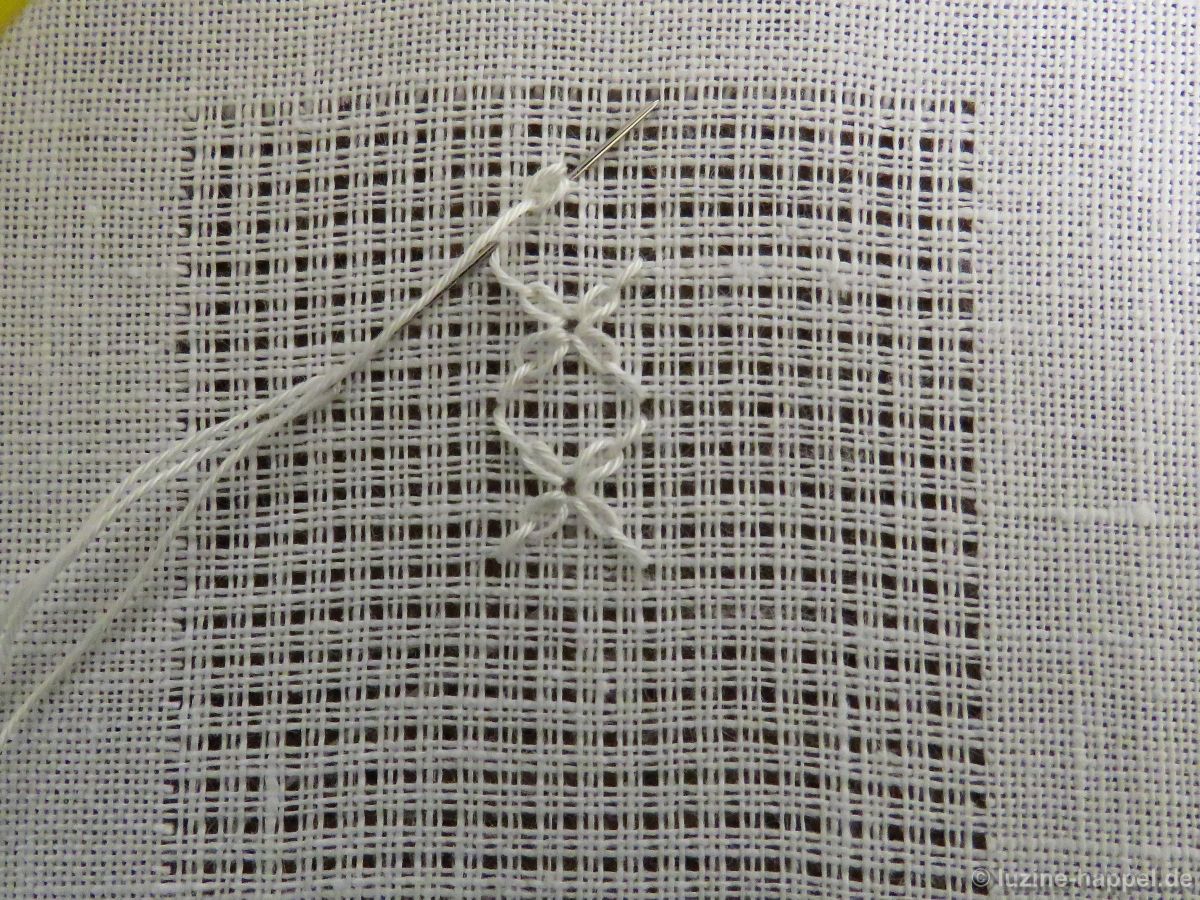
Filling Pattern No. 540

category: Limet-Filling pattern
stitches used: Lazy Daisy and Rose stitches
center: intersection of withdrawn thread lines (in other shapes or motifs: longitudinal axis = withdrawn thread line)

The last filling pattern on my blog was number 481.
Since then I published the Star book that contains 58 different star filling patterns.
So the next filling pattern on my blog is number 540.

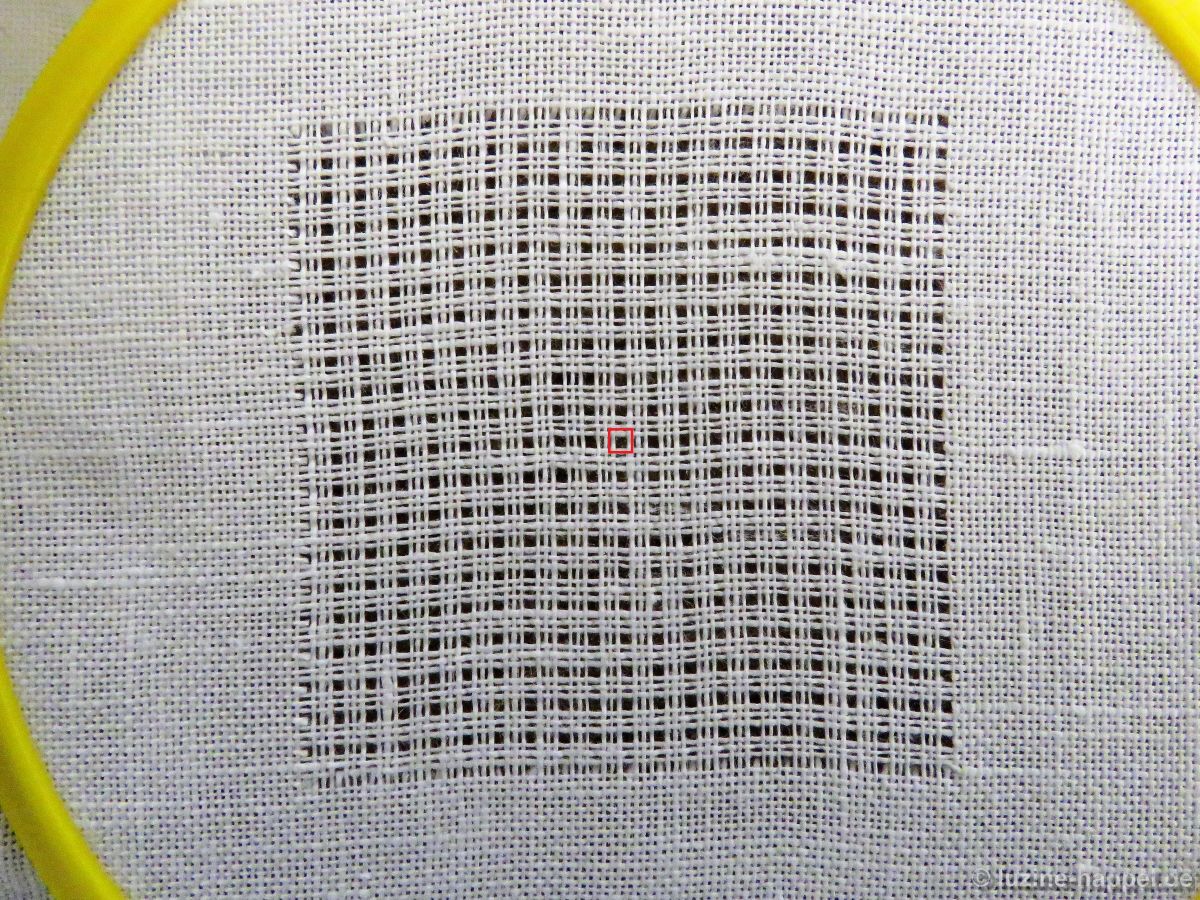
First, establish a Limet grid by cutting 1, leaving 3, vertically and horizontally.

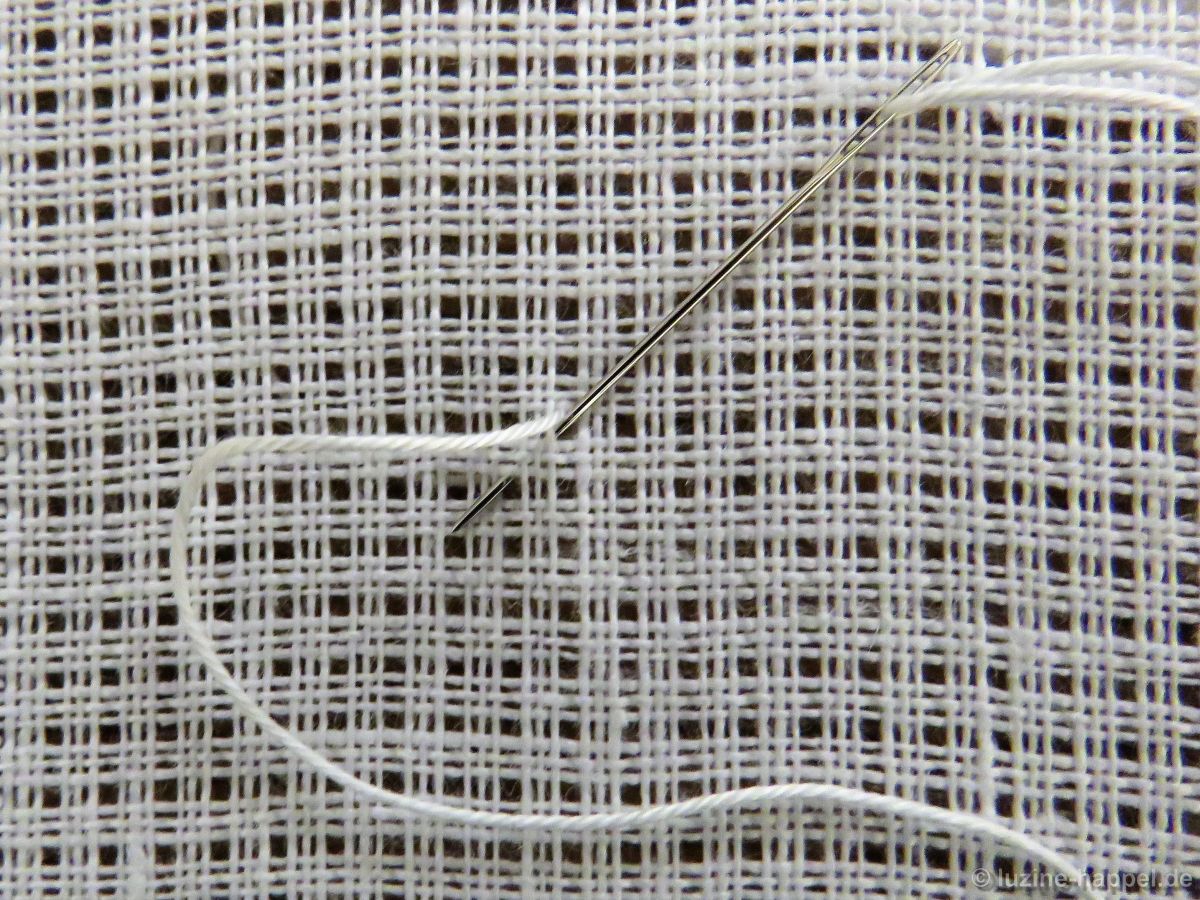
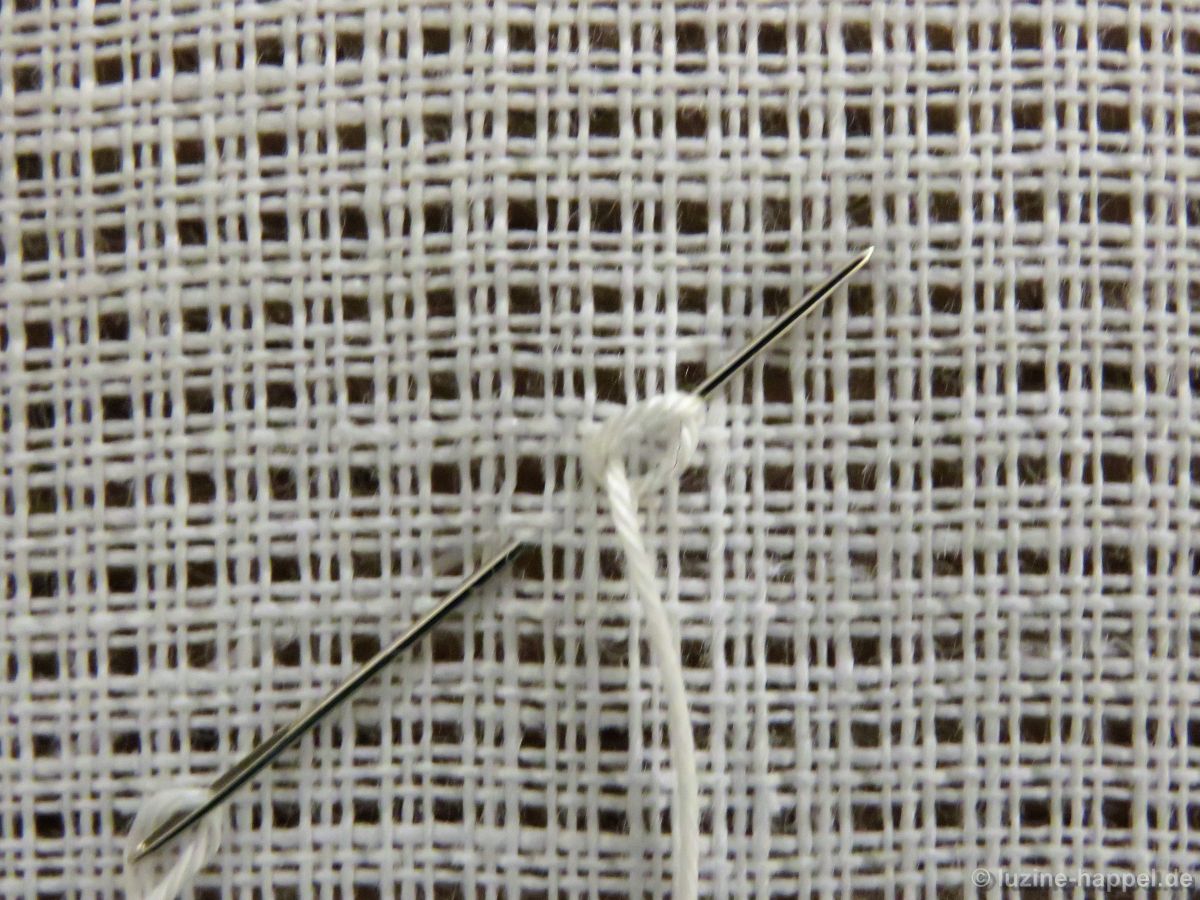
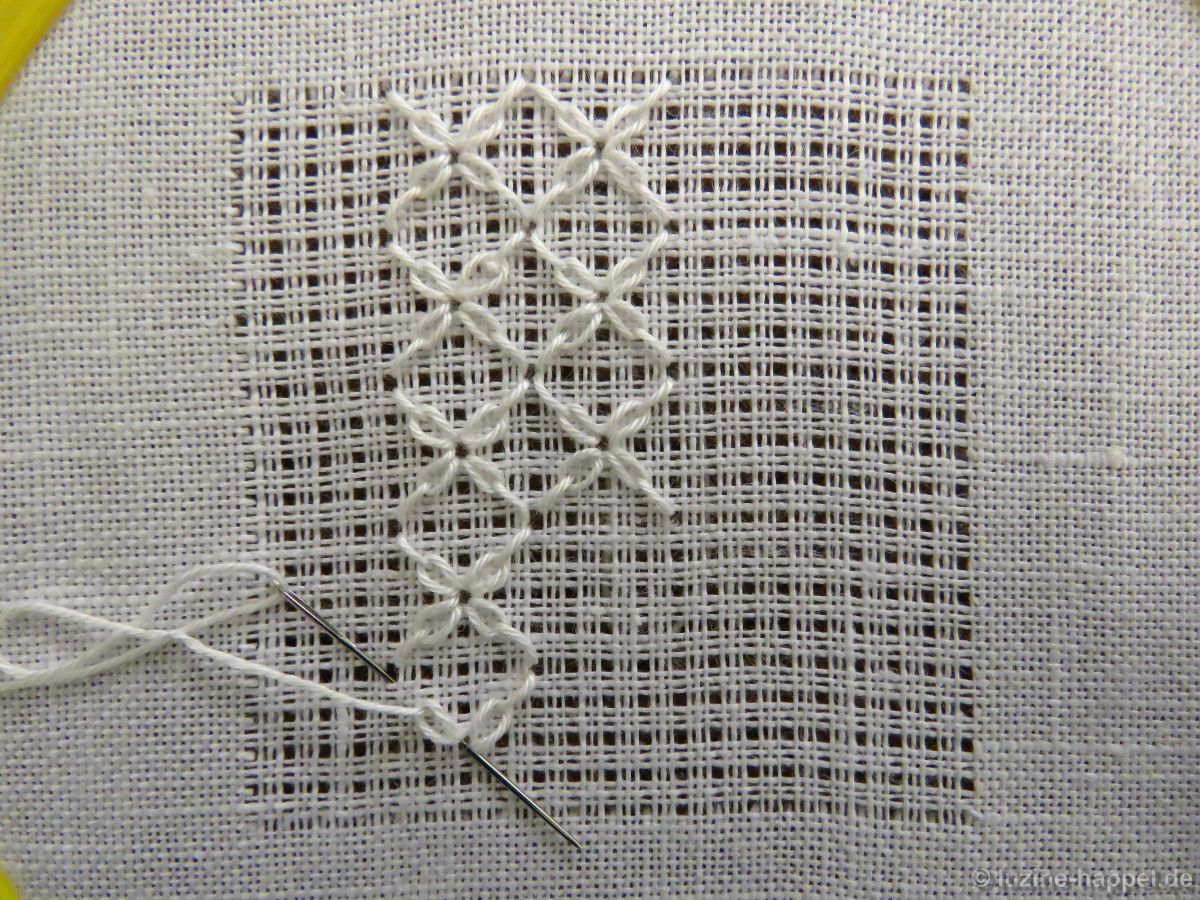
Bring the needle up in the center hole and pull the thread through.


Lay the thread in a loop to the left and down.
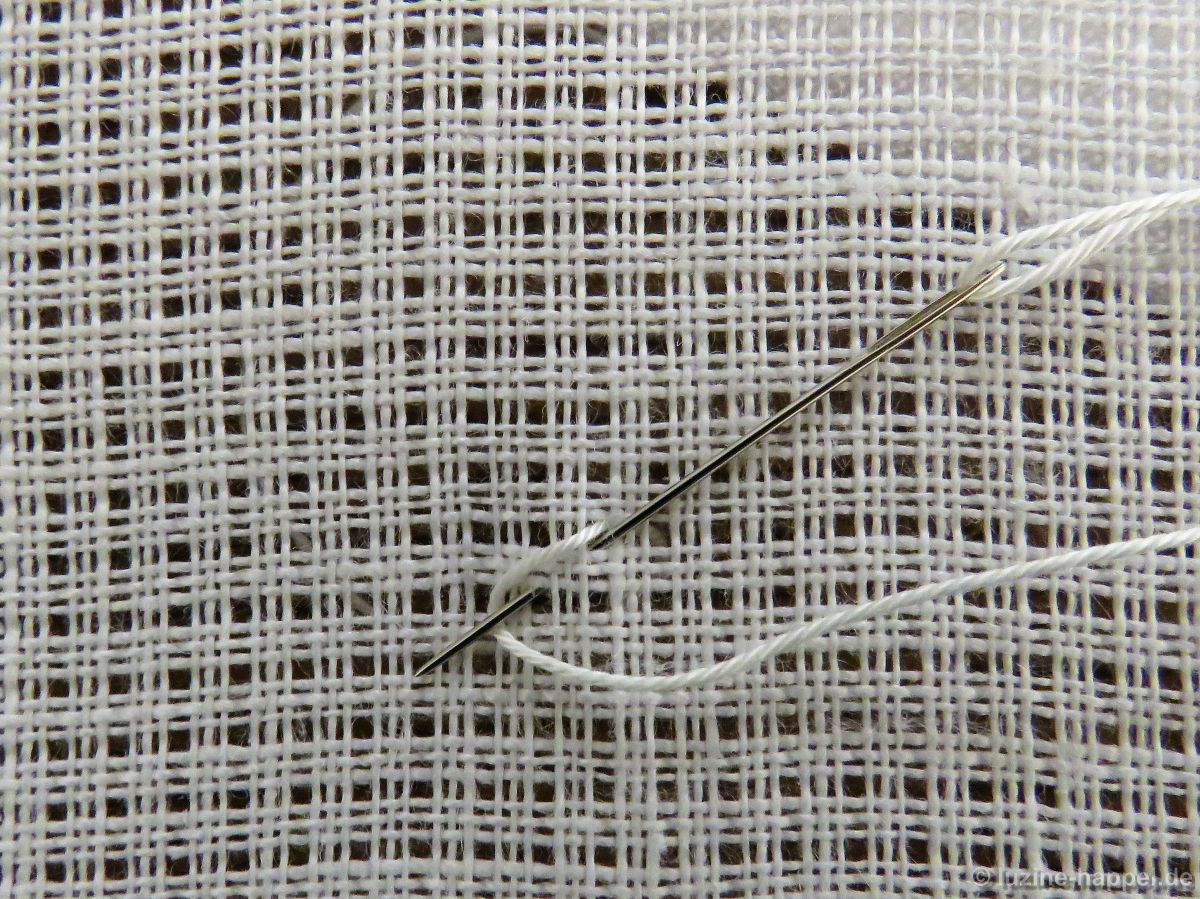
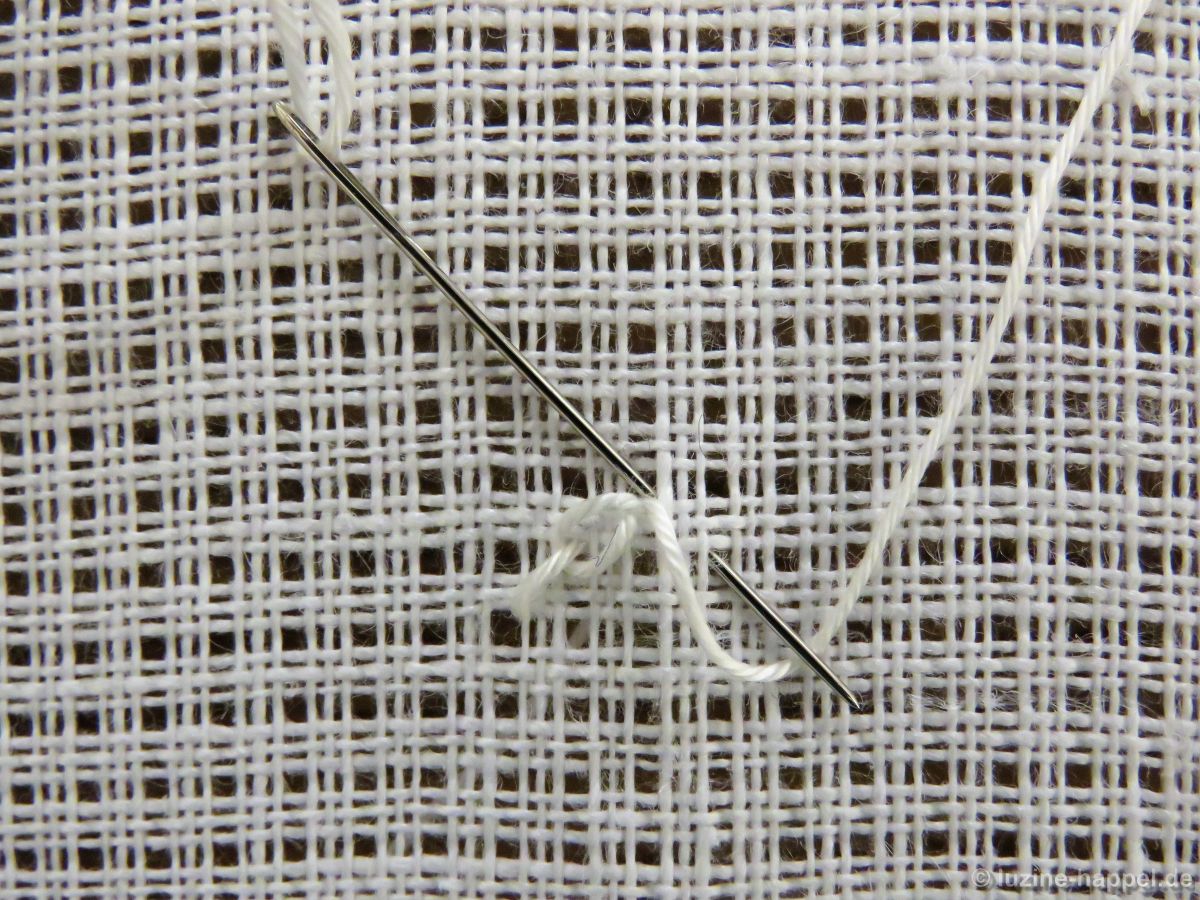
Insert the needle again in the center hole and bring it up 1 square diagonally left down (3 threads down and 3 threads to the left).


Lay the loop beneath the needle.


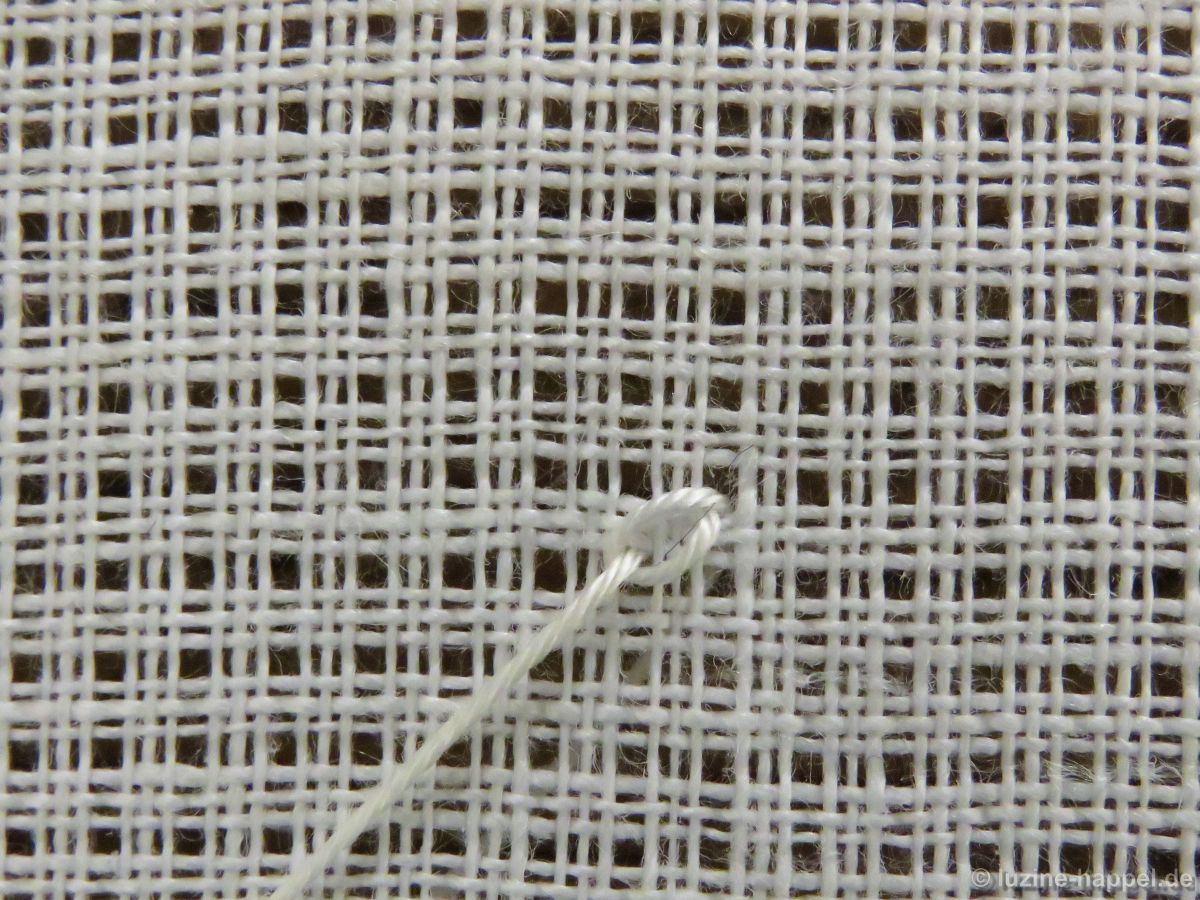
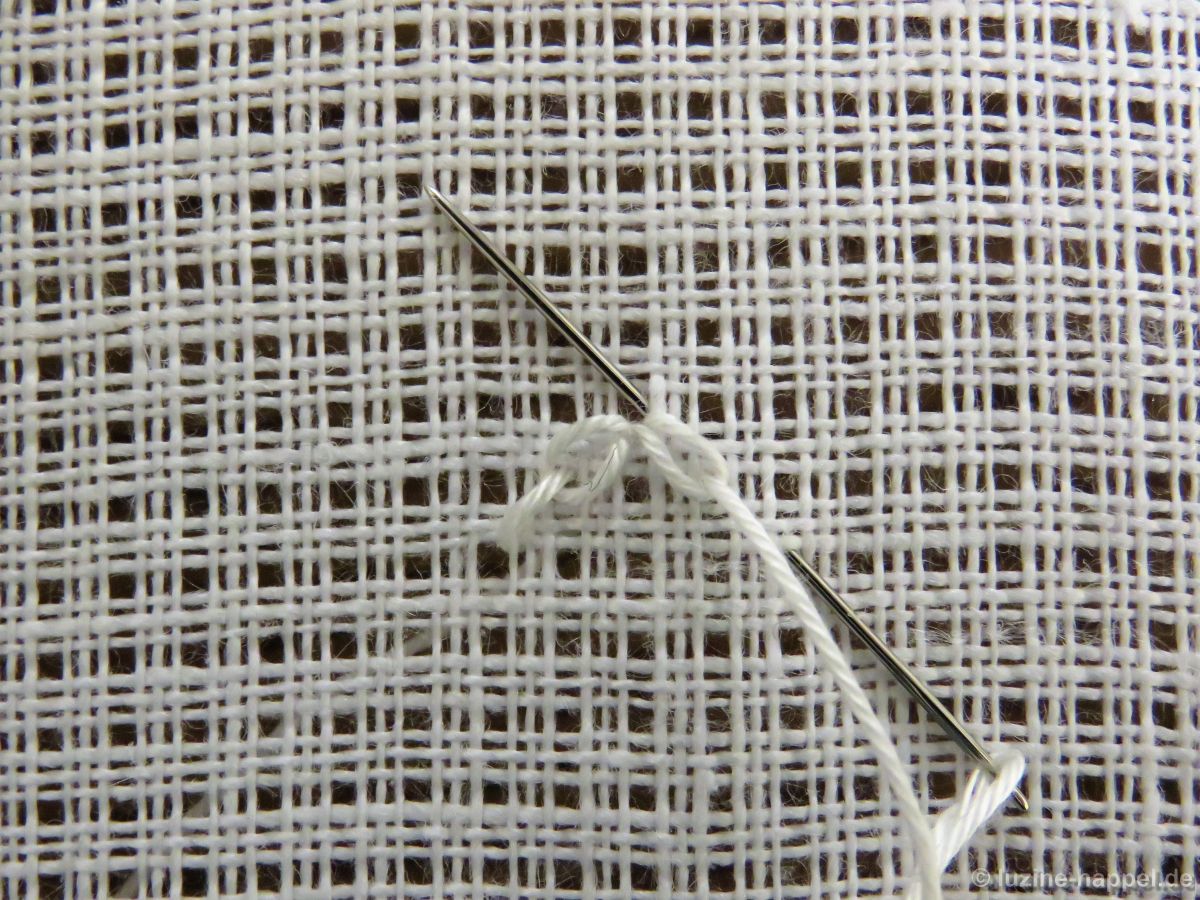
Pull the thread through and tighten it a little bit drawing it in the direction of the loop. Be careful to not tighten too much – the loop should keep its hoof shape.


Cross over 1 square diagonally left down, insert the needle and bring it back up through the center hole.


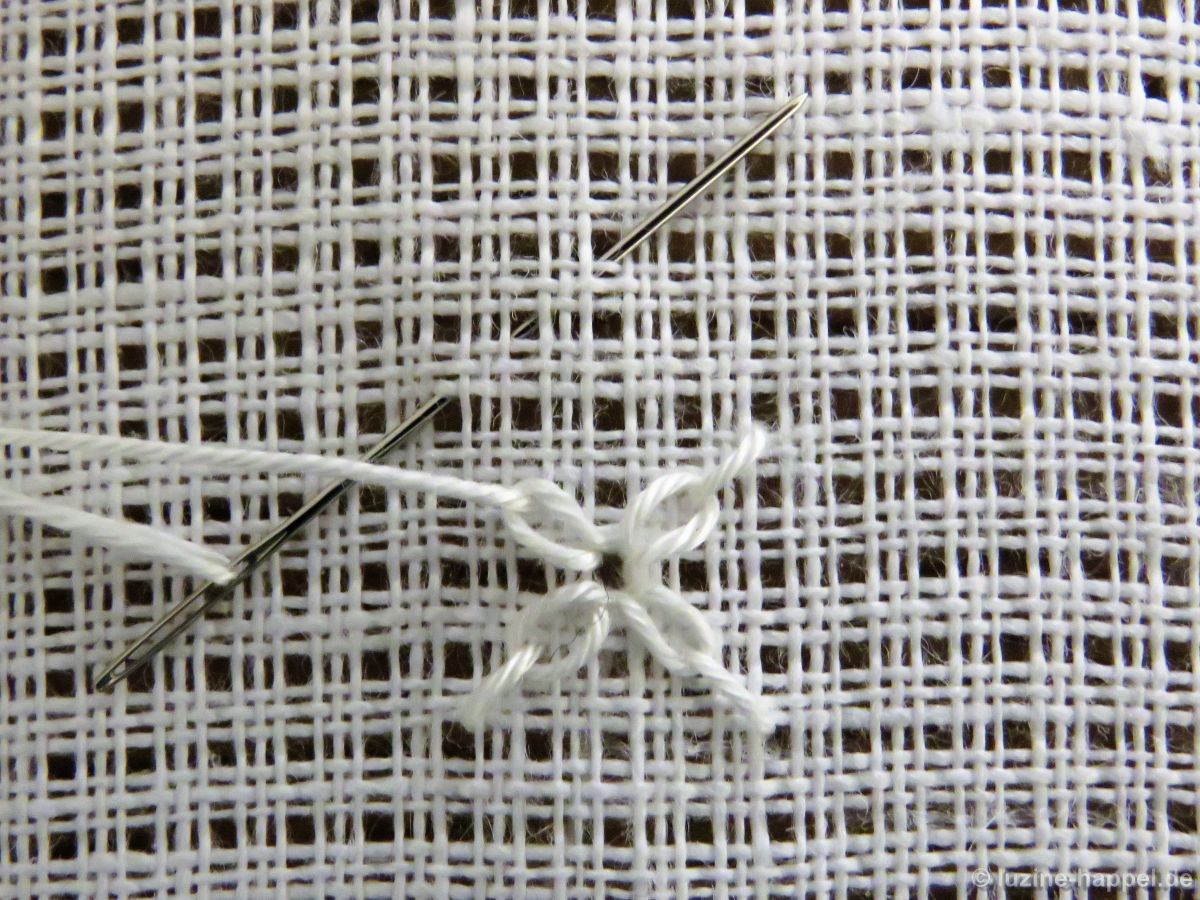
Work 3 more Lazy Daisy stitches counterclockwise


in the established way.


When one round (one element) is complete, continue to work the row of elements by crossing diagonally under 2 squares to bring the needle up in the next center.


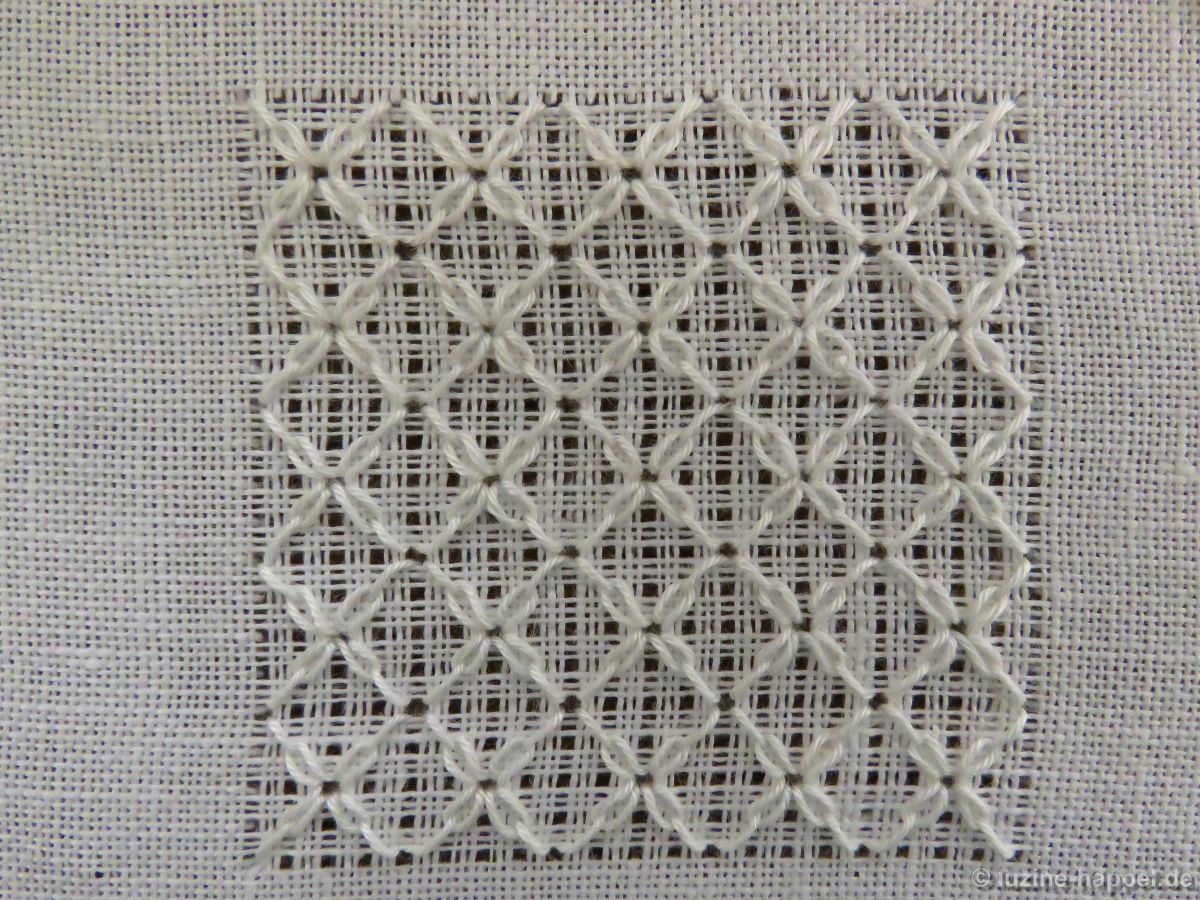
In the established way work rows up


and down


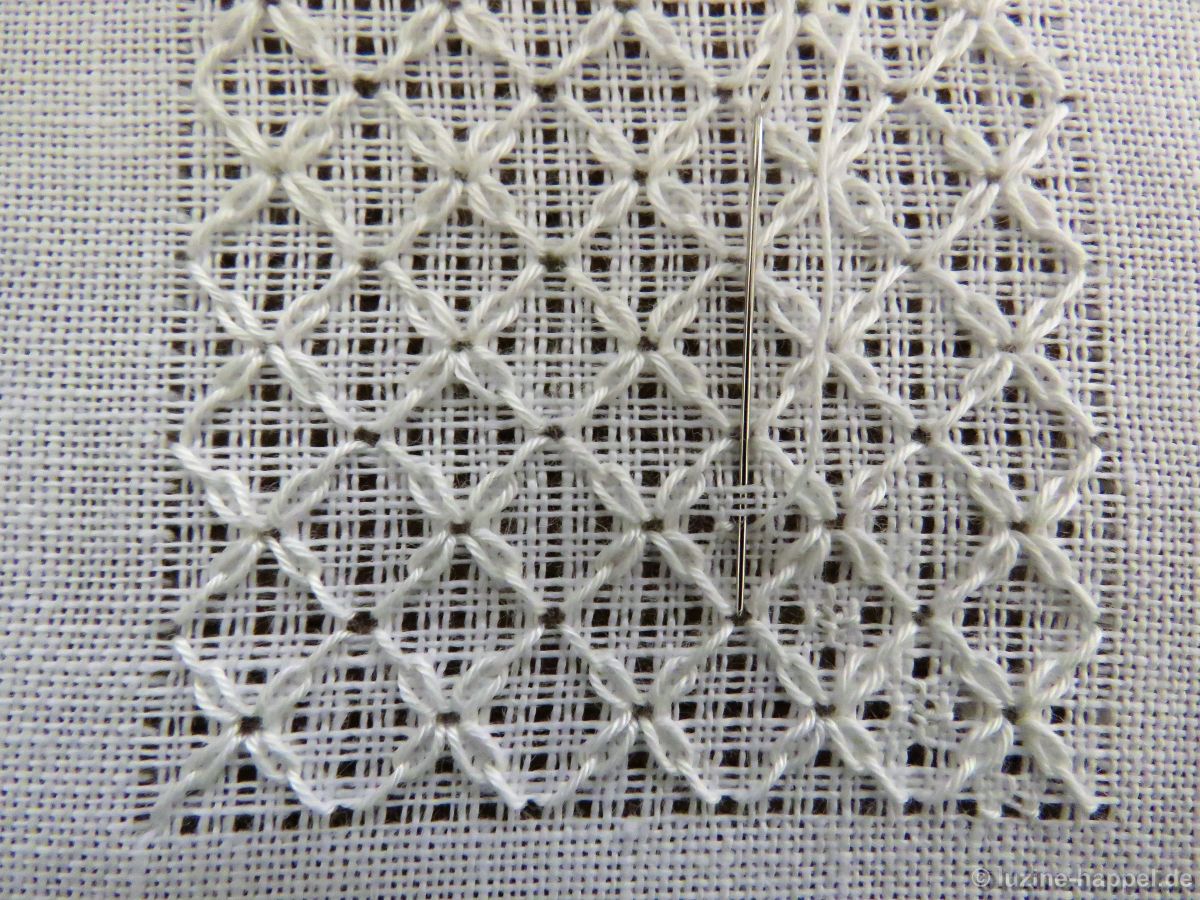
until the entire shape is filled.


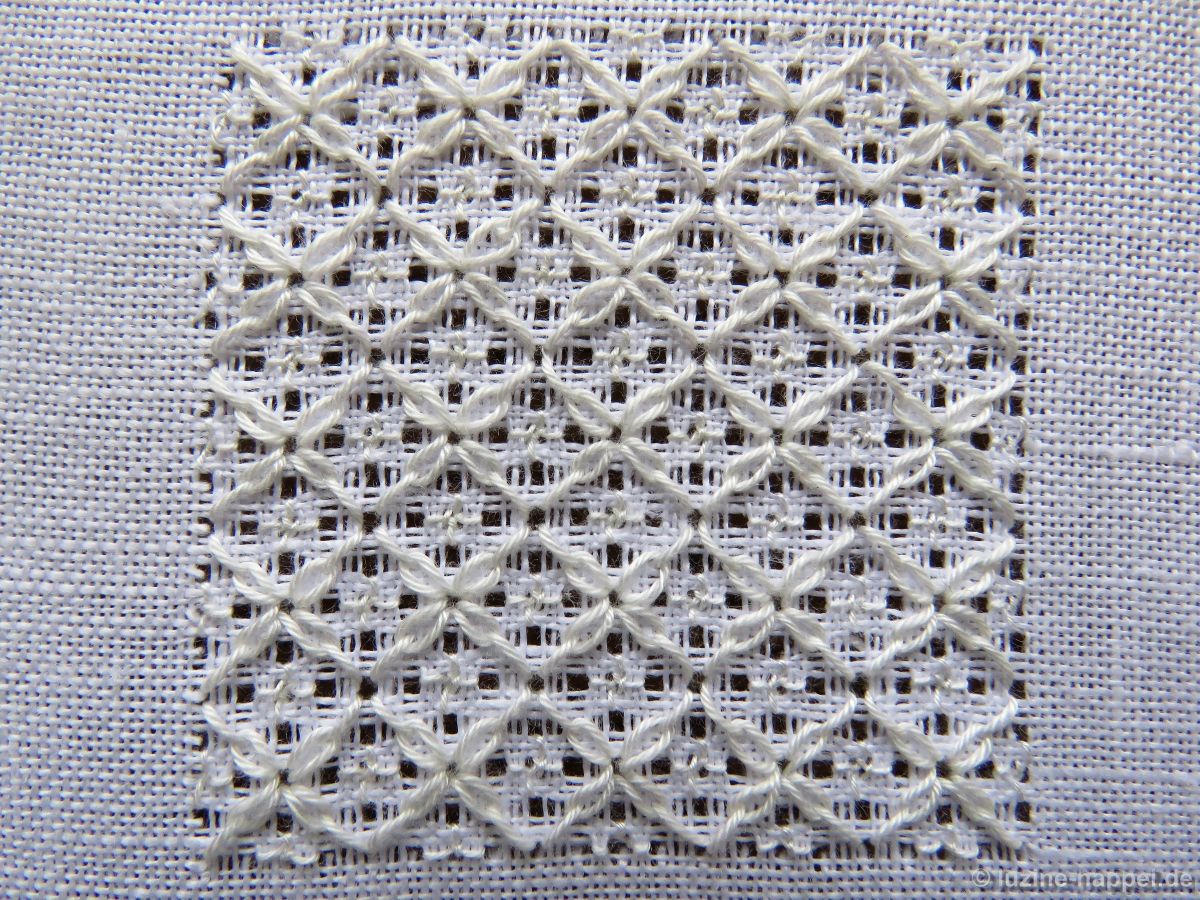
Now start to work Rose stitches in diagonal rows,


1 in each of the spaces that remain between the Lazy Daisy elements.


Another easy to work and attractive pattern is established.