Schwalm Costume – The Little Caps

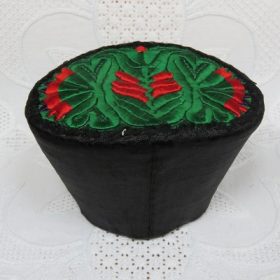
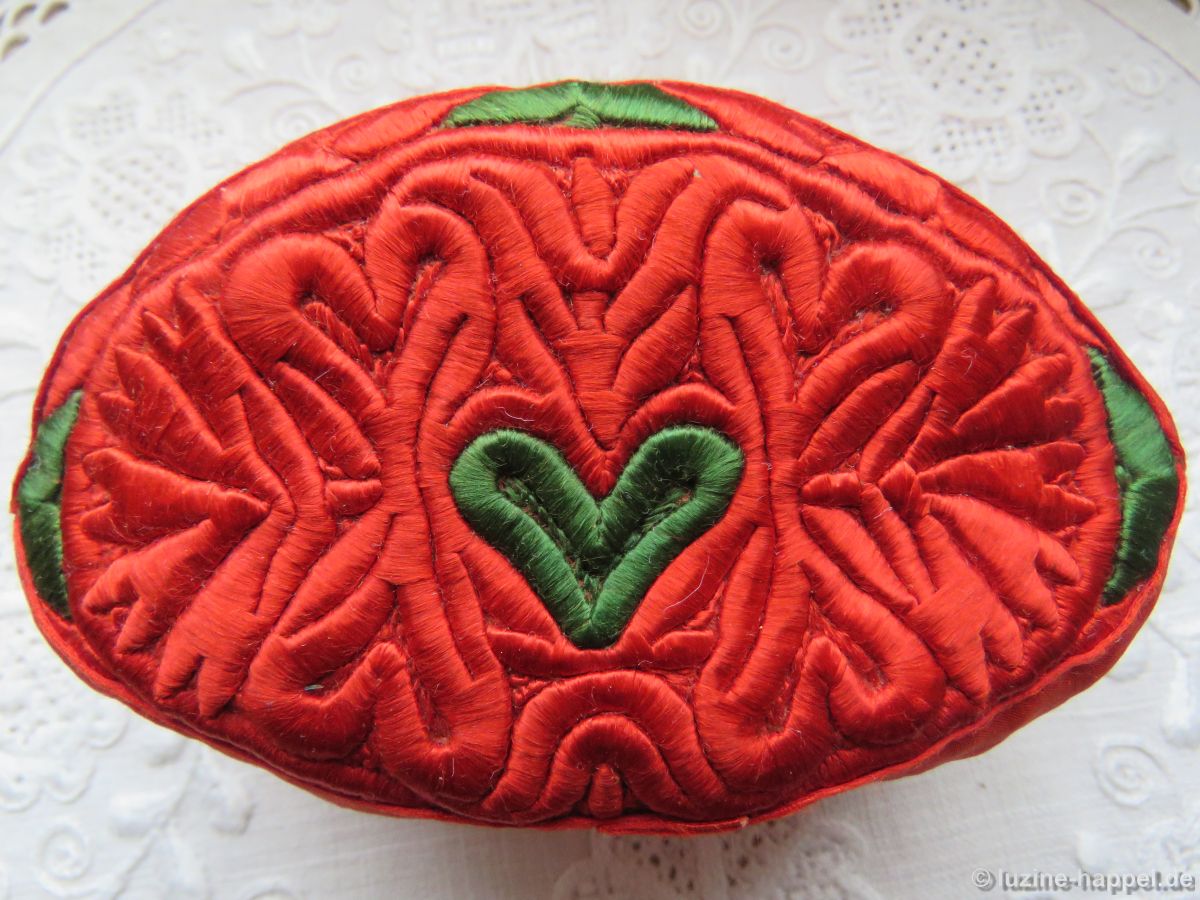
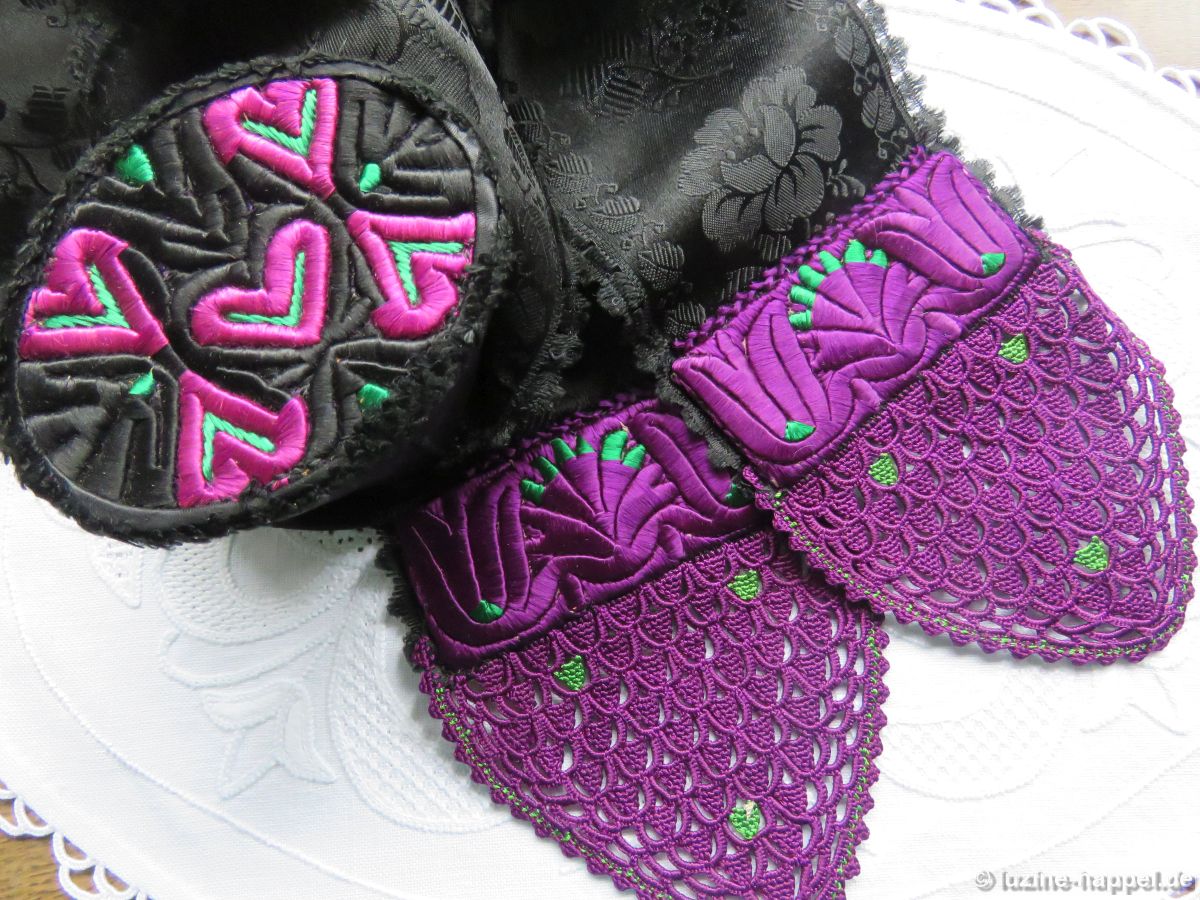
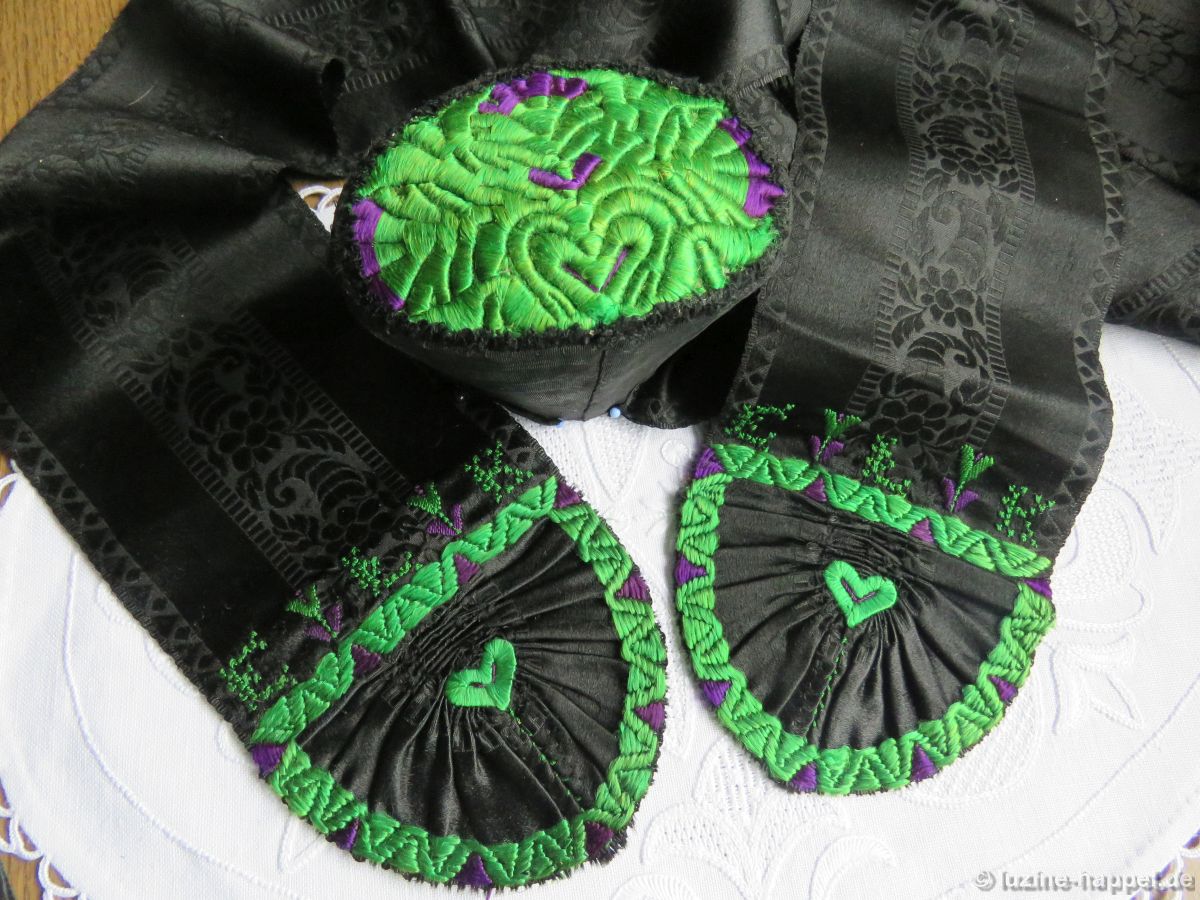
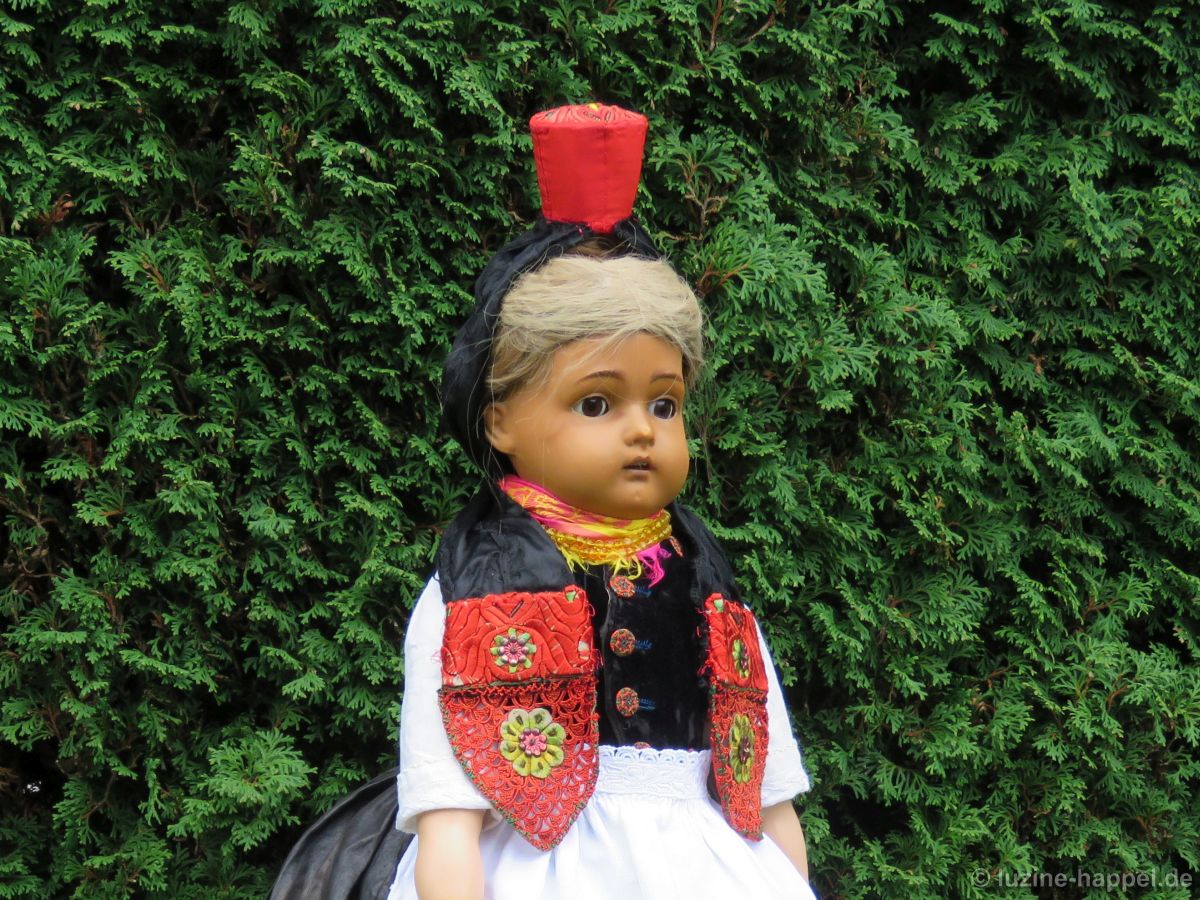
Schwalm women wore little caps to match their festive costume. The little caps were placed over the hair knots.

The little caps had different sizes depending on the wearer: child, adult, or woman with an especially magnificent head of hair.

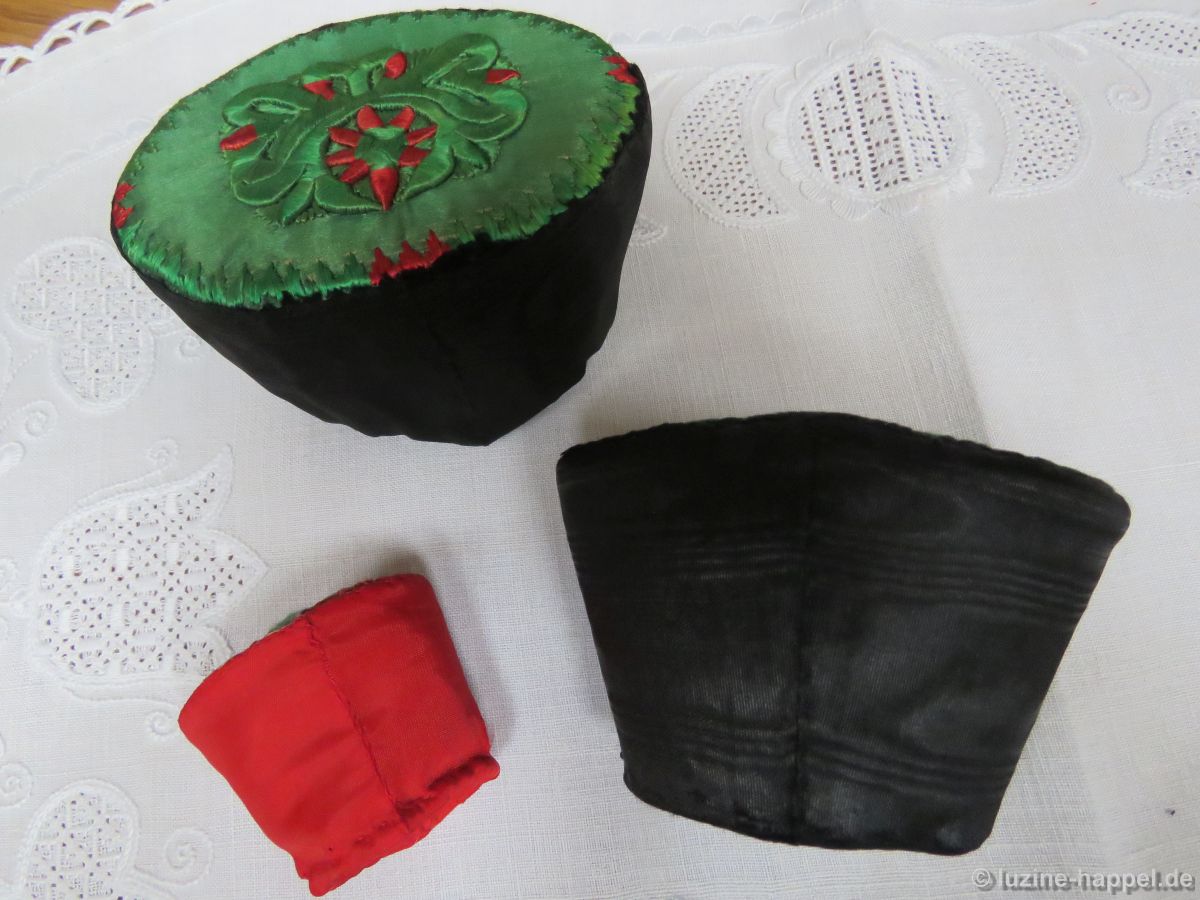
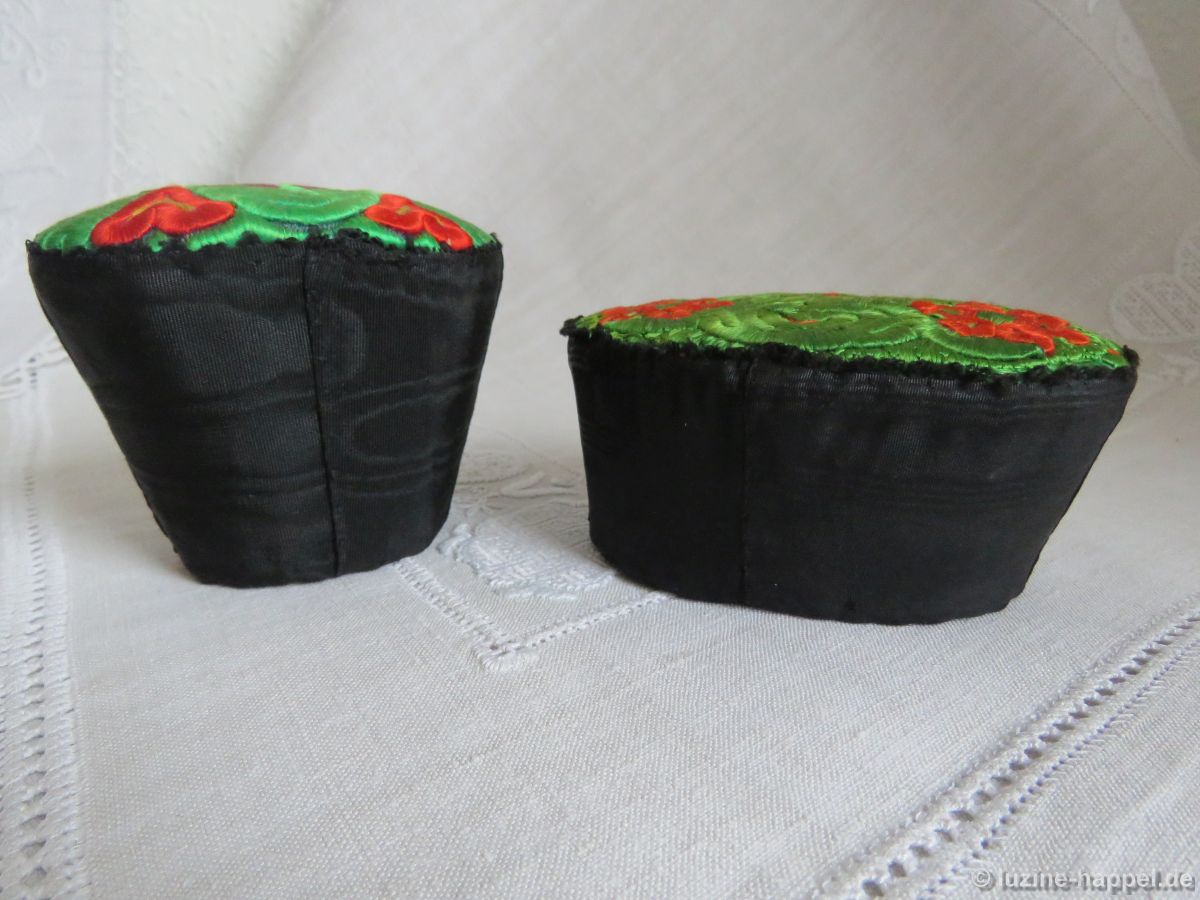
The little caps were primarily flat and wide; later they became more and more tall with the sides tapered down to a smaller opening.

The little caps had walls and lids – the so-called cap bottoms. The walls were covered with silk or moiré. They were black. Only unmarried girls wore caps with red walls. (One source propounds that these red caps are the origin of the fairy tale Little Red Riding Hood)

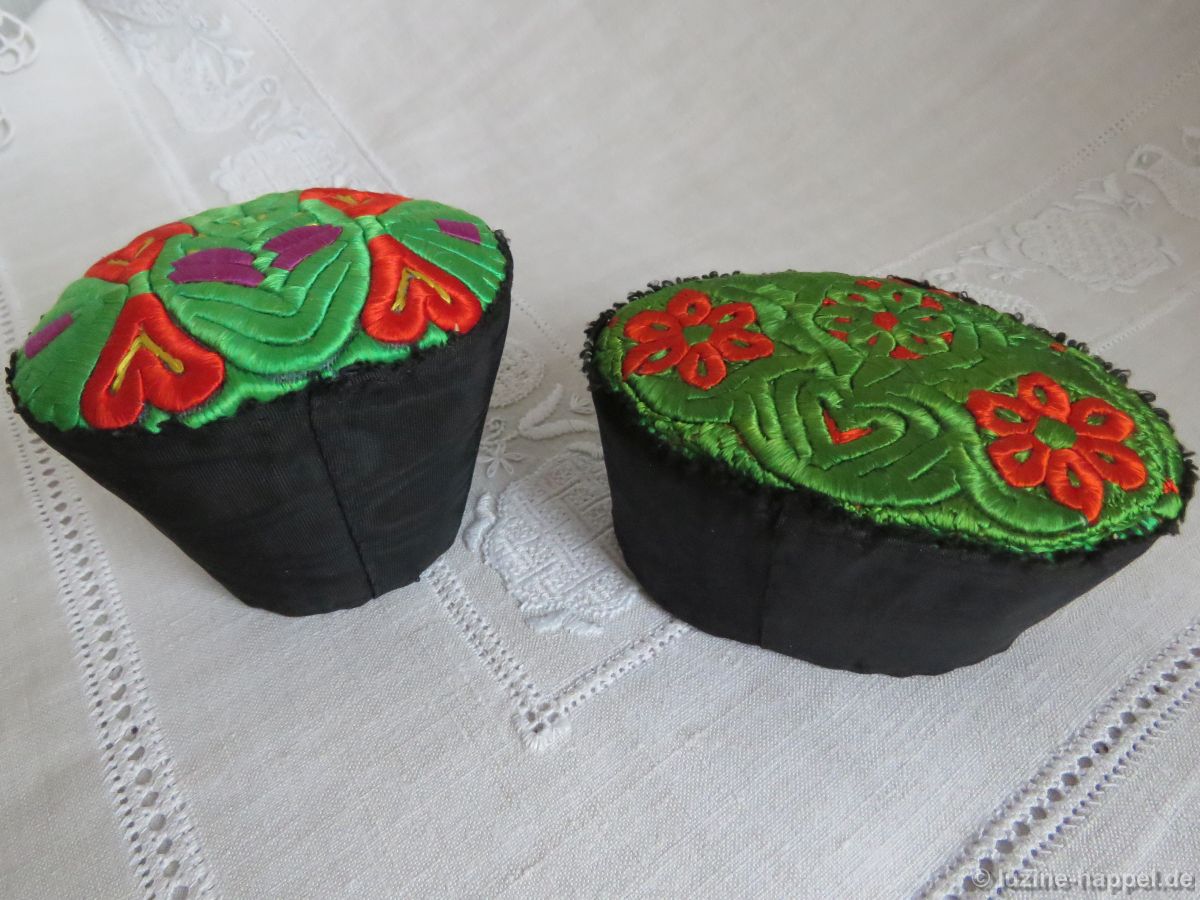
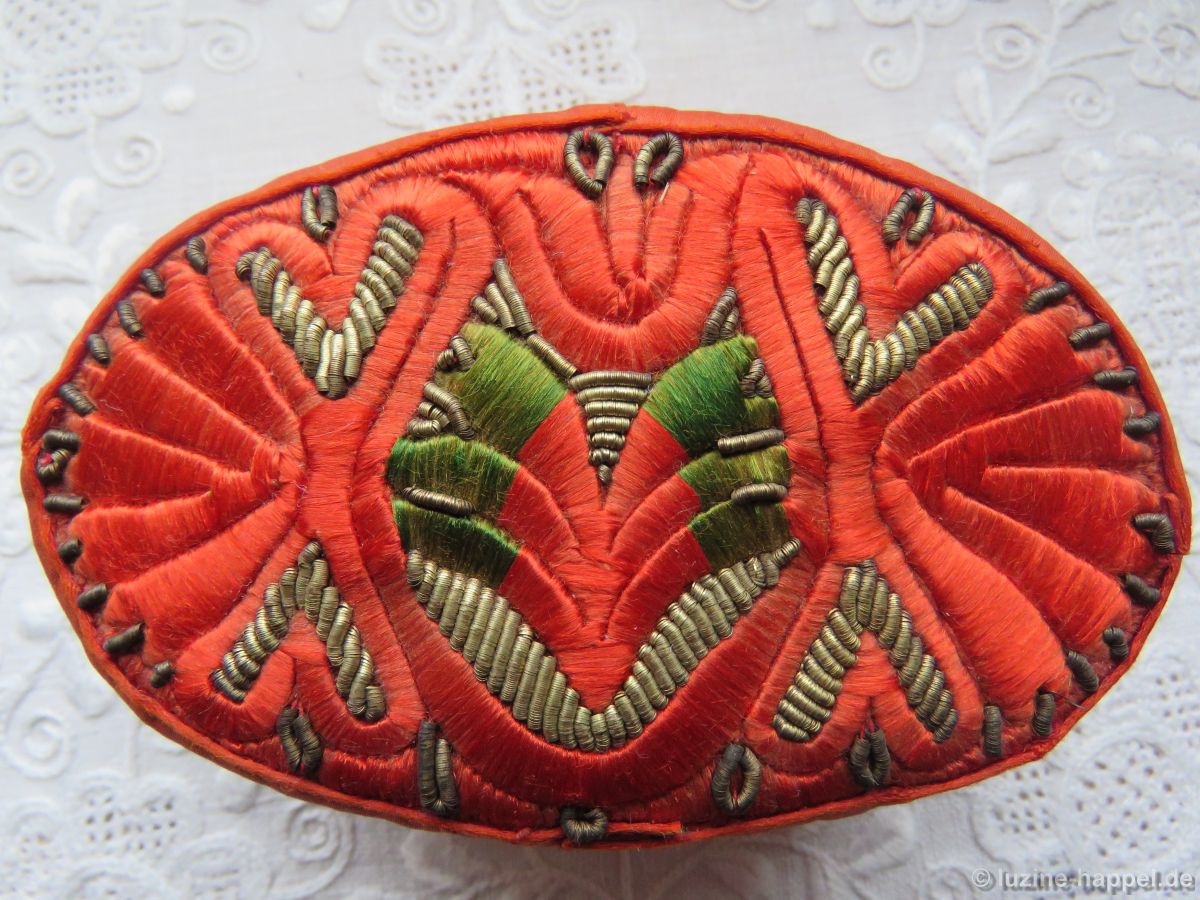
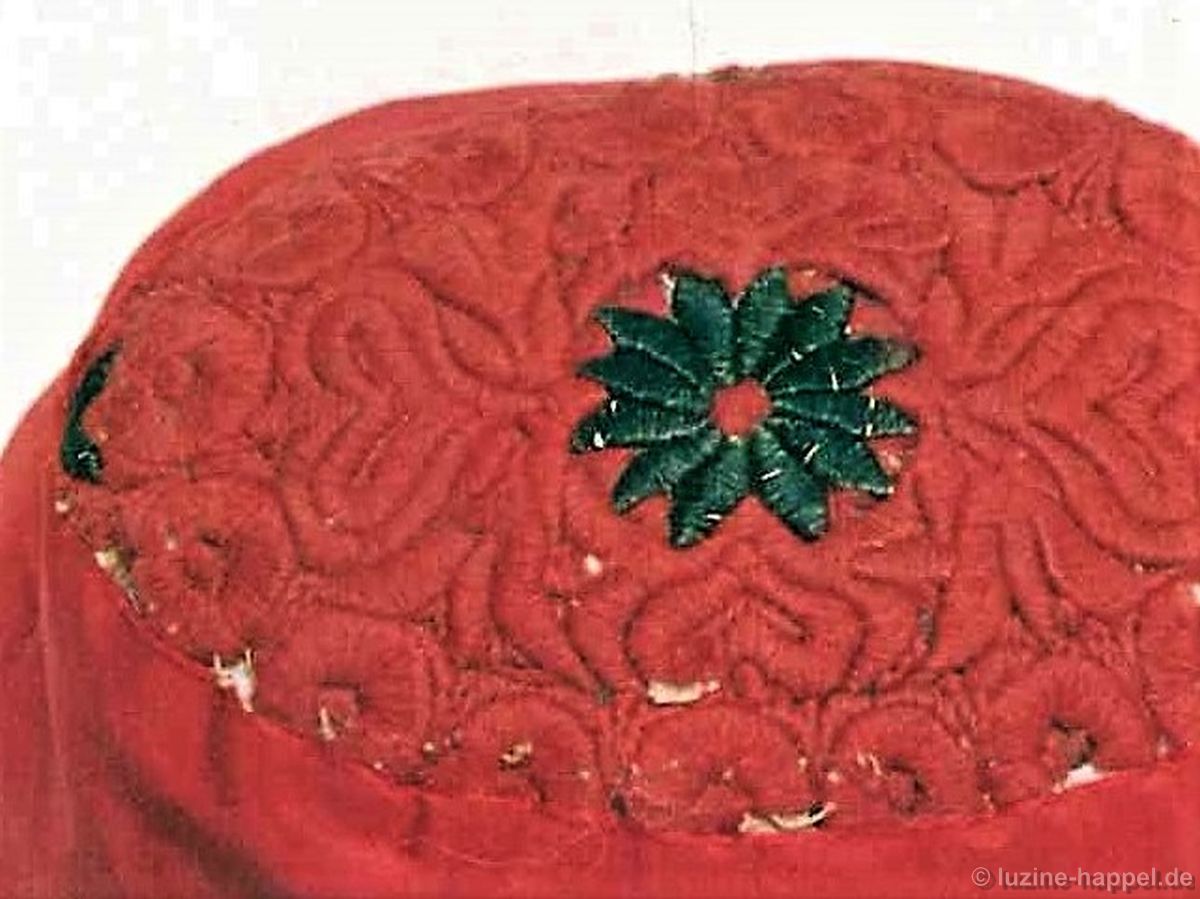
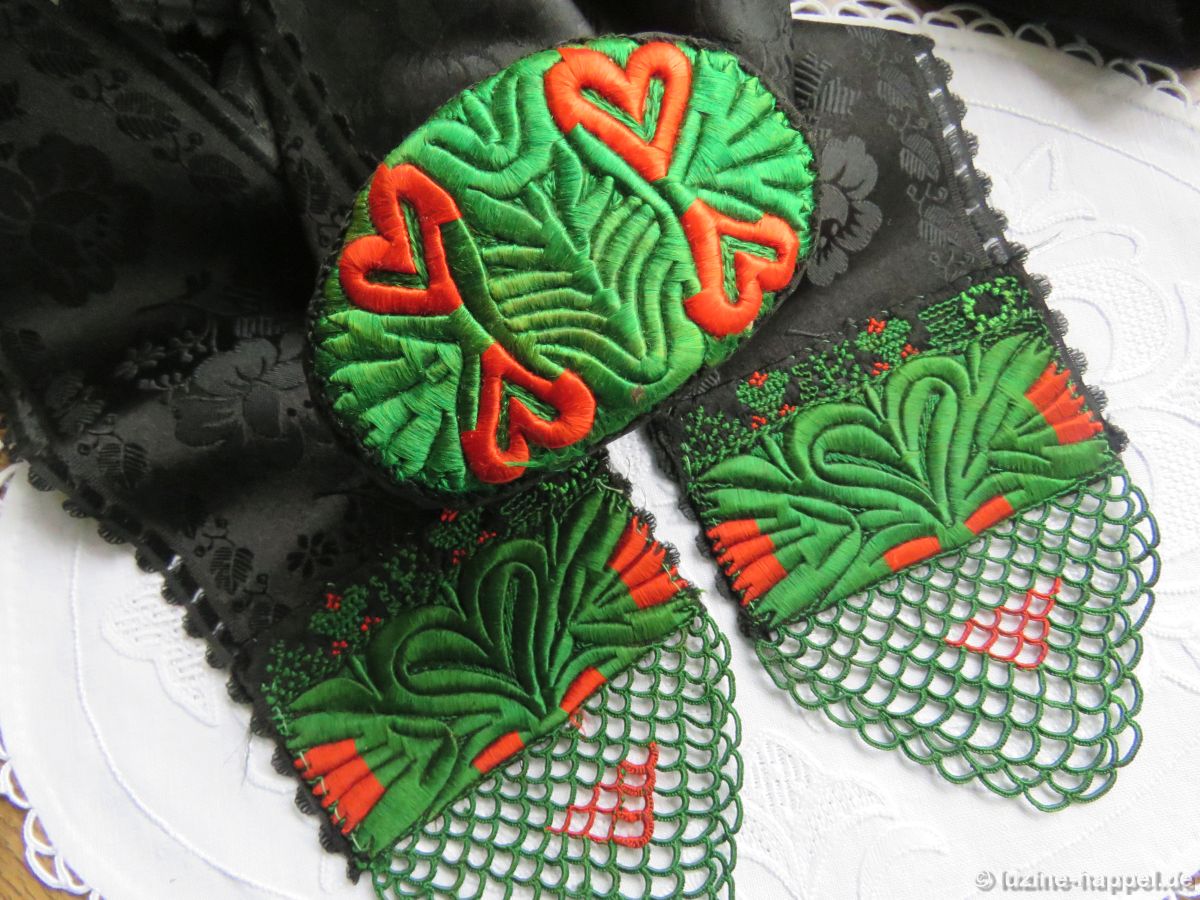
The bottoms of the caps were elaborately and usually colourfully embroidered. The colours always matched the colour of the costume – red, green or blue (purple).

Many artistic designs came from the template maker. Perfectly crafted templates were primarily covered with colourful embroidery using fine woolen yarn; silk threads were used later.

Much later, gold and silver bullion and sequins were added.

The older, somewhat wider caps were usually additionally decorated at the edges with narrow single templates, which were also finely embroidered.

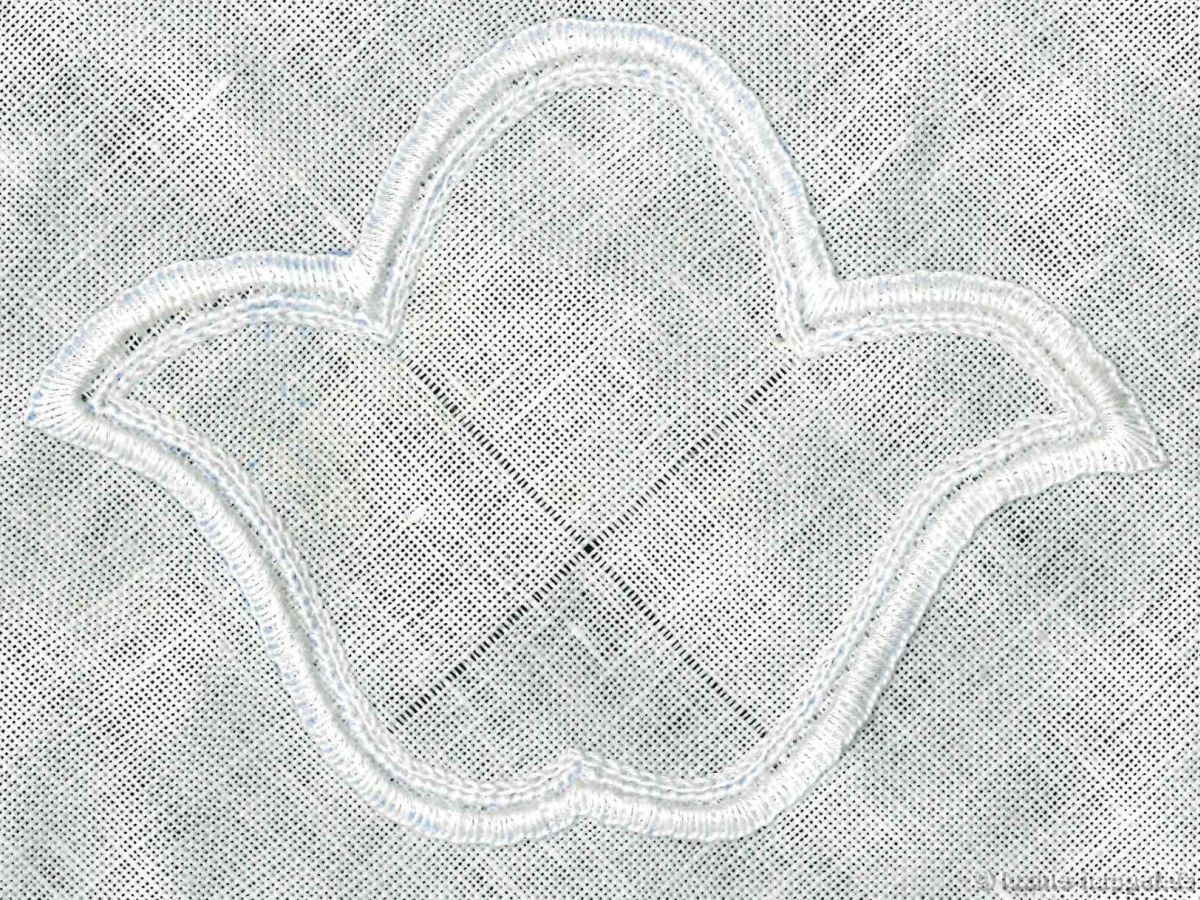
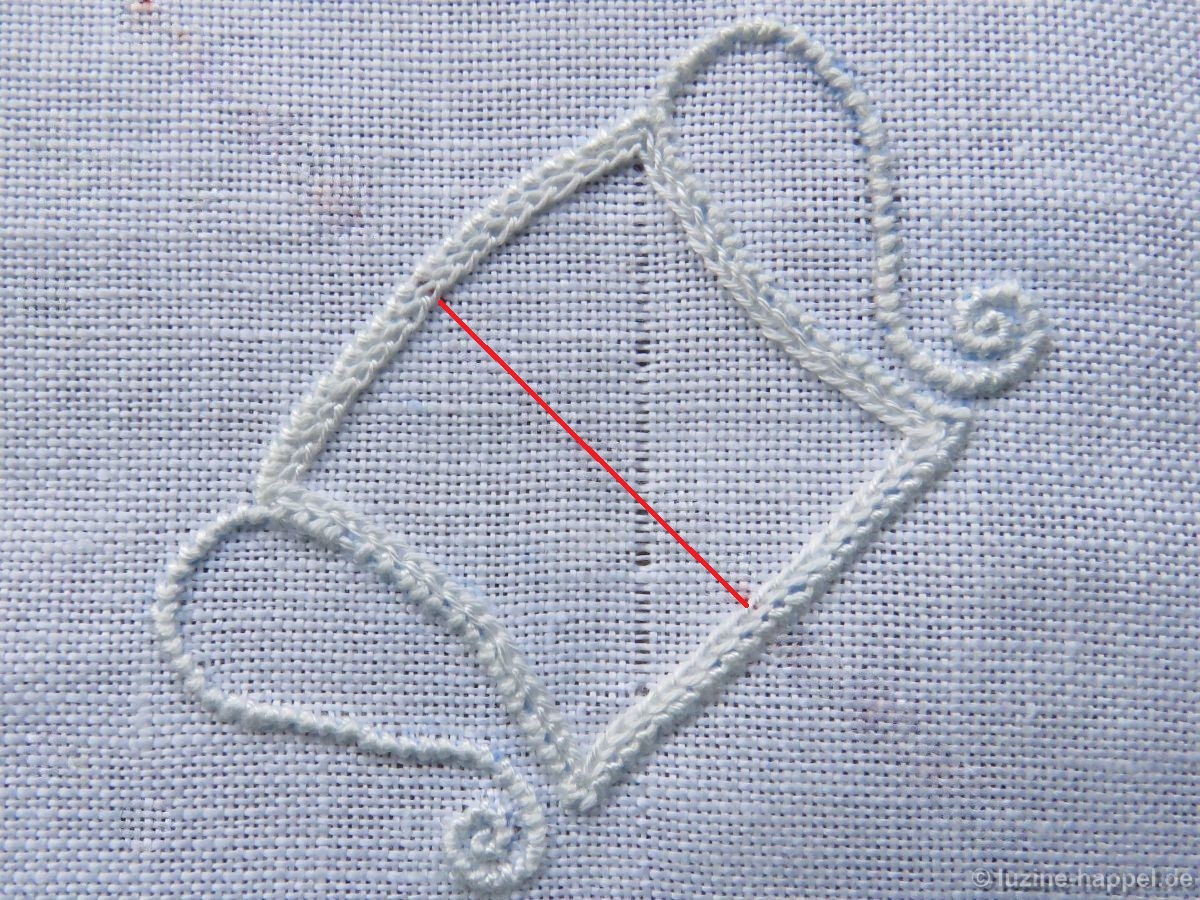
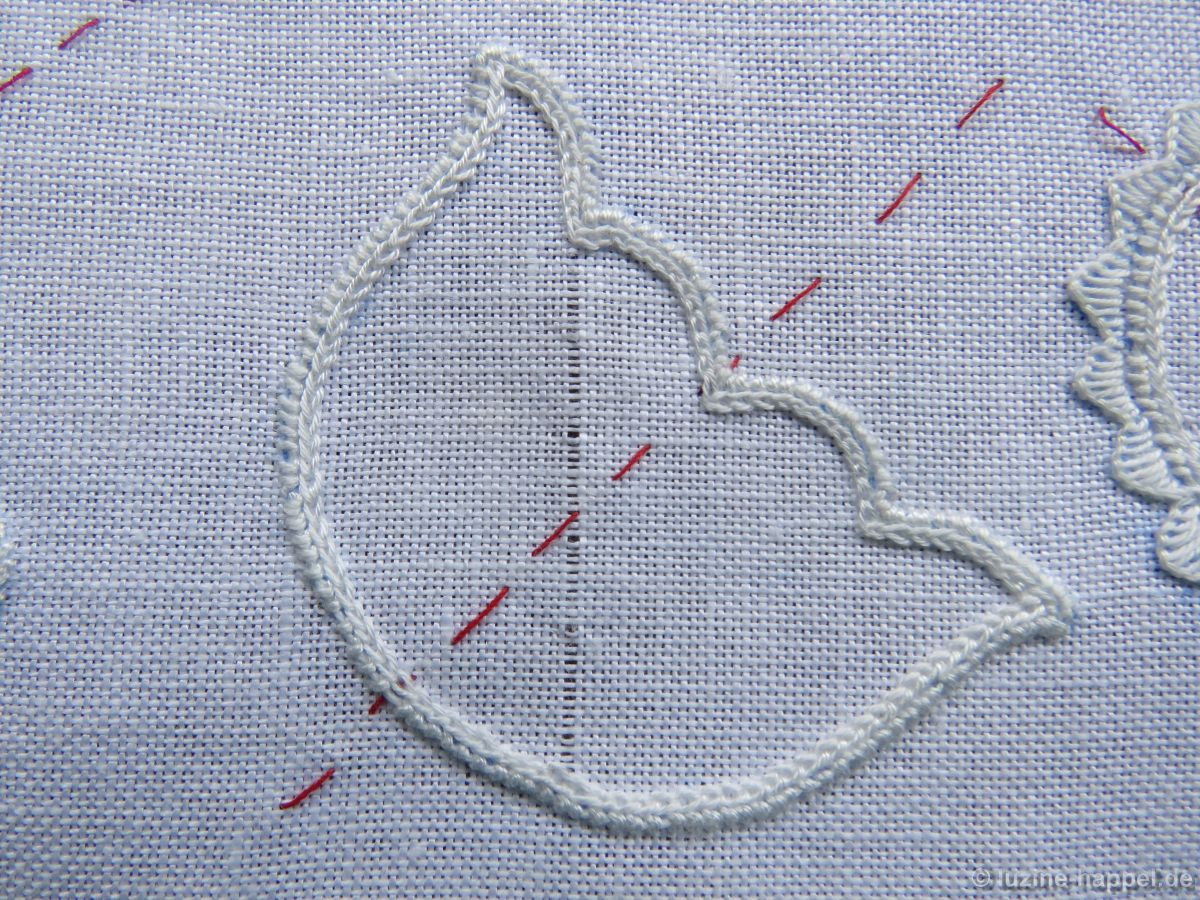
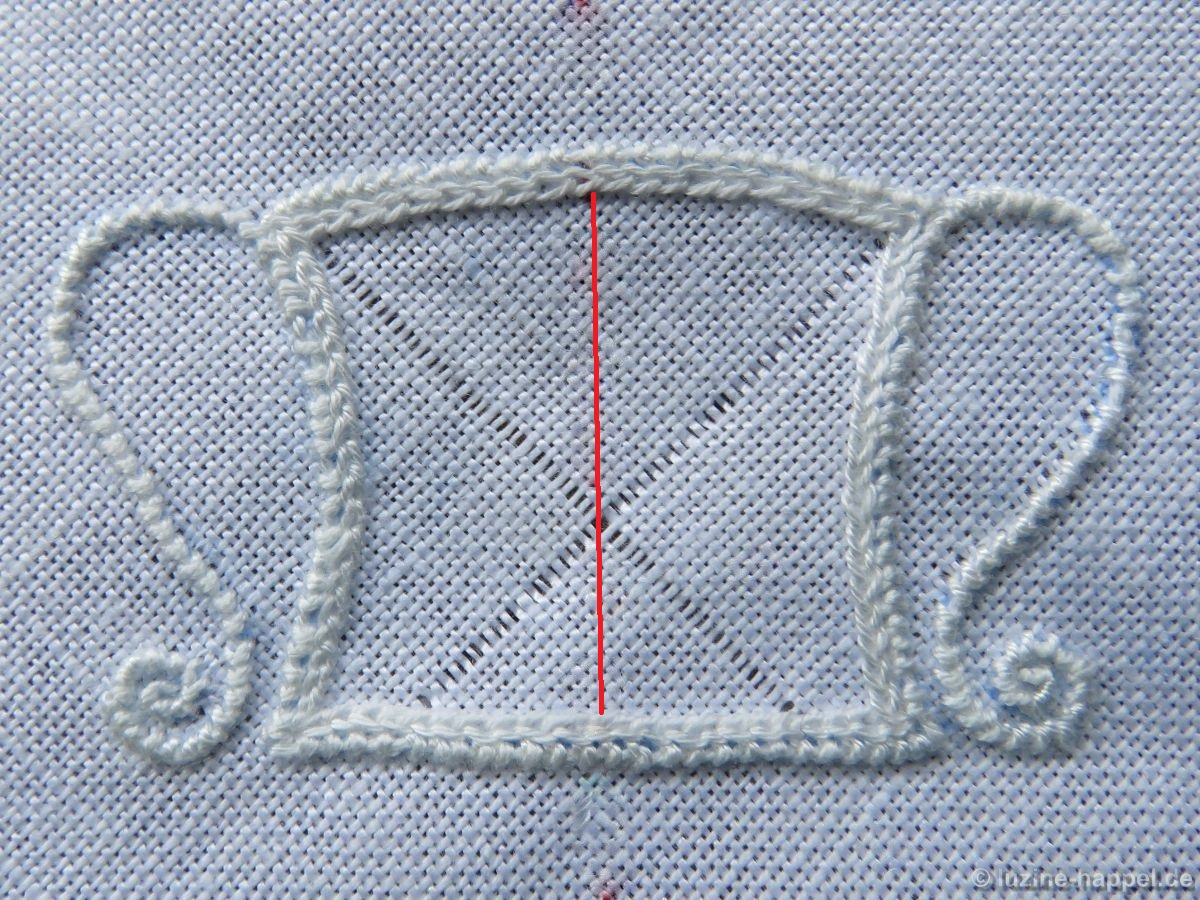
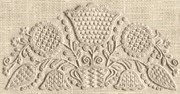
Drawing on these rich design arrangements as inspiration, I asked the designer Christa Waldmann to draw outlines for whitework. Look forward to seeing the beautiful results next week.

Each cap had matching (in colour) cap bands, the Kappenschnüre.

The ends of these cap bands were made very differently – this is a subject of a future article.

Schwalm Women’s Hairstyle – The “Schnatz”

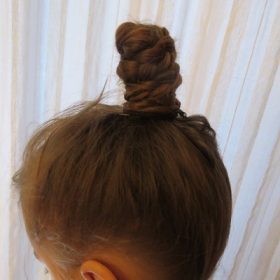
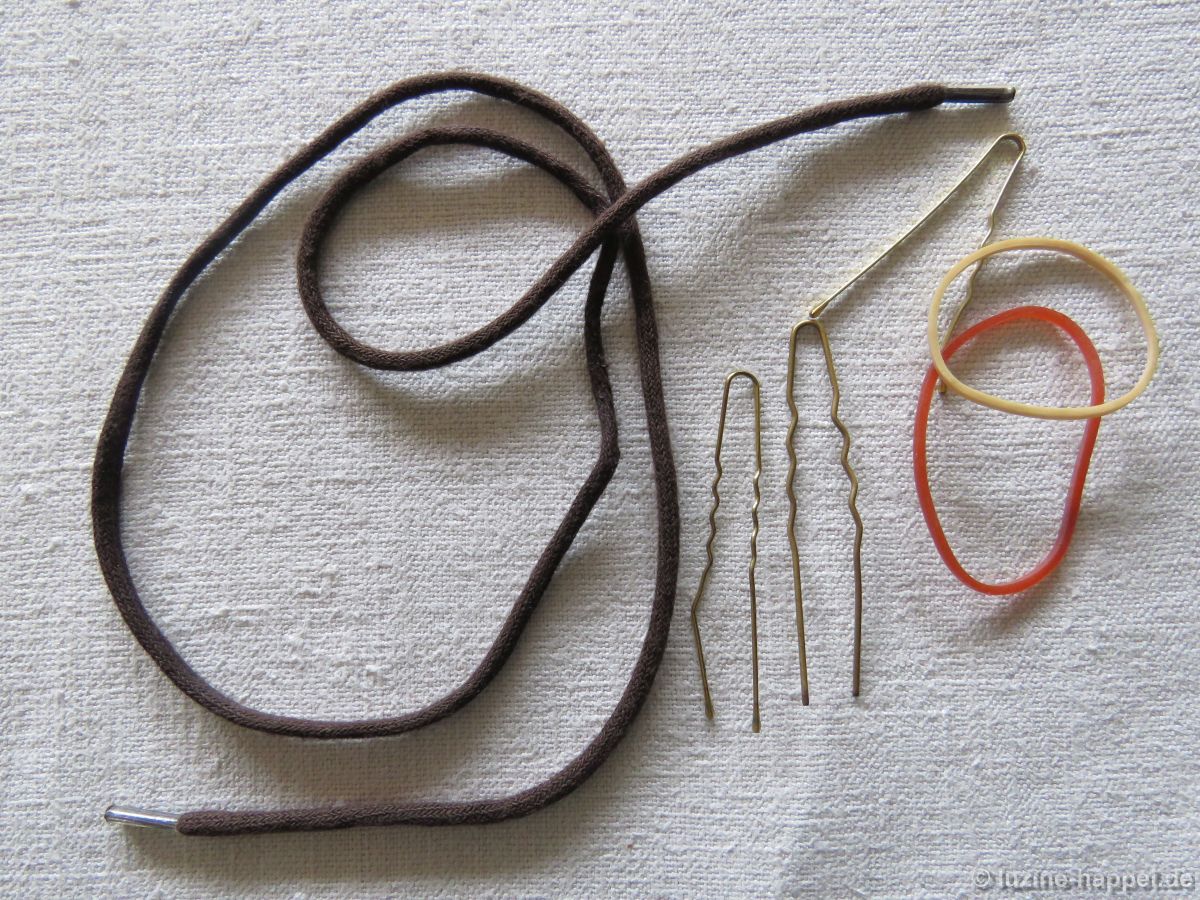
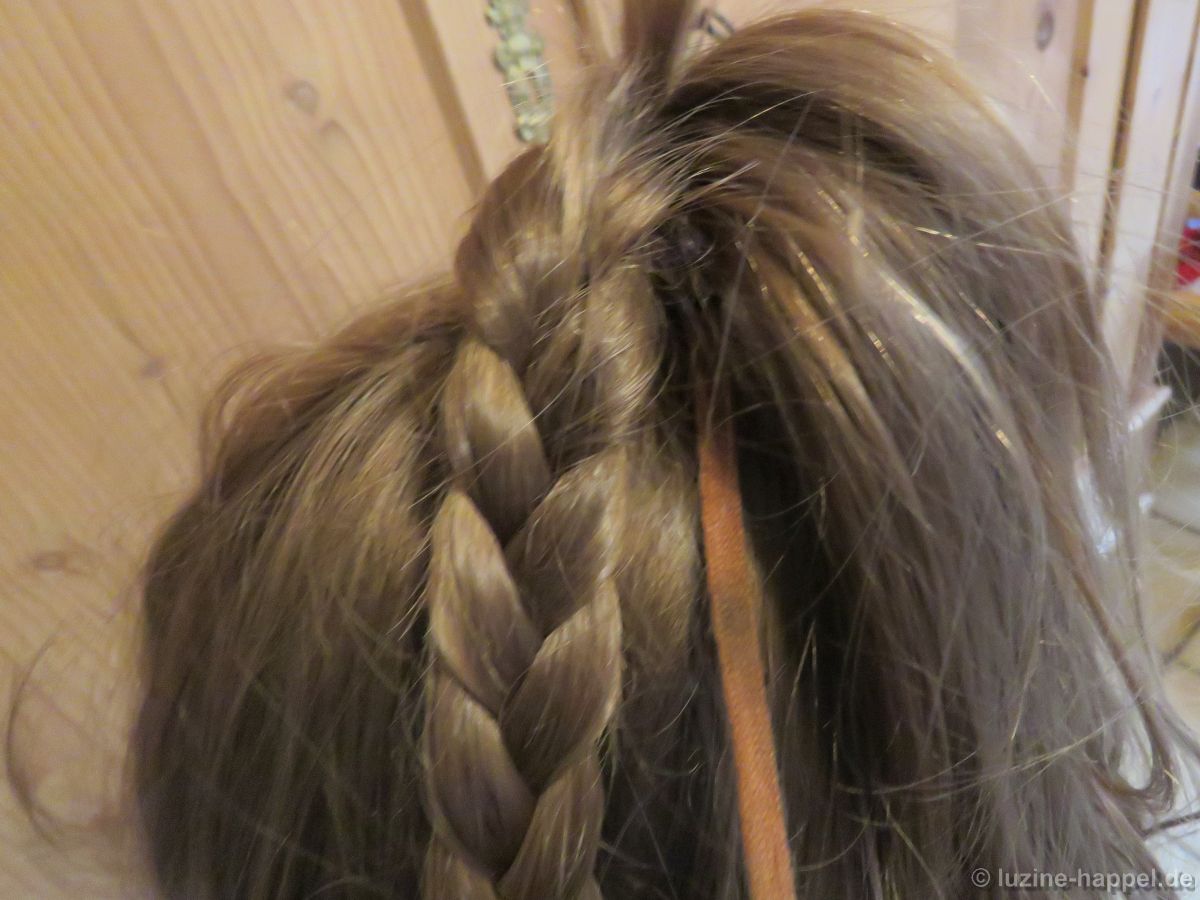
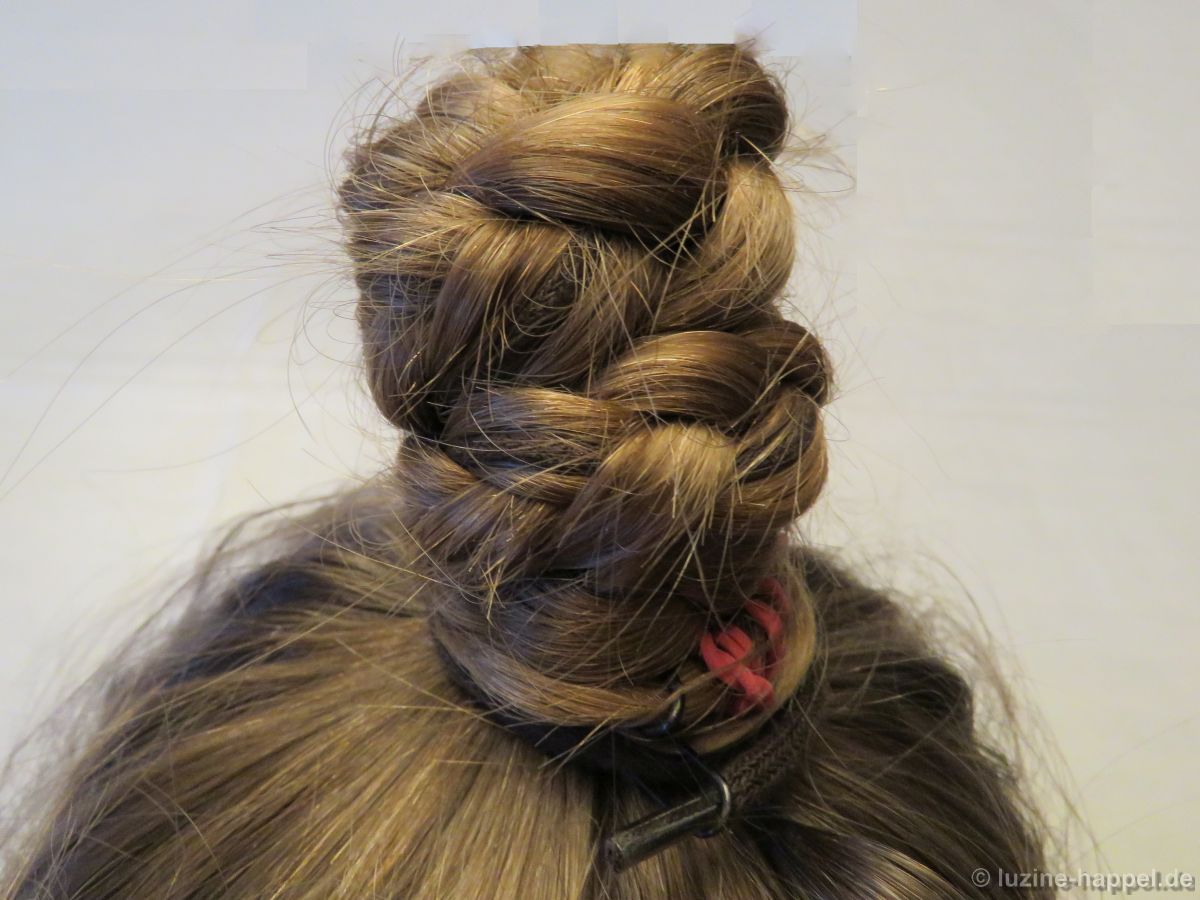
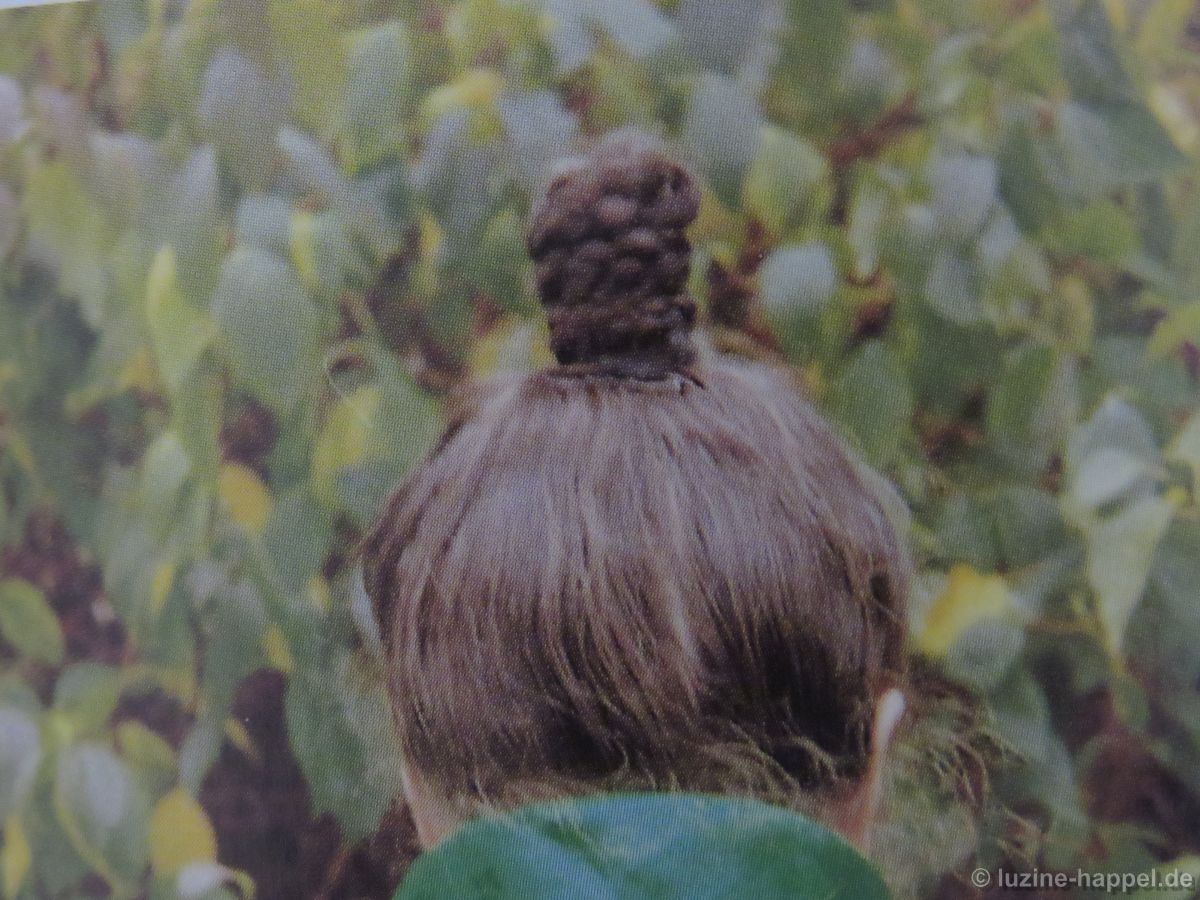
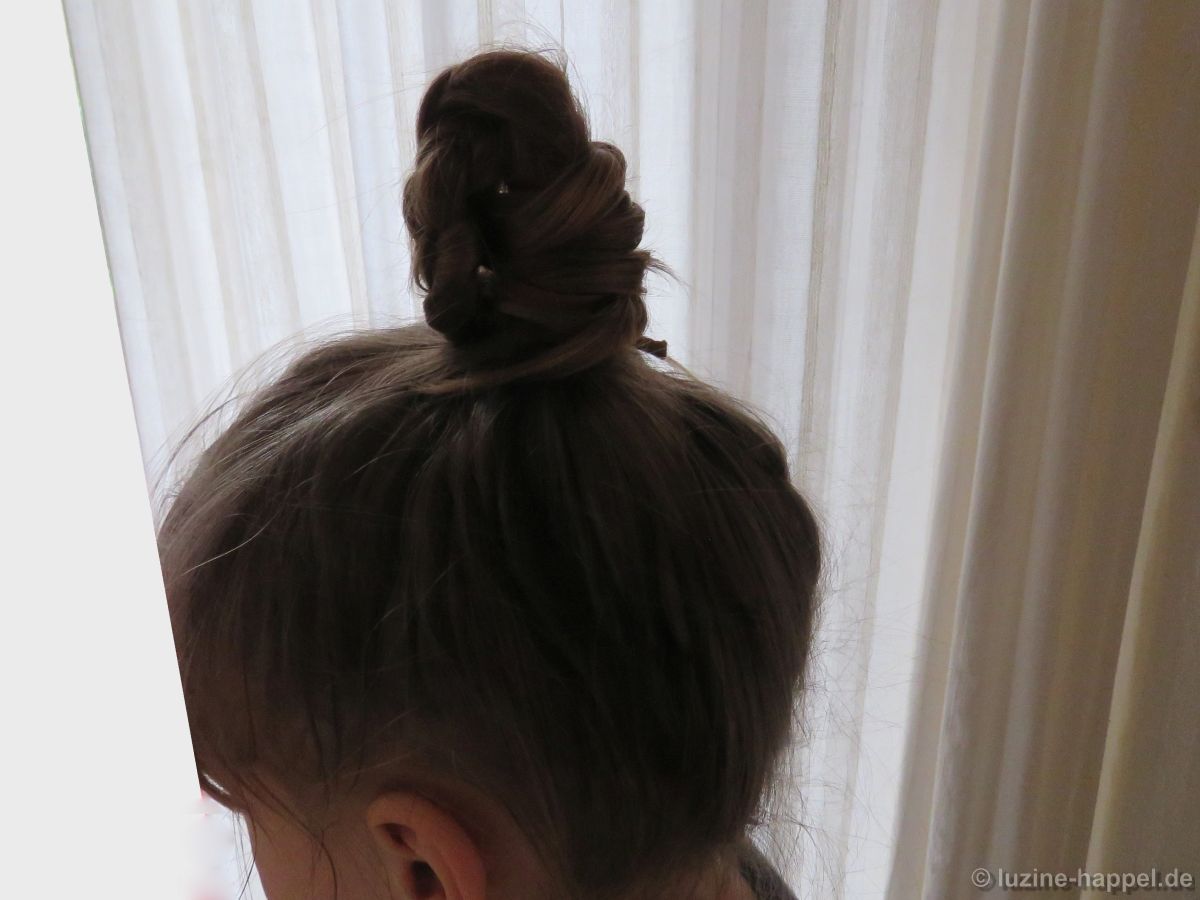
Schwalm girls and women wore their hair long without a fringe (bangs). The hair was styled into a knot, which in the Schwalm is known as Schnatz. To create such a hairstyle, women needed certain accoutrements: a long, thin band or cord (like a shoestring), rubber bands, and some hairpins.

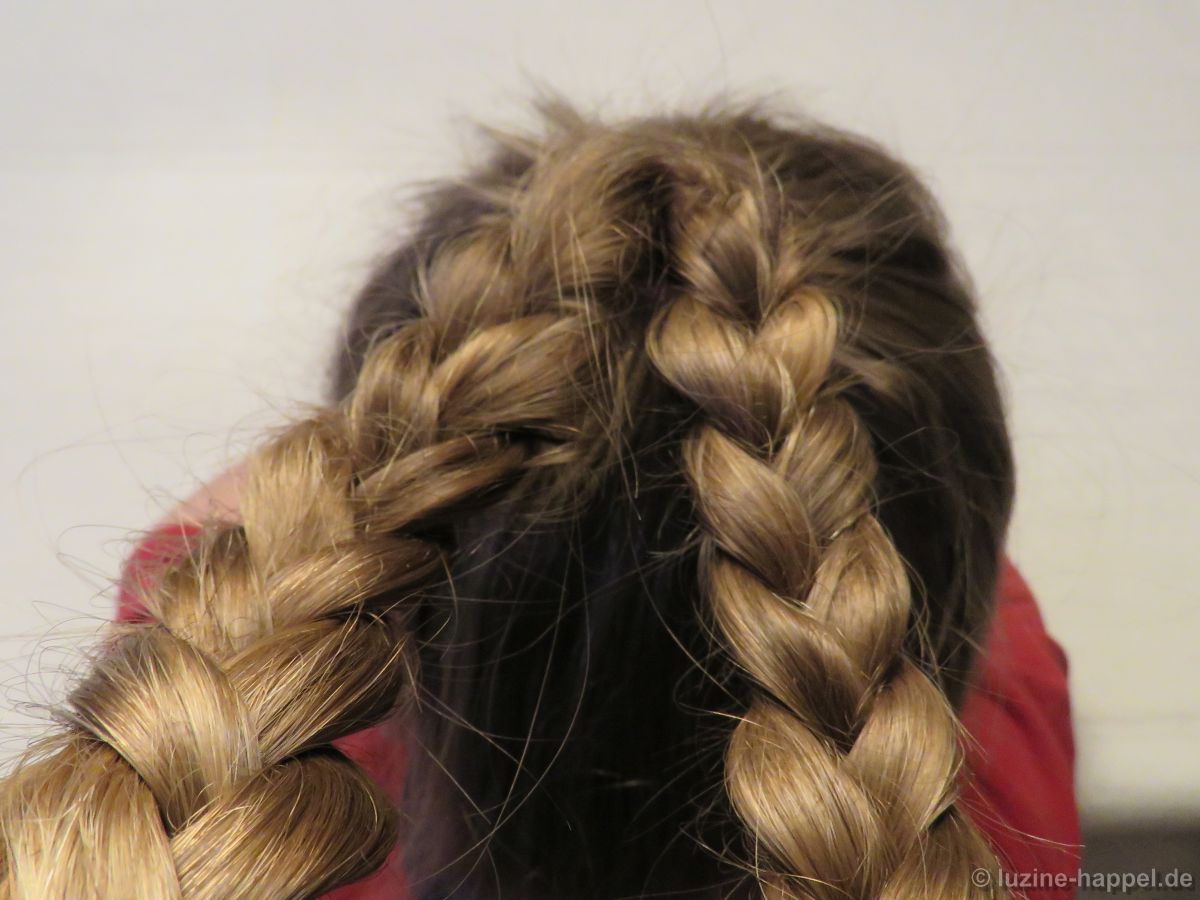
The hair was combed from all sides and pulled firmly upward to be bound on top of the head. This is easily achieved by quickly throwing the head downward.

The hair was divided into two plaits.

The band was worked into one of the plaits.

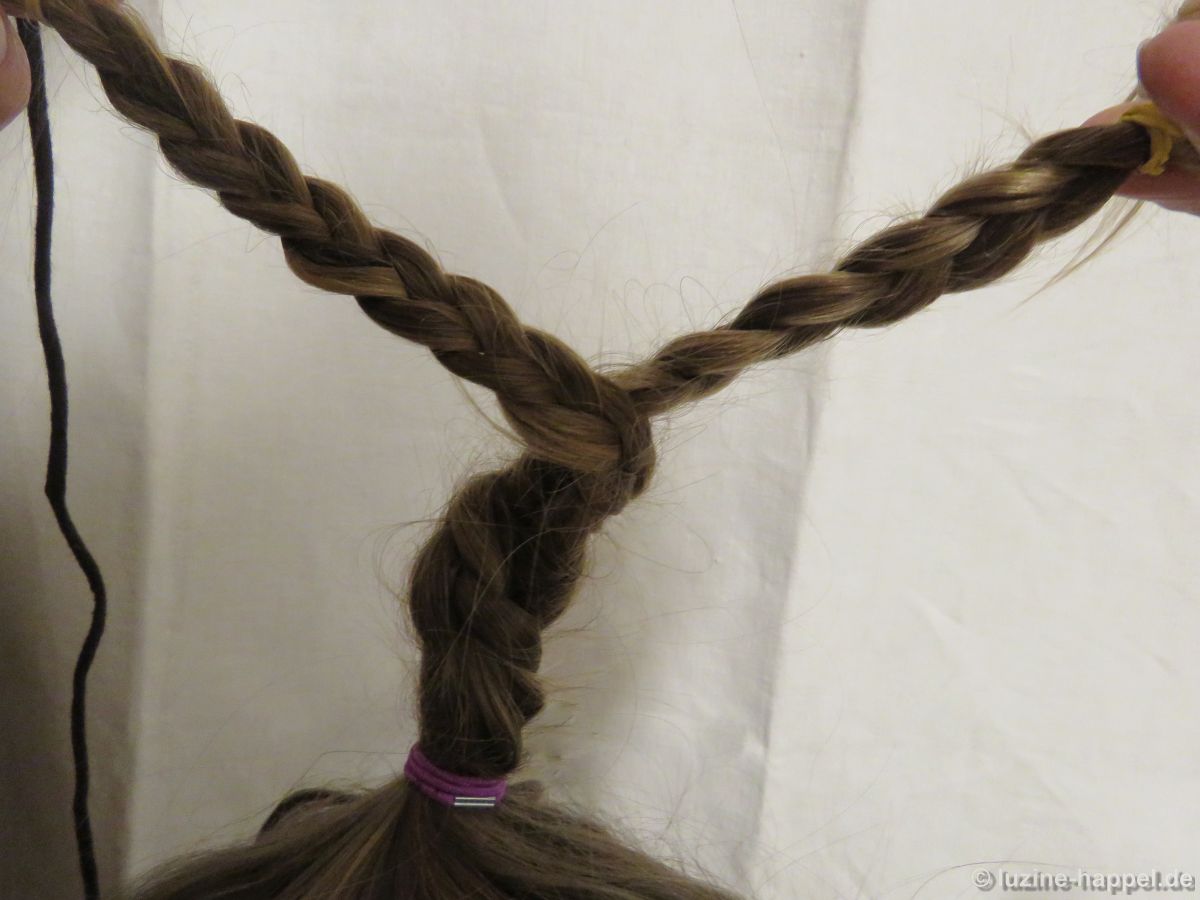
Both plaits were twirled up from the head as high as the finished knot should reach.

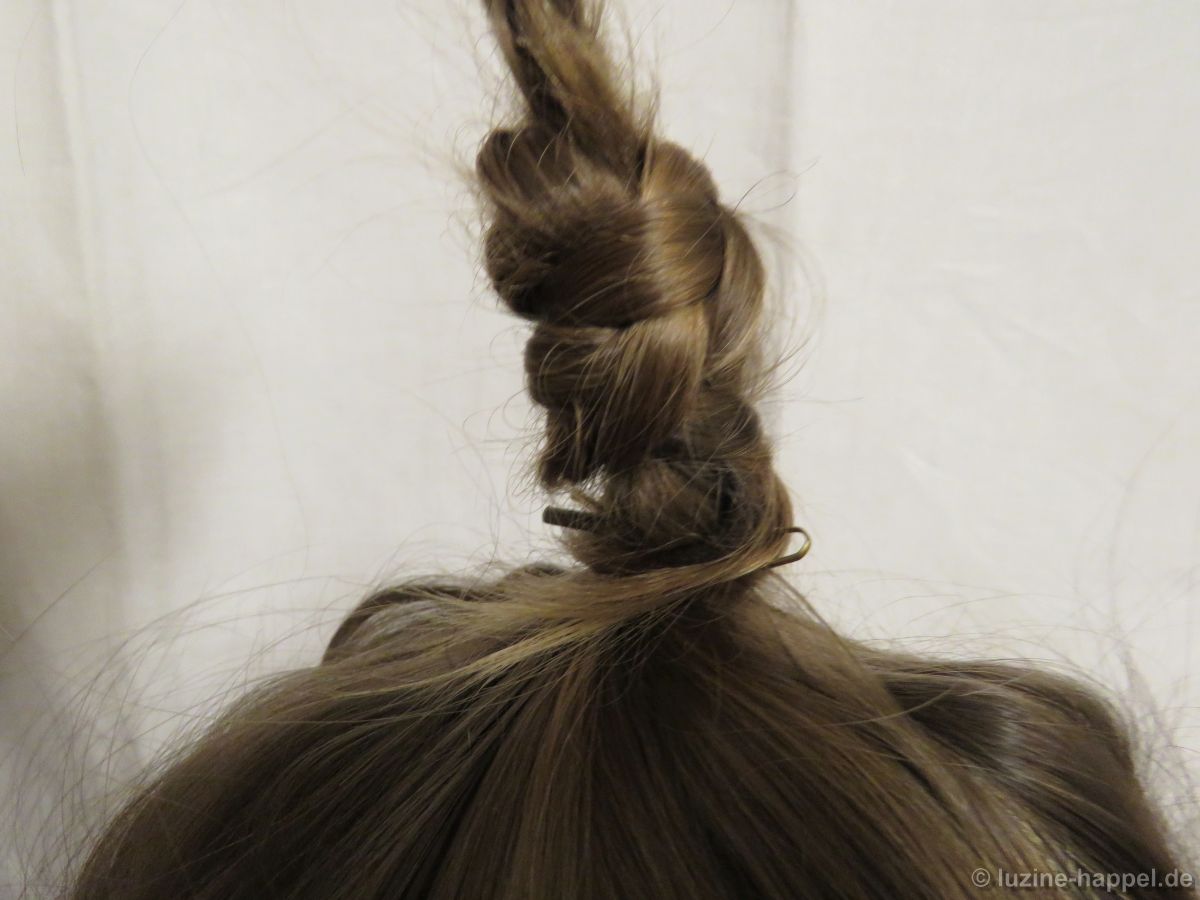
One of the plaits (the one with the band) was held up while the other was wrapped downwards around the twirled part and fastened at the head with hairpins.

Now the second plait – the one with the band – was wrapped around the established knot. Because the band is longer than the plait, it is wrapped around the bottom of the knot and fastened with hairpins.

With some practice a perfect and fancy hairdressing was achieved.

It was placed on top of the head, approximately in the middle between the ears.

The Schwalm women needed this somewhat curious hairstyle to be able to wear their special headdresses.

The little caps were placed over the knots.

A Very Special Easter Egg

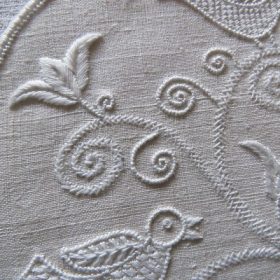
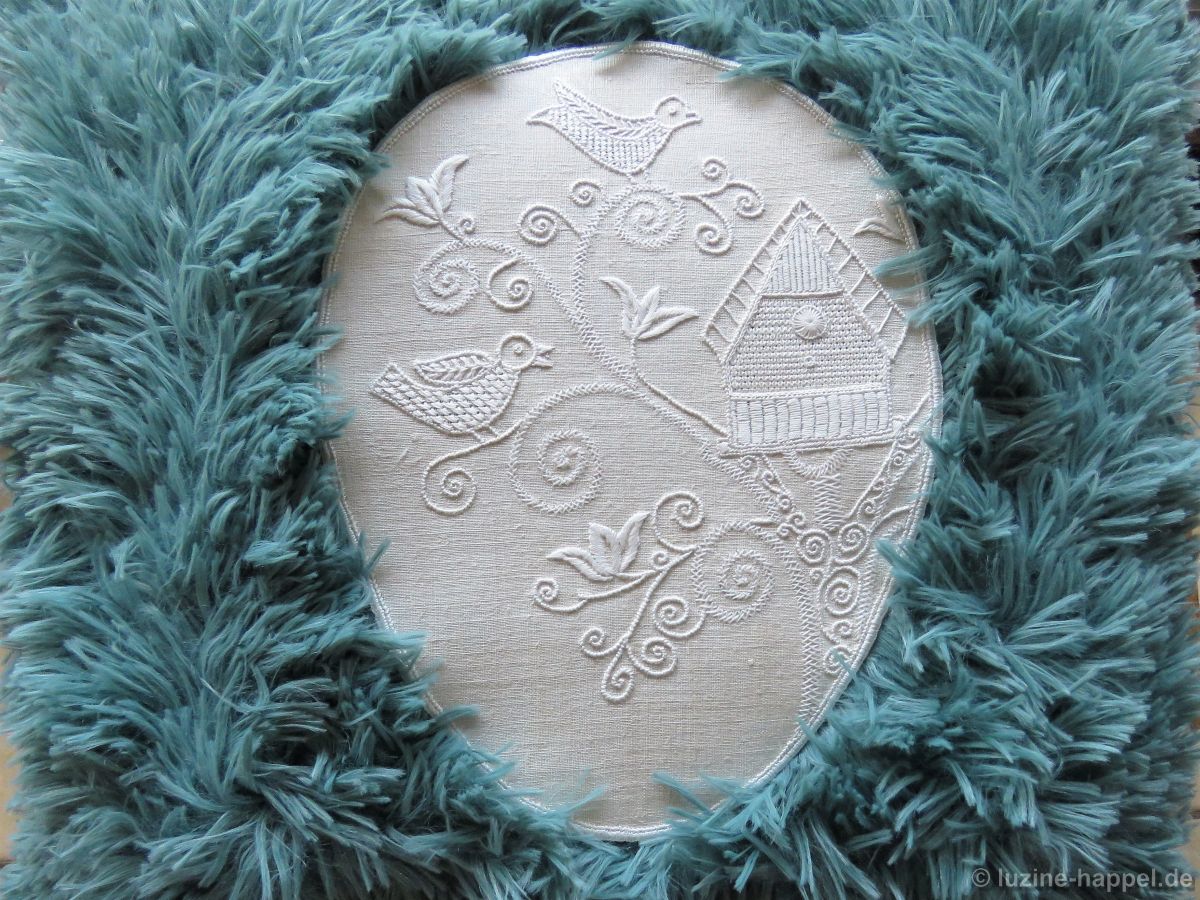
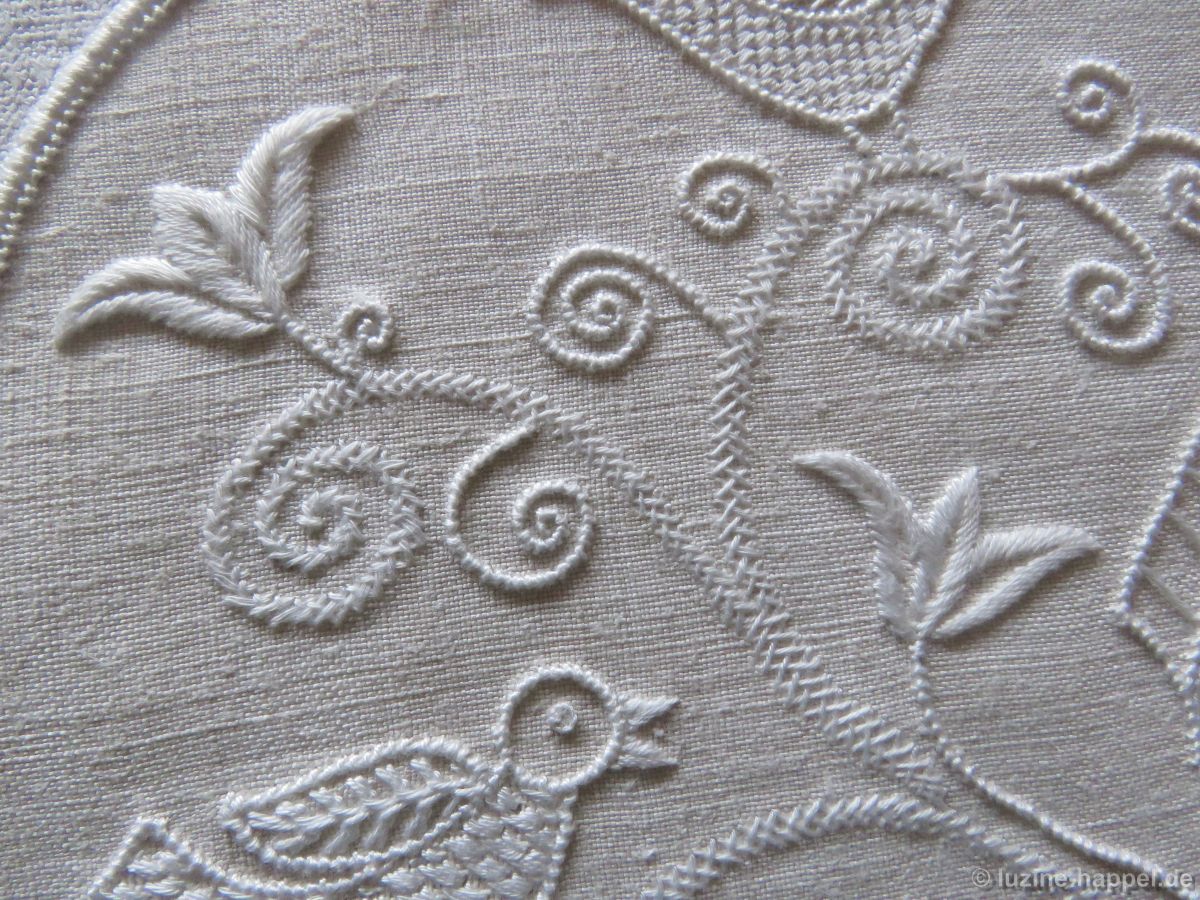
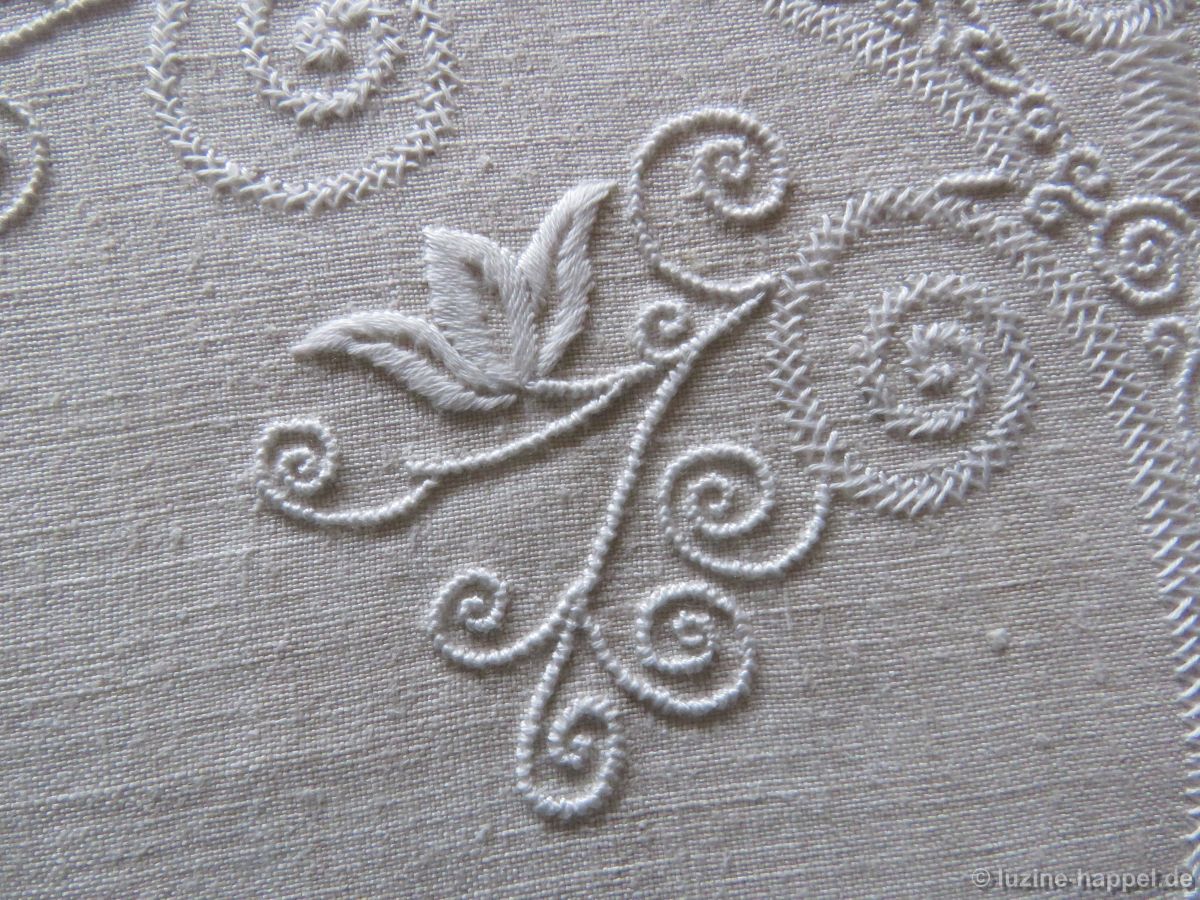
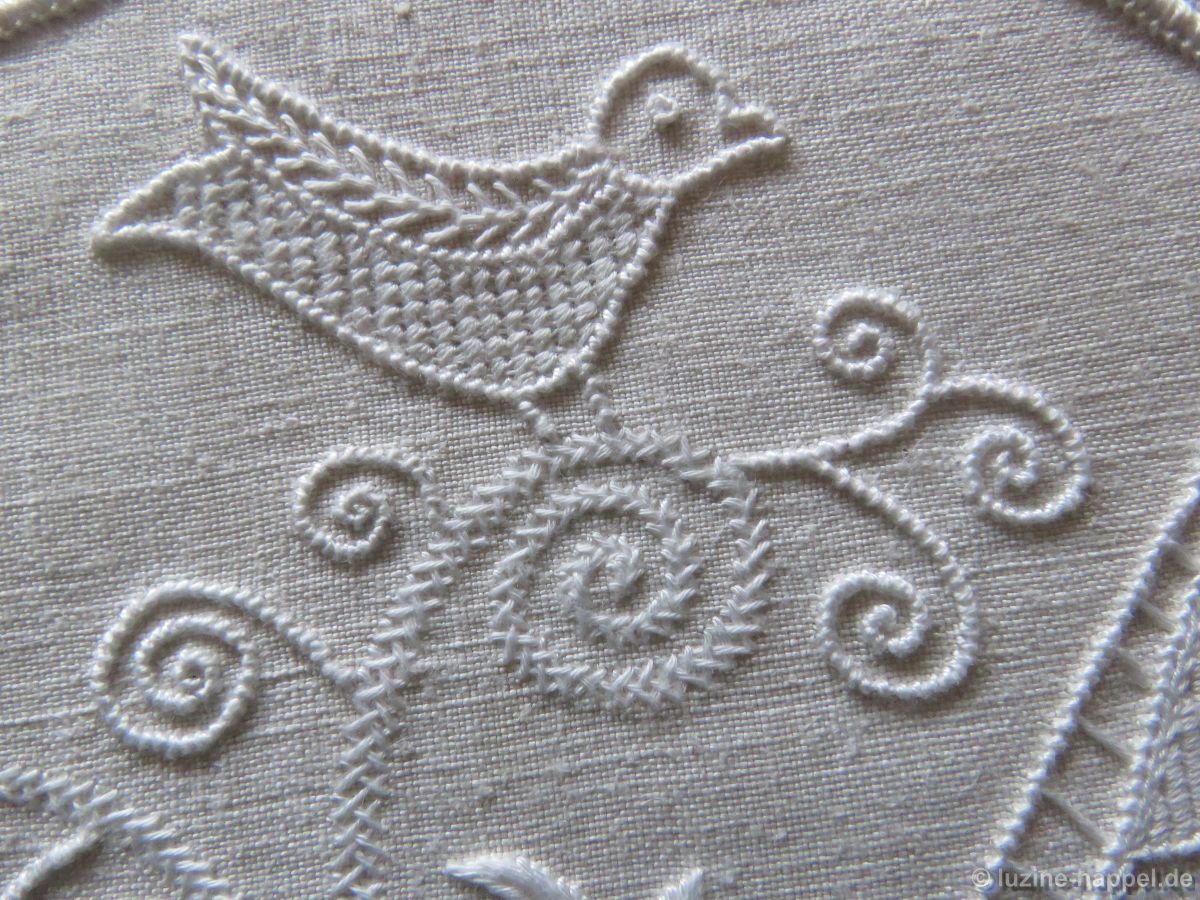
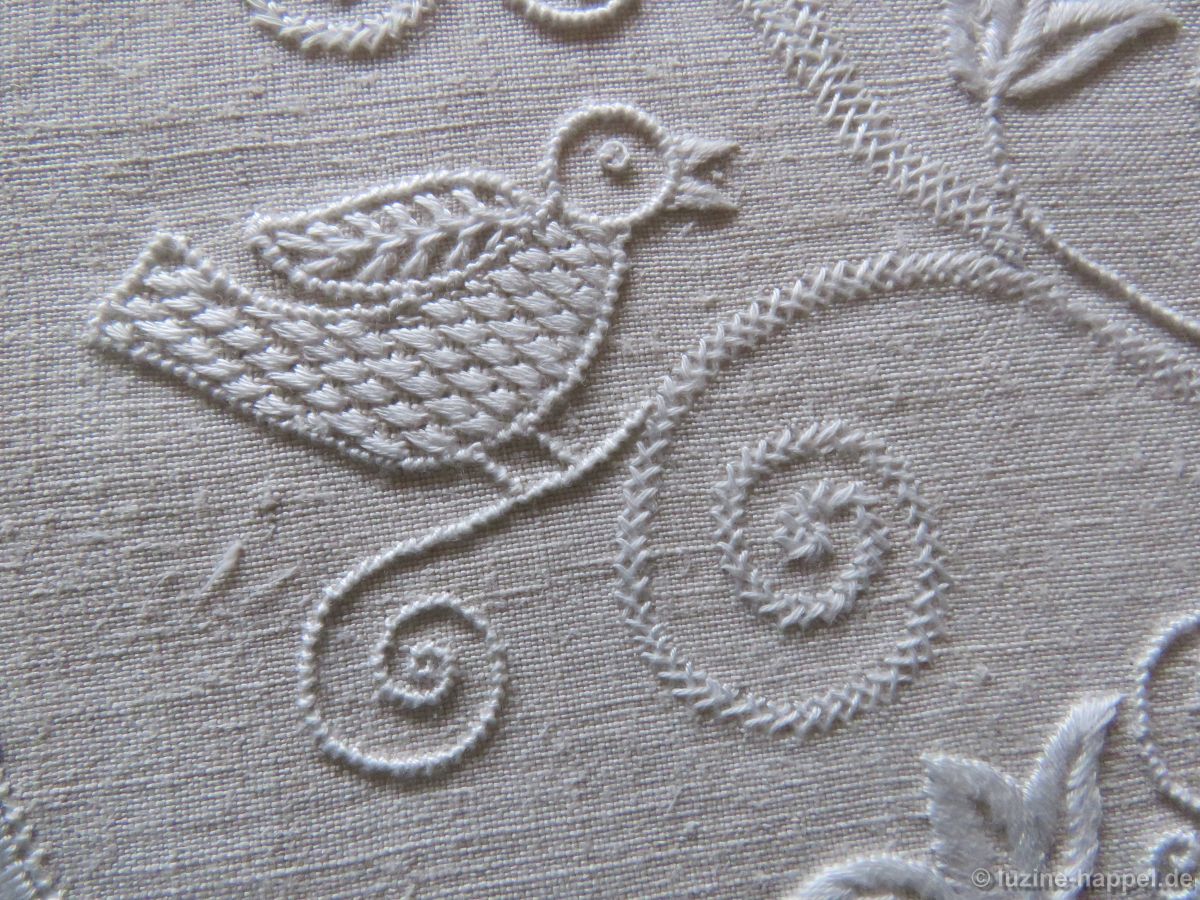
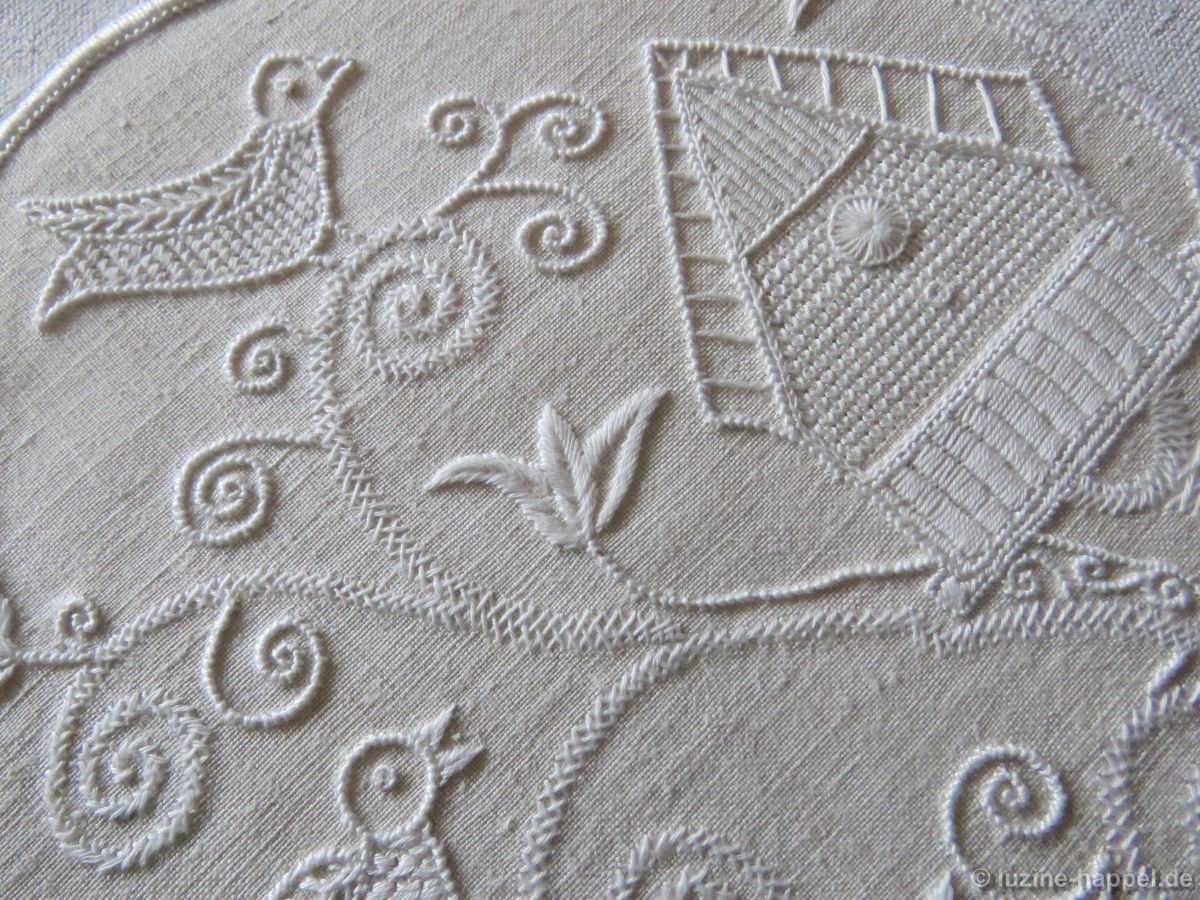
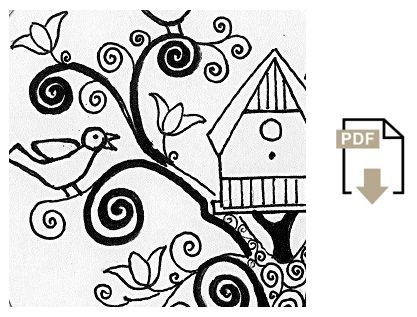
The artist Gudrun Hartwig created an extravagant, interesting, and spring-like design within an egg shape. Here a pillowcase is decorated with this embroidery.

Flowers, spiral branches, and sprigs

sprout out of the tree. They show the power and beauty of nature awakening.

A pair of birds

finds housing there.

It is an extravagant design that guarantees both fun in the embroidering and plenty of room for practicing different stitches and stitch elements like tendrils, forks, and eyelets.

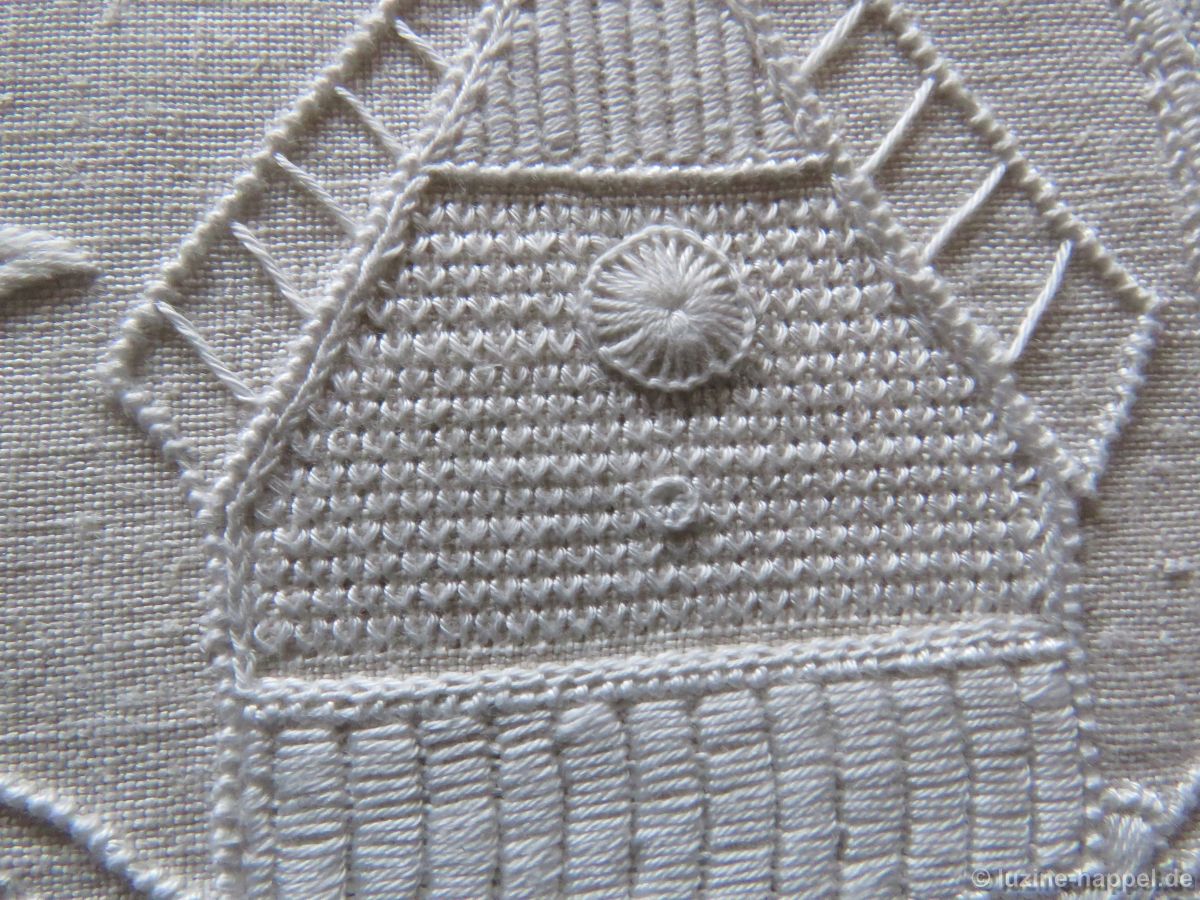
Filling Pattern – No. 545

category: Limet-Filling pattern
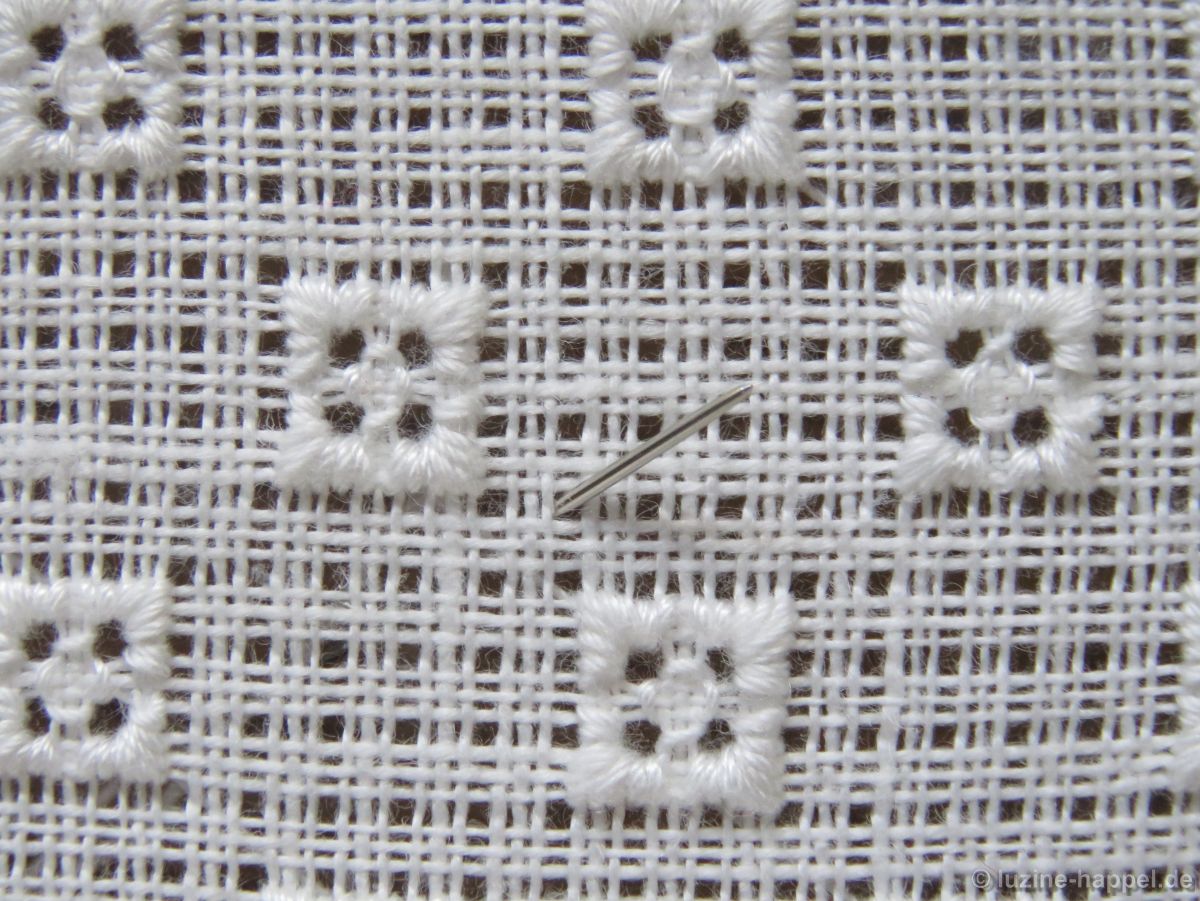
stitches used: nine-stitch sections of the simple Square Eyelet, Four-Sided, and Rose
center: square (in other shapes, longitudinal axis: group of three threads)
one pattern segment = 24 threads

used here: linen with 13.5/cm threads and coton à broder No. 25 for the small shirt buttons and No. 20 for the Rose stitches

Instructions for left-handers can be found at the end of this article.

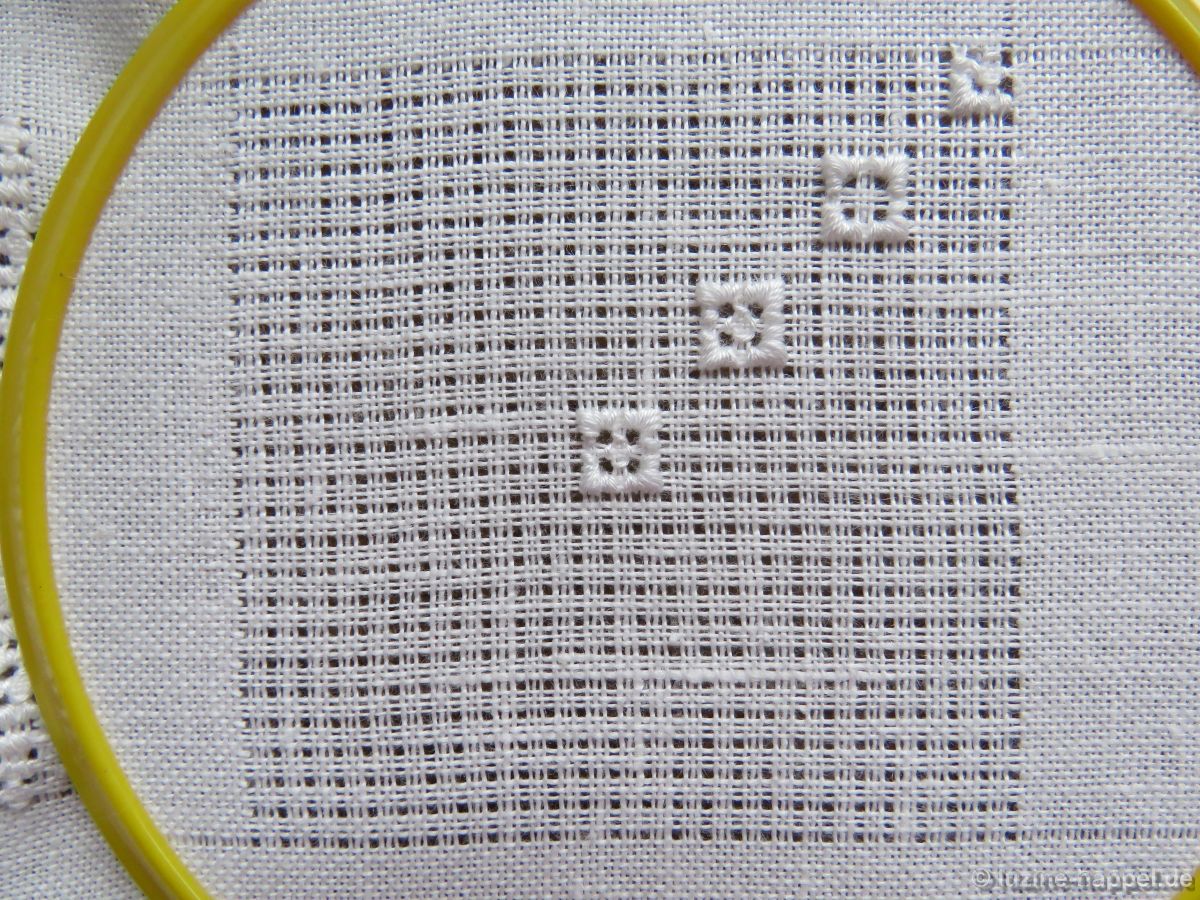
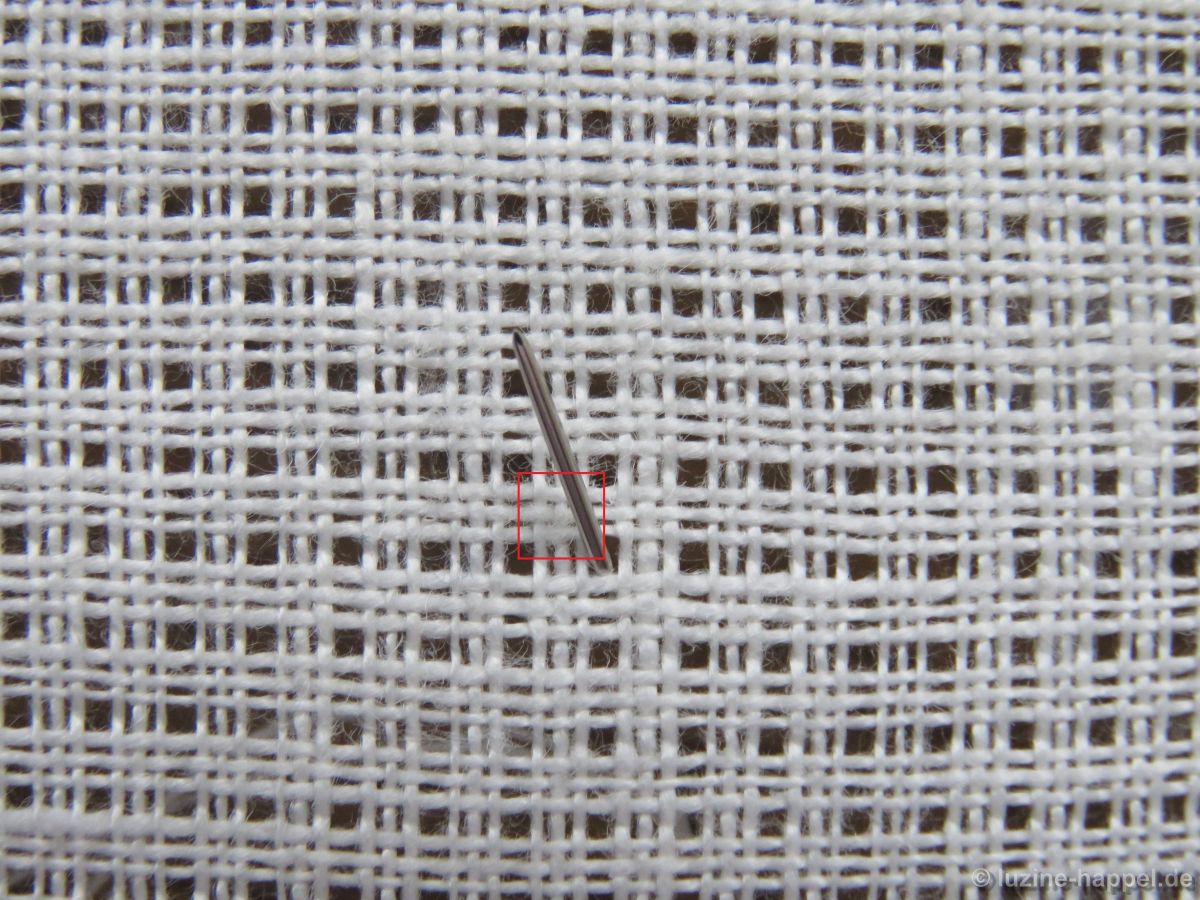
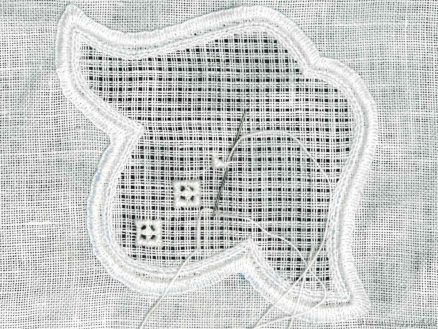
First, establish a Limet grid with a square in the center by cutting 1, leaving 3 both vertically and horizontally.
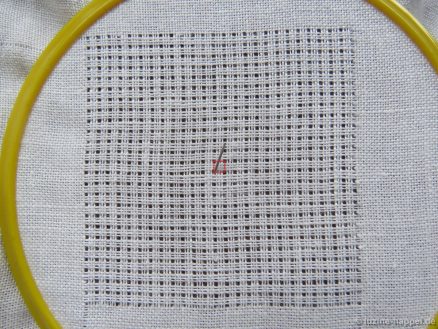
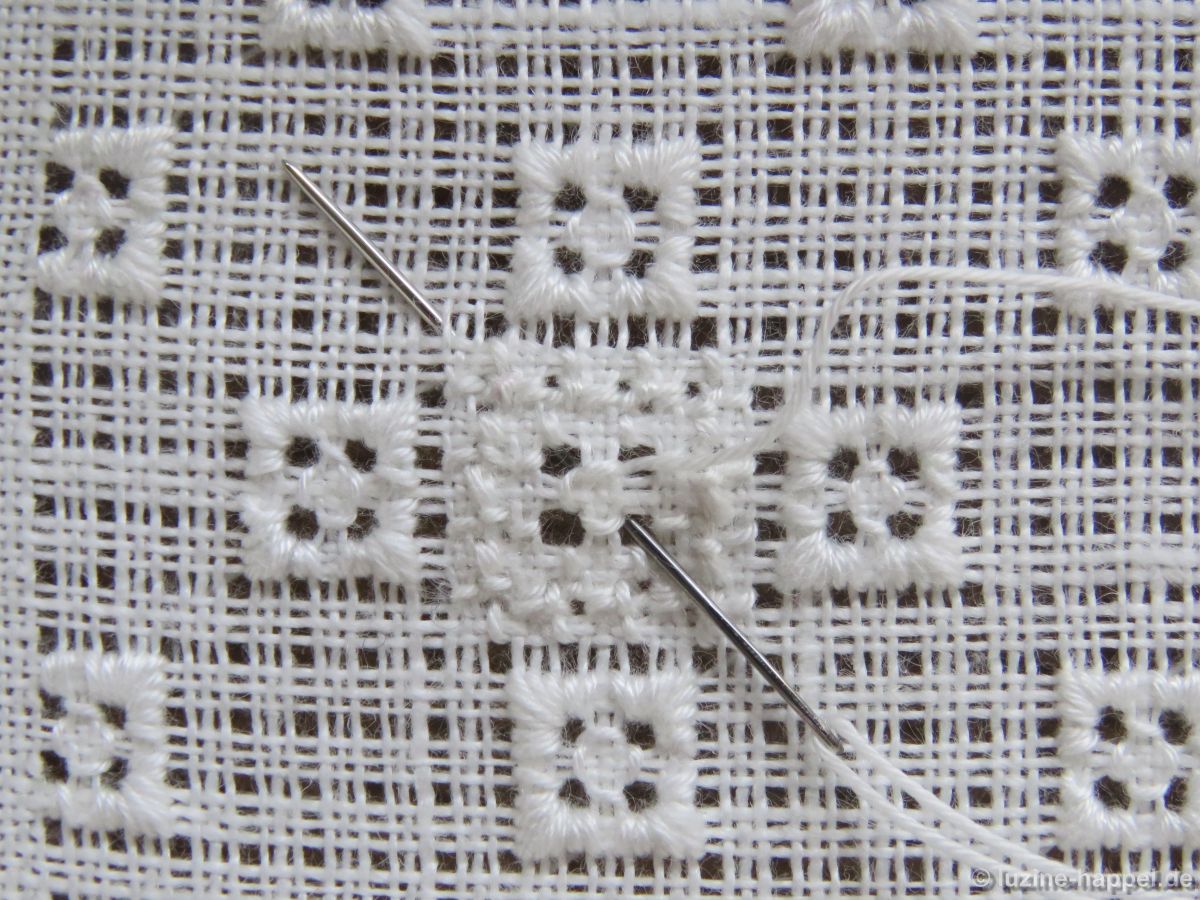
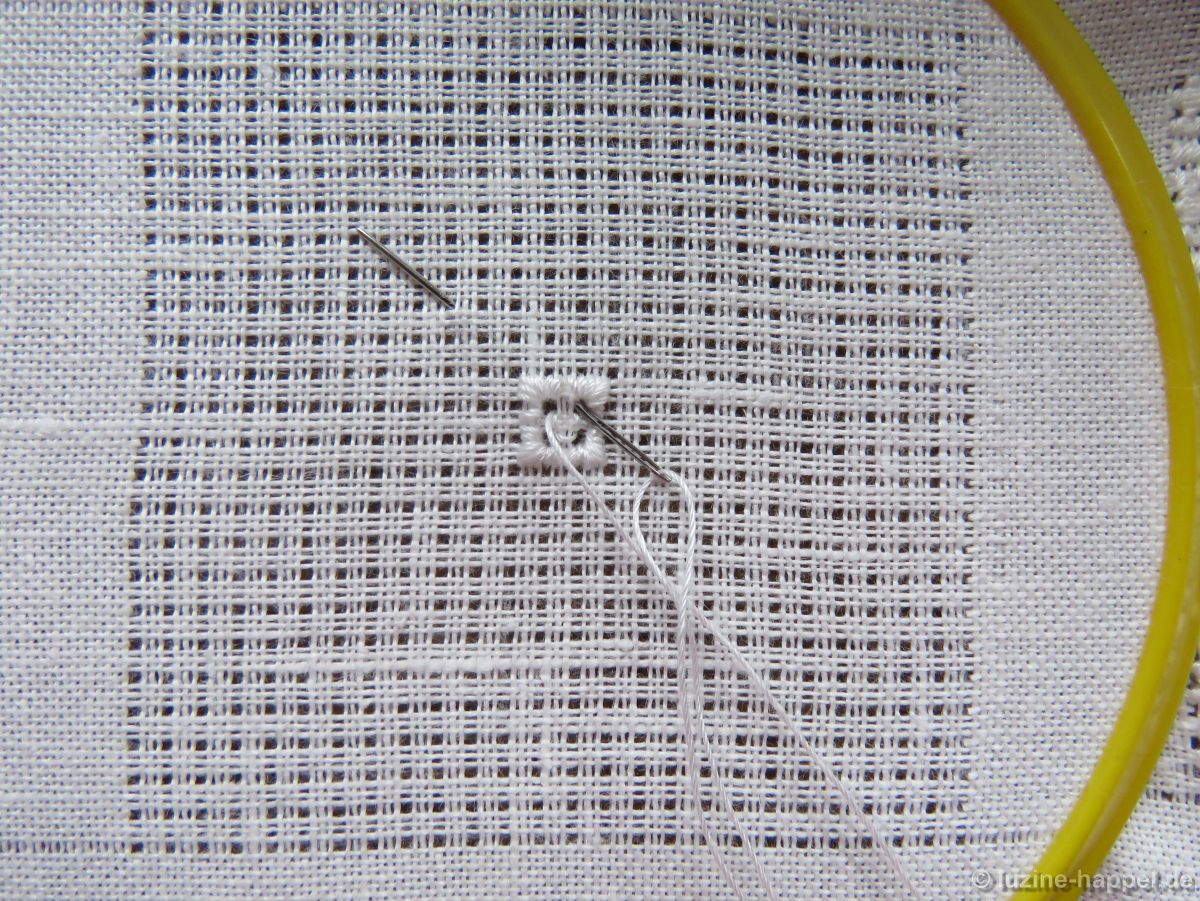
Work one small shirt button around the center square. After completing the Four-Sided stitch, bring the needle up in the next center – three squares (nine fabric threads) up and four squares (twelve fabric threads) to the right. The travelling working thread on the back is covered later by subsequent stitches.
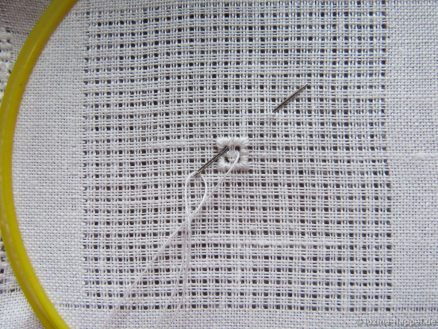
From there work a second small shirt button. Continue working small shirt buttons in the established way.
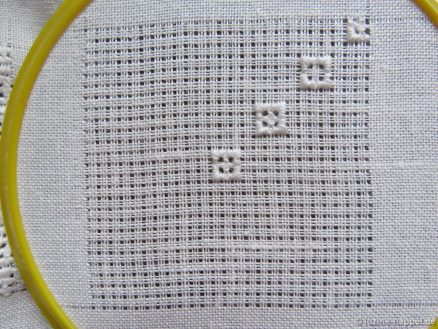
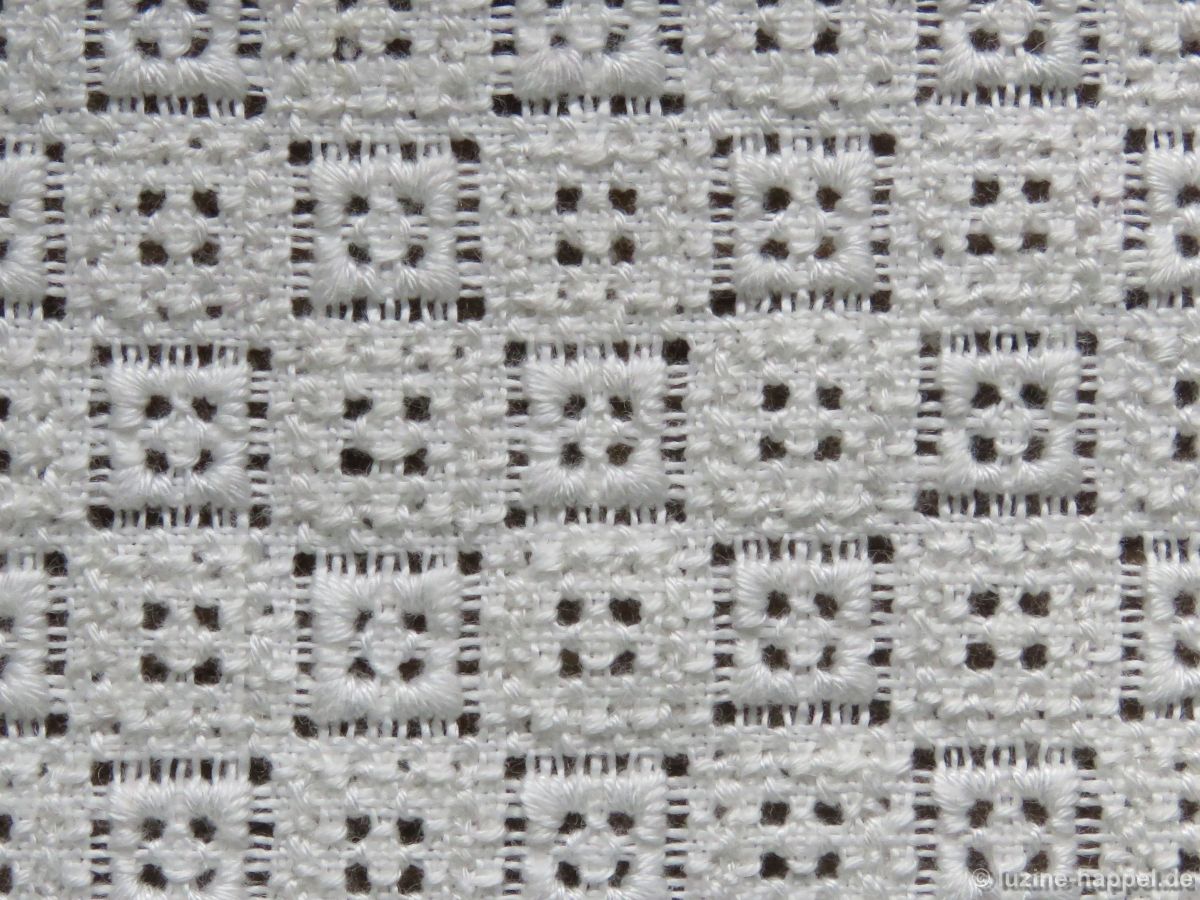
Work small shirt buttons over the entire shape.
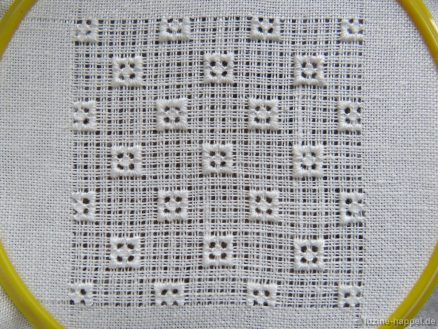
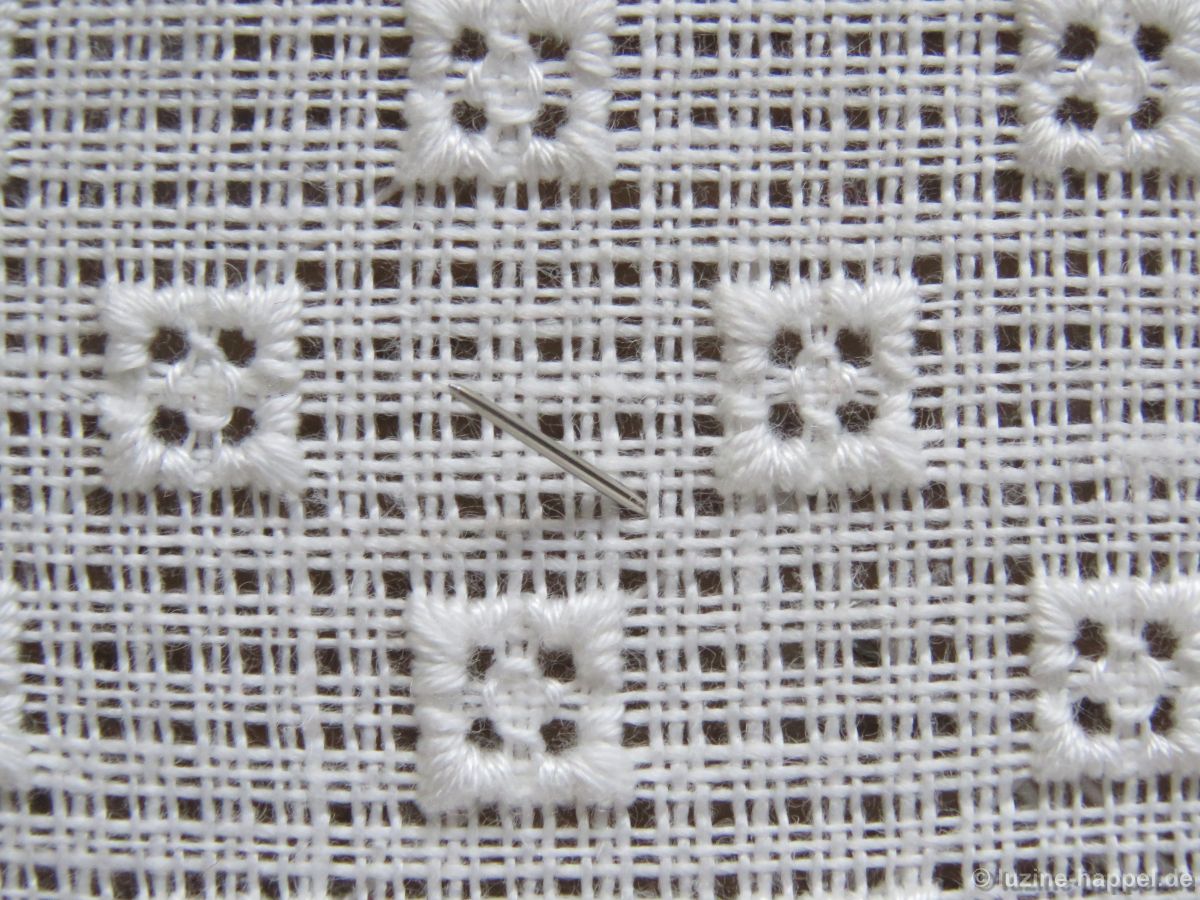
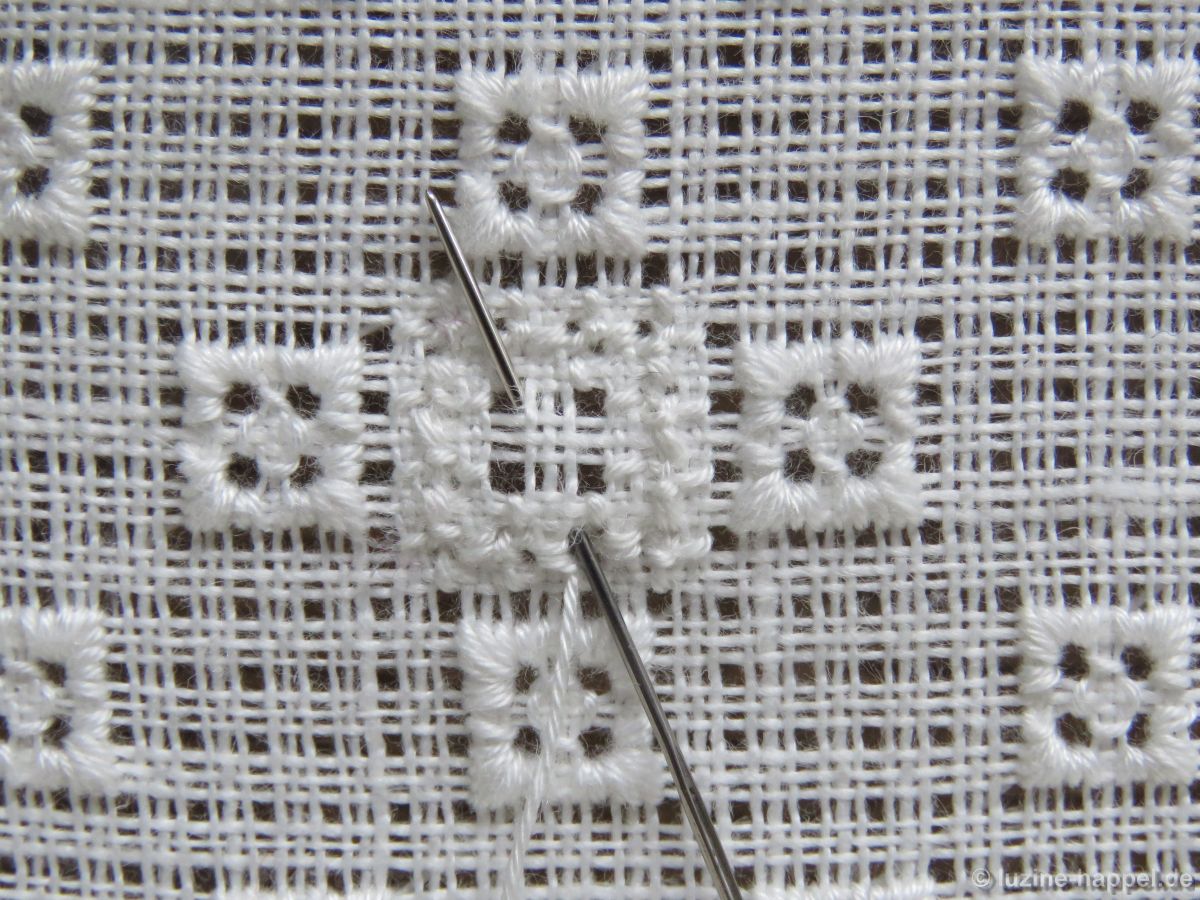
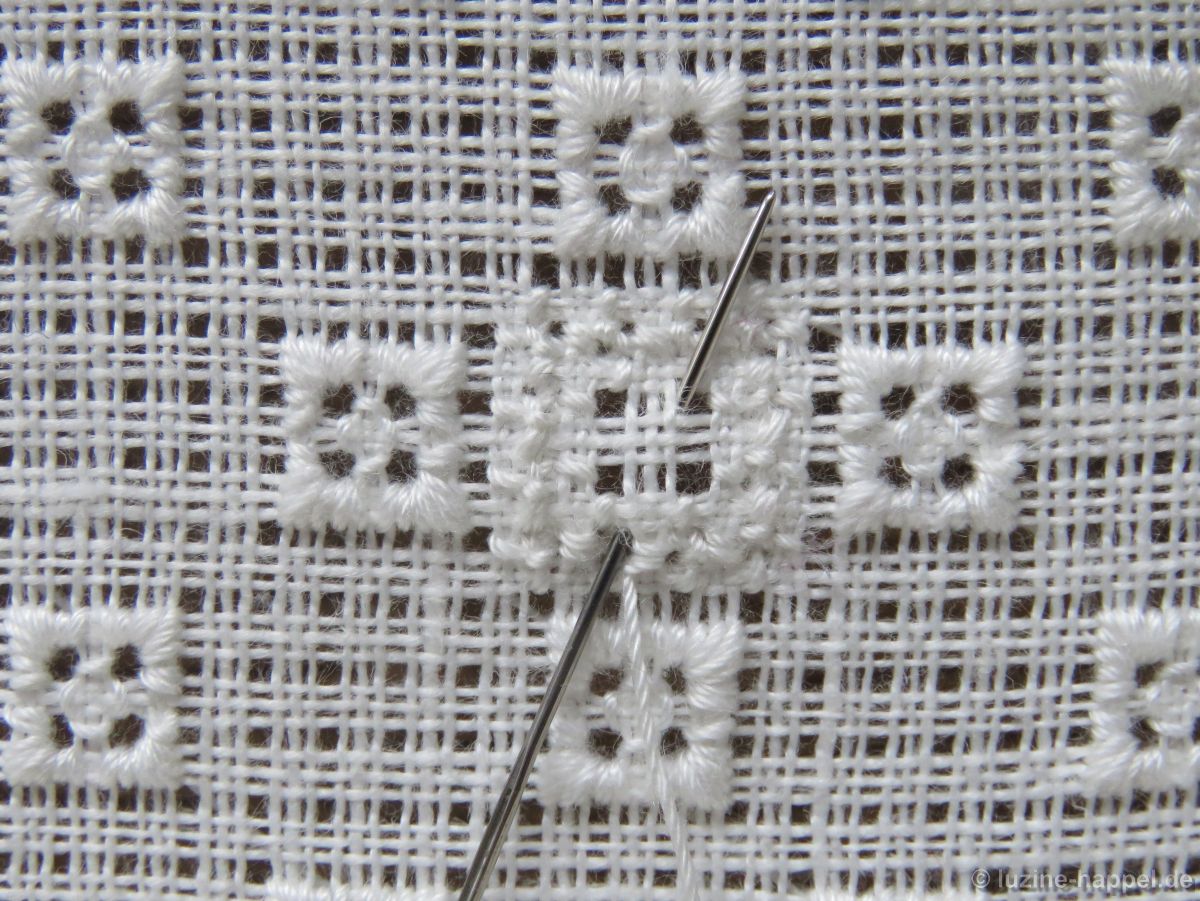
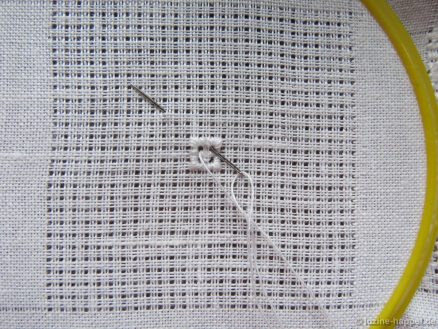
Start working a square of 4 X 4 Rose stitches one square (three fabric threads) up from the top right corner of a small shirt button.
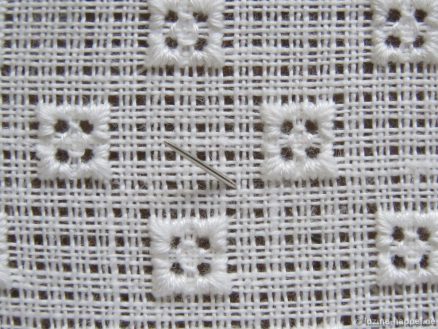
Work four Rose stitches in a straight row up,
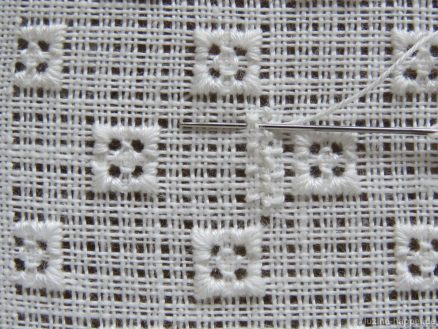
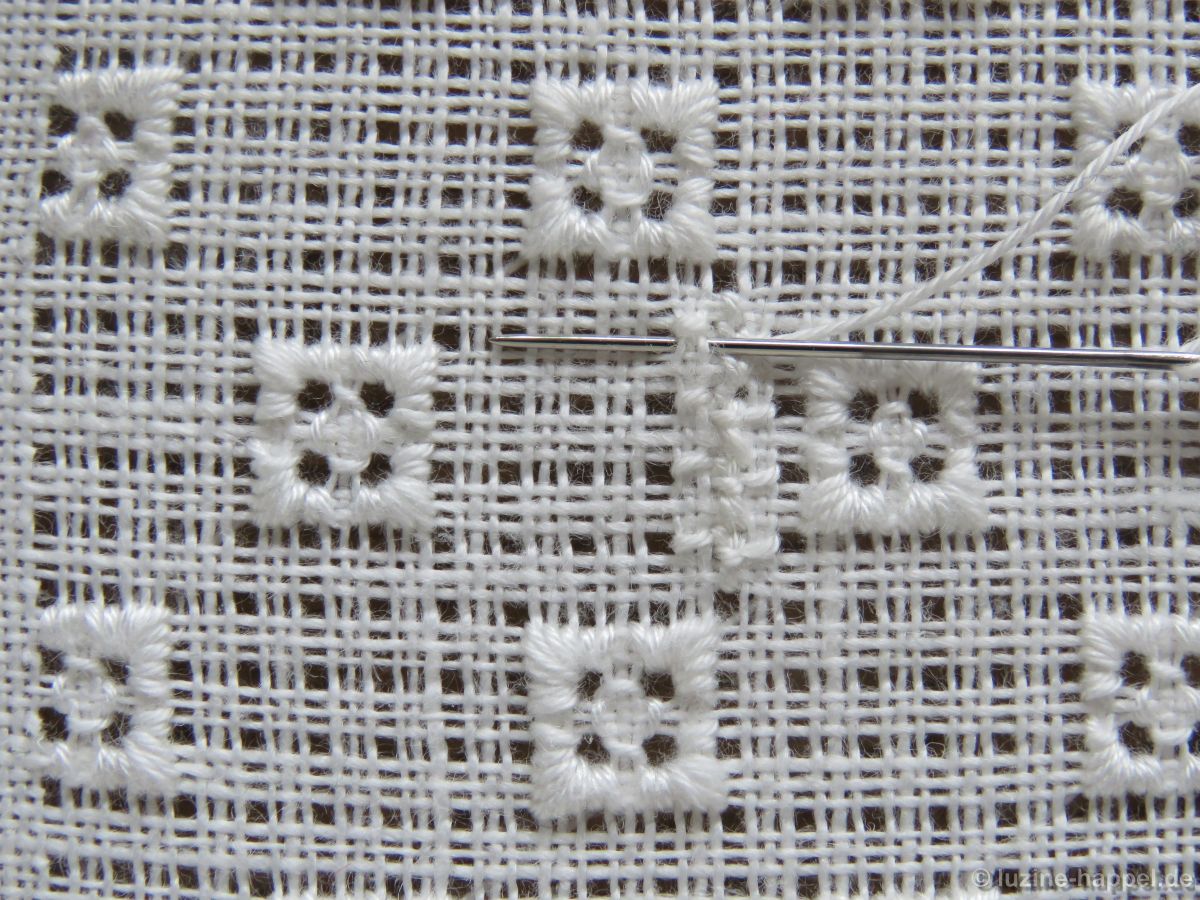
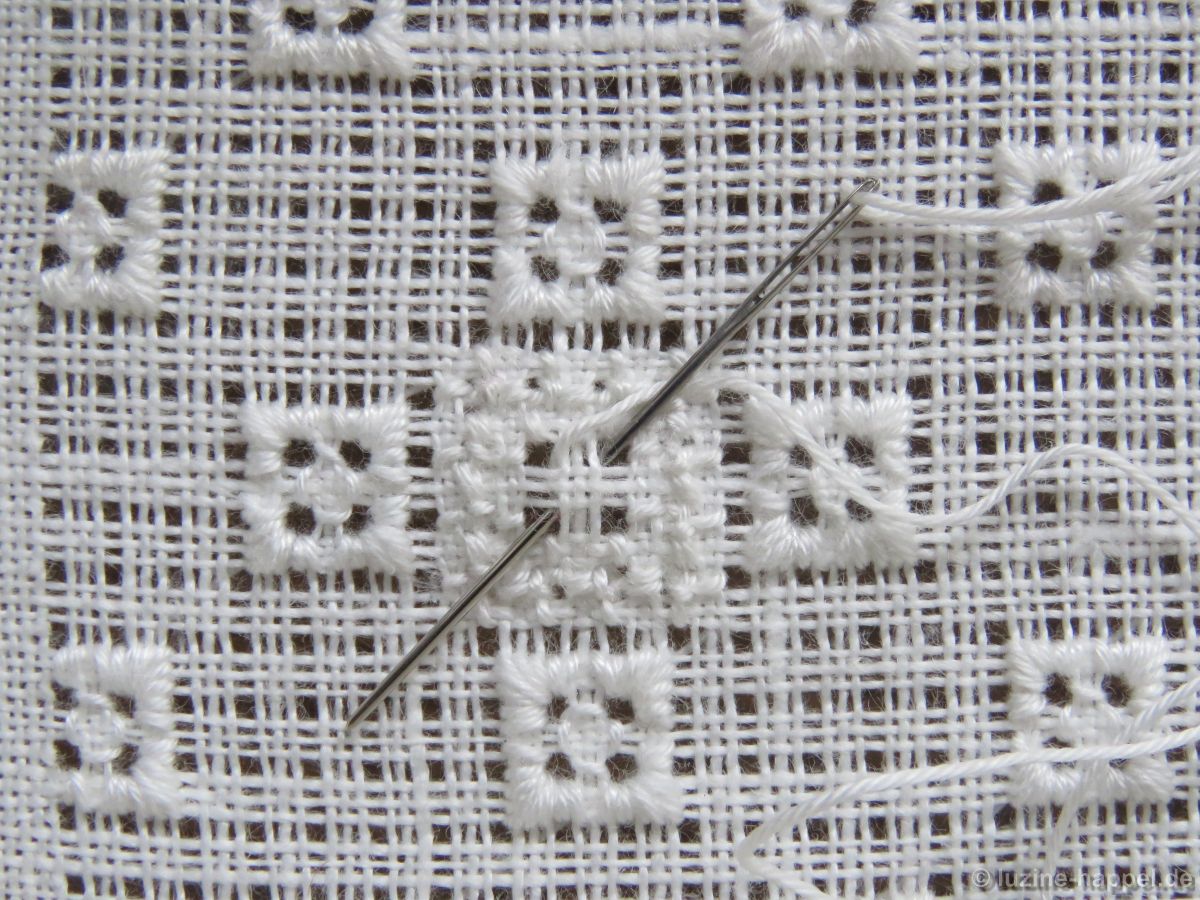
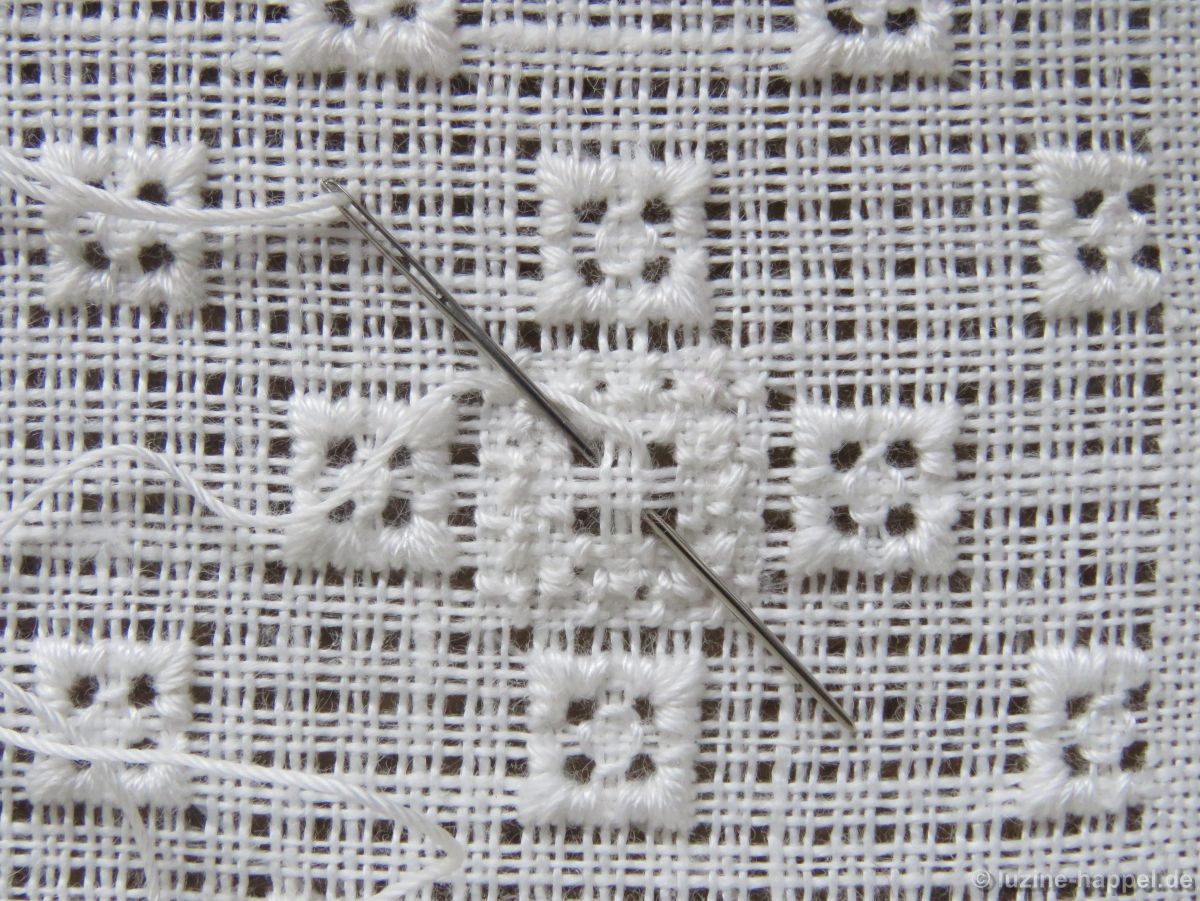
three more Rose stitches each across the top of the square to the left, down the left side, and along the bottom to the right. From the last Rose stitch start working a Four-Sided stitch in the center.
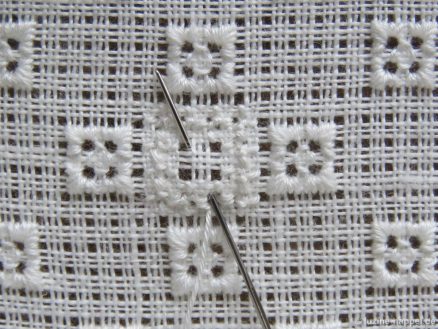
Work the first stitch on top from left to right,
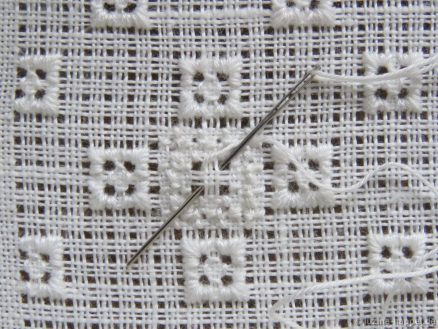
the second stitch on bottom from left to right;
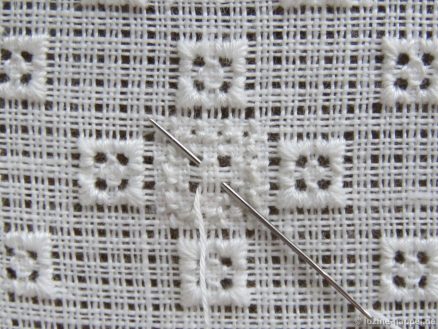
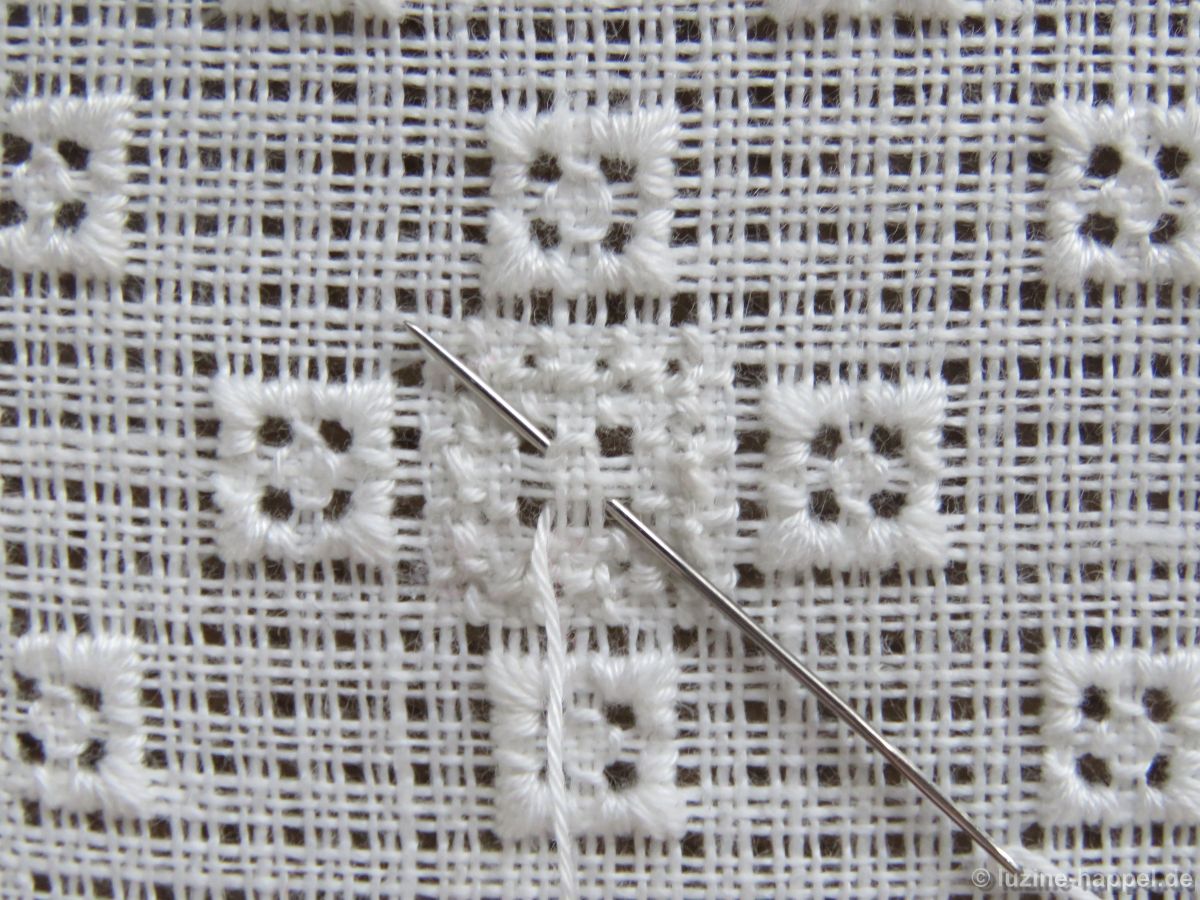
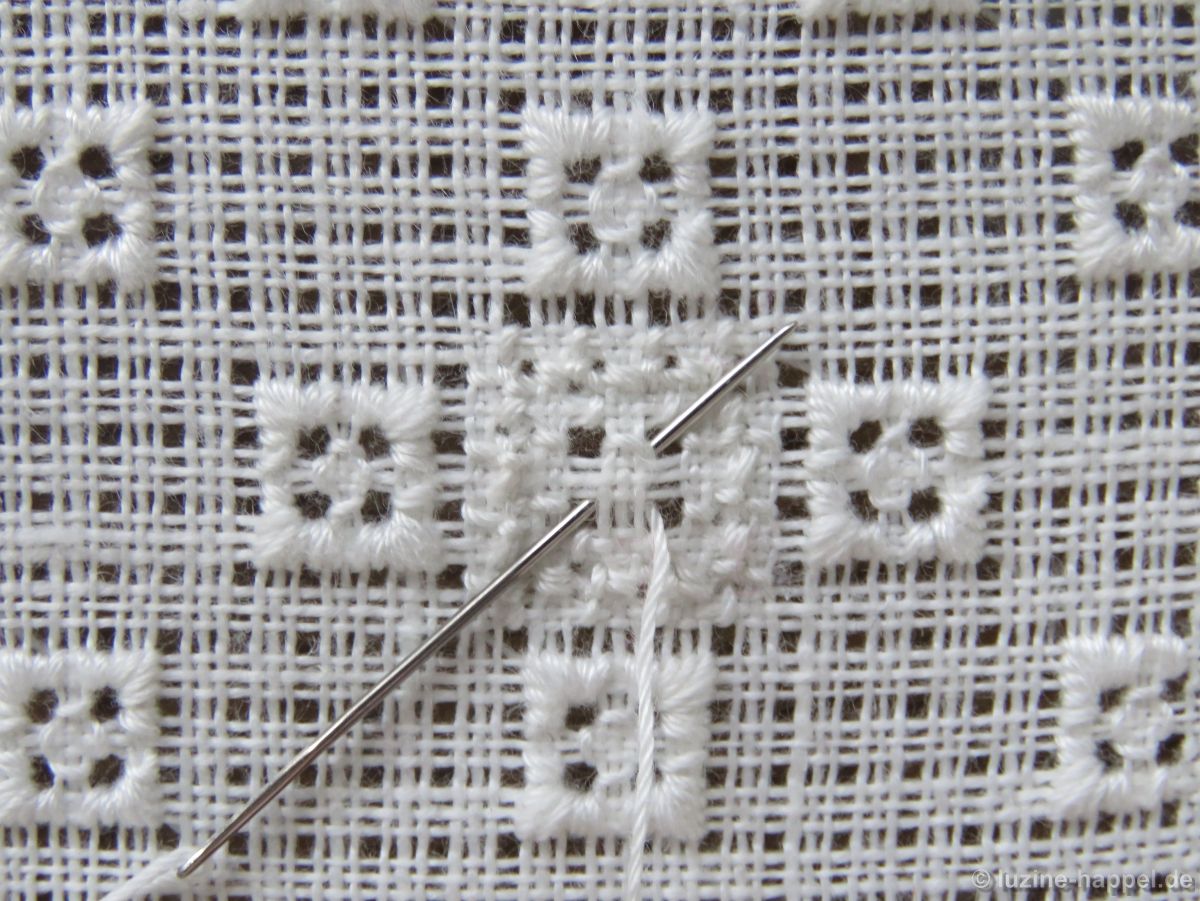
the third stitch is taken on the left downward from the top.
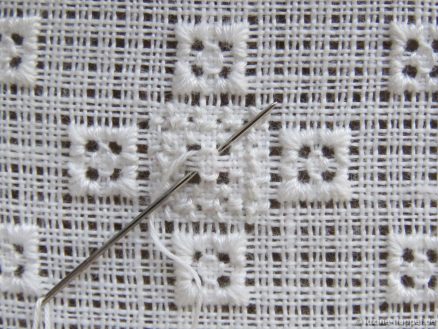
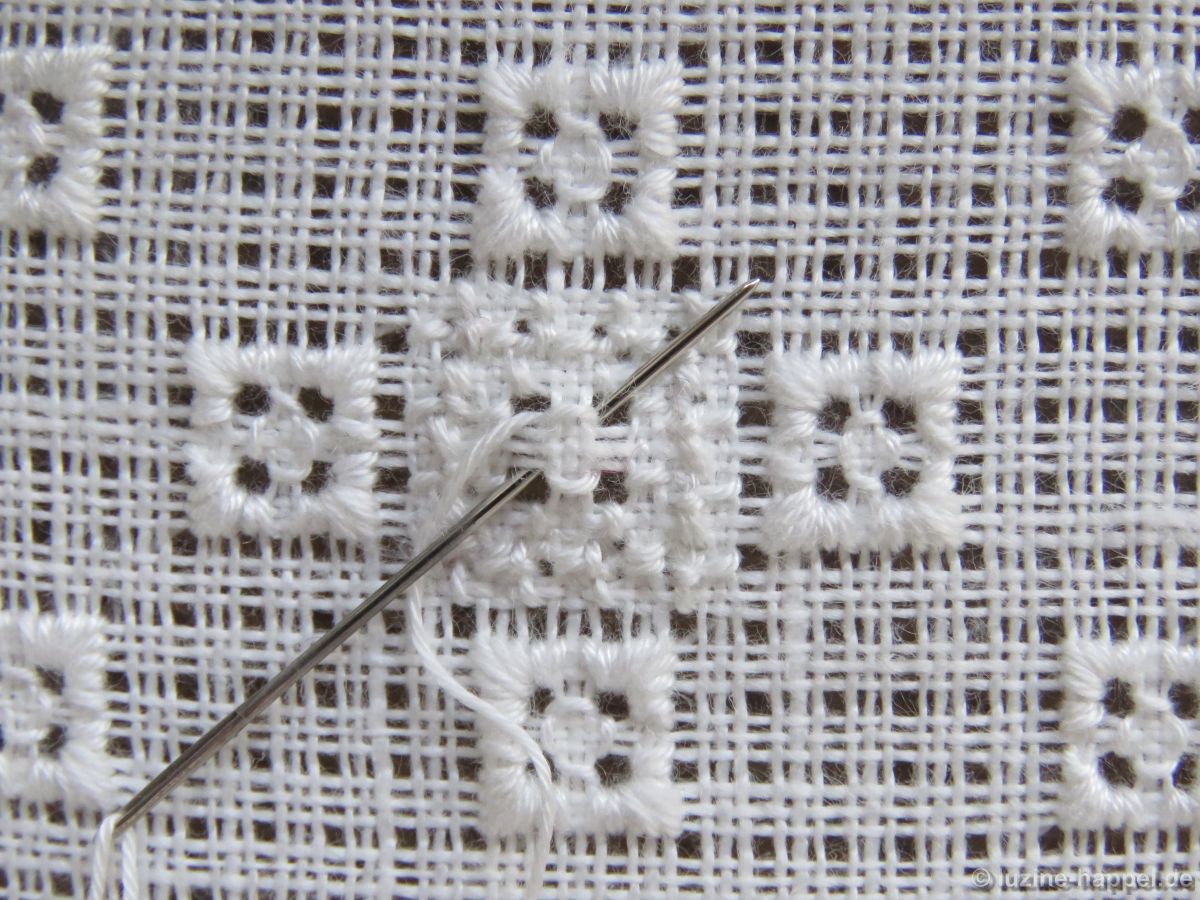
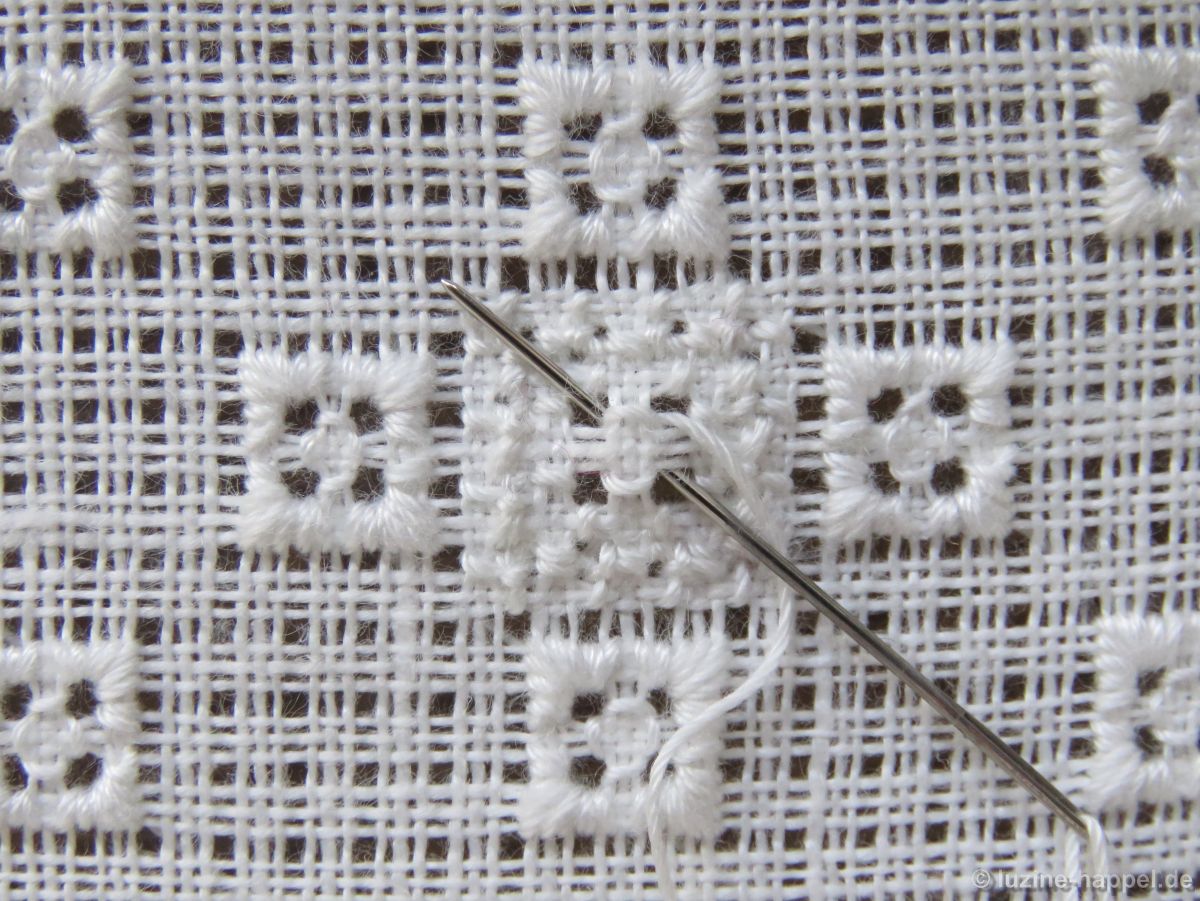
And the fourth stitch is taken on the right downward from the top.
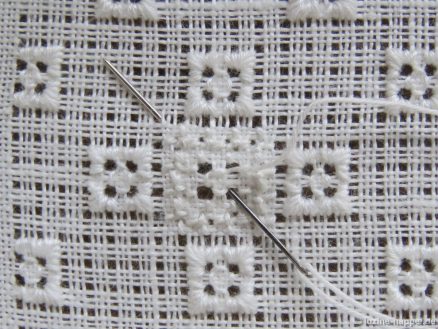
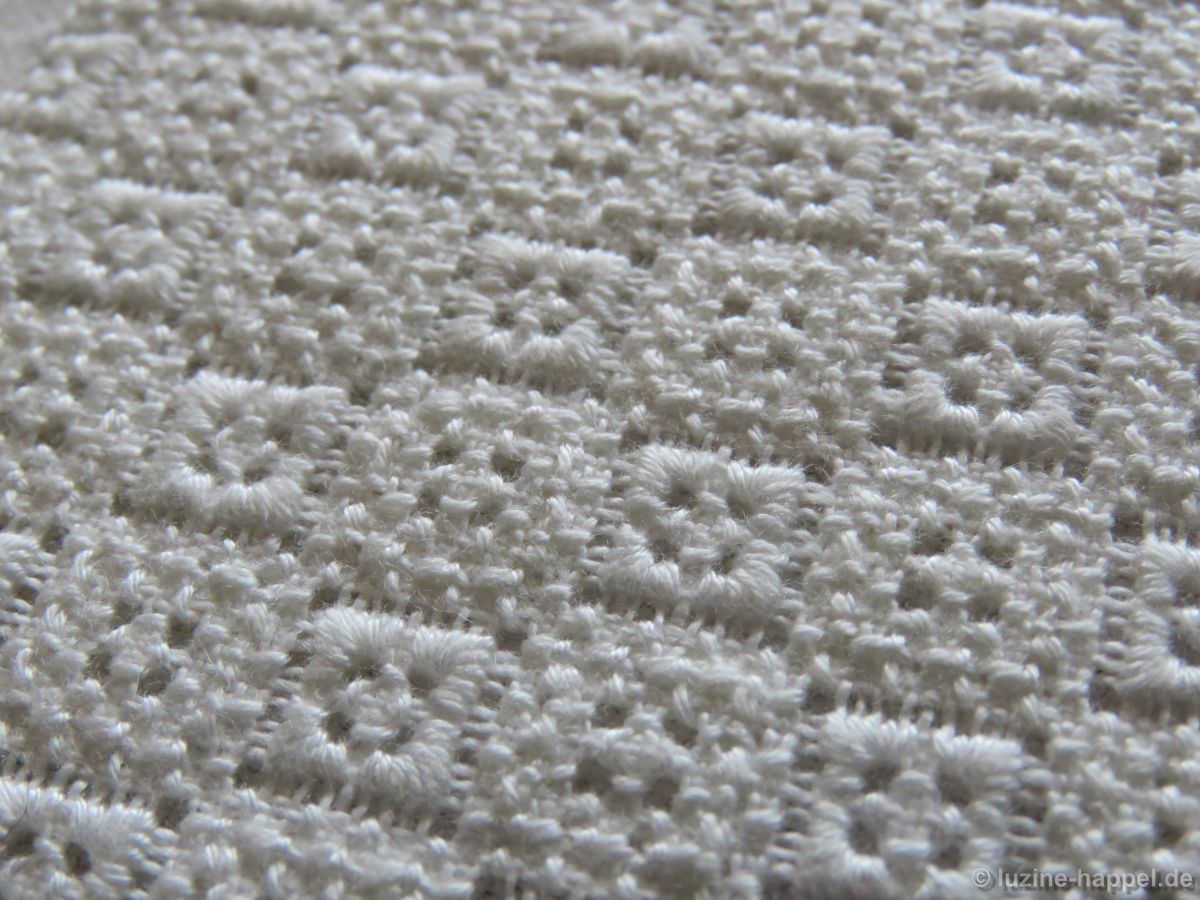
From there bring the needle up in the next center of a Rose stitch – one square (three fabric threads) up from the top right corner of the small shirt button to the left. Work Rose stitch squares with Four-Sided stitches in the centers in the established way until the entire shape is filled.
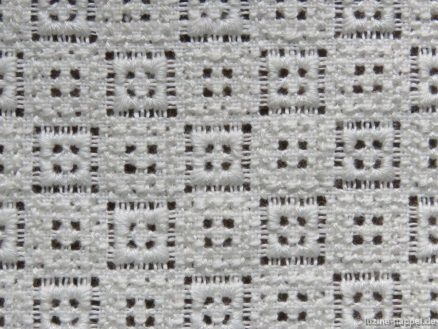
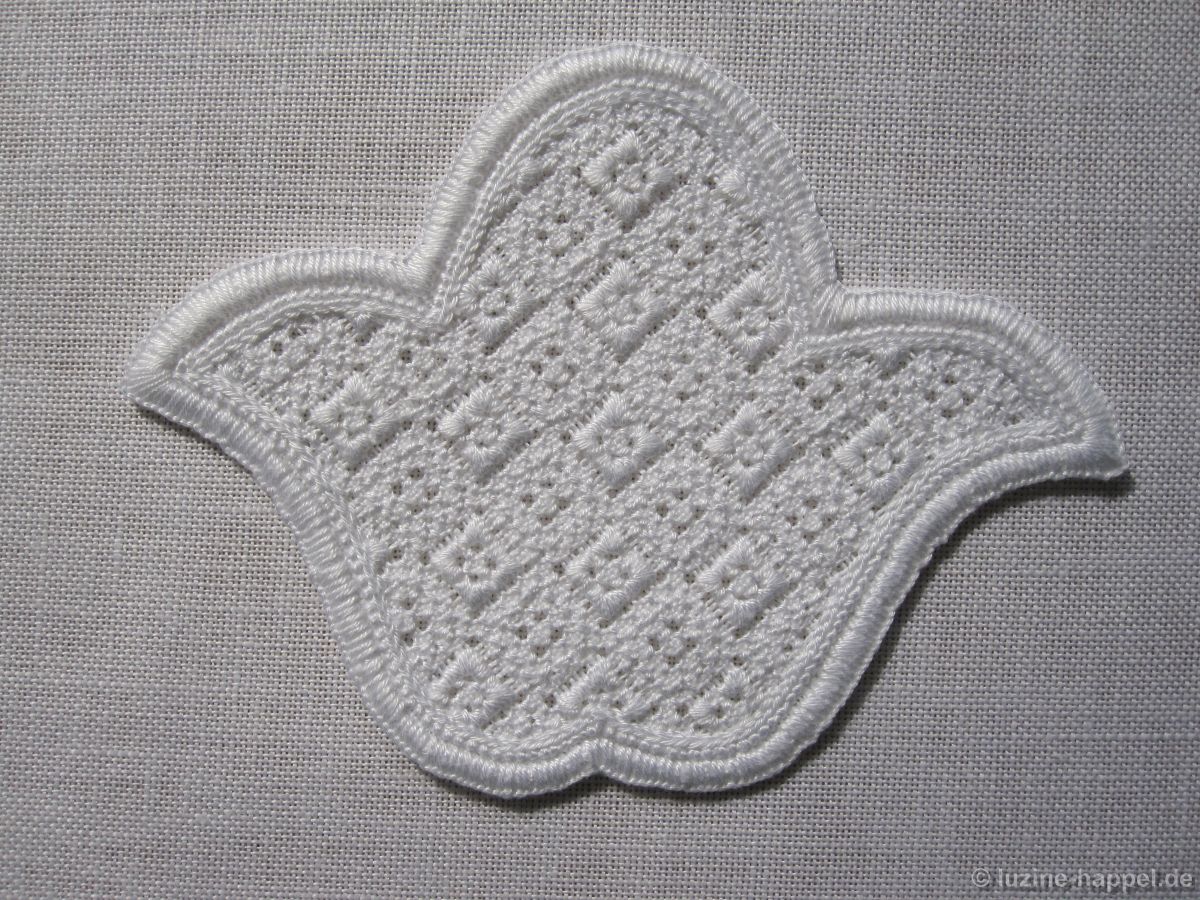
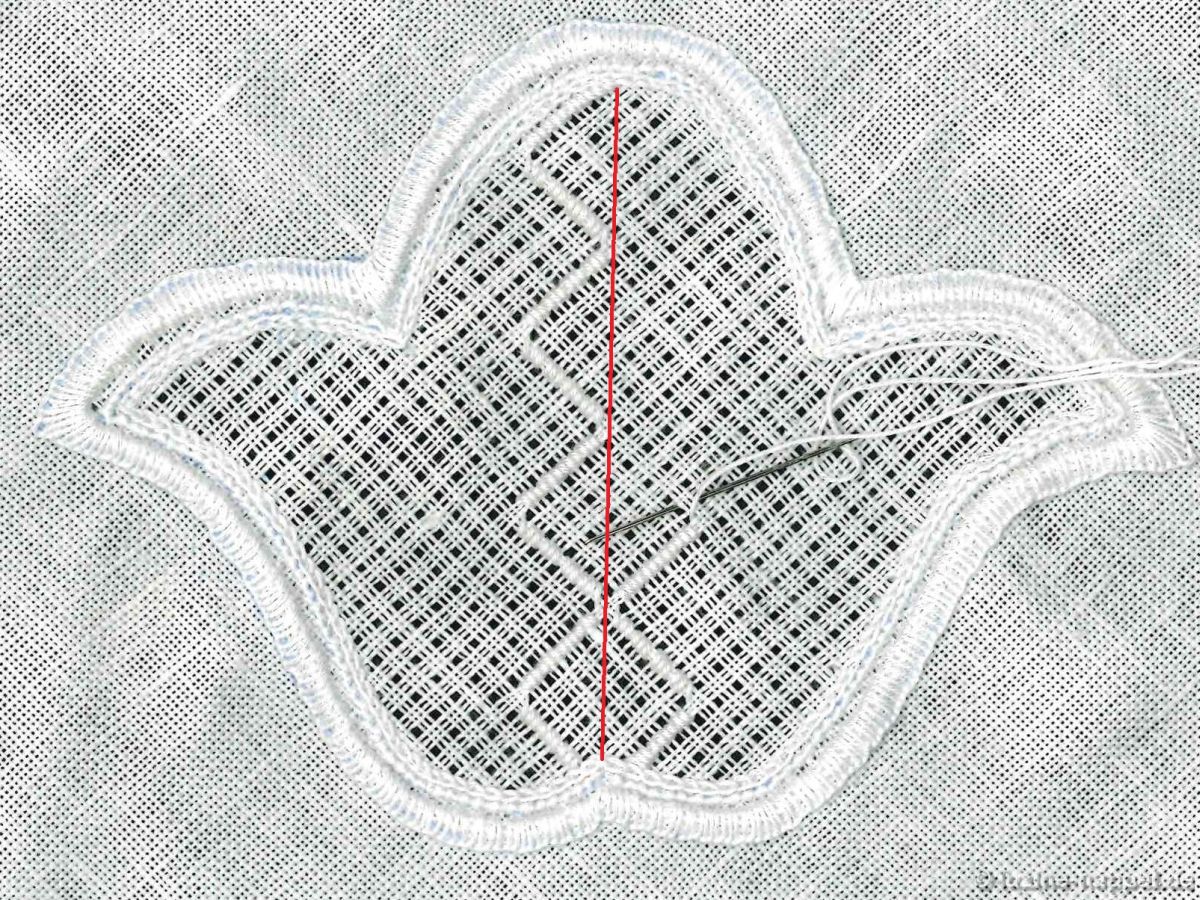
This nice pattern can also be worked in shapes on the bias,
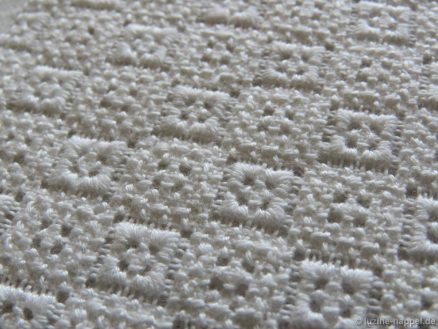
as seen here in the tulip shape.
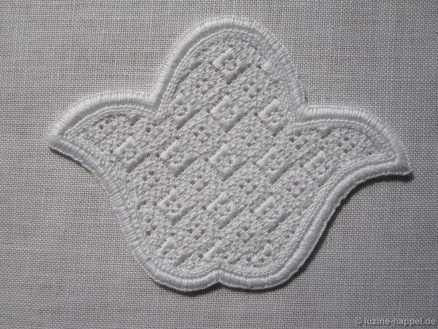
But remember that the Limet grid is prepared differently for shapes positioned on the bias. Please refer to this article
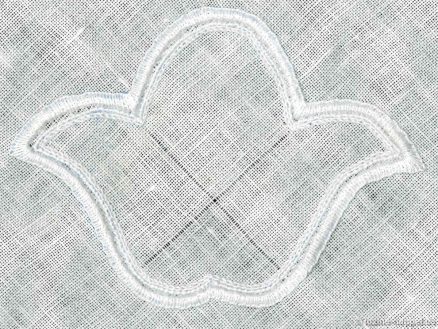
and then continue in the established way.
Instructions for the left-hander:
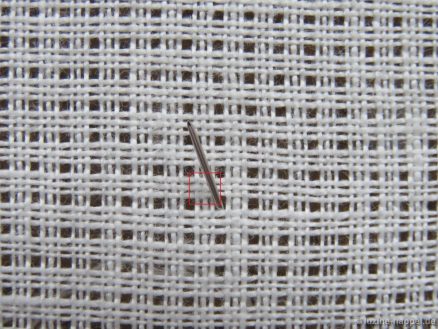
Work one small shirt button around the center square. After completing the fourth Four-Sided stitch, bring the needle up in the next center – three squares (nine fabric threads) up and four squares (twelve fabric threads) to the left. The travelling working thread in the back is covered later by subsequent stitches.
From there work a second small shirt button. Continue working small shirt buttons in the established way.
Work small shirt buttons over the entire shape.

Start working a square of 4 X 4 Rose stitches one square (three fabric threads) up from the top left corner of a small shirt button.
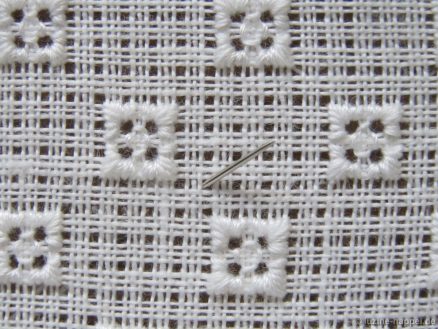
Work four Rose stitches in a straight row up,
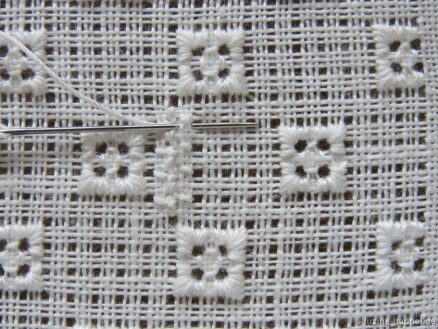
three more Rose stitches each across the top of the square to the right, down the right side, and along the bottom to the left. From the last Rose stitch start working a Four-Sided stitch in the center.
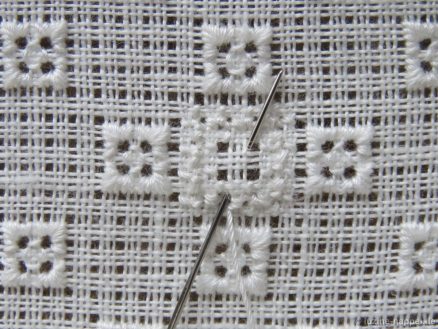
Work the first stitch on top from right to left,
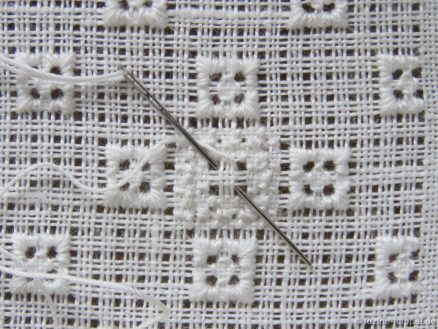
the second stitch on bottom from right to left;
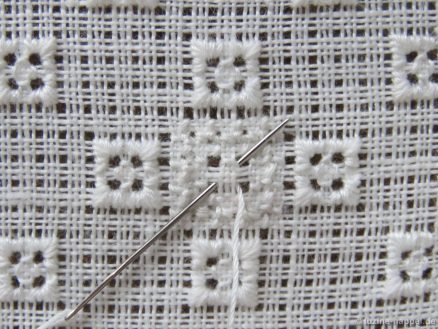
the third stitch is taken on the right downward from the top.
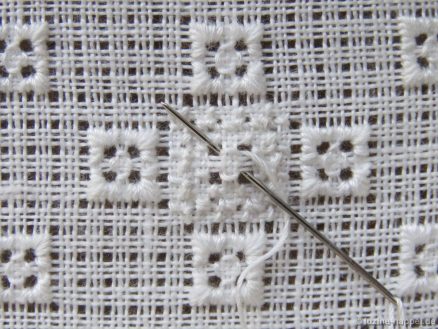
And the fourth stitch on the left downward from the top.
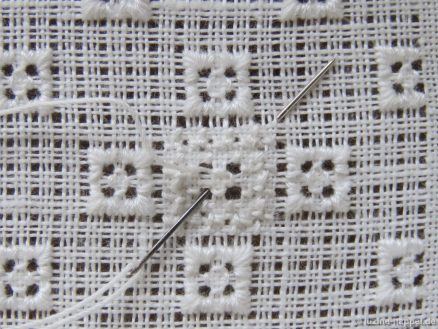
From there bring the needle up in the next center of a Rose stitch – one square (three fabric threads) up from the top left corner of the small shirt button to the right. Work Rose stitch squares with Four-Sided stitches in the centers in the established way until the entire shape is filled.


How to Establish a Limet Grid (3)

Below are the instructions for Limet grids in shapes positioned on the bias.

A pattern embellishment in a symmetrical shape will look perfect only if it is symmetrically arranged.
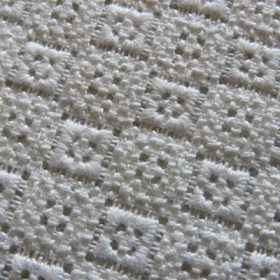
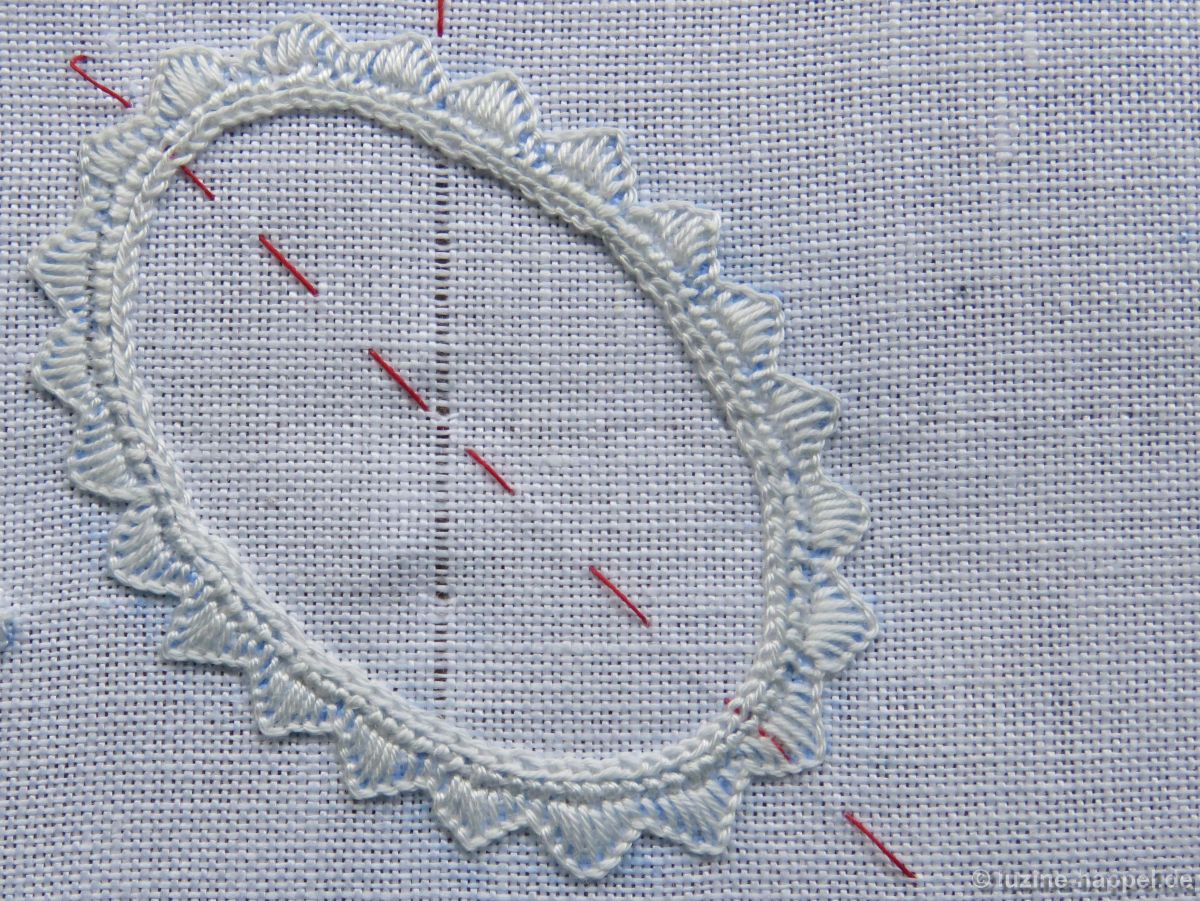
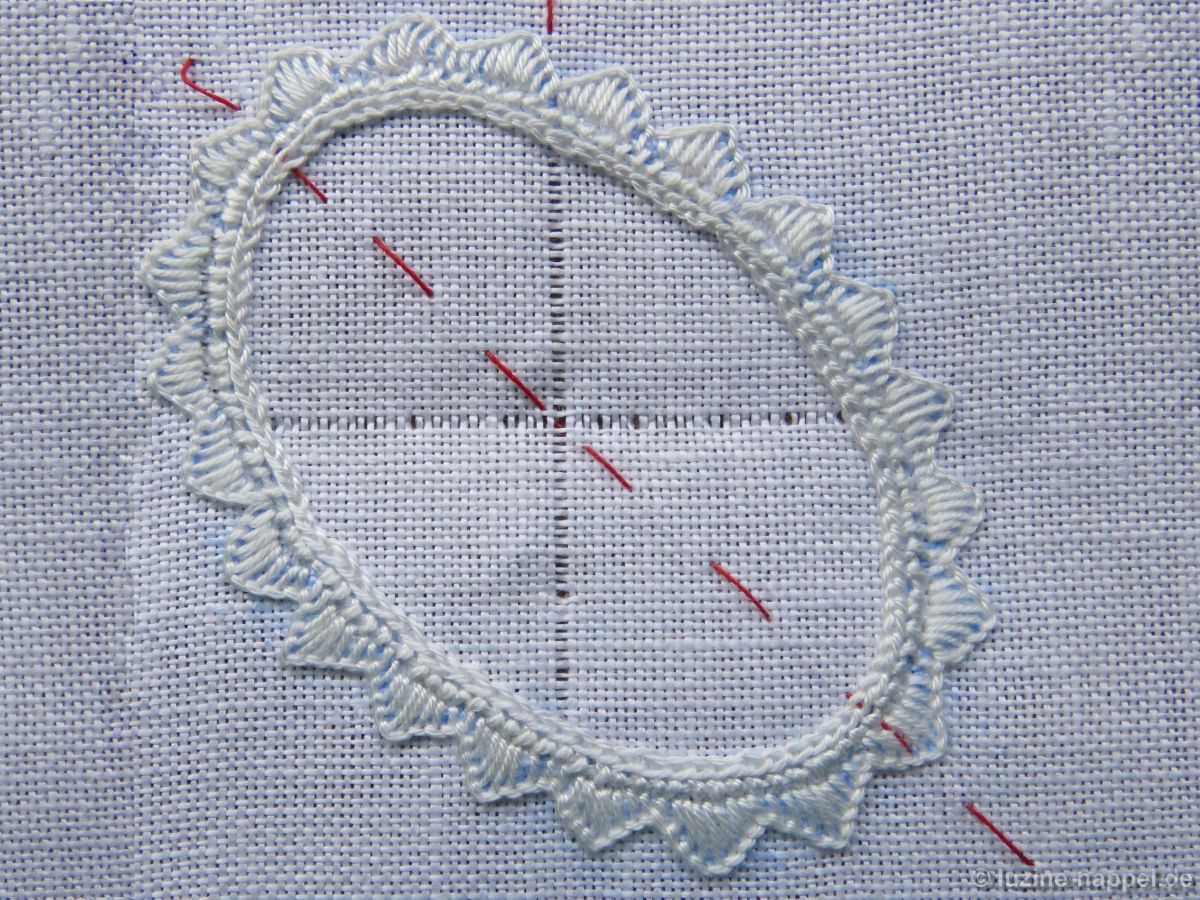
Circles, ovals, and squares are point symmetric; they need an intersection of withdrawn-thread lines at their centers from which the pattern can radiate in all directions – it makes no difference if the shape lies on the straight of grain or on the bias.

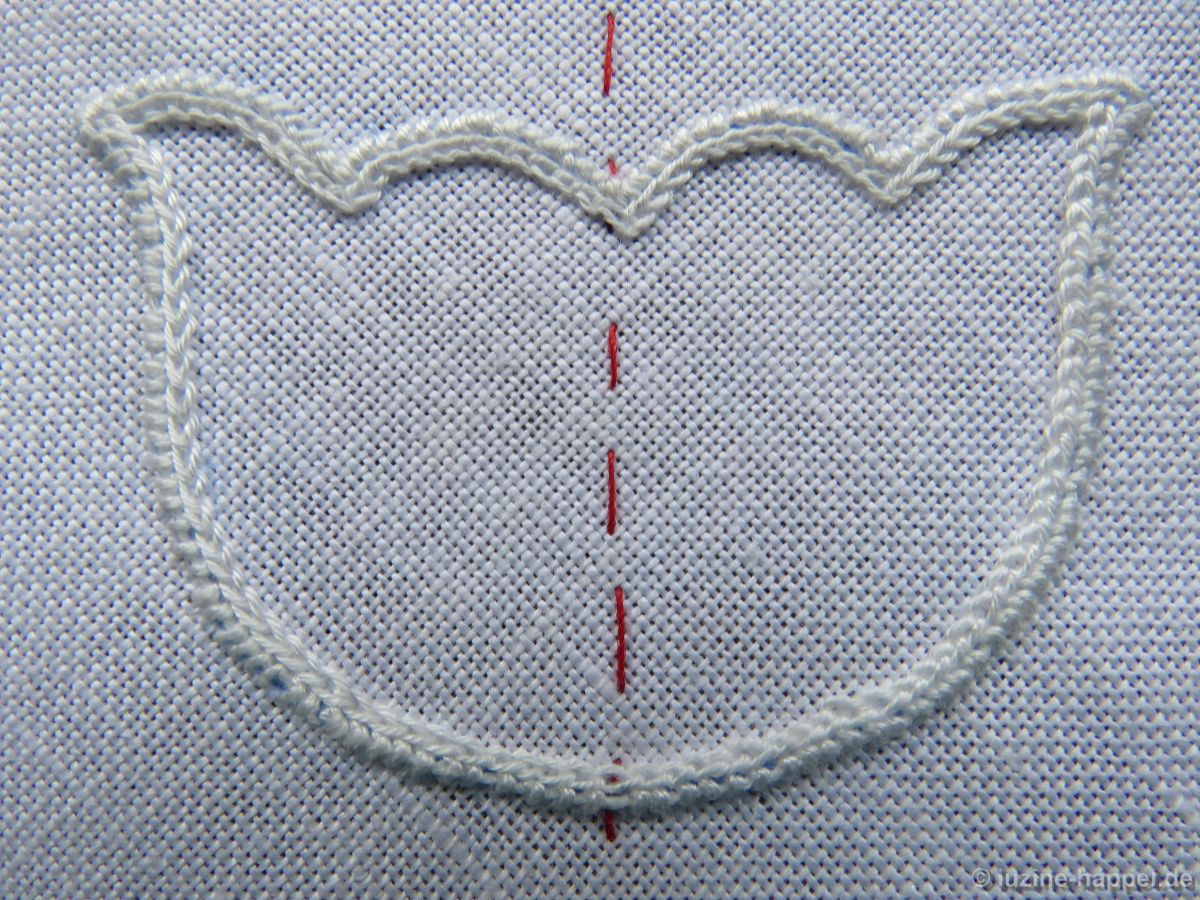
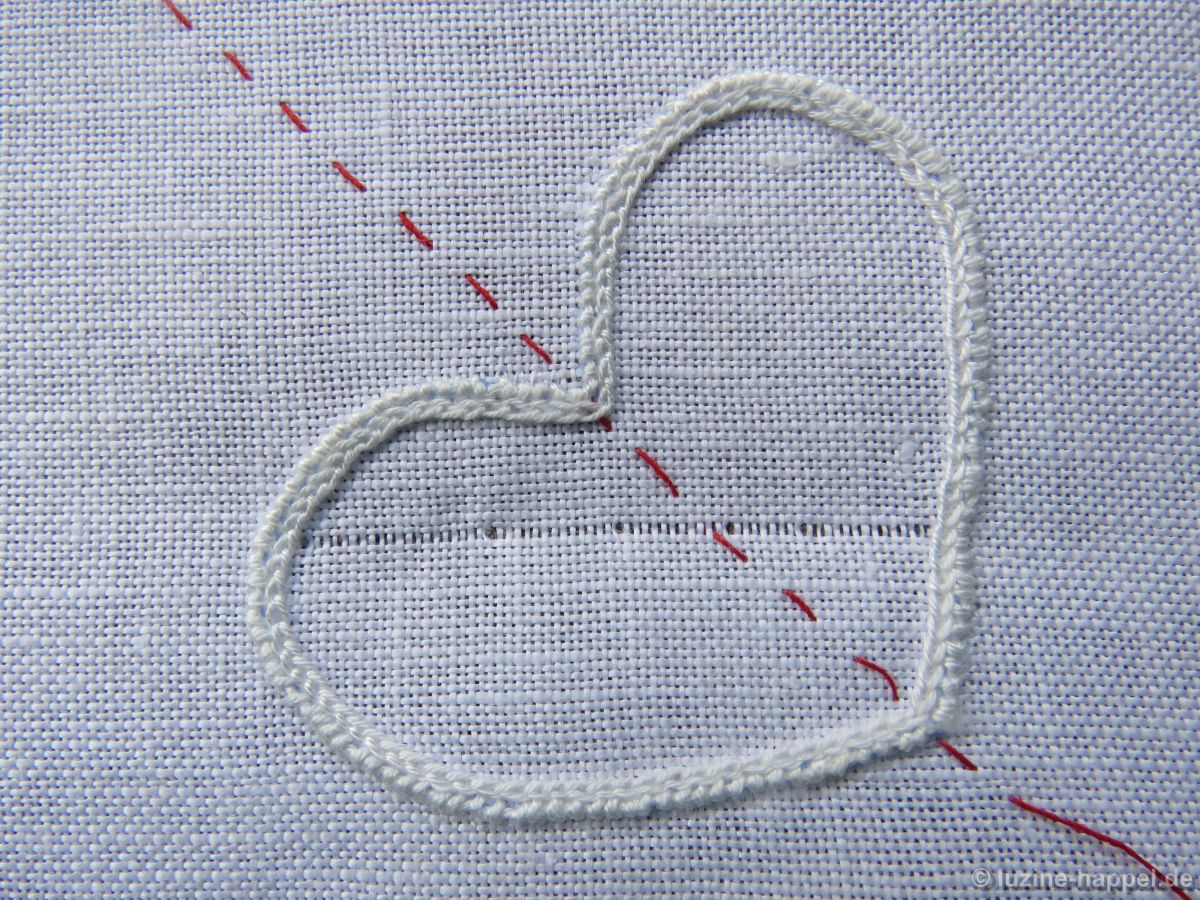
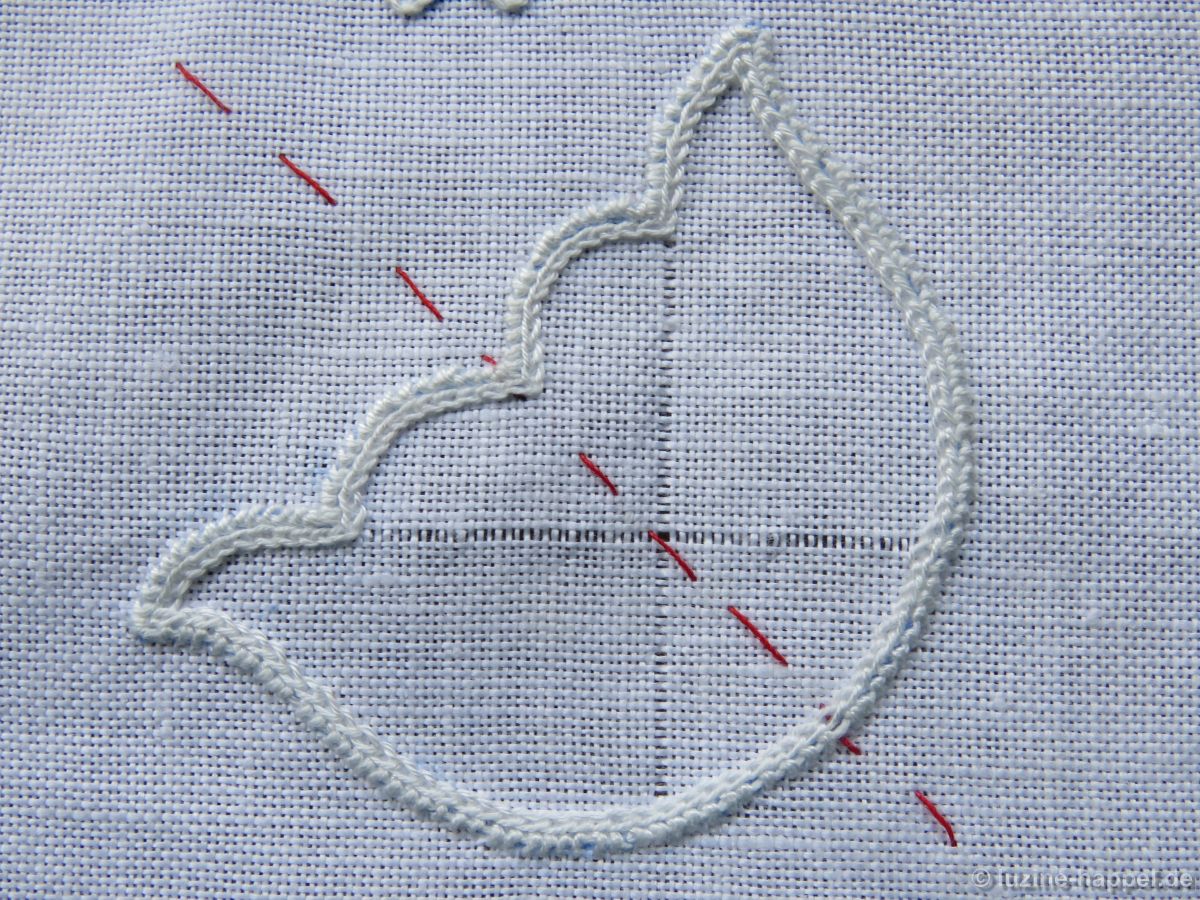
Tulips, hearts, and some other shapes are axially symmetric; they need intersections of withdrawn-thread lines along the center axis from which the pattern can be established on both sides.

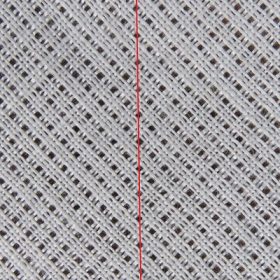
For all shapes other than circles, the center axis is marked first (best with a light pen line on the back of the fabric – thread withdrawal is also done from the back side).

In point-symmetric shapes, the center horizontal (or vertical) thread is now withdrawn.

Afterwards, to establish the center intersection of withdrawn-thread lines that meet the marked axis, the center vertical (or horizontal) thread is withdrawn.

For axially-symmetric shapes any thread that crosses the marked center axis is withdrawn; it makes no difference to begin with a horizontal or vertical thread.
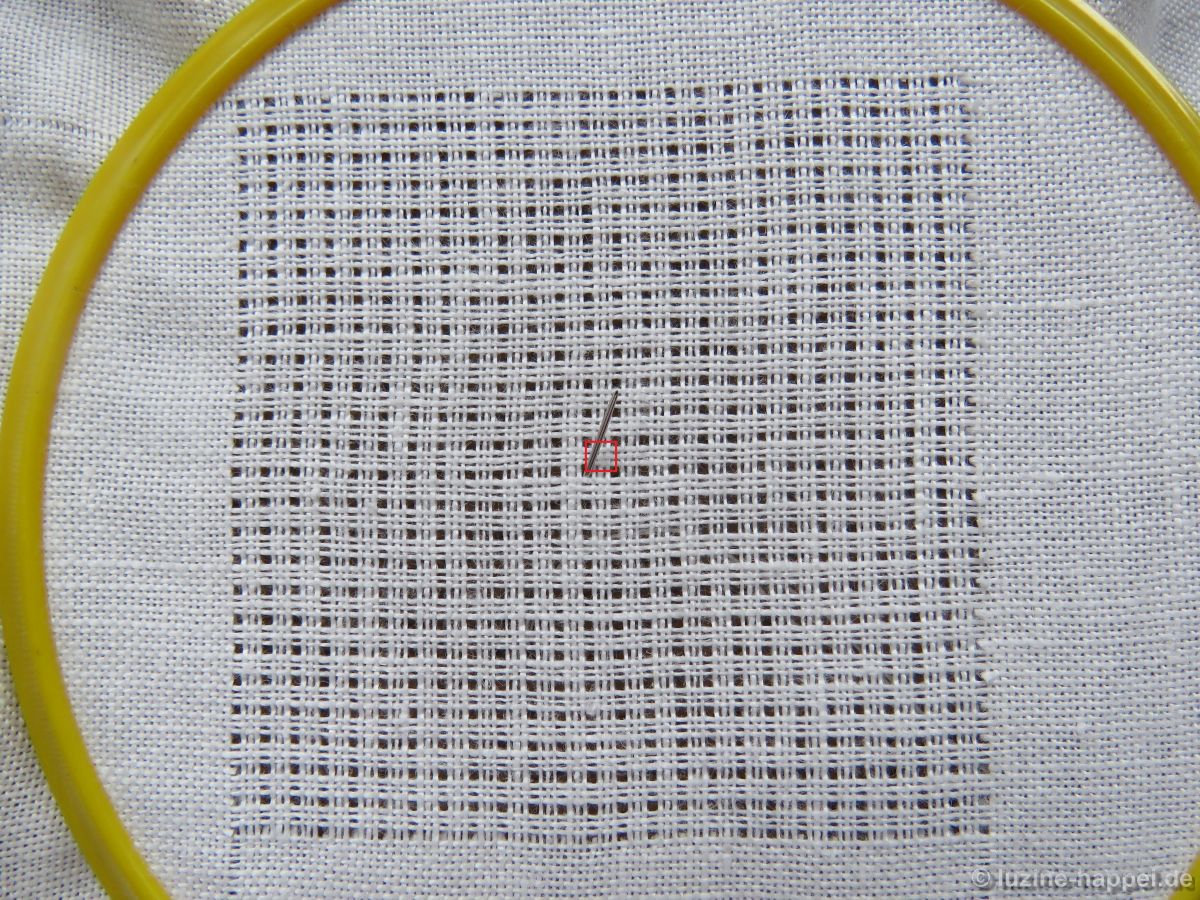
In shapes with deep interior points (e.g., some tulips), it is possible – but not absolutely necessary – to begin withdrawing the threads directly below the interior point.

The next thread to be withdrawn is perpendicular to the first withdrawn-thread line; it intersects the first withdrawn-thread line at the marked line.

From the first two withdrawn-thread lines (vertical and horizontal), the Limet grid is established by alternately leaving 3 (or sometimes 4) and cutting 1.

So far, I have featured only one filling pattern that needs such a Limet grid:
No. 471