Colourful Schwalm Embroidery

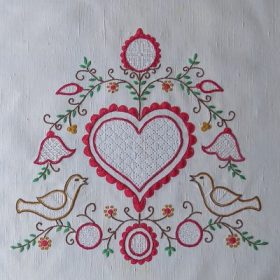
At the end of the 1980s and the beginning of the 1990s there was a phase in which Schwalm embroidery was colourful. Not in pastel tones, but in strong, sometimes even bright colours. At the time, Aenne Burda Verlag also made some suggestions for colorful Schwalm embroidery in several issues of its magazine Anna. The embroiderers were happy to take up these ideas. Own designs were also implemented in colour. The rustic style matched the furnishing style of the time.
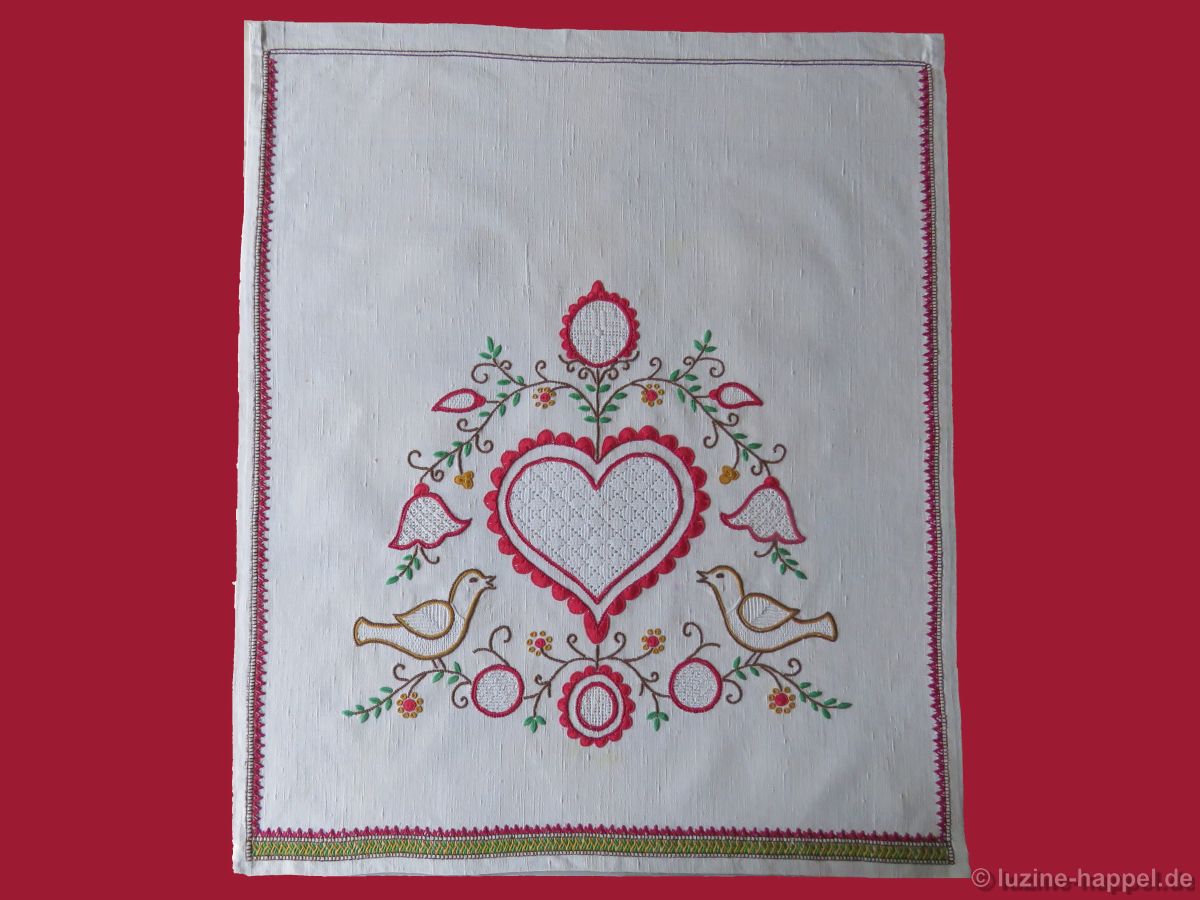
Two shades of red as well as brown, green and golden yellow were chosen for the wall hanging seen here – embroidered by Irmgard Mengel.
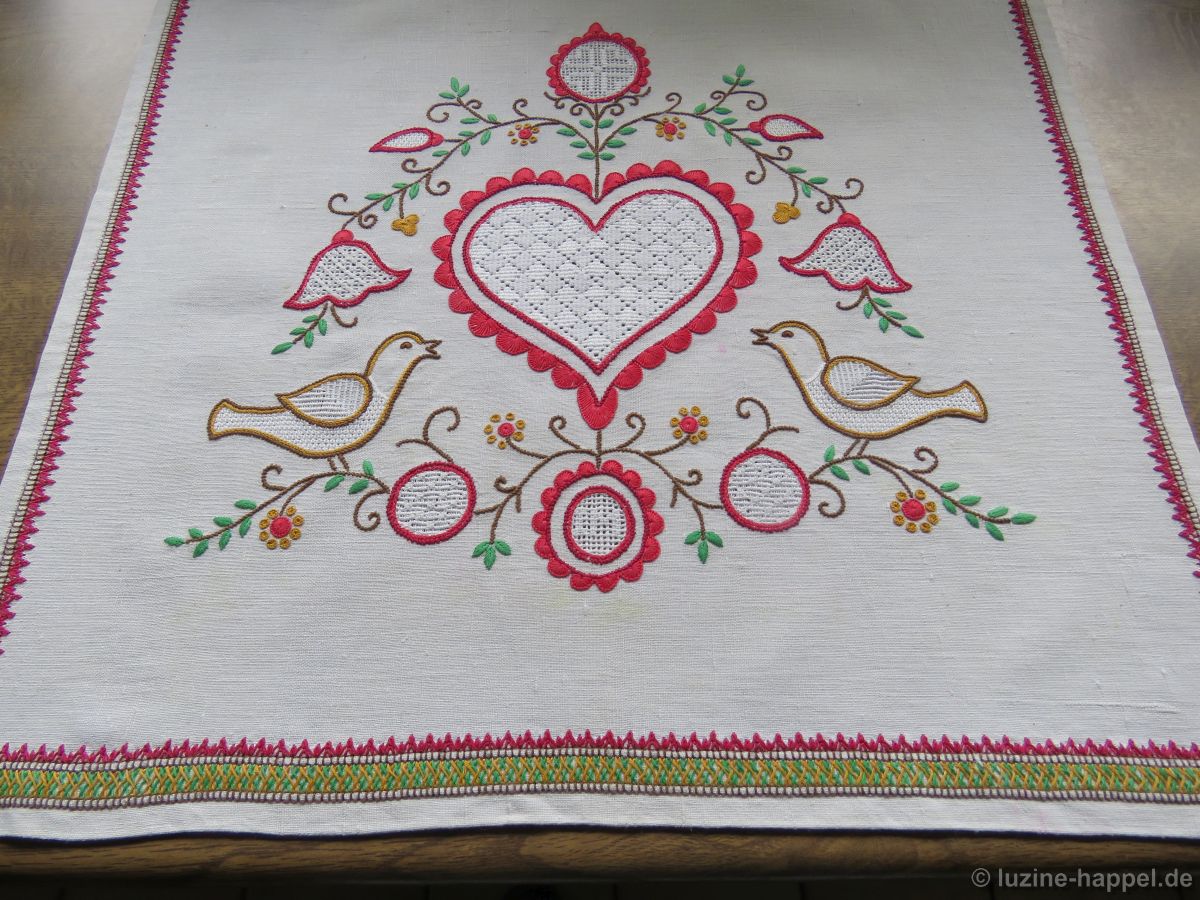
The tightly, hand-woven linen made it possible to set the stitches precisely, as can be seen impressively not only with the leaves.
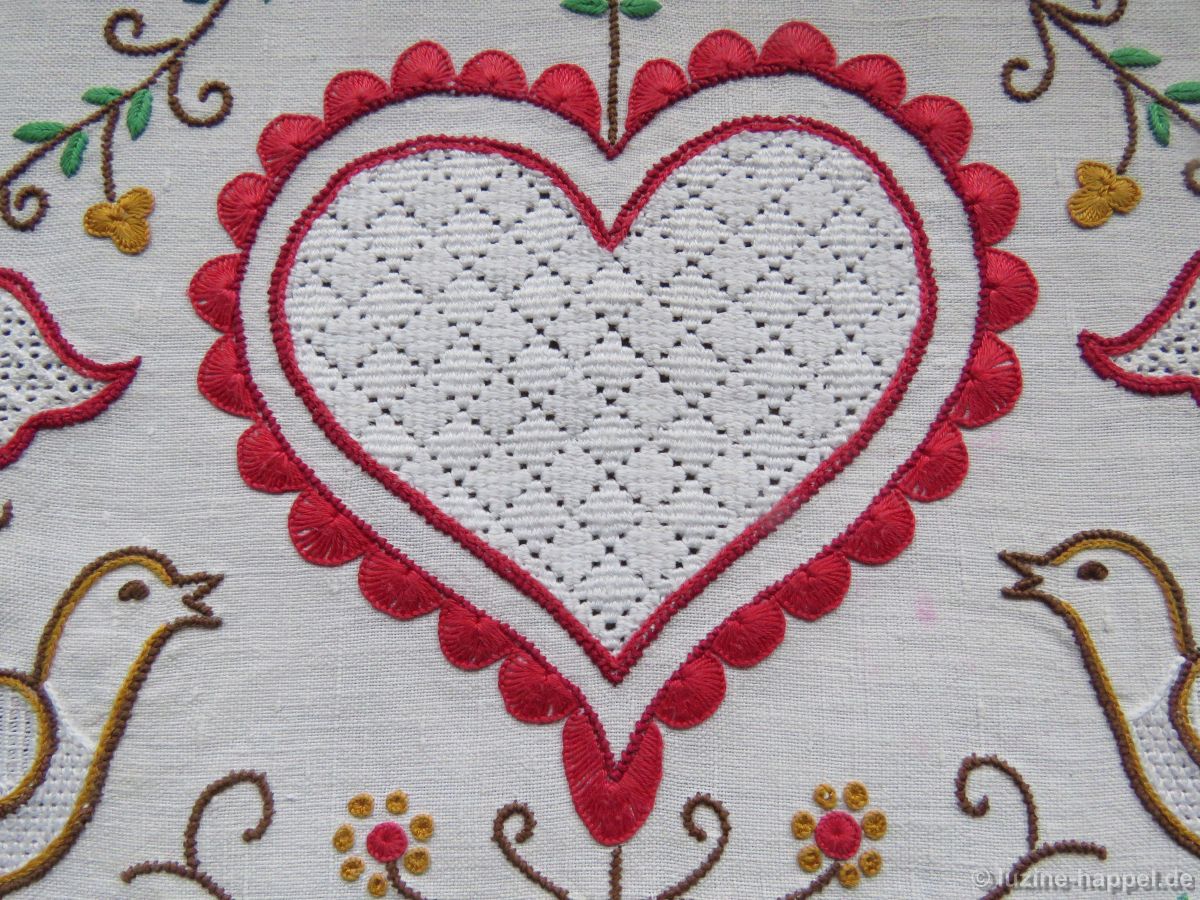
The high thread count of the linen allowed the effective embroidery of filling patterns,
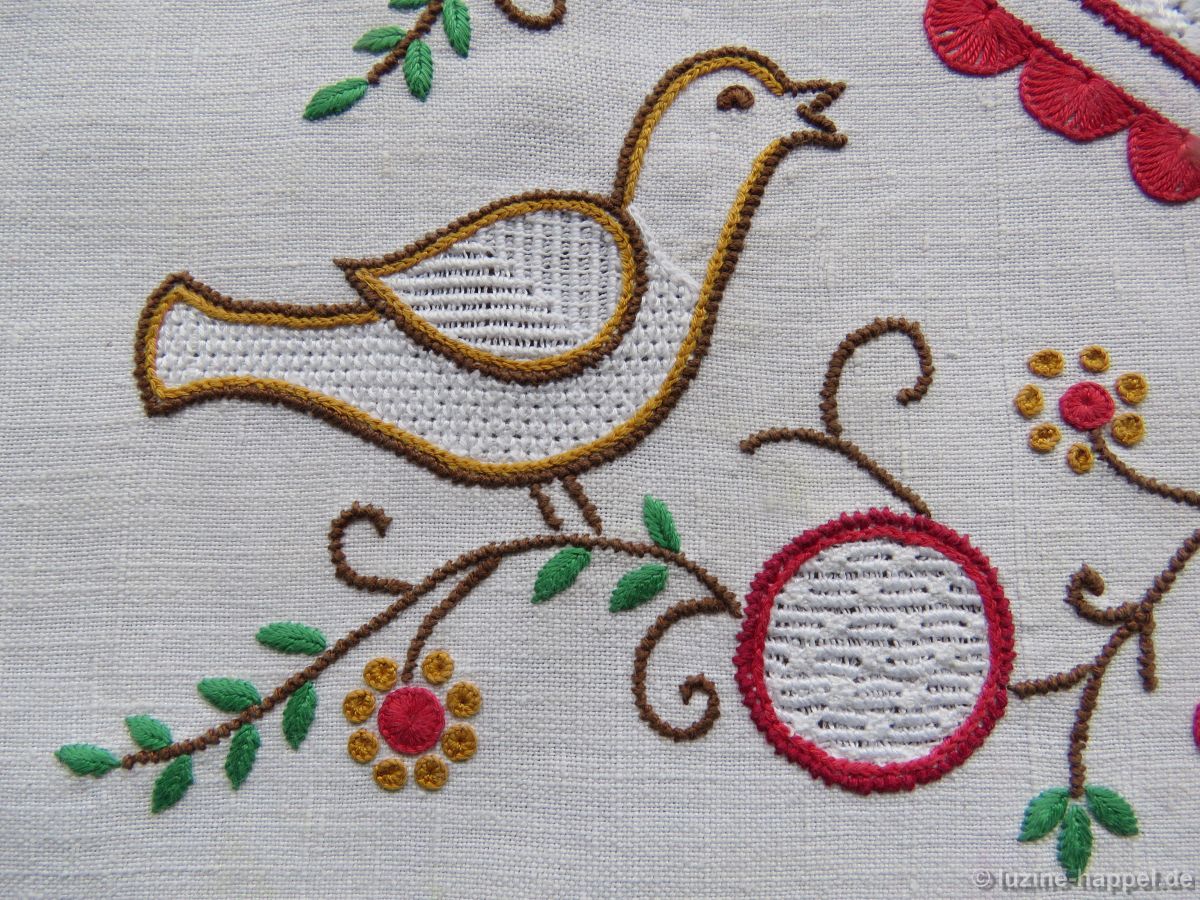
which in this example were all worked with white thread.
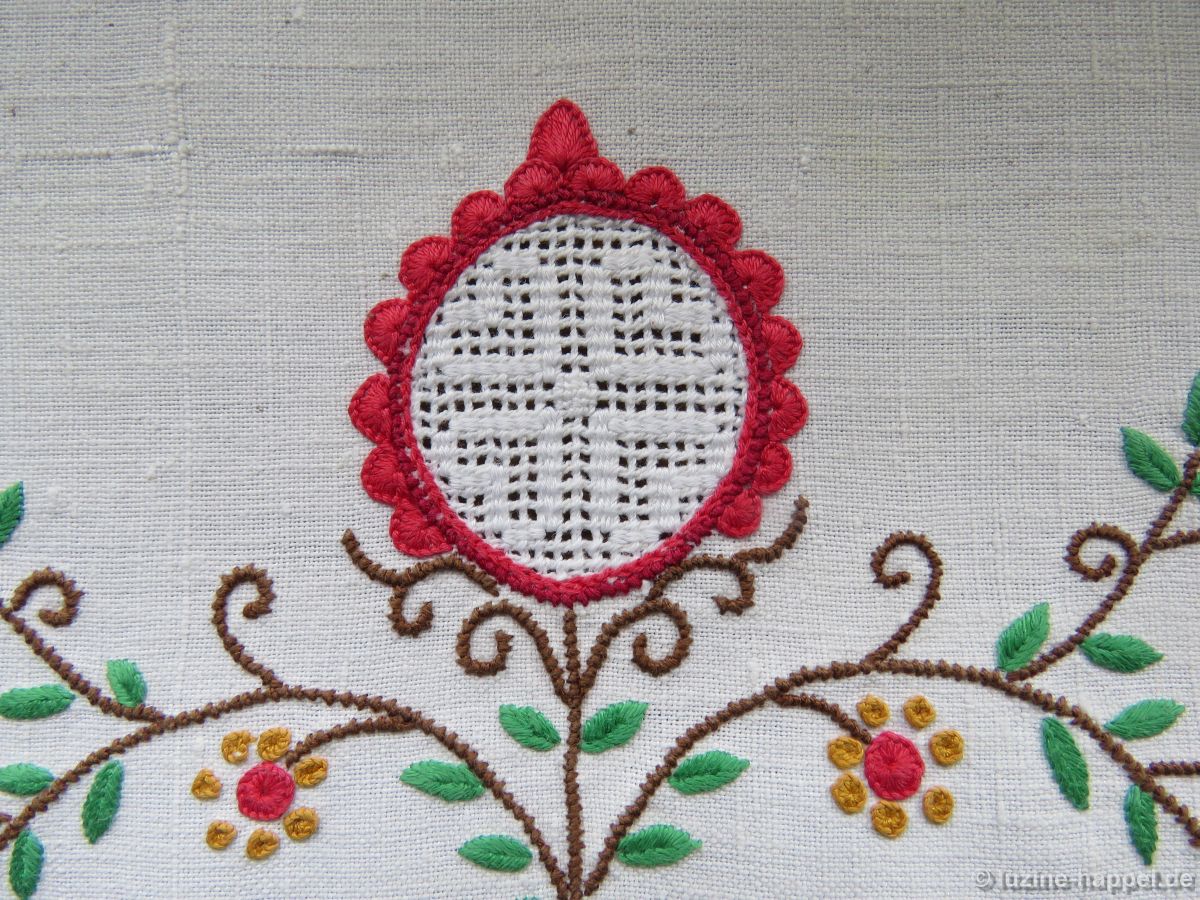
The filling pattern embroidered into the tulip caught my attention. I will describe this pattern in the next blog post.

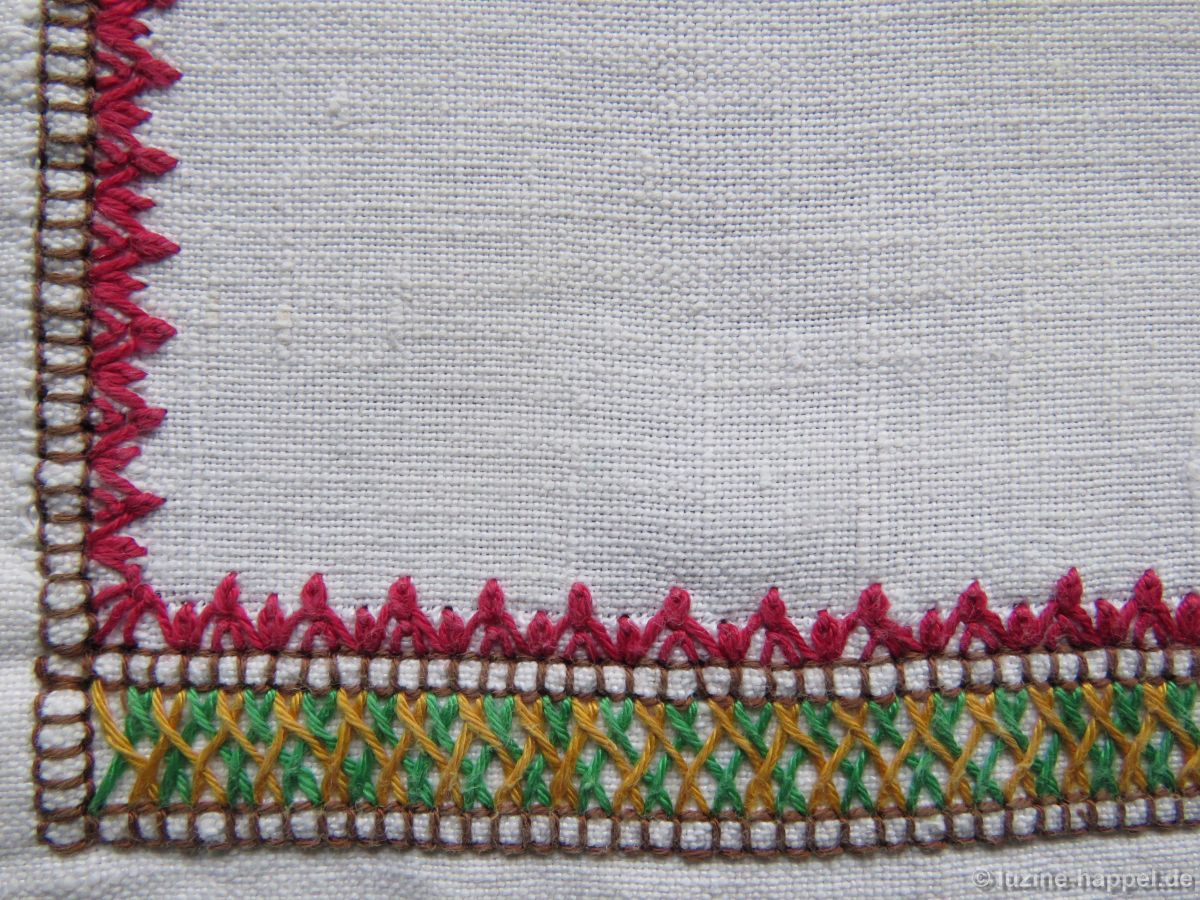
The edge was decorated with Four-Sided stitches and “Trachtenstich”-Costume stitch, and at the bottom with additional double Herringbone stitches.
With the changing taste of the time, these colourful embroidery mostly disappeared in cupboards and chests or were even completely disposed of. People found their way back to the nobler-looking, timeless and original whitework. Today, however, I’m noticing a slight trend towards a desire for subtle colourfulness.
From the Heart

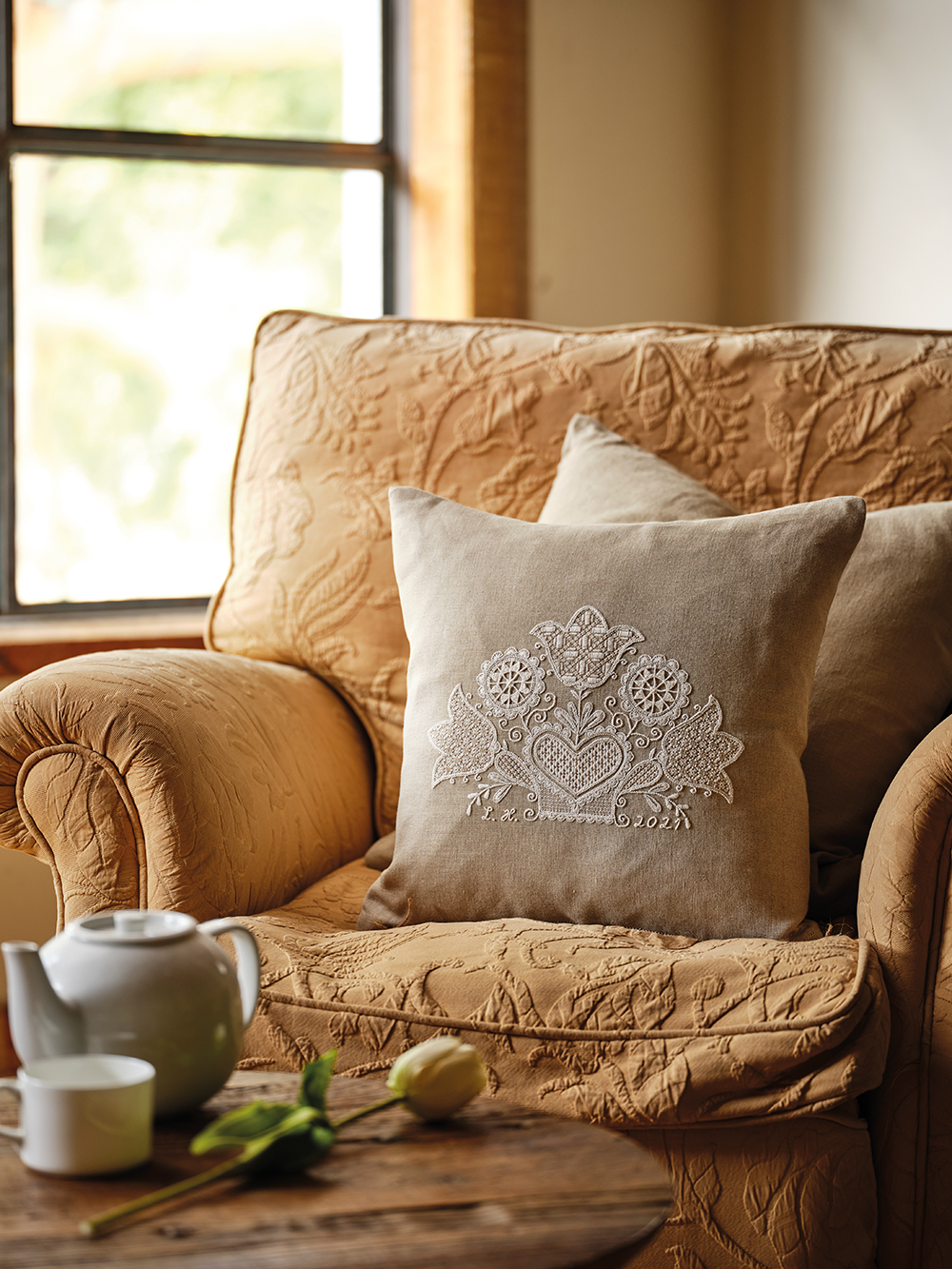
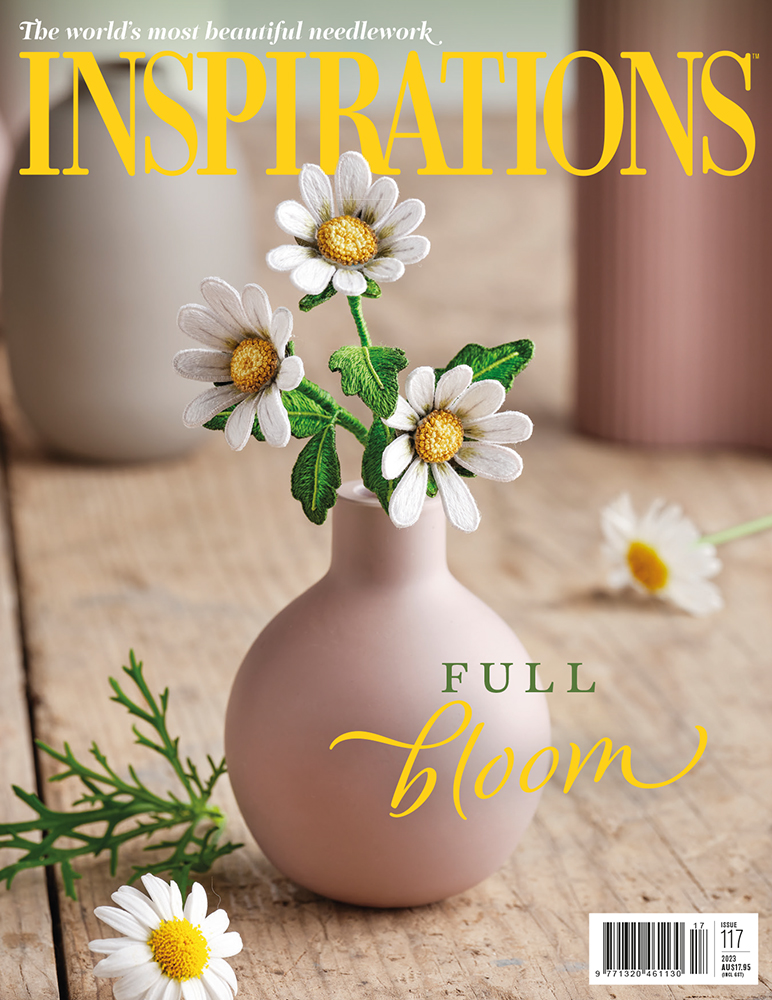
I am happy to announce that one of my Schwalm whitework projects has made it into the world-class magazine Inspirations – the world´s most beautiful needlework.

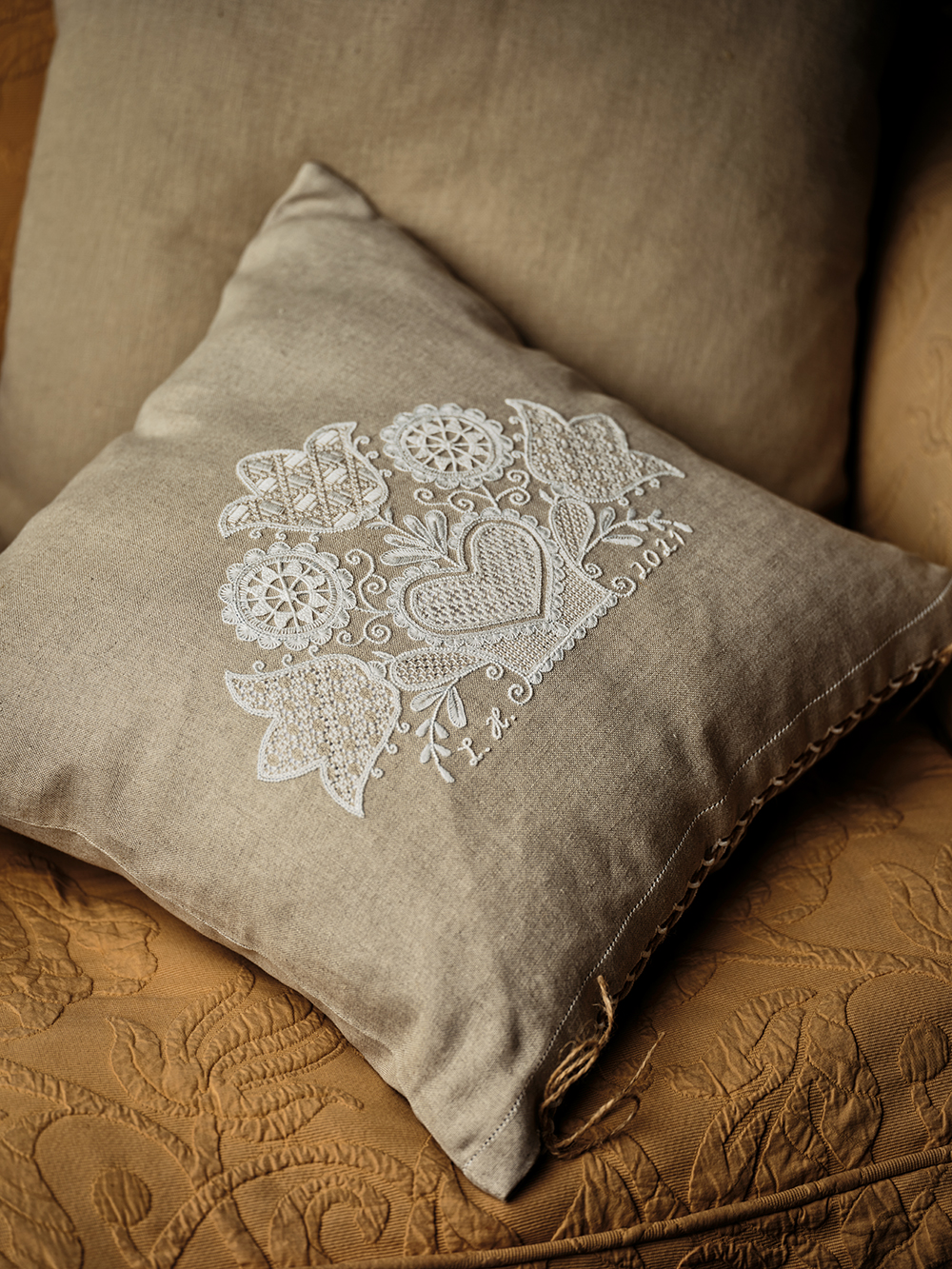
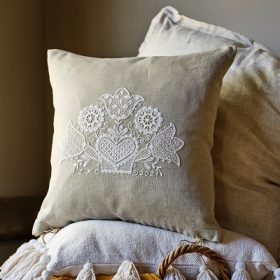
My cushion with a typical Schwalm motif was professionally presented and beautifully brought to life on the pages of the magazine.

The pattern was named From the Heart. Embroidered with white thread on natural coloured linen, it creates a magnificent effect.

The typical motifs of basket, heart, tulip and circle were effectively filled with simple, openwork and Limet withdrawn-thread patterns and needlelace. Tendrils and small leaves fill in the gaps.

Detailed instructions can be found in the magazine. Best of all, Inspirations has put together a kit. With the right materials, one can easily start embroidering such a project.

If you ever get a chance to visit Adelaide, be sure to take the opportunity to look around and to shop at the Bobbin Tree store – a great treasure trove for any needlework enthusiast.

How did the Coral Knot Stitches get into the Schwalm?

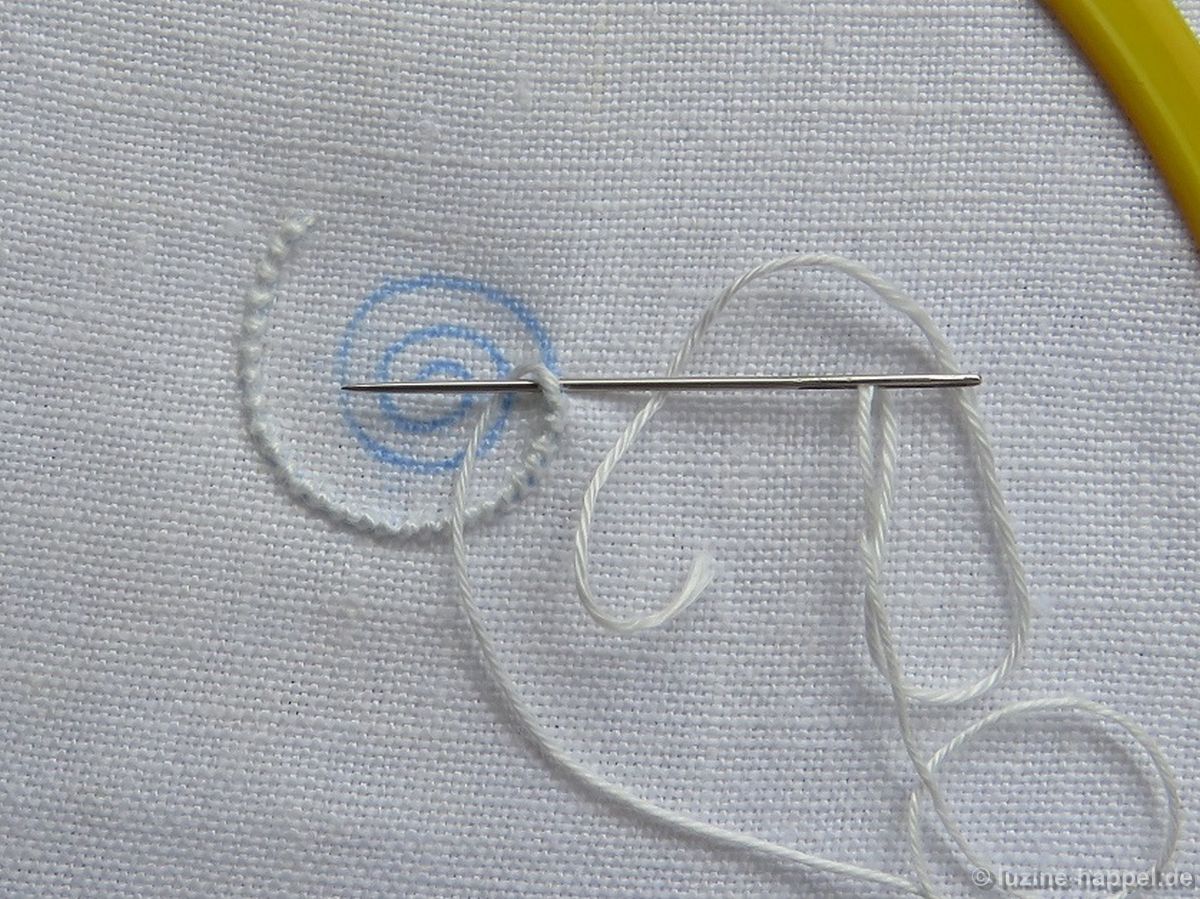
A significant feature of what we nowadays understand as Schwalm whitework are the Coral Knot stitches.

Spir_5

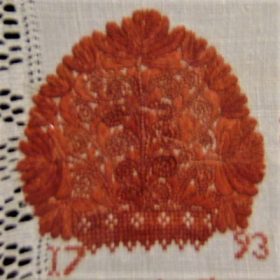
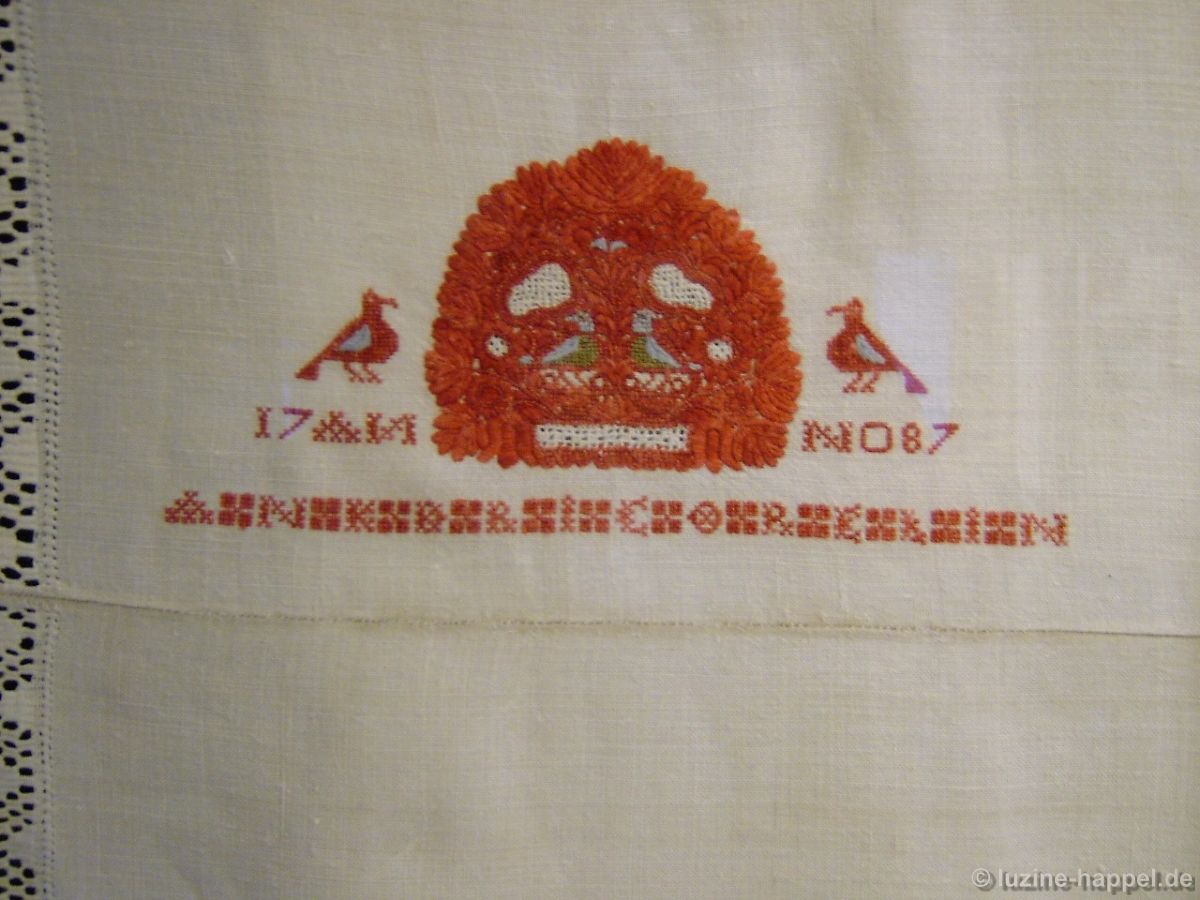
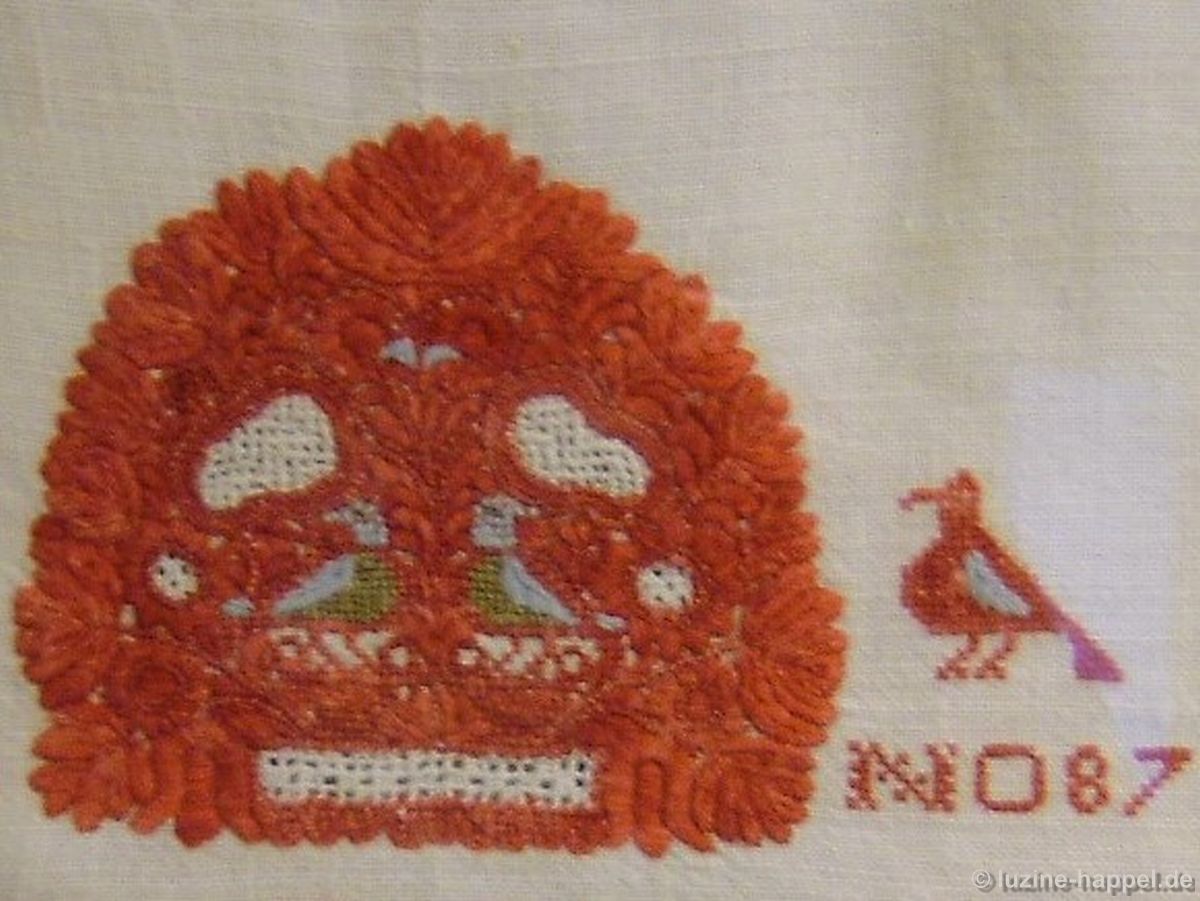
In the Schwalm I did not discover the earliest Coral Knot stitches in whitework, but in a red embroidered crown. The embroidery shows the year 1787.

The Coral Knot stitches were worked as stems and around the withdrawn-thread patterns.

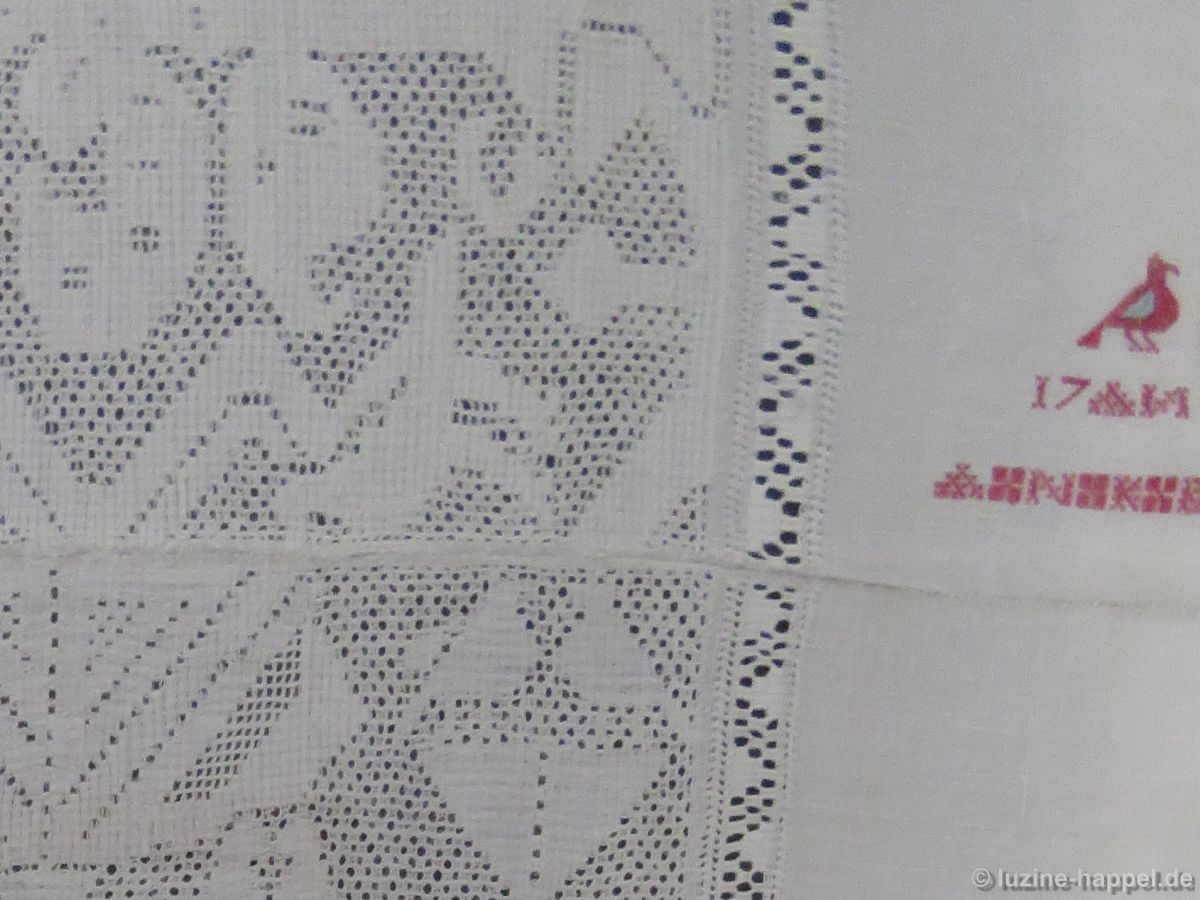
The appropriate whitework border consists of a wide openwork band that has been decorated with Needle-weaving, Rose and Cable stitches.

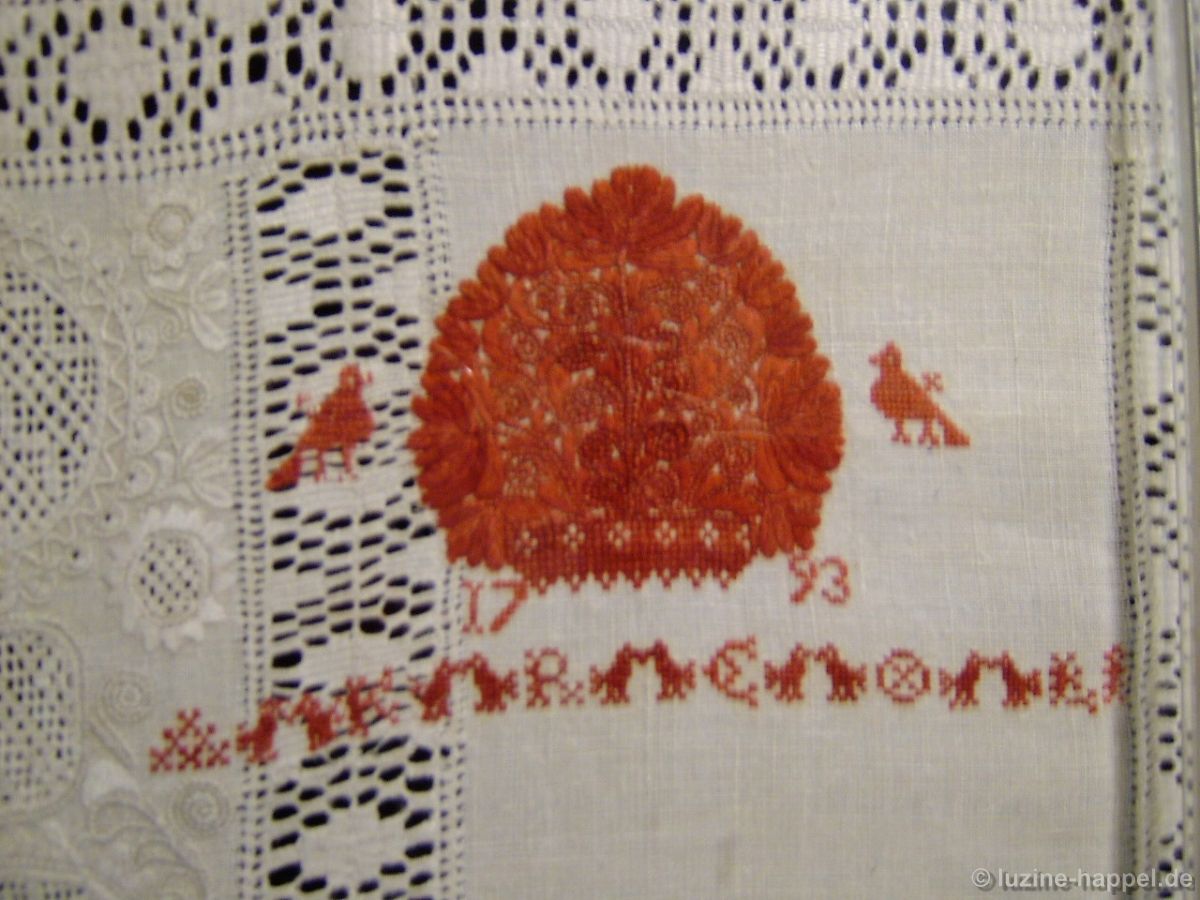
In Schwalm whitework I found the earliest Coral Knot stitches on a bedcovering from 1793. Here, too, the crown is embroidered in red and has Coral Knot stitches. But Coral Knot stitches were also used in the adjacent whitework – for outlining the withdrawn-thread patterns, for stems and tendrils.

Both textiles are exhibited in the Museum der Schwalm in Ziegenhain.

But how did the Coral Knot stitches get into the Schwalm?

In a treatise by Agnes Geihseder on the history of embroidery
I found information that in the 17th century, among other stitches, Coral Knots became a method used at that time.

But neither the peasant embroidery in the Czech Republic nor the early Hedebo embroidery in Denmark, both of which show similarities with Schwalm whitework, did not use Coral Knot stitches.

So far I have not found any indication of how the Coral Knot stitch got into the Schwalm.
Maybe you can help: In which regions of Europe were Coral Knot stitches part of regional embroidery before 1780?

Schwalm Whitework and Golden Yellow (1)

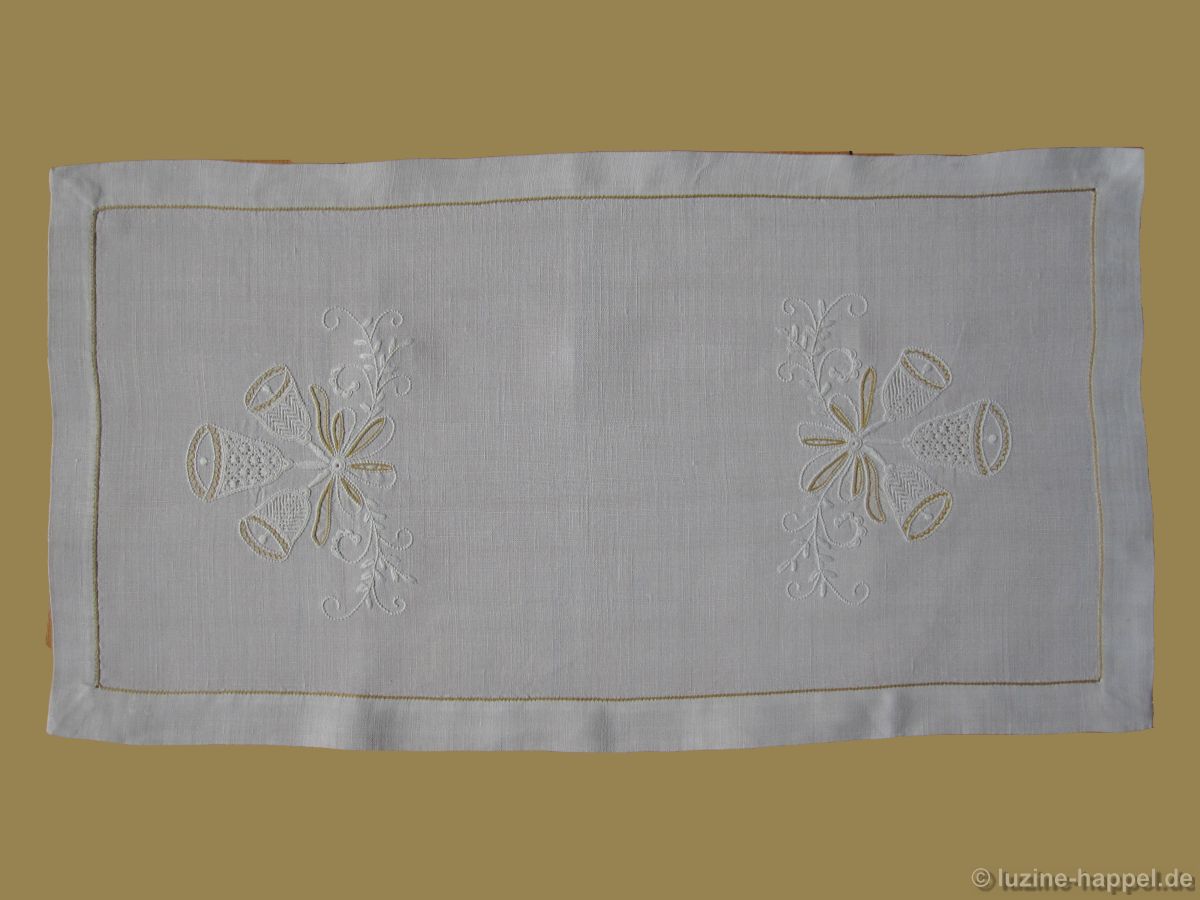
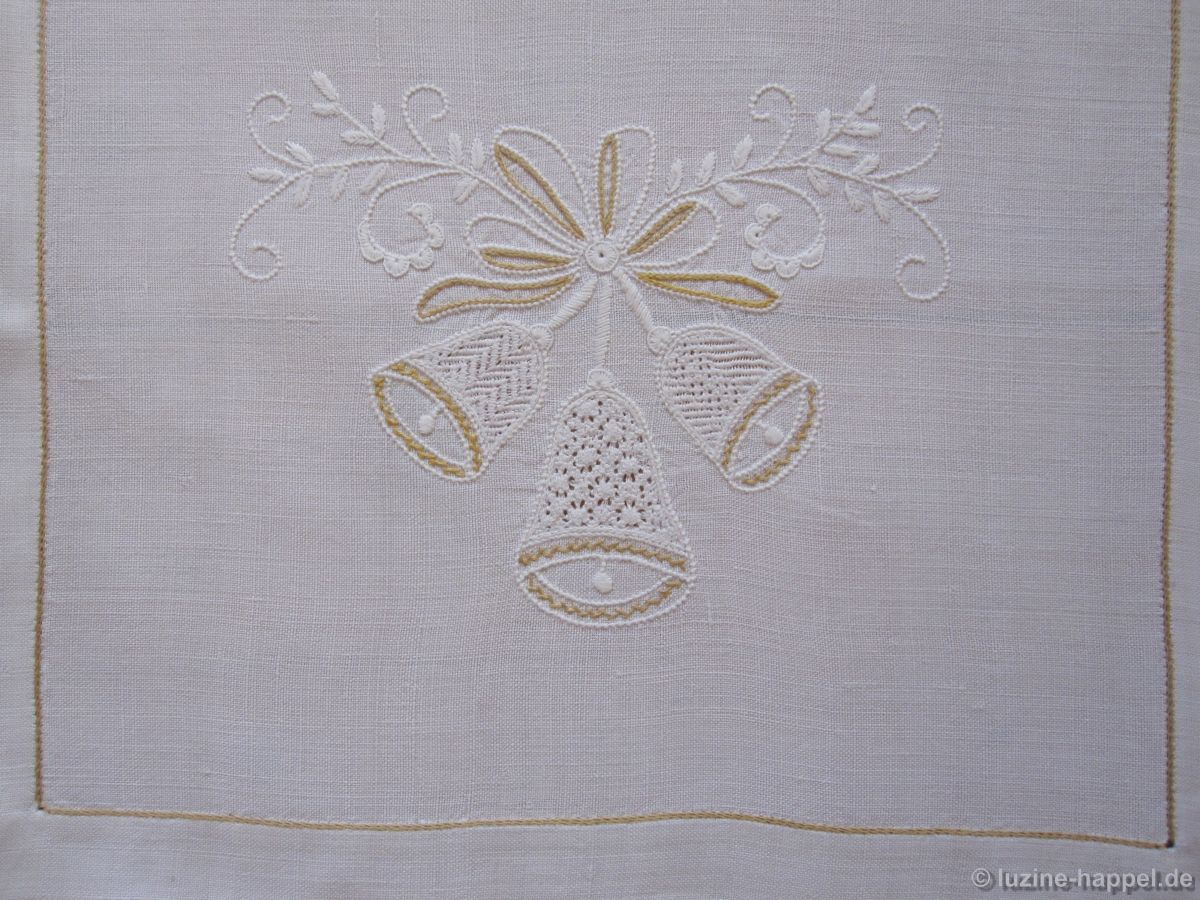
The colour gold and golden yellow in combination with Schwalm whitework has a long tradition. Because mainly gold tones were used to design the crowns.

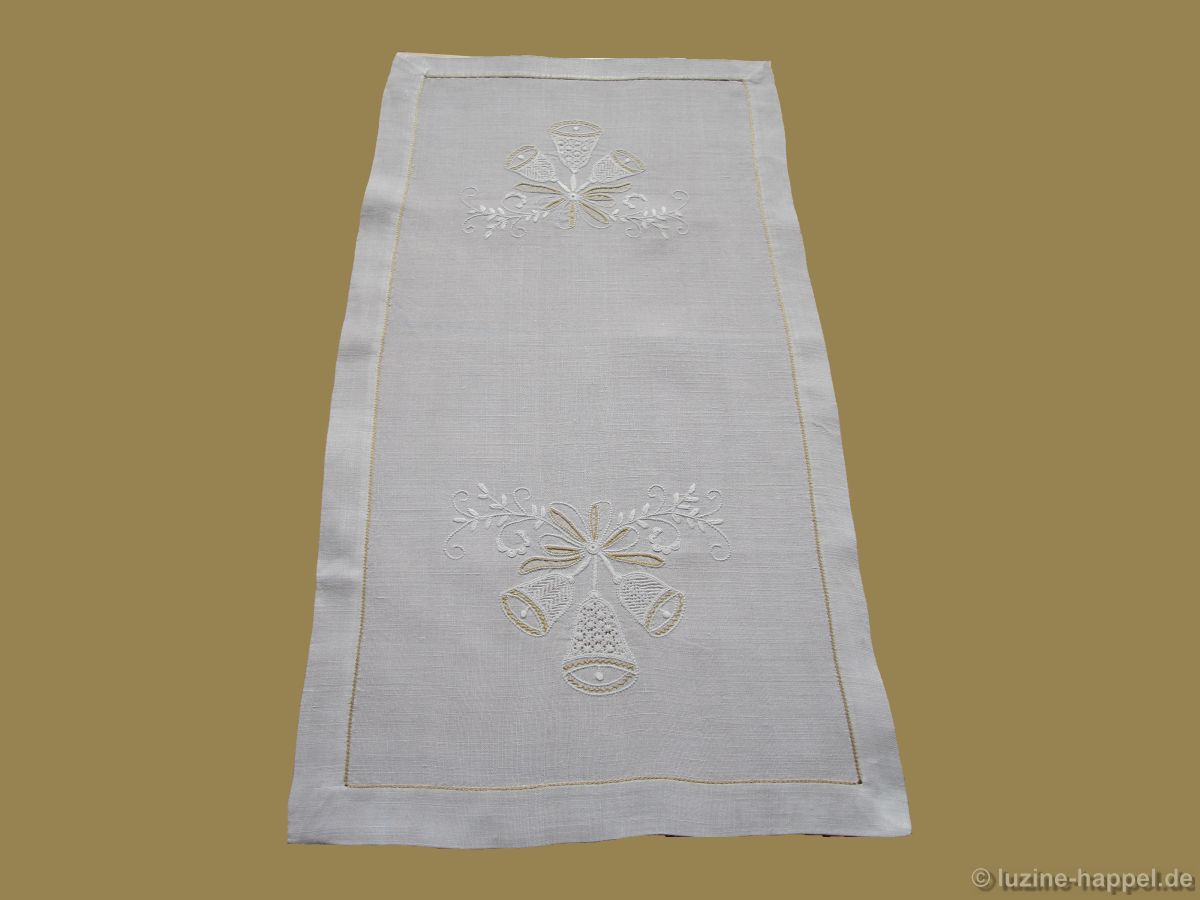
Nowadays, the warm colour is also used for Christmas embroidery.

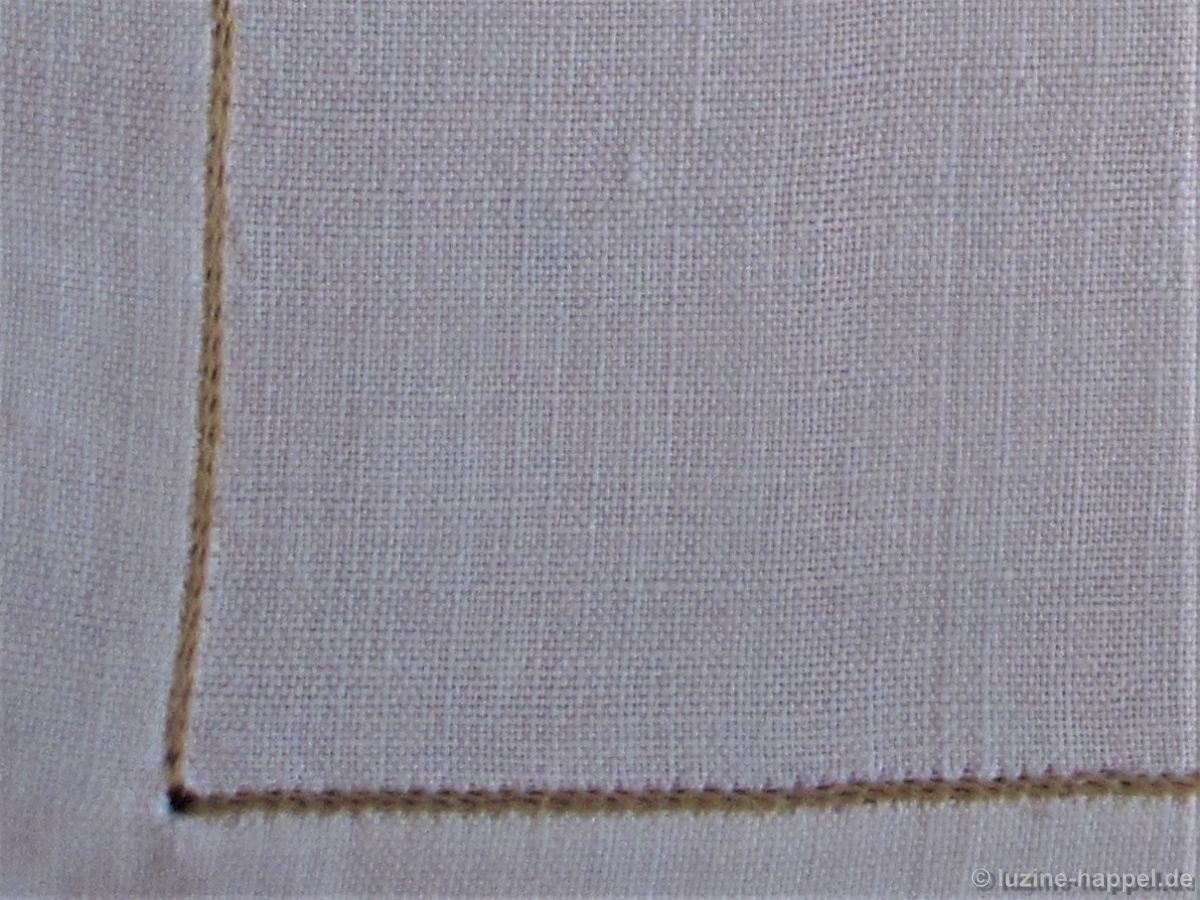
Its sparing use accents elements,

sets highlights,

ensures a harmonious rounding off and supports the effect of specific points.

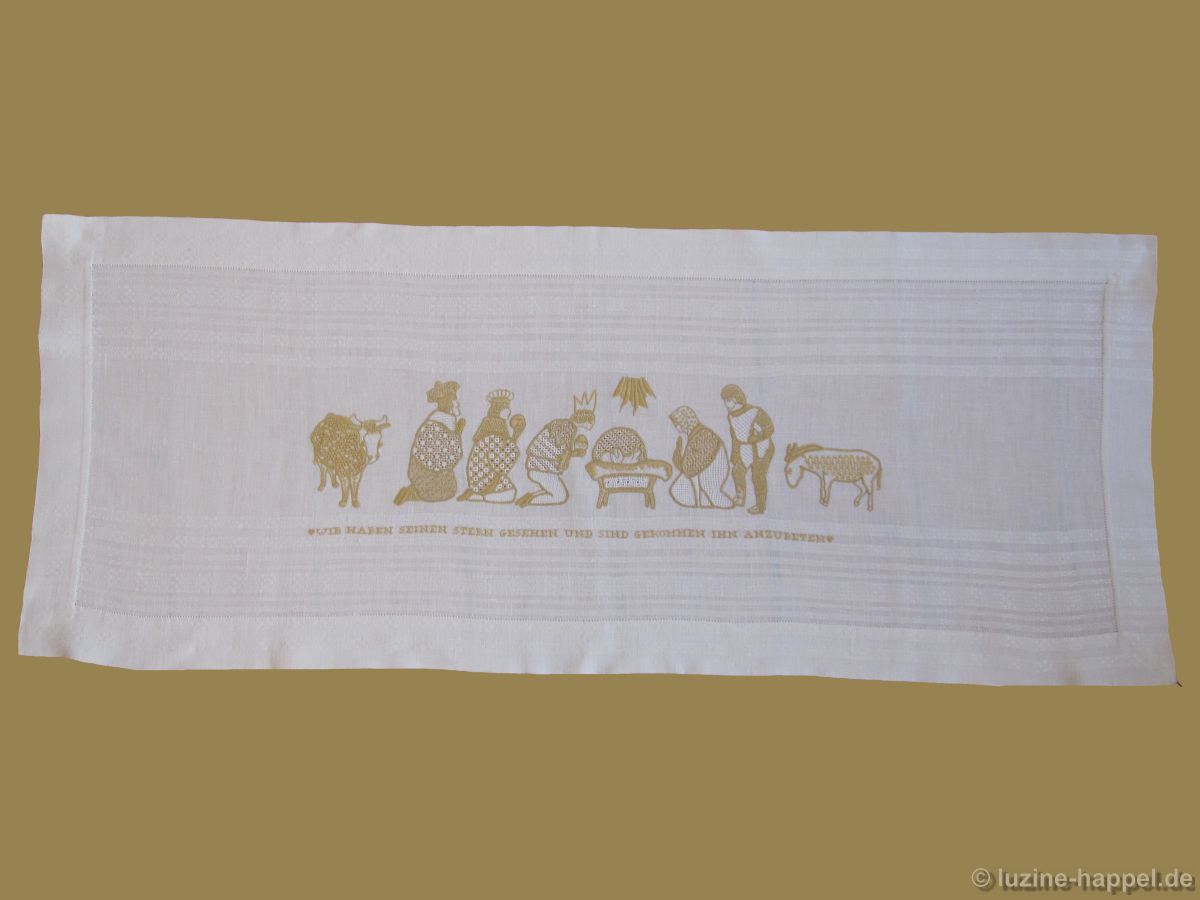
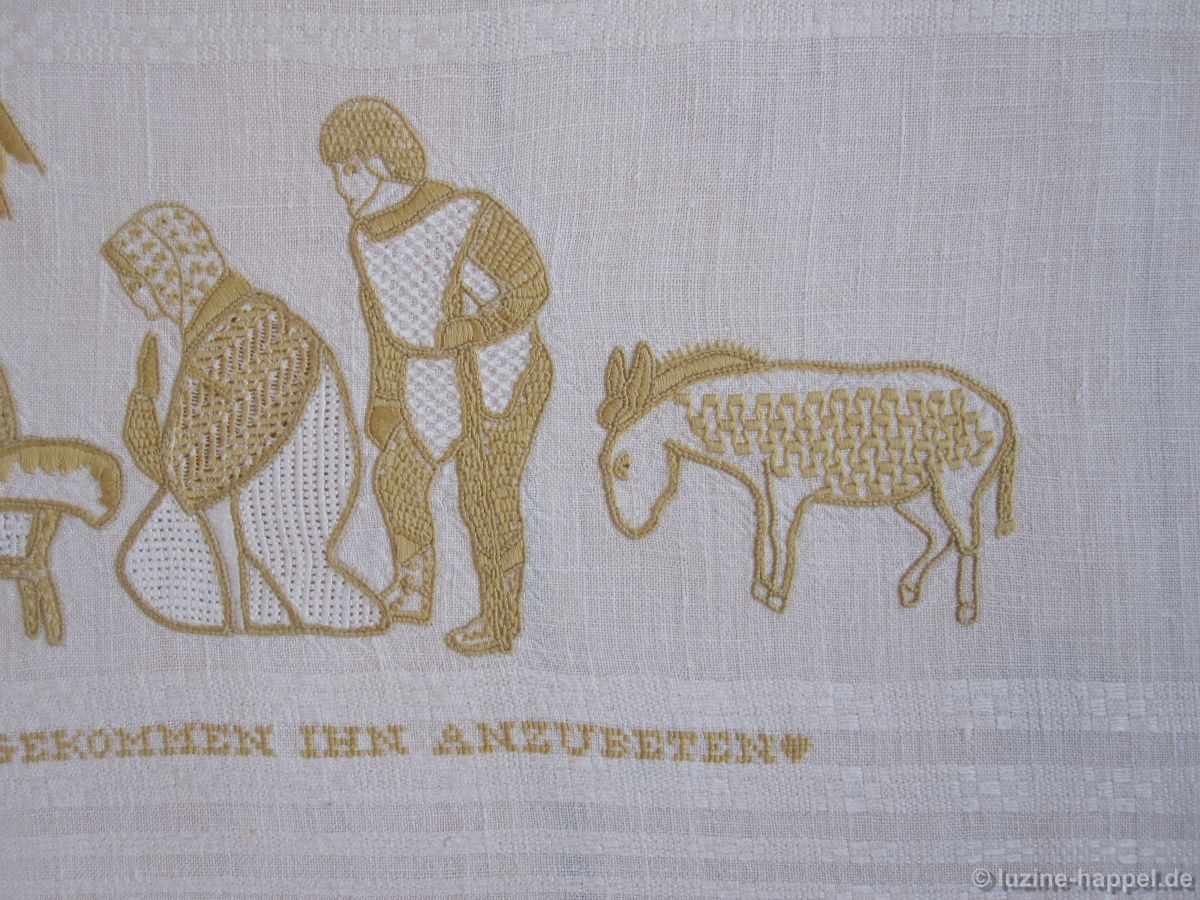
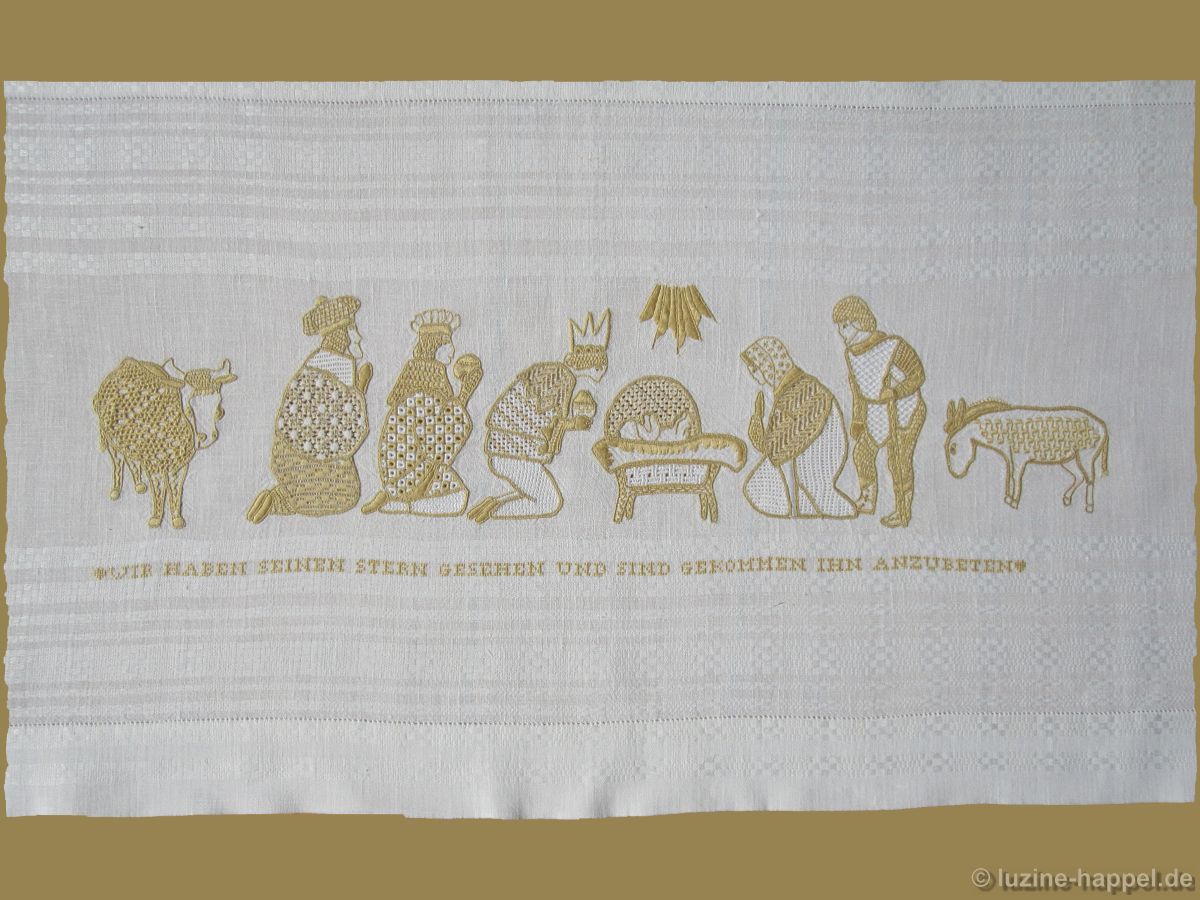
Rarely, a delicate gold tone is used more lavishly, as here in the nativity scene.

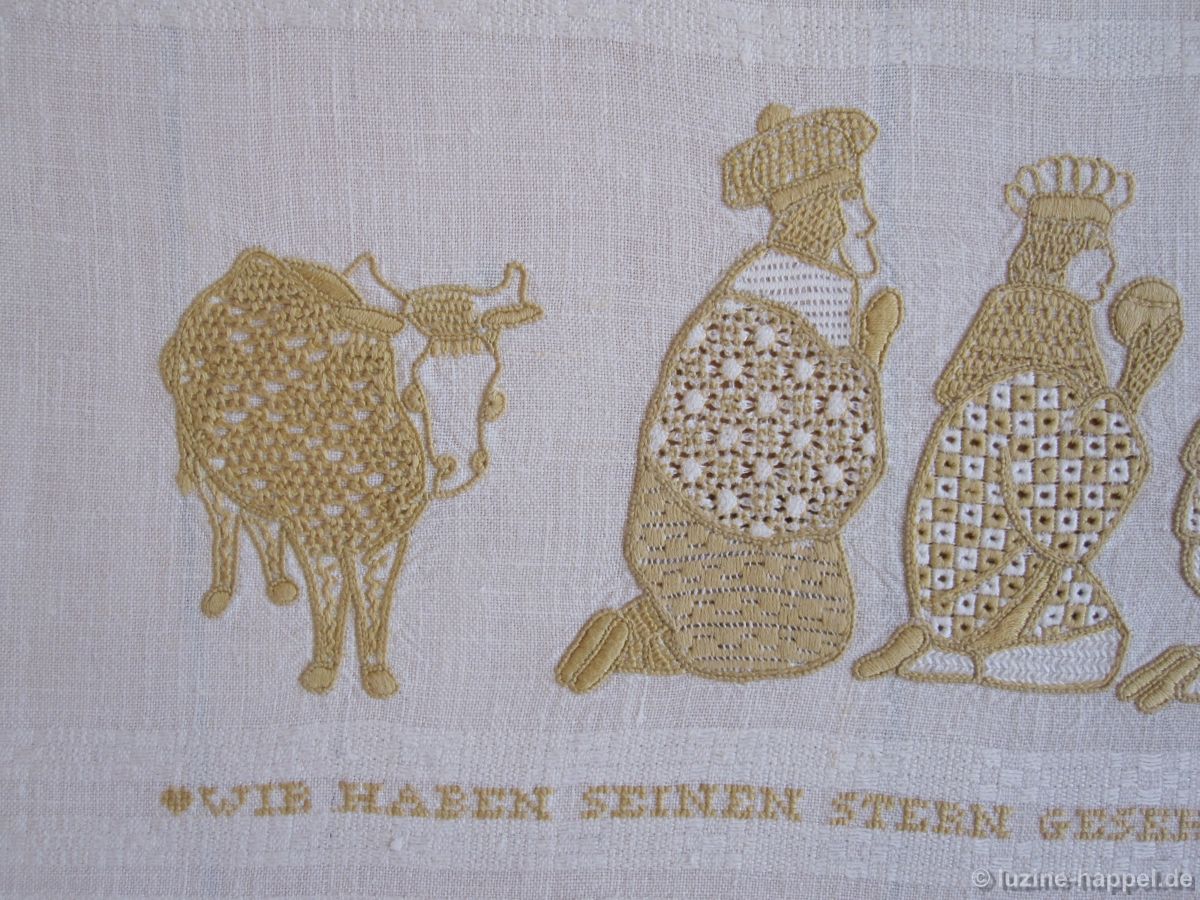
All outlines and most of the filling patterns are embroidered in gold.

Patterns from the early Schwalm whitework were used as well as simple and Limet withdrawn thread patterns. The patterns of early Schwalm whitework, which do not require thread pulling, are particularly suitable for designing small areas.

Some single designs were embroidered in two colors in some areas of the robes of the Wise Men.

Merry Christmas!