Design for Practice Exercises

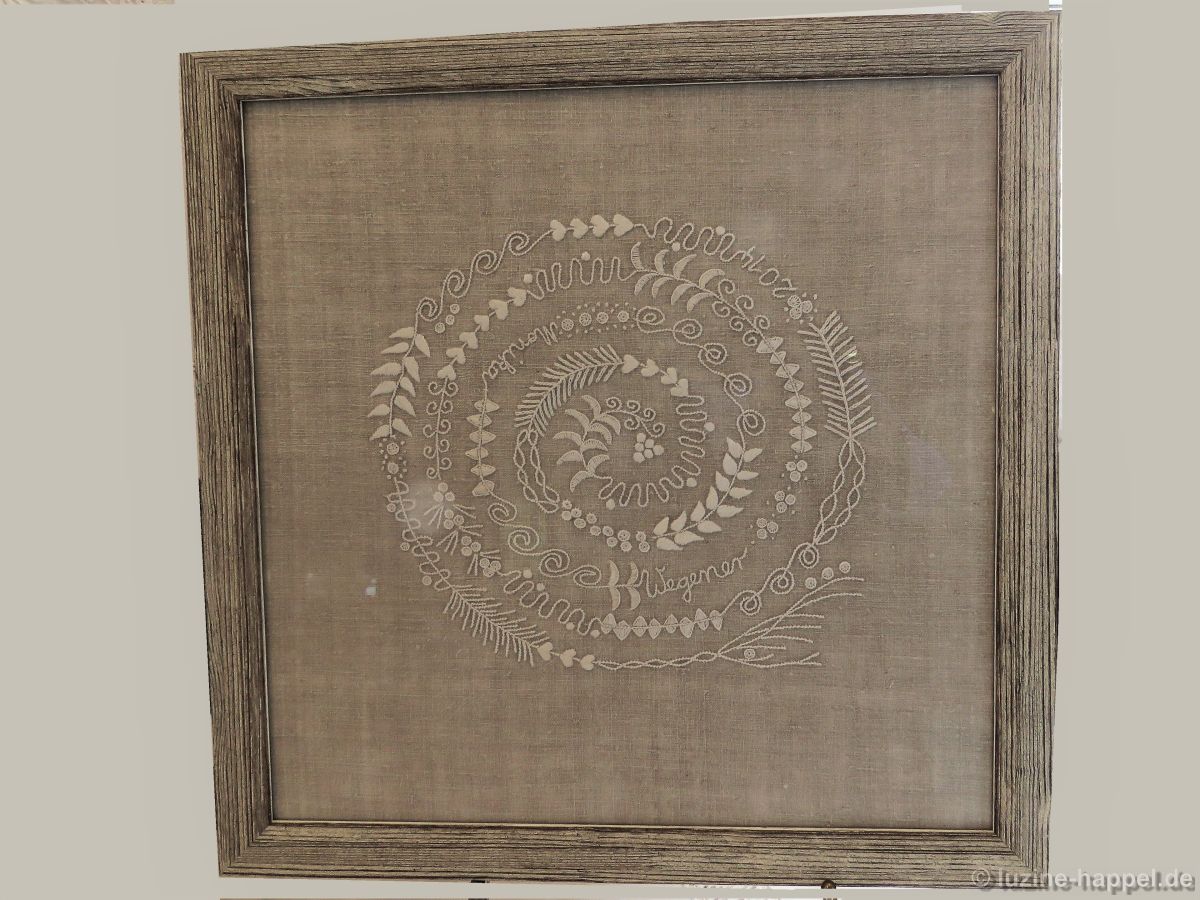
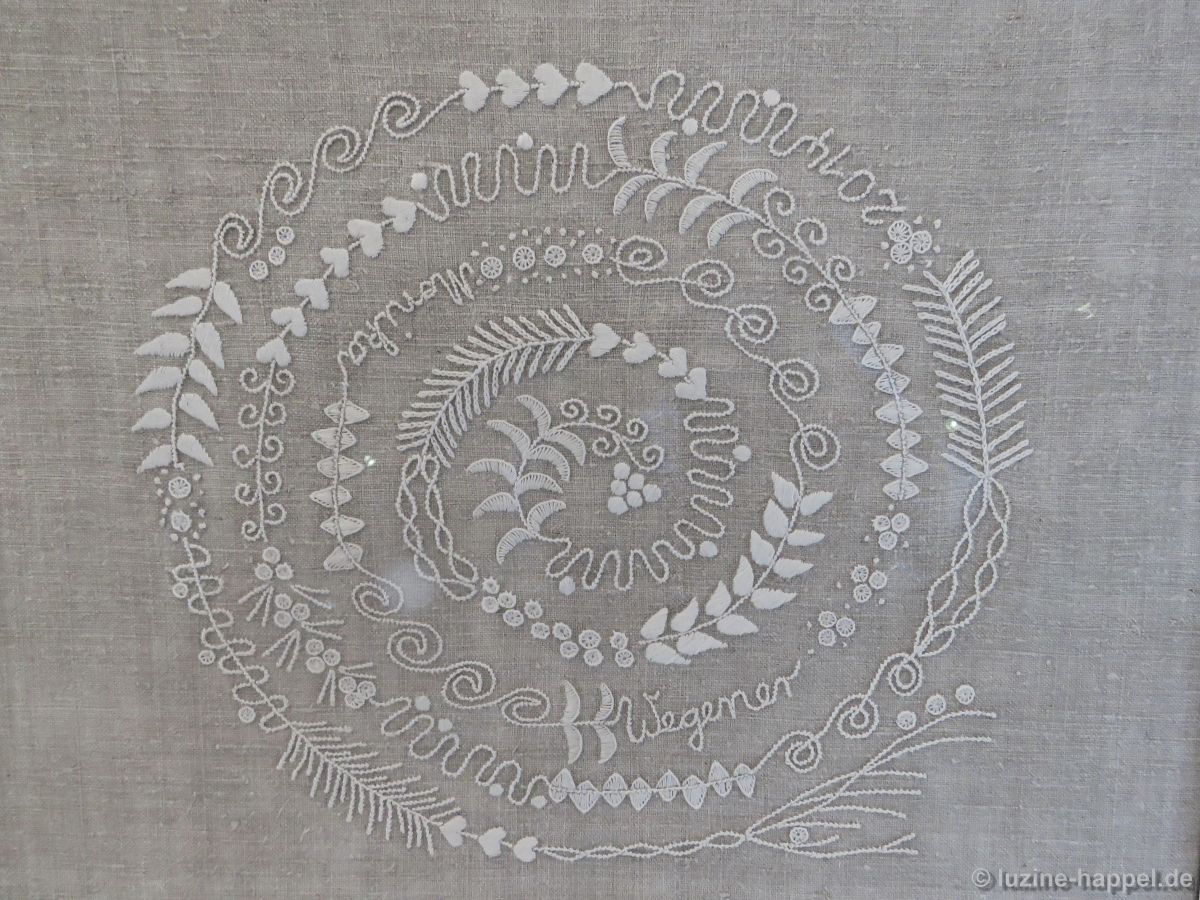
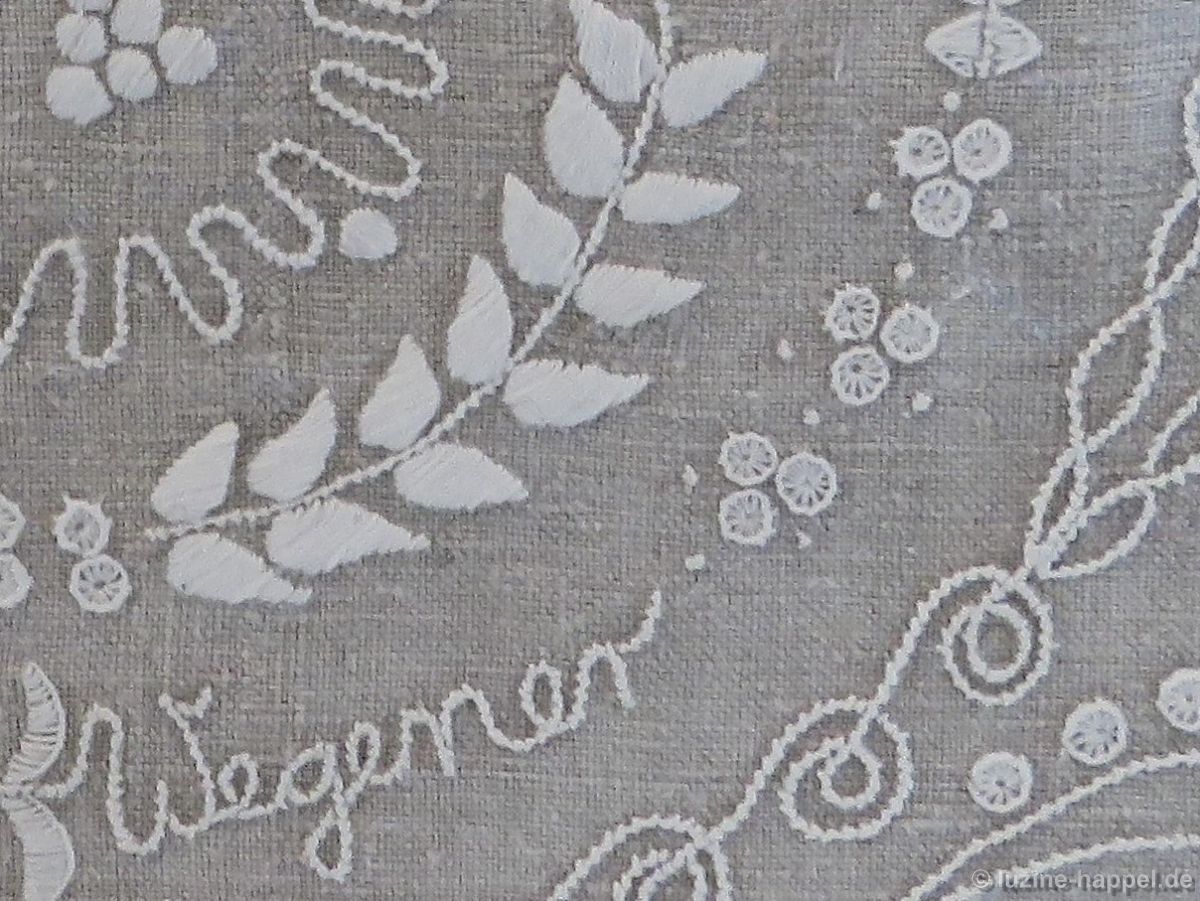
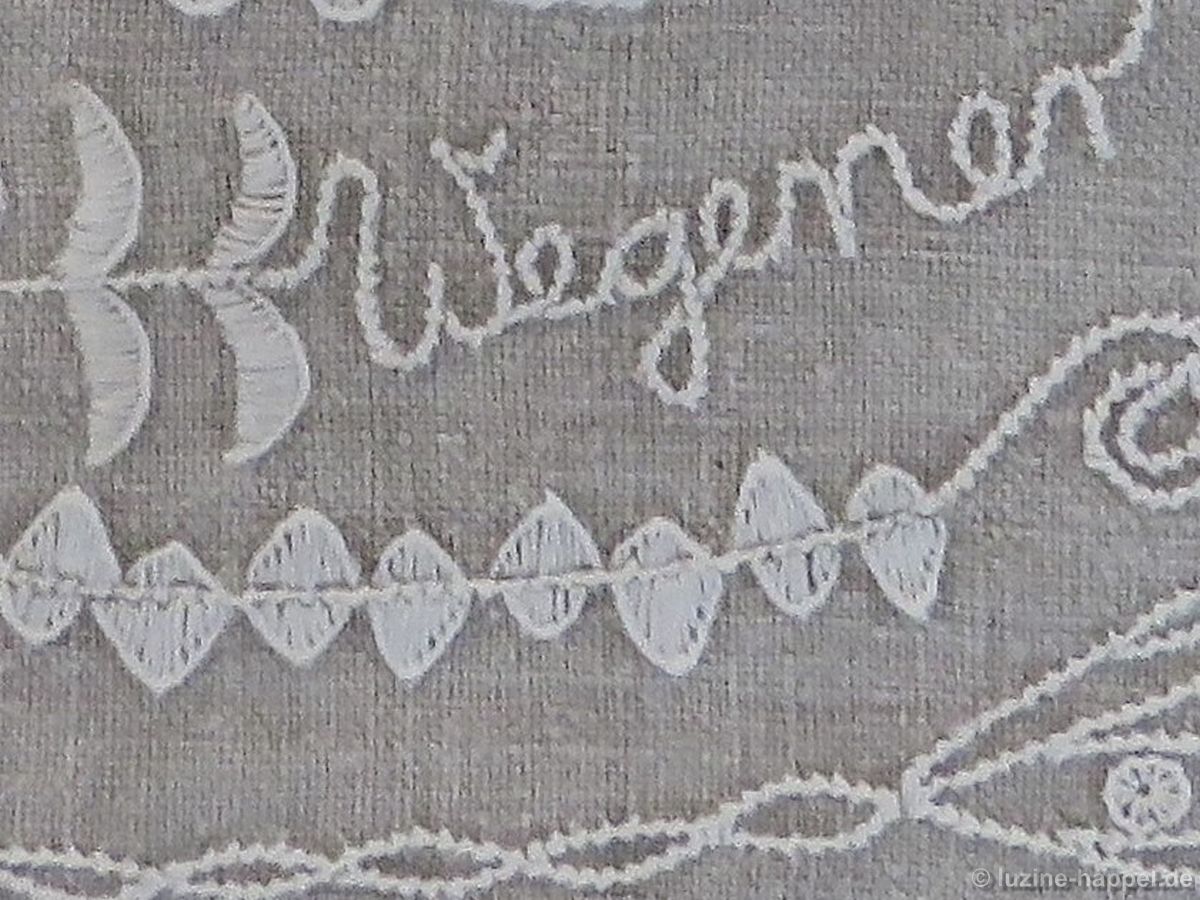
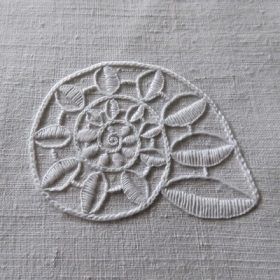
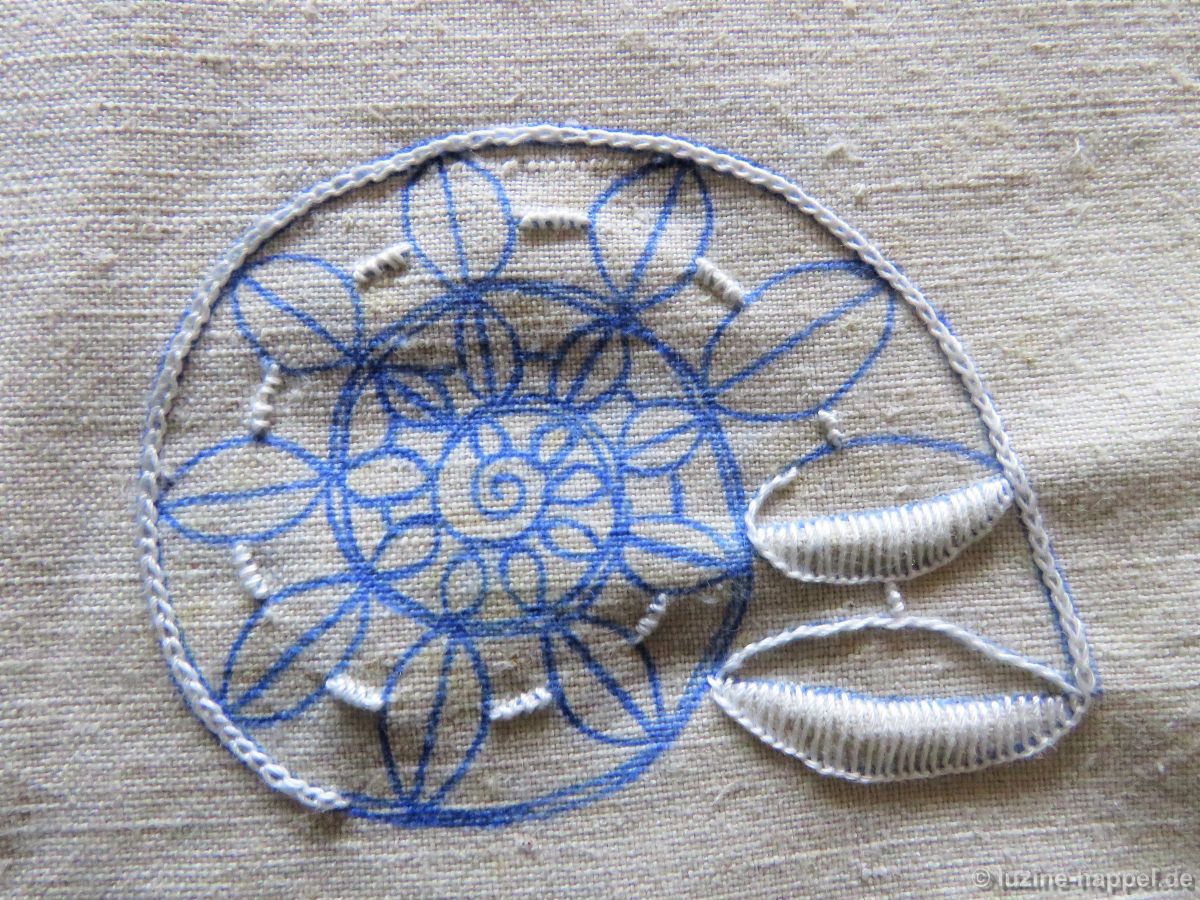
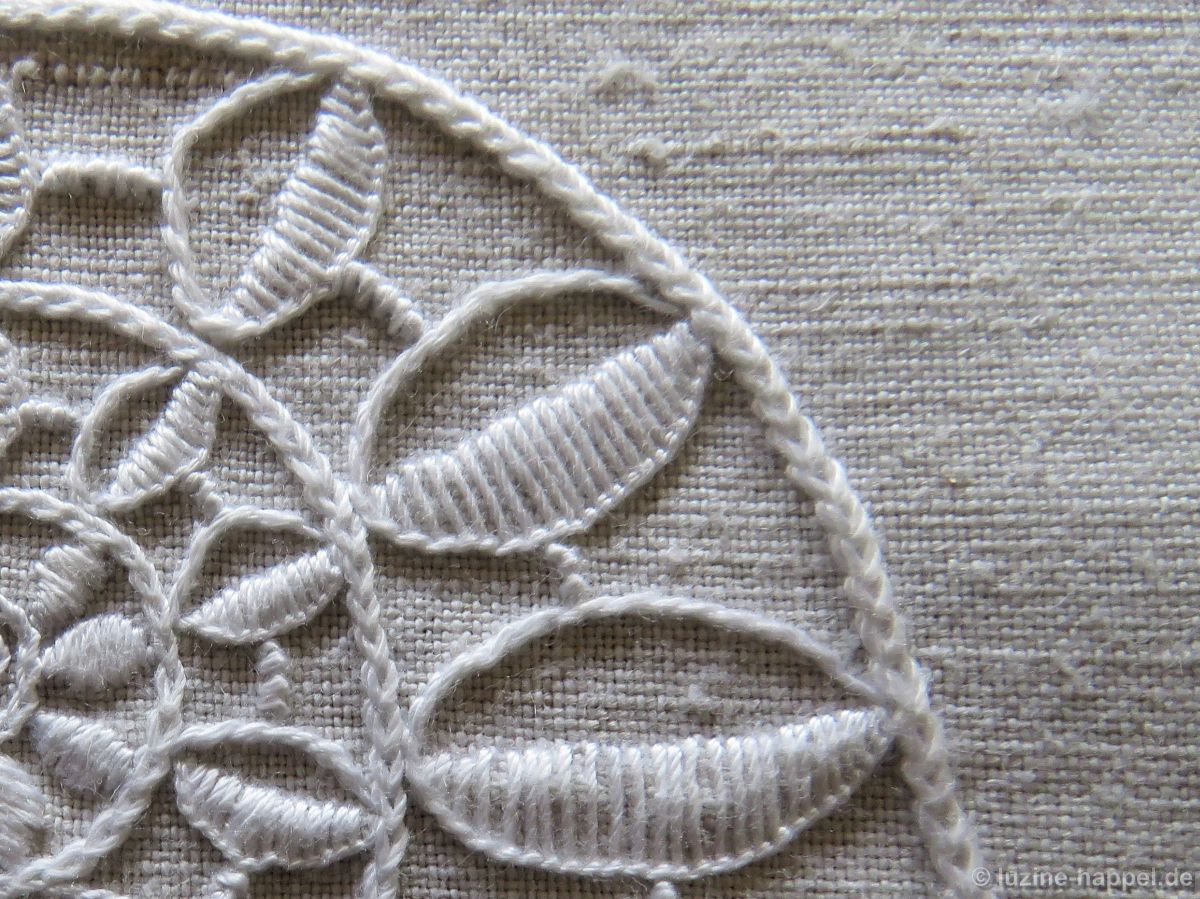
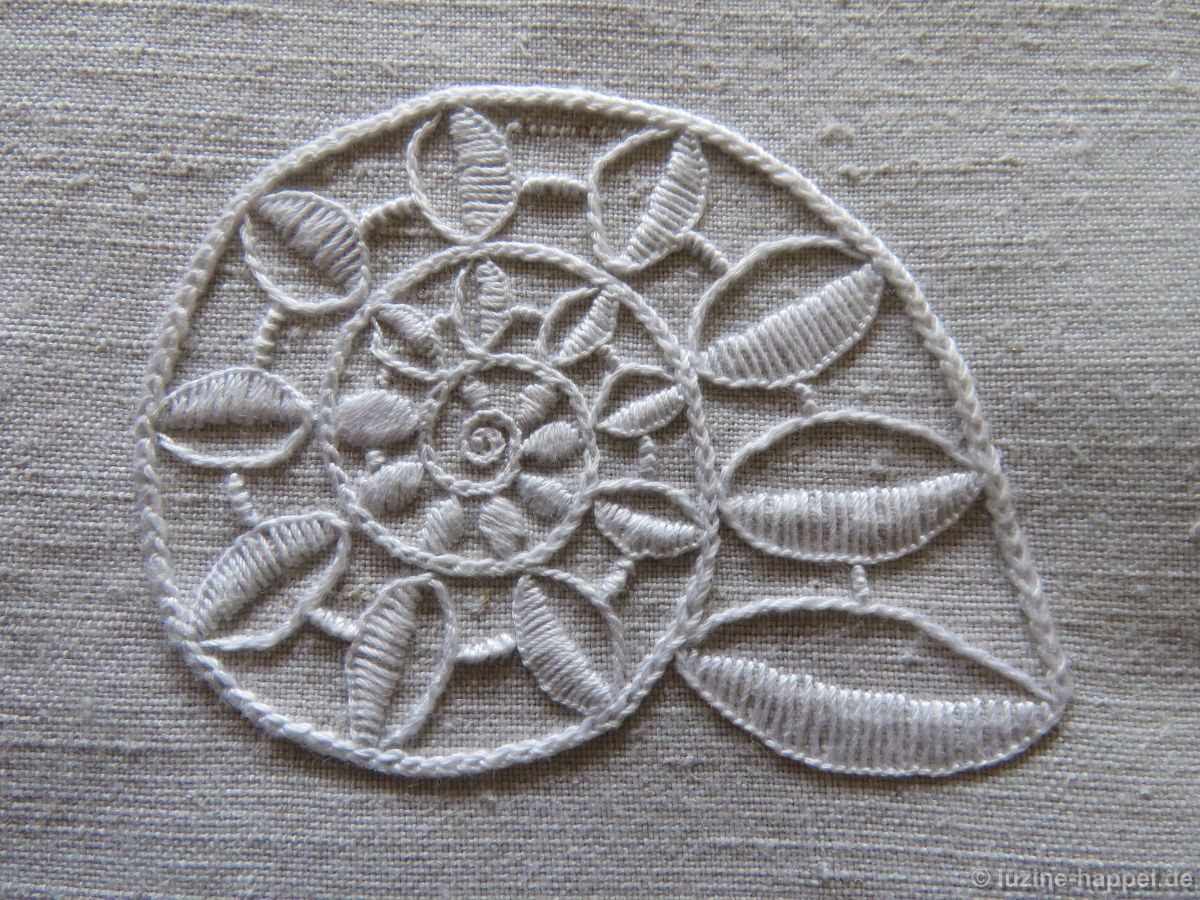
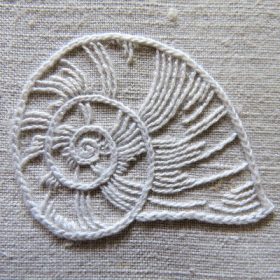
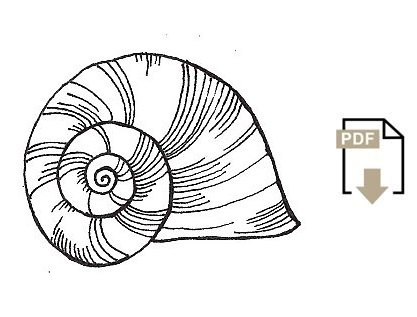
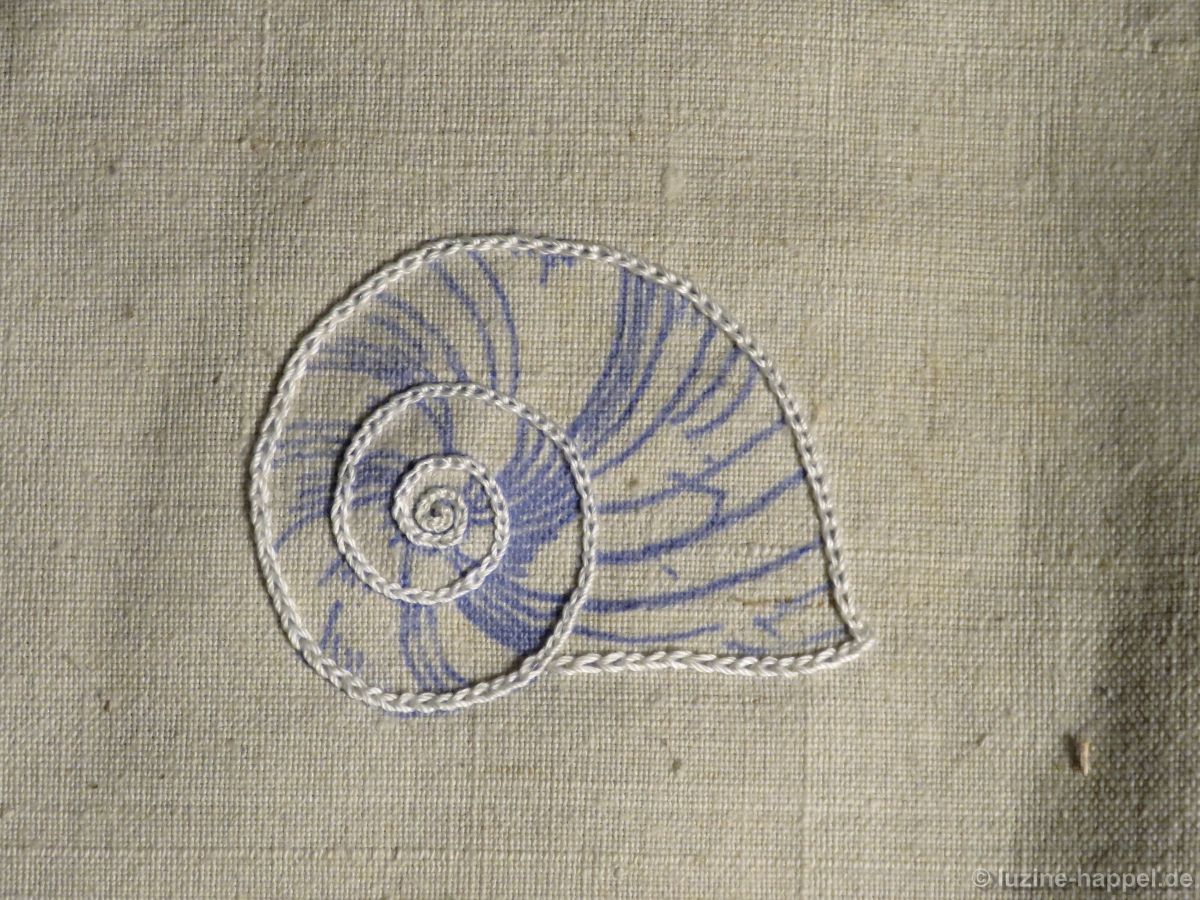
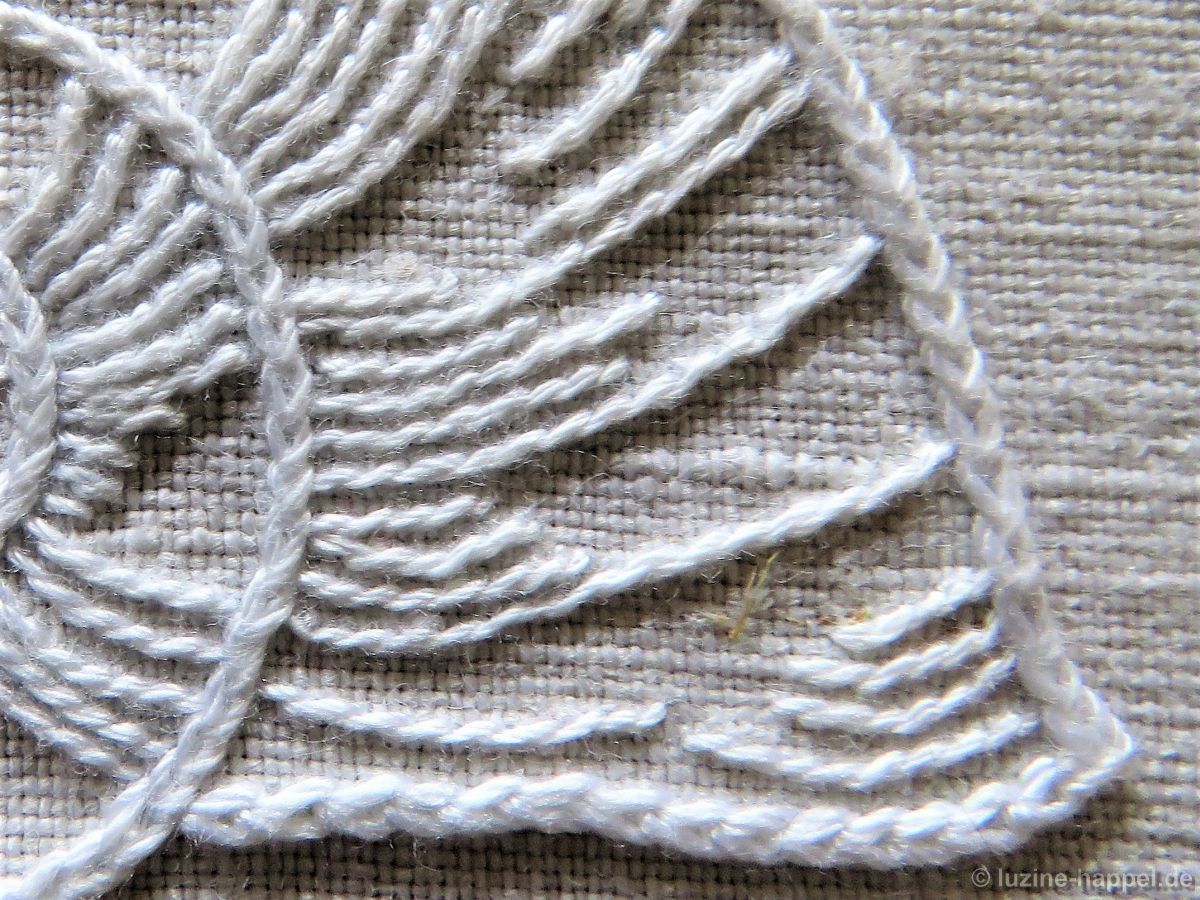
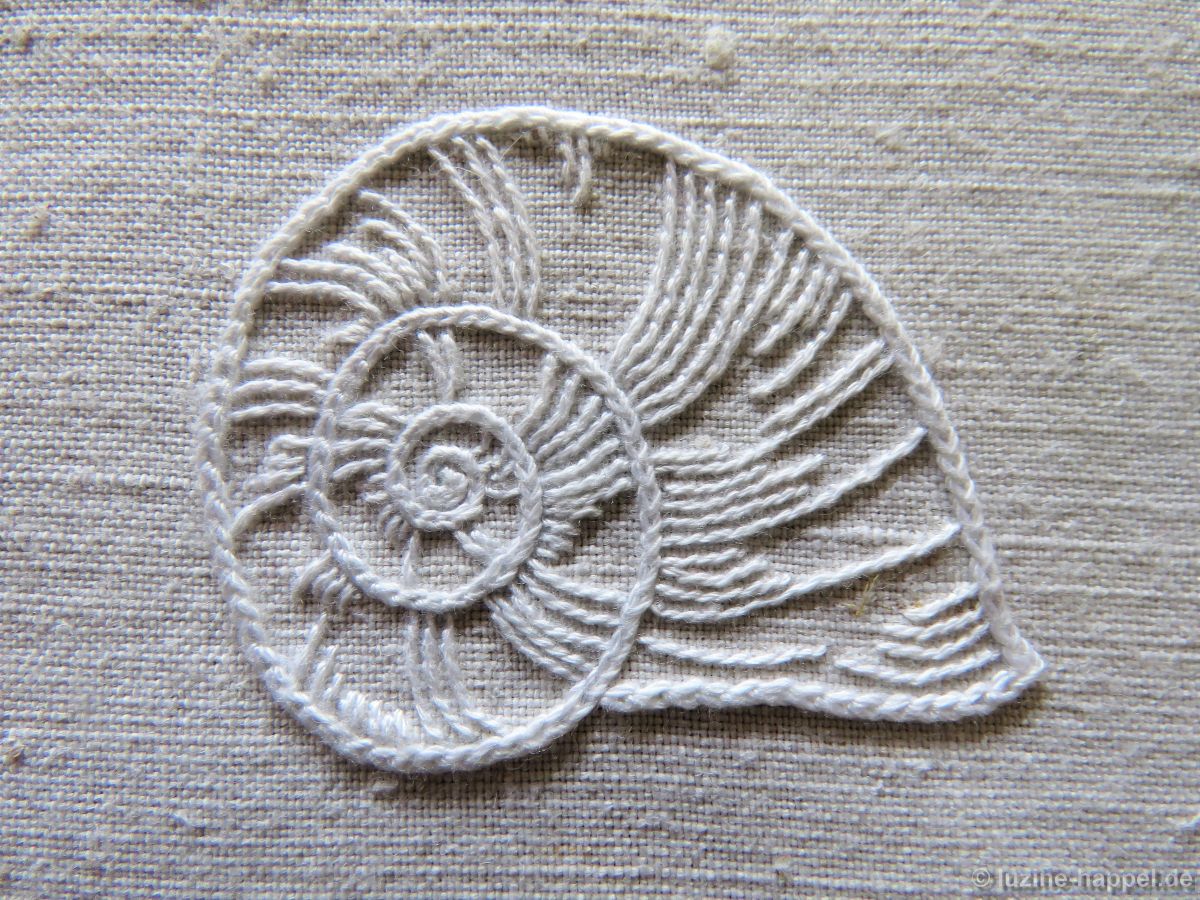
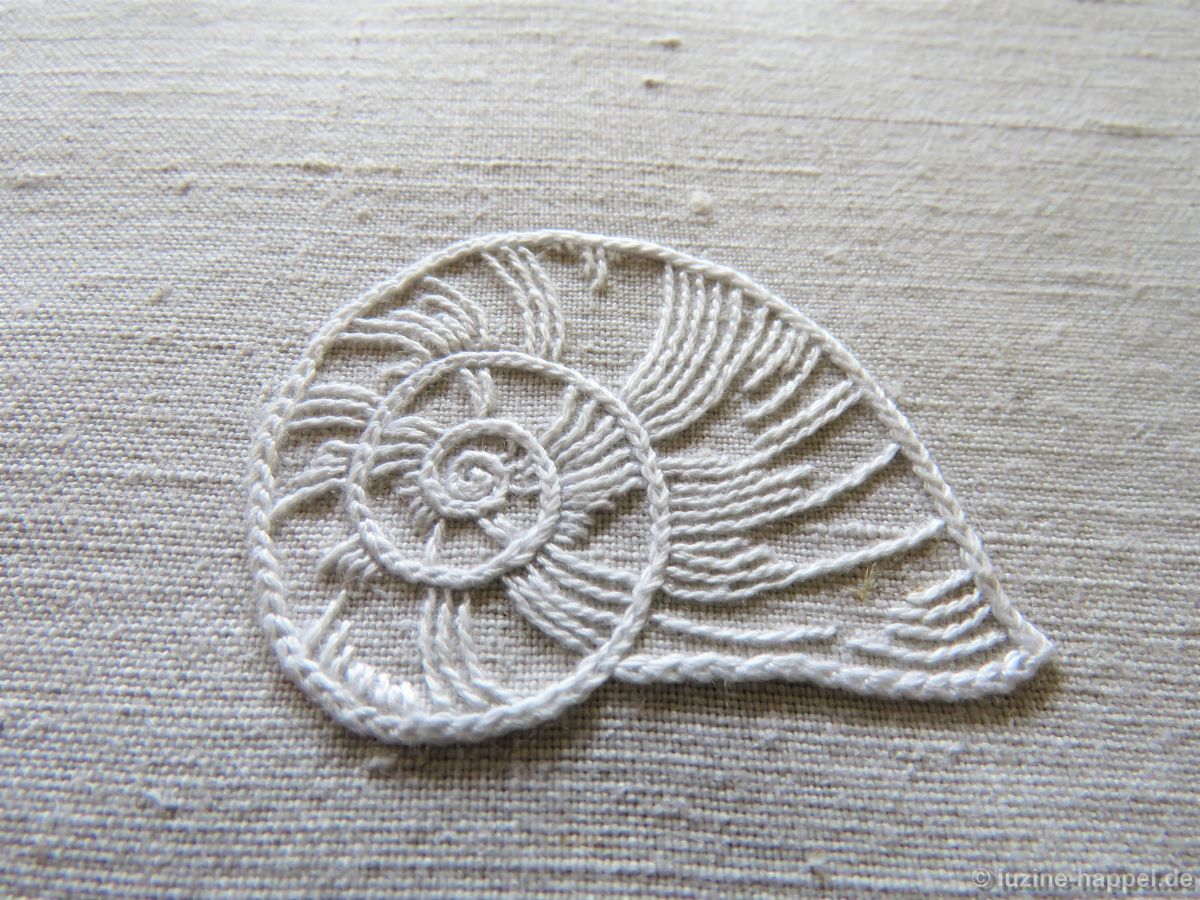
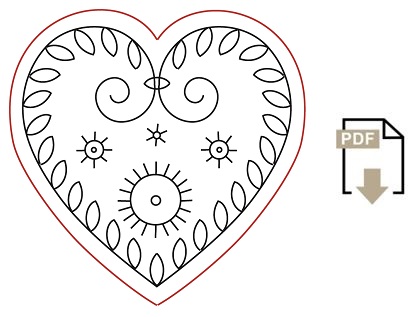
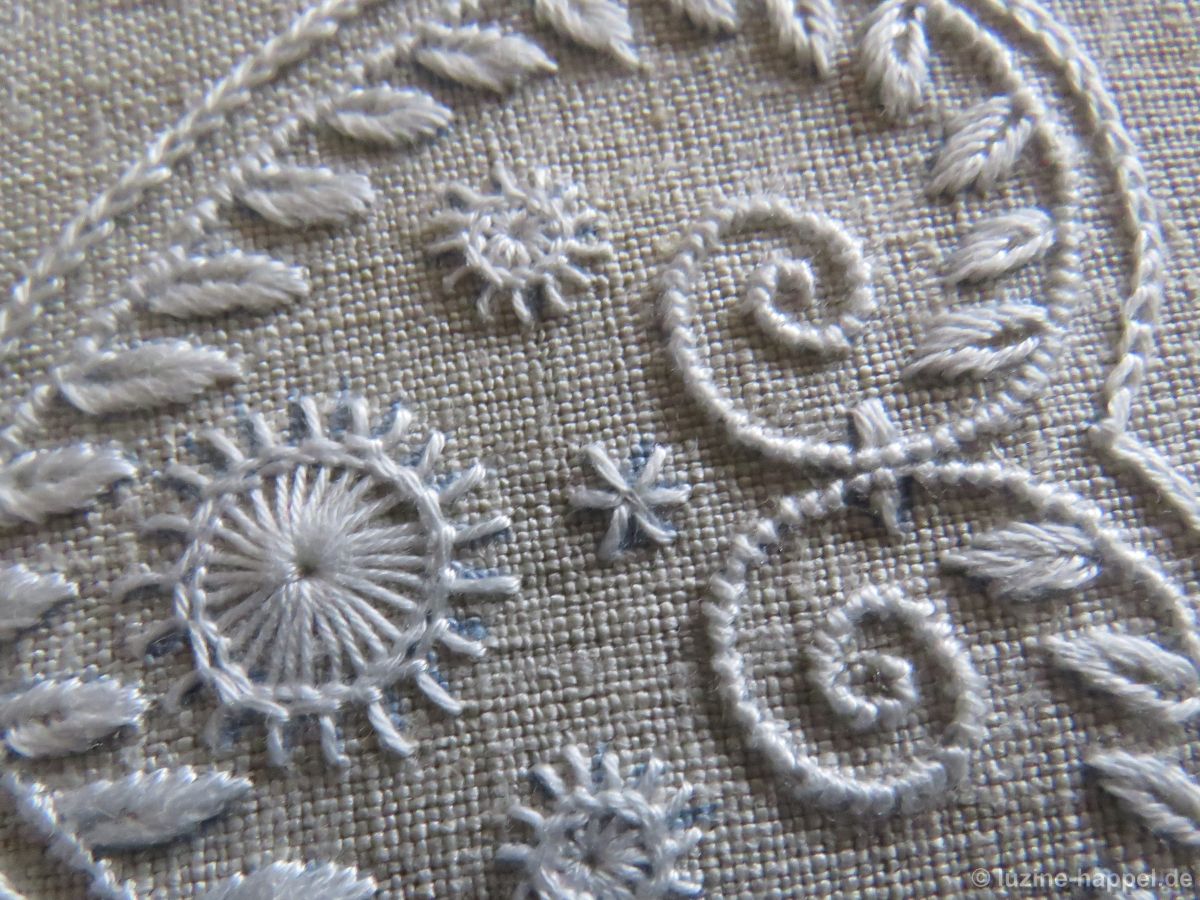
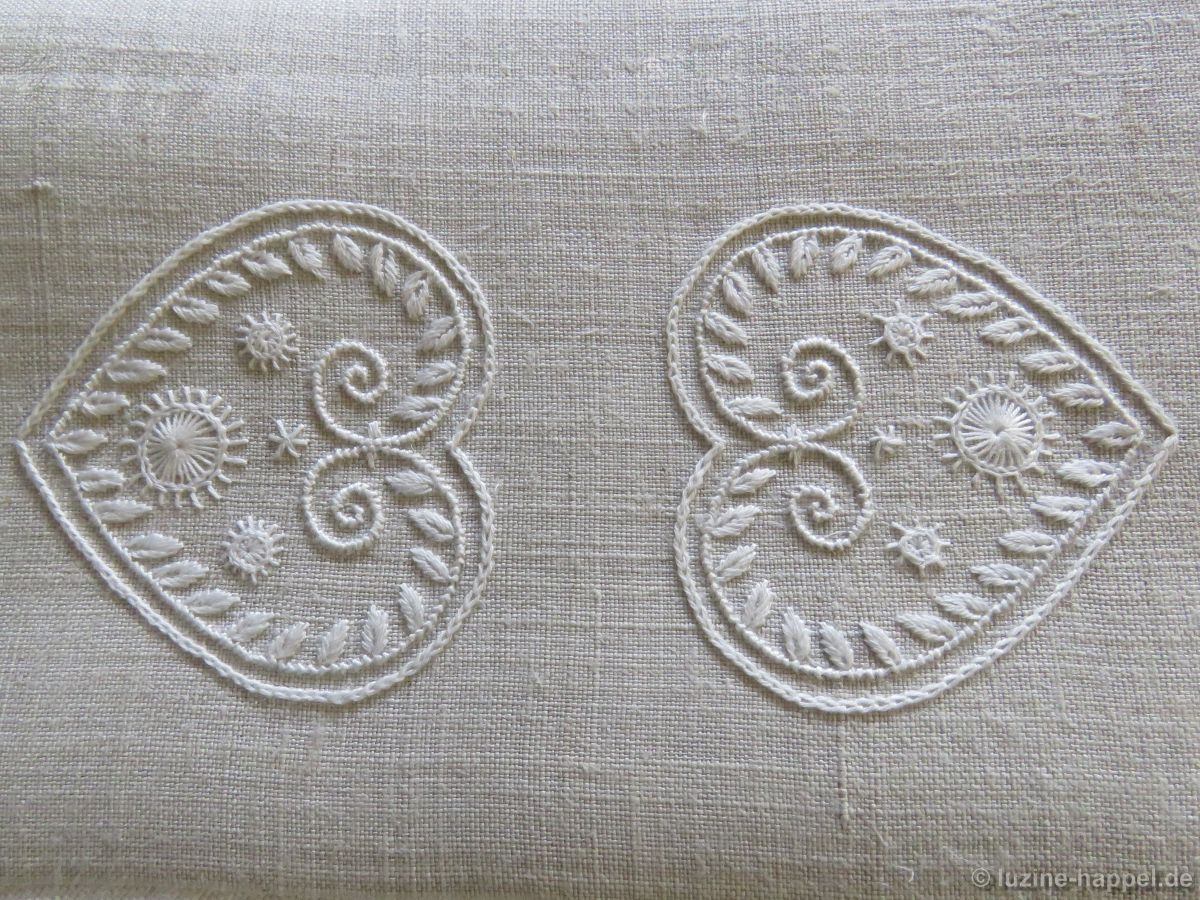
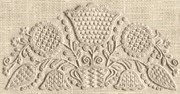
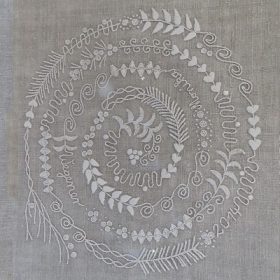
The artist Gudrun Hartwig designed one more beautiful small design for practicing Coral Knot stitches, tendrils, forks, and Blanket stitch eyelets.

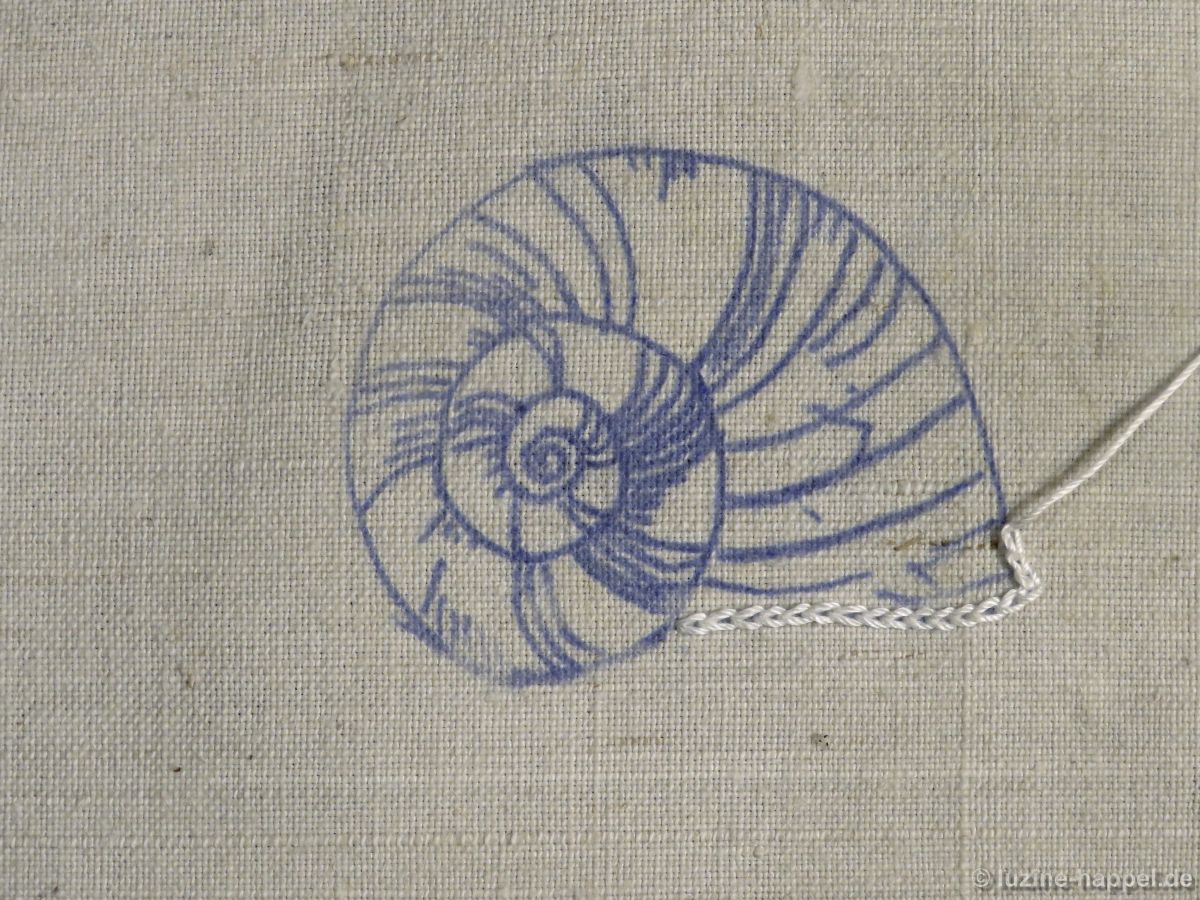
The design is transferred to the linen (here: 20/cm thread count). Using coton à broder No. 20 Coral Knot stitches are worked. It is best to start with the tendril.

Start working a branch anywhere on the design. Do not secure the beginning tail of the thread, but let 10 cm of thread remain on the front of the fabric. (Keeping the beginning tail of the thread on the front instead of the back of the fabric ensures that it will not be caught in the stitches.)

Work the first section of the branch. Work a somewhat wider Coral Knot stitch directly after passing the fork.

Continue working in the established way until reaching the next fork. Again work a somewhat wider stitch and continue in the established way.

Reaching the end of the line, on the back secure the working thread in the stitches just worked to arrive back at the fork.

From there work the offshoot.

Now thread the beginning tail of the thread, bring it to the back of the fabric, and slide it through the stitches to the fork.

From there work the offshoot and secure the thread.

Working this way, all forks turned out well.

Using coton à broder No. 25 work the Blanket stitch eyelets.

Since the back side is relatively tidy,

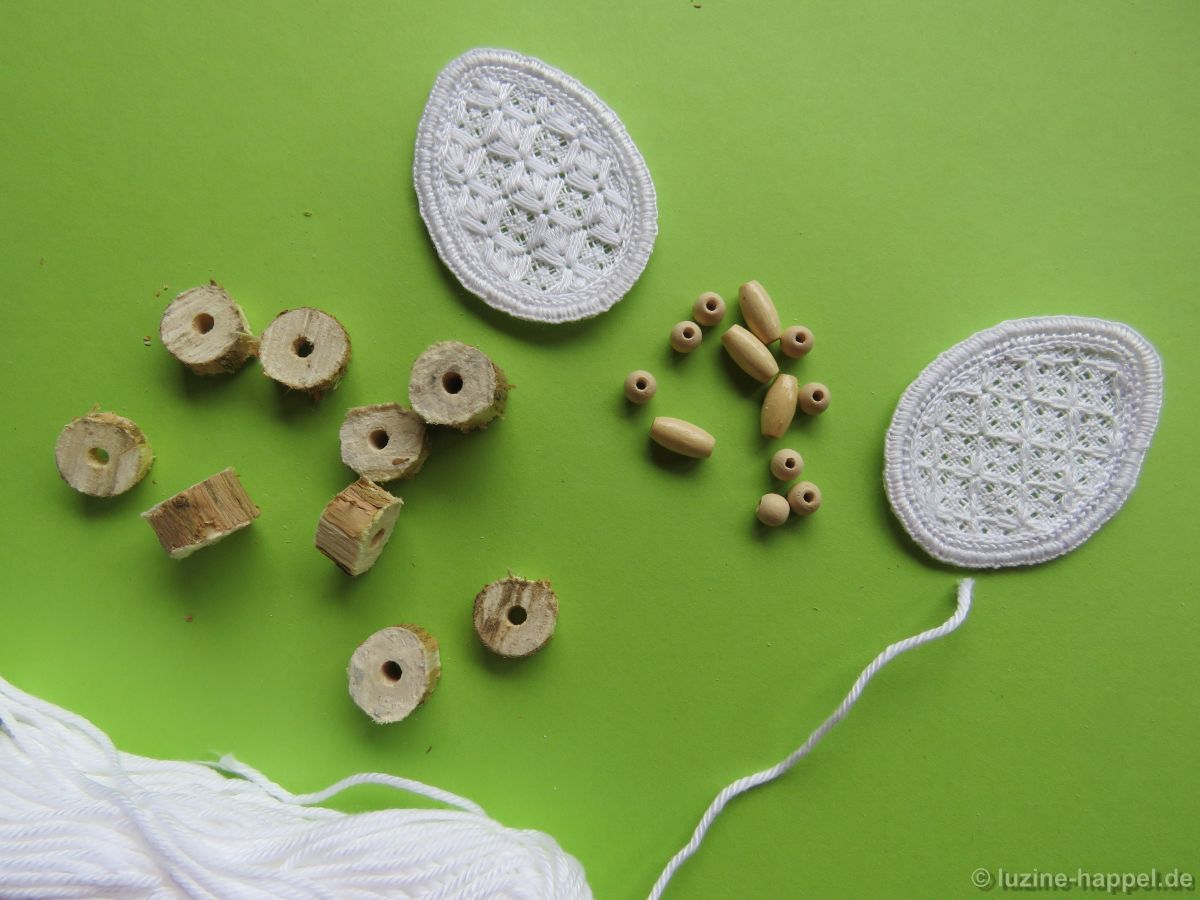
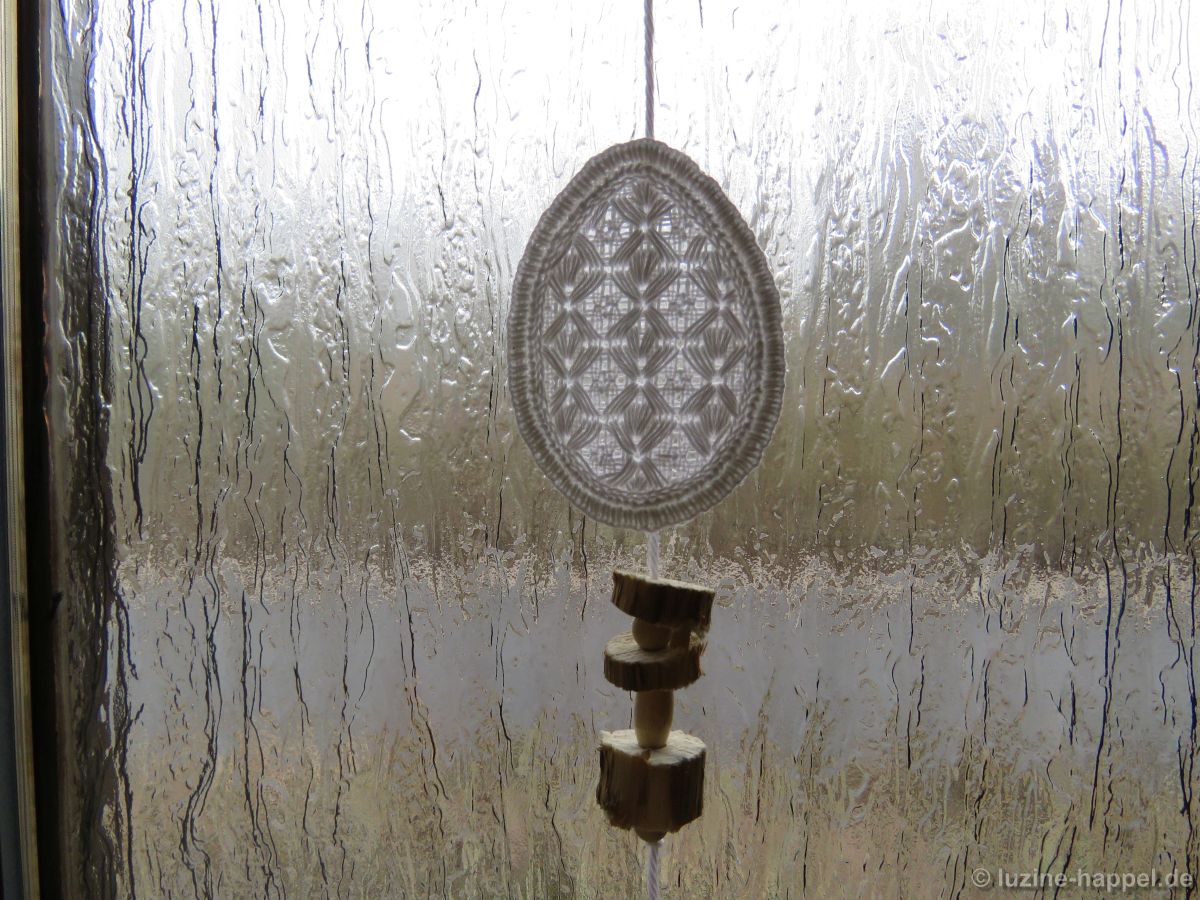
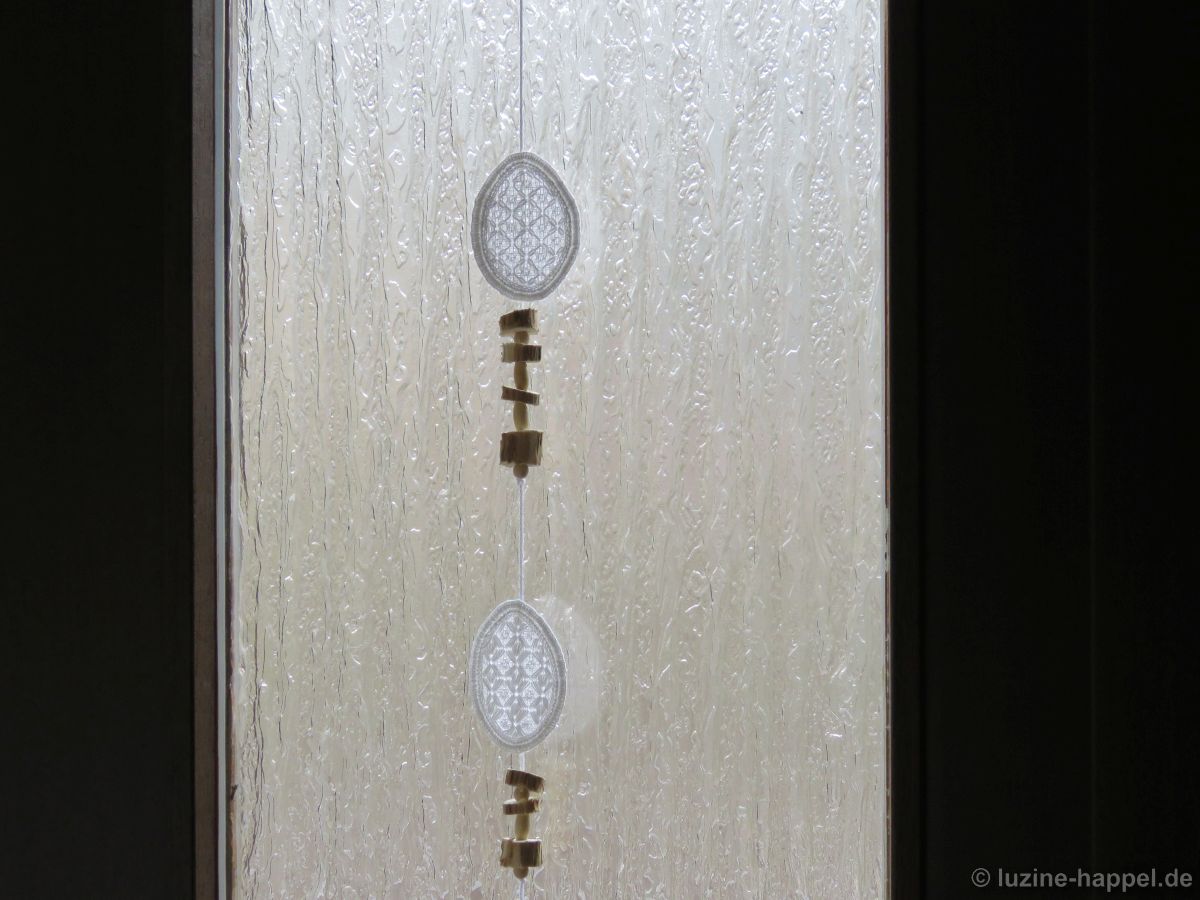
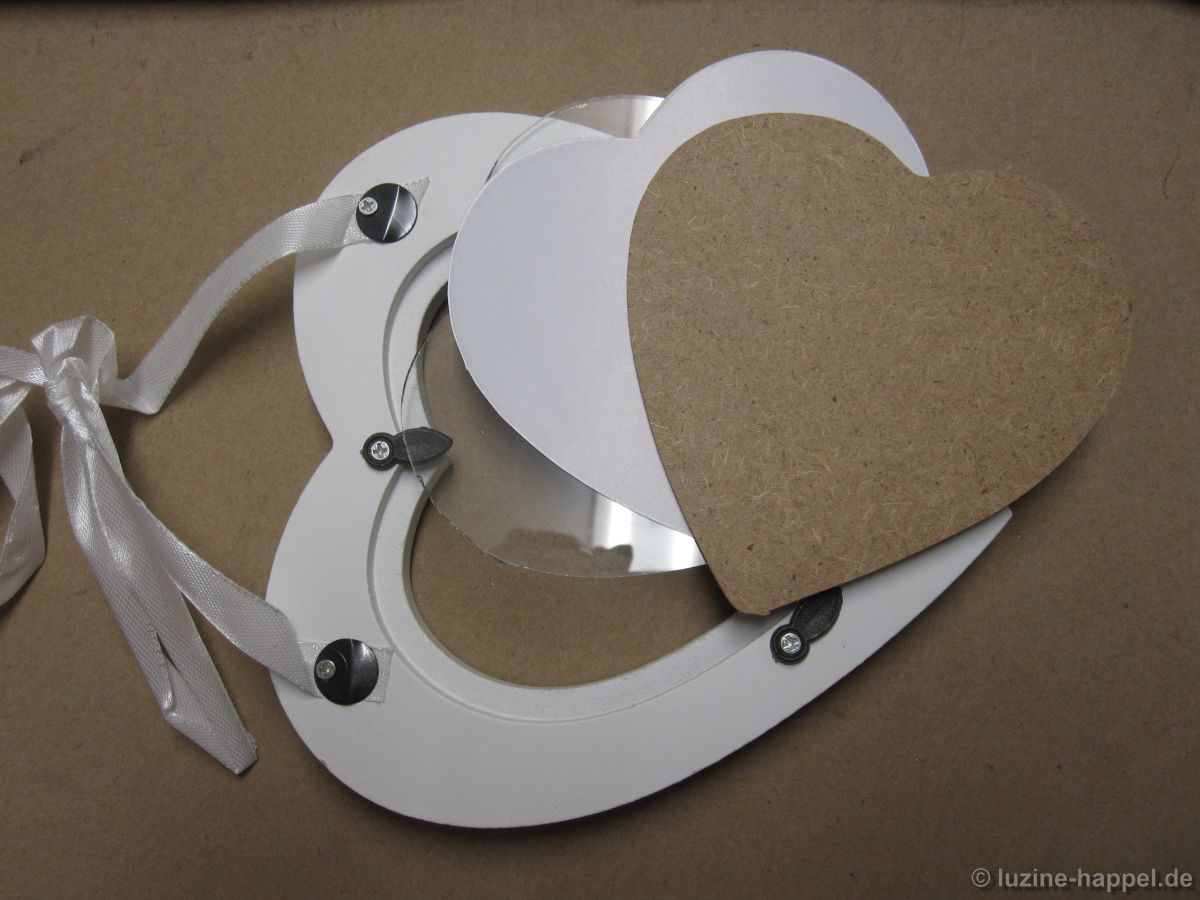
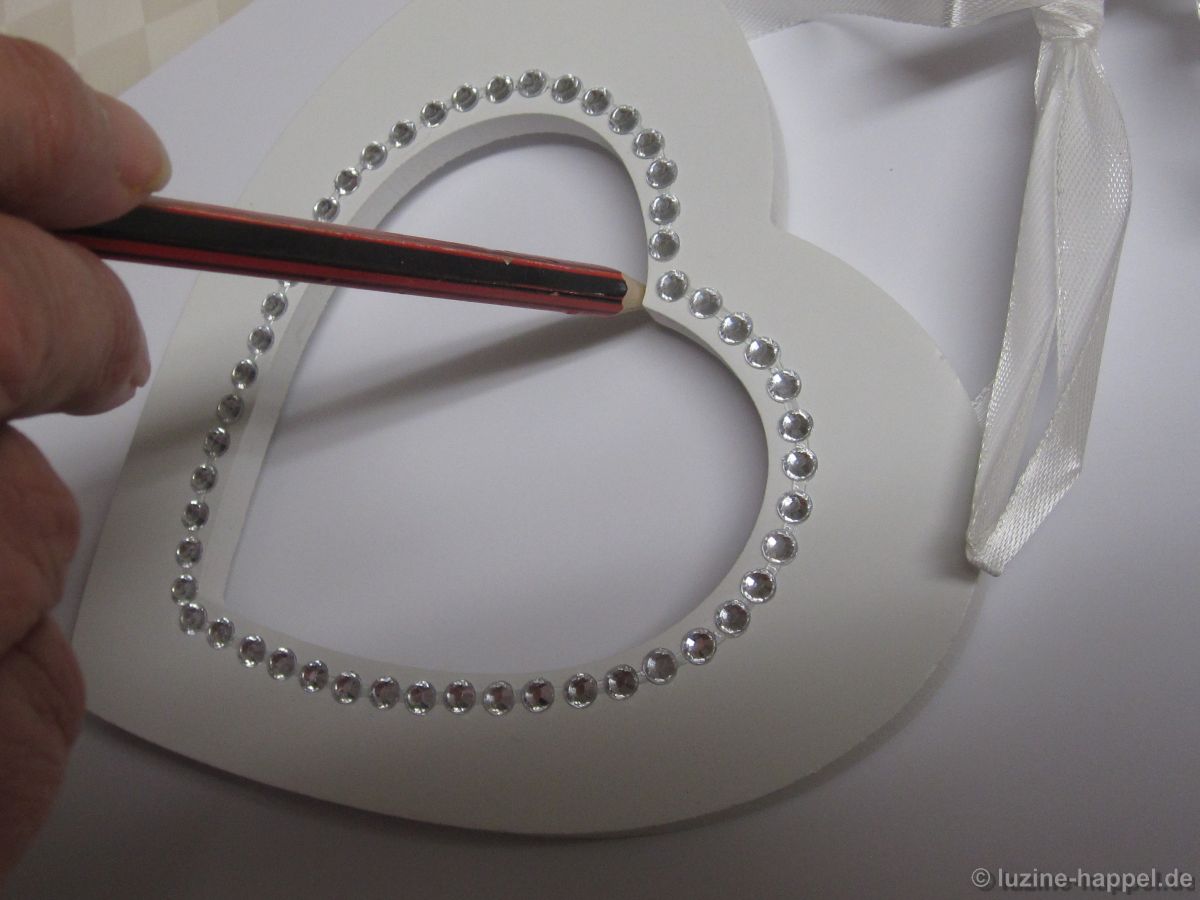
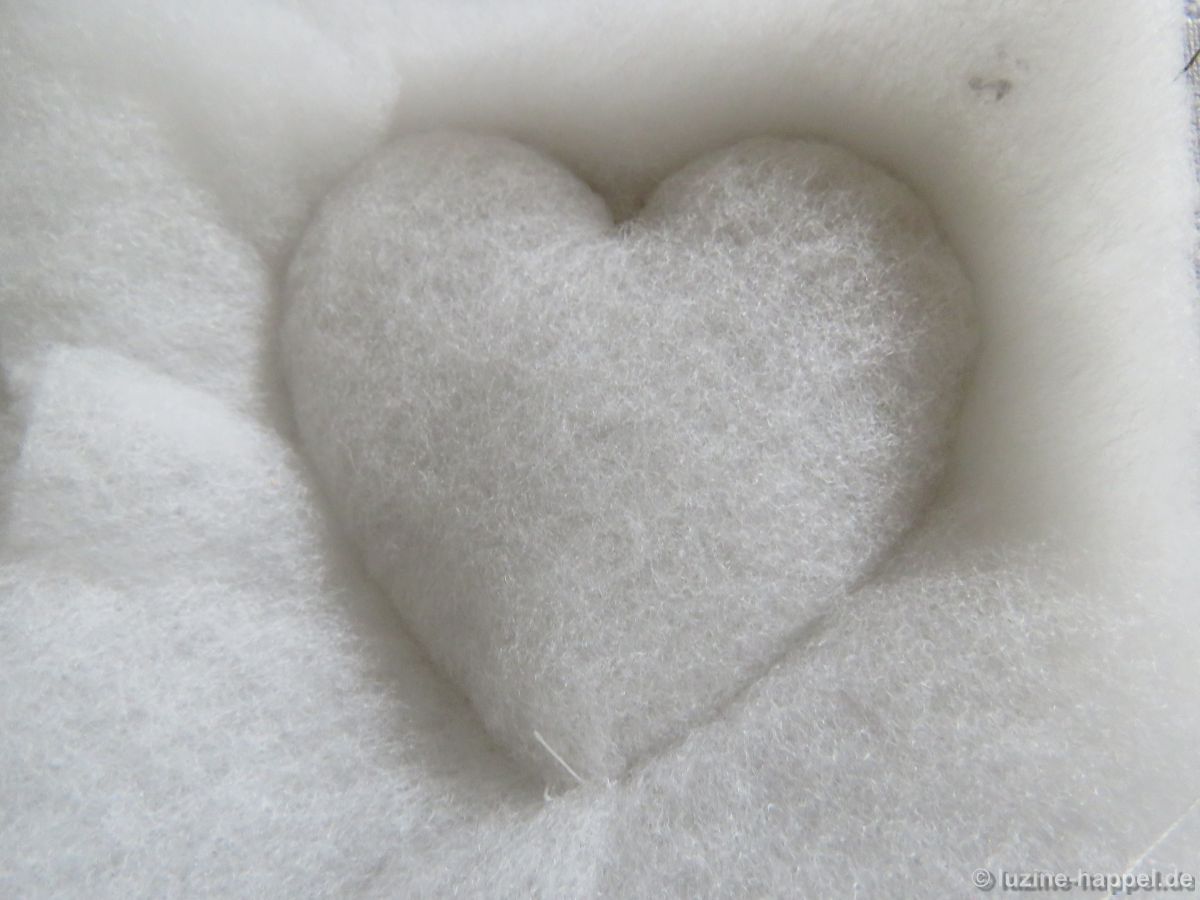
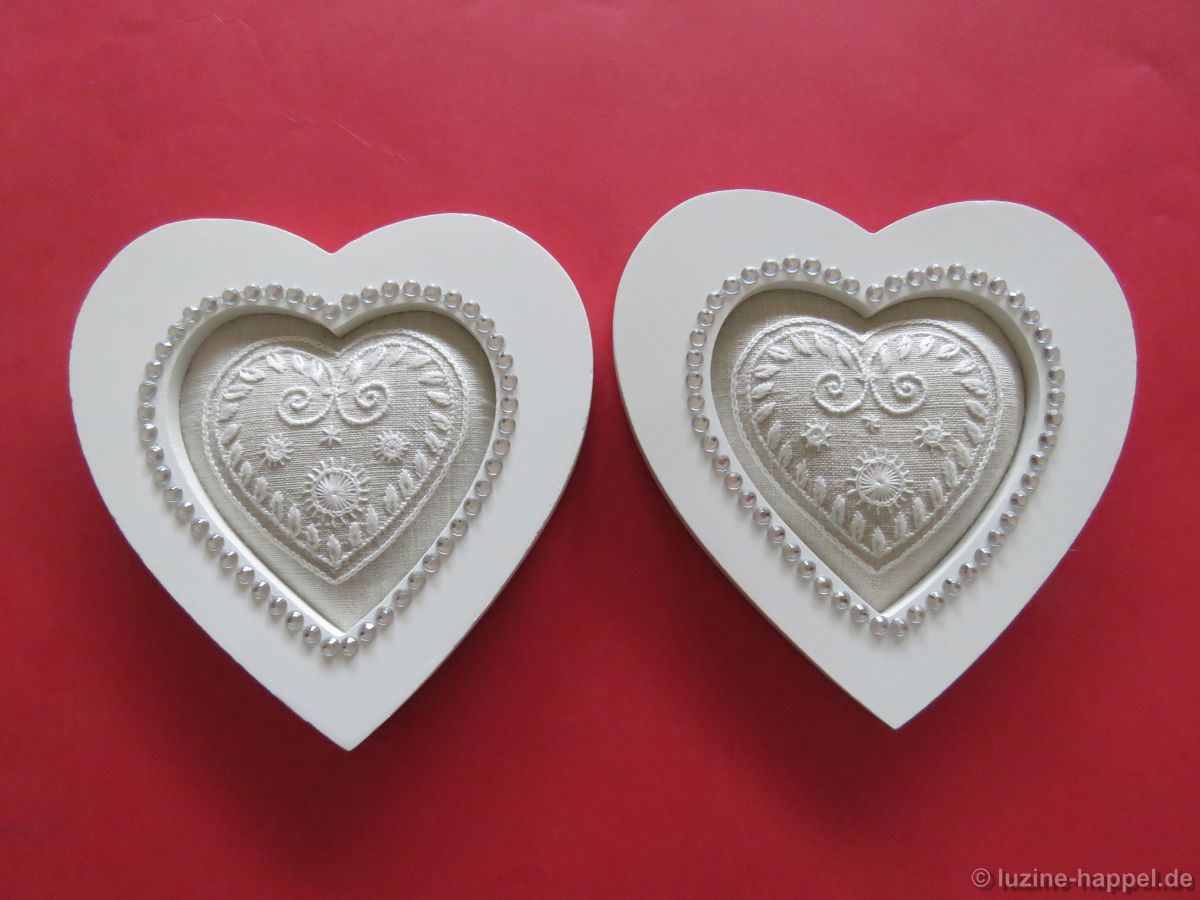
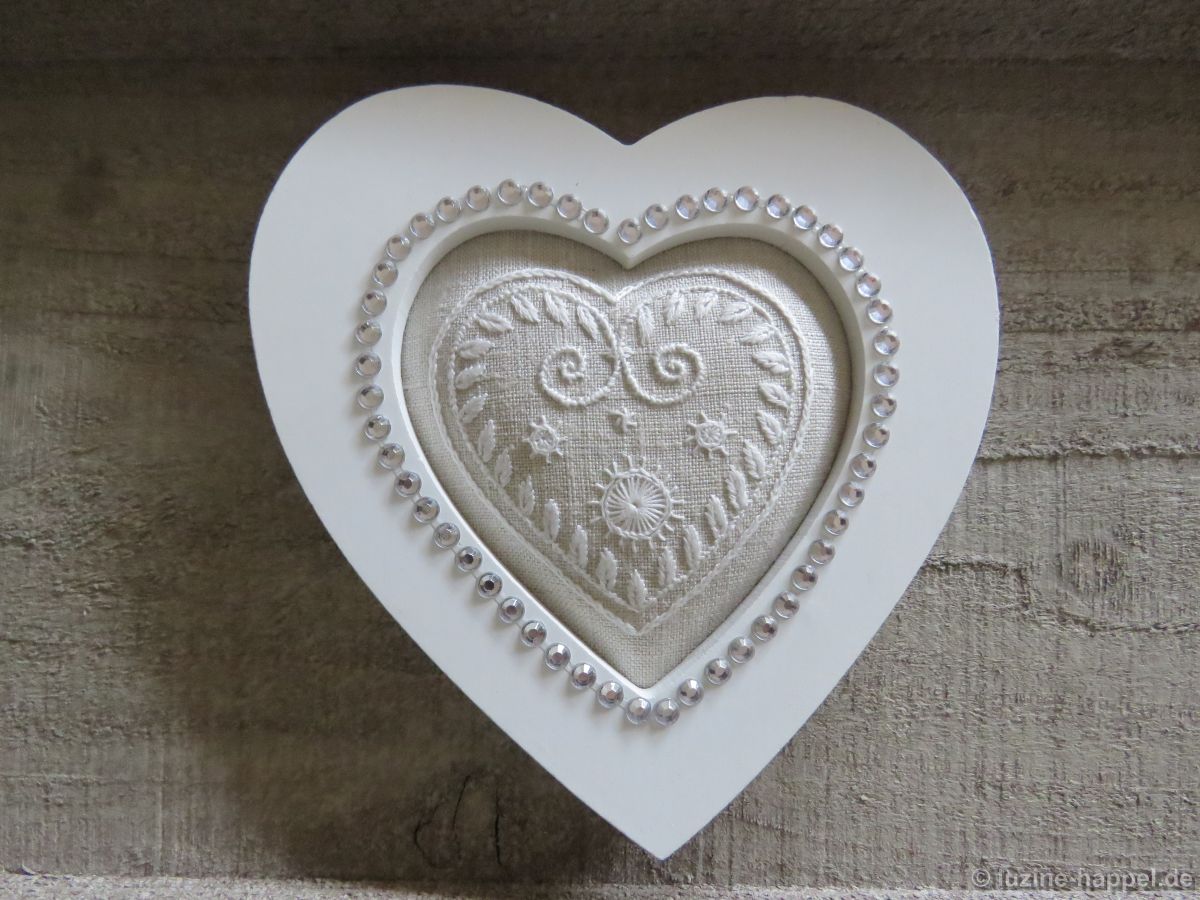
I used this piece to make a two-sided ornament per Cindy Russell’s instructions. My circle cutter has at last leaped into action!

See what my readers have embroidered in 2017!

At the beginning of 2017, I received a picture from Yoko Miyamoto from Japan. Since 2017 is the year of the cock, she embroidered a nice picture of a weathercock. Isn´t it beautiful?
Cocks, hens, and birds were popular designs with my readers this year.
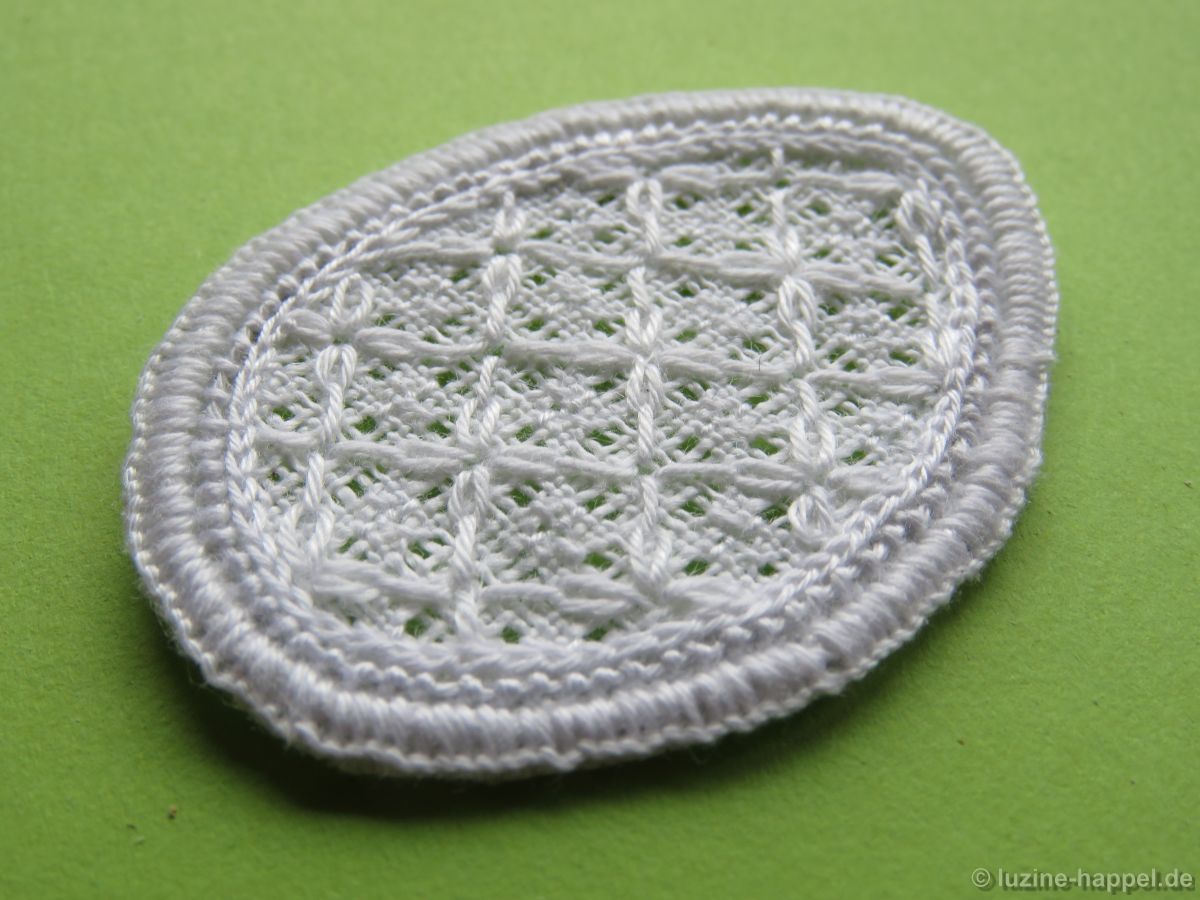
Bettina Limburger from Germany sent me a picture of her Easter “tree.” It is lovely with a couple of embroidered eggs made in natural colours from my 24 small designs.
Marina Pastushenko from Turkey and her friend Kate Vasilieva amaze me with their perfectly embroidered variations of French Hens.
Both speak Russian and now teach Schwalm whitewotk in Russia! They also attend a craft fair in Moscow and show Schwalm embroidery there.
Their Russian-speaking students know very little about Schwalm embroidery, but they already love it! Also, the projects of their students are worth seeing.
I am particularly impressed with the work of Cindy Russell from the United States. First, she sent me a beautiful two-sided ornament of a Happel Heart.
She wrote, “In preparation (practice, practice!) before doing a large Schwalm piece, I´ve been working on a series of heart ornaments. They are admired by everyone who sees them, and they are very fun to do.”
I have never seen such a finishing technique before, so I asked her how she did it. She told me, and at once I ordered a circle cutter – I am ashamed to admit that so far it is unpacked!
Cindy not only gave me directions, but she also promised to make a clean and clear description.
She d i d!
Some weeks later I received the document, and what a document it is – the steps are explained exactly and with great detail accompanied with clear pictures.
She gave me permission to publish the pdf document on my blog so that all of you can easily download it for free. Hasn’t Cindy given us a very special present for the start of the New Year?
She wrote, “If anyone has questions they are welcome to ask.”
Her email-address is included on the downloadable document.

A hearty “Thank You” to Cindy and all the others for sending pictures of their progress. And thanks a million to those who gave me permission to feature their projects in this blog post.
To all I wish limber fingers, keen eyesight, and plenty of time for the most beautiful stitching moments.

Happy New Year!

Advent Calendar – No. 24


Stocking

Linen: old handwoven with an 18/cm thread count, cut to 27 cm X 84 cm
Threads: coton à broder No. 16 for the Star stitches of the small stars, No. 20 for Coral Knot stitches, No. 30 for the Chain stitches and the filling patterns.
Design: No. 27 size 3
Filling patterns – from small to large: Double Crosses in straight rows (Openwork Pattern Samplers); Cable stitch grid (Openwork Pattern Samplers or Basic Principles of Schwalm Whitework); Röserich A2 on the straight of grain, adjacent sides on the bias (Röserich Filling Patterns); Grid (Wickelstiche); Raster with Rose stitches (Wickelstiche)
Border: Christmas stripe (Fancy Hems)
Additional items: fine cotton fabric for lining and hanging loop and some non-woven fusible interfacing for the back of the front side

Merry Christmas!

Advent Calendar 2017 – No. 23


Heart

Linen: old handwoven 17/cm thread count, cut to about 25 cm X 60 cm
Threads: coton à broder No. 16 for interlacing the Herringbone stitches and for the needlelace; No. 20 for Coral Knot stitches; No. 30 for Chain stitches, Herringbone stitches, and the filling patterns; 2 strands of 6-ply stranded cotton for the Satin and Stem stitches.
Design: No. 16 measuring 14 cm X 16.93 cm
Filling patterns: heart – “Herzgeflecht” (Limetrosen II), wings of the bird – Plumage (Limetrosen I), body of the bird – interlaced Herringbone stitches variant “a” (Schwalm Curved Lines, Narrow Borders, and Ornamental Stitches)
Needlelace: Multirow needlelace arches (Schwalm Needlelace edge decorations)
If you want to use it as bag for a gift bag, you can work a button border closure on the back of the heart.

Advent Calendar 2017 – No. 22


Cover for a Needle Book

Linen: 20/cm thread count, cut to 24 cm X 30 cm
Threads: coton à broder No. 20 for Coral Knot stitches, No. 25 for Blanket and Satin stitches, No. 30 for Chain stitches and the filling patterns.
Design: No. 08 measuring 6 cm X 9 cm
Filling patterns: heart – Ostertulpe – dicht (Limetrosen II); circle – Small Ox Eye Grid (Limetrosen I)
Additional item: Inlay for the needle book