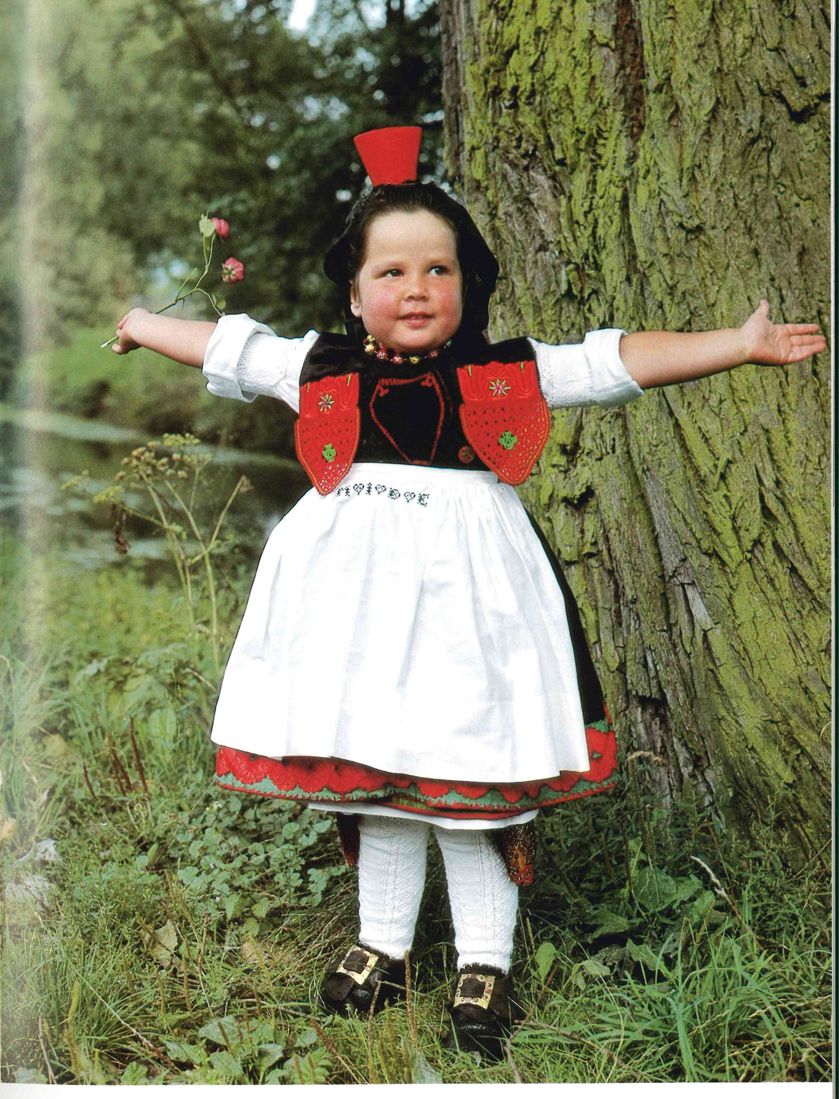
Schwalm Costume – The Stockings

The Schwalm people wore hand-knit stockings that reached well past the knees. The stockings were held up with garters bound around the legs.
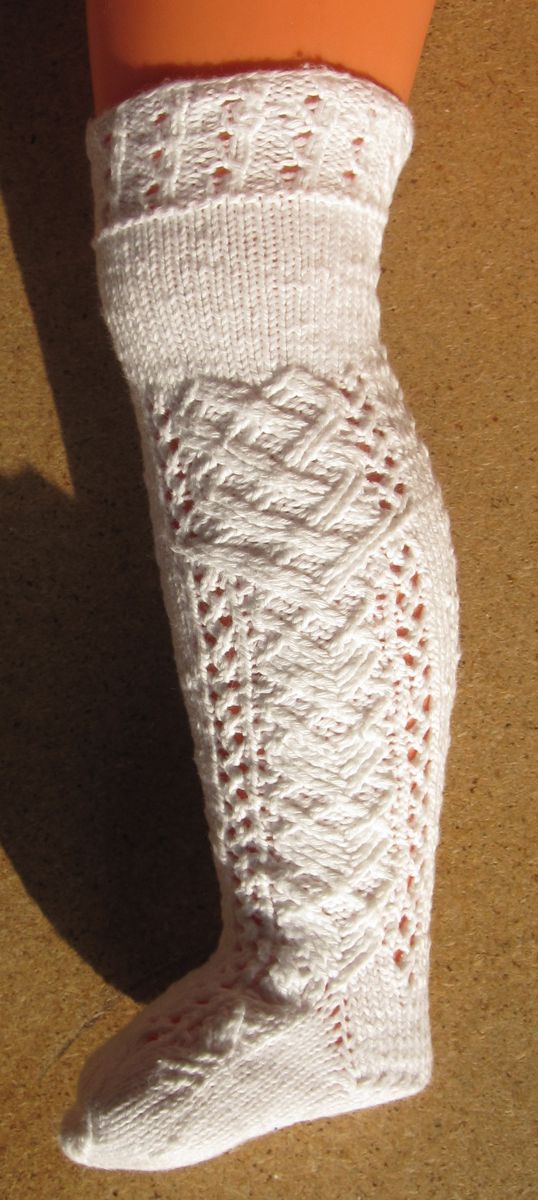
Stolzer Schwaelmer Zwickelstrumpf | proud Schwalm stocking

In the year 1930, a poor bride would possess six to eight pairs of stockings, while the rich bride would have 40 pairs in her trousseau.

Originally, summer stockings were knit from linen yarn, later on cotton was used. Cotton yarn made its first appearance in the Schwalm around 1830. For the Winter stockings finely spun sheep´s wool was used. The women´s stockings were white, the men´s stockings were white and sometimes dyed to blue. In order to achieve a bright white stocking, the sheep-woolen Winter stockings were bleached.

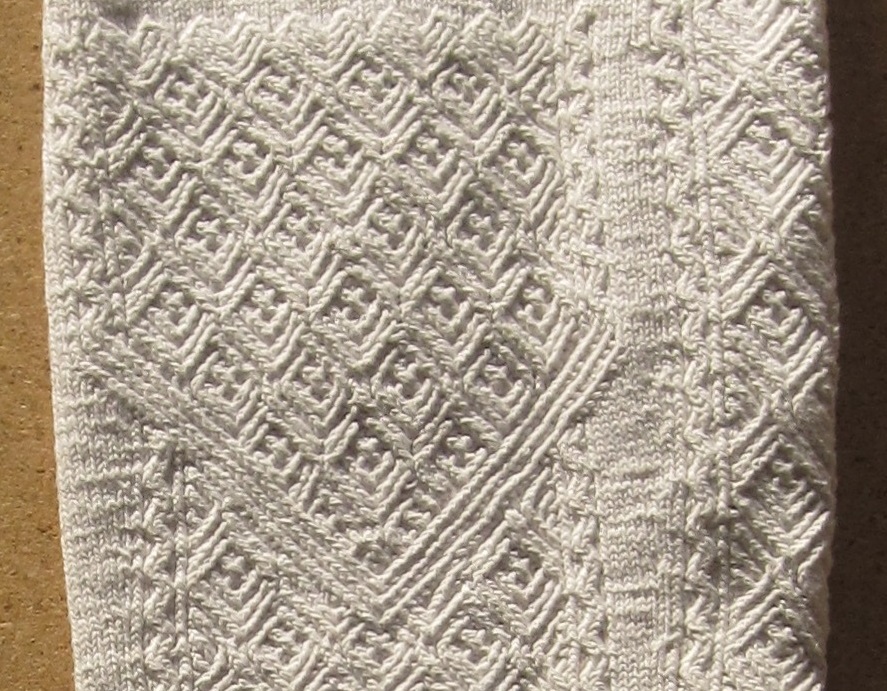
Specifically patterned stockings were worn on different occasions. The “Linkten” – stockings with patterns made with purl stitches – were worn during mourning and by old wives. The “Zwickelstrümpfe” (Zwickel = gusset, crotch) with small pattern-stripes were worn during everyday life. They were usually made from thicker yarn. On Sunday, “Zwickelstrümpfe” with wide pattern-stripes were worn; these were made from fine yarn. For special festive days and holidays, “stolze Zwickelstrümpfe” (stolz = proud) were worn. (In the Schwalm, the label “stolz” was given to all things especially gorgeous and elaborately decorated.) The “stolzen Zwickelstrümpfe” were knitted with very fine yarn and had especially beautiful and elaborate patterns with extra wide pattern-stripes. The “eingelegten” (= inlaid) stockings were a specialty. These “Zwickelstrümpfe” had elaborate knitting patterns in which an additional thread was carried and, depending on the pattern, alternately laid before or behind the stitches. (One could get the impression that those stockings were embroidered after knitting. That is not the case – it is a pure knitting pattern.)
Because the techniques involved were extremely difficult, only the most talented knitter or the richest women could afford this impressive kind of “Zwickelstrümpfe”. Of especial worth are stockings in which the initials or the year were knitted: here, “AKE” for Anna Katharina Ermel.
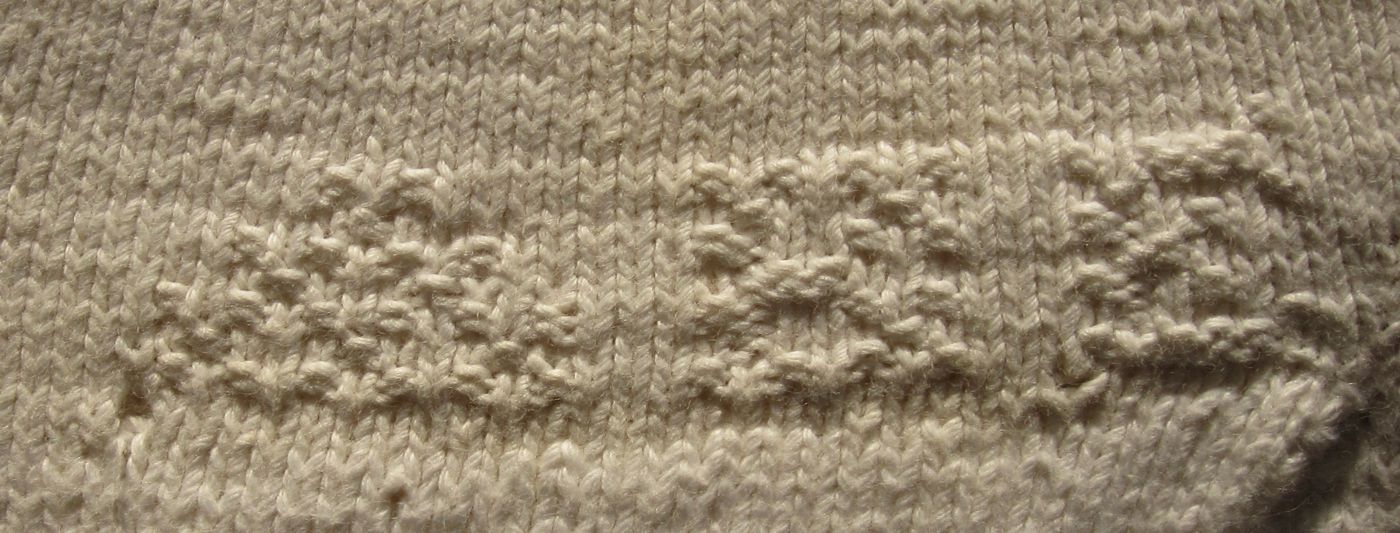
eingestrickte Initialen | knitted initials

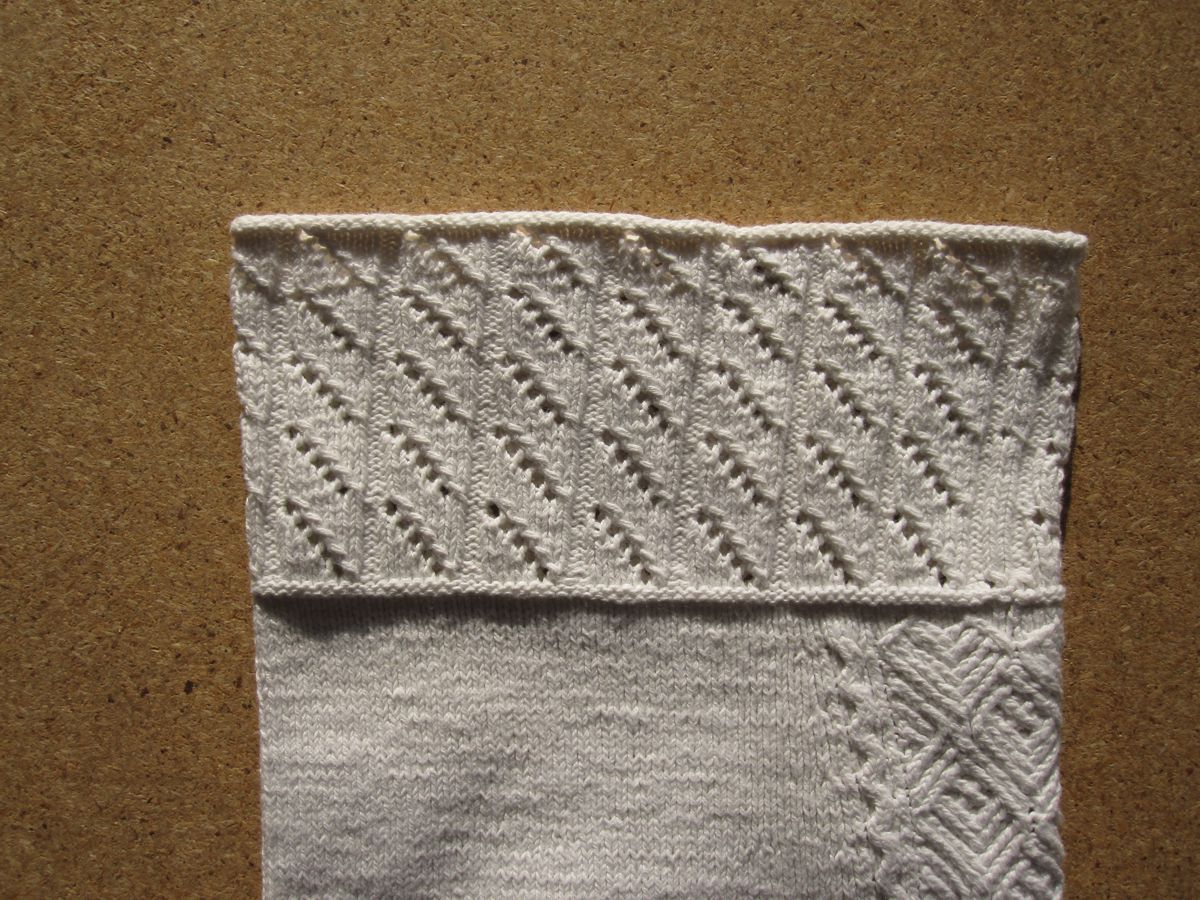
The stockings were knit in rounds, from cuff to toe, employing five fine knitting needles. They were composed of different sections. The cuff was a 5-10 cm high stripe or band. The “Börtchen” ( = small border) was knit according to the occasion for which it was meant to be worn. The “Börtchen” pattern might be a simple knit 2, purl 2 rib, a peekaboo or pigtail design.
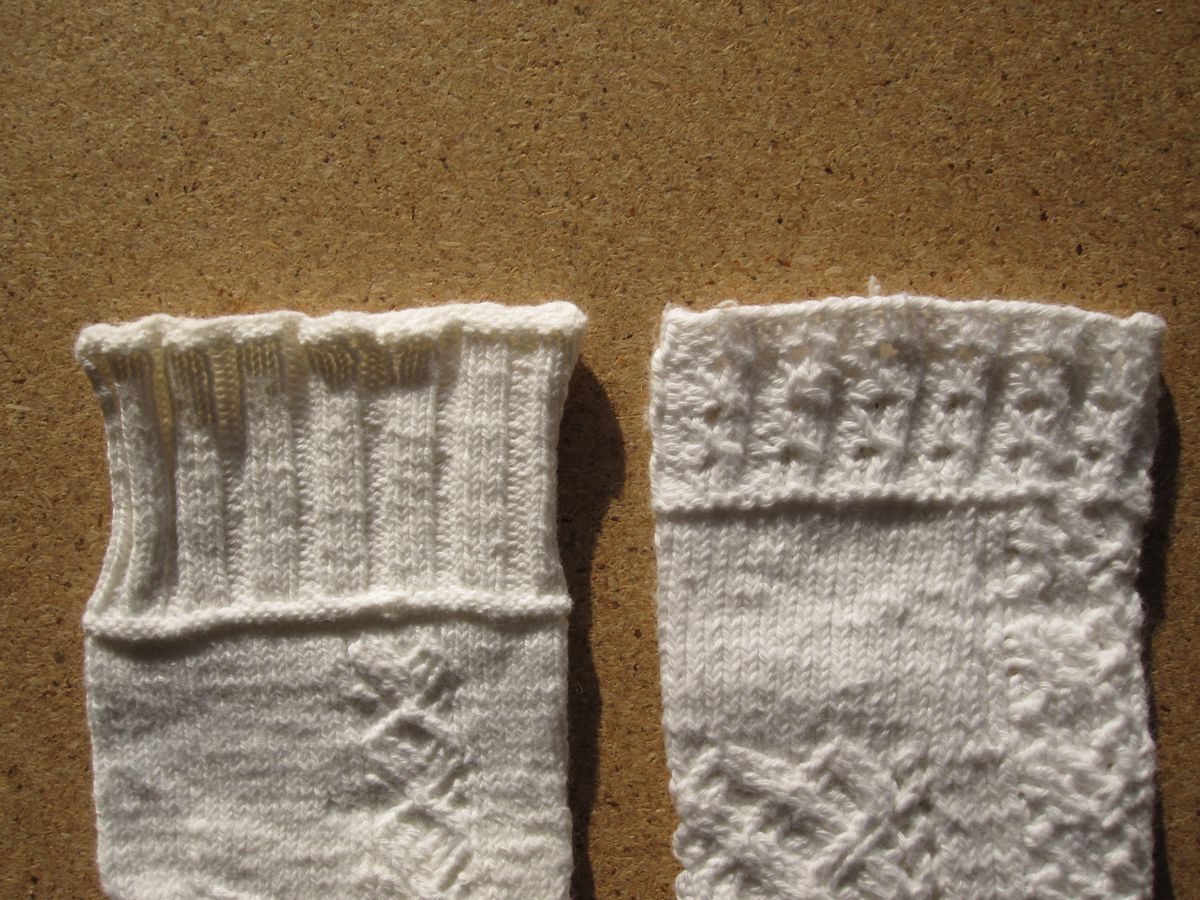
unterschiedliche Börtchen | different borders
Börtchen mit Lochmuster | border with peekaboo design

At the back of the stocking, from bottom of the “Börtchen” and down to the heel, runs a small straight pattern-stripe called “Nähtche” (= small seam). The remainder of the area under the “Börtchen” and past the knee, plain stockinette stitch is worked for a some centimeters.
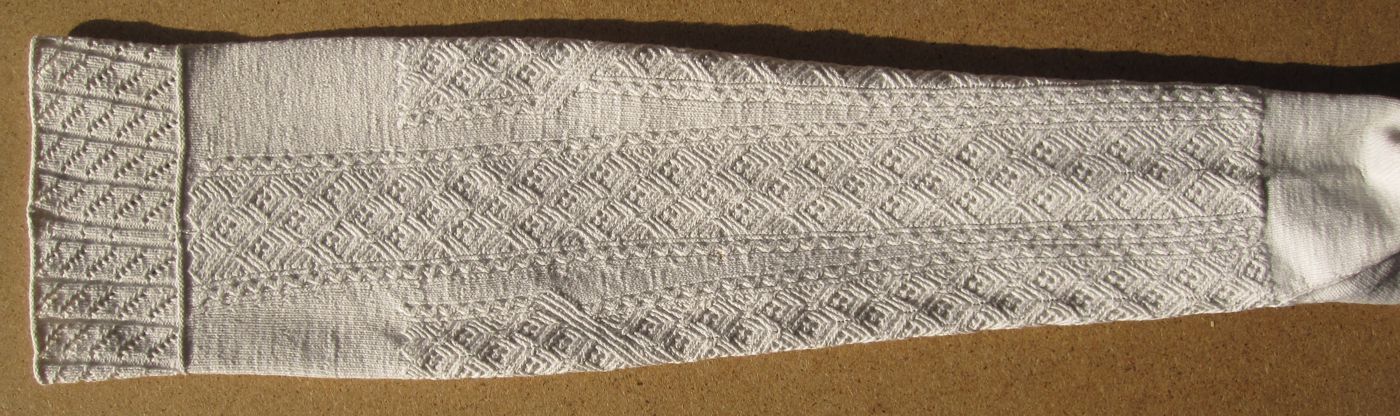
Naehtchen | small seam

Now, along both sides of the calf runs a pattern-stripe, beginning with the “Platte” ( = plate).
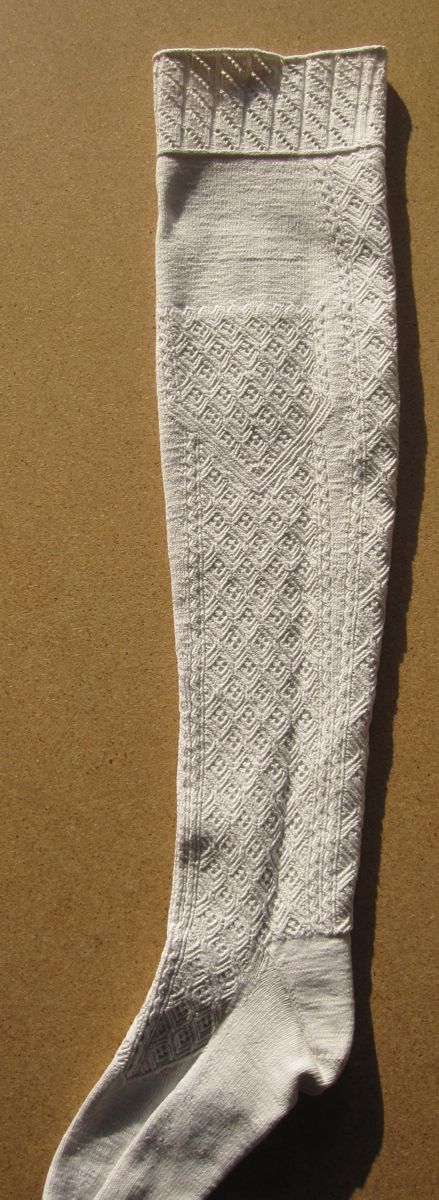
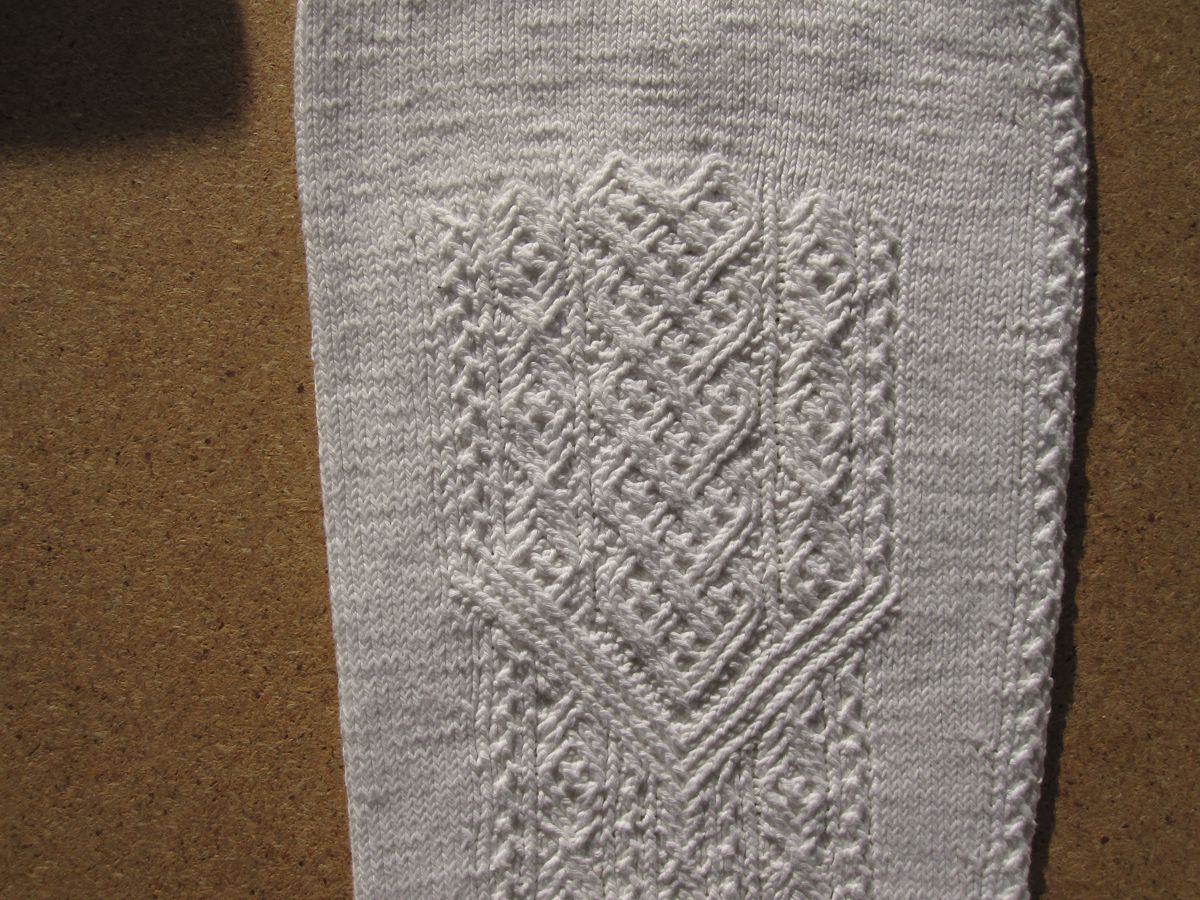
Zwickelmuster mit Platte | pattern stripe with plate
Platte mit zwei Musterm | plate with 2 differnt patternsPlatte mit einem Muster | plate with one pattern

The “Platte” had the shape of a pentagon. The “Platte” was a little bit wider than the pattern-stripe below it. For the “Platte” there were two different possibilities: either it was made with the same patterns as the stripe below, only wider, or a large design was knit in its middle. The large design was usually a heart pattern with a small stripe, based on the stripe below, on both sides. This “Zwickelmuster” ran down to the heel.
komplettes Zwickelmuster | complete pattern stripe

On women´s stockings, the pattern continued onto the top of the foot to the toes. This is because women wore not only the buckle shoes, but also the low-cut “Kommod” (= commodious) shoes. On the men´s stockings, the pattern ended at the top of the heels. This is because men only wore the high-necked buckle or lace-up (for everyday life) shoes or boots.
On many women’s stockings a very narrow, straight pattern band with a curved pattern, called “Schlängchen” (= small snake), ran on both sides of the “Zwickel”.
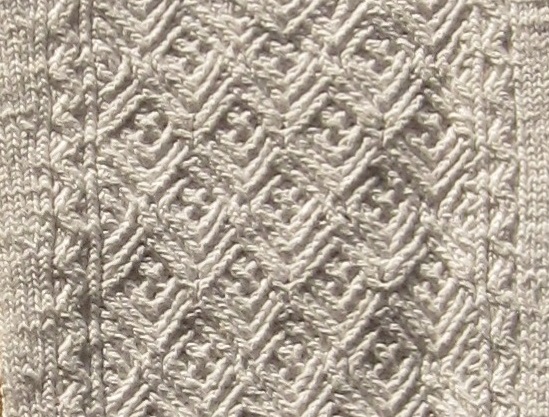
Schlaengchen | curved pattern

Between the pattern-stripes, a gusset was created so that the stocking would better fit the leg form.
However, in Schwalm the pattern-stripes on the sides were called gusset, not the special shaping done between the pattern-stripes.
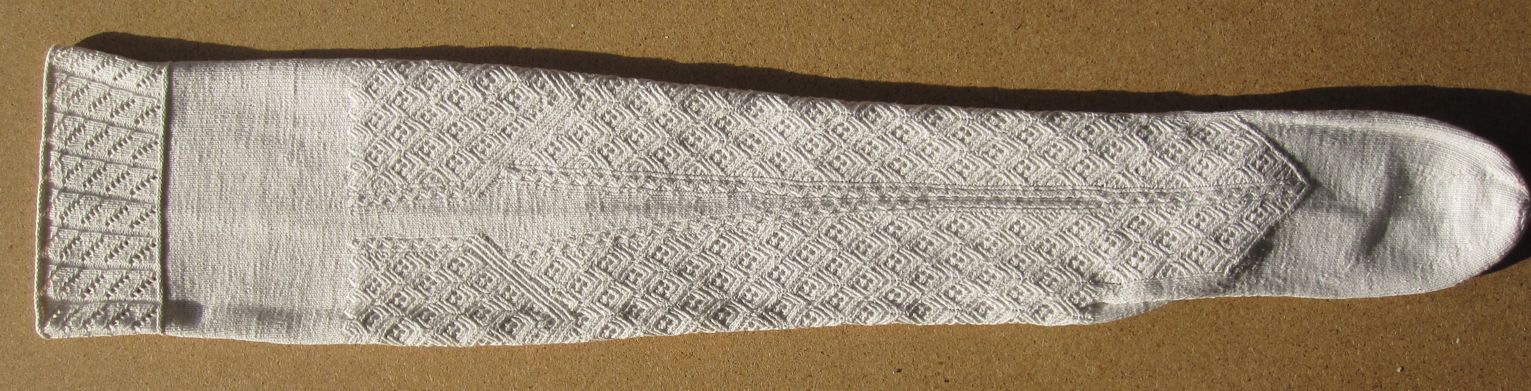
Vorderseite eines Zwickelstrumpfes | front part of a stocking
Heels, soles of the foot and toes were worked in stockinette stitch. Casting off the tip was mostly made in a star form.
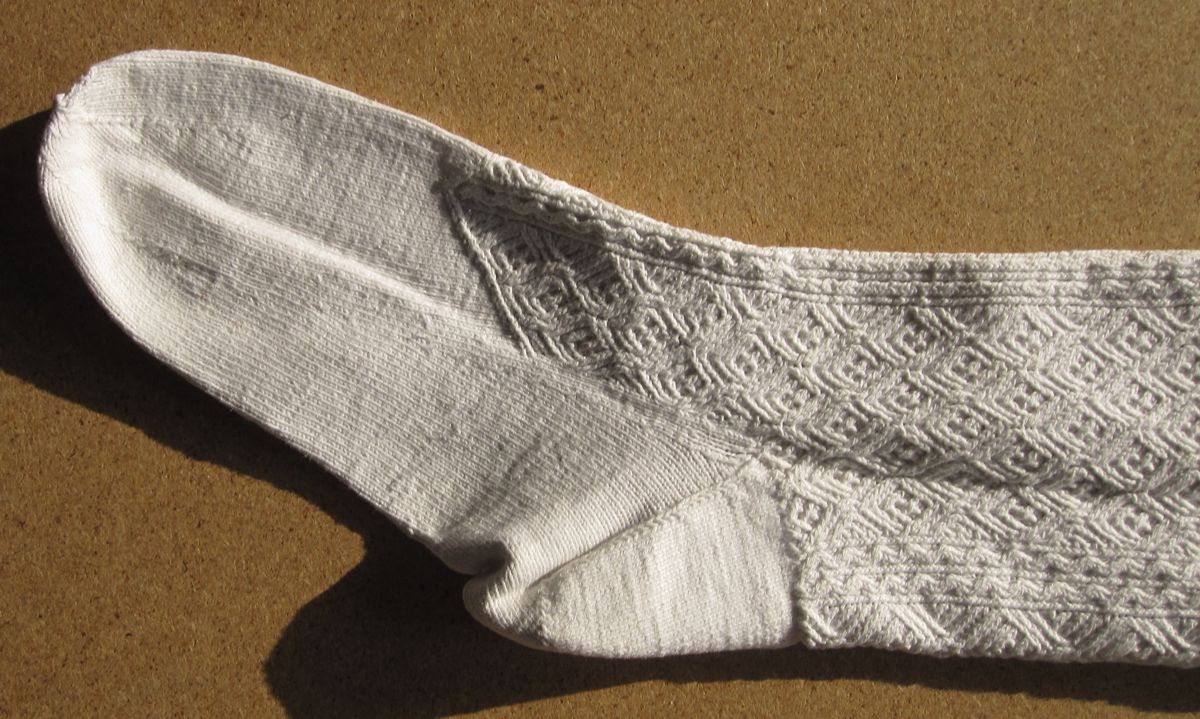
Ferse Sohle und Spitze | heel sole and foot

There are many different knitting patterns playing a role in Schwalm knitting. I will show some of them in future posts.
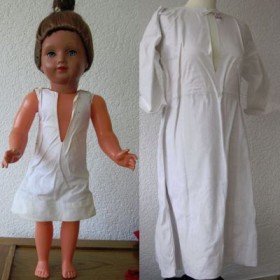
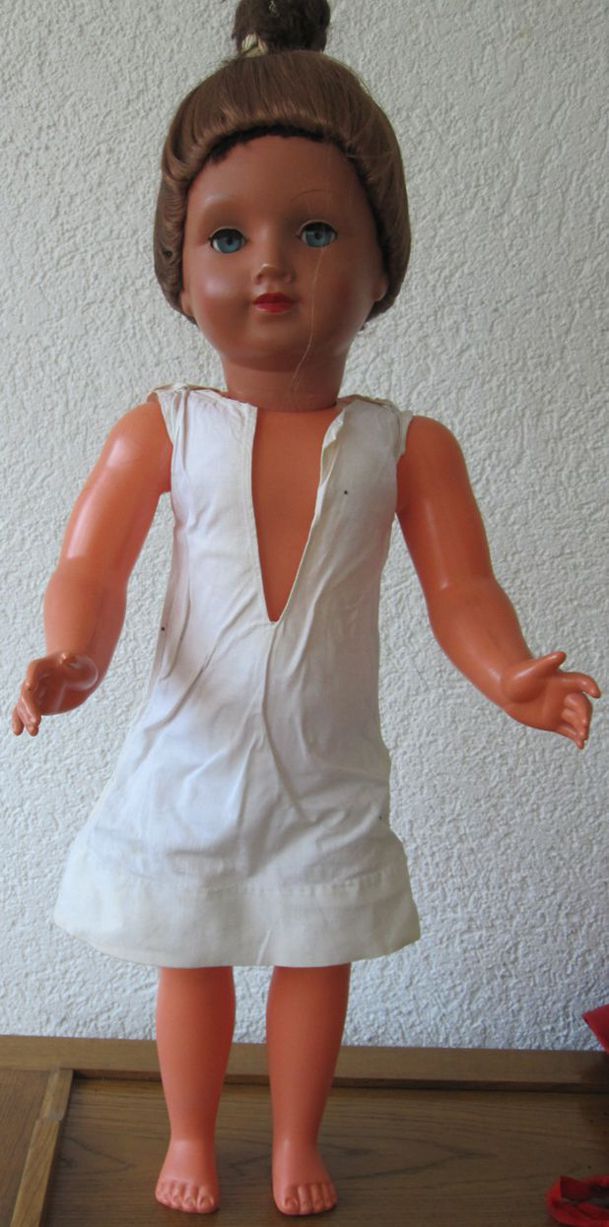
Schwalm Costume – The Undershirts

As already mentioned in “Schwalm Costume – an overview“, the festive costume consisted of many different elements. Where to begin? Pure and simple, where we all normally start dressing – with the underclothing.

Women in the Schwalm wore undershirts. I do not know of underpants at the time. Later, when the Schwalm woman will be fully dressed, you will be able to imagine why.

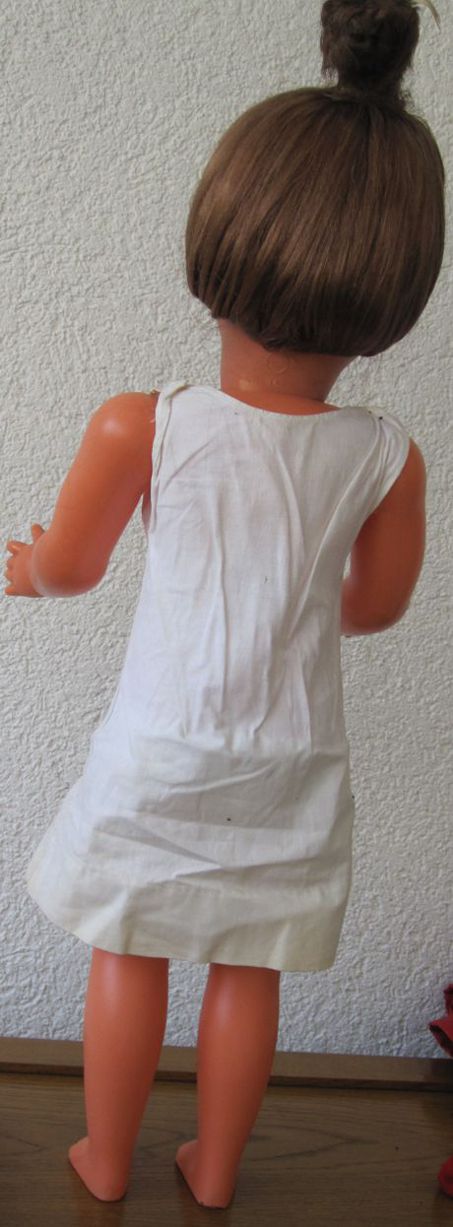
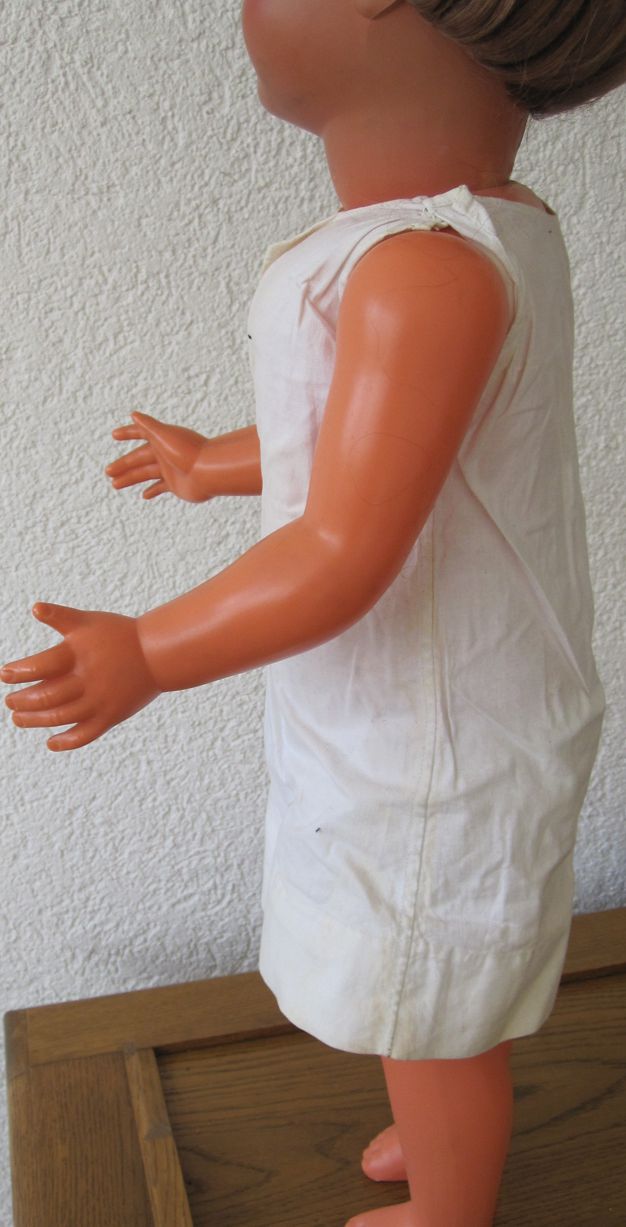
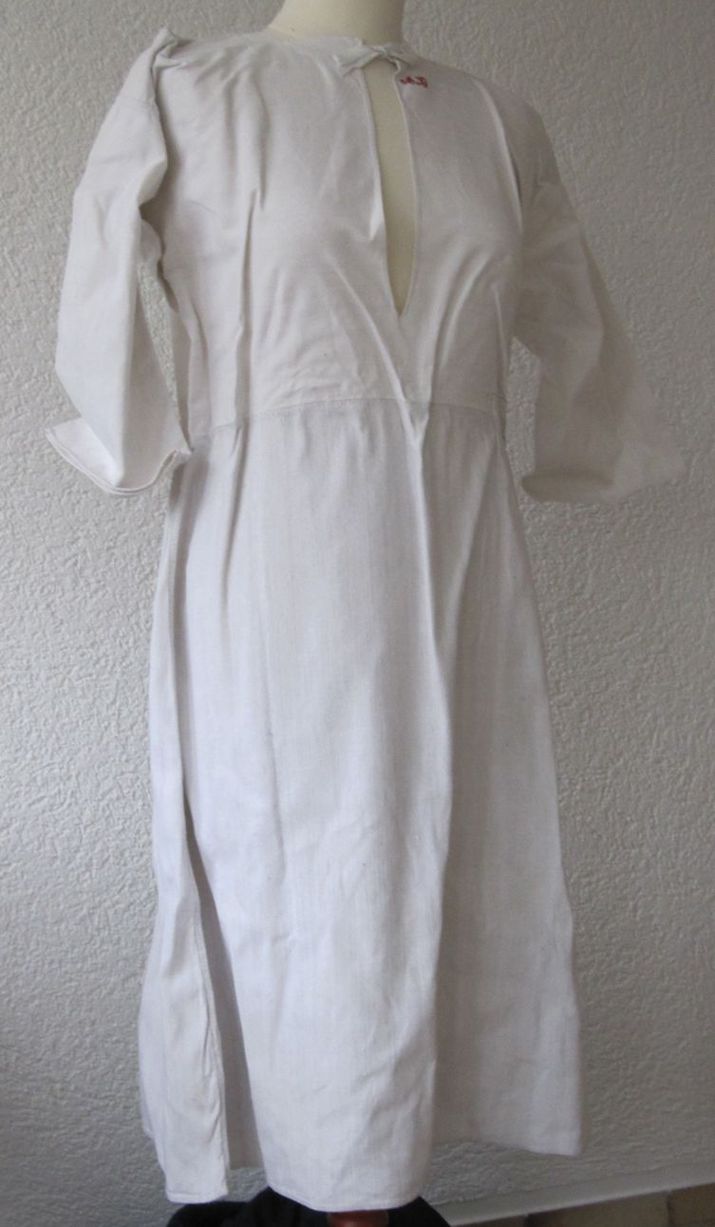
The undershirt was made from pure linen. It was a little more than knee long and simply shaped – a little bit wider at the bottom.

Sommer-Unterhemd | Summer-undershirt
Rückseite | backside

The Summer-undershirt was sleeveless and without any closure. The Winter-undershirt had long sleeves and maybe a band for closing.

Seitenansicht | side view
Winter-Unterhemd | Winter-undershirt

Schwalm Costumes – Literature

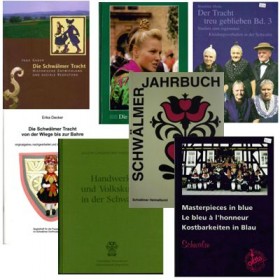
There are a number of books dealing with the Schwalm costumes. The scholarly texts are usually written in German, but there are some picture books and books with English text.
I include all here.
A scholarly approach is found in

  • Ingo Gabor
  • Die Schwälmer Tracht
  • Historische Entwicklung und soziale Bedeutung
  • Schriftenreihe der C.H.Schmitt Stiftung
  • Band 2
  • 2008
  • ISBN 978-3-00-027137-3
Die Schwälmer Tracht - Ingo Gabor
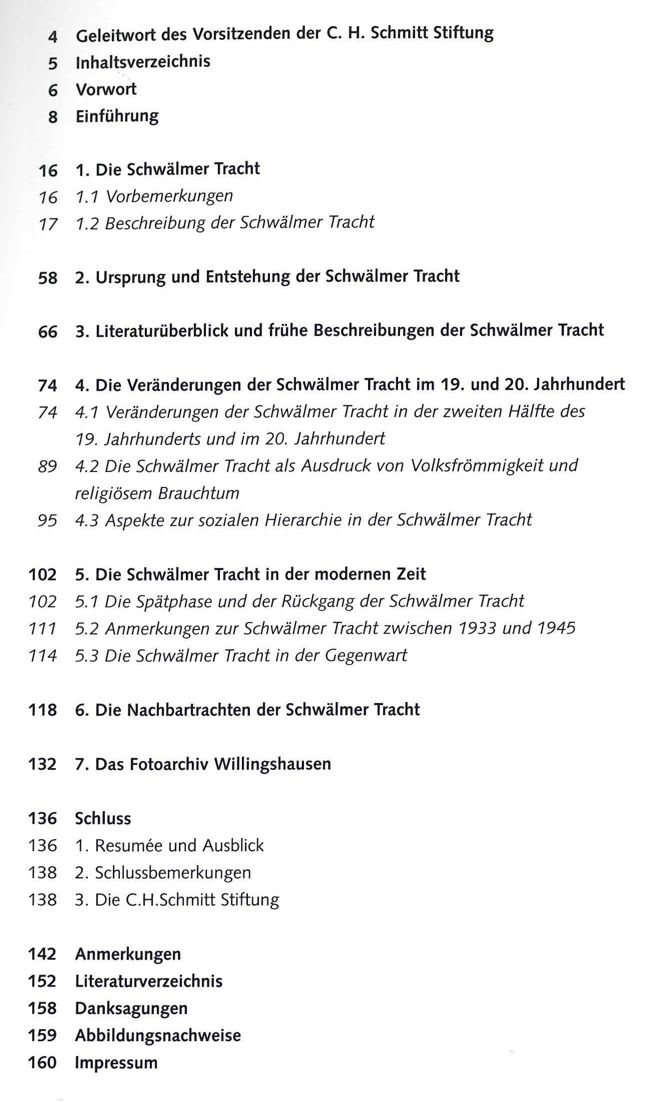
Die Schwälmer Tracht - Ingo Gabor - contents

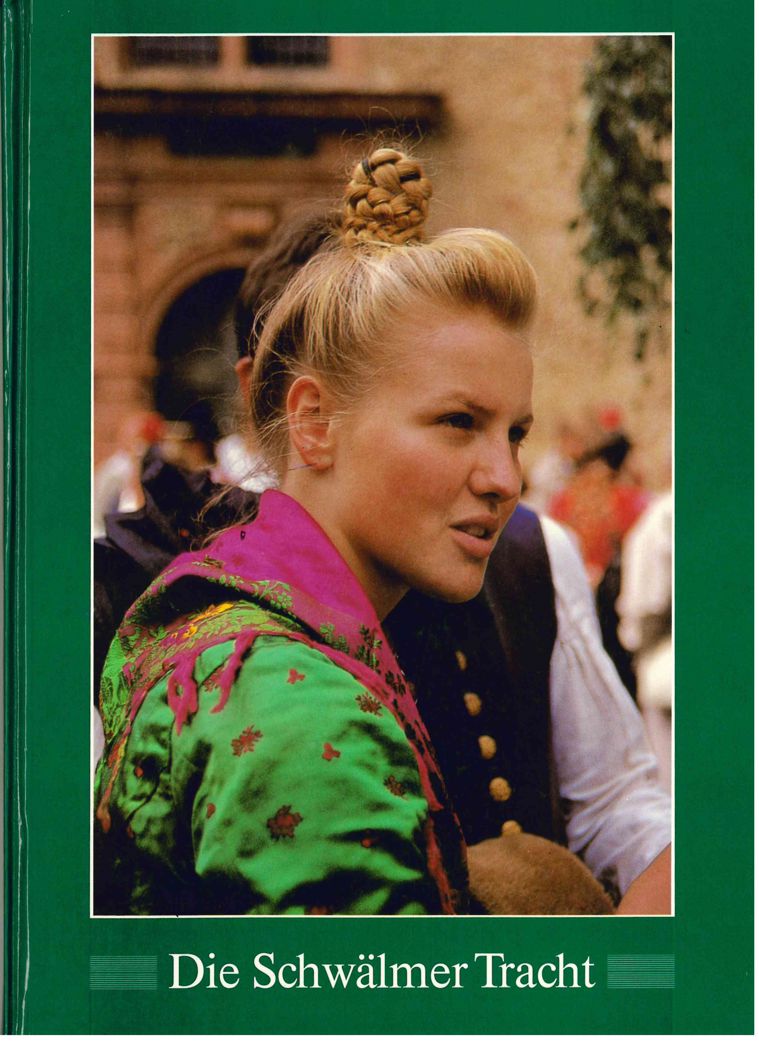
In its many pictures, one can admire the Schwalm costumes in the book of

  • Heinz Rübeling/Heinz Metz/Dirk Ordemann
  • Die Schwälmer Tracht
  • Verlag Dirk Ordemann, Ziegenhain
  • 1988
  • ISBN 3-9802008-0-9
Die Schwälmer Tracht - Heinz Rübeling/Heinz Metz/Dirk Ordemann
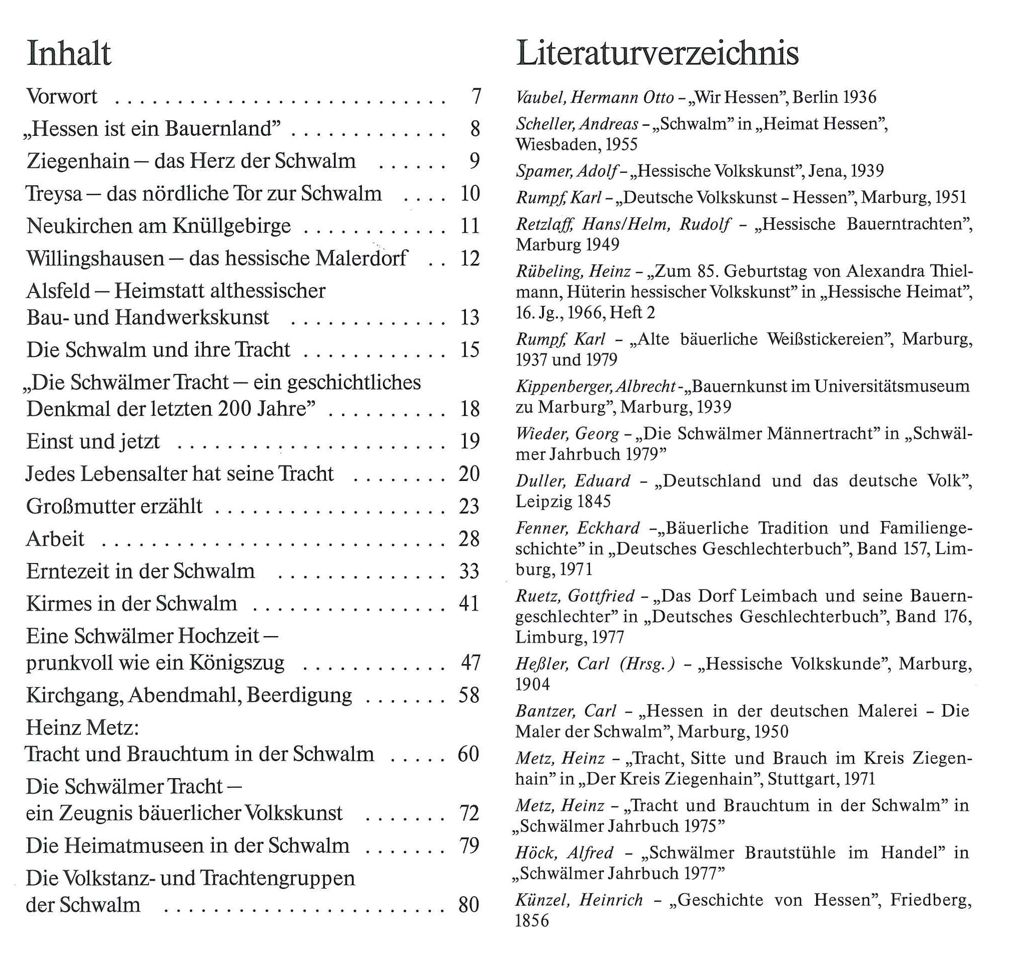
Die Schwälmer Tracht - Heinz Rübeling/Heinz Metz/Dirk Ordemann - contents
  • also with text in English as:
  • Little Red Riding Hood
  • The History of the Traditional Costumes of the Schwalm

Little_Red_Riding_Hood

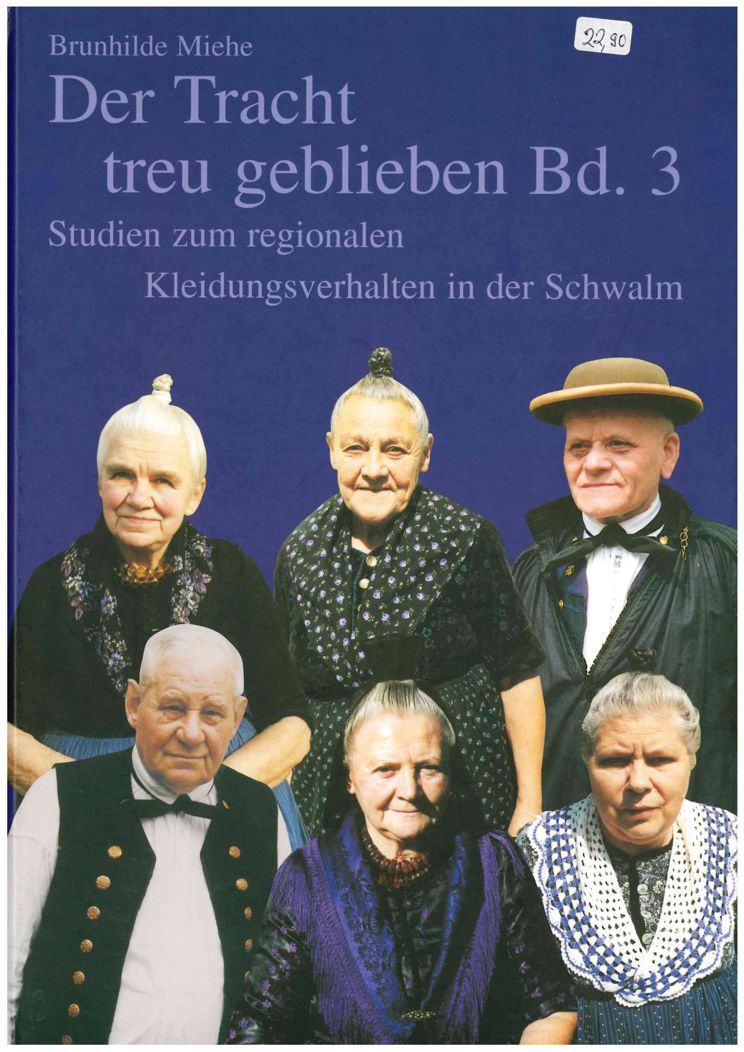
Studies on the surviving regional clothing of the Schwalm are found in

  • Brunhilde Miehe
  • Der Tracht treu geblieben Bd. 3
  • Studien zum regionalen Kleidungsverhalten in der Schwalm
  • Eigenverlag 2004
  • ISBN 3-9801197-5-0
Der Tracht treu geblieben Bd. 3 - Brunhilde Miehe
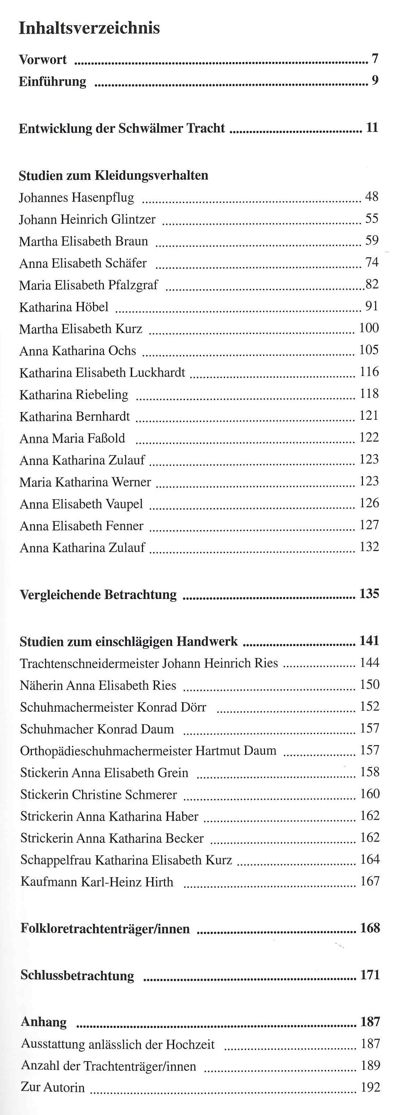
Der Tracht treu geblieben Bd. 3 - Brunhilde Miehe - contents

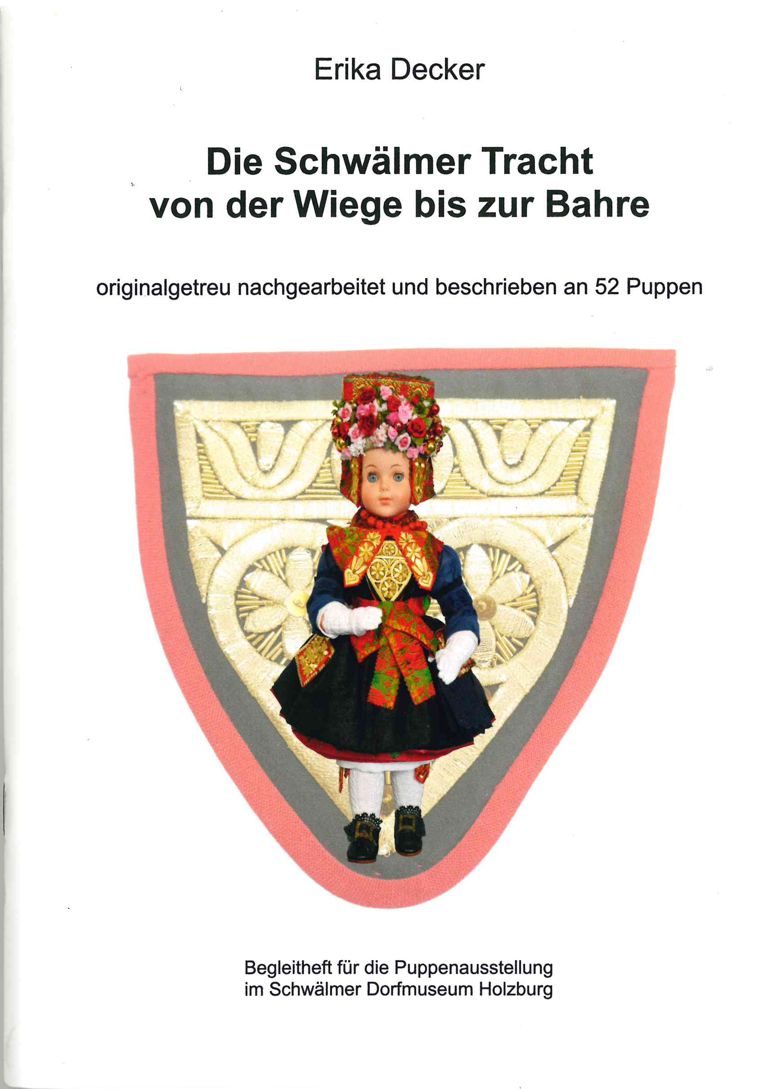
An overview of the many different forms of the Schwalm costumes, including lots of pleasant details worth knowing such as the “Schappel” (hairdressing and application of the headdress of a bride) or the manufacture of buttons, can be found in the booklet of

  • Erika Decker
  • Die Schwälmer Tracht
  • von der Wiege bis zur Bahre
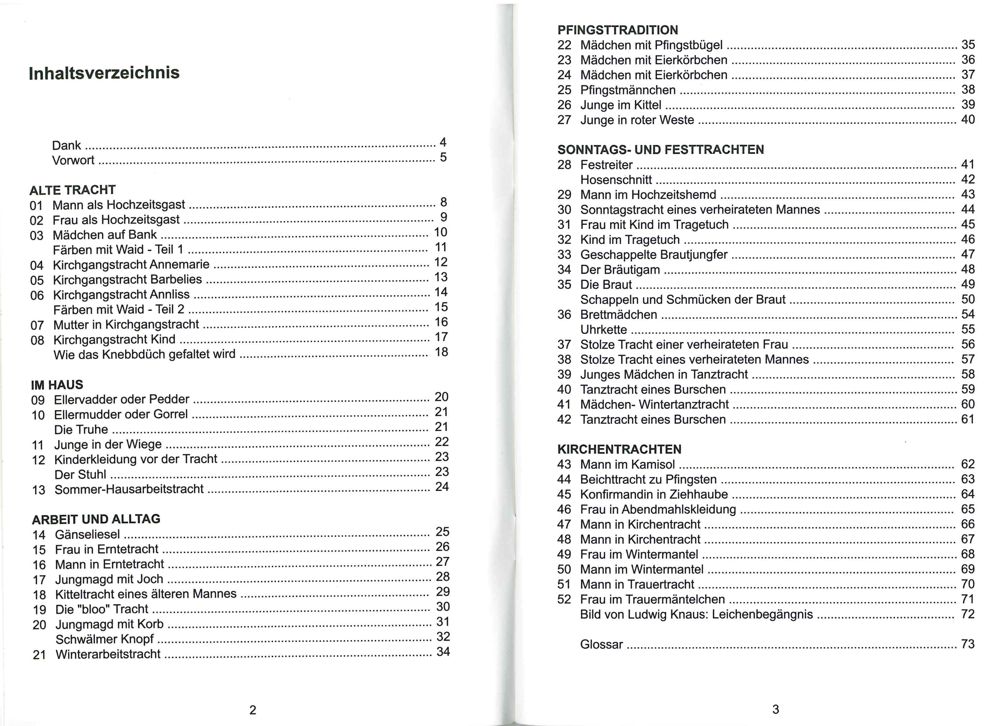
  • originalgetreu nachgearbeitet und beschrieben an 52 Puppen
  • Begleitheft für die Puppenausstellung im Schwälmer Dorfmuseum Holzburg
  • Eigenverlag 2011
Die Schwälmer Tracht von der Wiege bis zur Bahre - Erika Decker
Die Schwälmer Tracht von der Wiege bis zur Bahre - Erika Decker - contents

Interesting insights – but in black and white – can be found in the book

  • August Gandert/Brunhilde Miehe
  • Handwerk und Volksskunst in der Schwalm
  • Schwälmer Heimatbund 1983
Handwerk und Volksskunst in der Schwalm - August Gandert/Brunhilde Miehe
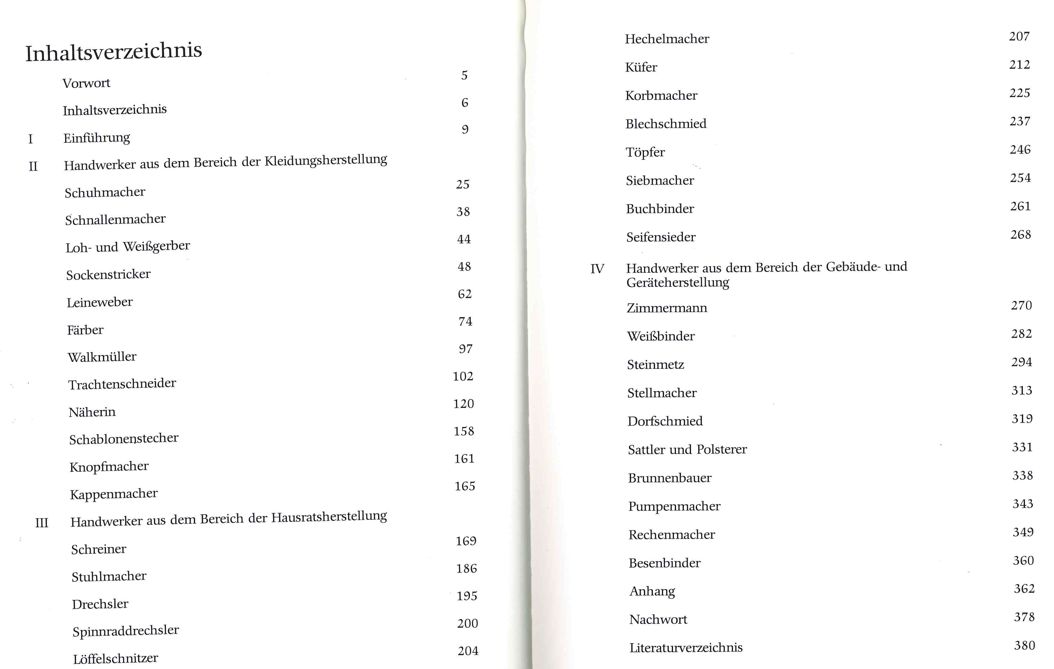
Handwerk und Volksskunst in der Schwalm - August Gandert/Brunhilde Miehe - contents

Also, there are many interesting articles in the yearbooks of the “Schwälmer Heimatbund” – from 1971 to today – that deal with the costumes.
Jahrbuch_1999

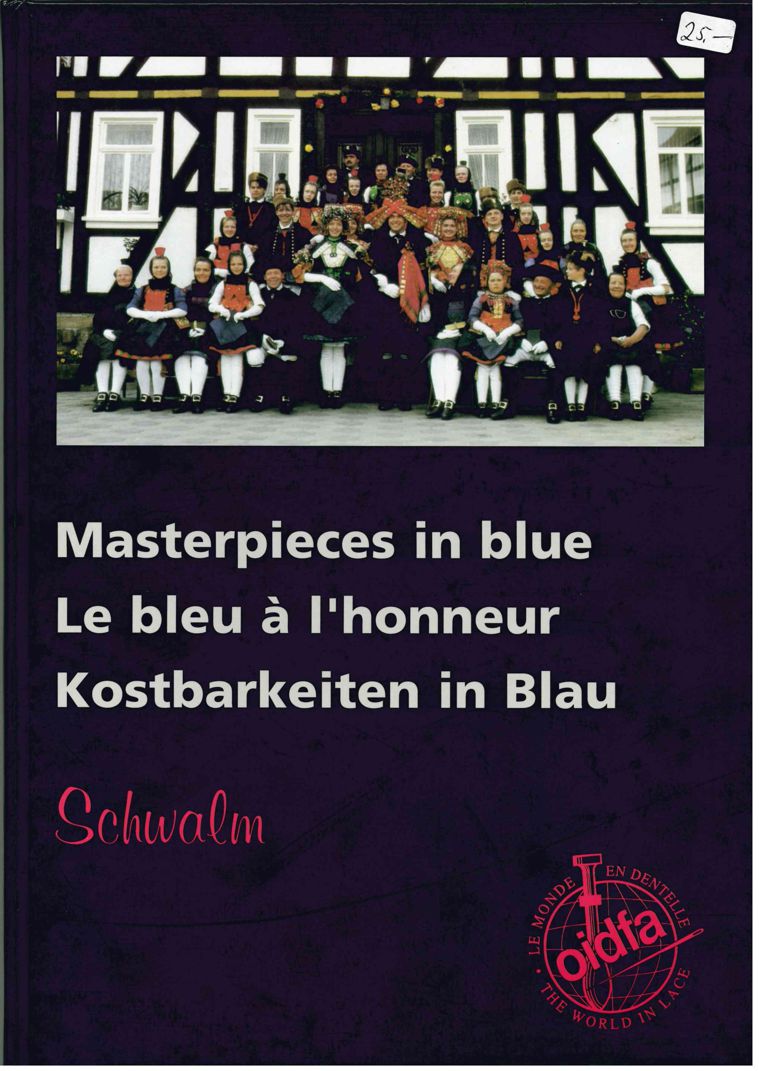
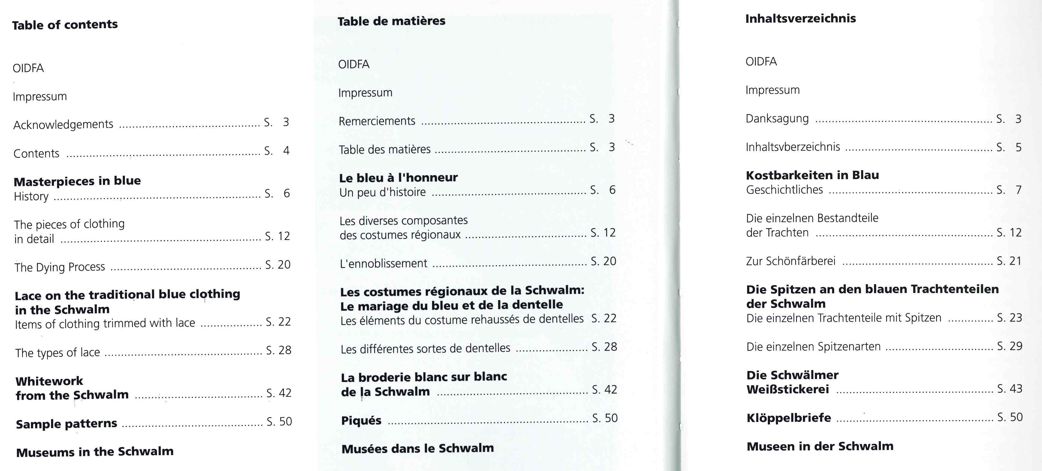
Dealing especially with the dyed to blue costume parts and the bobbin lace commonly used in the Schwalm, is the trilingual book

  • Marianne Stang/Anneliese Wienands/ Elda Gantner/Meike Gehrmann
  • Kostbarkeiten in Blau
  • Masterpieces in blue
  • Le bleu à l´honneur
  • OIDFA
  • ISBN 3-923219-19-9
Masterpieces in blue - Marianne Stang/Anneliese Wienands/ Elda Gantner/Meike Gehrmann

Schwalm Costume – an overview

Like everything in the world the Schwalm costume also gradually changes.
The pictures we today associate with the Schwalm costumes are colourful and extravagant.
Some remember these costumes from their childhood, others from costume festivals where the Schwalm variant of the popular clothing is always an eye-catcher. Thousands of colourful postcards with idealized depictions of the Schwalm took the pictures of the costumes all over the world.
Performances by folklore groups in countries far away amazed their audiences.

The Schwalm festive costume – also called “proud” costume – consisted of many different elements that were worn depending on the occasion. The festive costume was clothing, jewelry and business card all in one; one could see their wealth, marital status and approximate age.
Puppen in roter und blauer Schwaelmer Tracht | dolls in red and blue Schwalm costumes

The basic colours of the costumes were black and white; coloured accessories made the costumes bright and colourful. There was the “red”, the “green”, the “blue” and the “black” costume. Of course, the women´s costumes were much more distinctive than the men´s costumes, but even these had many facets.
Young girls and boys wore the “red” costume up to marriage. This means that all of the accessories were mostly red with a little green.

Rückseite der roten Mädchentracht | backside of the red girls custome
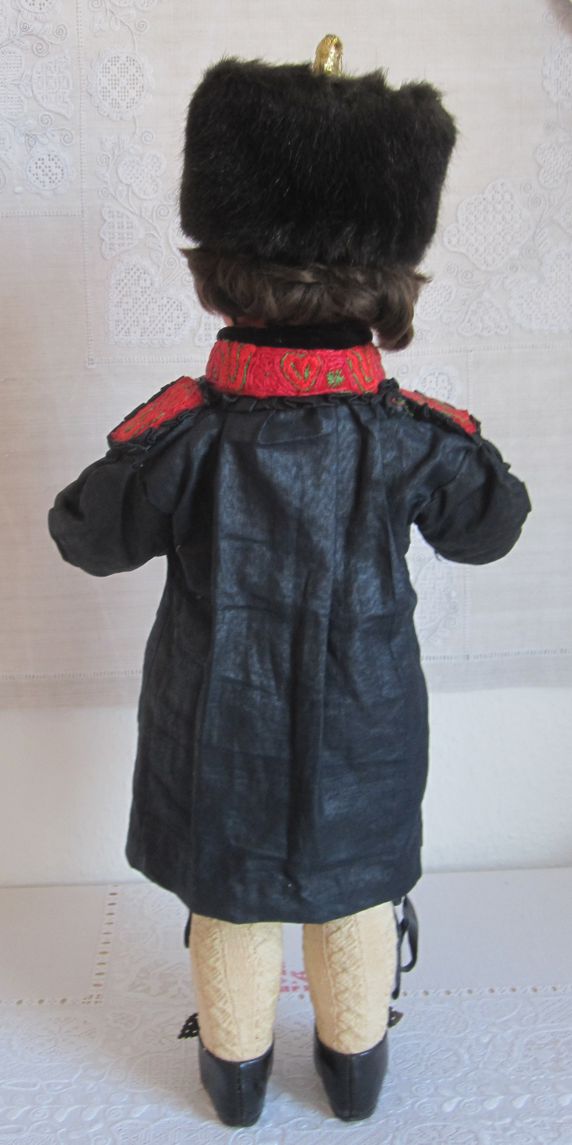
Rückseite der roten Burschentracht | backside of the red boys costume

With marriage they moved to the “green” costume whose accessories were mostly green, in the beginning with some red, then with a little purple as they grew older.

At about 40 years the “green” was superseded by the “blue” costume, which means that the coloured parts were mainly purple, with a little green at first, later with black.

From about 50 years, or in mourning, the “black” costume, which no longer had any brightly coloured components, was worn. If a young woman lost her husband or a child, she had to wear mourning all her life.

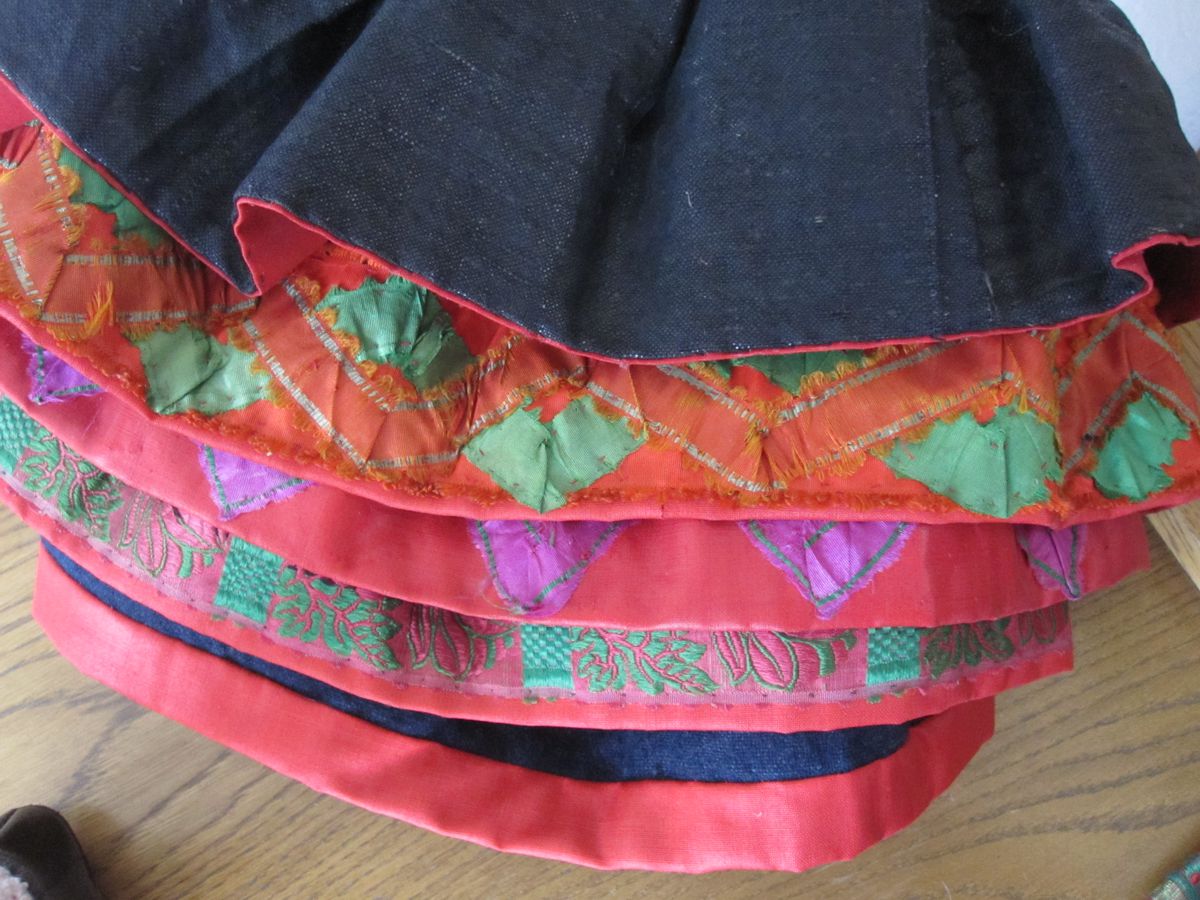
Up to 12 skirts – to my knowledge, the record stands at 16 – were worn one upon the other.
Considering that one skirt alone weighs about 800 g, and the skirts were not the only pieces of clothing, it quickly becomes clear that wearing the festive costume was not an “easy” task.
5 Röcke der roten Tracht | 5 skirts of the red costume

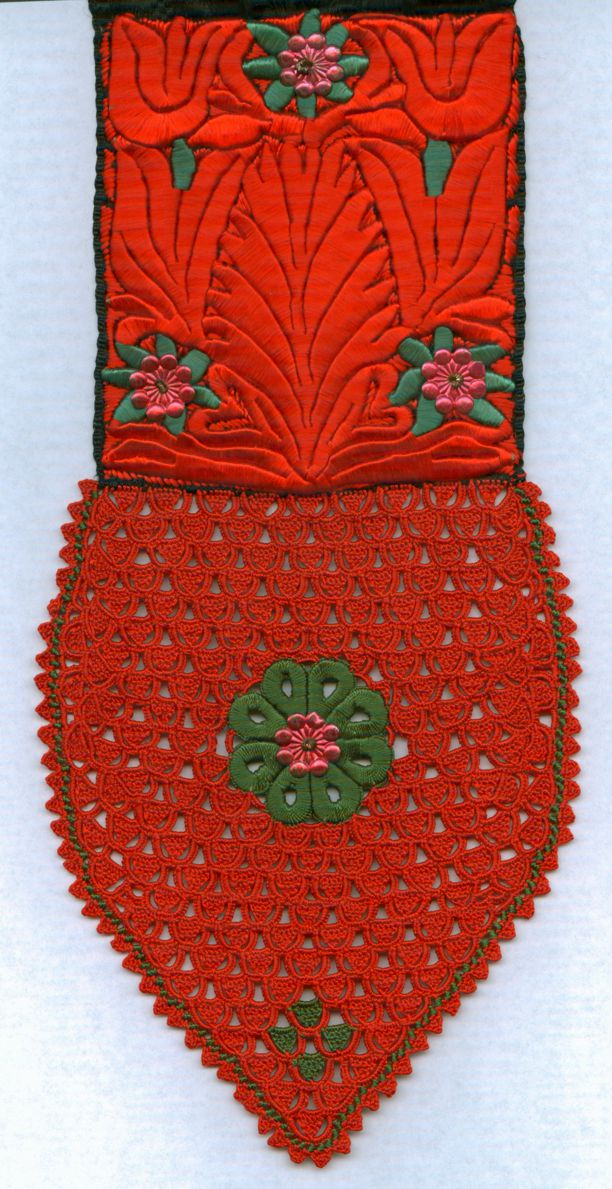
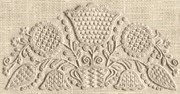
A woman’s costume was an indication of her prosperity. Indicating wealth were the number of skirts, the elaborateness of the colourful embroidery on cap bands, and the display of short or long needle laces, and elaborate whitework. Wealthier women could afford more of everything and that was displayed, of course.

rote Kappenschnur mit viel Buntstickerei und Nadelspitze | red cap band with elaborate colour embroidery and needle lace
rote Kappenschnur mit wenig Buntstickerei und ohne Nadelspitze | red cap band with less colour embroidery and without needlelace

Miederärmel mit wenig Weißstickerei und 2 Reihen Nadelspitze | bodice sleeve with less whitework and 2 rows of needlelace

Later I will present all the items of the costumes in detail. If you want to get a visual overview now, just have a look on ebay using the search term “Schwälmer”.
http://www.ebay.de/sch/i.html?_trksid=p3984.m570.l1313.TR3.TRC0.A0.Xschw%C3%A4lmer&_nkw=schw%C3%A4lmer&_sacat=0&_from=R40
There you will find many postcards with a variety of Schwalm costumes. From time to time you can also find original costume parts.
Or take a virtual look at a portion of the exhibition for costume dolls of the “Dorfmuseum Holzburg”
http://www.dorfmuseum-holzburg.de/index.php?option=com_expose&Itemid=4
The costume tailor, Erika Decker, has 52 different Schwalm costume ensembles reproduced in facsimile and presented in a dolls format.

Even on a virtual tour through the museum, you can admire some beautiful original costumes.
http://www.dorfmuseum-holzburg.de/index.php?option=com_expose&Itemid=4
And finally, today the theme costume serves as inspiration for up-and-coming fashion designers.
The students of Textile Technology and Fashion at the Elisabeth-Knipping-School in Kassel were assigned the task to design modern clothing using the costumes of northern Hesse, especially the Schwalm costume, as inspiration. The project was named “newly viewed” (Neu beTRACHTet ), and the results were presented in a fashion show in 2012.
http://www.elisabeth-knipping-schule.de/einblick/2012/modenschau2012/index.php
These modern-day interpretations can be viewed here:
http://www.hna.de/lokales/kassel/knipping-schule-modenschau-koenigs-alm-fs-2254313.html