Schwalm Designs – Knife Points (1)

The simple motifs in Schwalm whitework are often enhanced with embellishment. The customary form of decorating simple Schwalm motifs is to outline the shapes with scallops; they look nice and they are easy to embroider. But there is another decoration for simple Schwalm motifs called “knife points”. Knife points are less common than scallops because they are more difficult to work.
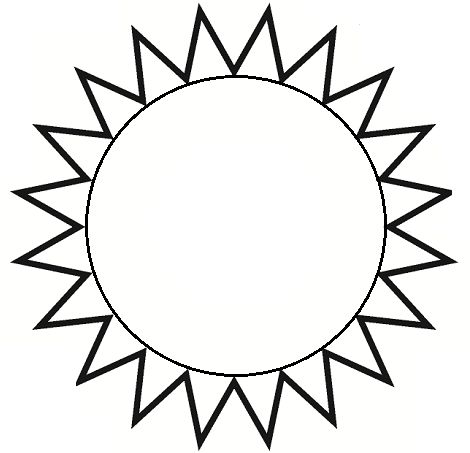
M_1
The base of the knife points are placed close together.
Circles are outlined with uniform knife points evenly distributed around the perimeter of the circle.

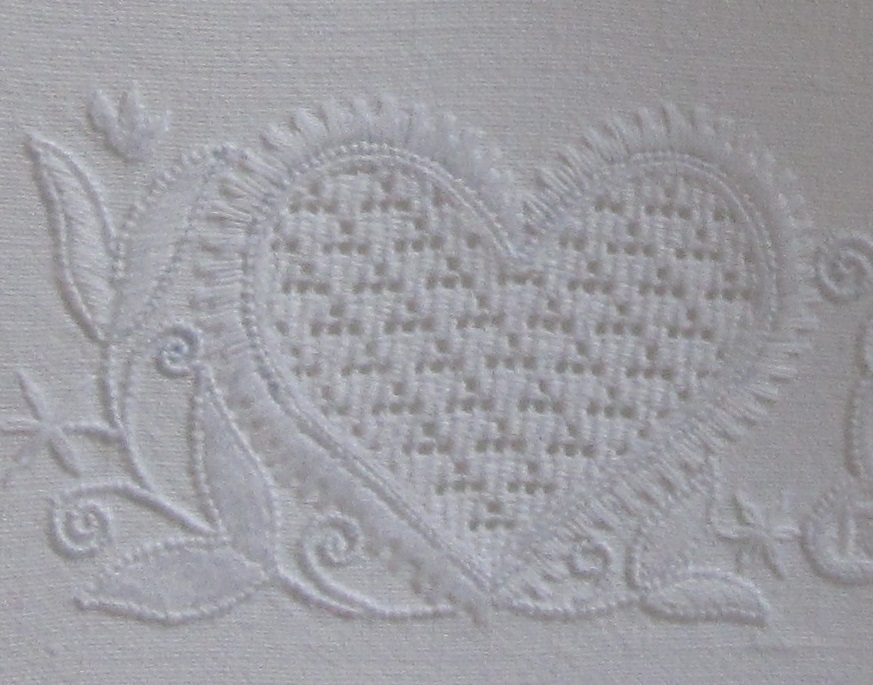
Circle outlined with Satin stitch knife points and hearts outlined with Blanket stitch knife points on a parade cushion from 1821

Circle outlined with Satin stitch knife points and hearts outlined with Blanket stitch knife points on a parade cushion from 1821

There are 3 different types of knife points: points made with Satin stitches (Messerspitzen), points made with Blanket stitches (geschnürte Messerspitzen), and points made with Blanket stitches as pointed half-eyelet scallops (Schnürlochspitzen). Pointed half-eyelet scallops are very rare; they have to be stitched absolutely exactly to not end up looking like a half-eyelet scallop.
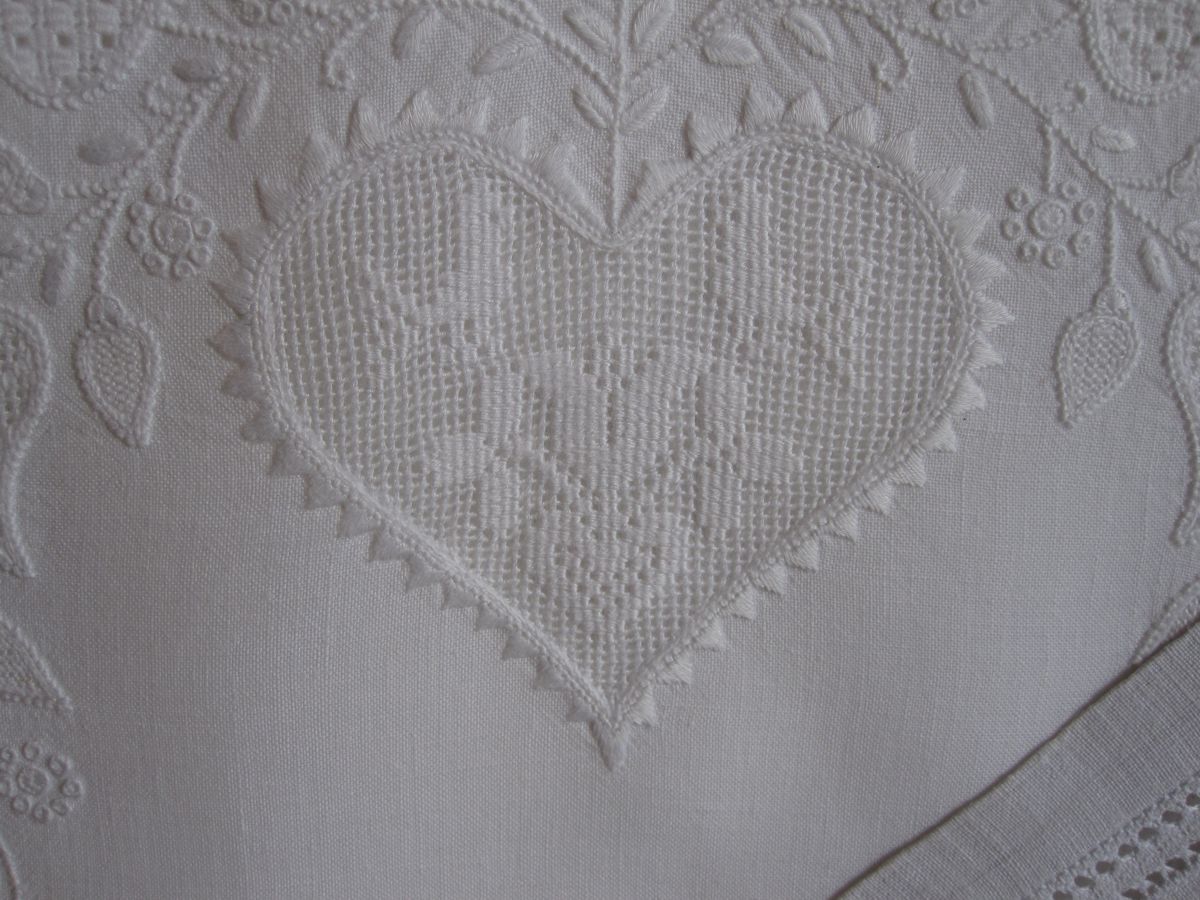
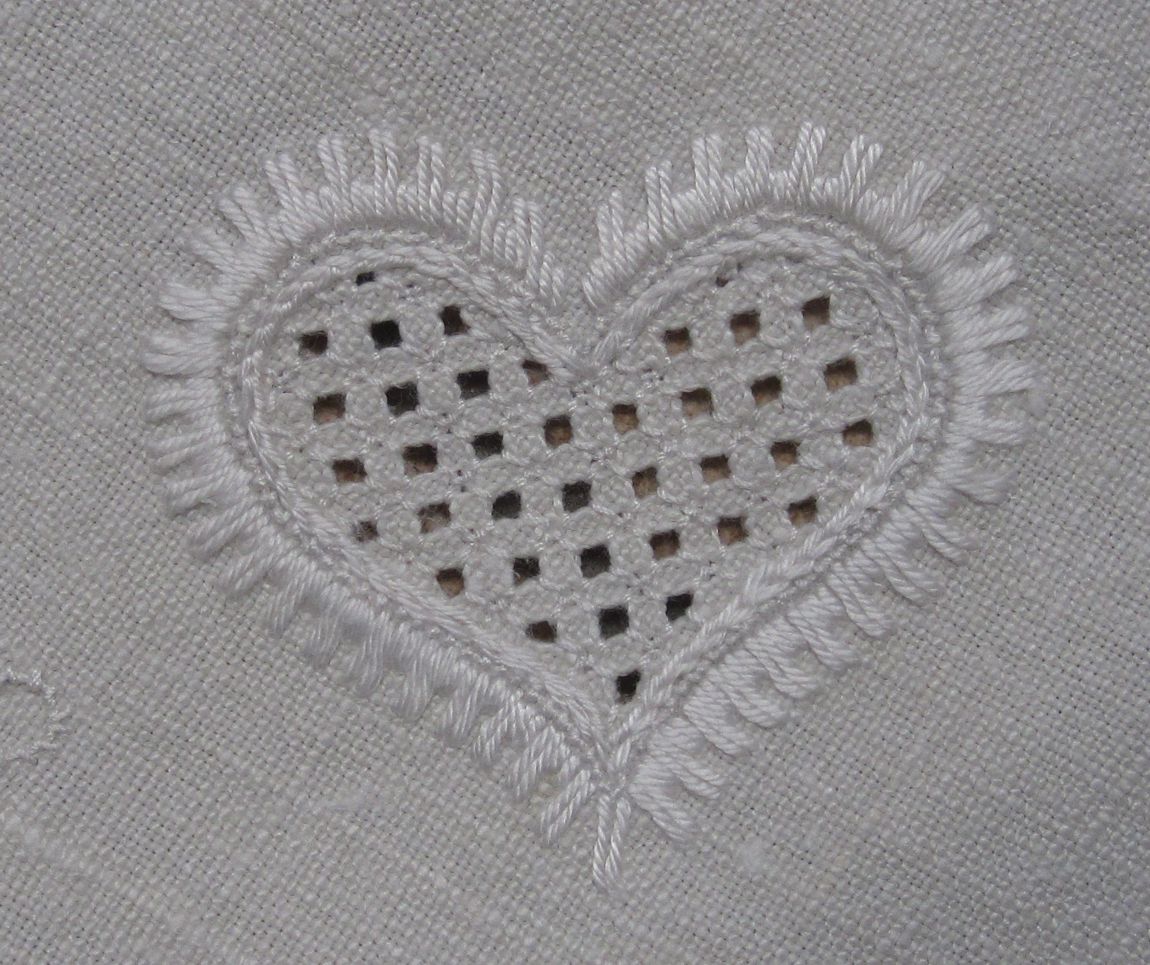
Heart outlined, except for the bottom point and the top concave center, with uniform and evenly distributed points. The thread weight is correct, and the stitches have been worked with the appropriate density.

Heart outlined, except for the bottom point and the top concave center, with uniform and evenly distributed points. The thread weight is correct, and the stitches have been worked with the appropriate density.

Also, hearts are outlined with such points. The point at the bottom of the heart should be drawn somewhat longer and sometimes a little bit narrower. It is best to start the line drawing here (at the bottom of the heart) and to work to the top in even steps on the right and on the left side of the heart. Meeting at top of the heart, either the spacing is adjusted or the points are slanted a little bit.
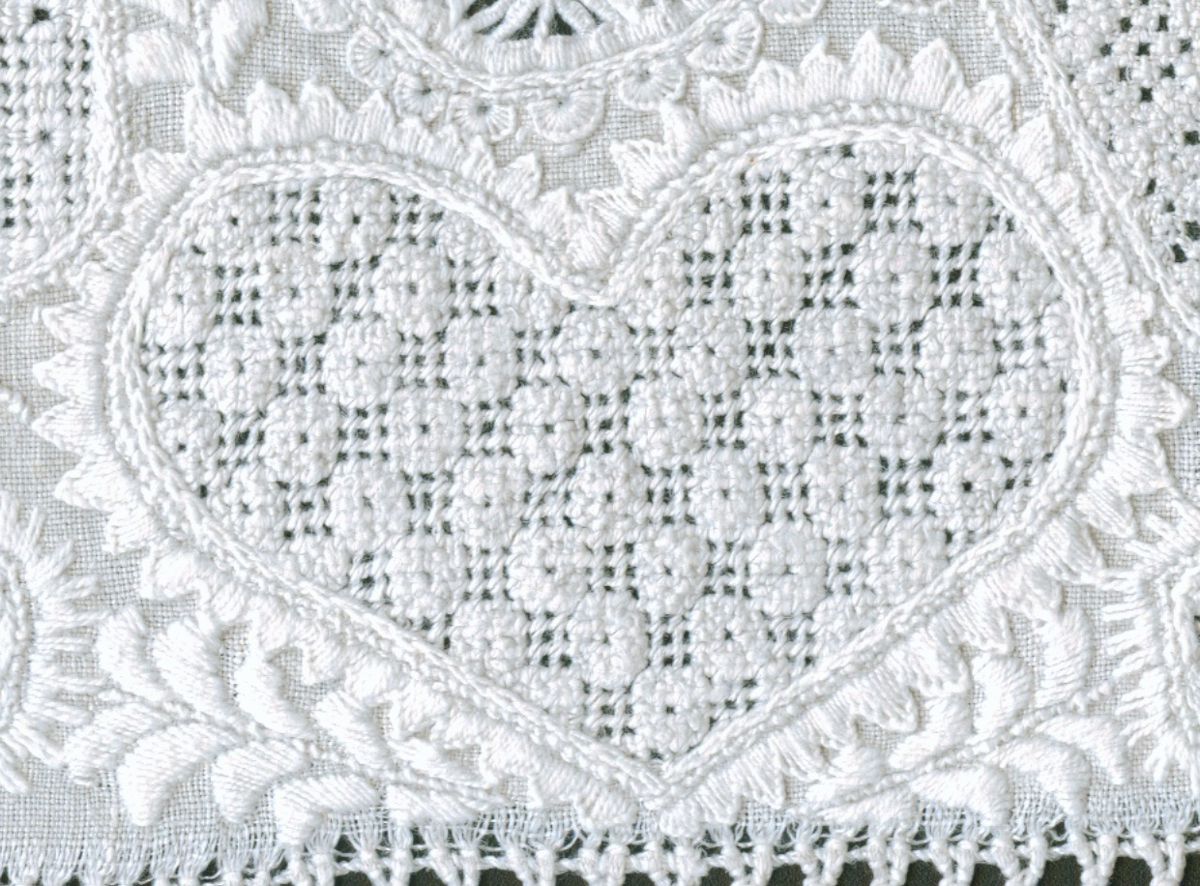
Heart outlined with uneven Blanket stitch points in different sizes. The thread weight is correct with appropriately dense stitches. The bottom part should have an extra point.

Heart outlined with uneven Blanket stitch points in different sizes. The thread weight is correct with appropriately dense stitches. The bottom part should have an extra point.

It does not look very elegant to have two knife points meet at the lower heart point.
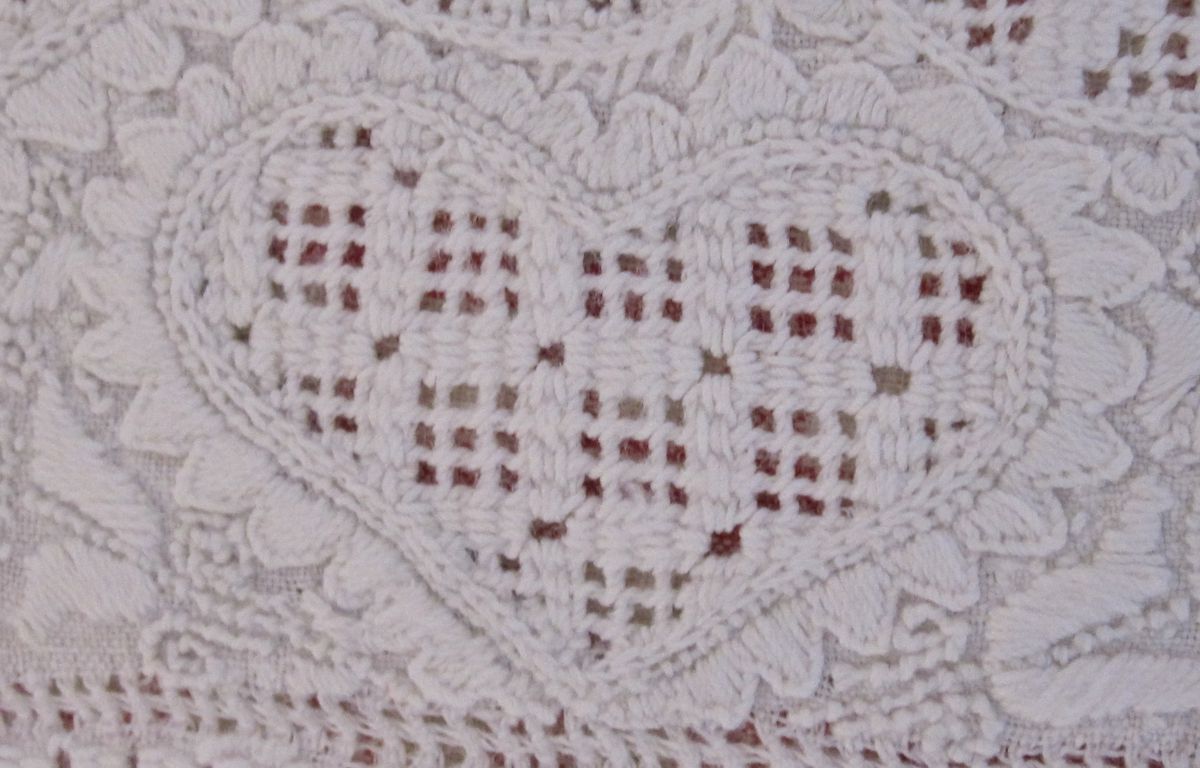
Heart outlined with uneven Blanket stitch points. The thread weight is correct and the density of the stitches is good. However, the treatment of the points at the heart’s lower point is not attractive.

Heart outlined with uneven Blanket stitch points. The thread weight is correct and the density of the stitches is good. However, the treatment of the points at the heart’s lower point is not attractive.

Also, the effect is not harmonious to have knife points becoming smaller at the heart’s lower point.
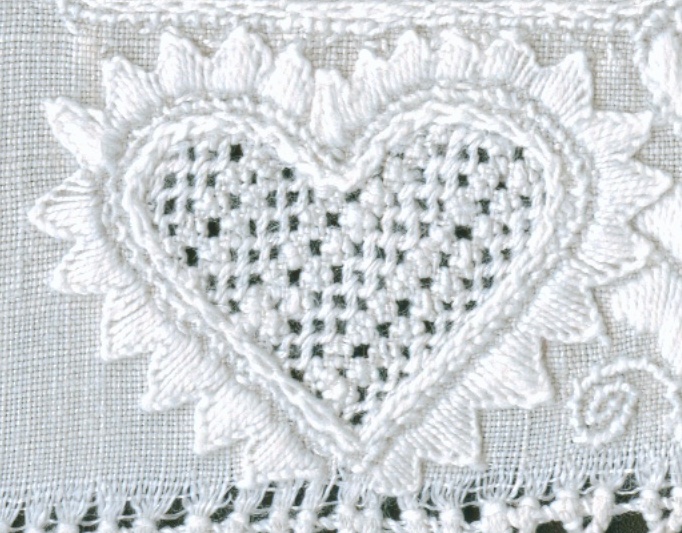
Heart outlined with uneven Blanket stitch points. The thread weight is correct and the density of the stitches is good. However, the treatment of the points at the heart’s lower point is not attractive. In this example, one can see that the embroiderer had difficulty distributing the points evenly.

Heart outlined with uneven Blanket stitch points. The thread weight is correct and the density of the stitches is good. However, the treatment of the points at the heart’s lower point is not attractive. In this example, one can see that the embroiderer had difficulty distributing the points evenly.

It is not easy to stitch Blanket stitch points. It is easier to work them with Stain stitches.
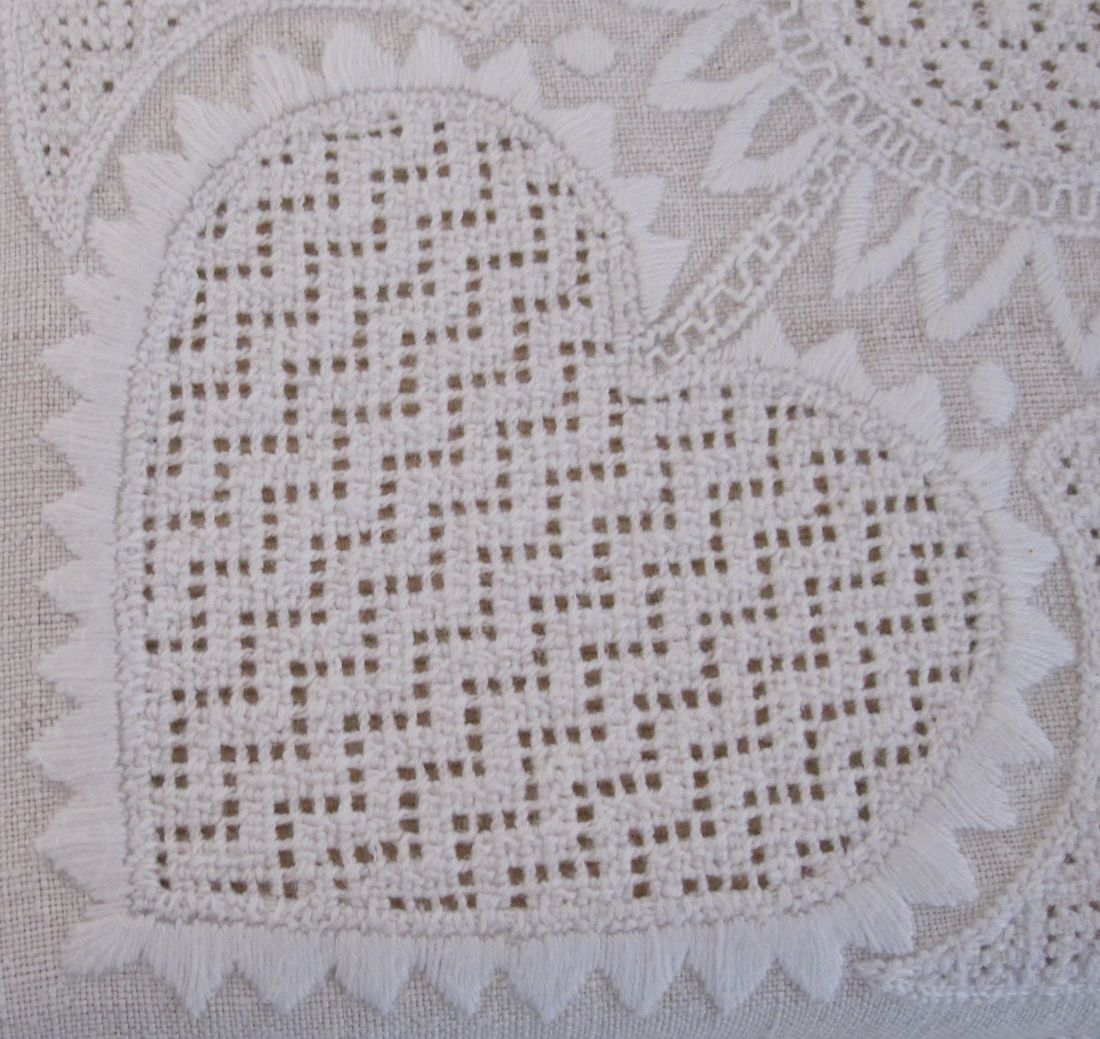
Heart outlined with Satin stitch points utilizing the correct thread weight. The density of the stitches is good.
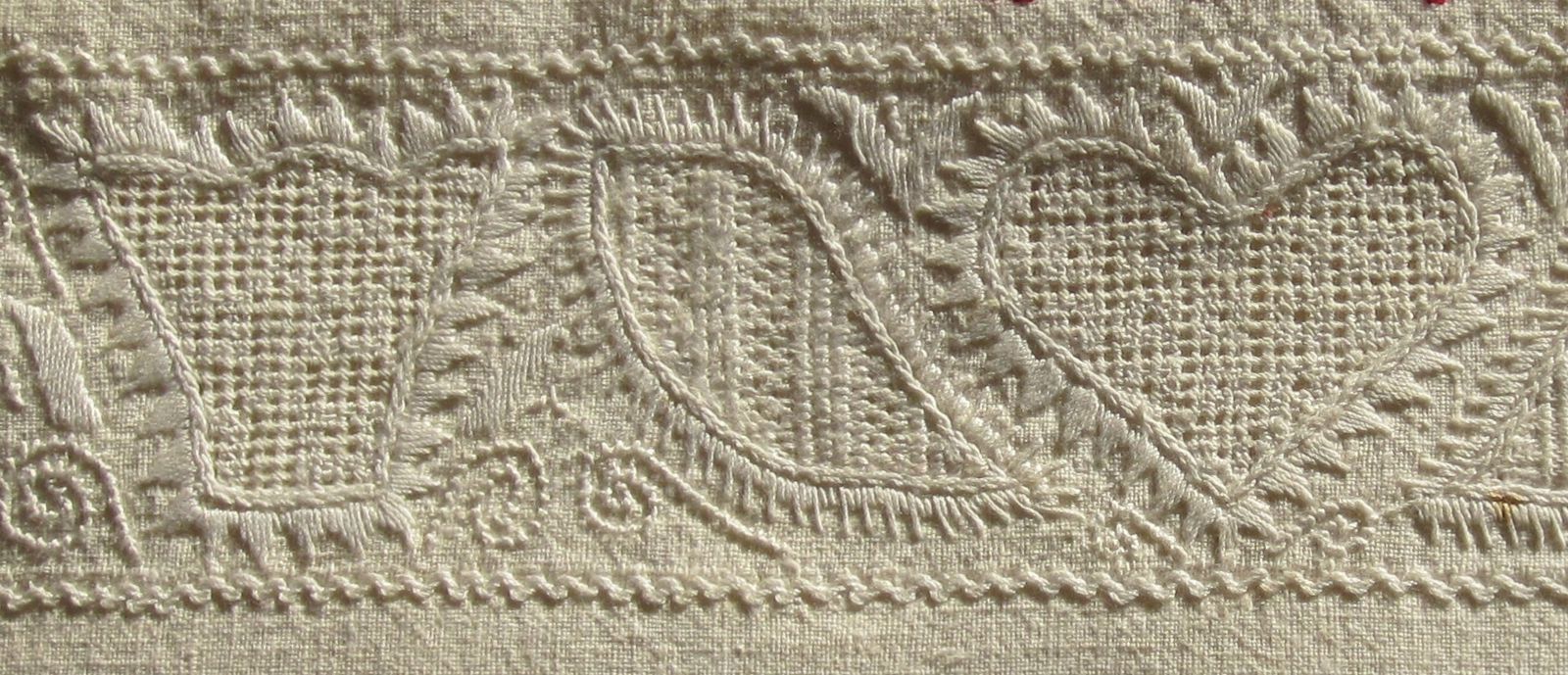
Heart outlined with Satin stitch points utilizing the correct thread weight. The density of the stitches is good.

Heart and flowerpot outlined with precise Satin stitch points utilizing the correct thread weight. The density of the stitches is good.
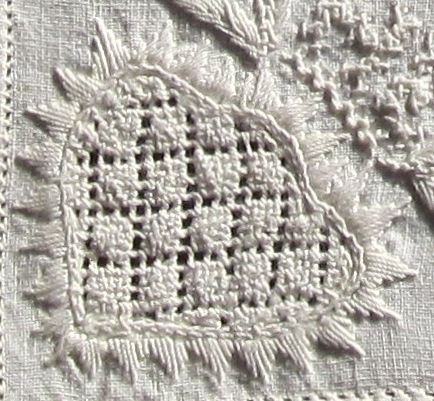
Heart and flowerpot outlined with precise Satin stitch points utilizing the correct thread weight. The density of the stitches is good.
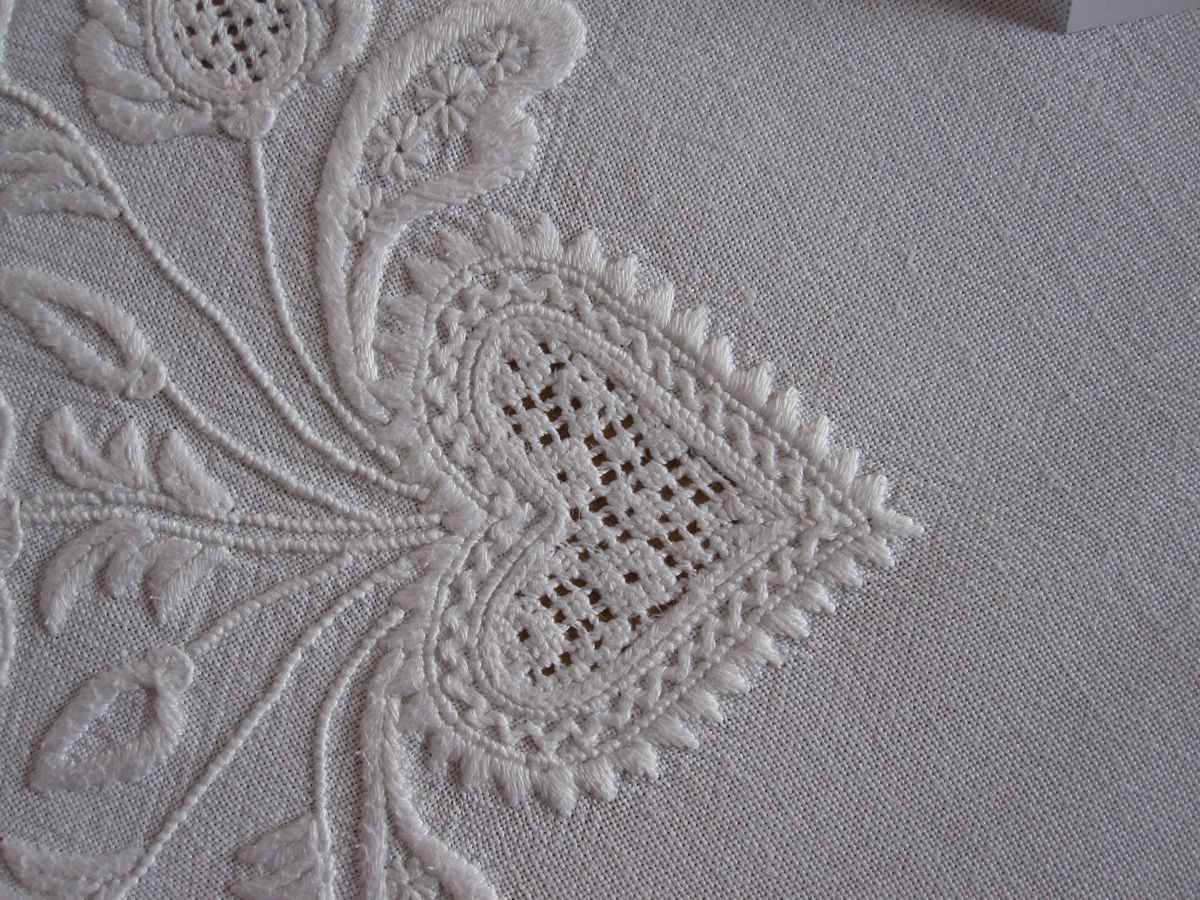
Motif outlined with precise Satin stitch points utilizing the correct thread weight. The density of the stitches is good.

Motif outlined with precise Satin stitch points utilizing the correct thread weight. The density of the stitches is good.

Heart outlined with uniform and evenly distributed Satin stitch points utilizing the correct thread weight. The density of the stitches is good.
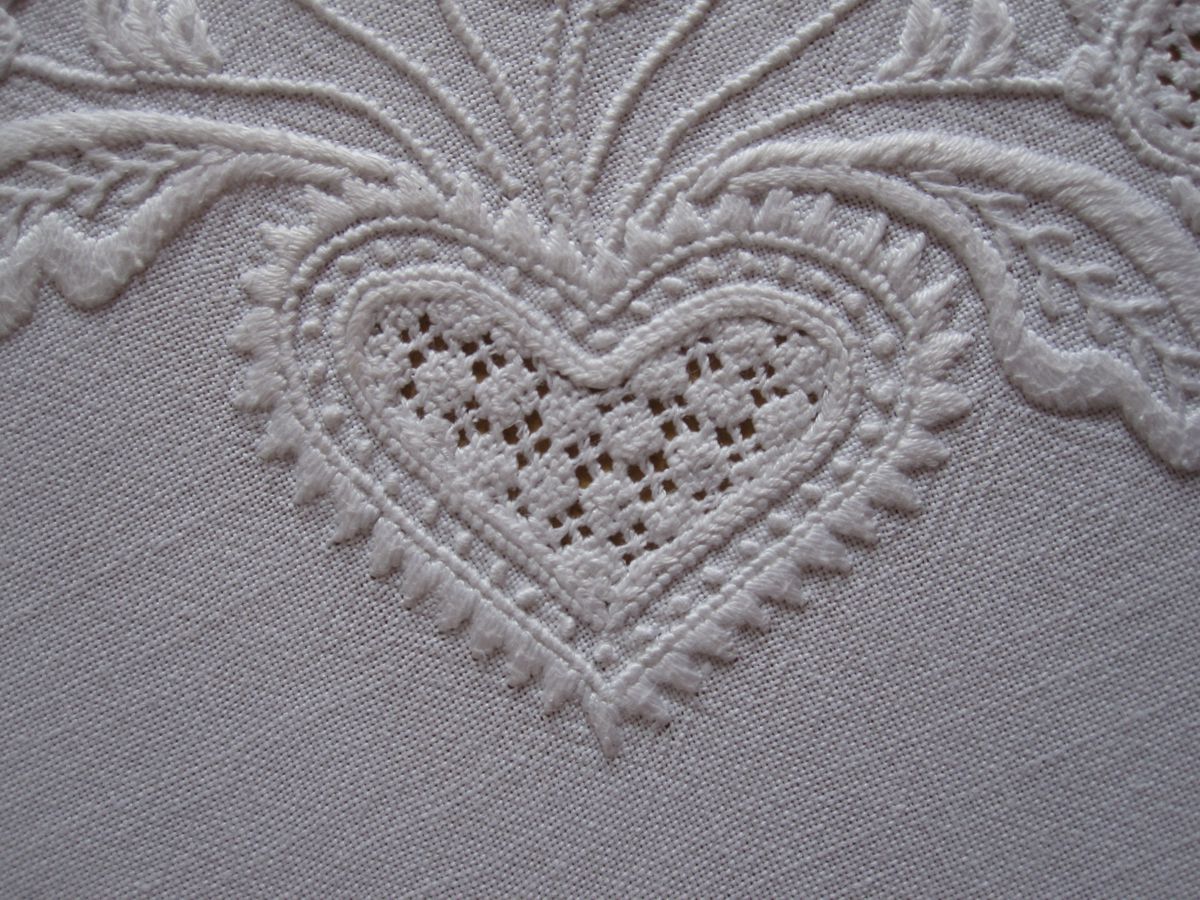
Heart outlined with uniform and evenly distributed Satin stitch points utilizing the correct thread weight. The density of the stitches is good.

Heart outlined with uniform and evenly distributed Satin stitch points utilizing the correct thread weight. The density of the stitches is good.

Heart outlined with uniform and evenly distributed Satin stitch points utilizing the correct thread weight. The density of the stitches is good.

Different from the scallop embellishment, which sometimes decorated only parts of a motif, I have only found point embellishment outlining the entire shape.
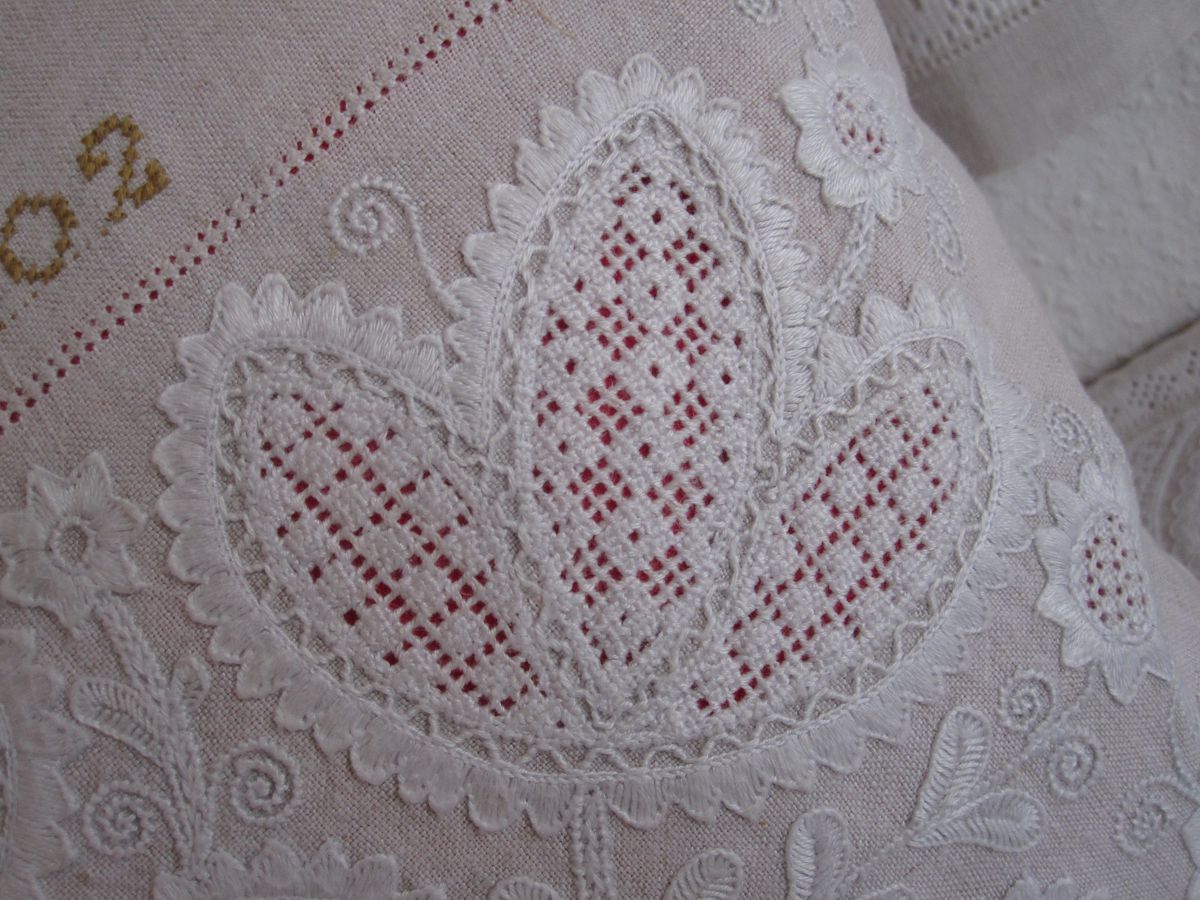
Tri-leaf flower outlined with uniform and evenly distributed Blanket stitch points utilizing the correct thread weight. The density of the stitches is good.

Tri-leaf flower outlined with uniform and evenly distributed Blanket stitch points utilizing the correct thread weight. The density of the stitches is good.

The thread should not be too thin and the stitches should lie densely together.
Schwalm designs (9) – 2 short-2 long

As already mentioned in the Schwalm Designs – Scallops article, in Schwalm whitework the simple motifs are often enhanced with embellishment.

Although scallops are the most common outline embellishment of a simple motif, there are some other ways to decorate the shapes. A pattern called “2 short-2 long” is a common outline decoration in Schwalm whitework. Mostly circles, and often hearts, are decorated with this stitch; it is rarely seen on other shapes.

2 short-2 long outlining a circle shape on a parade pincushion from 1821

2 short-2 long outlining a circle shape on a parade pincushion from 1821

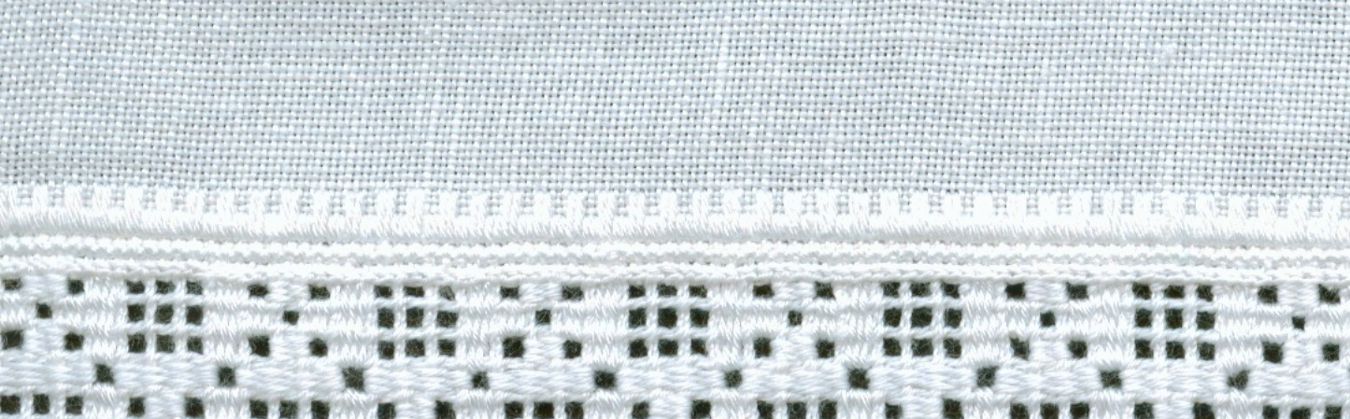
As the name implies, the pattern is established by alternating 2 short and 2 long stitches. The stitches are placed close together and even. The shorter stitches should have about half the length of the longer stitches or slightly more. When they are worked in a straight line, counting the fabric threads makes the pattern easy and perfectly even,
Bild_2-2k2l
as the enlargement shows.
Bild_3-2k2l
But the shapes of the Schwalm motifs are mostly curved, and working by eye is difficult. Often in Schwalm designs this decoration is pictured with lines as seen in the image below.
Bild_4-2k2l
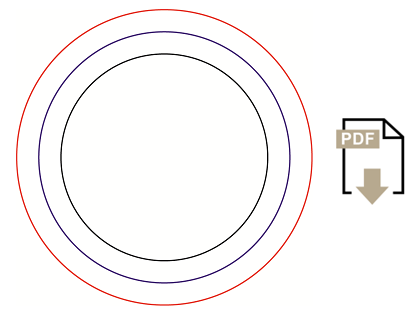
But, when stitching, it is not good to have too many lines printed on the linen – if they are not perfectly drawn, it is distracting and unhelpful. It is good to have at least one additional marking line (for the longer stitches), and better to have two (one for the short and one for the long stitches) for keeping the stitch lengths constant.
2015-05-16_pdf
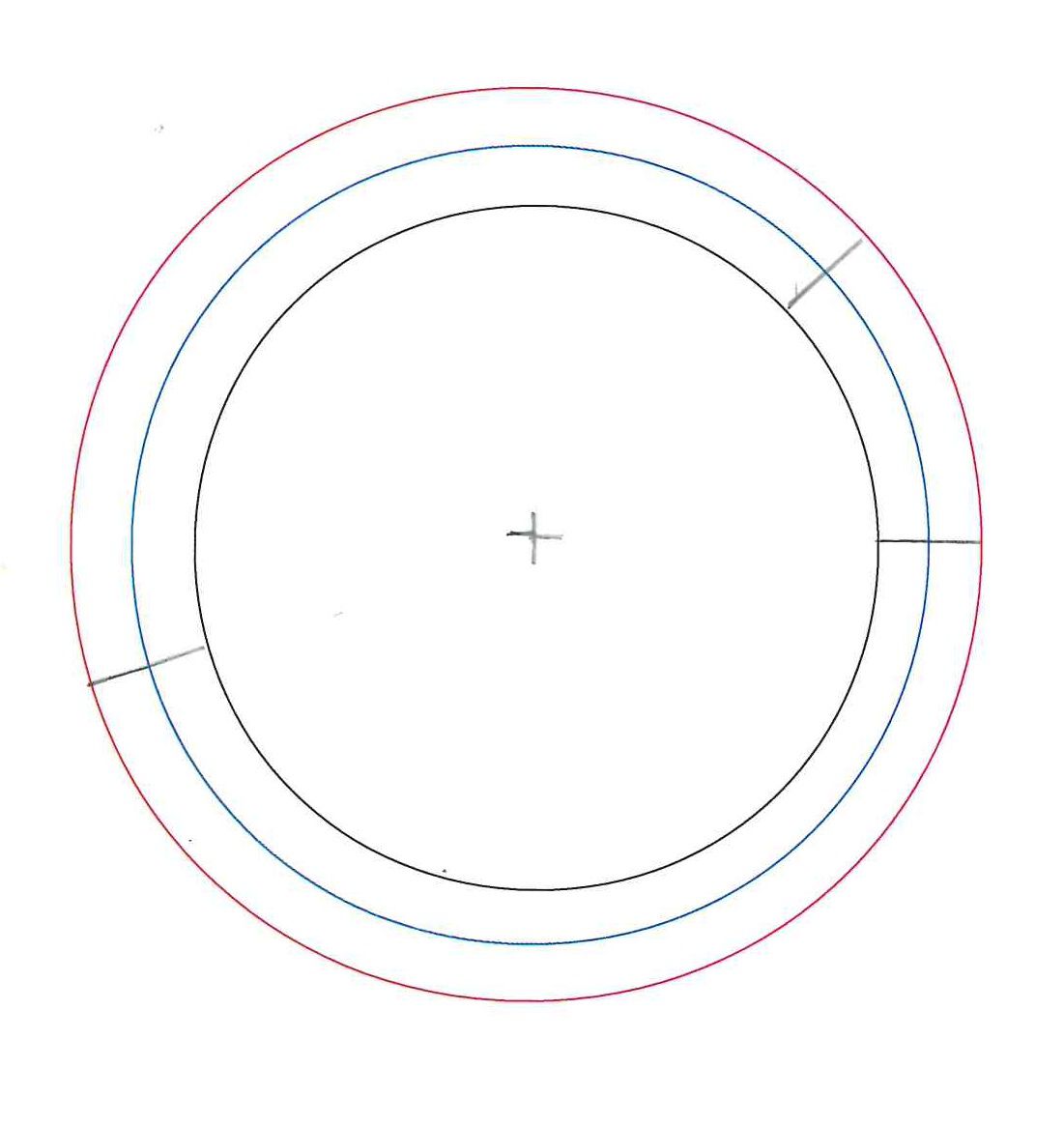
And to ensure that the stitches are always kept at a right angle to the outline, it is also helpful to have some additional guide marks – these at a right angle to the outline.
Bild_6-2k2l
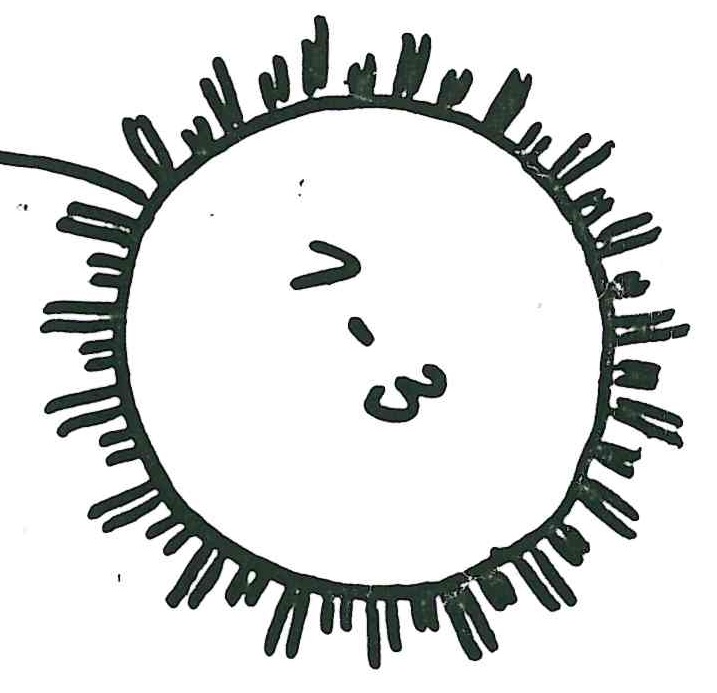
On circles it is easy to place guide marks at a right angle to the outline. If you were to lengthen the guide mark, they would pass through the center point of the circle.
Bild_7-2k2l
For hearts or other shapes it is a little bit more difficult, but still doable with attention and a little tip.
Most important is to always rotate the piece while working so that the stitch is made horizontally from right to left. This allows greater control in placing the stitches at a right angle to the outline.
2 short-2 long outlining a heart motif; in the top right the stitches are not completely perpendicular to the outline

2 short-2 long outlining a heart motif; in the top right the stitches are not completely perpendicular to the outline

nearly perfect 2 short-2 long outlining of a heart motif

nearly perfect 2 short-2 long outlining of a heart motif

Schwalm Designs (8) – Designing a Project (3)

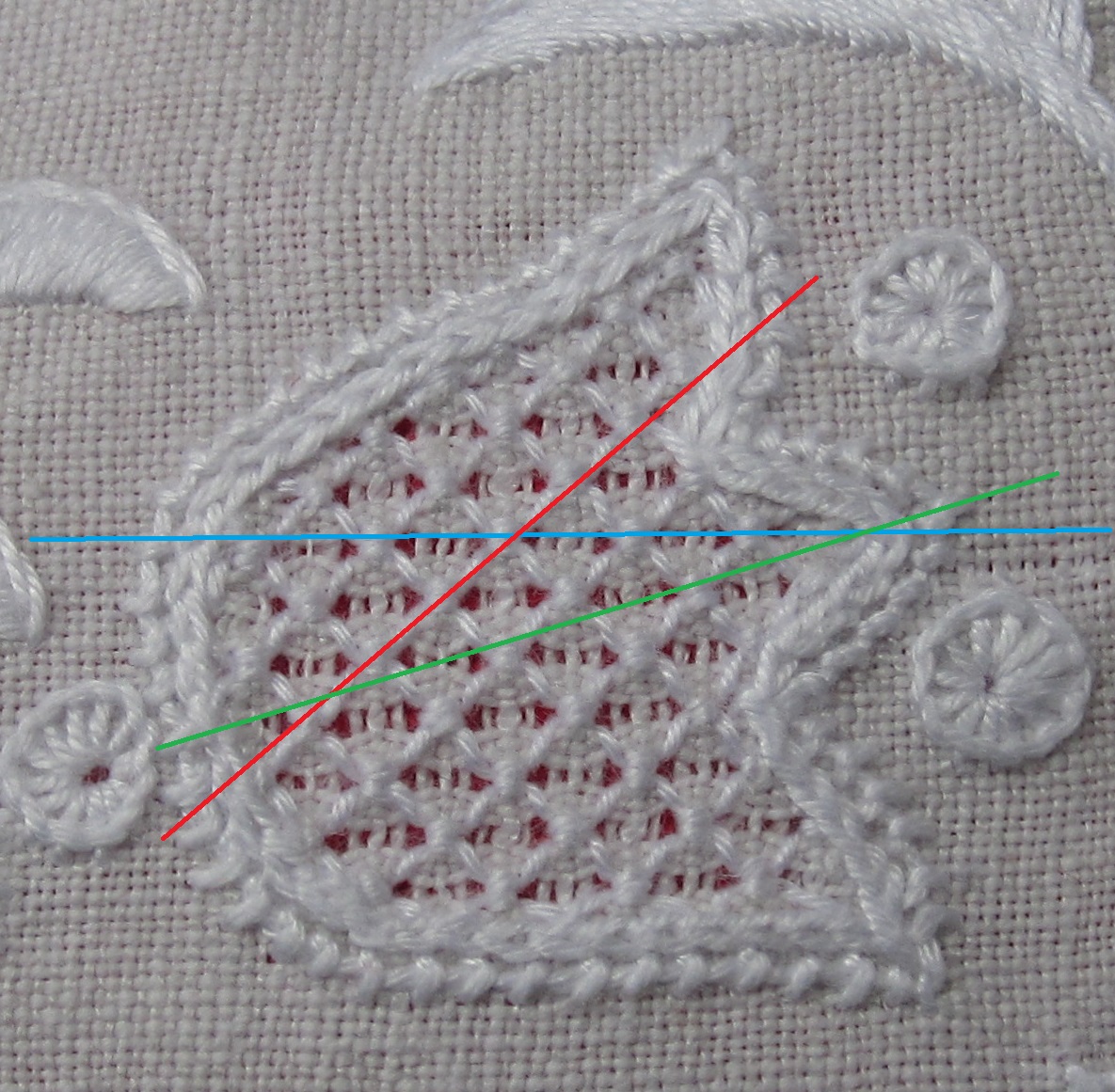
Sometimes, in order to maintain the harmony of the design, it is necessary that some of the symmetrical motifs will not be placed on the straight of grain or on the bias.

An experienced embroiderer can compensate by creating a special filling pattern, as shown in the picture below.
Bild_1_SK_8
The shape is not placed exactly on the straight of grain (blue) or on the bias (red), but somewhere in between (green). Nevertheless, a suitable pattern was found; it meets the axis of the motif and so harmoniously matches the entire shape.
Bild_2_SK_8
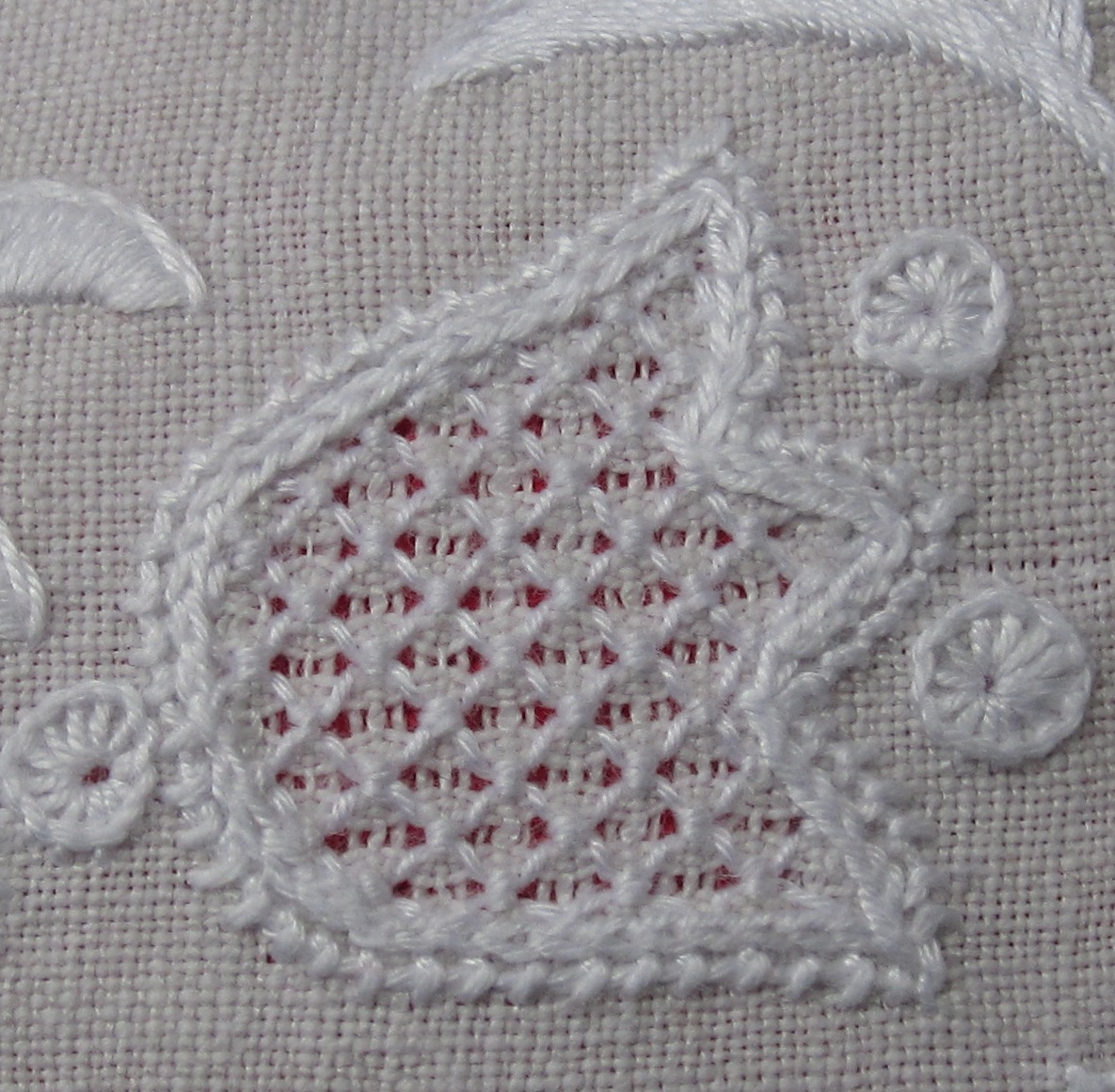
Or a more neutral pattern can be used, where the direction of grain is not of great importance, like Honeycomd Darning stitches
Bild_3_SK_8
Bild_4_SK_8
or Wave stitches, Rose stitches or Diagonal Cross filling stitches (below picture).
Bild_5_SK_8
If you find the need to incorporate asymmetrical motifs into the design, it is always best to place, at the outset, symmetrical motifs on the straight of grain or on the bias and to find asymmetrical motifs and circles for all other places.

part 1
previous part

Schwalm Designs (7) – Designing a Project (2)

So that later on the withdrawn thread patterns are effective in the respective motifs, one should place motifs symmetrically on an axis of the fabric weave – always on the straight of grain or on the bias.

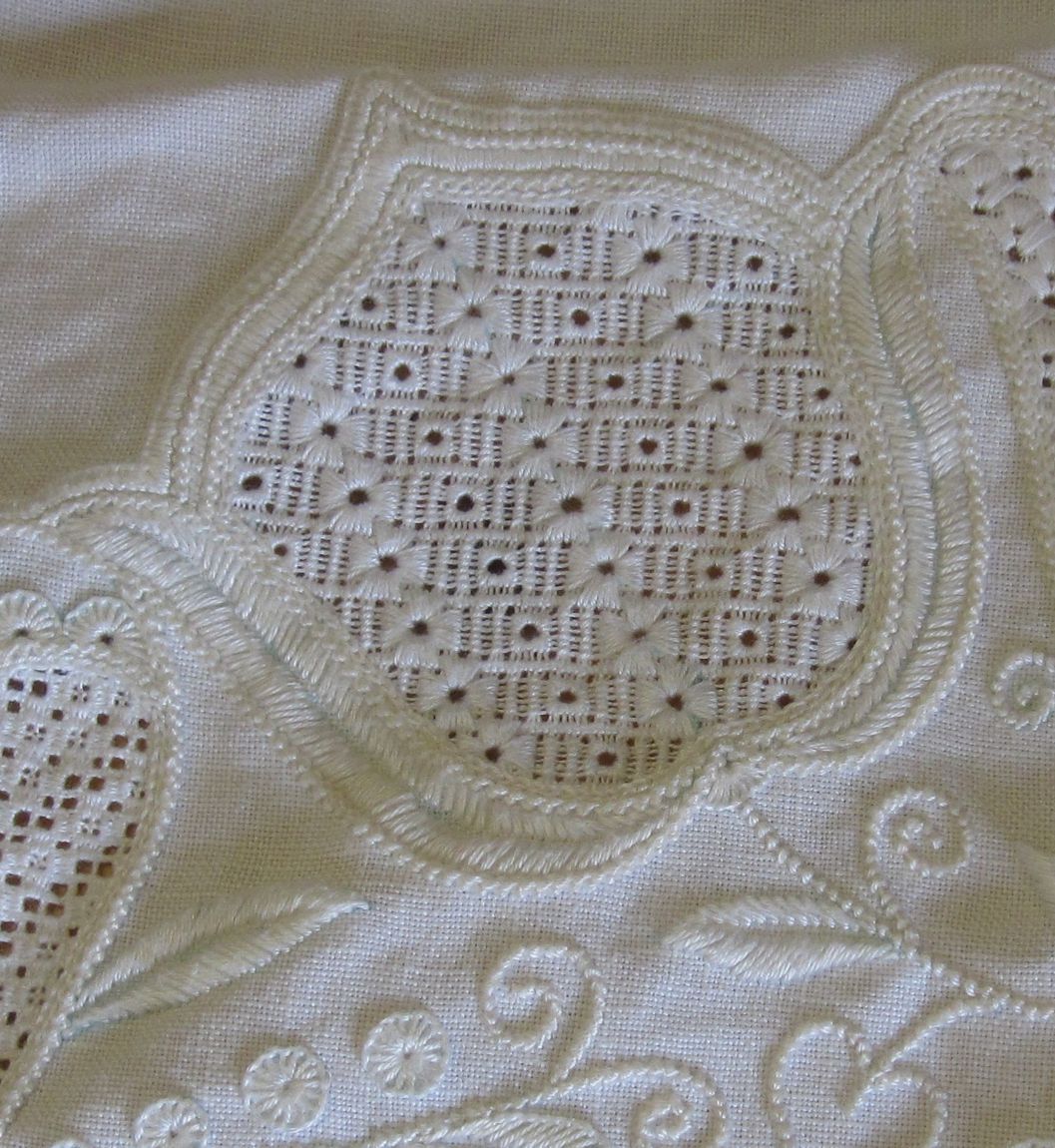
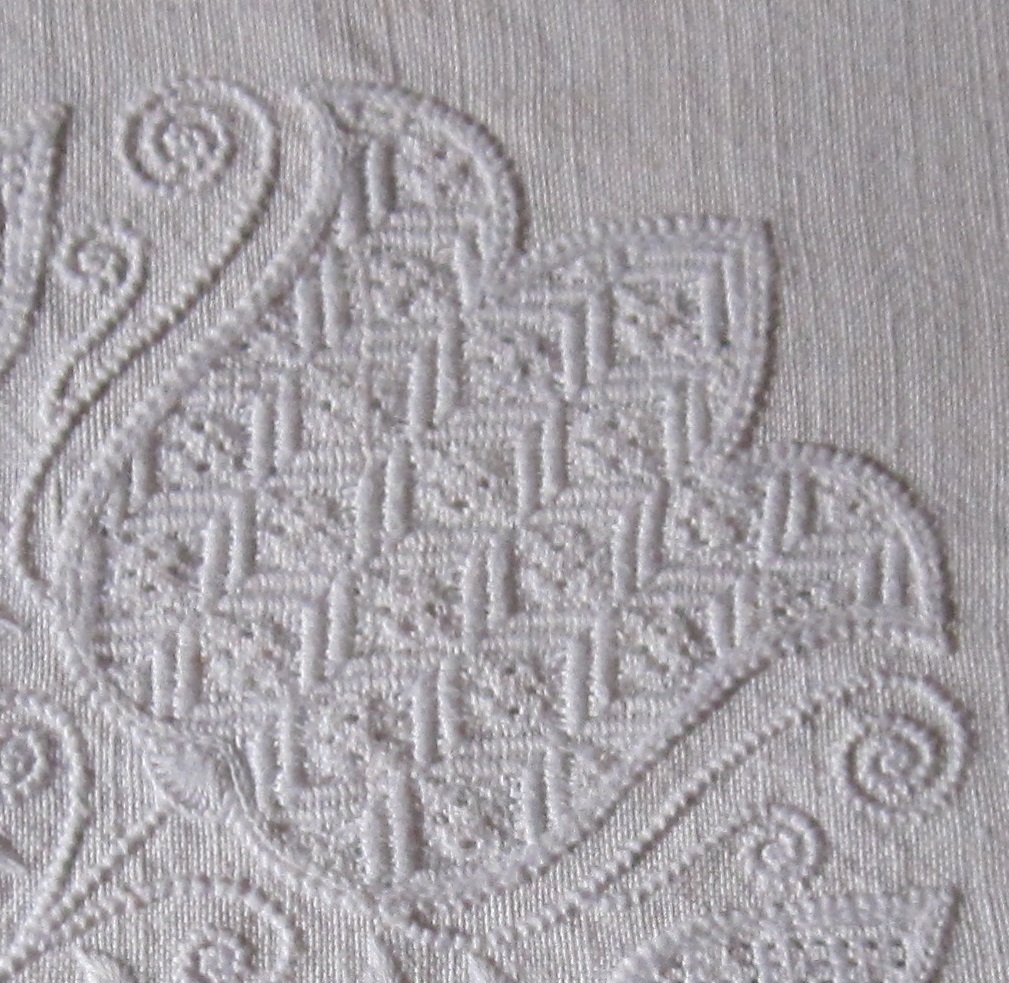
An embroidery becomes superb when the chosen filling pattern harmoniously matches the shape of the motif, as the picture below shows.
Bild_1_SK_7
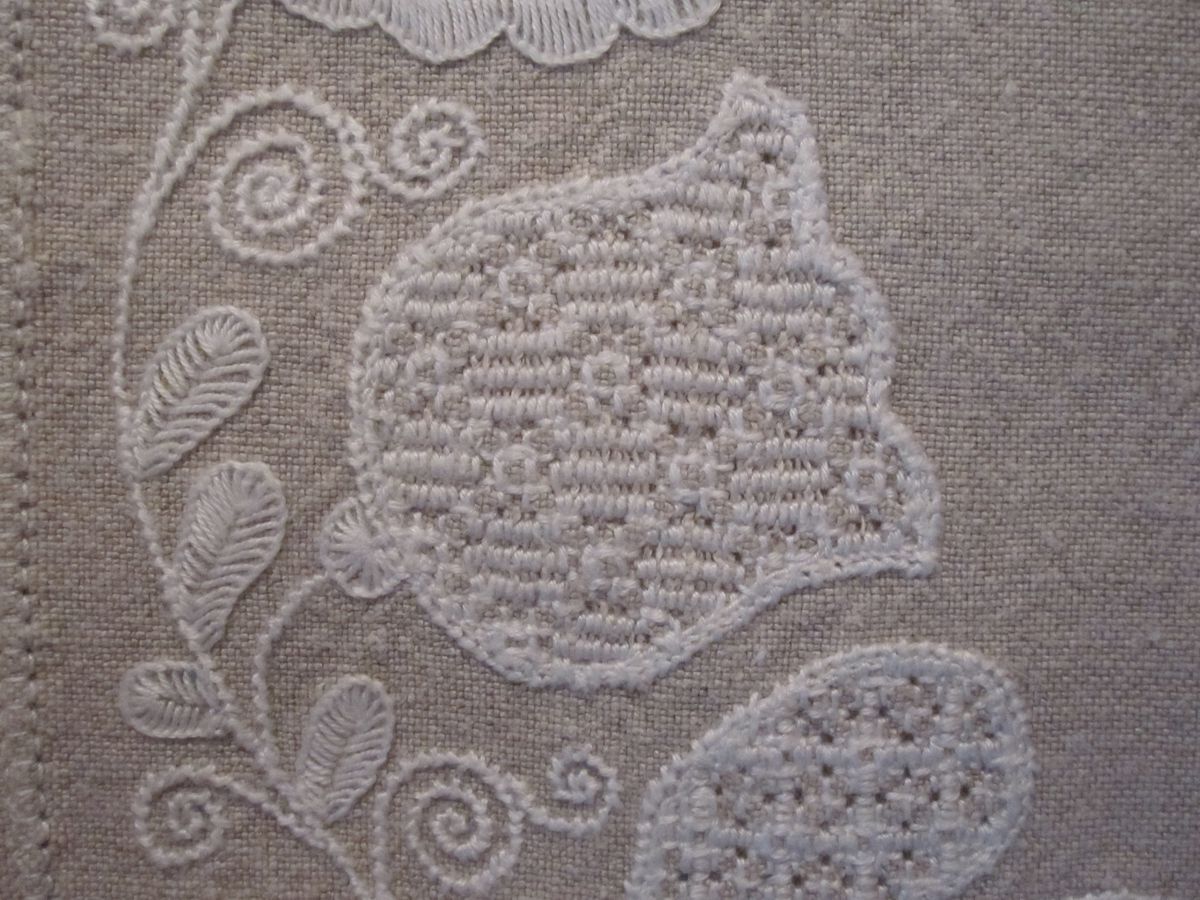
When the embroiderer does not take care to match filling patterns to the motif shape, the results are not pleasing, as the tulip below demonstrates.
Bild_2_SK_7
For areas where it is not possible to place the motifs on the straight of grain or on the bias, it is best to use circles or asymmetrical shapes.

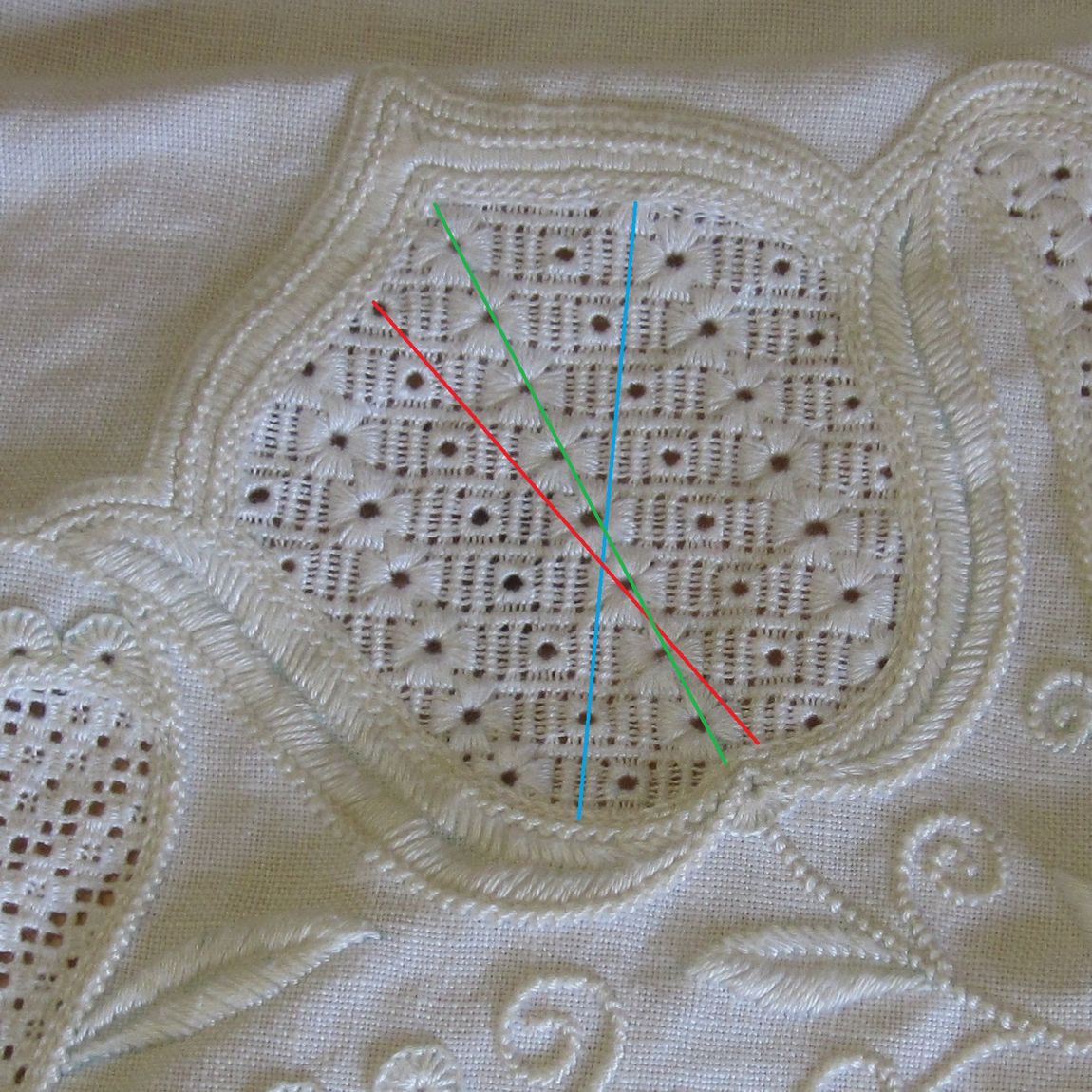
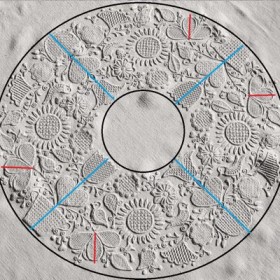
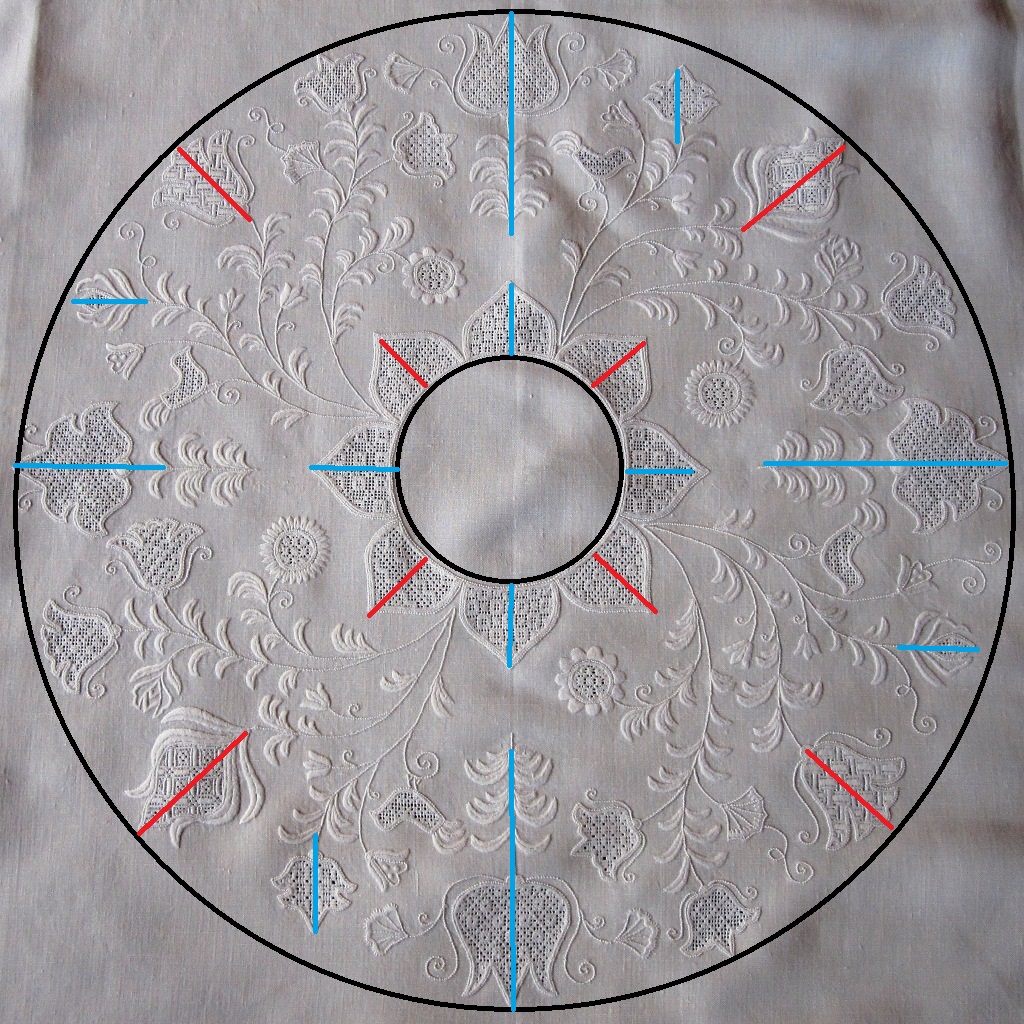
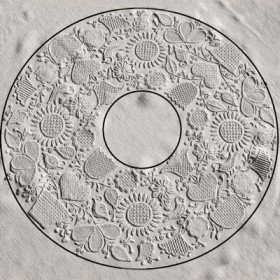
To further illustrate the point, please look again at the designs already presented. The blue lines mark the straight of grain, the red lines mark the bias.
Bild_3_SK_7
Mrs. Thielmann respected this designing rule for all elements – only two tulips each quarter did not fit this rule exactly (but even they are very nearly placed on the straight of grain).
Bild_4_SK_7
Mrs. Schneider respected this designing rule for the main figures, and very skillfully a large part of the remaining area is filled with different circles and asymmetrical figures. (Regarding the few symmetrical shapes not placed on the straight of grain or on the bias, it is not noticeable because the motifs were filled with patterns of the early Schwalm whitework which are surface embellishment and are not restricted by the grain of the fabric threads.)

to be continued

previous part

Schwalm Designs (6) – Designing a Project (1)

Originally, Schwalm designs were predominantly arranged in straight bands because Schwalm whitework was most often intended for bed coverings, parade cushions and women’s bodices.
However, other common designs were corner motifs, mainly used for decorative handkerchiefs, and designs used for embellishing the groom’s shirt.

Schwalm designs have evolved with changing lifestyle habits and the resulting intended use for the embroidery (e.g., as table linen).

Wreath designs became very popular, but all other basic geometrical forms can be found:
squares, rectangles, ovals as center designs
Bild_1_SK 6_1
squares, rectangles, or ovals with borders of different widths
Bild_2_SK 6_1
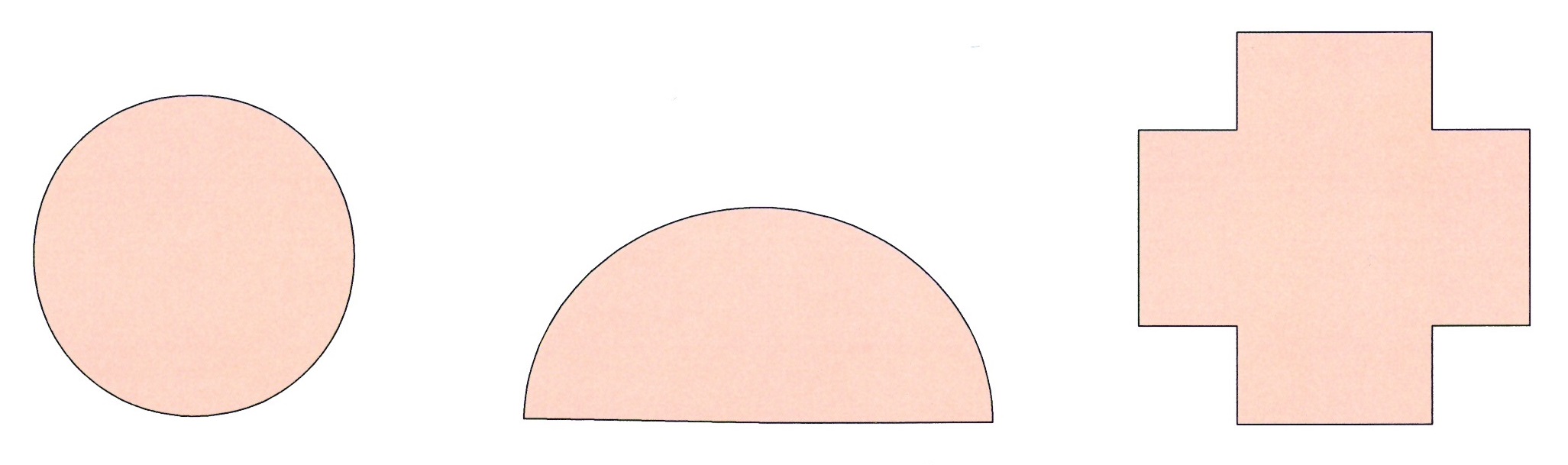
circles, half circles, crosses
Bild_3_SK 6_1
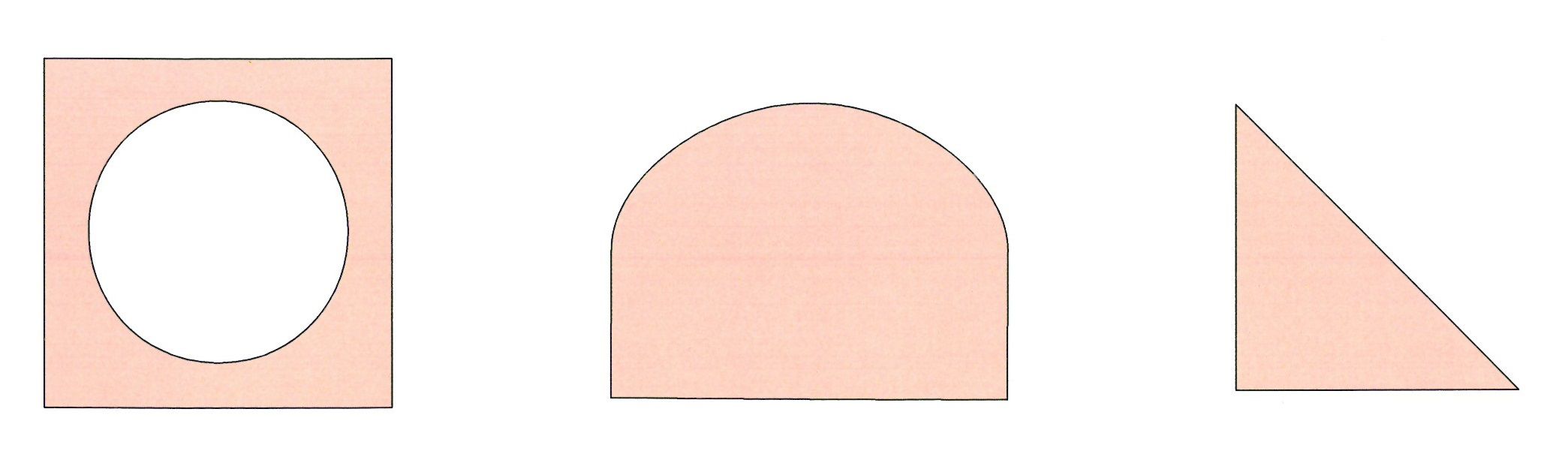
Also, of course, there are individually designed shapes.
Bild_4_SK 6_1
Naturally, there exists a wide range of designs from a group of diverse designers. However, it is not always easy to get such designs. Creating one’s own design is not only fun, but it also enables one to tailor the design to specific form, size and aesthetics. One can use favorite motifs and techniques in unique ways to create a one of a kind piece of embroidery.

To aid you, I am currently working on a construction system for designing. It will give you hundreds of different shapes to arrange as your creativity dictates. This is a complex and elaborate venture and it will take some time to get it ready to present to you. In the meantime, here are some tips for creating a design.

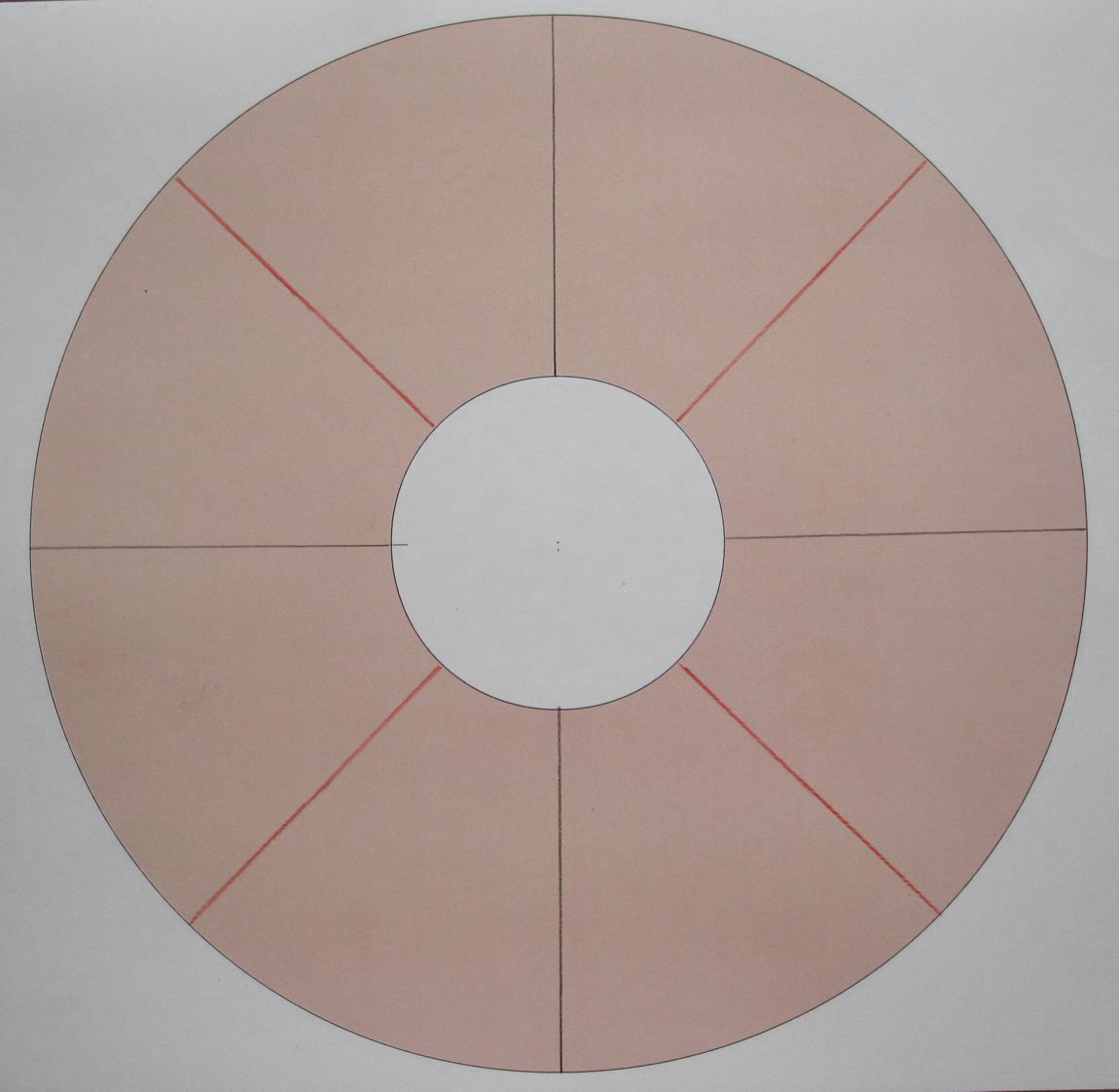
First, one must decide on a basic shape and its size. The center vertical and horizontal axes need to be marked to be able to match to the fabric grain later on (in the design transfer step). For this example, a wreath design was chosen. The beige space is the design area.
Bild_5_SK 6_1
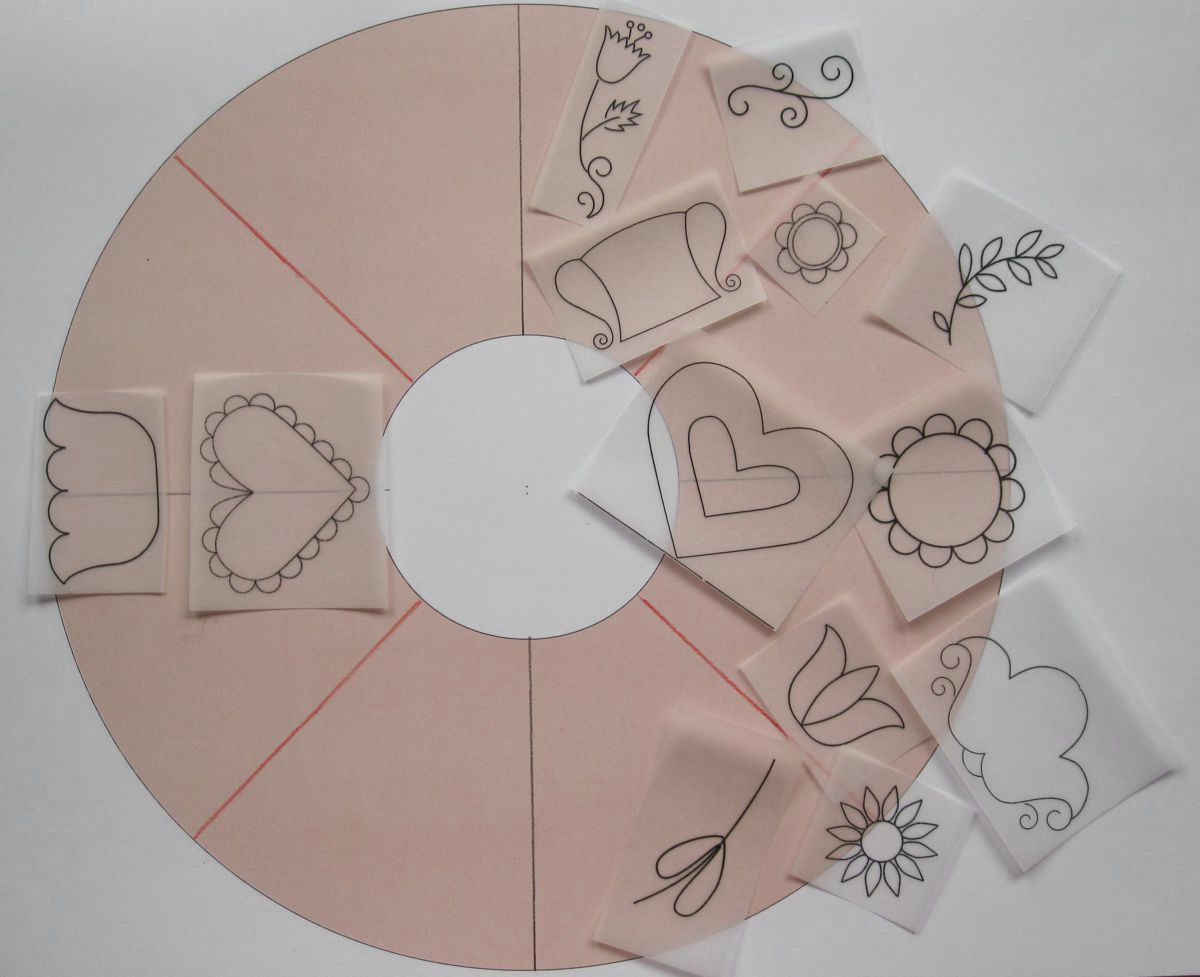
Therefore one takes some motifs, such as tulips, hearts, circles, etc., and arranges them in the design area filling the spaces between the motifs with stems, tendrils, small leaves and small flowers.
Bild_6_SK 6_1
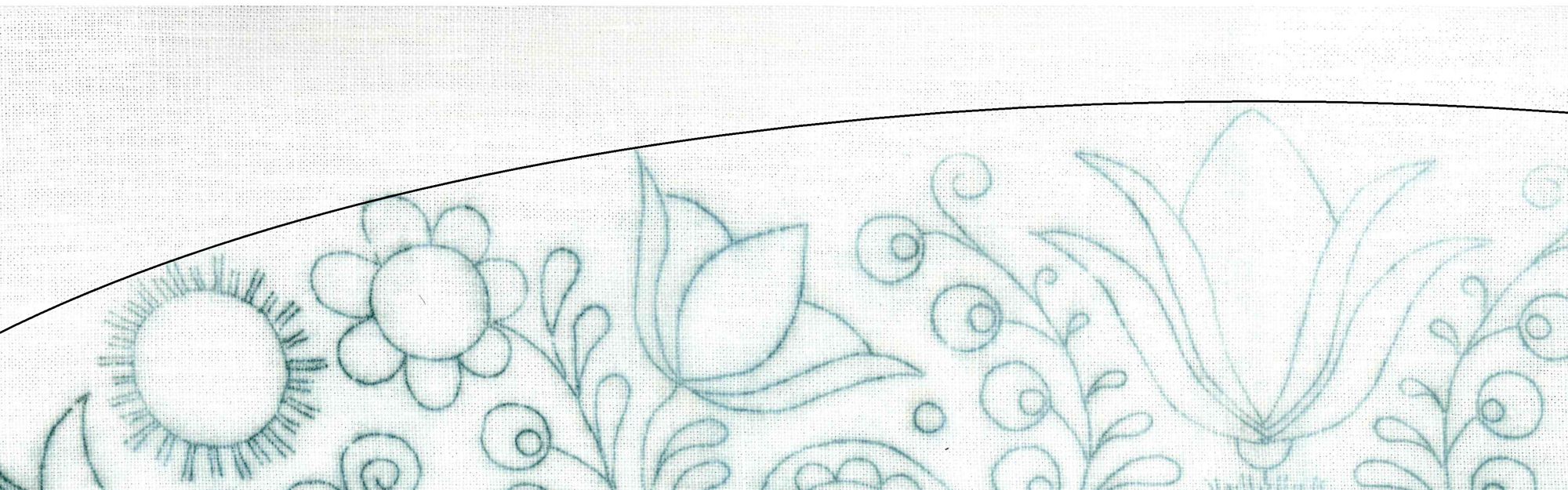
Of course not all design elements have to touch the edges of the basic shape, but the established design has to match the basic shape – as the picture of a section of a design shows below.
Bild_7_SK 6_1
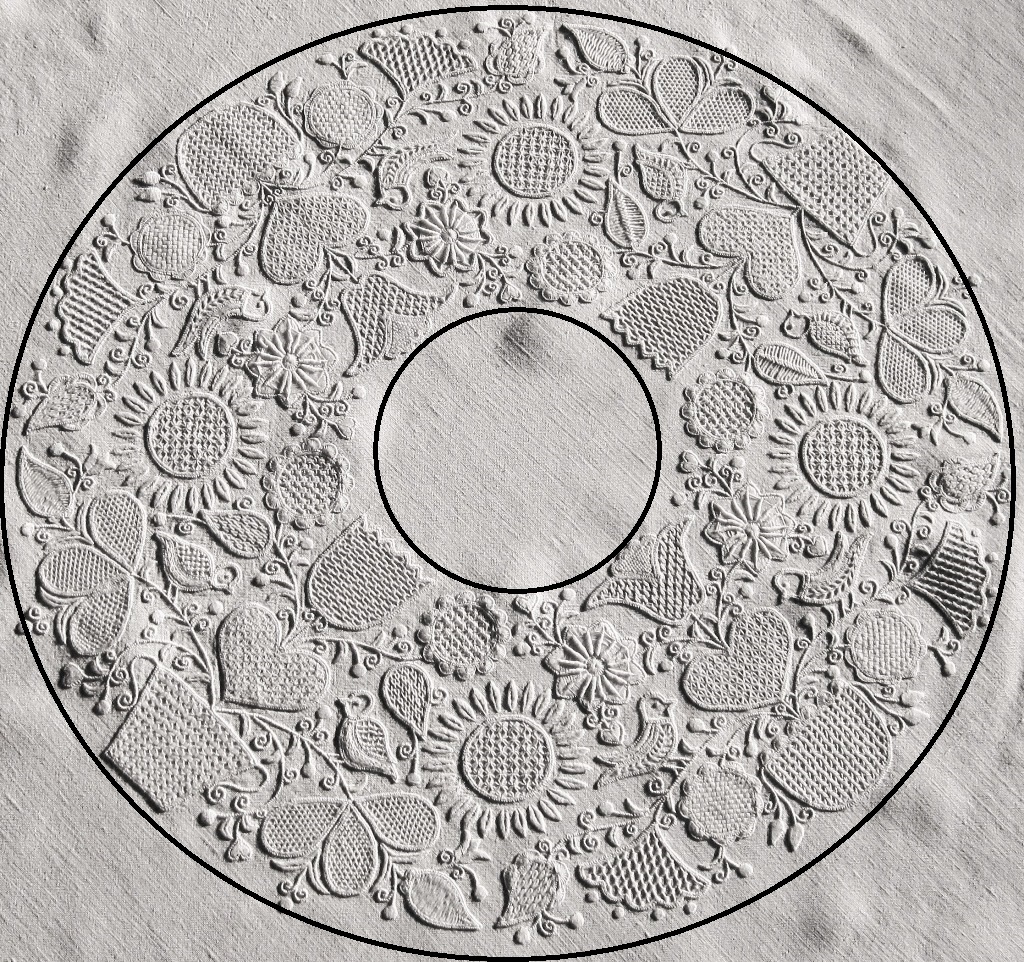
Which shape size, proximity of design elements, filling of open areas – all these are a matter of personal taste and preference. For clarification I present two very different wreath designs of approximately the same size.
Bild_8_SK 6_1
Alexandra Thielmann used for her design (picture above) relatively small and cheerful motifs and filled the open areas with many curved stems with many feathery leaves. The effect is full, but light and airy.
Bild_9_SK 6_1
Herta Schneider used for her design (picture above) more classical shapes and placed them much closer together. She filled the open areas between with connecting stems, many tendrils, some leaves and small flowers.
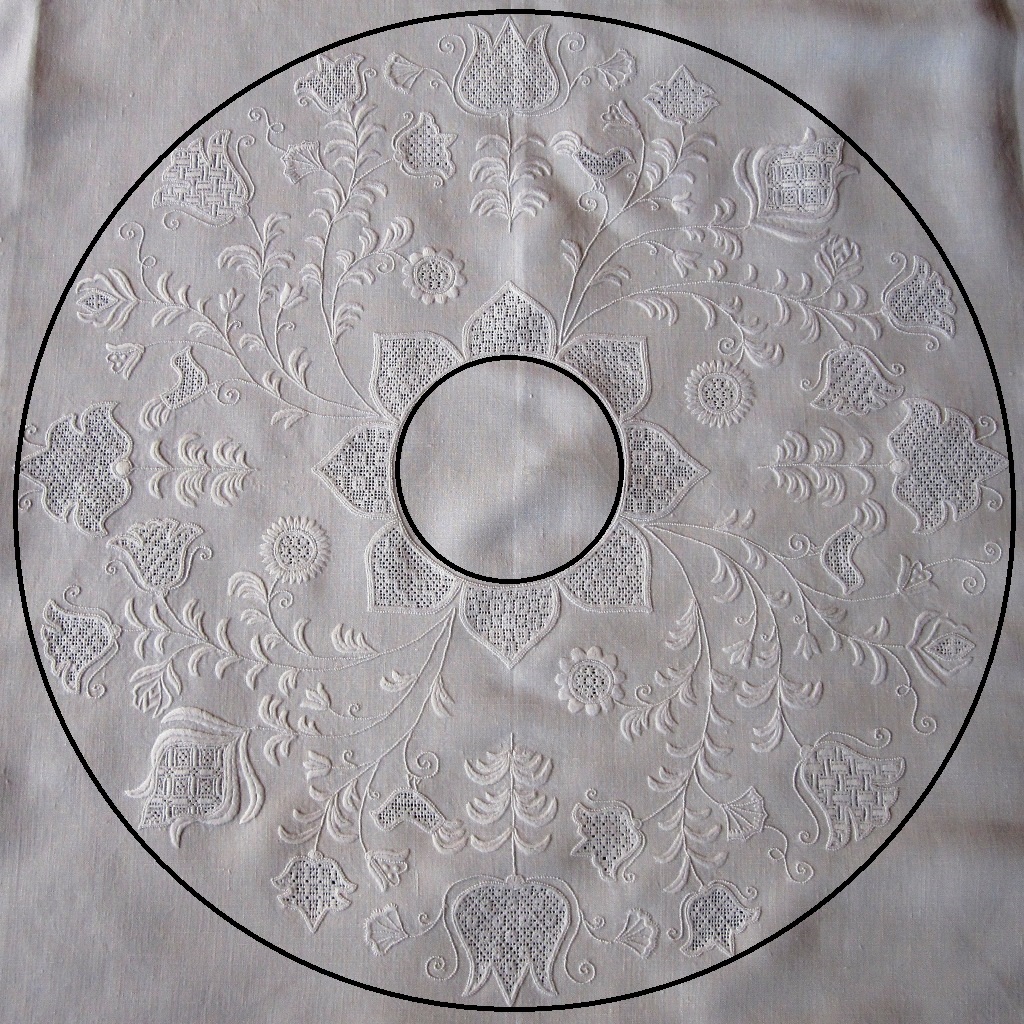
To see more examples of designs, please visit my page “Variety” and look carefully to the pictures paying attention to the sizes of the motifs, density of the arrangement and the filling of the spaces between design elements. More design examples can be found in the header of my website; they change automatically by moving to another page. And, of course, one can see a huge selection of excellent design examples in my Exhibition Catalogue 2011“The Art of Schwalm Whitework”.