Schwalm Designs (2) – Scallops (1)

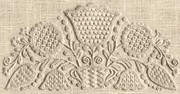
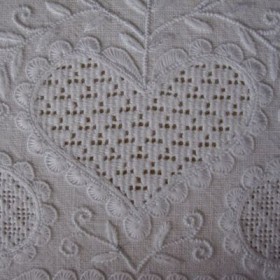
The simple motifs are often enhanced with embellishment. So, a circle is seldom seen unadorned, and hearts are usually decorated.
The customary form of decorating simple Schwalm motifs is to outline the shapes with scallops; they look nice and they are easy to embroider.
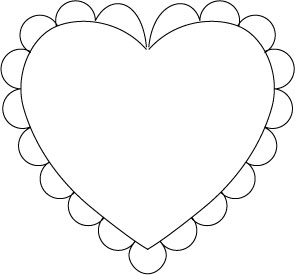
Bogenverzierung | scallop design 01
The scallops are placed close together.
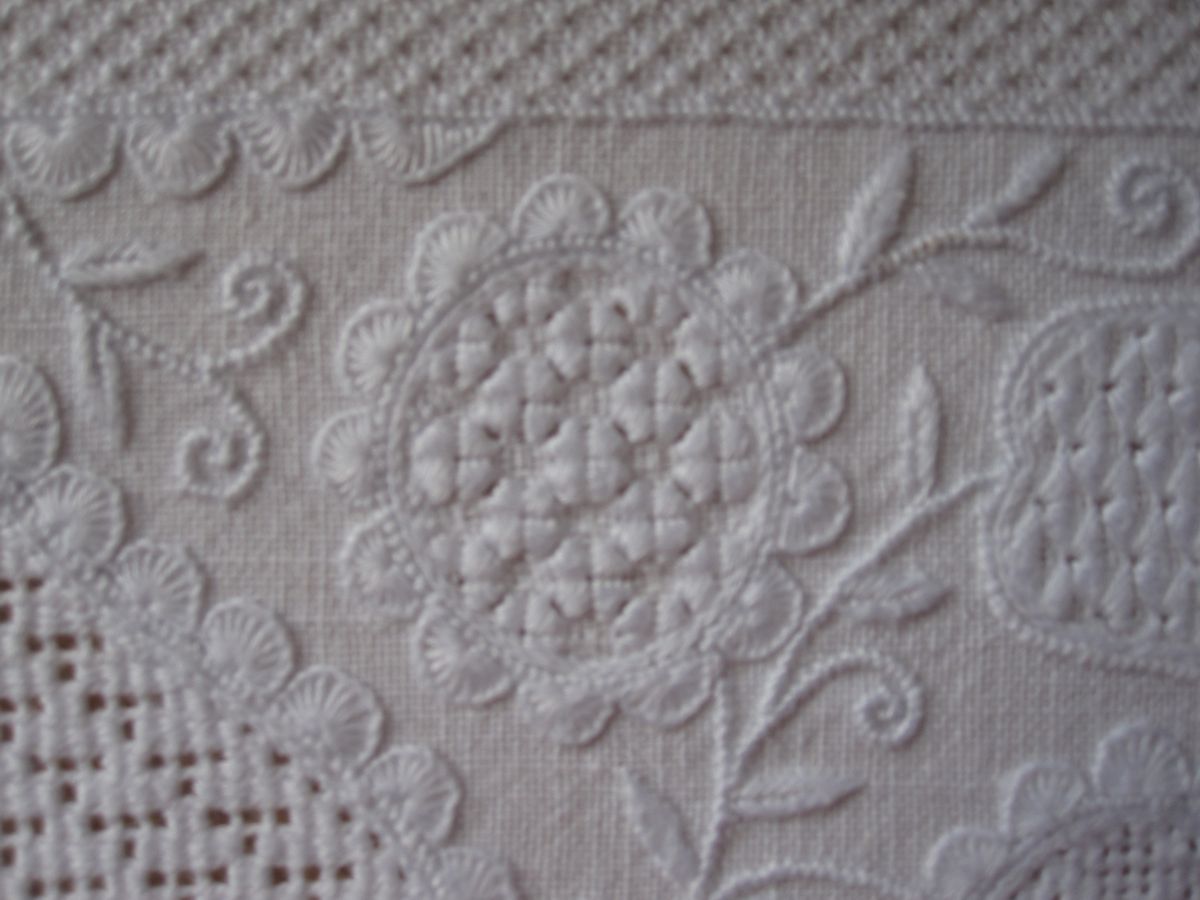
Circle outlined with uniform and evenly distributed half-eyelet scallops. The thread weight is correct, and the stitches have been worked with the appropriate density.

Circle outlined with uniform and evenly distributed half-eyelet scallops. The thread weight is correct, and the stitches have been worked with the appropriate density.
Circles are outlined with scallops of the same size, evenly distributed around the edge of the circle.
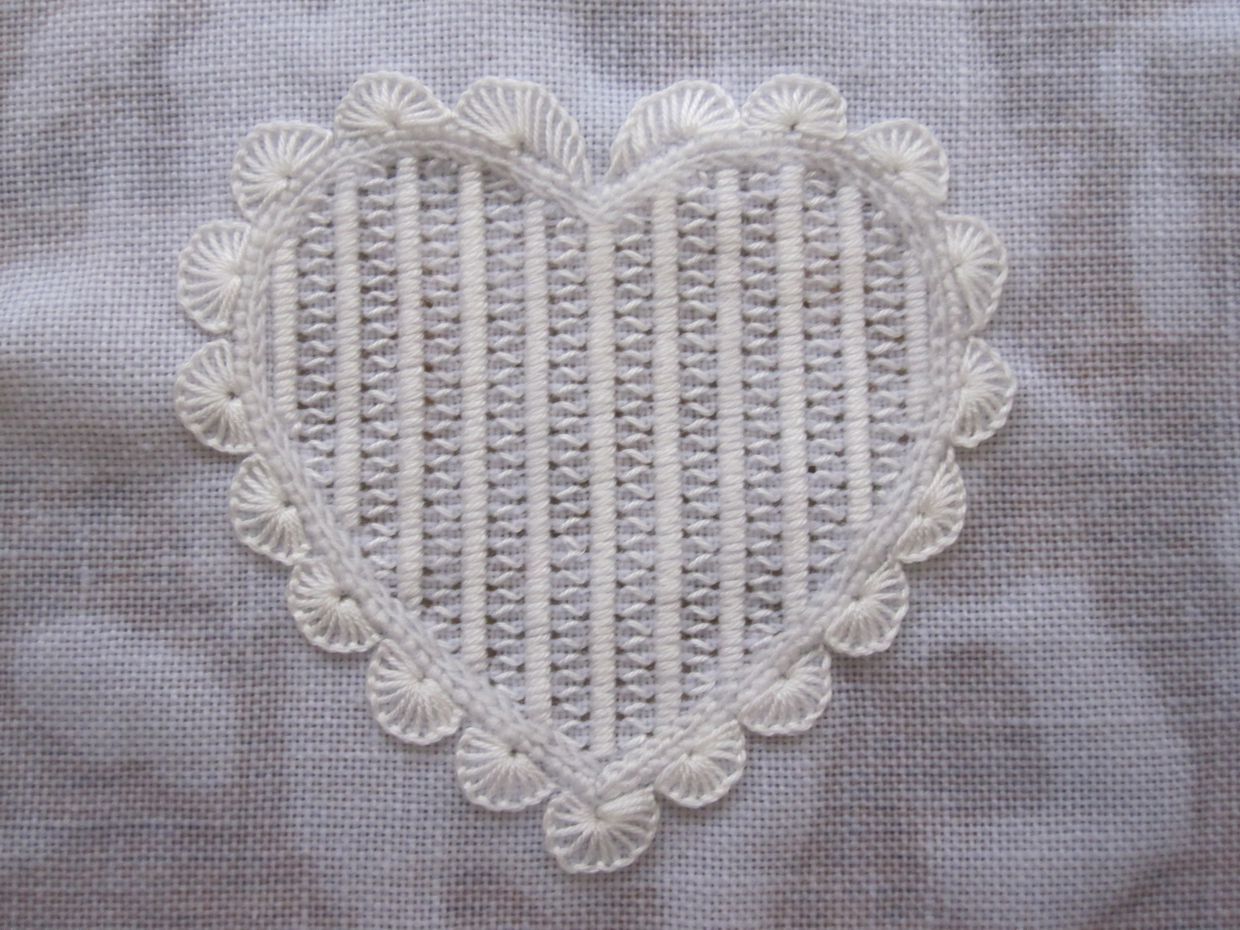
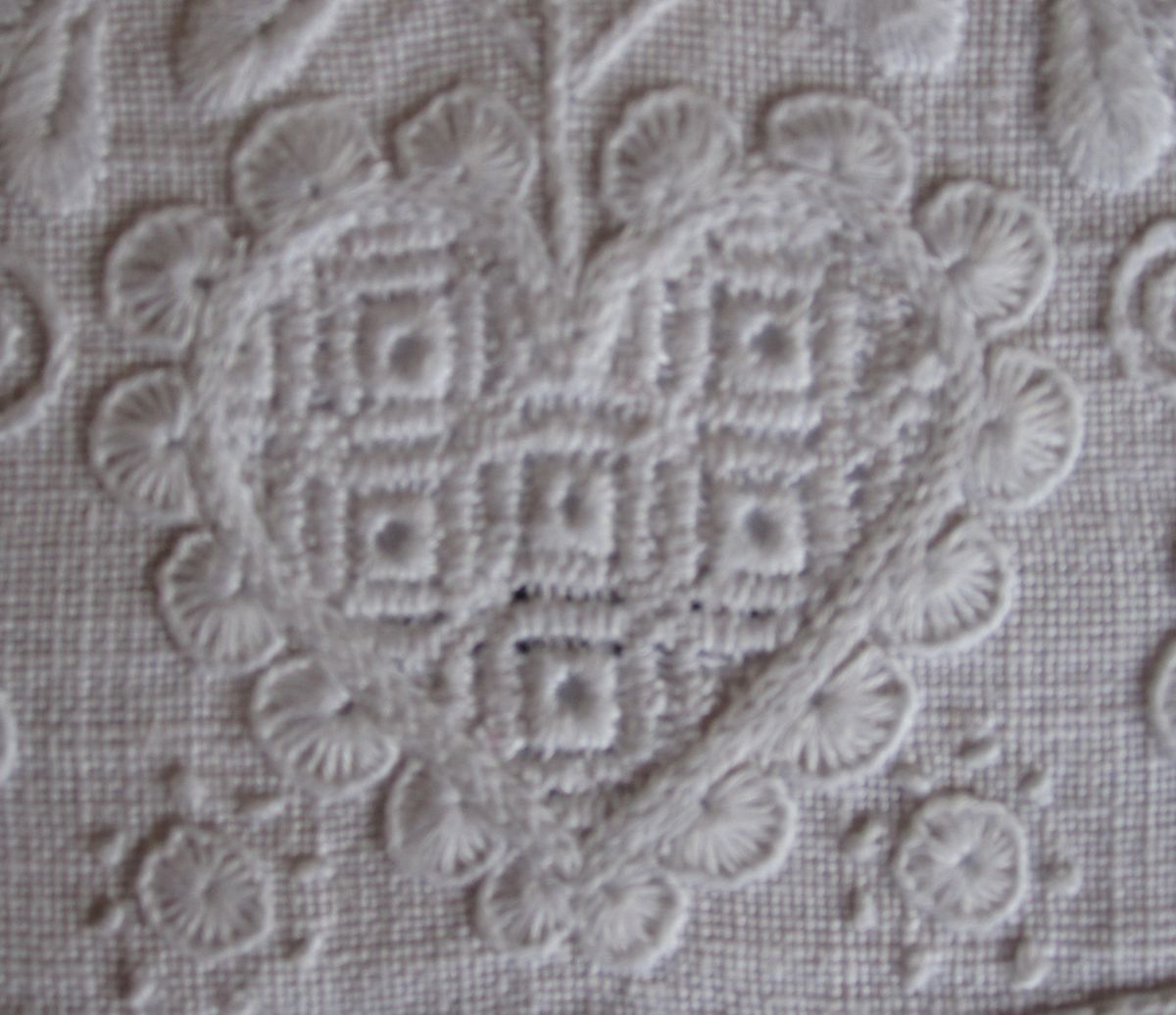
Heart outlined, except for the bottom and top center, with uniform and evenly distributed half-eyelet scallops. The thread weight is correct, and the stitches have been worked with the appropriate density.

Heart outlined, except for the bottom and top center, with uniform and evenly distributed half-eyelet scallops. The thread weight is correct, and the stitches have been worked with the appropriate density.

Also, hearts are outlined with such scallops. The scallop at the bottom of the heart should be drawn somewhat longer making it look almost teardrop shaped. It is best to start the line drawing here (at the bottom of the heart) and to work to the top in even steps on the right and on the left side of the heart. Meeting at top of the heart, either the scallop spacing needs to be adjusted or they are slanted a little bit.
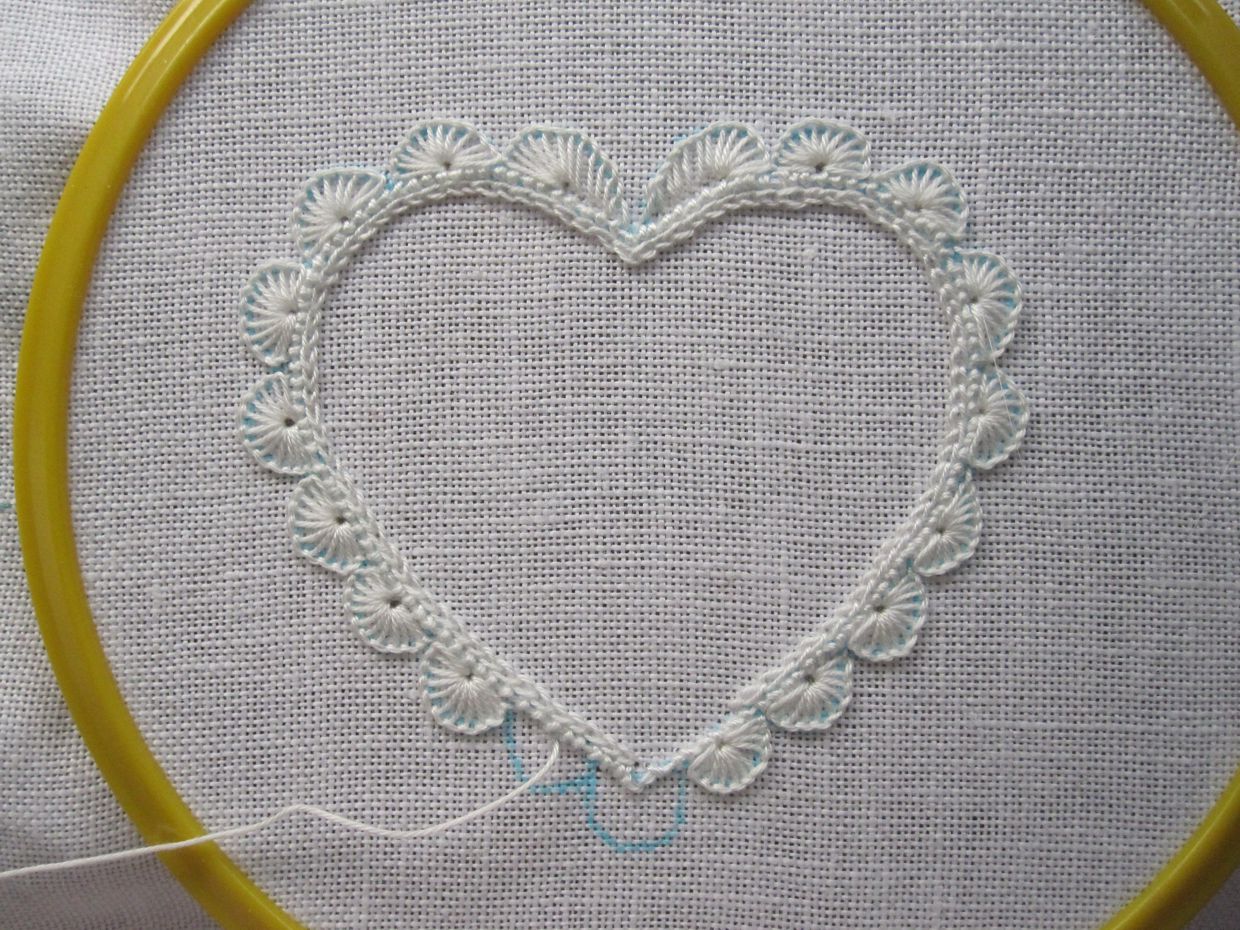
Heart outlined with half-eyelet scallops. The thread weight is correct with appropriately dense stitches. Some of the scallops should be closer together and the bottom point should have only one scallop.
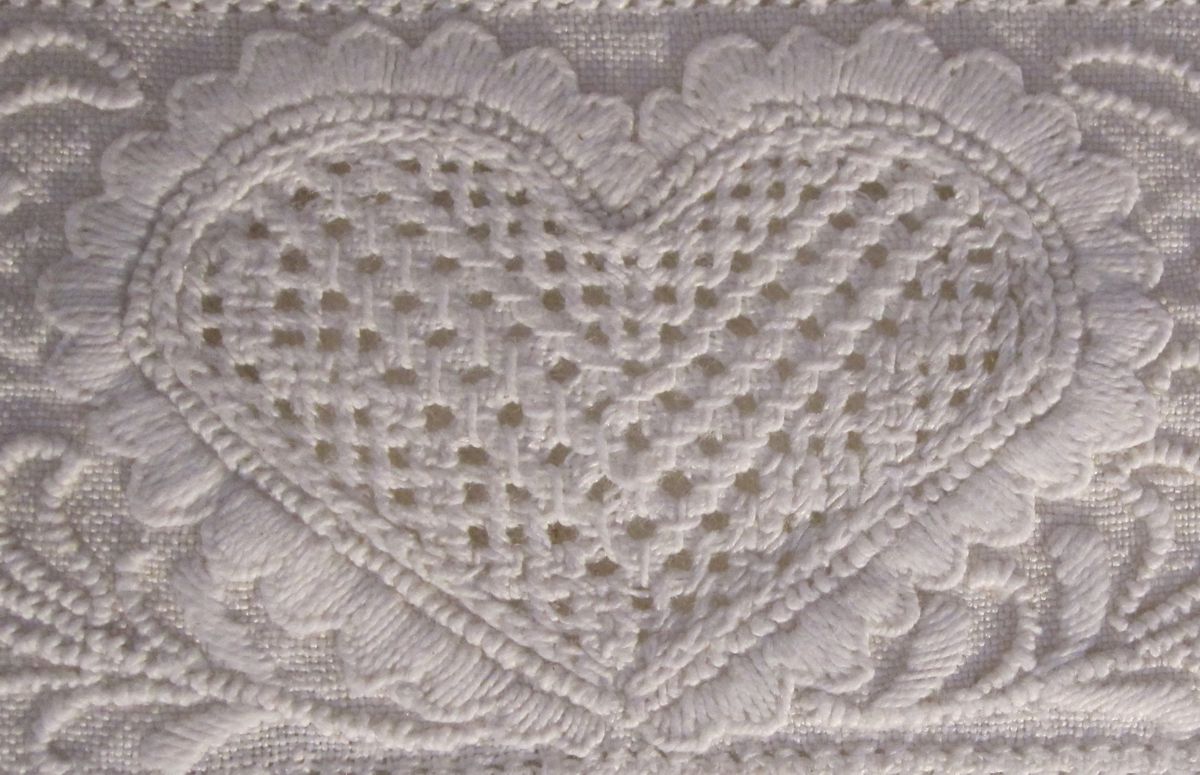
Heart outlined with half-eyelet scallops. The thread weight is correct with appropriately dense stitches. Some of the scallops should be closer together and the bottom point should have only one scallop.

It does not look very elegant to have two scallops meet at the lower heart point.
Heart outlined with scallops. The thread weight is correct and the density of the stitches is good. However, the treatment of the scallops at the heart’s lower point is not attractive.
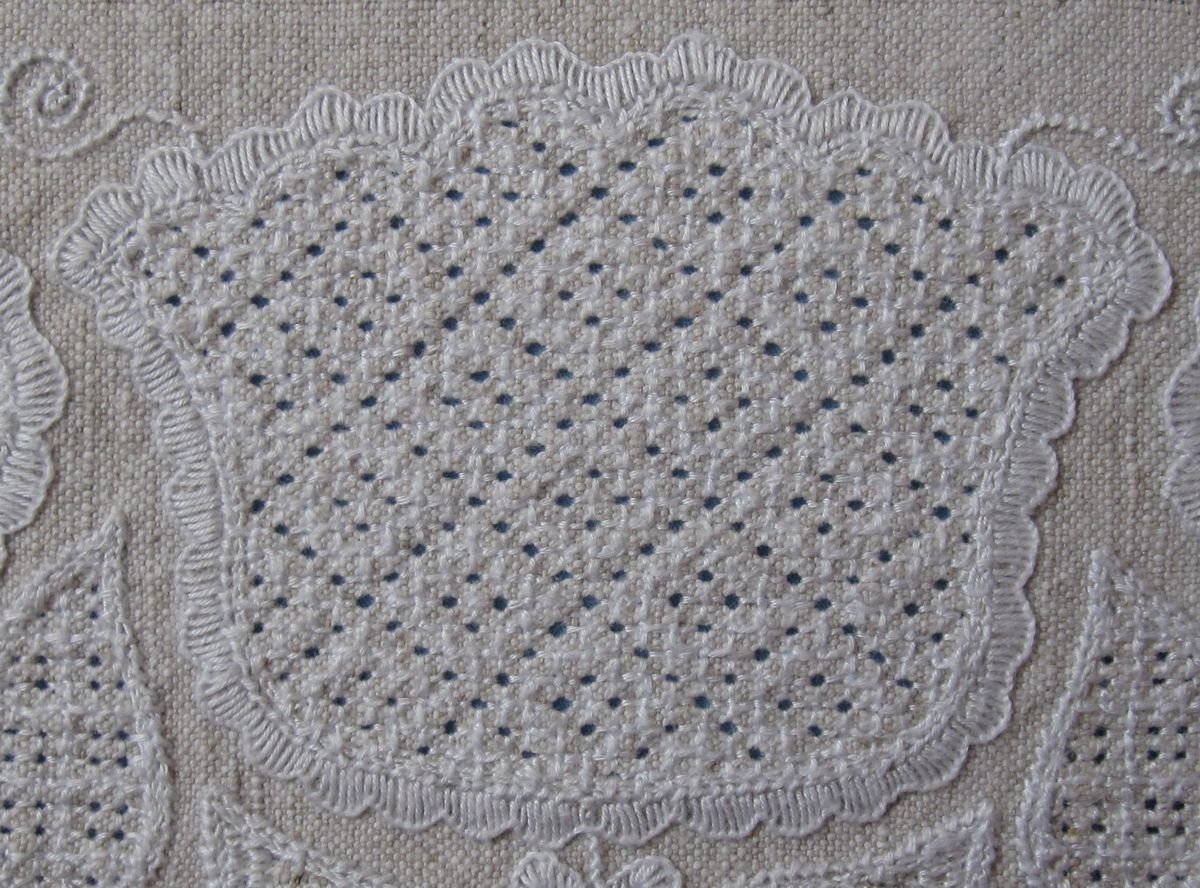
Heart outlined with scallops. The thread weight is correct and the density of the stitches is good. However, the treatment of the scallops at the heart’s lower point is not attractive.

Also, the effect is not harmonious to have scallops becoming smaller at the heart’s lower point.
Tulip outlined with scallops utilizing the correct thread weight. The density of the stitches is not consistent. In this example, one can see that the embroiderer had difficulty distributing the scallops evenly – especially along the curved line at the top of the tulip.
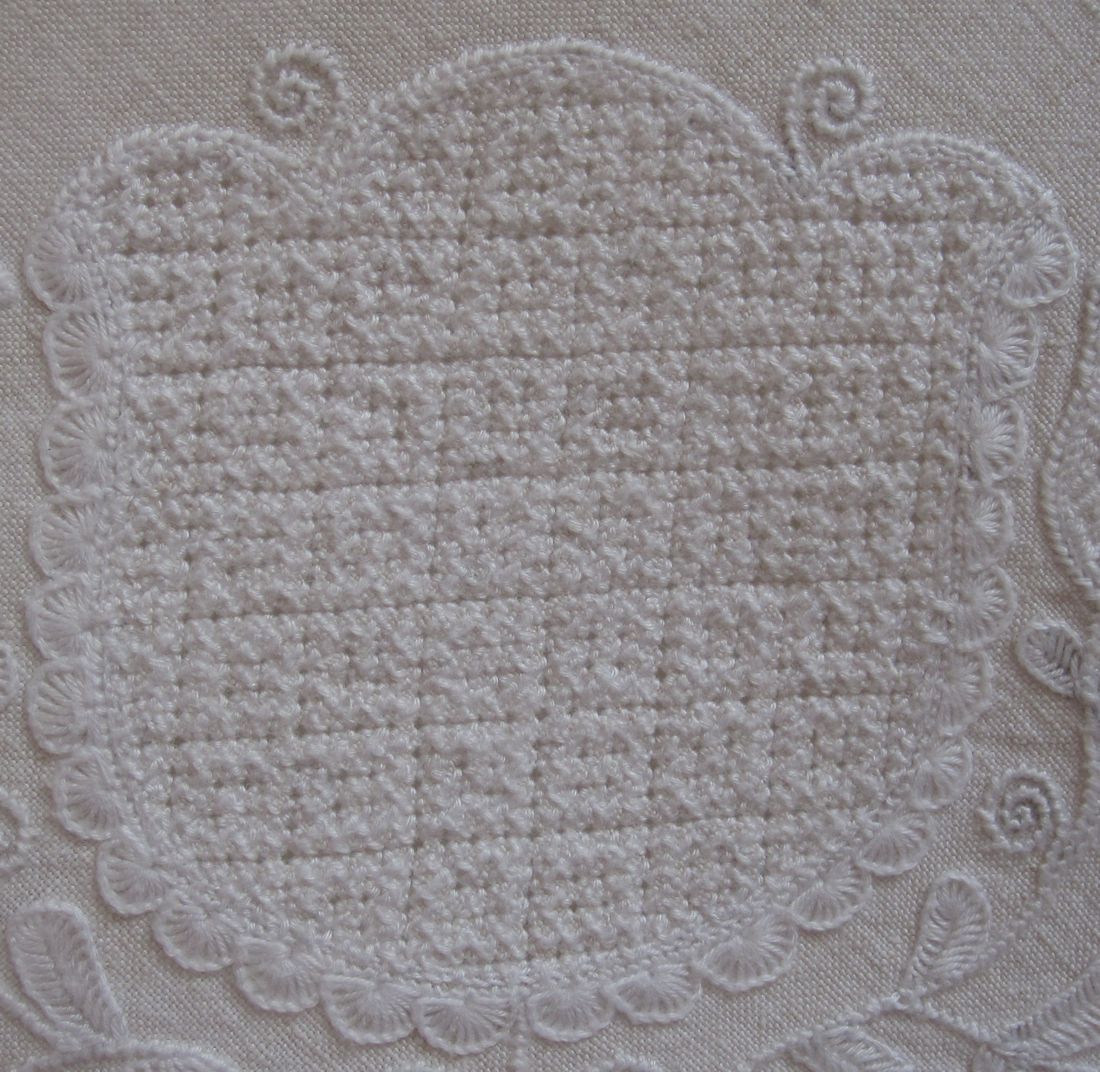
Tulip outlined with scallops utilizing the correct thread weight. The density of the stitches is not consistent. In this example, one can see that the embroiderer had difficulty distributing the scallops evenly – especially along the curved line at the top of the tulip.

Tulips completely outlined with scallops are rare. It is difficult to distribute the scallops evenly –
especially along the curved line at the top of the tulip.
Tulip embellishment with half-eyelet scallops. The thread weight and the density of the stitches are both correct.
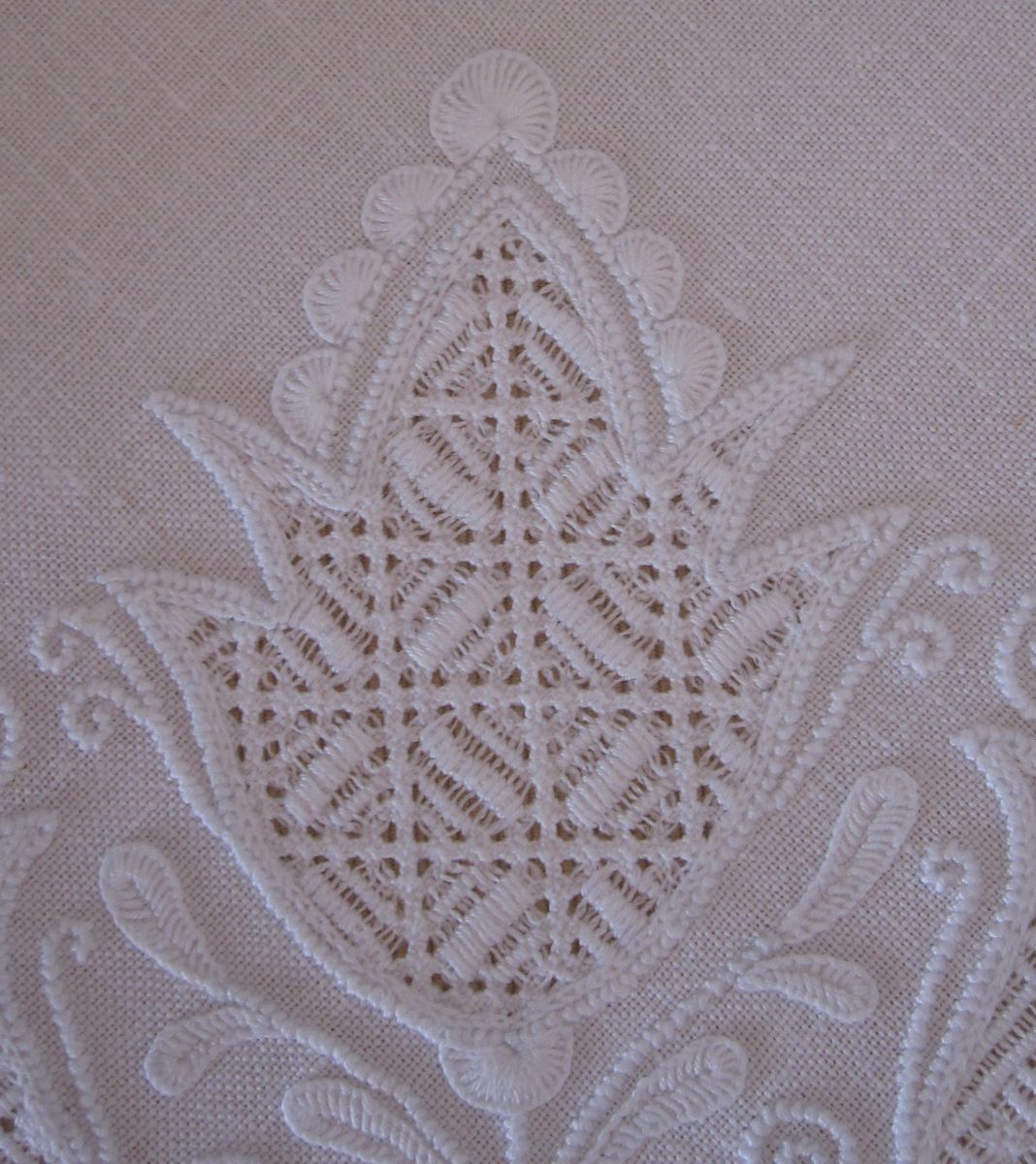
Tulip embellishment with half-eyelet scallops. The thread weight and the density of the stitches are both correct.

On very large tulip motifs a scallop embellishment along the sides and the bottom is often seen.
Tulip embellishment with half-eyelet scallops of differing sizes. The thread weight and the density of the stitches are both correct.
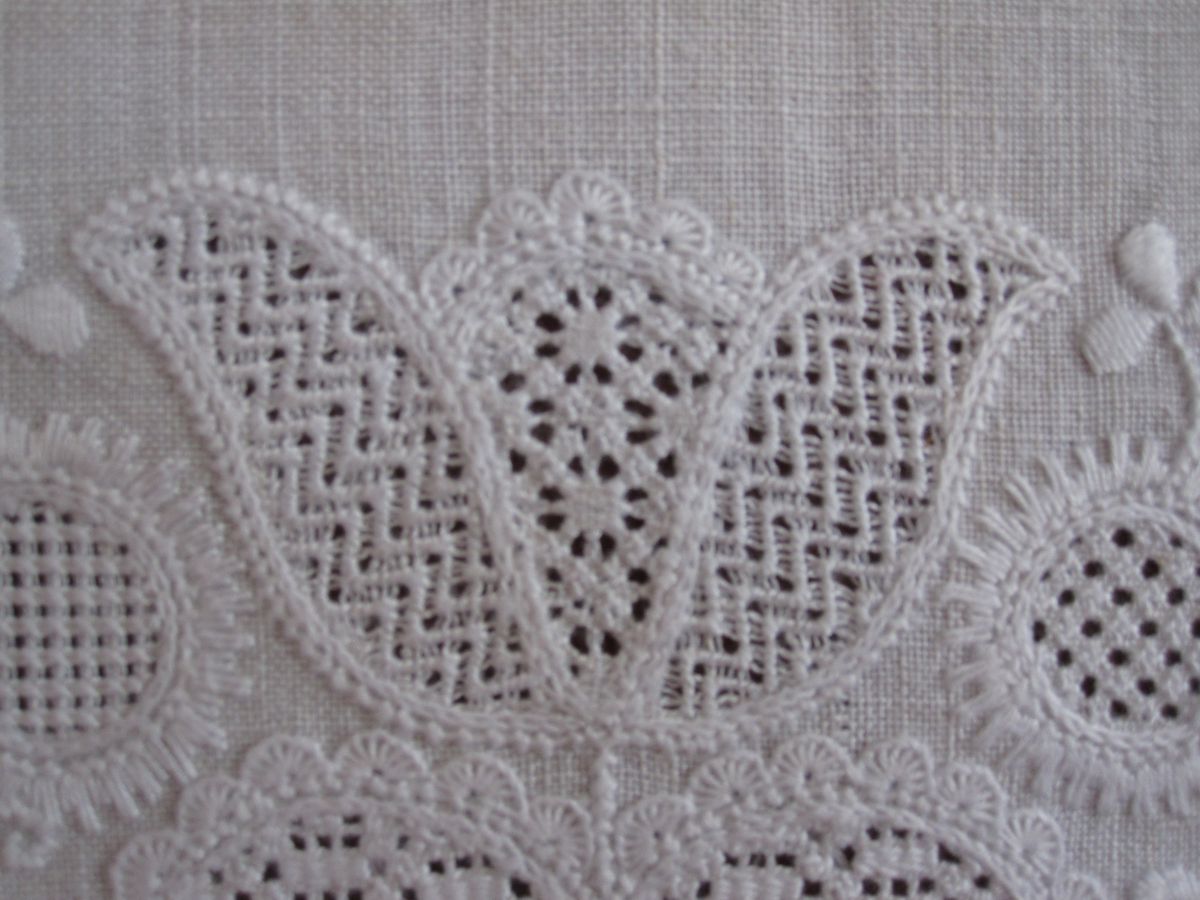
Tulip embellishment with half-eyelet scallops of differing sizes. The thread weight and the density of the stitches are both correct.

Smaller tulip motifs have scallops (if they have them at all) of differing sizes at the top edges,
Tulip embellishment with uniform half-eyelet scallops. The thread weight and the density of the stitches are both correct.
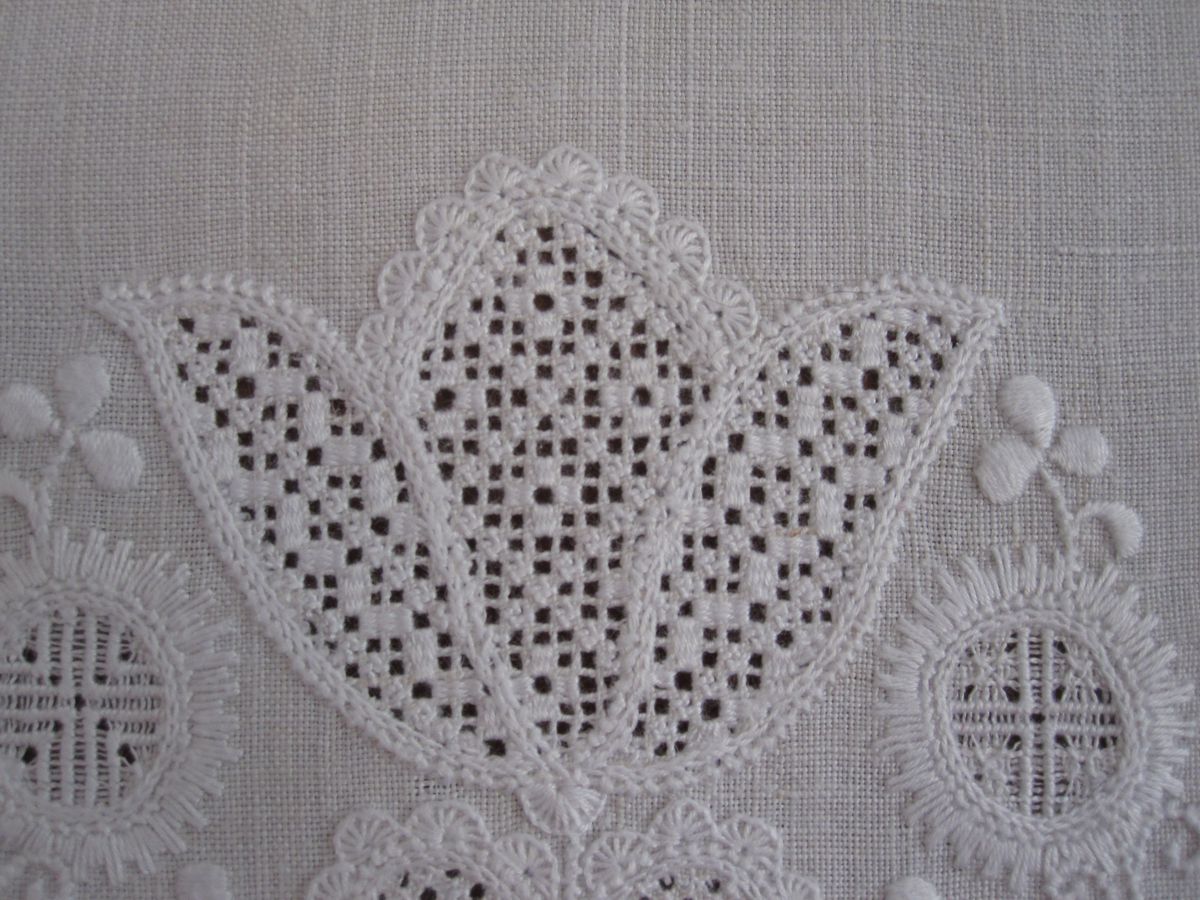
Tulip embellishment with uniform half-eyelet scallops. The thread weight and the density of the stitches are both correct.

and to achieve a more harmonious effect, a single scallop can be placed at the lower center of the tulip.
Tulip embellishment with uniform half-eyelet scallops. The thread weight and the density of the stitches are both correct. However, it would be more aesthetically pleasing to put a single scallop at the center point, rather than having two scallops meet there.
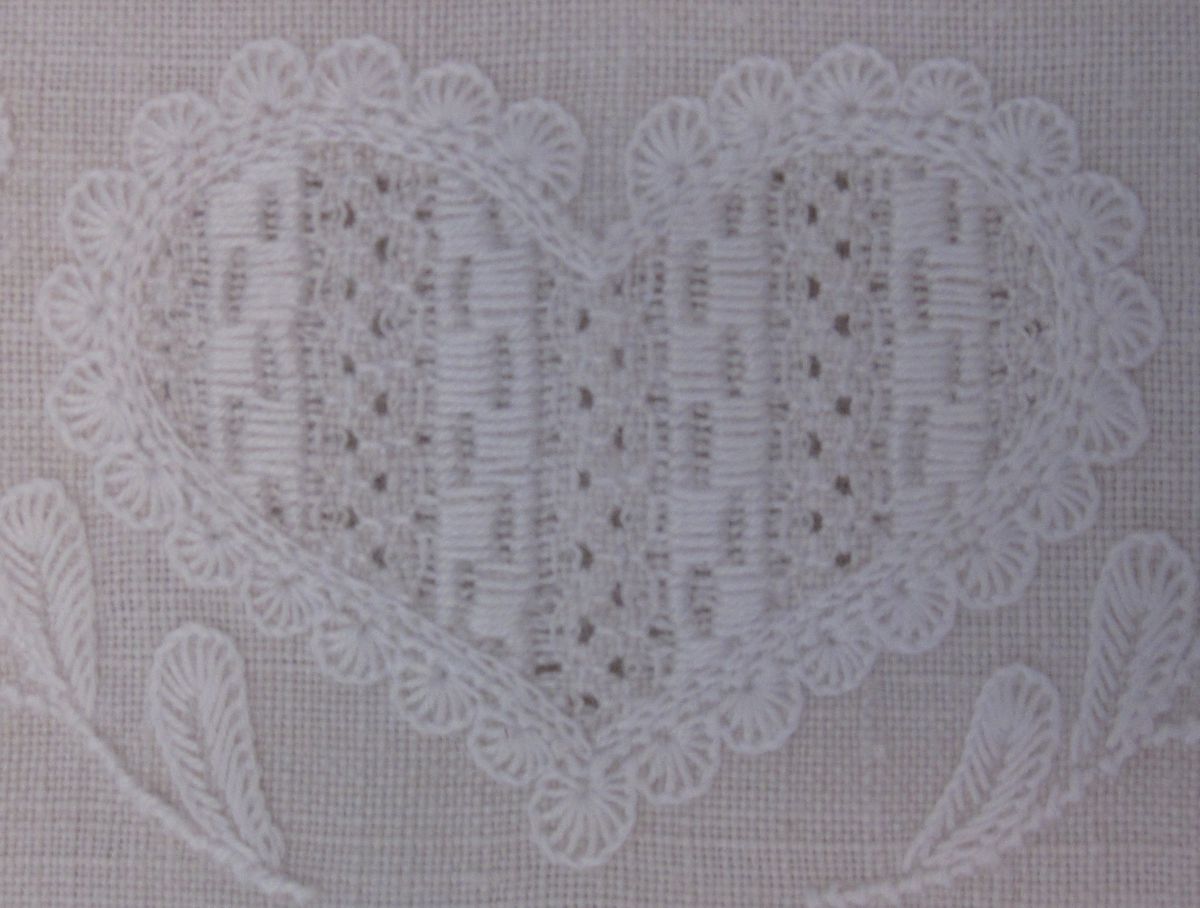
Tulip embellishment with uniform half-eyelet scallops. The thread weight and the density of the stitches are both correct. However, it would be more aesthetically pleasing to put a single scallop at the center point, rather than having two scallops meet there.

The scallops are worked with Blanket stitches, and the half-eyelet scallop is preferred. Blanket stitch half-eyelet scallops ease the attractive finish.
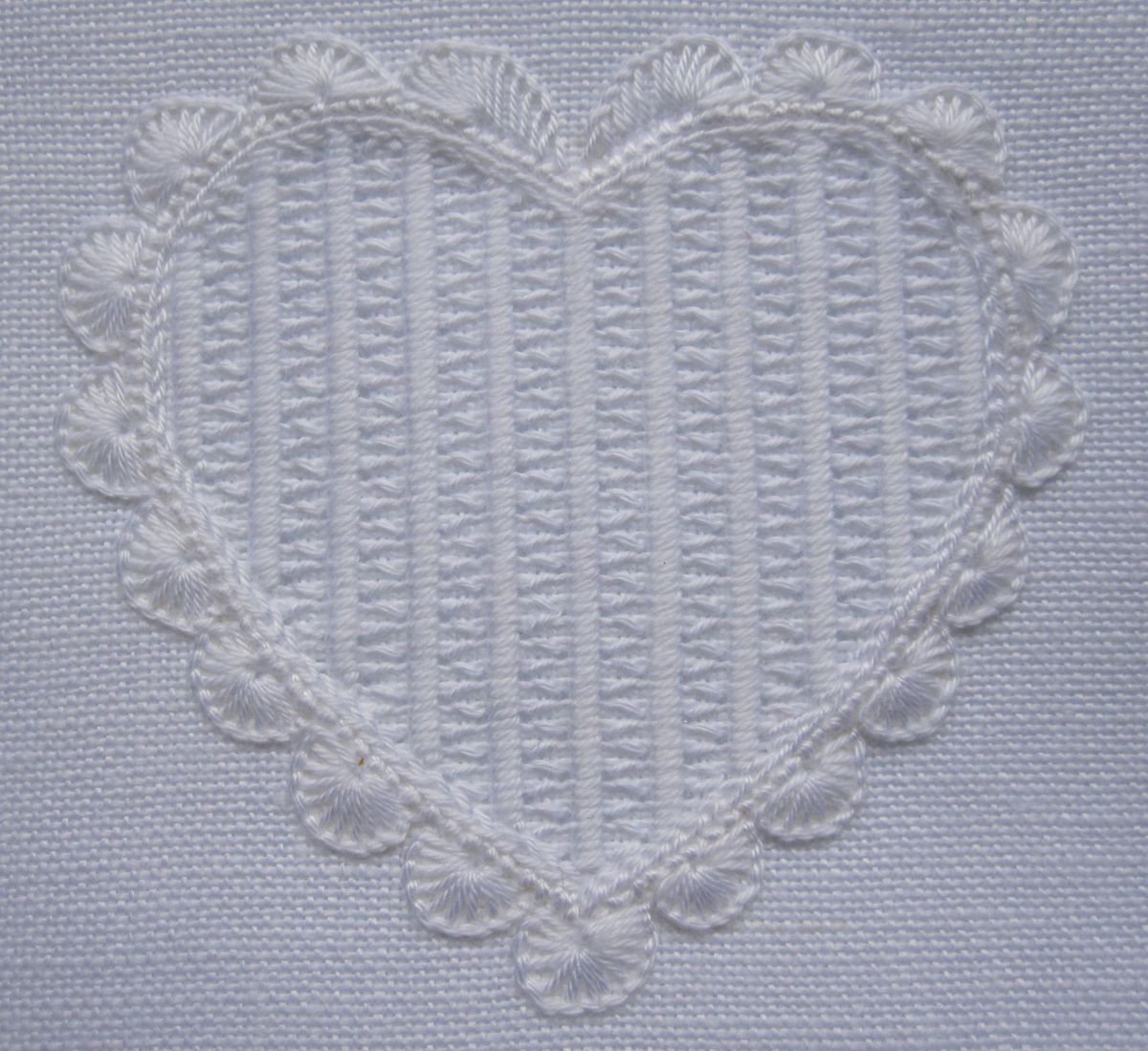
Heart outlined, except for the bottom and top center, with uniform and evenly distributed half-eyelet scallops. The thread weight is correct, but the density is not. The scallops should have more stitches.

Heart outlined, except for the bottom and top center, with uniform and evenly distributed half-eyelet scallops. The thread weight is correct, but the density is not. The scallops should have more stitches.

The scallops should be easy to stitch, that means they should not be too small, nor too large.
Scallops with a radius of 1 cm are perfect. Of course, the scallops must be in proportion to the motif – smaller motifs need smaller scallops. However, a scallop’s radius should not be smaller than ½ cm.
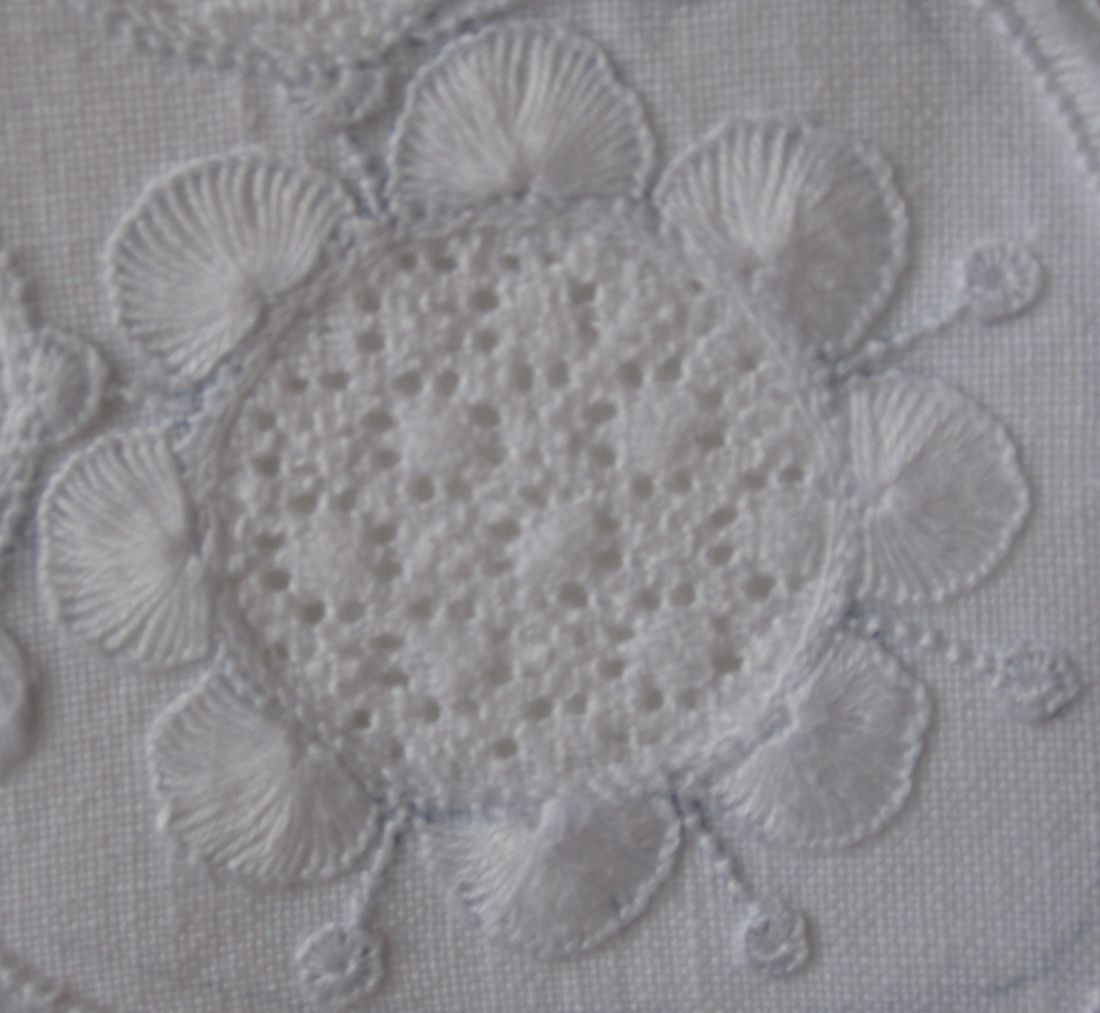
Circle outlined with uniform and evenly distributed half-eyelet scallops. However, they are too large. The thread weight and the density of the stitches are both correct. A larger scallop needs more stitches to become sufficiently covered; it is difficult to get an orderly appearance with so many stitches radiating from the same point.

Circle outlined with uniform and evenly distributed half-eyelet scallops. However, they are too large. The thread weight and the density of the stitches are both correct. A larger scallop needs more stitches to become sufficiently covered; it is difficult to get an orderly appearance with so many stitches radiating from the same point.

Circle outlined with uniform and evenly distributed half-eyelet scallops. The individual scallops are divided and worked with the appropriate thread weight, and the stitches have been worked with the appropriate density. The additional embroidered parts also utilize the correct thread weight.
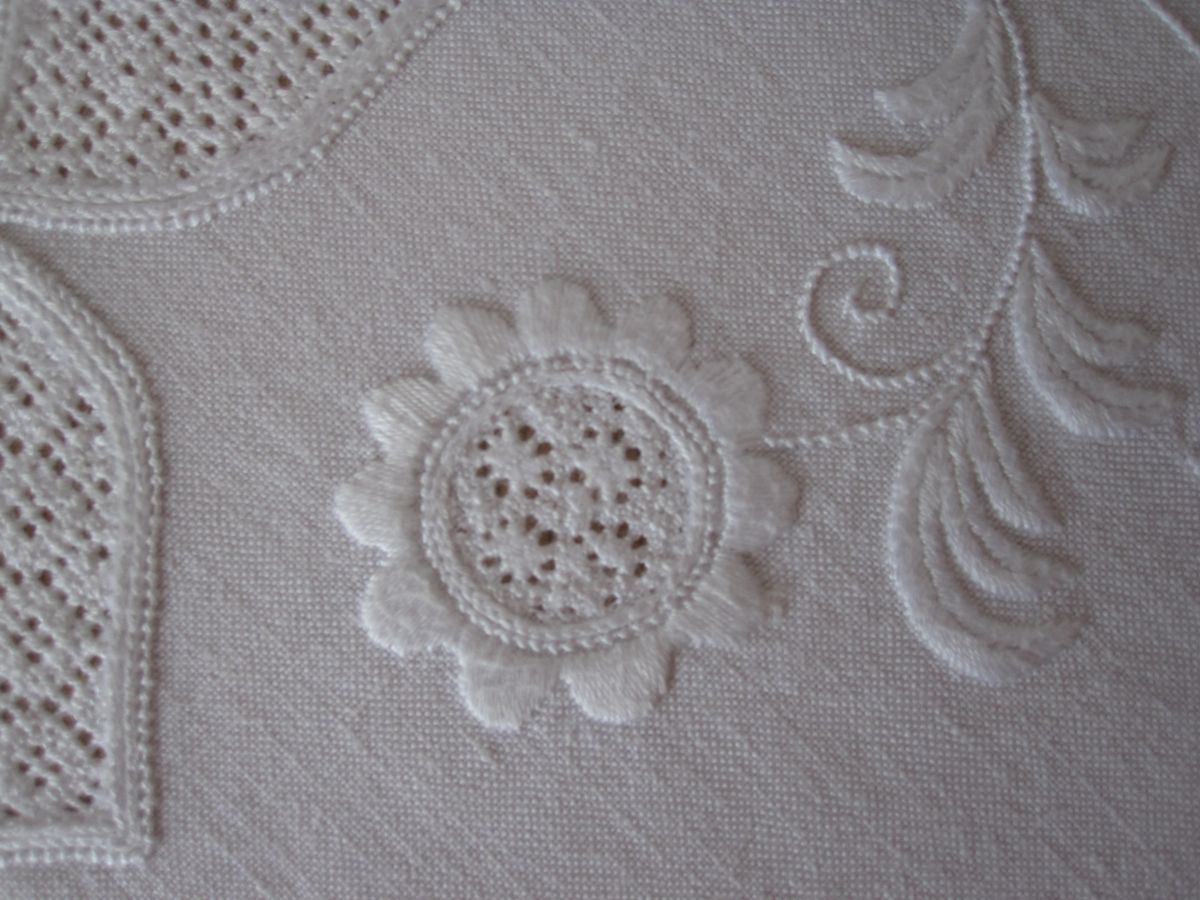
Circle outlined with uniform and evenly distributed half-eyelet scallops. The individual scallops are divided and worked with the appropriate thread weight, and the stitches have been worked with the appropriate density. The additional embroidered parts also utilize the correct thread weight.

Larger scallops can be managed by dividing the individual scallops and embroidering both parts separately.
Circle outlined with uniform and evenly distributed scallops. The scallops have been embroidered using precisely placed Satin stitches.
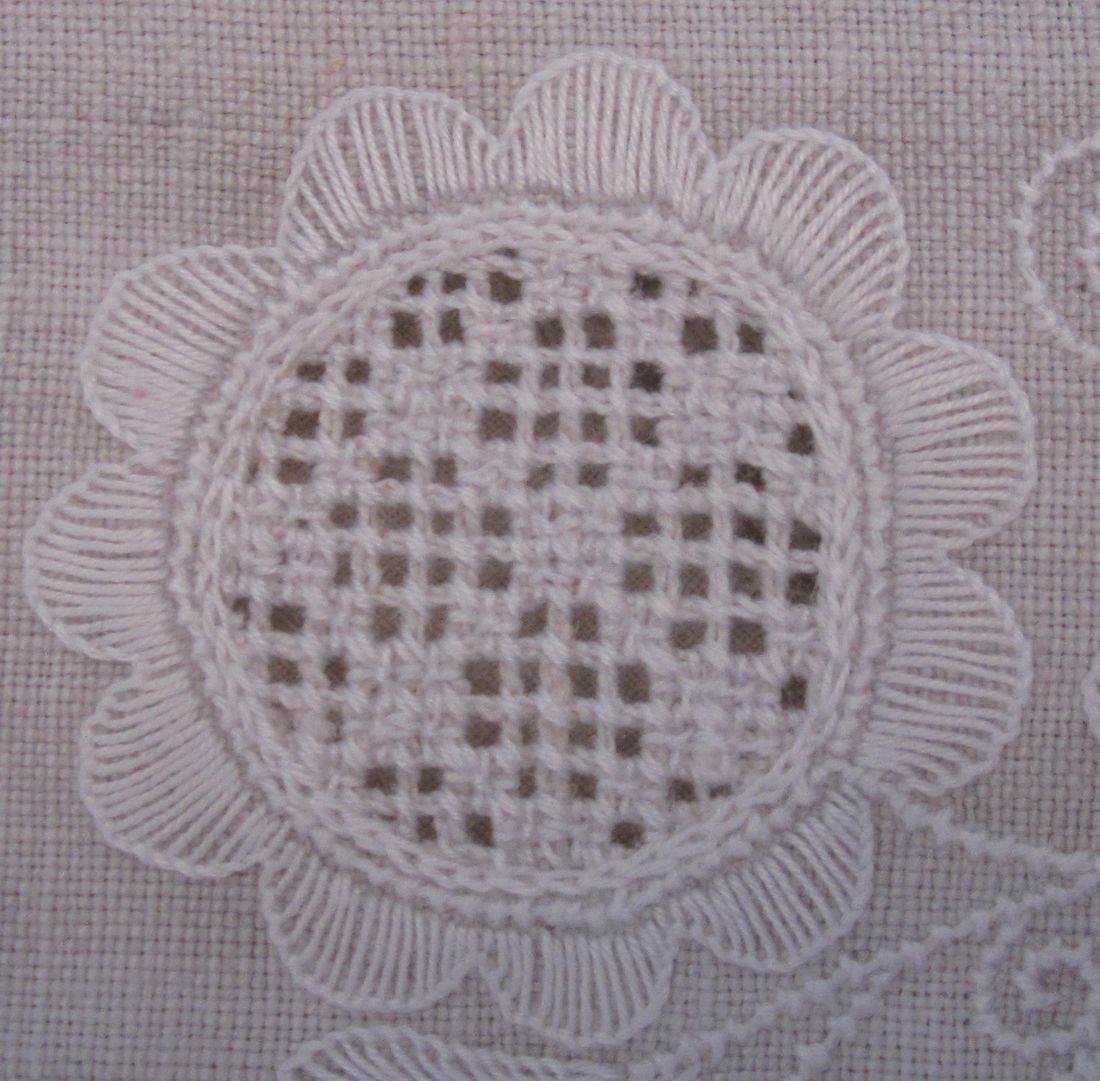
Circle outlined with uniform and evenly distributed scallops. The scallops have been embroidered using precisely placed Satin stitches.

Sometimes scallops are also worked with Satin stitches. This needs much more practice than embroidering with Blanket stitches.
Circle outlined with uniform and evenly distributed scallops. However, the thread is too thin and the stitch density is not correct.
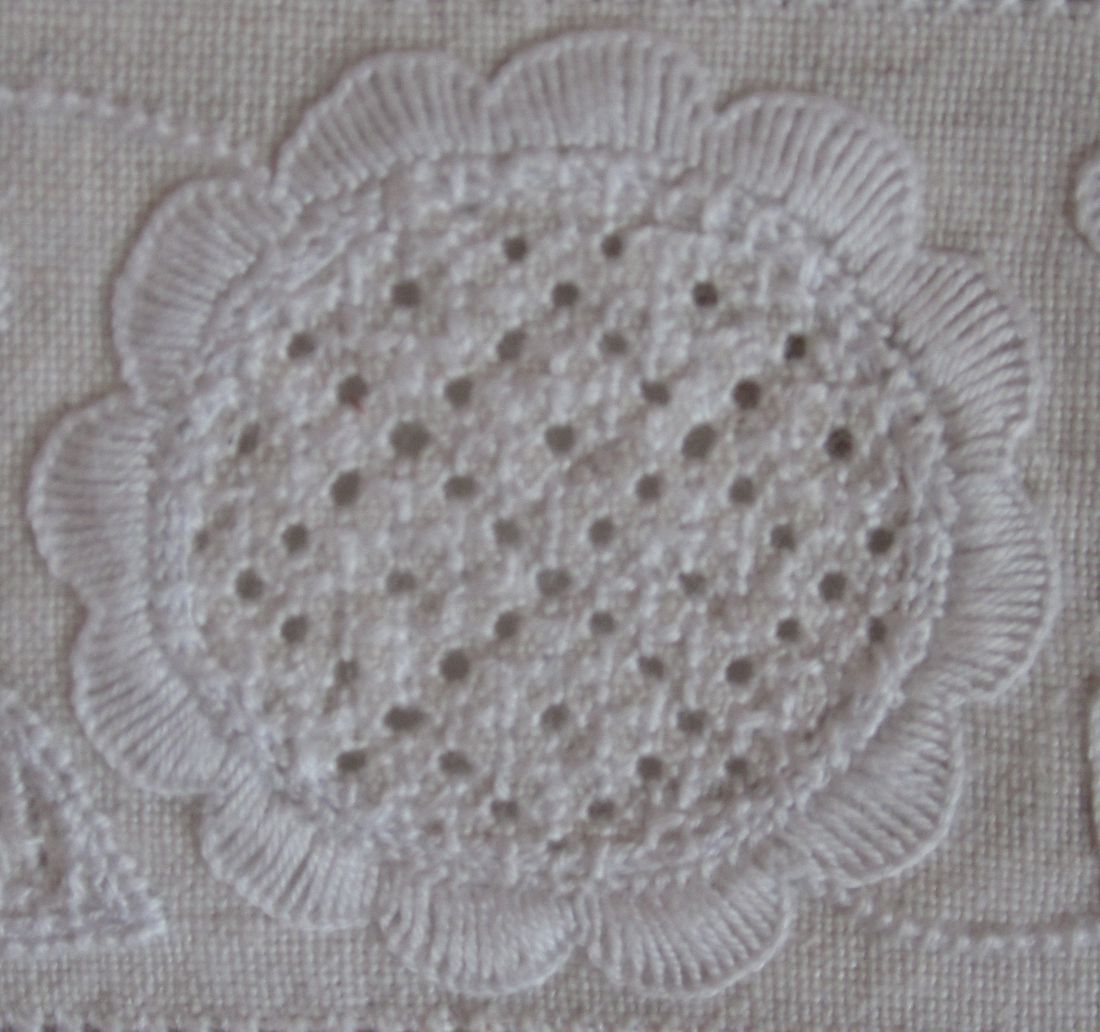
Circle outlined with uniform and evenly distributed scallops. However, the thread is too thin and the stitch density is not correct.

The thread should not be too thin and the stitches should lie densely together.
Circle outlined with fairly uniform and evenly distributed scallops. The thread weight is correct, but the Blanket stitches could be more dense.
Circle outlined with fairly uniform and evenly distributed scallops. The thread weight is correct, but the Blanket stitches could be more dense.
How to create a Schwalm design? (1)

Typical Schwalm designs consist of many different large motifs of simple figures (heart, tulip, basket, circle, etc.) which are bound together by tendrils, small leaves and small flowers.

First, one must create the outlines of the simple figures.
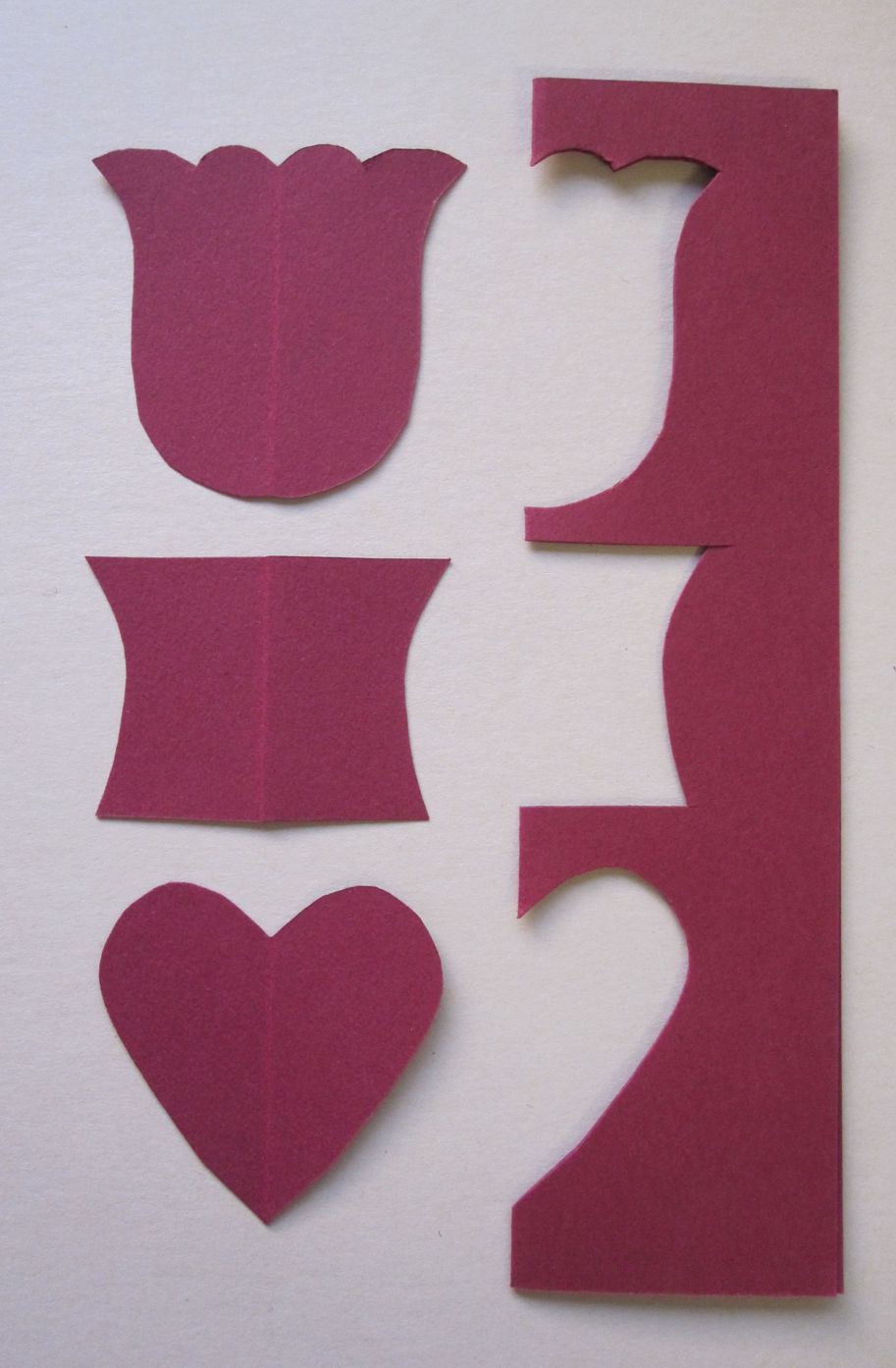
All motifs mirrored on a vertical axis, for example heart and tulip, are created from a fold-cut.

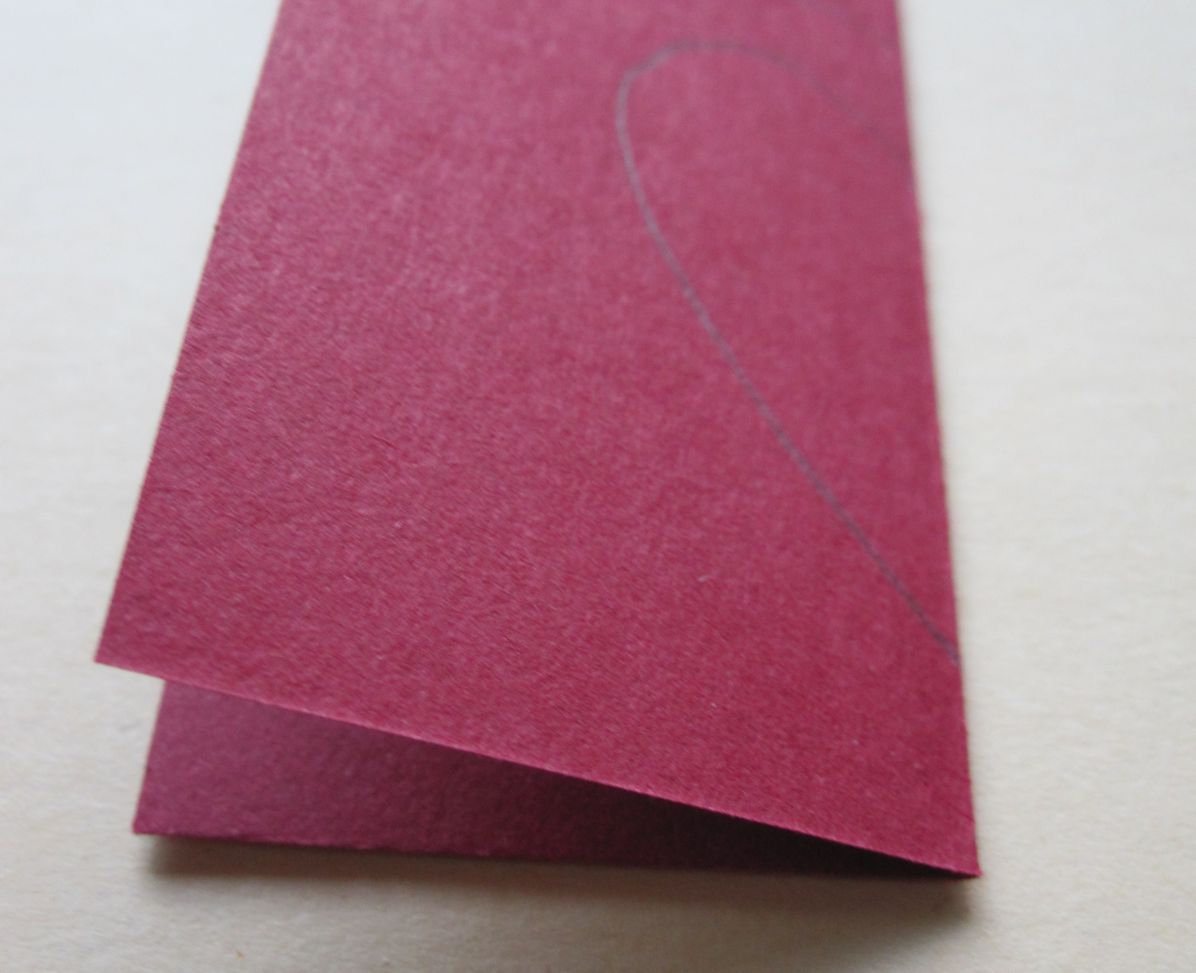
Therefore, a sheet of card stock or paper board is needed. It is folded along its length.
gefalteter Karton | folded paper board
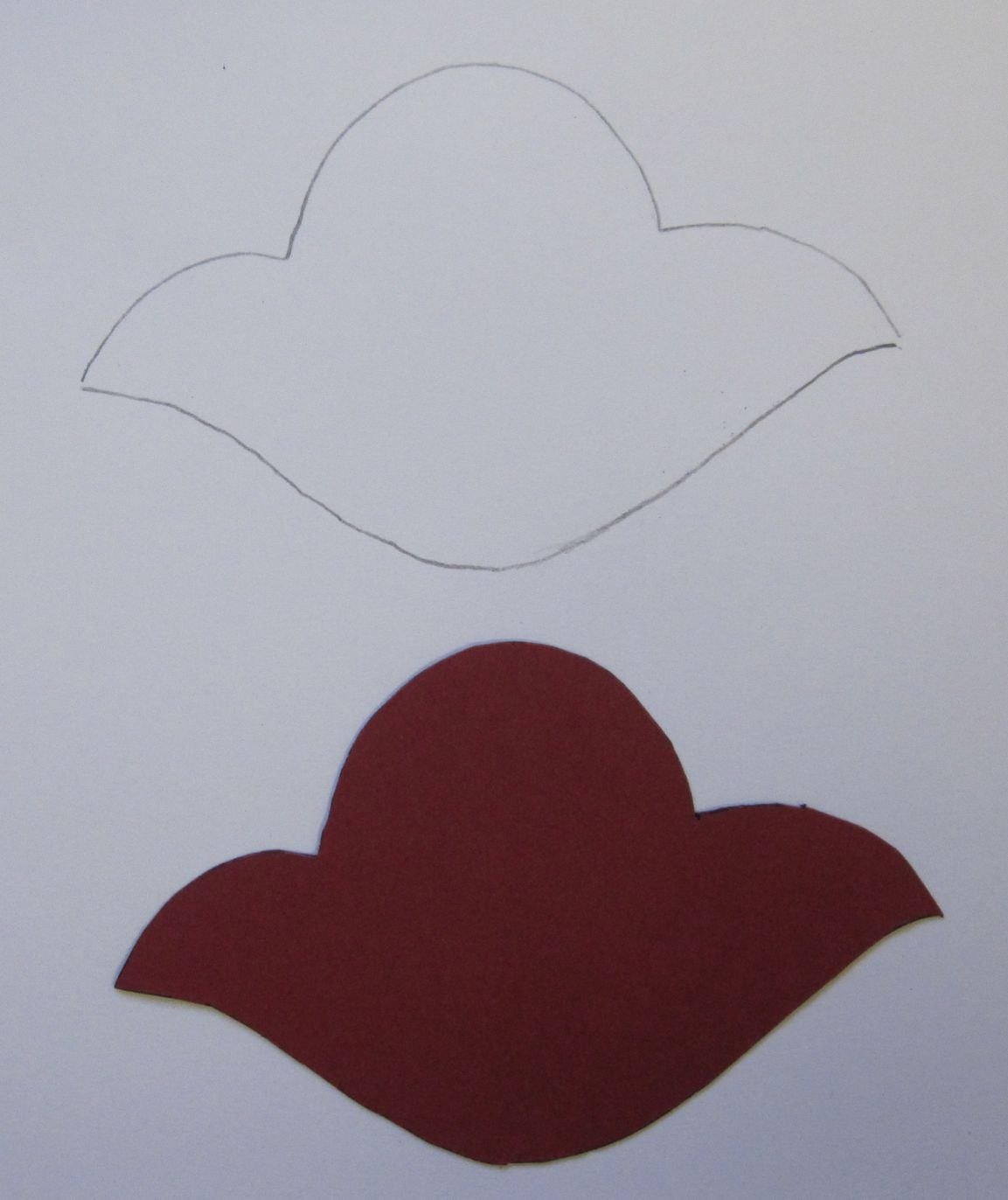
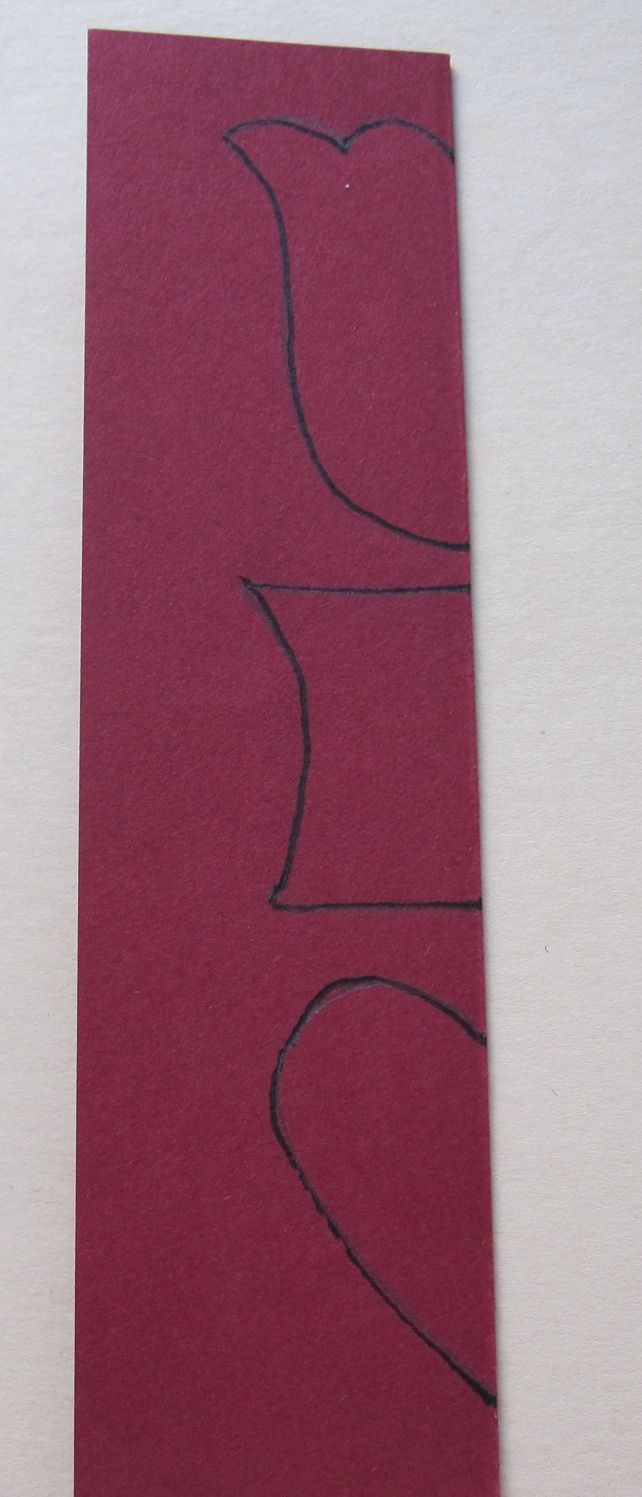
From the fold, half of the desired motif is drawn and then precisely cut out.

aufgezeichnete Motivhälften | drawn motif halfs
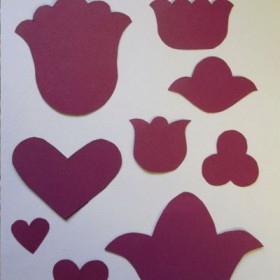
ausgeschnittene Motive | cut motifs

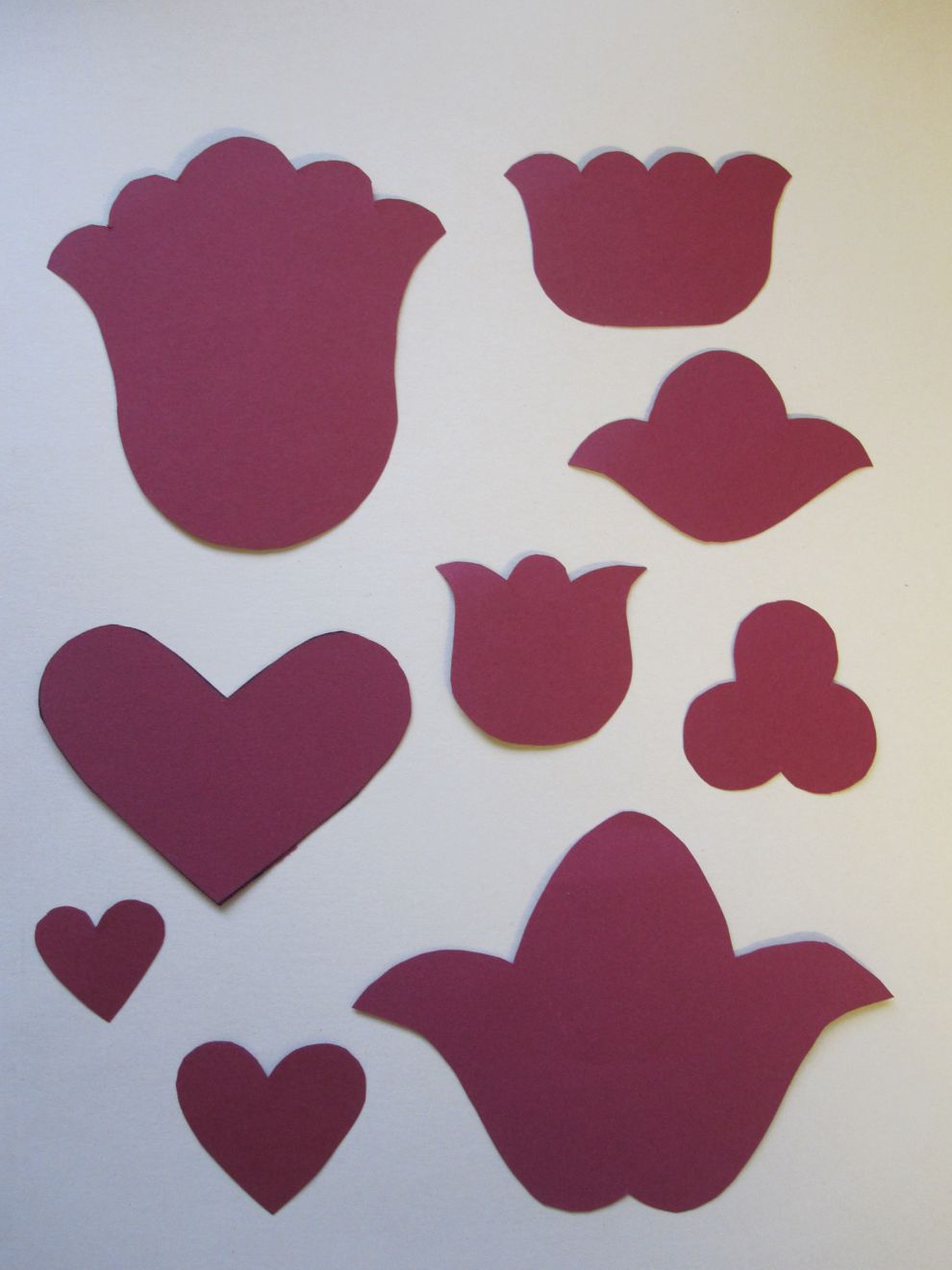
In this way one gets stencils in different shapes and sizes.
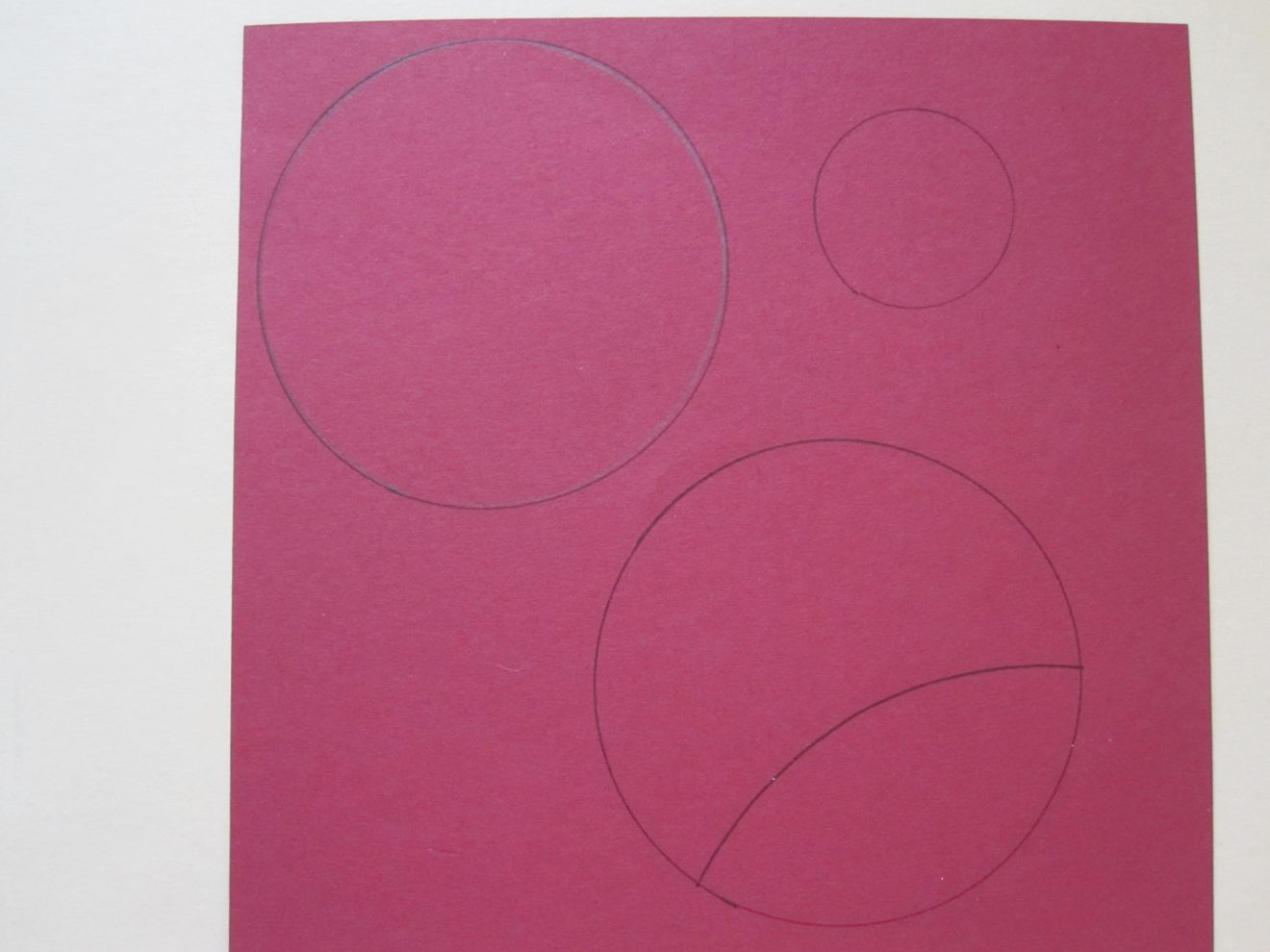
Vielfalt an Formen und Größen | variety of shapesTo get circles or segments of circles, a pair of compasses or simple round items may be used.
Hilfsmittel zum Zeichnen | utilities for drawing
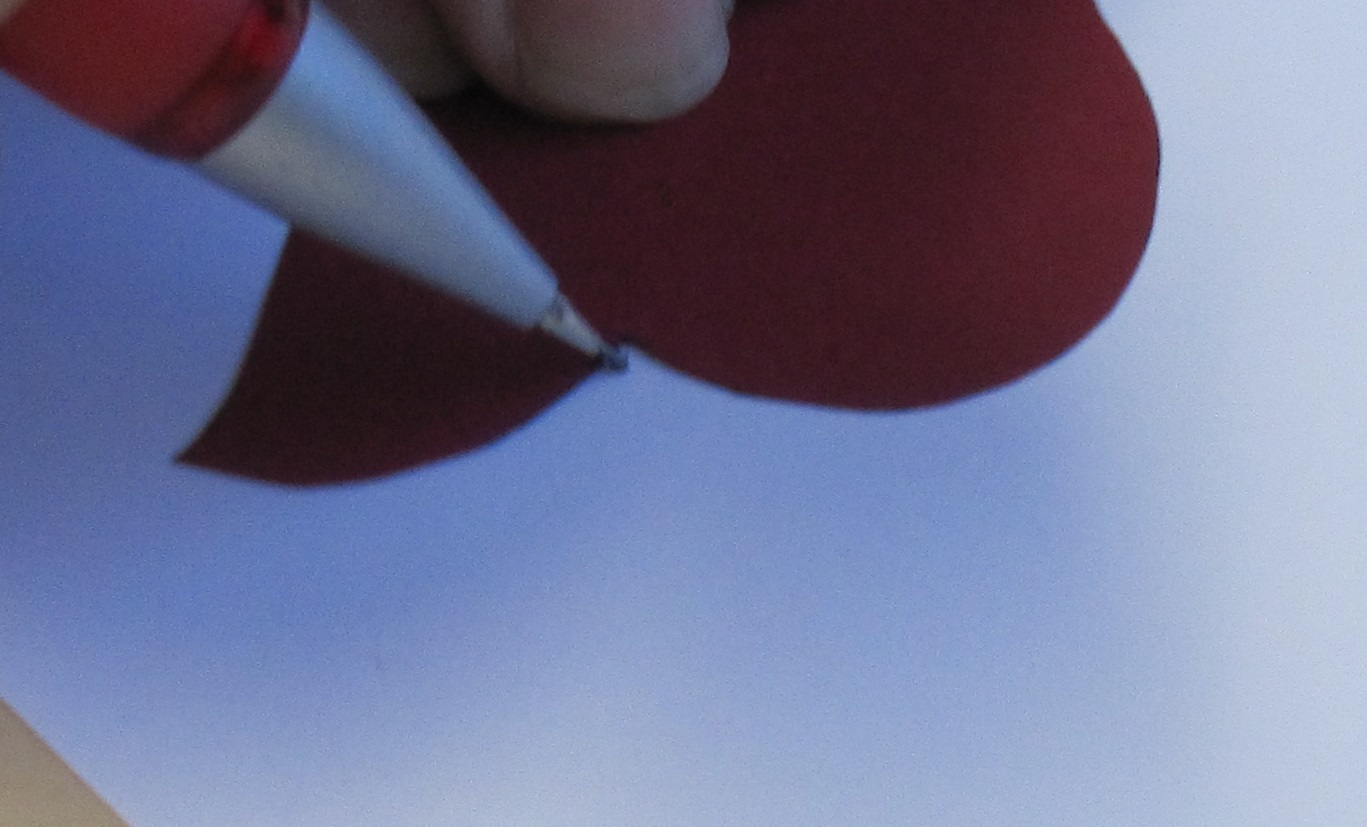
Kreise und Kreisabschnitte | cirles and segments of circlesThe stencils are laid upon a sheet of paper and held with one hand while the other hand traces around the shape with a pencil.
Zeichnen entlang der Schablone | tracing around the stencil
In this way the outline of a motif becomes a part of the design.
Konturenlinie | outline design
Please try it! It is very fun to get, for example, different tulip shapes using the fold-cut technique.
You will be astonished and surprised by the wide variety of shapes you will get.

Iron-Transfer versus direct Tracing

Because I know that many people prefer tracing the design onto the fabric using water soluble pens, I also wanted to test this method for Schwalm whitework.
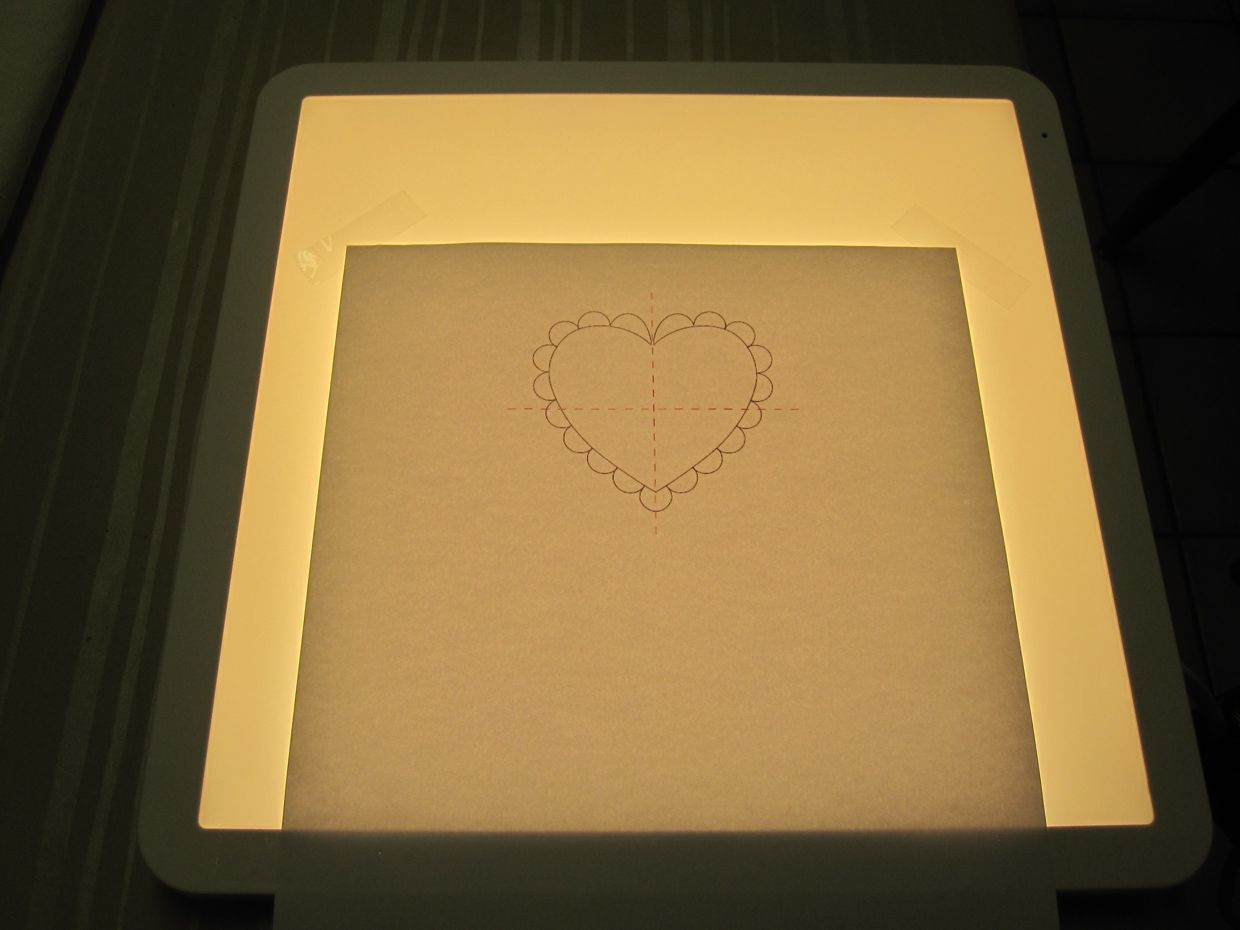
I taped the design onto a lightpad. Lightpads are perfect for tracing embroidery patterns onto fabric – also a table with a glass top and a lighted lamp below is suitable.
Leuchtenpaneel mit Musterblatt | LightPad with the design

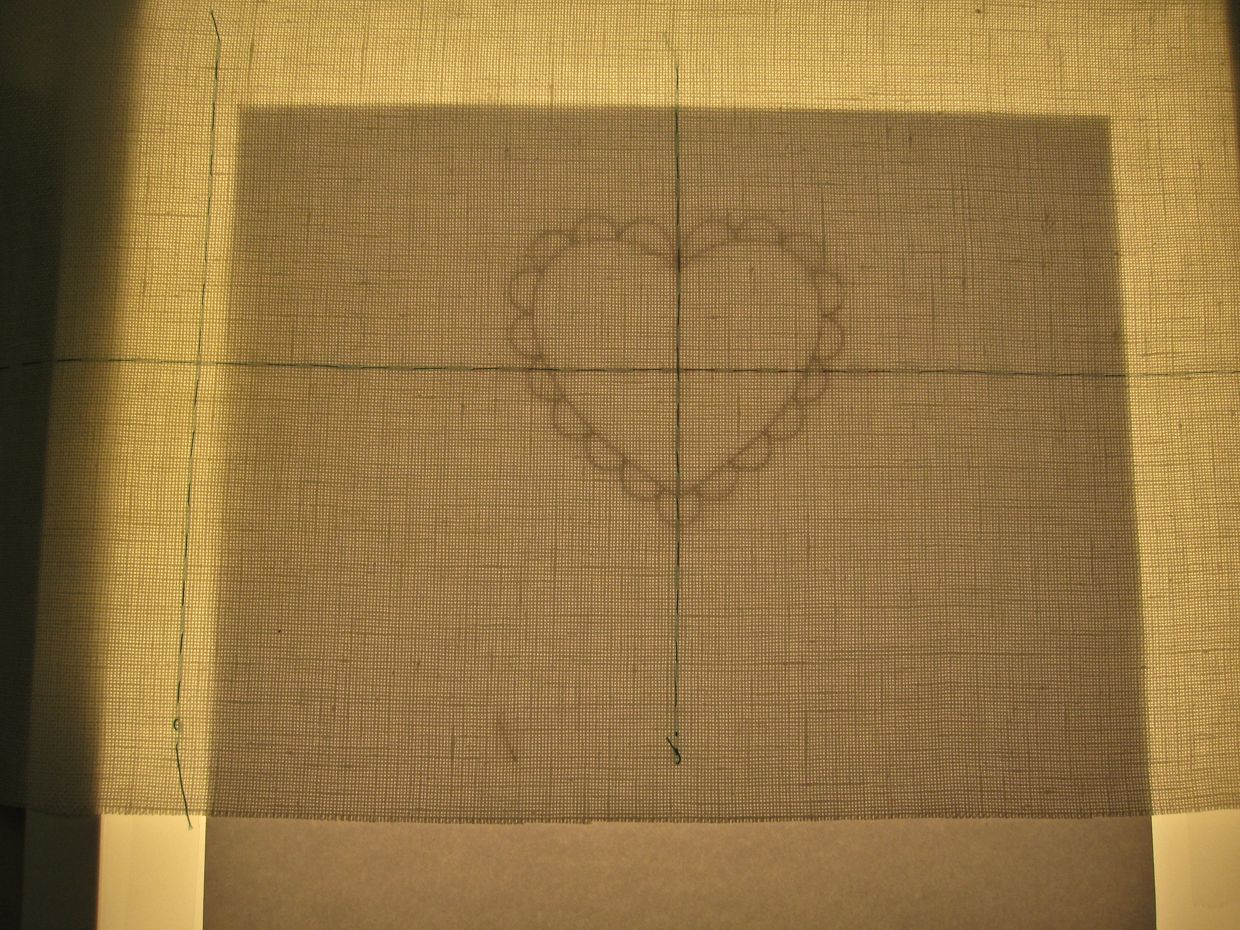
I marked the lengthwise and crosswise grain lines on a piece of linen (Weddigen linen, 13.5/cm thread count), and carefully positioned this on top of the design which also had perpendicular central lines drawn. The linen, thus positioned, is then taped to the lightpad.

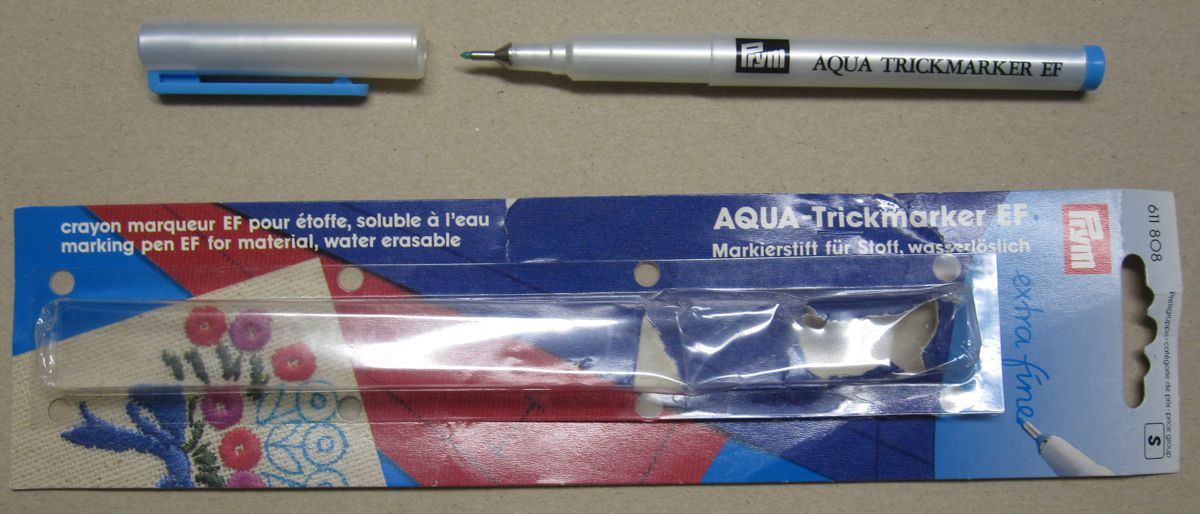
Using a water soluble, extra fine marking pen,
wasserlöslicher Markierstift | water erasable marking pen
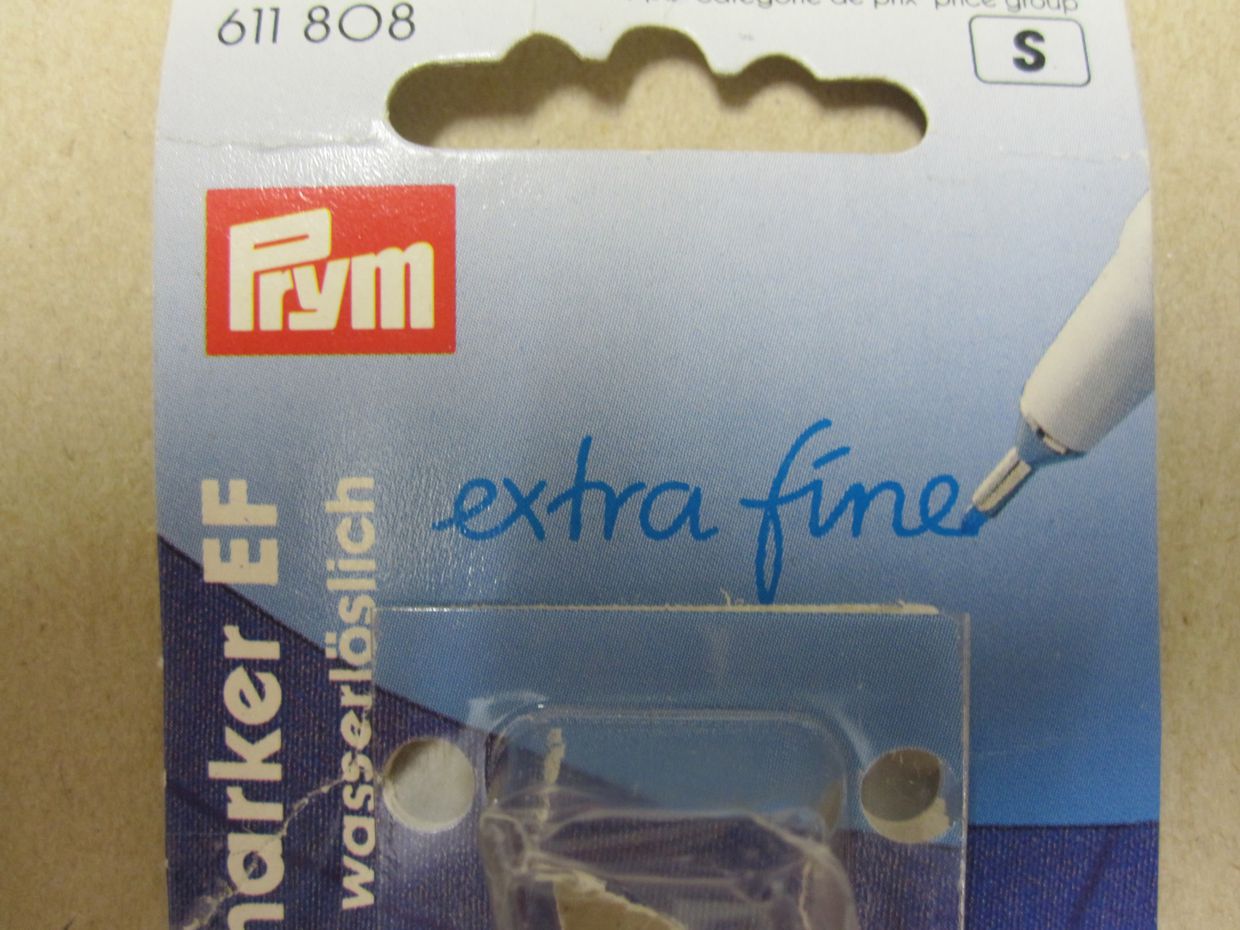
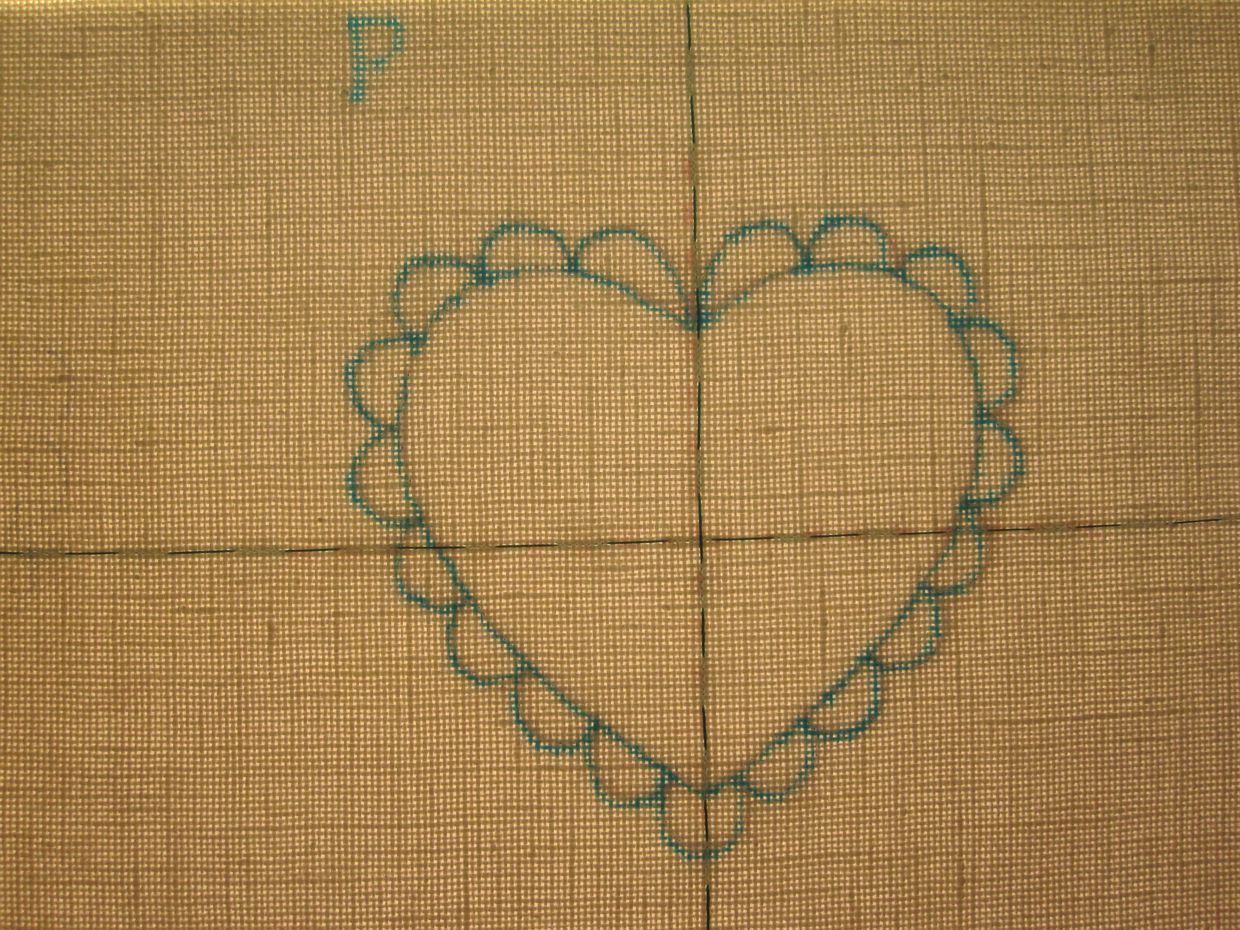
extra feine Spitze | extra fine tipI started the tracing. First I used a very light touch. On the fabric, the markings appeared in light dots at an uneven distance. So I then applied a little more pressure. This time, the lines appeared clearly on the fabric – not too fine, but also not too thick. I traced the heart shape first; the result was acceptable. Then I traced the smaller half-circles. If I pressed too hard, the tip of the pen got caught between the fabric threads and the lines became uneven. Even trying to do my best, not all curves came out as I wanted. Often the pen followed the thread line and created straight instead of curved lines.

At first sight, with the design sheet and light below, the result looks acceptable.

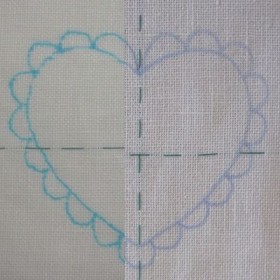
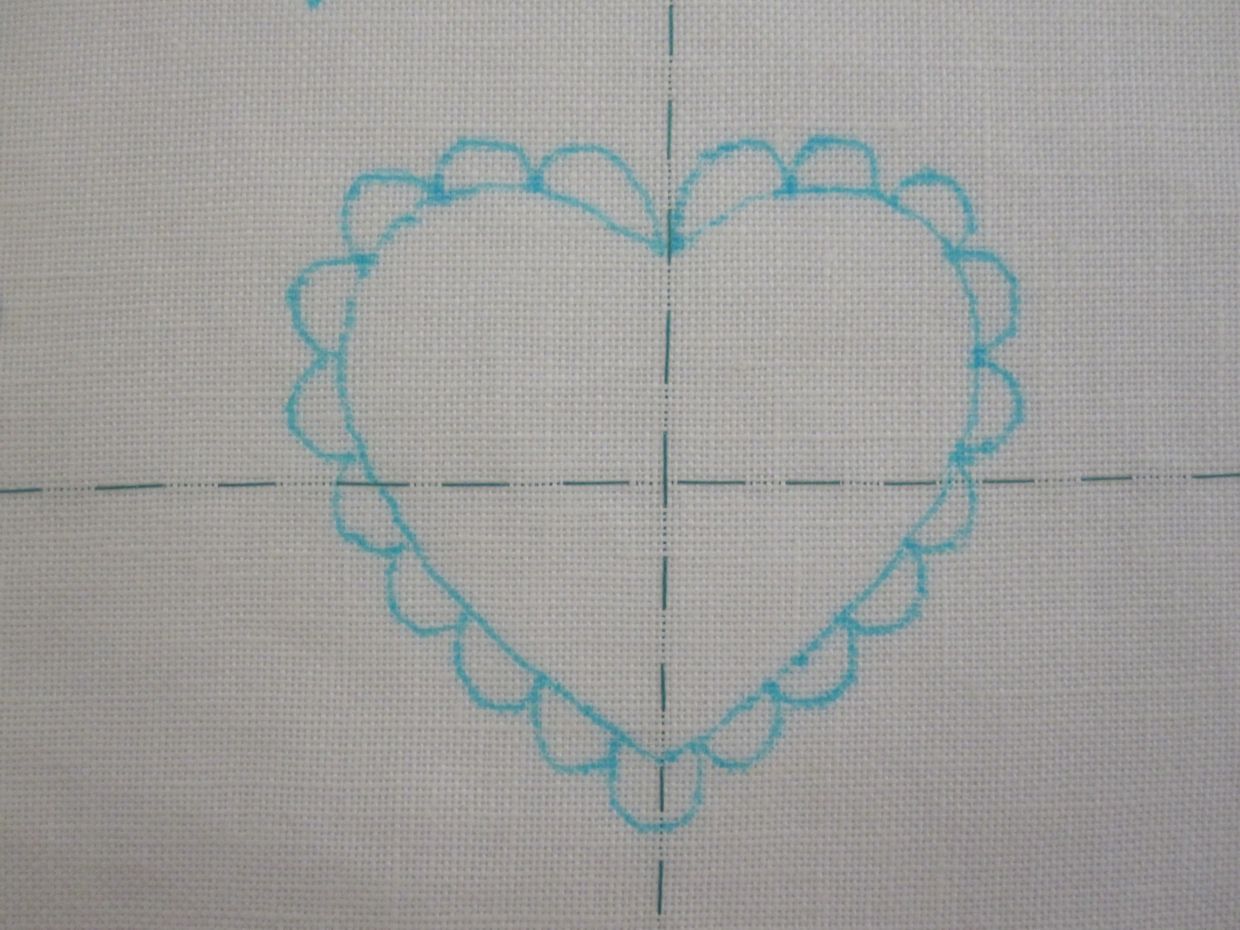
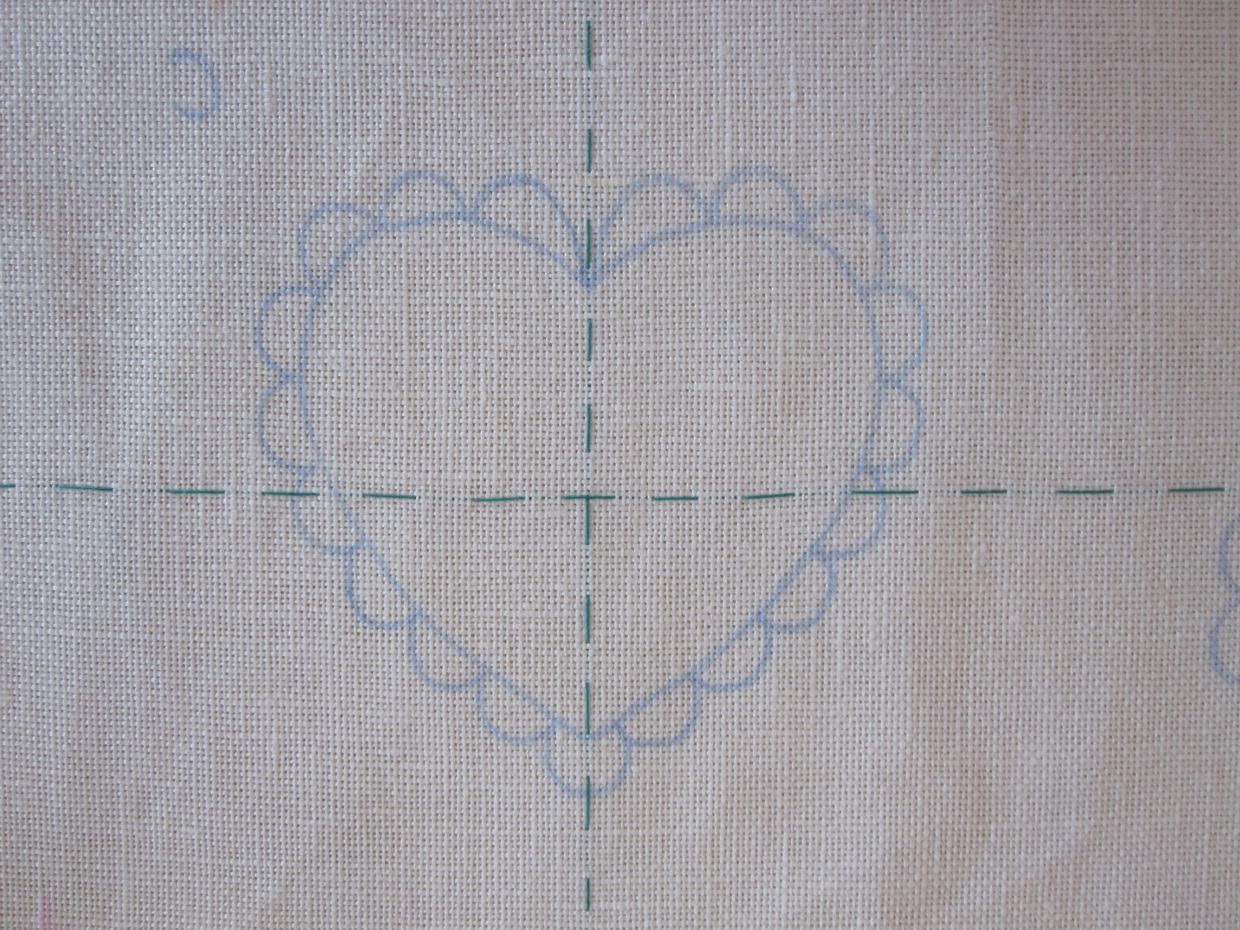
nachgezeichnete Kontur | traced designViewed alone and without the light below, the tracing does not look so good. The curves are uneven and sometimes jagged – definitely not smoothly rounded.

Buegel-Abdruck Clover | iron-transfer print CloverFor directly comparision I here show the same design transferred by ironing.

I am able to adjust some of the unevenness by embroidering, but not all.
die Farbe wird nicht abgerieben | the colour did not fadeThe colour did not fade and it was easy to follow the lines.
After finishing the embroidery, I washed it, as the instructions direct, with clear water. At once all colour was gone; the image shows the wet piece after being held under running water for a short time.

sehr schnell und einfach auswaschbar | very easy washable

Nevertheless I boiled it for shrinking. Starched and ironed it looks nice, but a trained eye notices the unevenness.

fertige Arbeit | finished piece

Perhaps this transfer method is better suited for finer fabrics with a more even surface. Another consideration must be made for the intricate Schwalm whitework designs that include small leaves, many tendrils and the half-eyelet scallops; I would not suggest this design transfer method for such designs.

Have you experimented with these products, or others? Then please leave a comment.