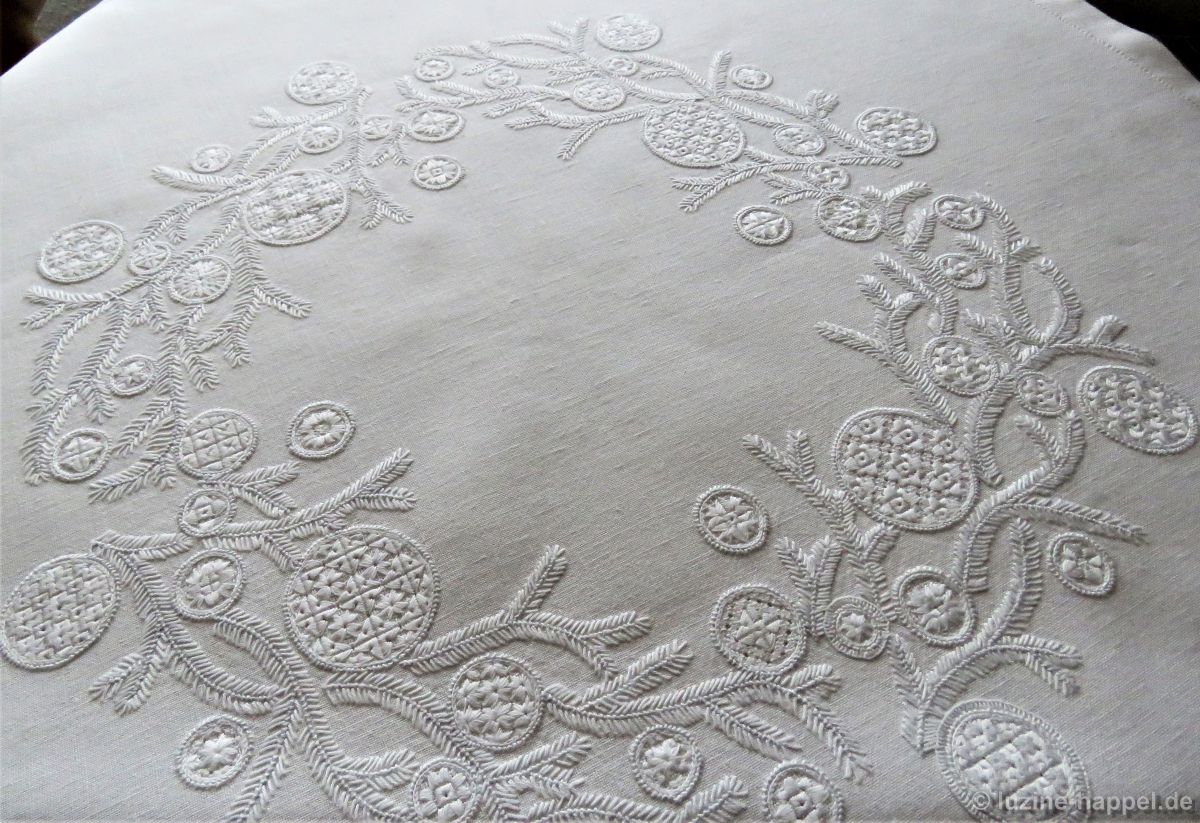
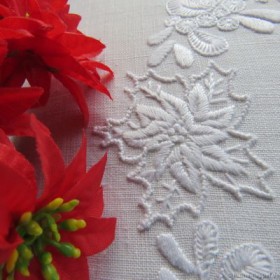
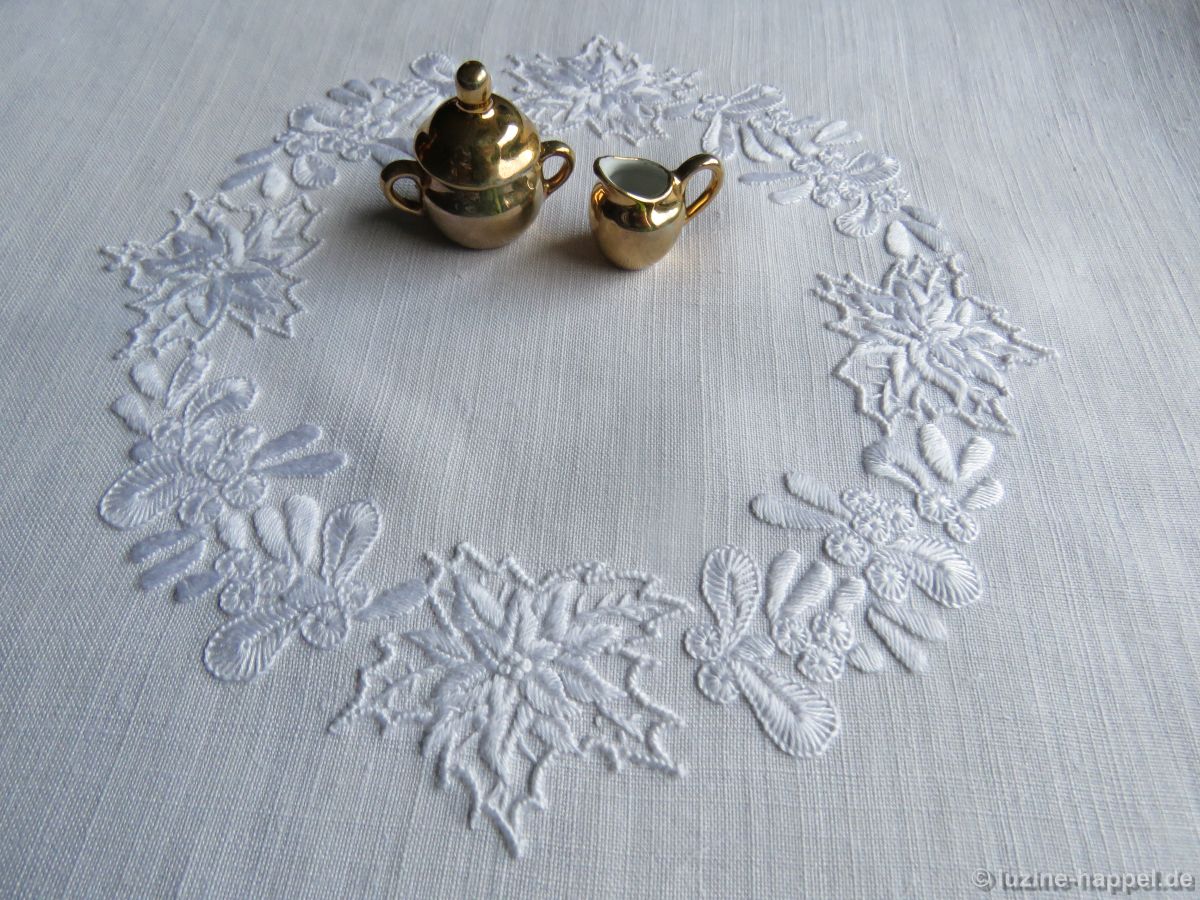
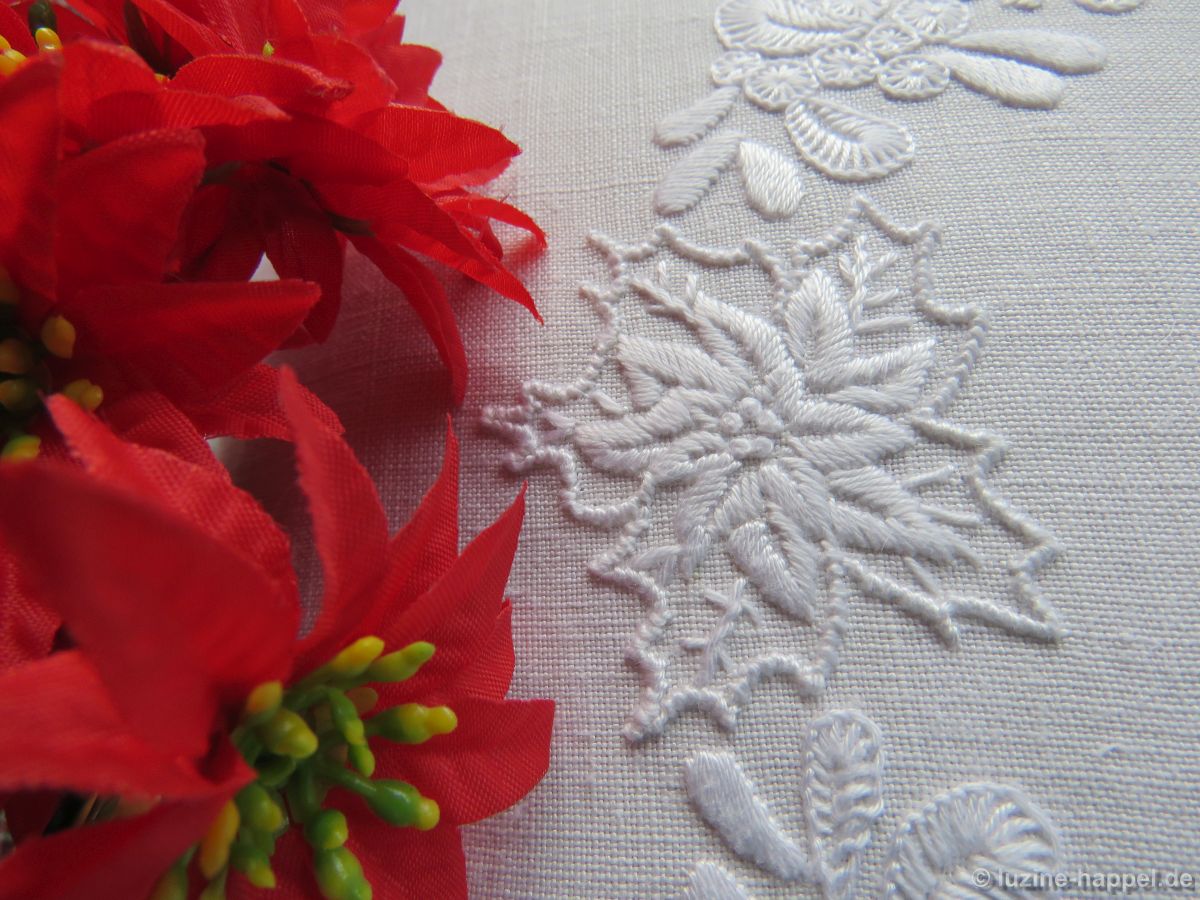
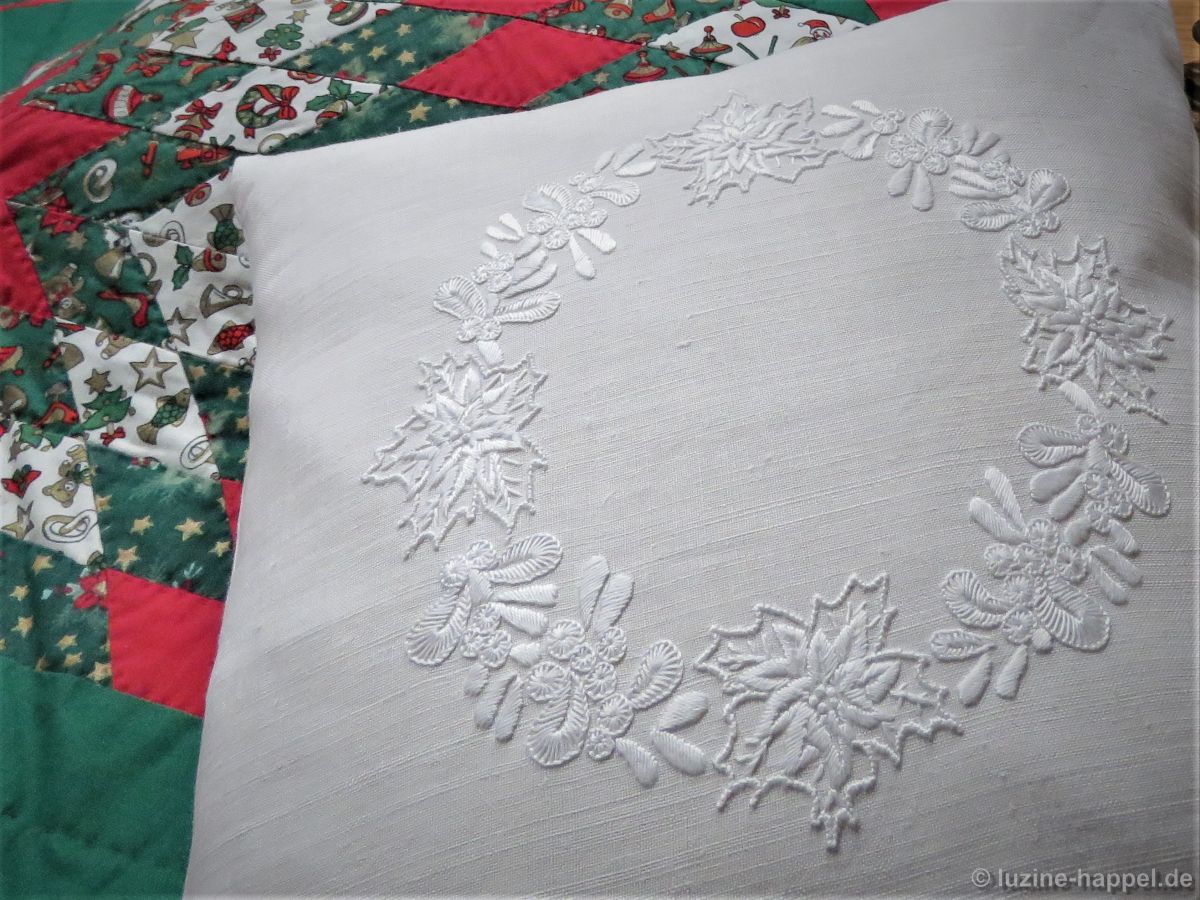
An especially beautiful and elaborately embroidered round table cloth is the subject of this post.
The Anna Elisabeth Grein design, with its large motifs, provides areas that are perfect for the bestof-the-best traditional filling patterns.
The small table cloth has a diameter of 60 cm (excluding the needlelace edging) and was worked on 16–18/cm thread count old handwoven linen. The needlelace edging was made with four-tier scallop pyramids outlined with Bullion Knot picots.
Very special to this post is that I photographed the filling patterns before laundering the piece. This makes the details of the stitches extremely easy to see.
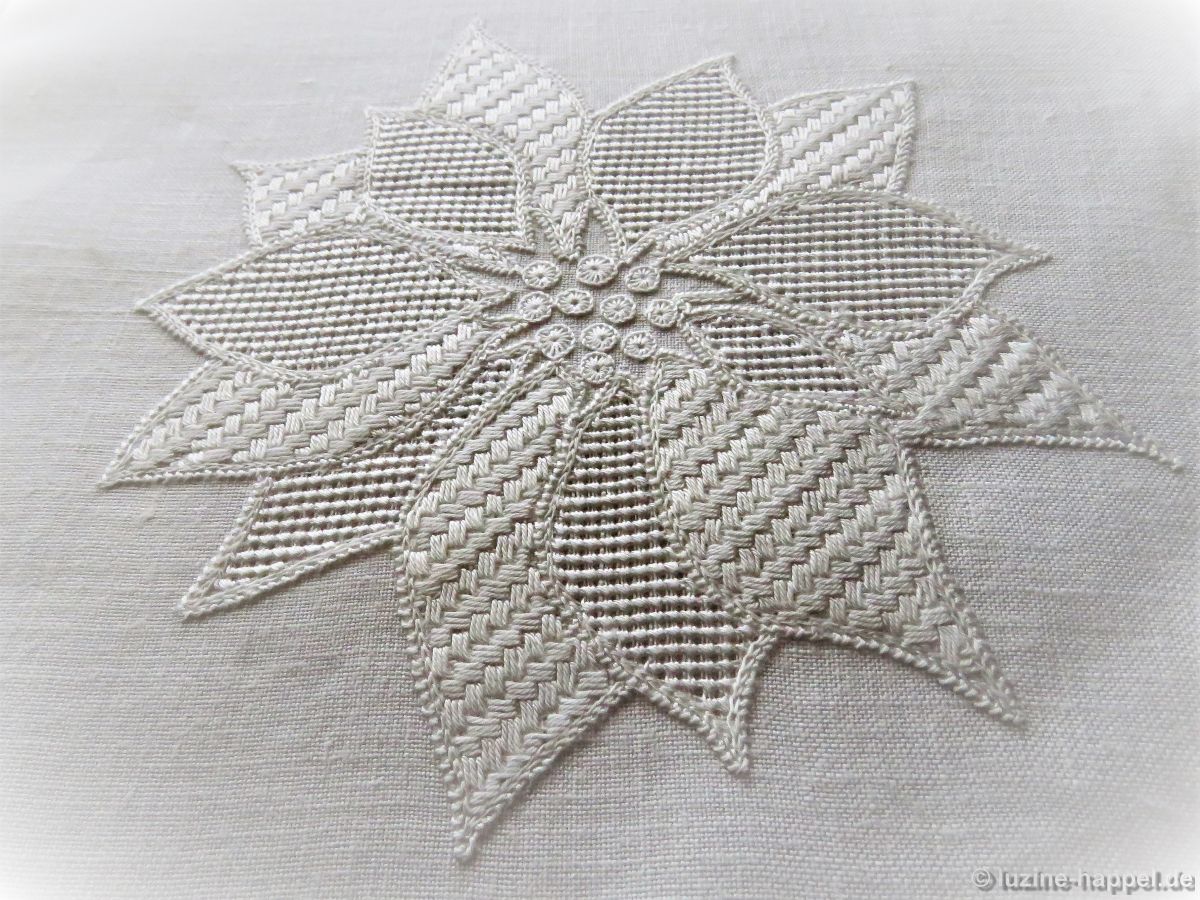
In the tulip above, a combination of filling pattern No. 447 and Double Back stitches (images 1–12) was worked.
Also, inside the circle shape, another already described filling pattern, No. 473, was worked.
It is going beyond the scope of a blog post to explain all the filling patterns in detail. So, I shall let the pictures speak for themselves. Enjoy a close and careful look.


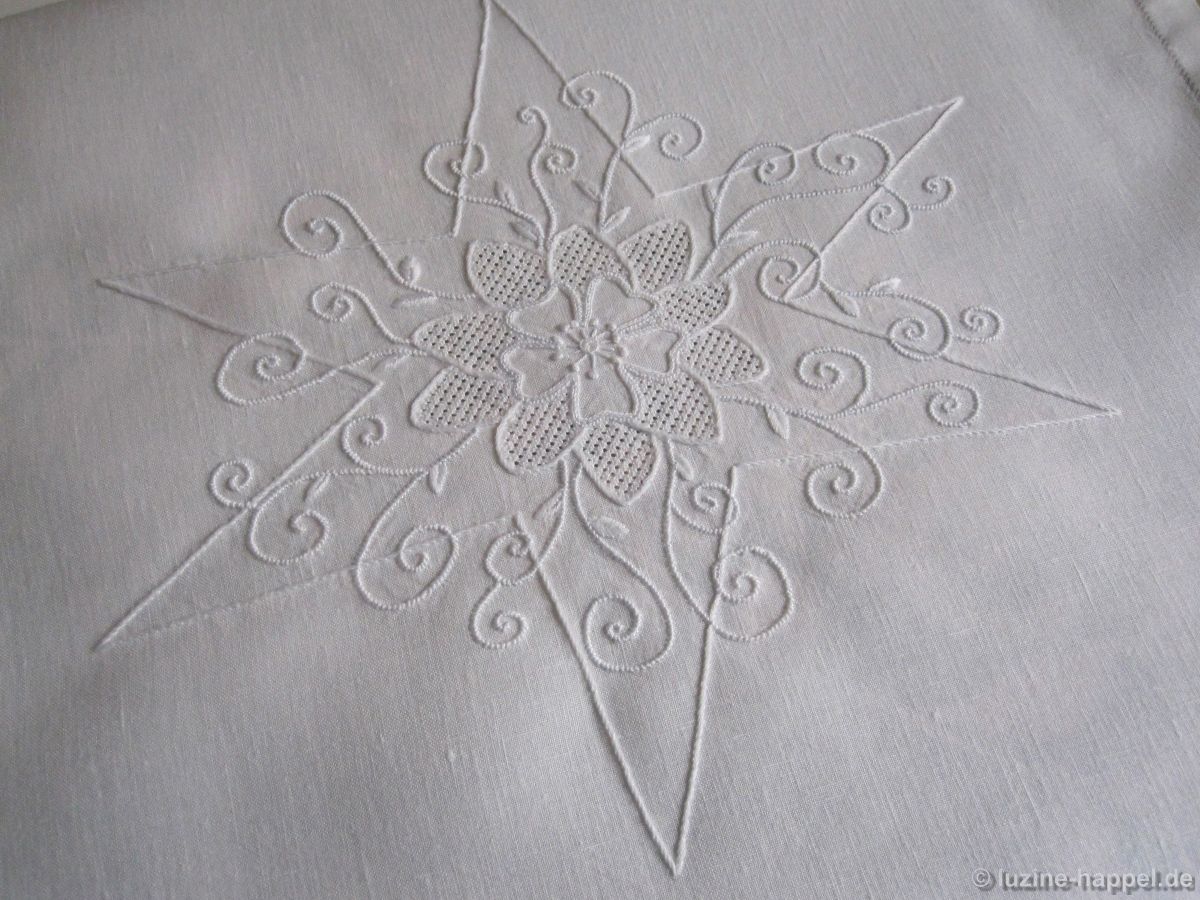
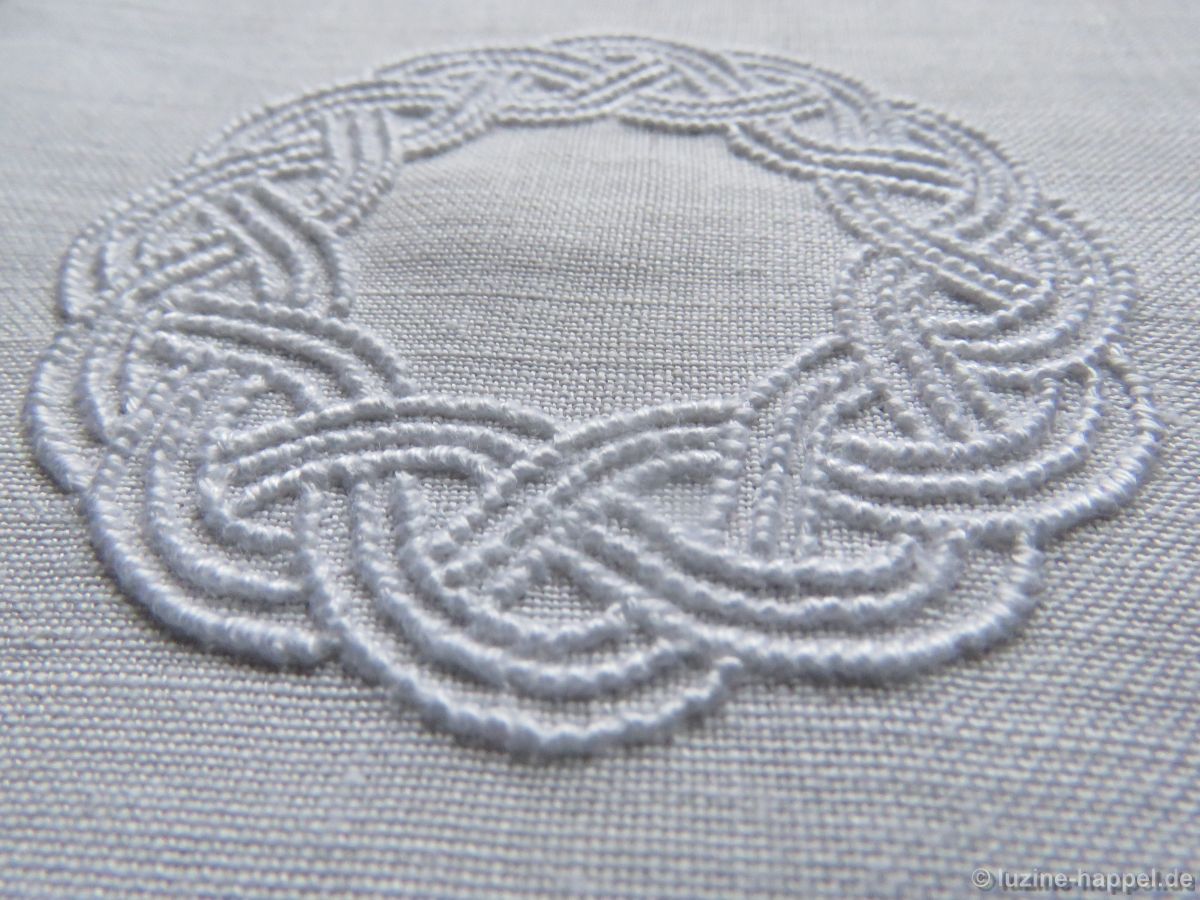
The design, with a diameter of 18 cm, is transferred to the fabric. The linen used has a 16/cm thread count. (If you are interested in getting the design, please email me – there is a small fee.)
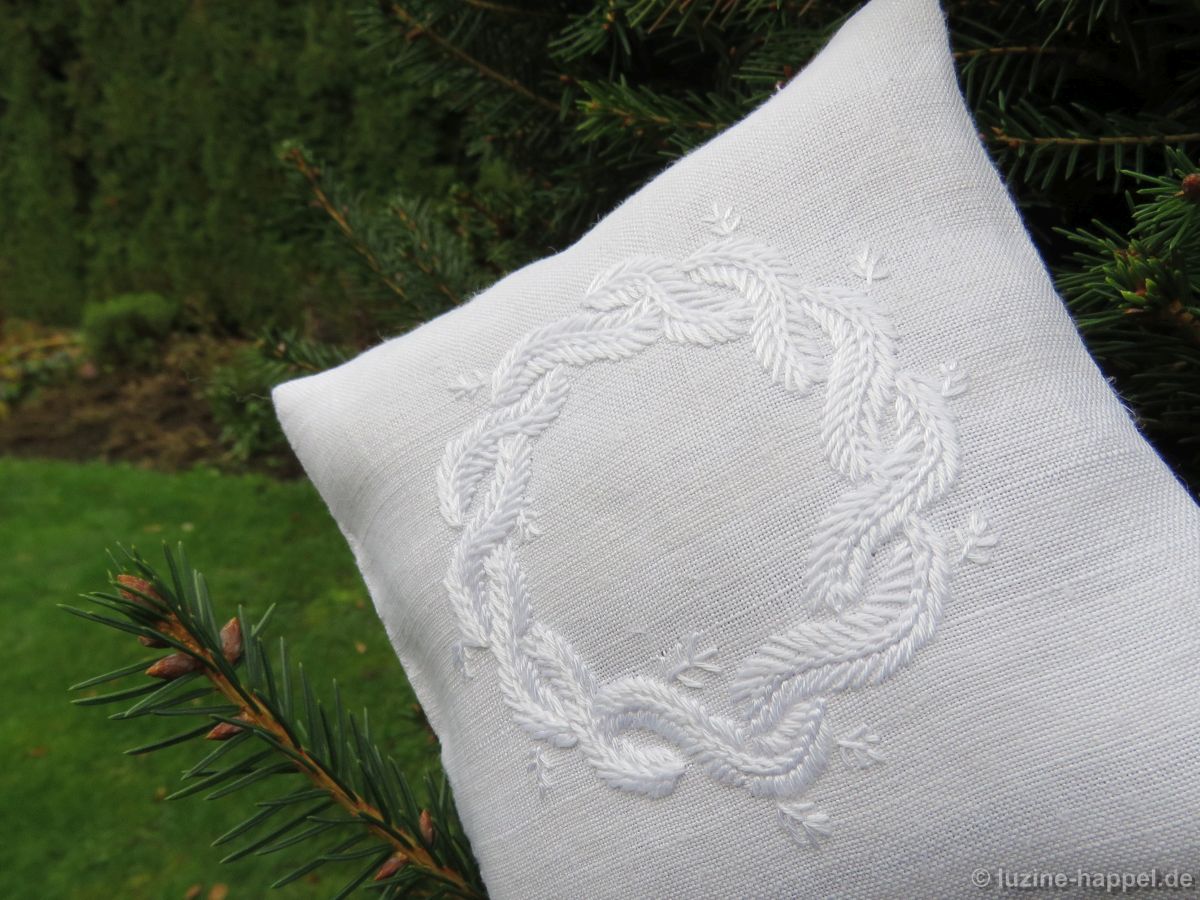
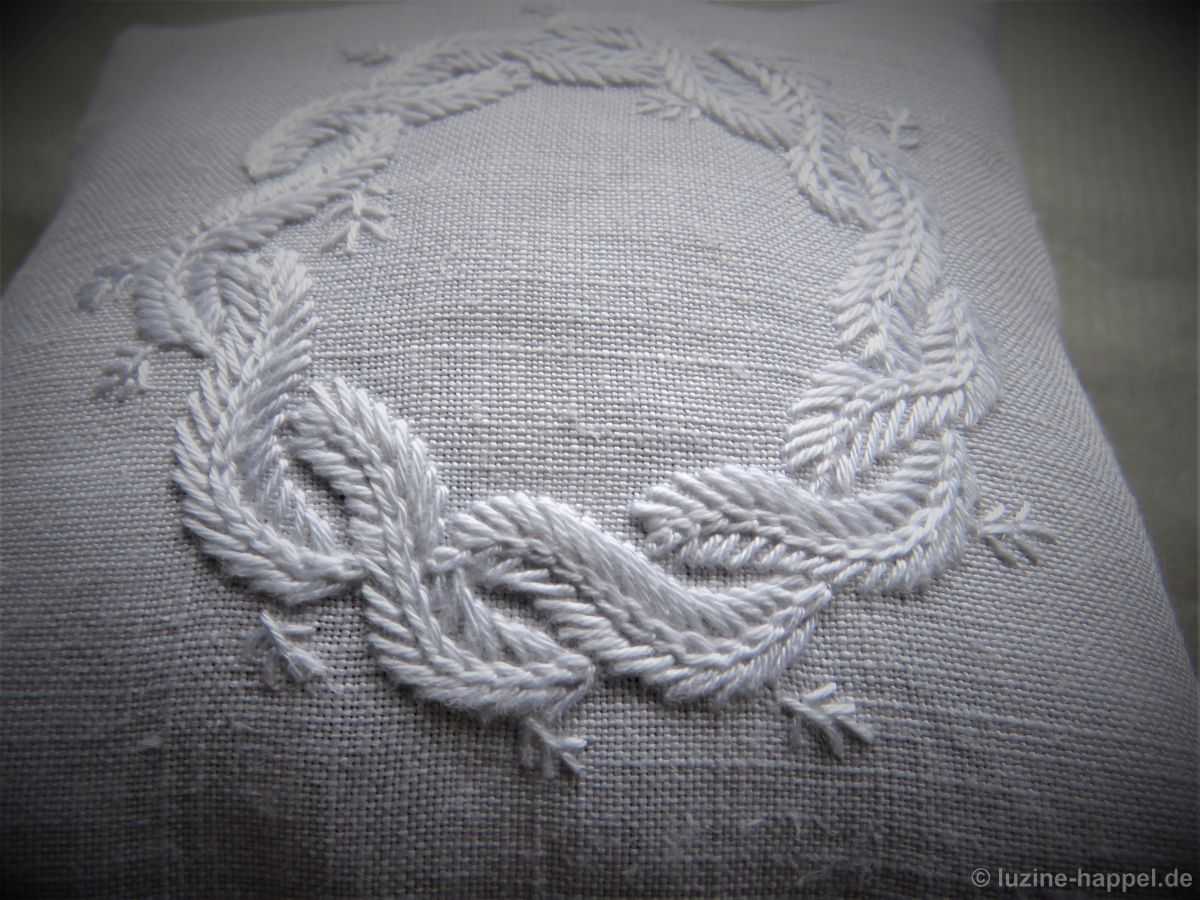
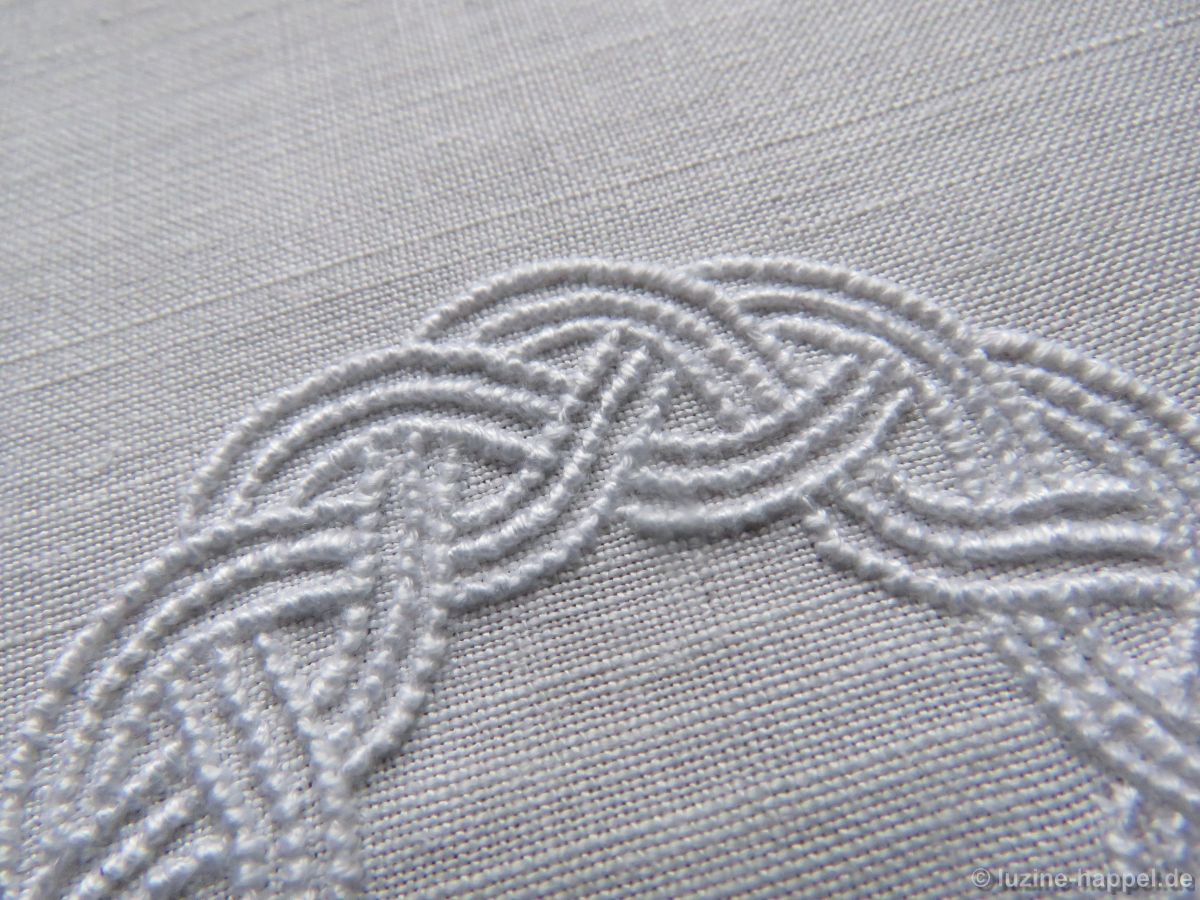
The lines are covered with Coral Knot stitches using coton à broder No. 20.
Please, on the back side of the piece, do not span the threads across intersections; rather, secure them. Threads carried across intersections will, in the end, be visible and distract from the overall charm of the finished doily.
Using coton à broder No. 20, Chain stitches are worked a small distance from the Coral Knot stitches at the outside edge.
The Chain stitches are covered with densely worked Blanket stitches, also using coton à broder No. 20.
Using coton à broder No. 30, the small areas between the lines are outlined with Chain stitches.
Inside these small areas, threads are withdrawn to establish an openwork grid.
Cable stitches are worked into the grids using coton à broder No. 30. In each grid, the stitch should always run in the same direction.
The finished embroidery was boiled, starched, and ironed.
Then the piece was trimmed.
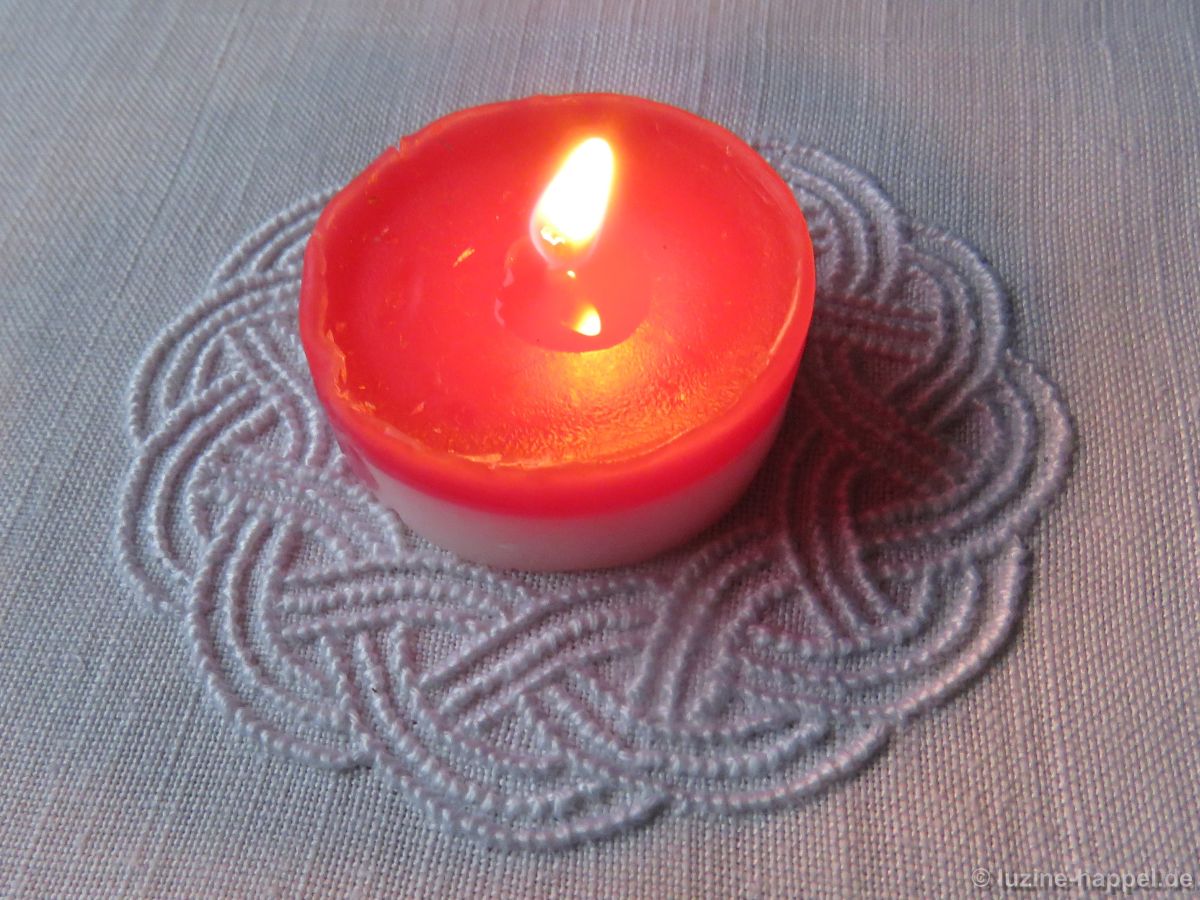
The result is a sweet little doily. The same design can be used to make doilies of differing sizes. In addition, variations are possible.
Years ago I worked a tea cloth with a similar design; it was rectangular, and I added a blue line of Chain stitches inside the double lines of the plait.
It looks so elegant displayed on a cloth of a matching colour.
And with matching dishes and table napkins, it always garners admiration and compliments from guests.
The traditional embroidery of the Schwalm bodice (C) is not as elabotae as the borders of the Schwalm bodice (A) and the Schwalm bodice (B). The linen used has a 21–24/cm thread count. The picture shows the entire border in a photomontage.
The space between needlelace and needle-weaving band has a width of about 7 cm. The space is not entirely filled with a design border.
A seven-unit A-pattern was worked as a needle-weaving band. For more information about needleweaving bands – the different kinds and the different ways of working – please look to my book Fancy Hems.
The bottom edge of the sleeve cuff has a needlelace edging of three rows of pyramids inside single scallops with connected picots outlining the needlelace border.
Between the needle-weaving band and the needlelace, a strip of linen remains unembroidered, and a band was embroidered with Schwalm whitework. If you look closely, you will see you many tendrils between the motifs.
The tulip was outlined with 2 short-2 long embellishment. The shape was filled with an openwork pattern (cut 2, leave 2) with a Cable stitch grid. Into the grid a needle weaving pattern was worked.
The circle was outlined with knife points with Blanket stitches. The shape was filled with an openwork pattern (cut 2, leave 2) with a Cable stitch grid. Into the grid a needle weaving star pattern was worked. It is notable, that thick thread was used for the needle weaving and that the squares of the grid were not filled very well.
The star pattern is also suitable to work an other ornament for trimming the tree.
The heart was outlined with Blanket stitch half-eyelet scallops.
The shape was filled with a Limet filling pattern with Satin stitch bars worked in a stair-step manner. It is noticable, that the center of all patterns is not worked mirrored. Whereas the both small leaves on bottom of the heart are worked mirrored. They are filled with an openwork pattern without a Cable stitch grid. Rose stitches were worked into the shapes. The spaces between the motifs were densely filled.
The embroidery of the Schwalm bodice (B) has many variants. The linen used has a 21–24/cm thread count. The picture shows the entire border in a photomontage.
The border design has a width (from needlelace to needle-weaving band) of about 9.5 cm. The following pictures show the embroidery enlarged; the embroidery is actually very fine.
A seven-unit mirrored pattern was worked as a needle-weaving band. For more information about needle-weaving bands – the different kinds and the different ways of working – please look to my book Fancy Hems.
The bottom edge of the sleeve cuff has an elaborate needlelace edging.
Between the needle-weaving band and the needlelace, a band was embroidered with Schwalm whitework. Please notice that there is nearly no unembroidered fabric between the motifs. And please compare the Chain stitches of this bodice with the Chain stitches of the Schwalm bodice A.
And now the pictures shall speak for themselves. Enjoy a close and careful look.


(If you came to this blog post via pinterest, please take a look here too, to find many other interesting subjects.)
The Corner of the Folded Peahole Edging
The folded Peahole edging can be easily worked along a straight edge, but one can also turn corners while stitching this edging.
Shown here is a practice exercise only.
First, some distance from both edges, withdraw threads for the folded Peahole.
Starting at the point shown in the picture below,
work a number (it doesn’t matter the exact number since this is a practice piece, but it should be an even number) of Four-Sided stitches.
Turn the piece 180° and work Four-Sided stitches lined up to the first row of Four-Sided stitches.
Work them around the corner.
Starting at the place shown in the picture below,
work the remaining Four-Sided stitches.
Withdraw the threads for the Peaholes
and work the wrapped Peaholes.
Cut the corner diagonally so that the cut is directly outside the Four-Sided stitches—taking care not to damage them.
Along one edge, fold the edging so that the backs of the Four-Sided stitches lie on top of each another and begin securing the triangles.
Reaching the corner, fold the edging of the perpendicular side
and continue securing the triangles around the corner.
From the back it looks like this:
Four threads inwards from the bottom of the previously worked Four-Sided stitches, withdraw one more thread along each side (on both the front and the back). (Please carefully look at the picture!)
From the front of the fabric, work one row of Four-Sided stitches catching both layers.
Now, on the back side, trim the remaining fabric close to the stitches.
A nice hem is created – admittedly, the triangles in this example are not the best (this was one of my first attempts at working this edging, since then they have improved a lot).