Schwalm Costume – The Coloured Woven Silk Bands

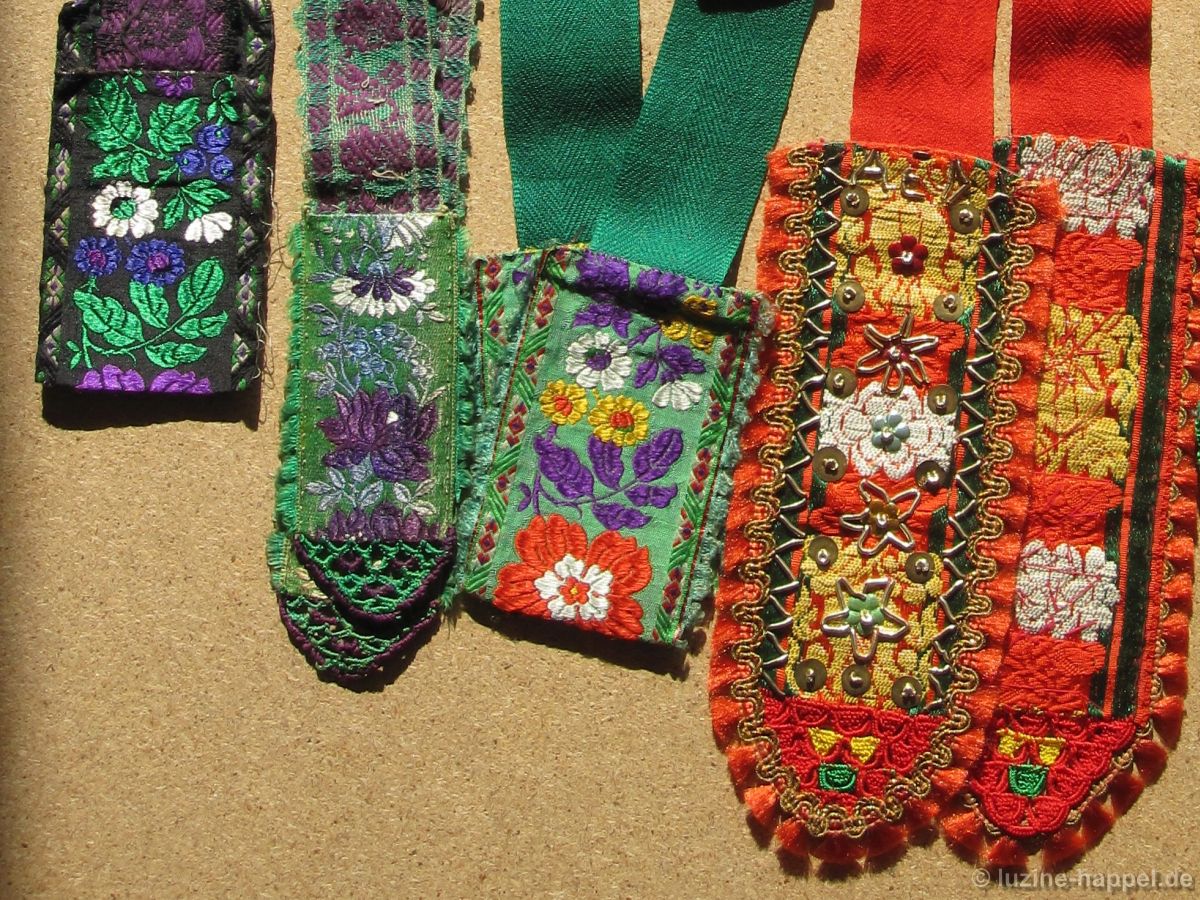
Schwalm women kept a large array of colourful bands made of silk or a combination of silk and metal threads; these ribbons were needed for different uses.

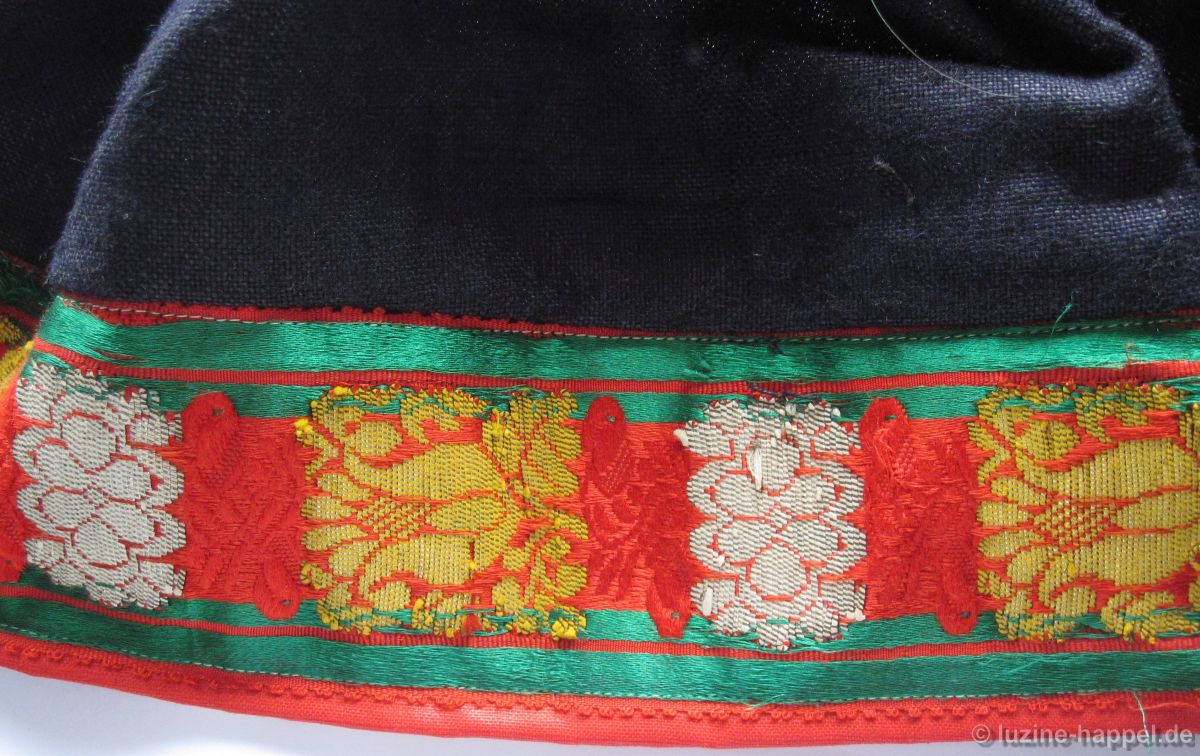
The coloured bands decorated the bottom edges of the Schwalm skirts.
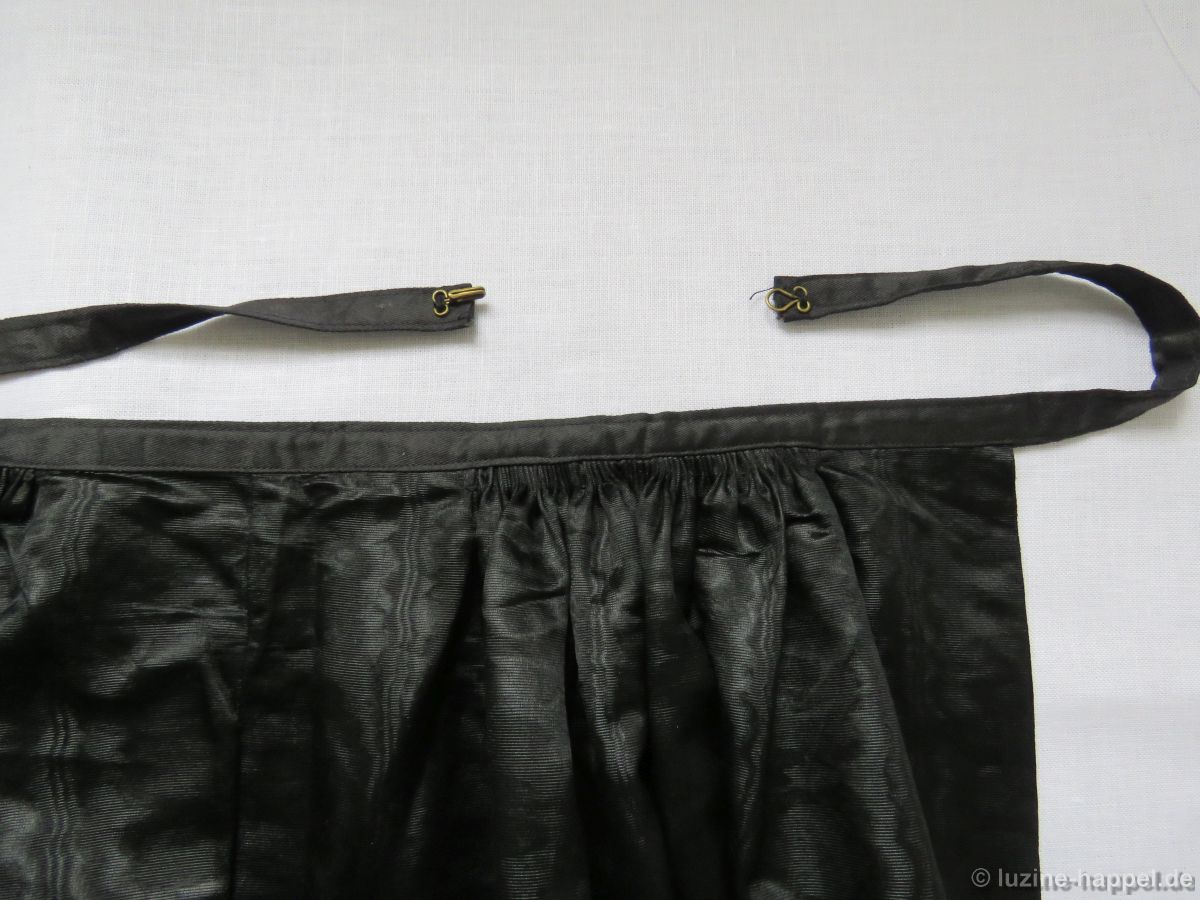
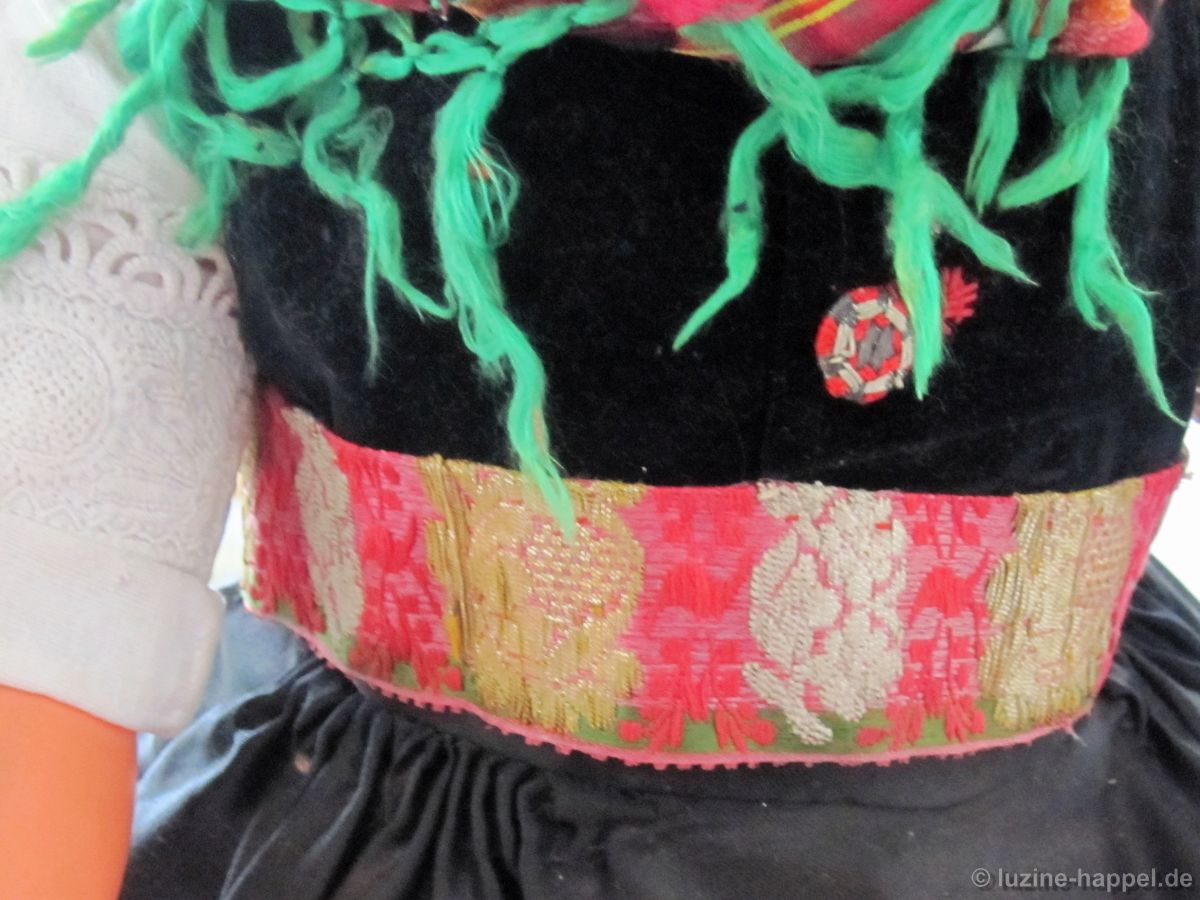
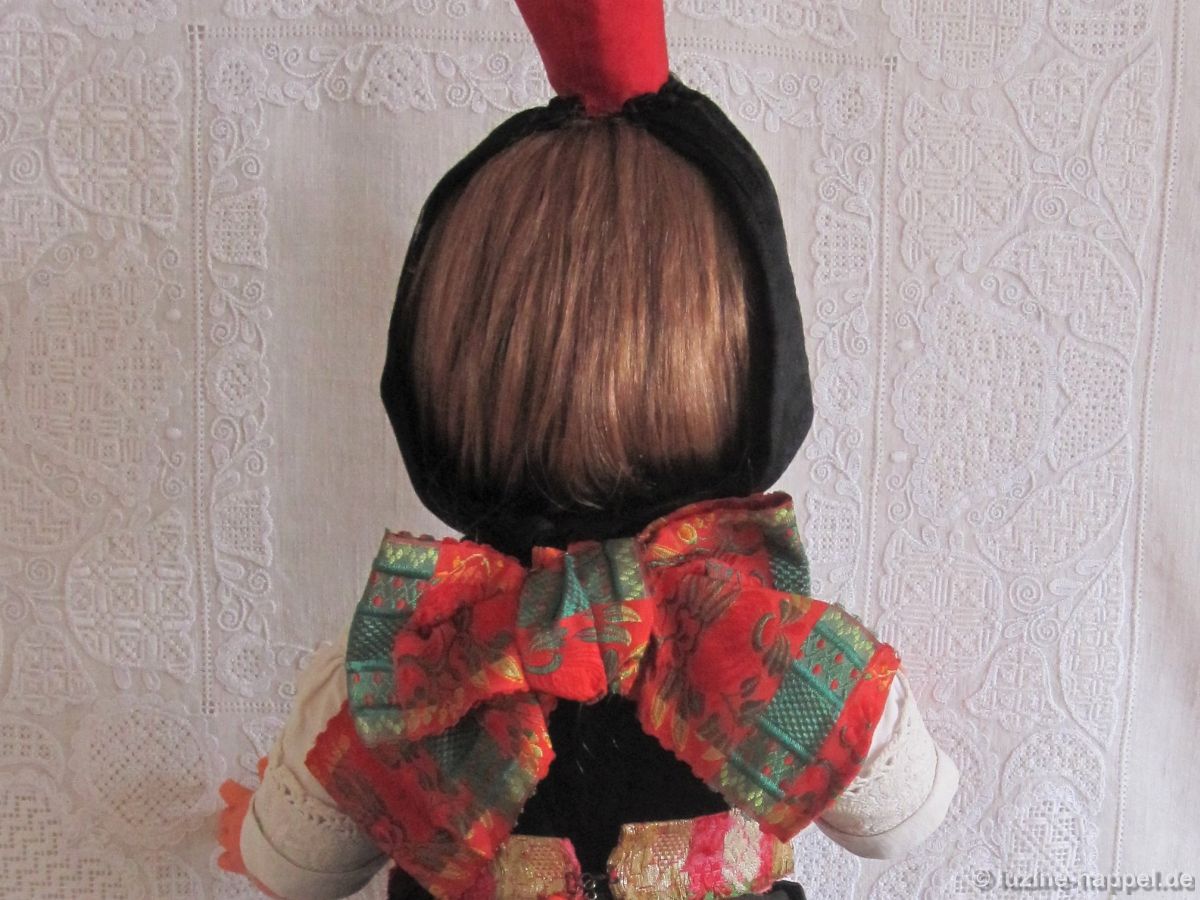
And they were worn like a girdle covering the waistbands of the dark aprons.
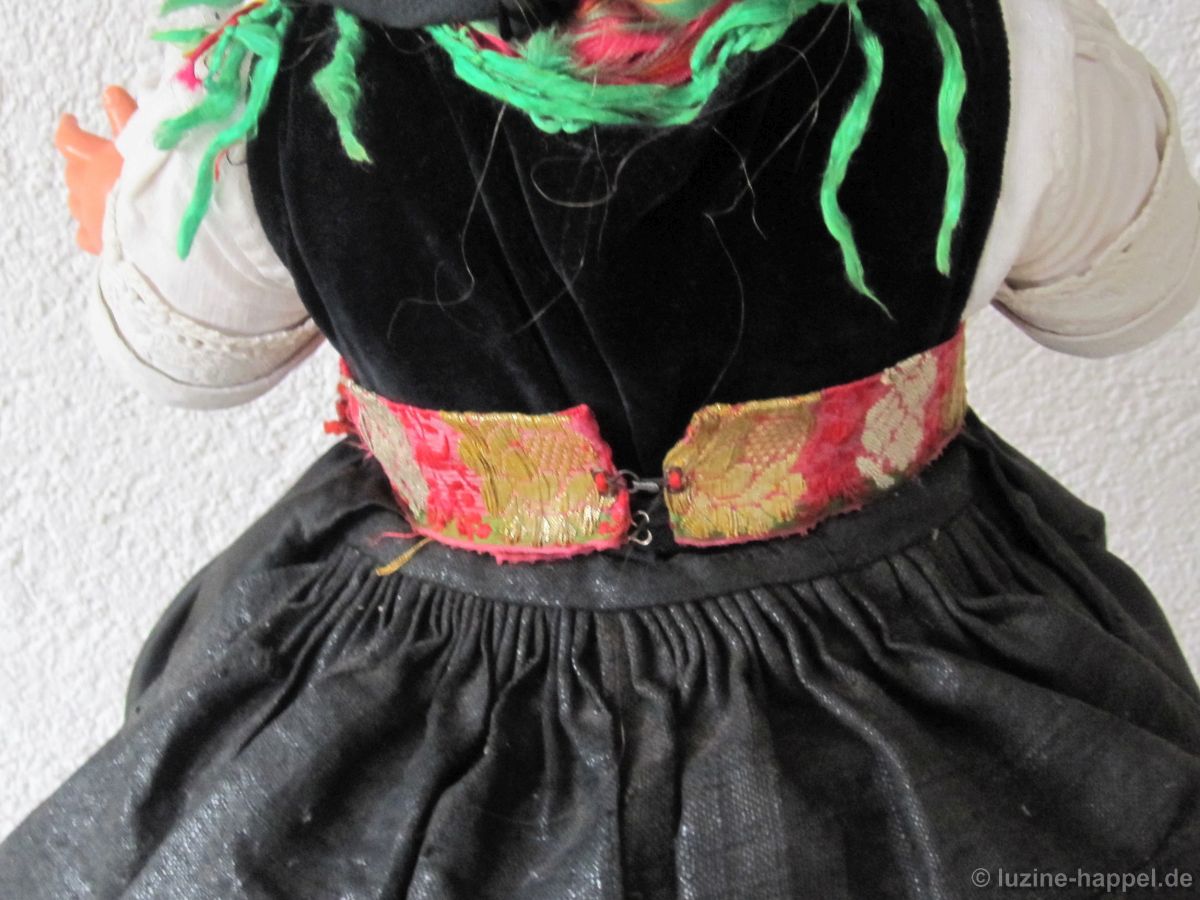
In the back, they were fastened with a hook and eye.
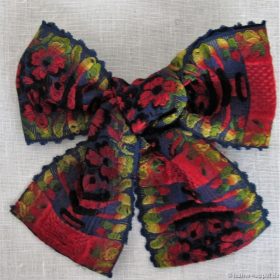
However, sometimes the bands were tied into a bow in the front.

They were also tied into a bow and then pinned at the back of the neck of the waistcoat, but only if the occasion did not dictate that the cap bands with their beautiful embellishments were to be worn in the back.
Coloured bands were used to make simple garters, which were sometimes additionally decorated with gold or silver bullion, sequins, and needlelace.
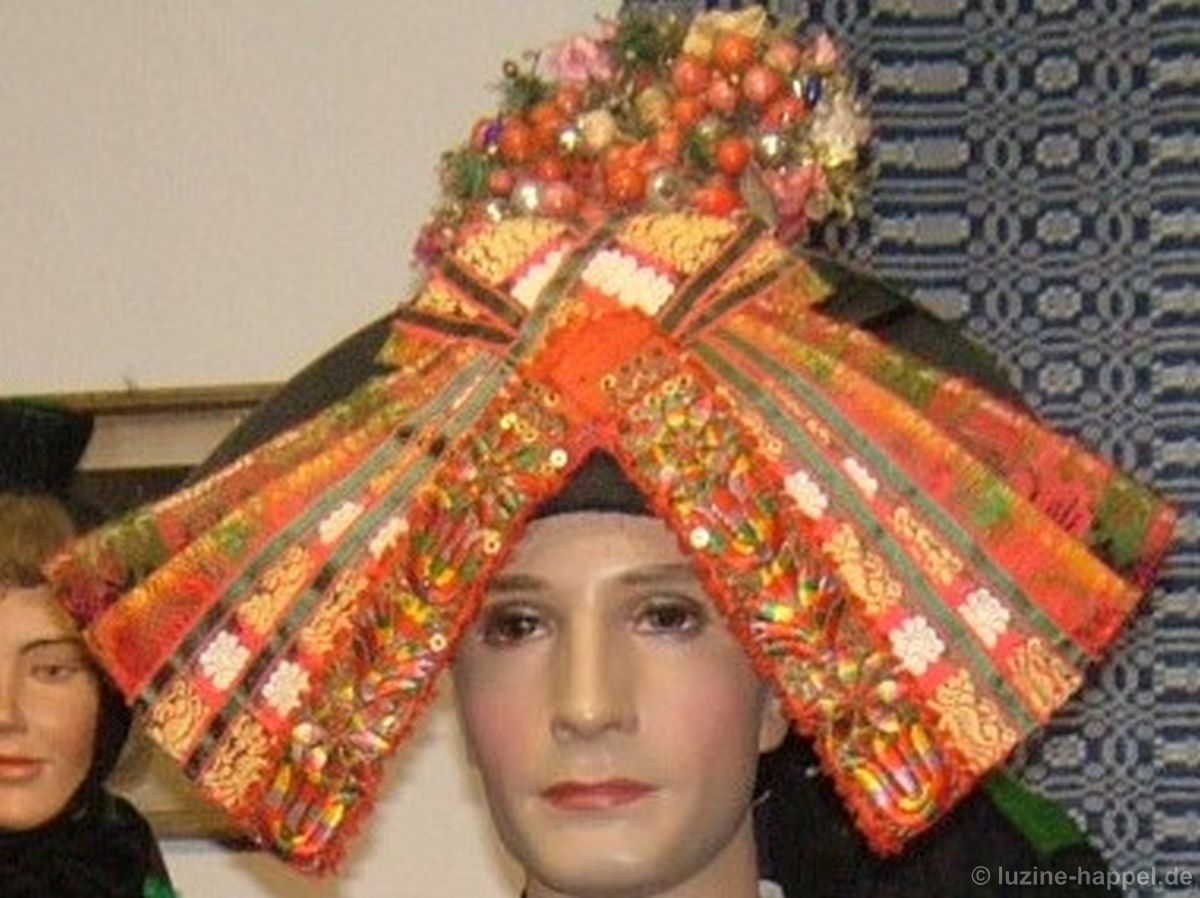
They were used for making the Lust, the decoration found on the groom’s cap
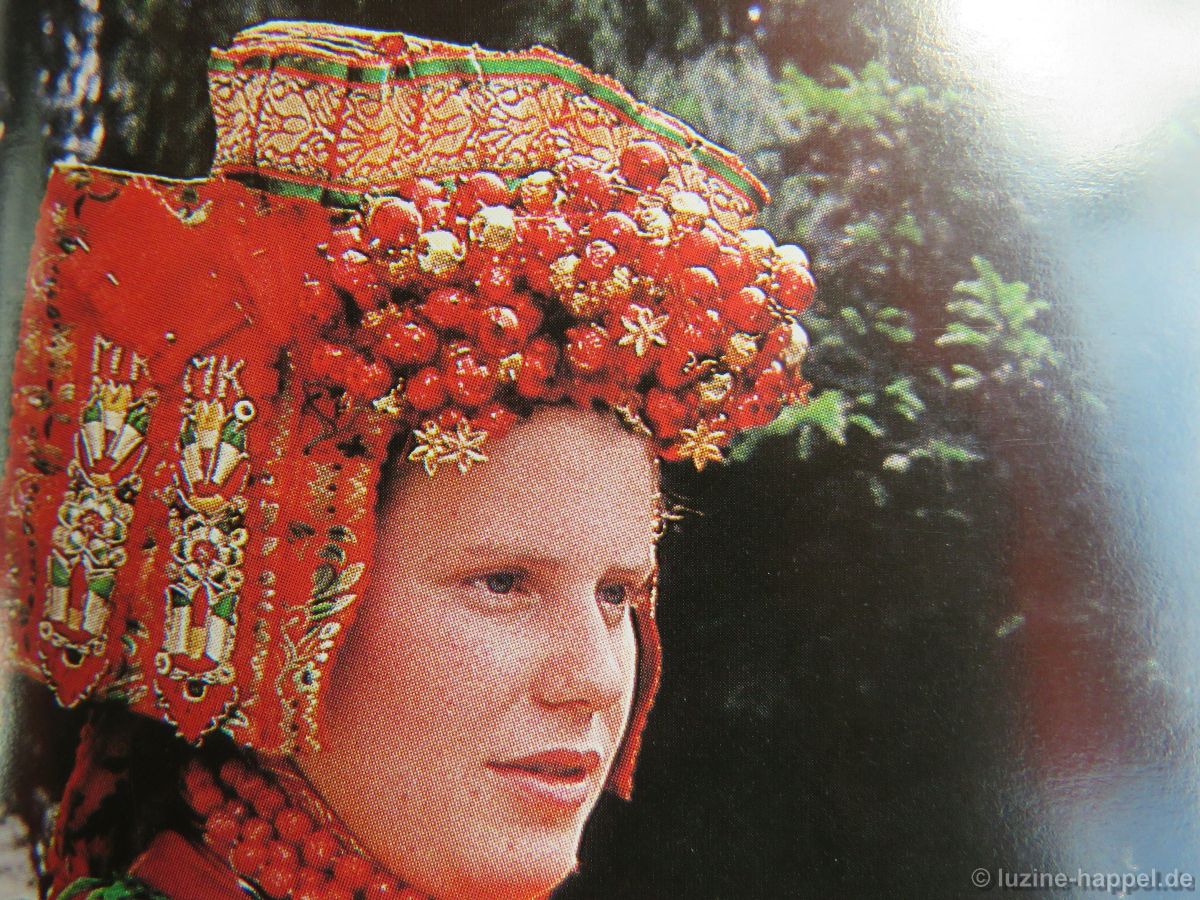
as well as for manufacturing the Geschappel for the bridesmaid and the bride.
A couple of bands were needed for the Bretter (boards) of the “boardmaids.”
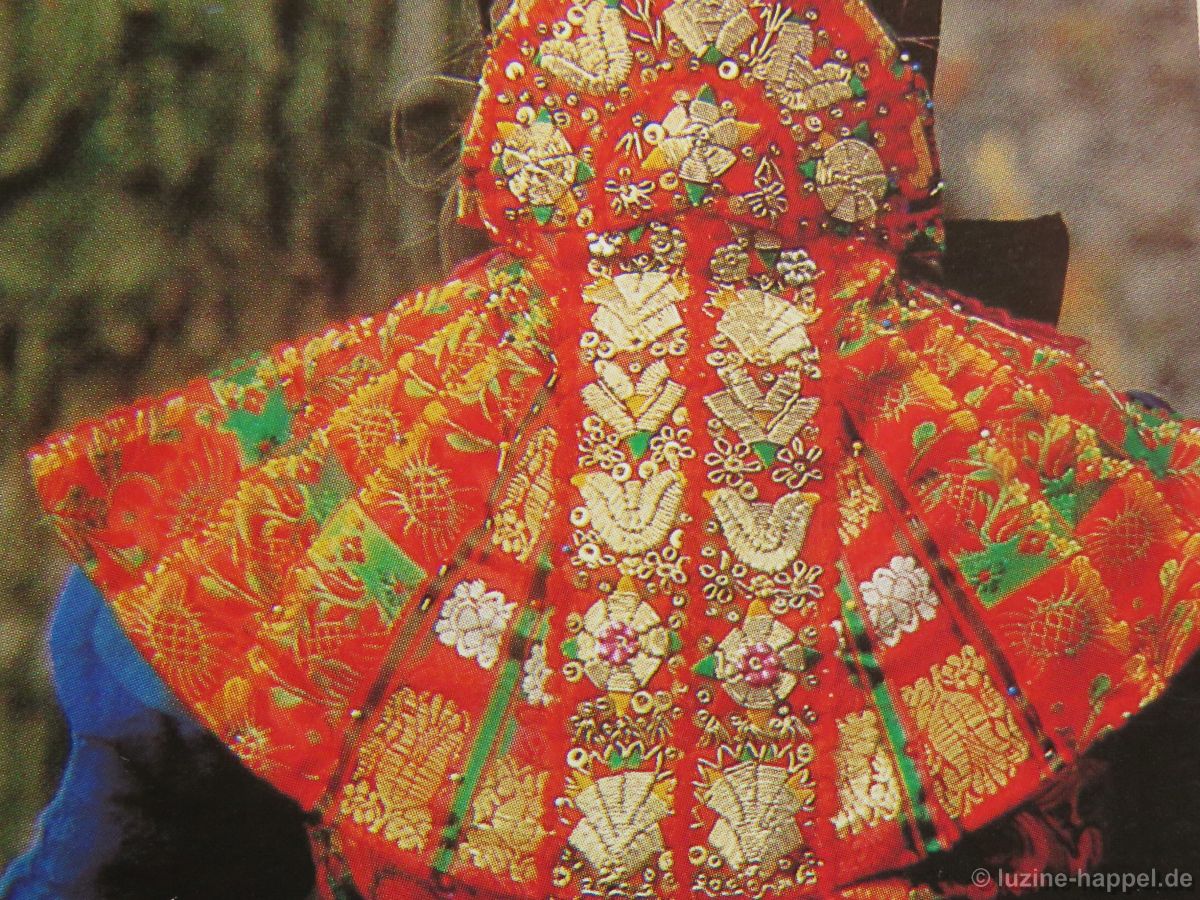
Young girls showed off their most beautiful bands in a special custom – the Pfingstbügel.
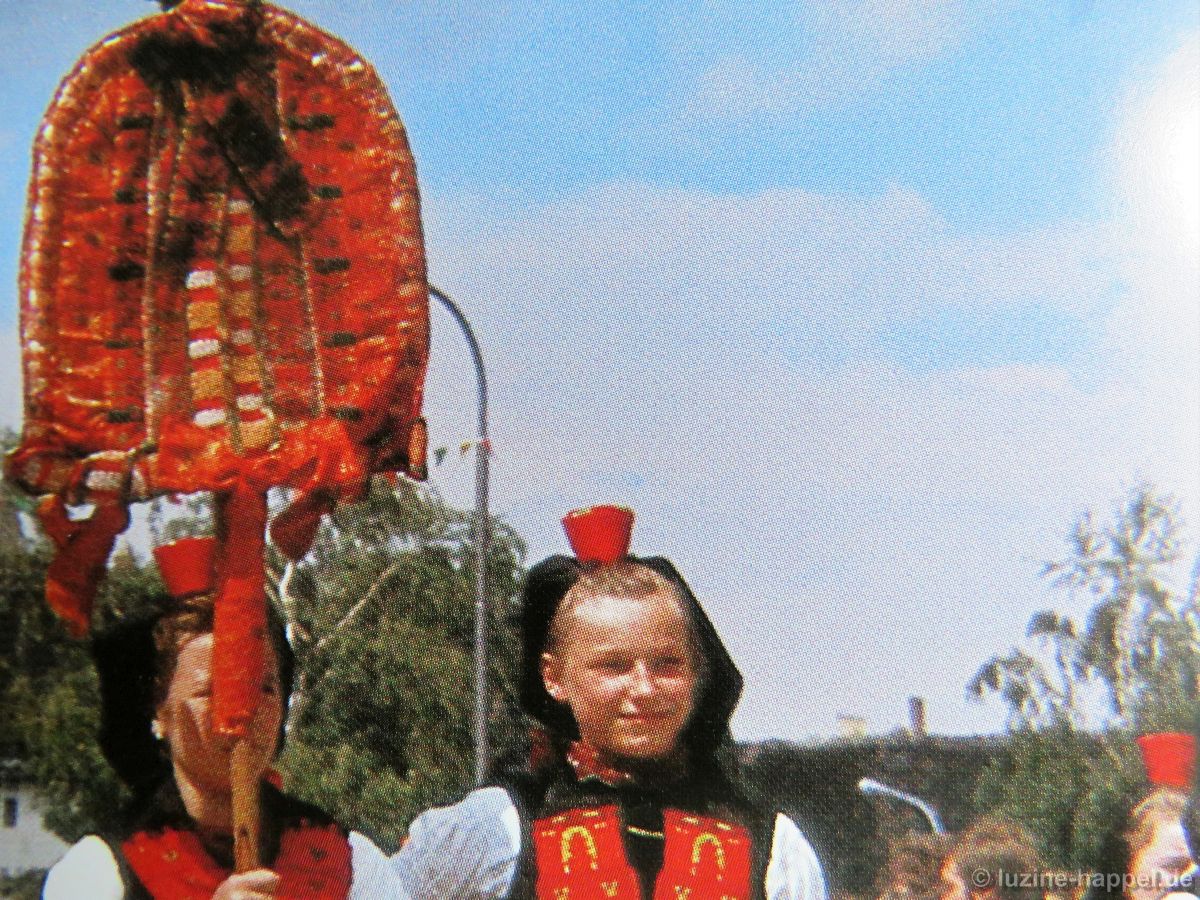
Therefore, beautiful coloured silk ribbons were needed in large quantities, so it is not surprising that they were woven in many patterns. Because the young girls wanted to present themselves most attractively (so that they might marry well), the red coloured ribbons were the most popular.

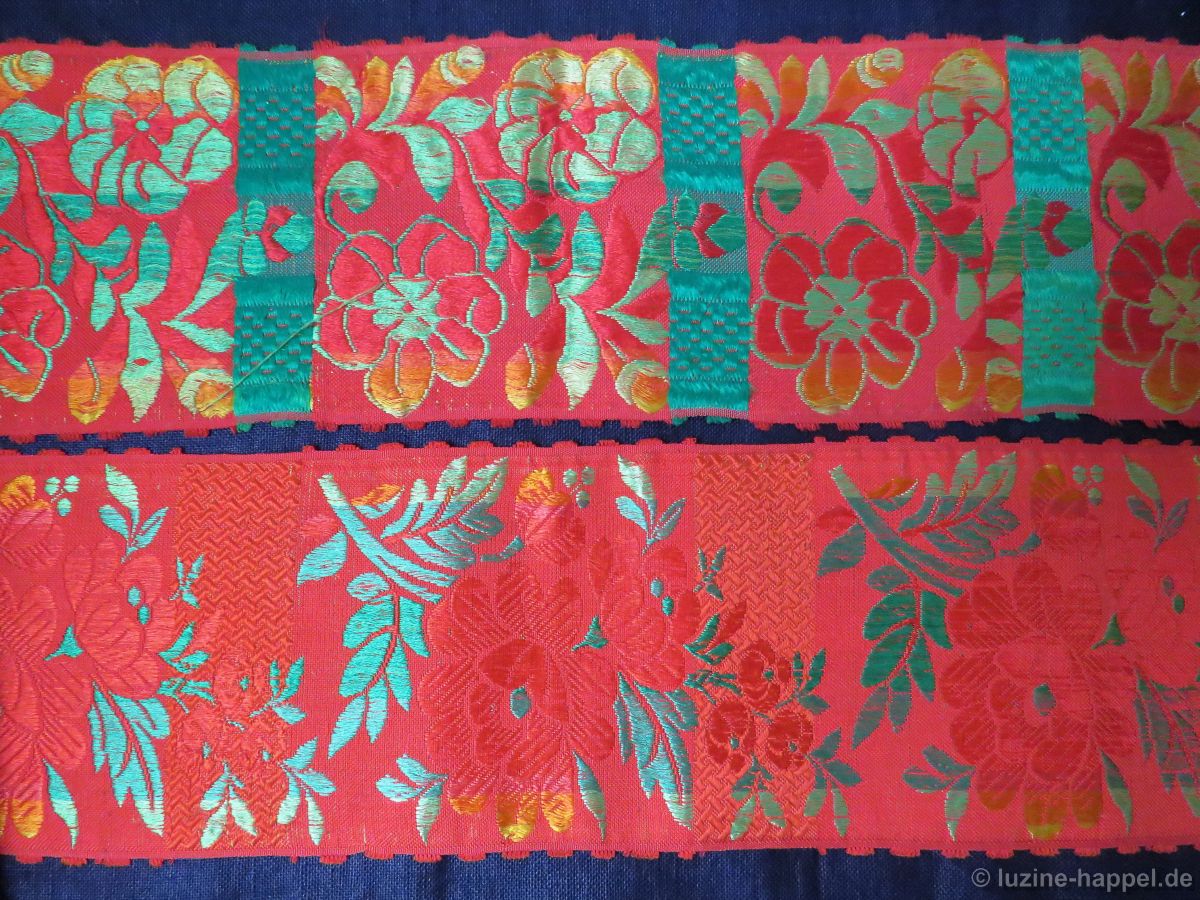
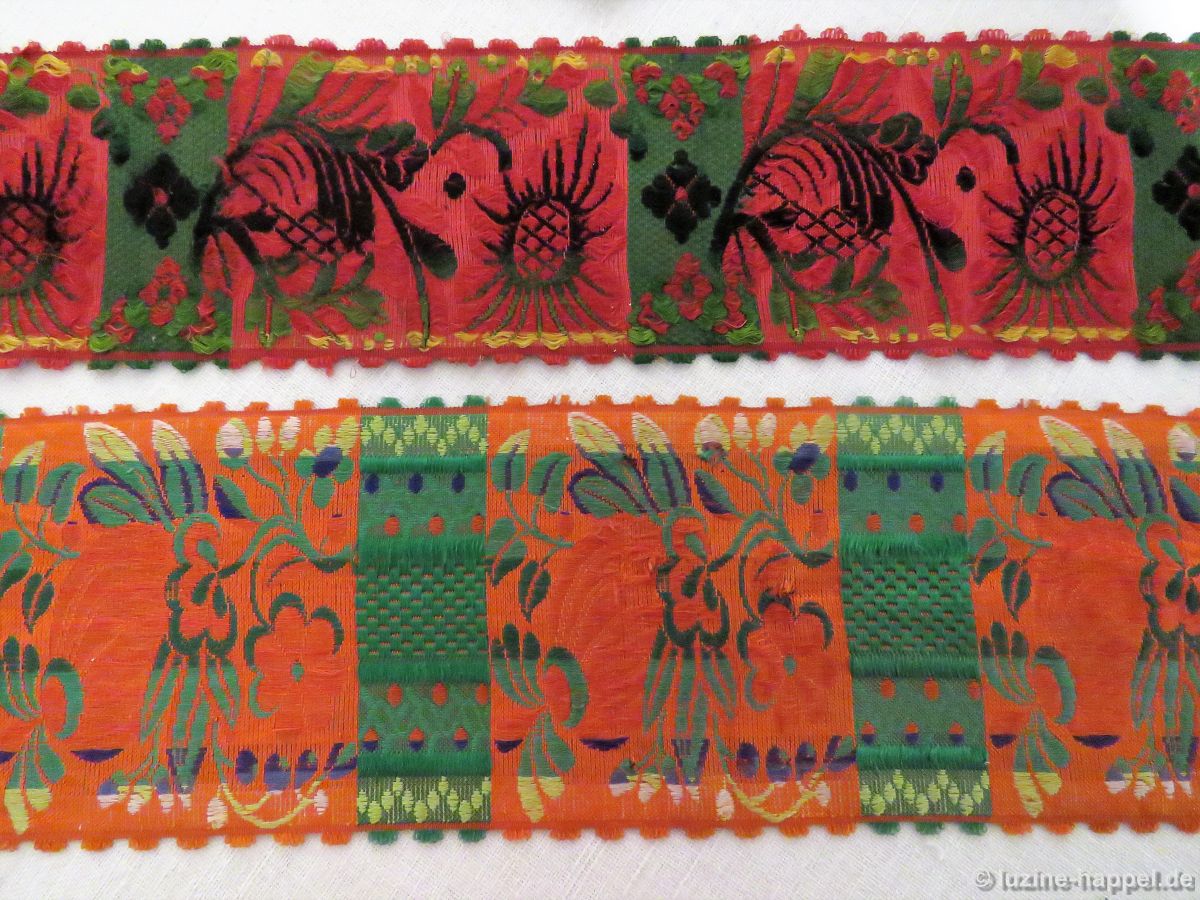
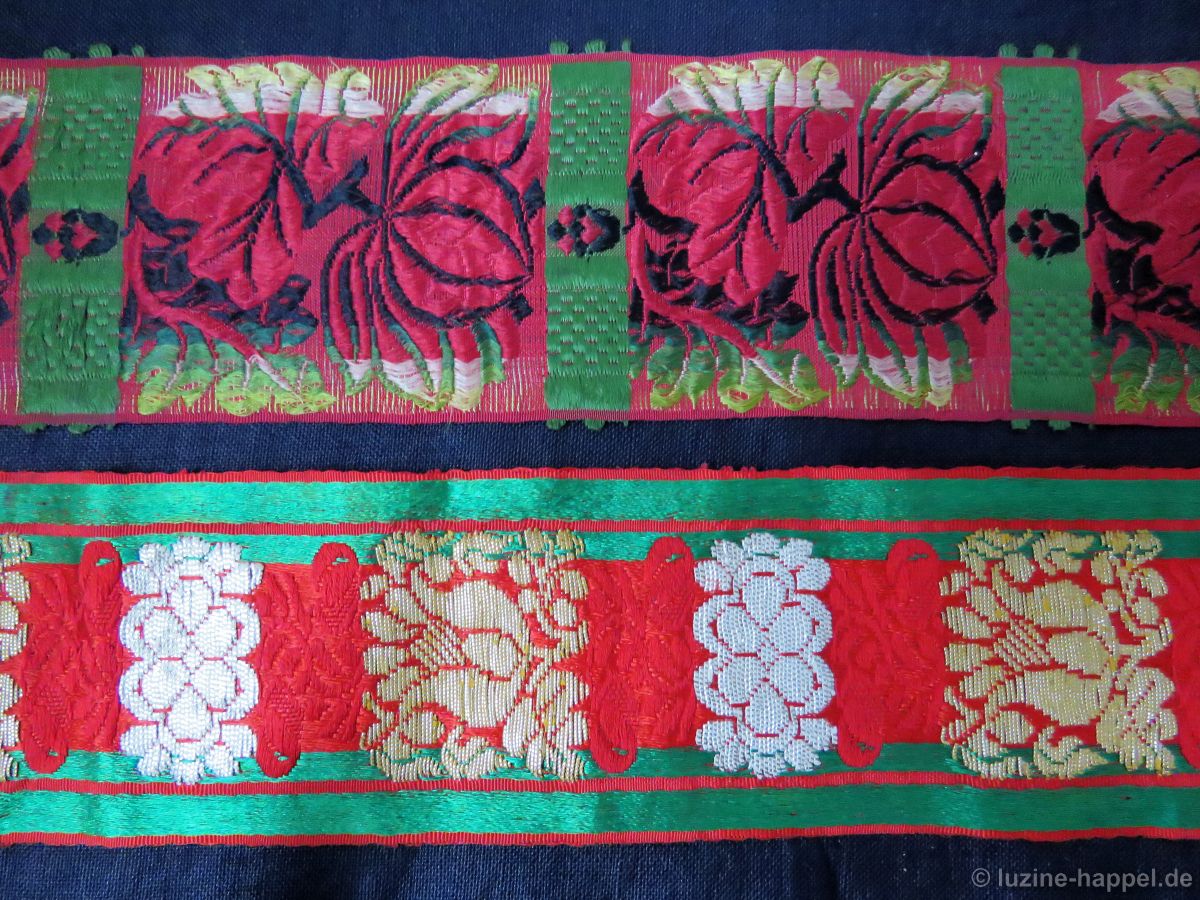
The bands were woven with silk or silk combined with metal threads. They had widths of approximately 4 cm up to 9 cm. Most common were bands with a width of 6.5 cm. The following are a sampling of different band patterns – included are some very old examples.

Bands with a red ground belonged to the red Schwalm costume. This costume was worn by girls up to the time they married.
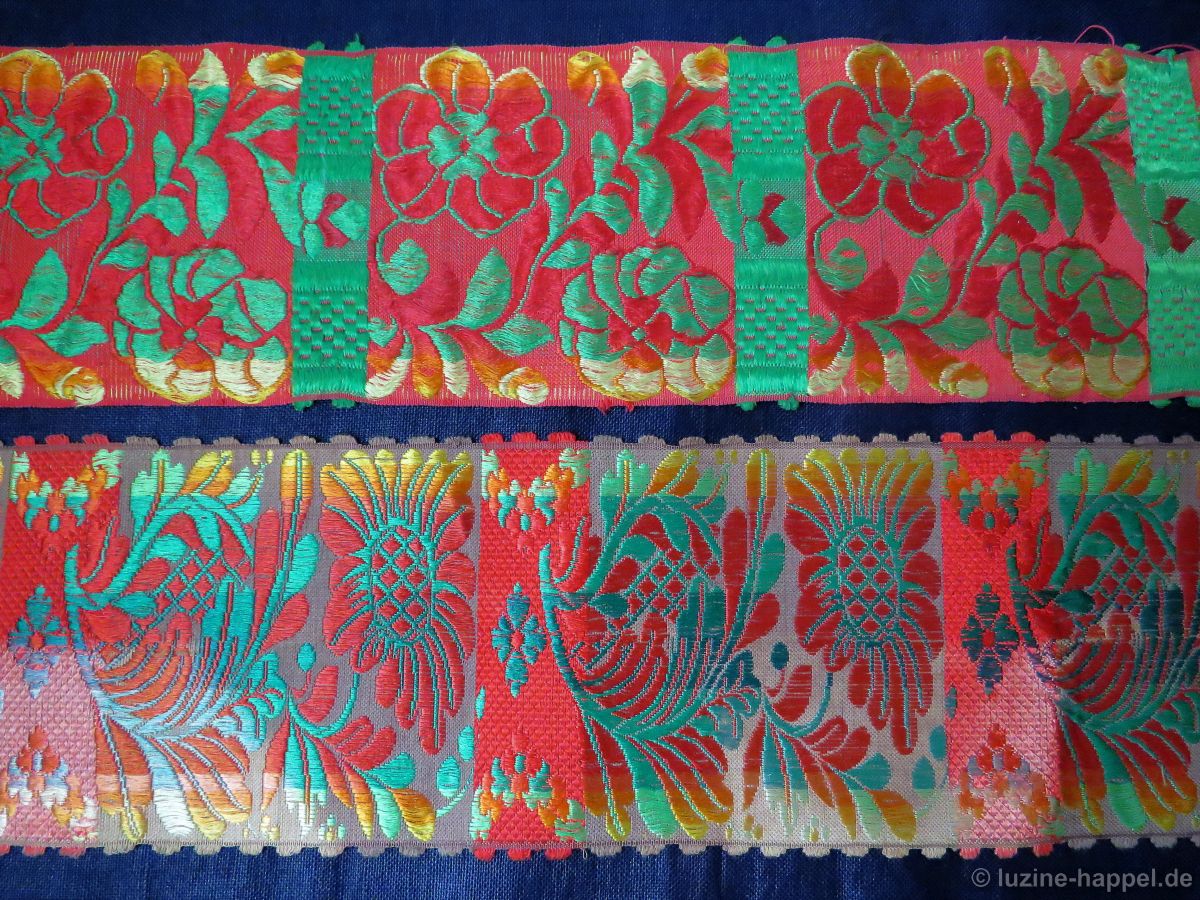
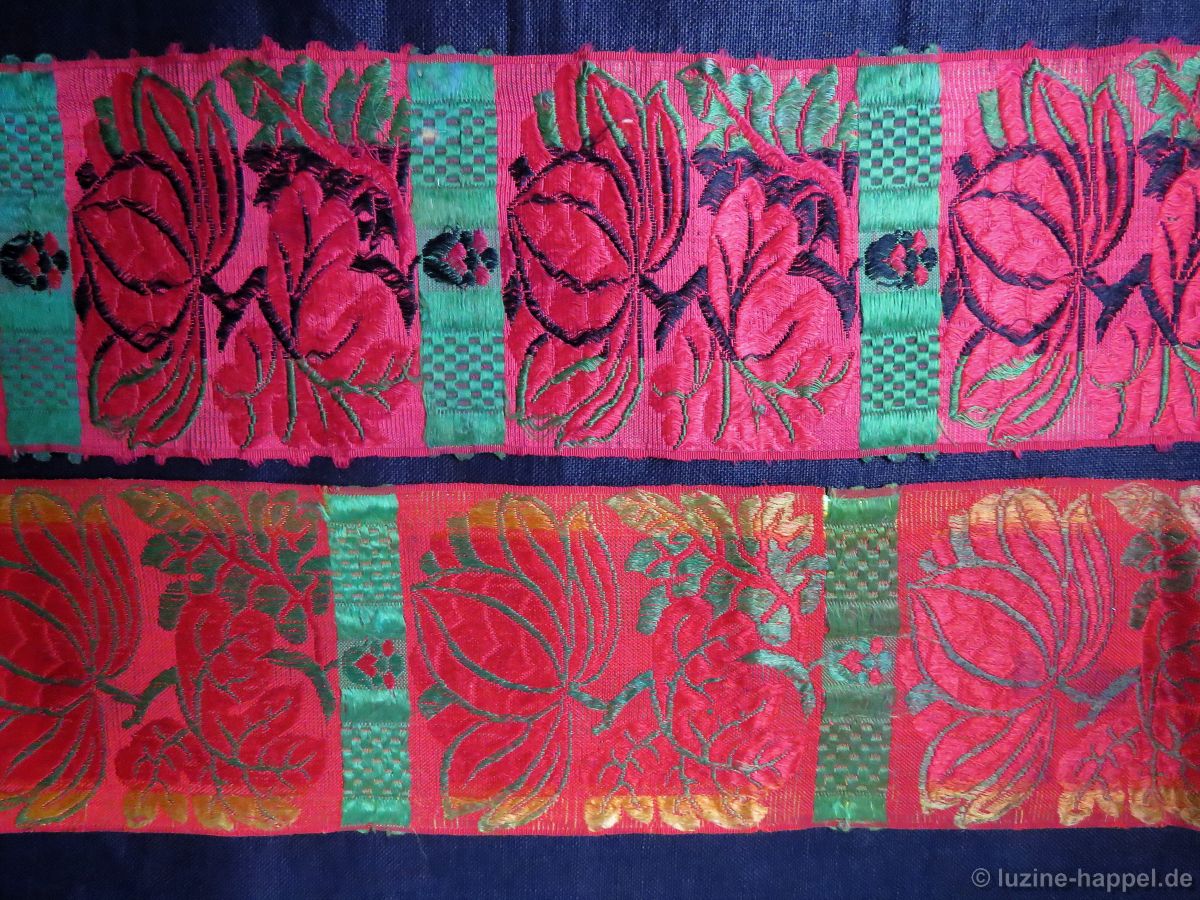

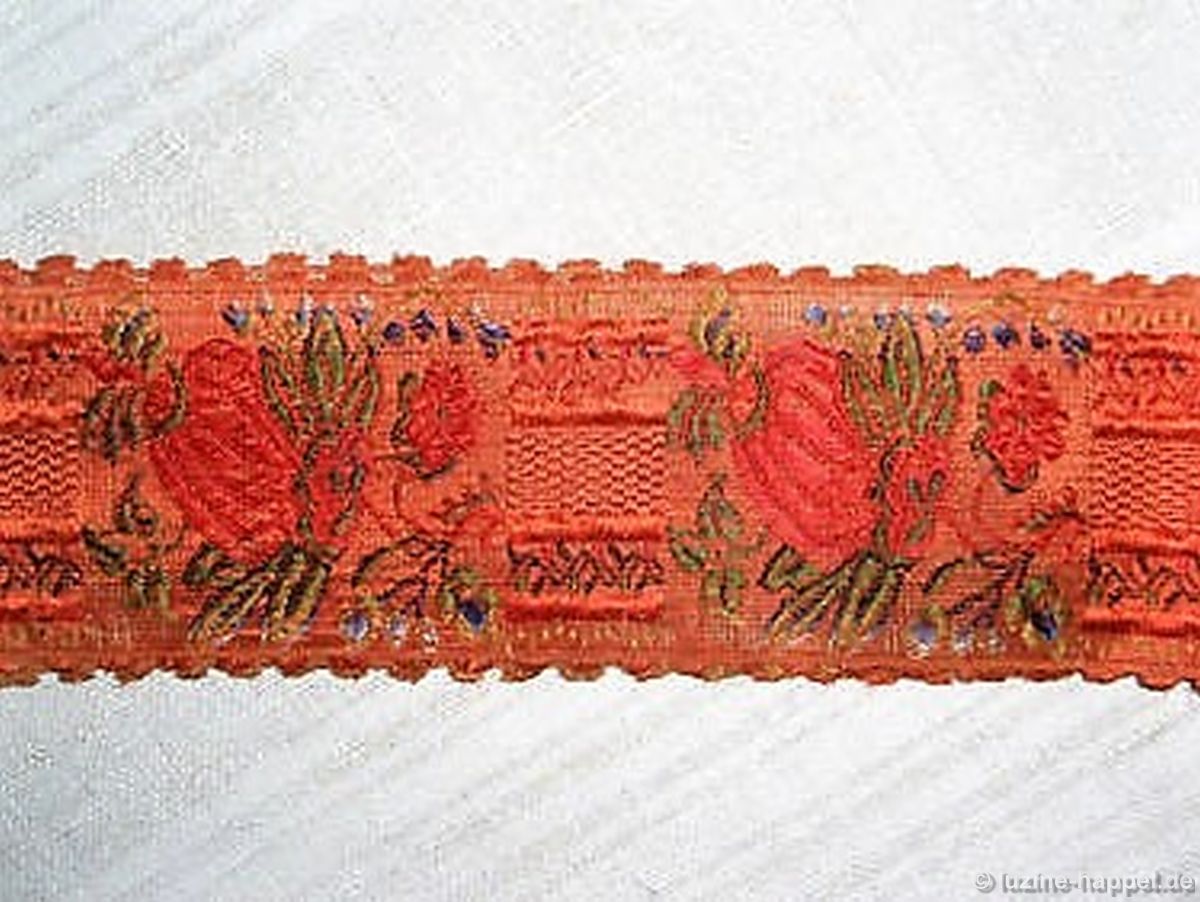
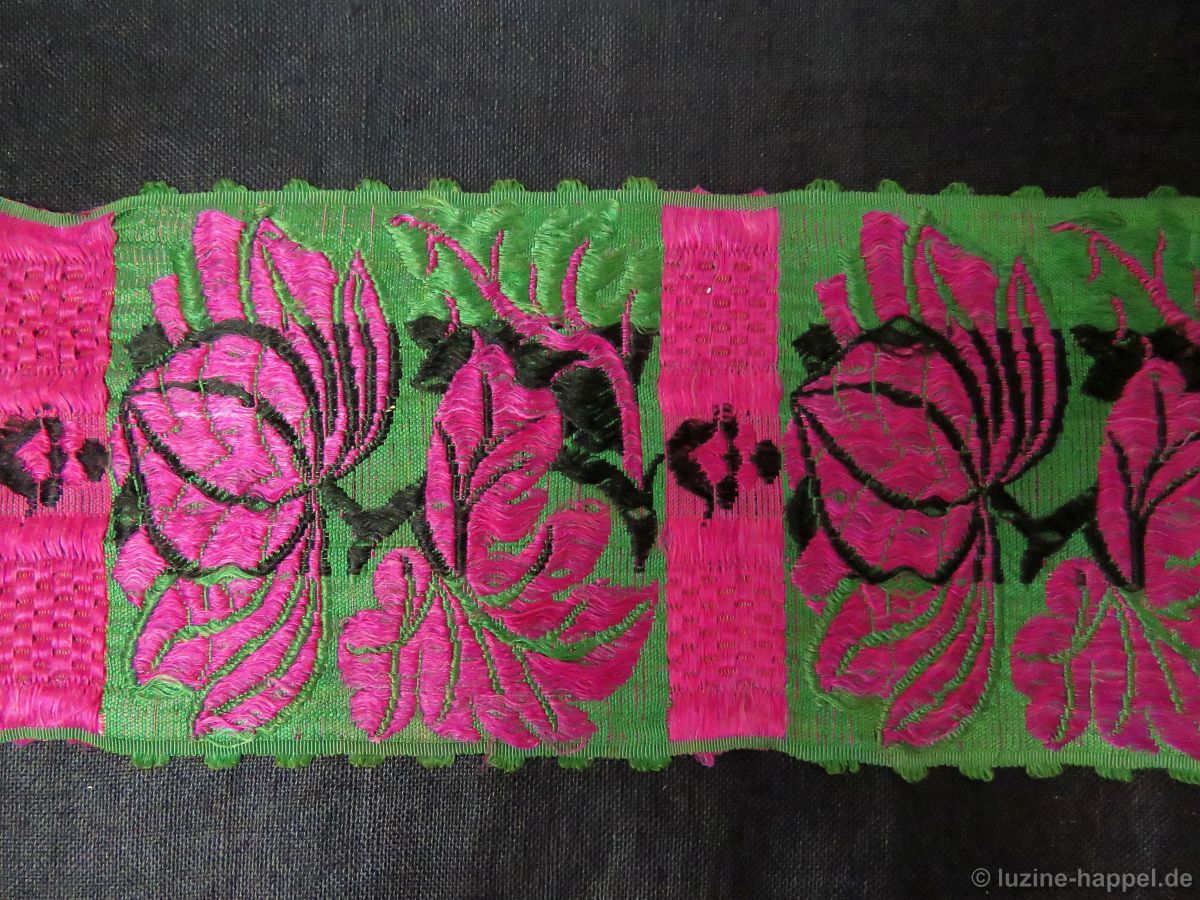
Bands with a green ground and red patterns belonged to the green Schwalm costume. This costume was worn by young women until shortly after their marriage.
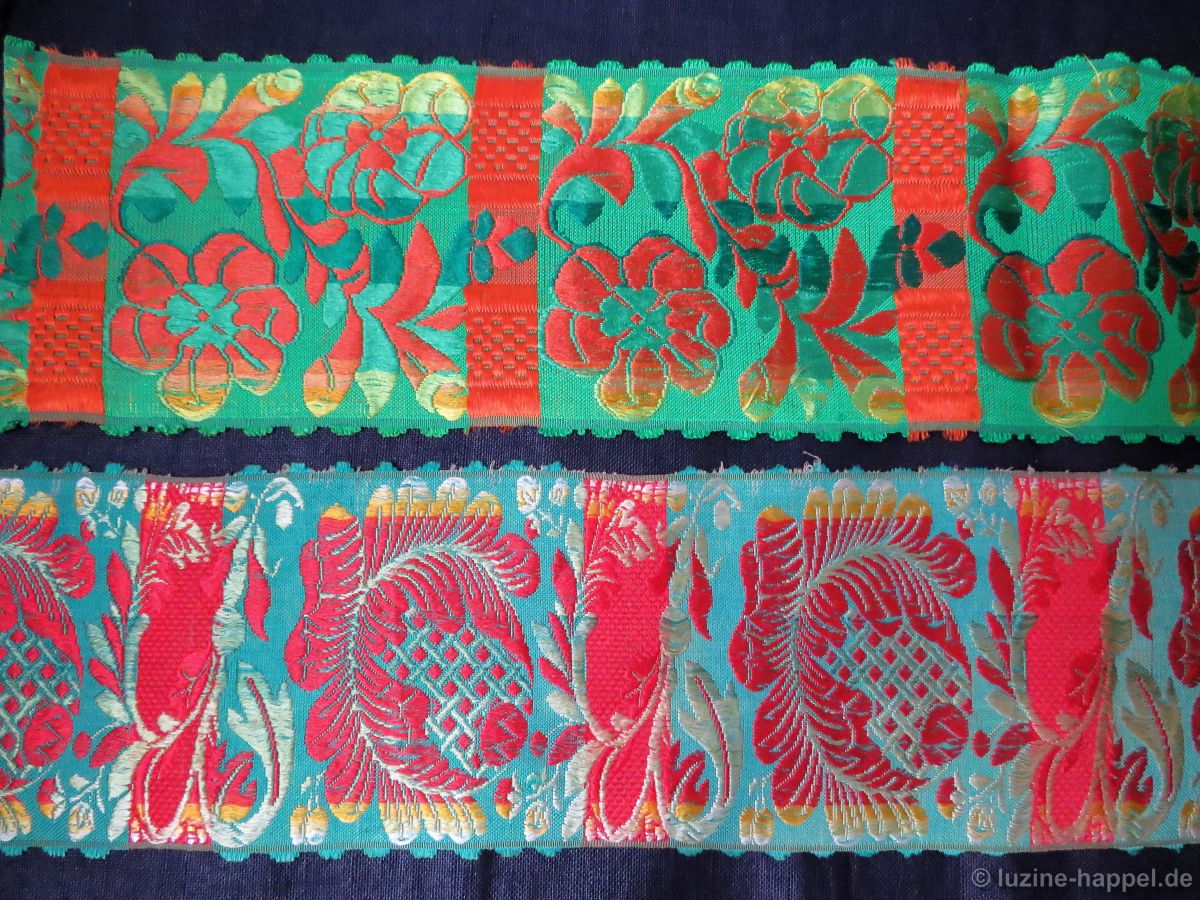
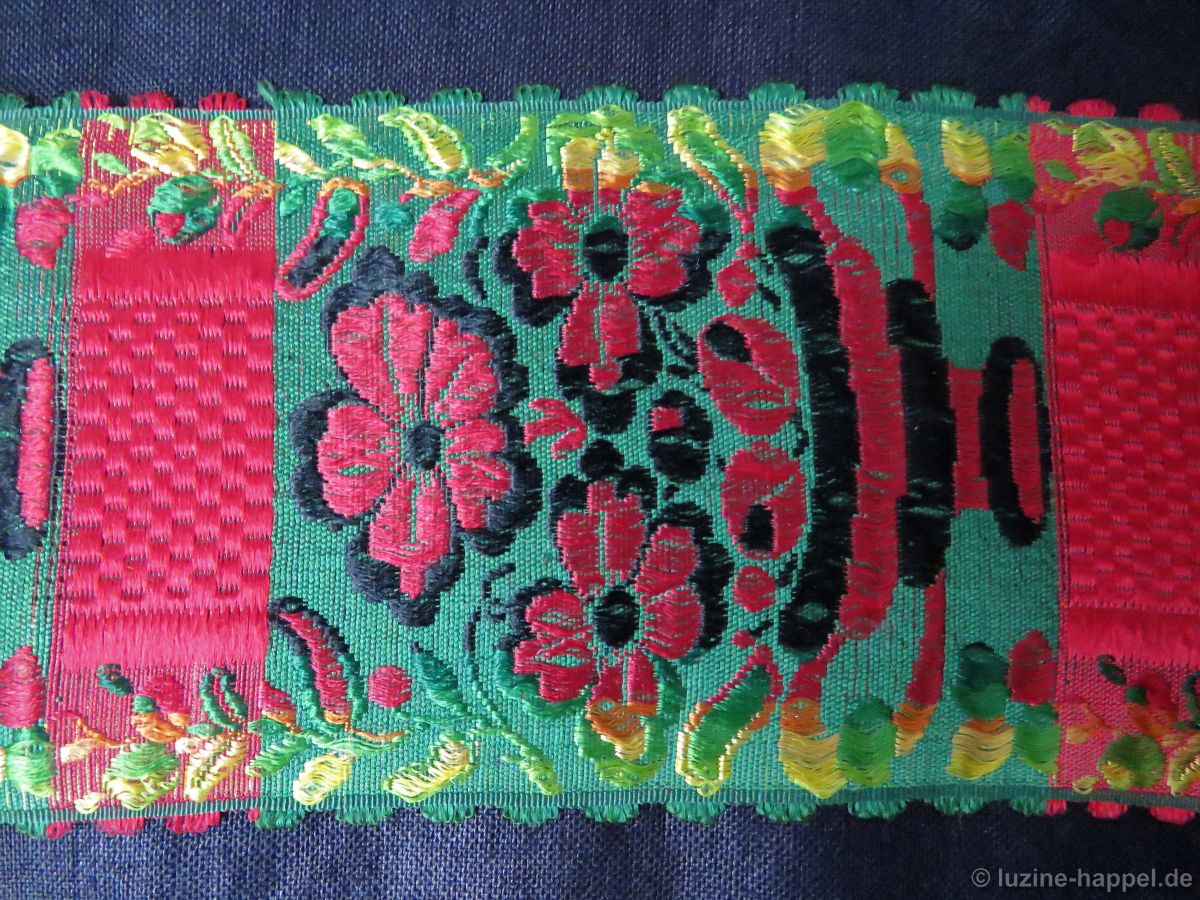
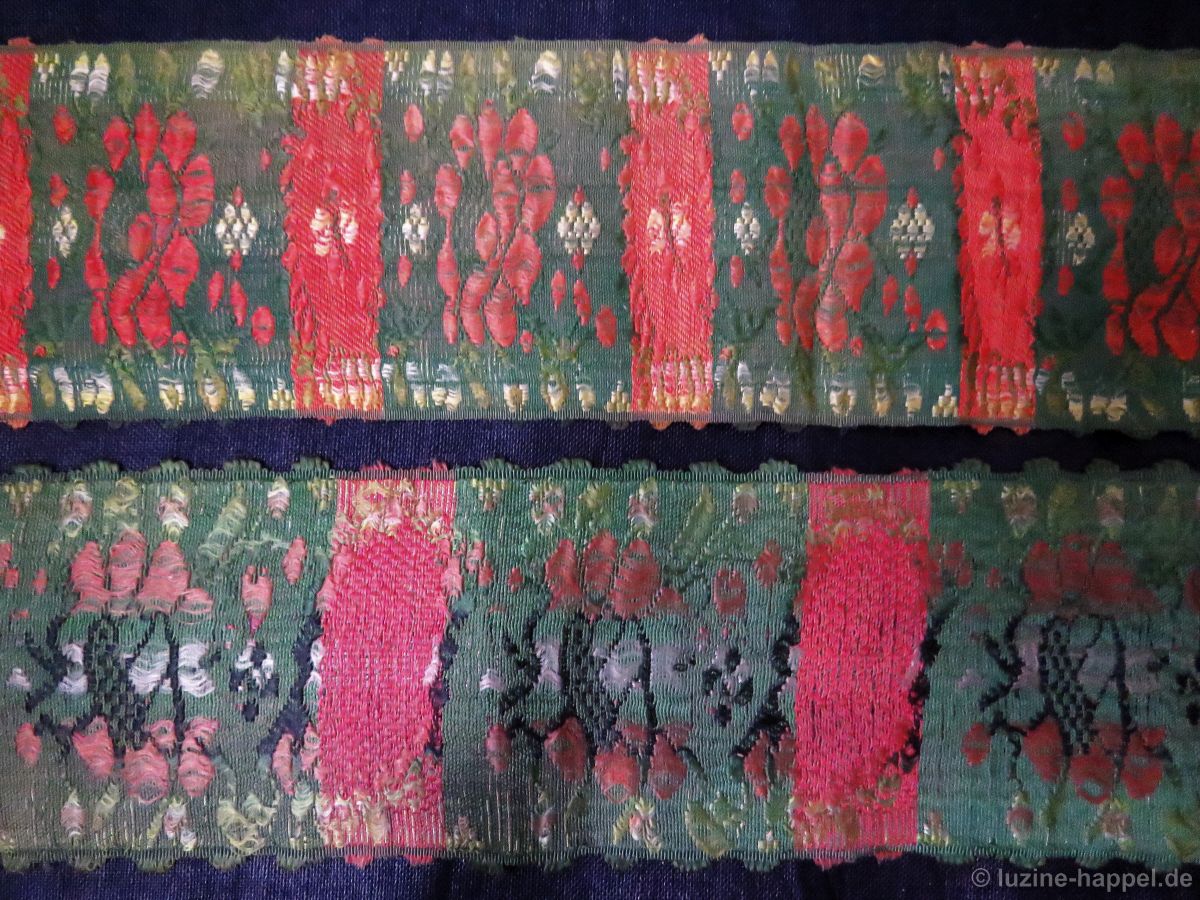
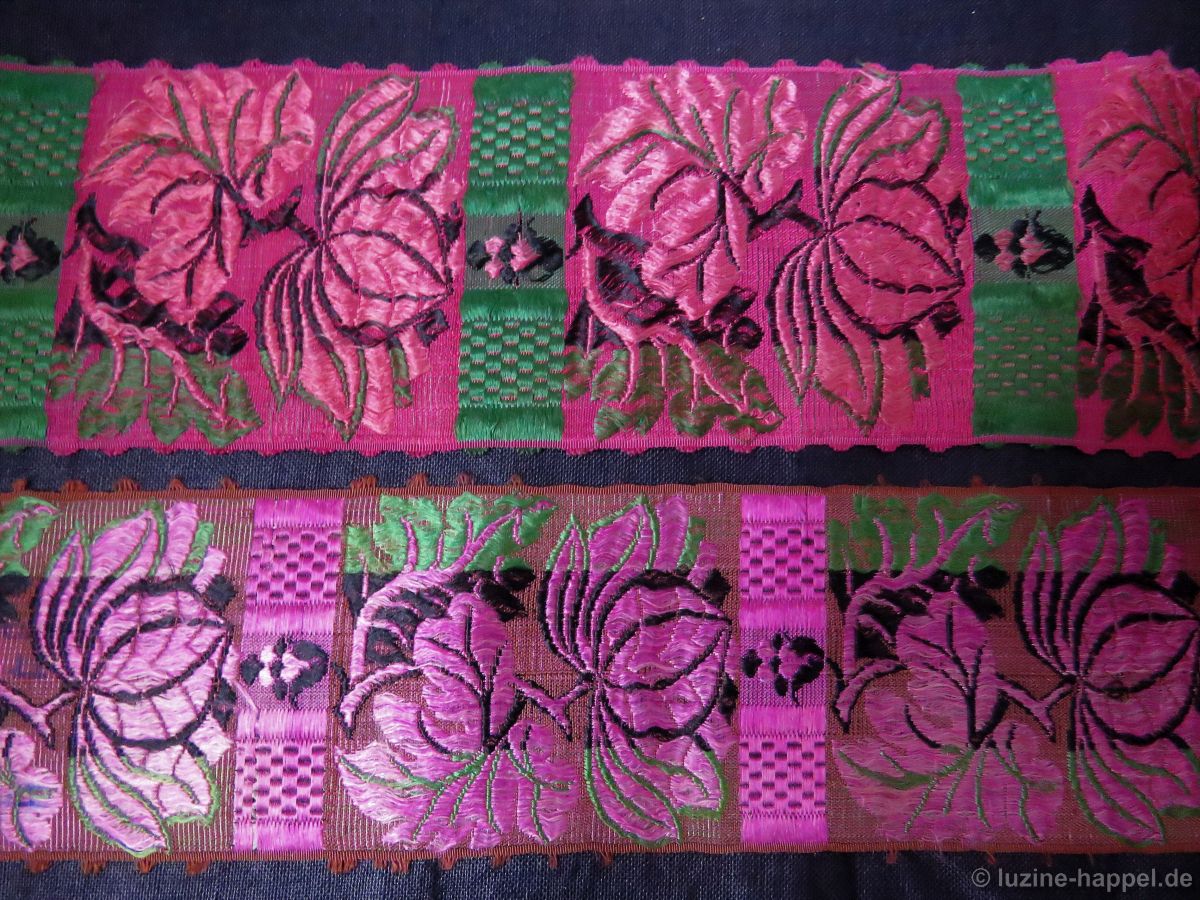
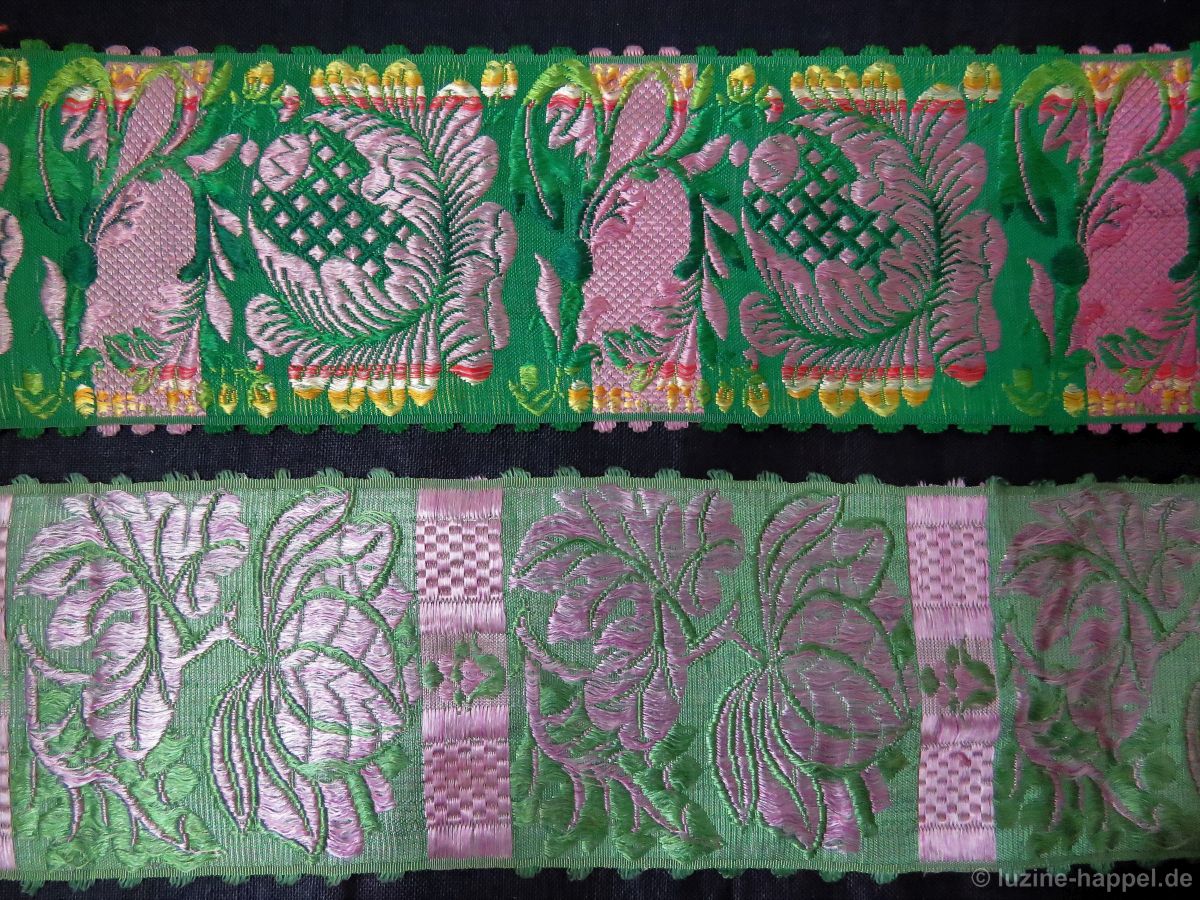
Bands with a green ground and lilac patterns also belonged to the green Schwalm costume. This costume was worn by older women up to 40 years old.
Bands with a blue or lilac ground belonged to the blue Schwalm costume. This costume was worn by women between 40 and 50 years old.
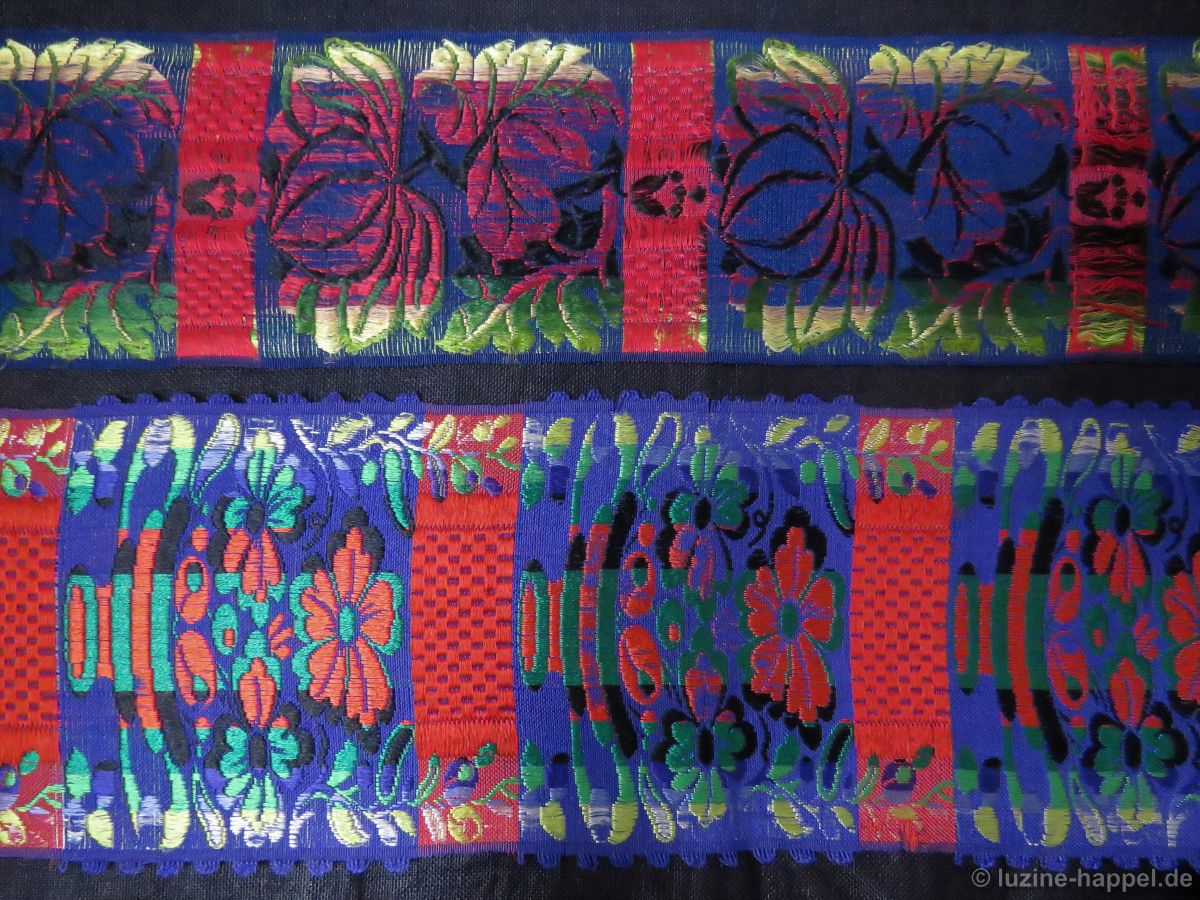
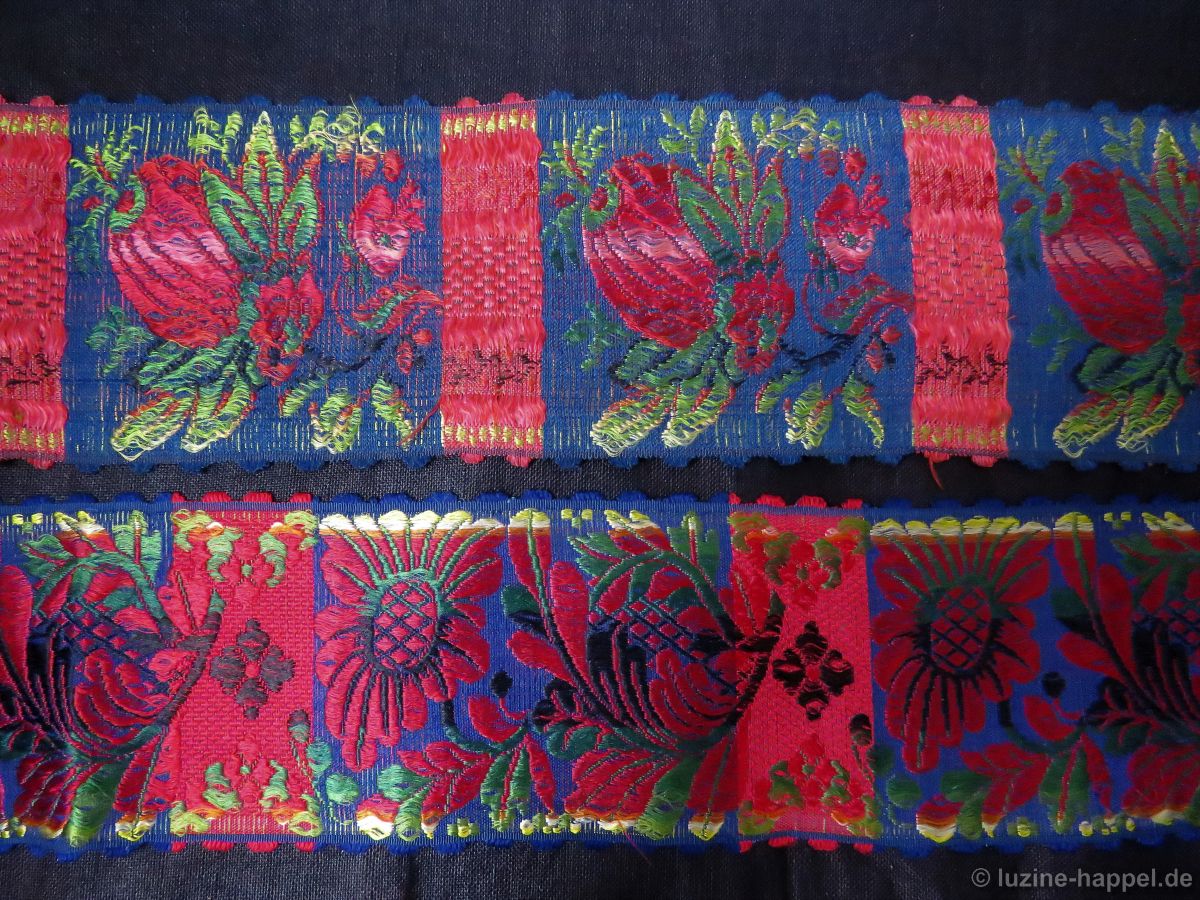
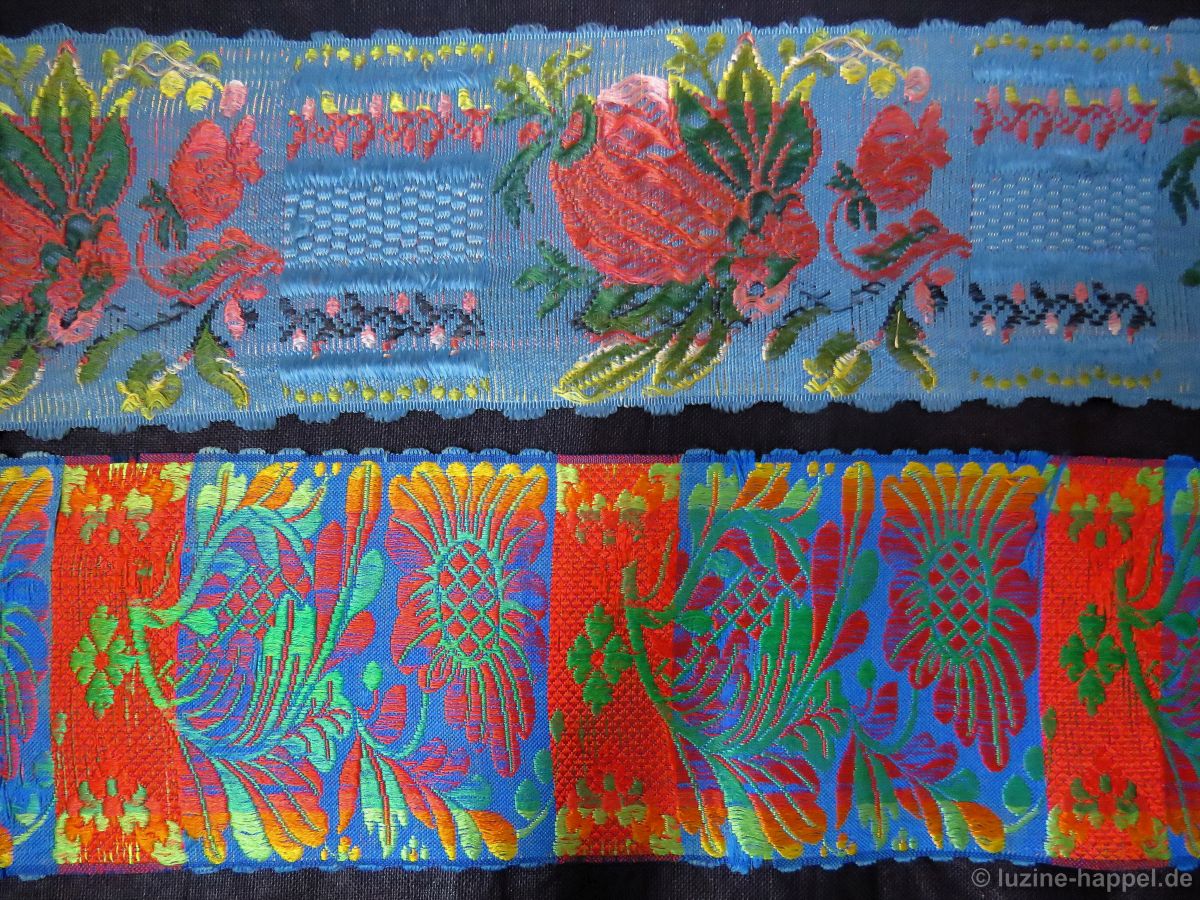
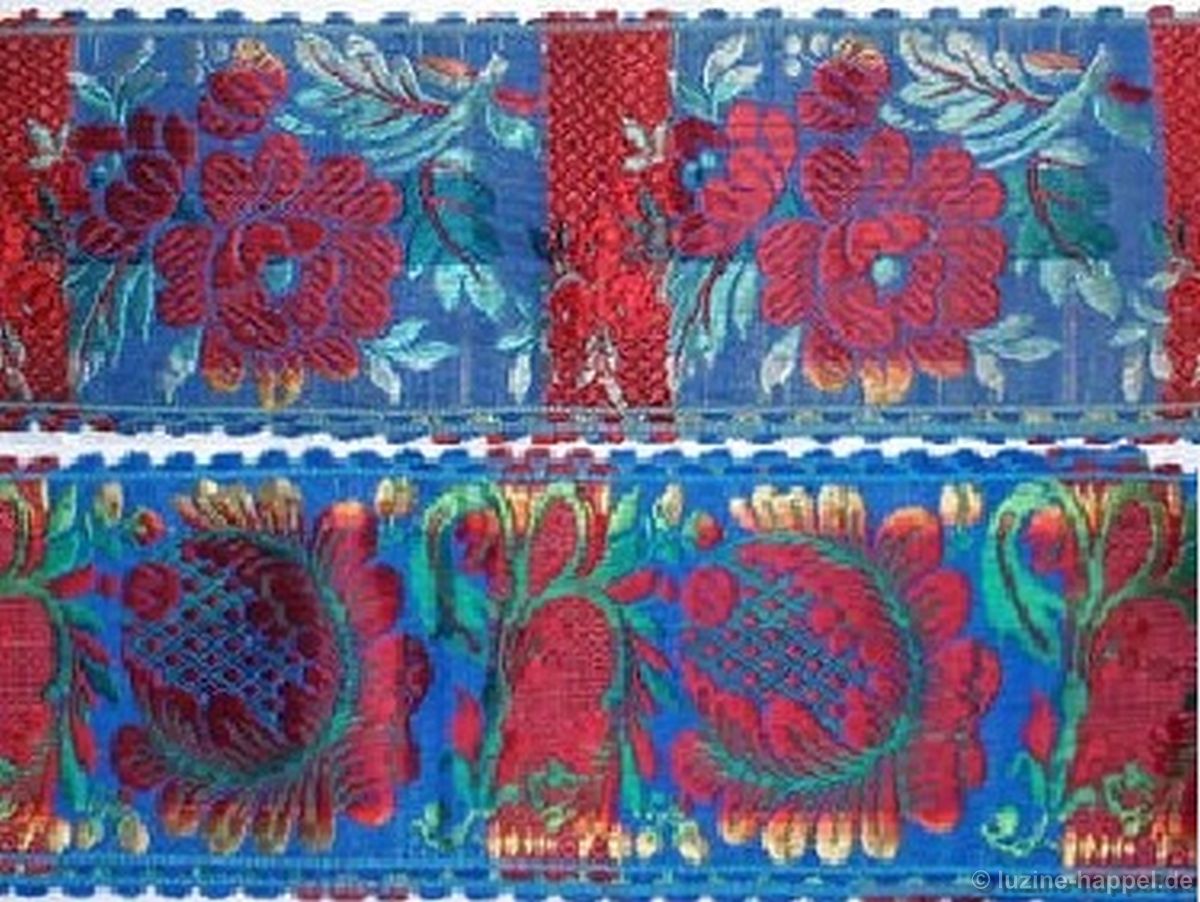

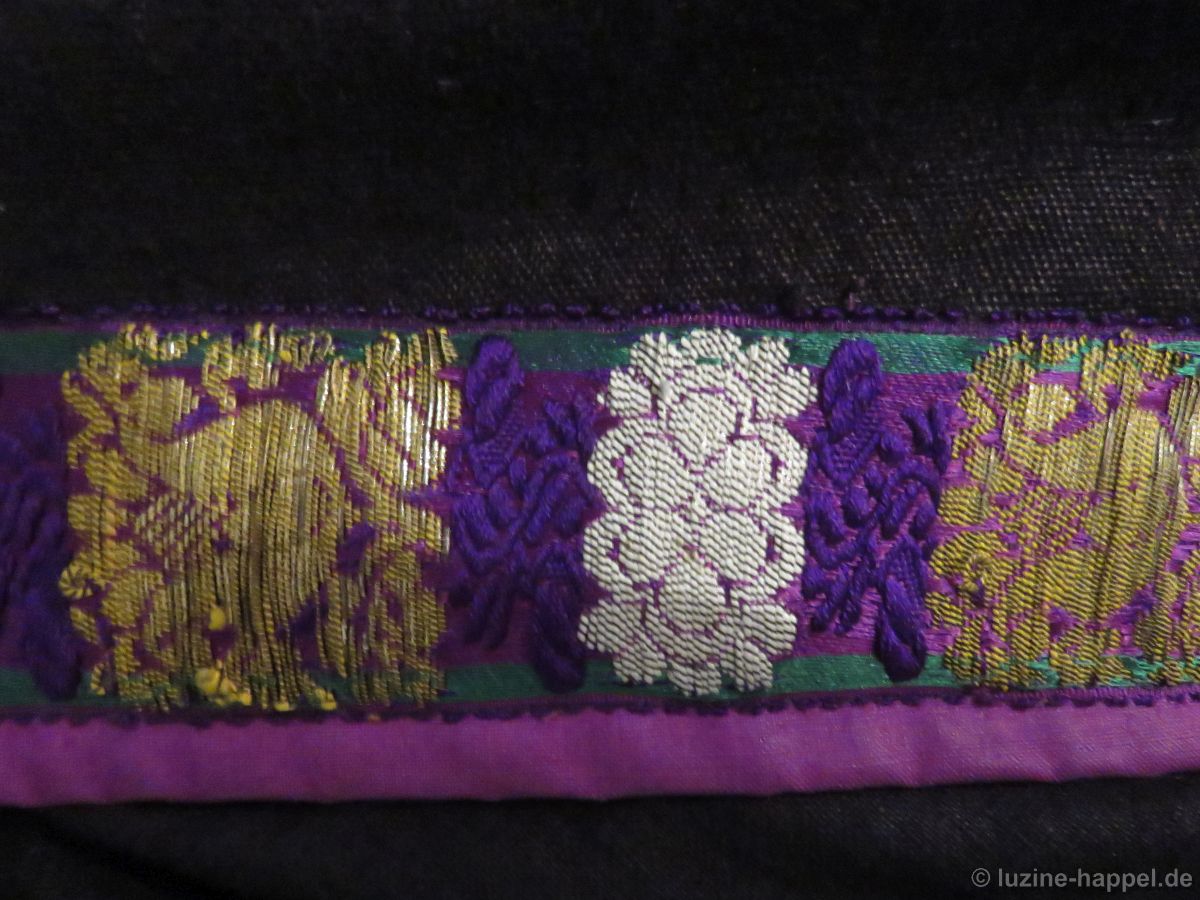
Of course there are single patterns in different colour combinations. Ribbon weaving mills were found in the region around Wuppertal. But most of the bands used in the Schwalm were imported from France.

Seeing the beauty and the splendor of the ribbons and keeping in mind that Schwalm women had a rather poor life, one can appreciate how much they loved and why they collected these ribbons. It is not surprising that Schwalm women wanted to show them off.
Schwalm Costume – The Dark Aprons

White or dark aprons were a component of the festive Schwalm costume for women. Here you will learn a little bit about the dark aprons; the white aprons will be the subject of a separate article.
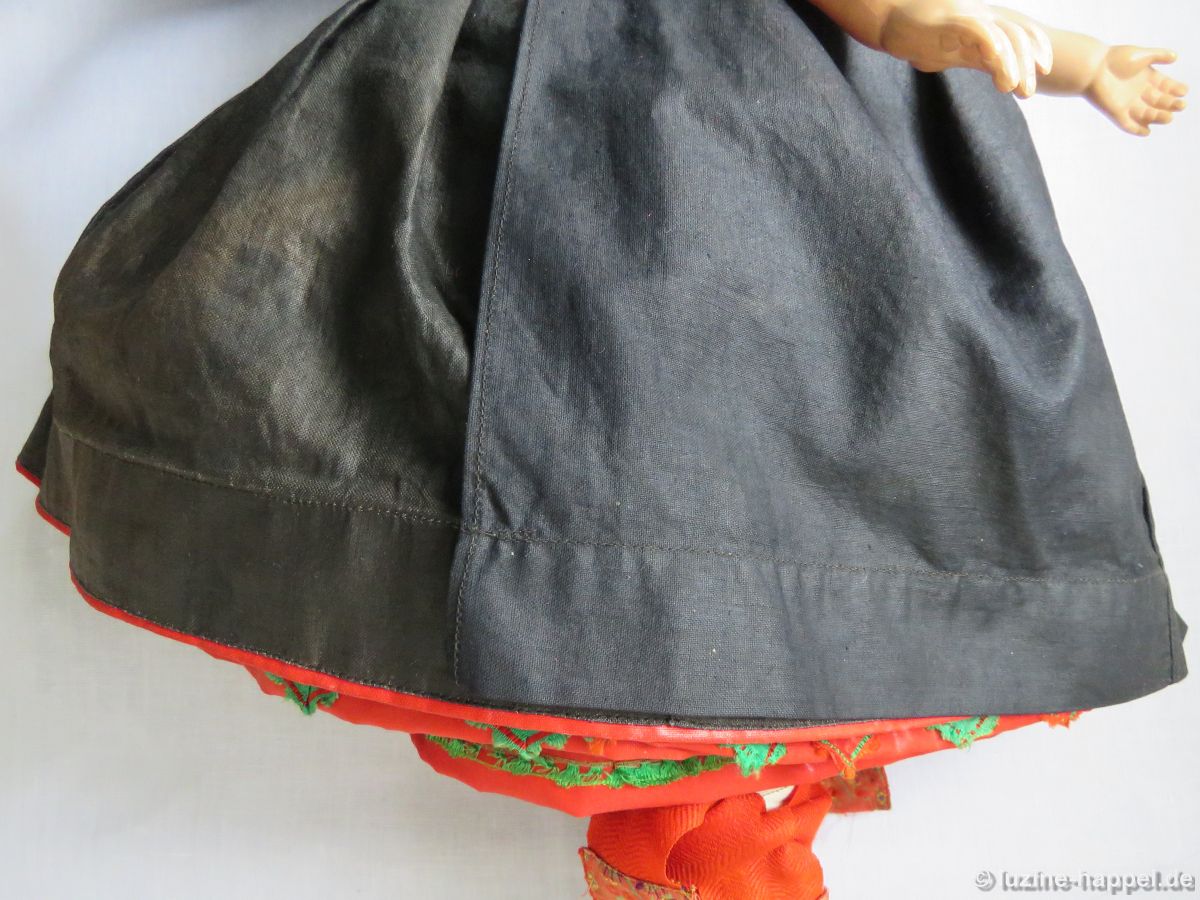
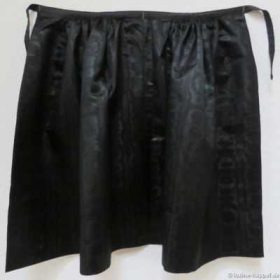
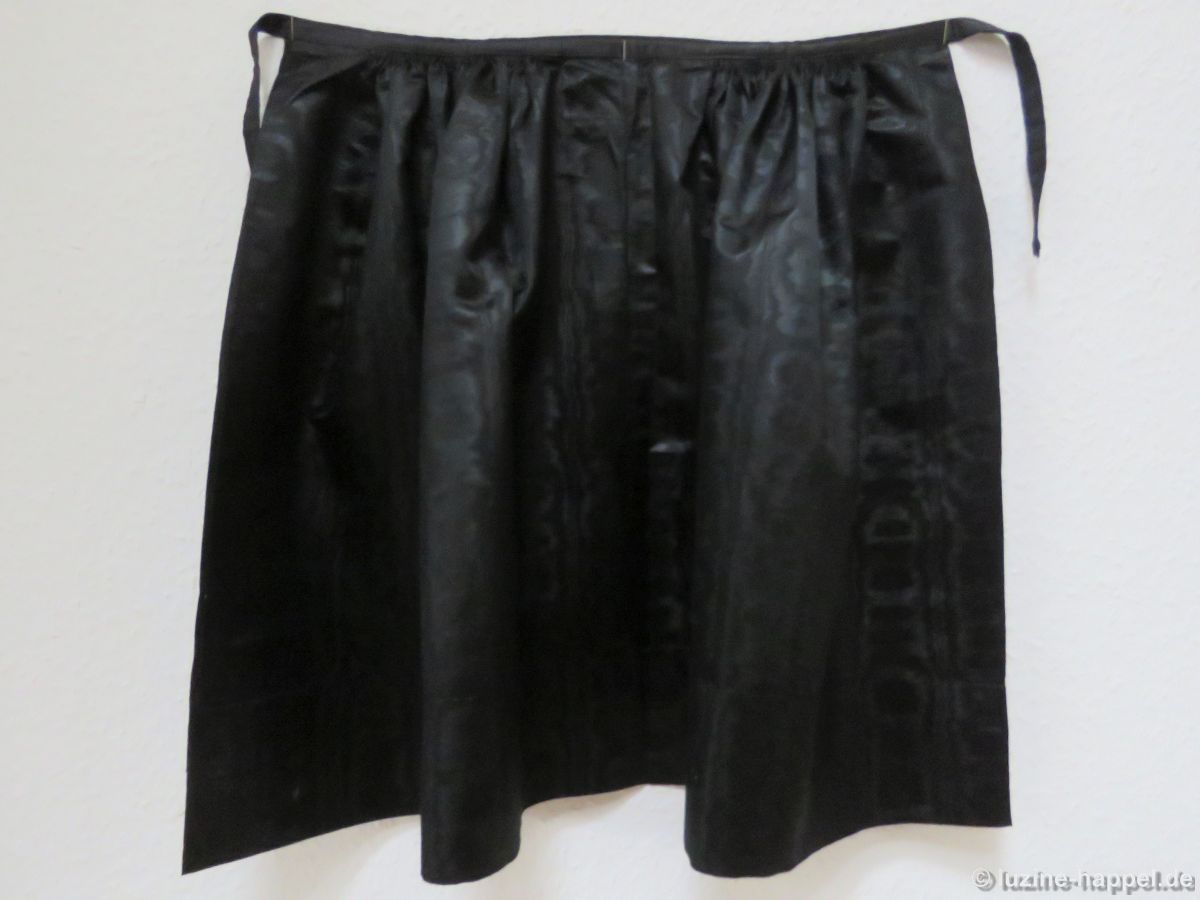
The dark aprons were simple and unfussy in appearance and style.
The bottom edge of the apron fell just above of the bottom edges of the skirt, and the sweep of the apron was about half that of the skirts.
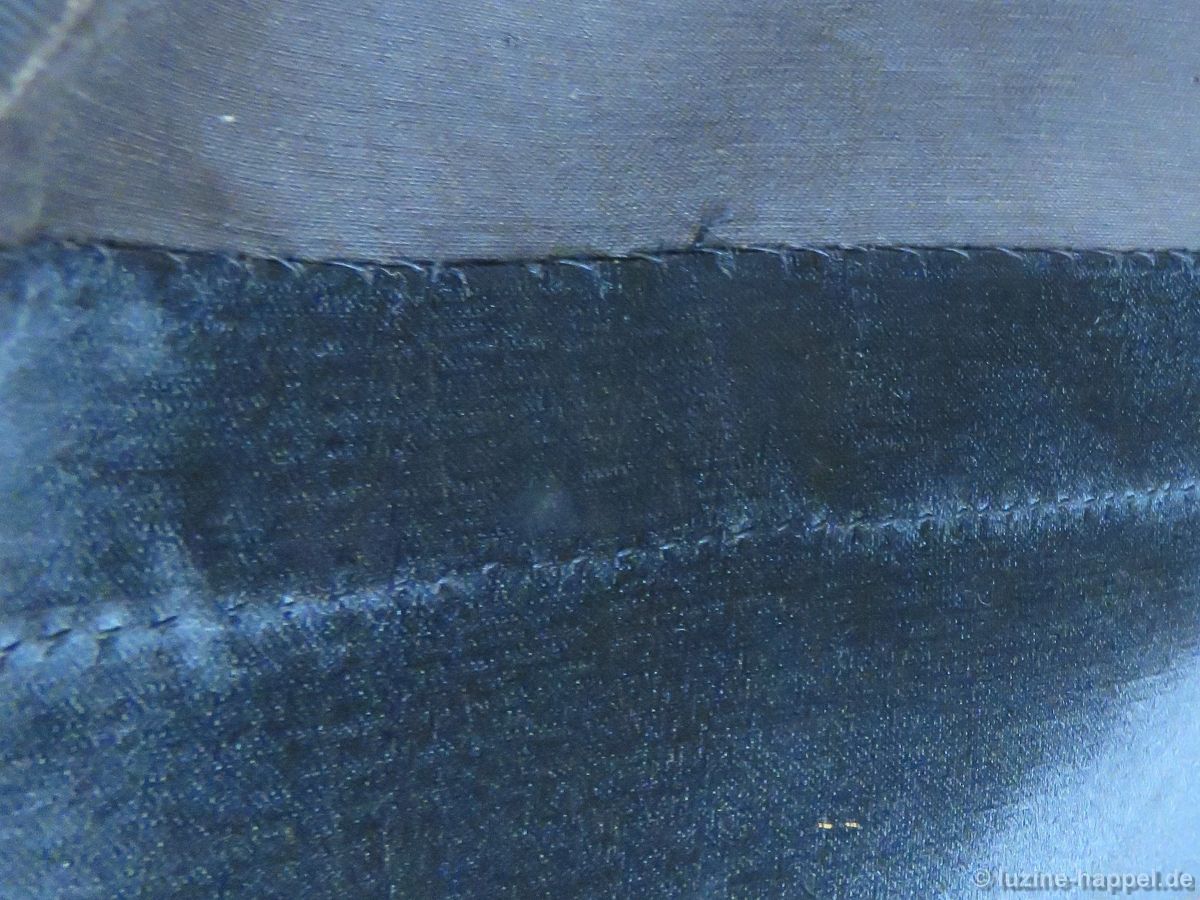
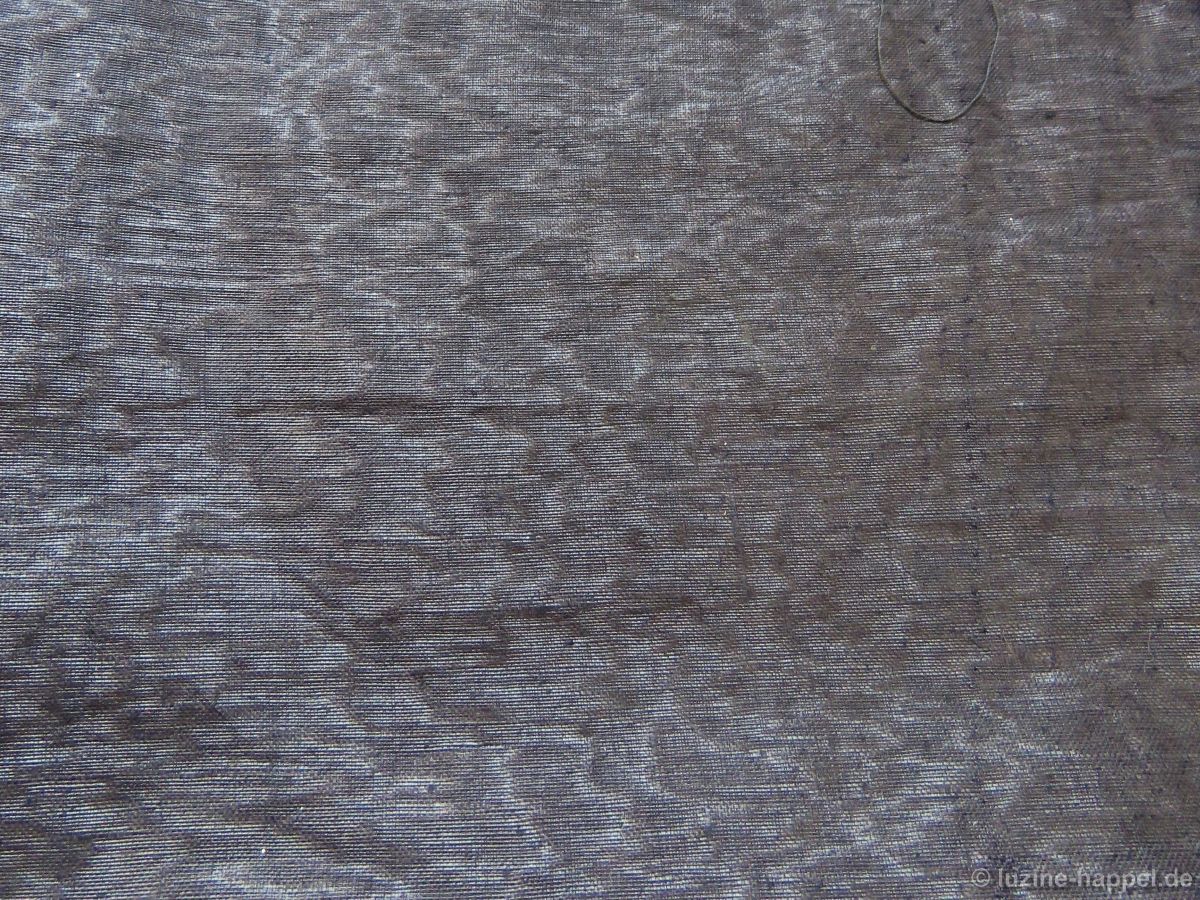
Schwalm women had aprons that were black and dark blue with either a polished or matte finish. The aprons with a dull finish were worn in mourning. On Sundays the shiny linen aprons were worn. For celebrations and holidays extra shiny satin aprons were preferred. Fabric with a satin weave created a high gloss finish on the front side and a matte finish on the back.
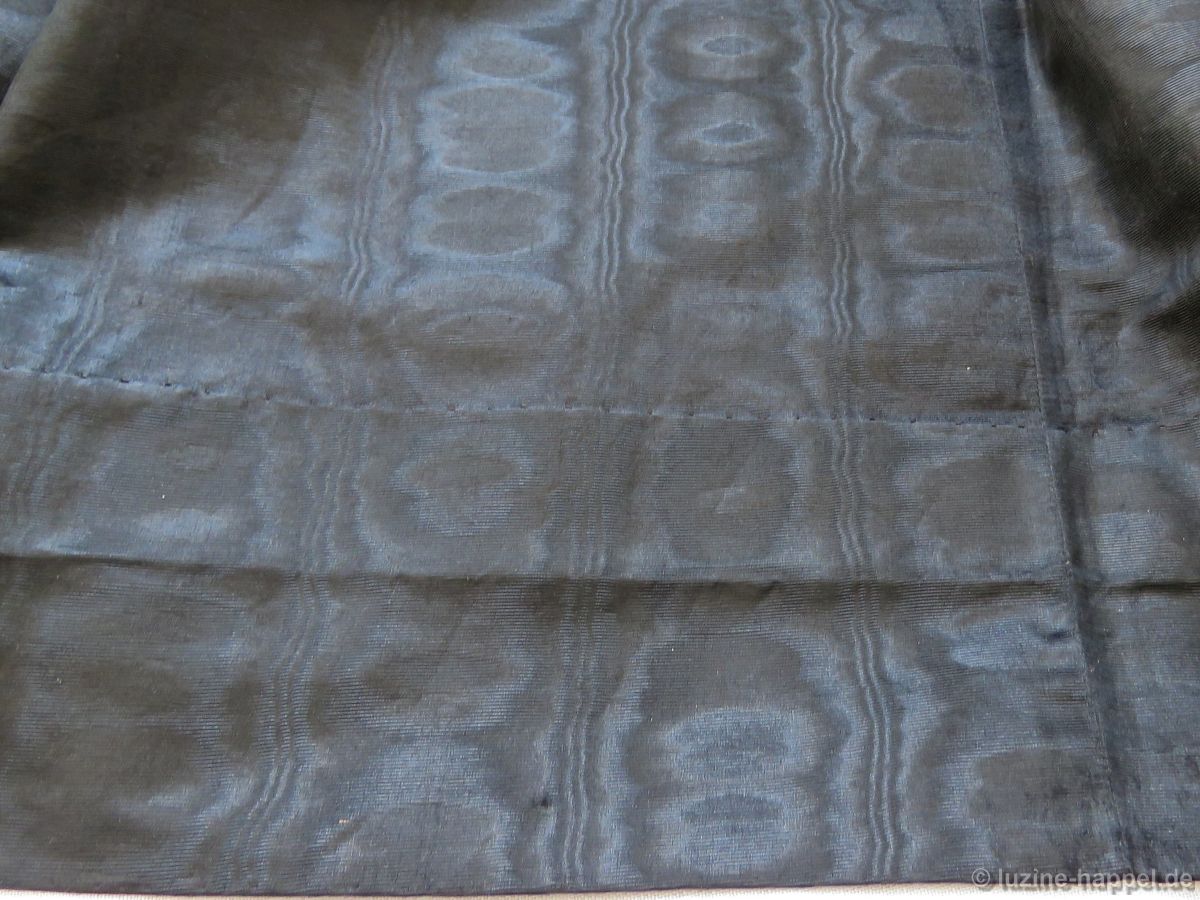
To special celebrations, such as weddings, the women wore the röserische (moire) aprons. The fabric of these aprons underwent an additional process to get this special rose pattern. Mostly these aprons were made from linen, as the image below shows.
Röserische aprons made from satin were rare.
Often dark blue aprons were worn on black skirts and vice versa.

The aprons had a length of about 55–60 cm and a width of about 145–152 cm. Most of the weaving looms of the Schwalm region were made for narrower widths. So, the aprons were mostly made with two strips of fabric with a seam in the middle.

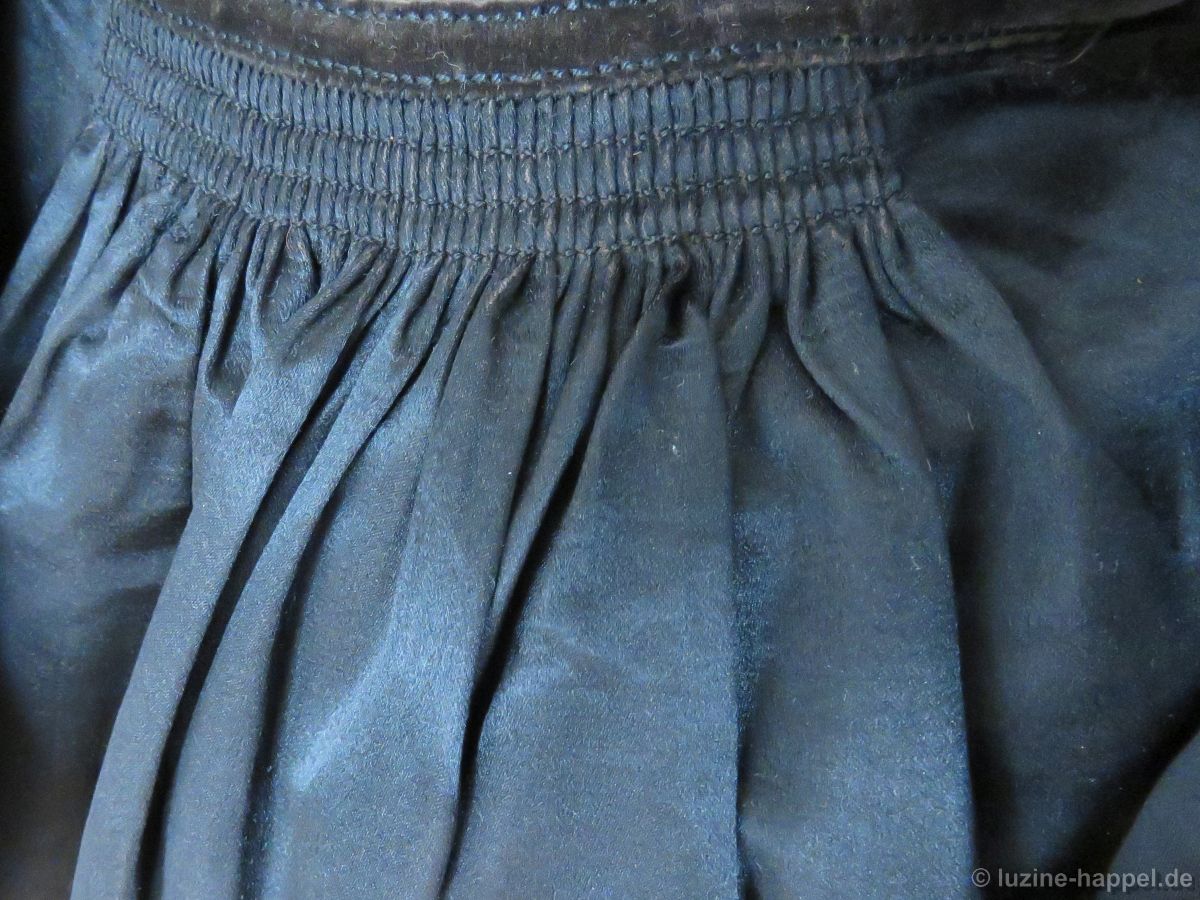
At the waistline, the middle section of the apron was flat for about 16 cm. To the left and to the right of this section, the apron was gathered with tiny pleats. Short sections on both sides were again left flat. In this way, the apron could spread over the width of the skirts without adding too much bulk over the belly. The aprons’ waistband was small and was closed in the back with a hook and eye.
The pleats were laid carefully and evenly and were usually secured with several rows of Running stitches, sometimes also with Back stitches.
The hems of the aprons were up to 15 cm deep. The deep hem added weight to the aprons creating an attractive drape on top of the skirts.
Of course the dark and unfussy aprons got a variety of decorations. Silk bands, small apron bands, and the apron corners with their blaze of colour ensured that there was always splendor. But I will dedicate separate articles to all these decorative elements of the festive Schwalm costume for women – I hope you will look forward to them.

Tendrils and Forks – Practice Exercises

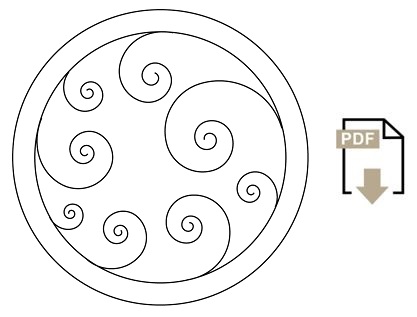
The last design for continuing the band with circle designs is a little bit edgy. But it is an interesting design and looks pretty embroidered.
The design is transferred to the linen. Using coton à broder No. 16 Coral Knot stitches are worked along the inner line. The tendrils run clockwise, so also embroider the Coral Knot stitches clockwise. (If you do not transfer the design by ironing, your tendrils will run counterclockwise. In this case please embroider also the Coral Knot stitches counterclockwise.)
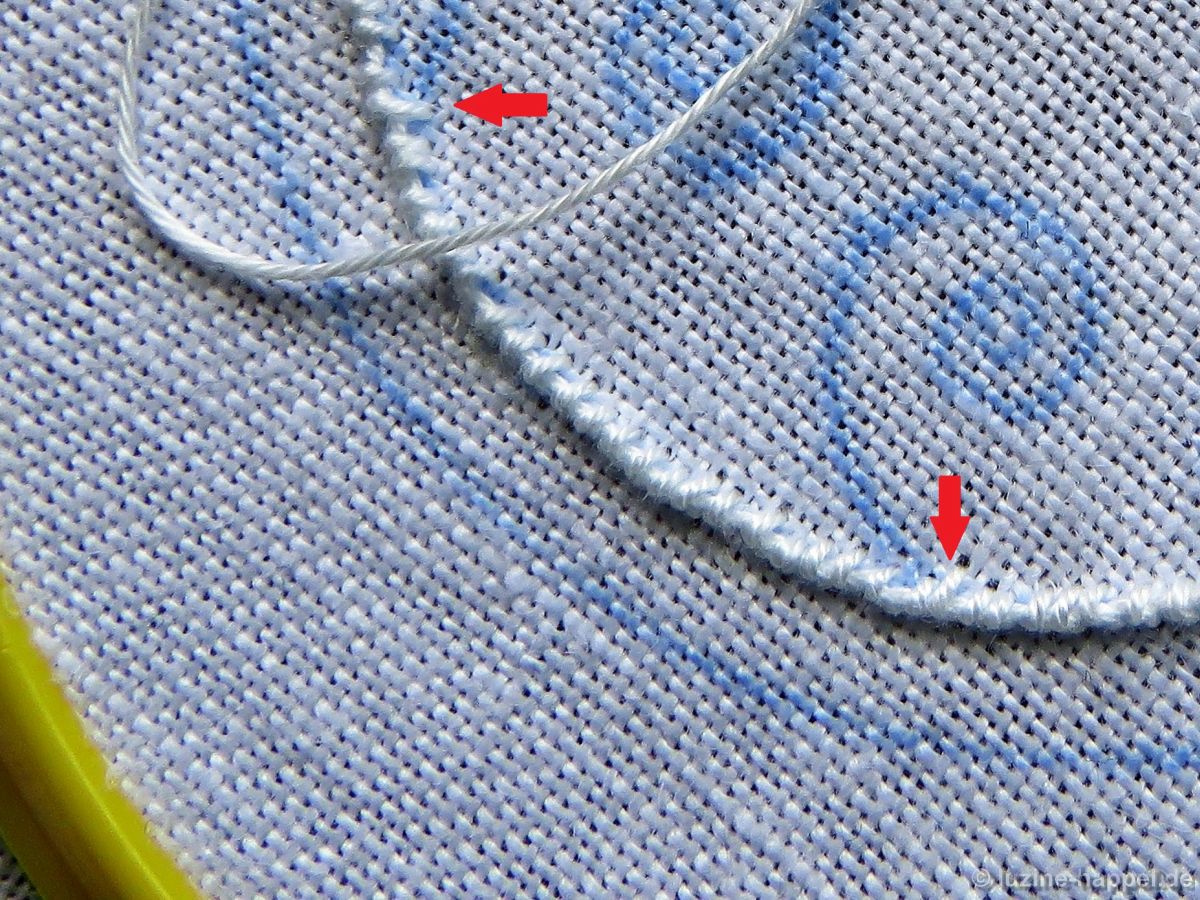
Please make sure, that the last stitch before reaching a fork is worked somewhat wider than the others. You want to work an offshoot on the
right, so widen the stitch a small step to the right.
All other preparatory work is done per the explanations in the leaves practicing article.
Then the tendrils are worked.
The forks turned out perfectly.

Schwalm Border Designs with Birds

In the Schwalm designs often include birds; sparrows and doves are usually depicted. The sparrow represents fertility, and the dove represents freedom. However, the dove is less prominent in Schwalm designs than the sparrow.

Looking to many traditional embroideries, I found a lot of other bird shapes which are neither sparrows nor doves. I came across a stork, hoopoe, swallow, rooster, woodpecker, wren, duck, and peacock; in addition, there are others not so easily identified.

Now and then I show such bird motifs on my website. My readers have seen a bird shape from 1826 in this previous article; other birds were seen here and here, or in the Schwalm Bird Tree.
There are more birds hidden on my blog; simply do a search to find them.

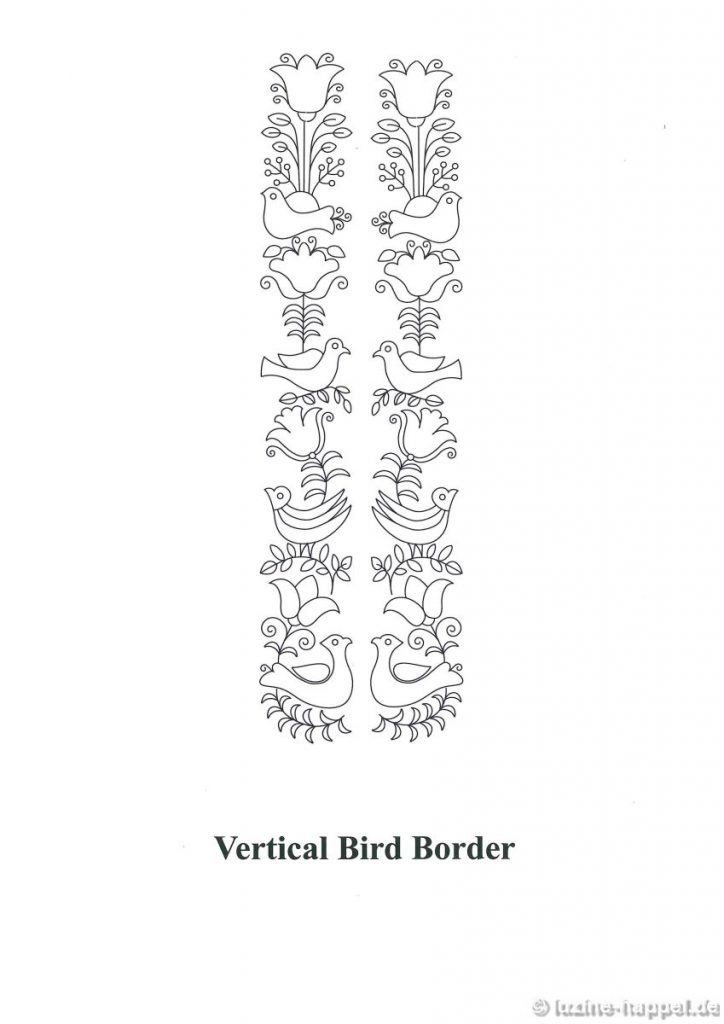
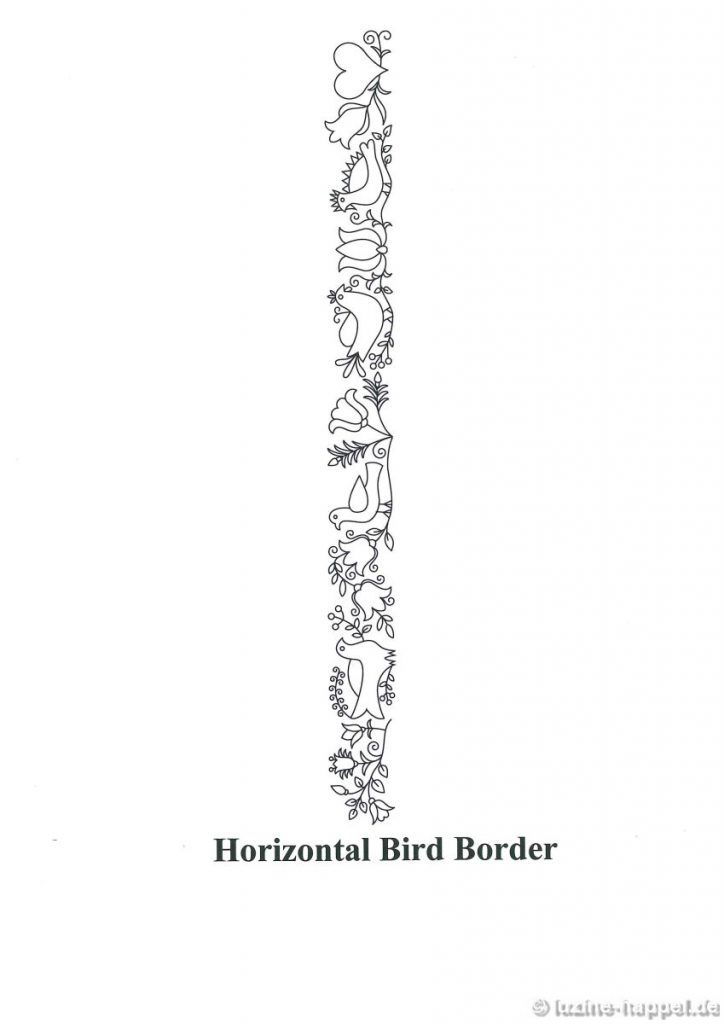
I asked the artist Gudrun Hartwig for border designs with traditional Schwalm bird shapes. She combined the bird motifs with special tulip designs we found in old Schwalm embroideries. In the end, she created two beautiful border designs – one is horizontal, and the other is a vertical. Both are made containing single parts; so it is no problem to shorten or lengthen the borders.

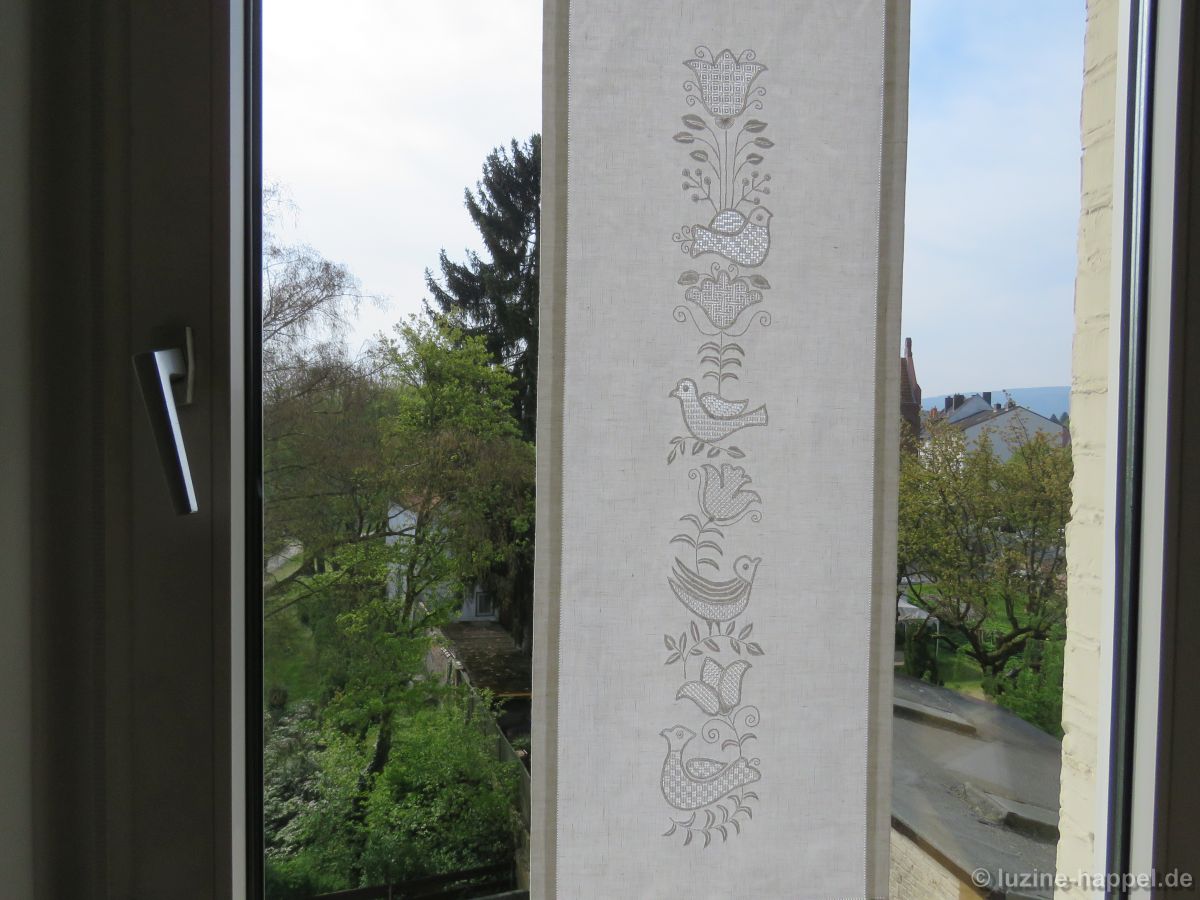
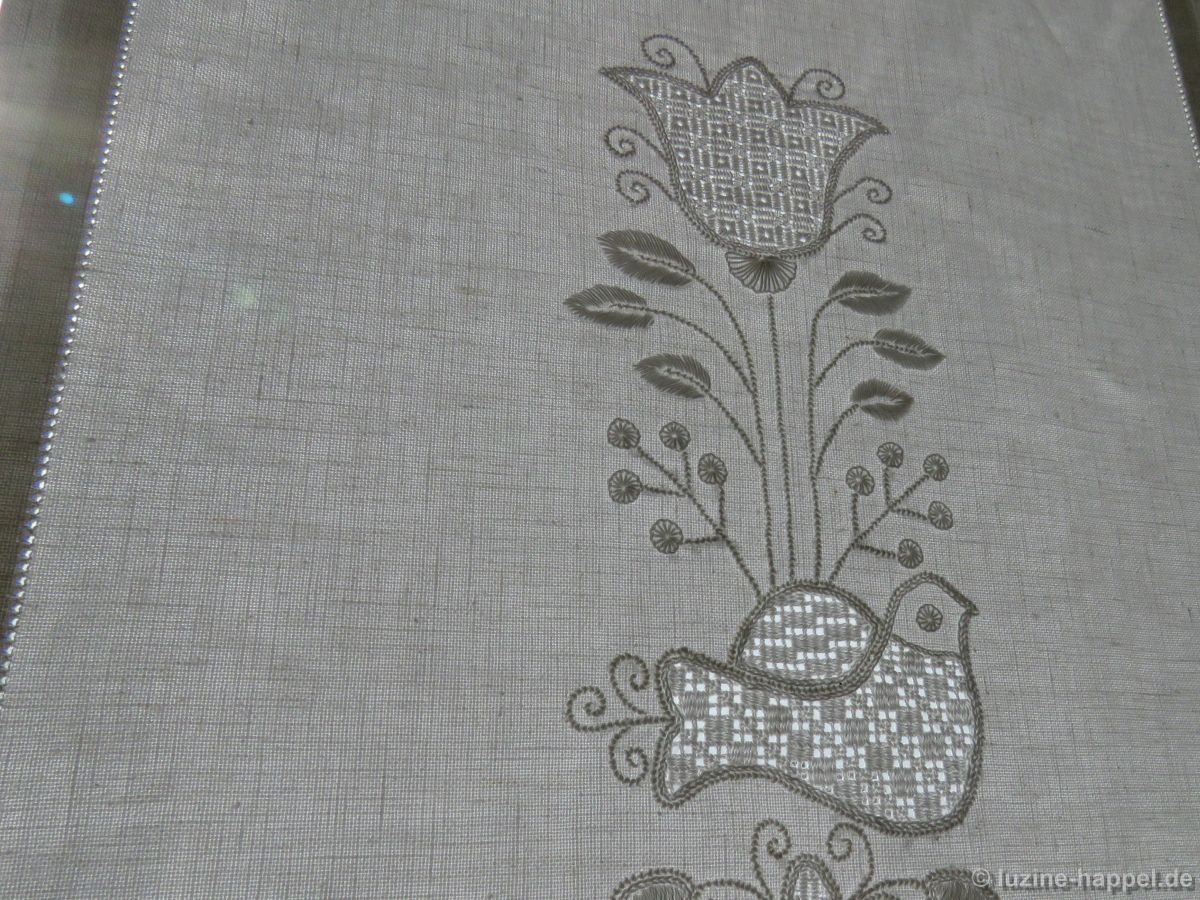
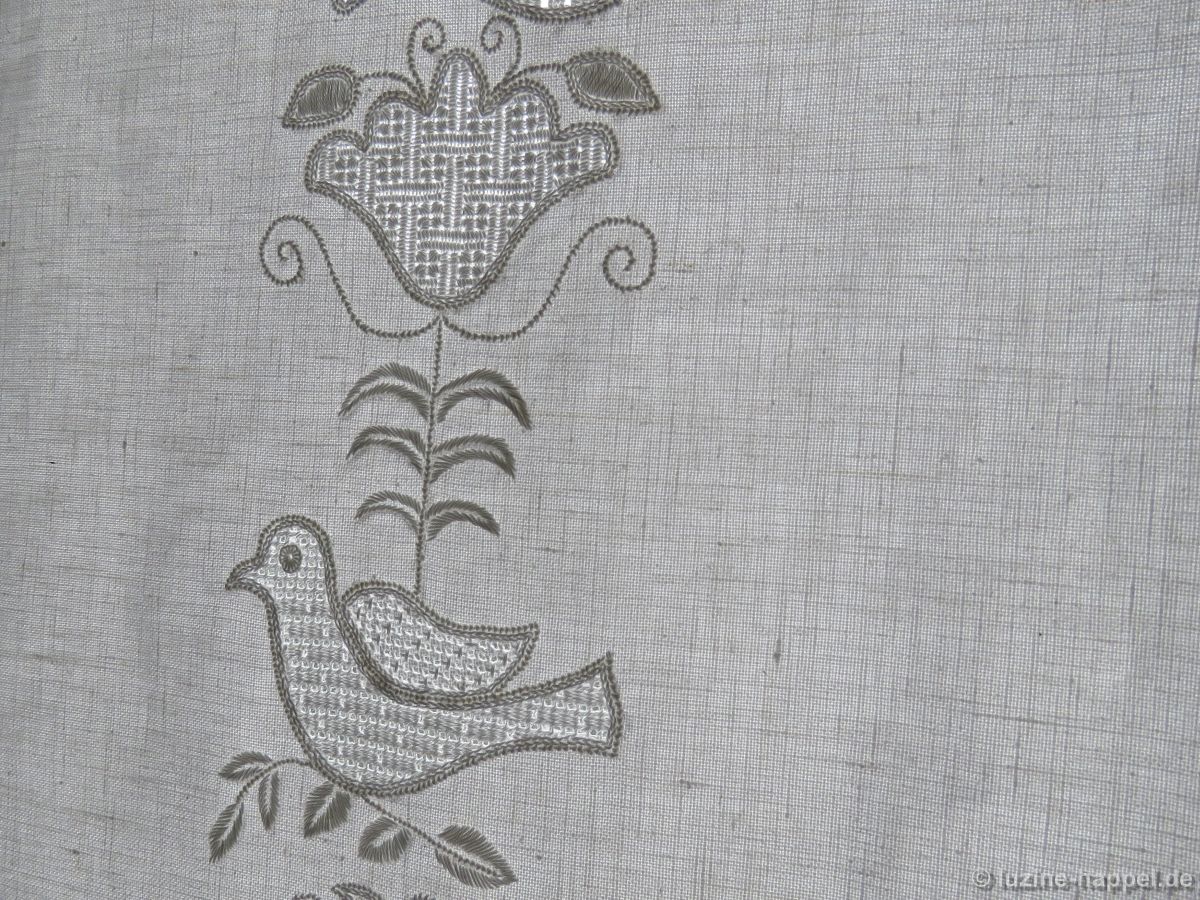
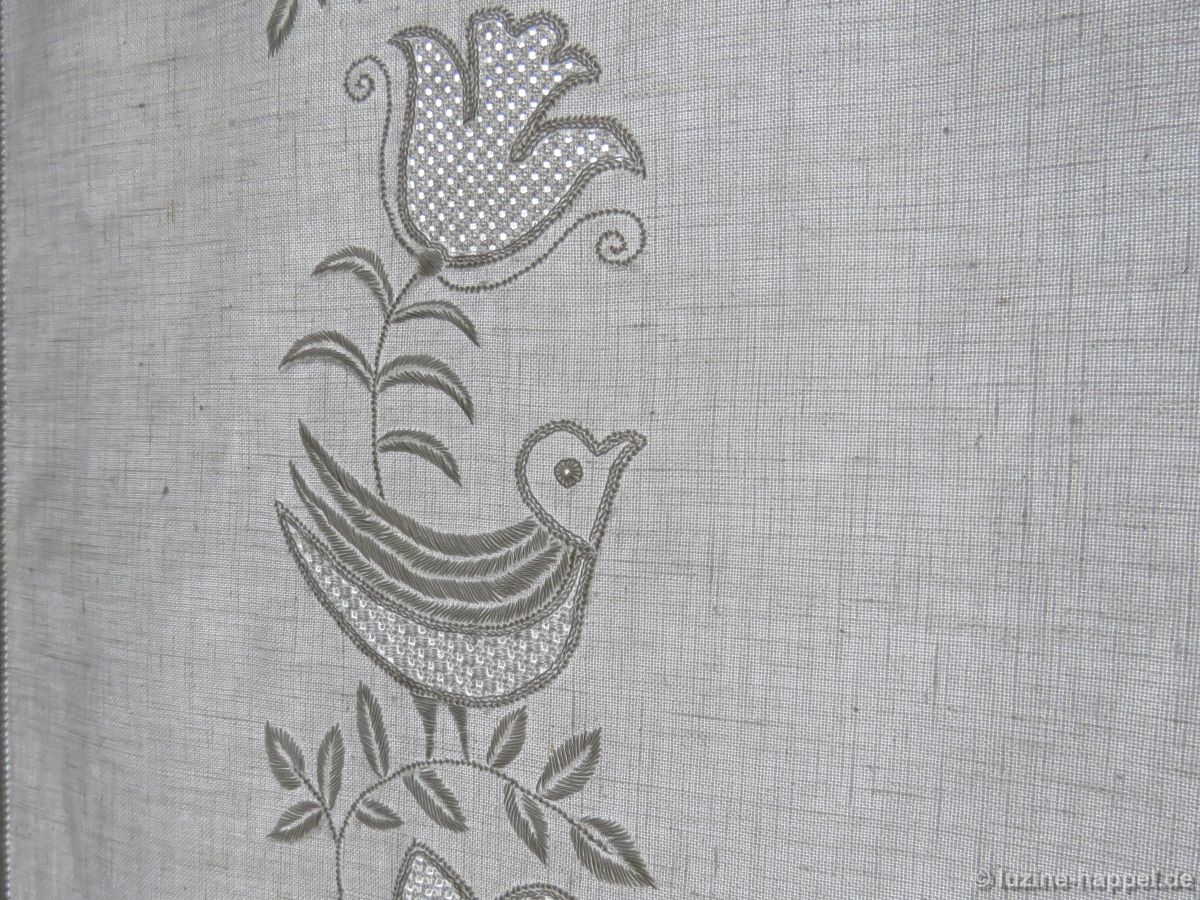
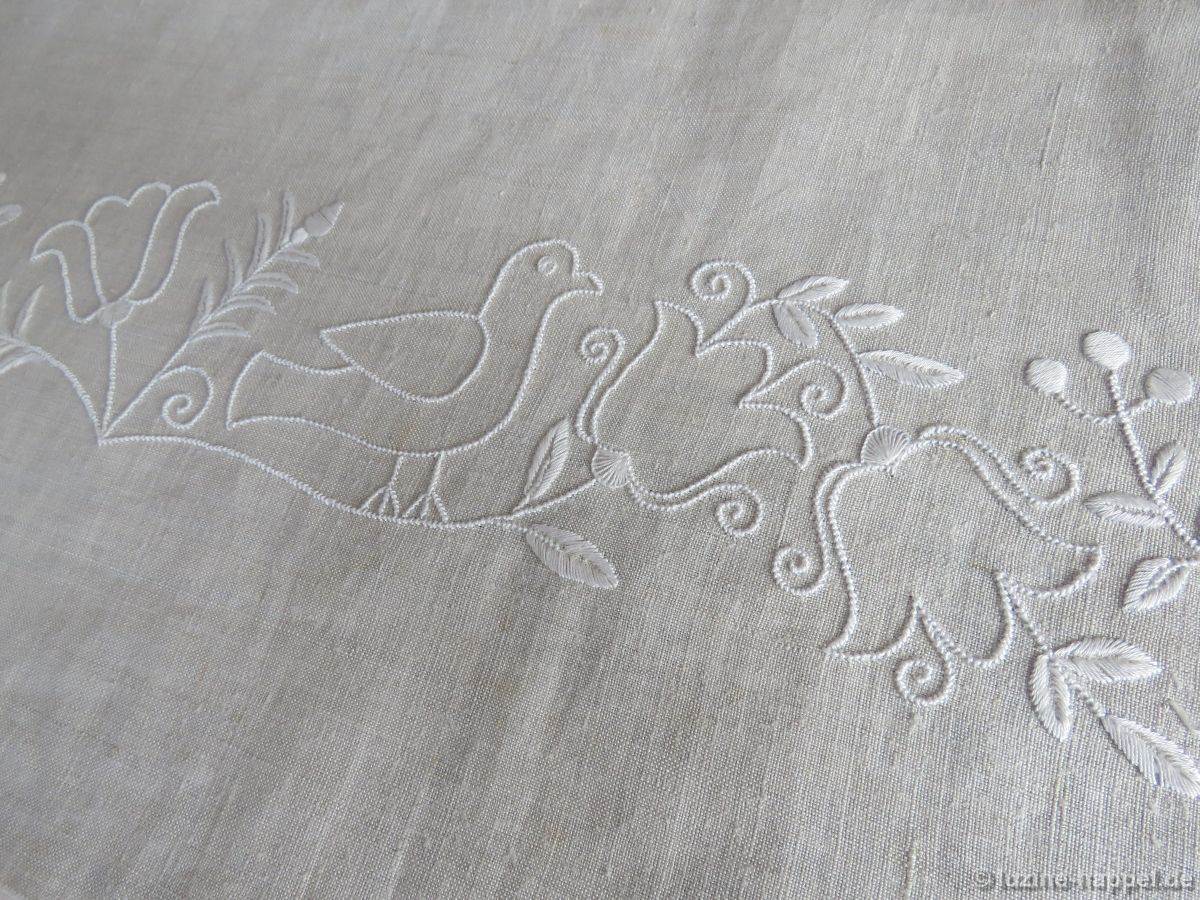
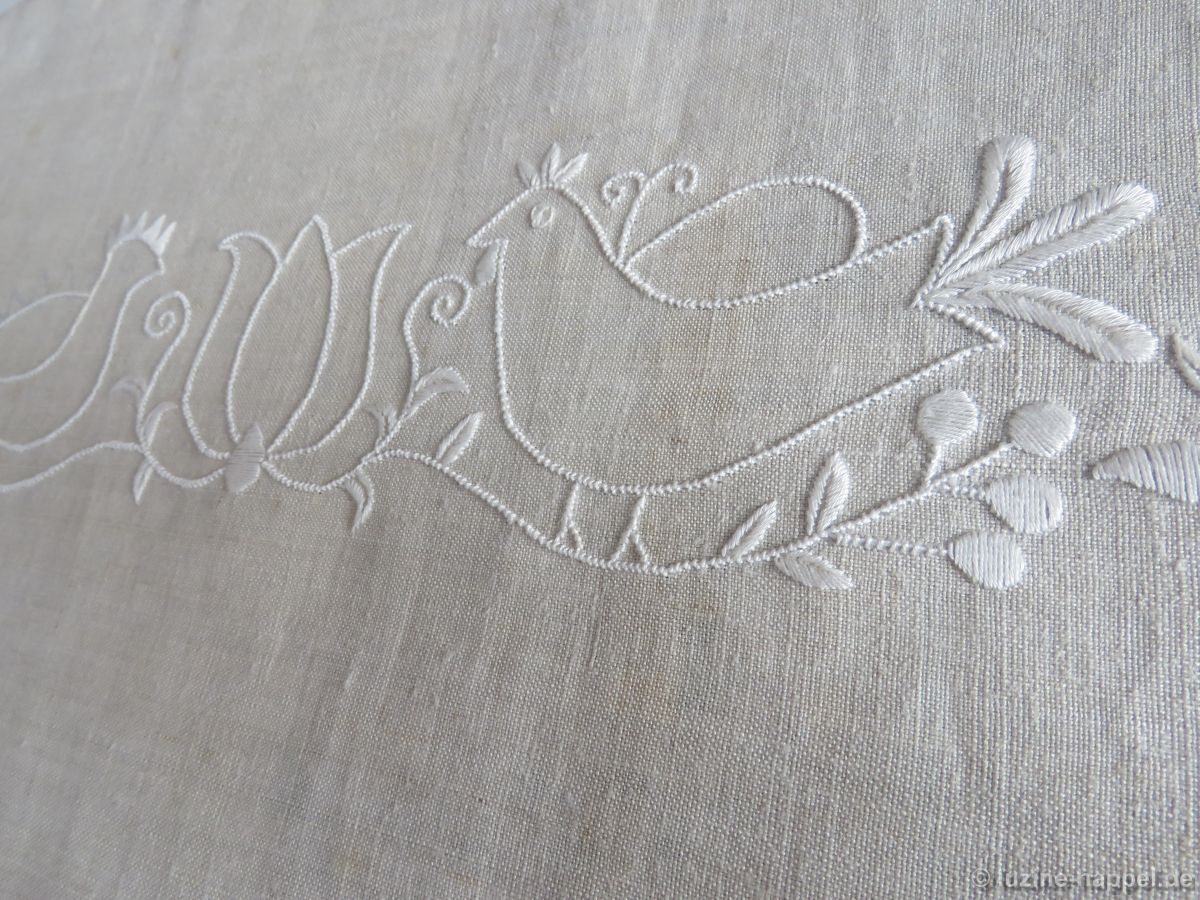
I used the vertical design to work a curtain.
Always a tulip and a bird – combined with leaves and other small elements of Schwalm whitework – constitute one part.
The border has a width of 10 cm.
Using all four design parts, the border has a length of 75 cm in all.
Natürlich kann man das Muster auch etwas vergrößern oder verkleinern. Aber die vorgeschlagene Größe eignet sich gut, um sowohl verschiedene Flächenfüllmuster Of course one can enlarge or narrow the design a small bit, but the provided size is pretty good for using different filling patterns and also for embroidering the leaves very well.
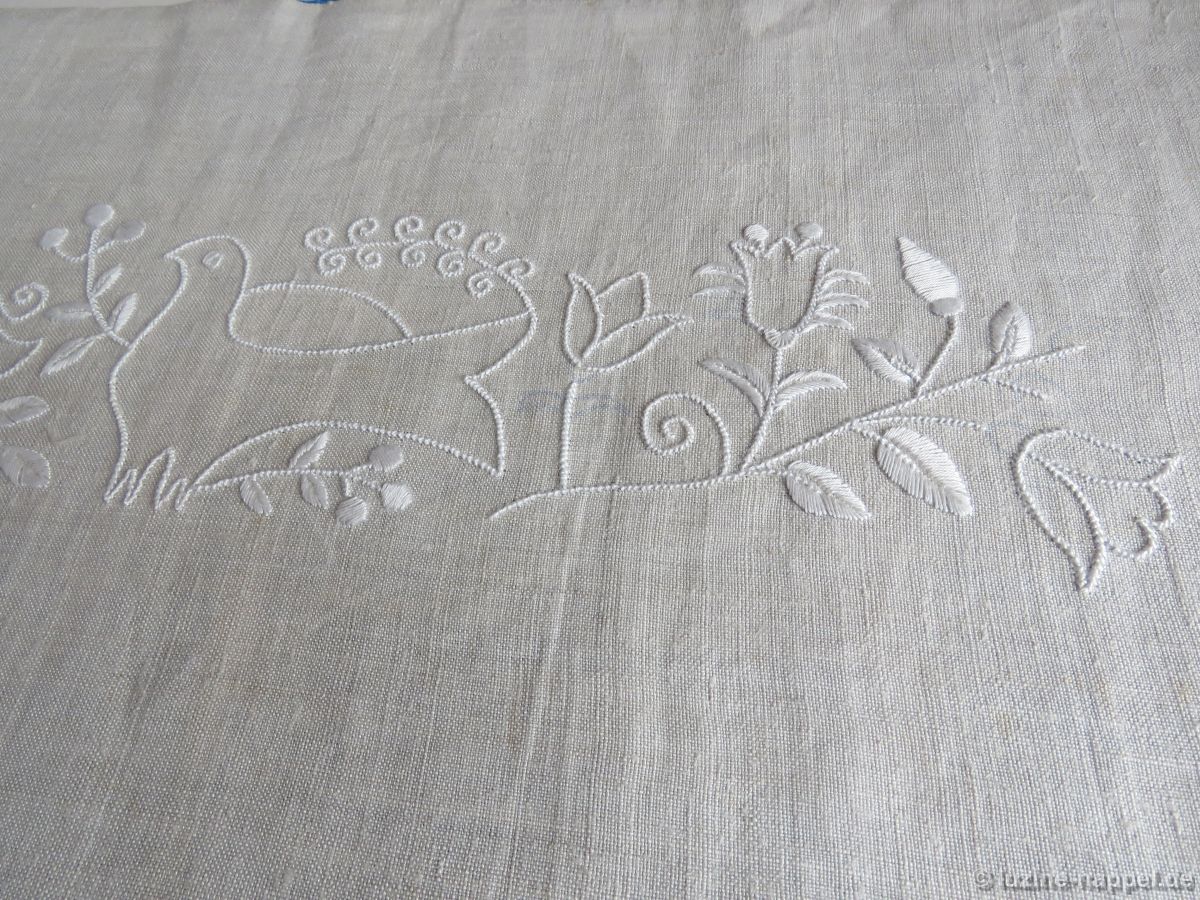
I used the horizontal design to make a wall decoration. Unfortunately, it is not finished, but you can imagine its beauty by viewing the pictures of the unfinished project.
The border has a height of 10 cm.
It is made with five single parts that can be combined in any order. So the length can vary according to personal preference.

If all five parts are used, the border will have a length of 1.12 m. Mine – mirrored in the middle of the fifth design part – has a length of 2.14 m.

One of my customers wanted this design for a long narrow table runner. So, she narrowed the design a little bit, and she was very pleased with the result.

Both are very special Schwalm designs created with old traditional shapes that give the borders their distinctive appearances.

My graphic designer transformed the hand drawings of both designs to computer graphics; these are available now.

Vertical Bird Border
line-drawn designs
6 pages
676 KB file size
item price: €15 (including 7 % sales tax), €14.02 for customers outside the EU
download here


Horizontal Bird Border
line-drawn designs
10 pages
436 KB file size
item price: €15 (including 7 % sales tax), €14.02 for customers outside the EU
download here

Of course it is also possible to get these publications as printed booklets for the same price (15.00 EUR each) plus shipping charges. This option is not shown in my online shop, so please email me with your request.

Schwalm Parade Cushion Border (A)

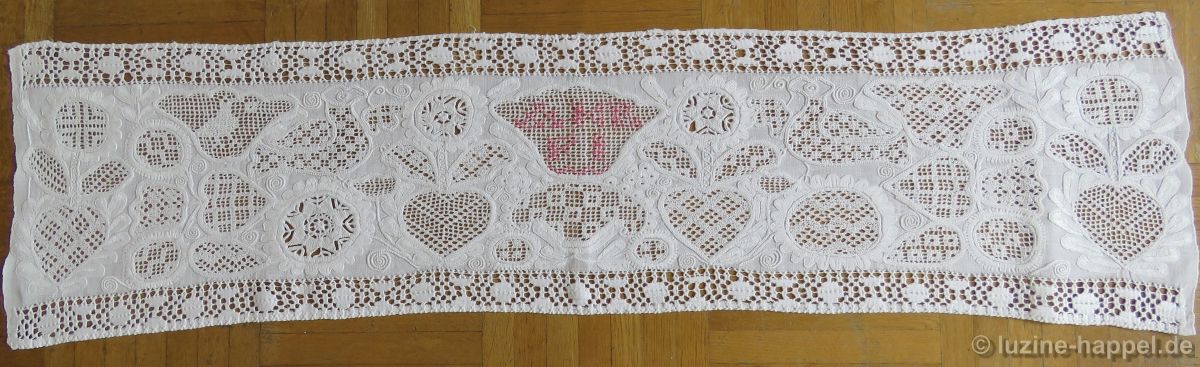
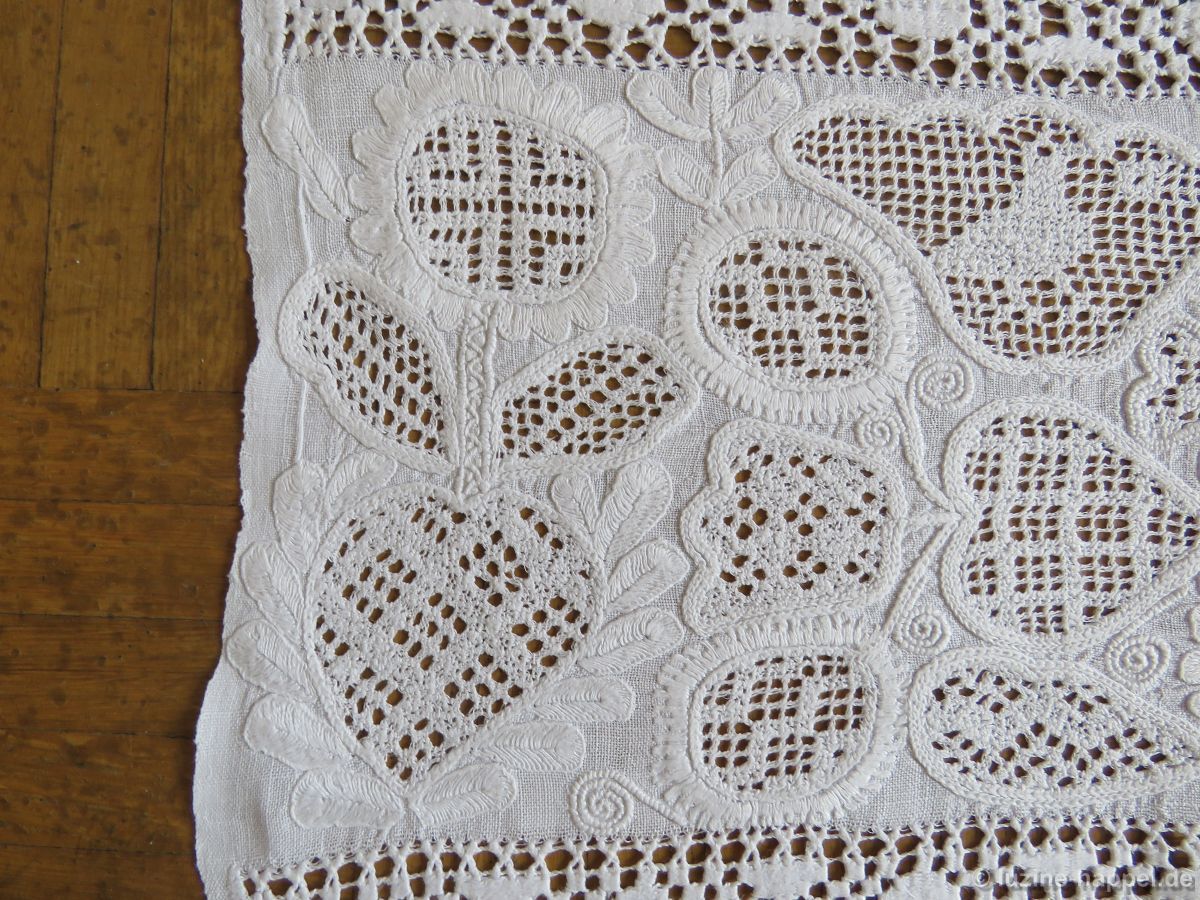
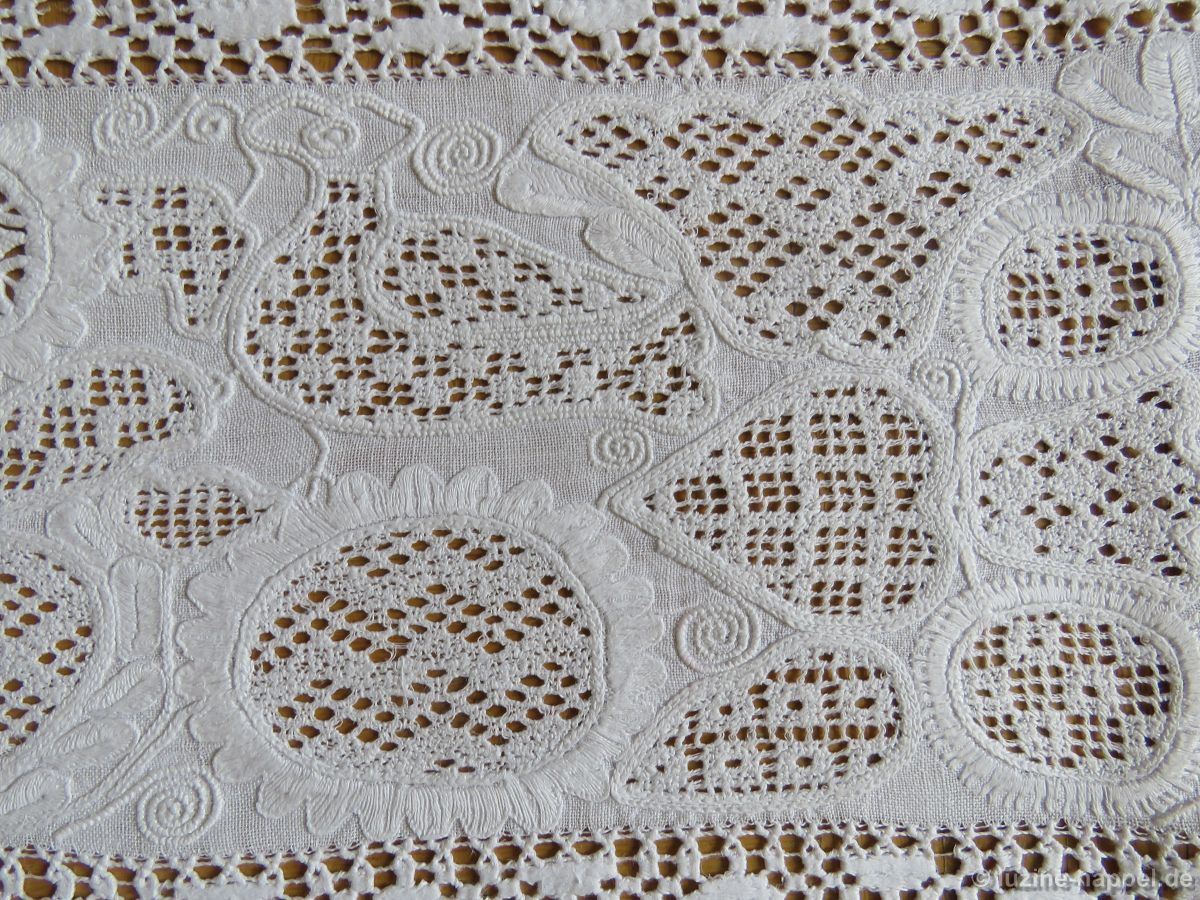
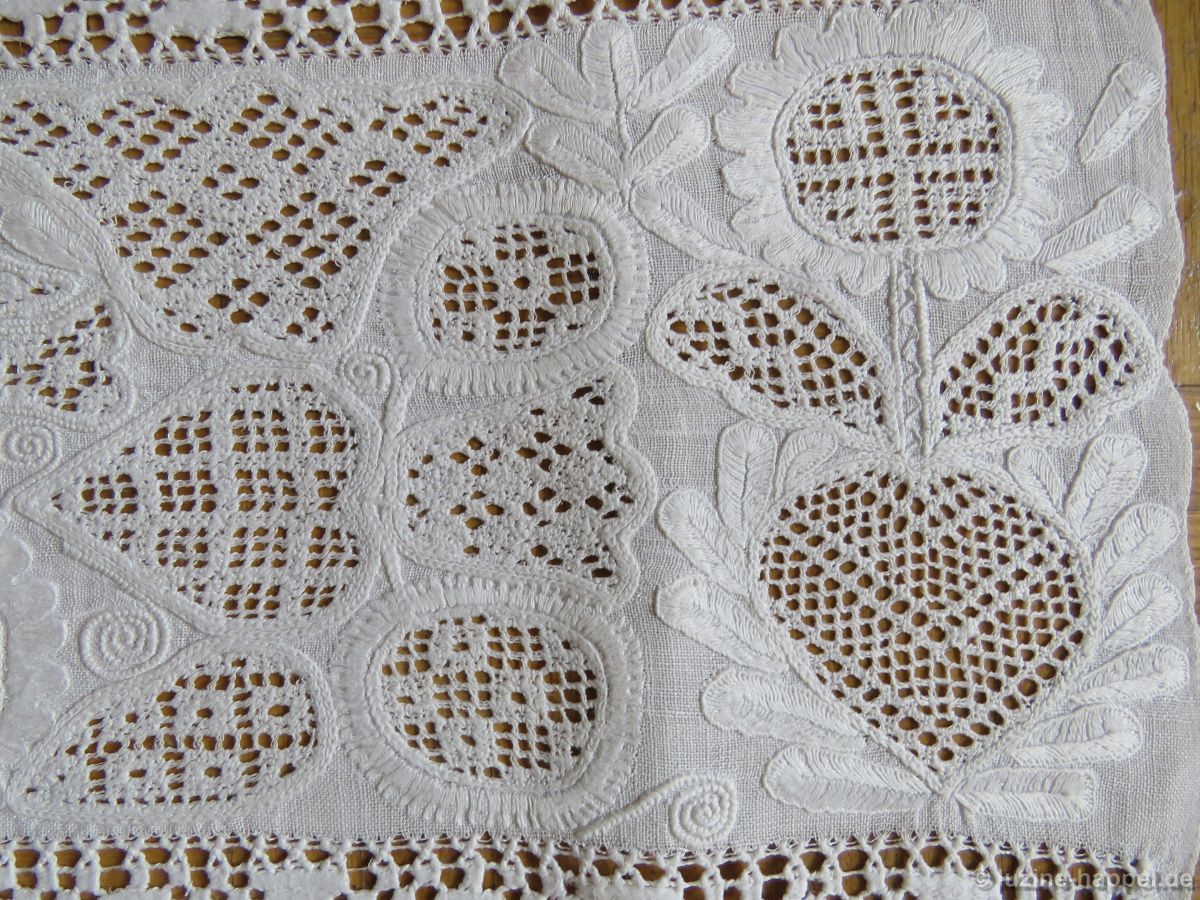
Today I present something very special: the border of a parade cushion from 1826! Unfortunately, the cushion is no longer intact, but the embroidered border – the most important part, at least for people interested in such things – is still in good condition.
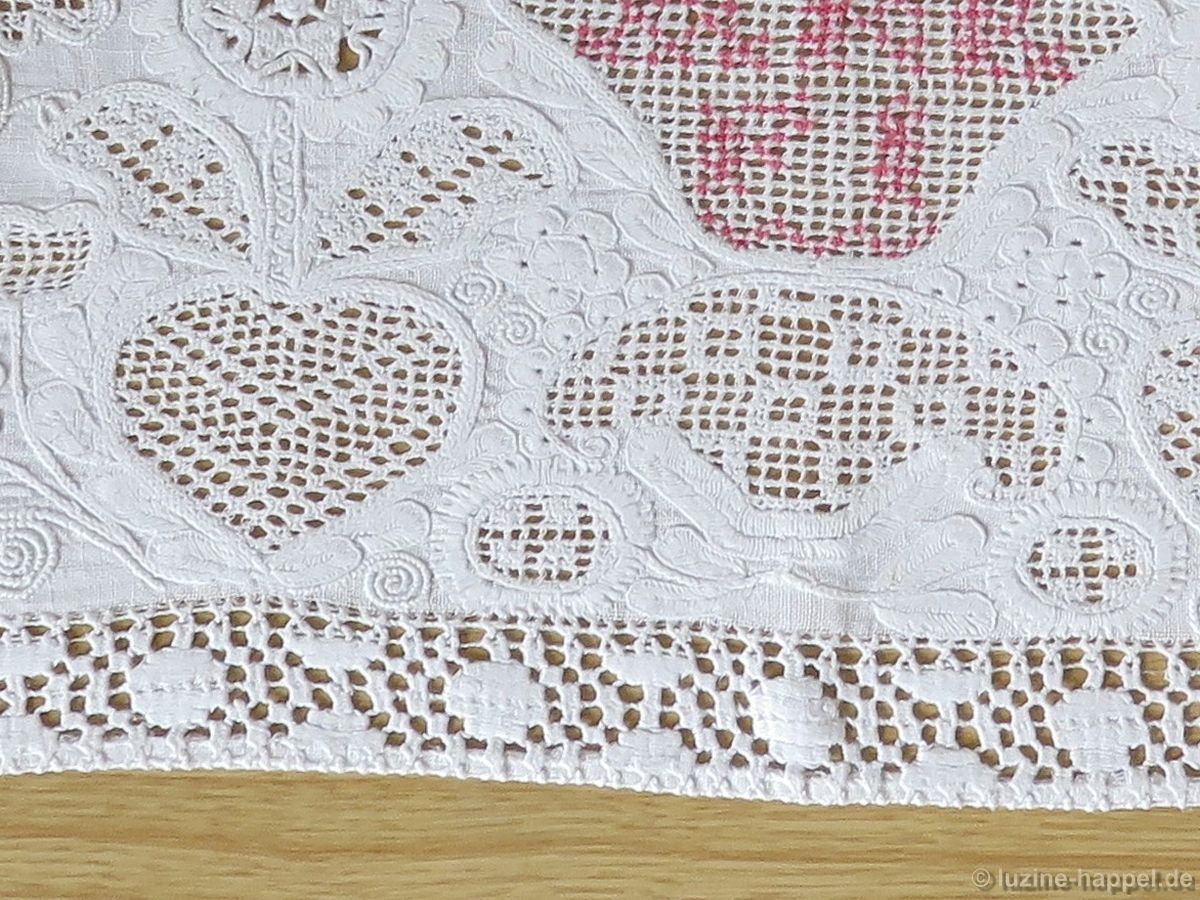
The linen has a 21/cm thread count – thus it is relatively fine. The border in all has a height of 21 cm, the embroidery only has a height of only 15 cm. The embroidery is bordered by a six-unit divided needle-weaving hem which is itself bordered with Peahole hems on both sides. The needleweaving pattern is rare.
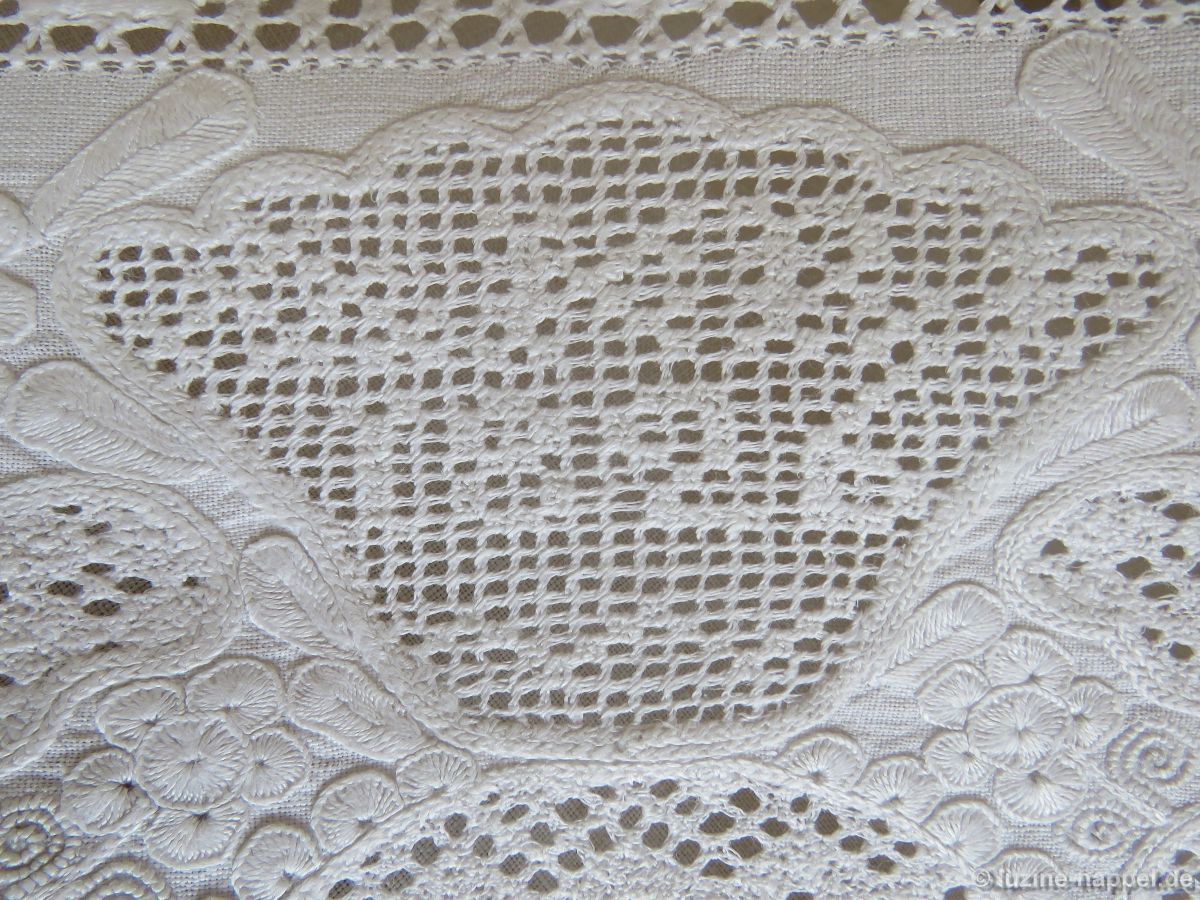
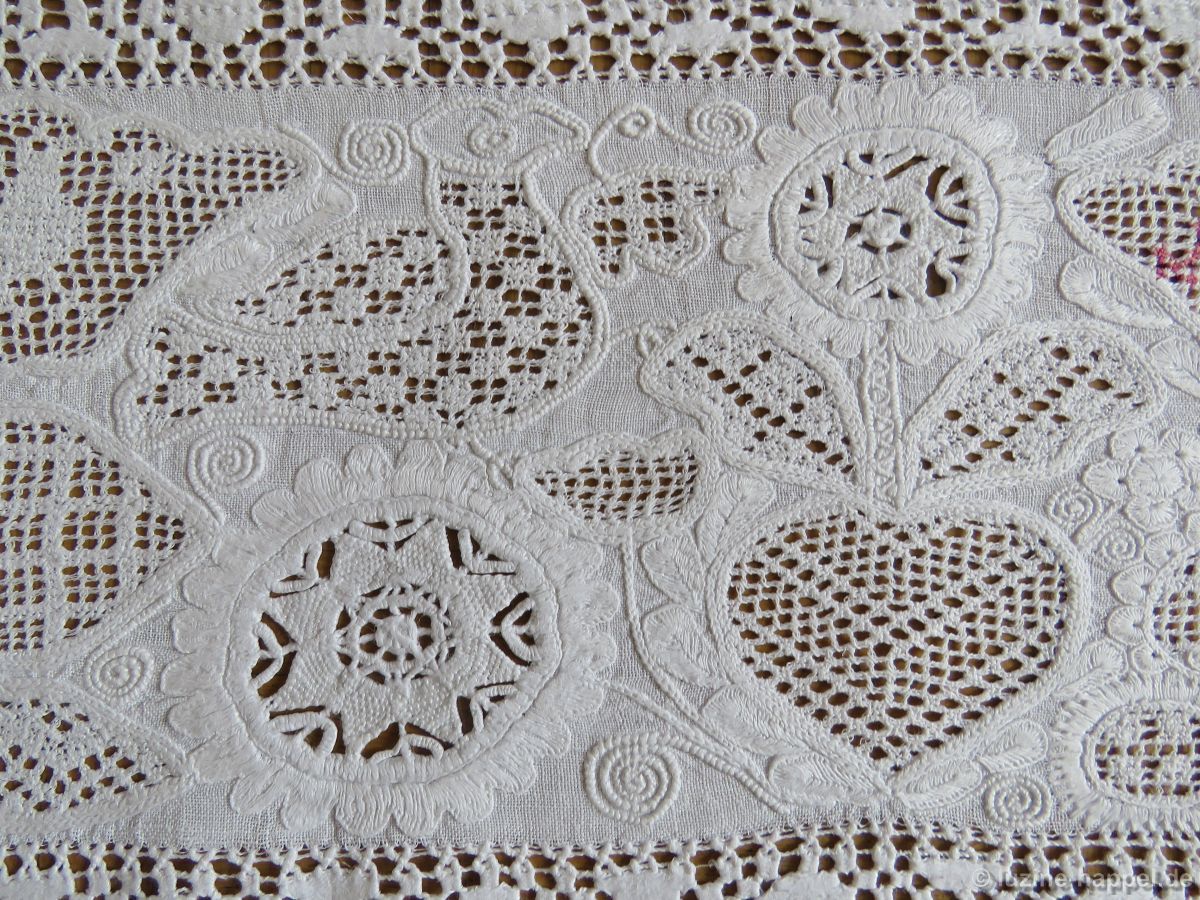
Needlelace and openwork patterns fill the shapes, with some of the openwork patterns partially worked with a Cable stitch grid. In the forty shapes, I count twenty-three different filling patterns.

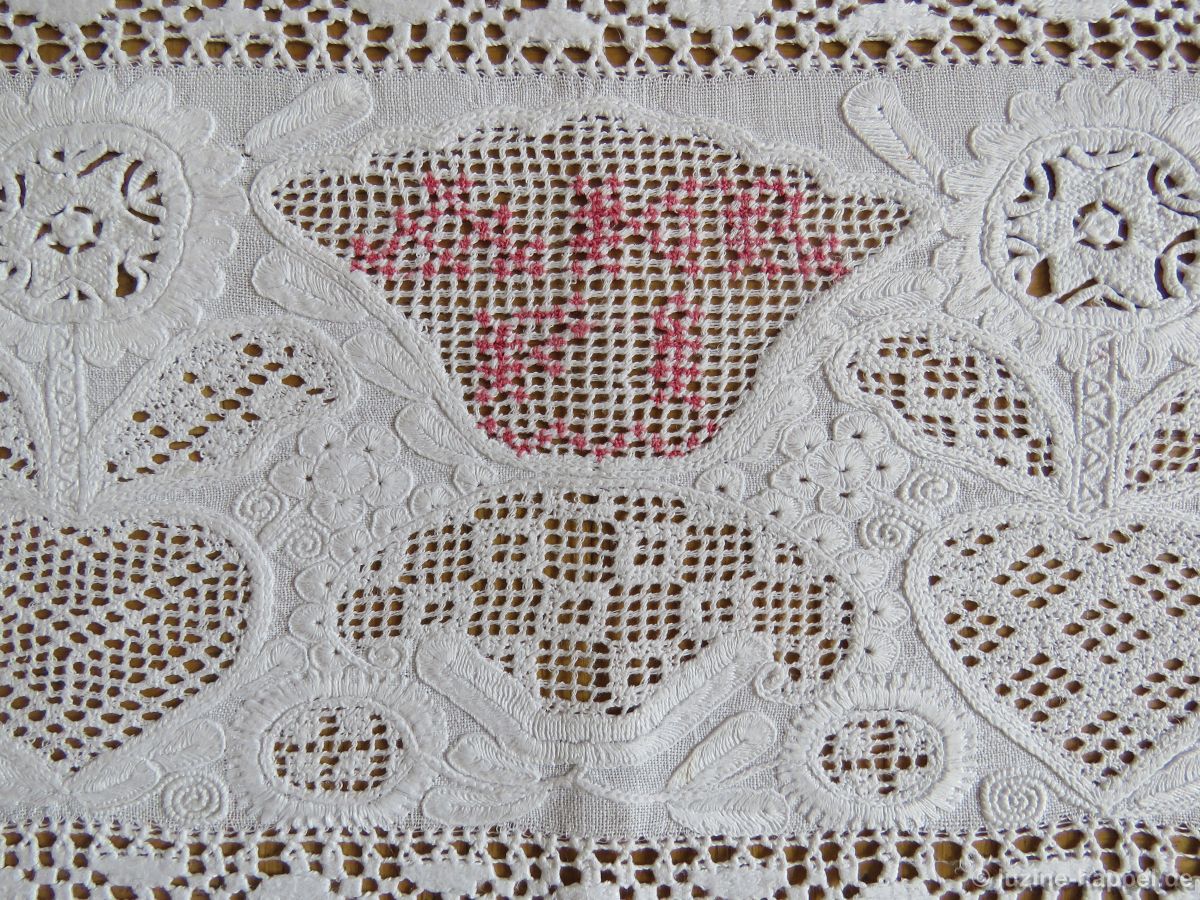
I have two of these borders. They are identical except for the big tulip in the top center. One tulip is decorated with a white Rose stitch pattern and displays the initials AKR and probably F and the year 1826.
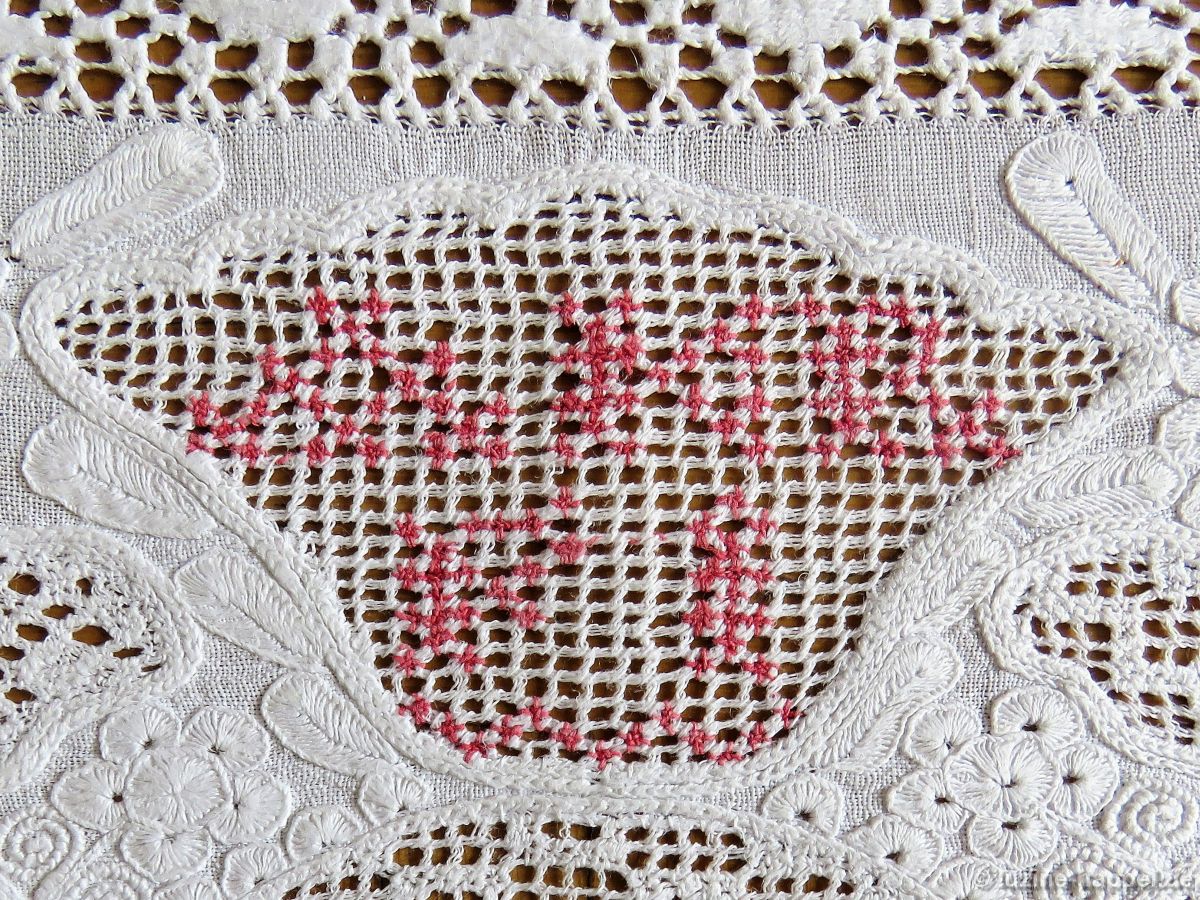
The other has a red Rose stitch pattern. Red is sometimes, but rarely, incorporated into whitework borders. In this tulip, the initials AKRFI are visible.
The design is created mirrored at the longitudinal axis. But the filling patterns were not worked symmetrically. In some instances, they differ very much, as the image on top of this article shows clearly.

The embroidery was worked very close to the selvage. So, the embroidery was formerly covered by the seam.
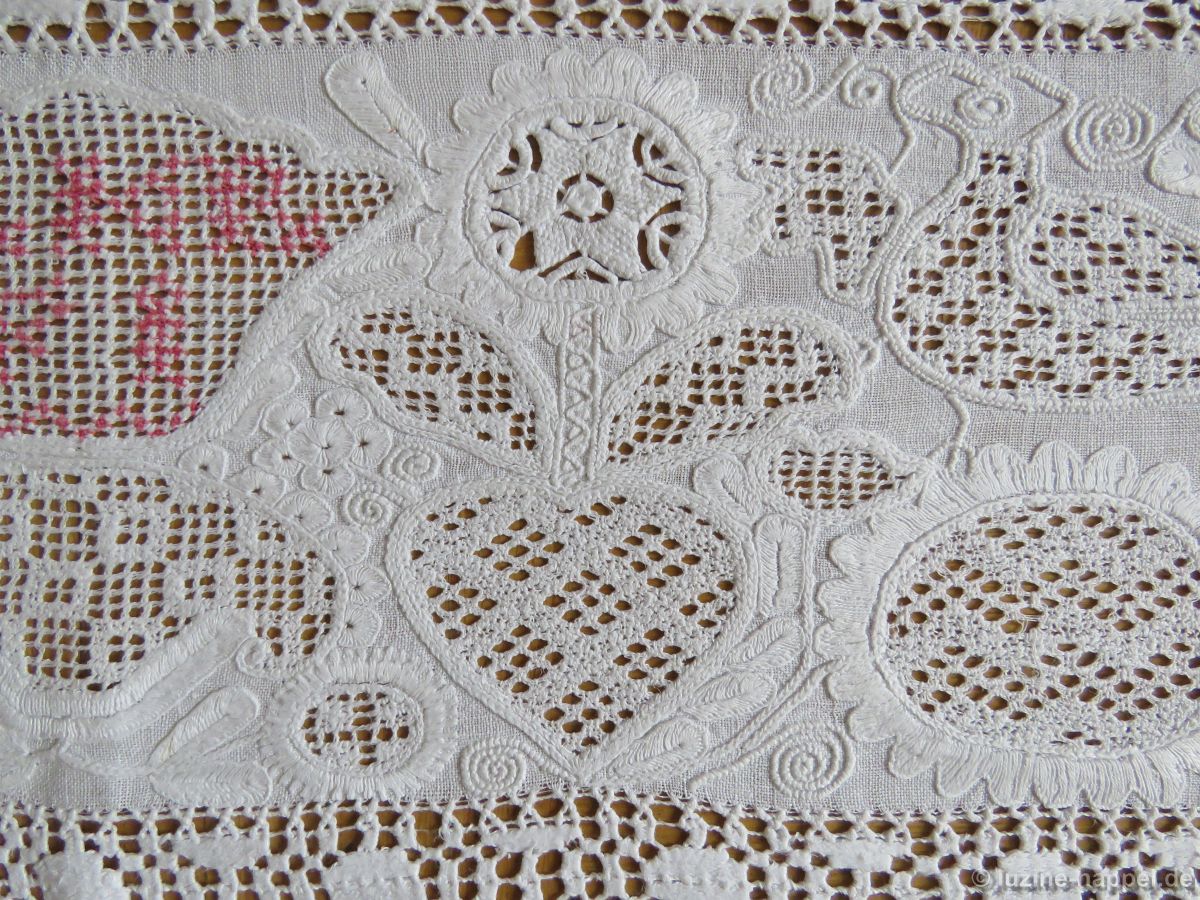
One distinct feature is the bird pattern that was embroidered using Rose stitches into a tulip shape next to a bird shape.

Both birds hold something in their beaks.
Some circles are filled with needlelace; six-pointed and eight-pointed stars are visible.
Also worth mentioning is the arrangement of the stems between the heart and the star circle. Worth viewing is the special treatment of the edges of the shape below the center tulip: Big leaves in the form of a bowl at the bottom, tendrils ending in Chain stitches, and a several half eyelet scallops on both sides make this shape eminently interesting.
The placement of the bird´s legs is also interesting.
It is apparent that Coral Knot stitches as outlines were worked rarely on this piece. Coral knots can be seen on the bird motif as an outline and as the stem in the bird’s beak. They can also be seen in the tightly curled tendrils.
Thin stems were worked with Chain stitches. For outlining the big shapes densely worked, rounded leaves, Blanket stitch scallops, partially half eyelet scallops and 2 short-2 long were used.