Embroidered Easter Egg Wreath

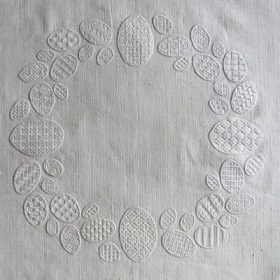
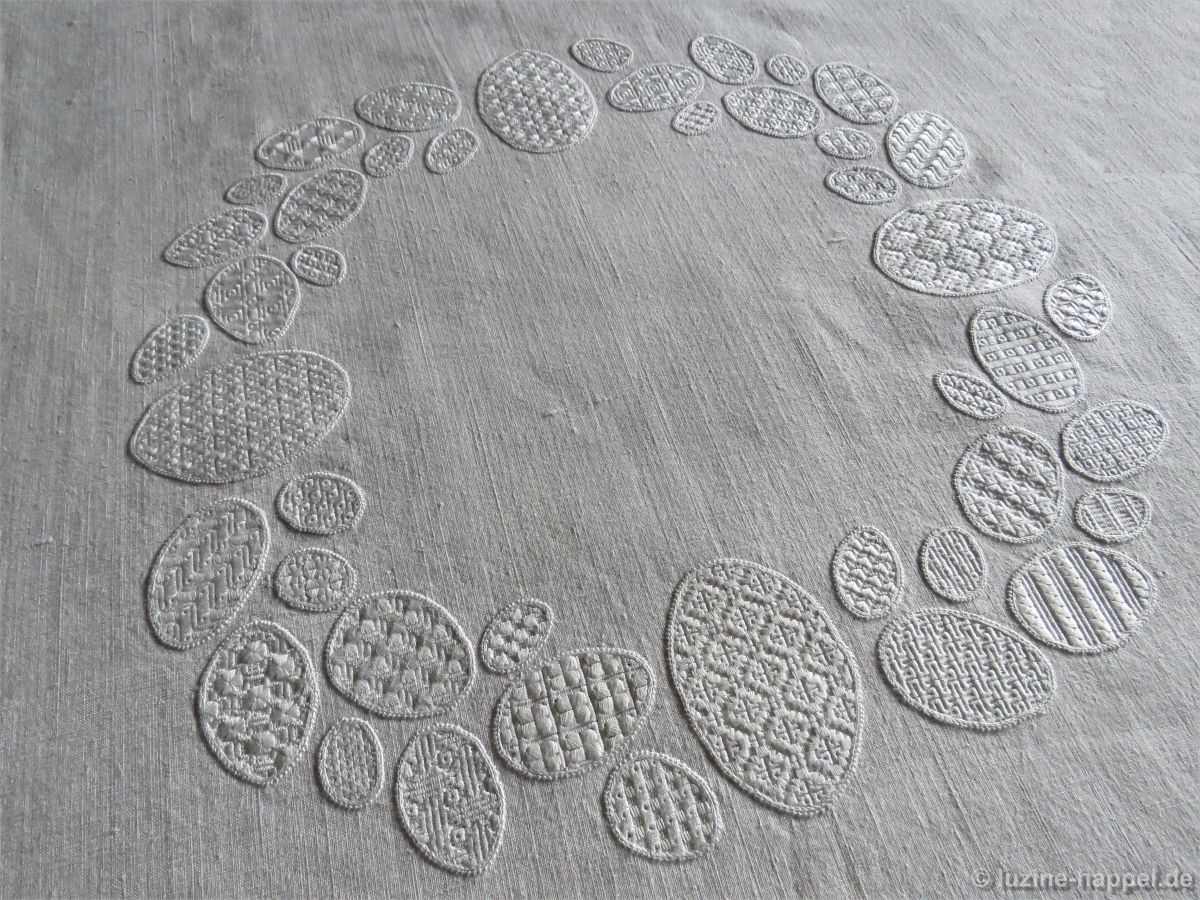
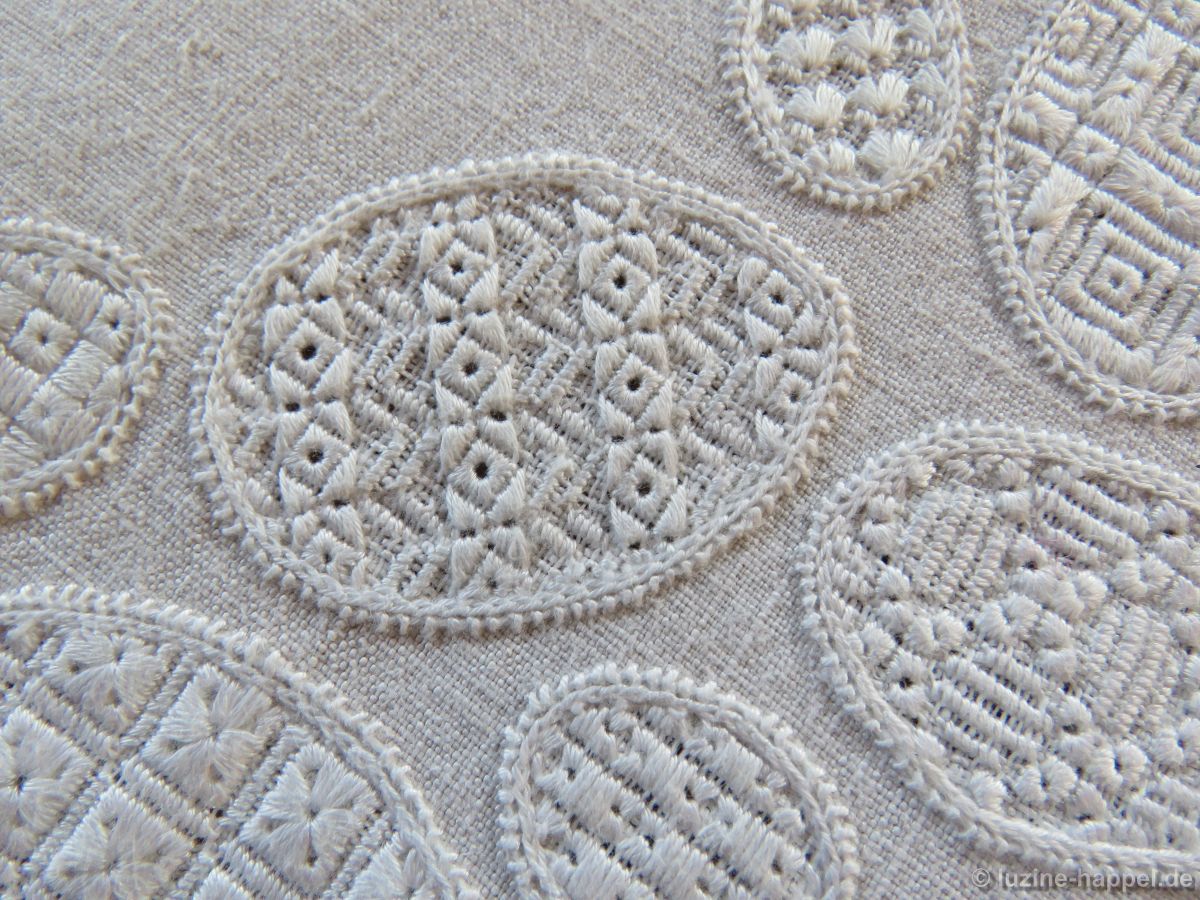
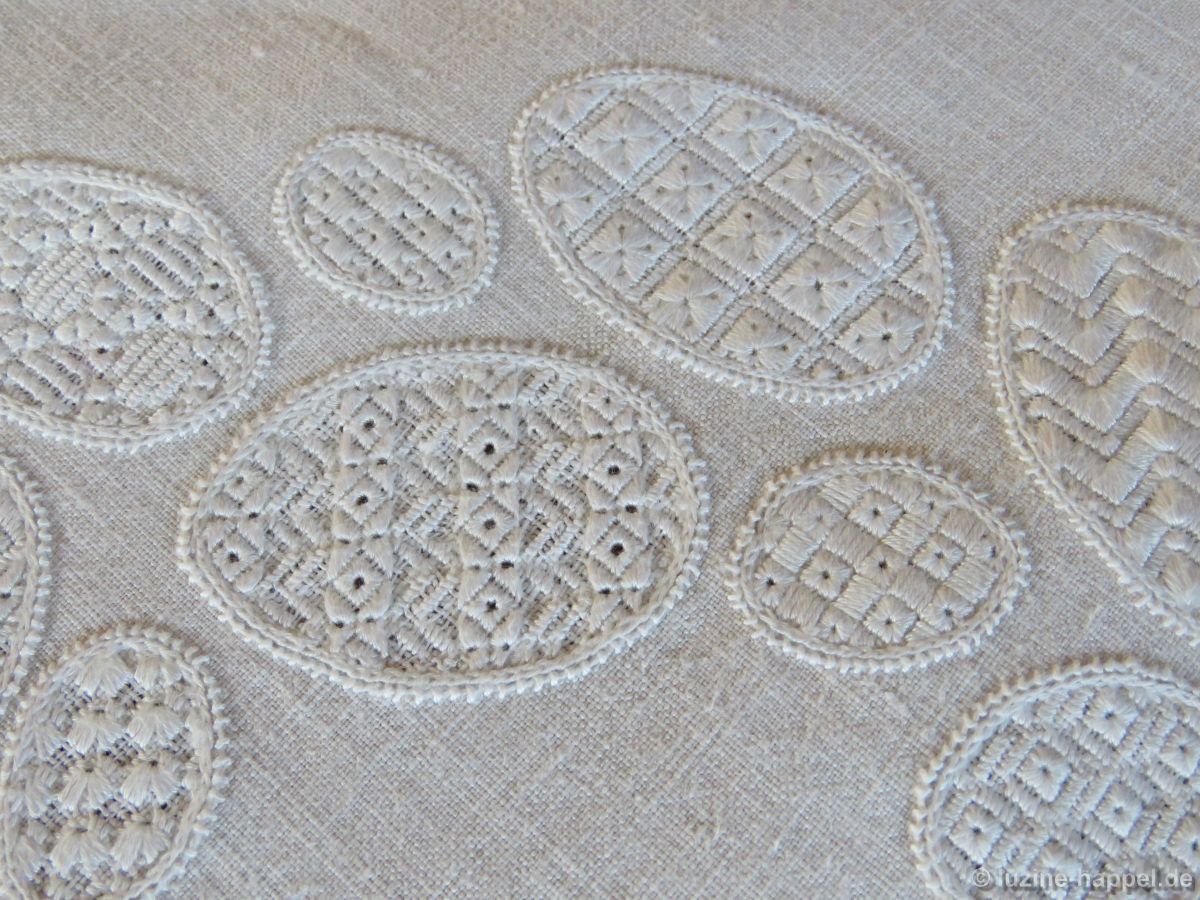
To create an Easter Egg Wreath design, the artist Gudrun Hartwig first arranged four big egg shapes to form a cross,


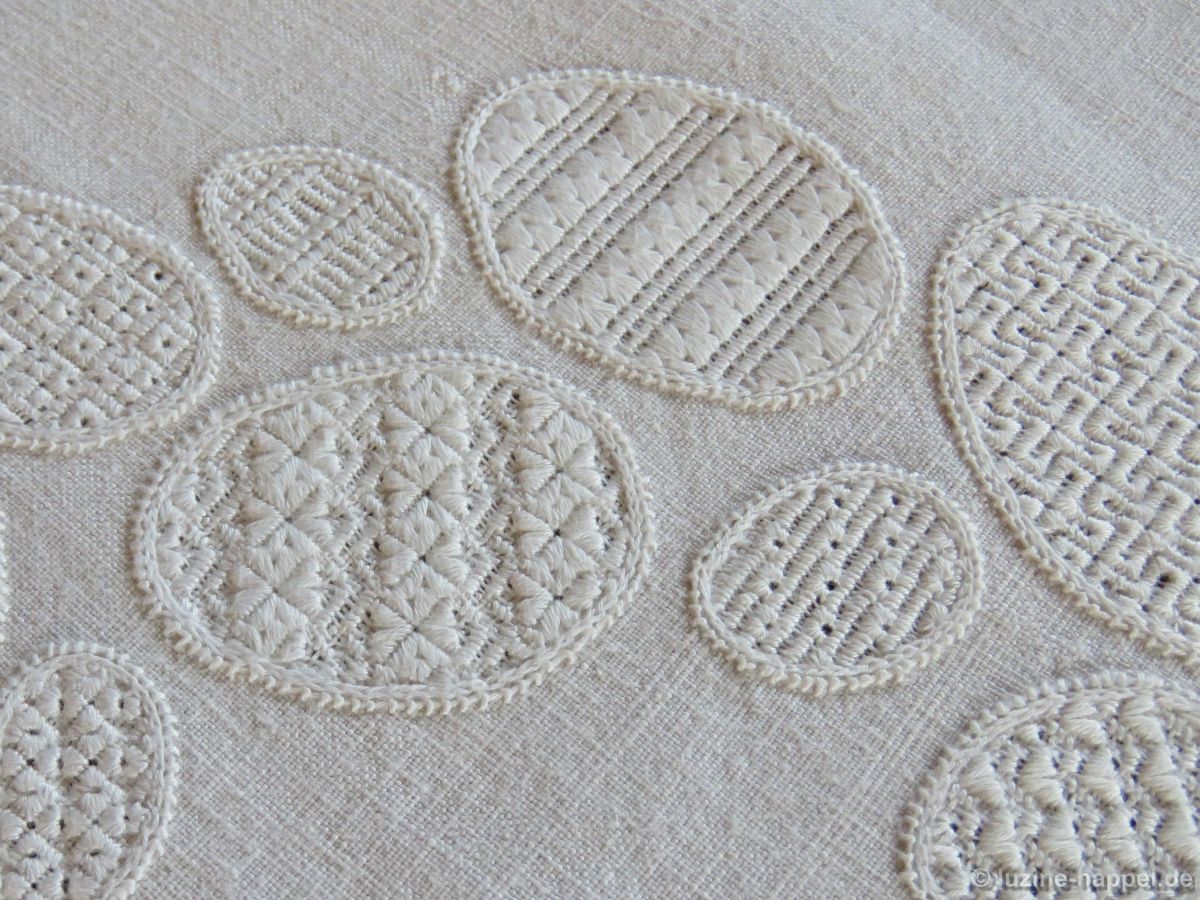
and then, in the four areas thus created, she randomly placed smaller eggs of different sizes.


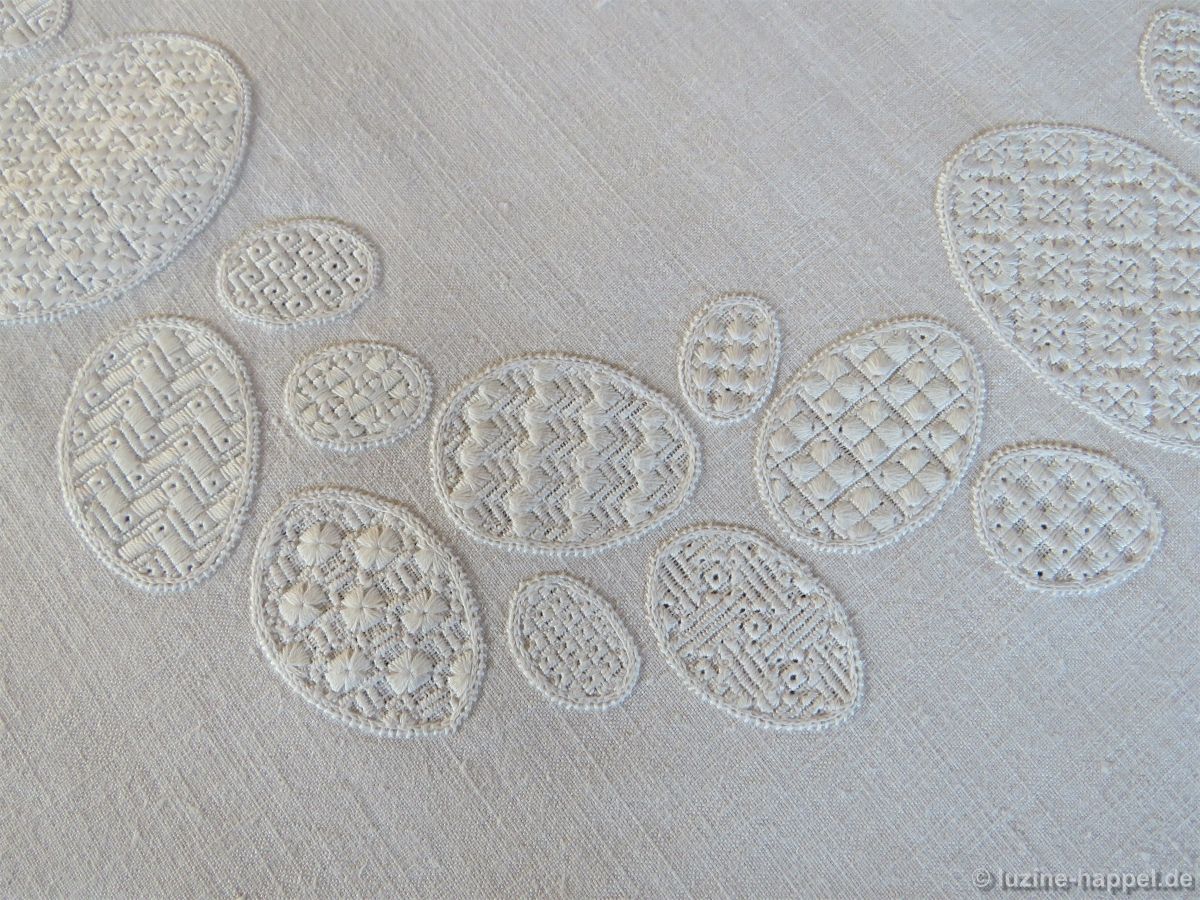
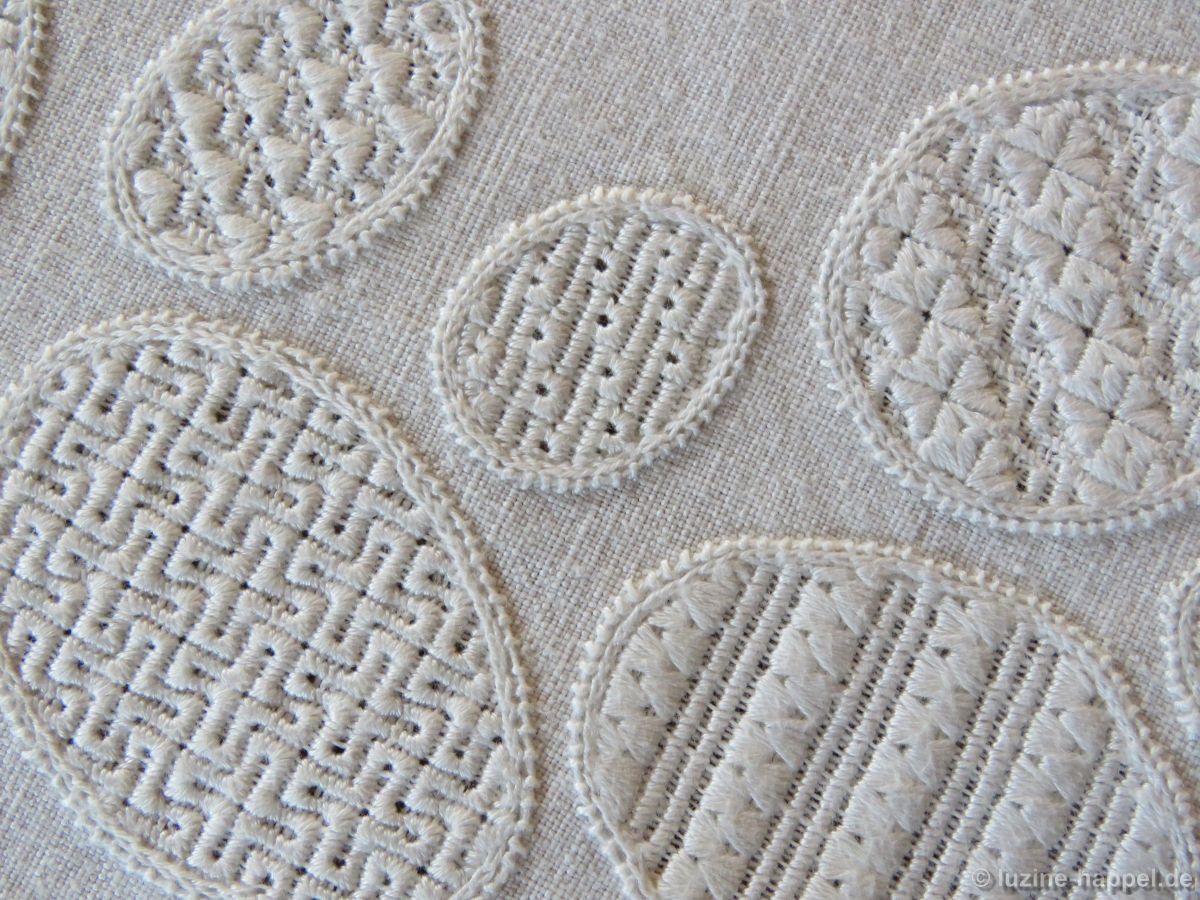
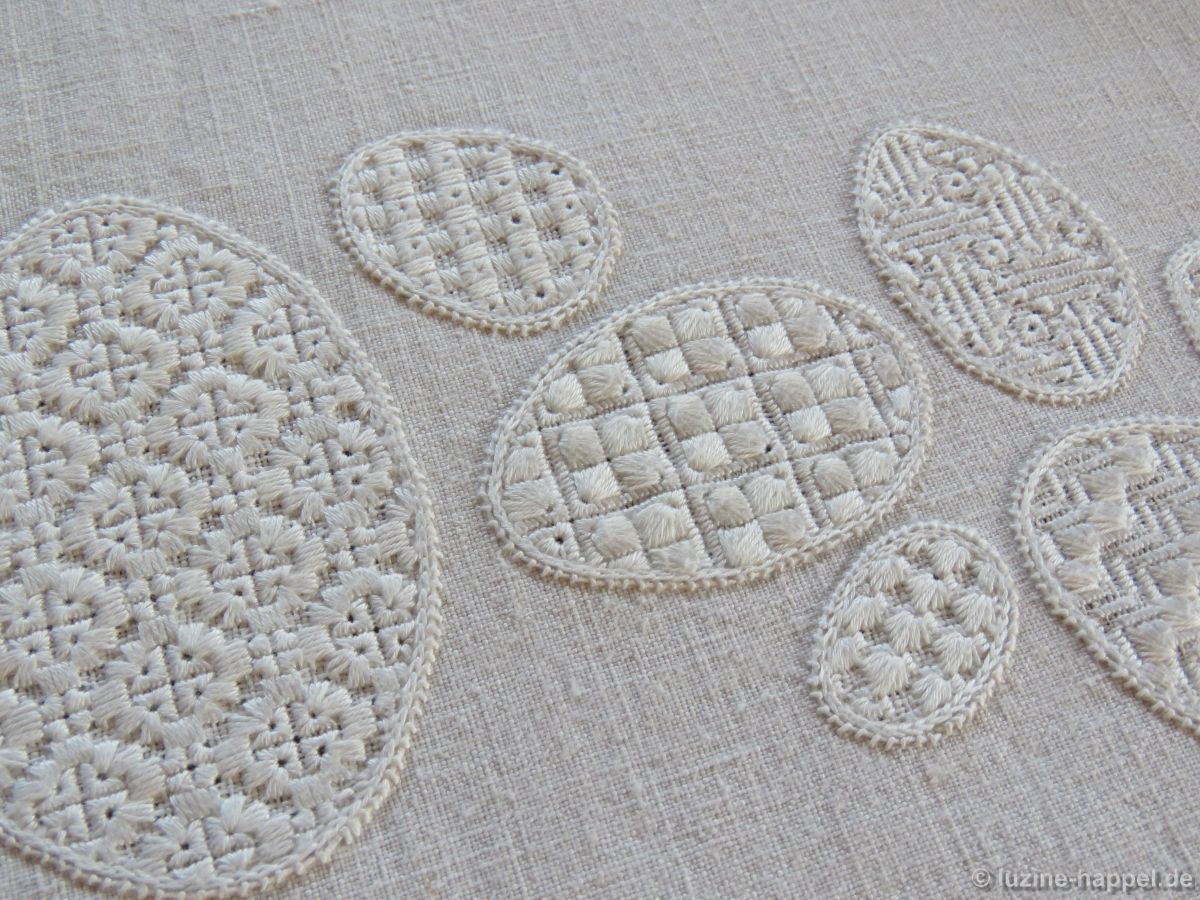
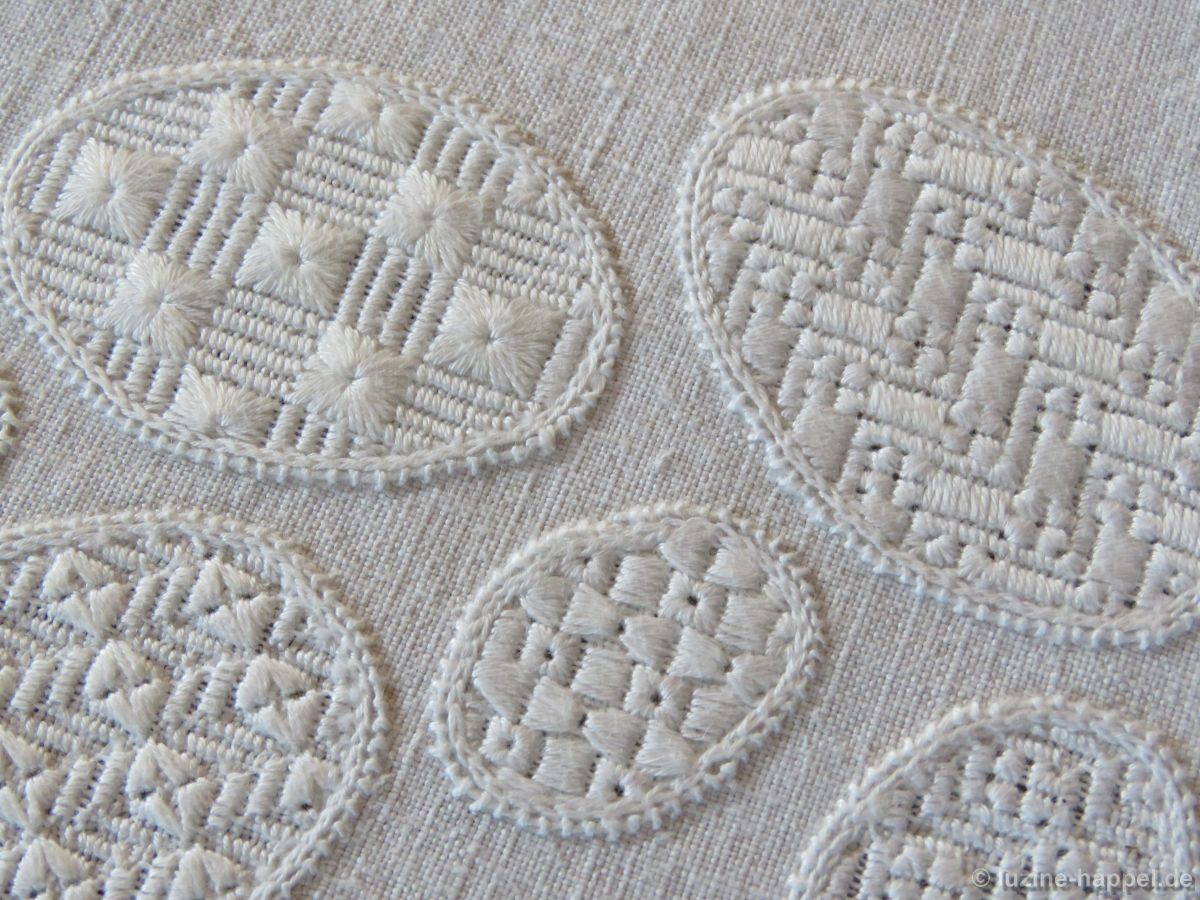
The egg shapes can be embroidered with a wide variety of filling patterns


matching the size of the egg shapes


and matching the lay of the threads within the egg shapes.


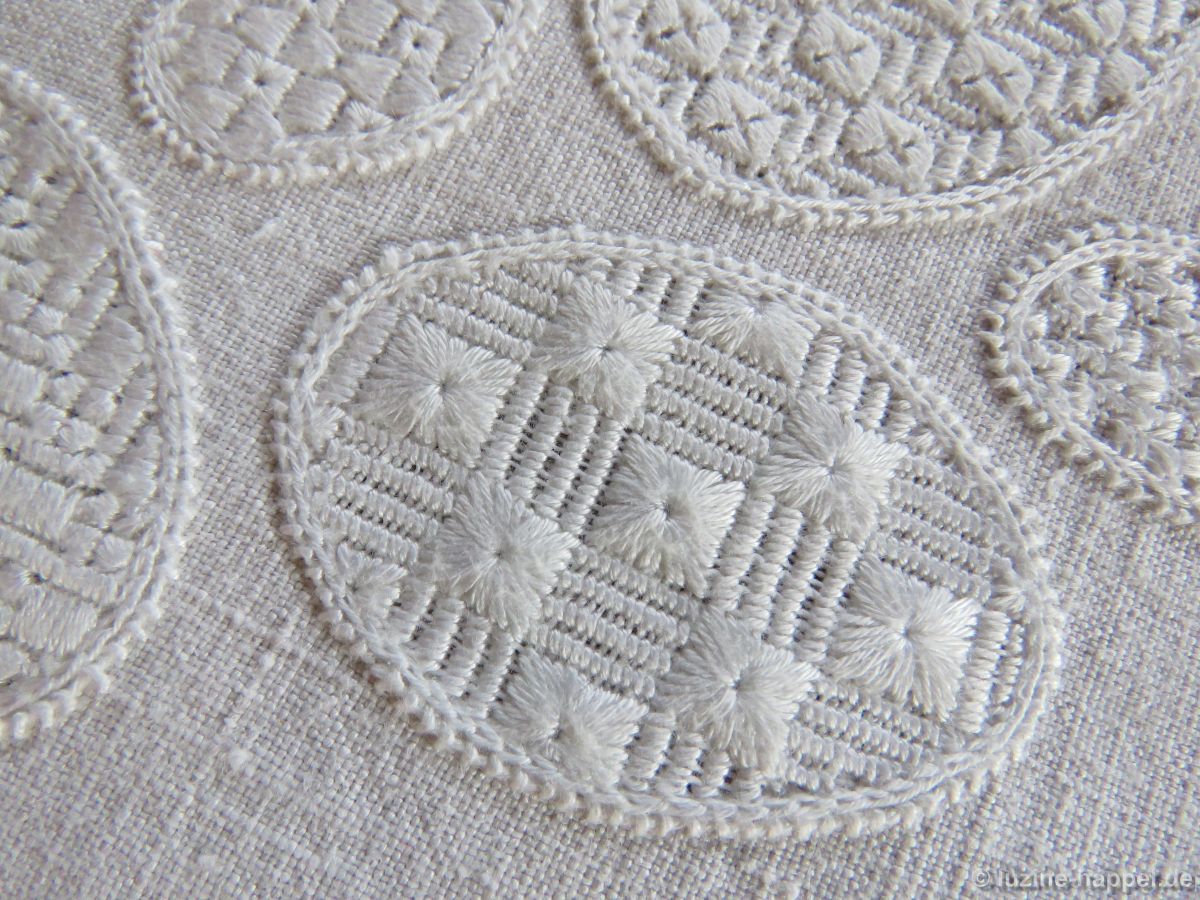
Many different patterns are suitable, such as the crosses formed with parts of square eyelets and Satin stitches. It is a nice pattern especially suited for an Easter decoration, isn´t it?


Combining delicate


and more prominent patterns


establishes a pleasing contrast.


This design is worked on a very dense handwoven linen with a thread count of 20/cm.

Historical Schwalm Whitework and Machine-Made Lace

Schwalm people often considered ready-made items more valuable than precious hand-made items. So they liked to add machine-made lace to their elaborate and finely embroidered cushions, bed coverings, and door hangings.

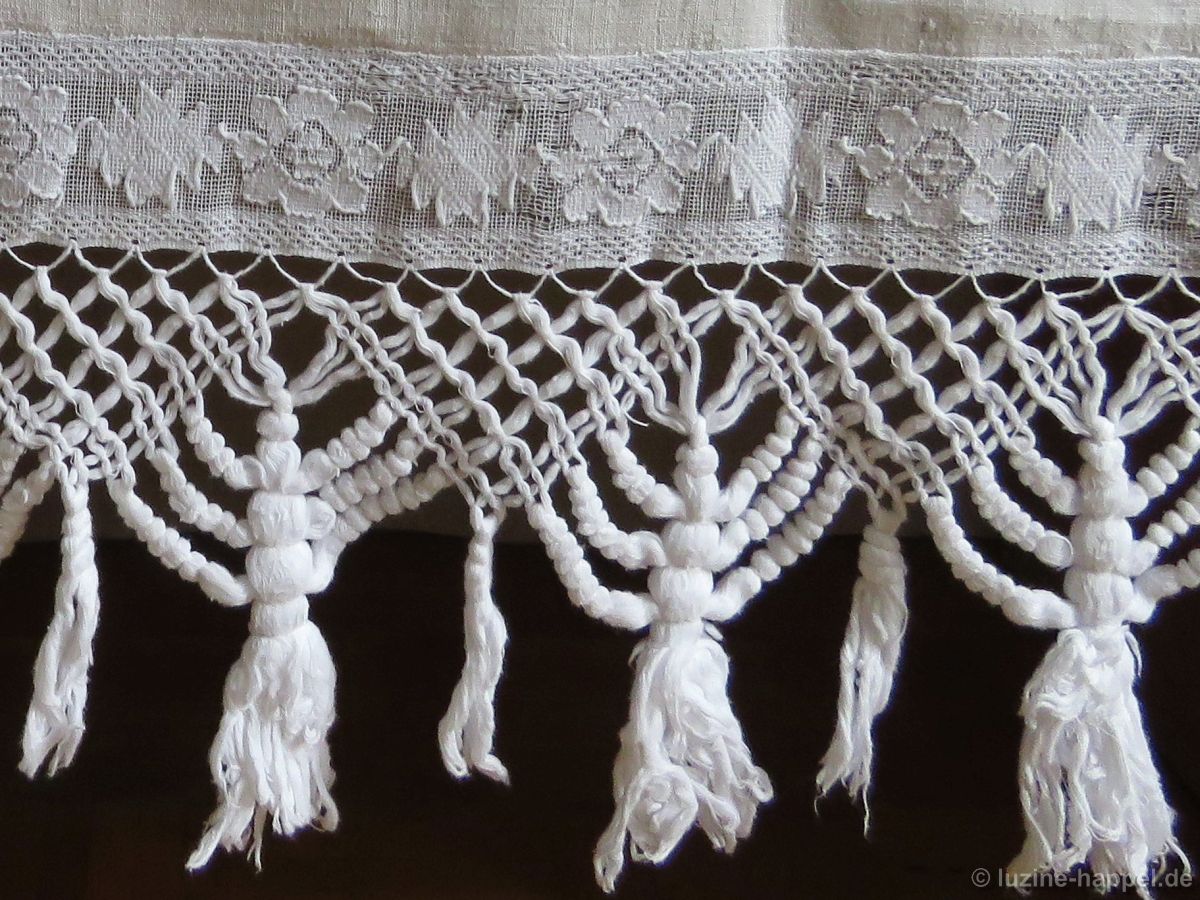
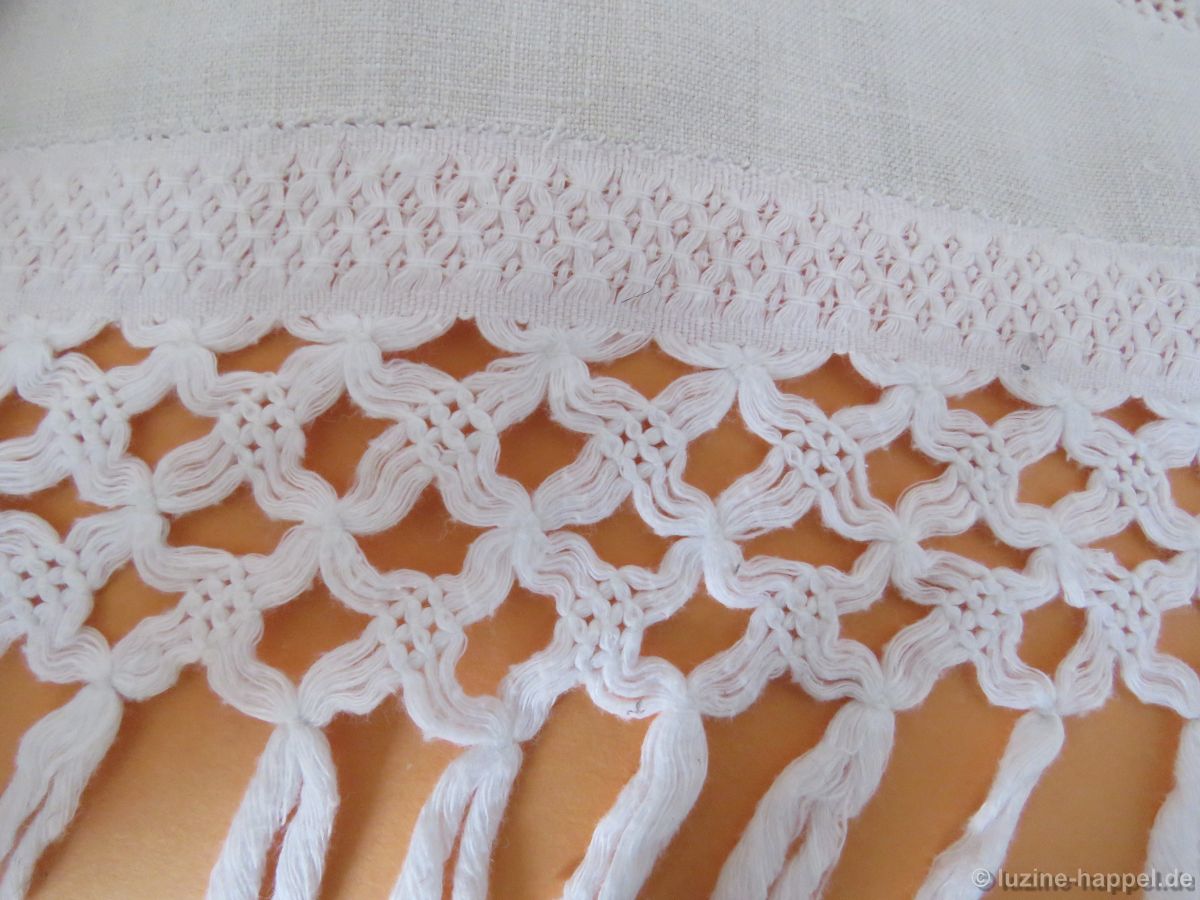
Especially popular were the so-called bell borders that edged some projects.

These were fine machine-made cotton lace bands combined with prominent and fancy knotted fringes.

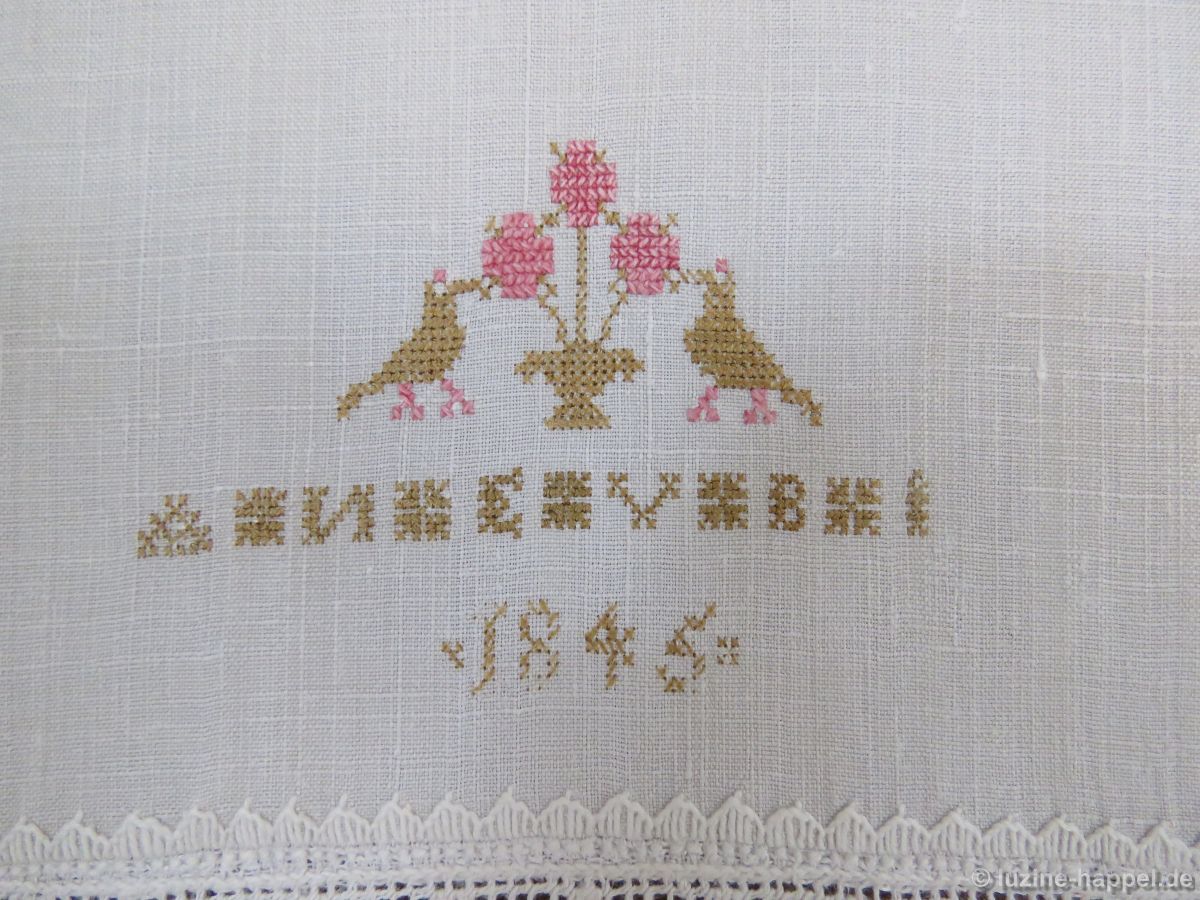
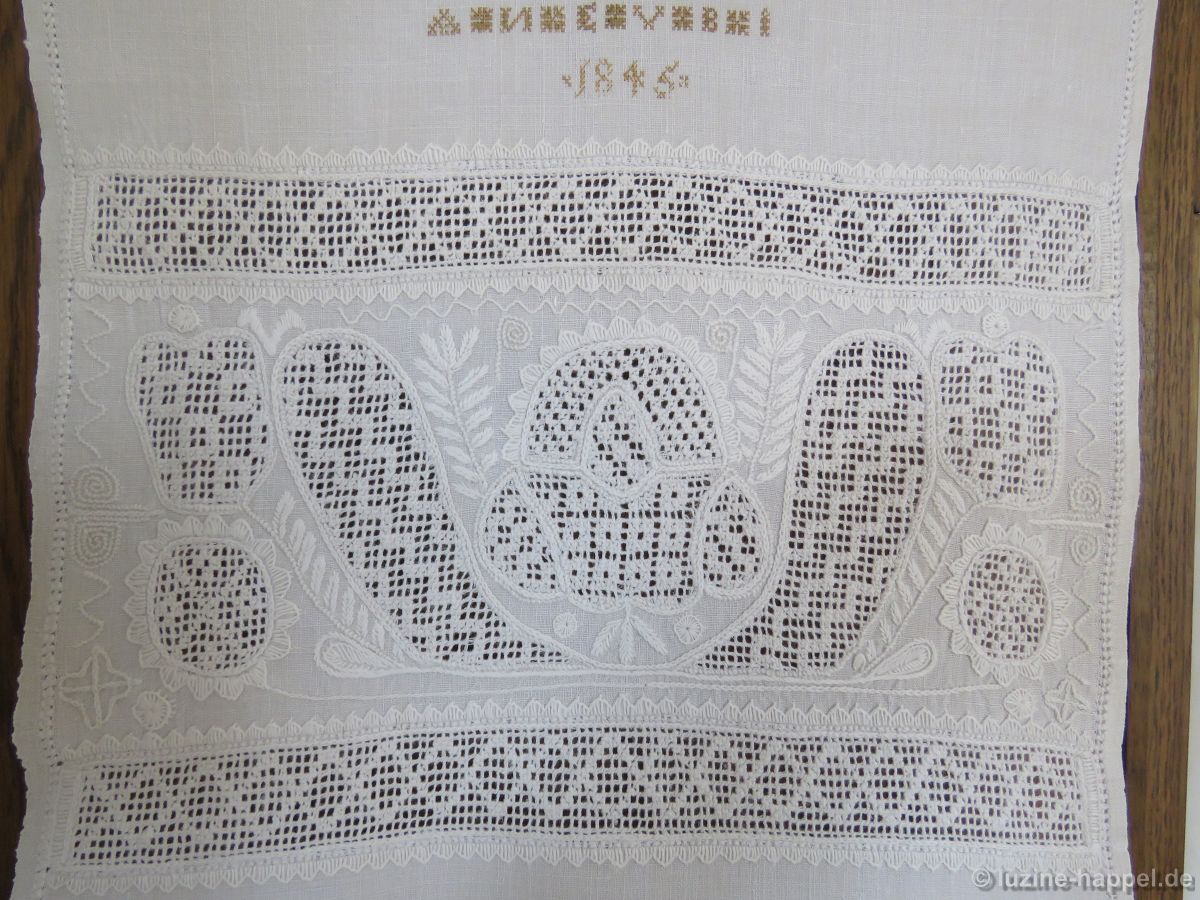
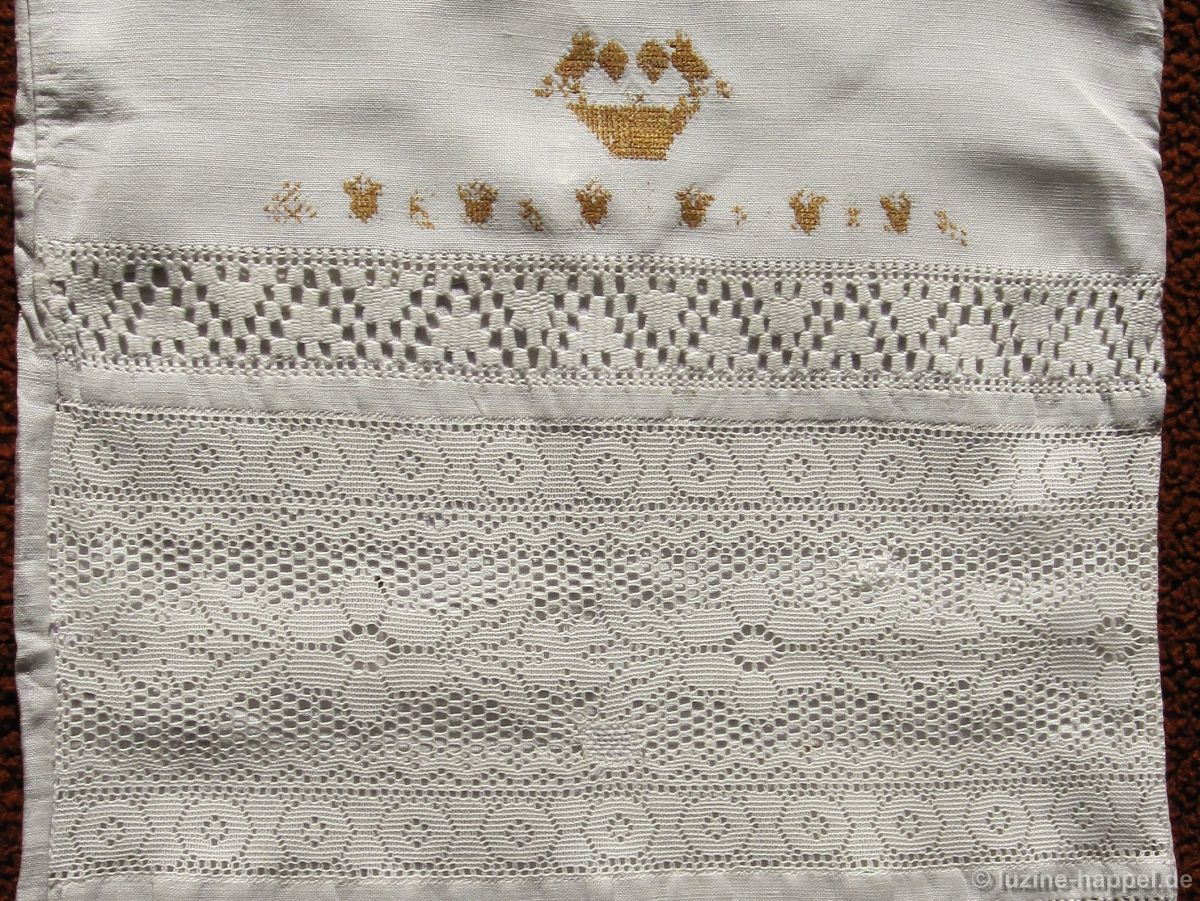
A door hanging from 1845 with a cross stitch crown,


a tall whitework border with openwork needleweaving bands in the middle part,


and, at the bottom, more openwork pattern bands bordered with double Peahole and Four-Sided stitch hems on top and on bottom got a bell border for its bottom edging.


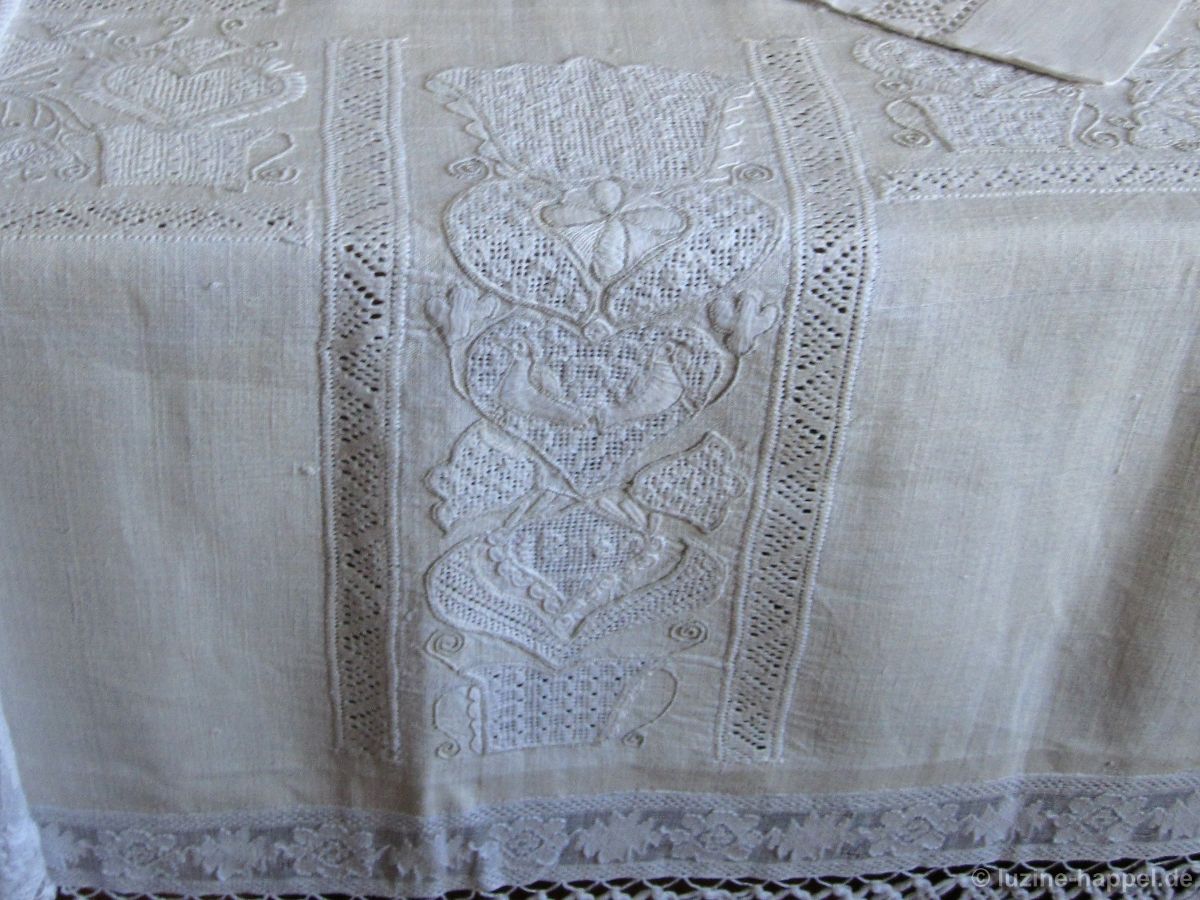
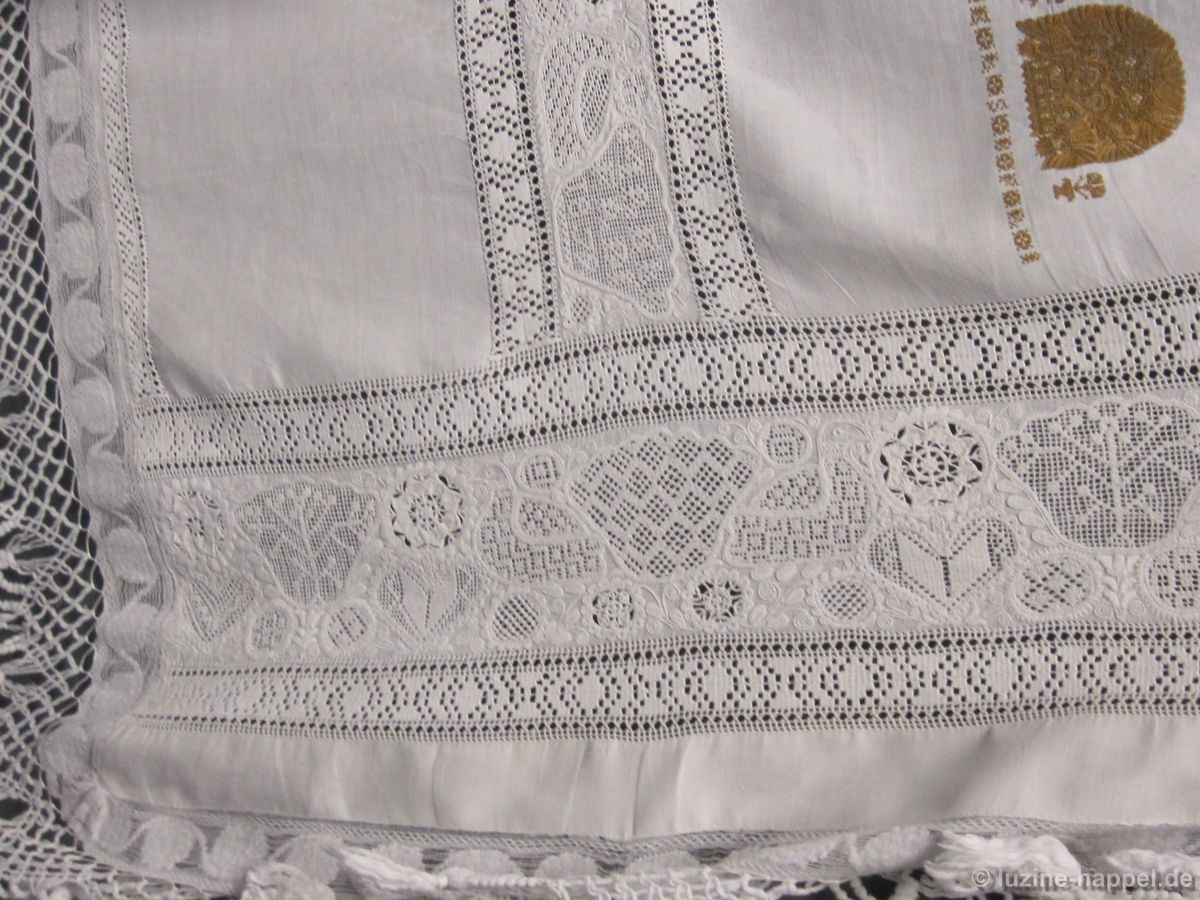
An old bed covering with a grand Schwalm crown, elaborate needleweaving hems, and bobbin lace inserts


got an edging of machine-made lace.


Also a bed covering from about 1860 – unique and elaborately embroidered –


got such a machine-made edging.


This piece, from 1839, and more outstanding examples of the finest whitework embroidery combined with machine-made lace can be found in the museum of Holzburg. This small village museum is always worth a visit.


Besides these machine-made lace edgings, the Schwalm people often inserted machine-made lace bands between hand embroidery.
On the pincushion in the image below, the machine-made band is bordered by needleweaving hems on both sides.


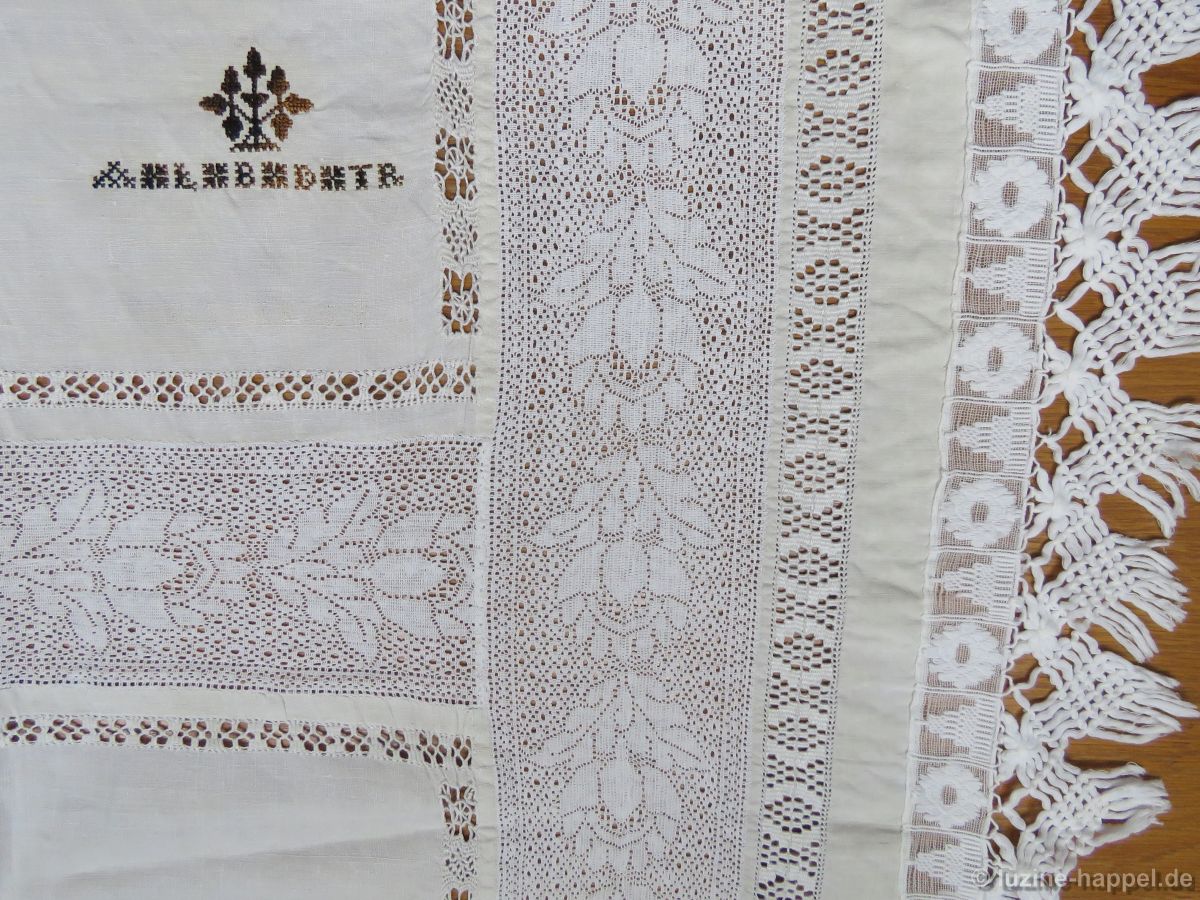
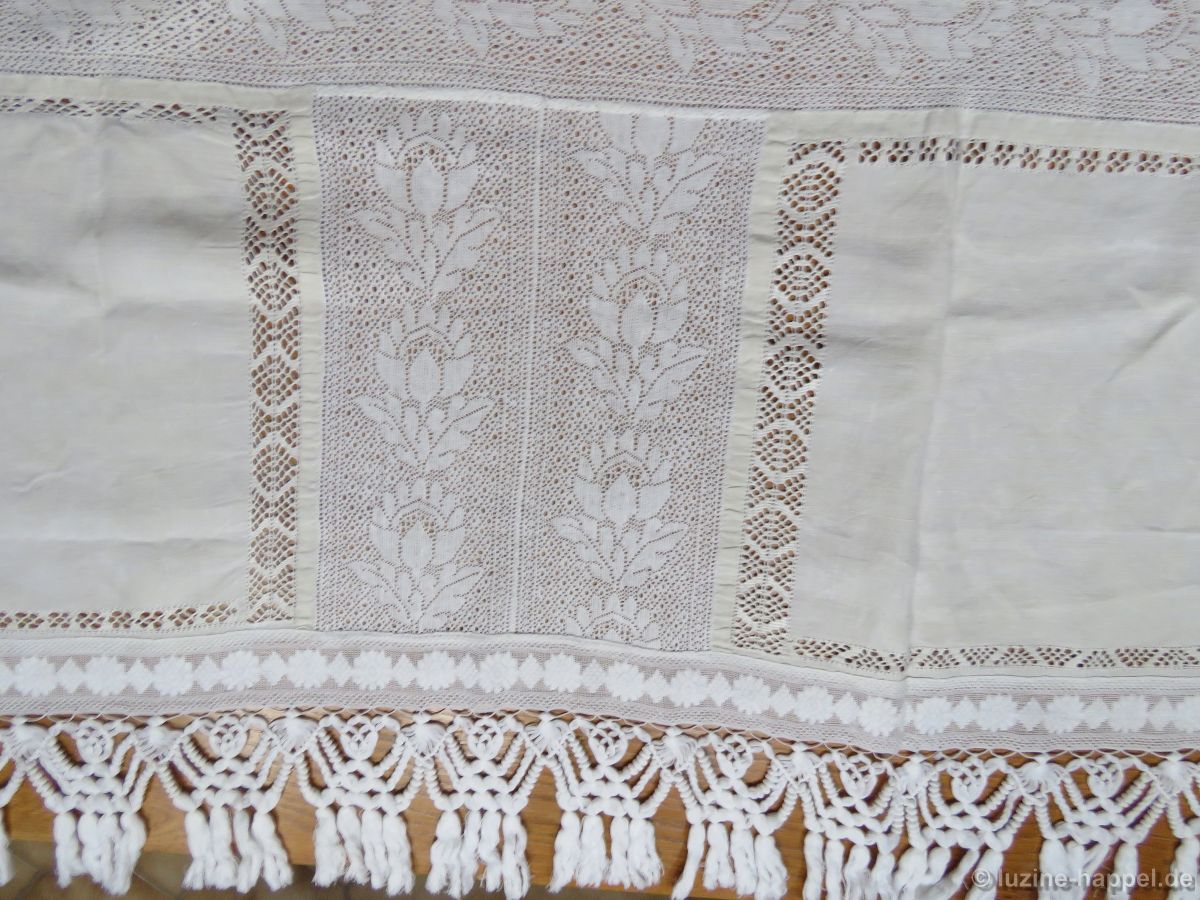
A bed covering shows a cross stitch crown, many different hem patterns, inserted machine-made lace,


and two kinds of machine-made lace edging.


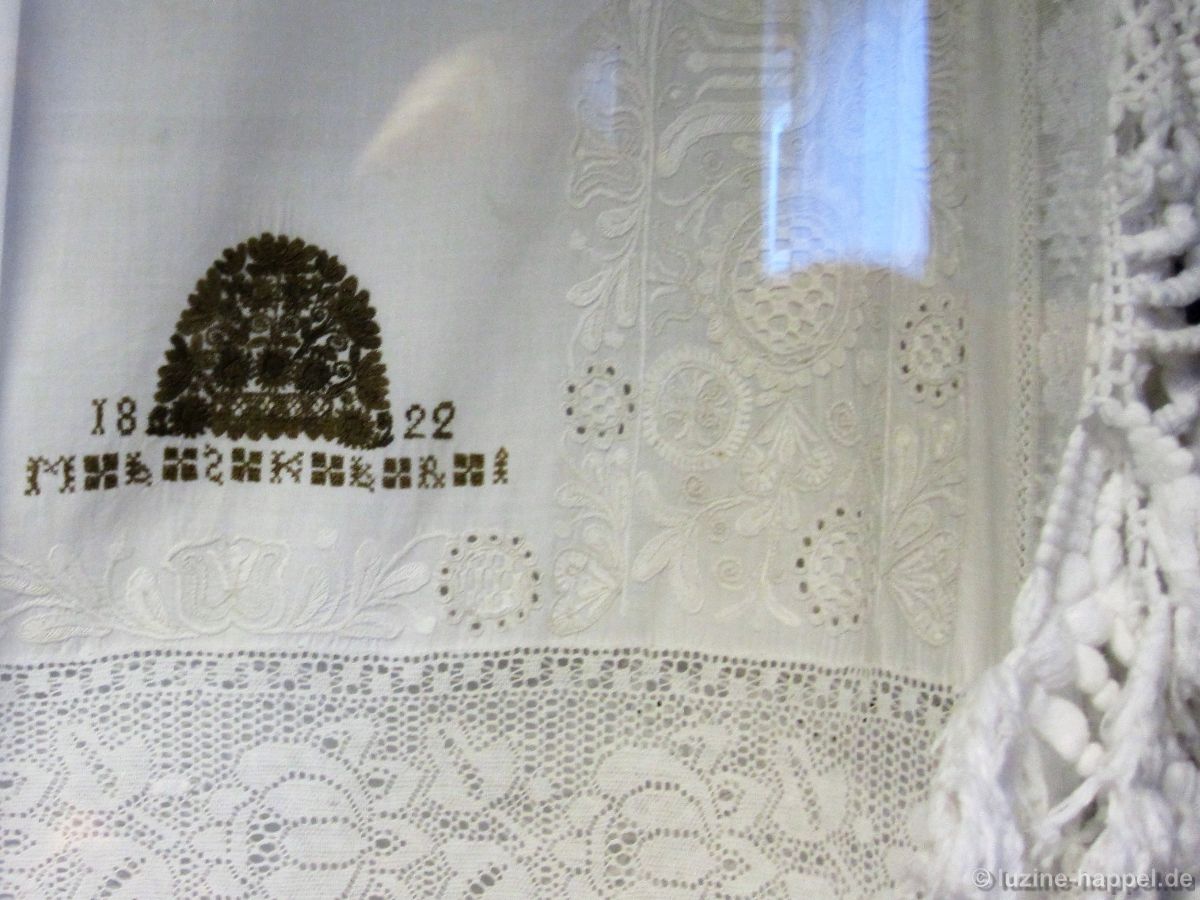
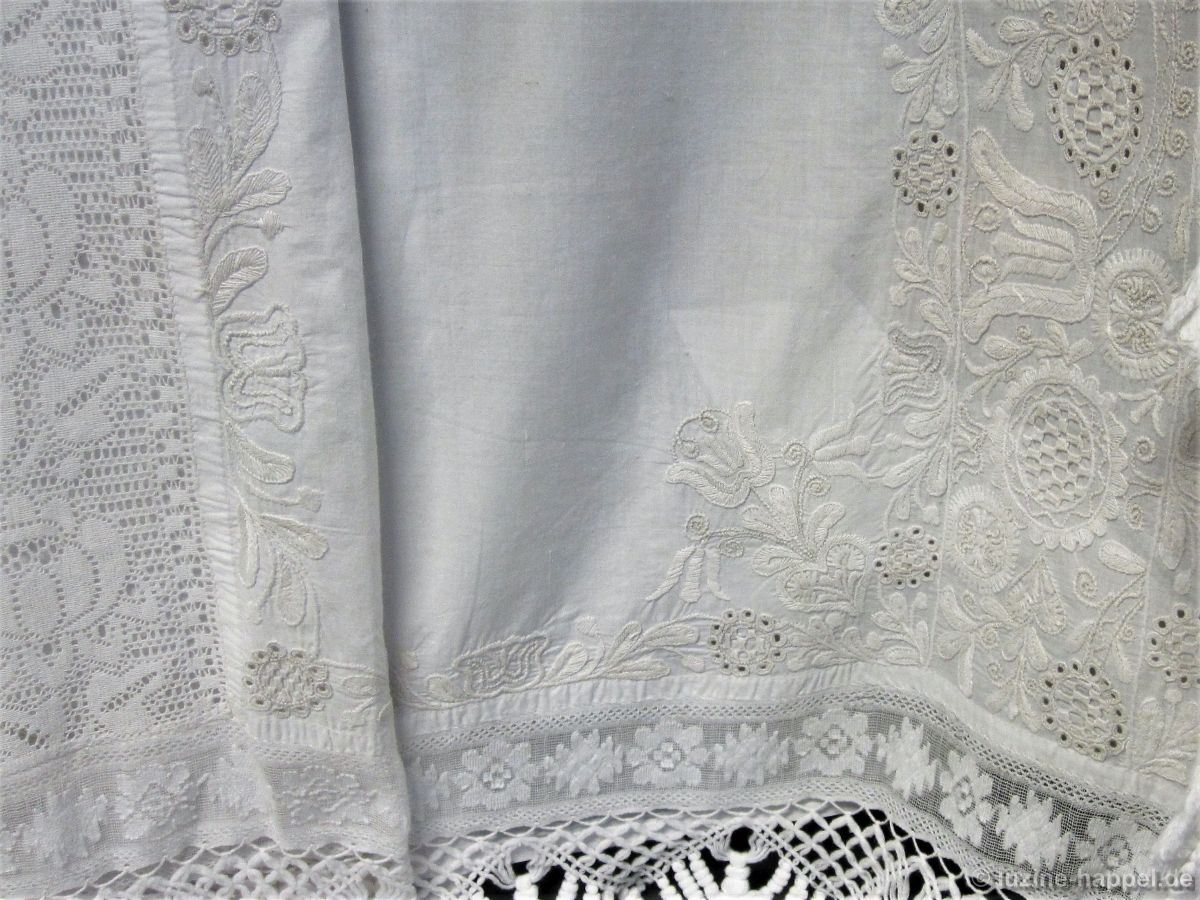
The museum in Holzburg has an interesting bed covering on display. It is elaborately embroidered with elements of early Schwalm whitework and boasts a grand Schwalm crown showing the year 1822.


Additionally, it is decorated with an inserted band of machine-made lace and machine-made lace edging. I was kindly allowed to show these images on my blog. The partial details cannot show the full spendor of the exhibit, but one can get an idea of the magnificence. The museum welcomes every visitor interested in the details of such selected works.

Schwalm Costume – The Neckerchiefs

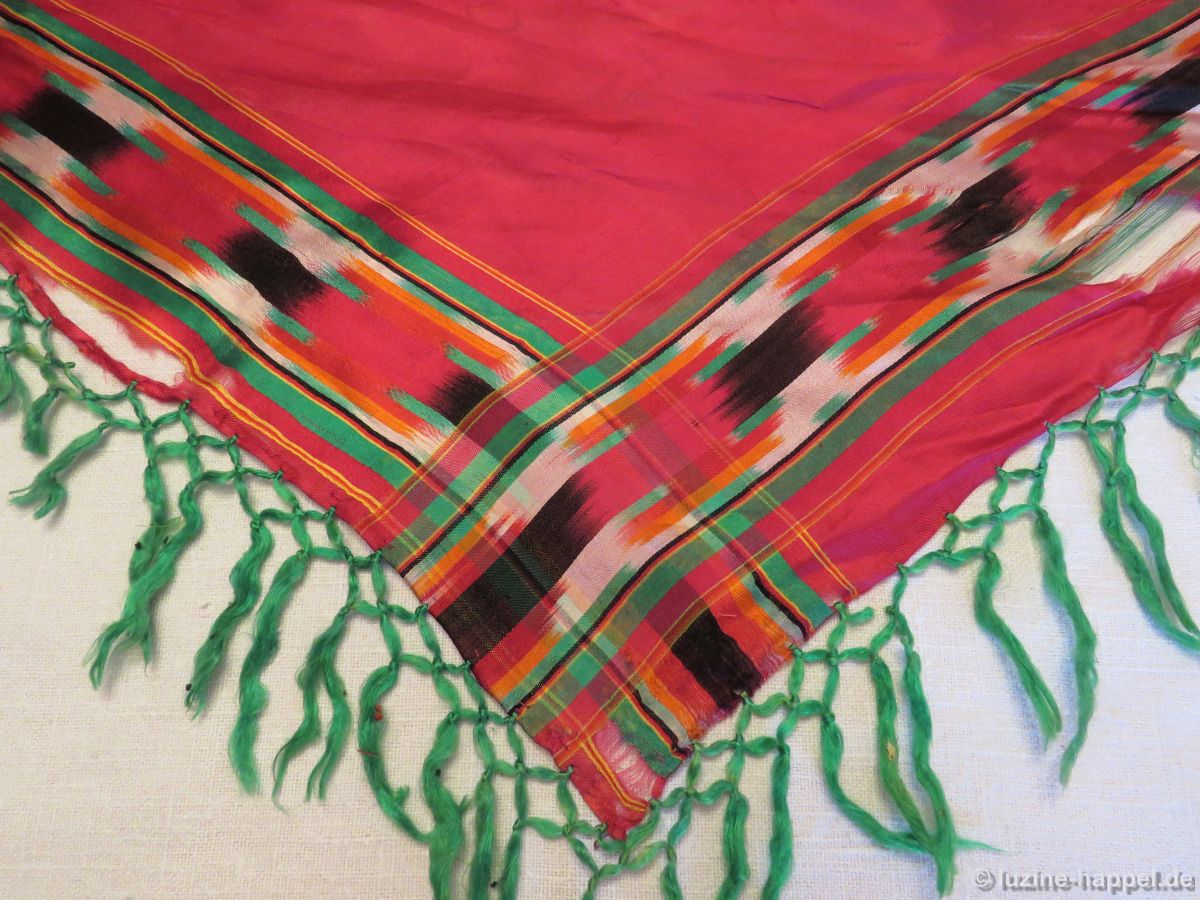
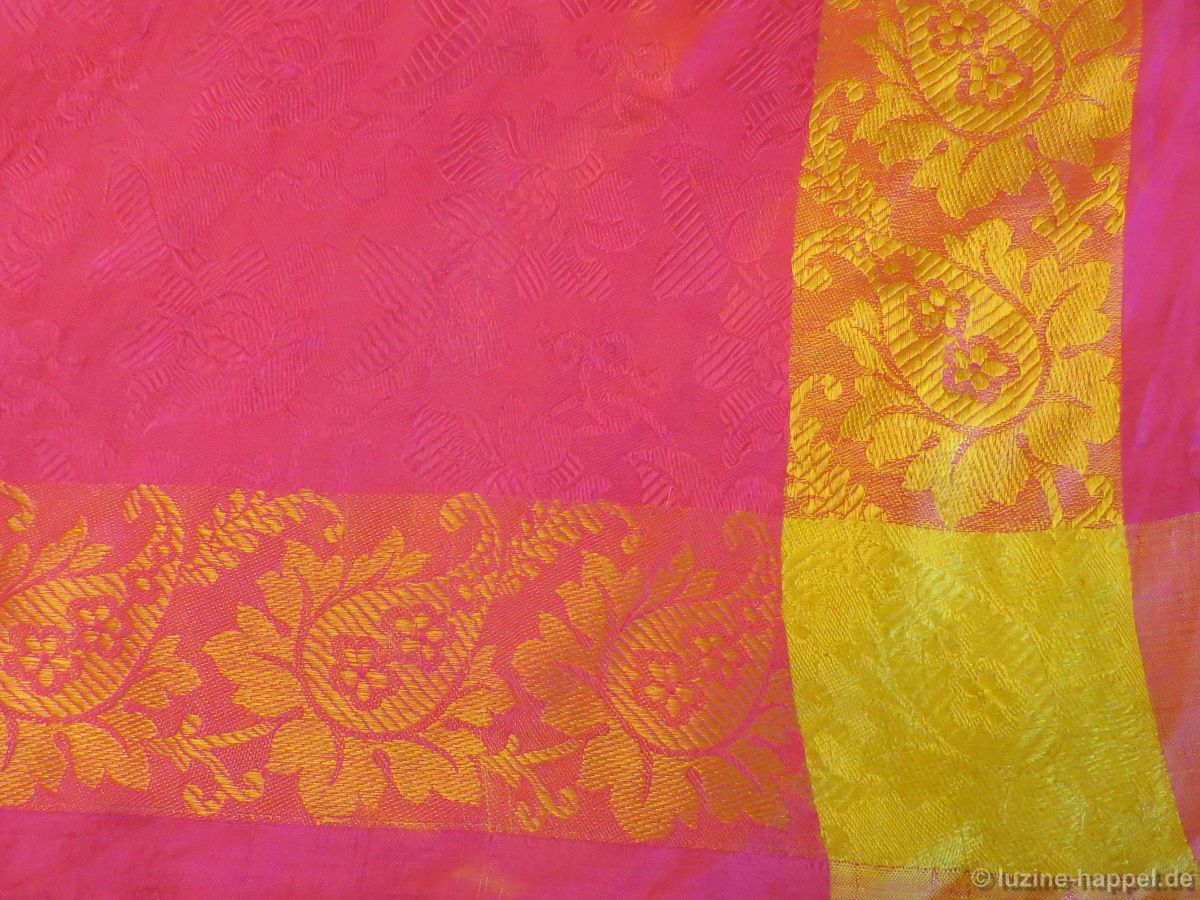
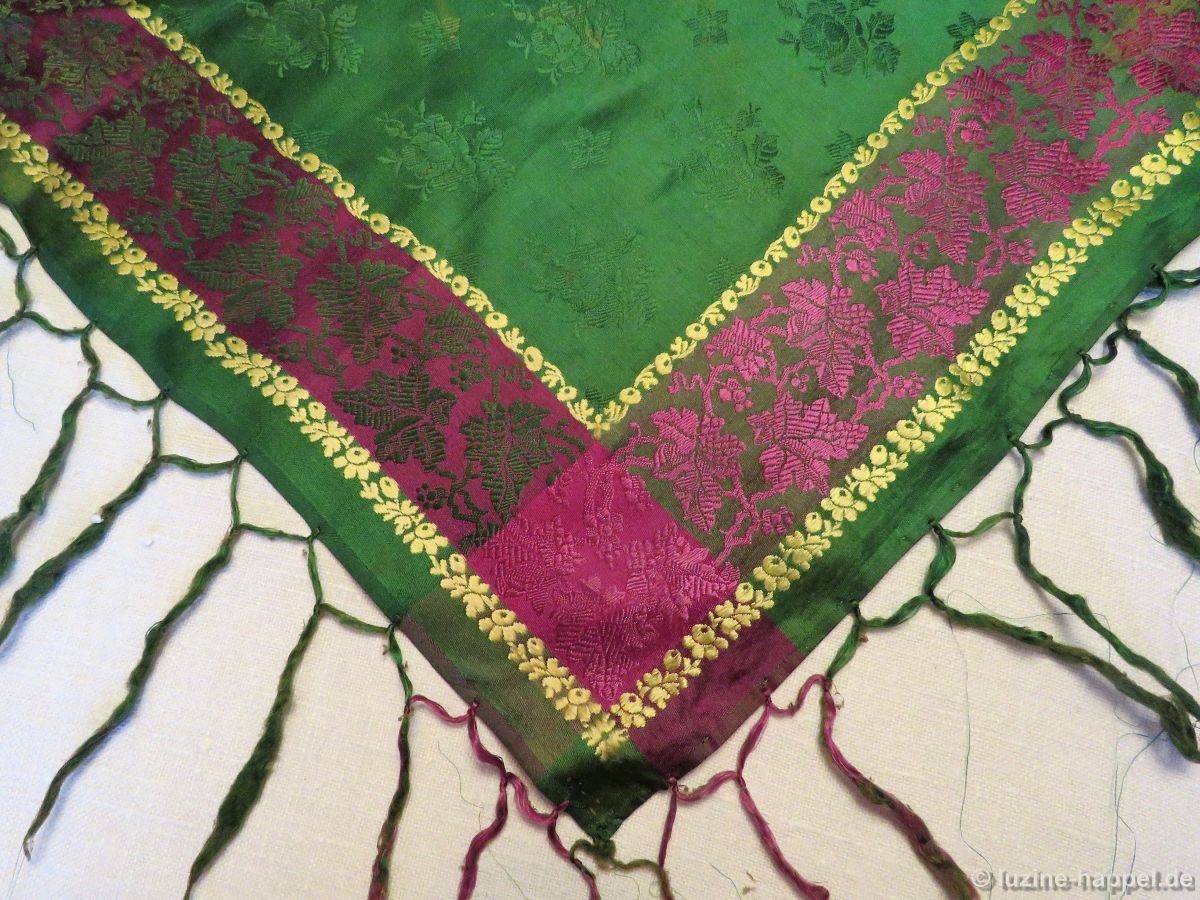
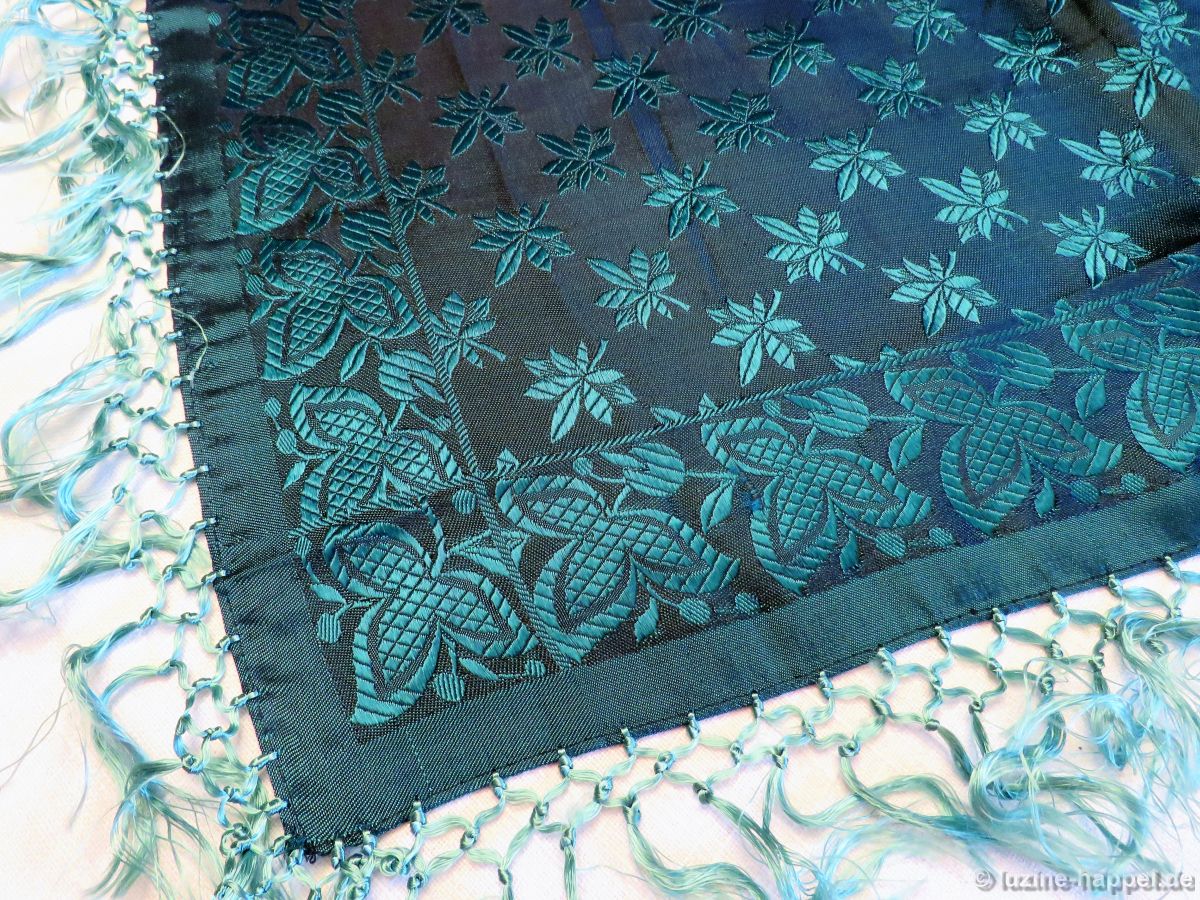
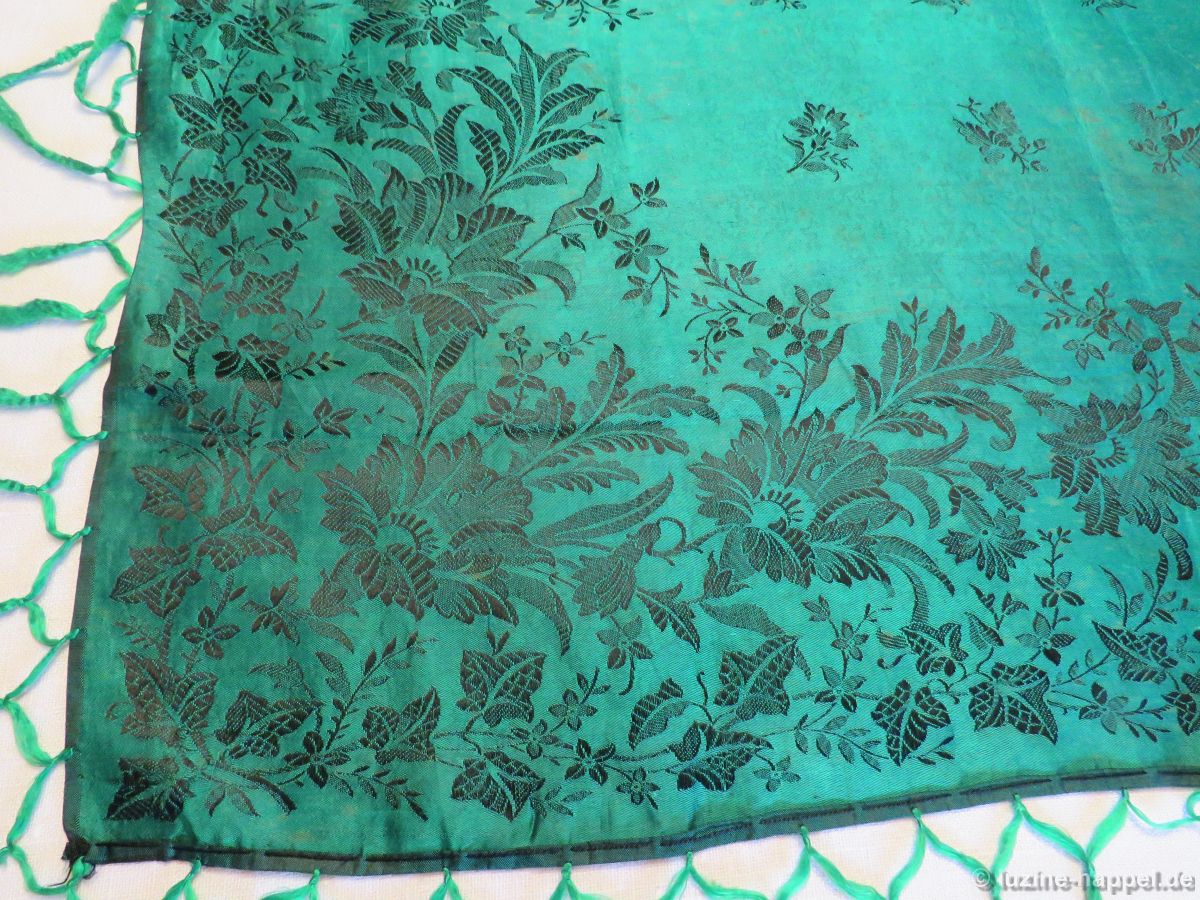
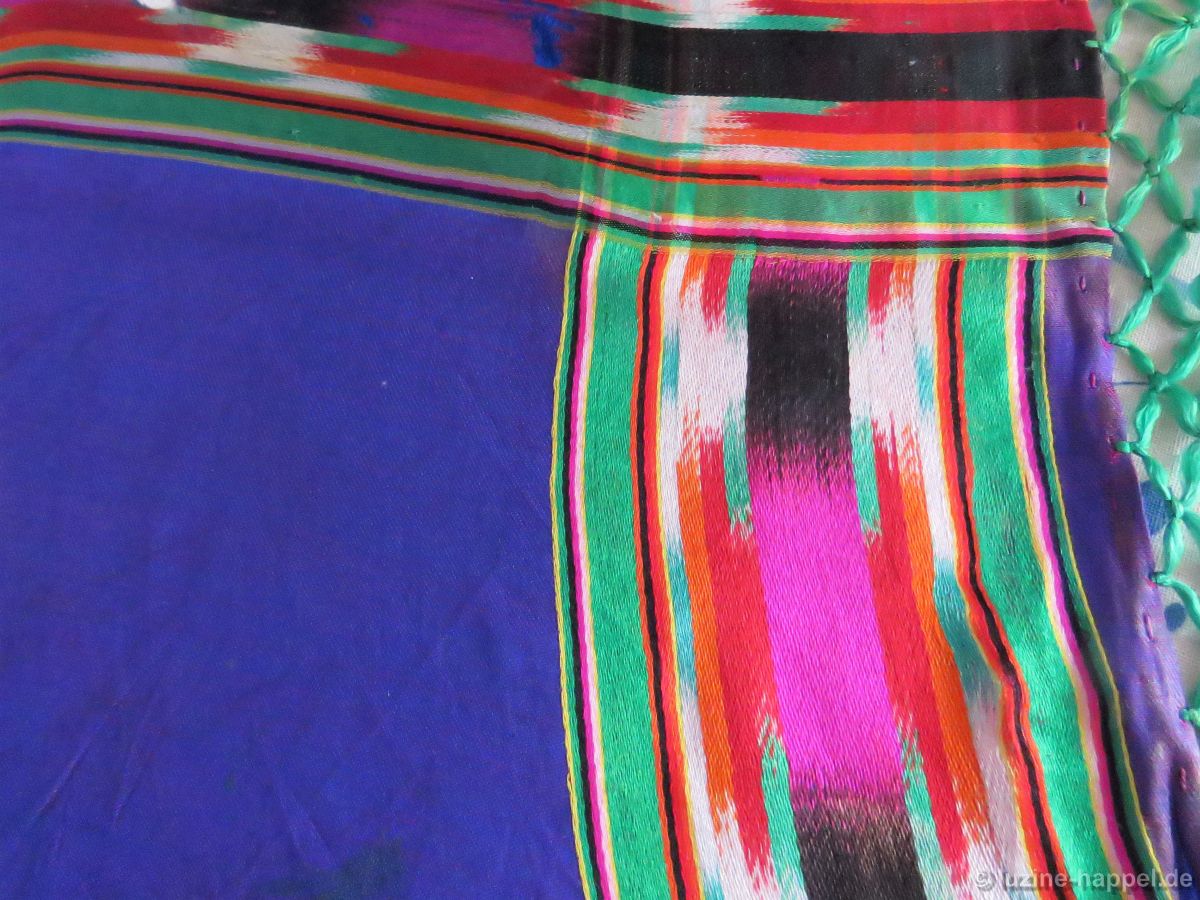
Schwalm women wore neckerchiefs with their festive costumes. These square cloths were made of pure silk.
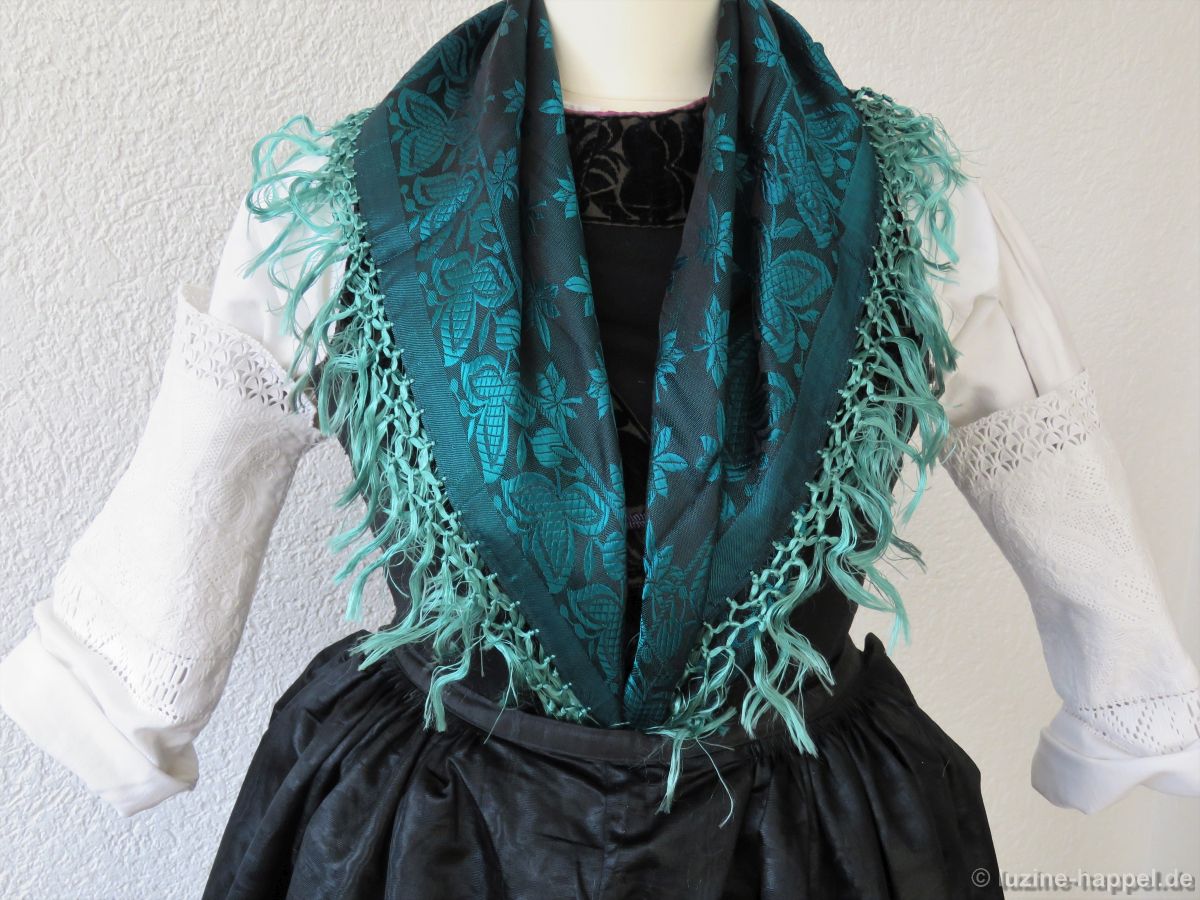
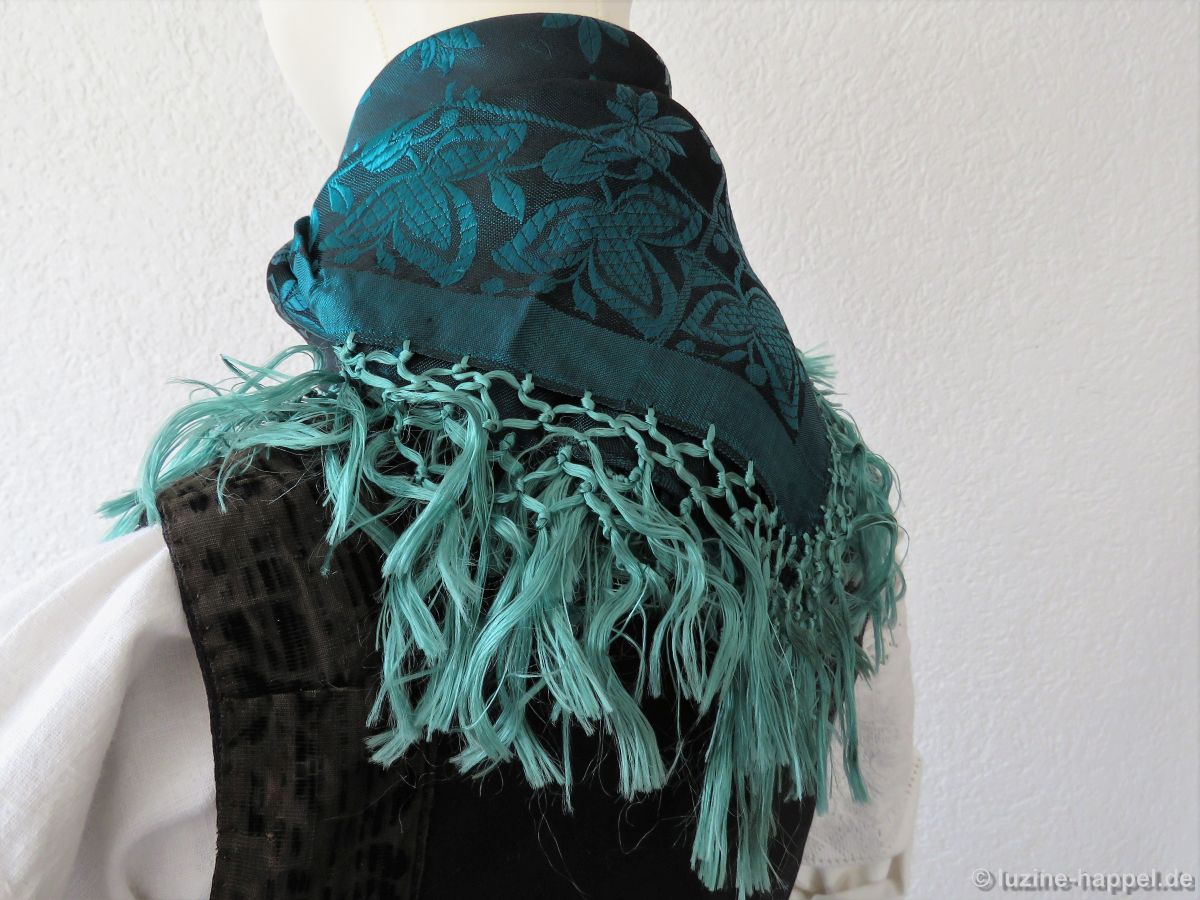

The neckerchiefs of young women were often very colourful reflecting the basic colour of the costume.


Fringe made from silk threads knotted at the edges was common.


The bundled threads of the fringe were knotted at least once again,


but usually more often.


The square cloths were folded diagonally. The established triangle was laid in the back.
Depending on how the cap bands (subject of a future article) were worn – in the back or in the front – the ends were either inserted in the front at the waist between skirts and apron


or wound around the neck, crossed over in the front, and knotted underneath the triangle in the back.

Schwalm Costume – The Jackets

When the weather got colder, Schwalm women wore a short long-sleeved jacket over the bodice and waistcoat of their festive costumes.

The outside fabric was silk, cashmere or wool.


The jackets were completely lined –


either with a plain linen-weave fabric made of linen threads in the warp and hand-spun lambswool in the woof


or with the same fabric felted.


The front pieces were cut with large curves like the cut of the waistcoats. The arrangement of the buttons formed a heart.


Similar to the waistcoats, most of the jackets had black velvet bands under the button sections.


There were jackets in green, lilac (matching the blue costume), and black.


Often the green silk fabric


was hand embroidered with small red patterns.


The sleeves were long and snug fitting


and closed with two buttons.


The edges of the sleeves were trimmed with black velvet, cut zigzag and decorated with simple ornamental stitches.


The jackets reached from the collarbone to the waist and were close fitting.


A 5 cm high strip of inverted pleats was added at the bottom edge. When the jacket was worn, the pleats lay upon the waistband of the skirts. This pleated section gave the jacket the name of “Troll” jacket.


The fabric strip for the inverted pleats was edged with black velvet.


In patterned fabric the pleats were arranged to match the pattern.


So that the pleats would keep their shape, they were secured on the back with two rows of stitches


in different techniques.


Girls also wore such green jackets with their red costume.

Hearts in Wooden Frames

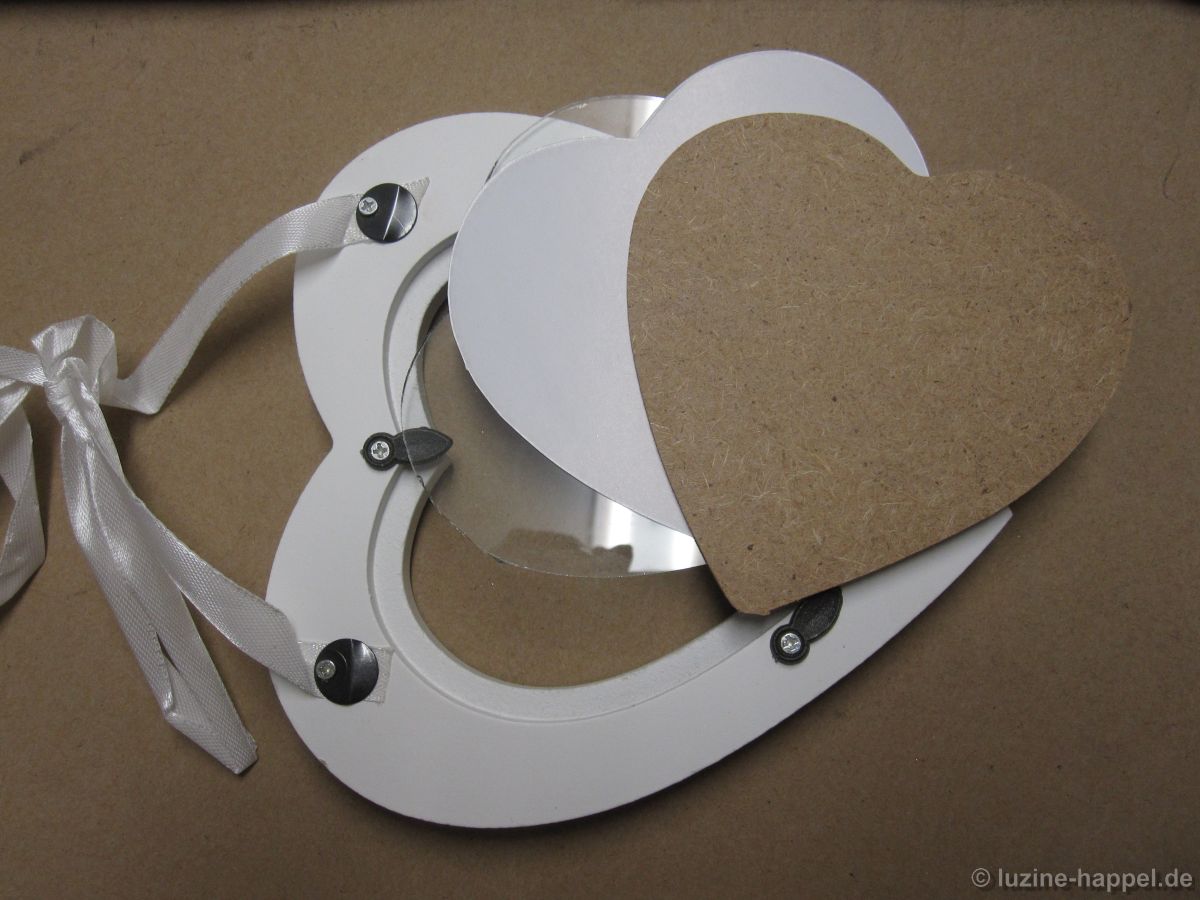
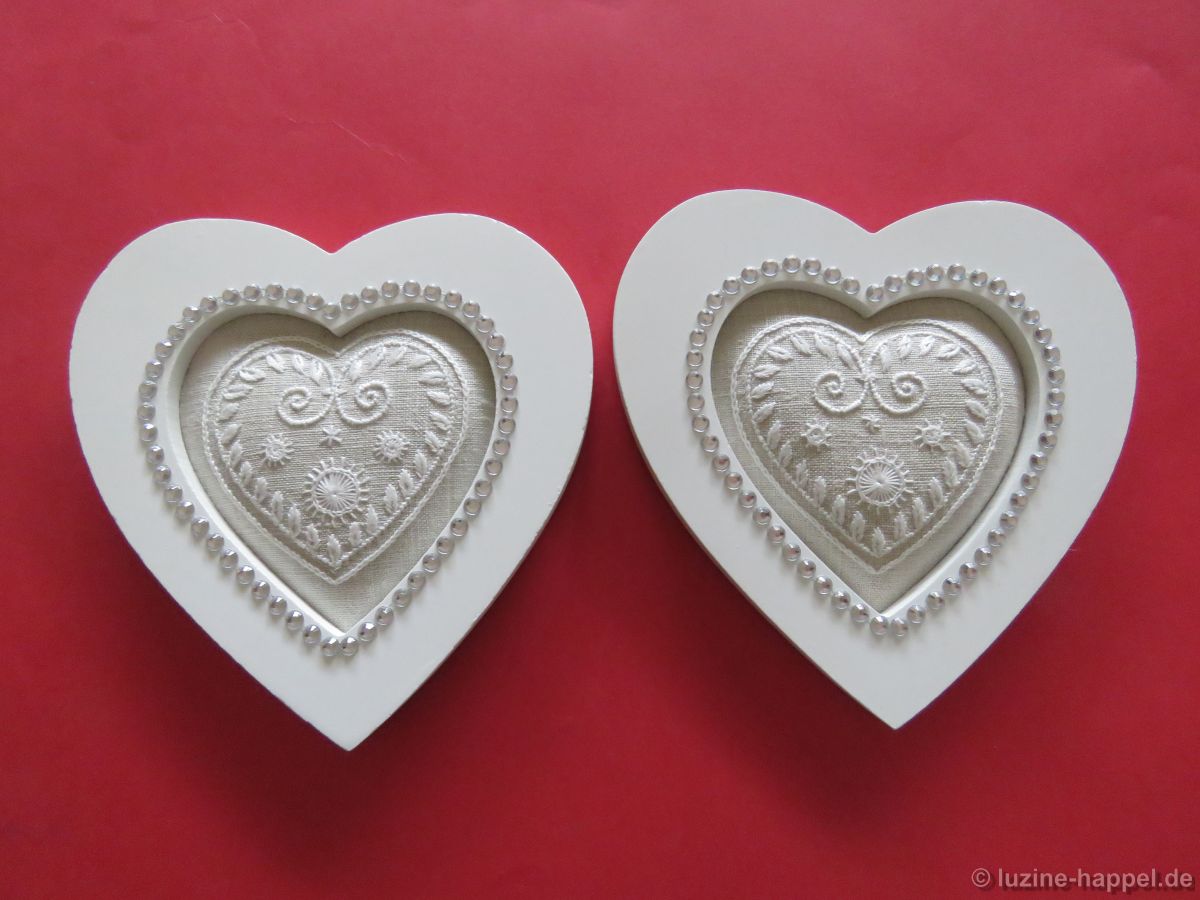
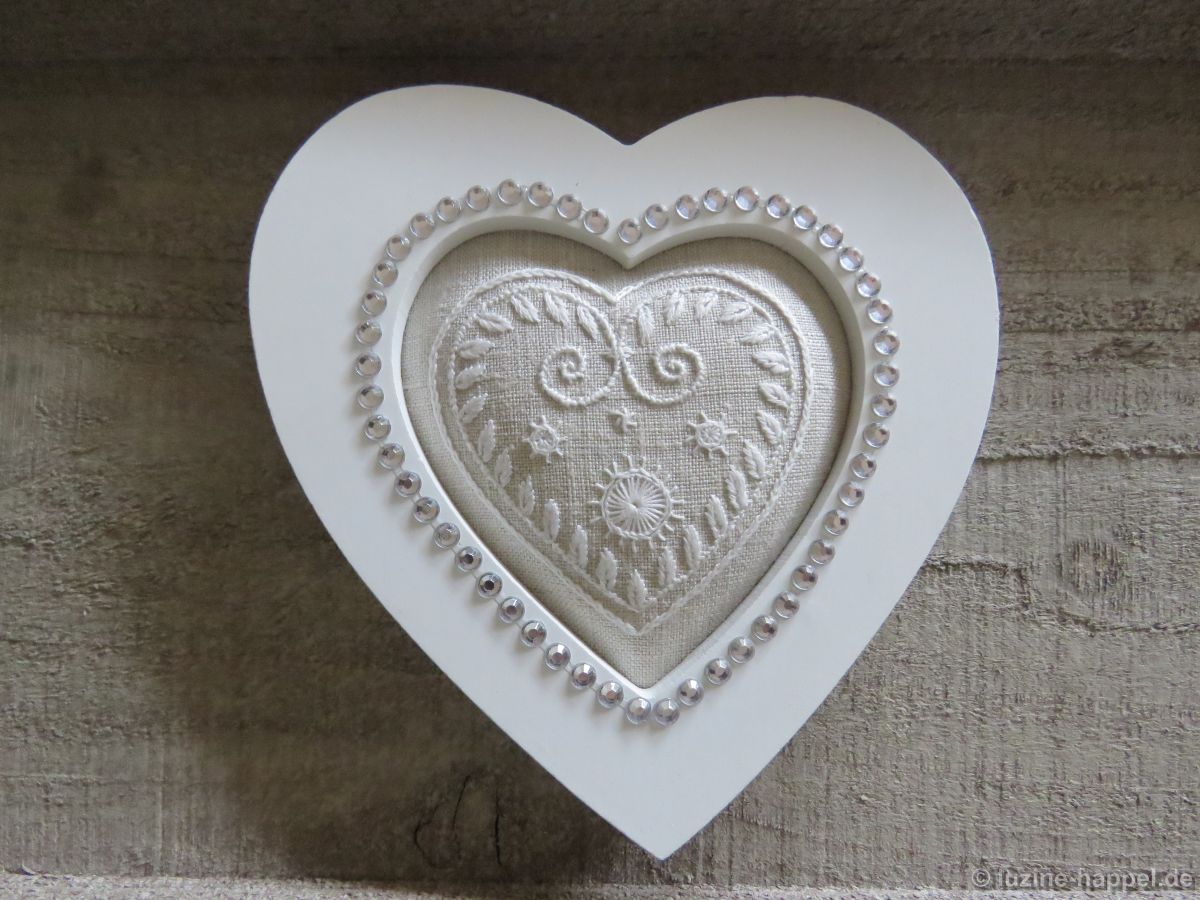
I have shown cutout hearts, mounted on slate hearts and mounted in metallic frames. This year’s Valentine’s Day hearts will be mounted in heart-shaped wooden frames originally made for displaying photos.


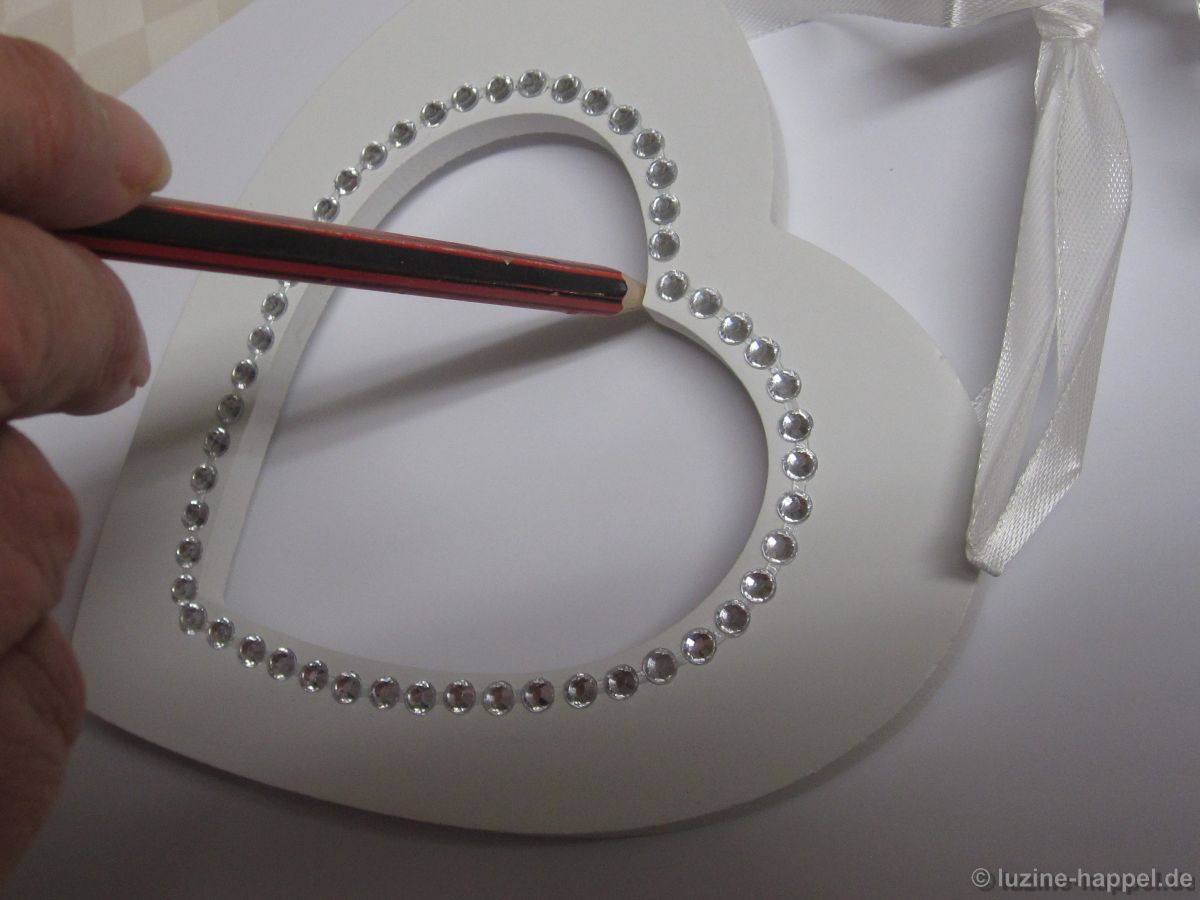
First, the opening of the frame is traced onto paper.


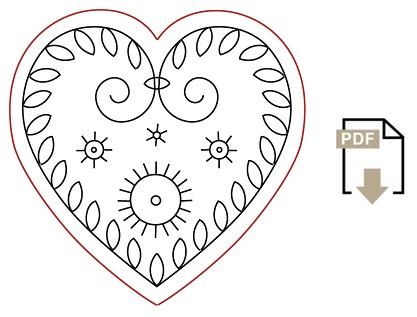
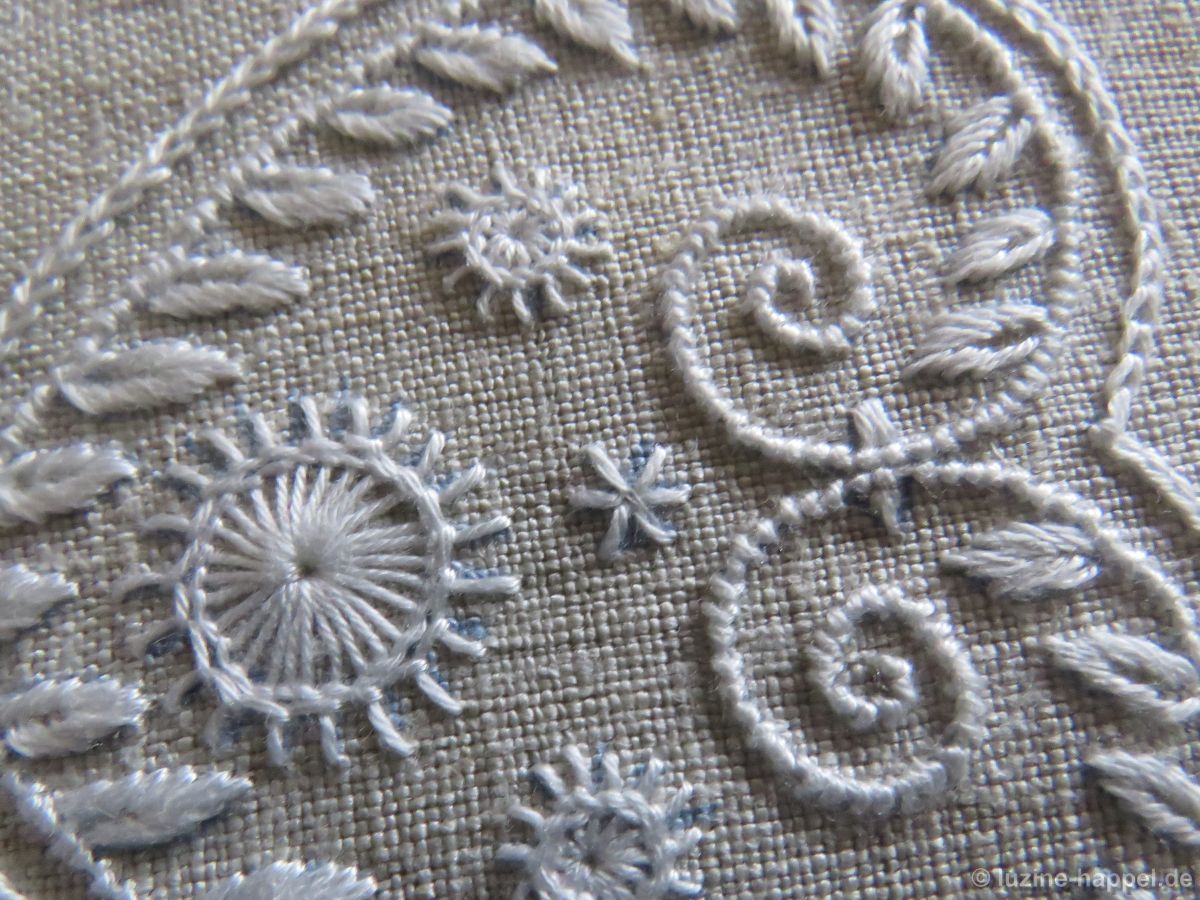
A heart design is drawn to fit the shape (but notice that the embroidered heart must be smaller than the frame opening). I wanted the pattern to be cute, so I incorporated many small leaves and Eyelash stitches.


Handwoven linen with its natural colour and its distinctive structure is the right fabric for this project.


Very soon both embroideries were finished, washed, starched, and ironed.


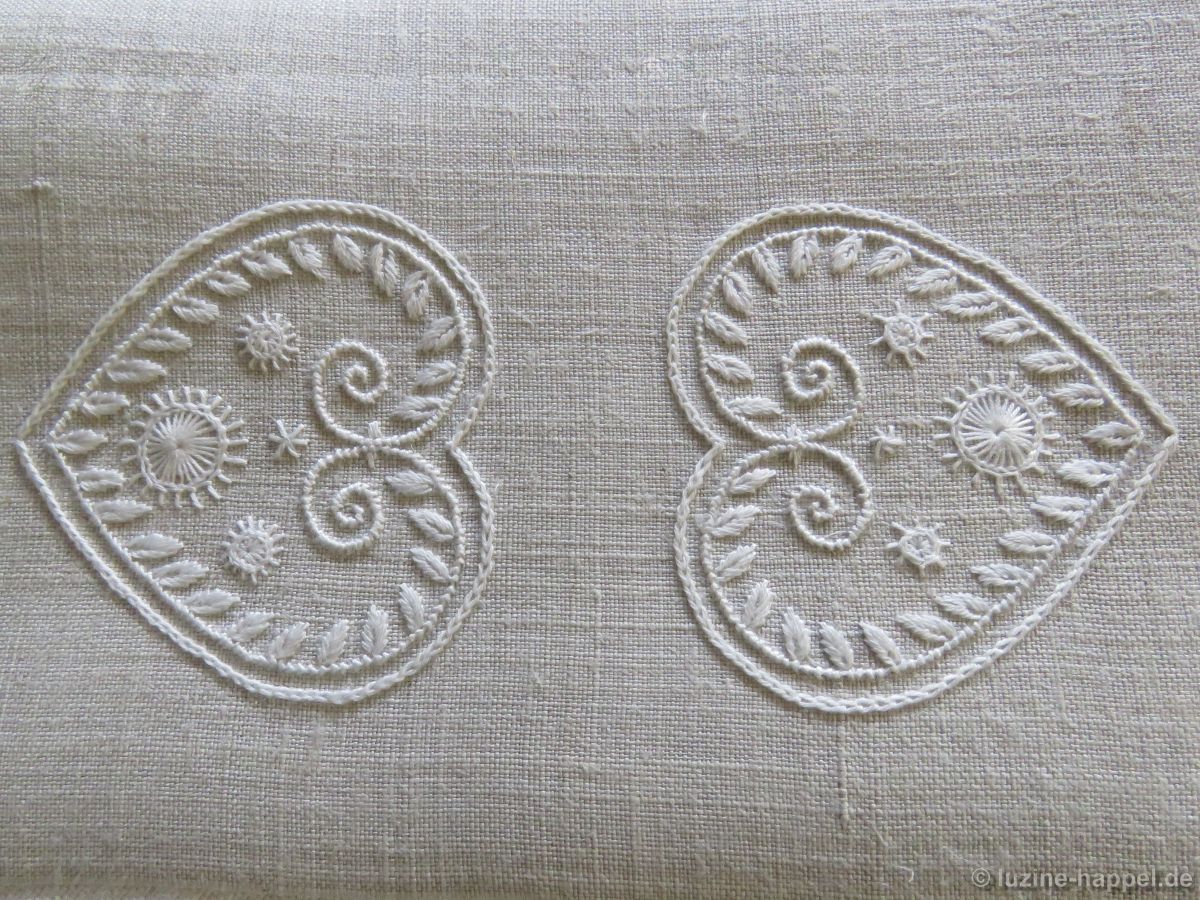
The image below shows how different the two embroideries look with and without wadding. The embroidery on the right, with wadding, is much more prominent.


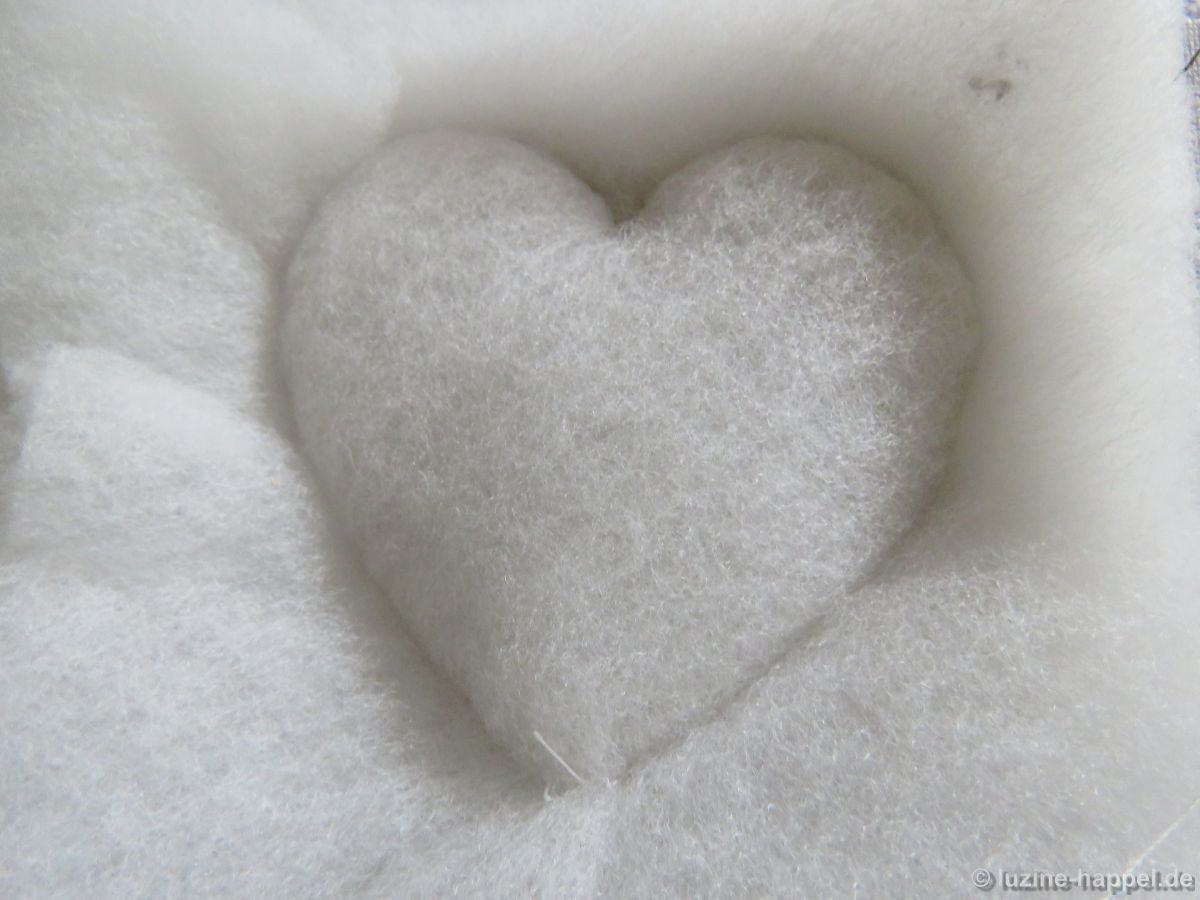
A layer of poly fleece was placed on the back of the embroidery.


The fleece was secured by stitching along the Coral Knot line.


With a red background the heart duo is a nice decoration for Valentine´s day;


with a neutral background the hearts become a pretty all-year decoration.