GSS – Considerations for Assembling

Considerations for Assembling

The time to assemble the contributed pieces for the Global Schwalm Sampler (GSS) approaches, and I often think about the best way to join the separate linen pieces. Now I want to share my thoughts with you.

When I got the idea of collecting embroideries for a sampler, I thought it would be easy to sew all of them together with a sewing machine. But very soon I was assailed with doubts, and so I started testing different methods.

Preliminary consideration:
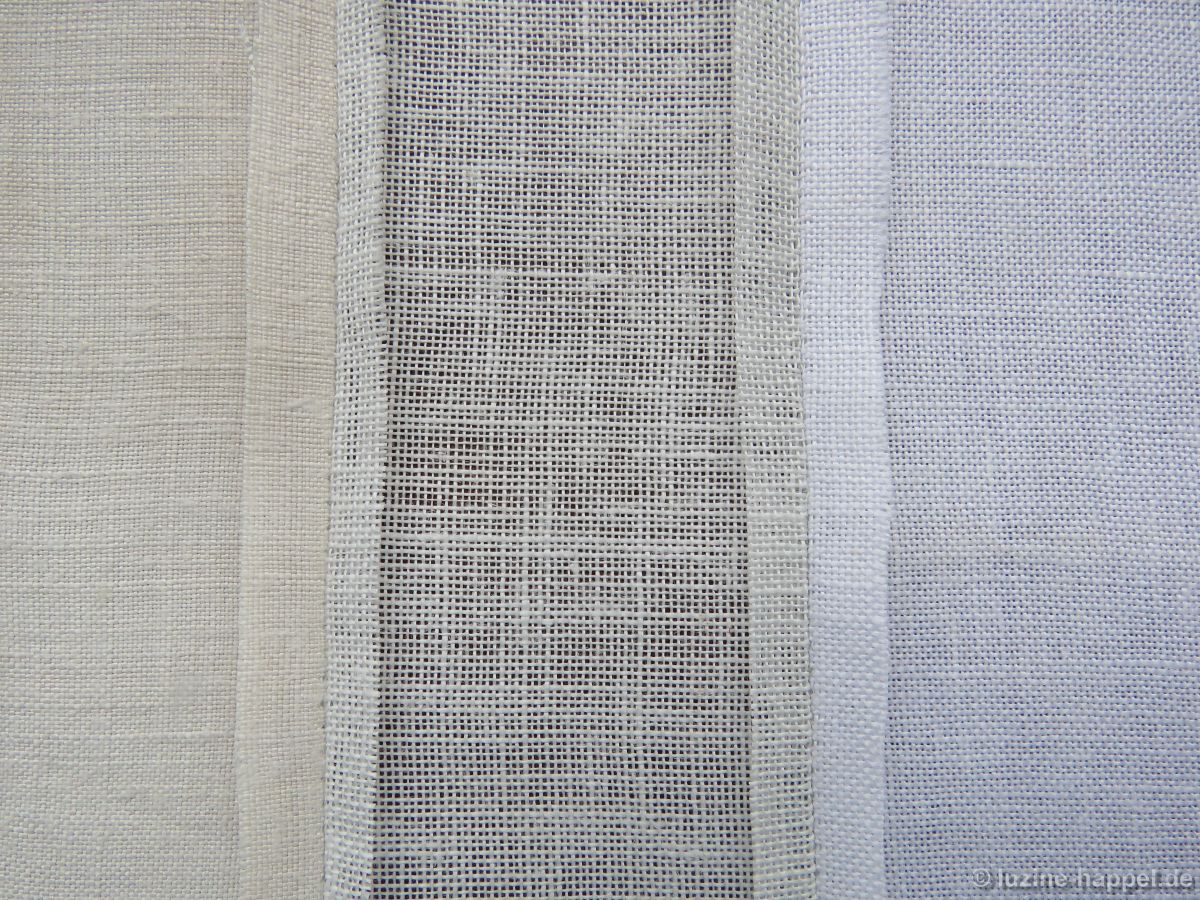
So far I have nearly ten different linens – densely woven fabric and that with a very loose weave, fine and more coarse linen, handwoven and machine-made fabric – all in very different sizes and colours (bright white, off white, and natural gray).
1.
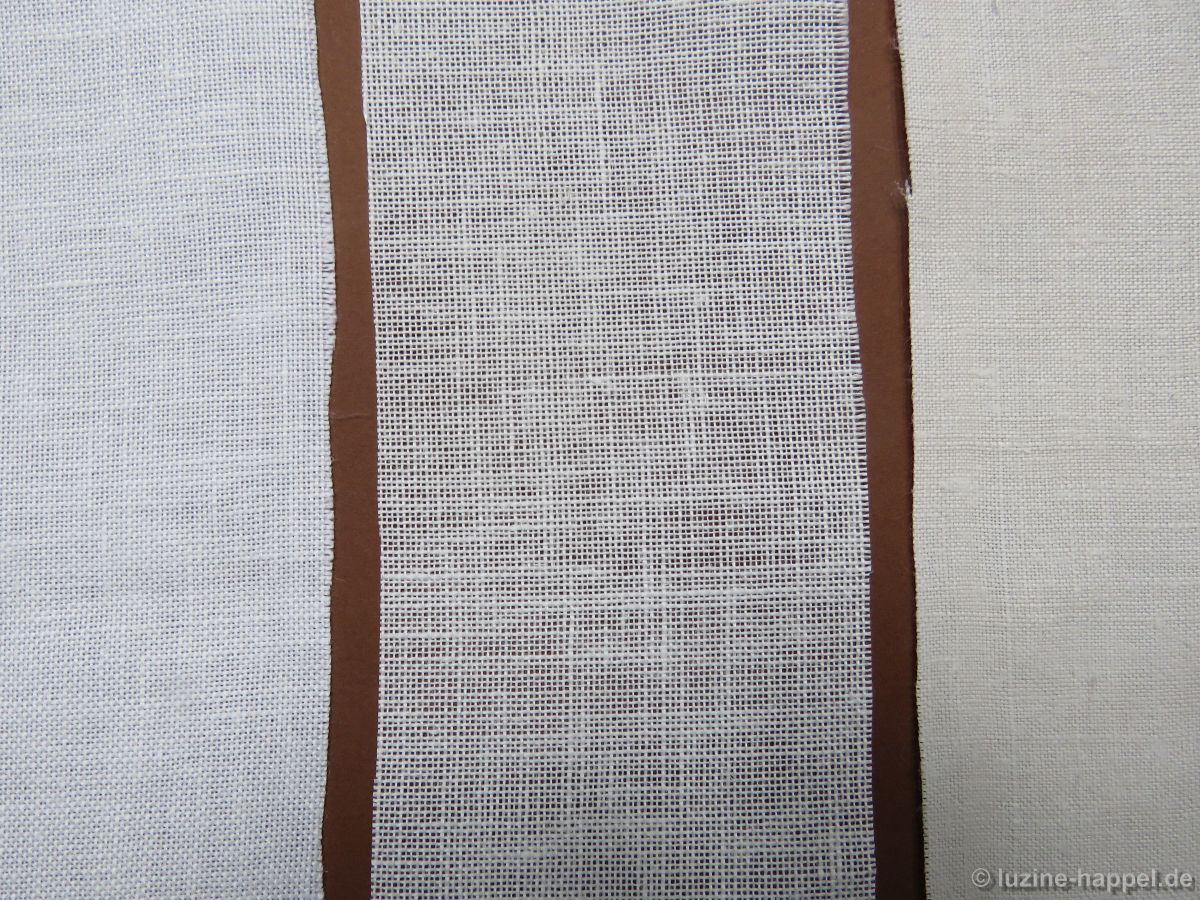
If the pieces are laid right sides together and sewn together, the seam allowance is visible through the fabric – especially seen through the less densely woven linens.
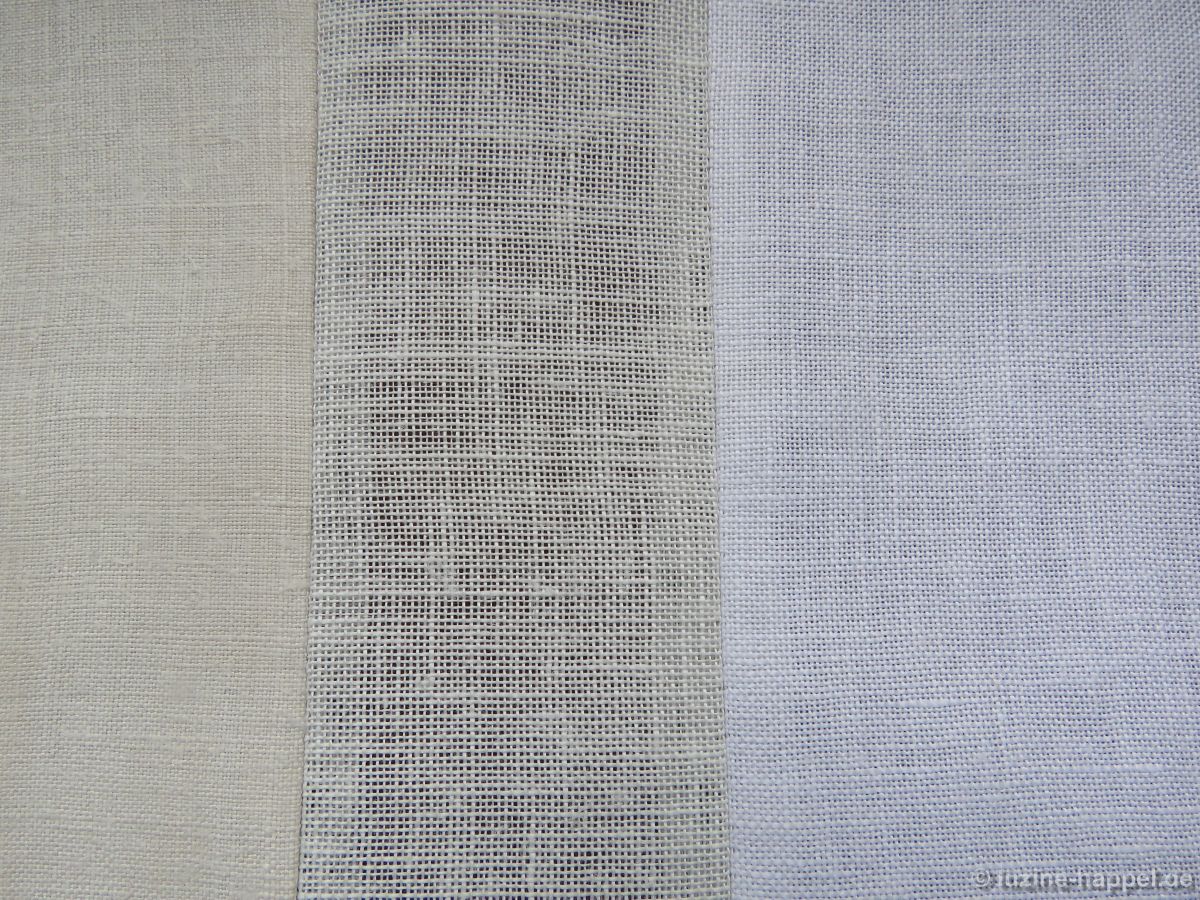
The finished piece would need a lining to cover the seam allowances on the back.
2.
If an underlay of coloured fabric (thin cotton fabric) is used,
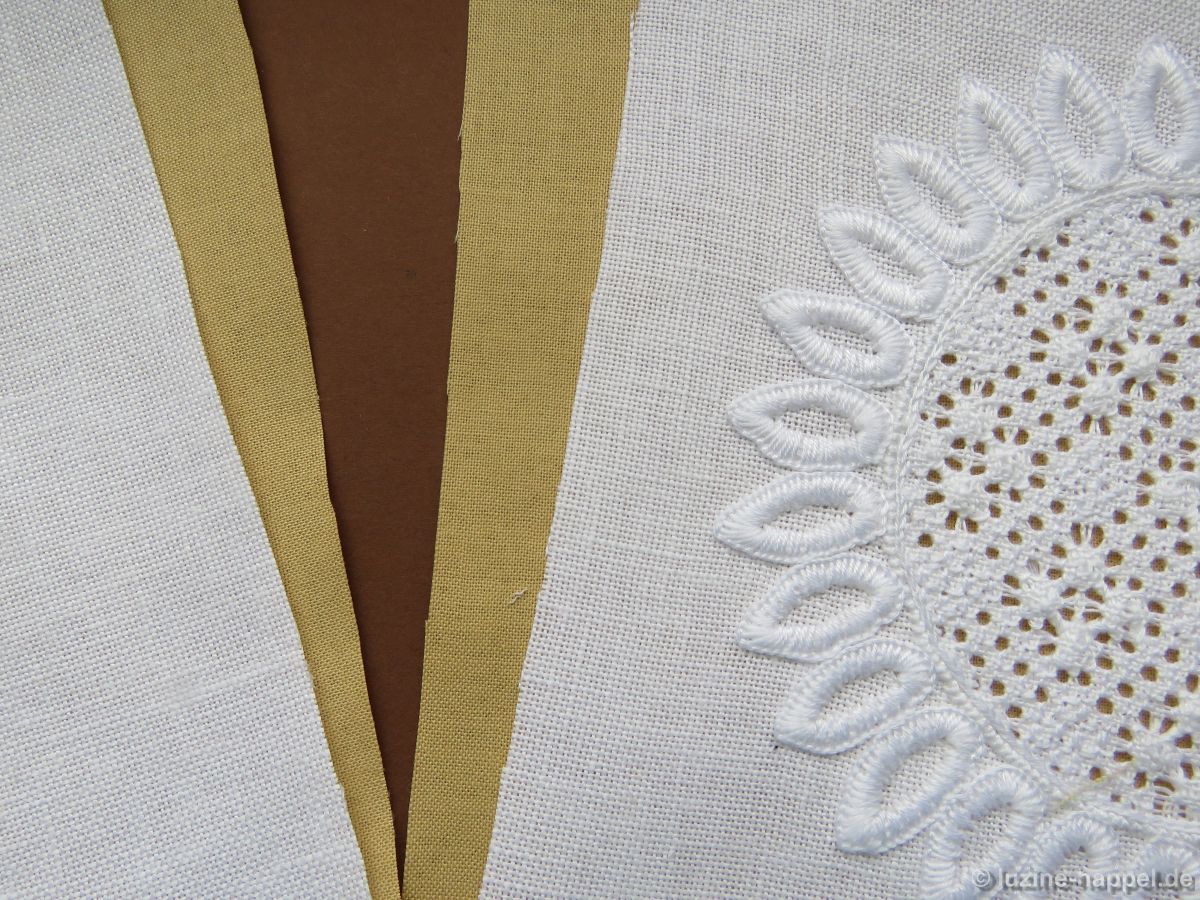
the preparatory work of basting both layers exactly together is painstaking and time consuming.
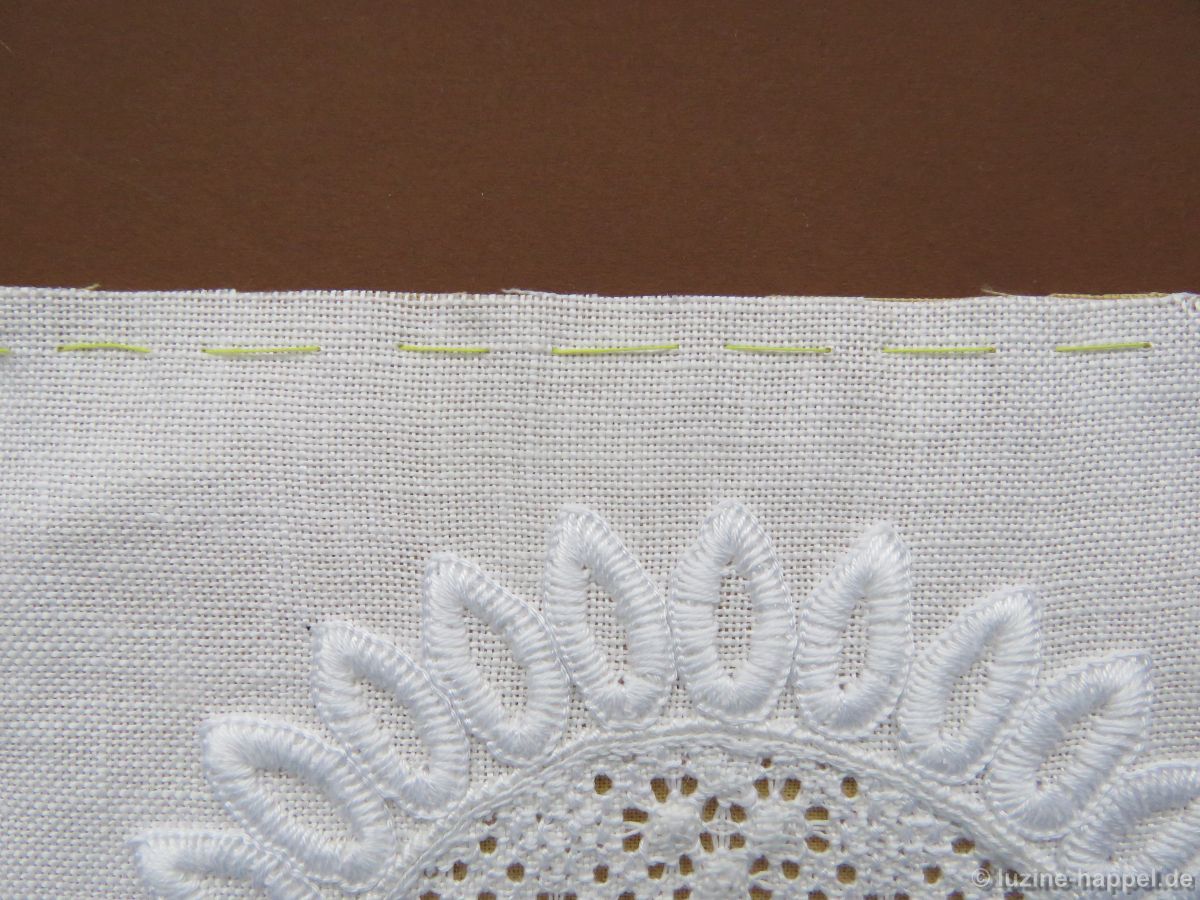
Sewn right sides together, the seam allowance is not seen through the fabric.

The filling patterns become, from the coloured background, more clear and striking in appearance.
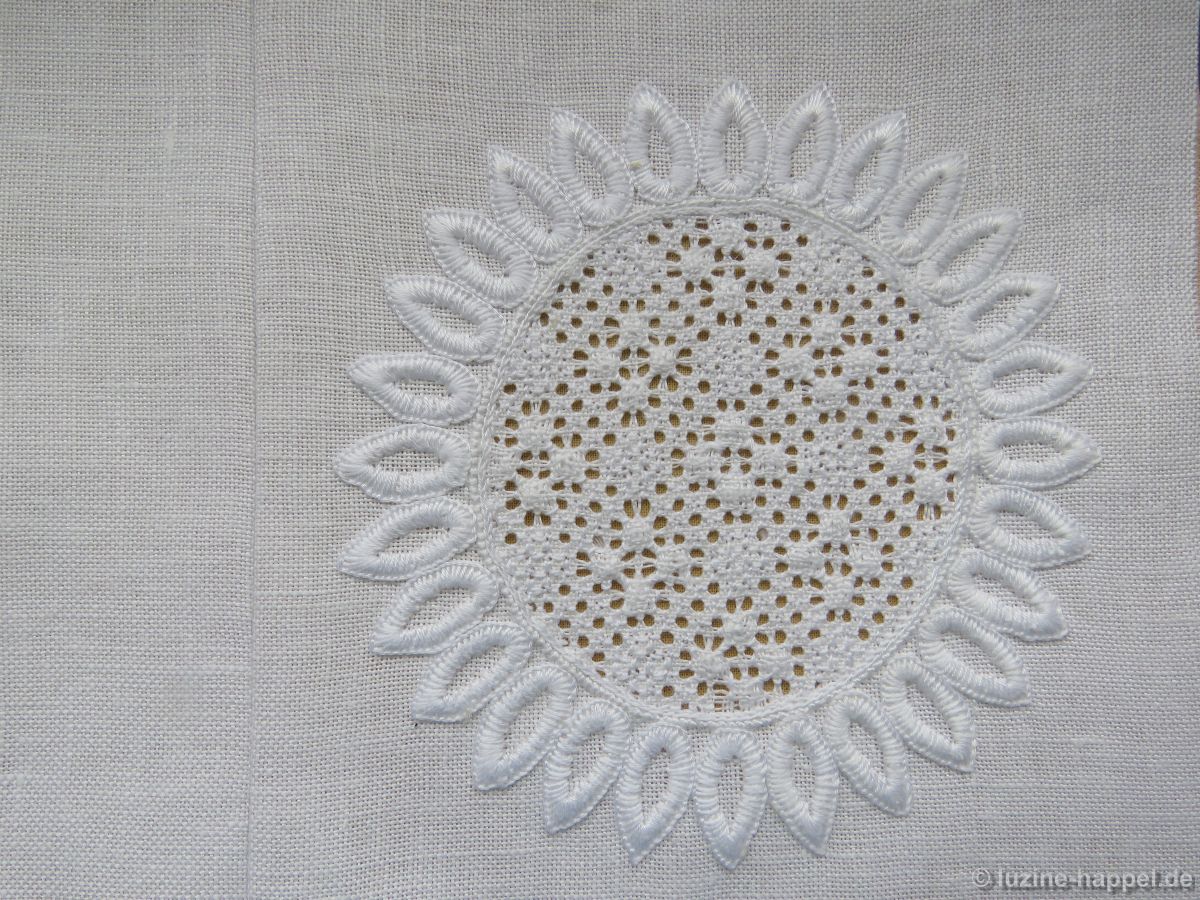
However, the piece would need a lining to cover the seam allowances on the back.
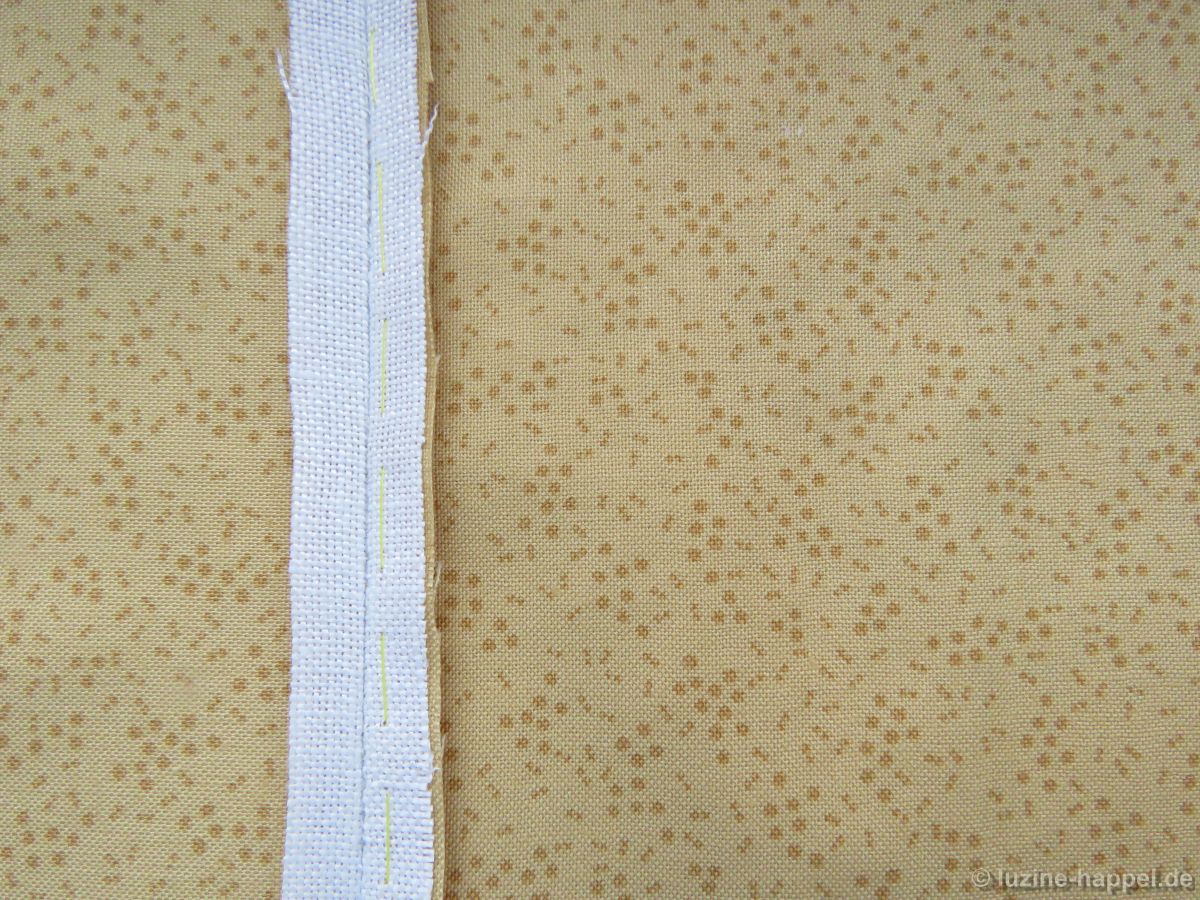
A matter of concern is using two different fabrics – linen and cotton. Especially in larger pieces, it might happen that the fabrics, at some later time, react differently to climate conditions. Perhaps the linen will stretch out a little.

3.
Same as in step 2, an underlay can be made with a thin fleece instead of cotton fabric.
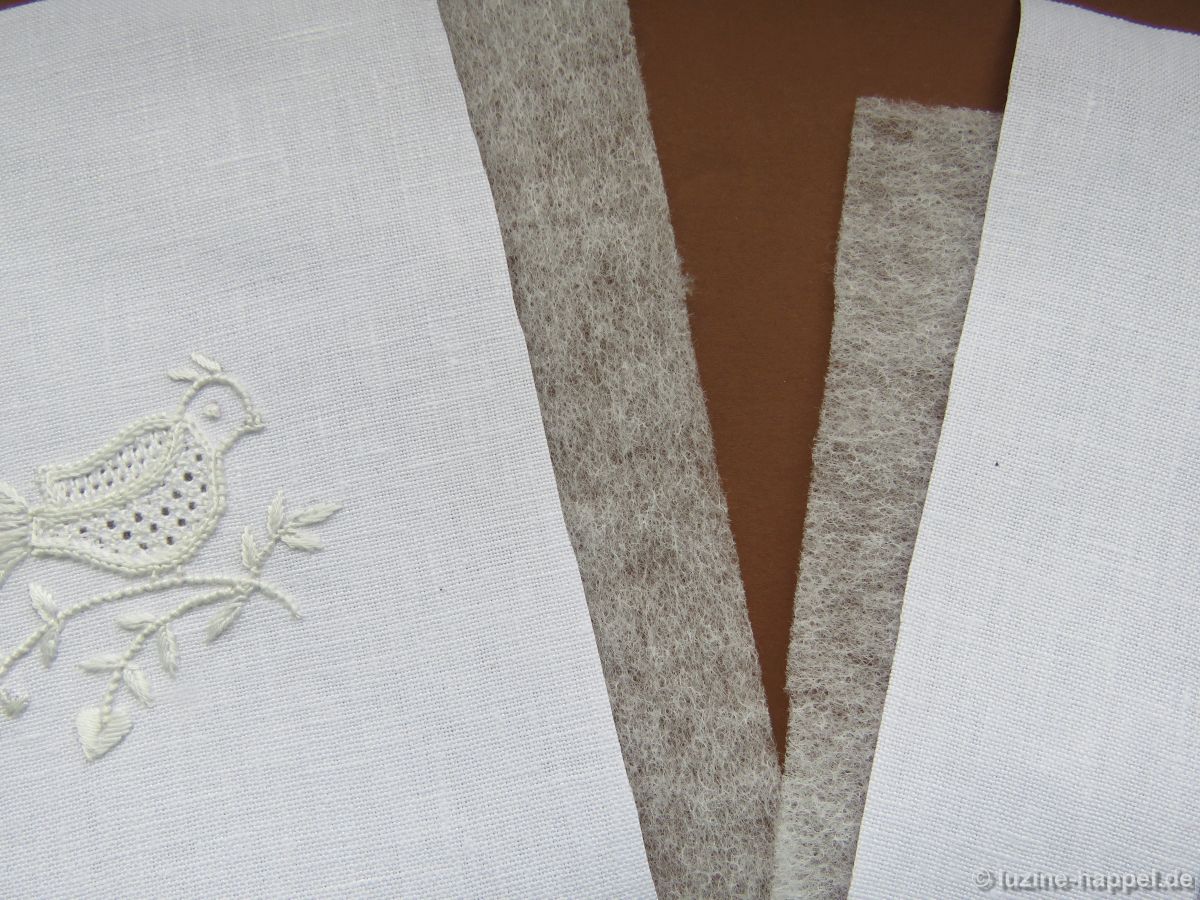
Sewn right sides together, the seam allowance is not seen through the fabric.
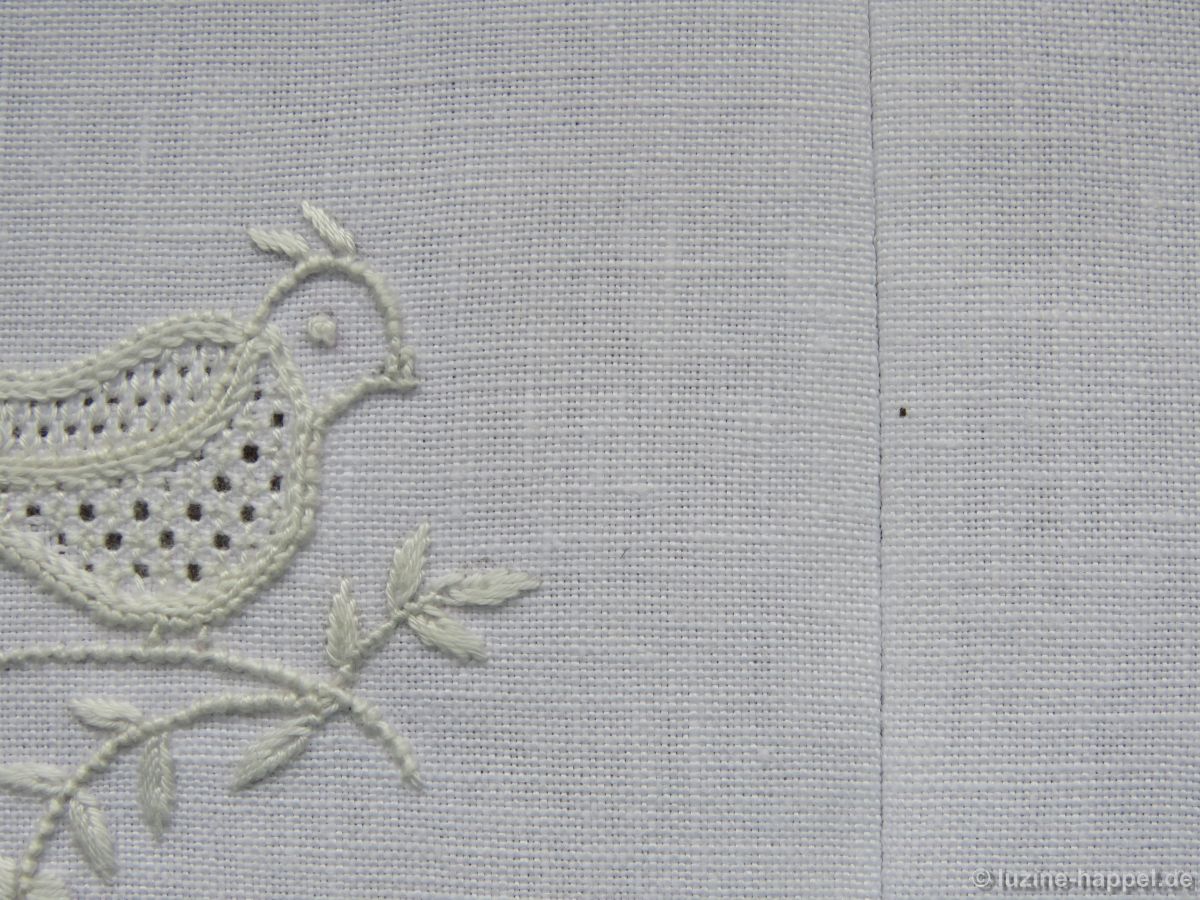
Because of the fleece, the piece gets some more body, and the appearance of the embroidery is good.
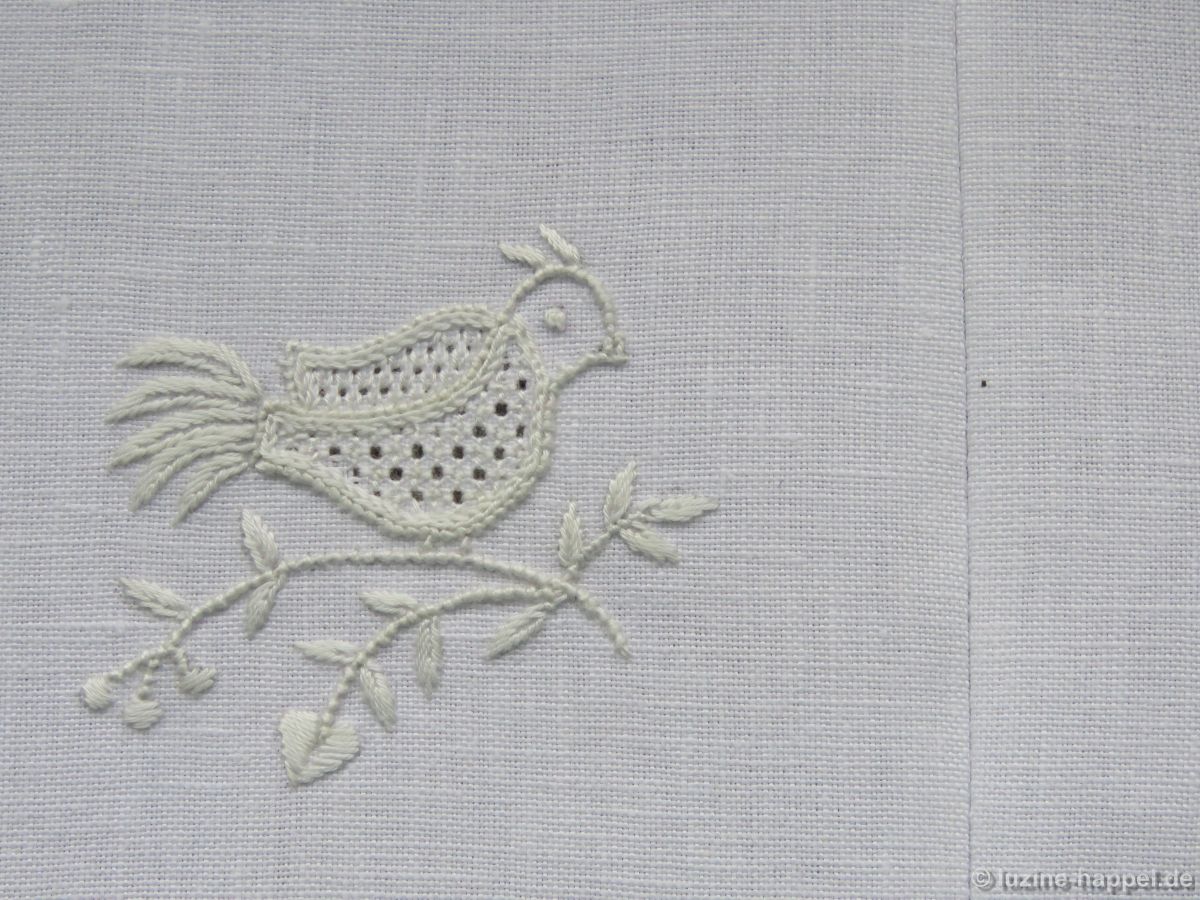
The piece would need a lining to cover the seam allowances on the back.
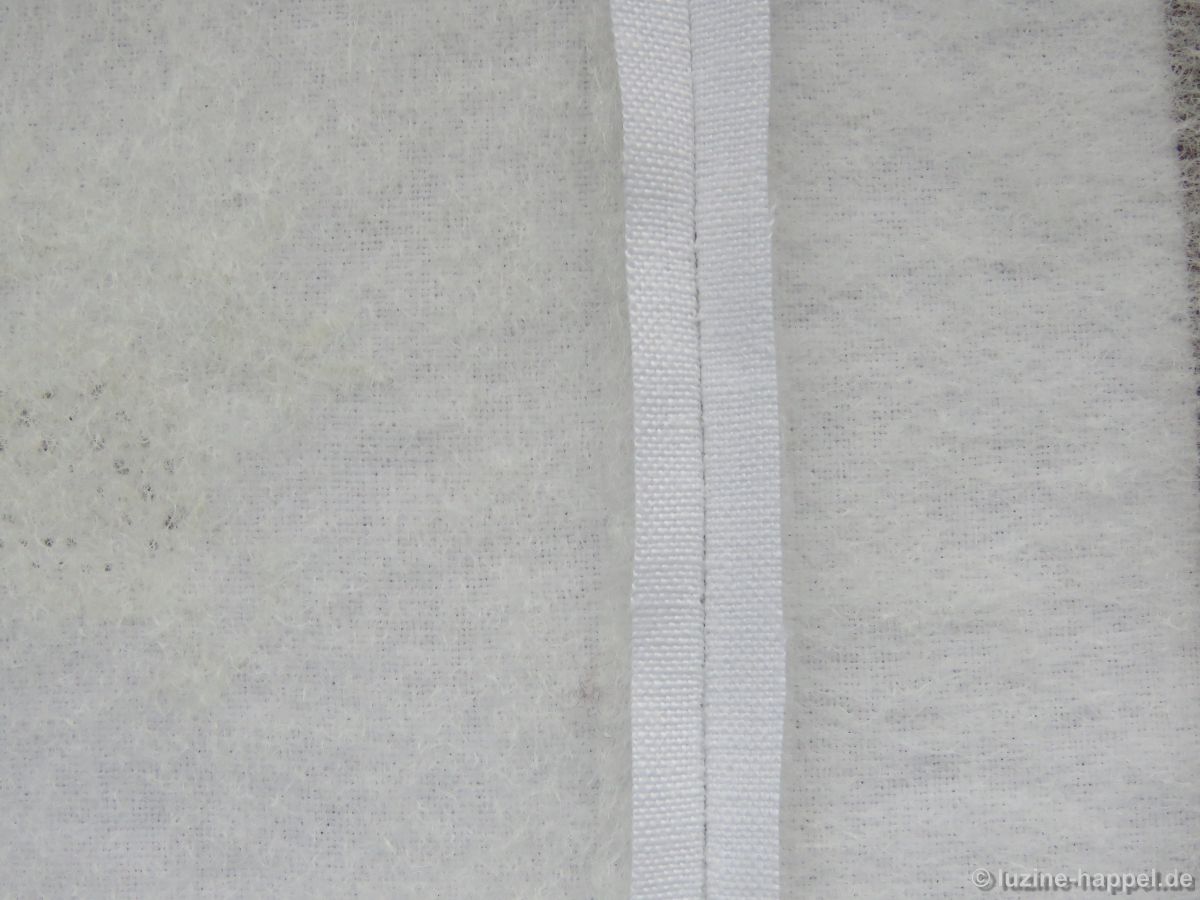
In contrast to the underlay of cotton fabric, I do not have concerns about the linen stretching out of shape. However, with a fleece added, it is no longer the embroidery itself.

4.
To ensure the integrity of the embroidery without unpleasant seam allowances showing through to the right side, I cut a strip of coloured cotton fabric (a white linen strip would be also possible) – two times the width of my sewing machine foot.
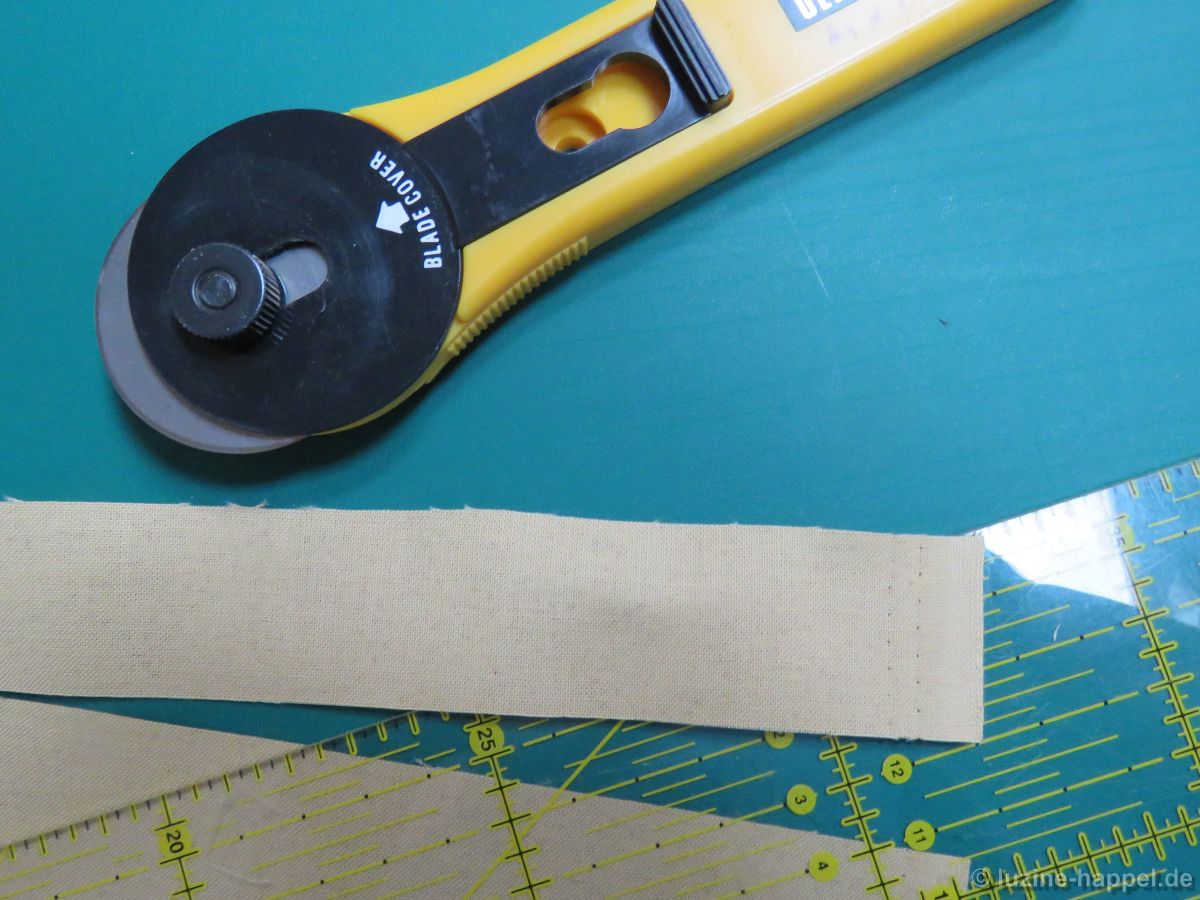
The strip and one edge of embroidery are sewn right sides together – along the line of one quarter of the strip width.
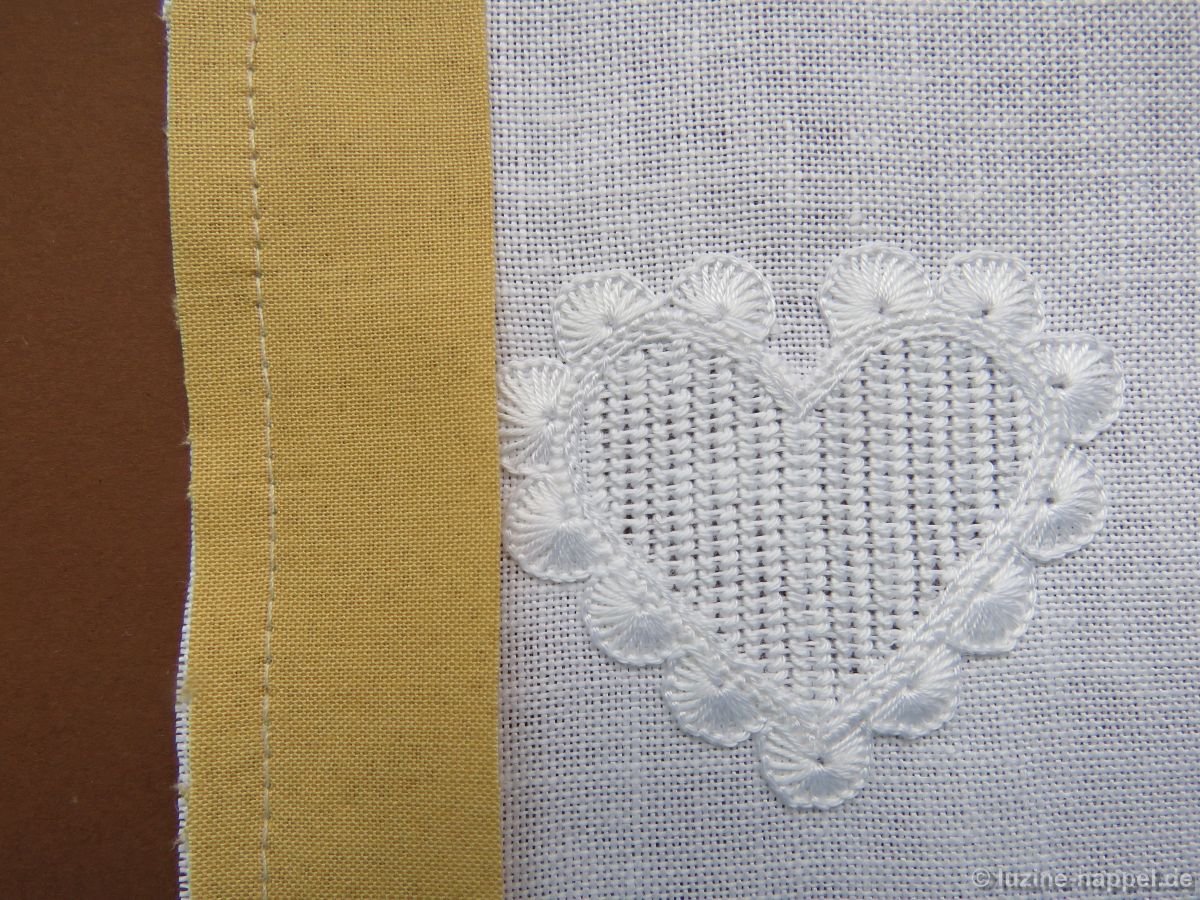
Then the opposite edge of the strip and the edge of the adjoining embroidery are sewn right sides together – again along the line of one quarter of the strip width.
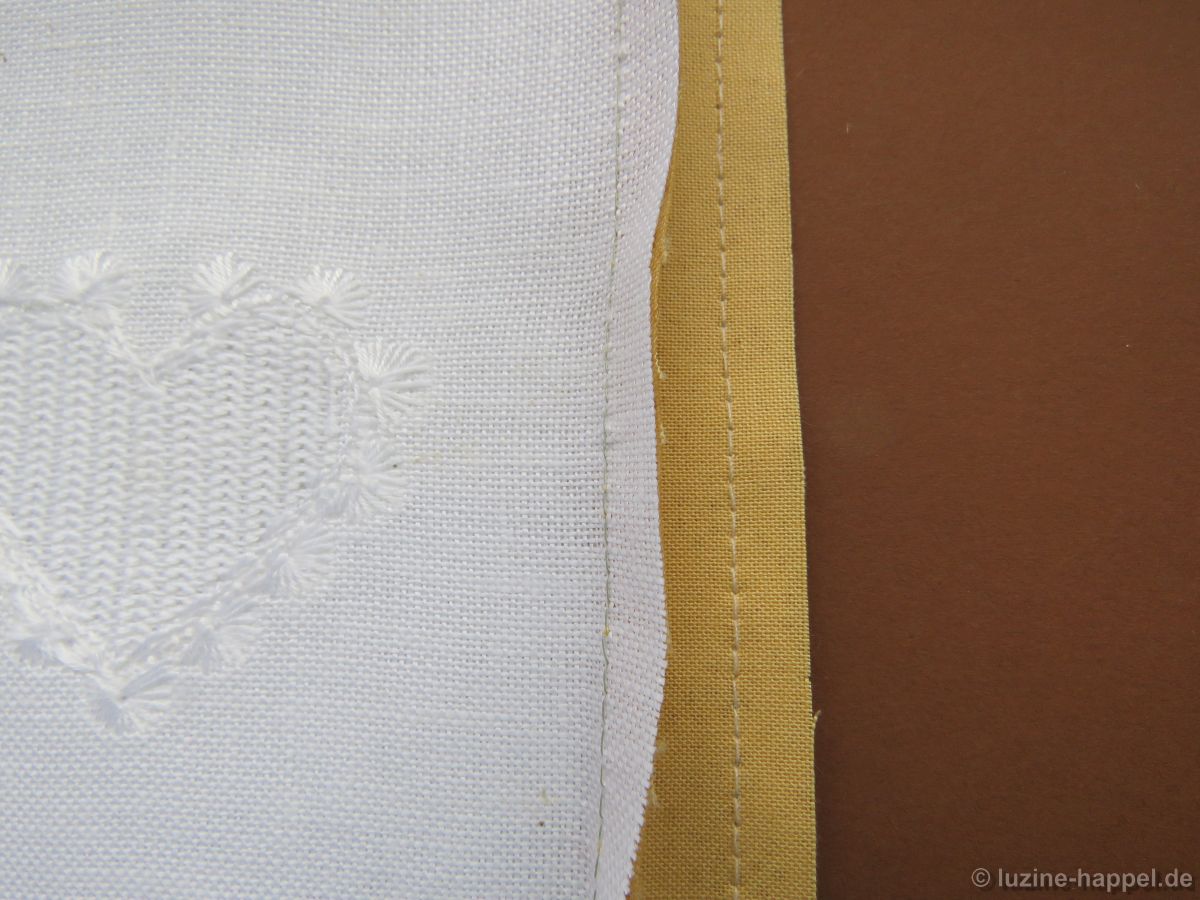
Both seam allowances are then ironed to lie under the strip.

The embroidery keeps its own character. Strips (either print or unicolour) between the embroidered pieces look like a frame for each piece.

But this method will also require a lining to cover the seam allowances on the back.

5.
So I looked for one more way and tried a flat felled seam.

The final result is that the seam looks clean on both the back and the front side.
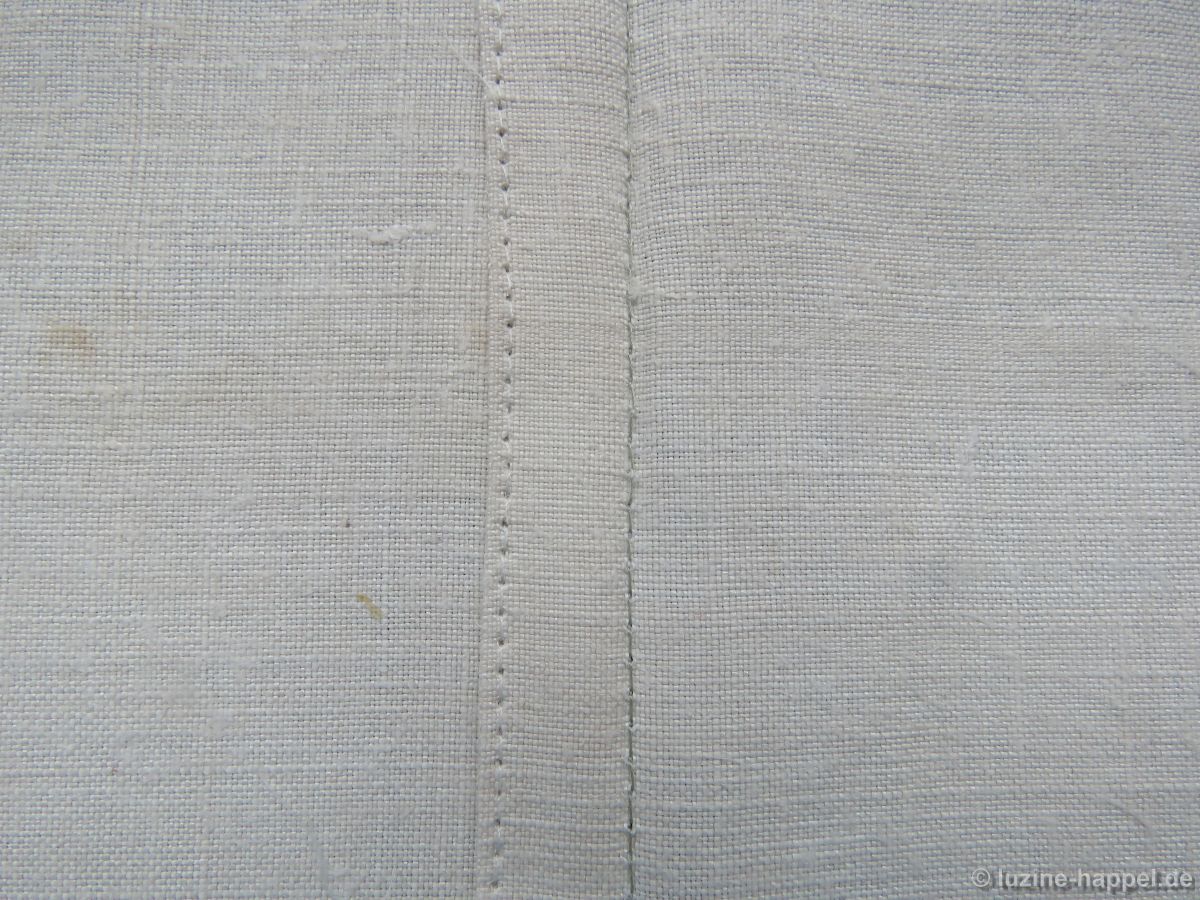
I thought it was a good possibility for assembling the contributions until I considered the bulk created when crossing seams!
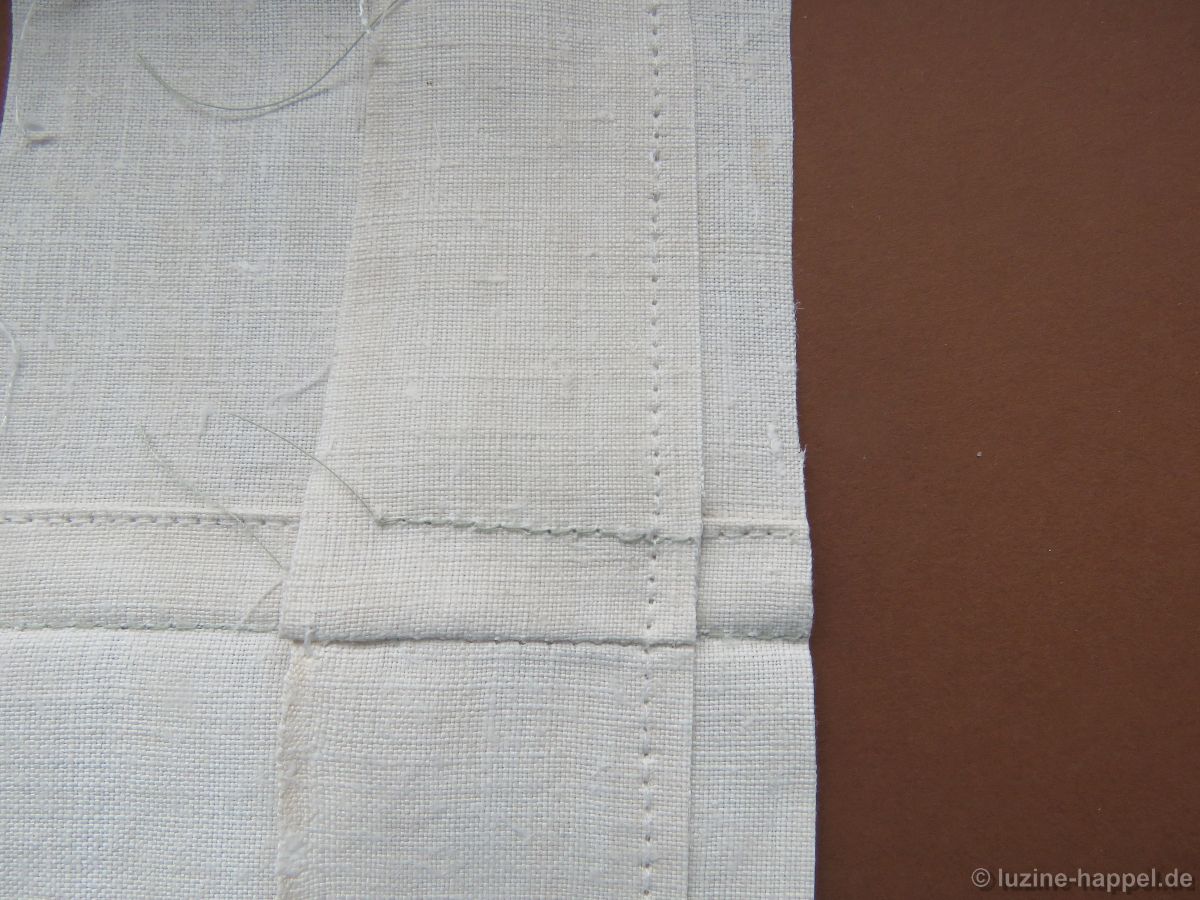
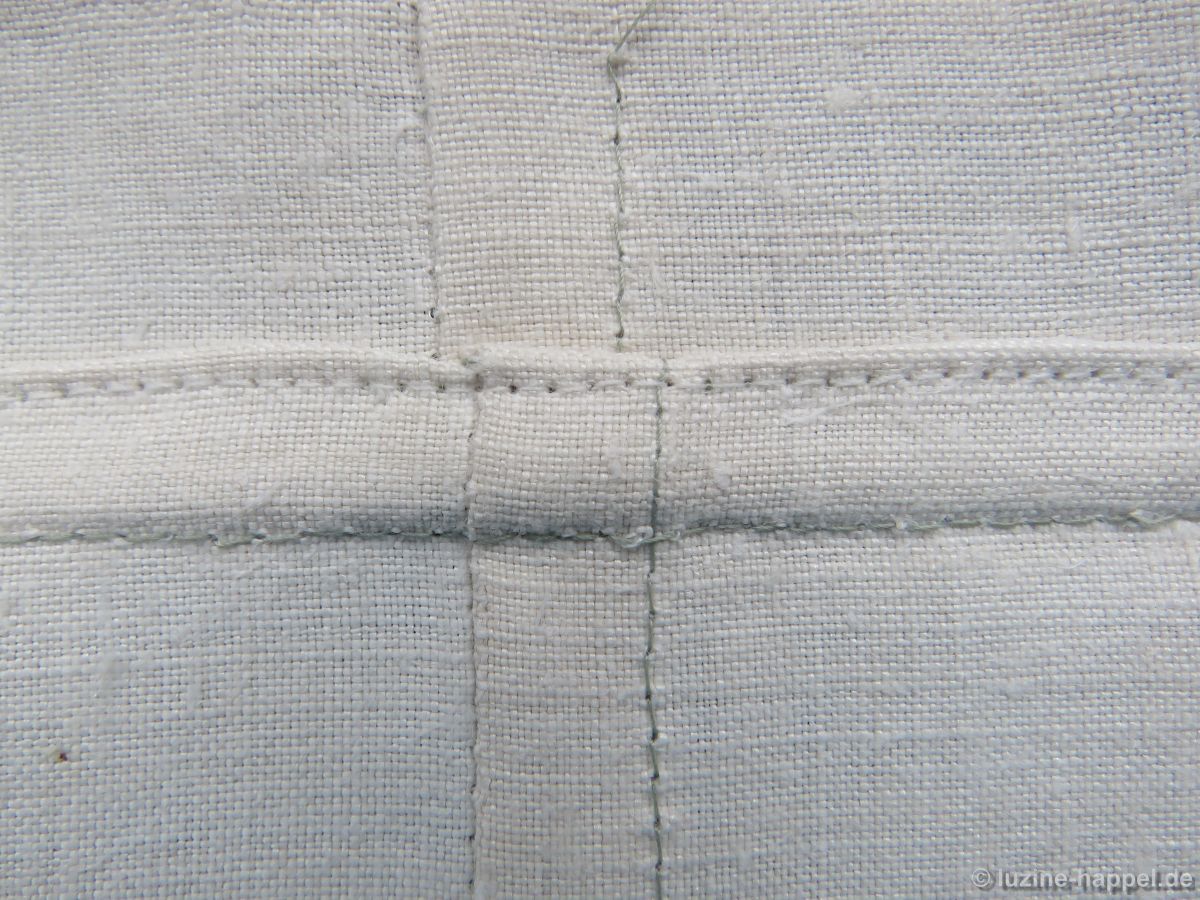
The seams – all sewn in the same way – get much too bulky at the intersections.
6.
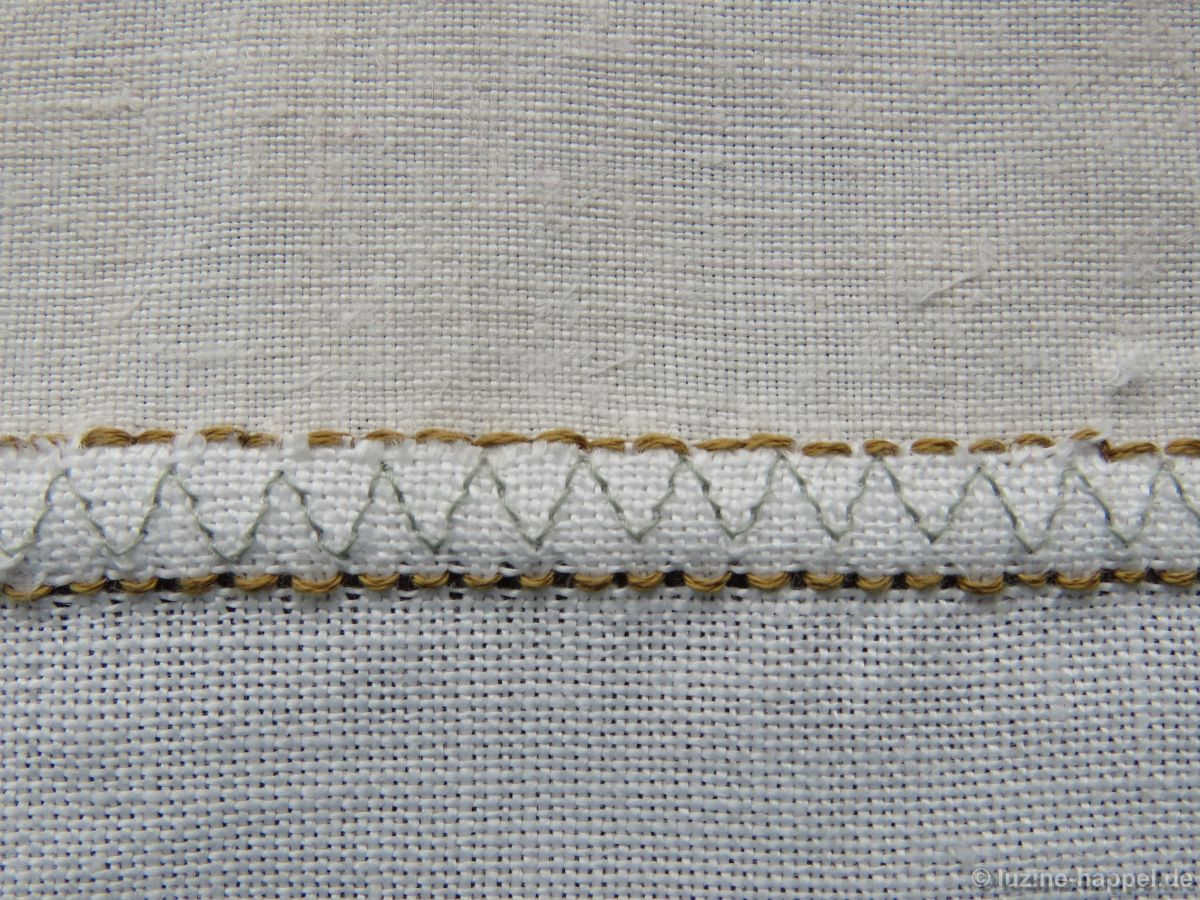
A thread – one centimeter from the edge – was withdrawn on both pieces to be assembled.
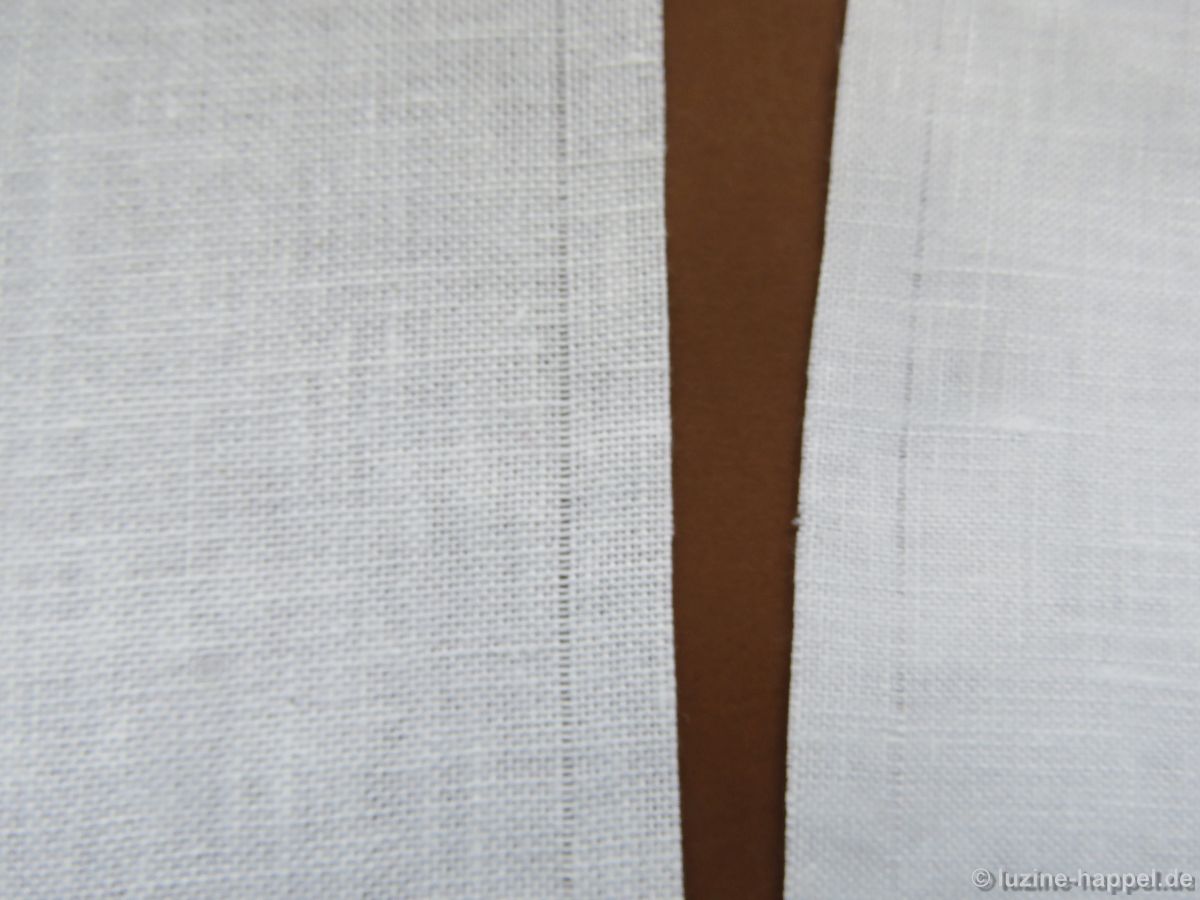
Both pieces – right sides up – were laid edge on edge and sewn with elastic (stepped zigzag) stitches.
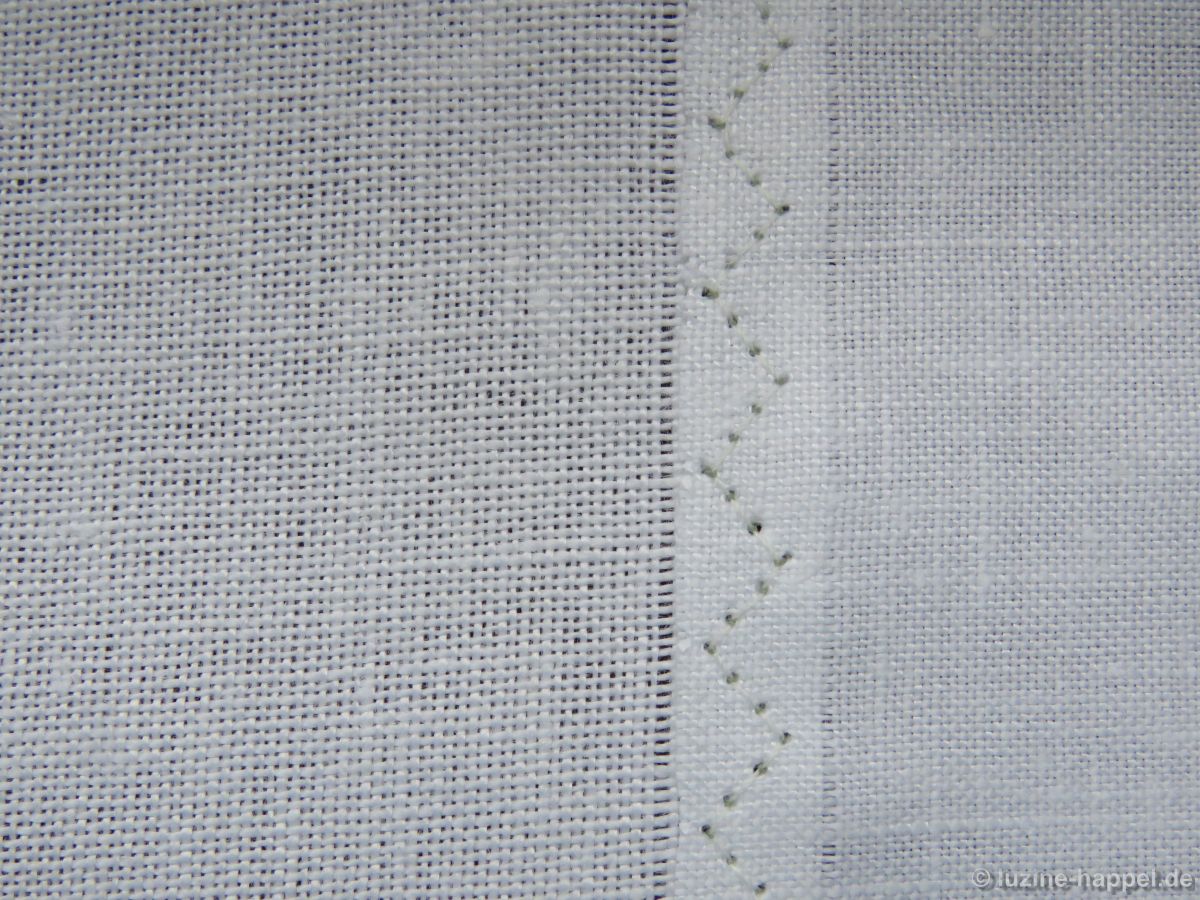
The flat seam was covered with a double row of Herringbone stitches.
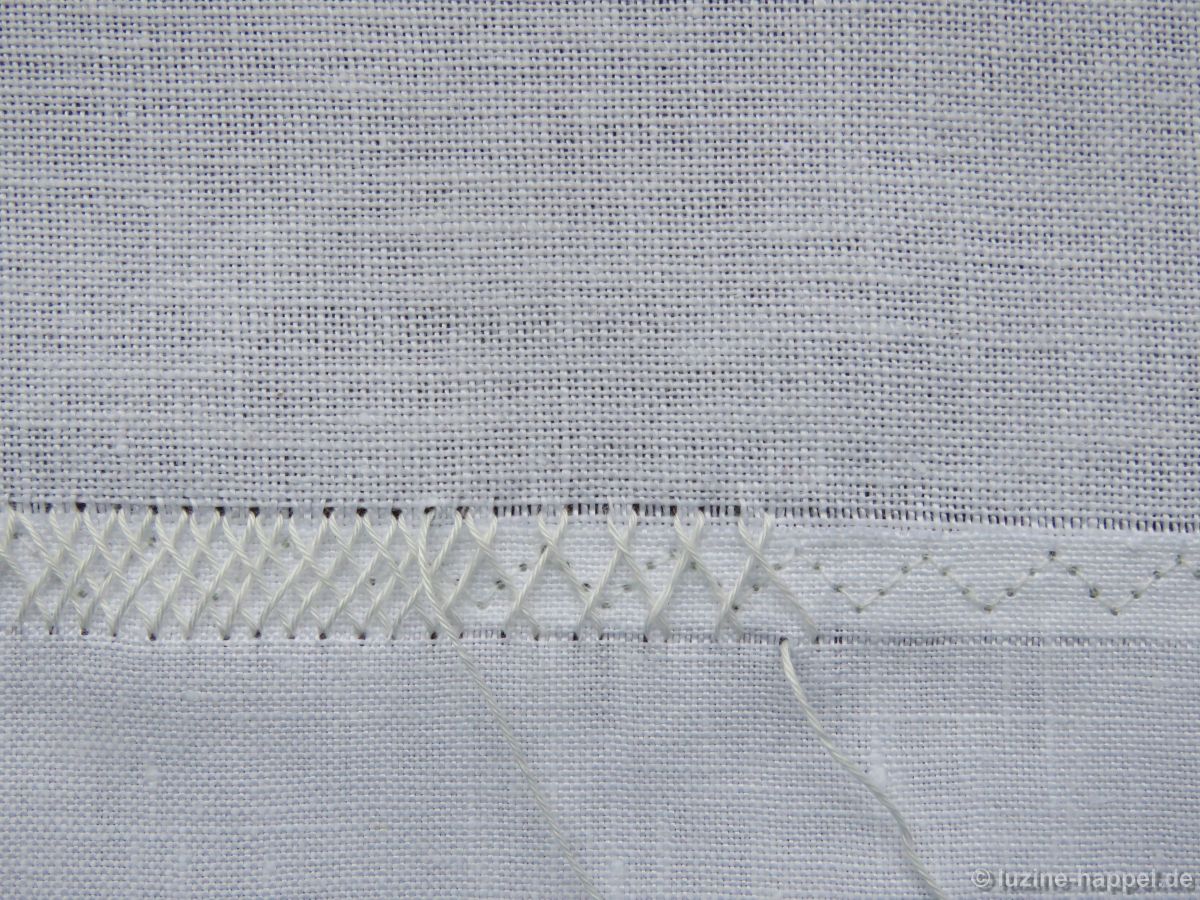
The withdrawn thread line enables easy working of the Herringbone stitches – but withdrawing a thread from an already boiled fabric is difficult. Also, the width chosen in this example is a little too much.

7.
So I made another trial choosing exactly the width of my machine stitches – 0.7 cm.
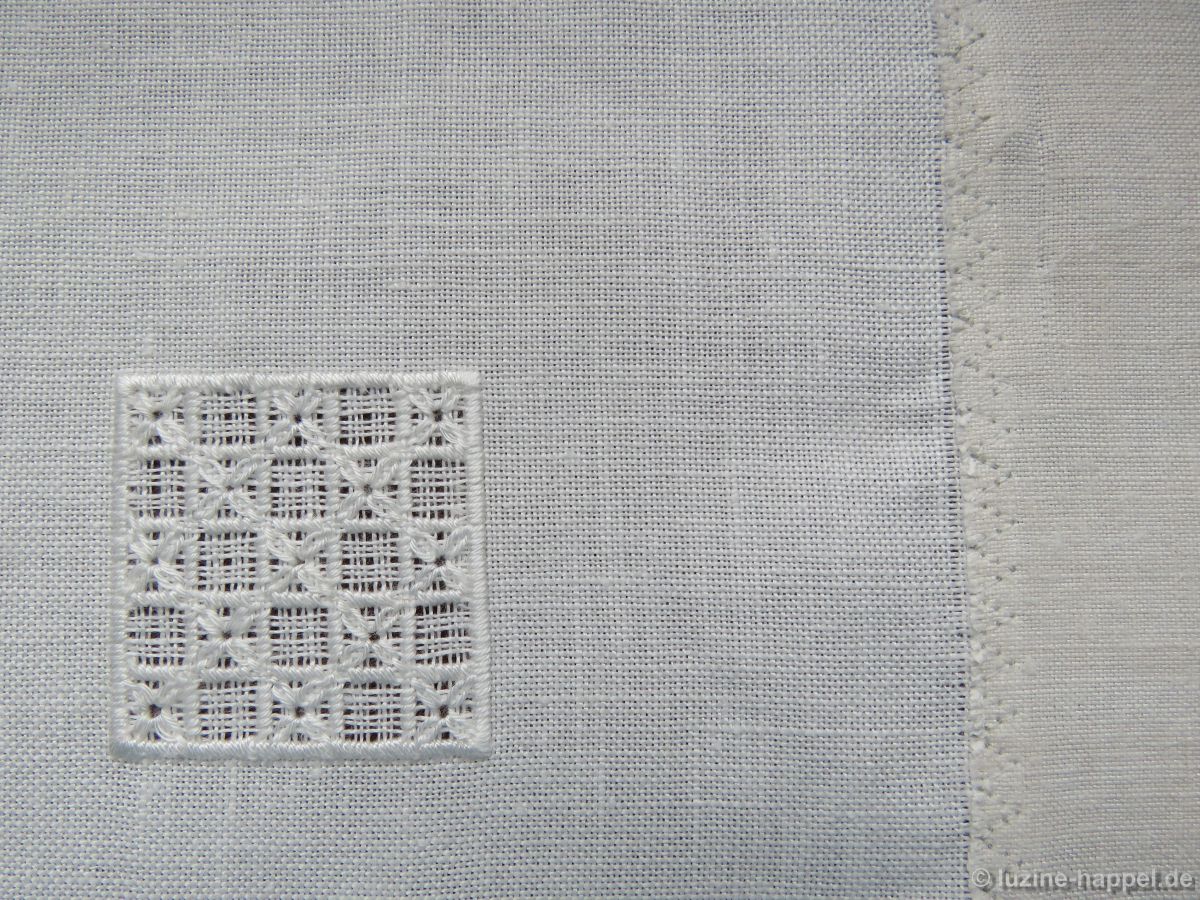
This time I used coloured thread for the herringbone stitches. I used Anchor 888, which is commonly used to work Schwalm crowns. Perhaps a somewhat lighter golden tone would be better, but I will be using the darker gold to work an inscription for the Global Schwalm Sampler using Cross stitches (letters on a large cloth with too light a colour would not be very readable), and my current thought is to use only one colour. I think using the darker shade here is okay.

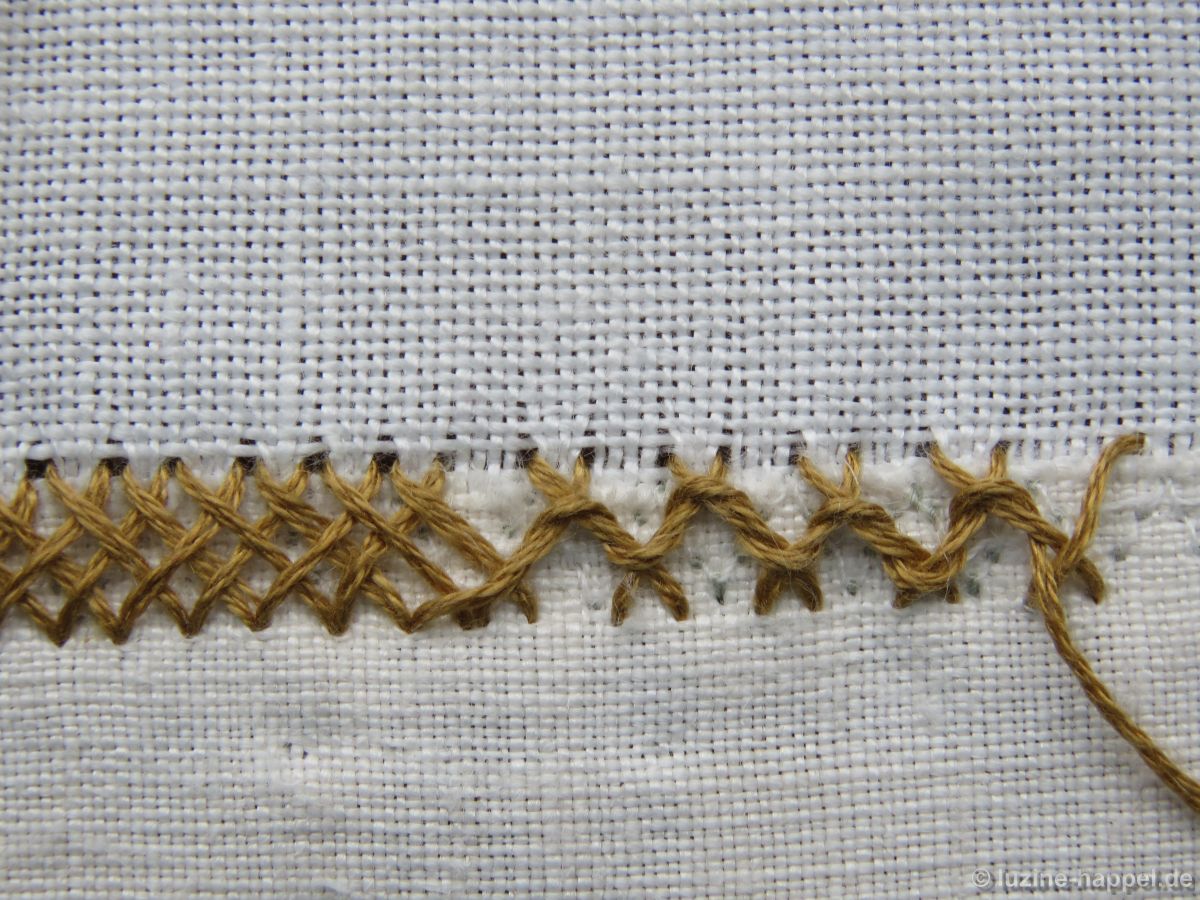
Also, I made some tests with curved lines in single Herringbone stitch rows
and in double Herringbone stitch rows.
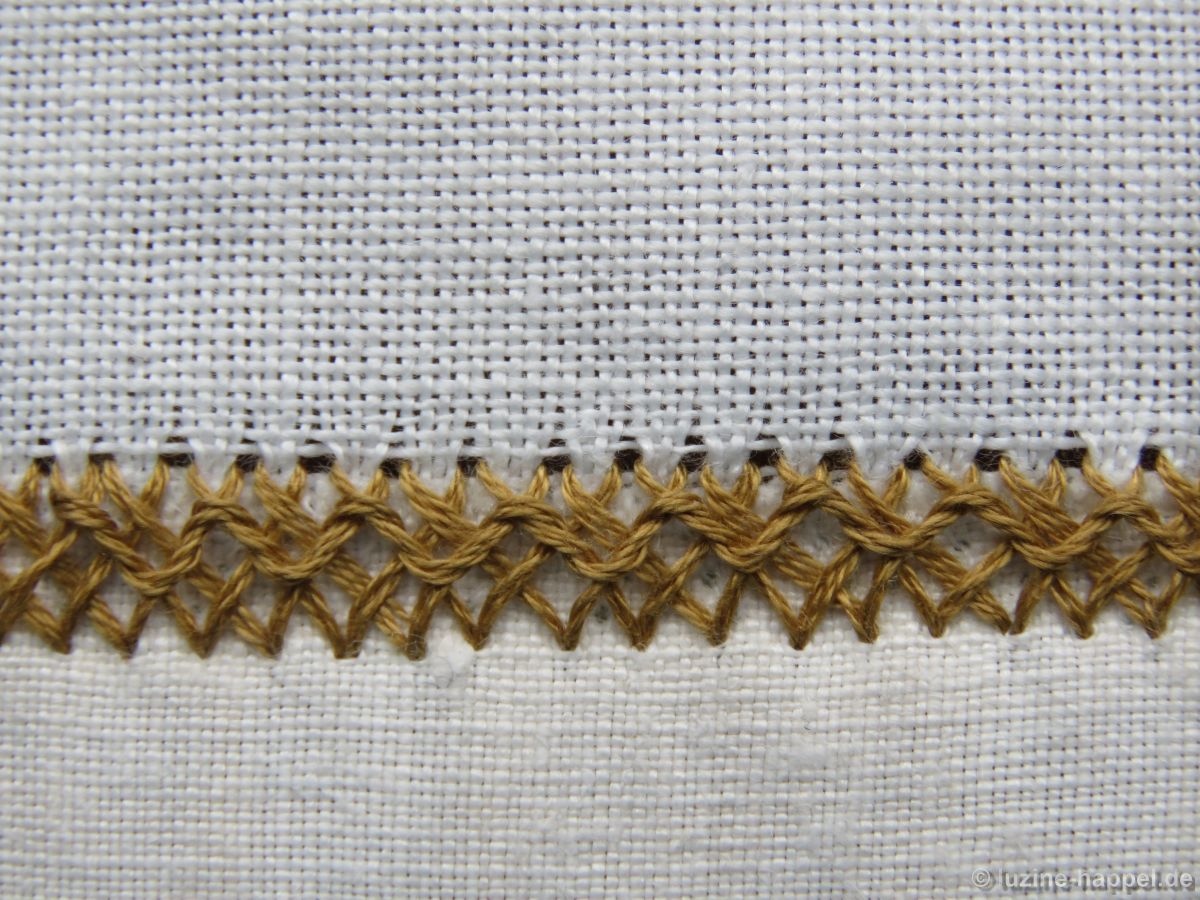
Both curved lines did not turn out satisfactorily, so I can give up testing more curved lines.
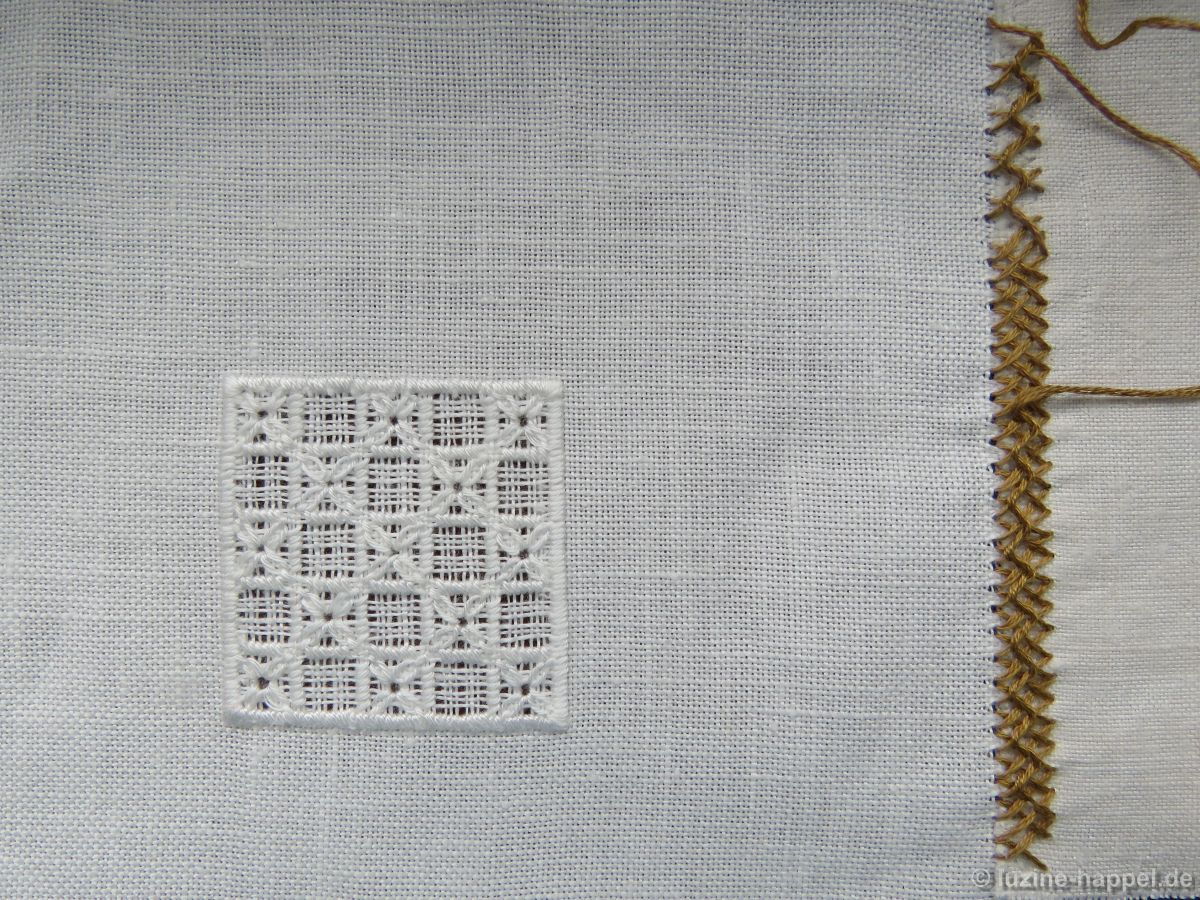
The width of the stitches is okay for both working and appearance. However, I don’t really like the Herringbone stitches for this application – I find them a little too busy. Perhaps it is because this sample is such a short piece.

Assembling is okay because the final sampler will not need a lining – the seam is clean on both sides. Also, the embroidery keeps its own character.
Please leave a comment to share your thoughts on these different ways to finish the sampler. And if you have an idea that I haven’t considered, please share that, too!

Global Schwalm Sampler – Update (11)

I am happy to report that many more embroiderers have announced their contributions to the Global Schwalm Sampler. I hope that they will arrive by the end of July. So, if you would like to take part in this global project, it is not too late! Small embroideries with single motifs such as flowers, stars, or stars as openwork patterns, birds, and other natural motifs are welcome.

Global Schwalm Sampler – Update (11)

Three more contributions to the Global Sampler have arrived.

#26
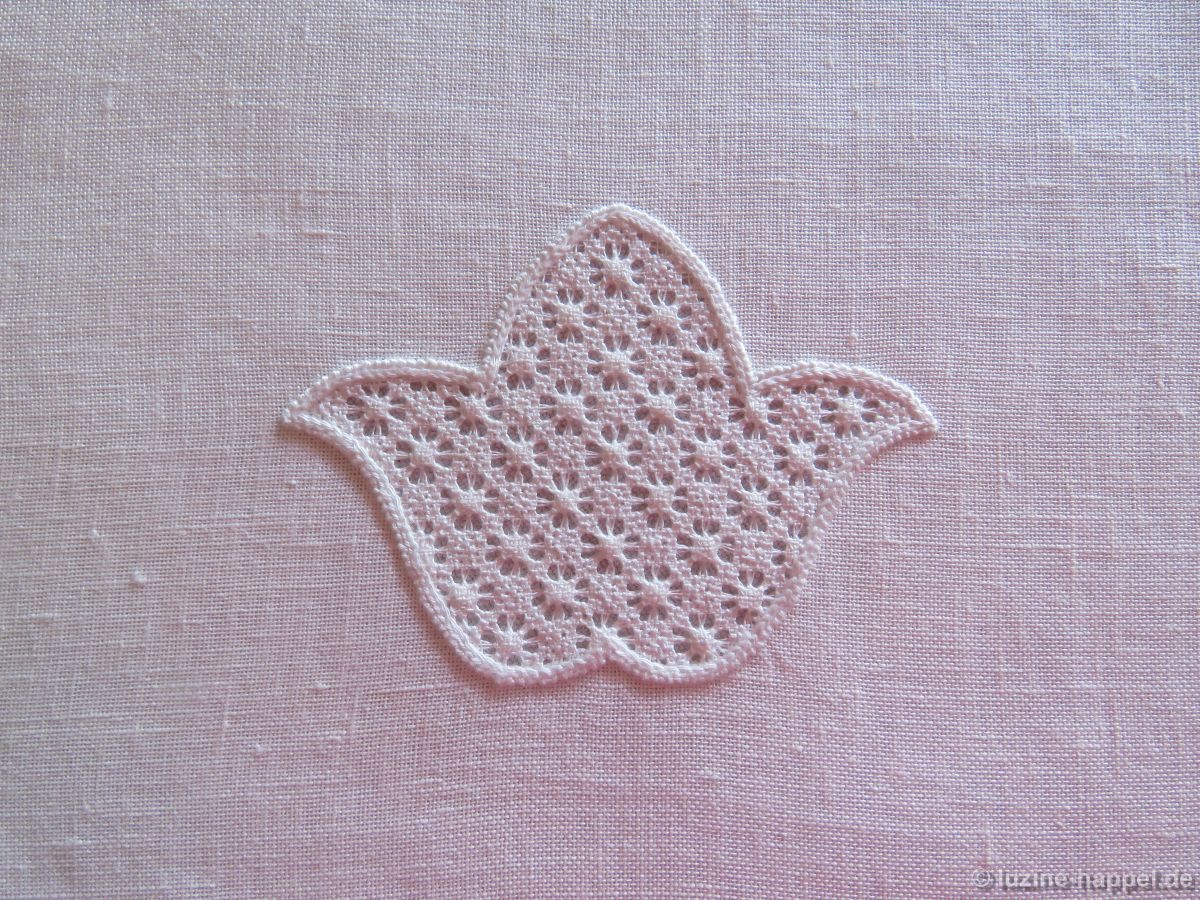
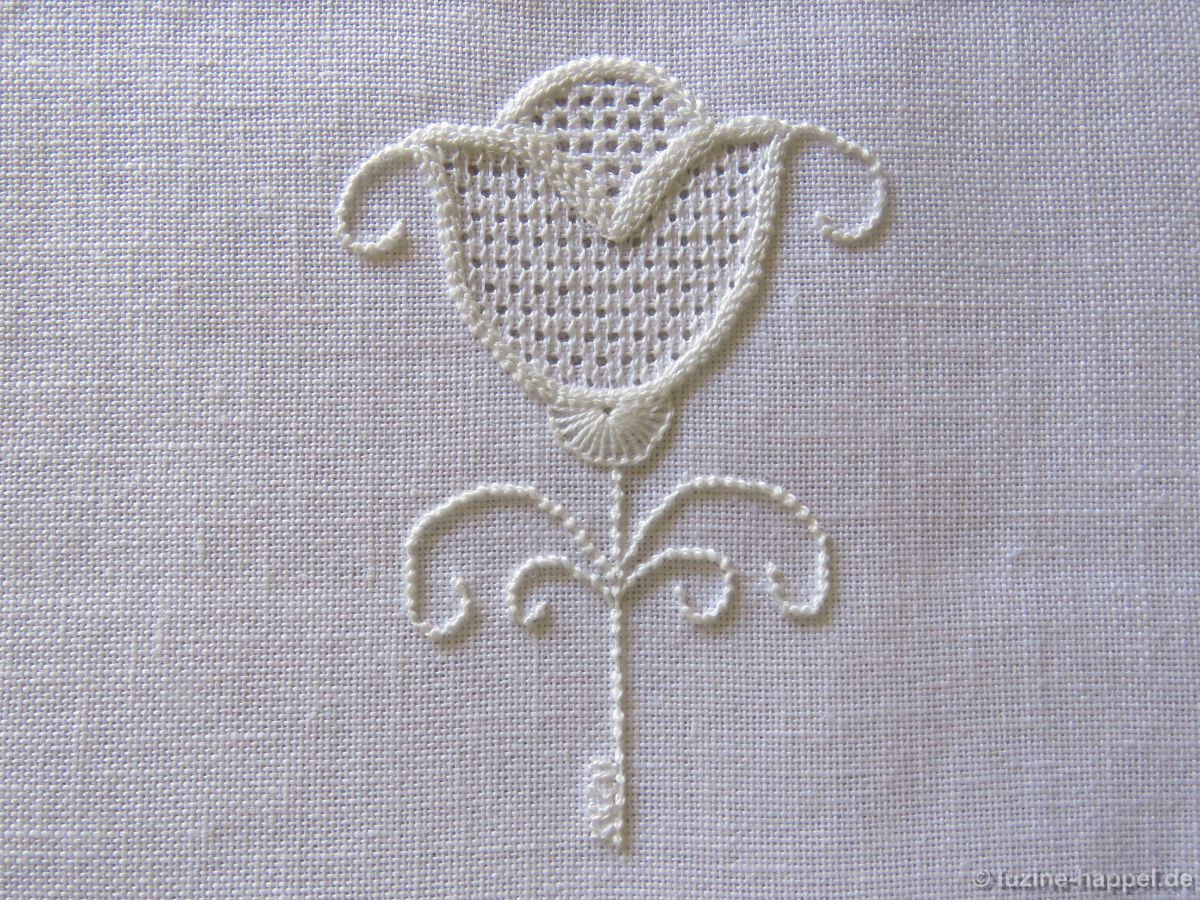
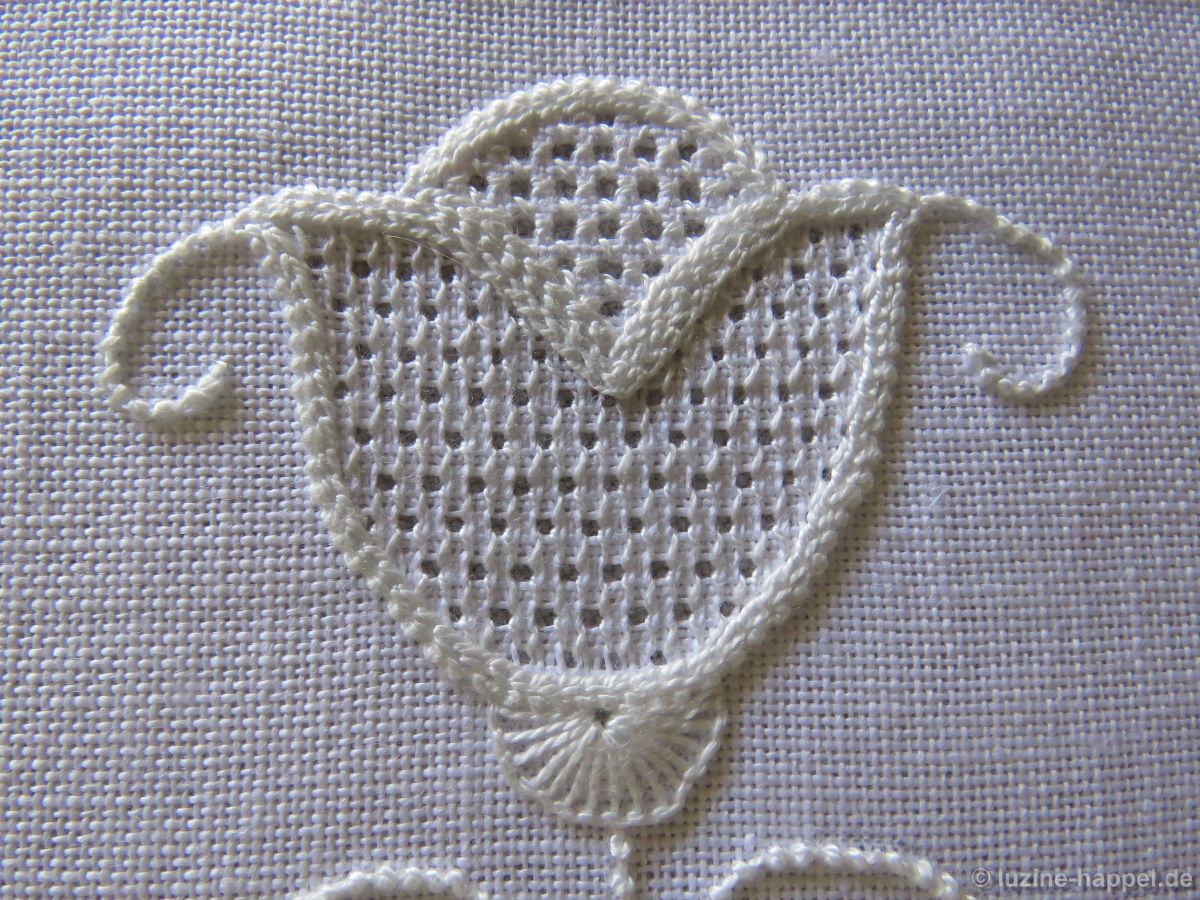
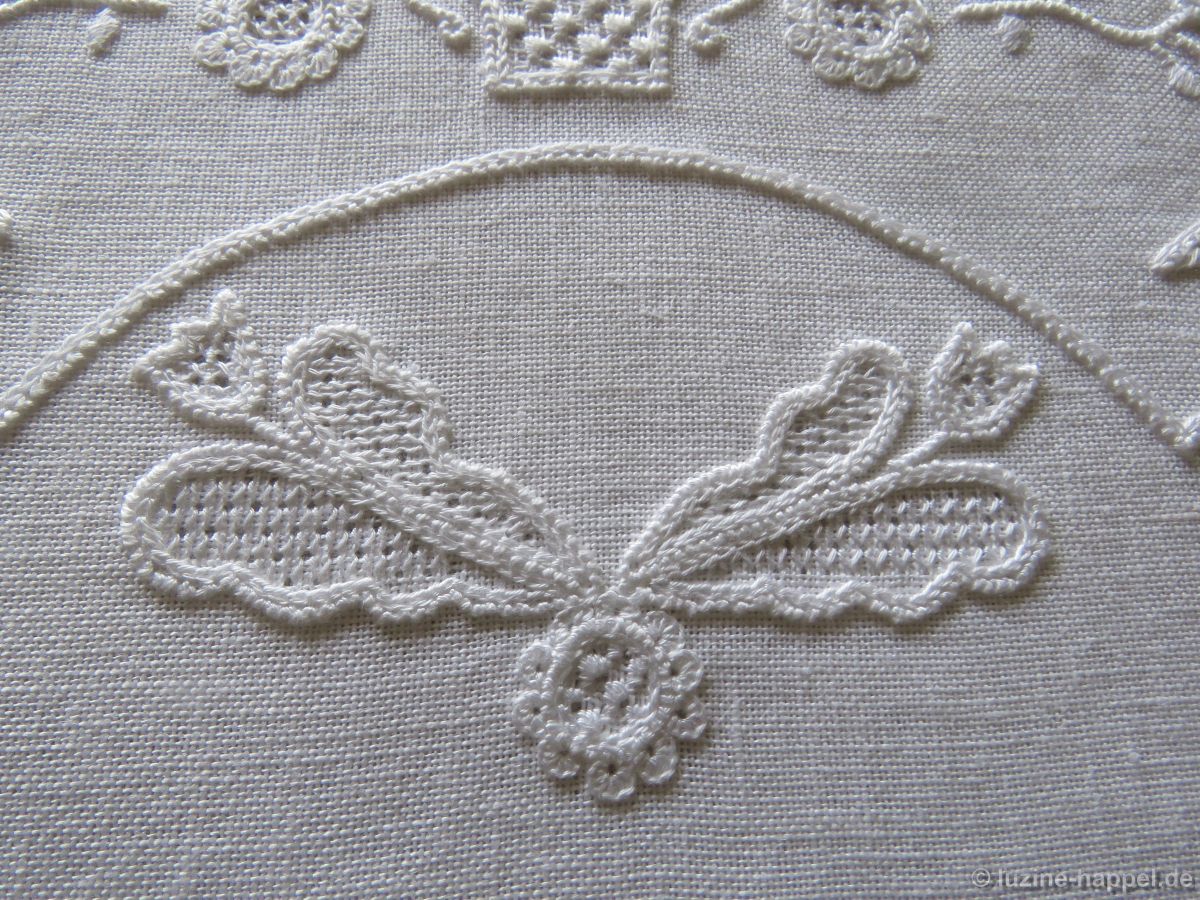
Nancy Tozer from Canada used a design from my website and filled the tulip blossom with a beautiful and perfect stitched pattern – we call it Röserich.

She wrote: “I am not experienced in Schwalm technique. I have stitched one previous item in the Schwalm style. But I decided to accept the challenge and to participate in the global pandemic project.
I chose to stitch a tulip. After a long Canadian winter, the design brings memories of spring, the return of warmer weather, new growth, new beginnings, new hope.”

#27
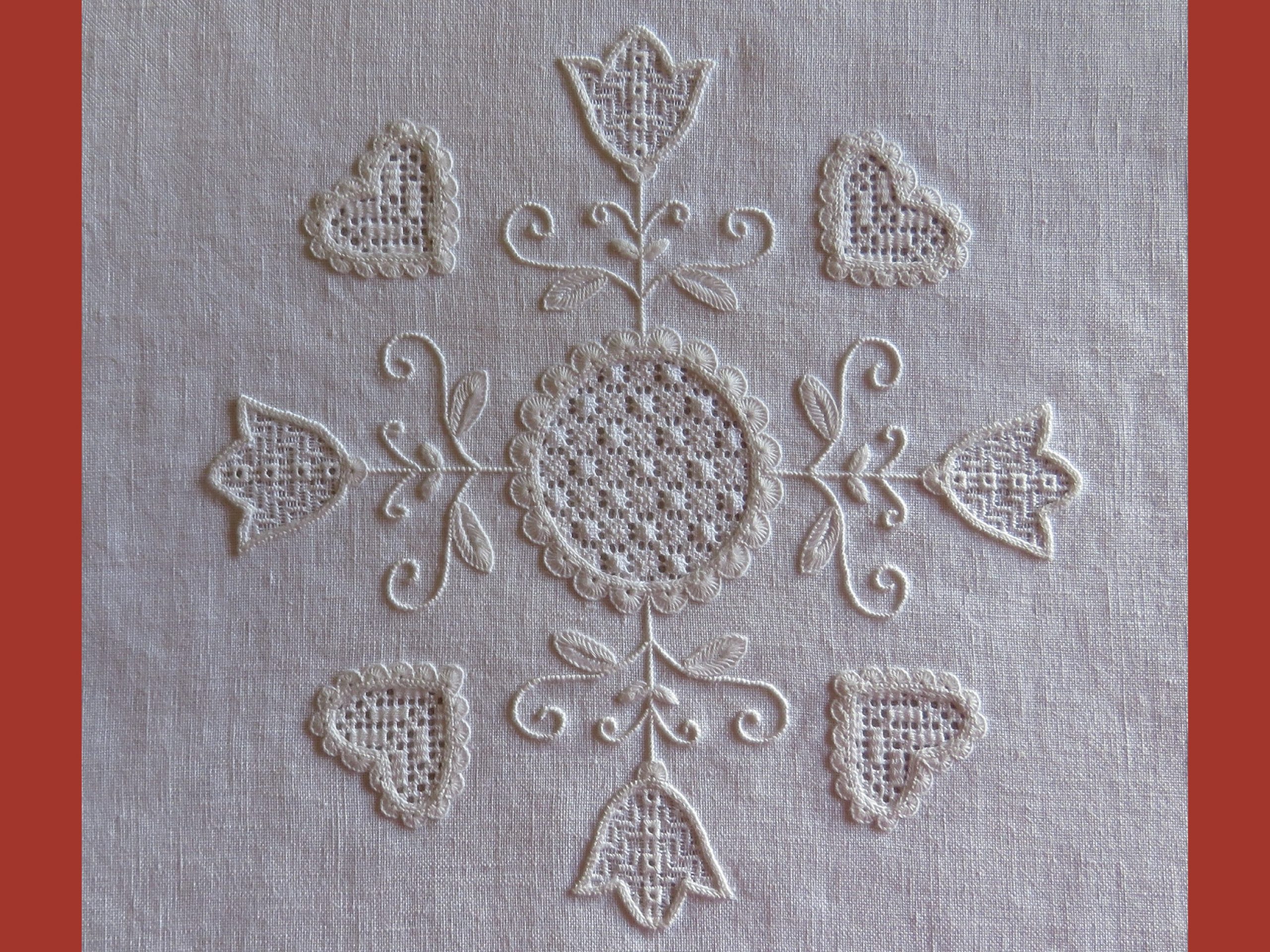
Judy Chen from Taiwan is an experienced embroiderer. Her design is typical for Schwalm, and her stitches are excellent.

She wrote: “The design concept is simple and the patterns are traditional.
The centre of the design represents our community, closely knit together and connecting us with one another. The surrounding flower and heart symbolizes hope and love, which keeps us together throughout the challenges of current times safely.”

#28
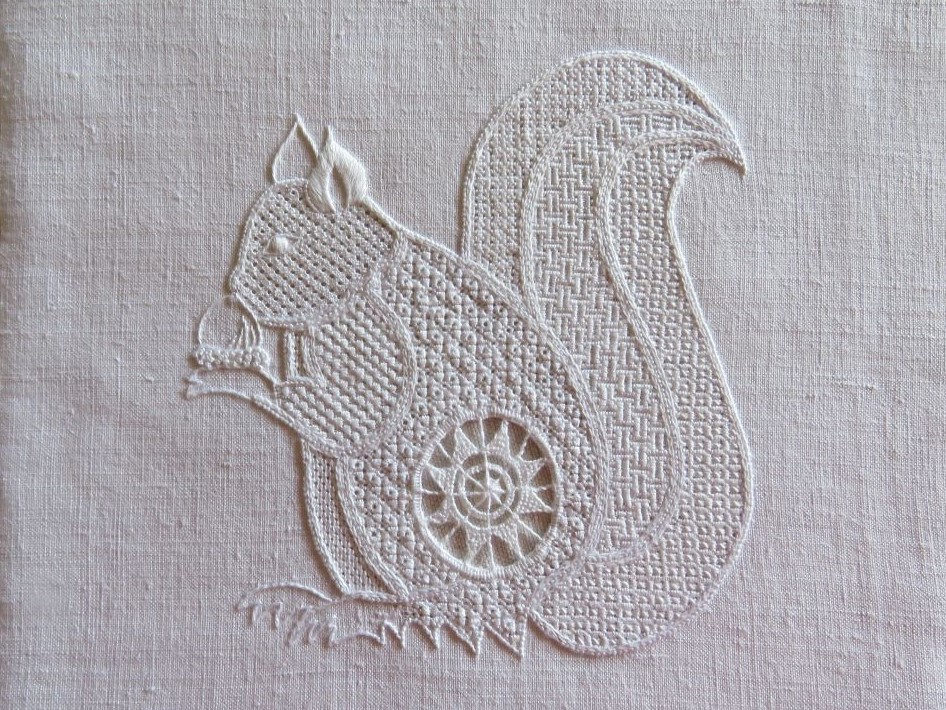
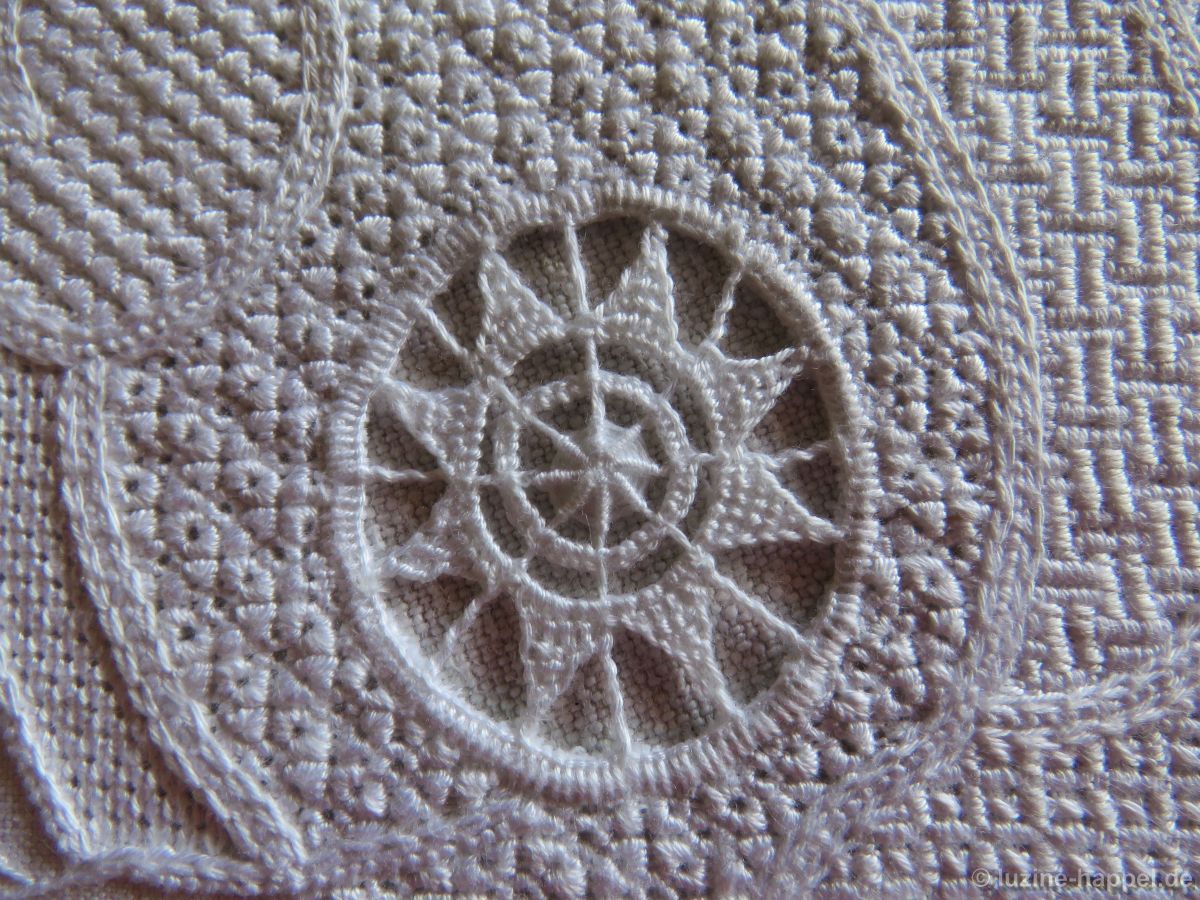
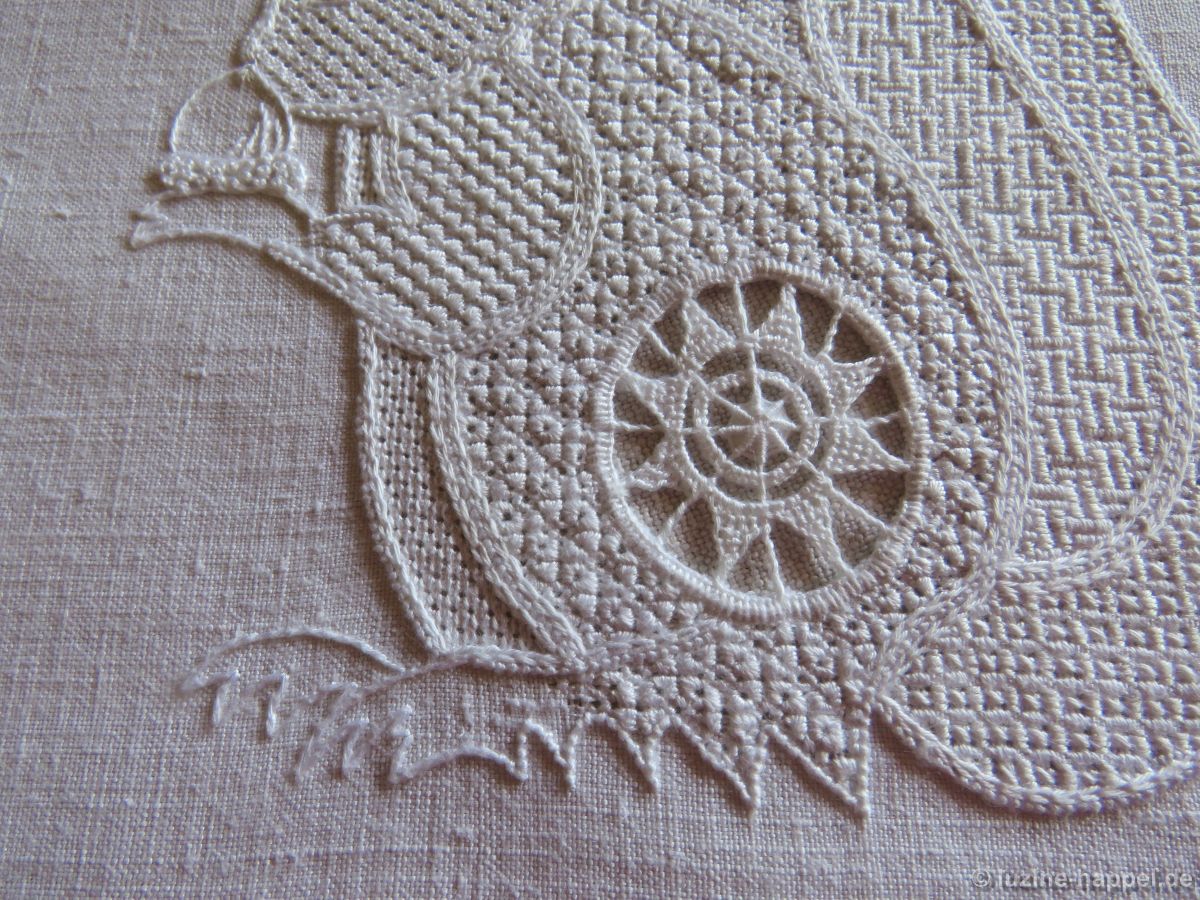
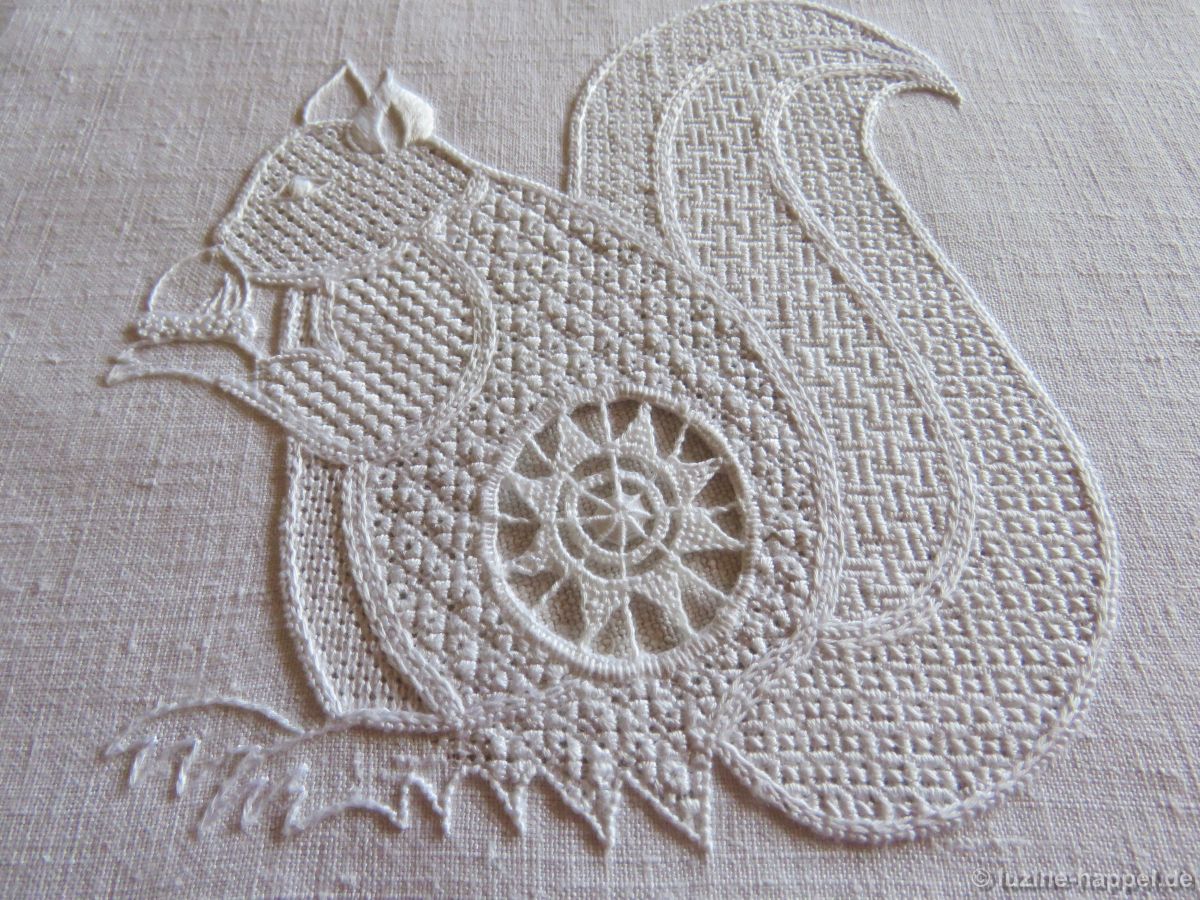
Susanne Nüsse from Germany created a pretty squirrel. The long-time teacher used different Limet filling patterns and worked a needle lace medallion for the focal point of her elaborate piece.

She wrote – roughly translated: “I chose the squirrel as the motif for my contribution to the Global Sampler. I have always admired squirrels with my children and made it our heraldic animal in reference to our name – Nüsse = nuts.
It is located on our doorstep sign, on my business card and now also in the embroidery for the Global Schwalm Sampler.
Since I am currently dealing with needle lace, it was immediately clear to me that I also have to incorporate one into my squirrel motif.”

You can see more contributions in Update 10.

Global Schwalm Sampler – Update (10)

Global Schwalm Sampler – Update (10)

Today I can present four new contributions to the global sampler.


#22
Ann Clare from United Kingdom has designed a nice squared floral motif.

She wrote: “I´ve enjoyed doing it, even if its schwalmness is questionable!”

May be it is not typical Schwalm, but she used a variety of different early Schwalm filling patterns. In addition, she added leaves, tendrils, eyelets, small flowers, and a small heart. So she established a wonderful contribution to the Global Sampler project.


#23
Jacqueline Blanot from France submitted already two different embroidery designs to the Global Sampler project. Jacqueline places high demands on herself when it comes to embroidery. She wants to always stitch perfect pieces. She was not 100% satisfied with her first two contributions – although both are beautiful and well done. This is good for the sampler project, because she decided to embroider a third piece! This time she succeeded in an absolute masterpiece – a beautiful classic Schwalm design filled with perfect stitches!
She wrote: “My third piece is very traditional, purely Schwalm. I hope you will enjoy it. You do not have to send back the other ones, my pleasure is to make them, rather than to keep them.”


#24
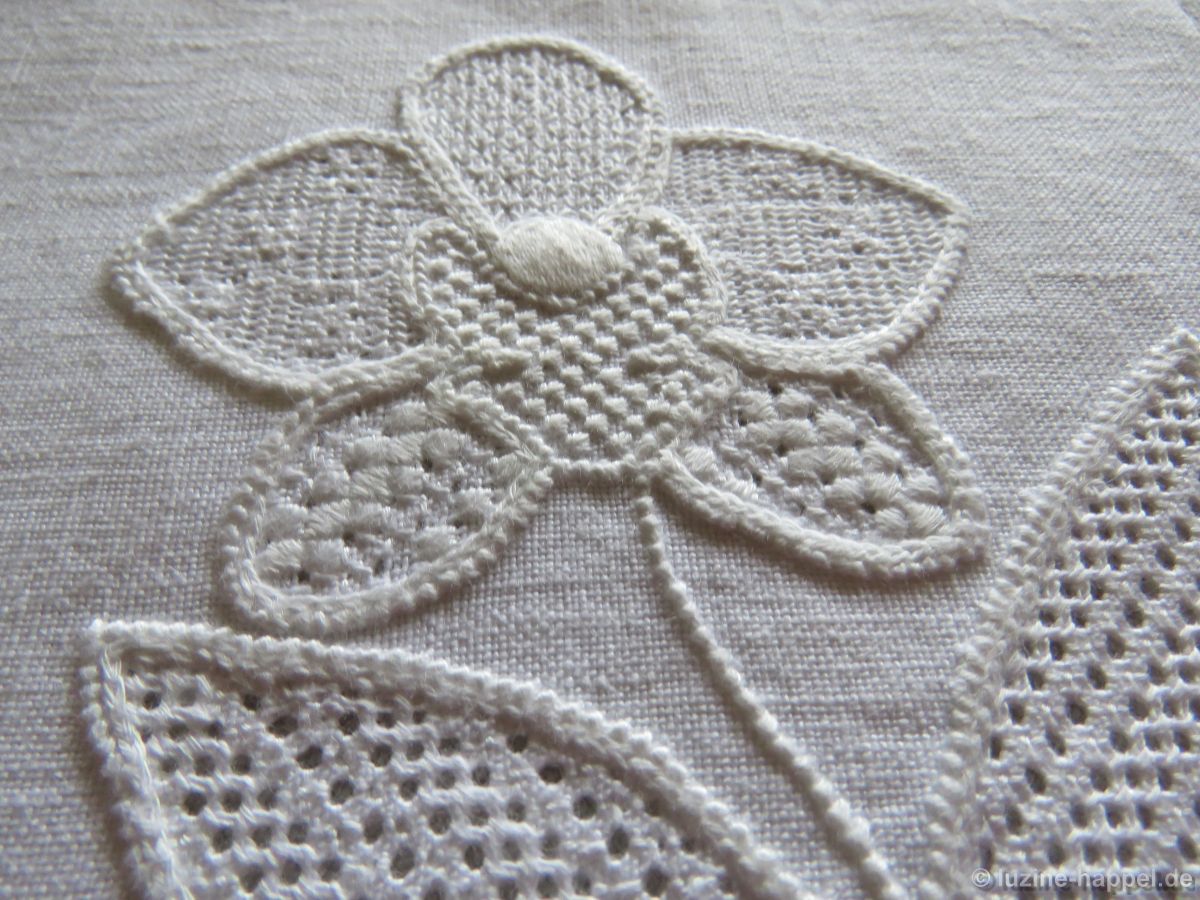
Margaret Morgan lives in Queensland, Australia. She designed a pretty regional flower. Margaret has filled the not-so-easy-to-embroider design with a variety of patterns from fine stitches.

She wrote: “I have stitched a Cooktown Orchid which is the floral emblem for the State of Queensland in Australia. I chose the Cooktown Orchid because it lent itself to the Schwalm technique.”


#25
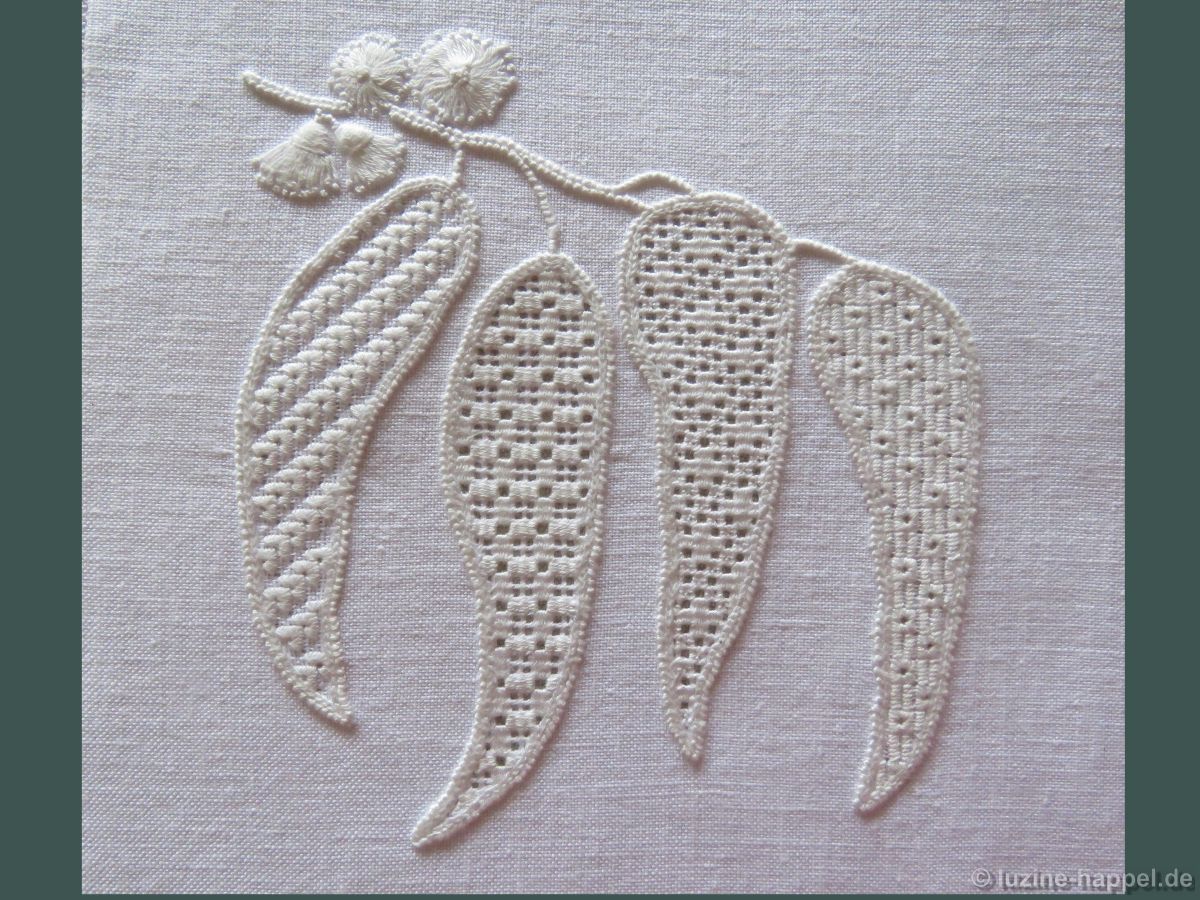
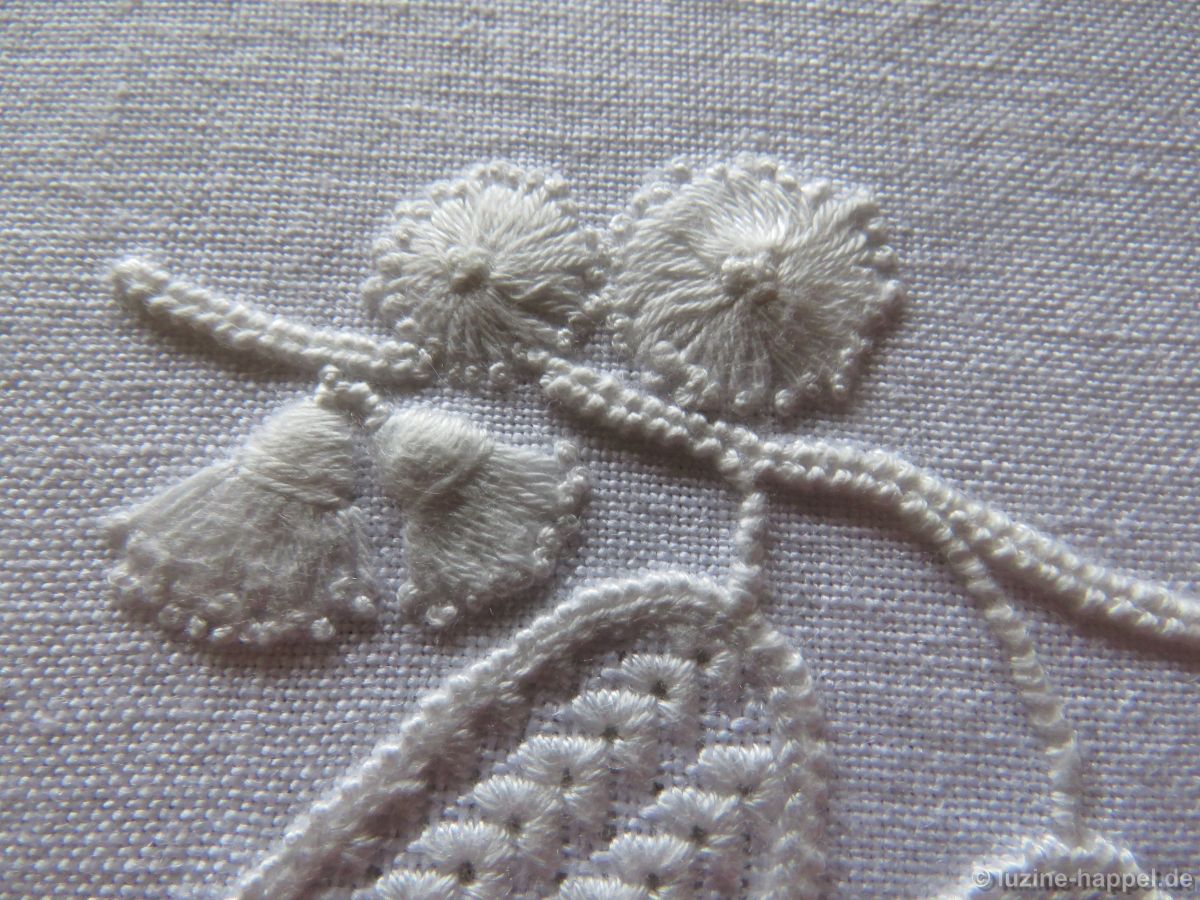
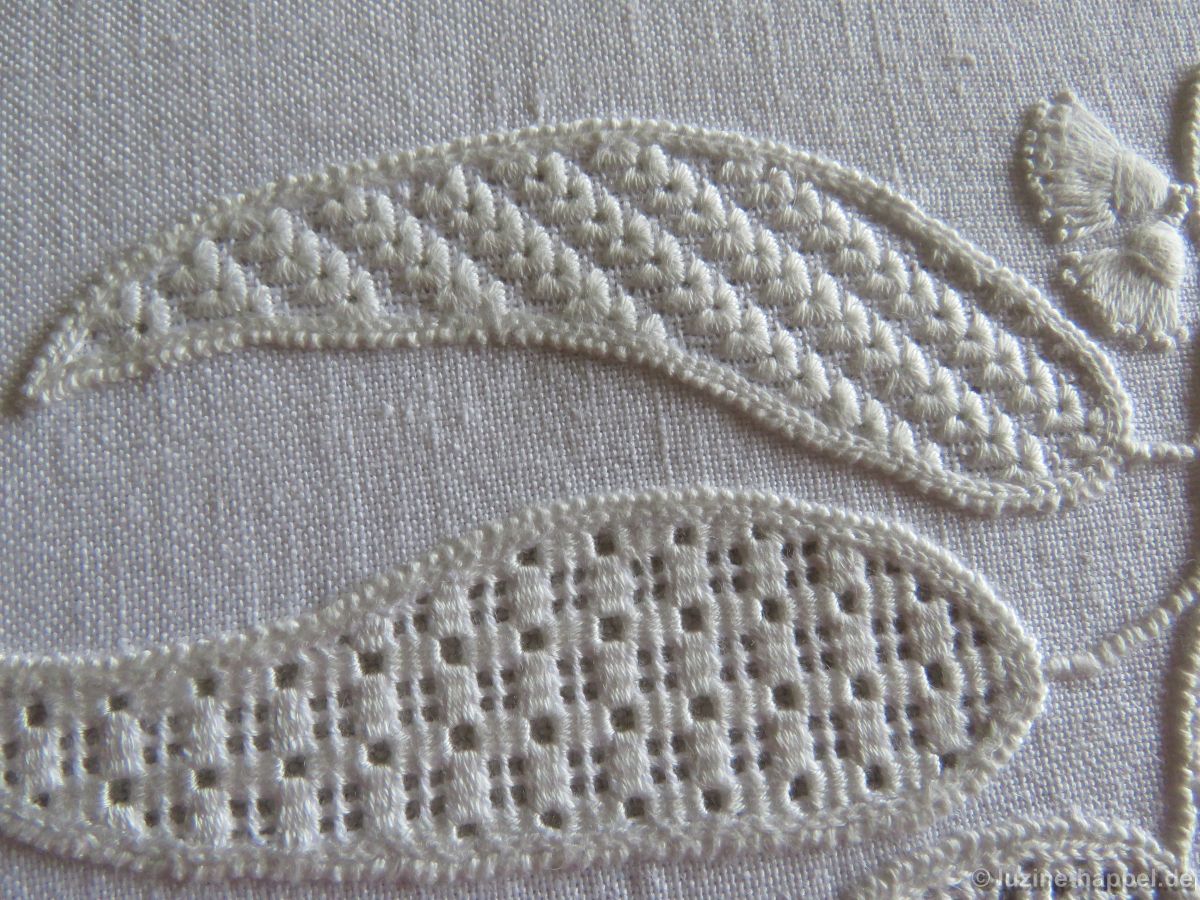
Carol Stacey, an embroidery teacher from Australia, also chose a typical regional plant for her embroidery – leaves and blossoms of a gum tree. With contrasting filling patterns and fine stitches, the teacher made a very individual and impressive contribution, too.

She wrote: “Social isolation during the Covid 19 epidemic has enabled me to spend time admiring the majestic Australian eucalypt trees (or gum trees as we call them) around our home. I love their variety of leaves and blossoms and it is a pleasure to highlight them in Schwalm technique.”

You can see more contributions in Update 9.

Global Schwalm Sampler – Update (9)

Two more contributions to the global sampler have arrived.


#20
Kim Beamish from Canada has designed a nice little tulip.

The tulip is not just one of the main motifs of Schwalm whitework. It also grows in many countries around the world and delights people there who are eagerly waiting for the beginning of spring. So Kim too.

She wrote: “Since it is Spring (actually it is snowing here today as I stitch this), I thought of the tulips that are just starting to come out.”


#21
Waltraud Kater from Australia thinks the idea of the global sampler is fantastic. For this, the embroiderer and quilter happily pushed aside the work on thirteen charity quilts.

She wrote – roughly translated: “Floral designs are my favorite embroidery motifs, so it was not difficult to contribute to the Global Schwalm sampler.”

She hopes for a bombastic response and is looking forward to the big picture.

You can see more contributions in Update 8.

Global Schwalm Sampler – Update (8)

Global Schwalm Sampler – Update (8)

Today I can present five new contributions to the global sampler.


#15
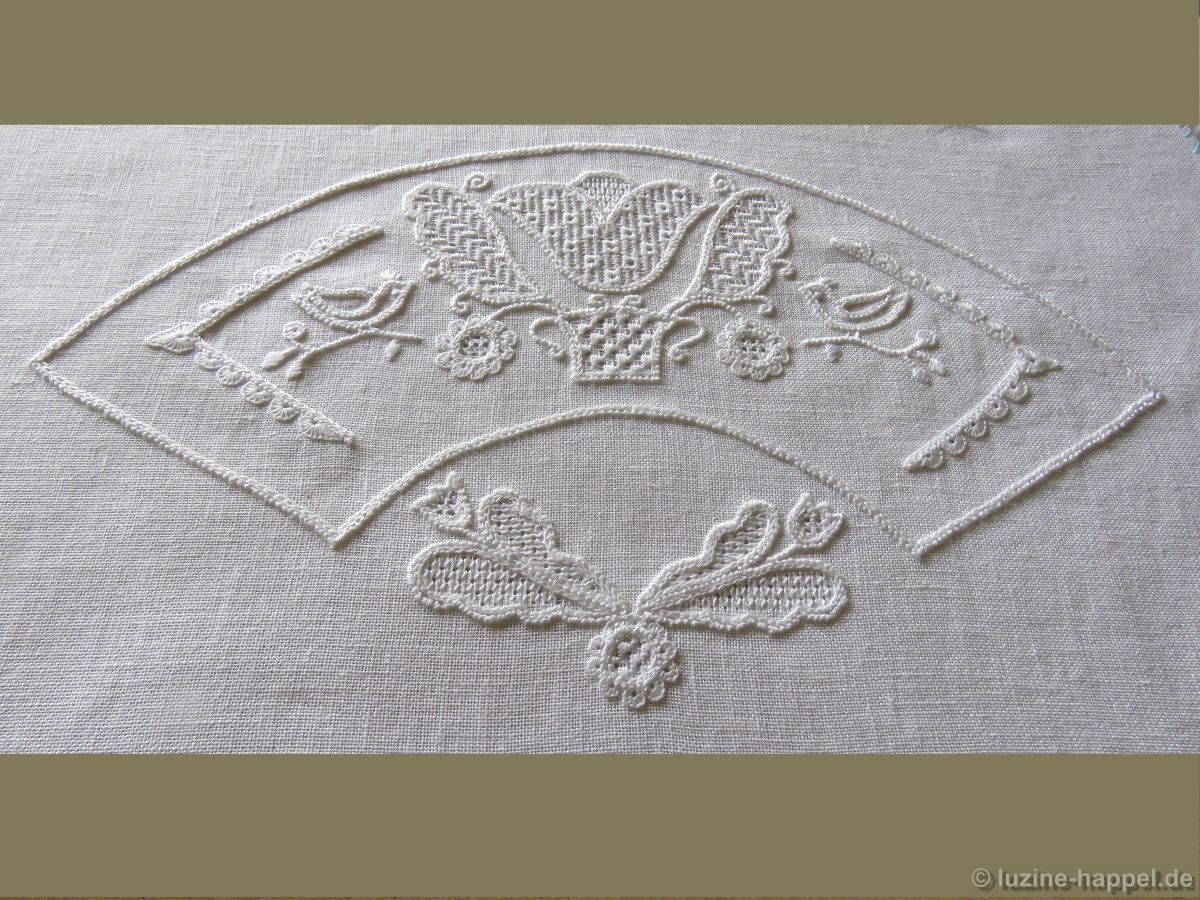
Taeko Ueki from Japan is currently learning Schwalm whitework from Yasuko Kobayashi. She was very happy to be involved in a joint project during these times and to be accompanied by her teacher. She chose a fan (the typical Japanese Sensu) and filled it with typical Schwalm motifs.

She wrote: „モチーフには”扇子”と Luzine Happelさんデザインをアレンジしたものを選びました。
扇子は地の果てまで拡がっていく末広がり、ということで幸運の象徴とされています。”

“By the way, this motif is Sensu (folding fan in Japan-taste) and arranged-designs of yours.
As Sensu spreads out wide toward the end, we Japanese consider it as a symbol of good luck.”


#16
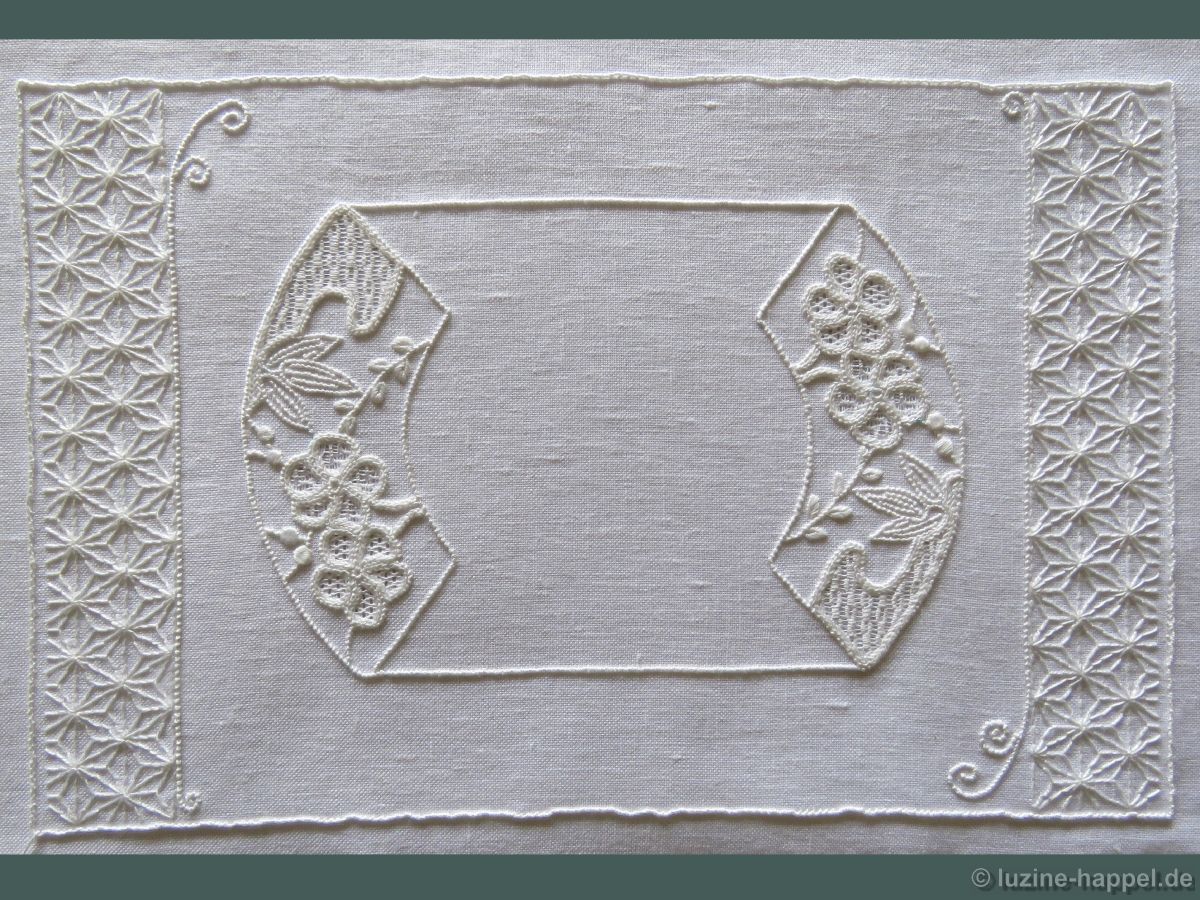
The teacher Yasuko Kobayashi from Japan chose her favorite motifs (asanoha and sensu) and arranged them opposite. For her they stand for cohesion in order to get through the days with COVID-19 better.

She wrote: “力を合わせてCOVID-19を乗越えられるように、幸運モチーフを選びました。
麻の葉文様は、生命力の象徴です。(日本では亜麻よりヘンプがよく使われていました)
扇子は末広がりで、お正月用梅花・竹と同様に縁起が良いです。
シュヴァルム刺繍文様の一つ「巻きひげ」は、日本らしいモチーフと馴染みます。”

“I select some favorite designs in order to pull ourselves together and also to get through these days with COVID-19.

The motif “flax-leaf ” is the symbol of long life. (Hemp was in the past more popular than flax.)

The motif “Sensu (= folding fans)” looks like delta and it is the symbol of good luck. I have arranged with “flowers of plum and bamboo leaves”, which are the traditional New Year’s items.

Tendril is one of the typical Schwalm motif, which can naturally be connected with Japanese motif.”

(note: Asanoha (hemp leaves) pattern
Hemp has played a much greater role in Japan than flax [linen] in the past. Hemp flowers were used in Japan in ancient times, among other things, for oil production. Above all, hemp bast was used for centuries as a raw material for textiles, along with silk, until the cotton came to Japan and replaced hemp as the most common textile. Until the end of the Second World War, hemp cultivation took up as much land in agriculture as rice cultivation!)


#17
Jennie O’Brien-Lutton from Australia has chosen a native bird, the Kookaburra, as her motif.

She wrote: “My inspiration from nature is a kookaburra sitting on a gum tree branch. Both are a very common in many parts of Australia. Kookaburras and gum trees feature in Australian poems, songs and paintings and I´ve always had a particular liking for kookaburras. As soon as I had decided to embroider a kookaburra, I heard one laughing in a tree next door. Coincidently, some days later as soon as I started to stitch, I heard a kookaburra laughing again. The kookaburra is sometimes called Laughing Jackass (der lachende Hans). I hope very soon Covid19 will be under control, we´ll be allowed to socialise and all the world will be laughing with the kookaburras.”


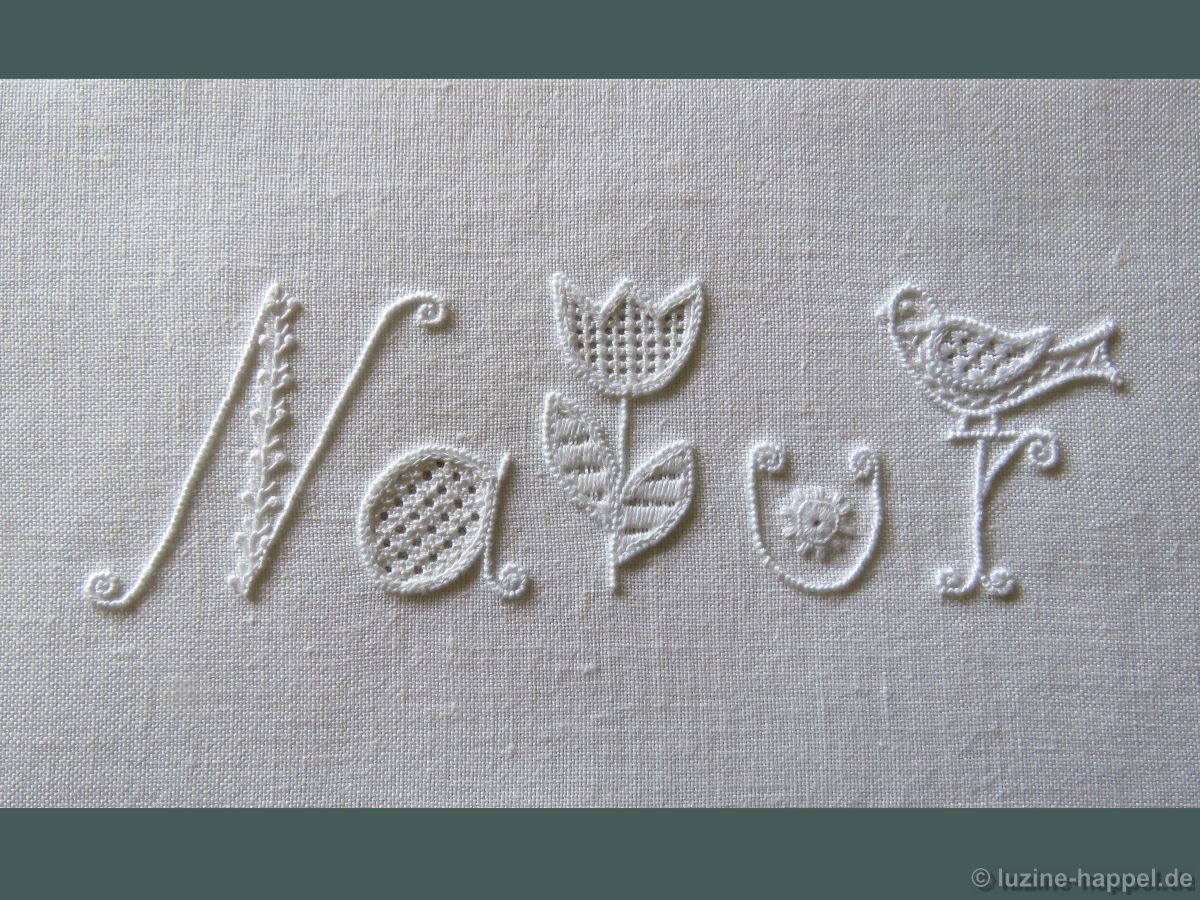
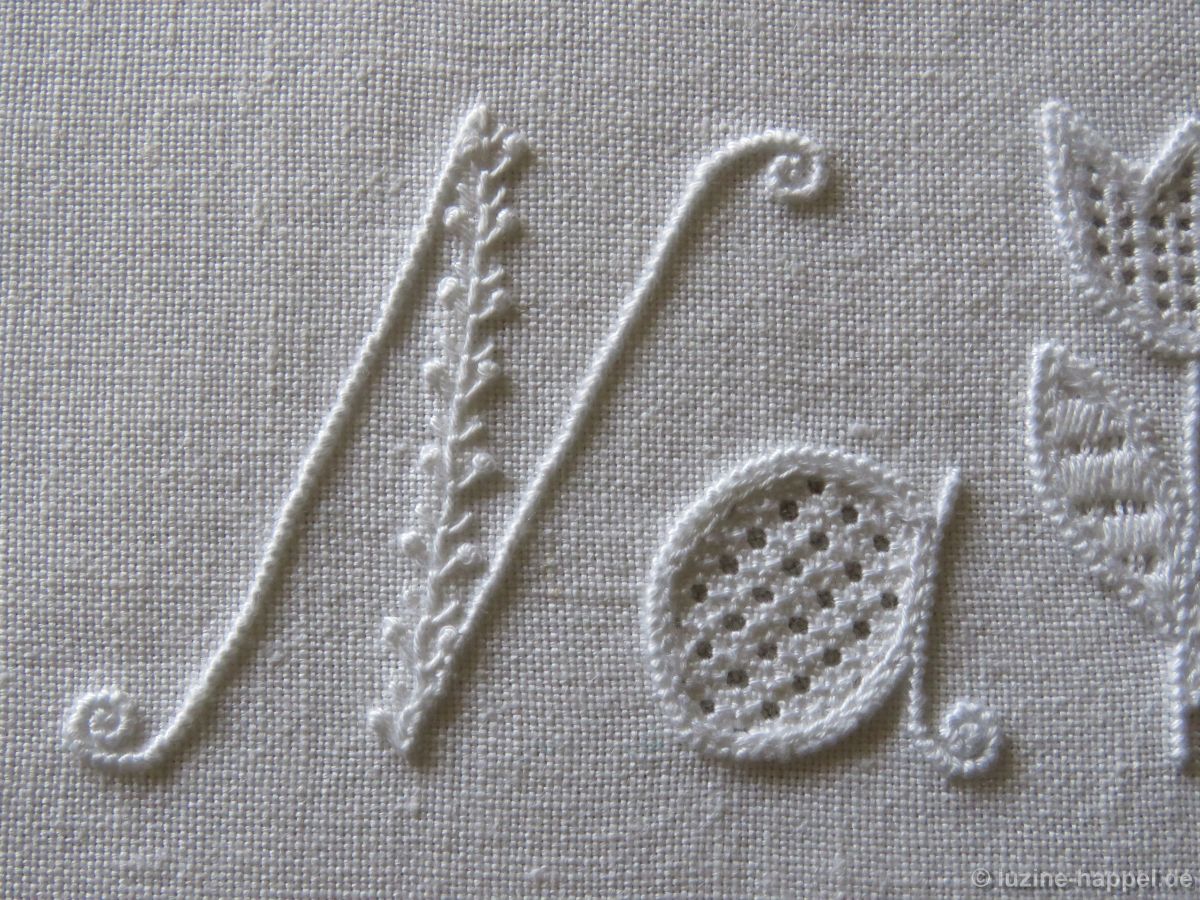
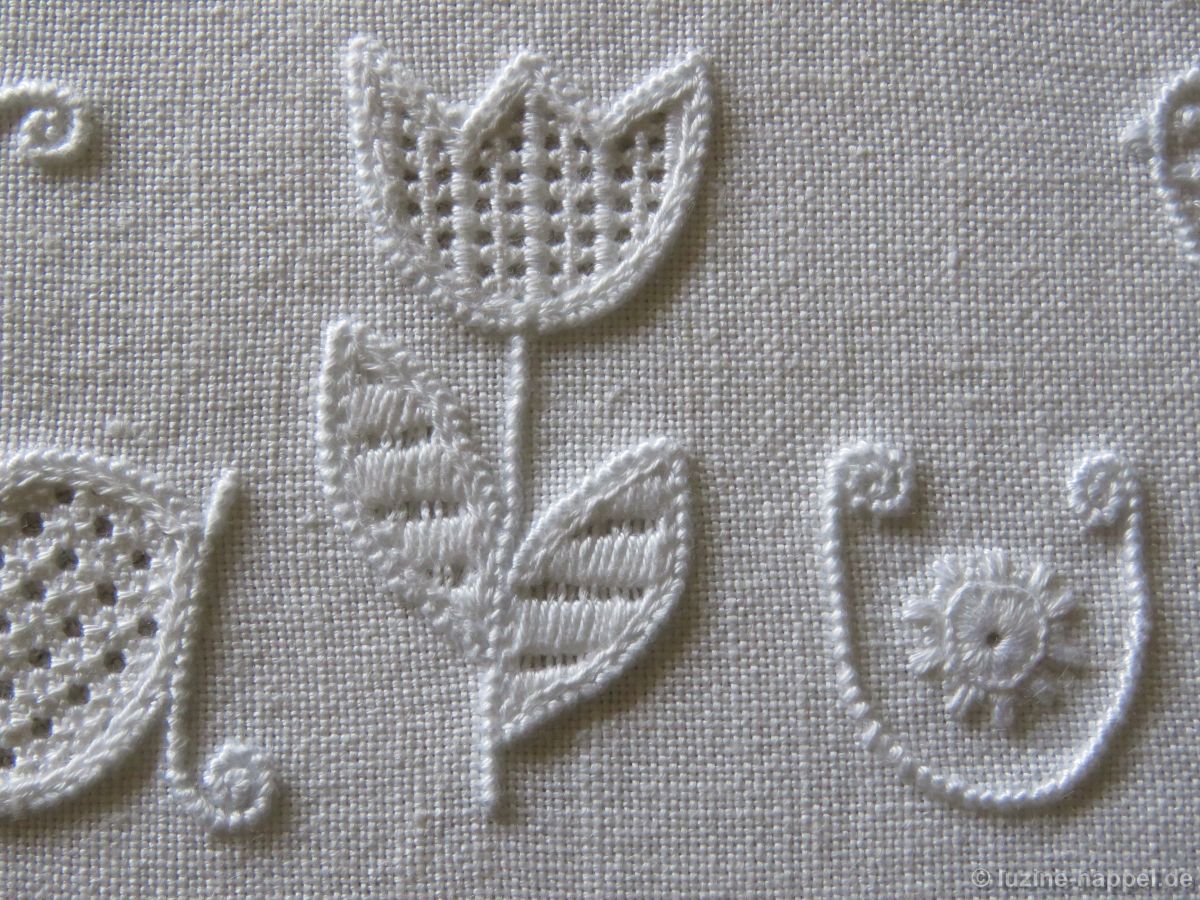
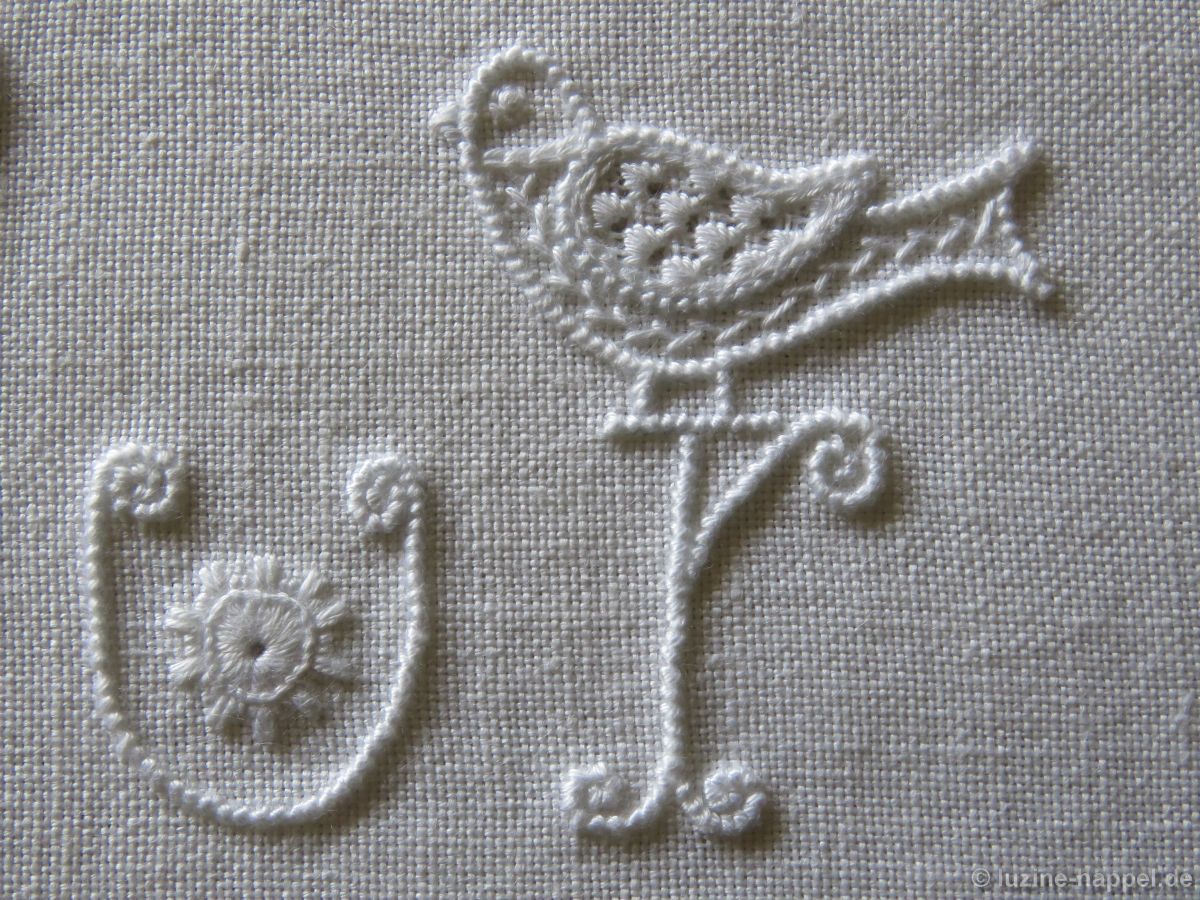
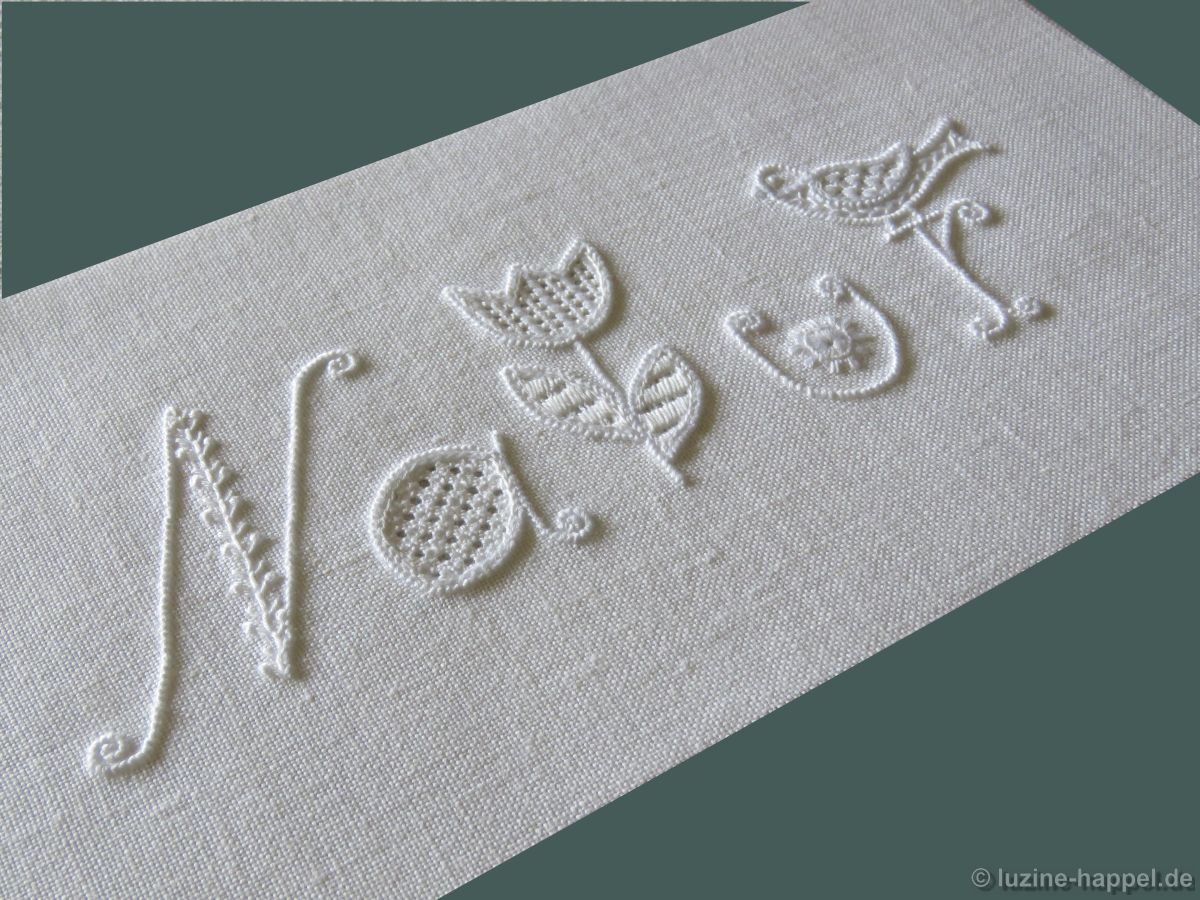
#18
Monika Müller from Germany often skillfully converts individual ideas into elegant embroidery; she has done so again with this submission.

She wrote: “I took nature “literally.”
The tulip symbolizes the flora, the bird symbolizes the wildlife. Plants and animals are nature. For me, nature is valuable. That’s why you should be careful and respectful of it.”


#19
Margrit Michaux from France justified the choice of her motif very charmingly.

She wrote: “ce papillon est un peu moi !!
il aime la liberté ,et ne connait pas les frontières,
il aime le beau temps, le soleil,
il tourbillonne et se pose sur les fleurs .“

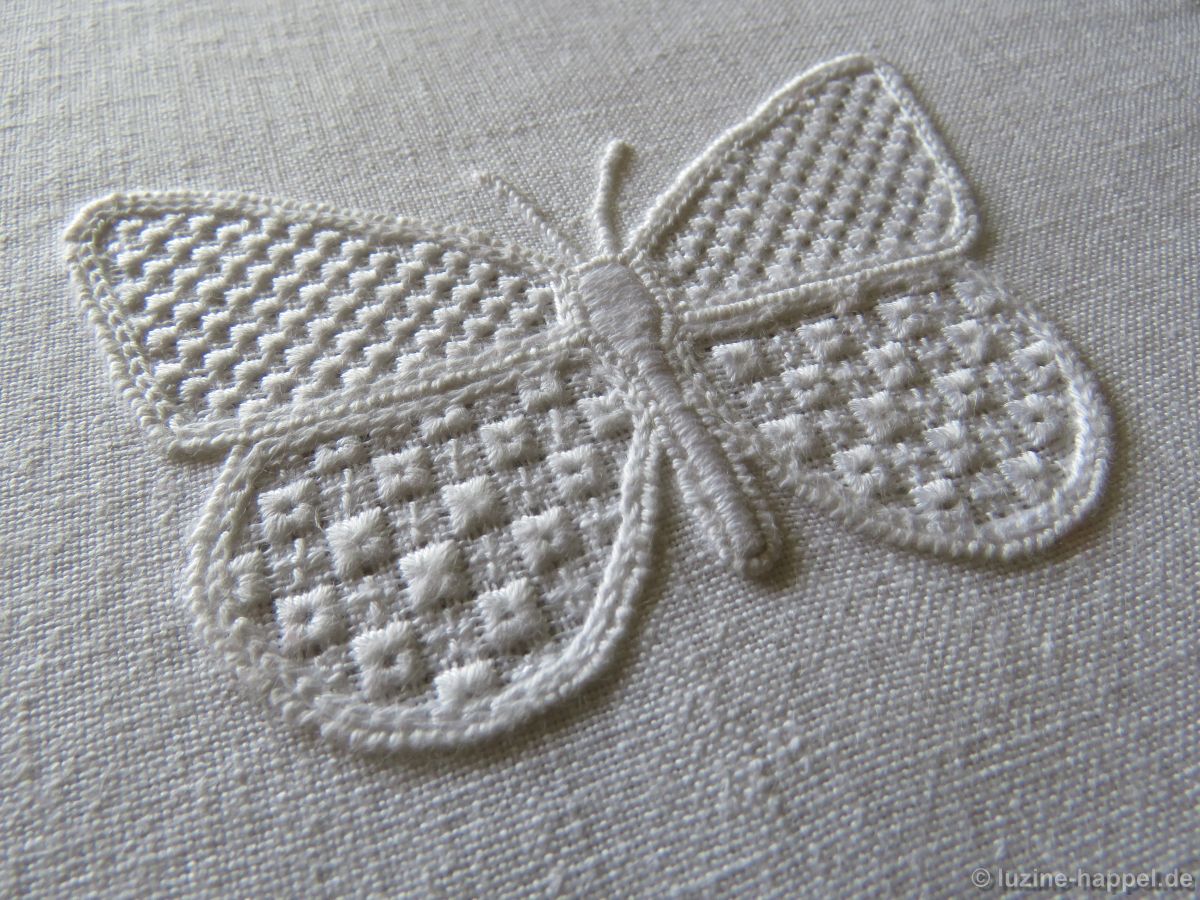
“I chose the butterfly. He’s a little like me – loves freedom, stands where he wants and loves air and beautiful flowers!”

You can see more contributions in Update (7).