Picture
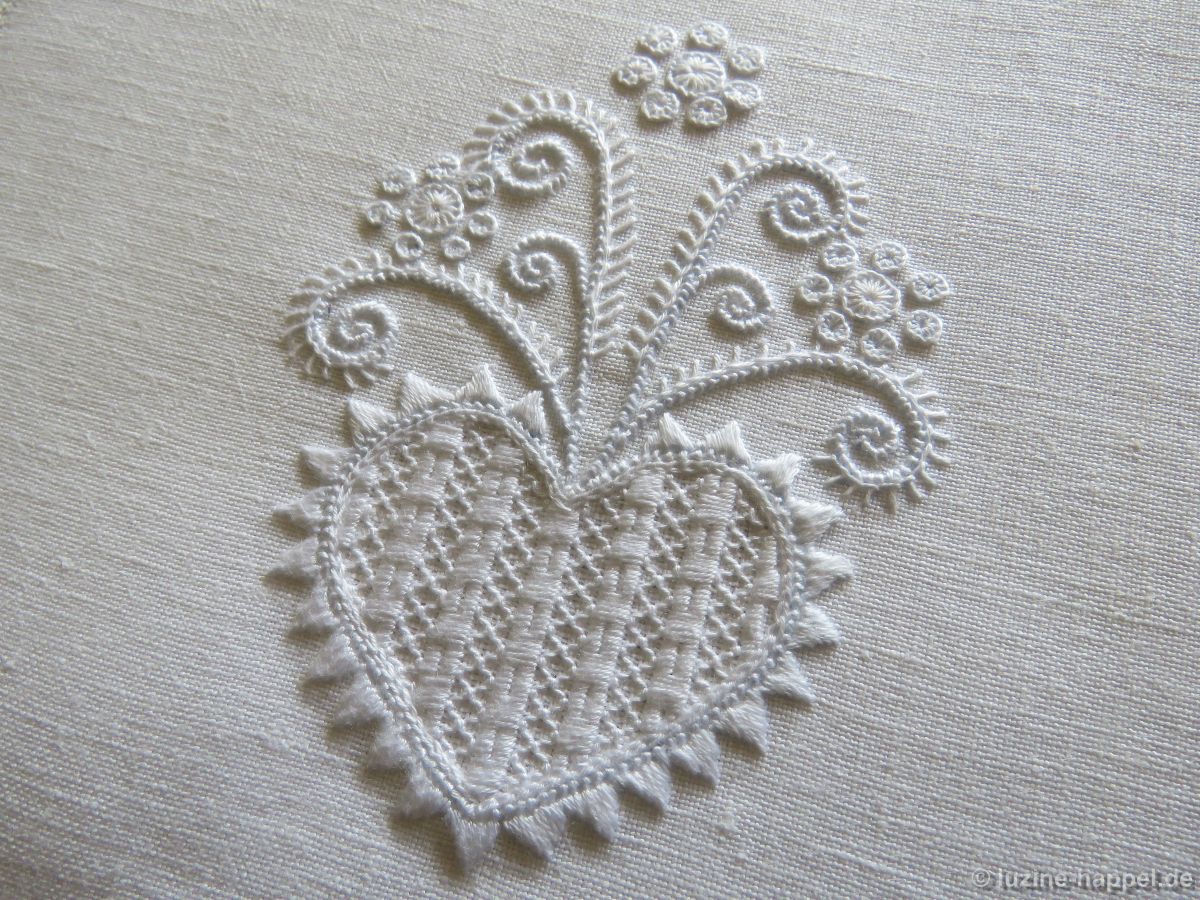
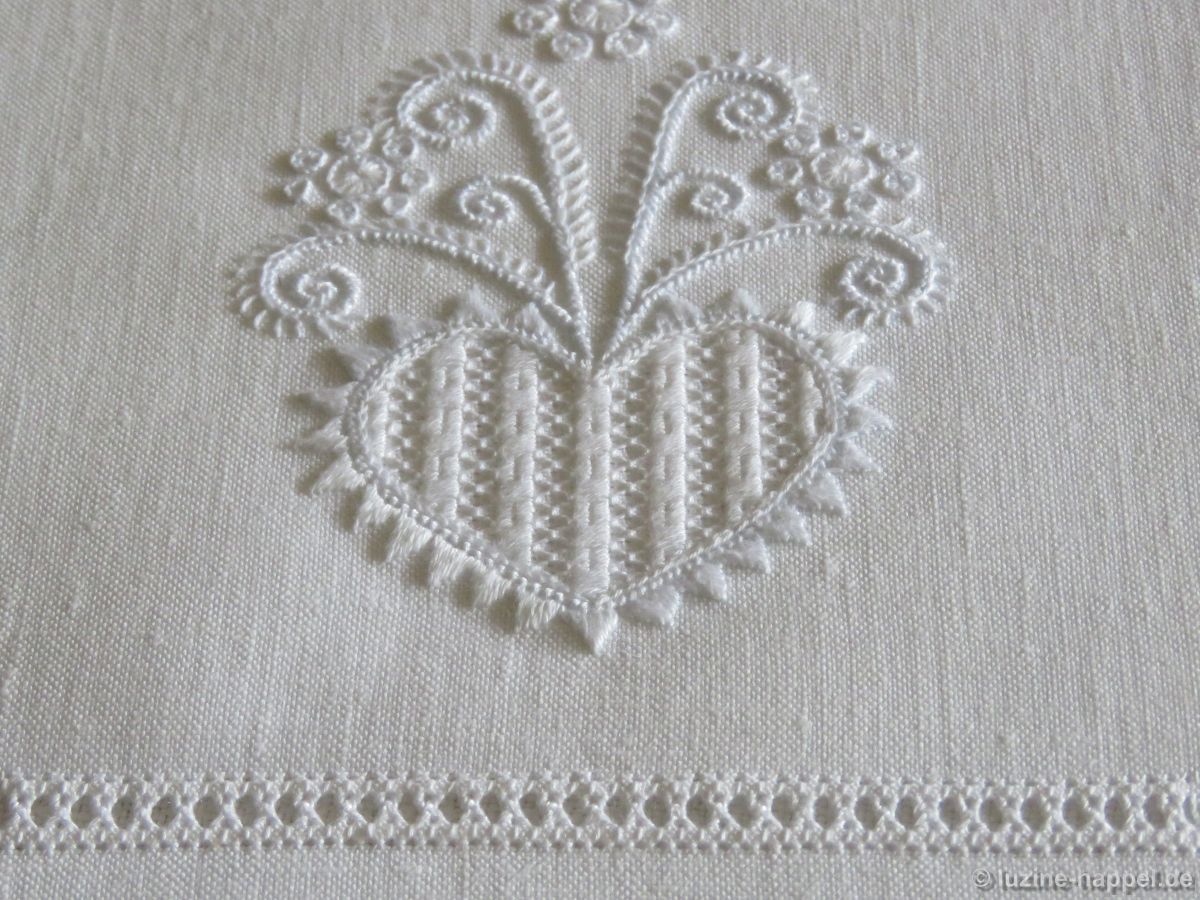
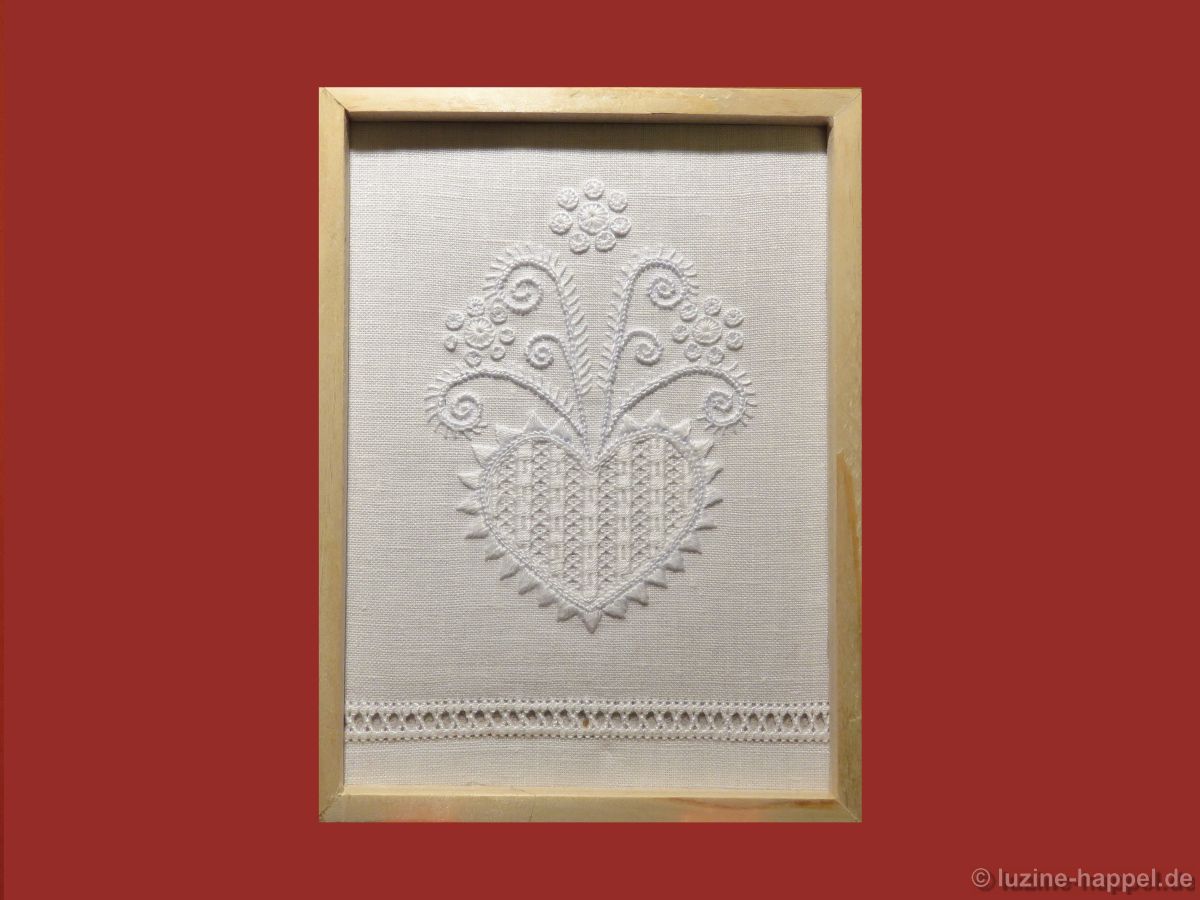
Linen: 20/cm thread count, cut to about 18 cm X 24 cm
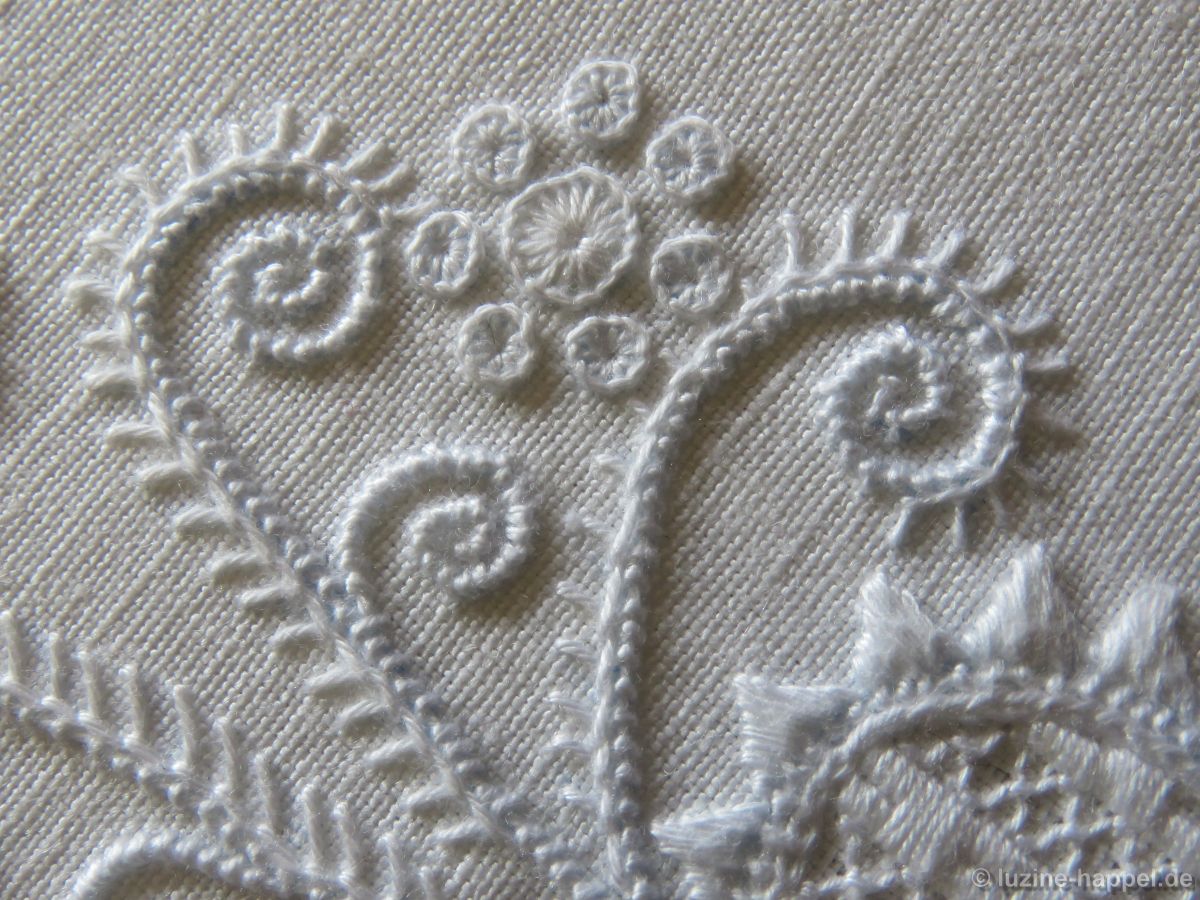
Threads: coton à broder No. 20 for Coral Knot stitches; No. 25 for Satin, Blanket, and Eyelash stitches; No. 30 for Chain stitches, the filling pattern, and the Peahole hem.
Design: No. 15 measuring 8 cm X 11.26 cm
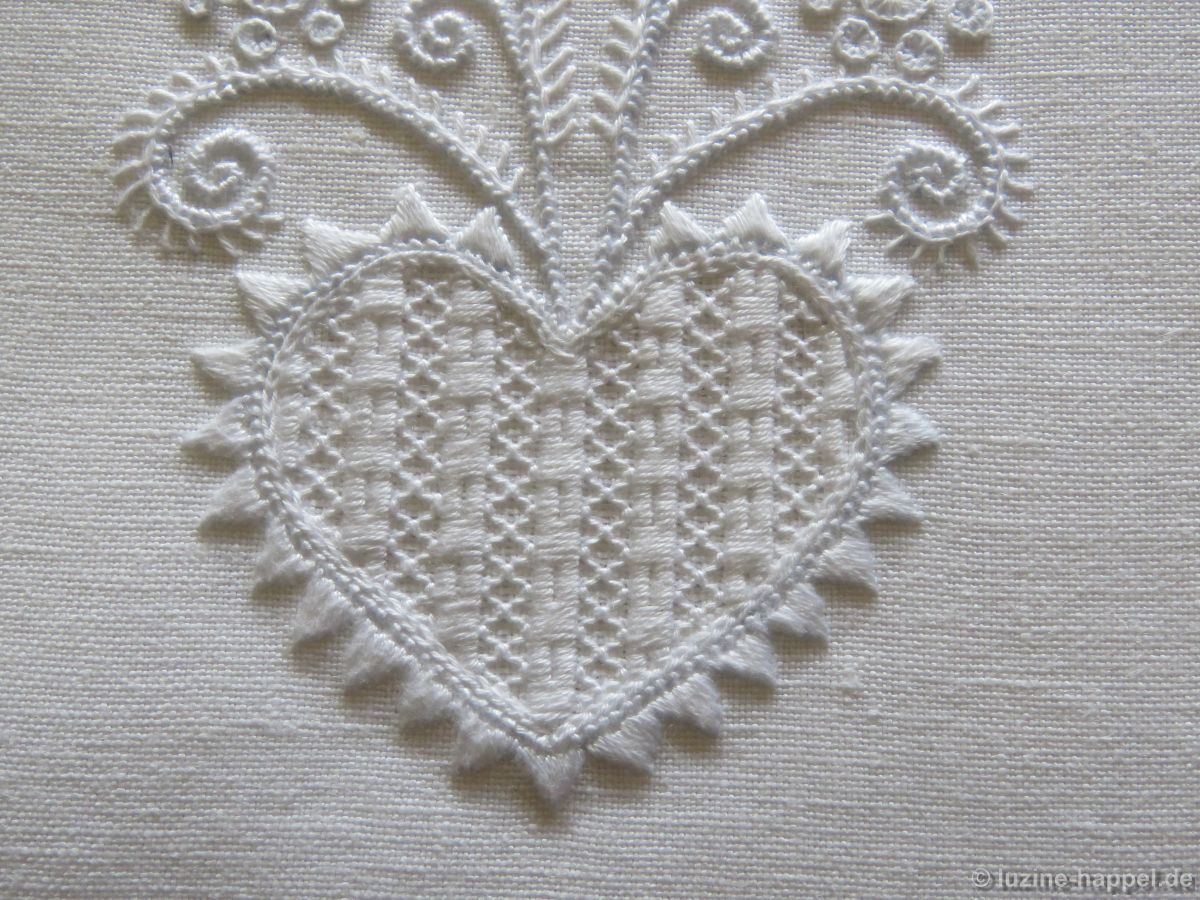
Filling pattern: alternating one row of Narrow Zip (Wickelstiche) and two rows of Honeycomb Darning stitches (Basic Principles of Schwalm Whitework)
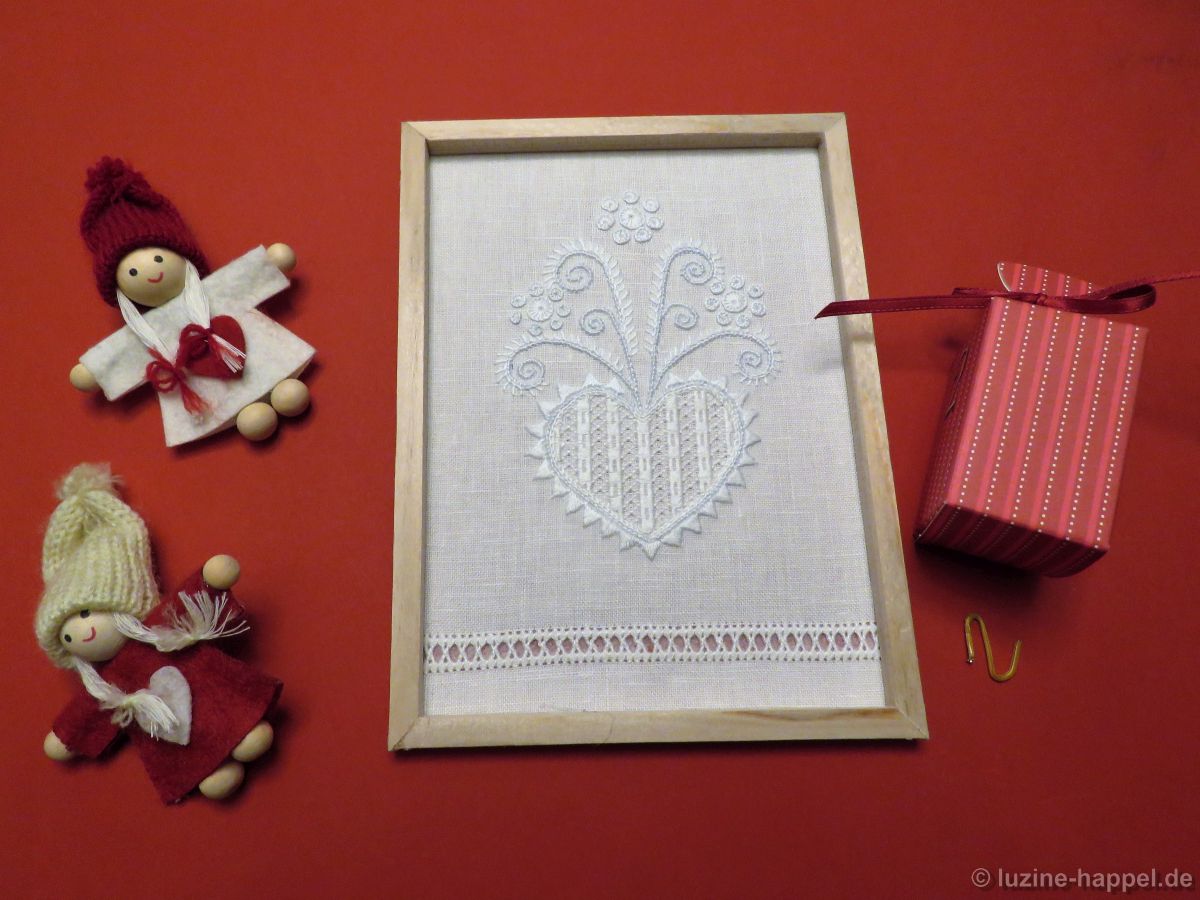
Additional items: non-woven fusible interfacing for the back of the linen, a small wooden frame, a small hook
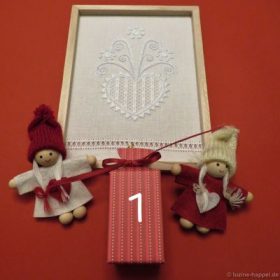
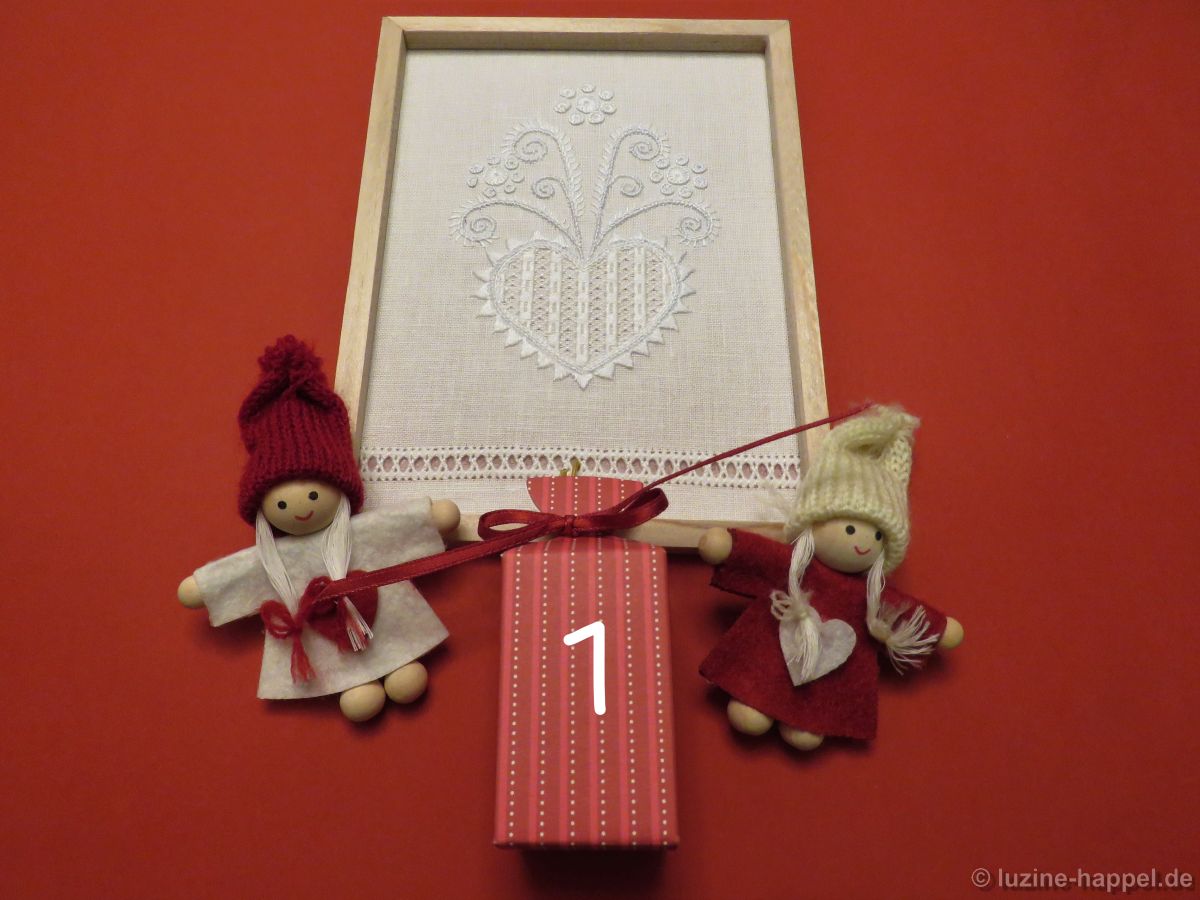
Putting a S hook in the Peahole hem, a year-round picture can easily turn into a holder for an advent gift.
Since last year’s Advent calendar for whitework was so very well received, I decided to again prepare new embroideries for the first twenty-four days of December. I asked my designer for matching designs, and she came up with gingerbread figures, nuts, and many other designs often associated with Christmastime, but this was not what I wanted. I had in mind nice little Schwalm-typical motifs suitable for creating an advent calendar. So she started anew, and the results exceeded my expectations. I liked the designs very much.
The designs do not share the same aspect ratio, but that should cause little concern.
One might choose to use them to work, for example, only small bags, ornaments, or some other item. To show the wide variety of possibilities,
I decided to make twenty-four different small pieces – presenting one every day, beginning on 01 December. Please look forward to them!
You will see that most of the projects and the motifs are appropriate for anytime of the year.
So, if you would like to work them yourself, I offer the different designs here. Included are twentyfour different designs and two variants as well as a pattern for a stocking.
All designs come in at least three different sizes – some for delicate work and the others for more comfortable embroidering.
Best of all I made a modular design system in which all the designs with a comfortable and matching size can be cut out as cards to be arranged into a design for an Advent calendar, a sampler, a long band, a two-row table runner, or …
Advent Calendar 2017
line drawings in several sizes each
43 pages
8.08 MB file size
Text: English
24.00 EUR
download here
Of course it is also possible to get this publication as a printed booklet for the same price plus shipping charges. This option is not shown in my online shop, so please email leuchtbergverlag@aol.com me with your request.
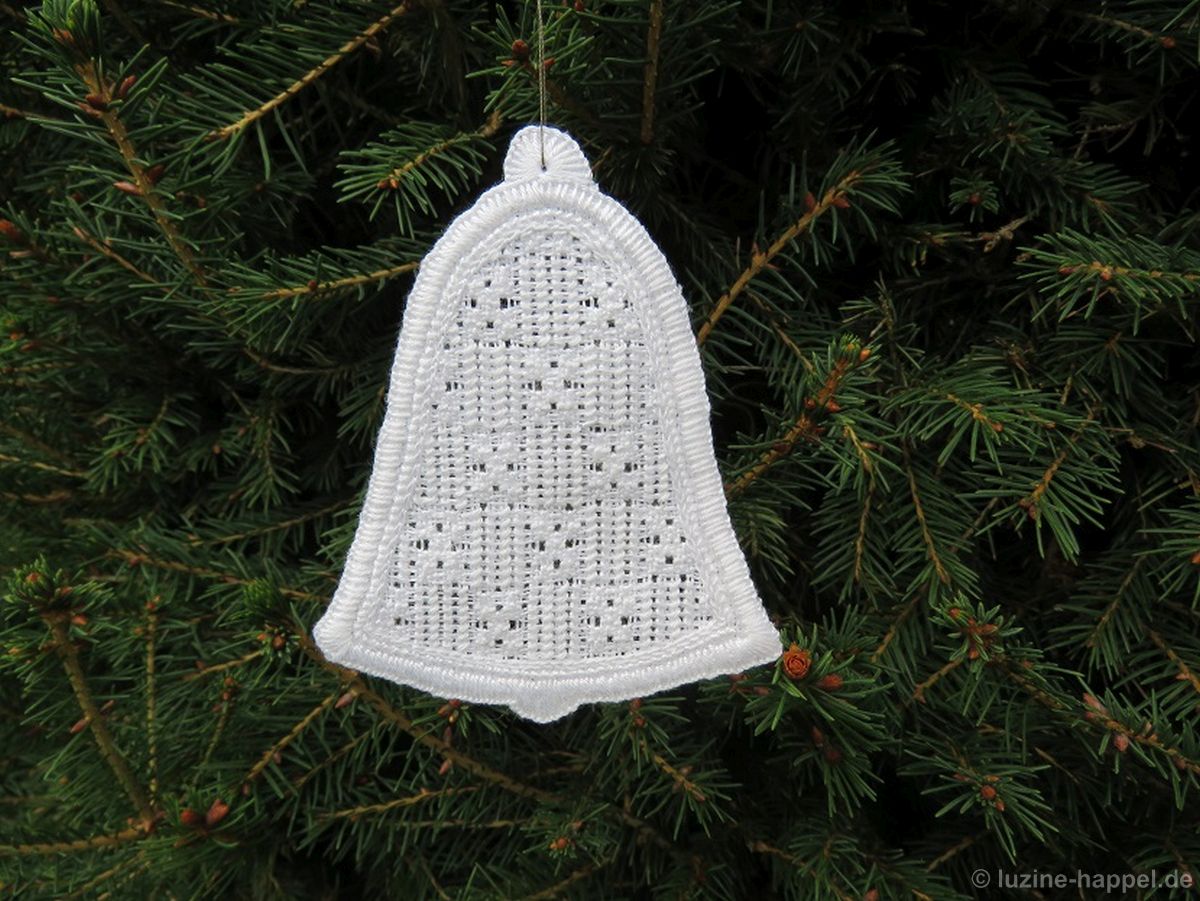
December is approaching – time to think about ornaments for trimming the tree. This year a bell will be added to the collection of Christmas ornaments.
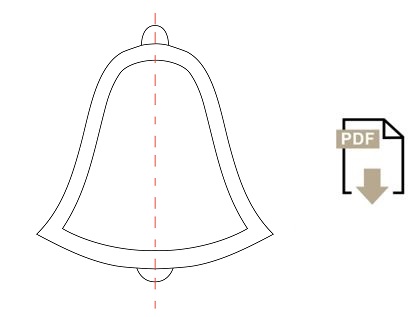
A bell design with a double outline is transferred to 13.5/cm thread count linen. The original size is 7 cm X 9 cm.
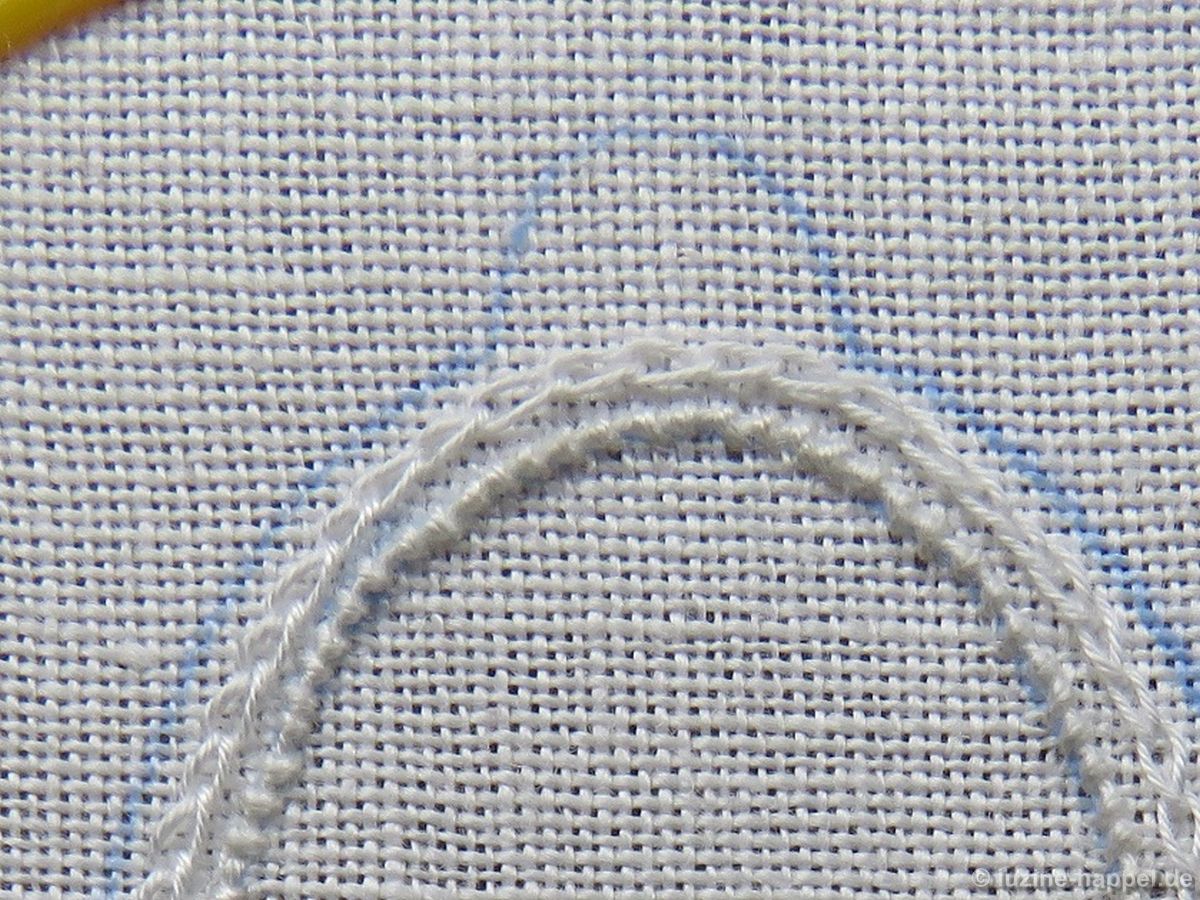
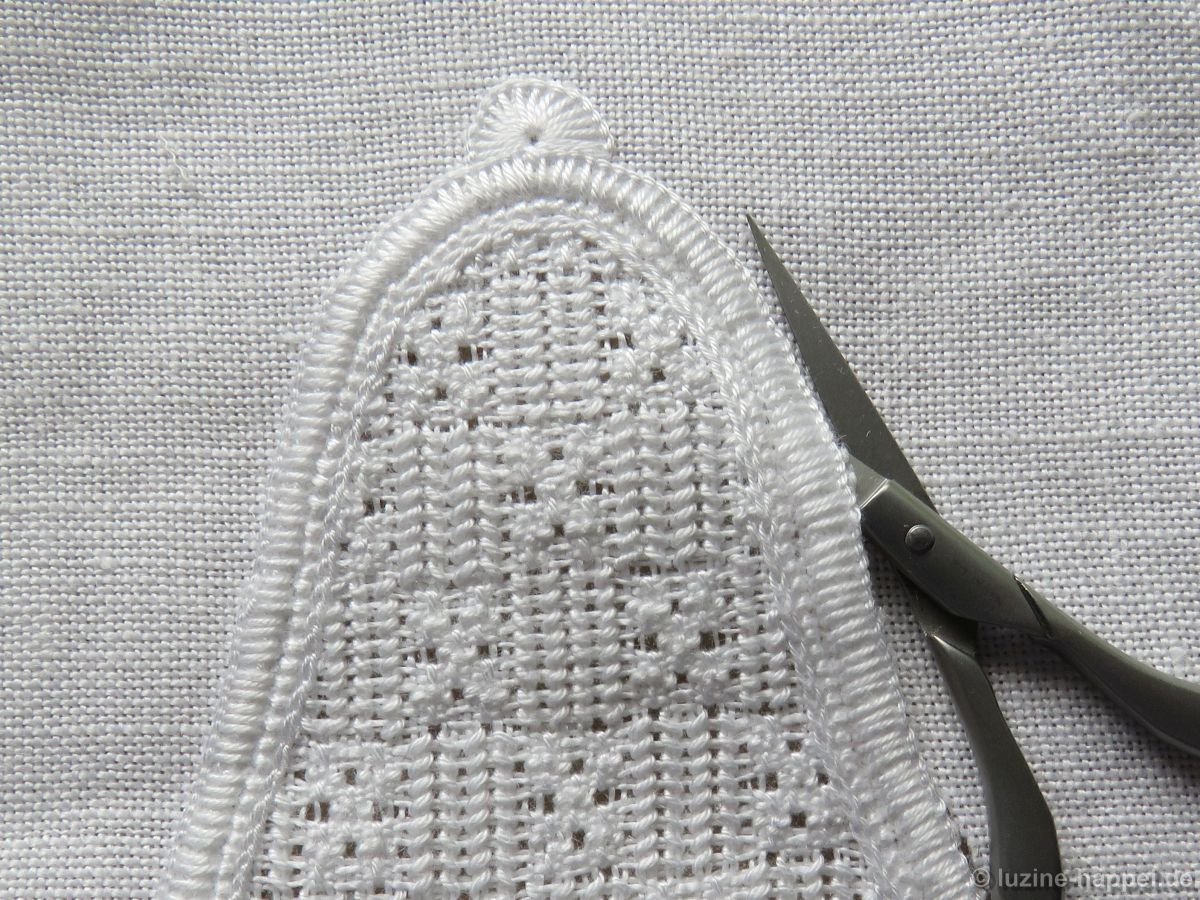
Using coton à broder No. 16, Coral Knot stitches are worked along the inner line. Using coton à broder No. 20 for Blanket stitches and the outside Chain stitches, Chain stitches are first worked a small distance outside the Coral Knot stitches.
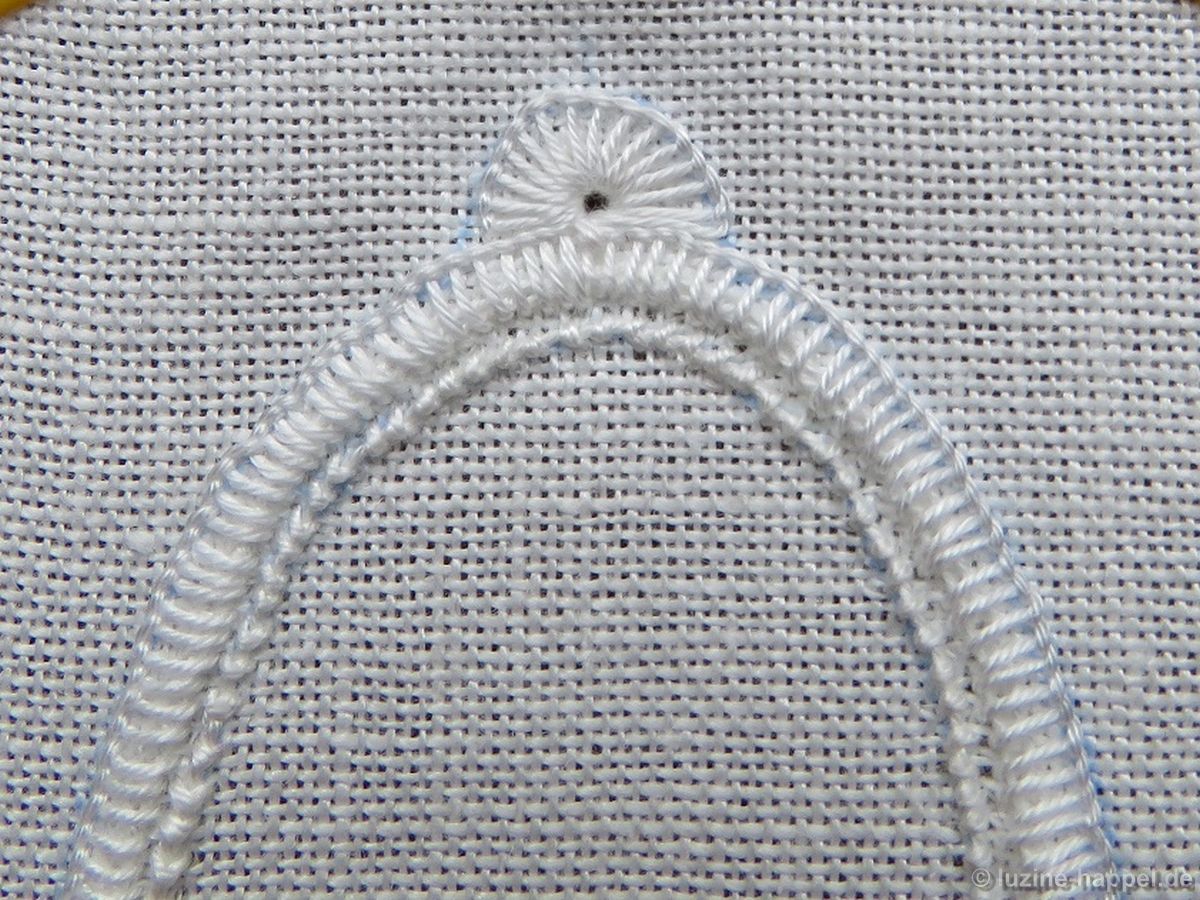
Then the outside Chain stitches are covered with densely worked Blanket stitches between the outline and the Coral Knot line. A half-eyelet scallop at the top creates a perfect hole to fasten a hook or hanging string.
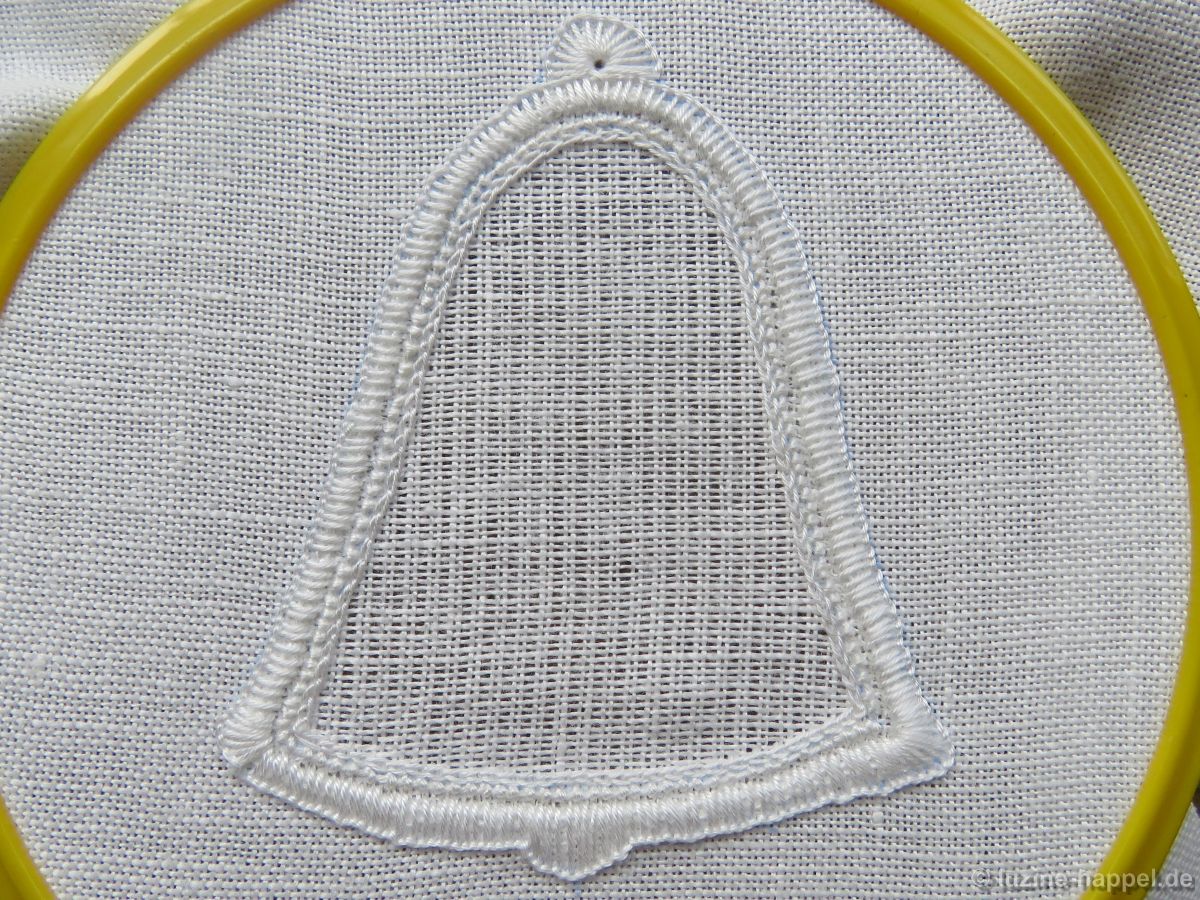
Using coton à broder No. 30, Chain stitches are worked directly inside the Coral Knot stitches. The shape is filled with pattern “478.” Thread withdrawing and instructions for working this a simple drawn thread filling pattern can be found here.
After washing, starching, and ironing, the piece is cut.
It is now ready to decorate your tree.
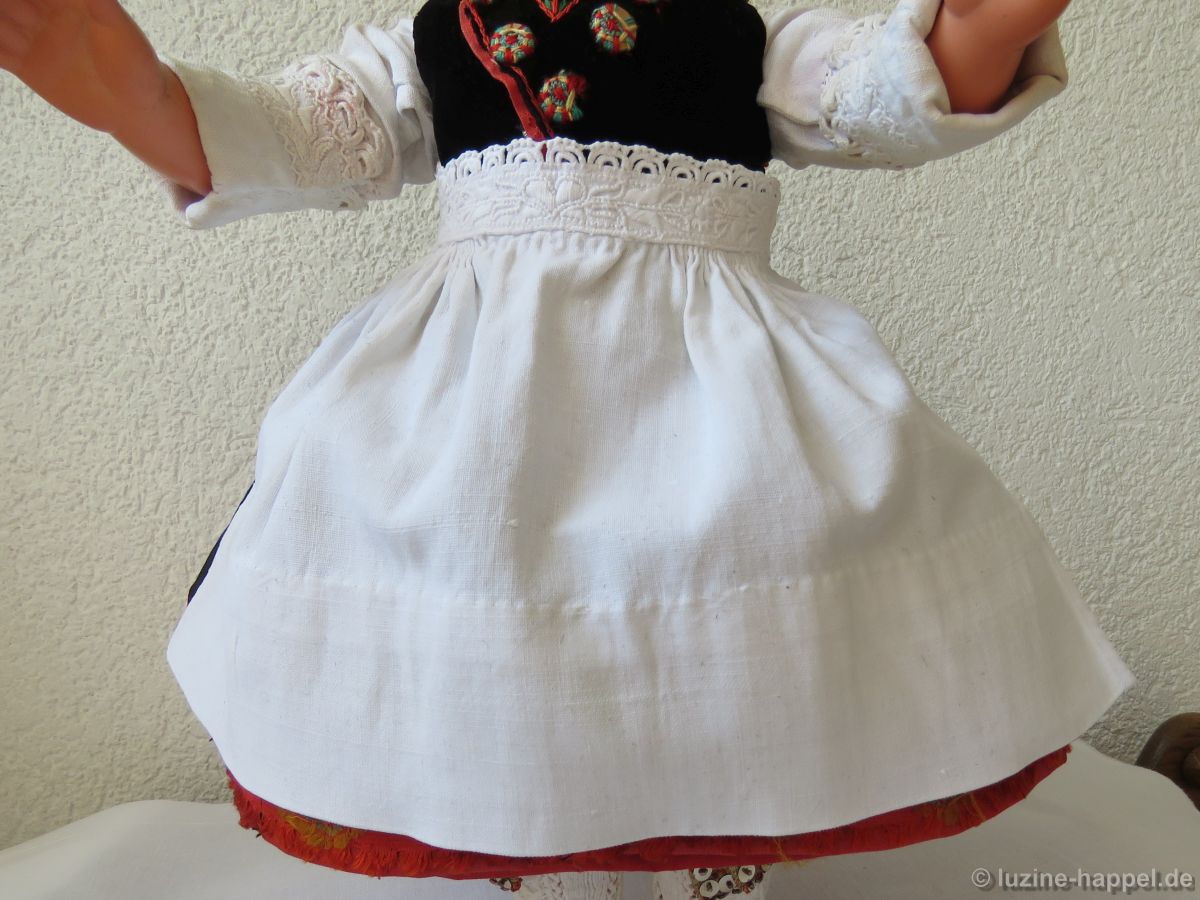
In addition to the dark aprons, white aprons were also a part of the Schwalm festive costume.
However, these were reserved for young girls up to marriage. They were worn on bright warm days in addition to the white bodices and the red costume.
In the year 1941, Heinrich Metz (1897–1973), a pastor with a profound appreciation of Schwalm habits and costumes, made a survey of an average Schwalm bride’s trousseau. [Source: Schwälmer Jahrbuch 2000]
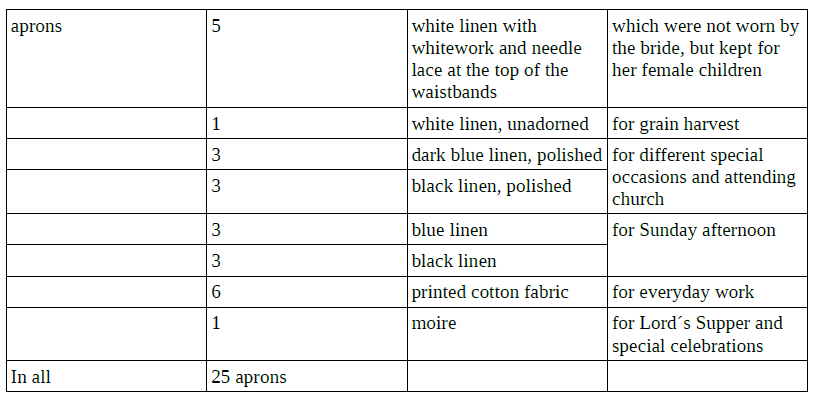
Regarding the aprons he found:
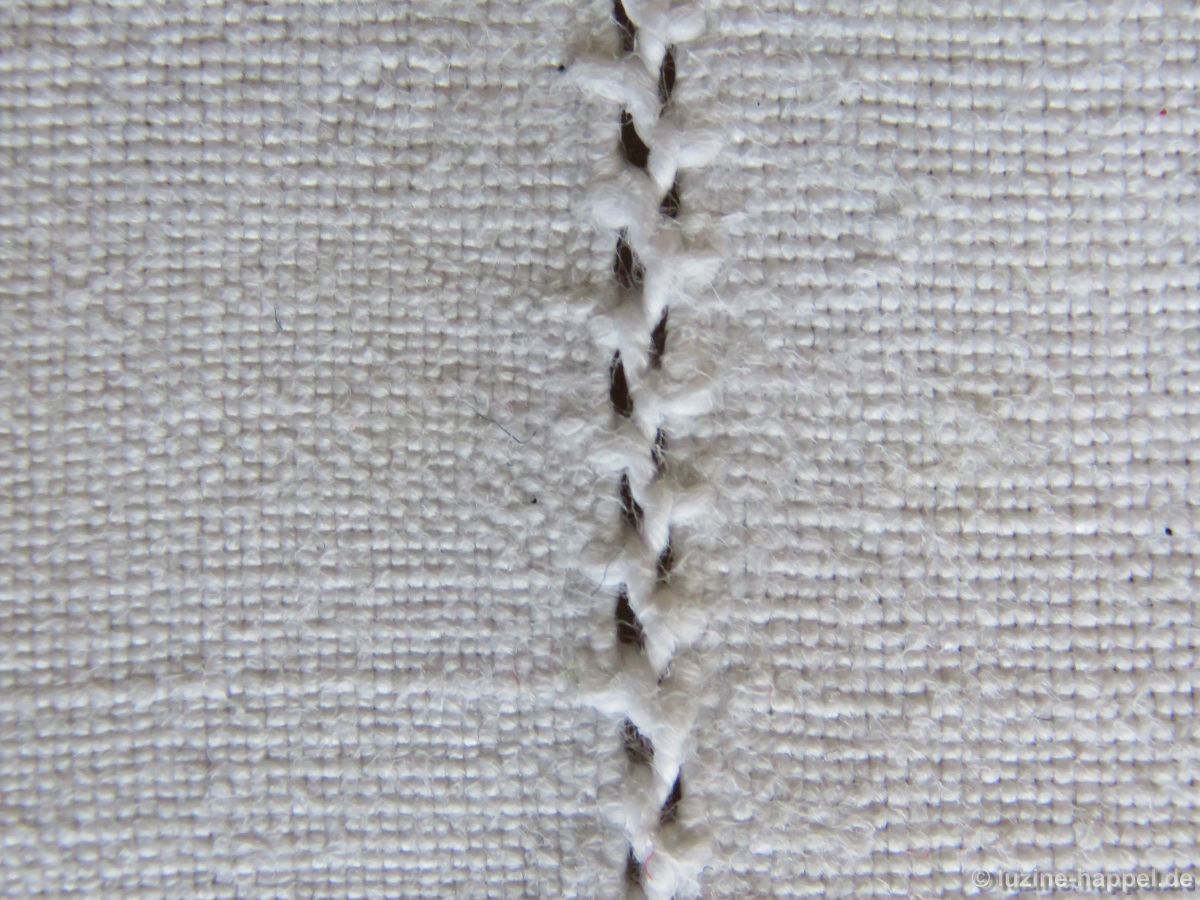
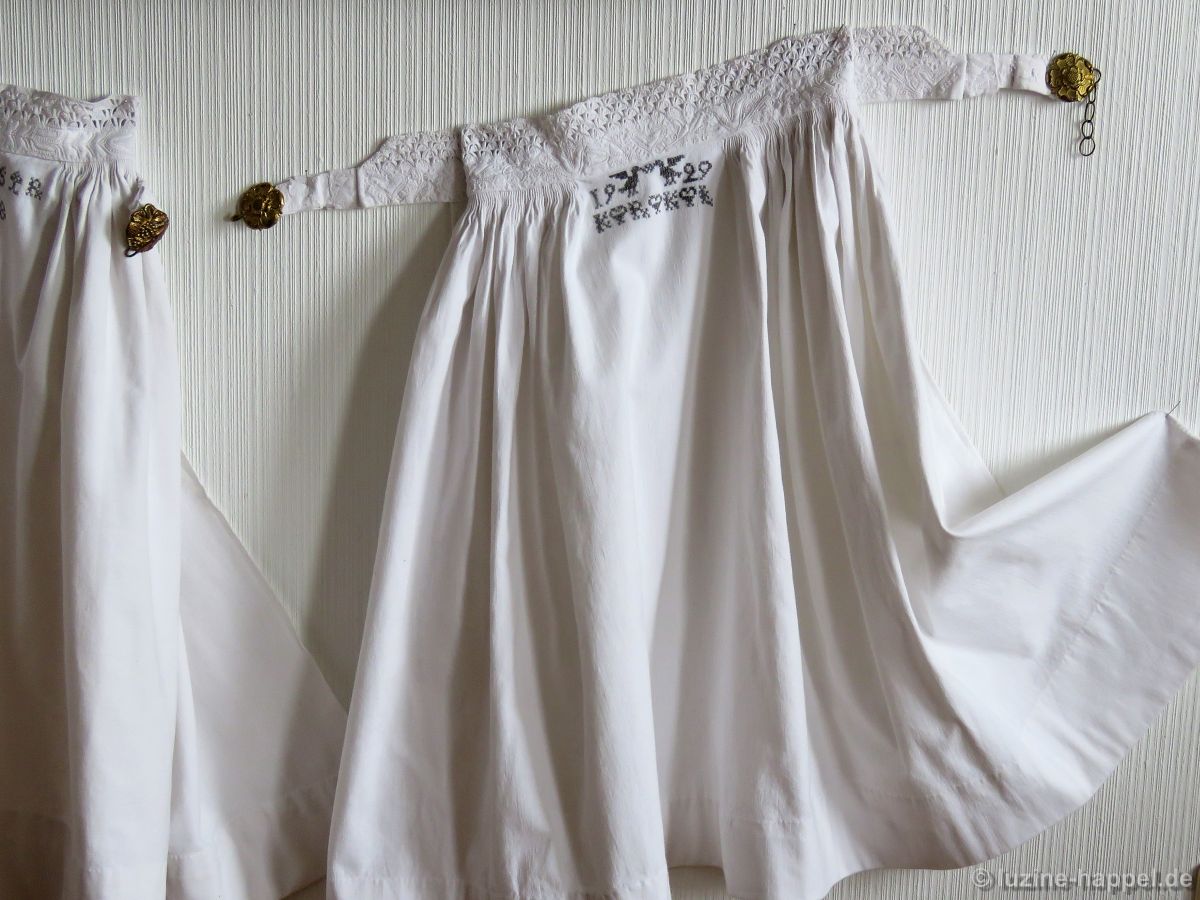
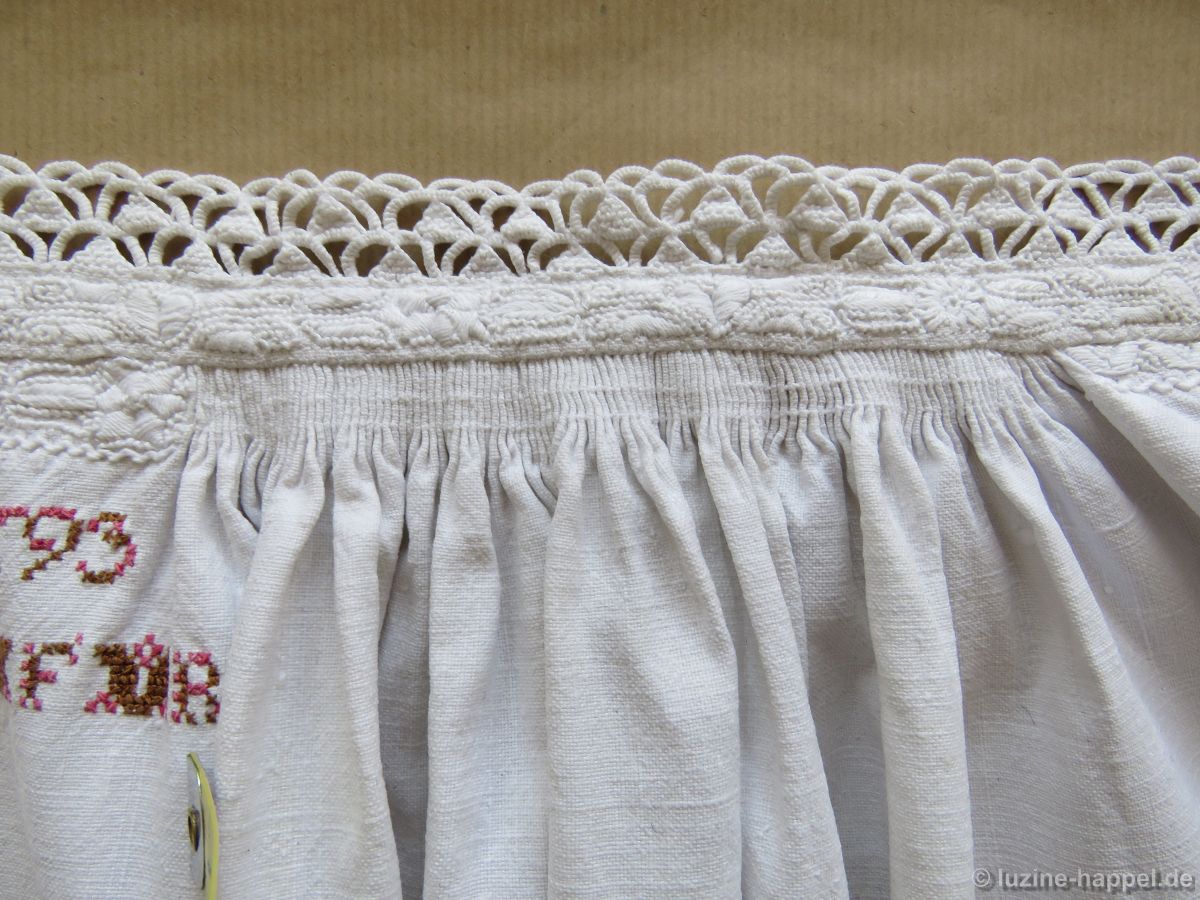
Although the basic construction of the white aprons was similar to the dark aprons, there were more elaborate details. For example, the two strips needed for the width of the apron were sewn together with a fancy seam.
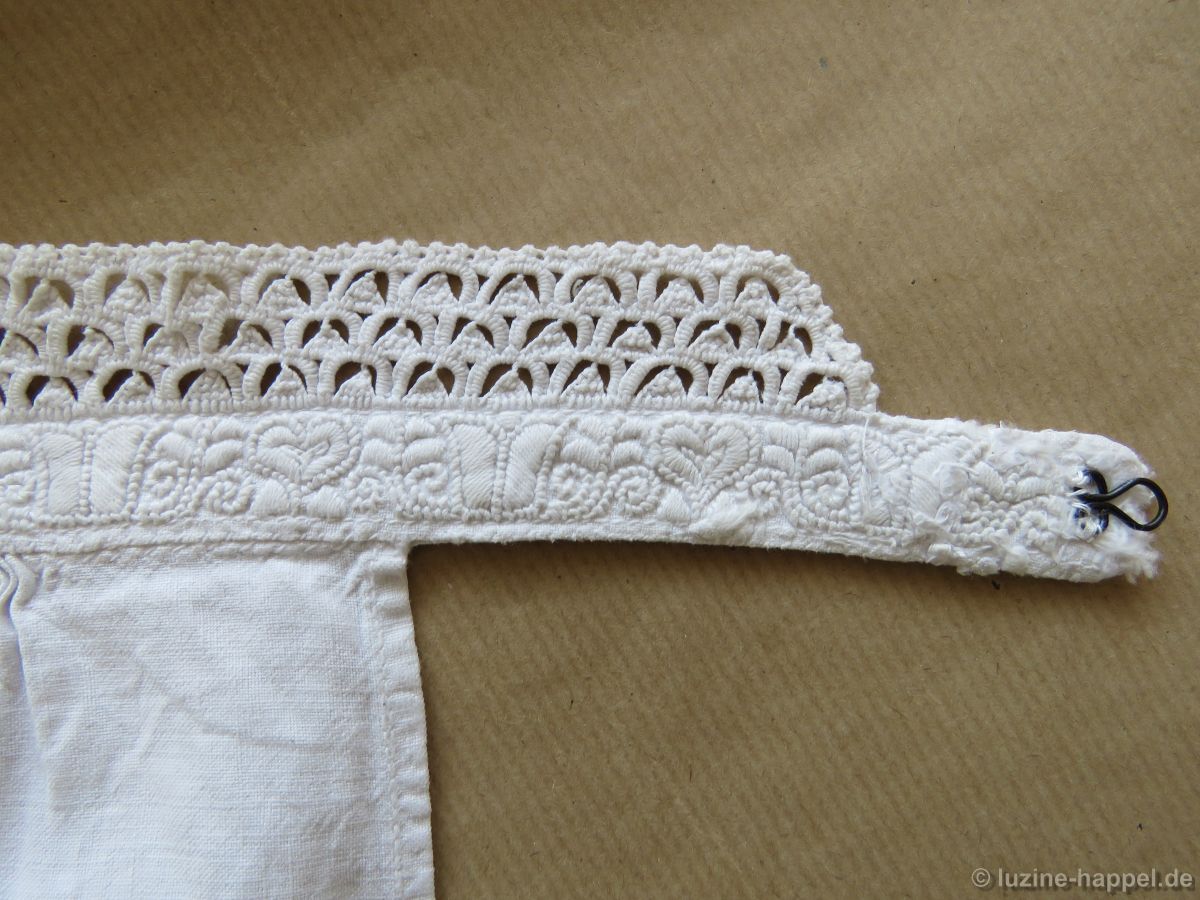
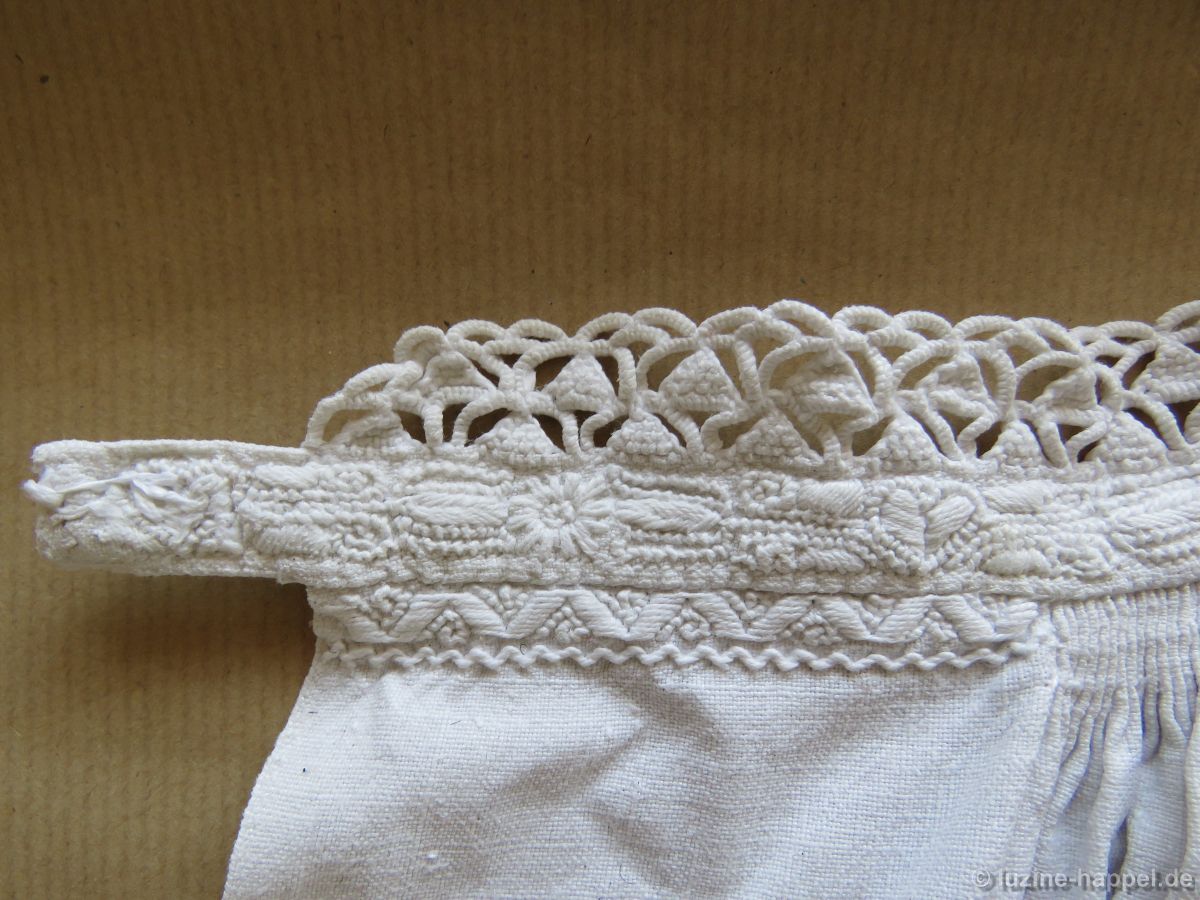
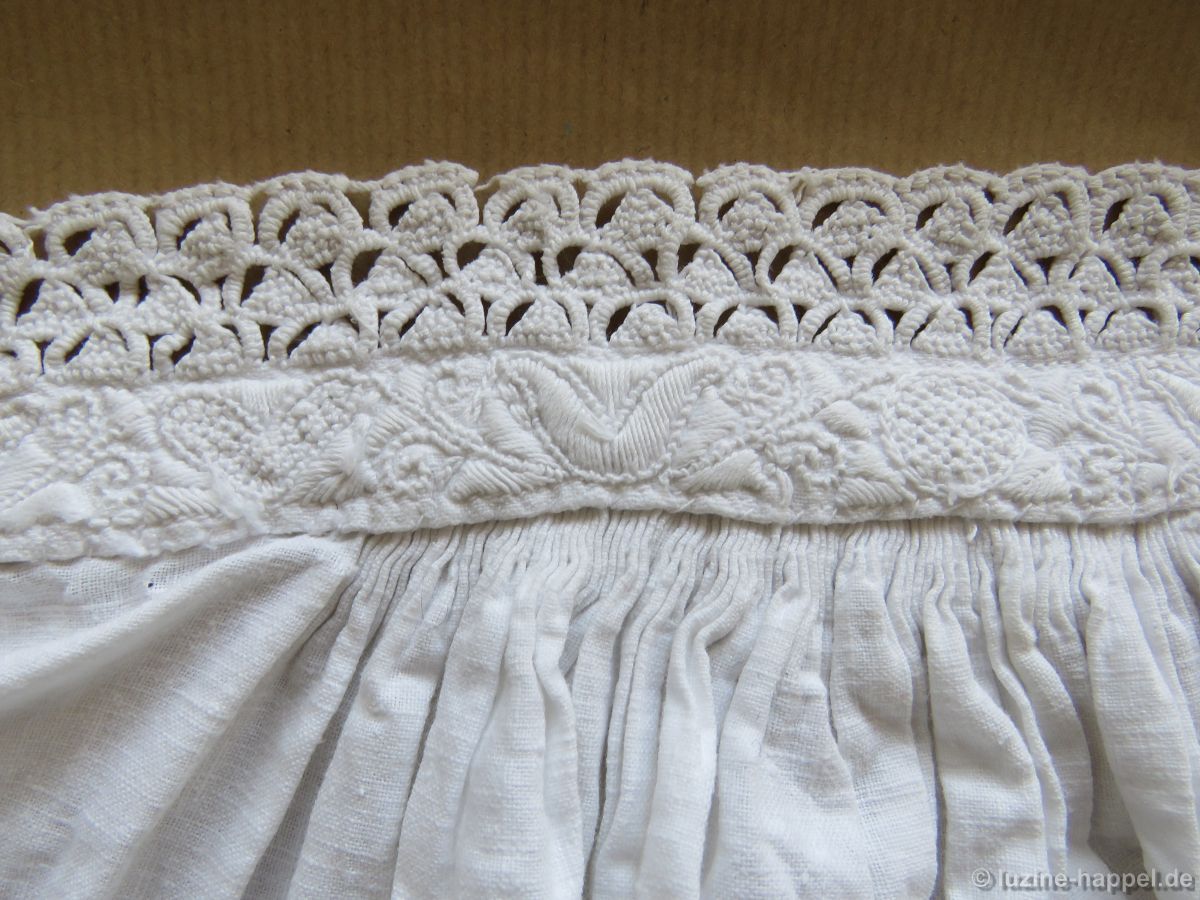
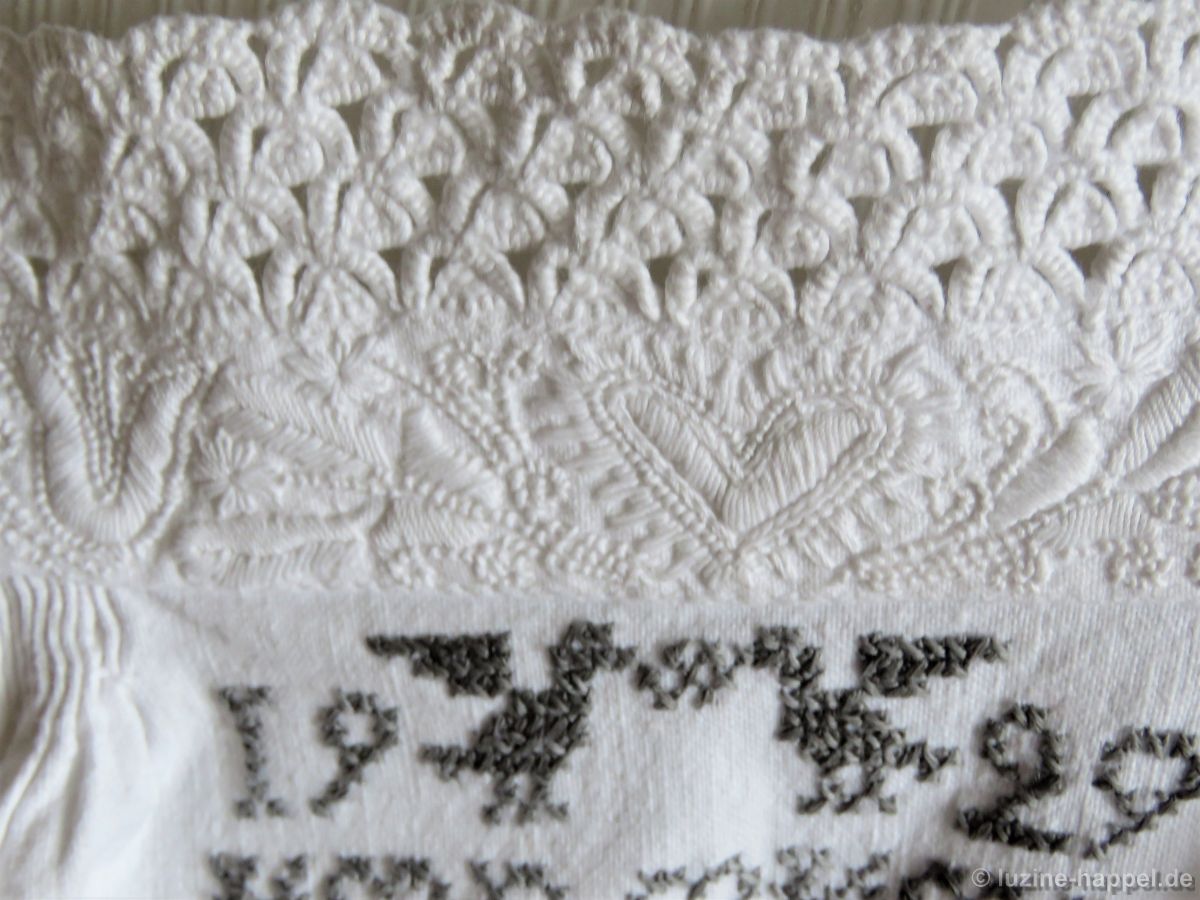
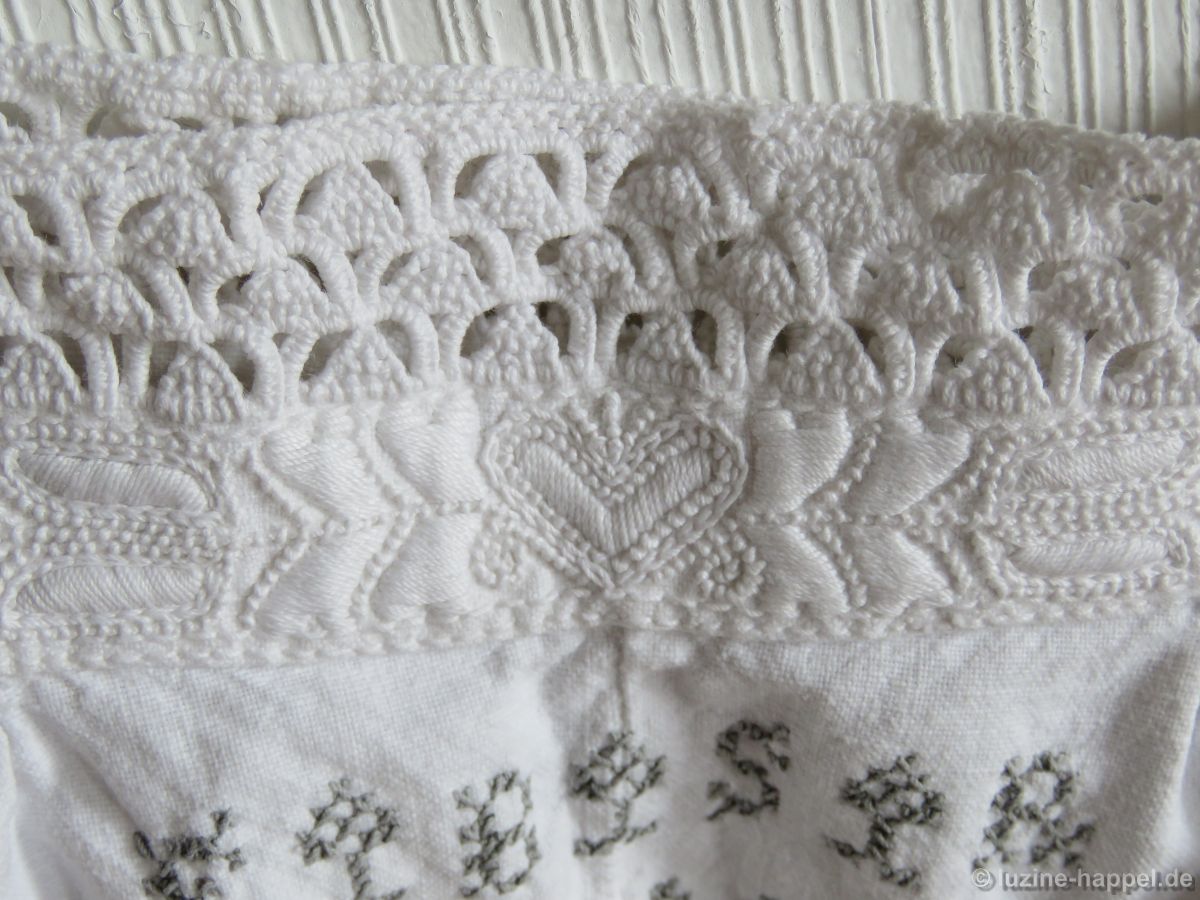
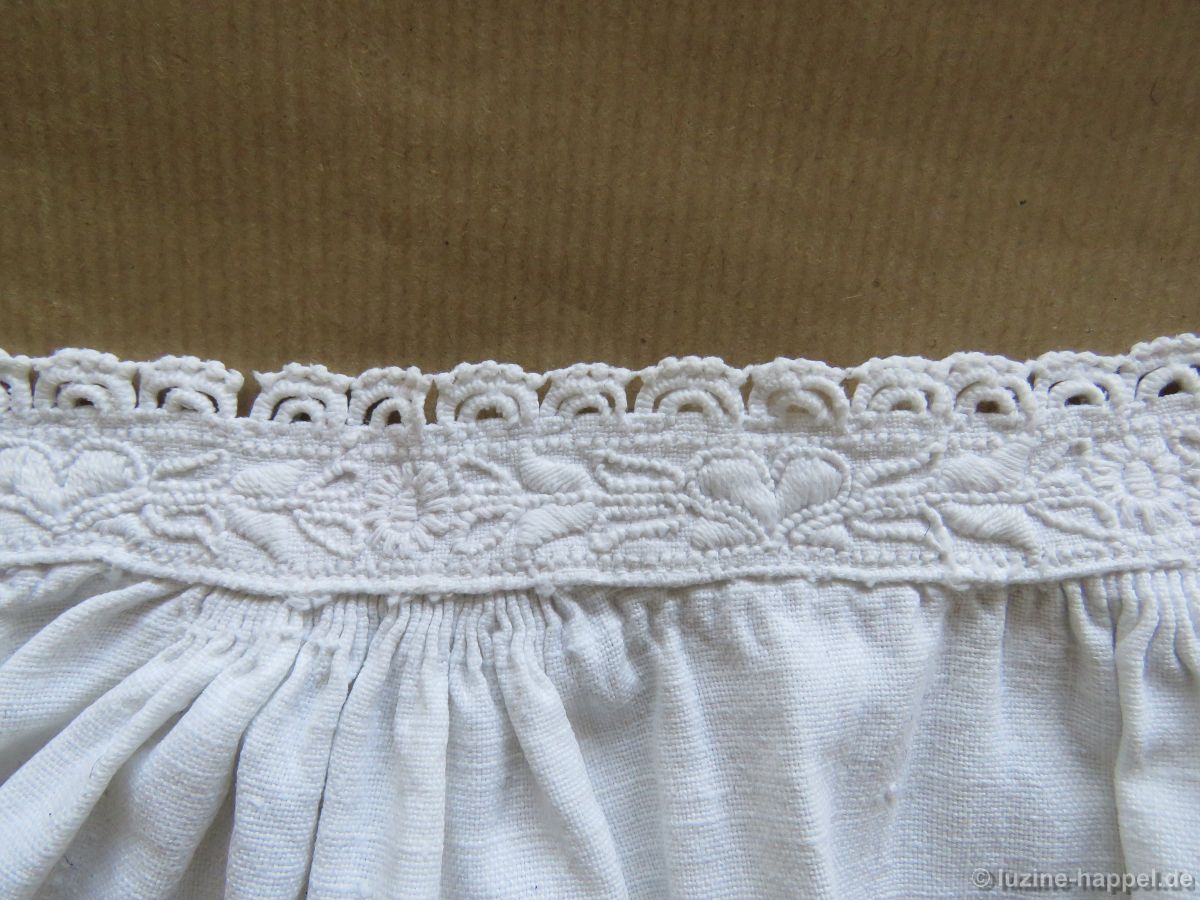
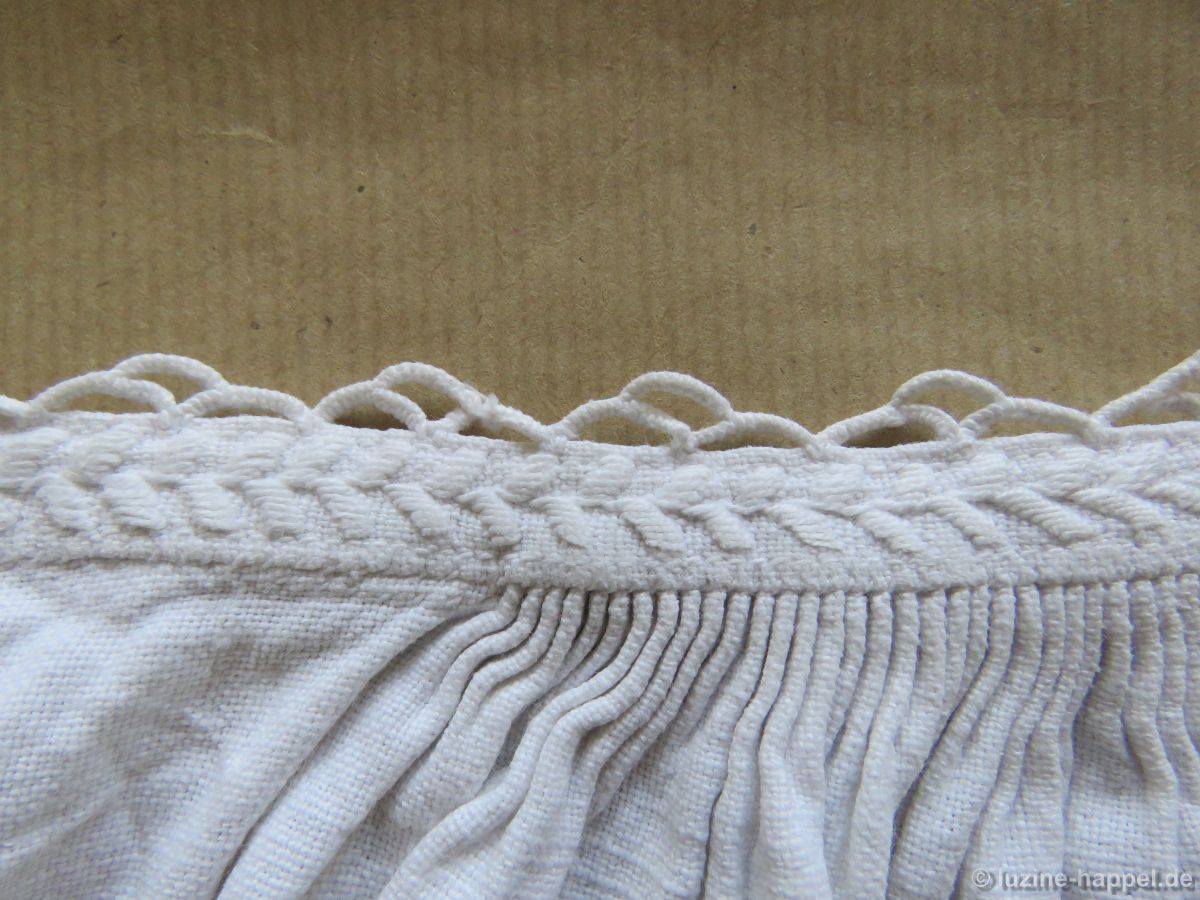
The aprons´ waistbands were embroidered with the finest whitework and additionally decorated with needlelace.
The hook-and-eye closure was covered with gold-plated clasps.
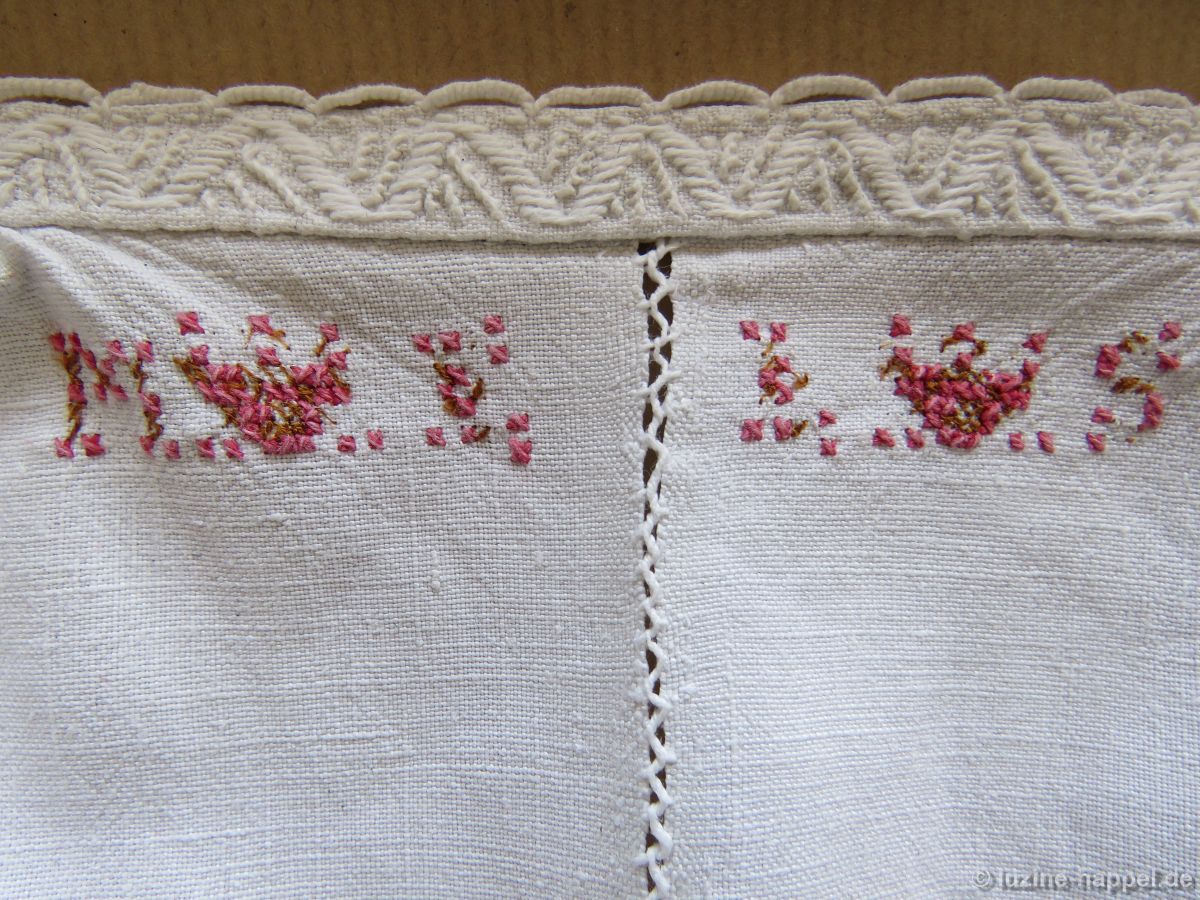
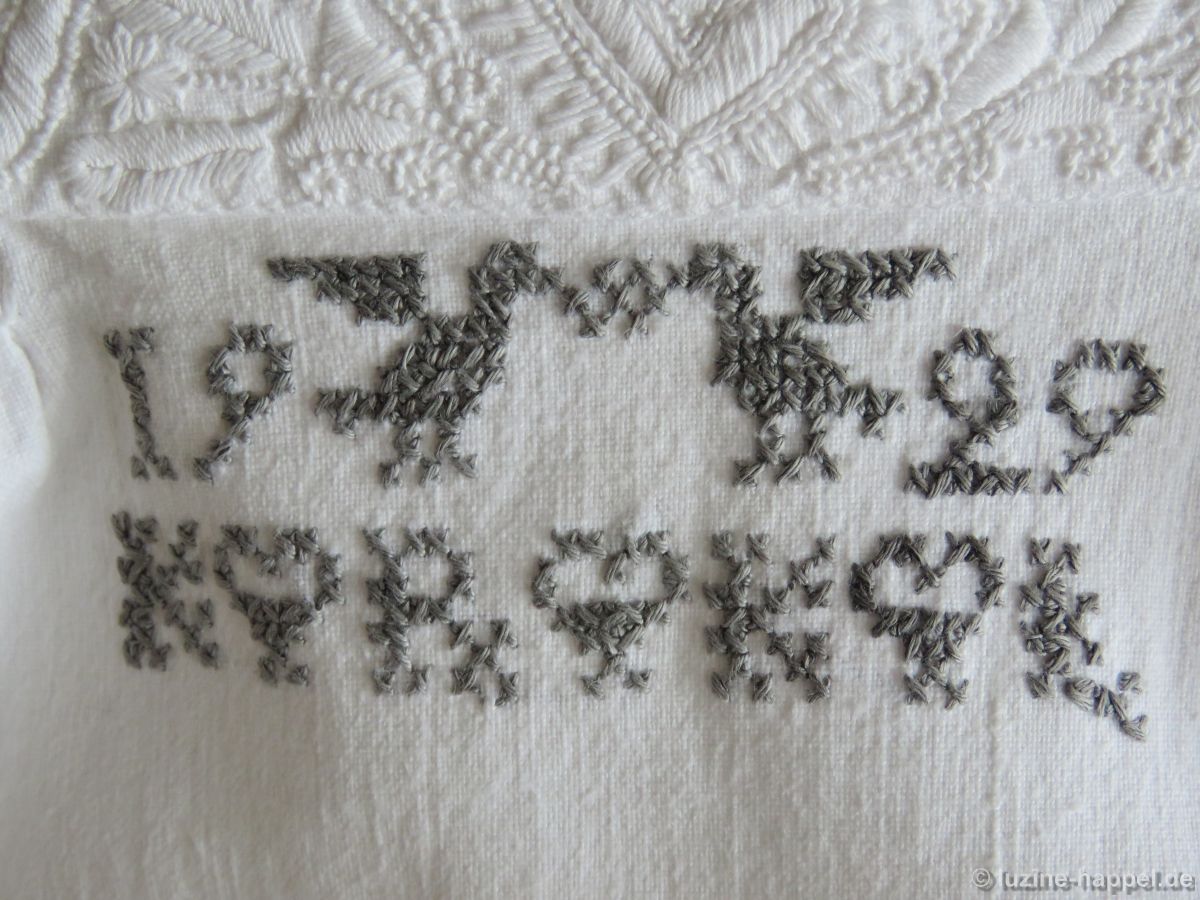
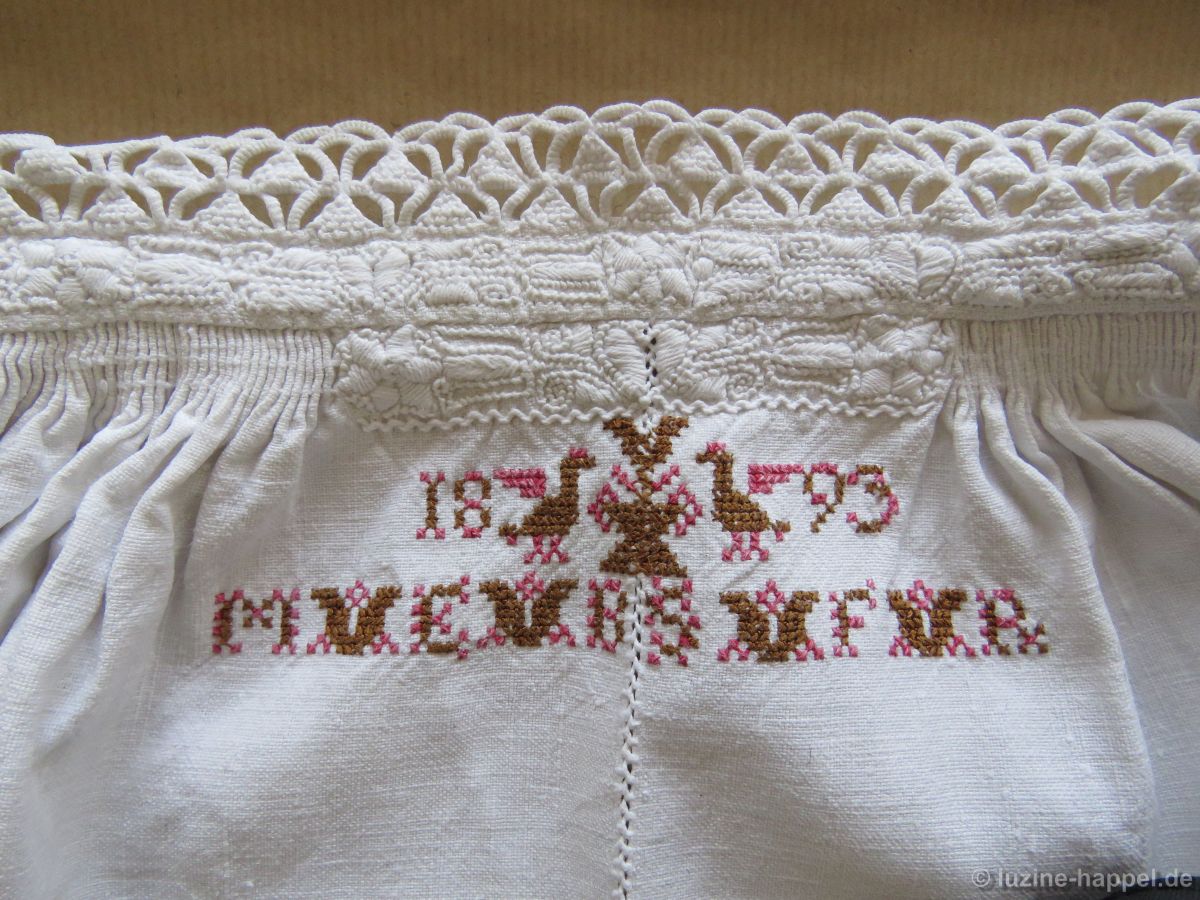
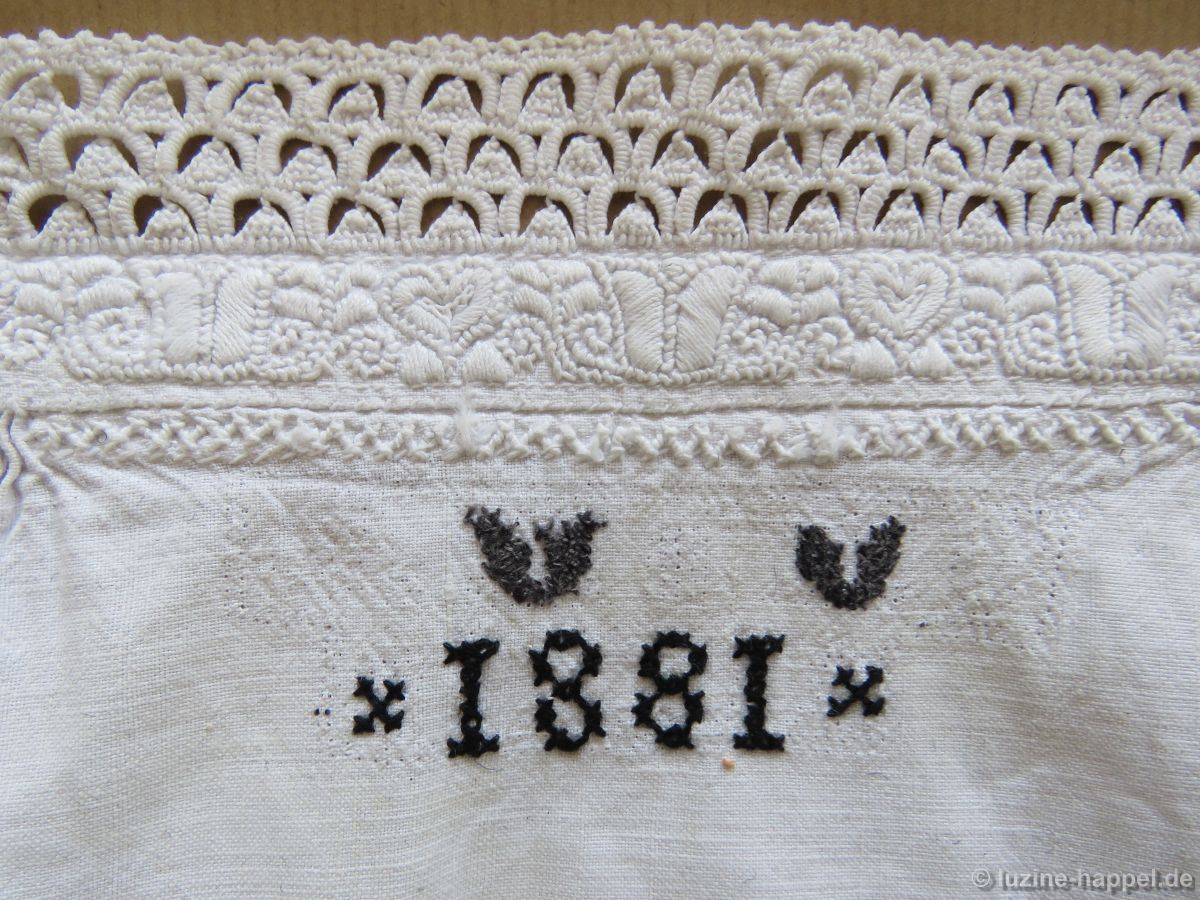
Often the initials of the owner and small ornaments were embroidered with Cross stitches on the flat middle sections at the waistlines of the aprons.
Sometimes the year was also added.
Especially magnificent examples had additional small whitework borders on the flat sections on both sides at the waistline
or on the flat middle section at the waistline.
Between the flat sections, the apron was gathered with tiny pleats.
There are aprons with withdrawn thread work
and some with patterns lying on top of the fabric, as seen below in the heart motif
and in the circle motif.
However, the most common were small borders embroidered with Satin stitches
in many different patterns,
and border patterns worked with Coral Knot stitches and Satin stitches.
A large number of small border designs can be found in my publication Schwalm Curved Lines, Narrow Borders, and Ornamental Stitches.
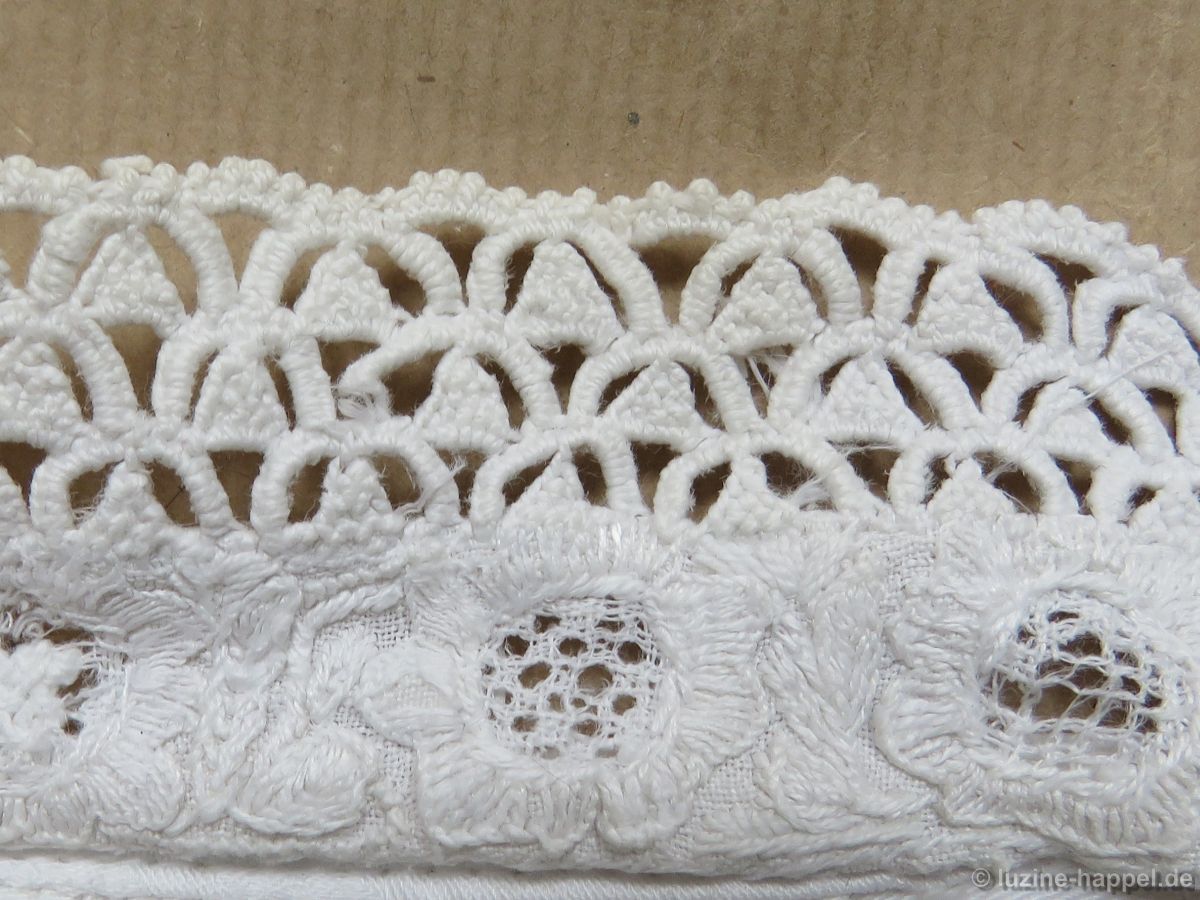
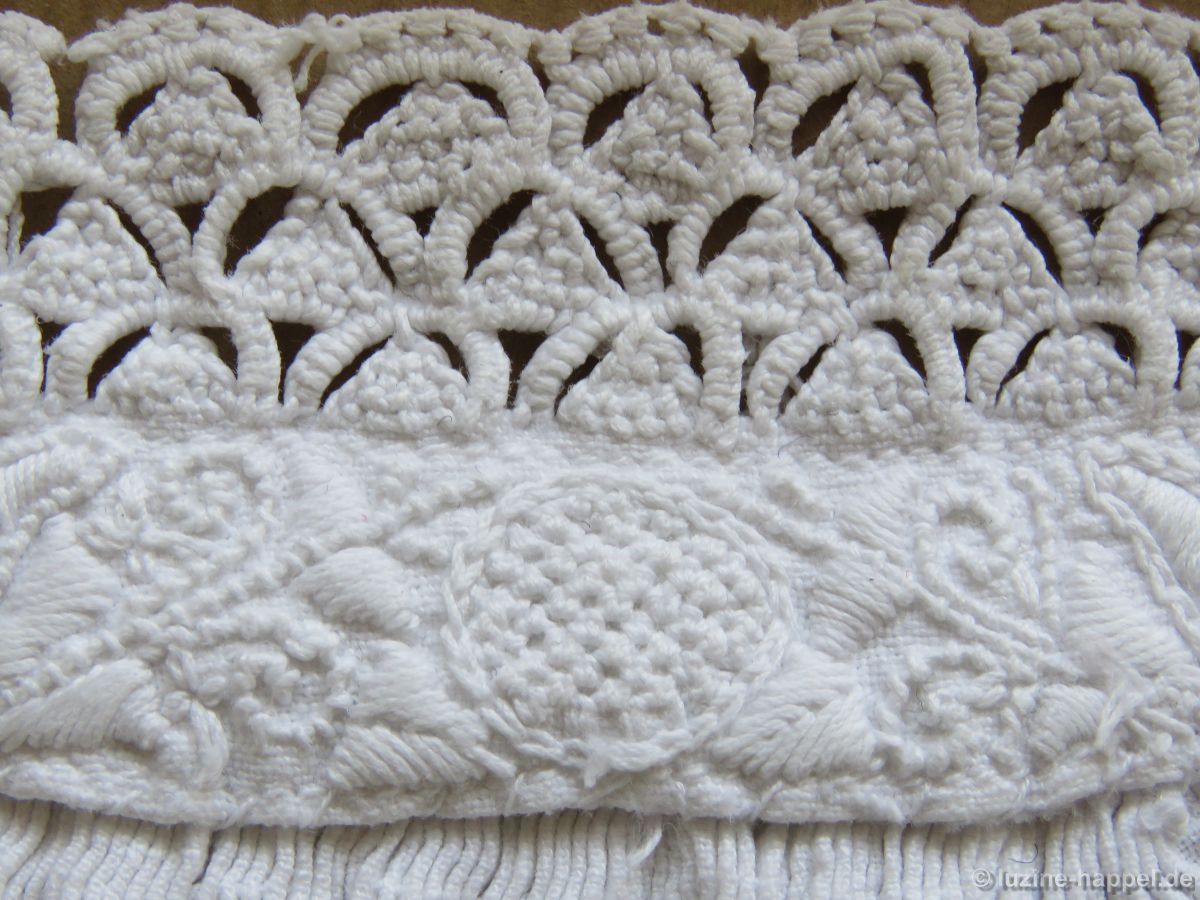
The needlelace was also worked differently and elaborately.
Besides very simple examples,
multirow needlelace with pyramids and different picots were worked. One can find detailed instructions for working needlelace scallops, needlelace pyramids, and picots in my publication Schwalm Needlelace edge decorations – easily embroidered.
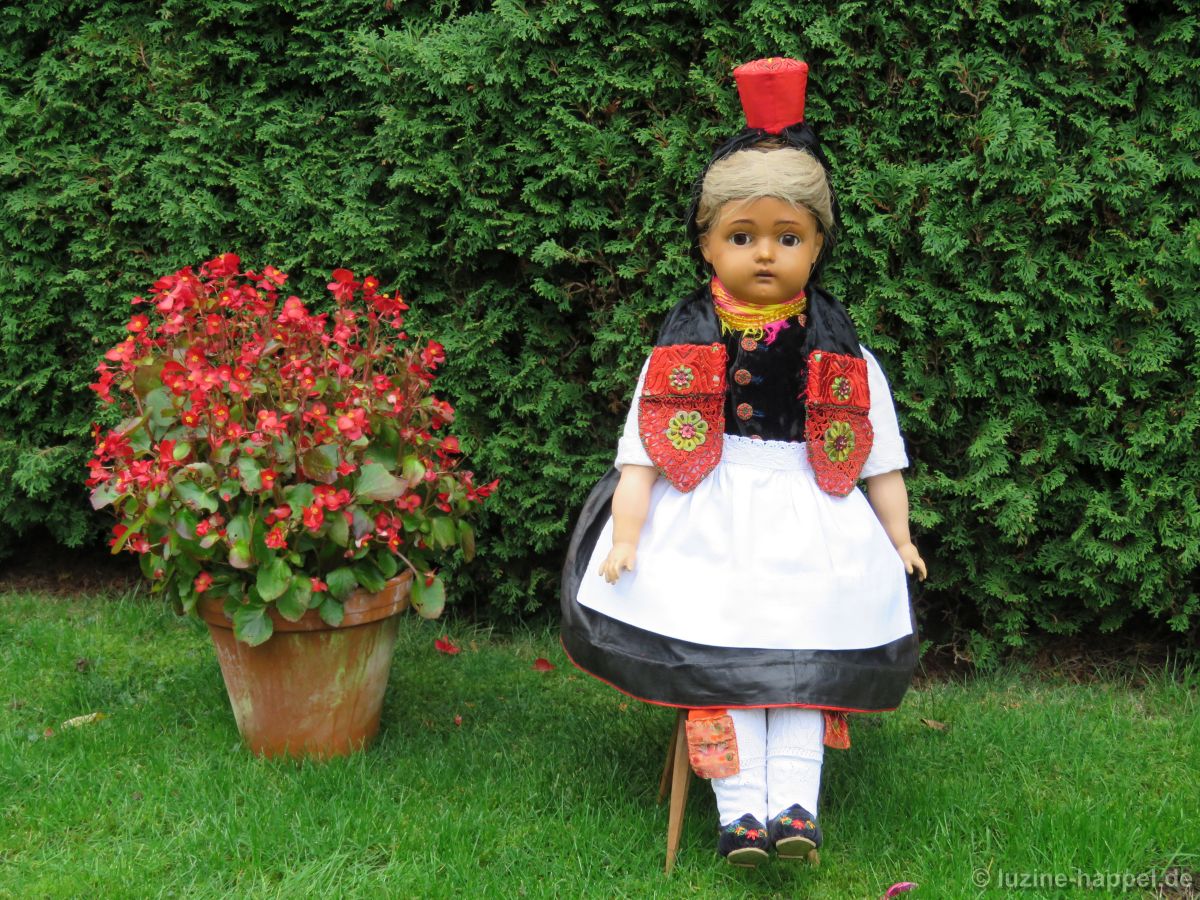
And finally, the costume consisting of the neat white apron, the black skirts, the black waistcoat, the white bodice, the red bottom edges of the skirts, and the red caps became very wellknown in the world as Little Red Riding Hood’s costume.

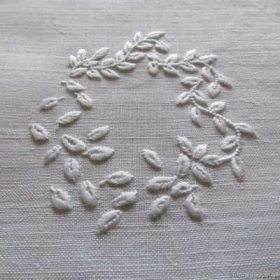
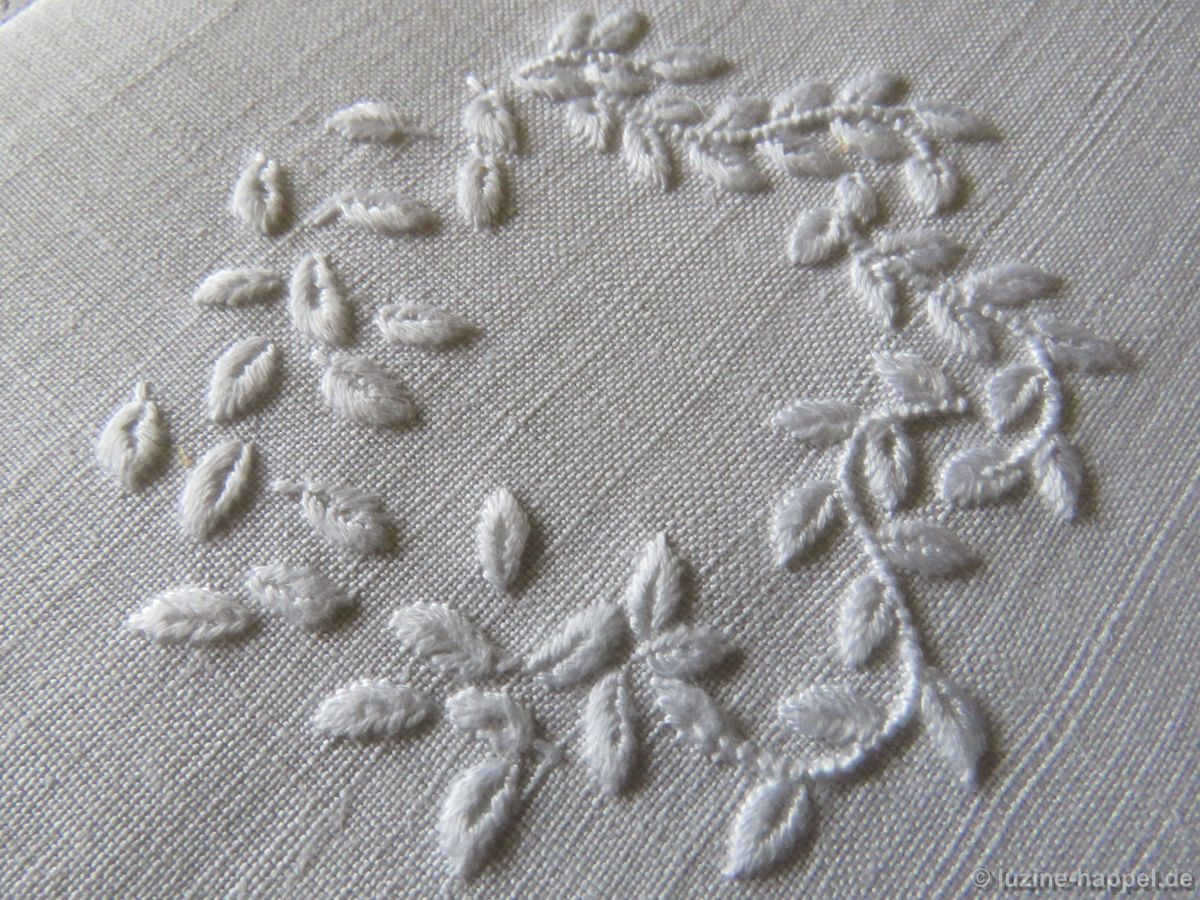
Autumn leaves drift from trees and bushes.
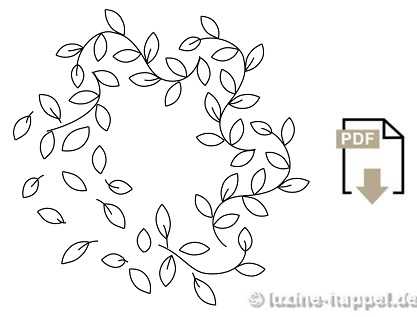
My narrow autumn wreath also gets into a muddle.
The once orderly wreathed sprigs
lose their leaves, and these flutter away.
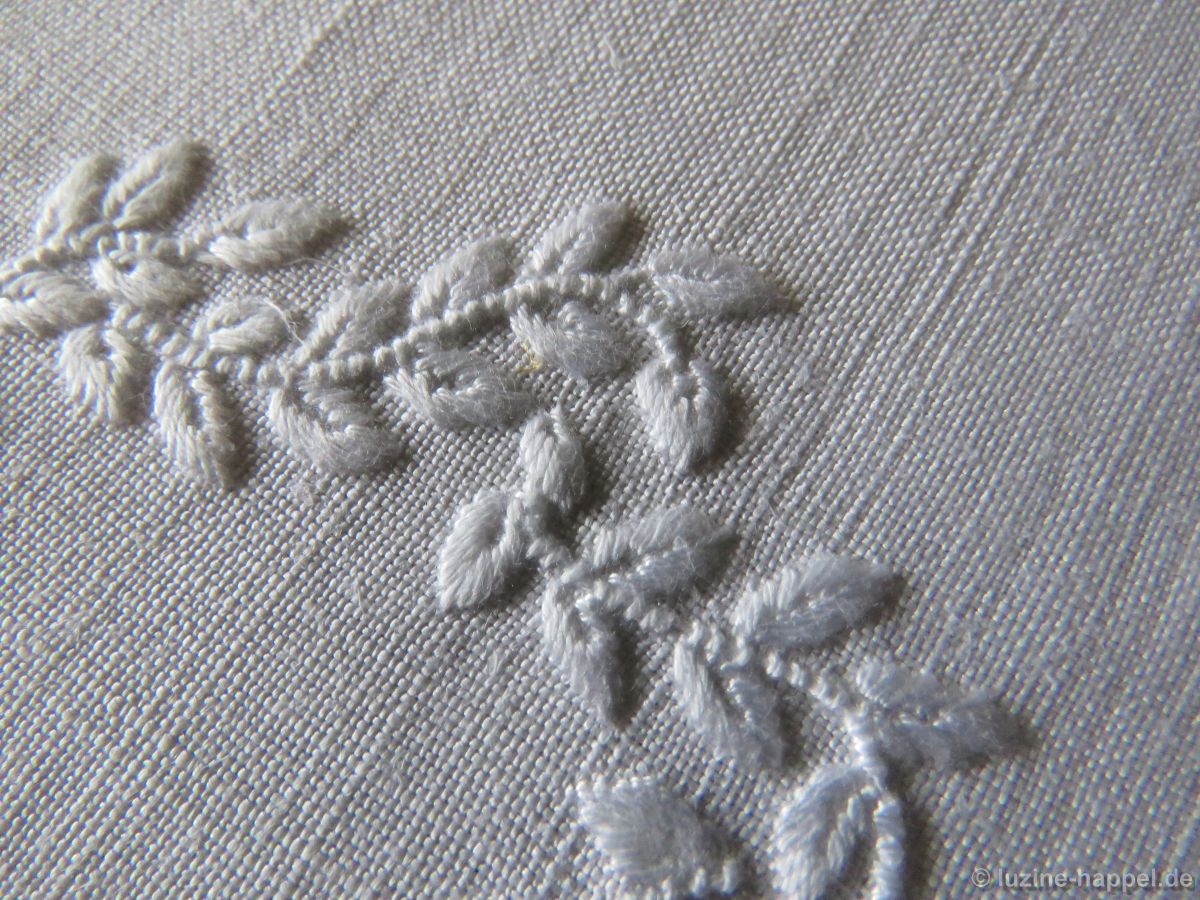
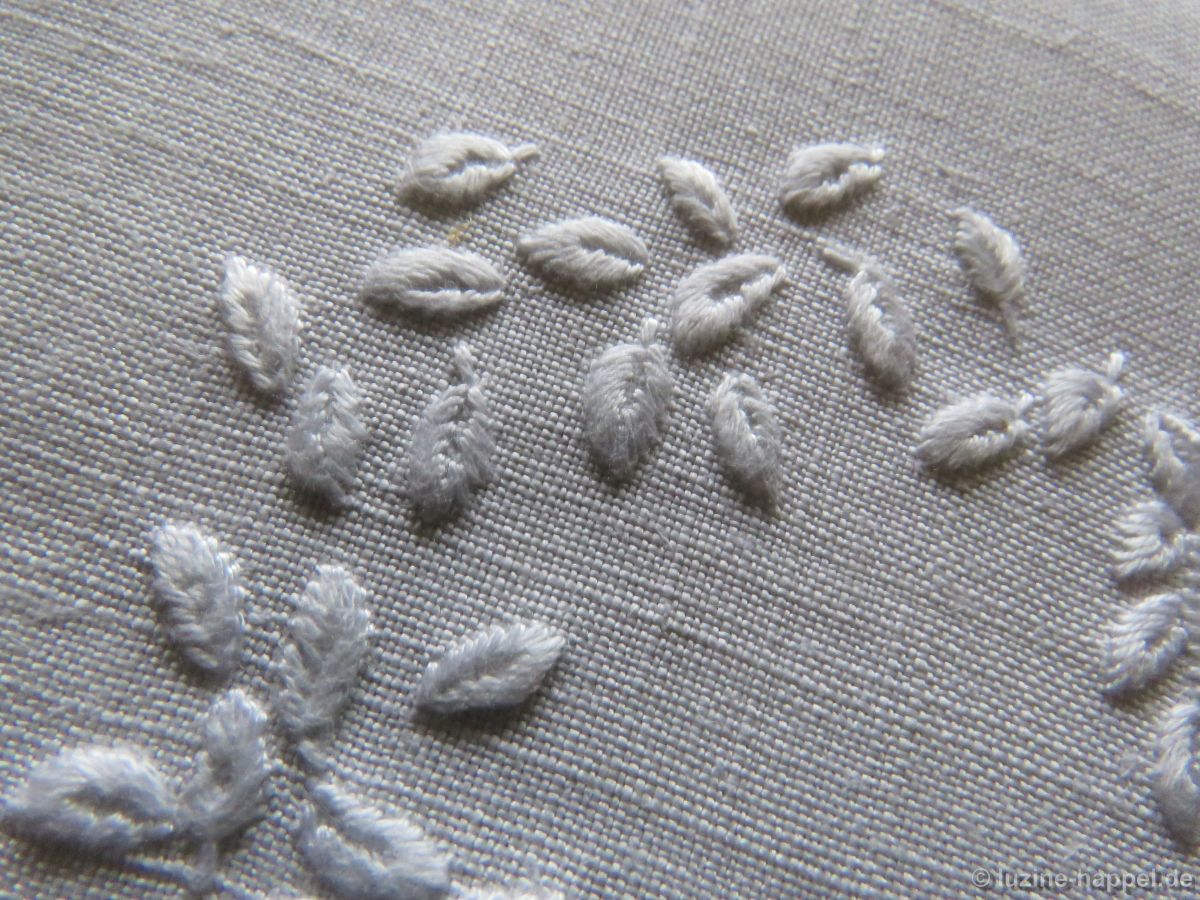
This seasonal exercise, designed by the artist Gudrun Hartwig, is perfect for practicing small pointed leaves.