A Schwalm Spiral – a chain of repeating elements (1)   

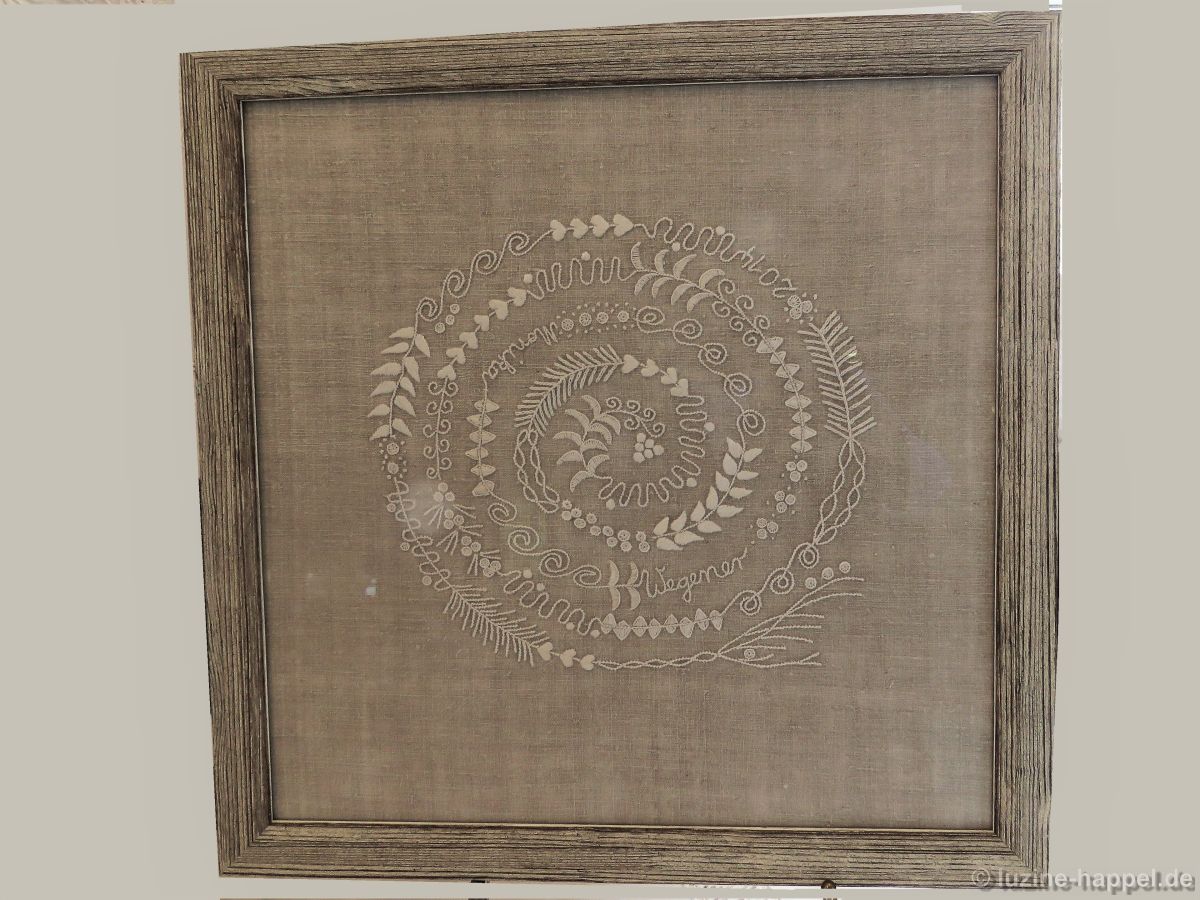
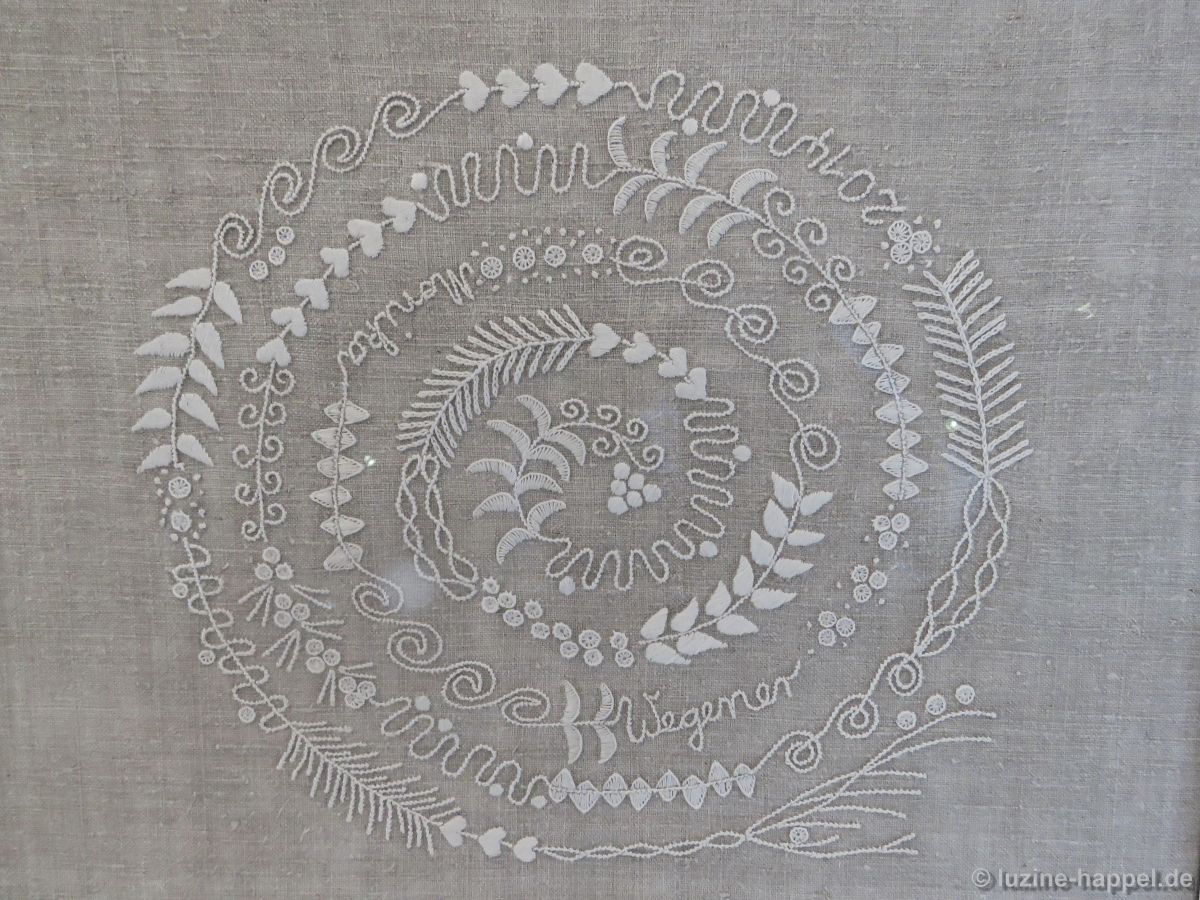
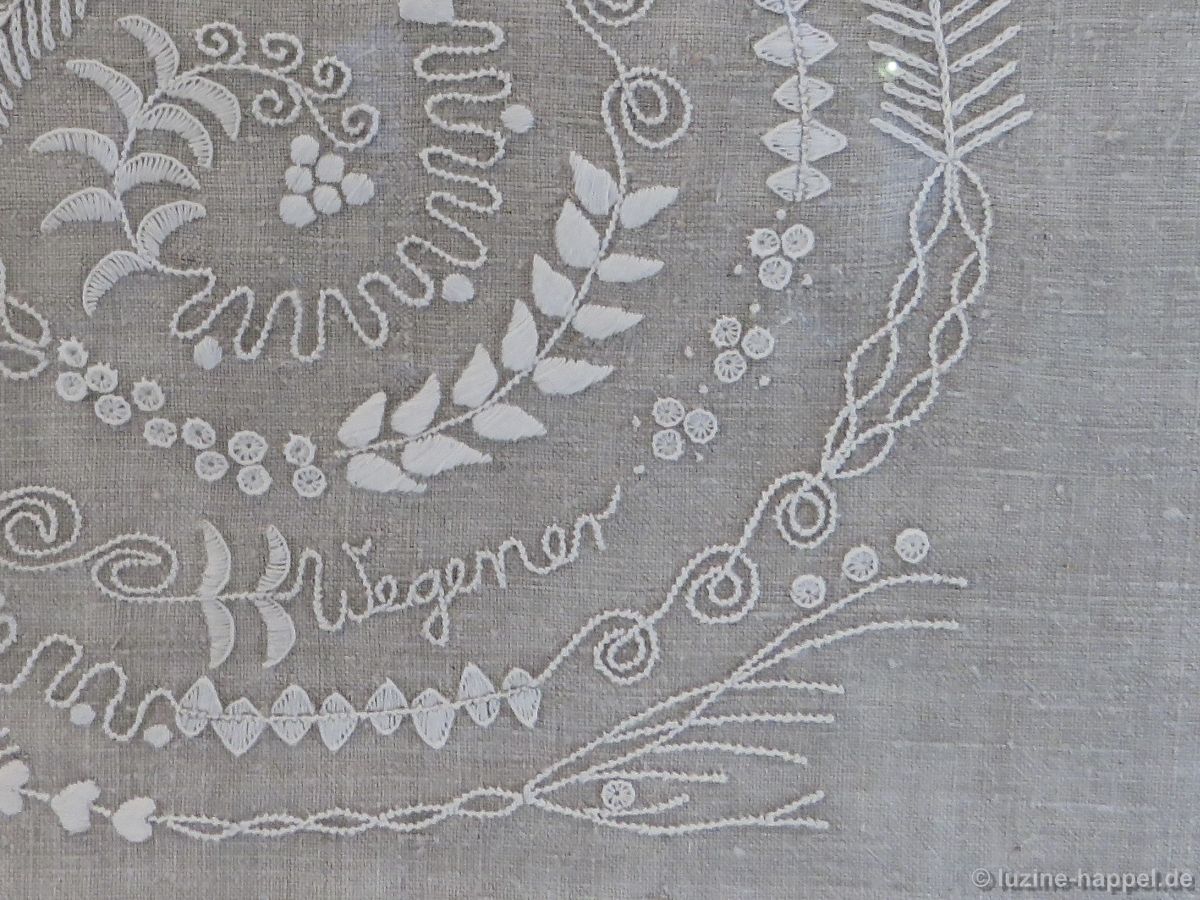
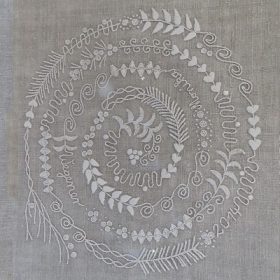
Beside snail shells spirals can be seen in a variety of different places. Herta Schneider got the idea to use the spiral as a focal point for a design that incorporates small elements of Schwalm whitework to fill the areas between the big motifs. She “strung” these elements on a thread and laid the finished “chain” into a spiral.

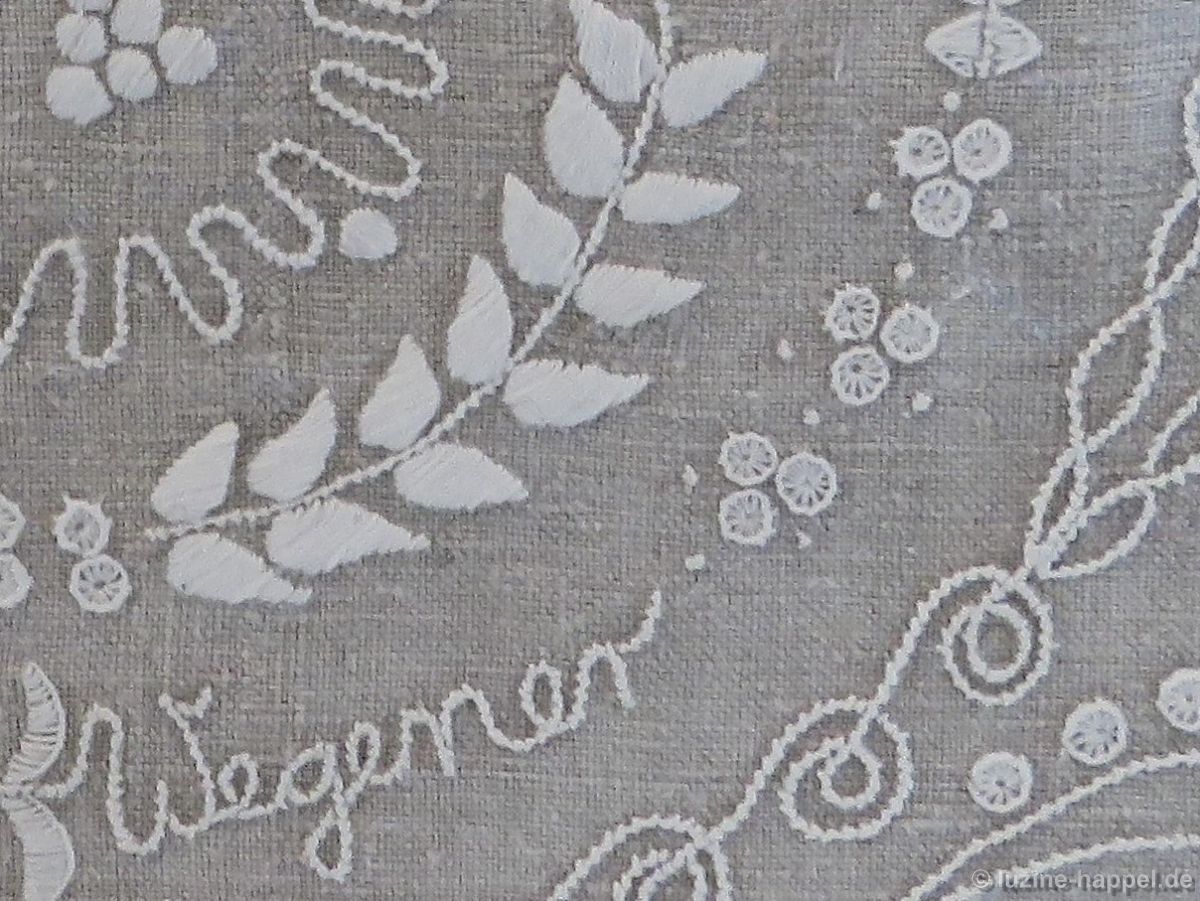
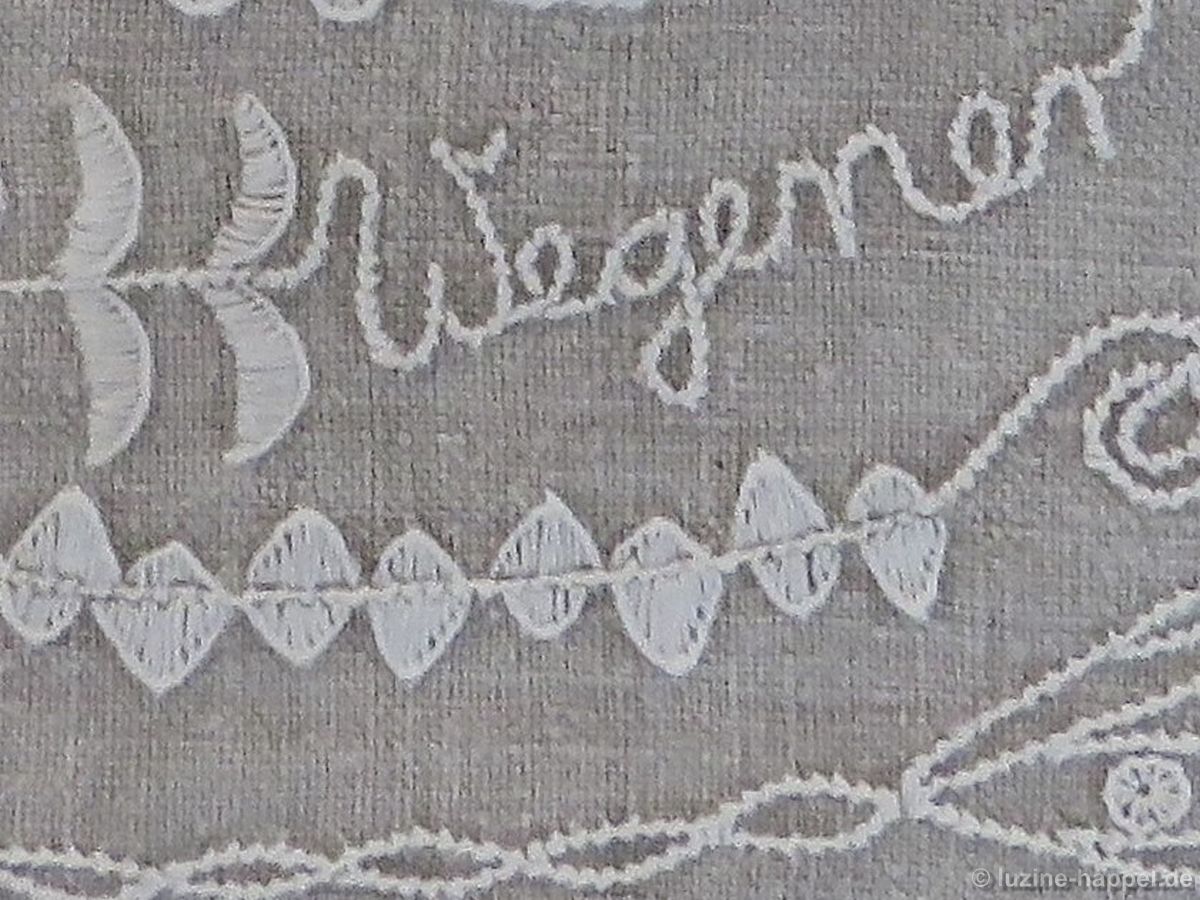
Monika Wegener bought a design drawing from Herta Schneider and embroidered such a spiral. Her name and the year gracefully flow along the curved lines.

In addition to Blanket stitch eyelets many small leaves can be found – pointed and undivided

or pointed and curved.

Small hearts alternate with tendrils.

Knife points with Blanket stitches are also found.

I think this project not only turned out very nicely but was also a good way to practice small elements used in Schwalm whitework.

Snail Shells (2)

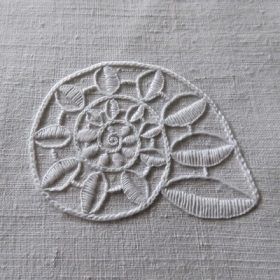
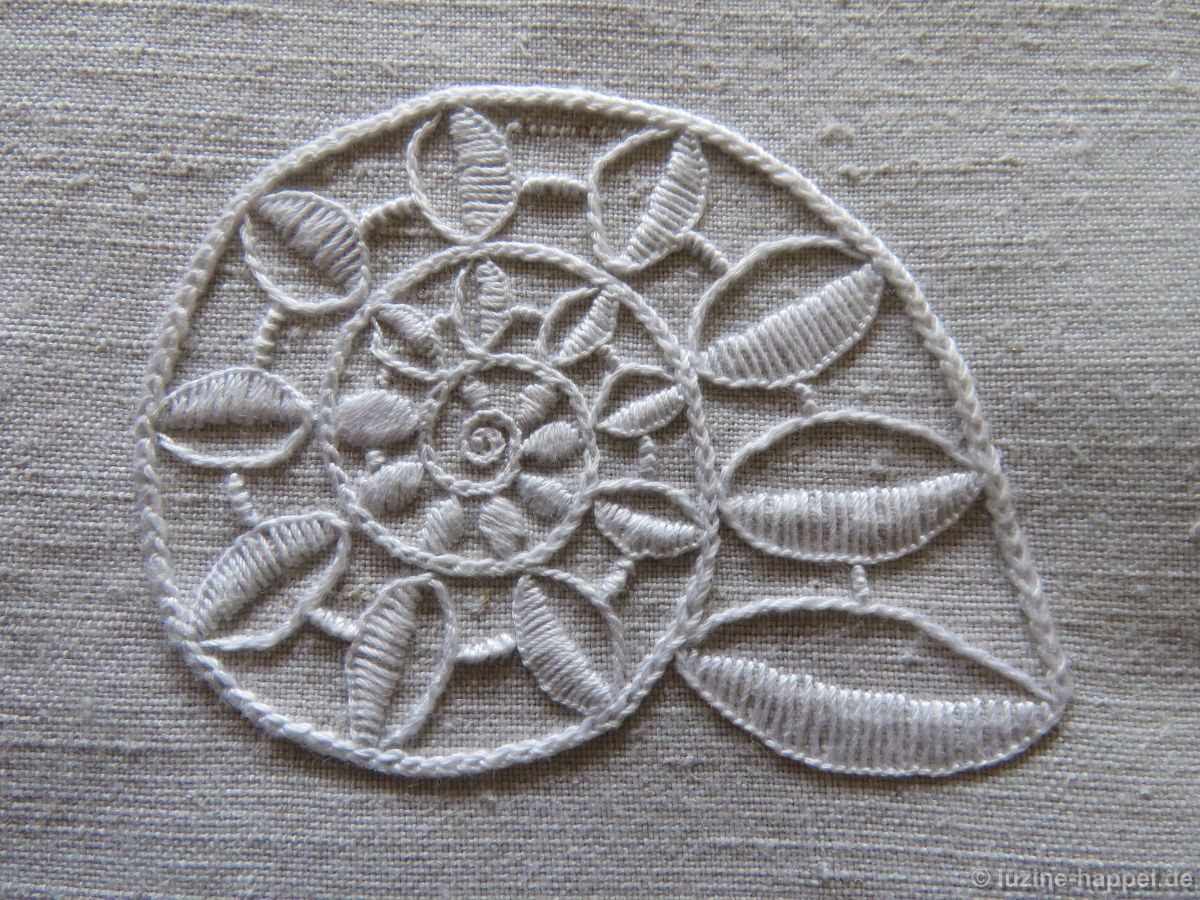
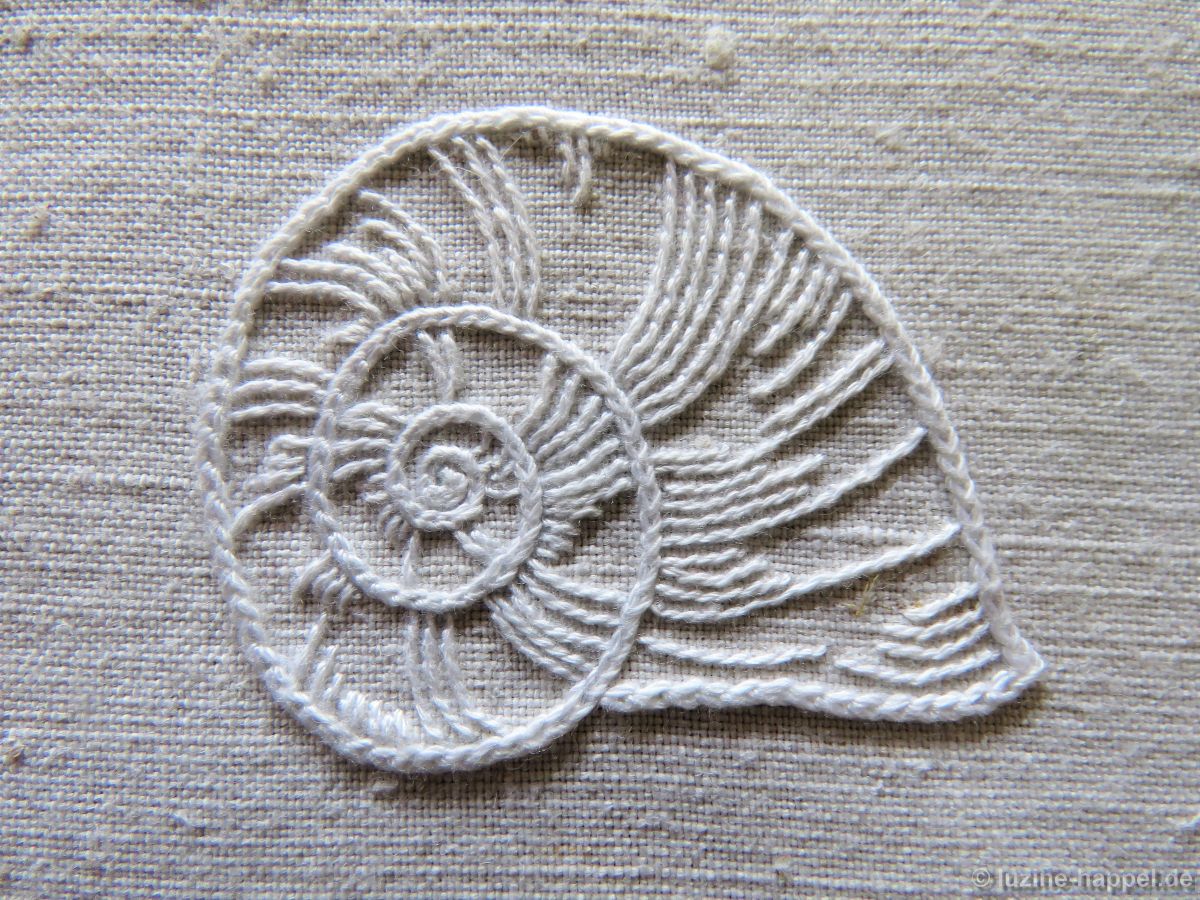
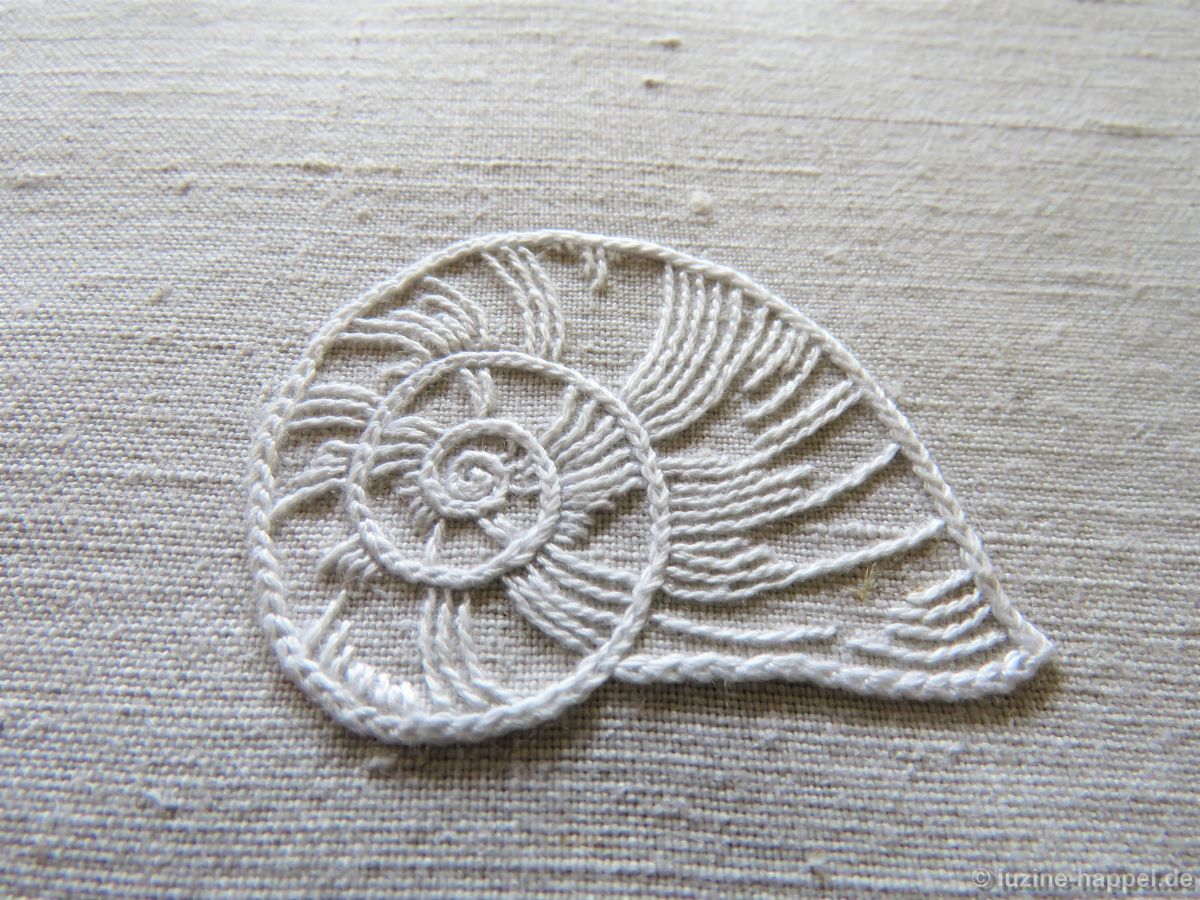
The second snail shell is a little bit larger then the first. It was also designed by the artist Gudrun Hartwig.

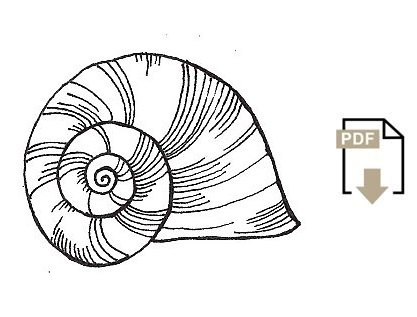
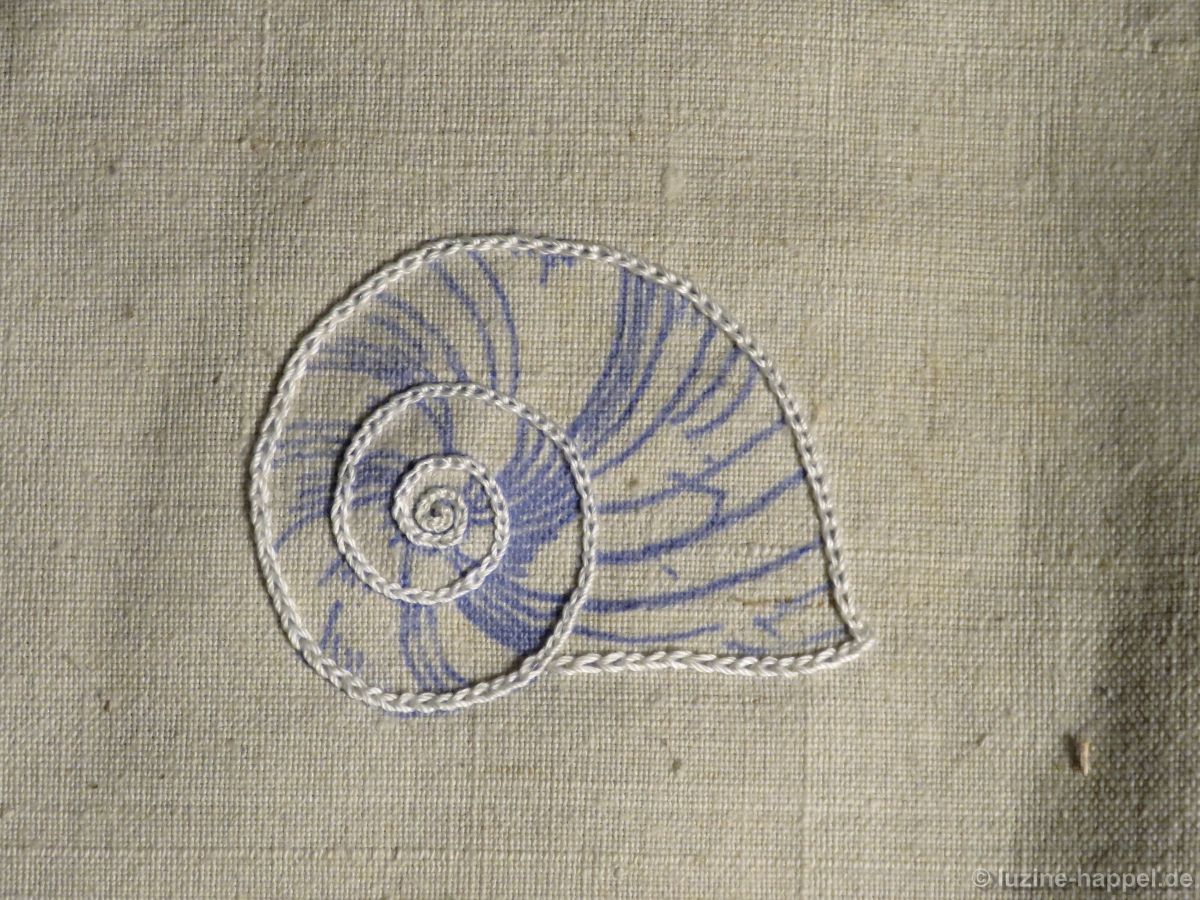
Here is the design:

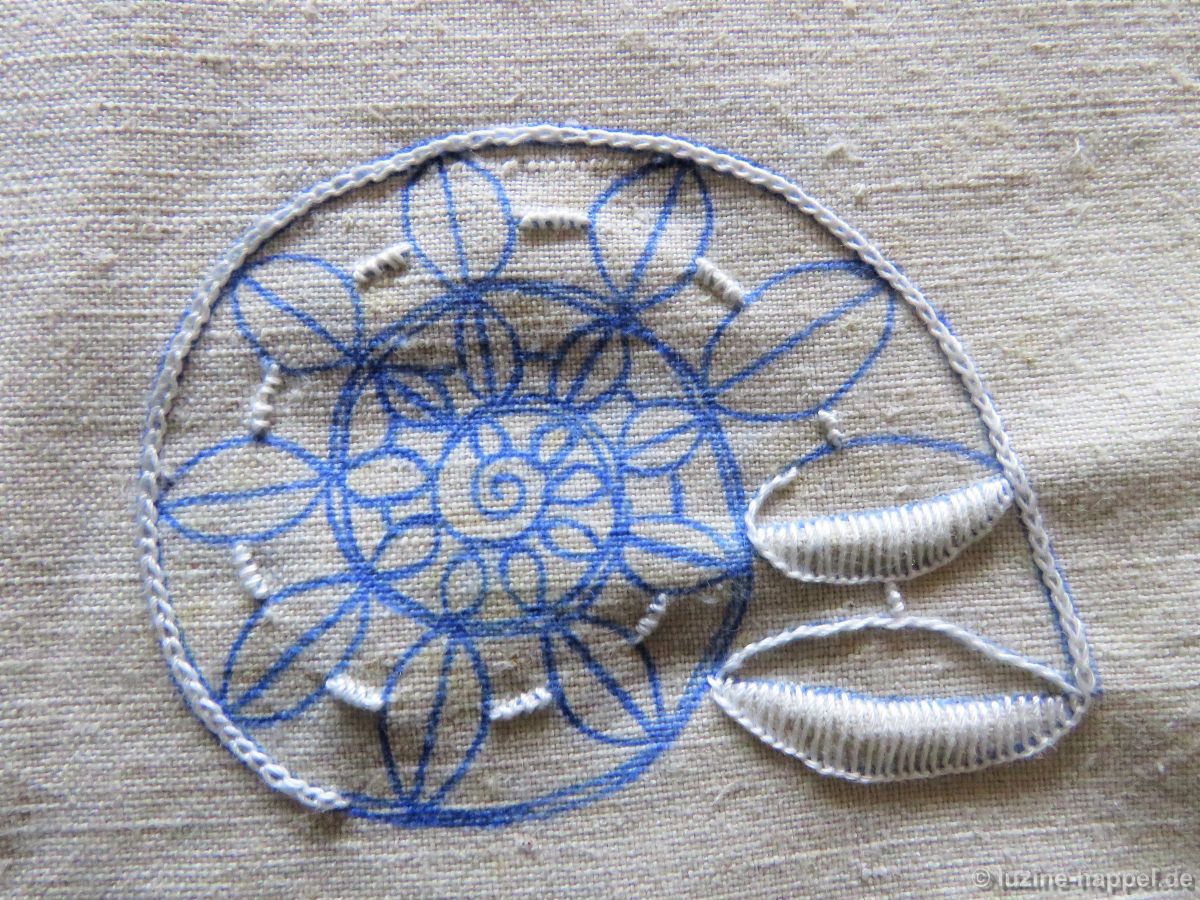
Transferring the design one should keep in mind that it does not appear mirrored. The spirals of snail shells always turn counterclockwise.

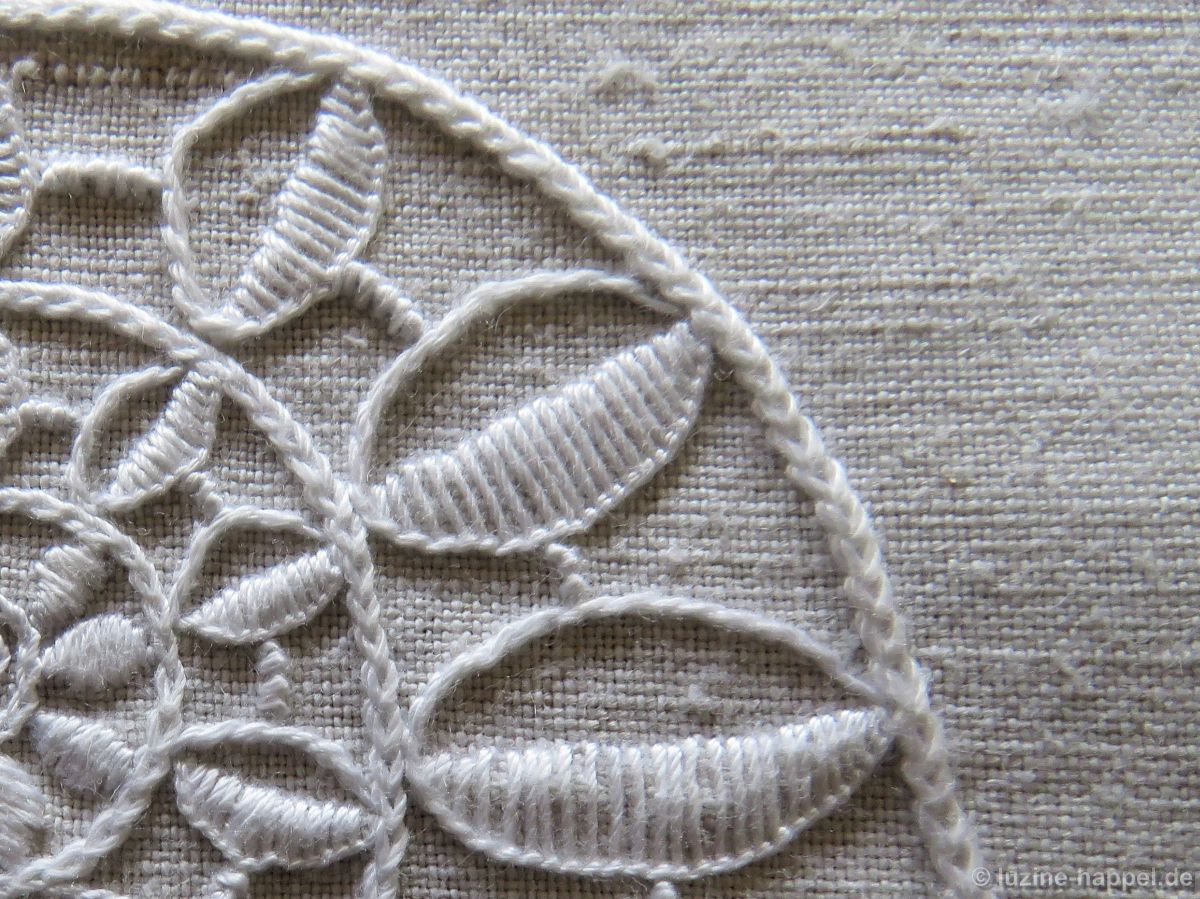
Starting on the outside, I embroidered Chain stitches along the double spiral line. Coral Knot stitches were worked along the single spiral line.

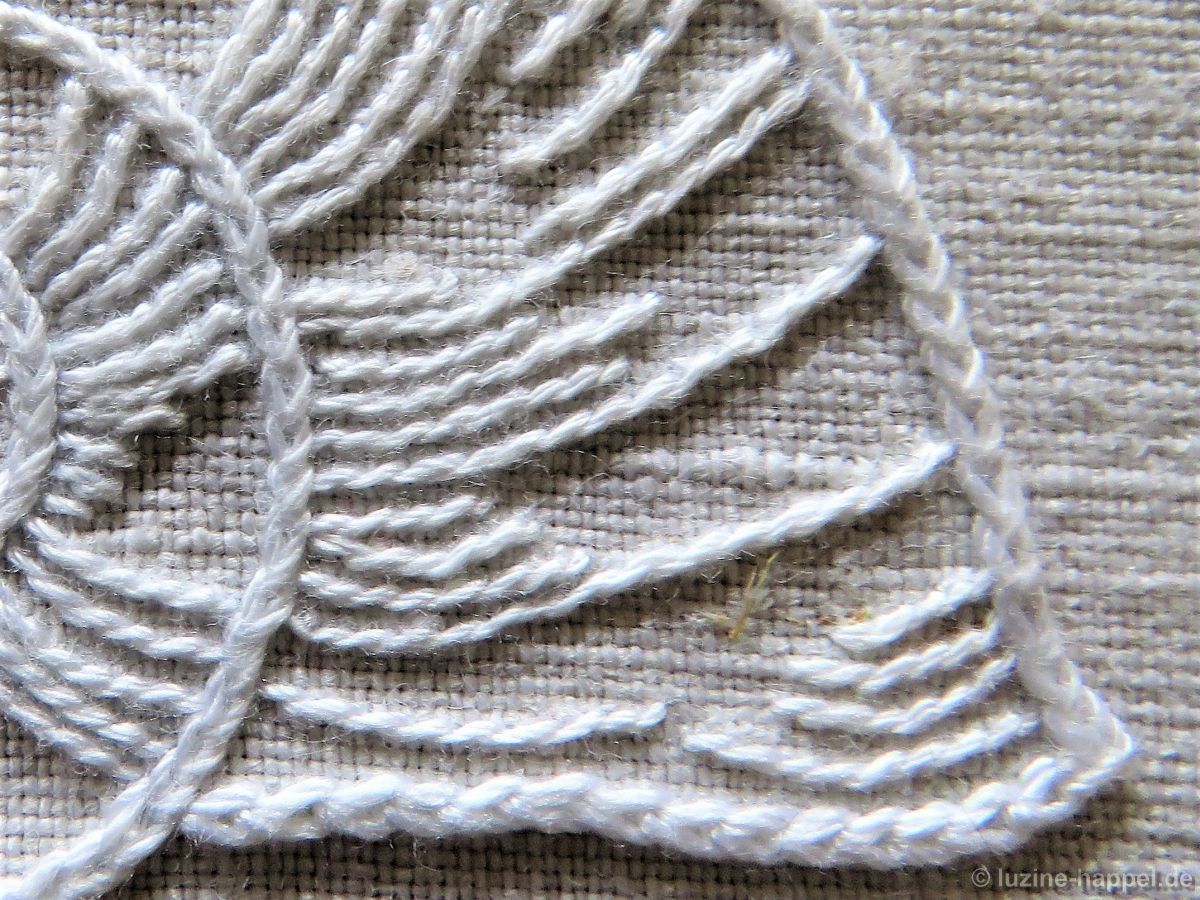
Blanket stitches were worked over one half of the two-part elements. The mirrored halves were simply outlined with Stem stitches.

The undivided elements near the center were covered with Satin stitches.

This snail shell is also a suitable addition to a sampler.

Snail Shells (1)

Tendrils are a common and important design element. They are symbols of life cycles and stand for changes and transition.

Our lives are changing enormously at the moment.

The spiral of the snail shell reminds one of the spirals of tendrils.
Snails retreat into their homes in case of danger and do not stretch their feelers again until the threat seems to be over.

So what could be more perfect today than to embroider snail “houses.”
The artist Gudrun Hartwig drew different snail shell designs for me.

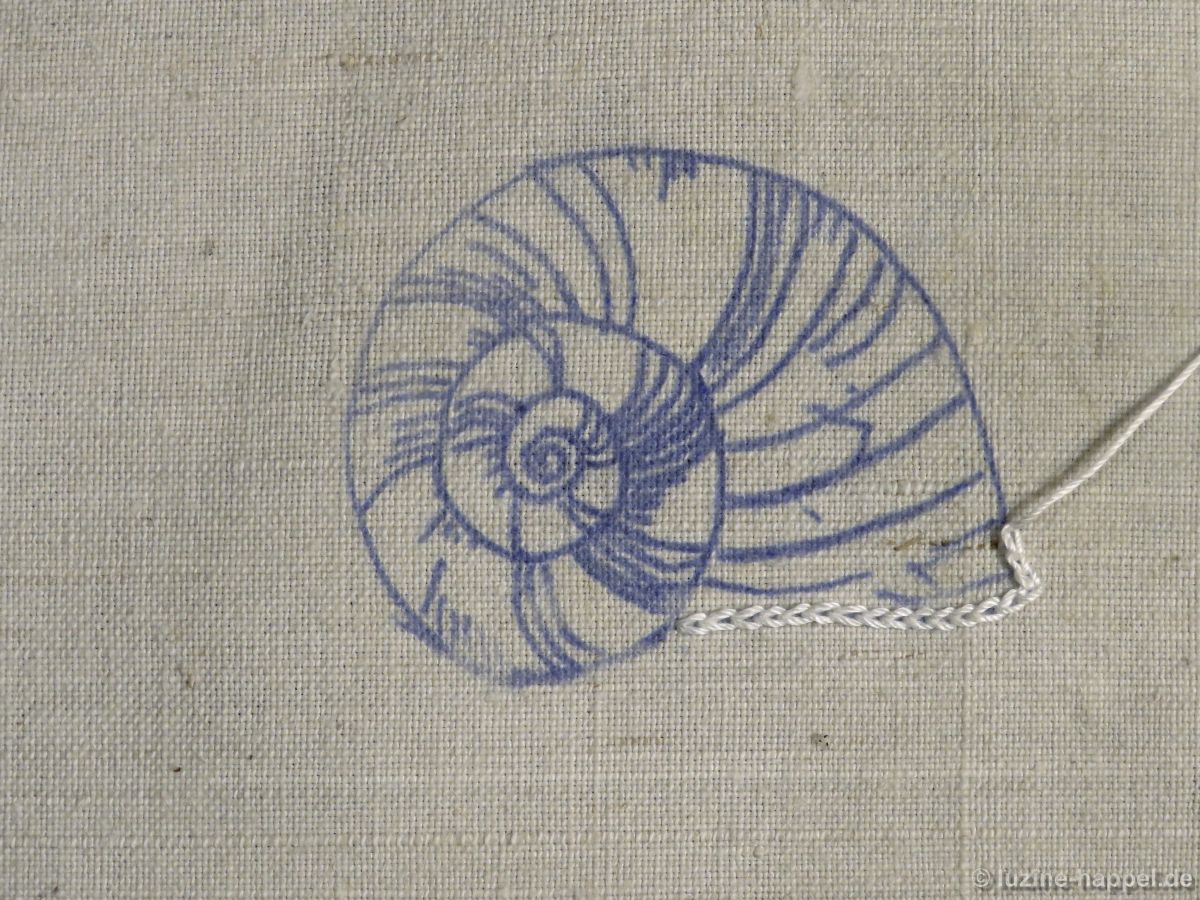
Here is one of those designs:

Transferring the design one should keep in mind that it does not appear mirrored. The spirals of snail shells always turn counterclockwise. Not all lines of the wall structure must be transferred; this will only be confusing when stitching. For orientation the main lines and the length of the lines are enough.

Starting on the outside, I embroidered Chain stitches along the spiral line.

Starting with heavier thread, I changed to finer thread after approximately each round. This enables one to work the center of the spiral exactly.

The fine lines of the wall texture were embroidered with Stem stitches using coton à broder No. 30.

Snail “houses”, snails, and other crawlers are well suited to be included into a sampler.

This example shows one possible way to depict a snail shell.

Another possibility will follow.

Easter Decoration 2018

Having a look around the shops, I found hangings decorated for Easter – simple to rework with a touch of embroidery.

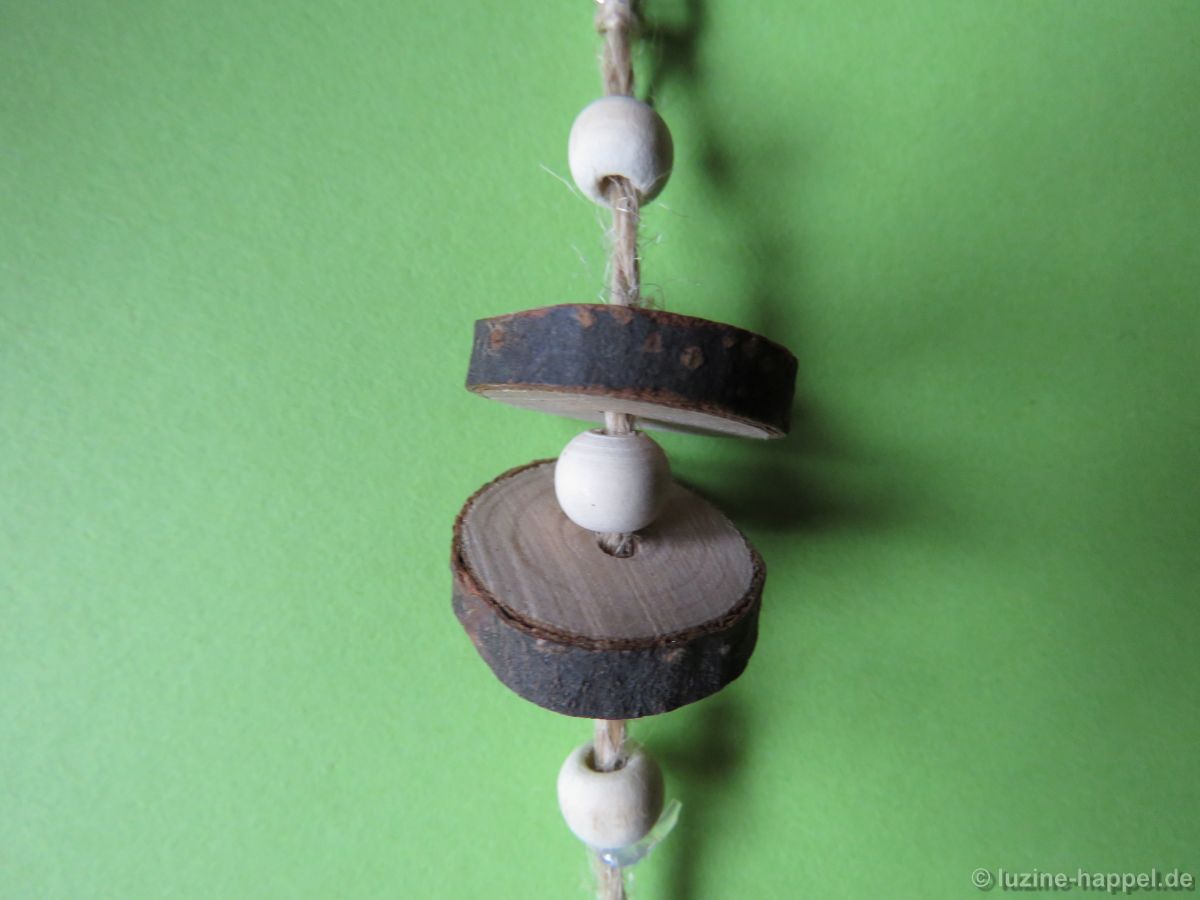
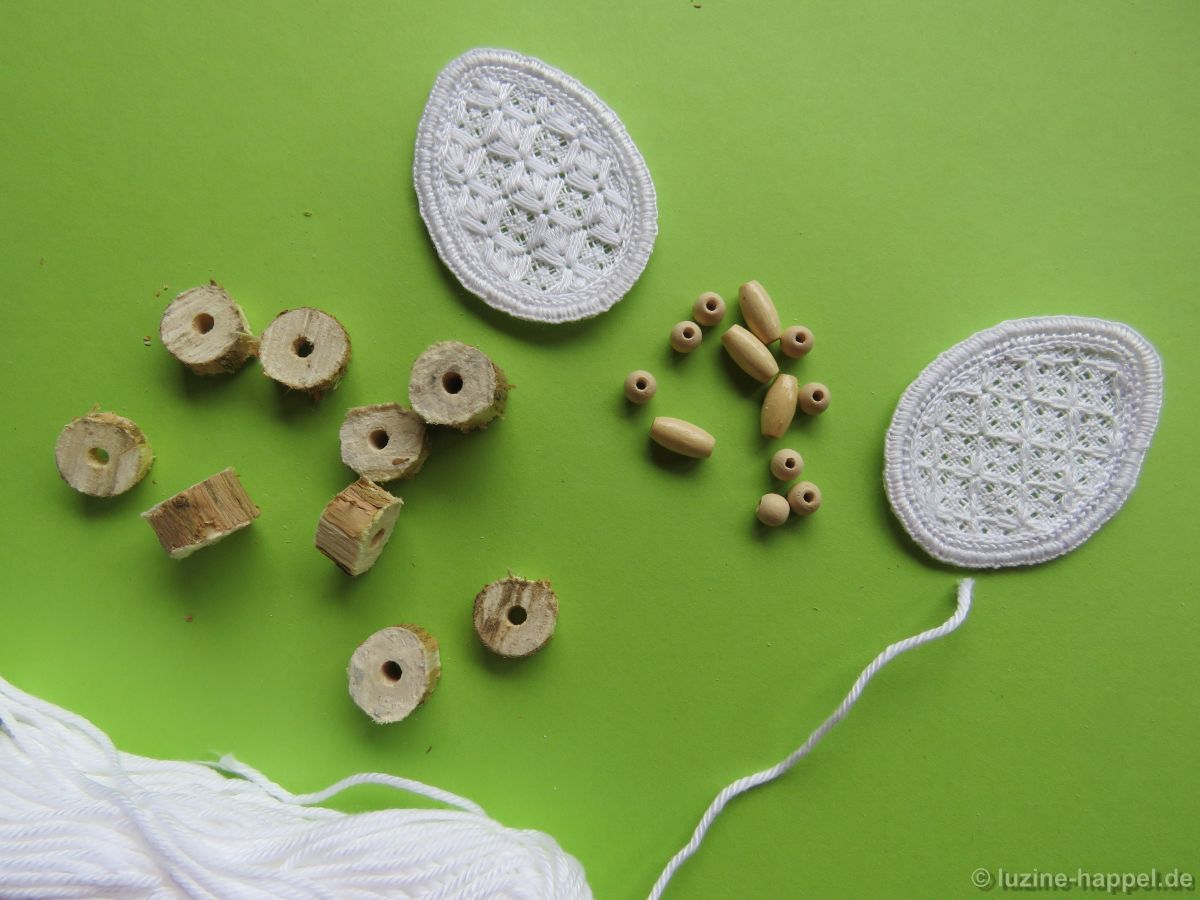
They are made from wooden discs and wooden beads alternately strung on a rustic thread

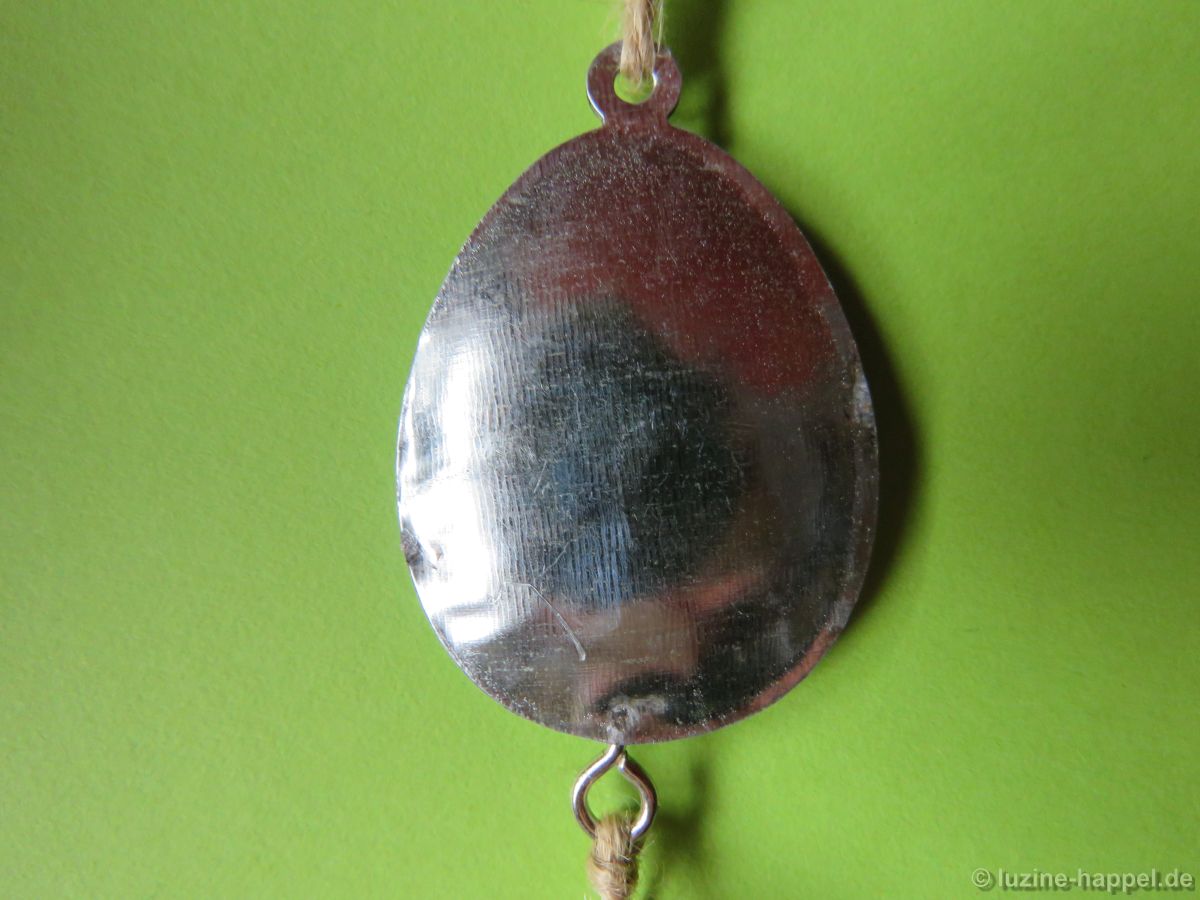
with a metallic Easter egg randomly placed between.


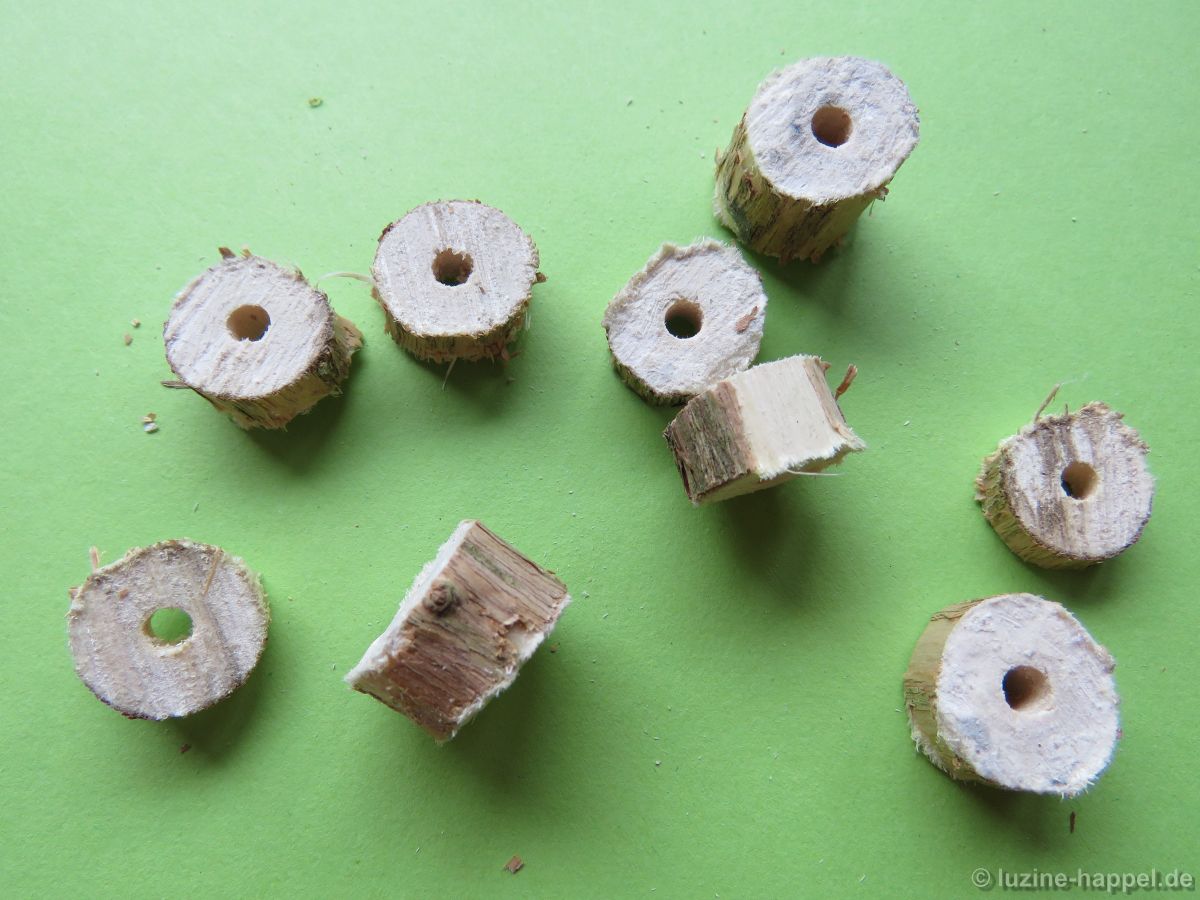
Taking a thick branch from my garden and using a small saw and a thin drill bit, I easily got the required discs. I had some beads on hand.


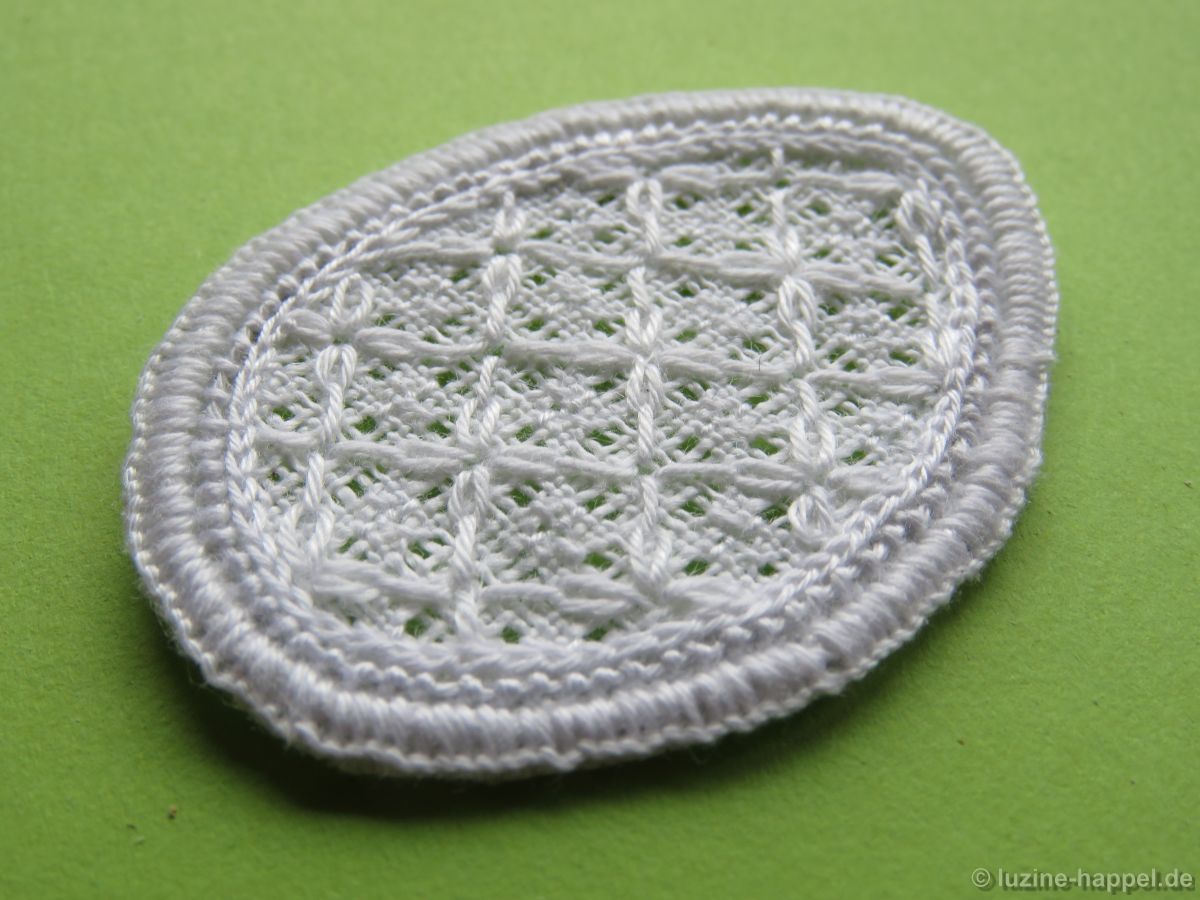
I replaced the metallic eggs with small embroidered Easter eggs. I used the design presented here and embroidered white eggs using filling patterns No. 540


and “Kronjuwel” from the book Limetrosen II.
After boiling, the embroidery was heavily starched so that the cut piece holds its form.


I used a continuous white thread, because I found the big knots distracting,


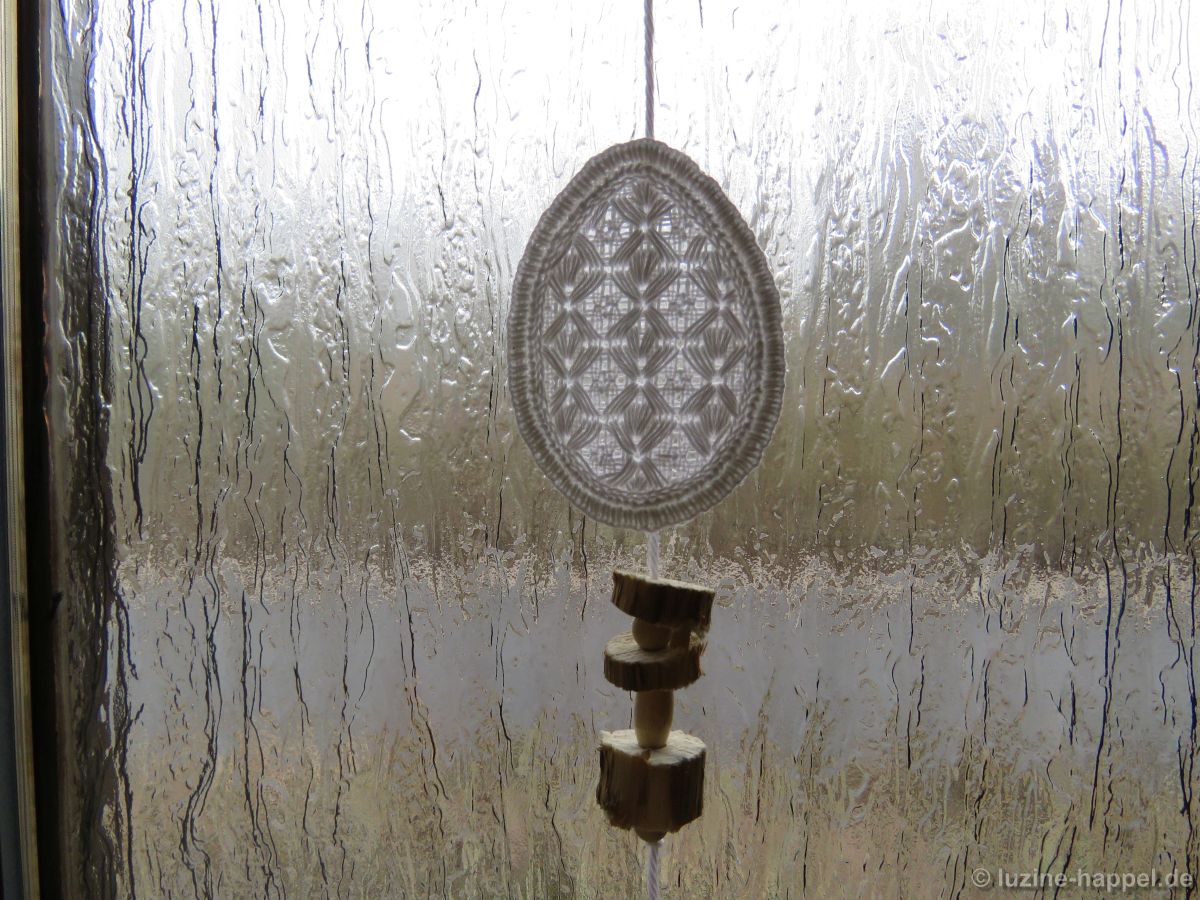
and alternately strung beads, wooden discs, and embroidered Easter eggs on it.


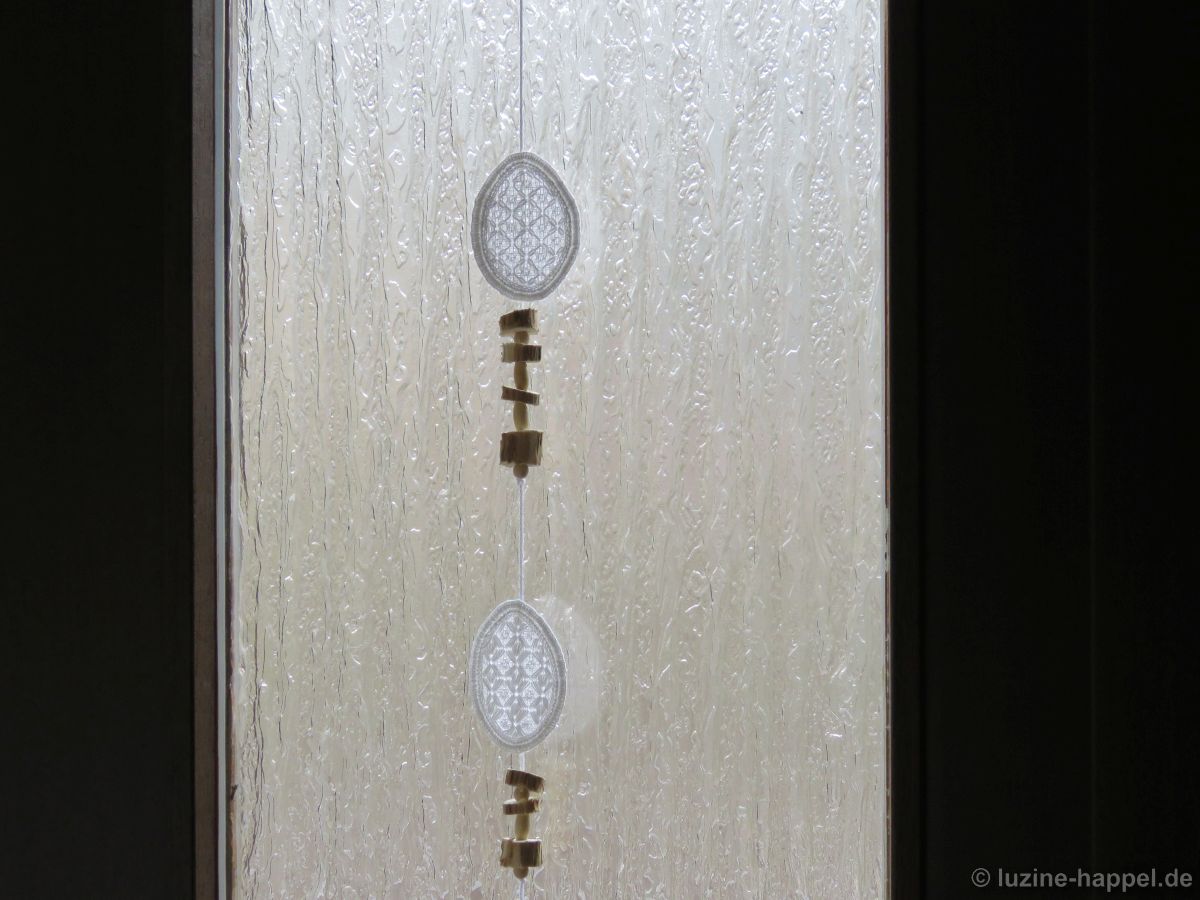
Illuminated from behind, as when placed on a window, the embroidery takes on an especially beautiful effect.


One can create short hangings with only one egg or longer hangings with a couple of eggs.

Hearts in Wooden Frames

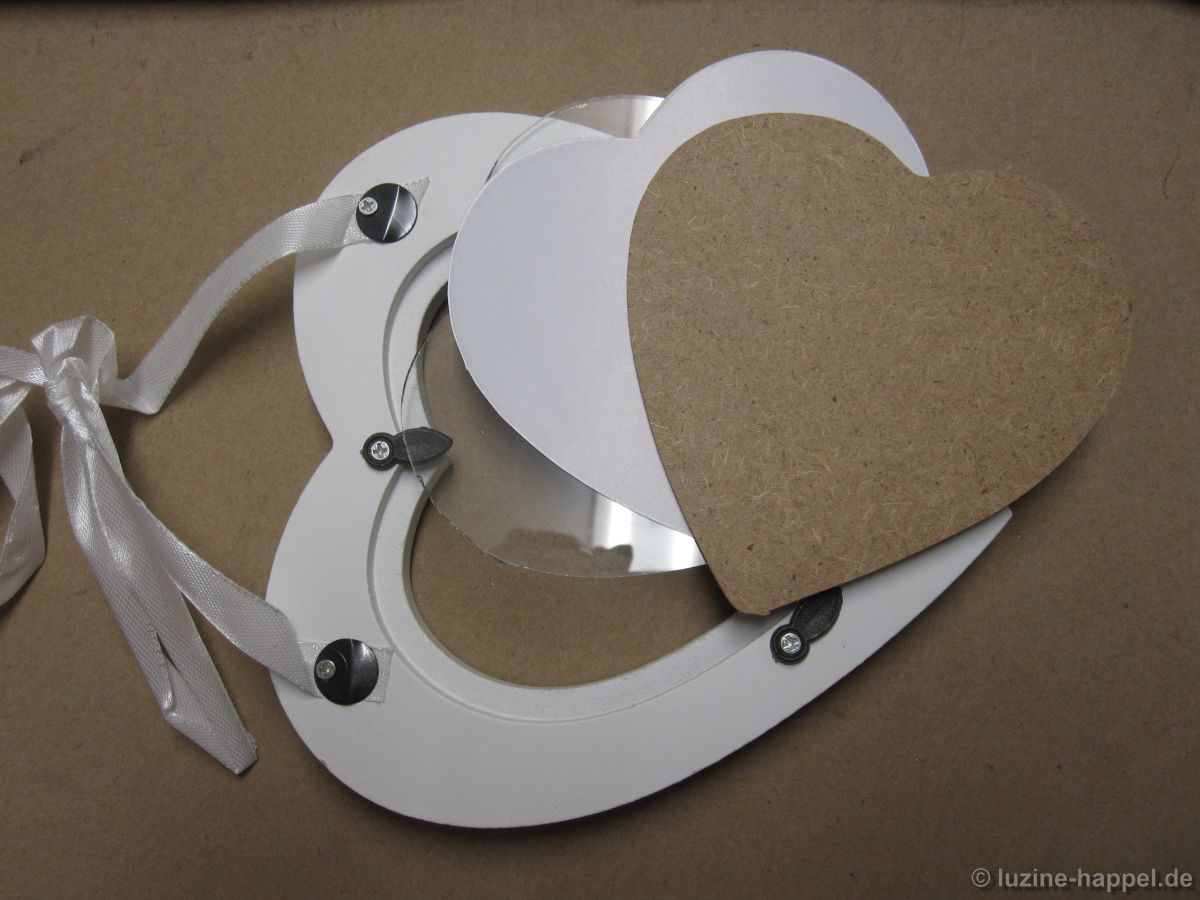
I have shown cutout hearts, mounted on slate hearts and mounted in metallic frames. This year’s Valentine’s Day hearts will be mounted in heart-shaped wooden frames originally made for displaying photos.


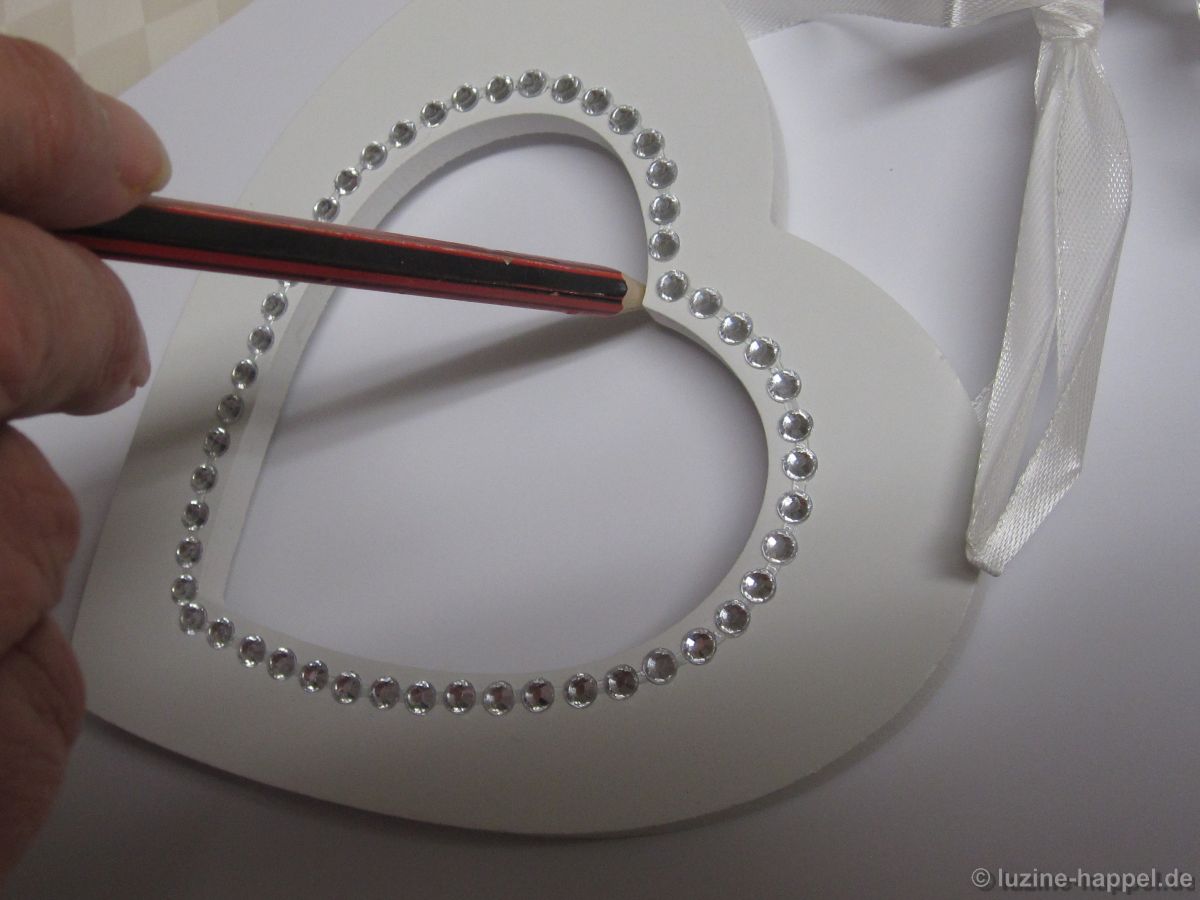
First, the opening of the frame is traced onto paper.


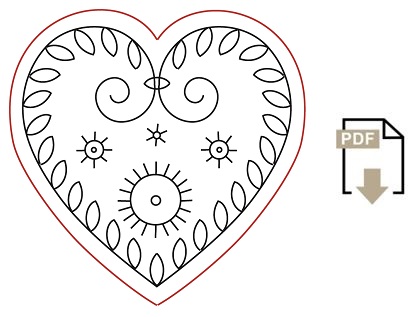
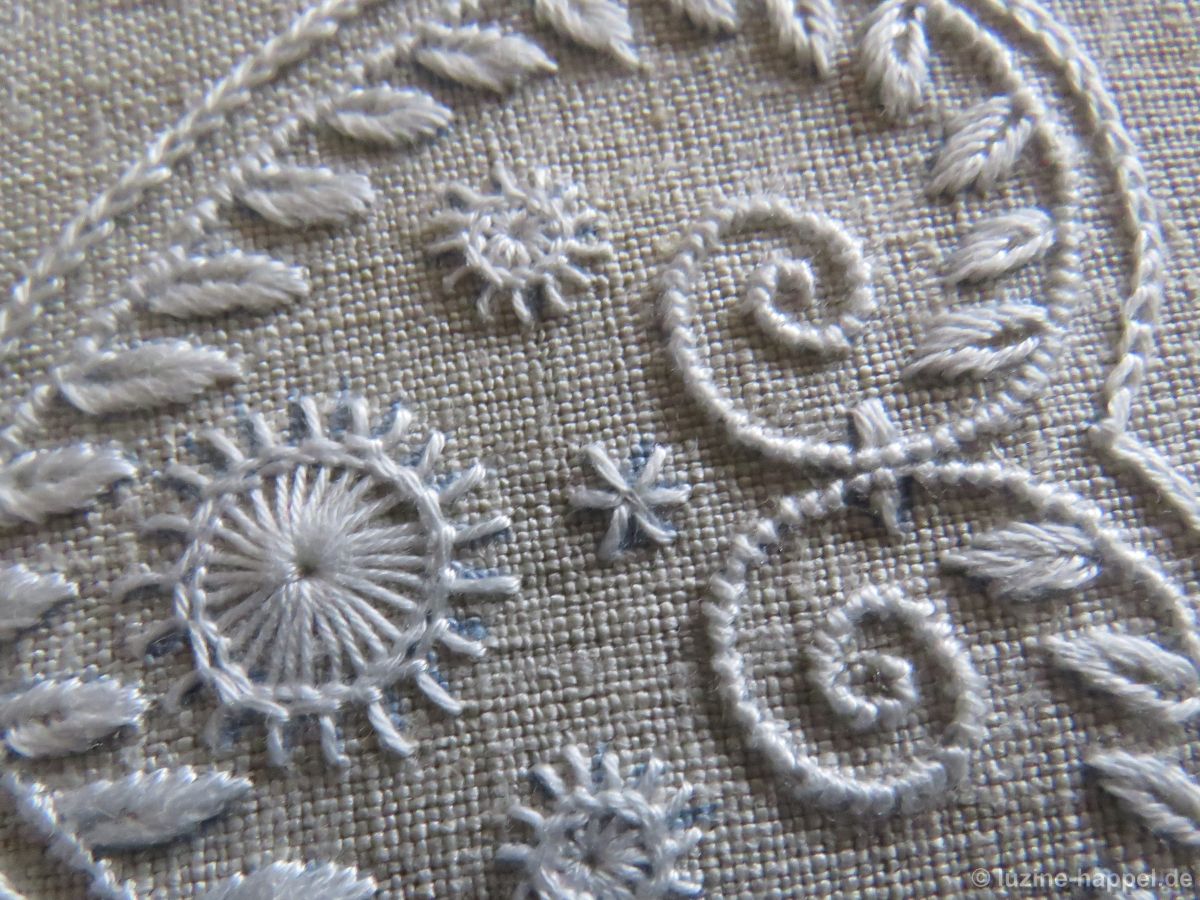
A heart design is drawn to fit the shape (but notice that the embroidered heart must be smaller than the frame opening). I wanted the pattern to be cute, so I incorporated many small leaves and Eyelash stitches.


Handwoven linen with its natural colour and its distinctive structure is the right fabric for this project.


Very soon both embroideries were finished, washed, starched, and ironed.


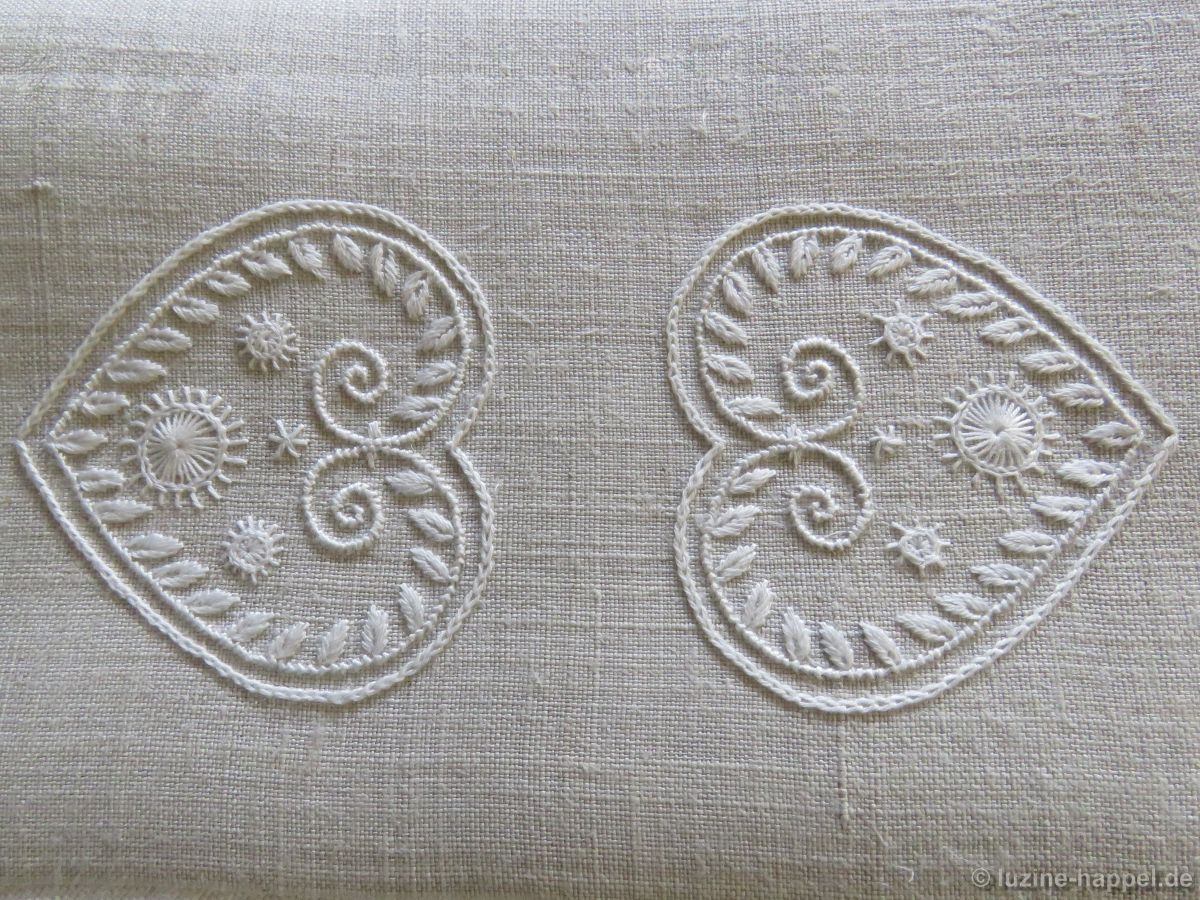
The image below shows how different the two embroideries look with and without wadding. The embroidery on the right, with wadding, is much more prominent.


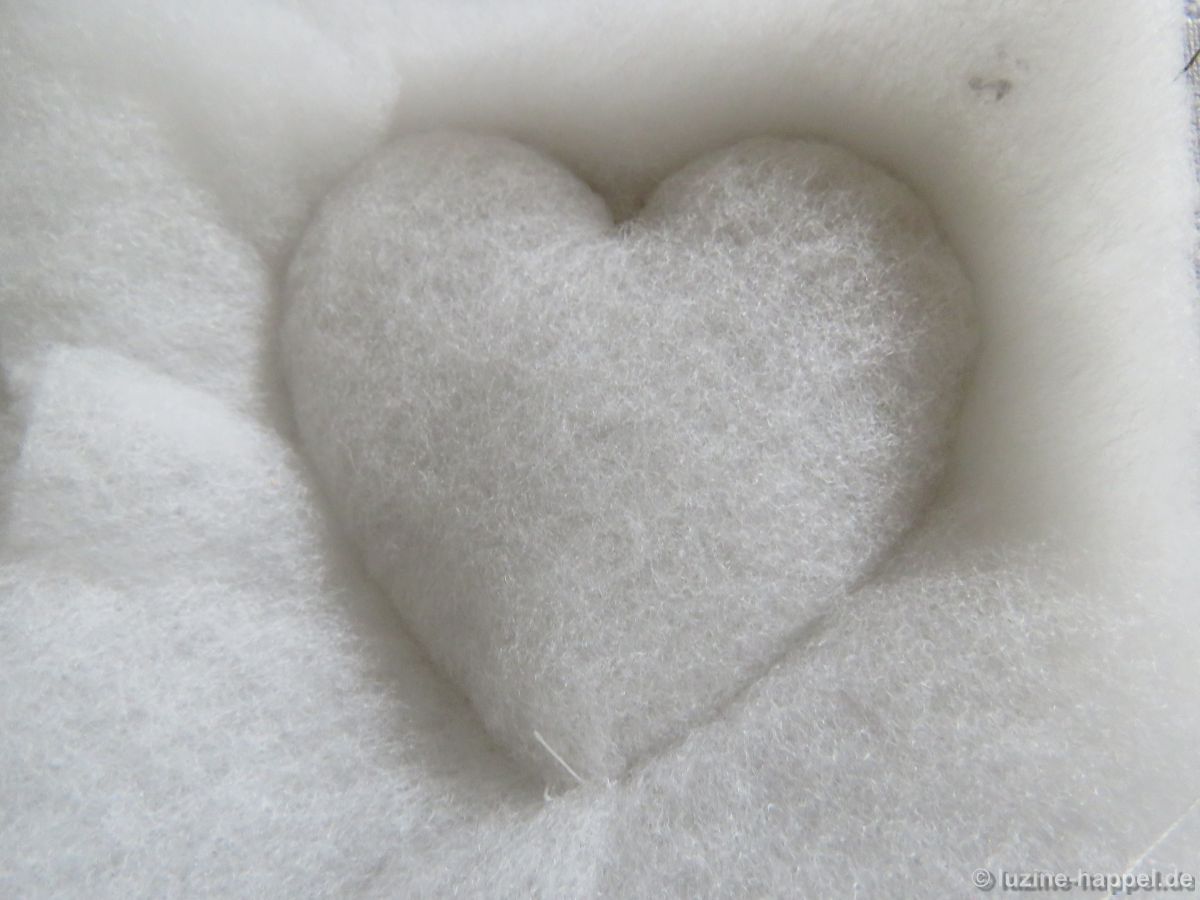
A layer of poly fleece was placed on the back of the embroidery.


The fleece was secured by stitching along the Coral Knot line.


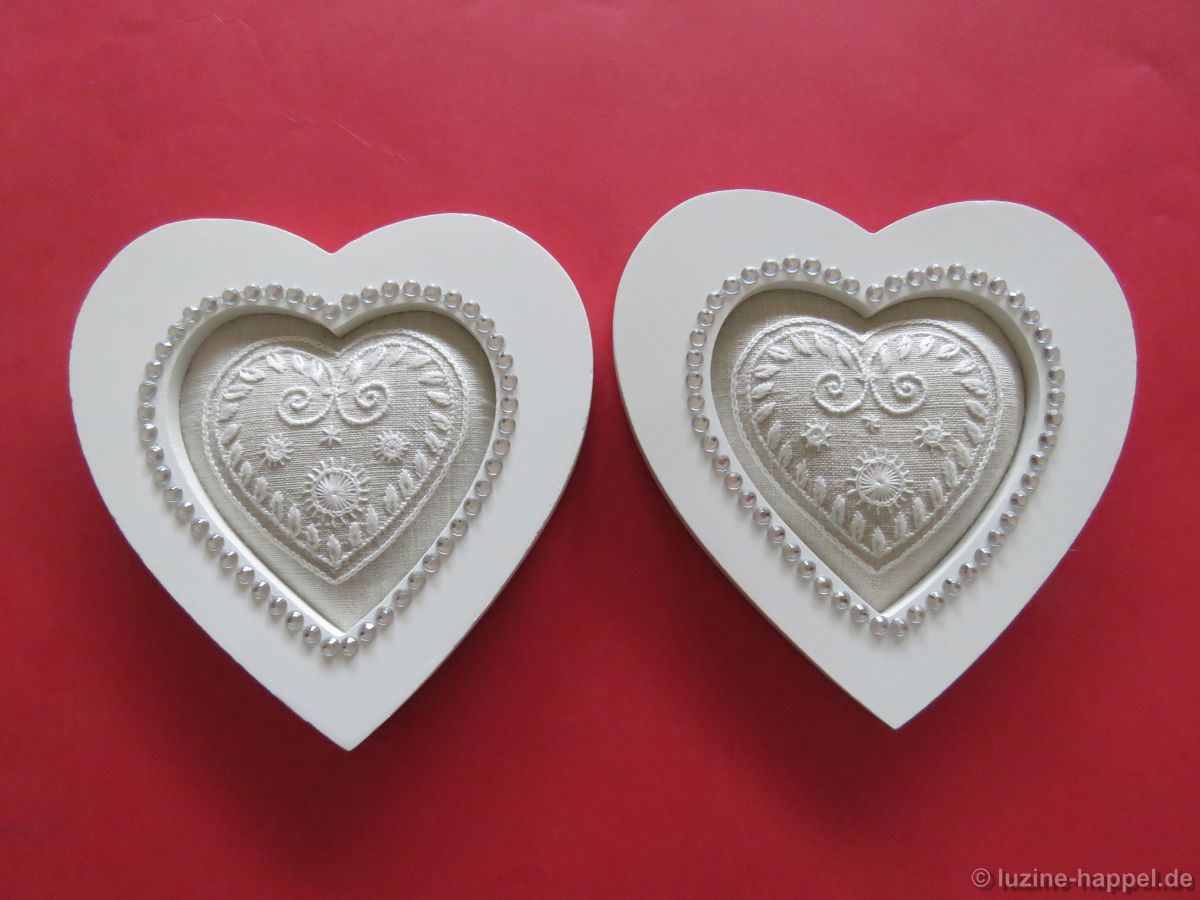
With a red background the heart duo is a nice decoration for Valentine´s day;


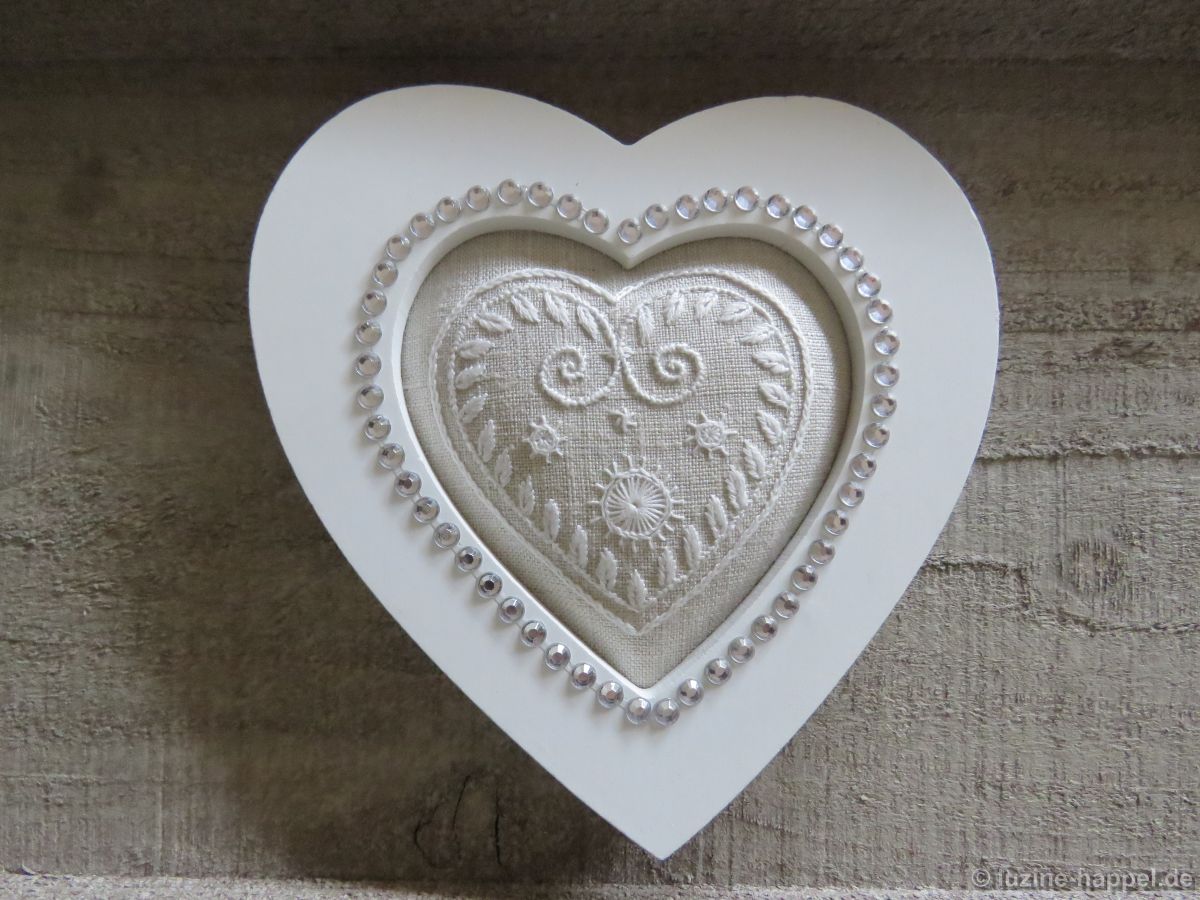
with a neutral background the hearts become a pretty all-year decoration.