Embroideries by Rosemarie Landsiedel-Eicken (6)

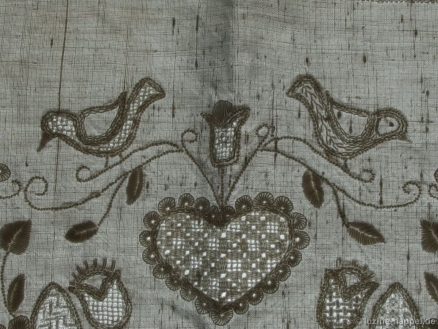
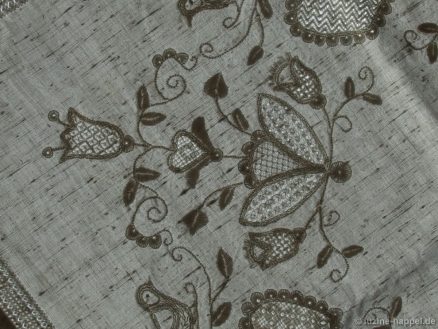
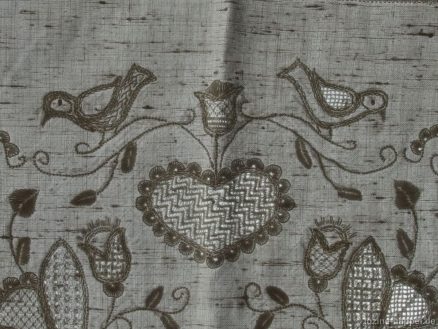
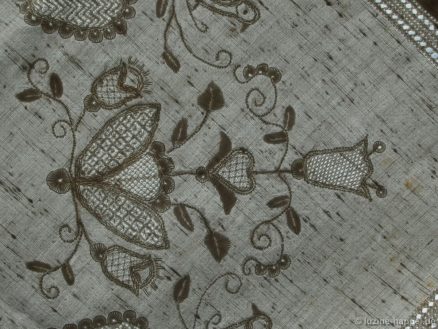
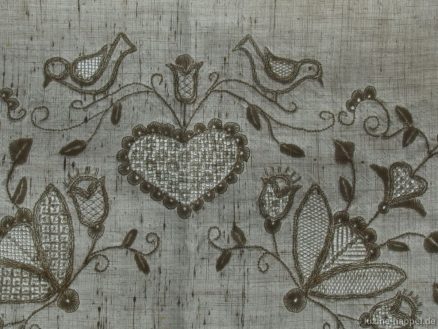
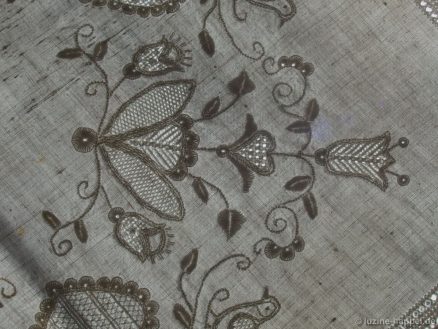
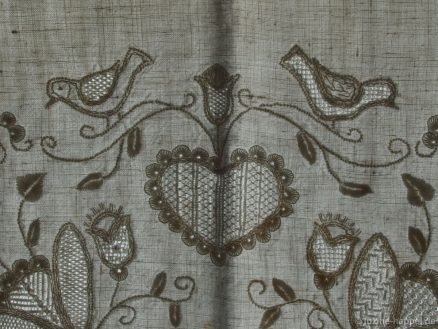
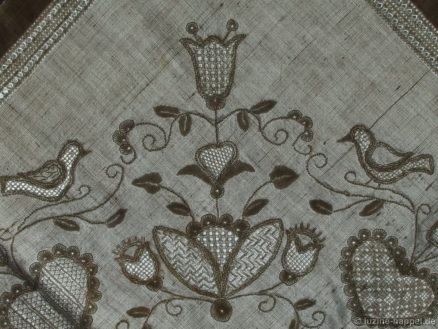
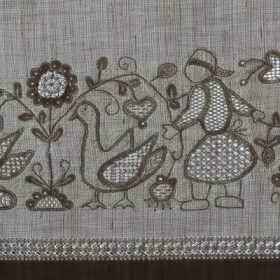
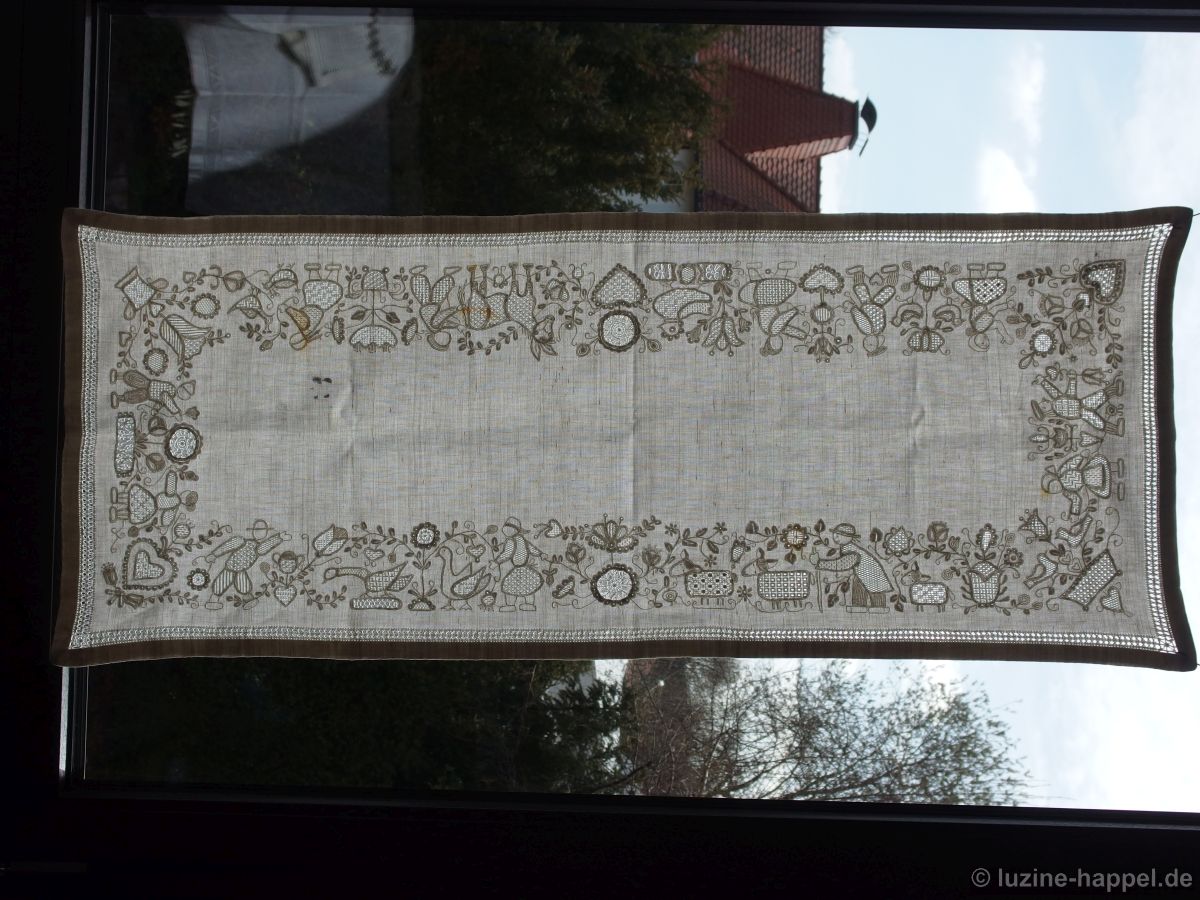
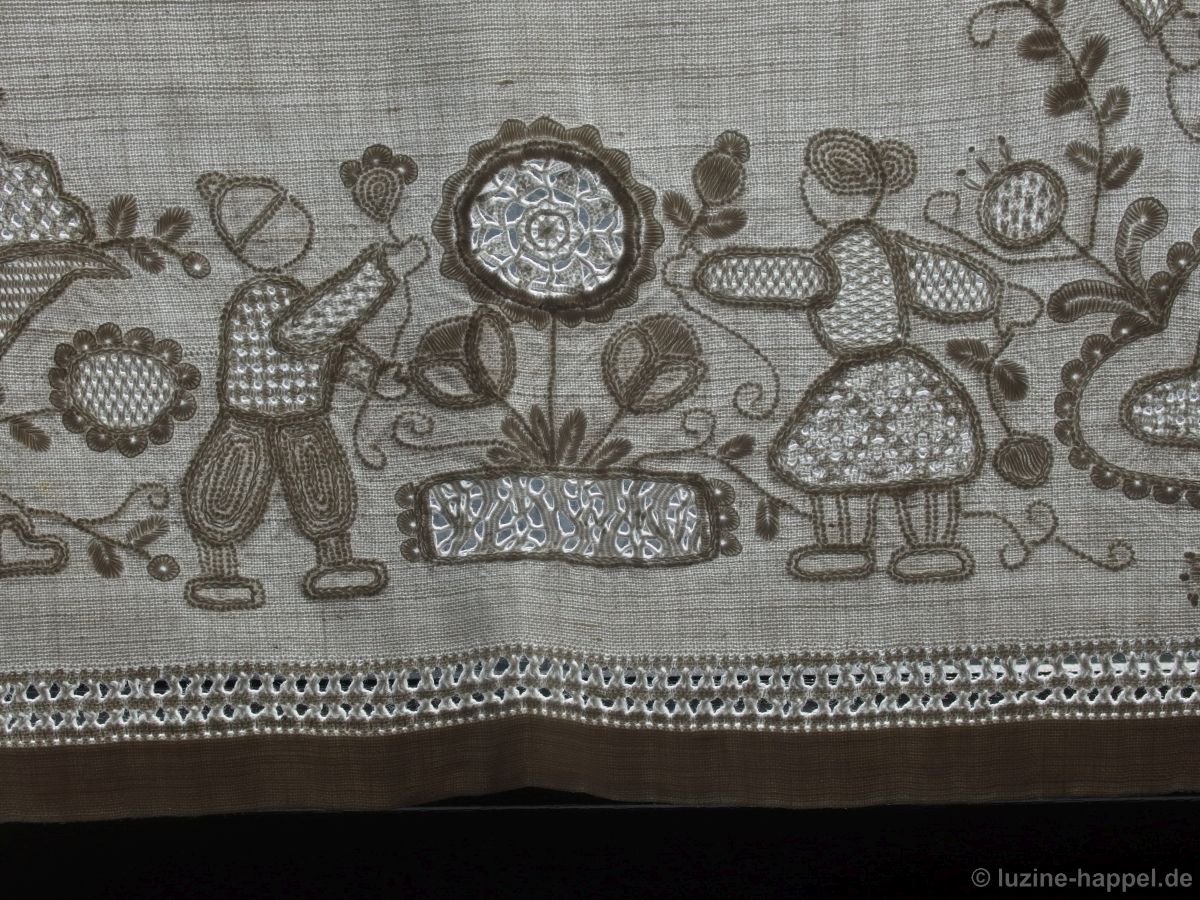
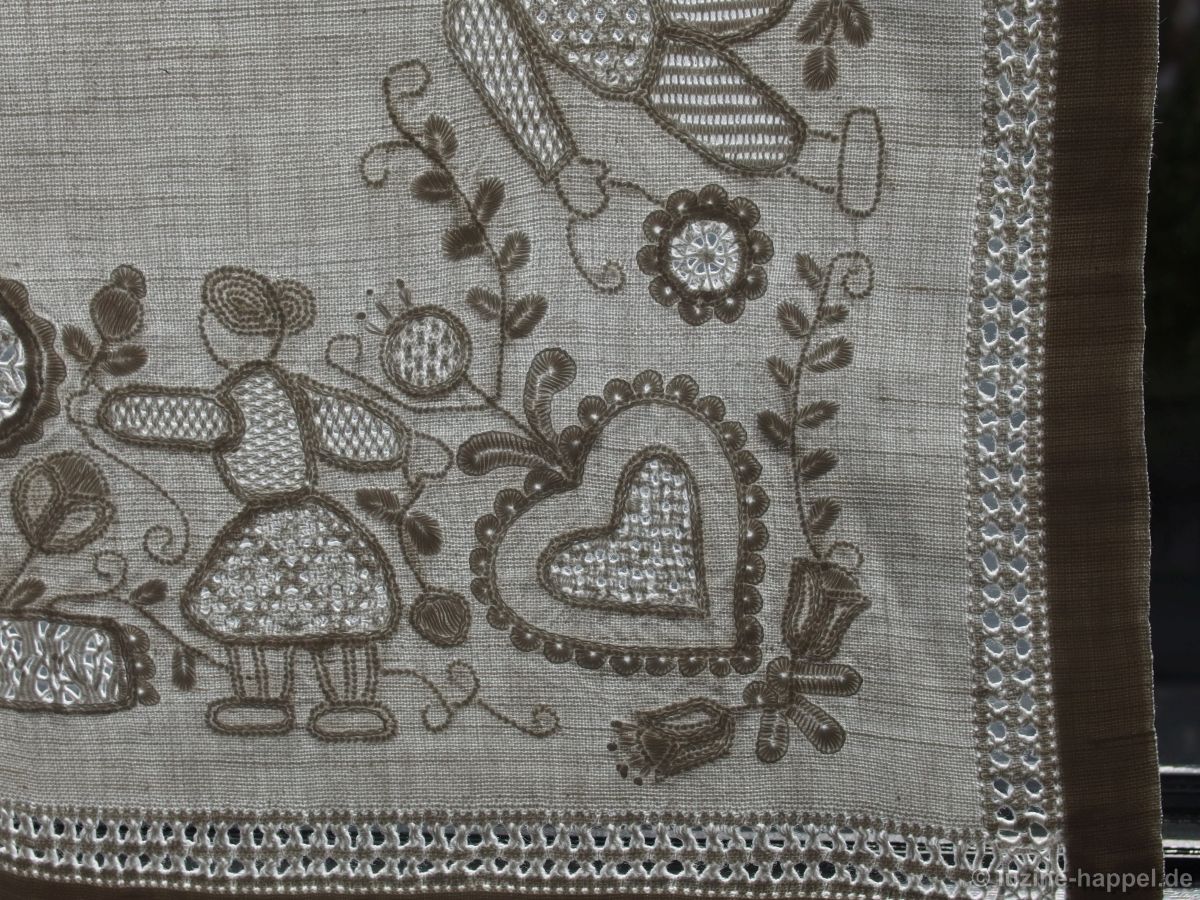
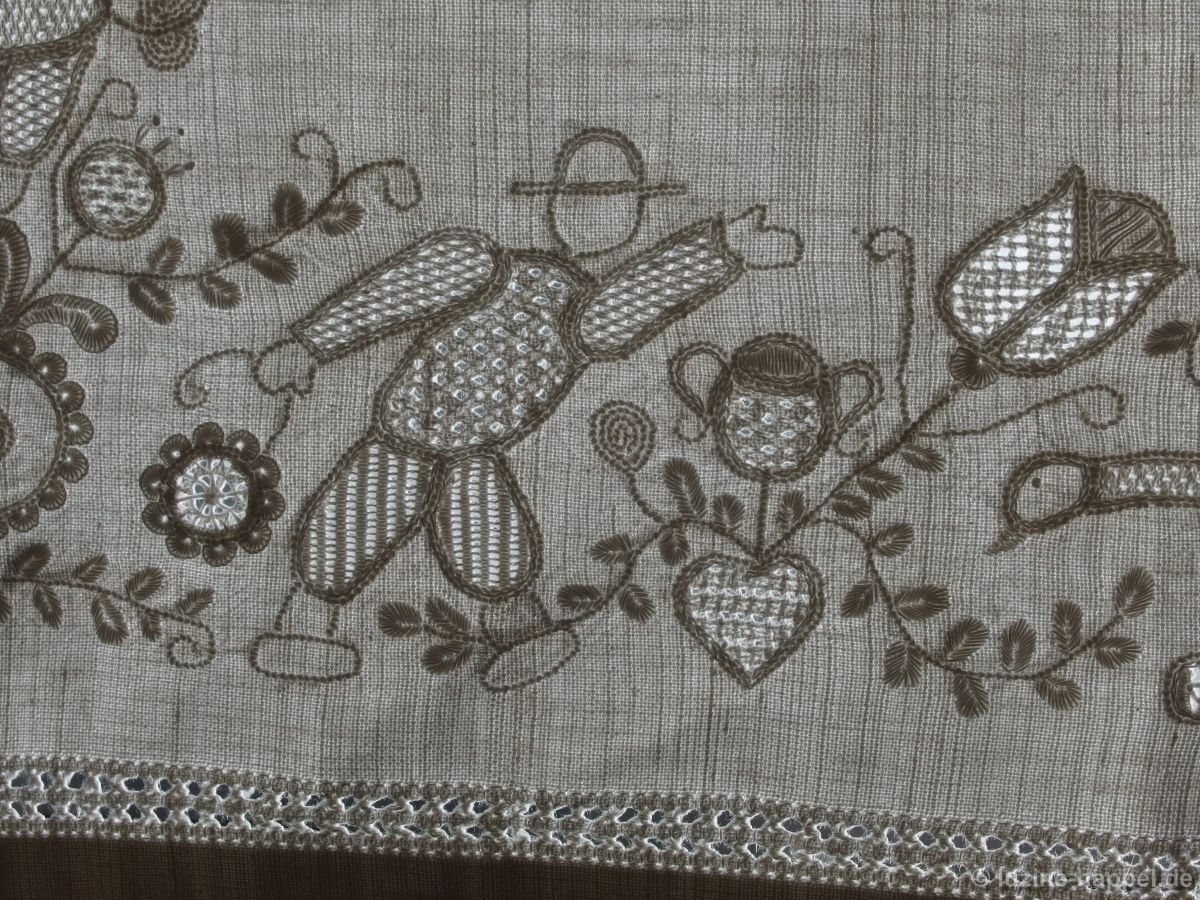
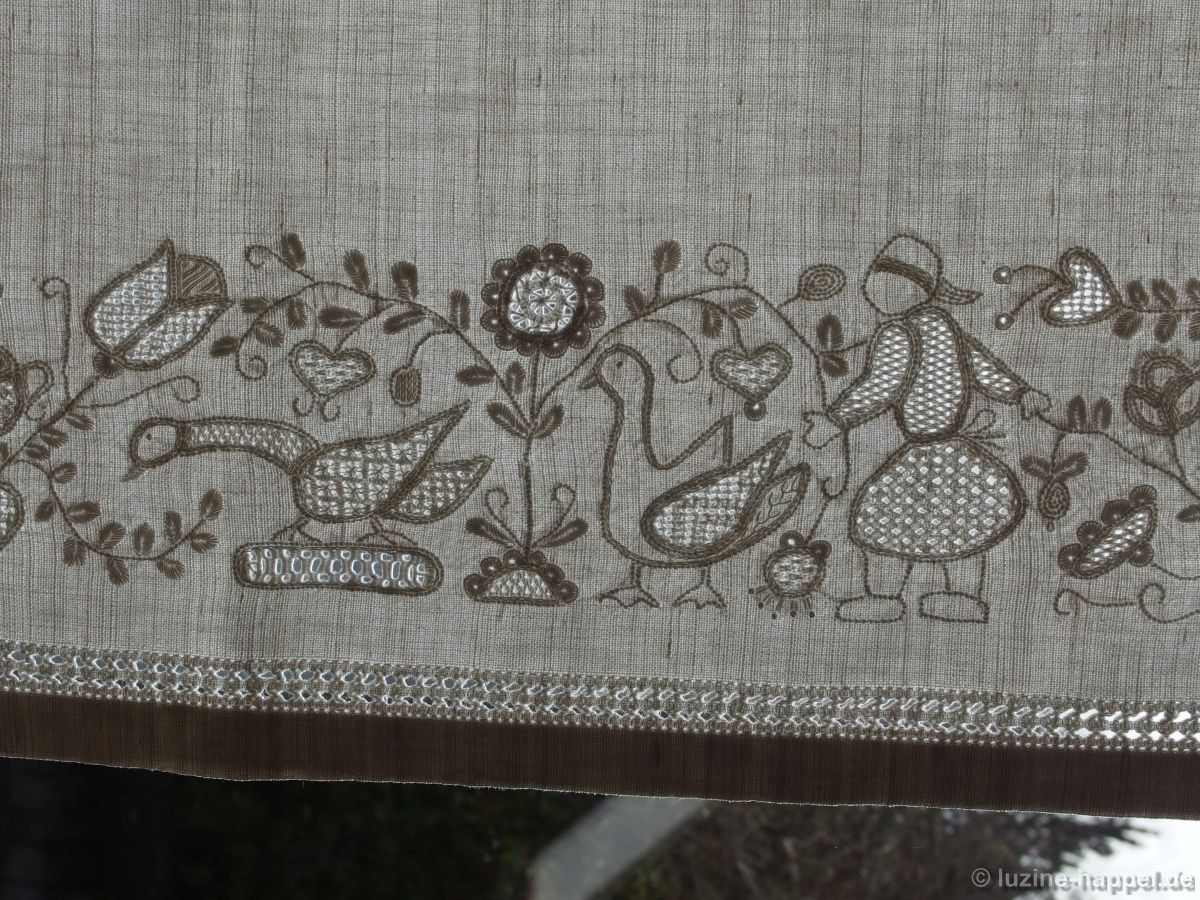
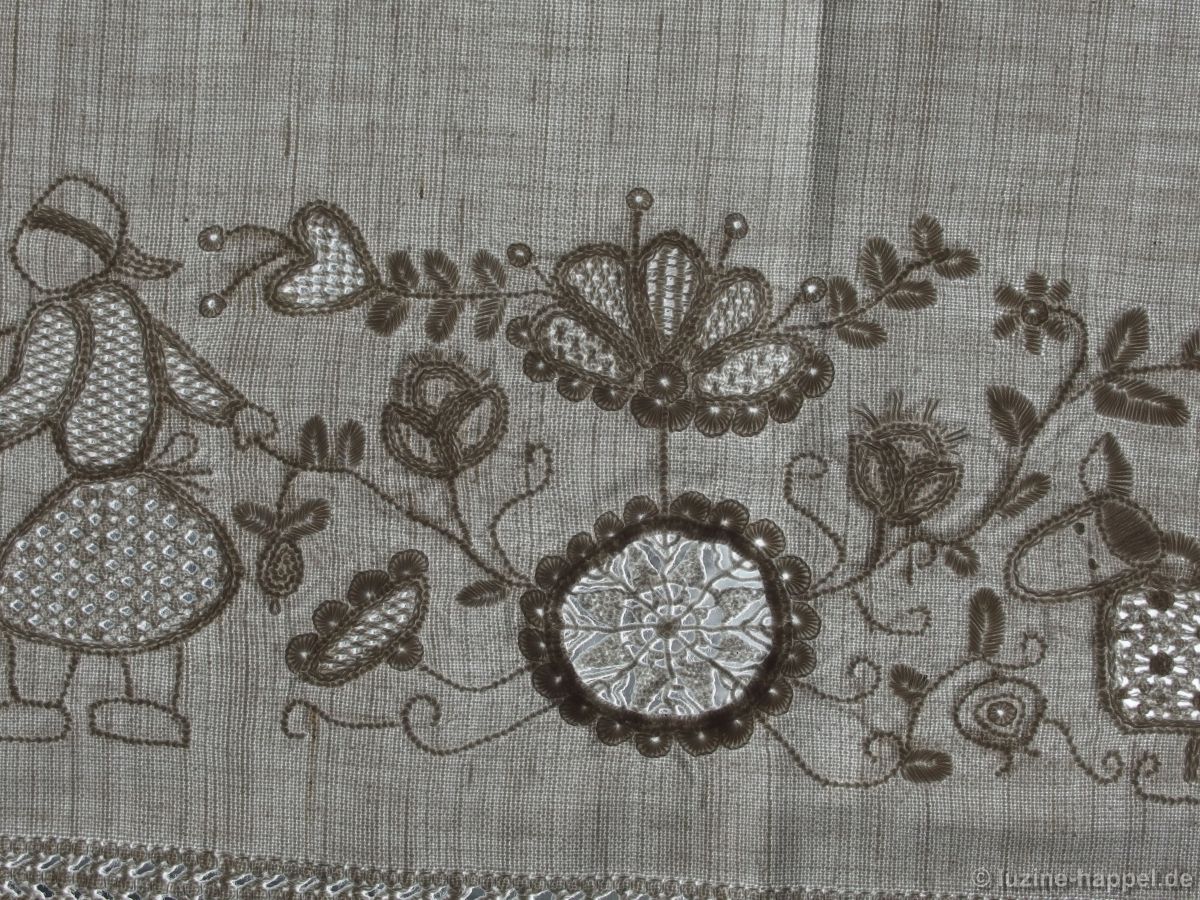
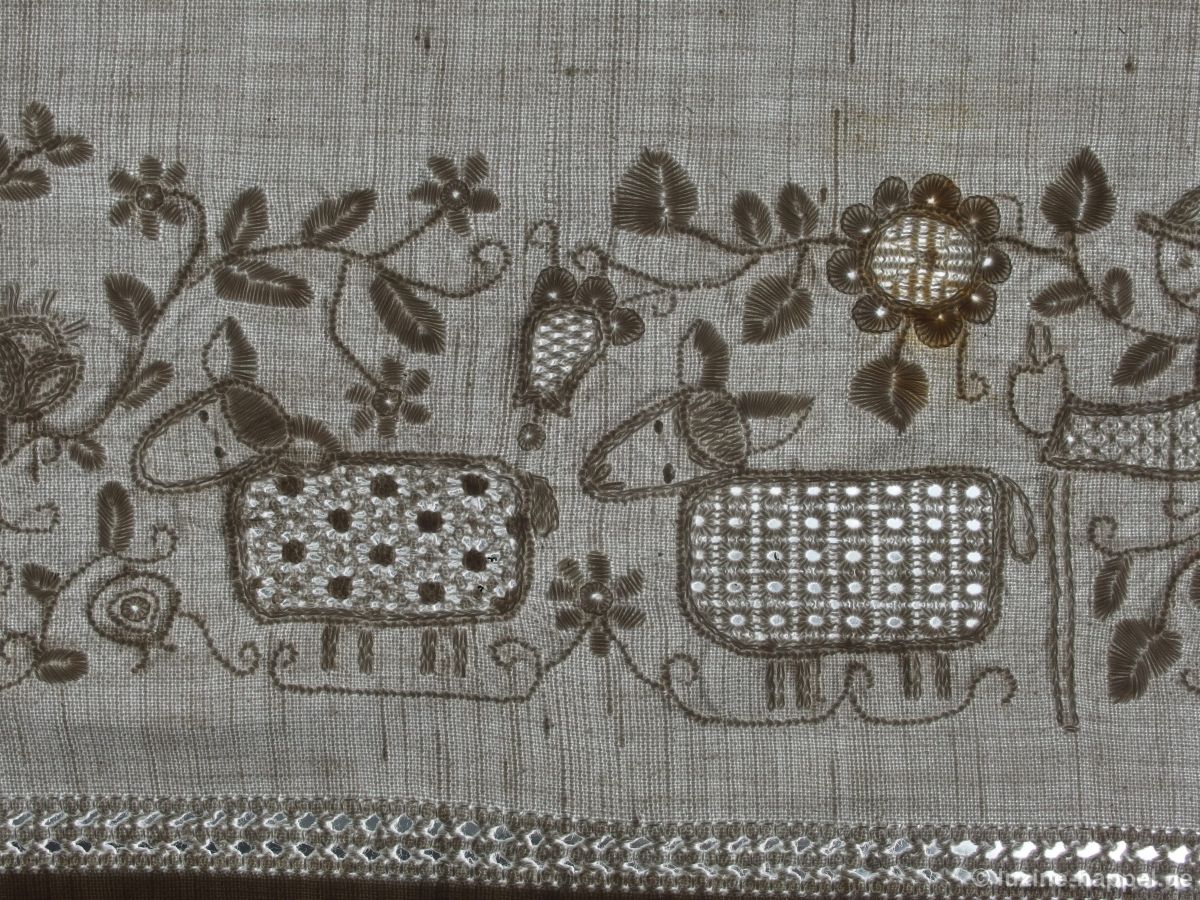
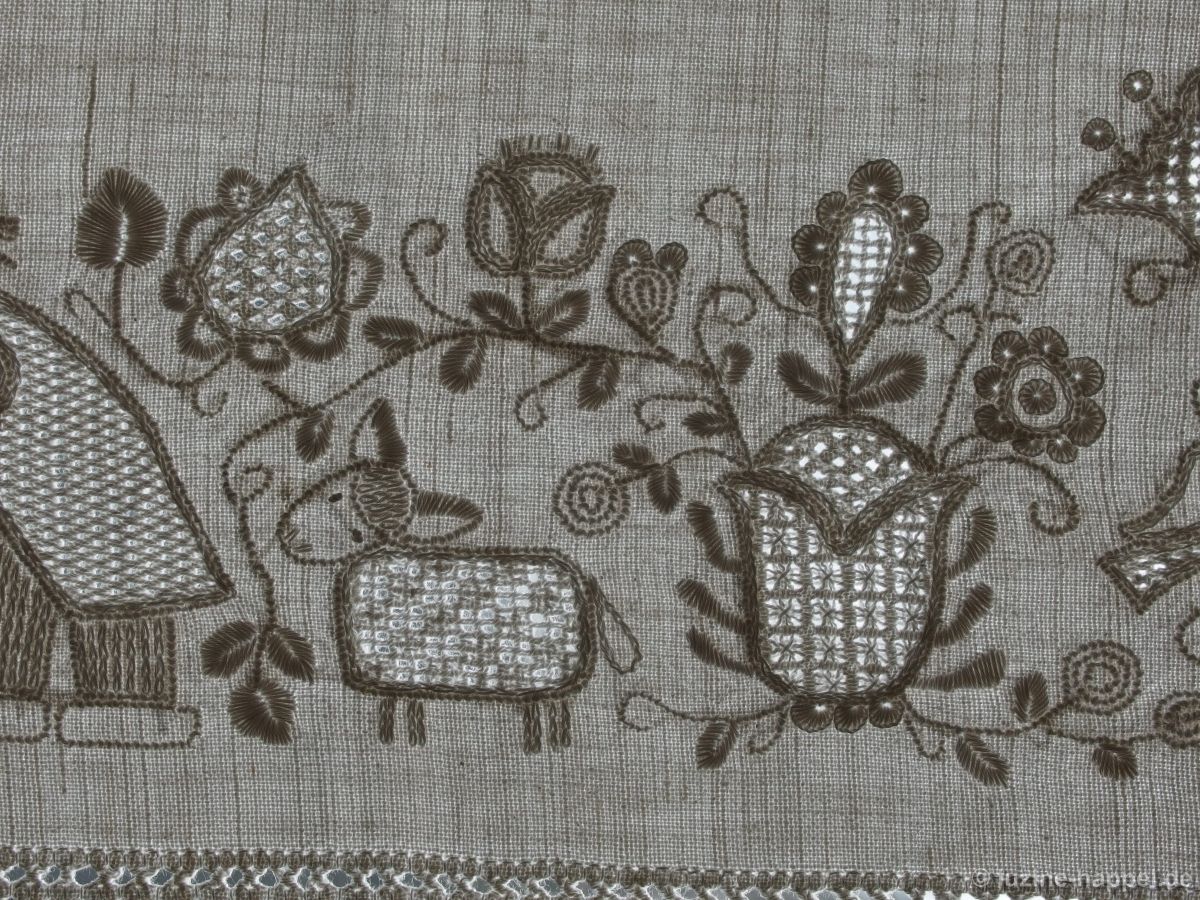
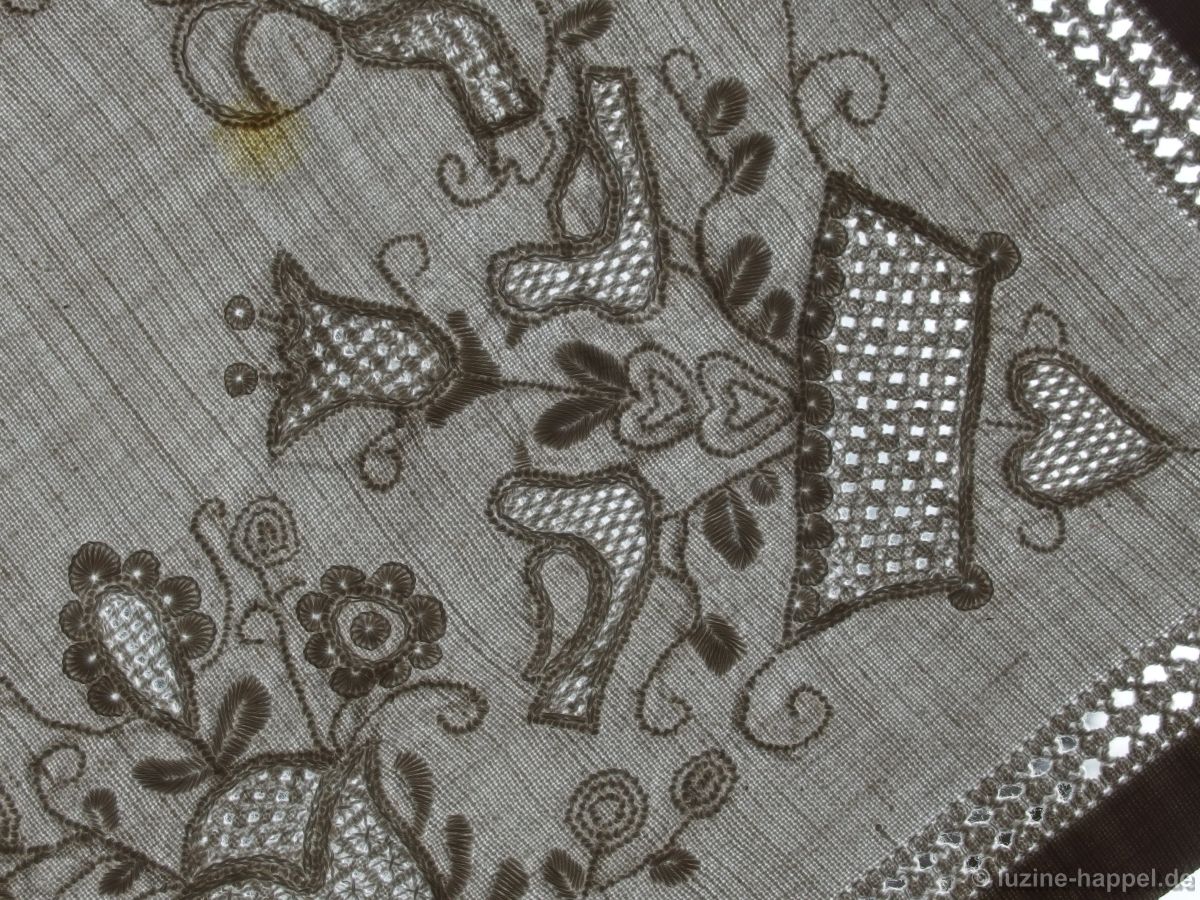
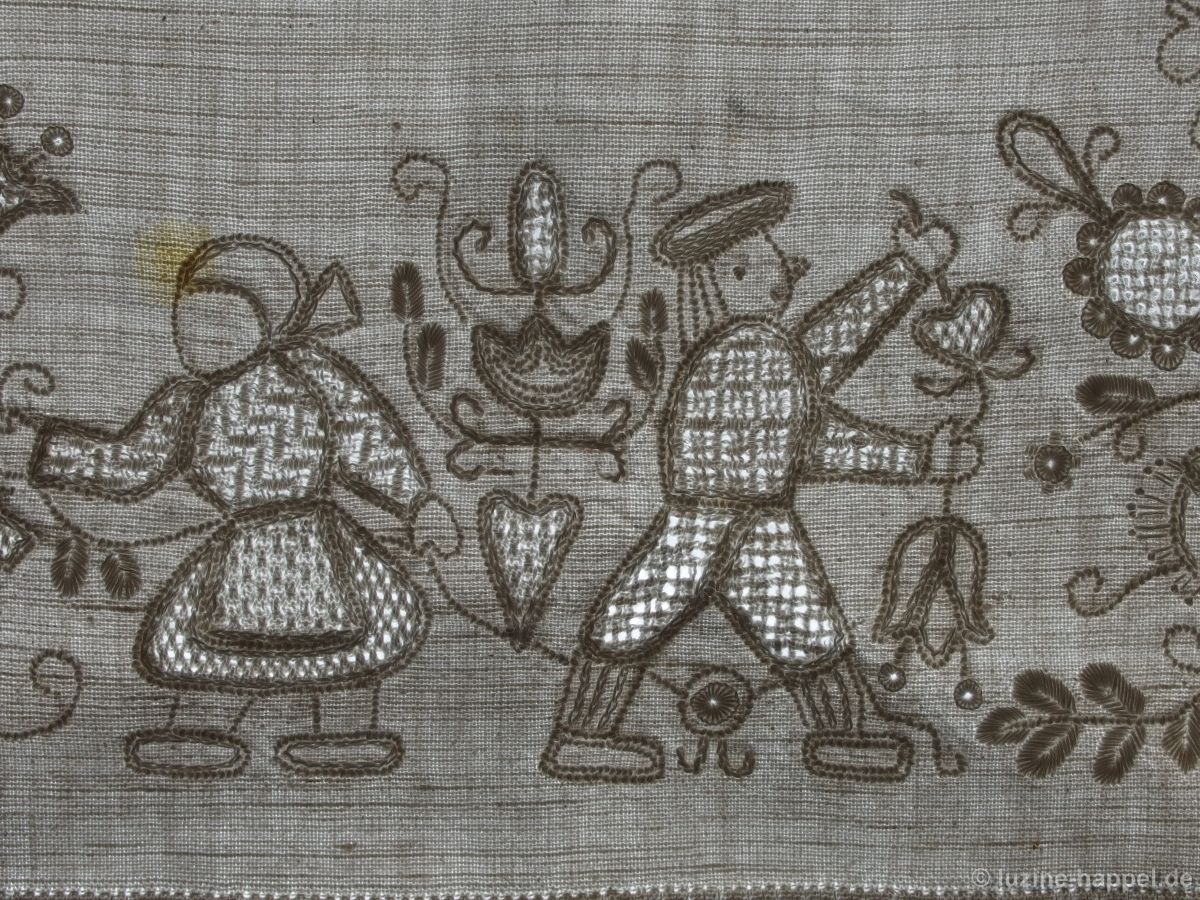
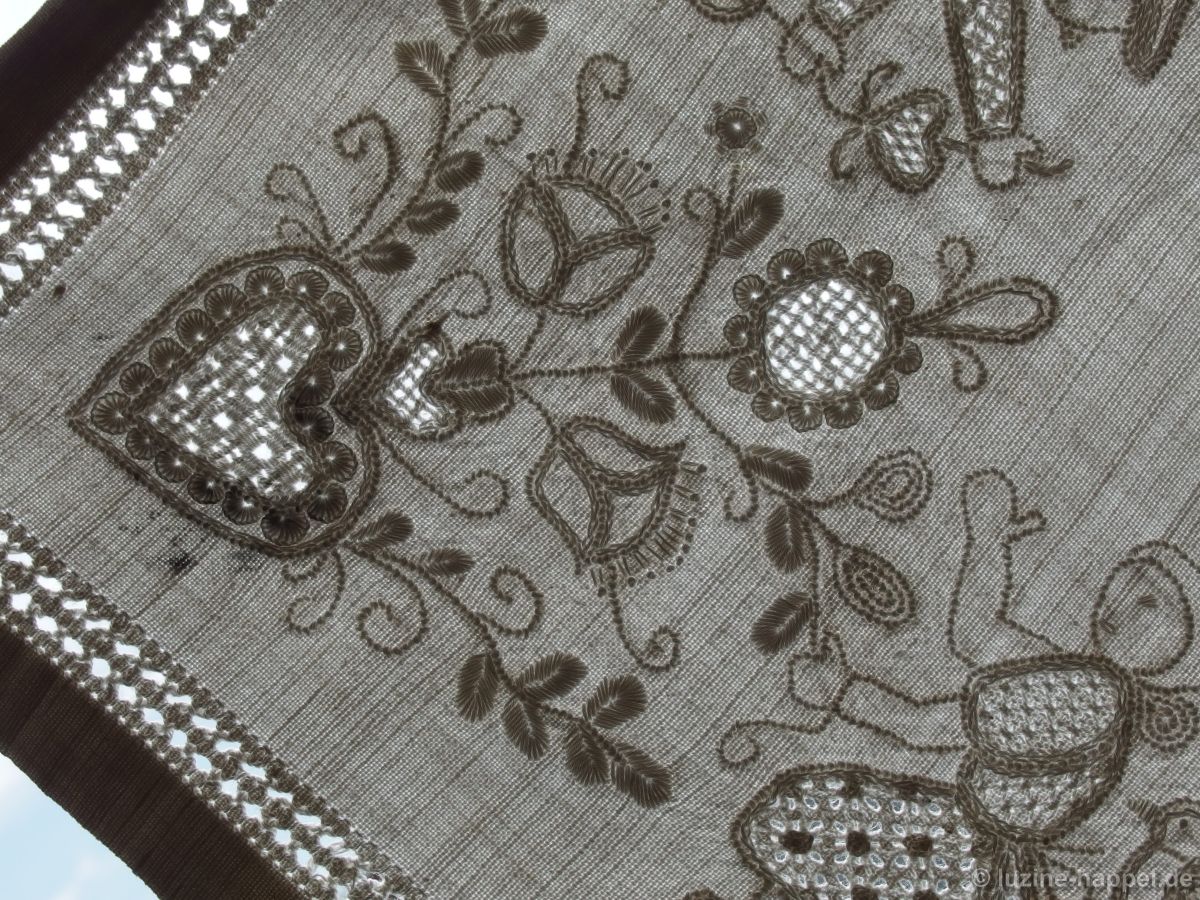
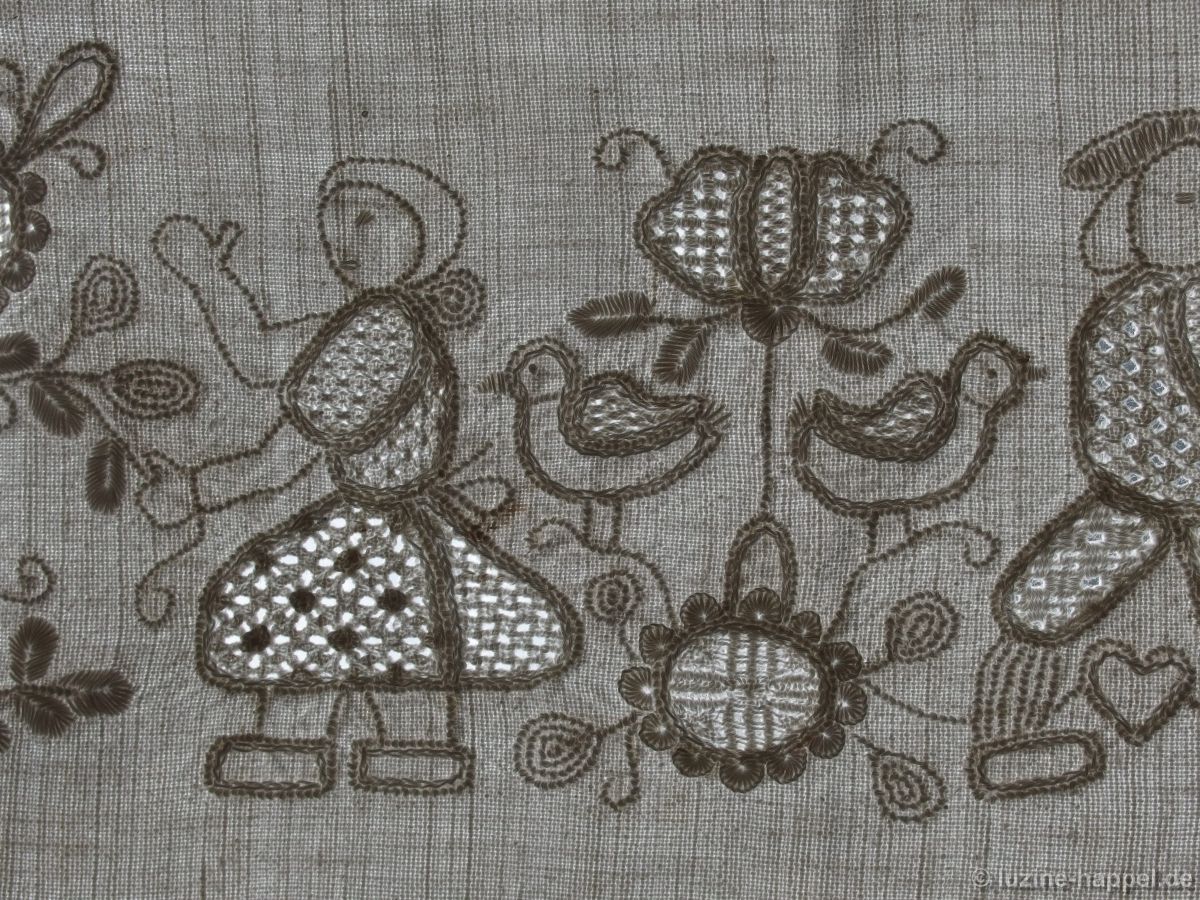
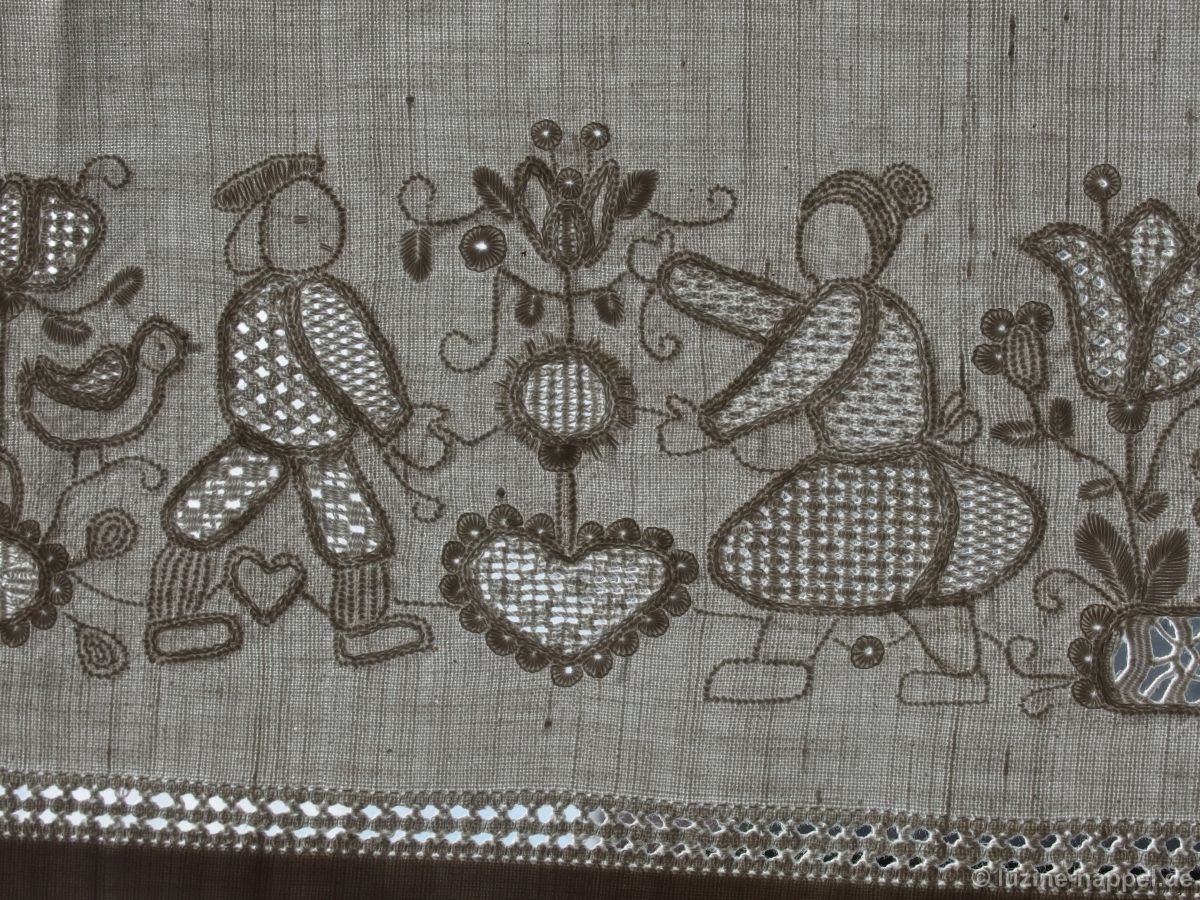
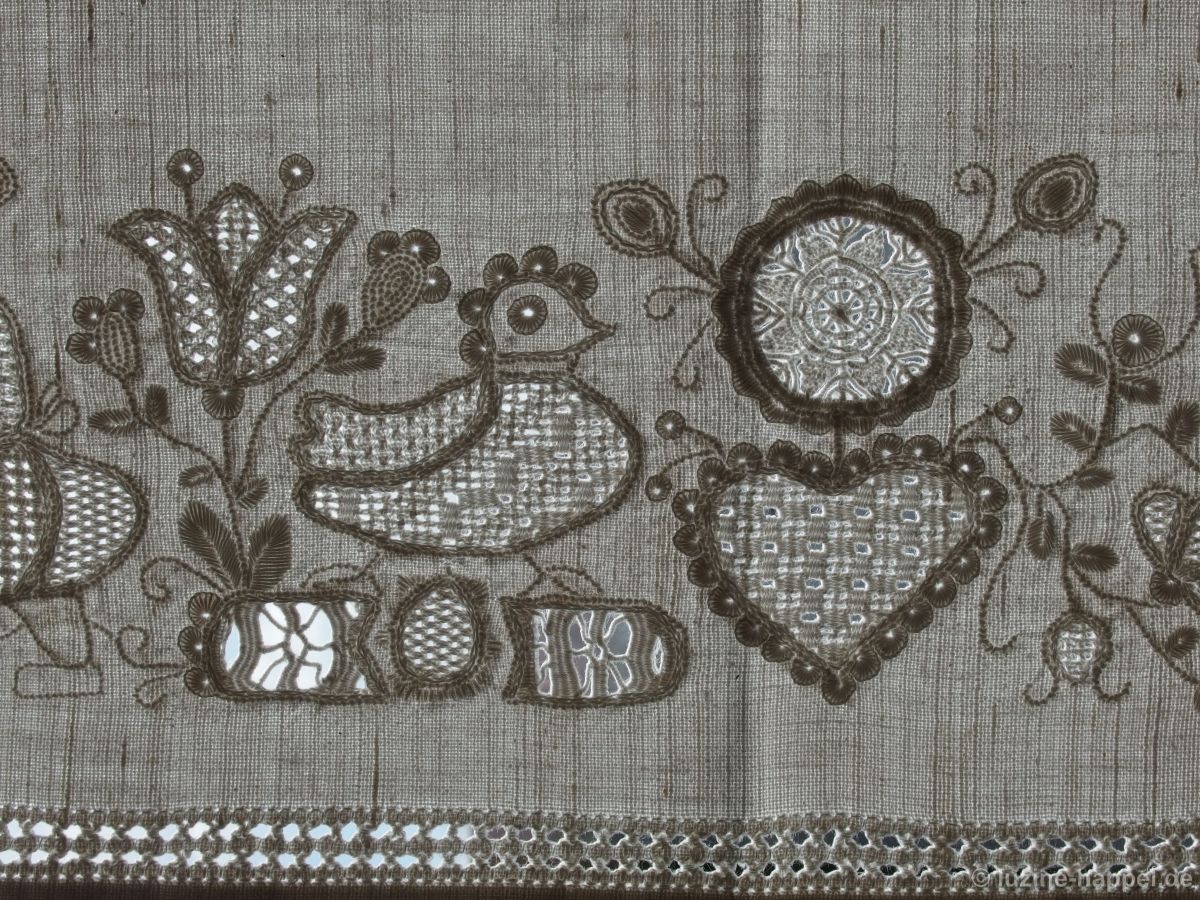
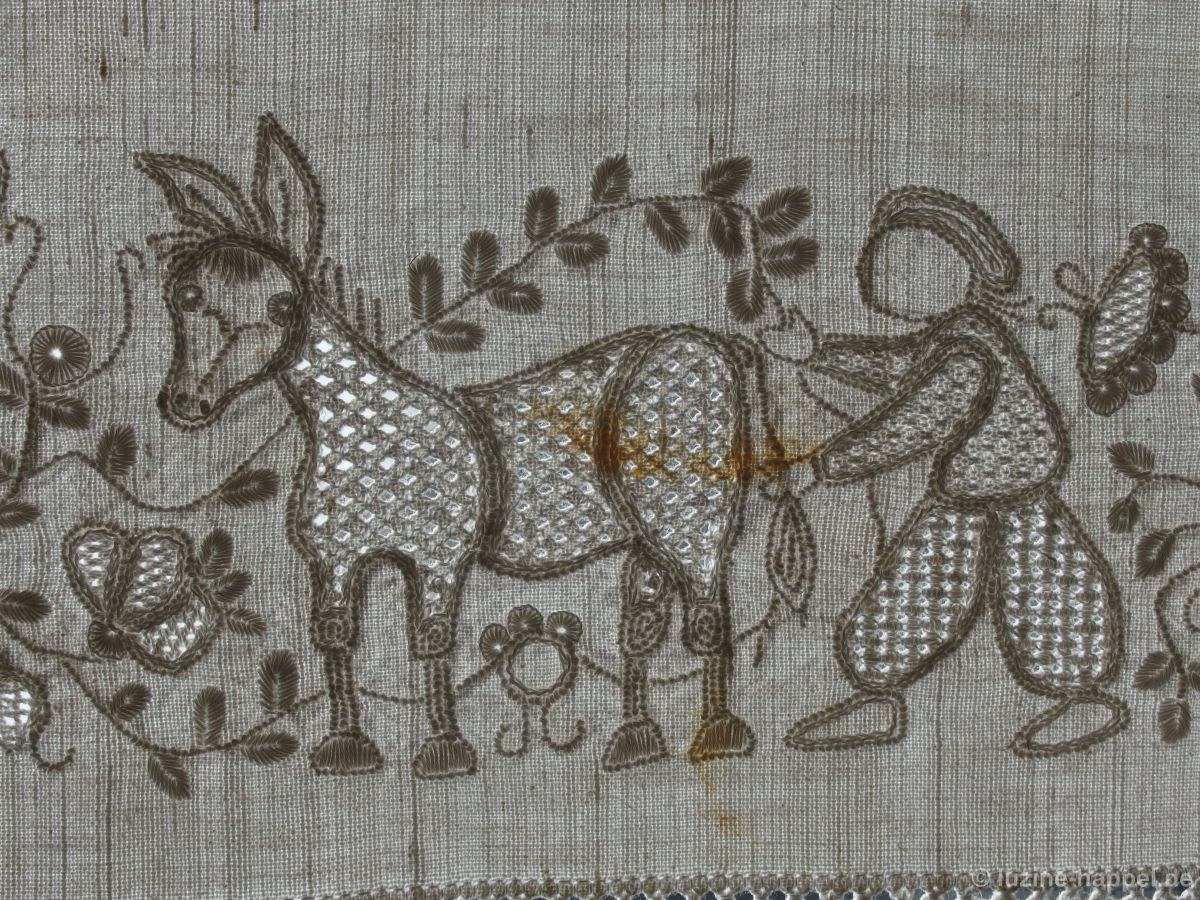
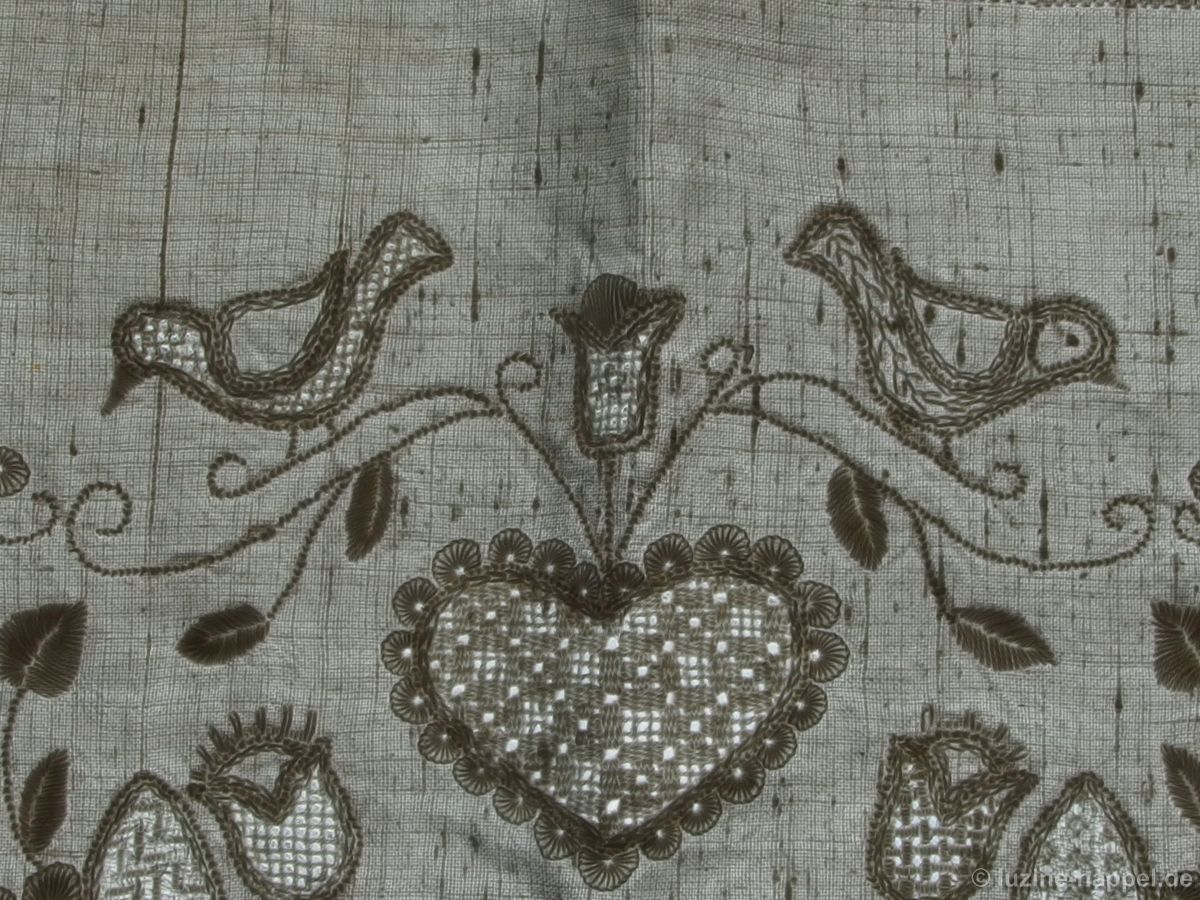
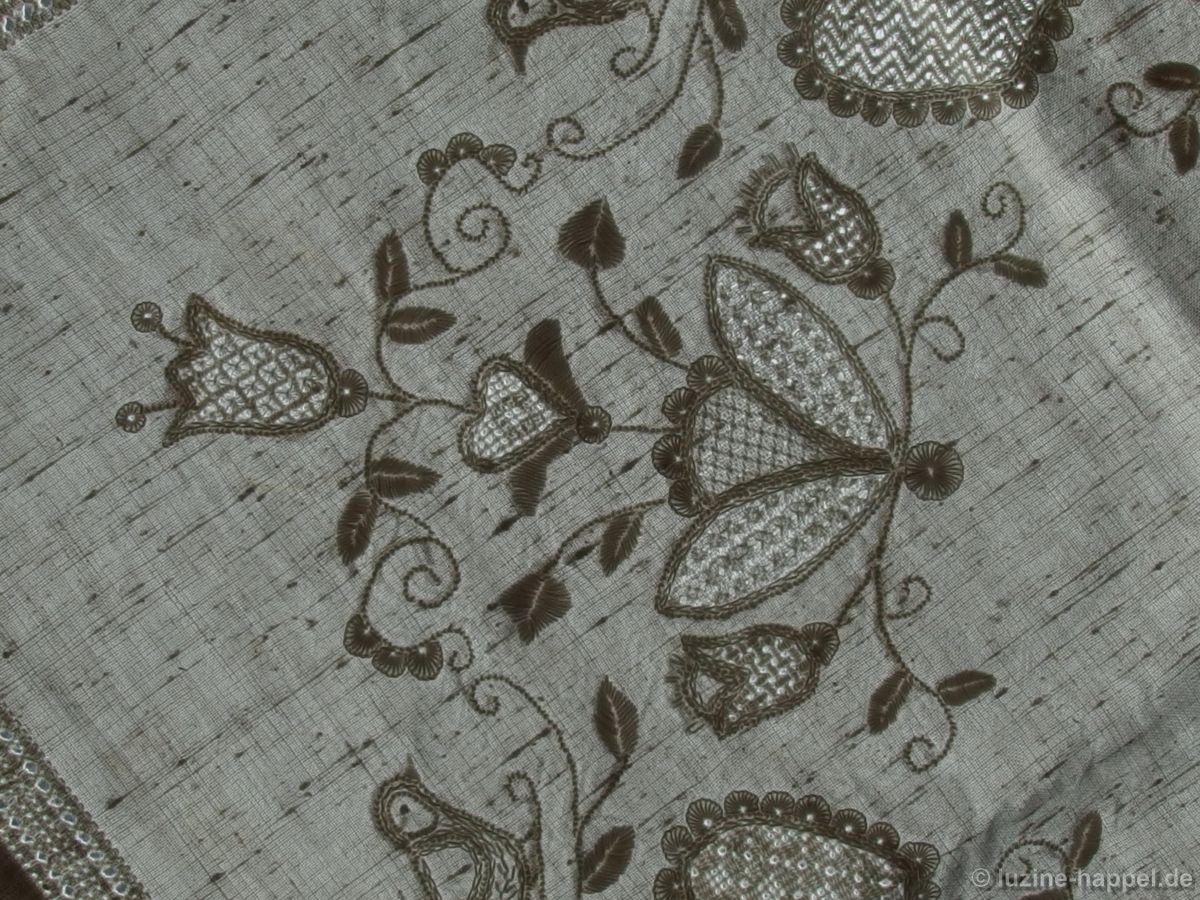
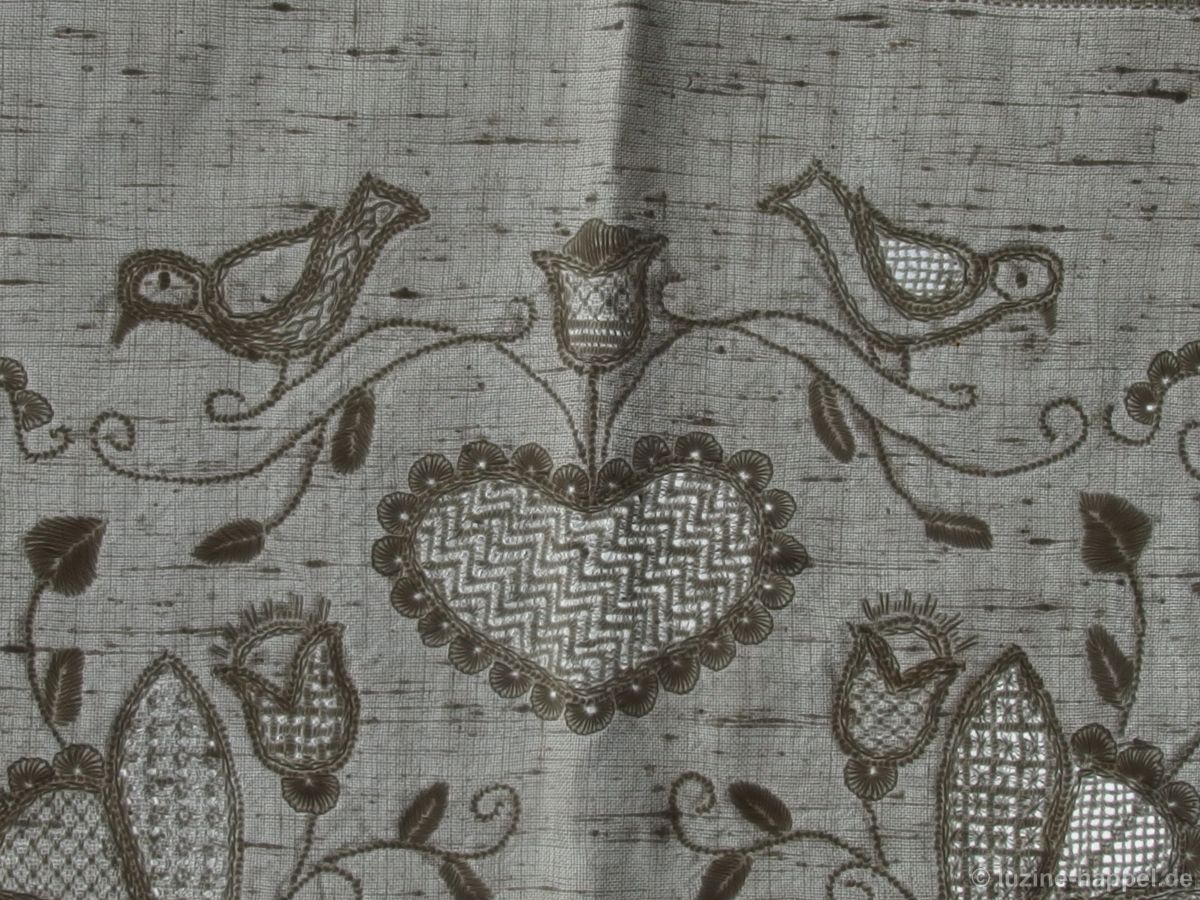
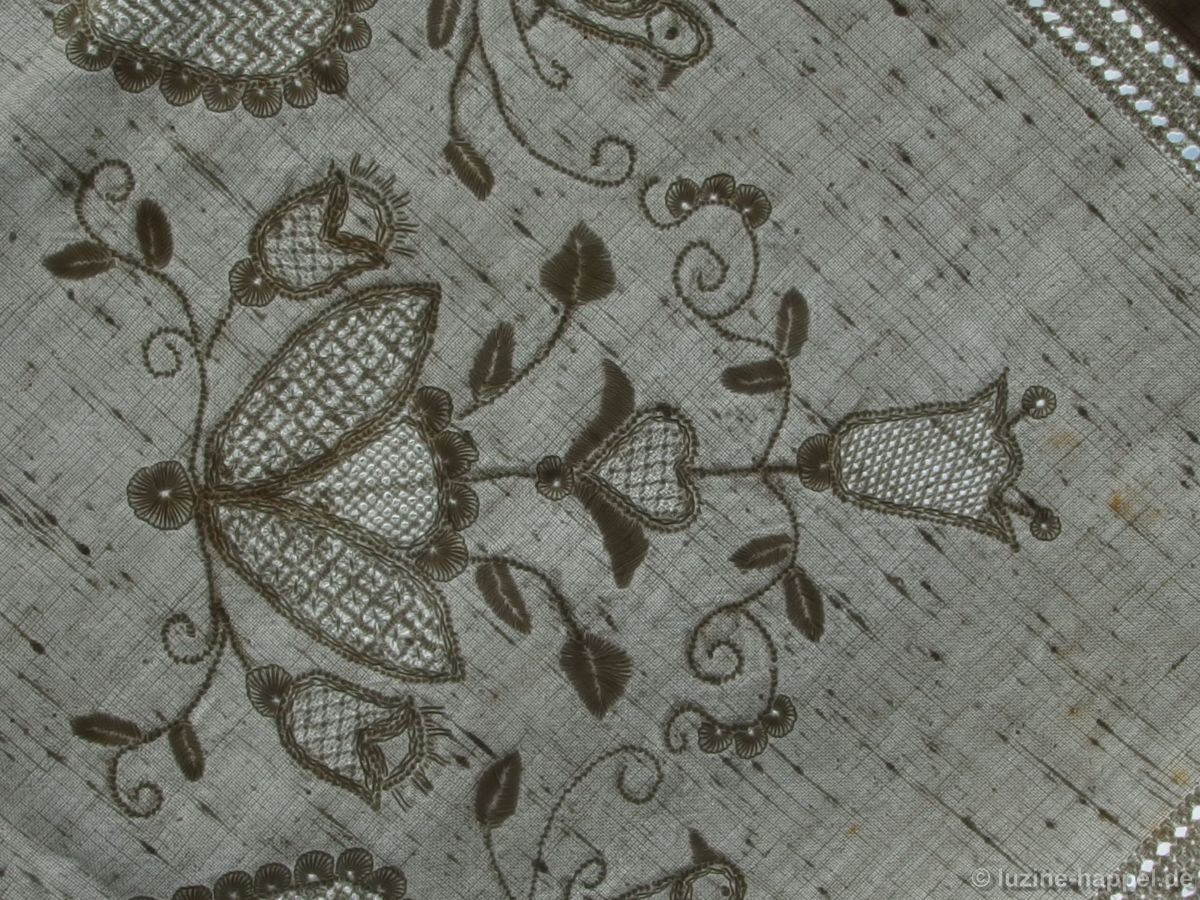
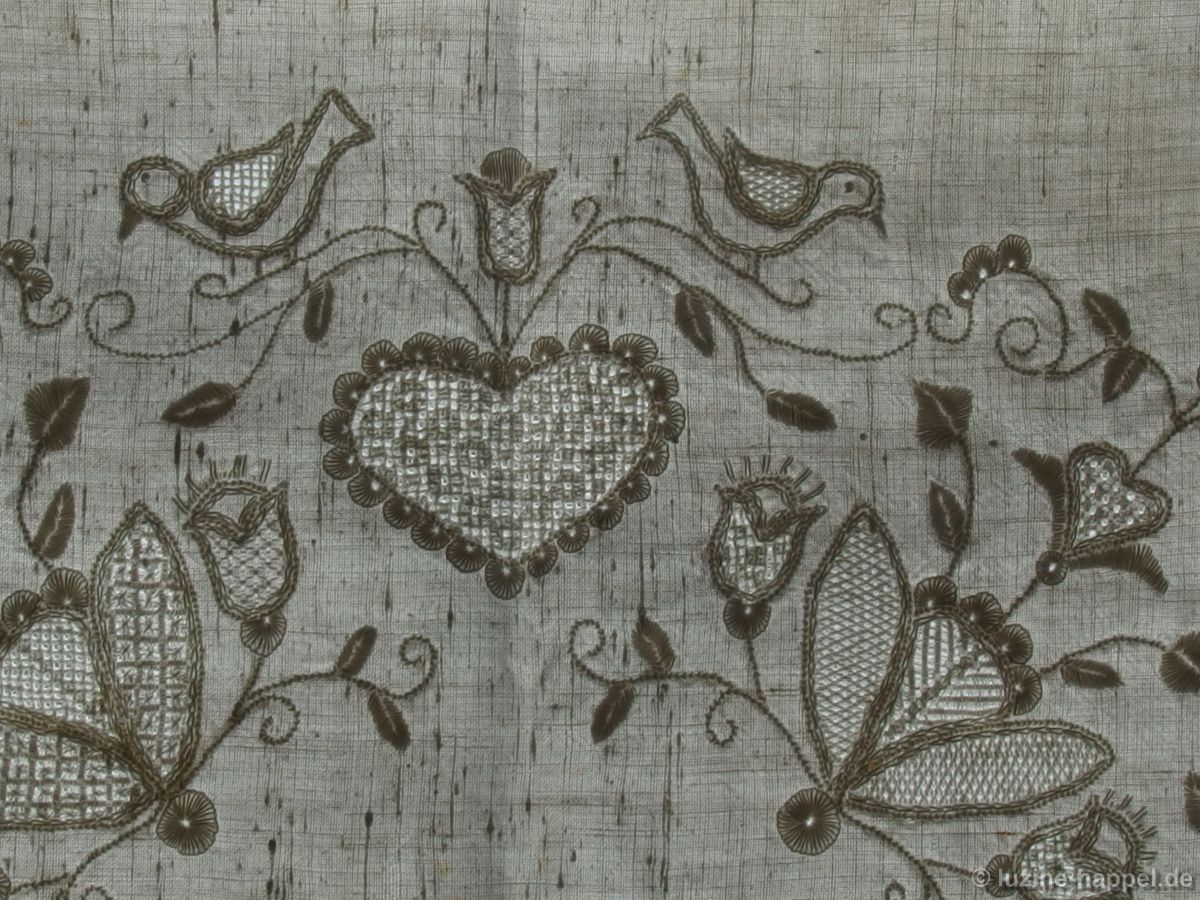
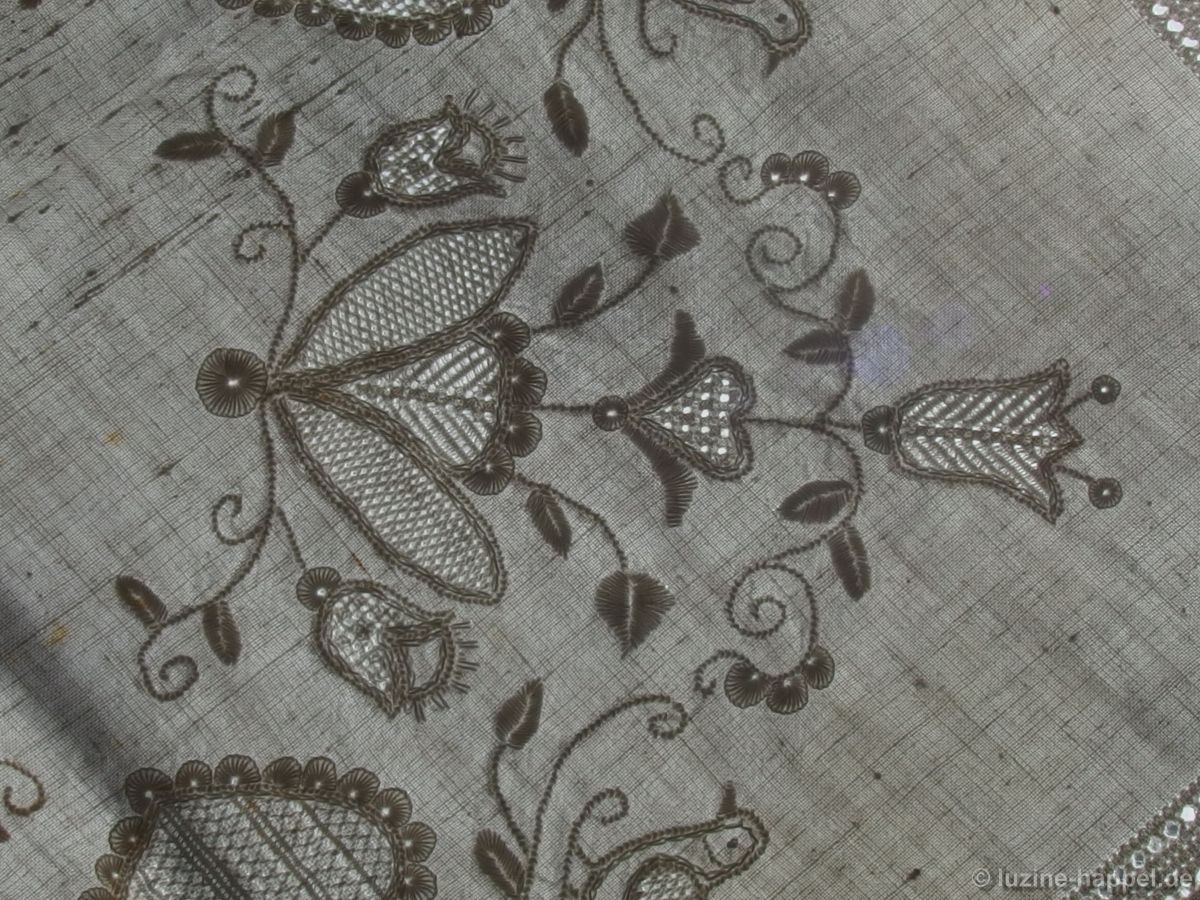
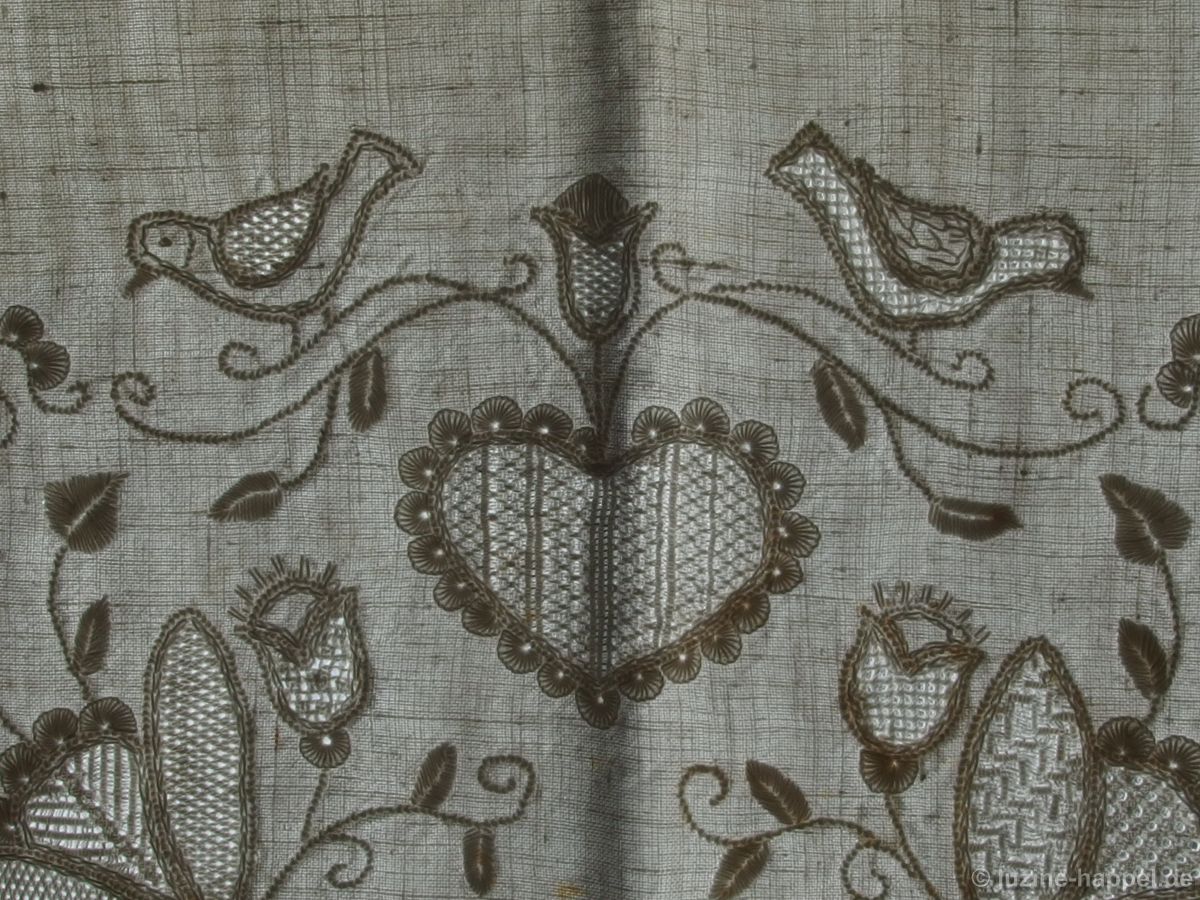
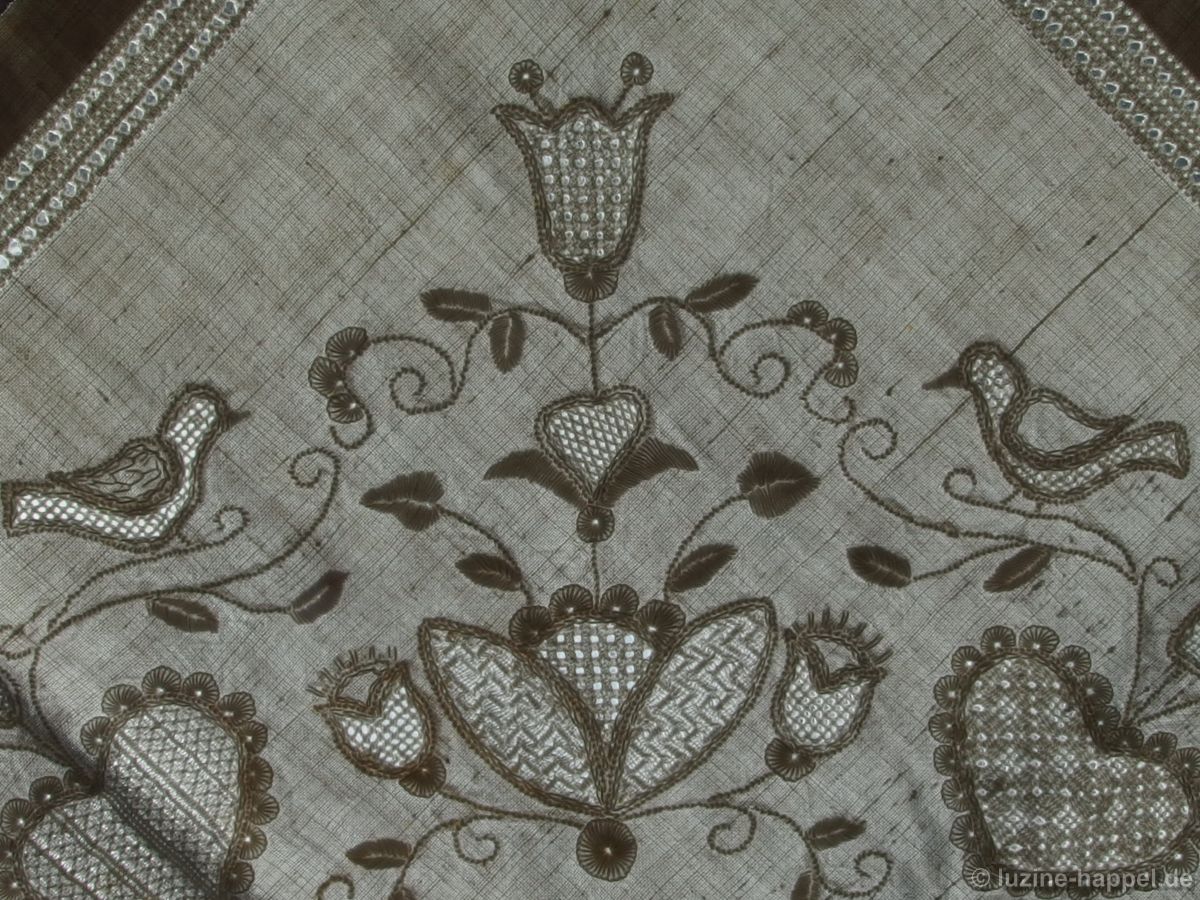
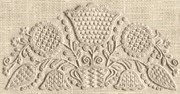
With the high level of knowledge acquired, it was now possible to use that knowledge and corresponding skills individually. Rosemarie Landsiedel-Eicken designed an elaborate, very individual and varied border design for a table runner. With great attention to detail, she turned scenes from rural life into embroidery that is both uncommon and well worth seeing. She has skillfully integrated, for example, sections of needle-weaving hems or small needlelace fillings.

Enjoy the viewing!

Embroideries by Rosemarie Landsiedel-Eicken (5)

After learning all the basic stitches, all three kinds (simple, Limet, and openwork) of withdrawn-thread patterns, Peahole and needle-weaving hems as well as needlelace edgings, needlelace fillings are next to be learned.

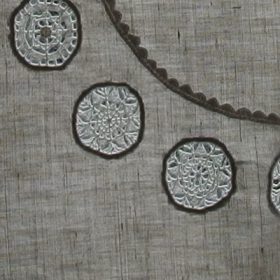
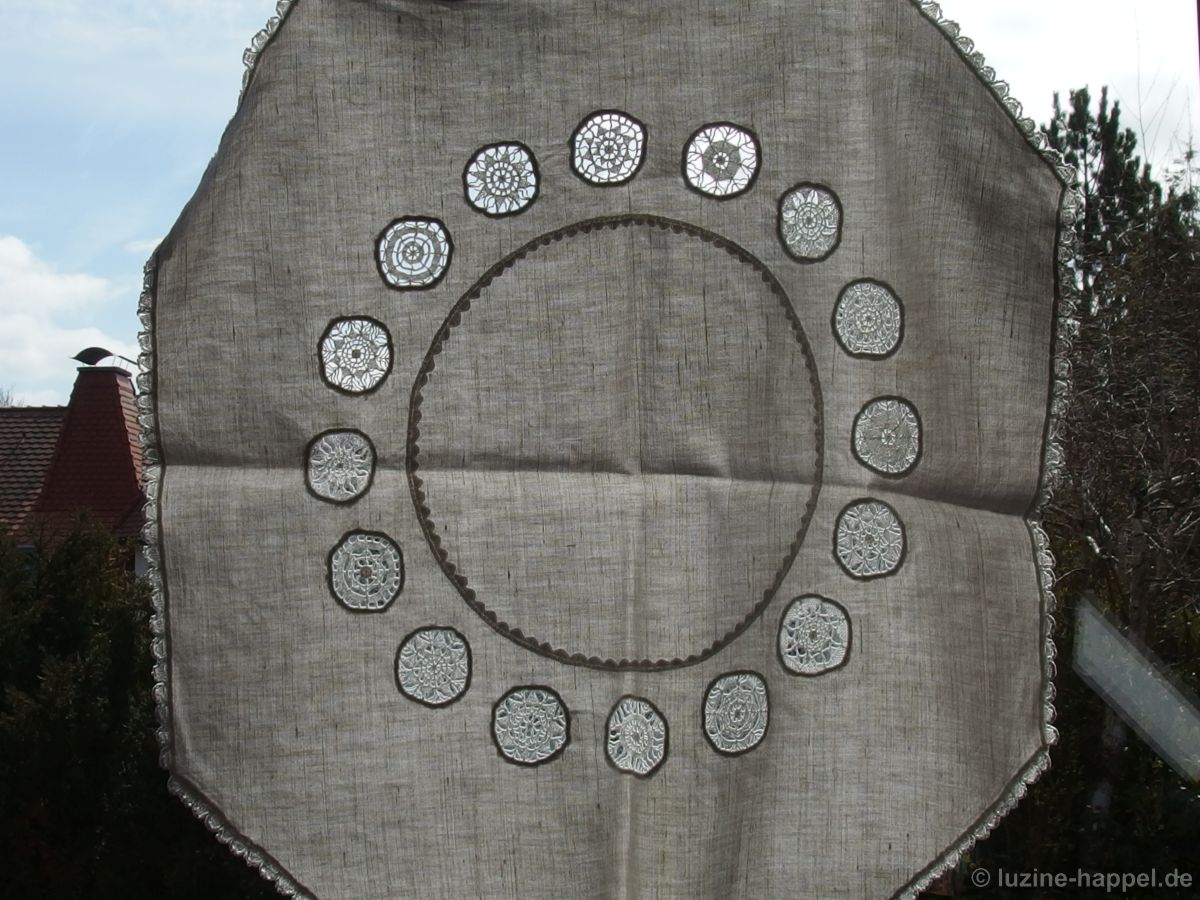
In comparison, for example, to Danish Hedebo embroidery, in Schwalm whitework only circular motifs are filled with needlelace. In an ambitious project of an octagonal tablecloth, Rosemarie Landsiedel-Eicken, at her first go, worked sixteen different needlelace patterns; thereby she worked all the main patterns used in Schwalm whitework.

The circles with needlelace fillings were arranged around a circle made of Blanket stitch scallops. The edge was decorated with a needlelace edging similar to the one on this doily.

Embroideries by Rosemarie Landsiedel-Eicken (4)

Embroideries by Rosemarie Landsiedel-Eicken (4)

After Peahole and needle-weaving hems, the goal of the fourth project was to learn needlelace edgings. While many embroiderers only work needlelace scallops as their first needlelace edging project, Rosemarie Landsiedel-Eicken included three levels of difficulty in her edge: pyramids inside scallops with picots.

In comparison to tea cloth 1 and tea cloth 2, the motifs of this doily are more elaborate and bold.

Embroideries by Rosemarie Landsiedel-Eicken (3)

Embroideries by Rosemarie Landsiedel-Eicken (3)

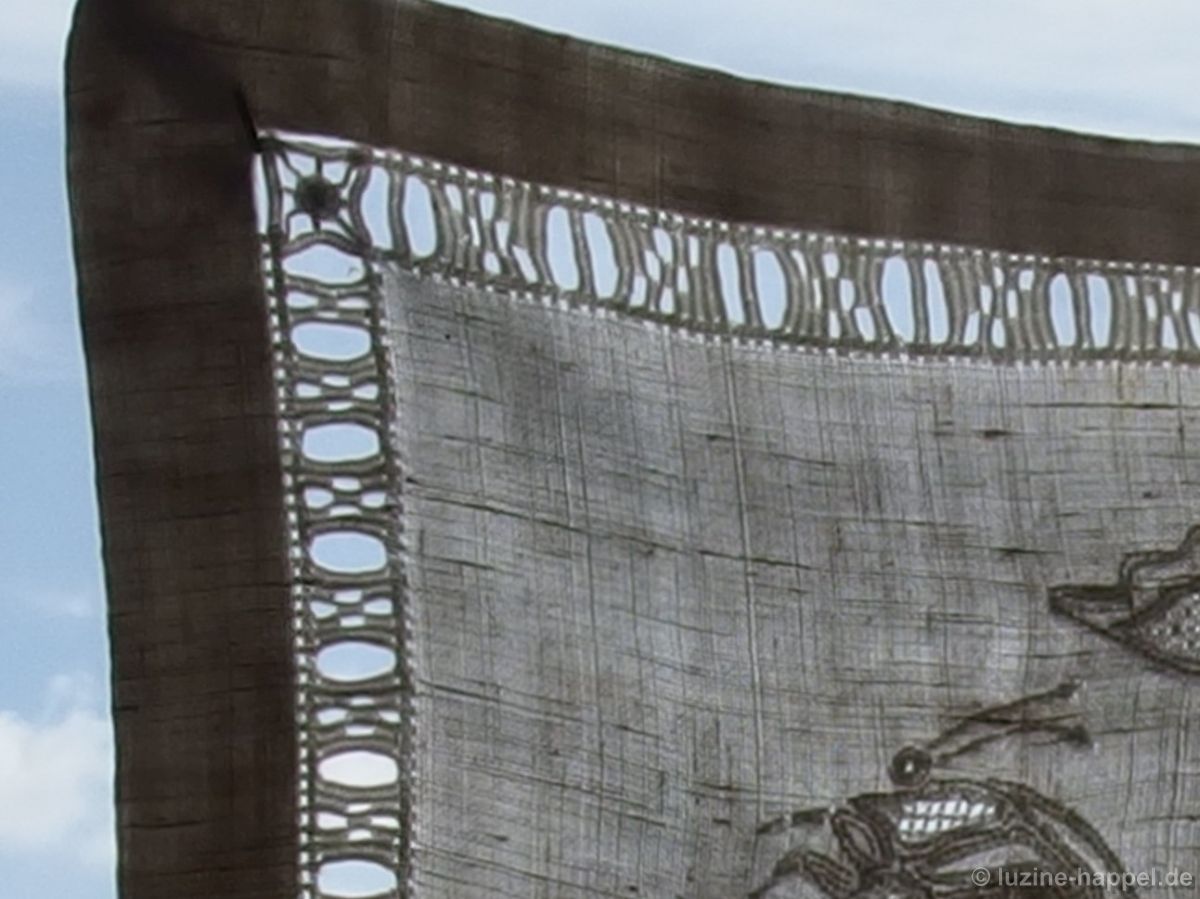
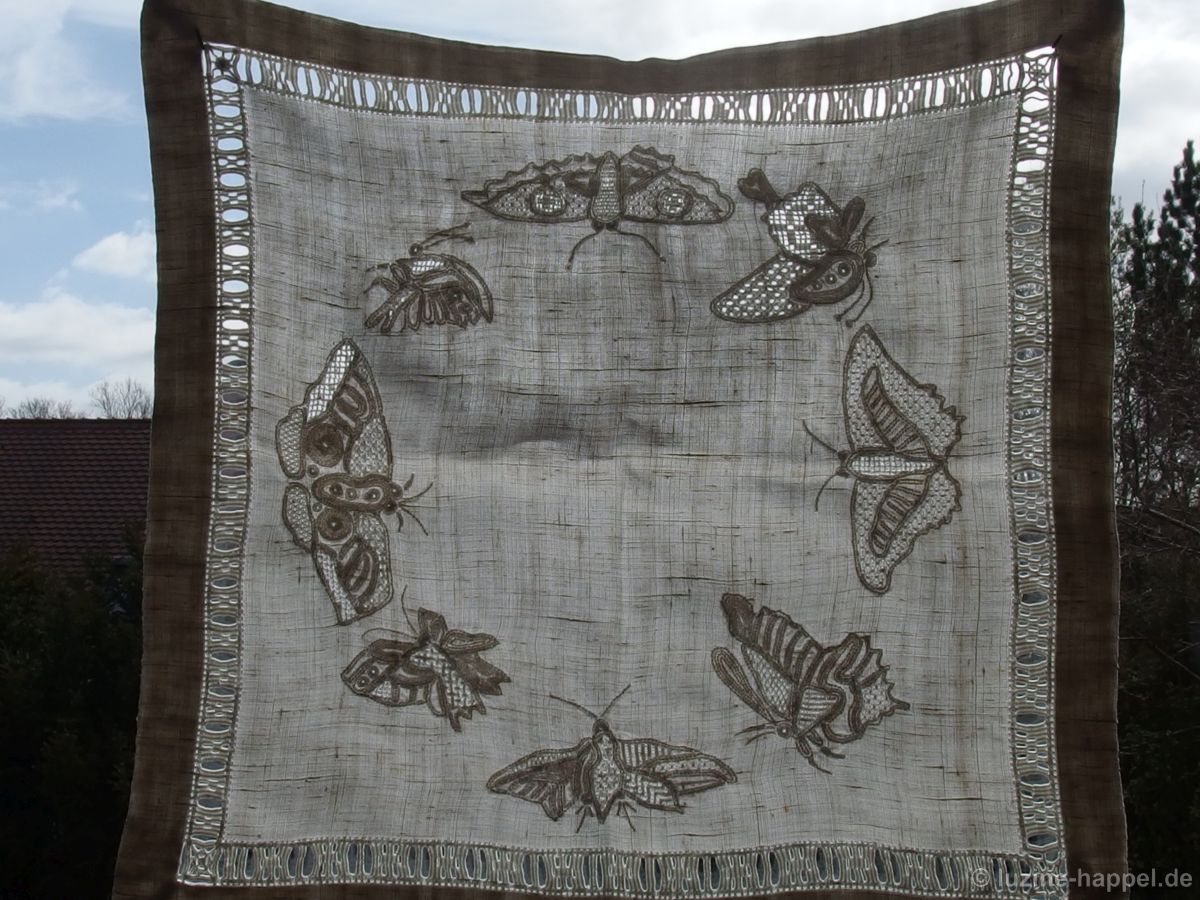
While part 1 and part 2 of the embroidery by Rosemarie Landsiedel-Eicken followed the teaching programs of the time, part 3 is only partially based on their continuation: on a small square cloth, the embroidery of a needle-weaving hem with spider corners was learned.

Rosemarie Landsiedel-Eicken worked four different needle-weaving band patterns on her project.

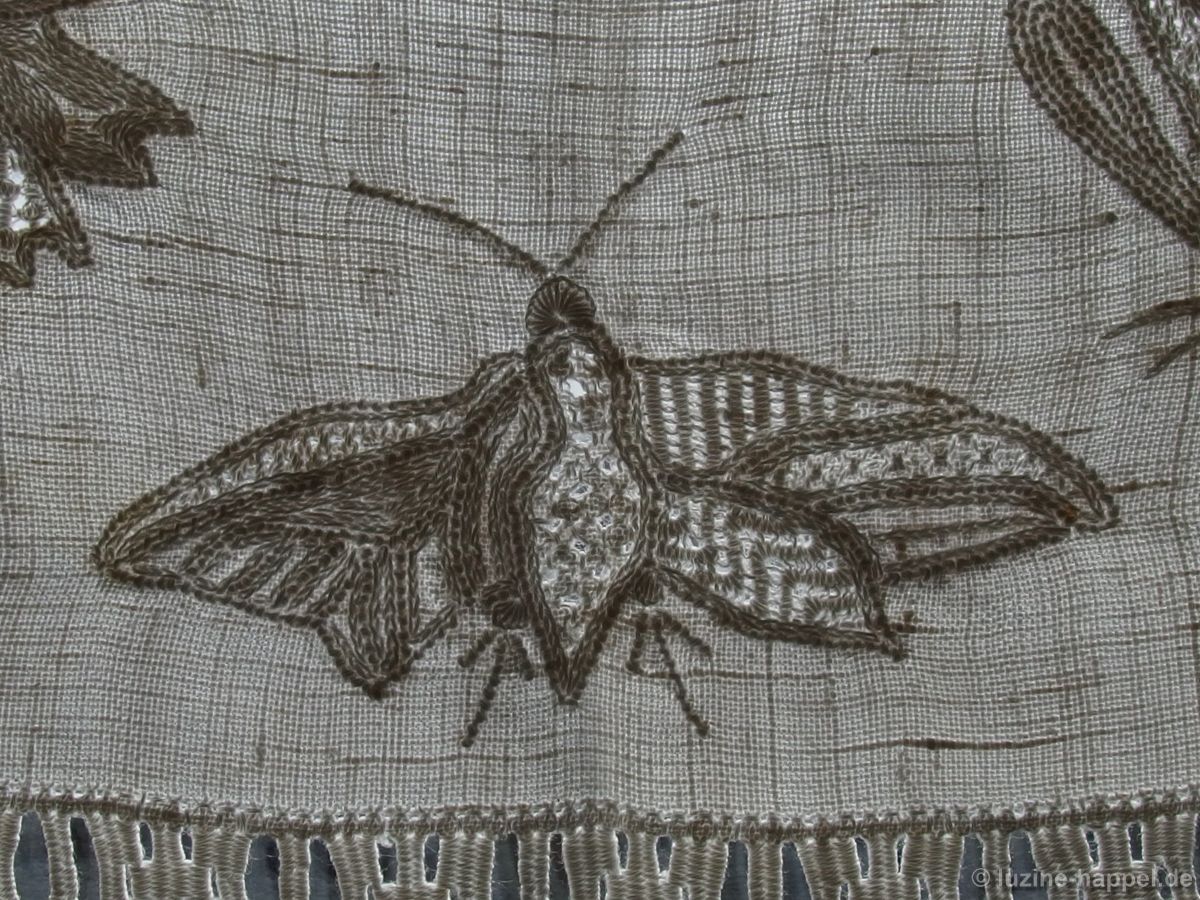
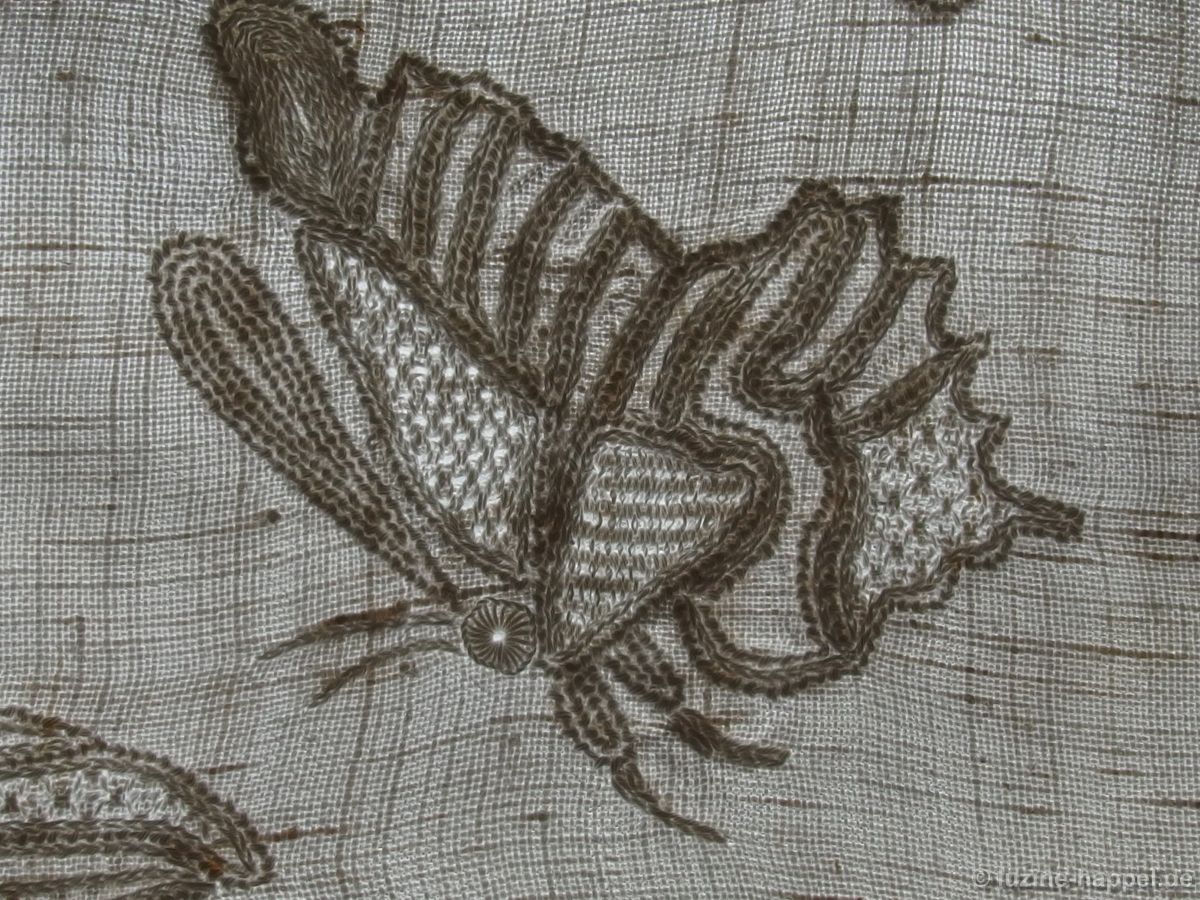
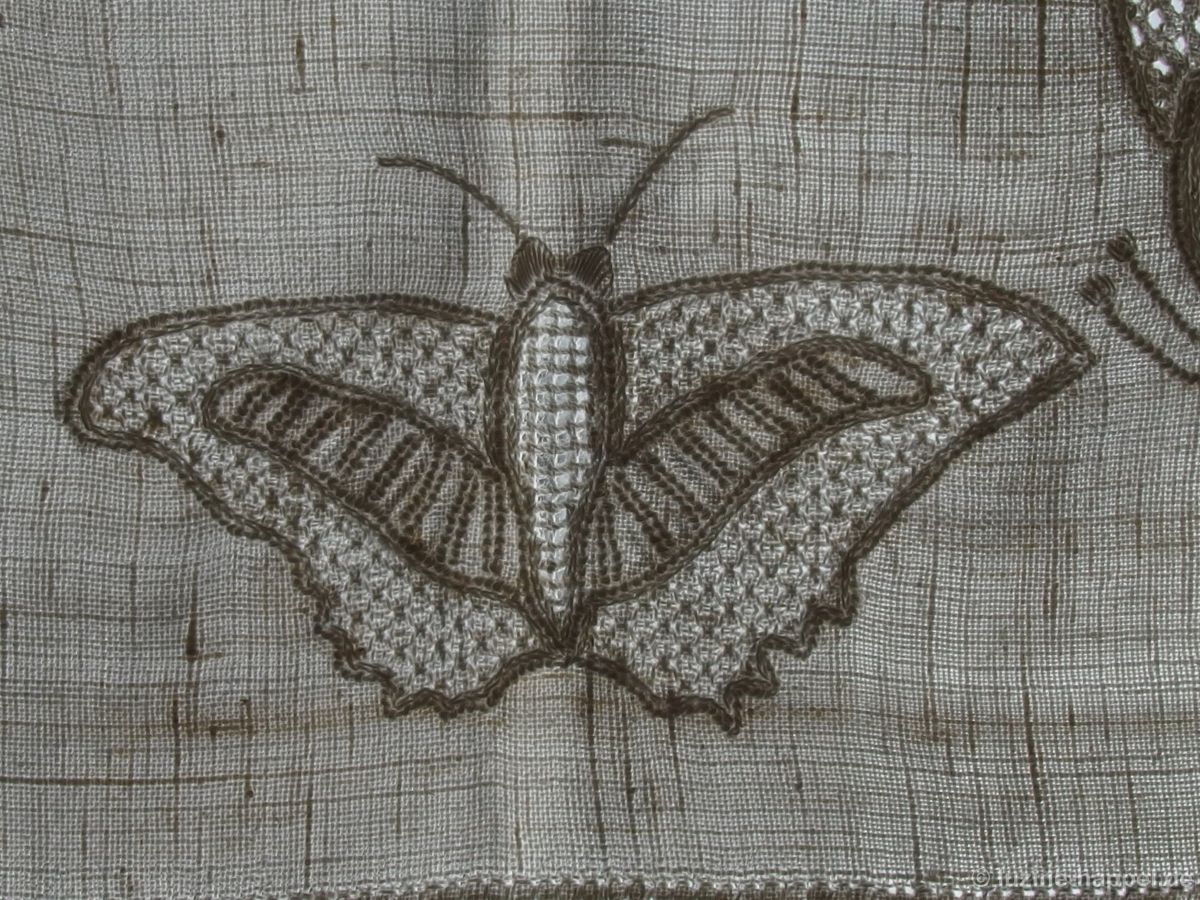
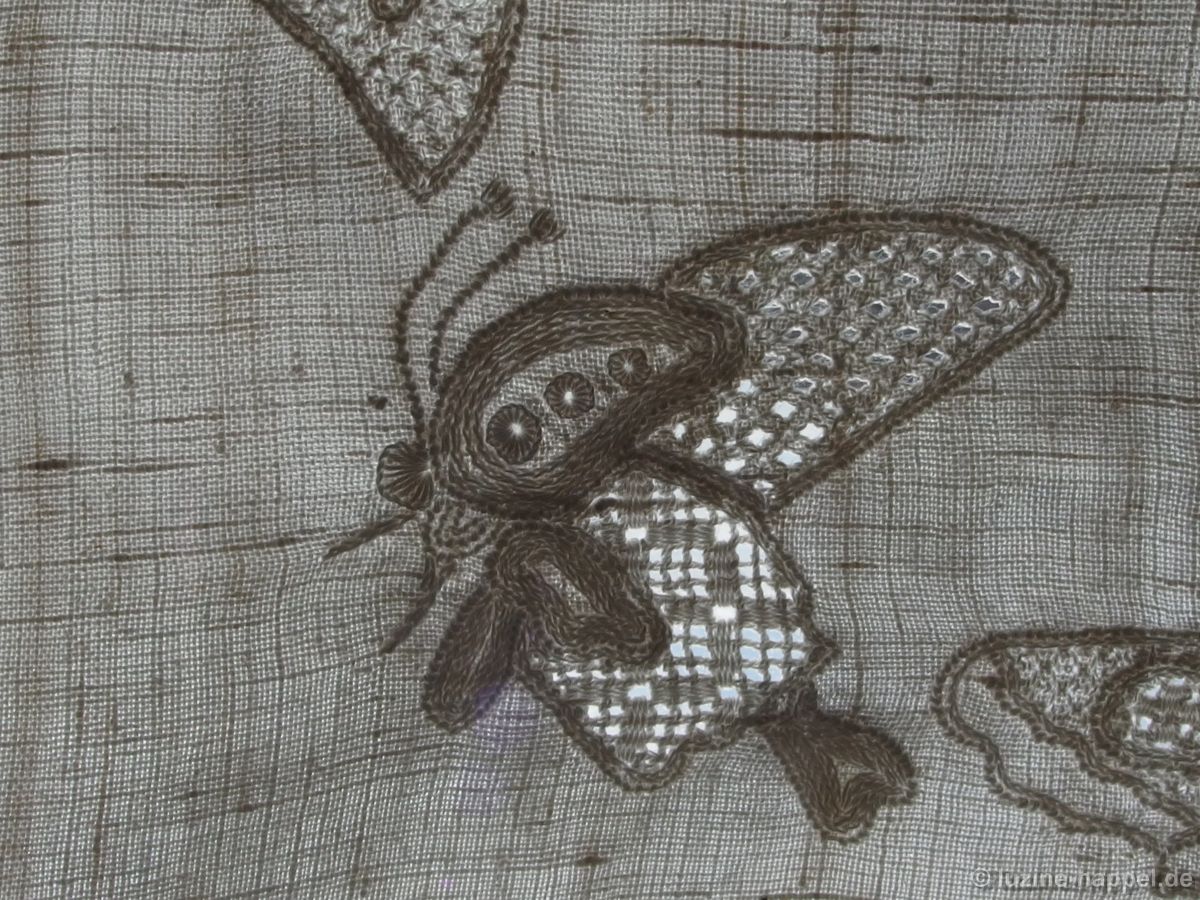
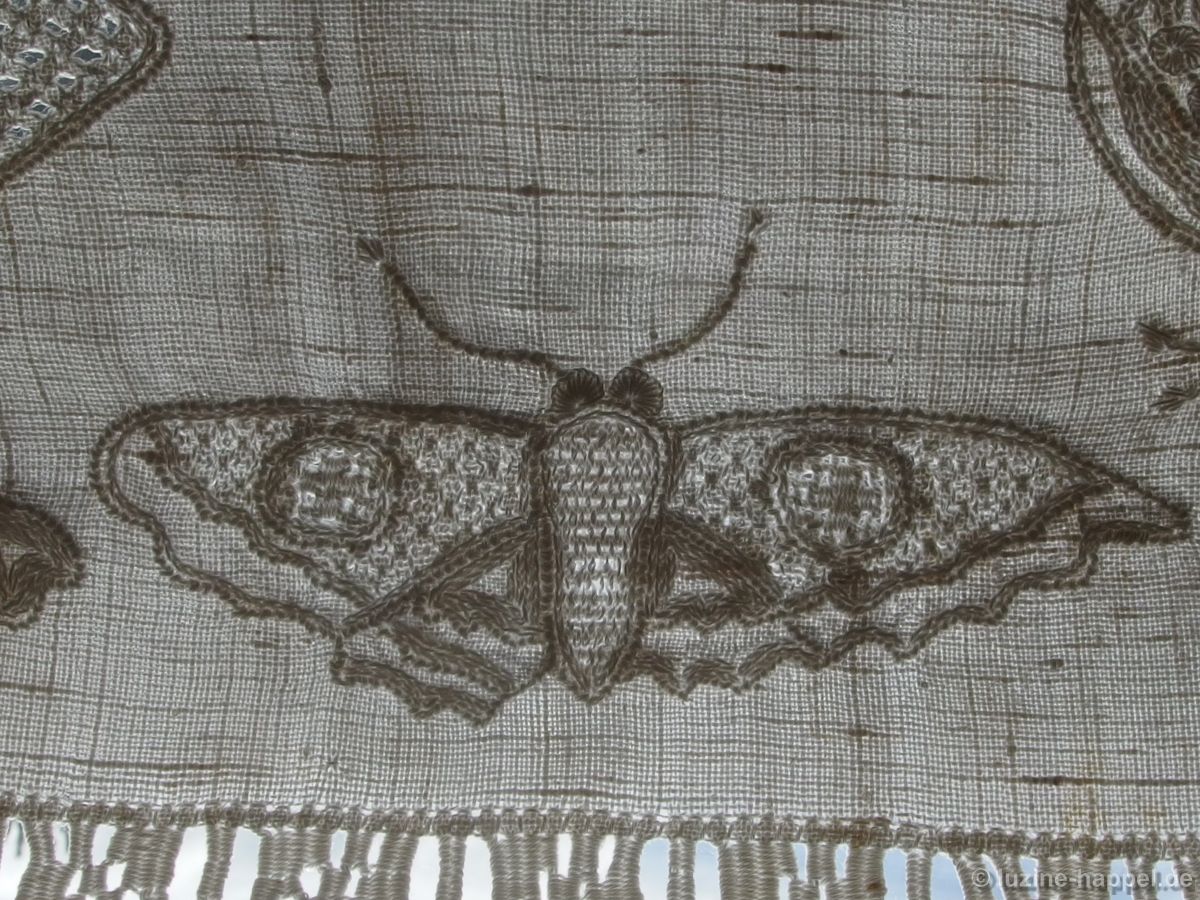
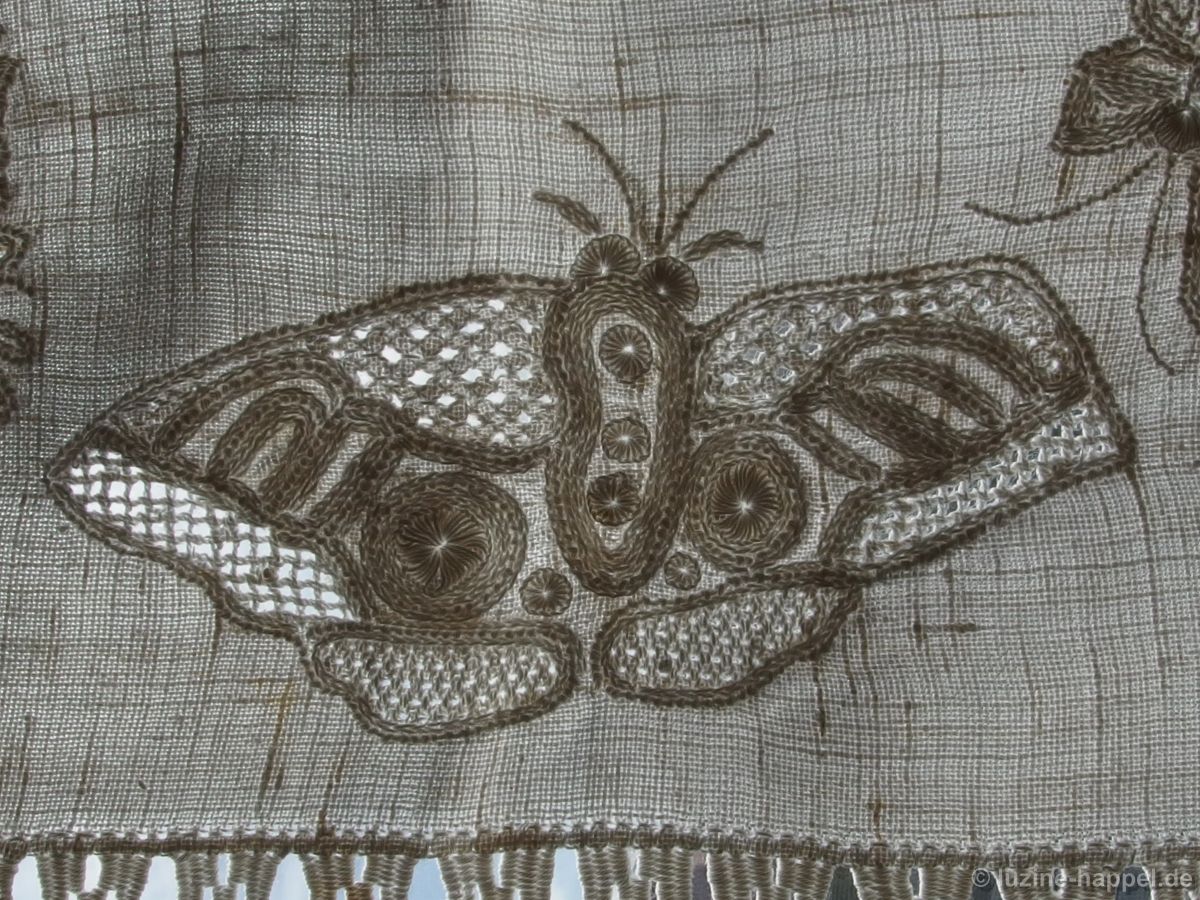
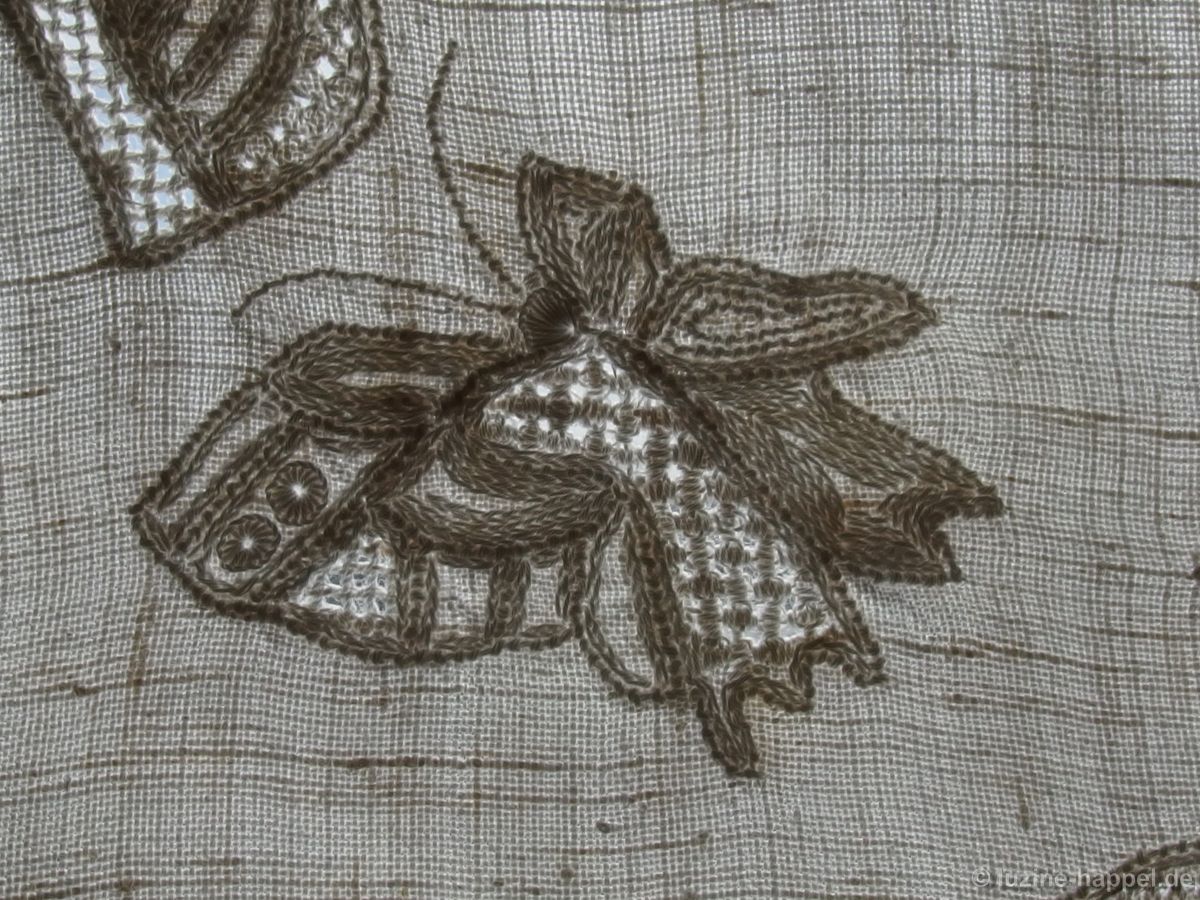
Freely designed and very differently worked out butterfly motifs – arranged in a circular formation – adorn the inner surface of the doily.

Embroideries by Rosemarie Landsiedel-Eicken (2)

Embroideries by Rosemarie Landsiedel-Eicken (2)

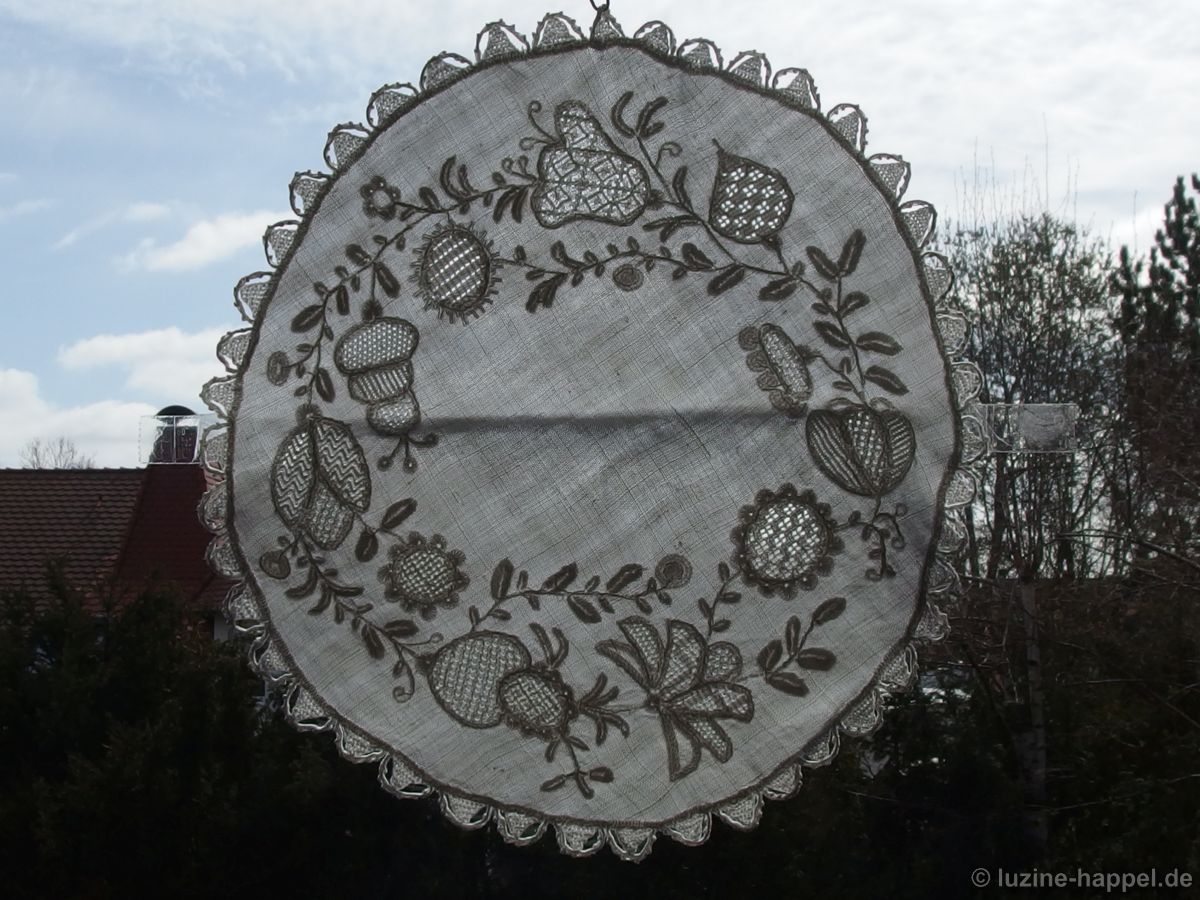
In Part 1 of Rosemarie Landsiedel-Eicken’s embroidery I presented her first work. Here is one of her other works. This, too, is still closely based on the course program of the time.

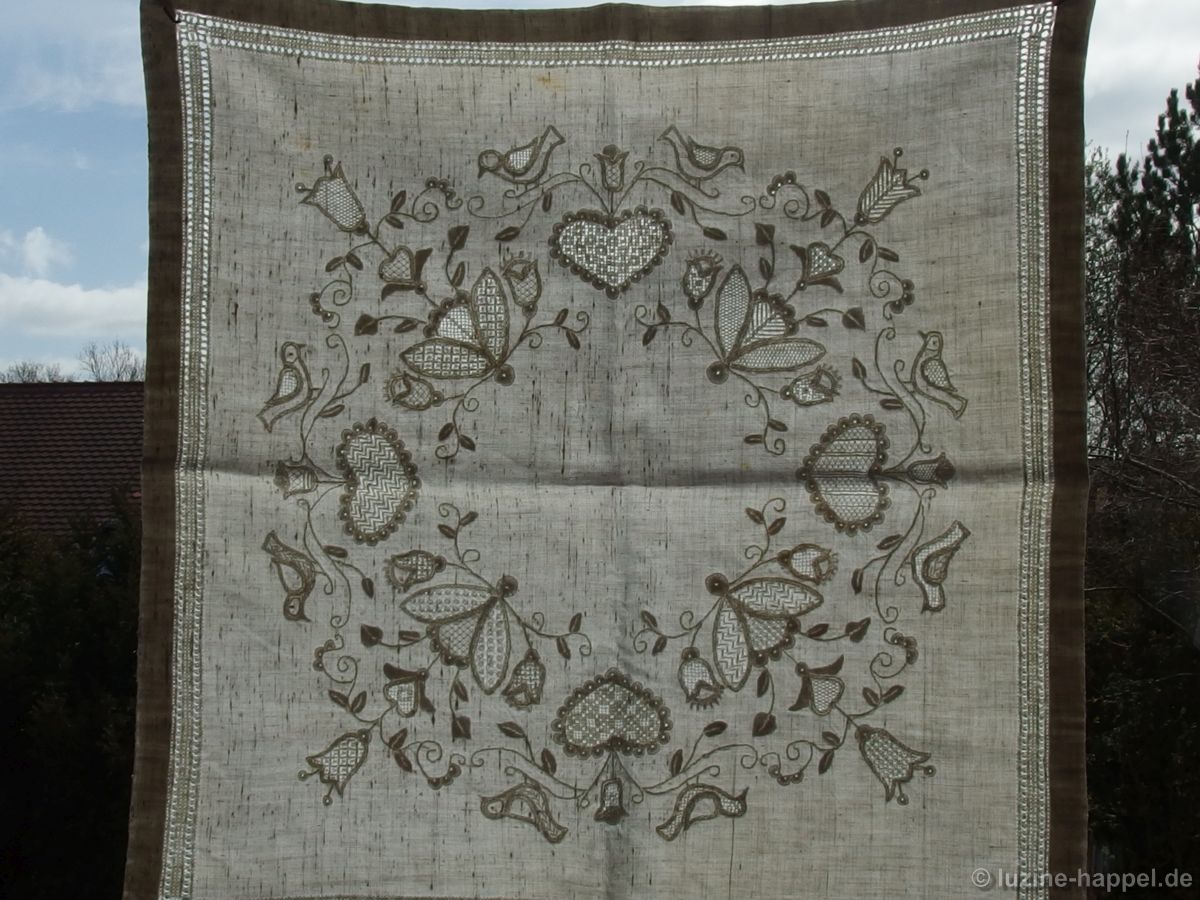
A tea cloth with an elaborate wreath motif was created. In addition to hearts and various tulips and other flowers; bird motifs can also be seen.
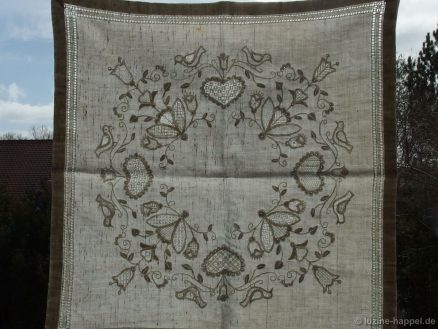
A combination of Peahole hems and Four-Sided stitches was used on the edge. Such combinations were common and popular as further teaching content in courses. Because of the fabric threads remaining in the corner due to the rows of Four-Sided stitches, the corner was easier to work out than, for example, with a needle-weaving hem, where all the corner threads are withdrawn and have to be replaced by embroidery threads.
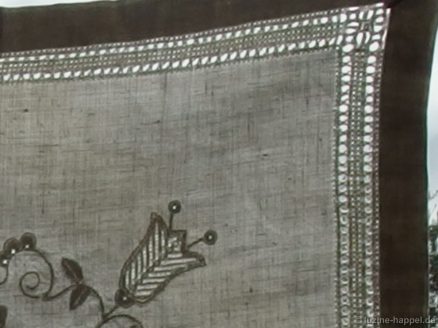
In addition to the basic stitches, other patterns and new pattern combinations were used: Feather stitches decorate some bird motifs, openwork needle-weaving patterns, Satin stitch fillings, heart-shaped leaves, 2 short-2 long stitches, and Blanket stitch eyelets.

Take a look for yourself!